Chinese Food Photography: Dumplings, Noodles & More
 Ali Tanis18 min read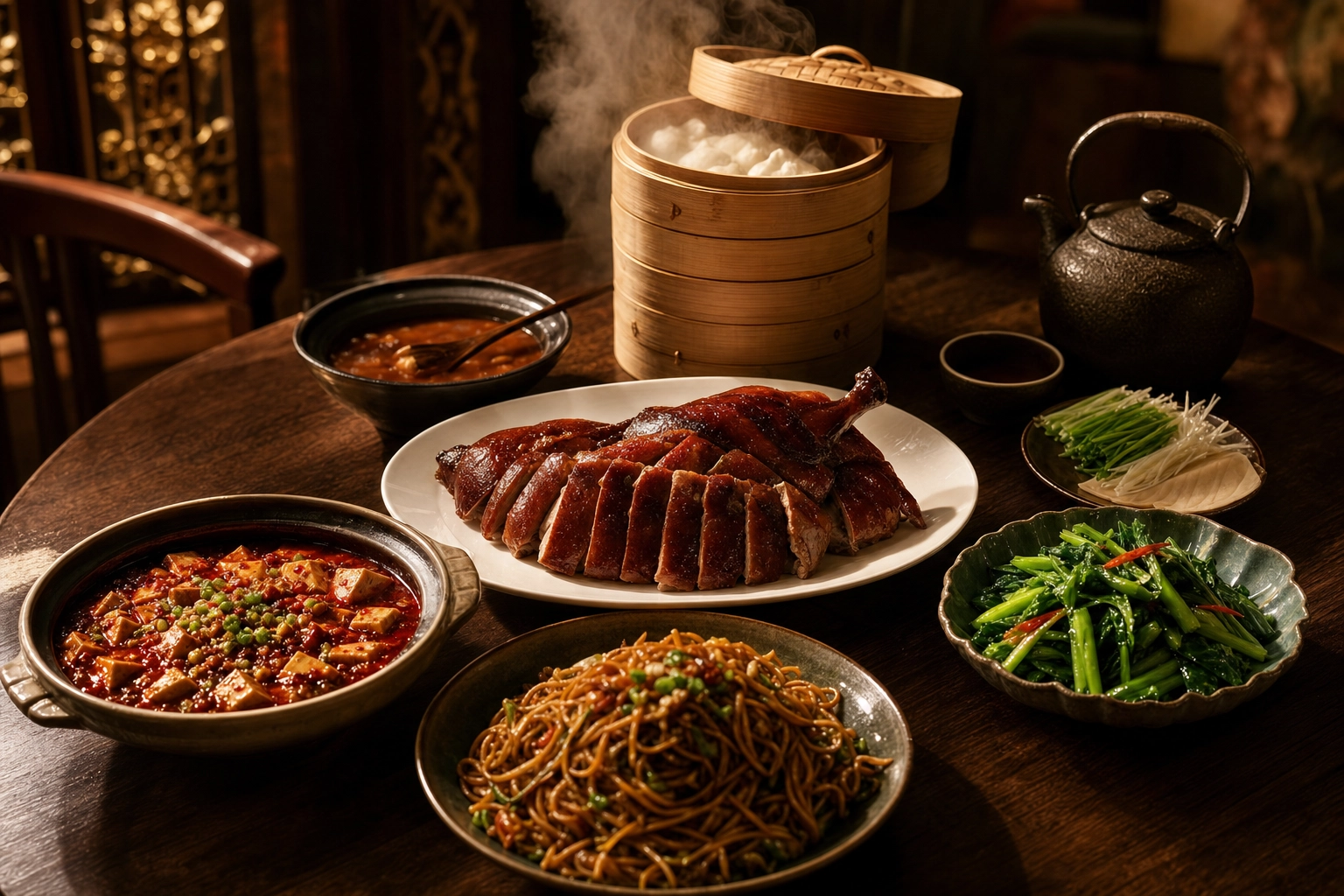
A plate of Chinese food is engineered to overwhelm you — the lacquered shine of roast duck, a tangle of noodles glossed in soy, a lazy Susan crowded with eight dishes, the red-oil slick on a bowl of mapo tofu. Every cue that makes it irresistible at the table can turn to mud through a lens. That's exactly why great chinese food images are so much harder to capture than they look.
And the stakes are real. The U.S. is home to roughly 25,000 Chinese restaurant businesses (per IBISWorld), and by broader counts more than 40,000 — famously outnumbering the combined U.S. locations of McDonald's, Burger King, and Wendy's. Asian food now appears on roughly 12% of U.S. restaurant menus, and Chinese is the most widely served of those cuisines, according to Pew Research. They're all competing for the same hungry scroll across delivery apps, Instagram grids, and printed menus, where the photo usually decides who gets the order. GrubHub order data reported by NBC News even crowned General Tso's chicken America's single most-ordered Chinese dish.
This guide is built for Chinese restaurants and takeout brands that want photos that actually sell. We'll break down the three things that make saucy dishes so tricky, the five shots every Chinese menu needs, and how to rescue a dull phone snap when the dinner rush leaves no time for a studio shoot. Consider it the Chinese deep-dive companion to our broader Asian food photography guide.
Quick Summary: Great Chinese food images come down to controlling three things — sheen (diffuse and side-light glossy sauces), steam (backlight it over a dark background before it fades), and char or lacquer (rake directional light across it) — then nailing five shots: the top-down banquet spread, the dumpling and dim sum macro, the noodle pull, the Peking duck or roast, and the takeout-container hero for delivery. Shoot fast before garnish wilts and steam dies, or finish a clean phone photo with an AI food photo editor in about 90 seconds.
Why Chinese food images are so hard to get right
No other cuisine asks more of a camera. Western plating tends to give you one hero on a wide white plate with room to breathe. Most Chinese cooking does the opposite. It packs color, sauce, garlic, garnish, and several dishes into one frame on purpose, and it spans a staggering range: Cantonese roasts and dim sum, numbing-spicy Sichuan, Shanghainese soup dumplings, hand-pulled noodles, American-Chinese takeout classics, and Peking duck service, plus egg tarts and bubble tea on the way out. One photographic style simply can't flatter all of it.
It's the same tension that runs through all Asian food photography, but Chinese cooking pushes it the furthest. Underneath the variety, three technical villains show up again and again. Get them under control and your chinese food images stop fighting the food and start selling it.
Tame the sheen on saucy, glossy dishes
Soy, hoisin, sweet-and-sour, chili oil, and thick brown gravy coat a dish in a reflective layer. Under direct light, that layer throws harsh white hotspots. It's why American-Chinese brown-sauce staples — General Tso's chicken, beef and broccoli, sesame chicken — so often photograph as one indistinct, gluey shine with no texture.
The fix is softer, lower, side-on light. Diffuse your main light (a sheer curtain over a window works fine), drop its angle, and let it rake across the surface from the side. That's what separates a glossy gravy from the oil floating on top of it, and it brings back the crispy edges underneath. Reach for matte plates over shiny lacquer ones. And kill the on-camera flash — a direct phone flash flattens the dish, browns the protein, and blasts an ugly hotspot across every wet surface. One more habit to fix: watch your white balance. Spicy Sichuan red-oil dishes flatten into a single dull red under fluorescent takeout lighting, so keep your color neutral-to-warm and let the chili oil and garlic read as separate layers.
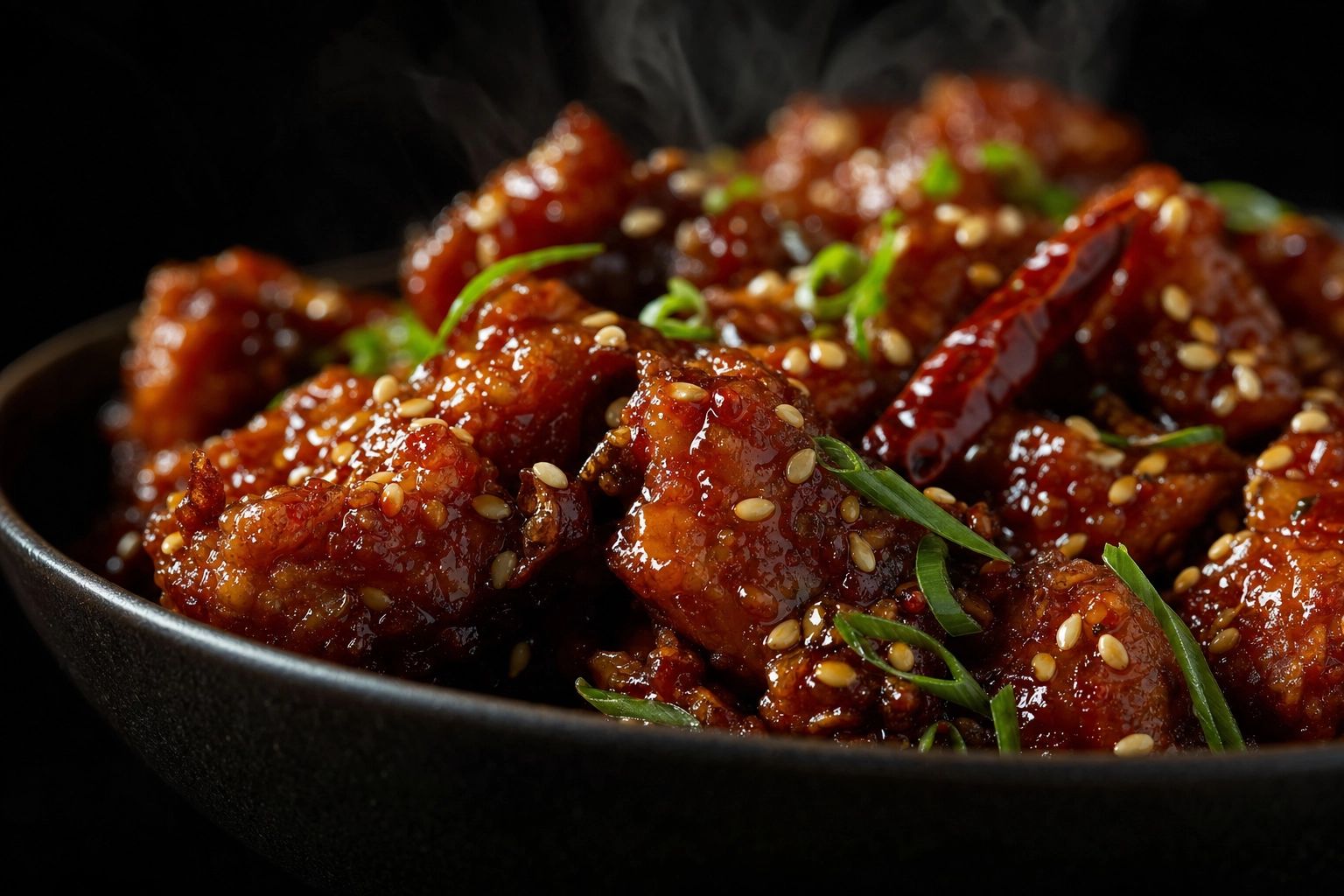 Macro of glossy dark-red glazed Chinese chicken in a matte black bowl with side light controlling the sauce sheen
Catch the steam before it vanishes
Steam is the headline for dumplings, wonton soup, hot pot, and a screaming-hot wok. It's the universal signal for "this just came out of the kitchen." The problem is that it disappears in about 90 seconds, and it's nearly invisible to a camera unless you light it deliberately. Backlight the bowl or steamer — put your light behind it, over a dark background — and those invisible wisps turn into legible ribbons of steam. Then set your frame before the basket opens, because you only get one take. Har gow translucency and the sheen on a fresh soup dumpling start fading the moment they hit room air.
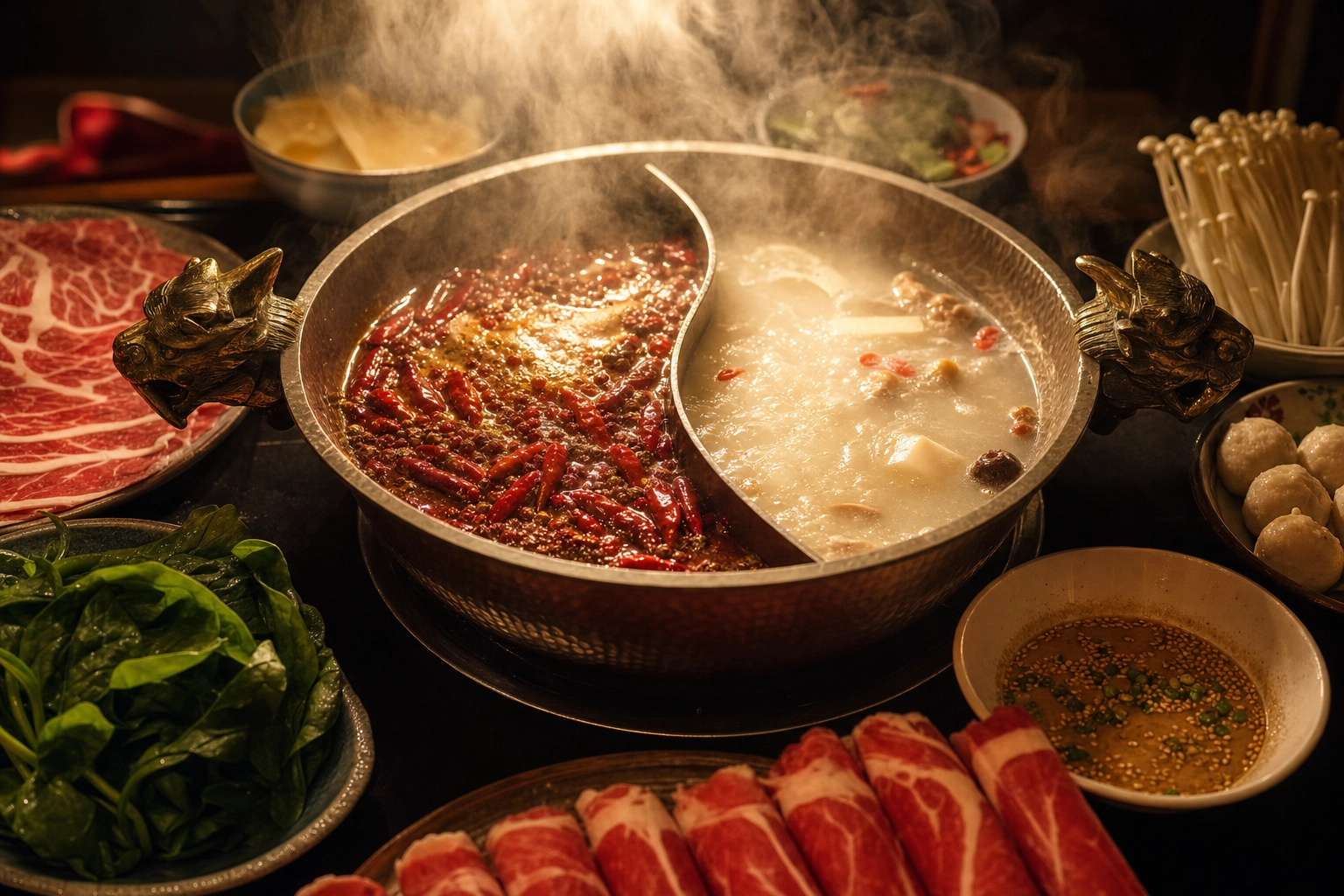 Bubbling divided Chinese hot pot with spicy red and clear broth steaming, surrounded by raw beef and vegetable platters
Read the wok char and the lacquer
Two textures do a lot of selling in Chinese food, and both need directional light. The first is wok hei — the smoky "breath of the wok" — and the light char on greens, noodles, and stir-fried proteins. Rake your light low across it so the char reads as texture instead of a greasy smudge. The second is Cantonese roast lacquer. The crackling, mahogany skin on Peking duck or char siu is the whole point of those dishes, and directional light is what makes it read as glossy crackle rather than a flat, oily smear. Light a premium roast the way you'd light a cheap stir-fry and it photographs cheap — and on a menu, that gap shows up in orders.
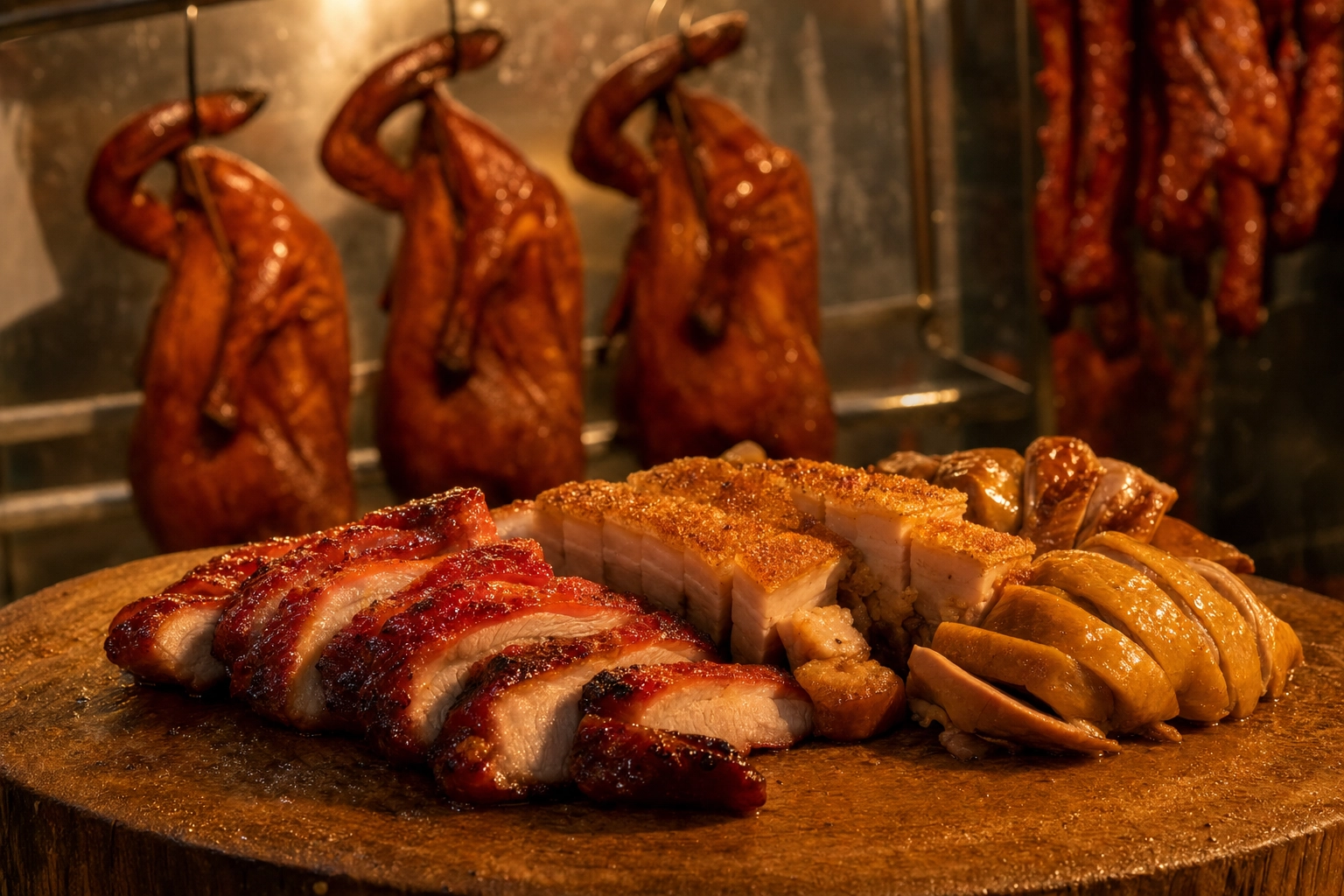 Cantonese roast board with glossy lacquered char siu, crispy roast pork belly and soy-sauce chicken under warm light
The 5 Chinese food shots every menu needs
You don't need fifty setups. Five repeatable shots cover almost any Chinese menu across print, delivery, and social. Each has a specific job and a specific angle, and together they're the backbone of strong chinese food images. Think of them as the recipe for a complete menu shoot — the Chinese-specific complement to the four-shot framework in our Asian guide.
1. The banquet spread, shot top-down
When the dish is the table — a lazy Susan loaded with shared plates, a tower of bamboo steamers, a multi-course banquet — get directly overhead at 90°. A true top-down turns the whole spread into a clean, graphic pattern that reads instantly at thumbnail size. Arrange by color so no two same-toned dishes sit side by side. Lean on the rule of odds (three or five elements beat four), and build a little height with bowls and steamers so the frame doesn't go flat. This is the signature "Chinese feast" image, and it's the one a single-dish photo simply can't tell.
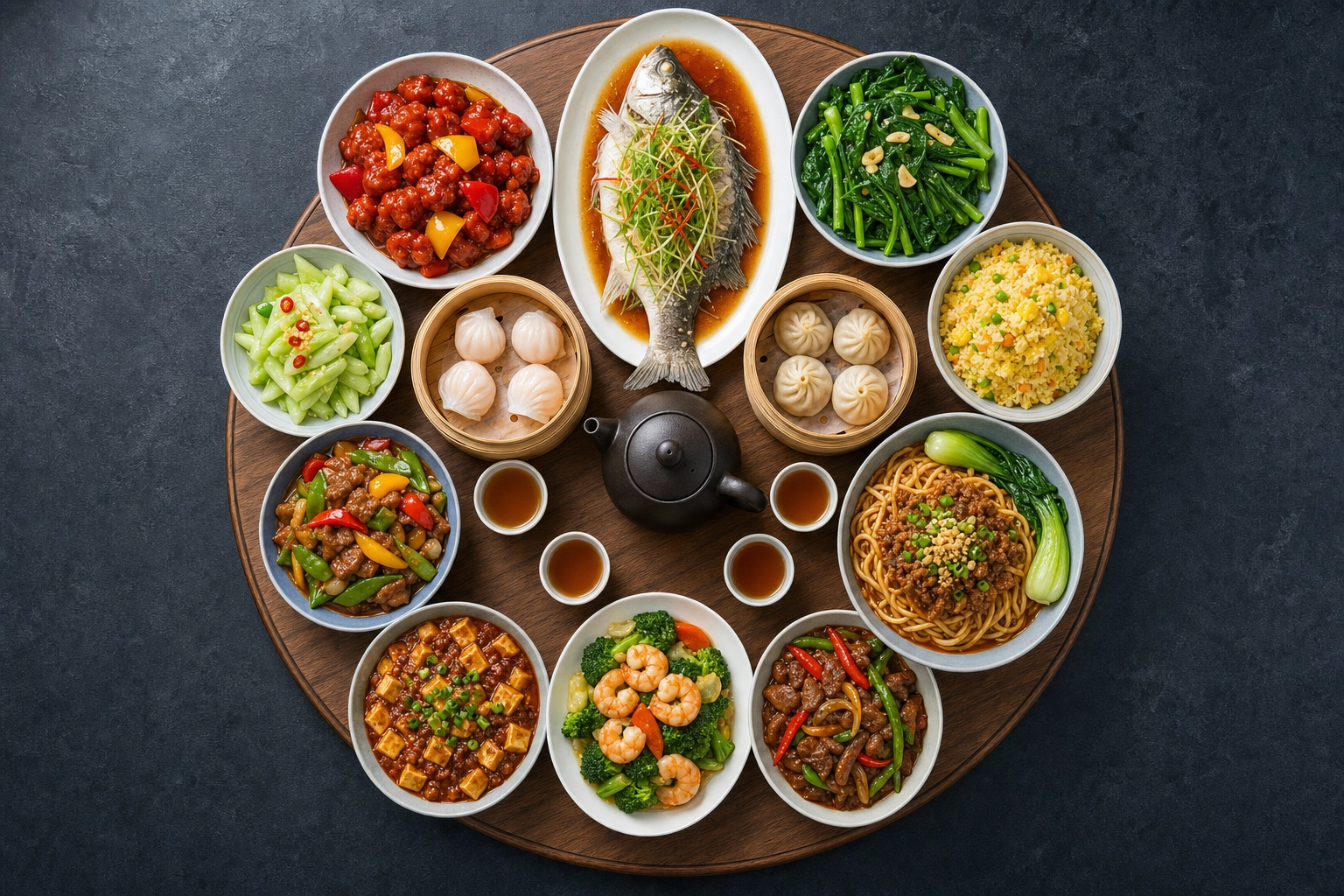 Overhead flat-lay of a Chinese banquet lazy Susan with a dozen shared dishes arranged by color on dark slate
2. The dumpling and dim sum close-up
Get in close — macro, at about 45° — on the small things that whisper craftsmanship: the crystal translucency of a har gow, the open crown of a siu mai, the pleats of a soup dumpling. Those pleats are worth obsessing over. Din Tai Fung's house standard is exactly 18 folds and 21 grams per xiao long bao, as profiled by the Los Angeles Times, and that precision is what your macro shot should celebrate. One styling note: a bamboo steamer breathes, while a steel lid drips condensation back onto delicate wrappers and leaves them blotchy. Shoot from the bamboo, and move fast before the skins cloud over. Dim sum is deep enough to deserve its own playbook — see our dim sum photography page for the full cart.
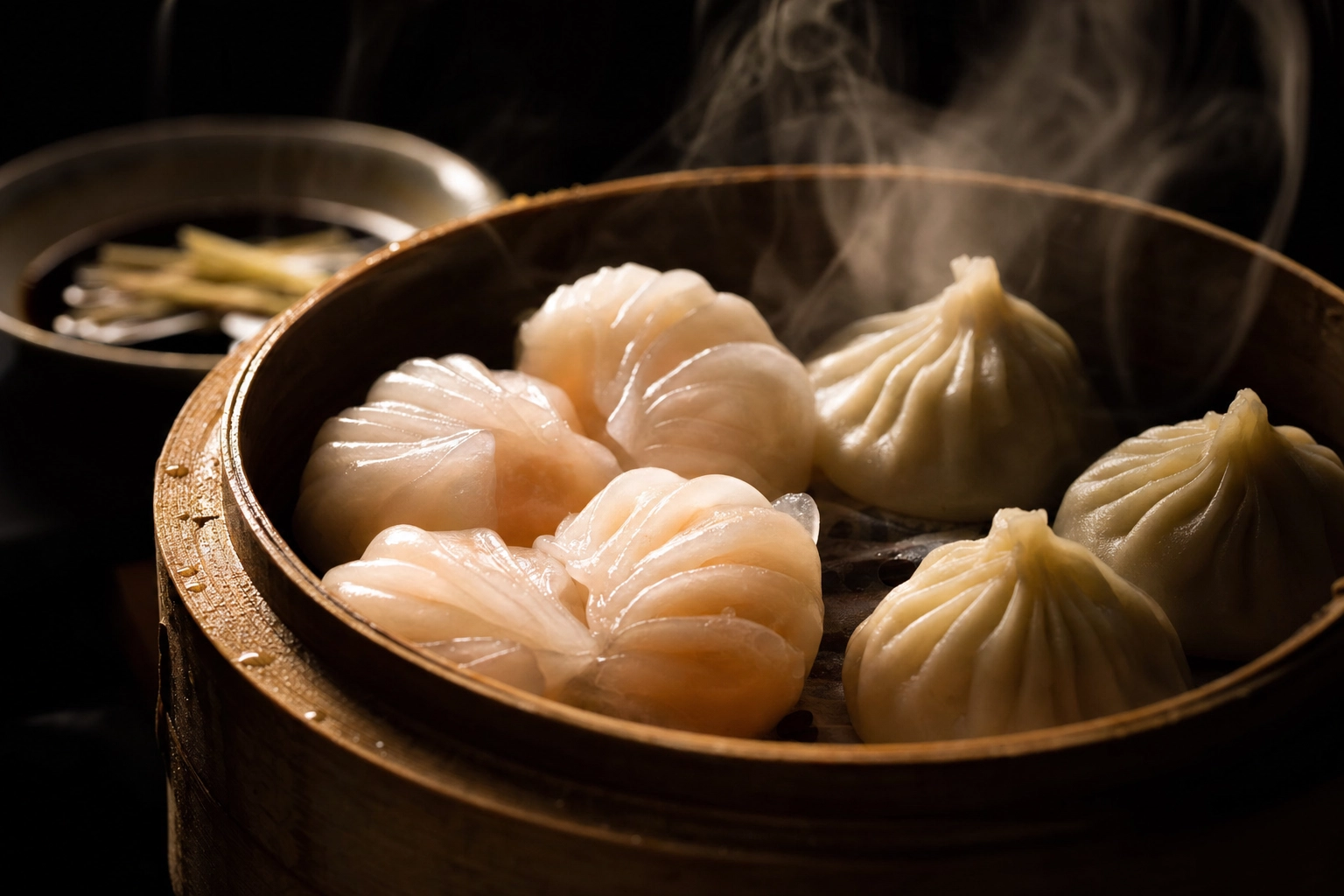 Backlit bamboo steamer of translucent har gow and pleated soup dumplings with visible steam on a dark background
3. The noodle pull
Motion sells freshness, and nothing says it like the noodle pull — chopsticks lifting a glossy tangle of lo mein, chow mein, or hand-pulled biang biang up out of the bowl, strands suspended mid-air. Bump your shutter to 1/200s or faster and use burst mode to freeze the lift. A human hand in the frame — a server's or a chef's — adds craft and scale for free. Side-light the strands so the sauce gloss reads as appetizing sheen, and you've got the action shot that stops the scroll. Brothy noodle soups follow the steam rules above; our ramen styles transfer straight to wonton and beef-noodle bowls.
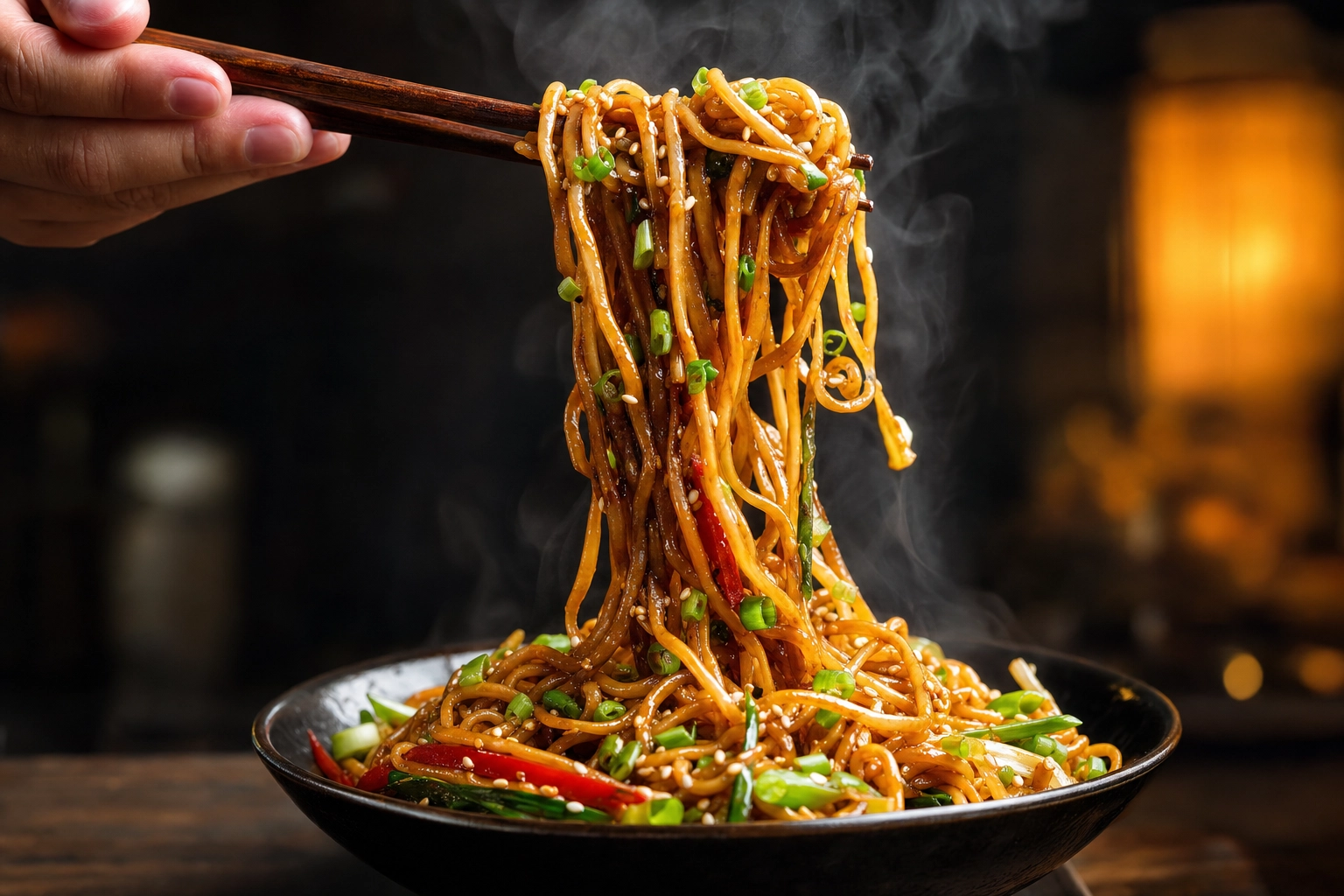 Chopsticks lifting glossy soy-glazed Chinese lo mein noodles mid-air above a bowl with rising steam, action shot
4. Peking duck and roast meats
Here, the lacquer is the hero. Peking duck gets its glassy, mahogany skin from a maltose-and-honey glaze, air-dried and roasted until it crackles — and your only real job is not to waste it. Light the bird directionally so the skin reads as crisp crackle, not grease. Then let the carving service work for you: a cleaver mid-slice, or a platter of skin fanned beside Mandarin pancakes, scallion, and hoisin, is a ready-made action shot. Carve and shoot fast, because the skin softens as steam rises from the meat. The same directional-light rule covers char siu, crispy-skin roast pork, and soy-sauce chicken on a Cantonese roast board.
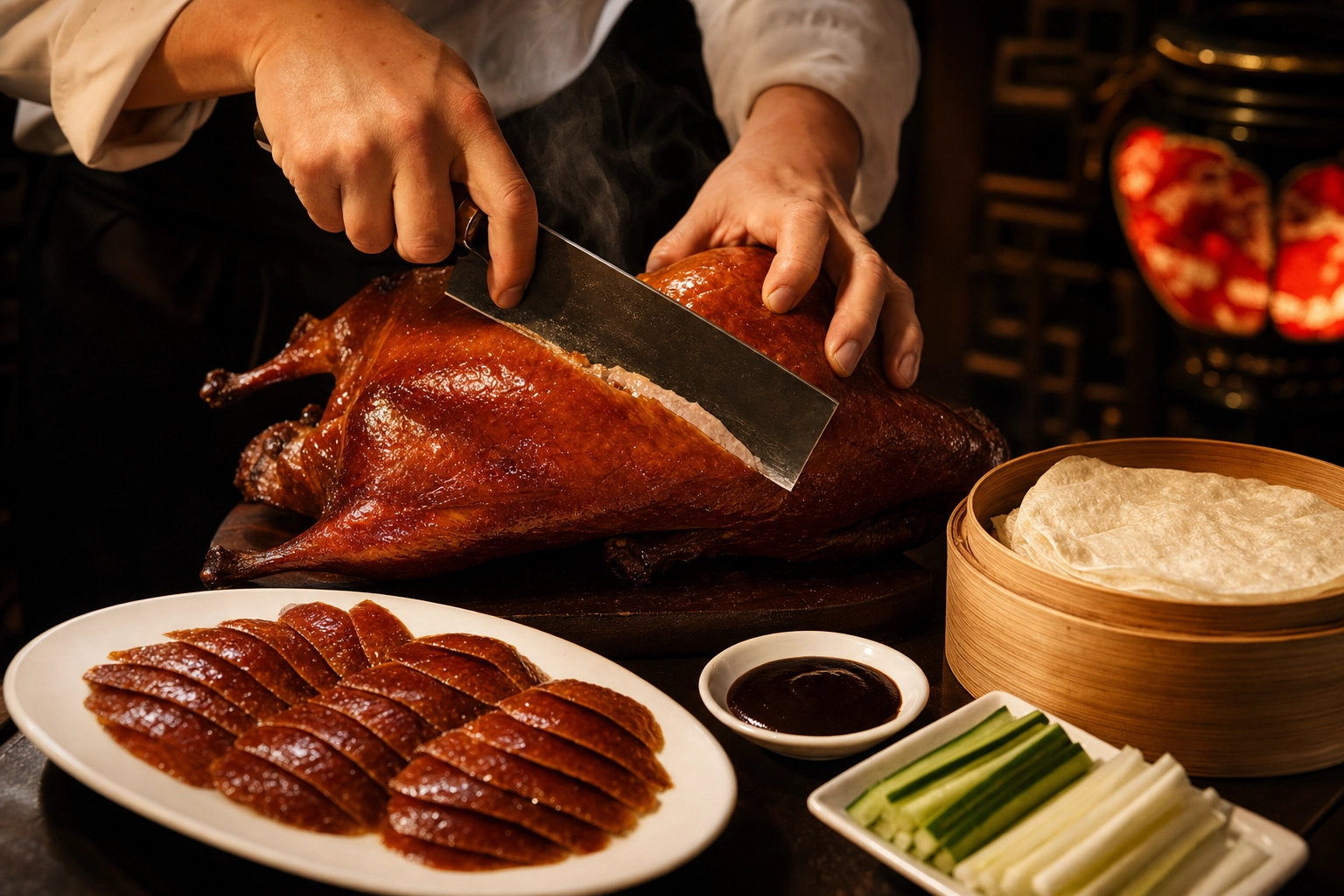 Chef carving a lacquered Peking duck tableside, glossy mahogany crispy skin under warm directional light with pancakes
5. The takeout-container hero for delivery
For takeout and delivery brands, the white carton is an asset, not an apology — its clean geometry photographs beautifully. Shoot it slightly open, with noodles, fried rice, or General Tso's chicken spilling toward the lens and a pair of chopsticks resting across for scale, against a high-contrast background. This shot has one brutal job: survive the delivery-app thumbnail wall, where your image sits barely an inch tall next to a dozen competitors. Fill the frame, keep the background clean, and respect the platform specs — Uber Eats wants 5:4 (at least 1200×800px), DoorDash wants 16:9 (at least 1400×800px). Our delivery app photography guide covers the rest, and it's exactly the shot we'll rebuild from a plain phone photo next.
Lighting and props that flatter Chinese dishes
If you fix one thing, fix the light — and the right light changes with the dish. Three setups cover nearly everything:
- Warm side light for bold, textured plates — stir-fries, braises, Sichuan dry-pot, and lacquered roasts. Raking light builds the moody, appetite-first look that makes rich colors feel expensive.
- Soft, even top-down light for shared spreads, so the dishes at the back don't fall into shadow.
- Backlight for anything with broth or steam — wonton soup, hot pot, noodle soup — then side-light the toppings to bring their texture back.
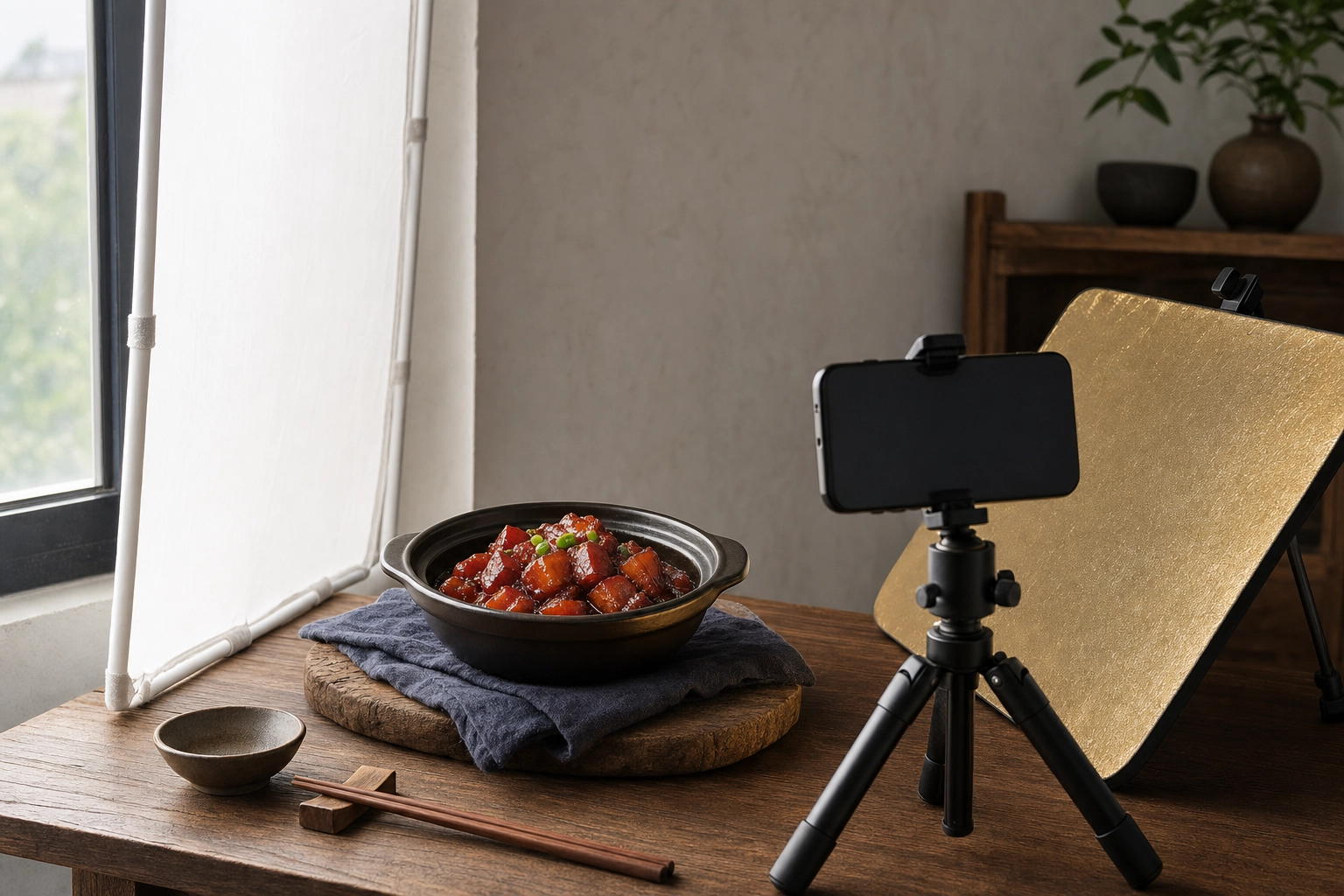 Window side-lighting setup for a glossy red Chinese dish with a sheer diffuser, gold reflector and phone on a tripod
Props and serviceware do the rest of the storytelling, because in Chinese food the vessel is half the styling. Match it to the region:
- Bamboo steamer for dim sum and buns
- Dark-glazed clay bowl for Sichuan and braises
- White takeout carton for American-Chinese delivery
- Banquet platter or lazy Susan for shared service
- Plain porcelain rice bowl as a neutral anchor
- Tall glass for bubble tea and iced drinks
Then scatter the cues that read instantly as Chinese: scallion batons, dried red chilies, Sichuan peppercorns, a small dish of hoisin, black vinegar with shredded ginger, toasted sesame, a pot of chili oil. Lay a pair of Chinese chopsticks — long and blunt, distinct from tapered Japanese ones — diagonally across the frame and they become a leading line that walks the eye straight to the hero. Just keep the rest of the frame clean: wipe the rim, leave one clear focal path, and resist crowding in every condiment at once.
A quick playbook for popular Chinese dishes
Different dishes reward different tricks — think of this as a cheat sheet, not a book of recipes. Here's the short version for the dishes that move:
- The big chicken dishes — General Tso's, orange chicken, sesame chicken, lemon chicken, and kung pao chicken are the dishes whose chinese food images do the most selling on an American-Chinese menu, so they earn the most care. Use a matte plate and side light, then scatter sesame, peanuts, or scallion over the glaze so the sauce reads as glossy and crisp rather than one gluey sheet. For spicy kung pao chicken, let the dried red chilies and peanuts break up the surface.
- Mapo tofu and Sichuan plates: shoot the spicy red-oil shimmer with a warm-neutral white balance so the reds stay rich instead of sliding orange, and let the garlic, chili, and numbing peppercorn read as separate layers.
- Beef and broccoli and garlic-sauce stir-fries: side-light to catch the gloss on the garlic sauce, and turn the broccoli florets toward the lens for color contrast against the brown sauce.
- Soup dumplings (xiao long bao): backlight the steam, macro the pleats, and stage one lifted in a spoon with a splash of black vinegar.
- Chow mein and lo mein: go for the noodle pull, or shoot a tight 45° on glossy noodles with crisp vegetables and a glint of oil. Chicken chow mein and beef lo mein both photograph best with the protein nudged to the top.
- Fried rice: shoot top-down, build a low mound rather than a flat layer, and let the egg, scallion, and char flecks read like confetti.
- Hot pot and wonton soup: backlight the broth so it glows from within, then side-light the proteins and greens floating on top.
- Egg rolls, spring rolls, and crab rangoon: 45° with a trio of dipping sauces in the frame; a clean diagonal cut shows off the filling.
- Bubble tea and egg tarts: backlight the tea to catch the pearls in suspension, and side-light an egg tart so the custard's glossy top reads.
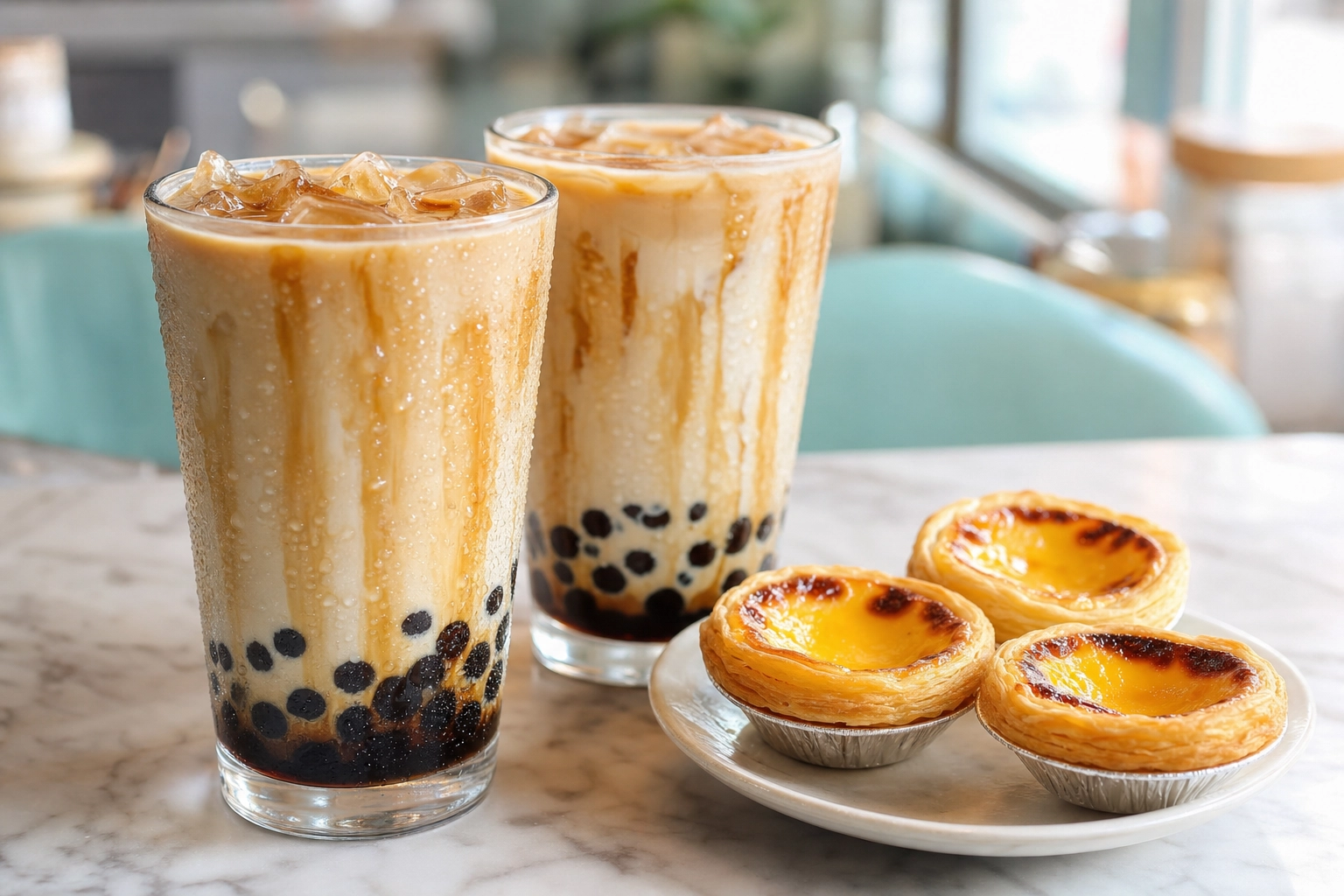 Tall glasses of brown-sugar bubble tea with tapioca pearls beside golden glossy-topped Chinese egg tarts on light marble
That range is the whole reason Chinese restaurants lean on a deep library of looks rather than one filter. Dialed-in lighting and styling are what turn a plate of food into chinese food images that actually drive orders — more on that next.
From a phone takeout photo to menu-ready in about 90 seconds
Here's the honest reality of a working kitchen: nobody on the line has time to backlight steam during a Friday rush. Most Chinese restaurants and takeout counters shoot a quick phone photo under fluorescent light — a carton of chow mein on a steel counter, flat and orange and unappetizing — and call it done. That photo is the "before."
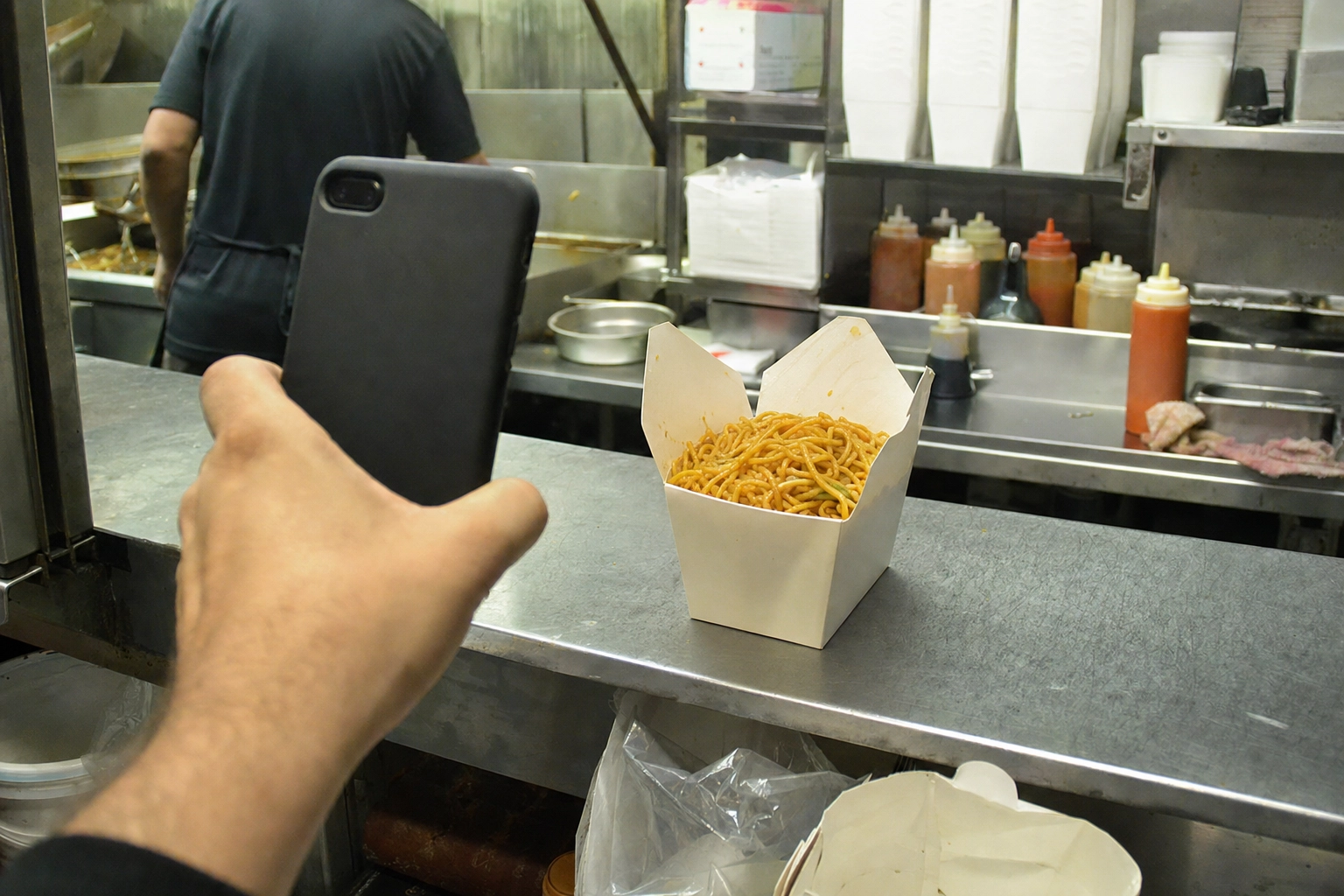 Hand holding a smartphone to photograph a dull carton of chow mein on a steel counter under harsh kitchen fluorescent light
You don't have to choose between that snapshot and a $700–$1,400 photographer (a bill you'd pay again every time the menu changes). An AI food photo editor rebuilds the same dish — relighting it, taming the glare, swapping the dull counter for a clean delivery-ready background, even coaxing back a little steam — in about 90 seconds, for roughly 95% less. The "after" is the kind of high-contrast, appetizing hero that actually earns the tap:
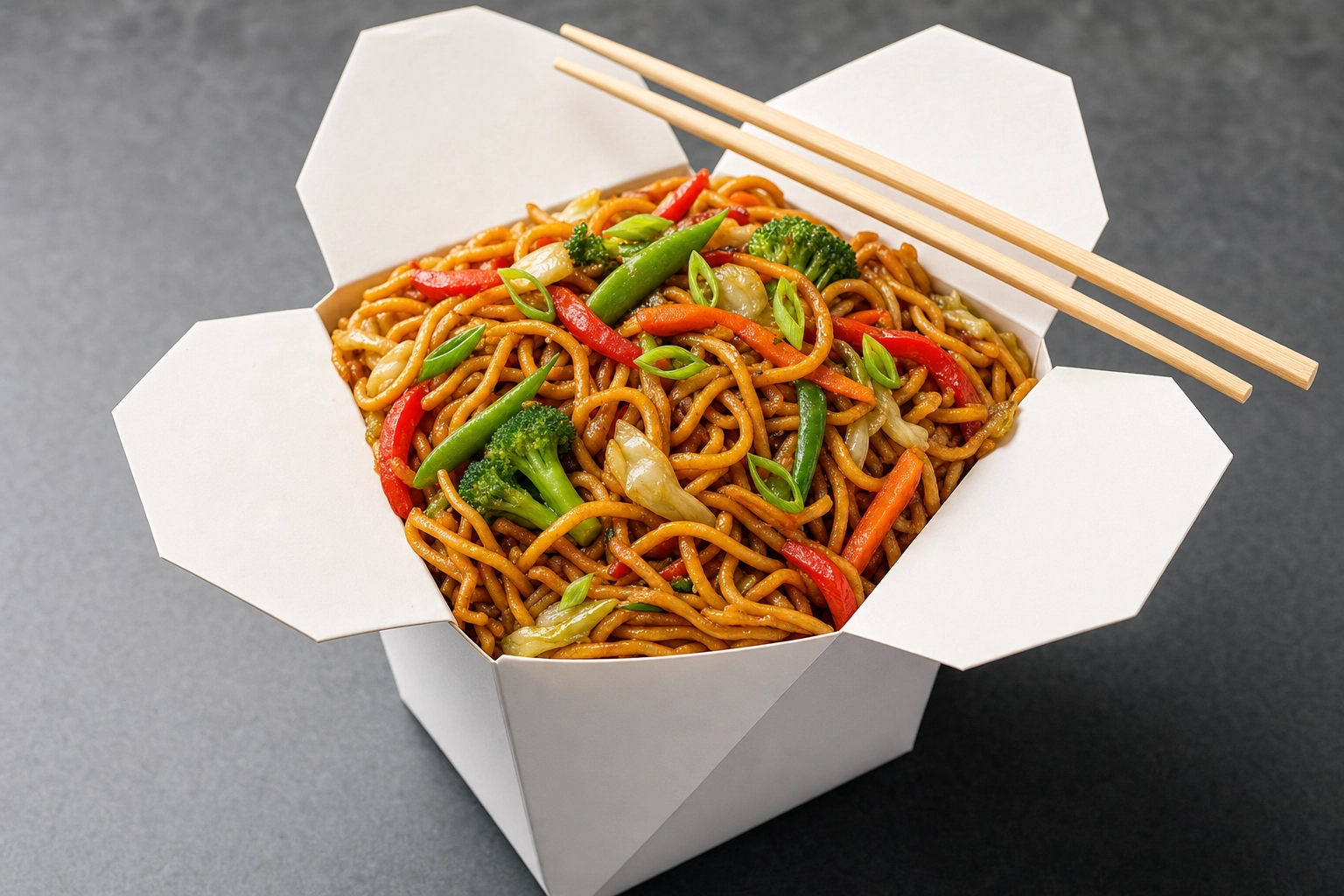 Open white Chinese takeout carton overflowing with glossy chow mein and chopsticks on a slate surface, delivery-ready
FoodShot works by enhancing and restyling your real dish photo; it doesn't fabricate fake food, so the chow mein on the screen is the chow mein you actually serve. That matters for orders, too: restaurants that add professional images to delivery listings routinely report around 25–30% more of them.
The payoff for Chinese menus specifically is consistency across a huge range. FoodShot's delivery-ready Chinese styles span Cantonese roasts, spicy Sichuan red-oil, Shanghainese dumplings, and American-Chinese takeout, so a 100-dish menu reads as one coherent kitchen instead of fifty mismatched snapshots. The 4K output is print-ready for menus, posters, and billboards, not just thumbnails. It's the same AI food photography workflow used in our food photography for restaurants, and you can browse the full library of looks organized by cuisine.
Ready to upgrade your chinese food images? Upload a dish, pick a Chinese style, and have a menu-ready photo back before the next order is bagged. Try the AI food photo editor →
Frequently Asked Questions
Quick, practical answers to the questions Chinese restaurants and home cooks ask most about photographing their food.
How do you take good pictures of Chinese food?
Start with soft, directional light instead of an overhead fluorescent or a phone flash. Side-light glossy, saucy dishes so the gloss reads as appetizing sheen rather than a blown-out hotspot. Shoot tall dishes at 45° and shared spreads at a 90° top-down, fill the frame, wipe the plate rim, and work fast before steam fades and garnish wilts. Match the vessel to the dish — a bamboo steamer for dumplings, a clay bowl for Sichuan, a white carton for takeout — and keep one clear focal point per shot.
Why does Chinese food look greasy or unappetizing in photos?
Almost always because of the light. Chinese sauces — soy, hoisin, sweet-and-sour, chili oil, brown gravy — are reflective, so a direct flash or hard overhead light bounces off them as harsh white hotspots that flatten everything into one greasy shine. Diffuse and lower your light, angle it from the side so it rakes across the surface, use matte plates instead of shiny ones, and correct your white balance so reds stay rich instead of turning orange.
What is the best angle for Chinese food photos?
It depends on the dish. Tall, three-dimensional plates — a domed mound of fried rice, a bowl of noodles, a whole steamed fish — look best at about 45°, roughly the eye line of someone leaning in to eat. Flat, shared spreads — a lazy Susan, a table of dim sum steamers — want a true 90° top-down that turns the whole scene into a graphic pattern. Macro details like dumpling pleats sit in between, around 45° up close.
How do you photograph noodles and get the noodle pull shot?
Lift a tangle of noodles with chopsticks until the strands hang clear of the bowl, and shoot at 1/200s or faster in burst mode to freeze the motion. Side-light the noodles so the sauce gloss reads as sheen, keep a hand in the frame for craft and scale, and fire several frames — the best pull usually isn't the first one. For brothy bowls, backlight the broth and steam first, then side-light the toppings.
How do restaurants get Chinese food images for delivery apps without hiring a photographer?
Many shoot a clean phone photo of each dish and run it through an AI food photo editor, which relights the dish, replaces the background, and outputs the exact aspect ratios delivery platforms want (Uber Eats 5:4, DoorDash 16:9). It costs a fraction of a professional shoot — typically around 95% less — and takes about 90 seconds per image, so you can refresh a full menu in an afternoon and re-shoot whenever a dish changes.
Can I use AI to create Chinese food images?
Yes — and the most reliable approach is to enhance your own dish photos rather than generate food from scratch. Tools like FoodShot take a real photo of your General Tso's chicken or your dumplings and restyle it: better lighting, a cleaner background, controlled gloss, sharper steam, and a consistent look across the whole menu. Because it builds on a real photo of the food you actually serve, what customers see is what lands on the table. You can browse the full set of Chinese food photography styles and apply them in a couple of taps.
Chinese food is the most photogenic cuisine on the planet once you stop fighting its sheen, steam, and sprawl and start working with them. Nail the five shots, match the light to the dish, and when the rush leaves no time, let a ready-made Chinese style library do the heavy lifting.