
Ramen Photography: Bowls, Broth & Toppings Made Mouthwatering
 Ali Tanis11 min read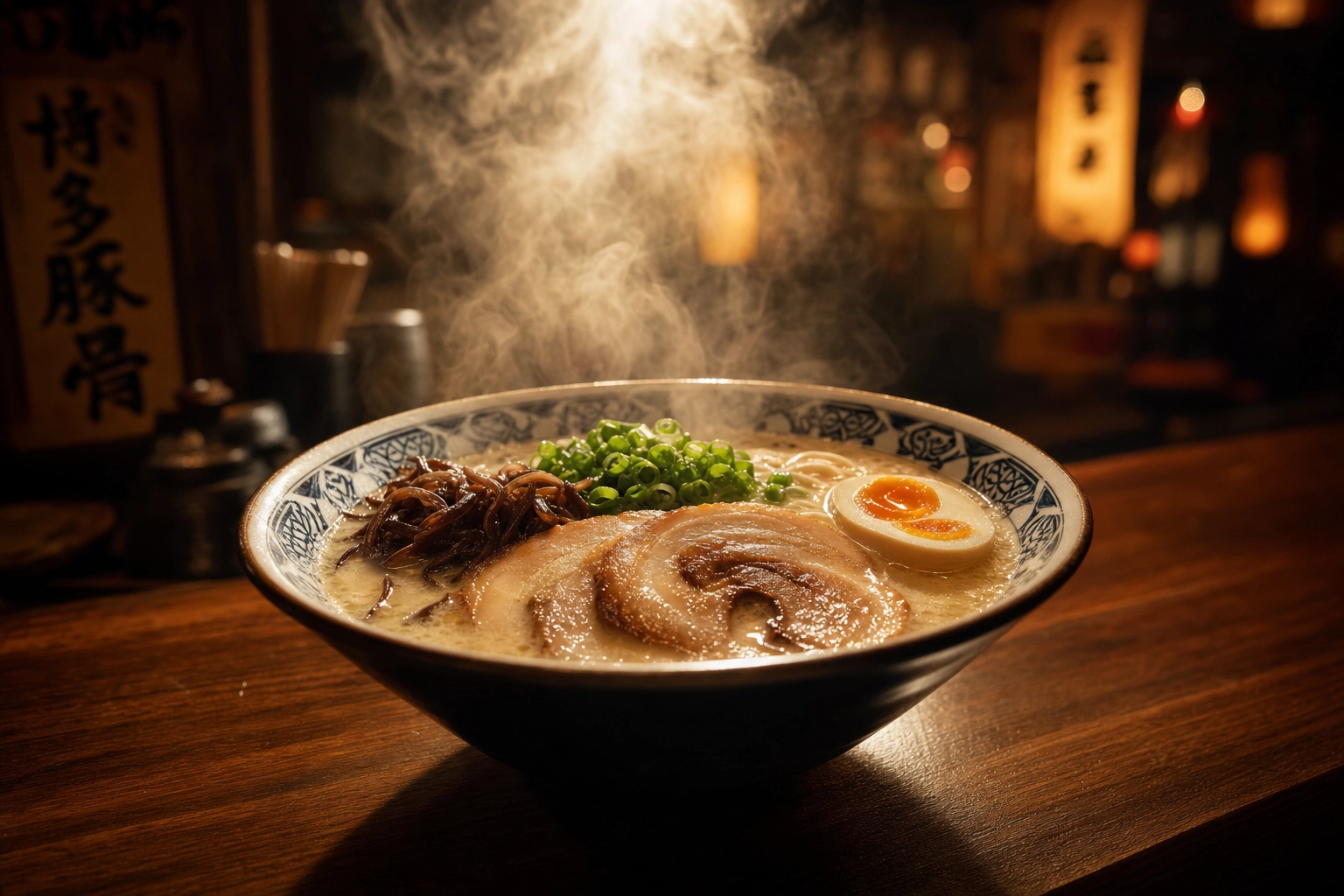
A bowl of ramen is one of the most photographed foods anywhere — and most ramen photos get it wrong. The broth turns muddy, the noodles vanish under the surface, and the steam that made it irresistible is gone before you find the angle. The dish you perfected ends up a sad puddle on your menu.
It follows rules, though. Get the light, the steam, and the noodle pull right, and great ramen photos can sell a hundred more bowls.
Quick Summary: Great ramen photos need five shots (hero, noodle pull, action pour, topping macro, atmosphere) and one rule: backlight the broth and steam, side-light the toppings — all before the 90-second steam clock runs out. Shoot a phone photo of a real bowl, then use an AI food photo editor to finish it in studio quality.
Why great ramen photos are so hard to get right
Most food sits still and waits for you. A bowl of ramen fights back, and most photos fail for four reasons at once:
- Broth visibility. Opaque tonkotsu swallows the noodles whole; clear shoyu shows everything, including surface grease.
- Noodle clarity. Noodles sink, clump, and bloat into mush within minutes of hitting hot broth.
- Topping chaos. A dish that tastes perfect reads as a jumbled mess through the camera unless you arrange the ingredients.
- Steam. The plume that screams hot and fresh fades in about 90 seconds, and is invisible unless you light it right.
Broth and soup are the toughest subjects in food photography, and ramen piles it into one bowl. The good news: every problem has a fix, and none need an expensive camera or a studio — just a window, a dark background, and a minute of styling before the soup goes cold.
The 5 ramen photos every menu needs
A menu doesn't need fifty images of one dish — it needs five shots that each do a different job across menu, delivery, and social.
1. The top-down bowl hero
Shoot straight down at 90 degrees (a true overhead) so the whole composition reads at a glance. Fill the frame, wipe the rim, and let the egg or chashu anchor the eye. It's the workhorse for delivery thumbnails and menu grids, where the dish must read at postage-stamp size.
2. The chopstick noodle pull
The money shot: noodles suspended mid-air with steam trailing off them. It's the most shareable ramen image you can make, and it gets its own deep-dive below.
3. The action pour or drop
Motion sells freshness — broth ladled in, the egg lowered, chili oil drizzled on top. Use burst mode and a fast shutter to freeze the splash. An action frame brings energy a static shot can't.
4. The topping macro
Move the camera close at 45 degrees on the seared chashu edge, the jammy egg cross-section, or the glossy broth. A shallow depth of field softens the background and makes texture pop.
5. The hands-and-bowl atmosphere shot
Add a human. Hands cradling a hot bowl bring warmth and scale a studio shot can't. Keep the props simple — chopsticks, a soup spoon, a napkin — and shoot in your dining room with light behind the scene. It pairs naturally with the rest of your Asian food photography.
Lighting ramen: backlight the broth, side-light the toppings
Remember one thing about lighting ramen: the light belongs behind the bowl, not in front of it.
Backlighting — your main light behind and slightly above the bowl, around the 10–11 or 1–2 o'clock position — does three jobs: it makes the broth glow from within, catches the sheen on the noodles, and makes steam visible.
Front light, especially an on-camera phone flash, flattens the broth, kills the steam, and bounces a hotspot off the liquid. Turn it off.
Then shape the toppings with a second angle. Side light at 90 degrees to the camera rakes across the surface and reveals texture — the crust on the chashu, the ridges of a soft yolk. Our full food photography lighting guide goes deeper. You don't need a studio: one big window, the bowl backlit, and a white card on the shadow side is the whole kit.
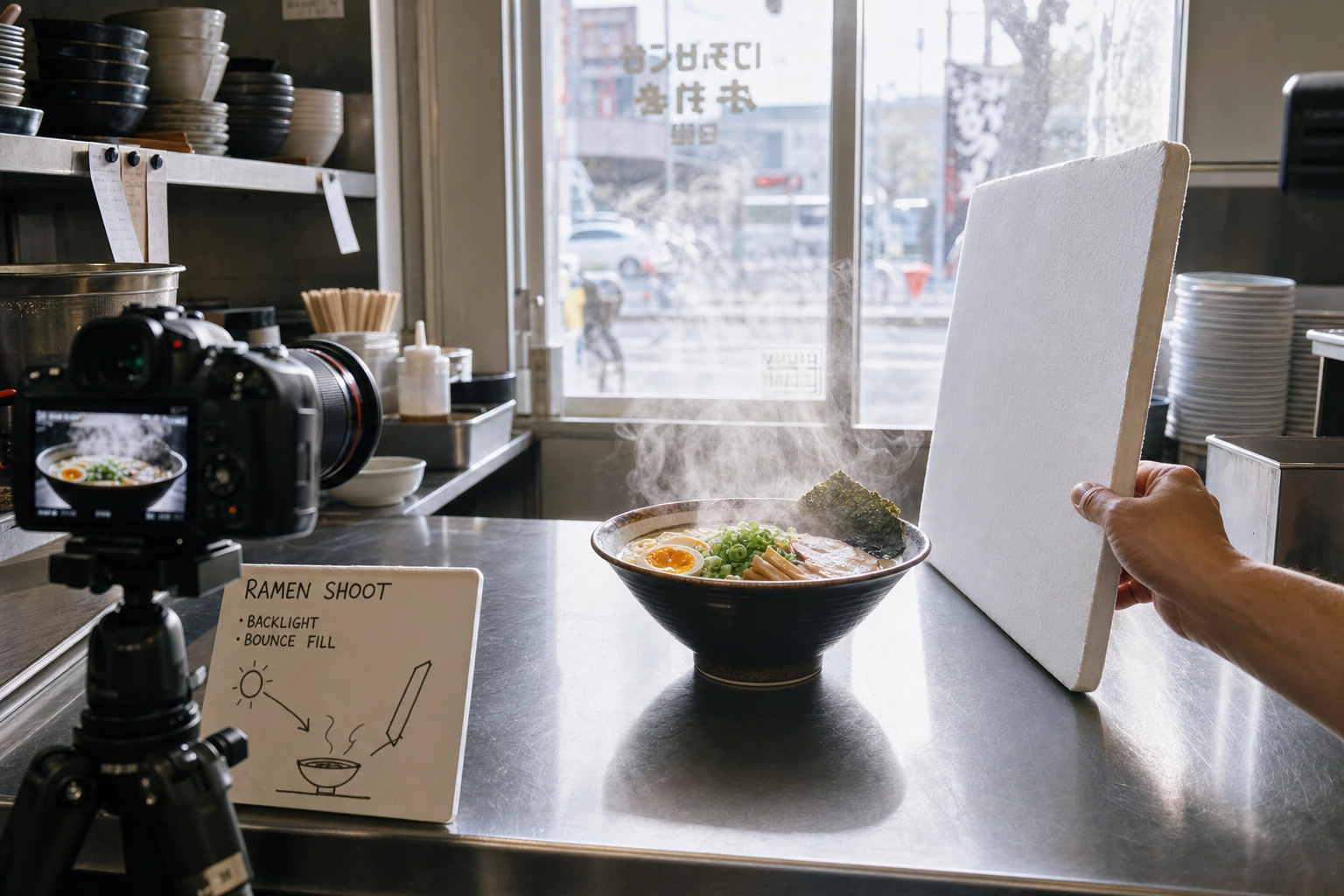 Window backlight setup for ramen photography with a white bounce card and rising steam
How to capture steam (real steam vs. the cotton-ball trick)
Steam is the emotional payoff — the difference between "a bowl of noodles" and "a bowl I can almost smell." It's also the first thing to vanish, so plan for it.
The rule that makes or breaks steam: backlight it over a dark background. Steam is pale and semi-transparent, so it won't show against a bright backdrop. Put a dark surface behind the bowl, push light through the steam from behind, and the wisps read like smoke.
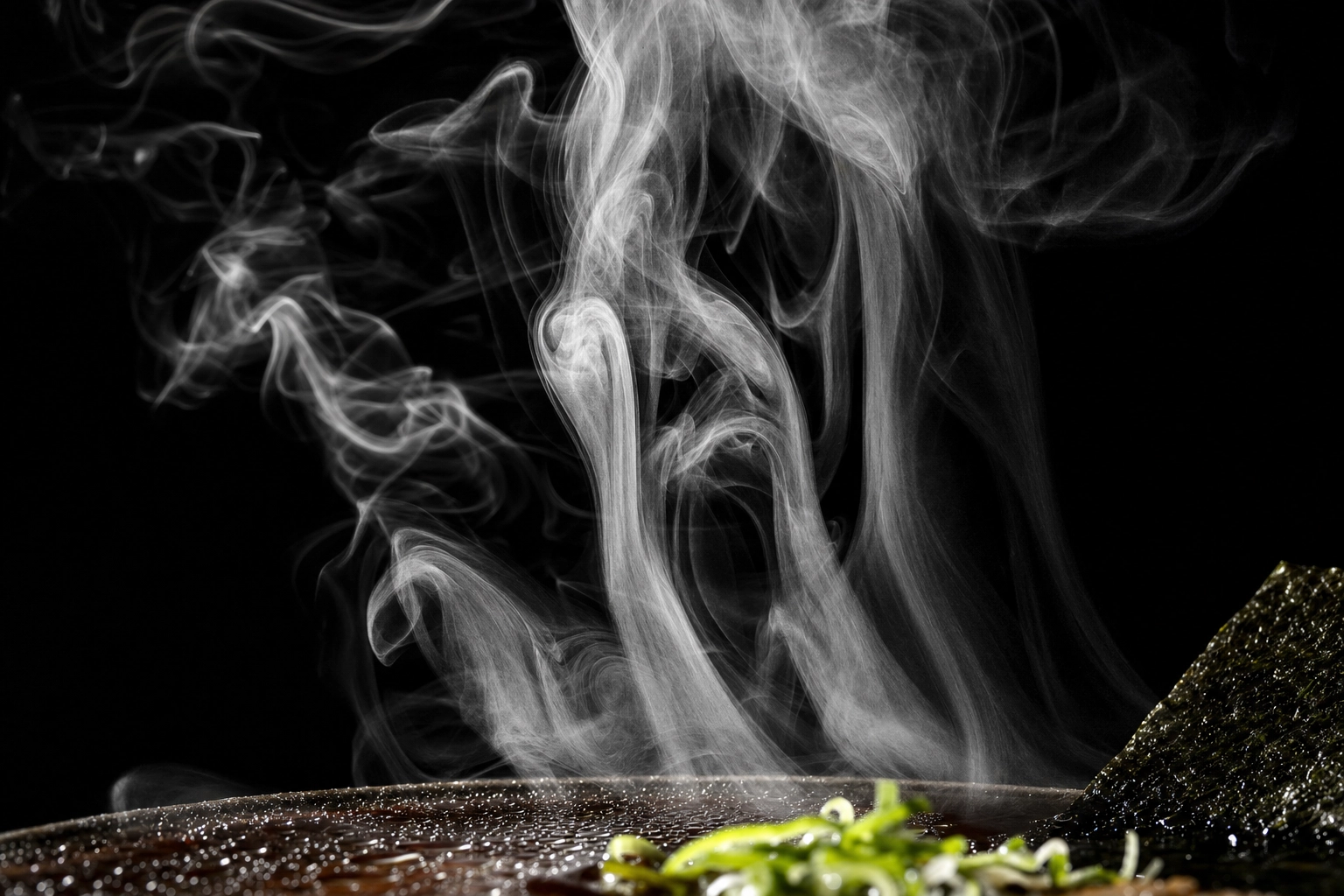 Backlit steam wisps rising from dark ramen broth against a black background
A few tips for real steam:
- Work fast — the plume thins to nothing within ~90 seconds.
- Keep the shutter at 1/200s or faster: quick freezes distinct wisps, slow gives a soft haze.
- Use a tripod so you can pre-frame and fire the instant the bowl is ready.
- Hide a small cup of just-boiled water behind the bowl to boost a fading plume.
The cotton-ball trick: when natural steam won't cooperate, food stylists soak cotton balls in water, microwave them 30 seconds, and hide them behind the bowl for steam on demand. An incense stick makes sculptural wisps, and many pros shoot steam as a separate frame to layer in later.
One clarification: the glycerin trick (50/50 glycerin and water) is for fake condensation droplets on cold drinks, not hot steam.
The noodle pull: height, timing, and lighting
The suspended pull is ramen's signature image — more technique than luck.
Grab more than you think you need. Dig deep, twirl a generous bundle, and lift. A thin strand looks stingy; a full, cascading tangle looks abundant. As one food blogger told HuffPost, ramen is the best noodle for the job — quality strands cascade, while a limp pull says the noodle isn't great.
Lift to the right height. Eight to twelve inches above the bowl is the sweet spot: high enough to show length, low enough to keep both in frame.
Light it from behind against a dark background so the broth-coated noodles glisten.
Freeze the moment. The pull holds for about four seconds, so use burst mode and a fast shutter, and have a helper hold the chopsticks while you fire a dozen frames.
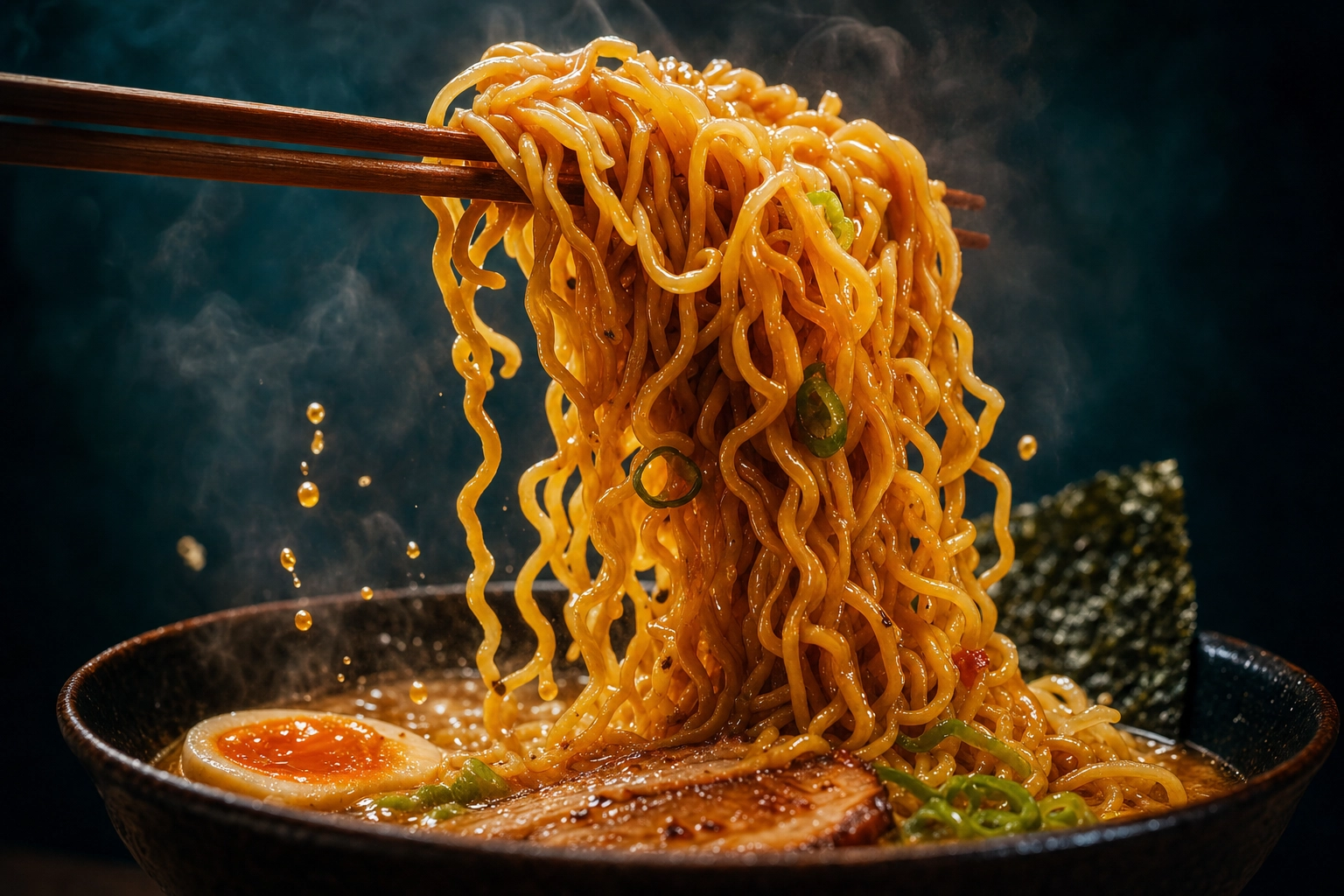 Chopsticks lifting glistening ramen noodles in a mid-air pull above a steaming bowl
Arranging ramen toppings like a pro
The bowl your kitchen plates is built for eating, not the camera. A 30-second rearrange is the styling step most menus skip. The tips that matter most:
- Chashu — fan the slices, seared side toward the lens so the caramelized edge catches light.
- Ajitama egg — slice it and face the jammy half-yolk at the camera; never hide it cut-side down.
- Nori — stand the sheet vertically against the rim for height.
- Accents — scallions for fresh green, bean sprouts for volume, menma for an earthy note, narutomaki for a graphic spiral, and corn with butter for a Sapporo miso bowl.
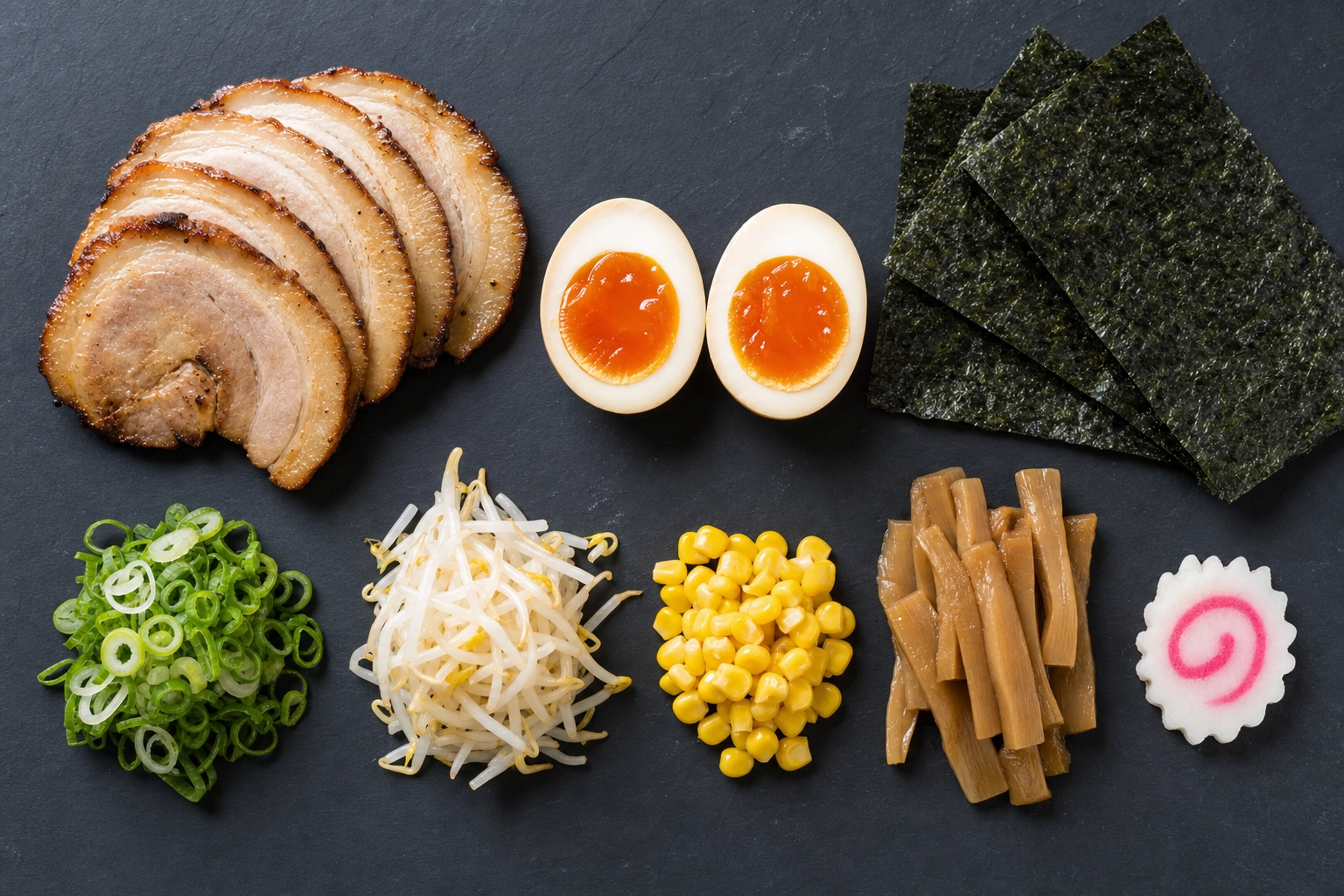 Overhead flat-lay of ramen toppings: chashu, jammy eggs, nori, scallions, corn and narutomaki
Compose like a clock face: give each topping its own "hour," build a little height, and lean on color contrast — orange yolk, green scallion, white sprout, dark nori. Use the rule of odds — three or five elements beat four. If the broth is opaque, create a small "window" where noodles surface, and wipe the rim before every frame.
Style notes for every kind of ramen
Each style has a visual signature, and the broth color in your ramen photos is the fingerprint of authentic craft. A few tips, broth by broth:
- Tonkotsu — cloudy cream pork-bone (Hakata). Light it to show the rich body and glossy fat.
- Shoyu — clear amber (Tokyo). Backlight the broth to celebrate its transparency.
- Miso — hearty orange (Sapporo). Built for corn, butter, and warm, moody light.
- Shio — pale, delicate salt broth. Use bright, clean light to show its clarity.
- Tantanmen — spicy sesame and chili oil. Catch the sheen of red oil on top.
- Tsukemen — dipping ramen: glossy cold noodles beside a small bowl of hot broth.
- Vegetarian — lean into color and freshness: vegetable or mushroom broth, corn, greens, bright veg in airy light.
For refined, Michelin-tier bowls, the same rules apply with tighter styling — the polish covered in our fine dining photography guide.
From phone photo to menu-ready in 90 seconds
The honest problem: the steam fades while you fiddle with a tripod, and no busy ramen shop can book a photographer for every new seasonal bowl.
Professional photography isn't cheap, either — roughly $50–$150 per image and $750–$2,500 for a full day, plus a food stylist at $500–$1,200 a day. For a menu that changes seasonally, that math rarely works.
Here's where an AI workflow changes the game. Shoot one clean phone photo of a real bowl — decent light, toppings arranged — then upload it to an AI food photo editor, pick a ramen-tuned style, and export a 4K image in about 90 seconds.
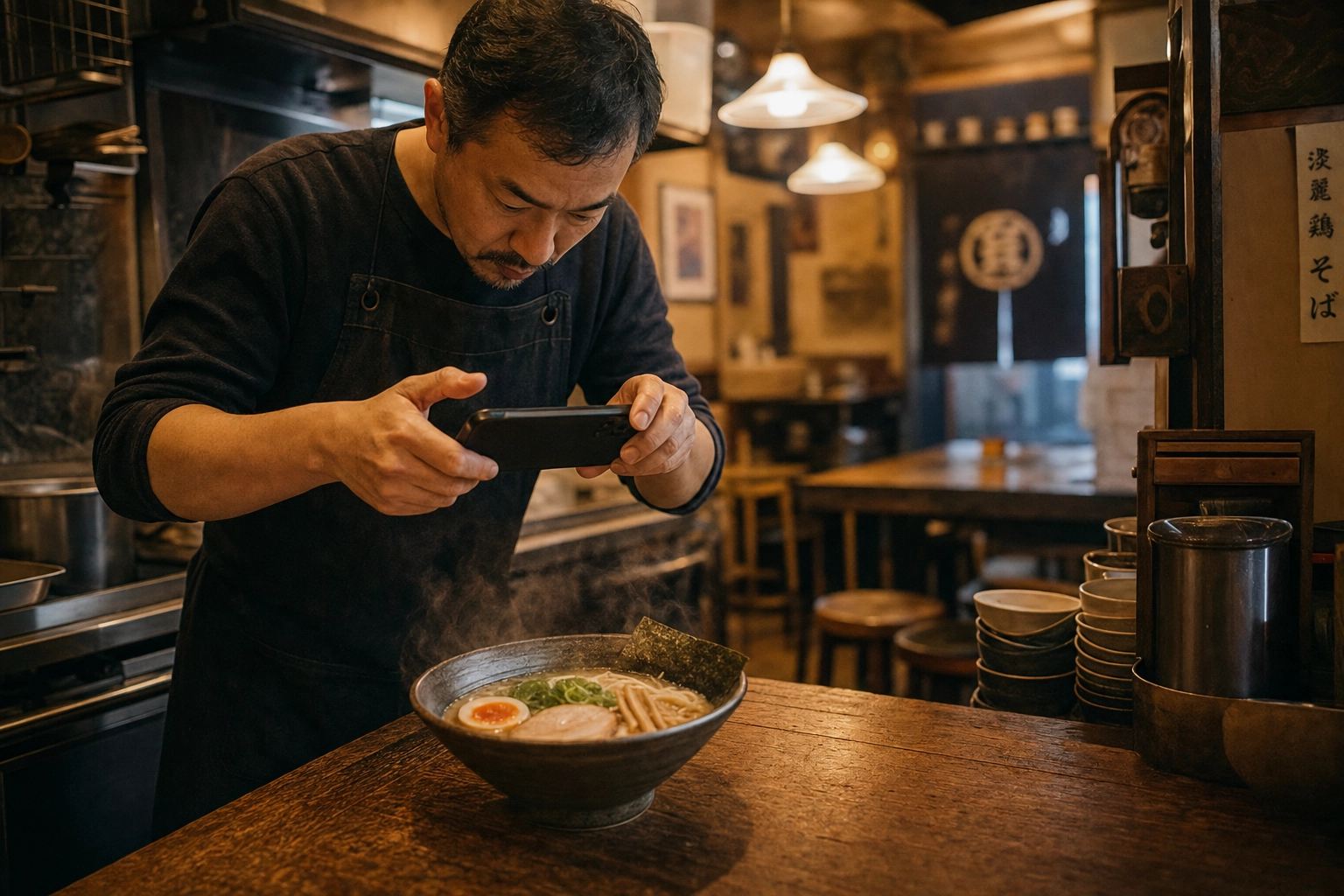 Ramen shop owner photographing a steaming bowl with a smartphone at the counter
AI fixes what makes ramen punishing: it corrects the broth color, creates a believable steam halo, restores the gloss on the noodles, and cleans up the background and exposure. What it can't do is invent a dish from nothing — it enhances a real photo of real ramen, so the shot still starts with your actual bowl.
For a multi-location shop, the payoff is consistency: every bowl keeps the same broth signature across menu, delivery, and social. Browse ramen-specific looks in the AI ramen photography styles library and find your fit on the pricing page — the same workflow powers a single noodle bar or a chain launching a new sushi photography lineup.
Your ramen shop can be photo-ready in 90 seconds. Snap the bowl, upload, pick a style, and put mouthwatering ramen photos on your menu before the next order fires.
Frequently Asked Questions
How do I photograph the steam rising from hot ramen?
Backlight it over a dark background. Steam disappears against bright backdrops, but with light behind the bowl and a dark surface behind that, the wisps glow. Keep the shutter at 1/200s or faster, use a tripod, and shoot within 90 seconds. If steam fades, hide a microwaved wet cotton ball behind the bowl.
How do I get a clean noodle pull shot with chopsticks?
Twirl a bigger bundle than feels necessary so the tangle looks full, then lift 8–12 inches above the bowl. Backlight it against a dark background, use burst mode with a fast shutter, and have someone hold the chopsticks while you fire a dozen frames — the pull lasts only about four seconds.
How do I photograph dark or opaque broth so it doesn't look flat?
Backlight it so the surface catches a glow instead of a wall of brown. Then create visual breaks: face a glossy yolk and a seared chashu slice at the camera, add a chili-oil pop of color, and leave a small window where noodles surface. The toppings and sheen carry the shot when the broth can't.
What's the best angle for ramen photos — top-down or 45 degrees?
Both. Shoot top-down for the hero and delivery thumbnails, where the whole composition must read at a tiny size. Shoot at 45 degrees for topping macros and atmosphere, where you want height, steam, and surface texture.
Can I shoot professional-looking ramen photos on my phone?
Yes. Modern phones have the resolution and burst mode for everything here. Use natural window light from behind the bowl, keep the flash off, focus on the egg, and shoot plenty of frames — then let an AI food photo editor finish it.
How many photos does a ramen menu need?
Fewer than you'd think: one top-down hero per signature bowl, a noodle-pull and an atmosphere shot for social, and a couple of topping macros — about five well-made ramen photos per flagship bowl.