AI Food Photography vs Hiring a Photographer: An Honest Comparison
 Ali Tanis14 min read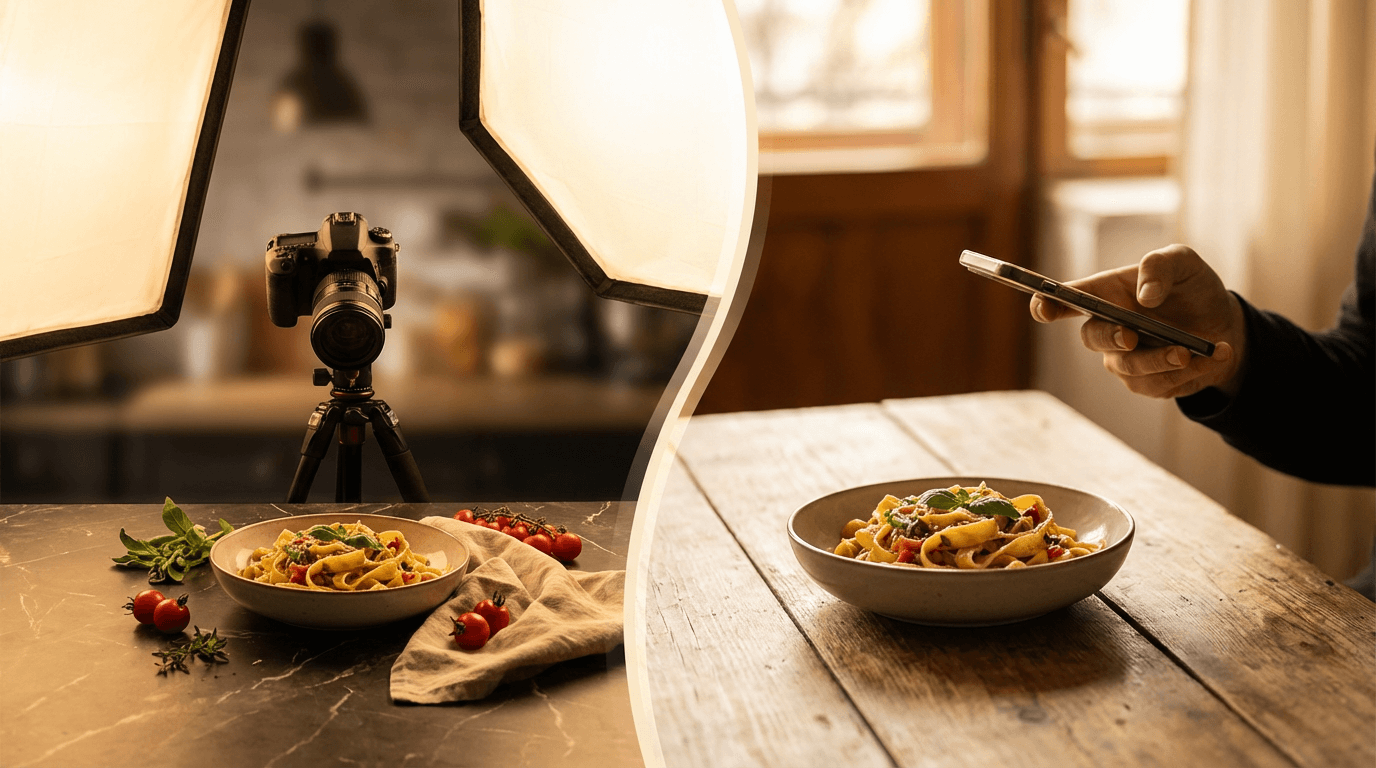
Professional food photography used to mean one thing: hire a photographer, book a studio, and budget thousands for a single shoot. In 2026, restaurant owners have a real alternative. AI food photography tools can now produce professional-quality images from a smartphone photo — at a fraction of the cost and turnaround time of a traditional food photography session.
But that doesn't mean professional food photographers are obsolete. Far from it.
This guide compares hiring a professional food photographer versus using AI food photography across eight dimensions, with real pricing data and honest assessments. No sales pitch — just a decision framework for your restaurant or food business.
Quick Summary: Professional food photographers excel at editorial shoots, brand campaigns, and creative storytelling — that expertise is worth every penny for the right projects. AI food photography tools are faster, cheaper, and more practical for daily restaurant operations: menu updates, delivery app photos, social media content, and seasonal promotions. Most successful restaurants use a hybrid of both.
Professional Food Photography vs AI: Which Job Does Each Do Best?
The professional food photography debate gets polarized fast. Photographers argue AI can't match human artistry. AI advocates claim photographers charge too much for work that software handles. Both miss the point.
A skilled professional food photographer brings genuine creative vision — they understand how light plays on a glazed pastry, how to compose a shot that tells a story, and how to style food so it photographs beautifully for their clients. Years of experience with food photography — building a portfolio, mastering camera equipment, learning to work with food stylists — produce results you can't replicate with software.
But most restaurants don't need editorial-grade images for every menu item on Uber Eats. They need a clean, appetizing photo of their actual food, ready to publish in minutes — not weeks.
These are different tools for different jobs. Here's how they compare across eight dimensions that matter to restaurant owners.
1. Cost Per Image: What Restaurants Actually Pay
This is where the gap between professional food photography and AI is most dramatic — and where hidden costs catch clients off guard.
A food photographer's session fee ($500–$2,500) is just the headline number. The actual invoice includes the full production crew and studio work:
| Cost Component | Professional Food Photographer | AI Tool (FoodShot) |
|---|---|---|
| Session/shoot fee | $500–$2,500 | $15–$99/month |
| Food stylist | $500–$1,200/day | $0 (you plate the dish) |
| Studio rental | $750–$2,500/day | $0 |
| Props & materials | $150–$400 | $0 |
| Assistant/crew | $350–$500/day | $0 |
| Post-production editing | $10–$25/image (advanced) | Included |
| Total per shoot | $2,330–$7,400 | $15–$99/month |
| Cost per image | $50–$500+ | $0.40–$0.60 |
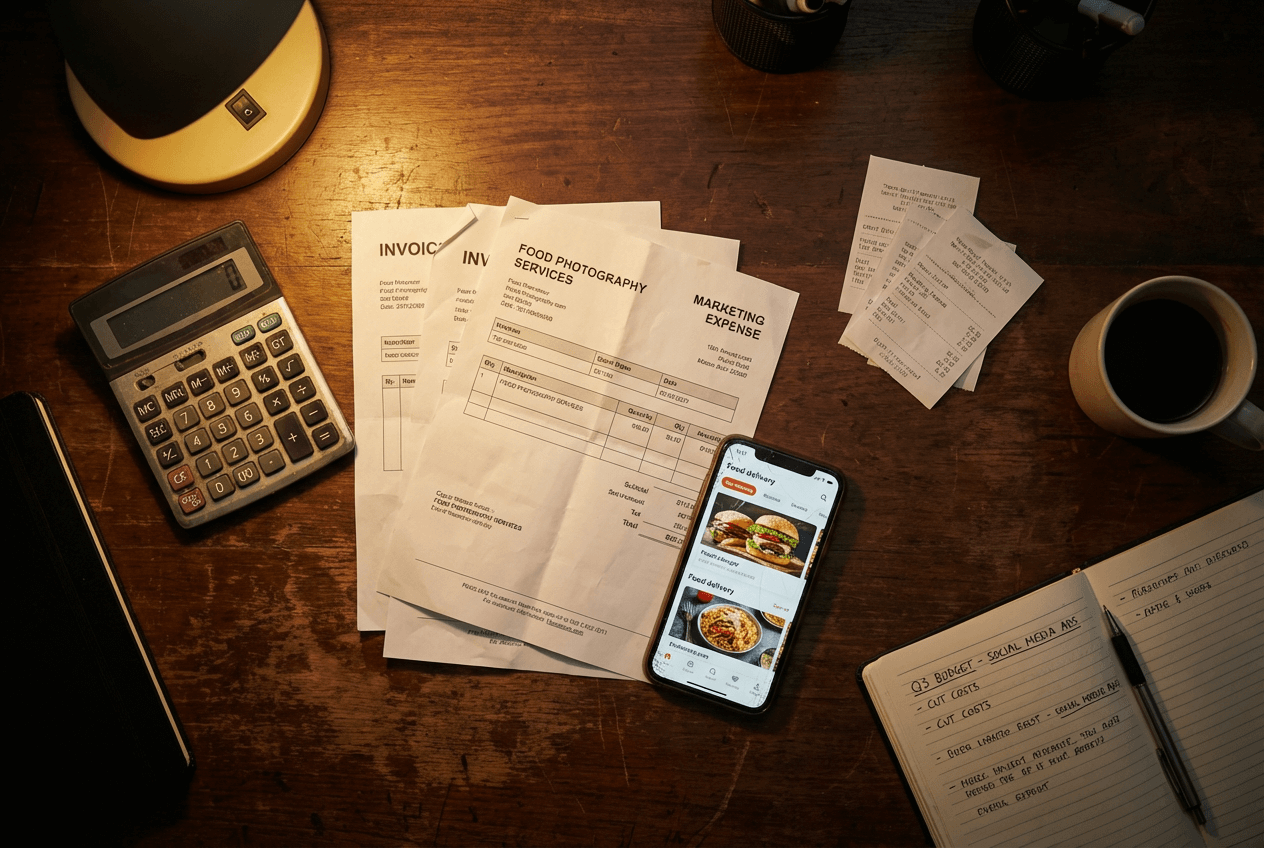 Restaurant food photography budget planning with invoices and delivery app photos on desk
Restaurants that schedule quarterly photo shoots spend roughly $9,300–$29,600 per year on professional food photography work. The same restaurant could cover every menu update, seasonal change, and social media post for $180–$1,188 annually with AI. (For the full pricing breakdown, see our complete food photography cost guide.)
The honest take: If you only need 10–15 hero shots once a year, hiring a food photographer is a reasonable per-image investment — especially for brand-defining images. But the moment your restaurant needs ongoing photo updates at any volume, the economics shift dramatically toward AI.
2. Turnaround Time: From Idea to Published Photo
Professional food photography is a multi-week project. AI food photography is a matter of minutes.
Hiring a professional food photographer:
- Booking: 1–3 weeks out (popular photographers in your area may book further ahead)
- Shoot day: 4–8 hours including setup, lighting work, food styling, and breakdown
- Post-production: 3–7 business days for retouched, edited images
- Total: 2–6 weeks from first call to final delivery
AI food photography:
- Photograph your dish: 30 seconds with your phone
- Upload and enhance: About 2 minutes
- Total: About 2.5 minutes
The speed gap barely matters for a planned brand campaign with a month of lead time. It matters enormously when your chef creates a new special at 2 PM and you need that shot live on DoorDash by dinner service.
Restaurants operate on a kitchen's timeline, not a photographer's booking calendar. Food doesn't wait — and the business opportunity around a new dish shouldn't either.
3. Quality and Authenticity: The Nuanced Truth
Here's where we'll be genuinely honest, even though we sell an AI tool.
Professional food photographers produce superior images for high-end creative work. A skilled photographer with proper studio lighting, a talented food stylist, and curated props creates shots with emotional depth and artistic nuance that AI cannot fully match. The best professional food photography — the kind you see in cookbooks and top food magazines like Bon Appétit — has warmth and intentionality rooted in a human understanding of food, culture, and visual storytelling.
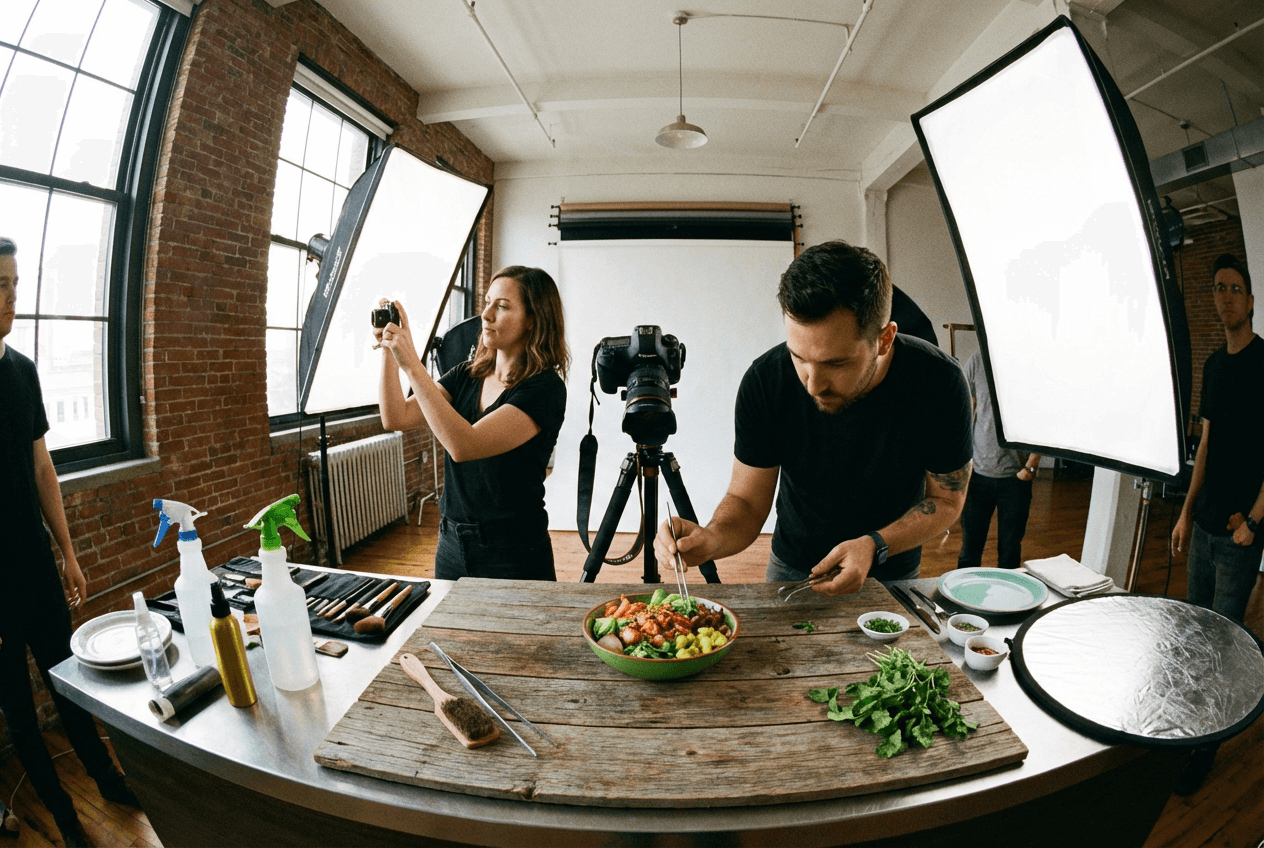 Professional food photography session with photographer and food stylist working in studio
That said, the quality gap has narrowed considerably for everyday commercial needs. AI food photography tools now produce work that performs strongly on delivery apps, restaurant websites, and social media. According to Snappr's enterprise research, restaurants with professional-looking food photos receive 24–35% more orders — regardless of whether those images came from a $3,000 studio shoot or AI enhancement.
One crucial distinction: AI food photography tools like FoodShot work with photos of your actual dishes. You photograph your real food, then the AI enhances lighting, composition, and backgrounds. This is fundamentally different from text-to-image generators like Midjourney or DALL-E that create food images from scratch — photos that don't represent what your kitchen actually produces.
The honest take: For a cookbook, a magazine editorial, or a billboard — hire a professional food photographer. For your delivery app menu, your Instagram feed, and your weekly specials — AI delivers strong commercial quality using shots of your real food.
4. Consistency Across Your Restaurant Menu
Visual consistency is one of the most underrated factors in photography for restaurants. A menu where every dish shares the same lighting style, background feel, and composition signals a professional brand. A menu with five clashing visual styles looks like it was assembled by five different people.
Professional food photographer: A single shoot produces consistent work — same light, same set, same creative style throughout the session. But restaurants rarely photograph their entire menu in one sitting. A 50-item menu shot across two or three sessions — potentially weeks apart, with varying natural light conditions — shows differences in color grading, background tones, and overall feel. Maintaining consistency across multiple shoots requires careful art direction and adds cost.
AI food photography: This is arguably AI's clearest advantage. Identical style presets and enhancement settings apply to every image, whether you upload 5 dishes today and 10 more next month. Your pad thai and your tiramisu share identical visual DNA. This consistency matters especially for delivery app listings where customers scroll your entire menu at once.
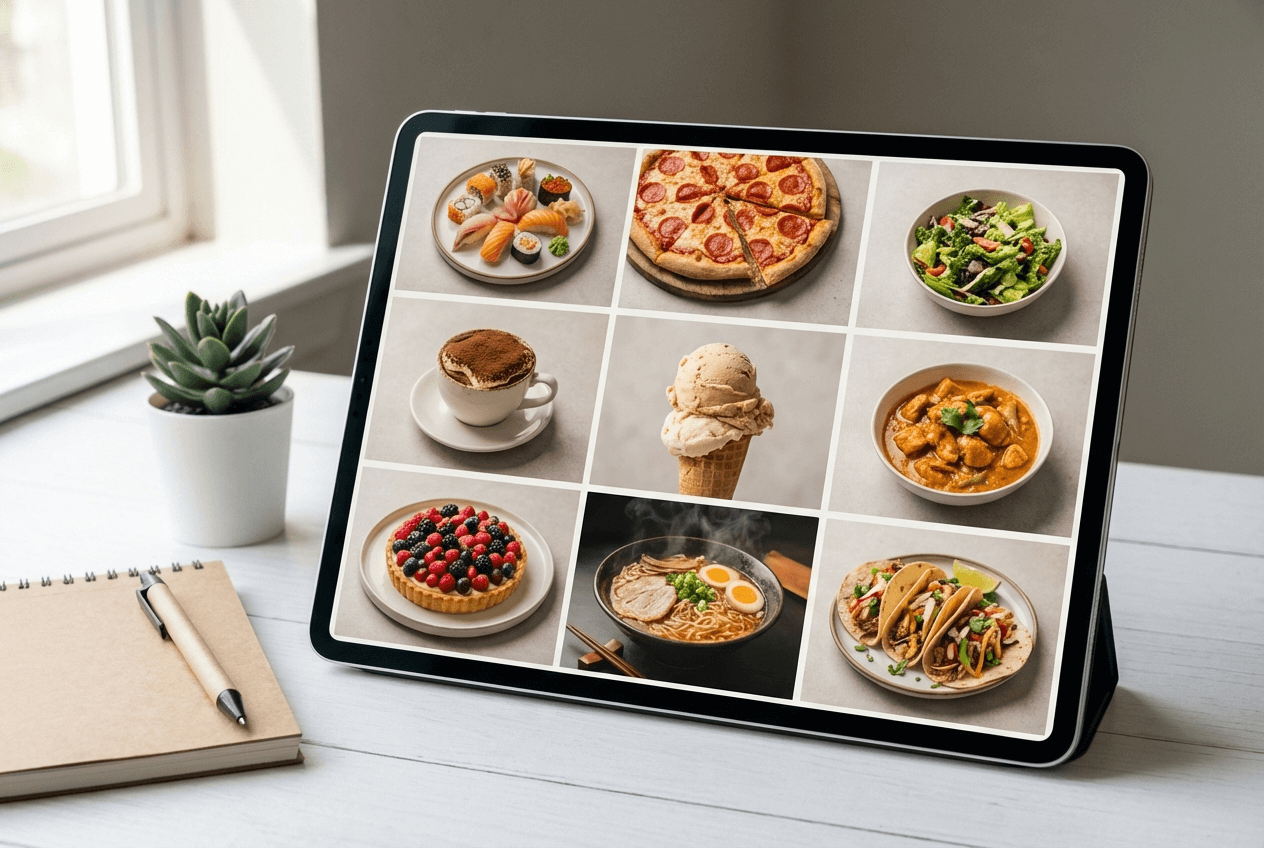 Tablet displaying grid of food photos with consistent AI-enhanced styling across diverse dishes
5. Flexibility for Menu Updates
Every restaurant owner recognizes this scenario: it's November, you're launching a winter menu, and half your current food photos show summer dishes on bright, airy backgrounds.
With a professional food photographer, you're booking a new shoot — and the full production timeline resets. For restaurants with seasonal menus, that means 3–4 photography sessions per year at minimum.
With AI, you snap photos of new dishes and run them through your established workflow. The updated menu images are ready and published the same day dishes are finalized.
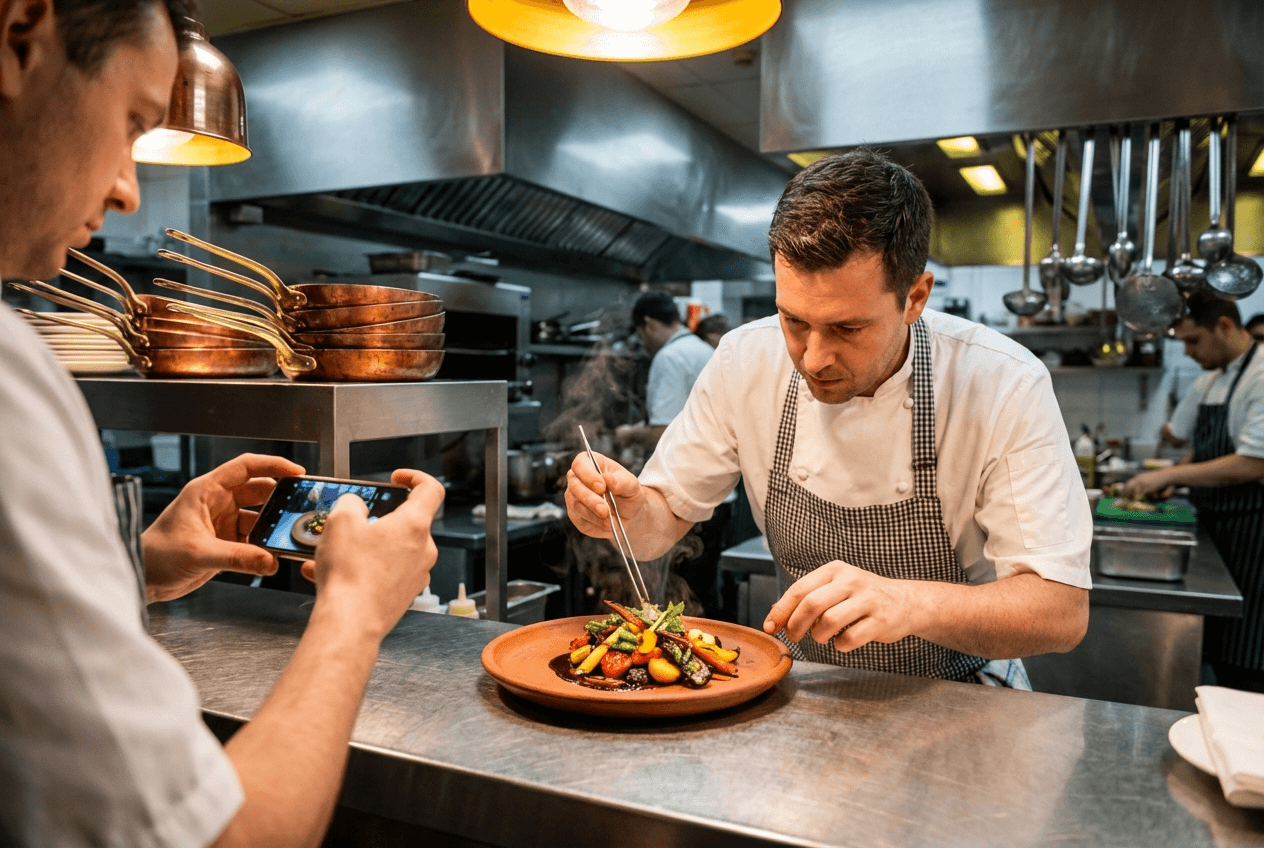 Chef plating seasonal dish in restaurant kitchen while team member photographs with smartphone
This flexibility extends beyond seasons. Daily specials, limited-time offers, ingredient changes that alter a dish's look, new cocktails for happy hour — all need fresh food images for delivery platforms and social media. None justify the cost and timeline of booking a professional food photographer. (This is exactly why cafes love AI food photography — their menus rotate weekly.)
6. Creative Control: Who Directs the Vision?
This dimension cuts both ways in the professional food photography vs AI comparison.
Professional food photographer: You're hiring a creative expert whose portfolio and style drew you in. The best food photographers bring ideas you wouldn't imagine — unexpected camera angles, dramatic lighting setups, and props that tell your brand's story. They elevate the creative work beyond what clients could conceive on their own. But each creative pivot during a shoot costs time and money. Different background set? More setup work. New camera angle? More time on the clock. The process is collaborative but expensive.
AI food photography: You're the creative director. FoodShot offers 30+ style presets, background swaps, lighting adjustments, and camera angle changes you can test in a few minutes. Don't love the first result? Try another style. Want to compare your burger against a rustic wood set vs. a modern minimal background? Each version takes about 2 minutes. The tradeoff: your creative ceiling is limited to the tool's capabilities — extensive, but not the same as a photographer who spots perfect afternoon light falling across your table.
 Restaurant owner reviewing food photography options and budget on laptop in morning light
The honest take: If you want a creative professional to elevate your food images beyond your own vision, a photographer is irreplaceable. If you want to experiment rapidly with different styles and make the final creative call yourself, AI offers more creative freedom per dollar.
7. Scalability: From 10 Images to 100+
Professional food photography costs scale linearly — or worse. Doubling your image count roughly doubles your budget. A 100-item menu shoot becomes a multi-day production requiring a food stylist, photo assistant, studio time, and thousands in costs.
AI food photography costs are nearly flat. On FoodShot's Business plan, 100 images per month costs $45. The Scale plan covers 250 images for $99 with bulk processing. Going from 25 to 100 photos per month is the difference between $15 and $45 — not one shoot versus three.
This scalability matters most for:
- Multi-location restaurants maintaining consistent visual brand standards across every branch
- Food delivery businesses listing hundreds of items across platforms
- Restaurants with rotating menus producing fresh food photography content weekly
- Food brands creating social media images at the volume Instagram and Pinterest demand
When to Hire a Professional Food Photographer
Despite everything above, there are clear situations where professional food photography is the right investment:
- Brand launches and rebrands — Defining a visual identity requires creative direction from a professional who can translate your story into stunning shots
- Magazine and editorial features — Print work demands ultra-high resolution images and a photographer's artistic vision
- Restaurant interiors and ambiance — AI food photography enhances dishes, not dining rooms. Architectural and lifestyle shots need a photographer with experience in space and light.
- Cookbooks and complex lifestyle scenes — Multiple elements, models, elaborate set design, and a visual narrative spanning pages
- Grand openings and PR campaigns — Hero images that define your restaurant's first impression deserve a creative professional
For more on how AI handles fine dining photography alongside professional work, see our dedicated guide.
When AI Food Photography Makes More Sense
AI food photography earns its place in the other 90% of a restaurant's daily photo work:
- Menu updates and daily specials — Photographed and published the same day
- Delivery app listings — Consistent, platform-optimized food images for Uber Eats, DoorDash, and Grubhub. Avoid common photography mistakes that cost orders.
- Social media content at volume — Meeting Instagram and TikTok demands without draining your marketing budget
- Seasonal menu refreshes — Fresh food photos for every holiday and quarterly rotation
- Multi-location brand consistency — Every branch produces identical image quality
- Small food businesses on tight budgets — Professional-looking food photography without the professional price tag
Good source photos make AI enhancement dramatically more effective. Basic iPhone photography skills significantly improve what AI tools can produce for your business.
The Smart Approach: Use Both
The restaurants with the strongest visual brand aren't choosing sides — they use both approaches strategically.
Here's what a practical hybrid food photography budget looks like for a mid-size restaurant:
| Category | Method | Annual Cost |
|---|---|---|
| Brand hero shots (1–2 pro shoots/year) | Professional food photographer | $3,000–$6,000 |
| Interior and ambiance (1 shoot/year) | Professional photographer | $1,500–$3,000 |
| Menu photos, delivery apps, social media | AI (FoodShot Business plan) | $324/year |
| Total annual food photography budget | Hybrid approach | $4,824–$9,324 |
Compare that to all-professional work at $12,000–$30,000+ per year. Or worse — skipping food photography entirely. GrubHub reports that restaurants adding food photography to their menus see up to 30% more sales. Snappr's enterprise research shows platforms see 25–35% fewer orders for restaurants without quality food images. Missing food photos are the most expensive photography "choice" a restaurant can make.
The hybrid approach puts every dollar where it creates the most impact: professional creative work for the shots that define your brand, AI efficiency for the food images that power daily operations.
For a deeper quality comparison, see our traditional vs AI food photography analysis.
Frequently Asked Questions
Can AI food photography completely replace a professional photographer?
Not for all types of work. AI handles daily food photo needs — menu items, delivery platforms, social media — faster and more affordably than hiring a photographer for each task. But professional food photographers remain essential for brand campaigns, editorial features, restaurant interiors, and projects requiring unique creative direction. Most restaurants benefit from a hybrid: professional shoots for flagship creative work, AI for the daily flow of food images.
How much does professional food photography cost per image?
Per-image rates range from $50 to $500+ depending on the photographer's experience and your city. Most professional food photographers charge session fees ($500–$2,500) rather than per-image pricing. Add a food stylist ($500–$1,200/day), studio rental ($750–$2,500/day), and production costs, and a complete shoot runs $2,330–$7,400 all-in. Our food photography cost guide has the full breakdown.
Is AI food photography good enough for delivery apps?
Yes — delivery app images display on small mobile screens where differences between a $3,000 professional shoot and AI-enhanced food photos are nearly imperceptible. What matters on Uber Eats and DoorDash is consistent lighting, clean backgrounds, and appetizing food presentation — all core strengths of AI food photography. Platform data shows restaurants with quality food images see 24–35% more orders regardless of production method.
Do professional food photographers also handle food styling?
Most don't — food styling is a separate creative specialty with its own day rate ($500–$1,200). A food stylist handles plating, garnishing, and keeping dishes camera-ready under hot studio lights, work that requires culinary experience beyond what most photographers offer. When budgeting for professional food photography, always ask whether styling is included or billed separately.
How often should a restaurant update its food photos?
Every time your menu changes significantly — and that's more often than most owners realize. For most restaurants, that means quarterly for seasonal updates plus ad-hoc coverage for specials and limited-time offers. Restaurants active on delivery apps and social media typically need fresh food photography weekly, which is where AI's speed and cost advantages become critical for the business. A hybrid approach handles major brand work with professional photo shoots and manages the ongoing image flow with AI tools.