Korean Food Photography: BBQ, Bibimbap & Banchan
 Ali Tanis20 min read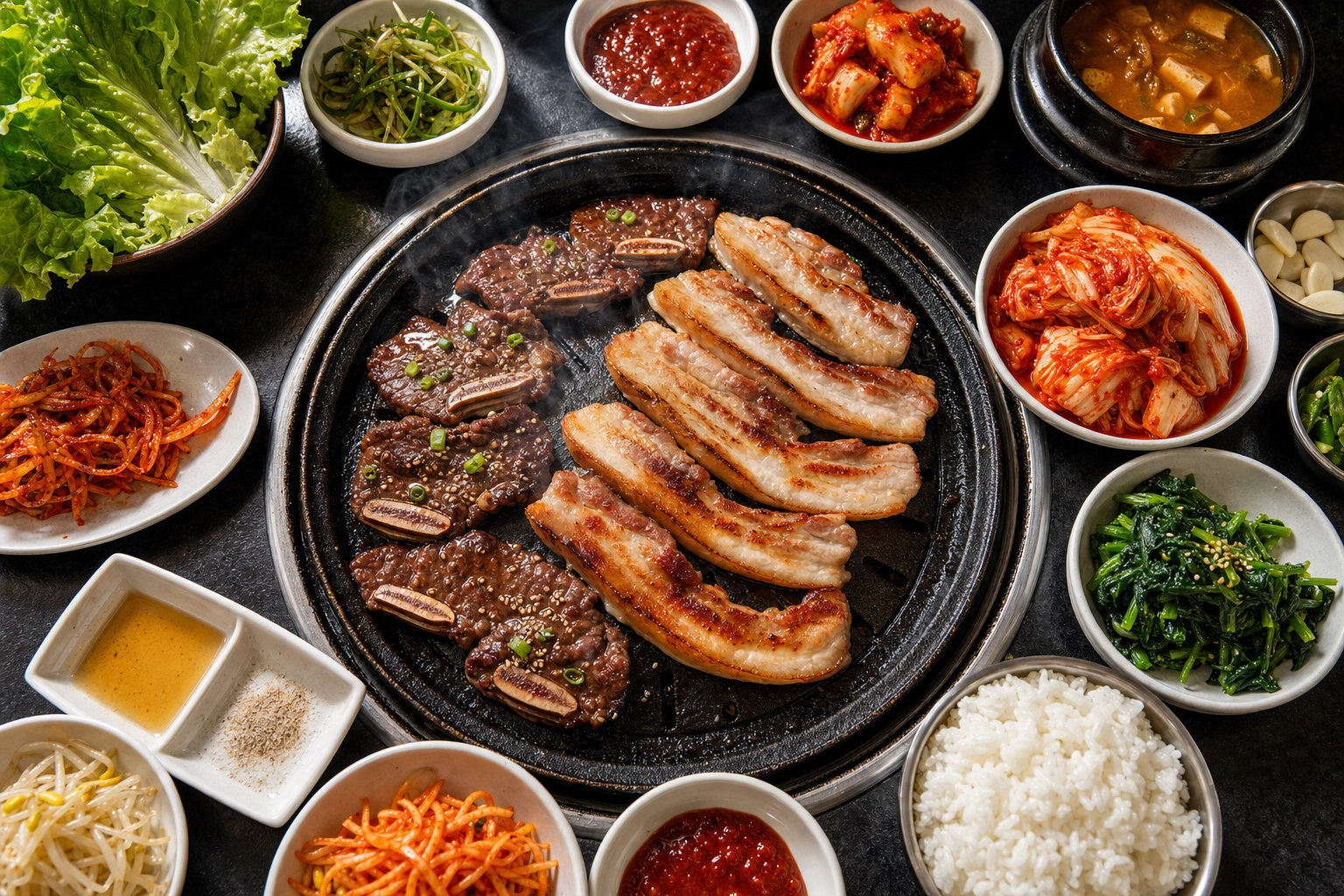
Korean food images sell a menu like almost nothing else — and Korean food might be the most photogenic cuisine on the planet. A live grill sizzling in the middle of the table. A dozen little bowls of banchan fanned out around it. A bibimbap crowned with a glossy egg yolk. Reds so deep they practically glow. Few cuisines hand a camera this much raw material.
And yet it's one of the hardest cuisines to shoot well. The same things that make a Korean table thrilling in person — the abundance, the steam, the sizzle, all that red — are exactly what trip up a phone camera. Spreads turn into clutter. Steam disappears before you tap the shutter. Gochujang and kimchi go muddy or blow out under a restaurant's warm ceiling lights.
This guide fixes that. You'll get the table-spread challenge explained, the five shots that actually sell a Korean or KBBQ menu, how to light for sizzle and steam, and a phone-to-menu shortcut for the nights you don't have time for a real shoot. Whether you run a Koreatown KBBQ house, a fast-casual bibimbap counter, or you're a food content creator building a feed, these are the korean food pictures that make people stop scrolling and start ordering.
Quick Summary: The five Korean food images every menu needs are the KBBQ grill-action shot, an overhead bibimbap with the egg, a banchan spread, a bubbling jjigae, and a kimchi close-up. Light with one soft, directional source to catch steam and gloss, correct the warm restaurant white balance so reds read true, and shoot food at its hottest moment. No time to reshoot? Upload a phone photo to an AI food photo editor and get a menu-ready version in about 90 seconds.
Why Korean food images are so hard to get right — and so worth it
Most cuisines give you one hero per plate. Korean meals give you fifteen things at once, and they're all competing for attention.
That's the table-spread challenge. A single order of Korean BBQ might arrive with marinated galbi, raw samgyeopsal, a sizzling grill, three sauces, lettuce for ssam, and six to ten banchan dishes — all on one table, at different heights, in different bowls. It's generous and exciting to sit at. Through a lens, it reads as chaos.
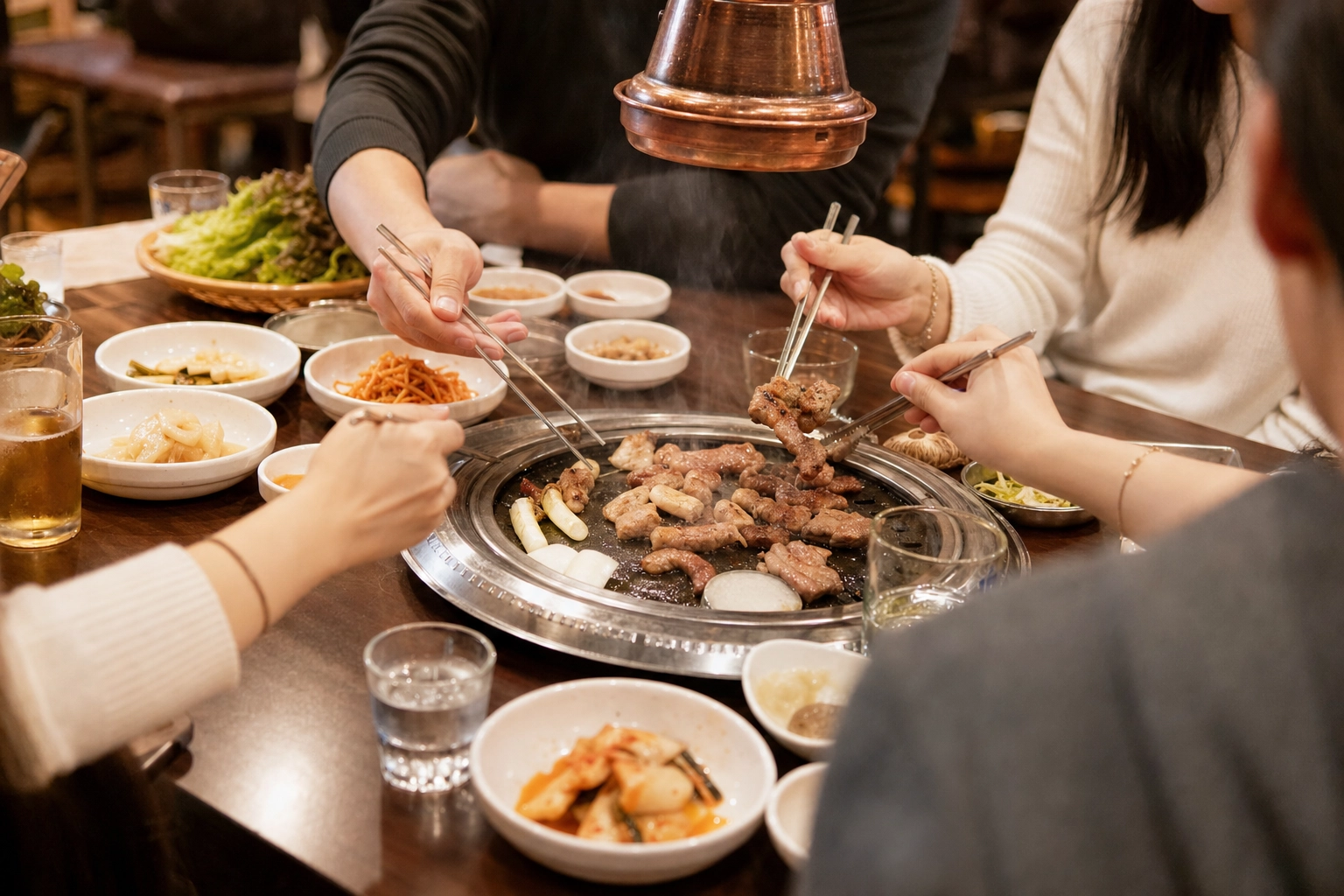 Several diners' hands with metal chopsticks sharing grilled meat and banchan around a sizzling Korean BBQ grill
Then there's the color problem. Korean food leans hard on red: gochujang (fermented red chili paste), gochugaru (red pepper flakes), and the kimchi that shows up with everything. Reds are the trickiest color for any camera. Under the warm, yellow lighting most Korean restaurants use, those reds slide toward muddy orange, while glossy sauces catch the overhead lights and blow out to white. Get the white balance wrong and a vivid kimchi jjigae looks like tomato soup.
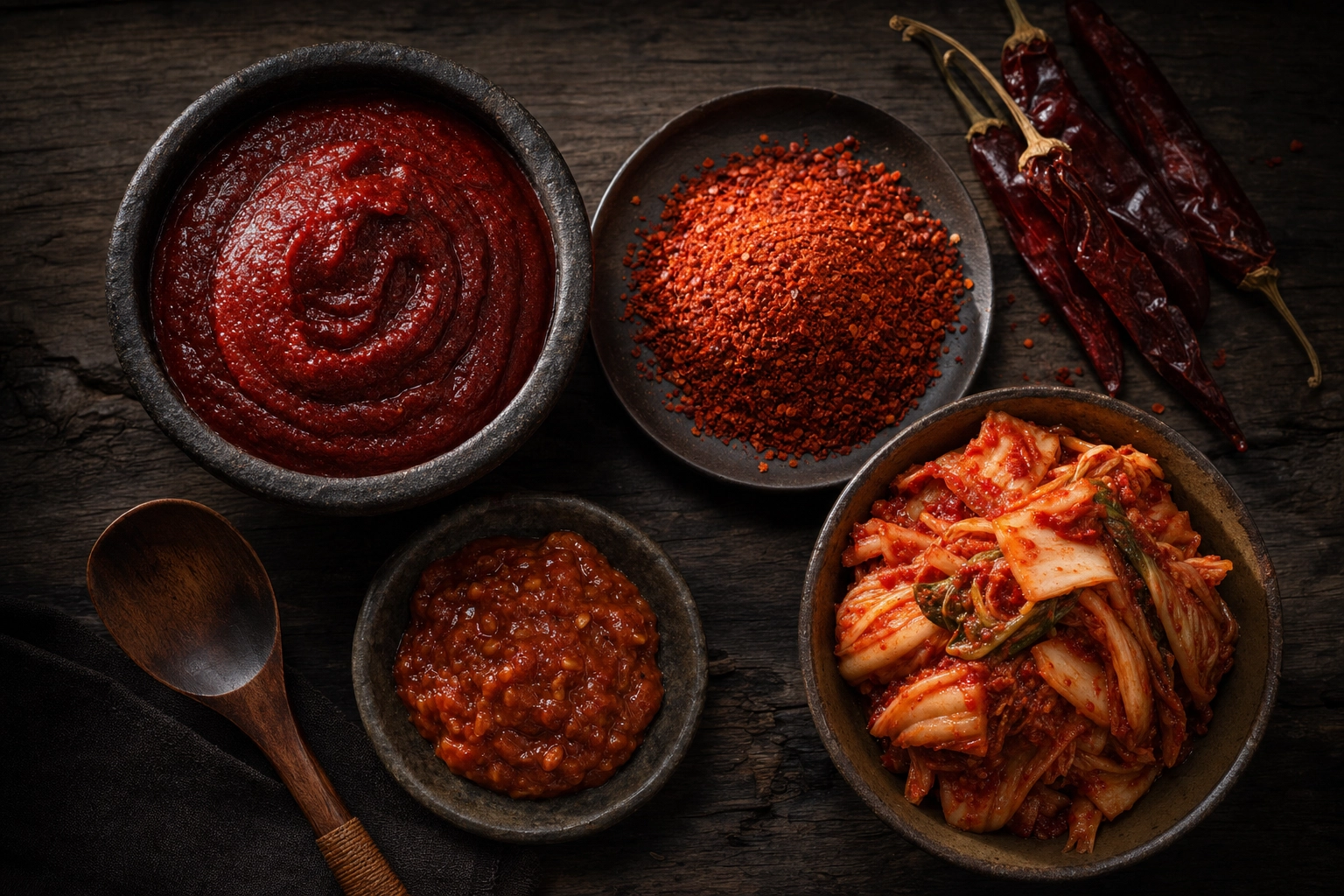 Overhead still life of Korean red condiments including gochujang paste, gochugaru flakes, ssamjang and kimchi on dark wood
And finally, the best parts are temporary. The sizzle on the grill, the steam off a stone pot, the gloss on freshly grilled pork belly — they last seconds. Miss the moment and you're photographing cold food.
Here's why it's worth the effort: when you get it right, Korean food converts like almost nothing else. Restaurants with professional menu photos report 25–30% more orders on delivery apps, and one Google-commissioned survey found that seeing a photo is 1.44x more important than the written description when a customer decides what to order. A vibrant, generous Korean spread is exactly the kind of image that wins that decision. If you're shooting across several Asian menus, our broader Asian food photography guide covers the shared principles; this one zooms all the way into Korean.
The 5 Korean food images every menu needs
You don't need fifty photos to launch a Korean menu. You need these five, done well. Each one has an ideal angle, a specific lighting setup, and a single "hero" moment to build the frame around. Get these five korean food images right and you've covered KBBQ, rice bowls, sides, soups, and the one detail shot that tells customers your food is the real thing.
1. The KBBQ grill-action shot: steam, char, and sizzle
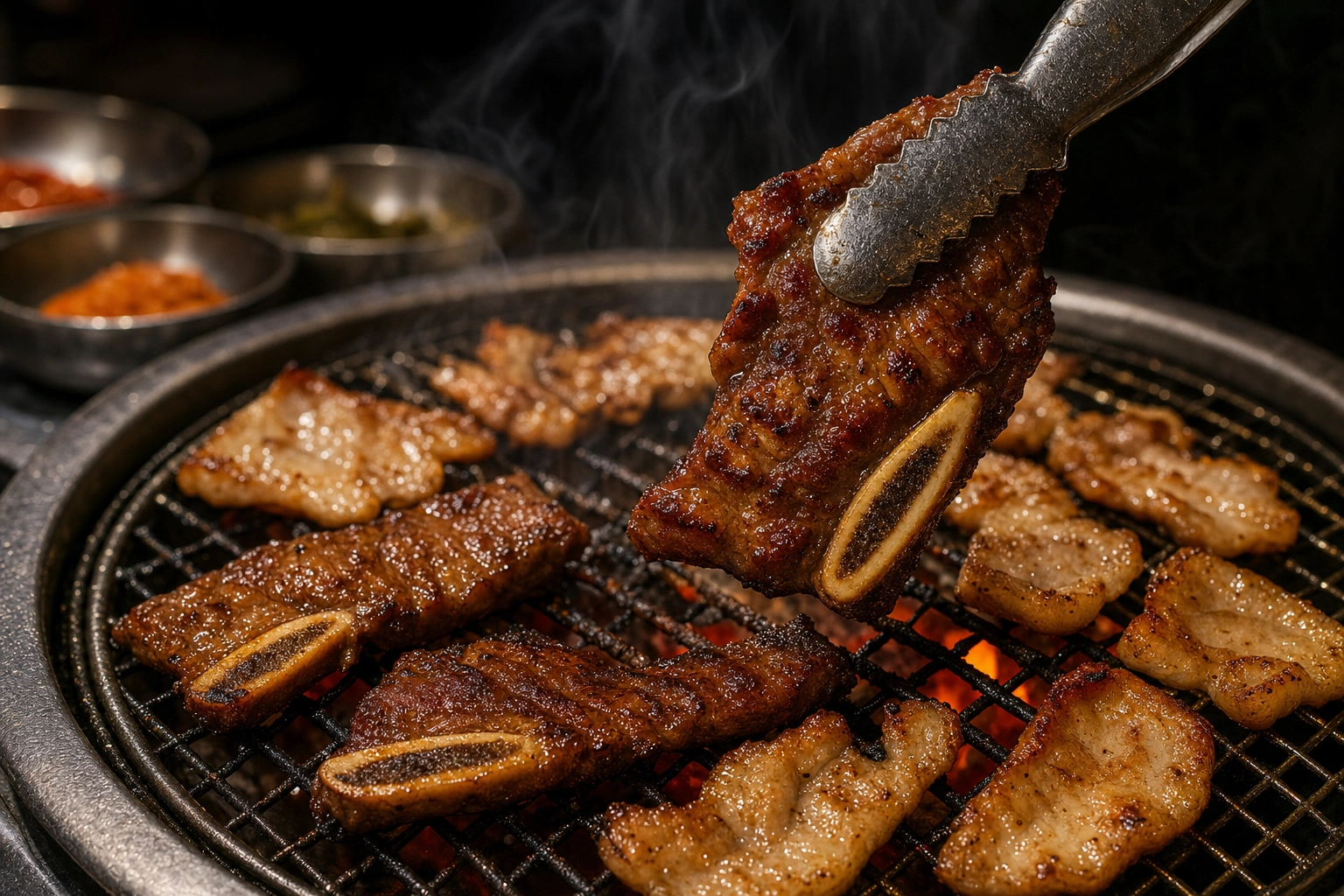 Close-up of marinated Korean BBQ short ribs and pork belly searing with steam and char on a charcoal tabletop grill
This is the image people picture when they think of korean bbq photos — meat on a live grill, smoke curling up, char marks forming in real time. It's the most important shot for any KBBQ joint and the hardest to fake, which is exactly why it sells.
Feature your best-looking cuts. Samgyeopsal (thick pork belly) curls and crisps beautifully at the edges. Galbi (marinated beef short rib) brings a glossy, caramelized sheen. Bulgogi and thin-sliced chadolbaegi (brisket) show off their marbling. It's worth shooting the raw, marinated cuts before they hit the grill too — that soy-garlic sheen and the marbling photograph beautifully on butcher paper and make a great "what you're about to eat" frame.
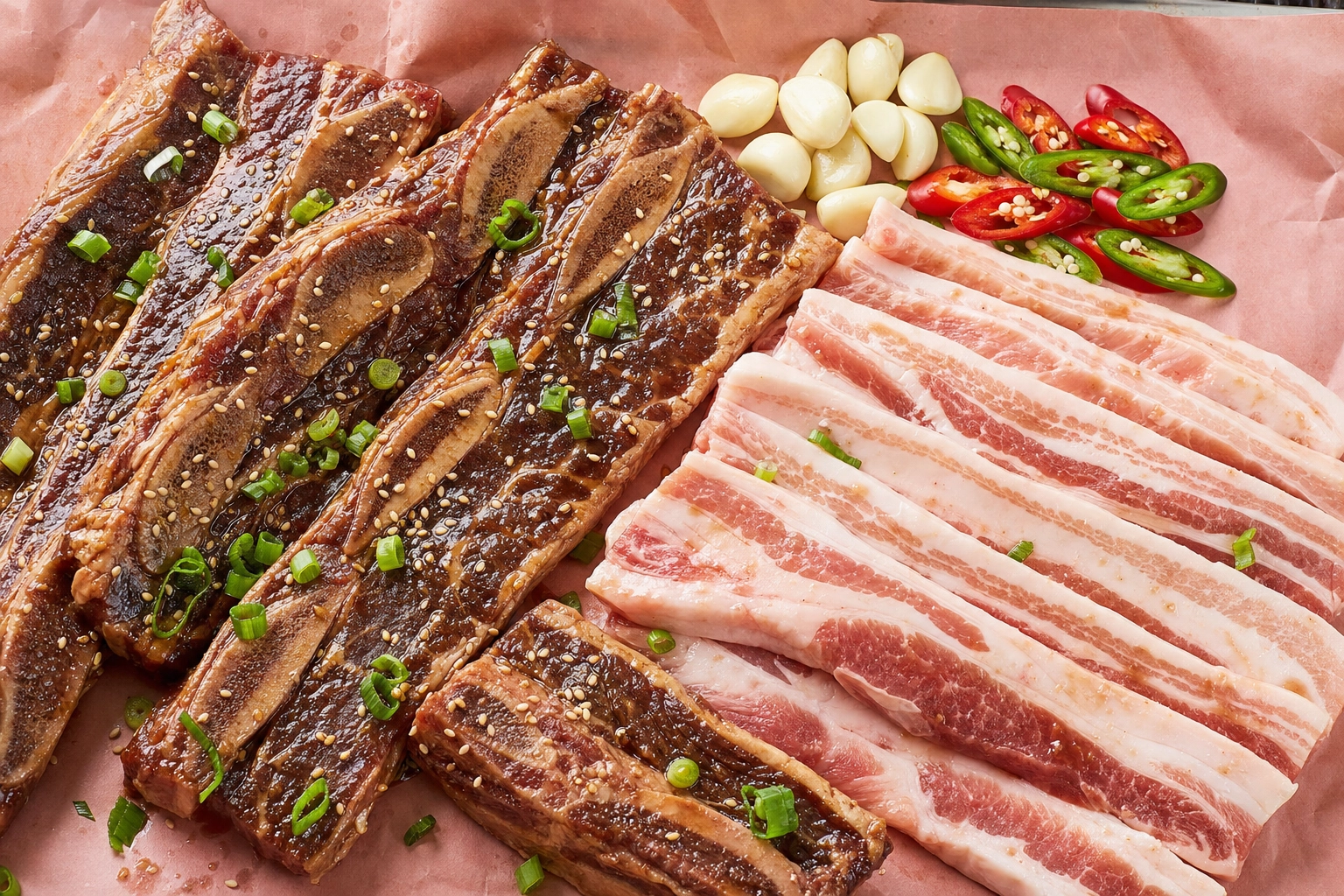 Raw marinated Korean galbi short ribs and sliced pork belly on butcher paper ready for the barbecue grill
On the grill, lay the pieces with a little space between them — crowded meat steams instead of searing, and it looks crowded in the photo too. Shoot at a 45-degree angle, or drop lower to catch the grate, the glowing coals or flame, and the rising steam in one frame. Add a human element — tongs lifting a piece, scissors mid-cut — for motion and scale. Time it for the moment the meat is freshly flipped, when the char is sharpest and the steam is heaviest. For the technical side of grill marks, smoke, and bark, our AI BBQ photography page and our guide to grilling and BBQ photography go deep on capturing char and heat. These korean bbq images double as scroll-stoppers on Instagram and appetite-triggers on a delivery app listing.
Don't skip the wrap, either. A tight shot of someone building a ssam — pork belly, a dab of ssamjang, a sliver of garlic and rice folded into a lettuce leaf — adds the interactive, hands-on moment that makes Korean BBQ feel like an event rather than a meal.
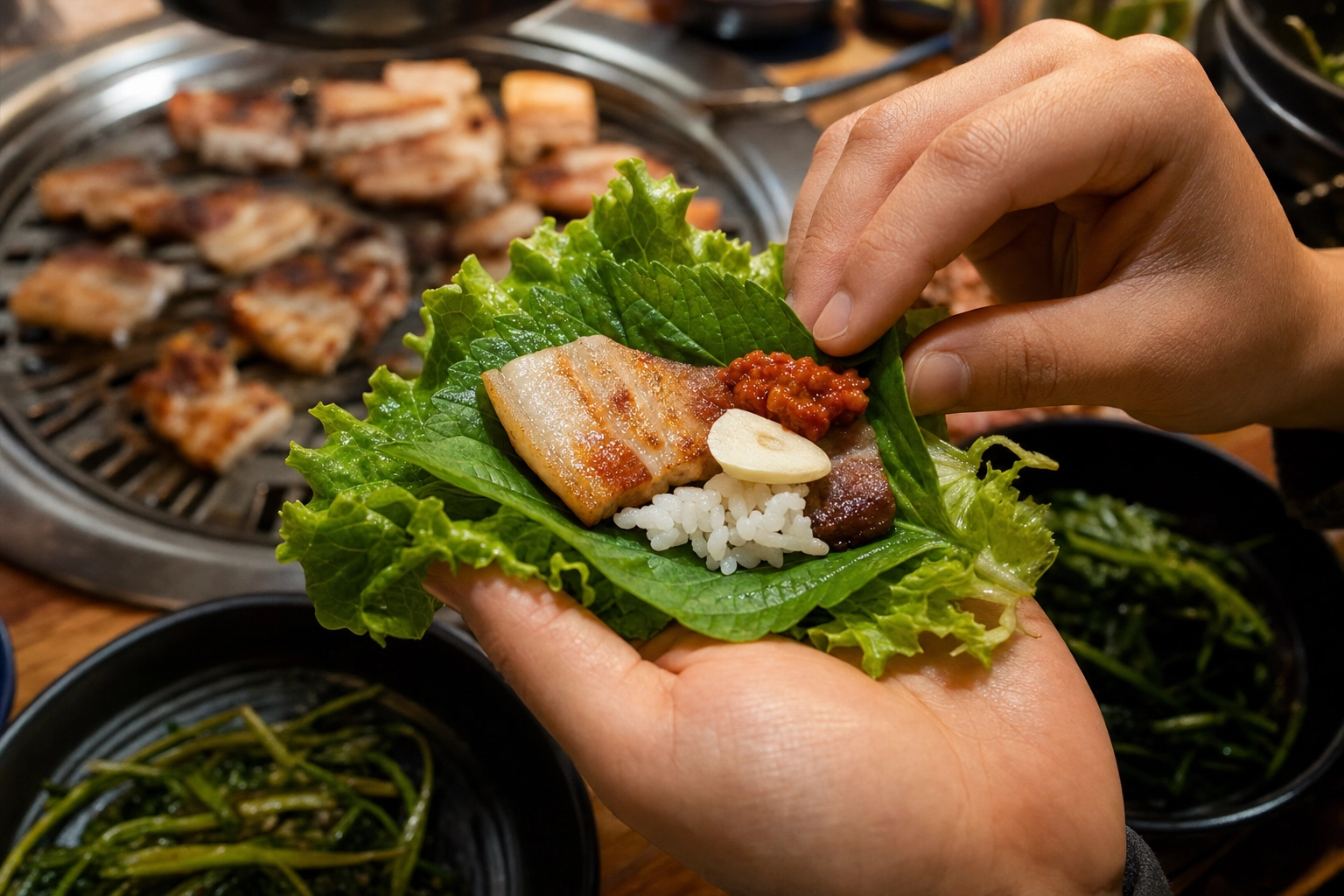 Hands building a Korean ssam lettuce wrap with grilled pork belly, ssamjang and garlic at a barbecue table
2. Bibimbap from overhead: the egg is the hero
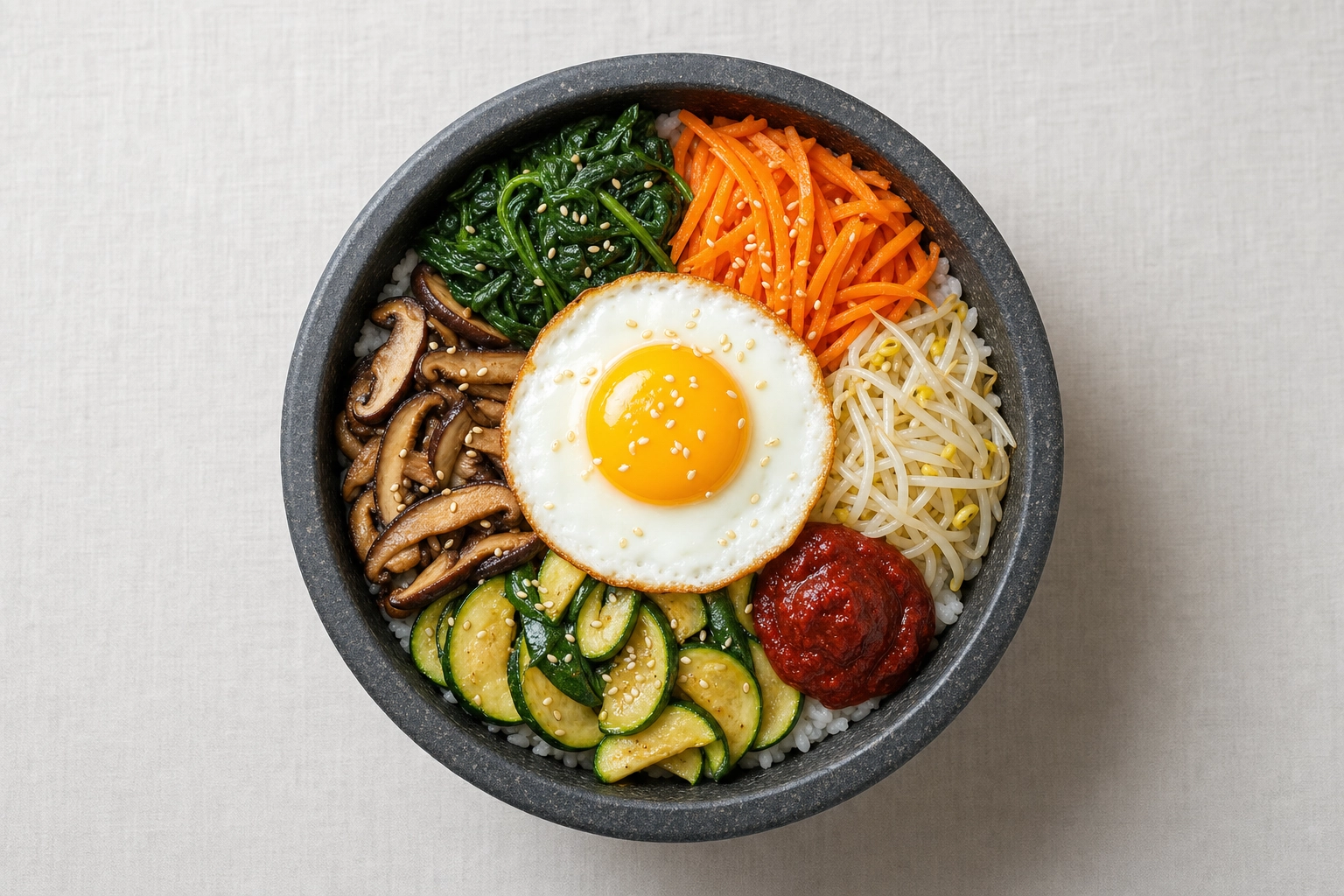 Overhead bibimbap in a stone bowl with colorful seasoned vegetables arranged around a centered glossy egg yolk
Bibimbap is a top-down dish. The whole appeal is the arrangement — neat wedges of seasoned vegetables fanned around a bowl of rice with a glossy egg in the middle — so shoot it straight down at 90 degrees. Any other angle hides the design.
Arrange the namul (seasoned vegetables) so neighbors contrast: deep-green spinach next to orange carrot, pale bean sprouts beside brown shiitake, with gosari fern or zucchini filling out the wheel. The centered egg is your focal point. A raw yolk reads rich and glossy; a fried egg adds height and crispy edges. Either way, that runny-yolk promise is the appetite trigger, so make it the brightest, sharpest thing in the frame.
Capture it before anyone mixes it. "Bibim" means mix and "bap" means rice — the second a customer stirs in the gochujang, those clean colors turn into one reddish-brown swirl. Shooting a dolsot (hot stone bowl) version? That one rewards a second, lower angle. The bowl steams, the rice crisps into a golden nurungji crust against the sides, and you can actually catch the sizzle — lean into the heat instead of the tidy arrangement.
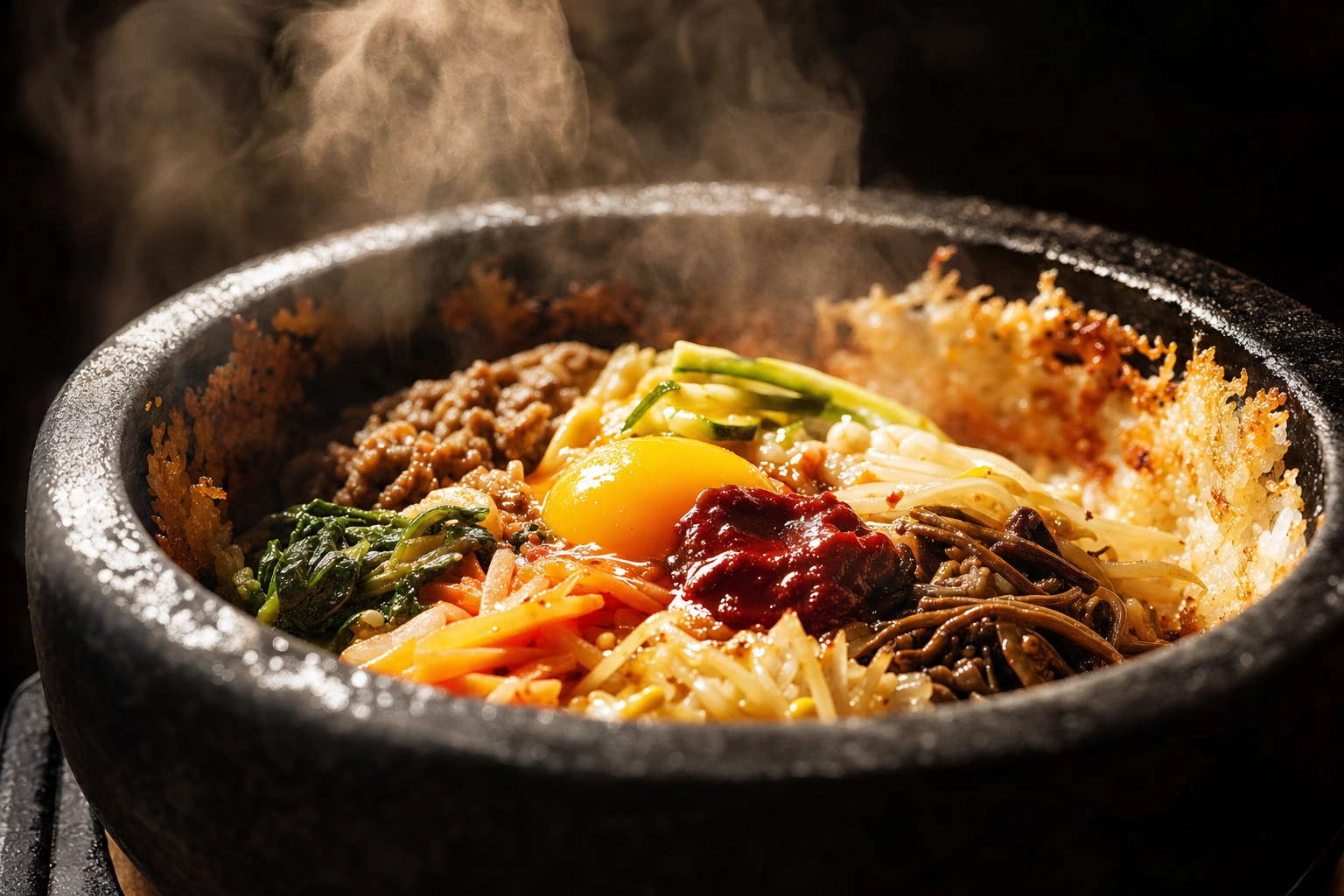 Low-angle dolsot bibimbap in a sizzling hot stone bowl with rising steam, crispy rice crust and a glossy egg on top
These overhead bibimbap images are some of the most shareable korean food pictures you can make, and they translate cleanly to every platform — square for Instagram, cropped for a delivery thumbnail.
3. The banchan spread: abundance without clutter
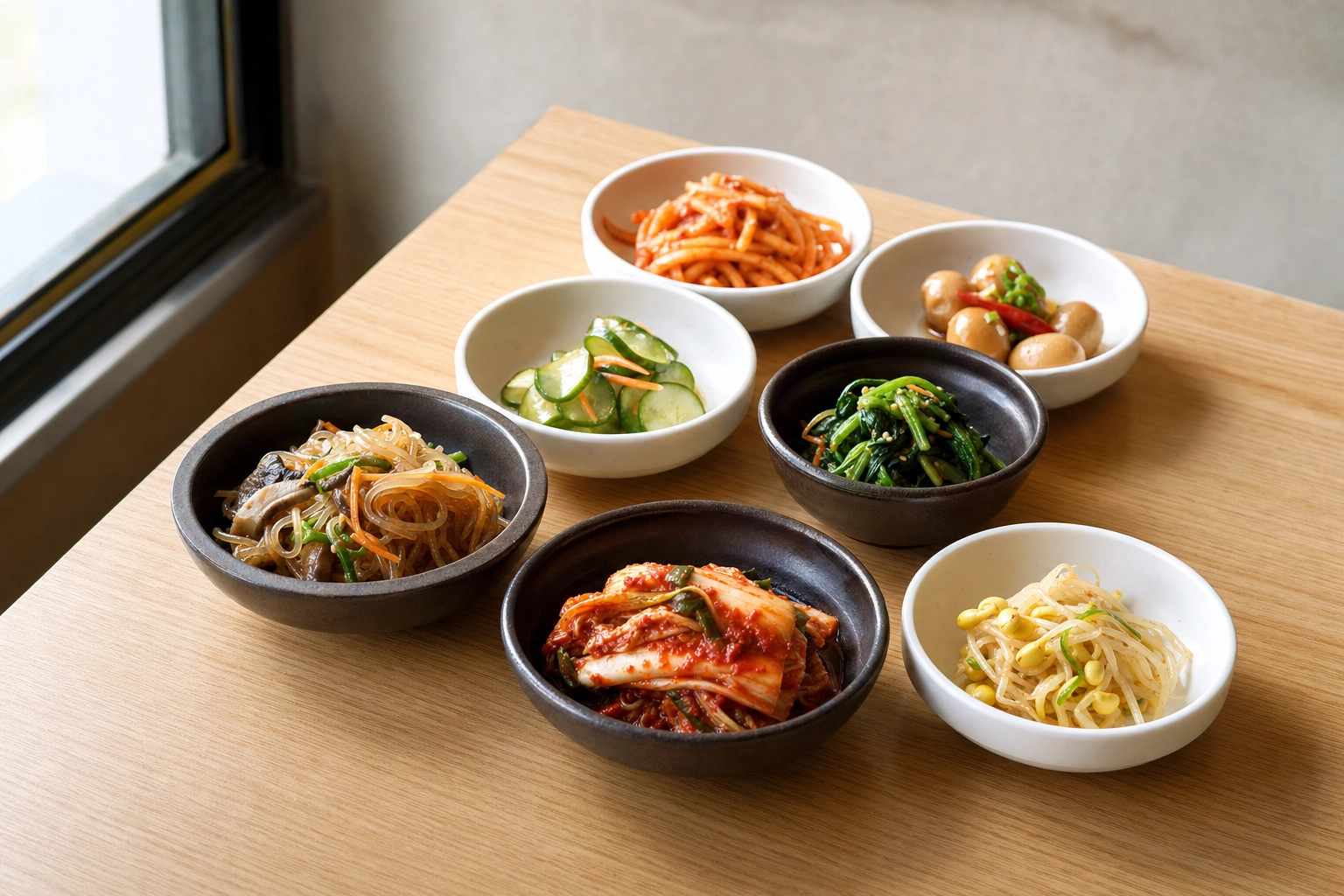 Assortment of Korean banchan side dishes in small bowls including kimchi, radish kkakdugi and japchae on a wood table
Banchan — the free little side dishes — are the soul of a Korean table and a huge selling point. The spread shot is your establishing shot, the one that signals generosity and value before a customer reads a single price. The challenge is making abundance look intentional instead of messy.
Two tricks do most of the work. First, use odd numbers and vary the heights: a tall bowl of kimchi, a flat plate of japchae, a shallow dish of kongnamul (seasoned bean sprouts), a little cube of kkakdugi (radish kimchi). Odd groupings and changing heights give the eye a rhythm to follow. Second, leave breathing room. A bit of negative space — bare table, a clean linen, the edge of a tray — keeps the spread from feeling crammed.
Shoot overhead for a clean, graphic grid of dishes, or come down to 45 degrees when you want depth and the sense of a real table you could sit down at. It's also worth pulling one standout side into its own frame — a glossy tangle of japchae catches light beautifully and gives your menu a dedicated side-dish photo.
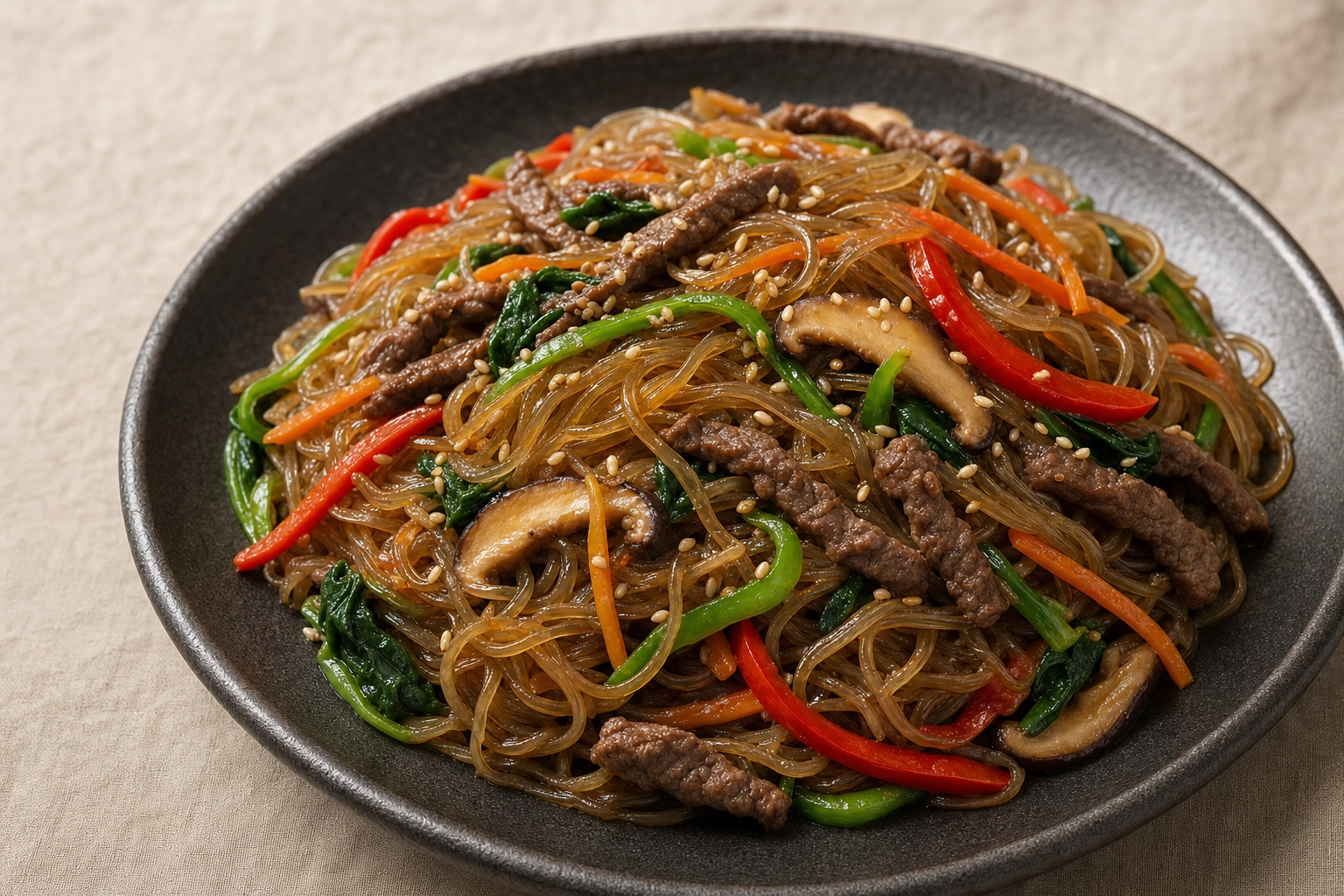 Close-up of glossy Korean japchae glass noodles with beef, peppers, carrot and sesame seeds in a dark dish
Let the kimchi reds and the green-and-white sides pop against a neutral surface; dark slate or pale wood keeps all the focus on the food.
4. The jjigae shot: a stew that still bubbles
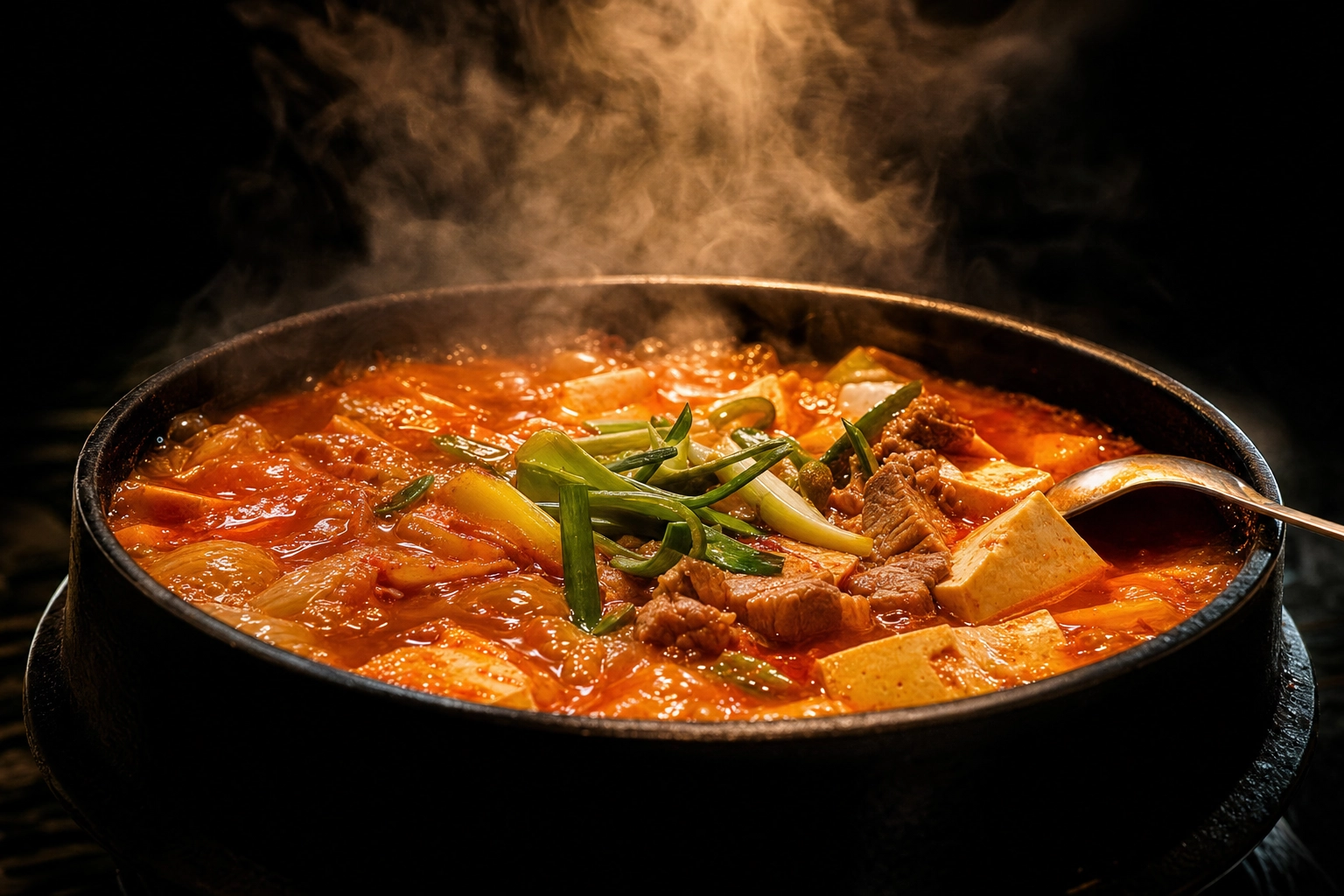 Low-angle shot of bubbling red Korean kimchi jjigae stew in an earthenware pot with steam rising against a dark background
A Korean stew is pure mood. Kimchi jjigae, sundubu (silky soft-tofu stew), doenjang (fermented soybean paste), budae jjigae (army stew) — they all arrive screaming hot in a stone or earthenware bowl, usually still bubbling. That motion is the shot.
Shoot low, around 15–25 degrees above the table, so you see the surface of the broth, the bubbles breaking, and the steam rising — not just a flat red circle from above. Backlight or side-light the bowl so the steam glows against a darker background; steam is nearly invisible when it's lit from the front or set against a bright wall. Work while it's actively boiling, because a sundubu stops performing within a minute of leaving the kitchen.
Keep the styling honest: a rustic ttukbaegi (earthenware pot), a spoon resting on the rim, a few green scallions or a cracked egg on top. The deep-red broth needs accurate white balance more than anything — get it right and the stew looks rich and layered; get it wrong and it looks like watery ketchup.
5. The kimchi close-up: let the color sing
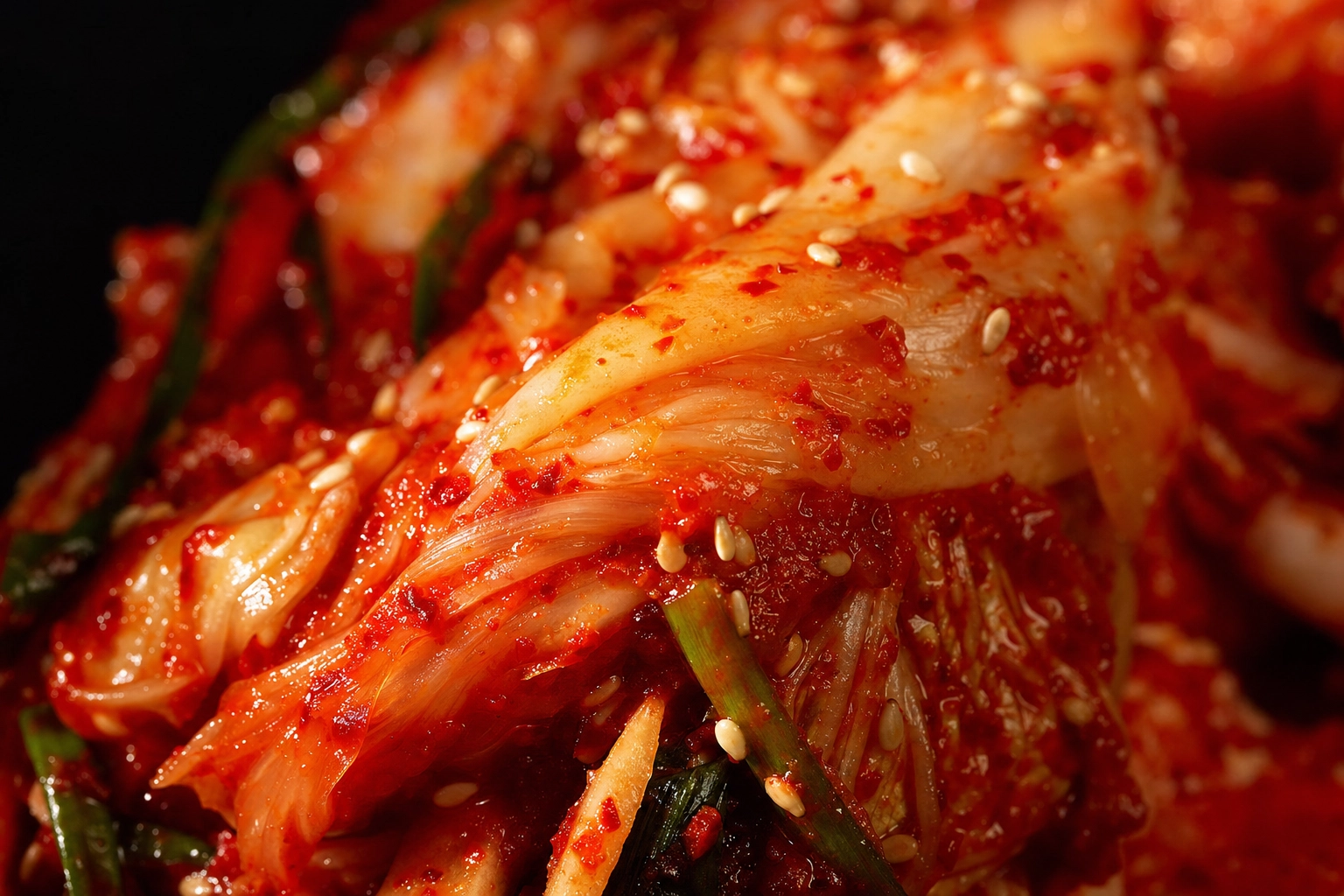 Extreme close-up of glossy red napa cabbage kimchi coated in gochugaru chili flakes with sesame seeds and scallion
Every Korean menu deserves one detail shot, and kimchi is the obvious hero. A tight close-up of fermented cabbage — gochugaru-coated leaves, glistening with brine, a scatter of sesame seeds — tells a customer everything: house-made, fermented, authentic. It's the same craft that earned kimjang, Korea's communal kimchi-making tradition, a place on UNESCO's list of intangible cultural heritage. It's also one of the most-searched korean food images on its own, so a strong kimchi shot earns attention well beyond your menu.
Get close. Fill the frame with a single forkful or a cross-section of baechu (napa cabbage) kimchi, or a neat pile of kkakdugi cubes. Use a shallow depth of field so one glossy leaf is razor-sharp while the rest melts into soft red. Side-light it to reveal the wet sheen and the texture between the leaves — that glisten is what makes it look alive rather than flat. Keep props to almost nothing. When the subject is this saturated, the color is the whole story, and these kimchi images carry a surprising amount of brand personality on their own.
Lighting Korean food for sizzle and steam
If you take one thing from this guide, take this: one soft, directional light beats every overhead fixture in the building.
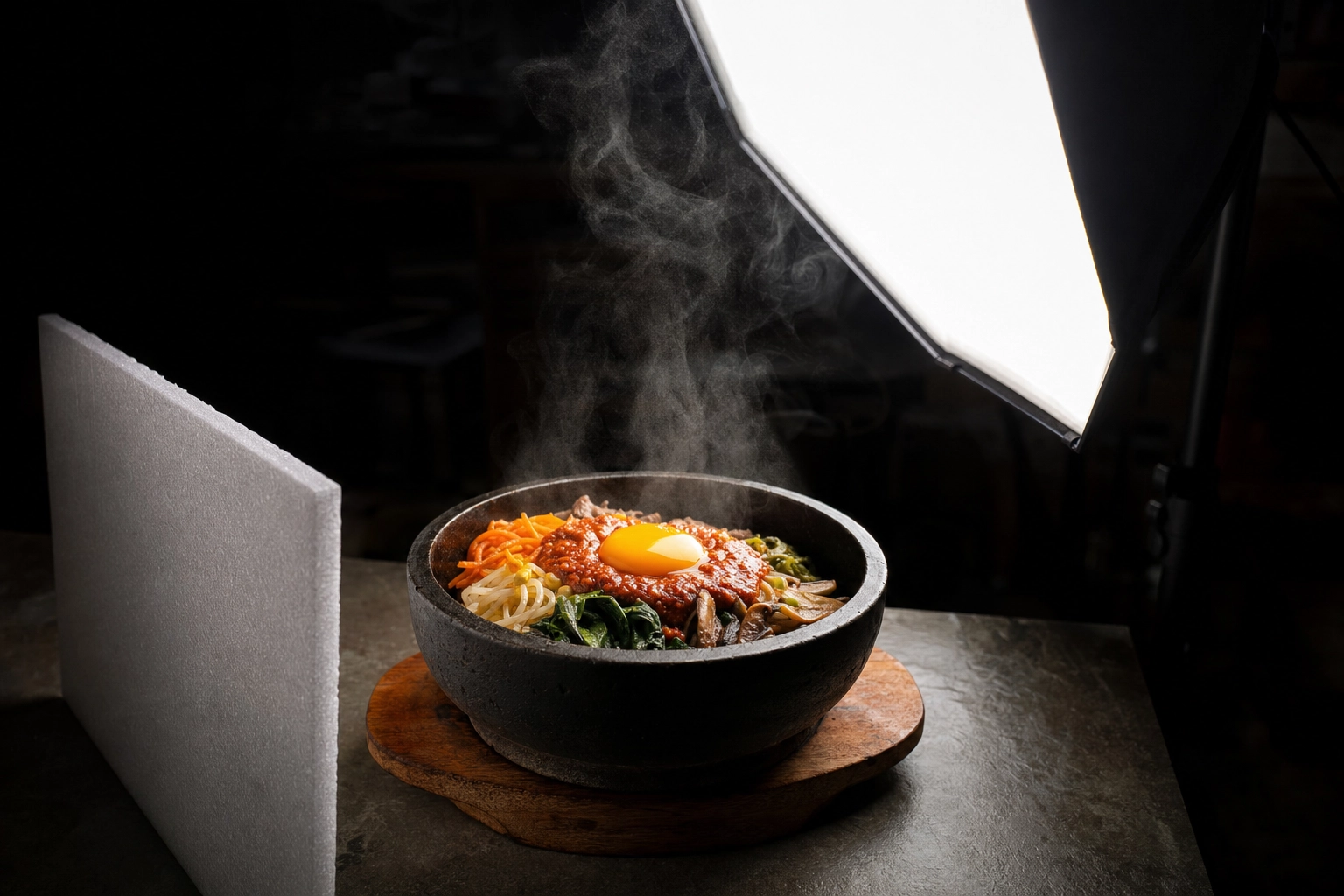 Food photography lighting setup using one side softbox and a white bounce card to light a steaming Korean bibimbap
Position a single source — a window, a softbox, even a bright lamp through a diffuser — to the side or behind the dish rather than above it. Backlighting and side-lighting do two things Korean food desperately needs. They rim the rising steam so it actually shows up, and they rake across glossy surfaces — grilled galbi, gochujang, a soy glaze — to bring out that mouthwatering sheen. Front light and overhead light flatten all of it.
This is why you should usually fight the room. Most Korean restaurants run warm and bright, with yellow downlights aimed straight at the table. That lighting muddies your reds, throws hard shadows off every bowl, and turns white rice beige. If you can, switch off or step away from the overheads and shoot near a window or with one controllable light.
Then fix the white balance. The warm cast is the single biggest reason phone korean food pictures look "off." Tap to set white balance on something neutral (a white plate or napkin), or correct it afterward, until the rice reads white and the kimchi reads true red instead of orange. Everything else improves the moment the color is honest.
A few fast field tips for sharper korean food images:
- Freeze the steam. A slightly faster shutter catches steam as crisp tendrils instead of a blur. Shoot the second the pot or grill is hottest.
- Give steam a dark backdrop. It only reads against shadow. A dark wall, a slate board, or a backlit angle makes it pop.
- Bounce the shadows. A white napkin, menu, or sheet of paper opposite your light fills the dark side of the dish — no gear required.
- Move fast. Sizzle, gloss, and steam are gone in seconds. Style the plate first, get your angle ready, then bring the hot food in last.
From phone snap to menu-ready: a Korean BBQ before & after
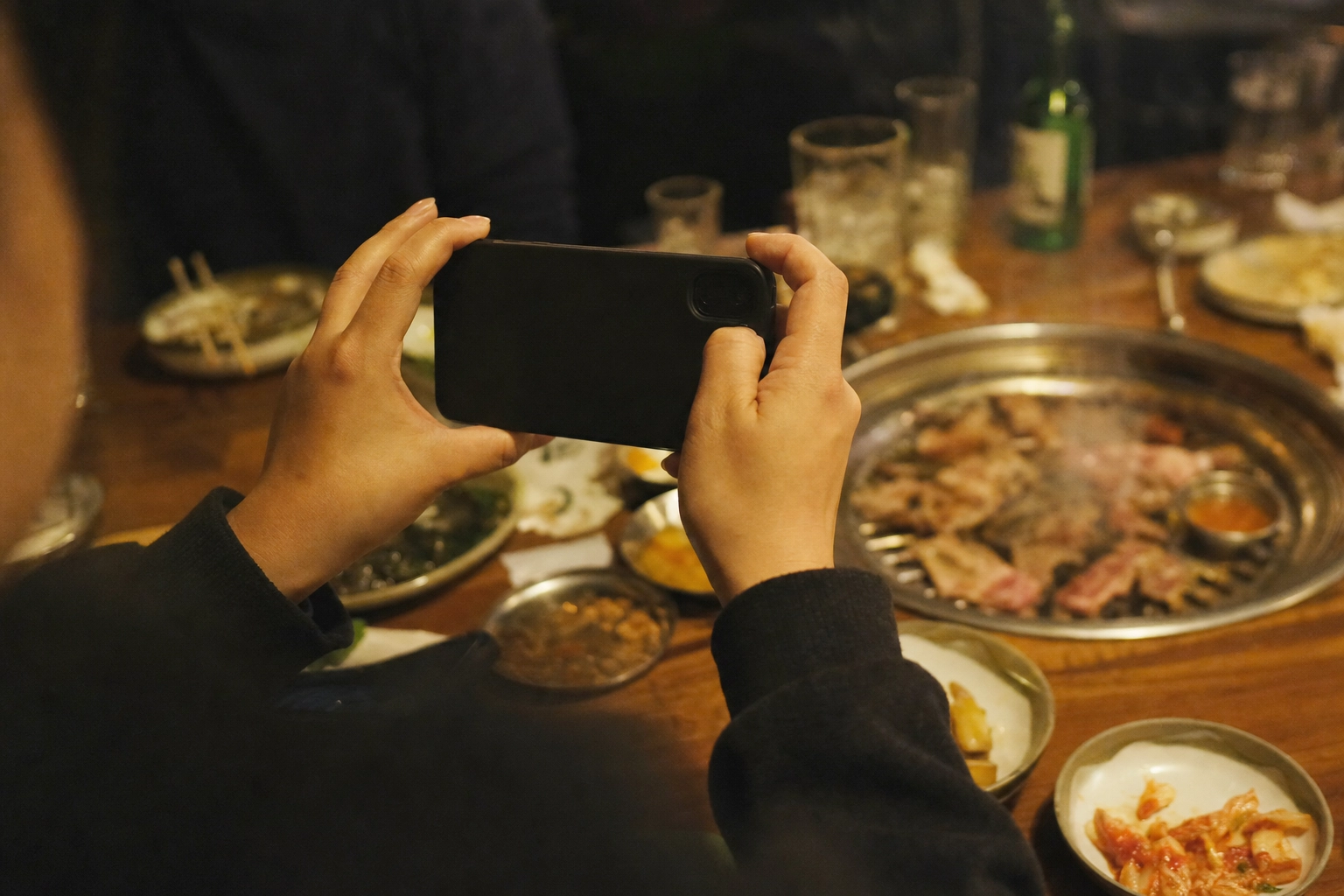 Hands holding a smartphone photographing a sizzling Korean BBQ grill in a dim, warm-lit restaurant booth
Here's the reality of a busy KBBQ service: you don't have a window seat, a softbox, or ten minutes to style a plate. You have a dim corner booth, a phone, and a grill that's already going.
Picture the typical "before." A pork belly shot taken in a dark Koreatown booth: a heavy yellow cast from the ceiling lights, flat-looking meat with no gloss, steam that didn't register, and a cluttered background of soju glasses and half-eaten banchan. It's the honest reality of the dish — and it's not a photo you'd put on a menu.
You have two ways to fix it. Reshoot it properly using the lighting setup above — ideal when you have time. Or, when you don't, upload that exact phone photo to an AI food photo editor and let it do the correcting. FoodShot AI was trained specifically on food, so it knows what Korean BBQ is supposed to look like: it neutralizes the yellow cast, restores the sizzle and the gloss on the meat, cleans up the distracting background, and hands back the kind of sharp, 4K, menu-ready korean bbq photos you'd otherwise need a studio for — in about 90 seconds.
The math is the real story. A professional food shoot runs $700–$1,400 per session, and you'd need a fresh one every time the menu changes. Fixing the same shots with AI works out to roughly $0.60 per image — about 95% less — with a commercial license you can use on your menu, your website, and every delivery app. For a small KBBQ spot updating specials weekly, that's the difference between great photos everywhere and stock photos nowhere.
More popular Korean dishes worth photographing
The big five cover most of a Korean menu, but a handful of other dishes are too photogenic — and too searched — to leave out of your korean food images library. These are some of the most popular Korean dishes diners look for, and each one brings a different texture, color, or temperature to your feed.
Korean fried chicken (yangnyeom)
Double-fried and lacquered in glossy red-orange sauce, Korean fried chicken is built for the camera. Shoot it close to catch the crackle and the sticky sheen, with a scatter of sesame seeds and scallion that reads "just-sauced." The gloss dulls as it cools, so photograph the first pieces out of the fryer.
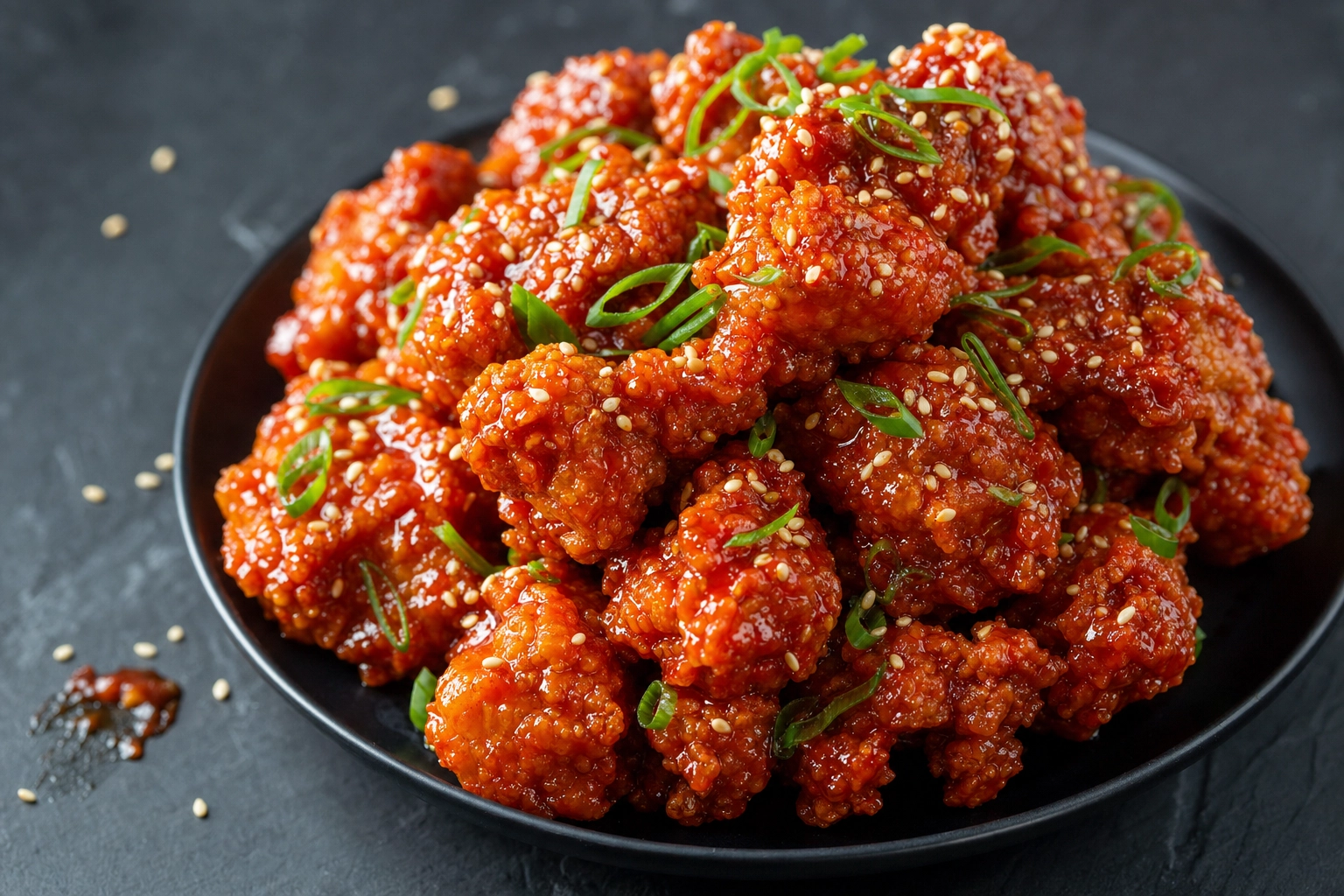 Close-up of glossy Korean fried chicken coated in red yangnyeom sauce with sesame seeds and scallion on a black plate
Tteokbokki
Those chewy rice cakes in thick, glossy gochujang sauce are pure saturated red. A shallow black pan, a halved egg, and a little rising steam make it look exactly as comforting as it tastes. Mind the white balance so the sauce stays vivid crimson, not orange.
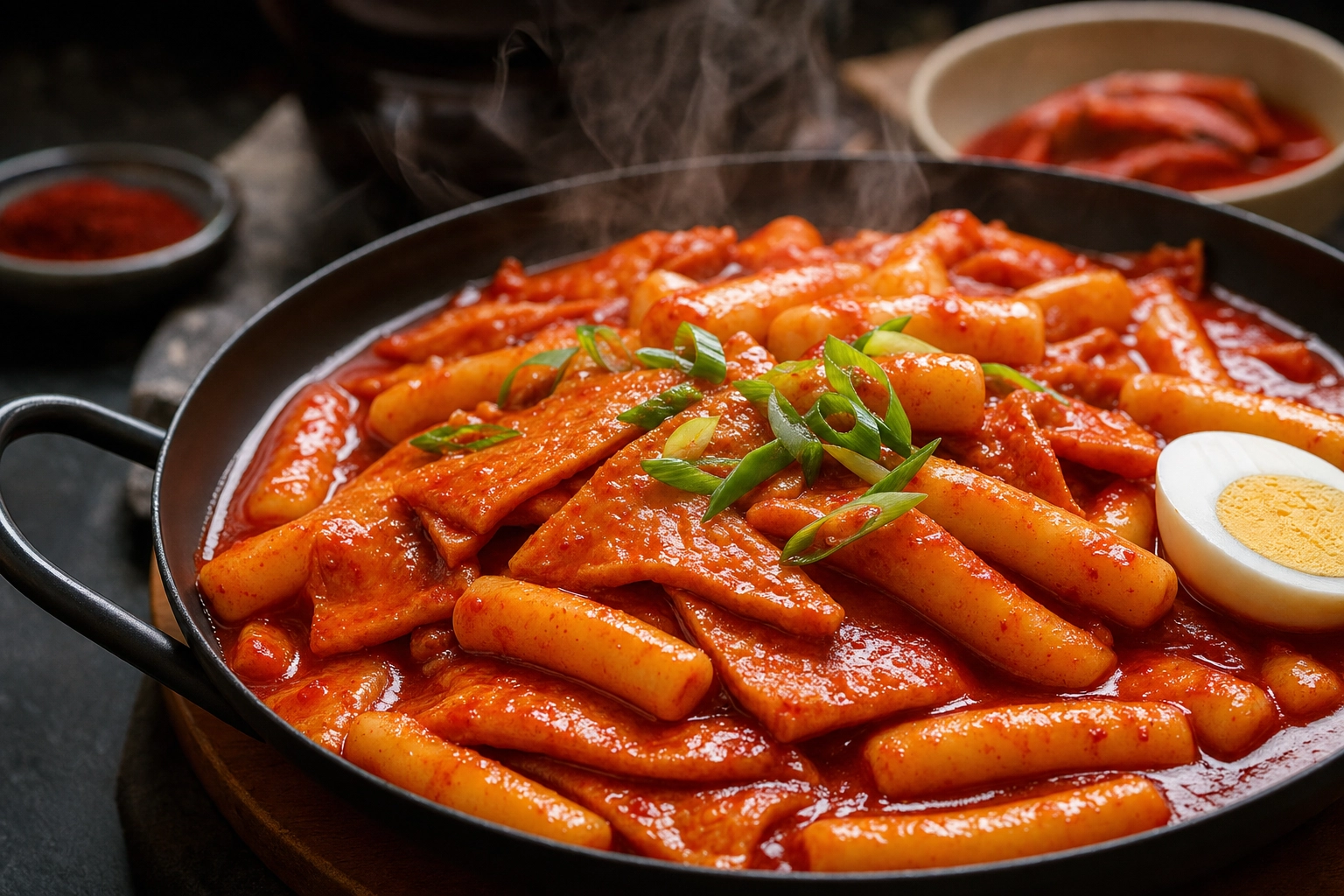 Tteokbokki rice cakes simmering in glossy red gochujang sauce with scallion and boiled egg in a black pan
Gimbap
Slice the rolls and shoot straight down to show off the colorful spiral cross-sections — yellow pickled radish, orange carrot, green spinach, pink ham, egg, all wrapped in dark seaweed. It's one of the most graphic, grid-friendly korean food pictures you can stage.
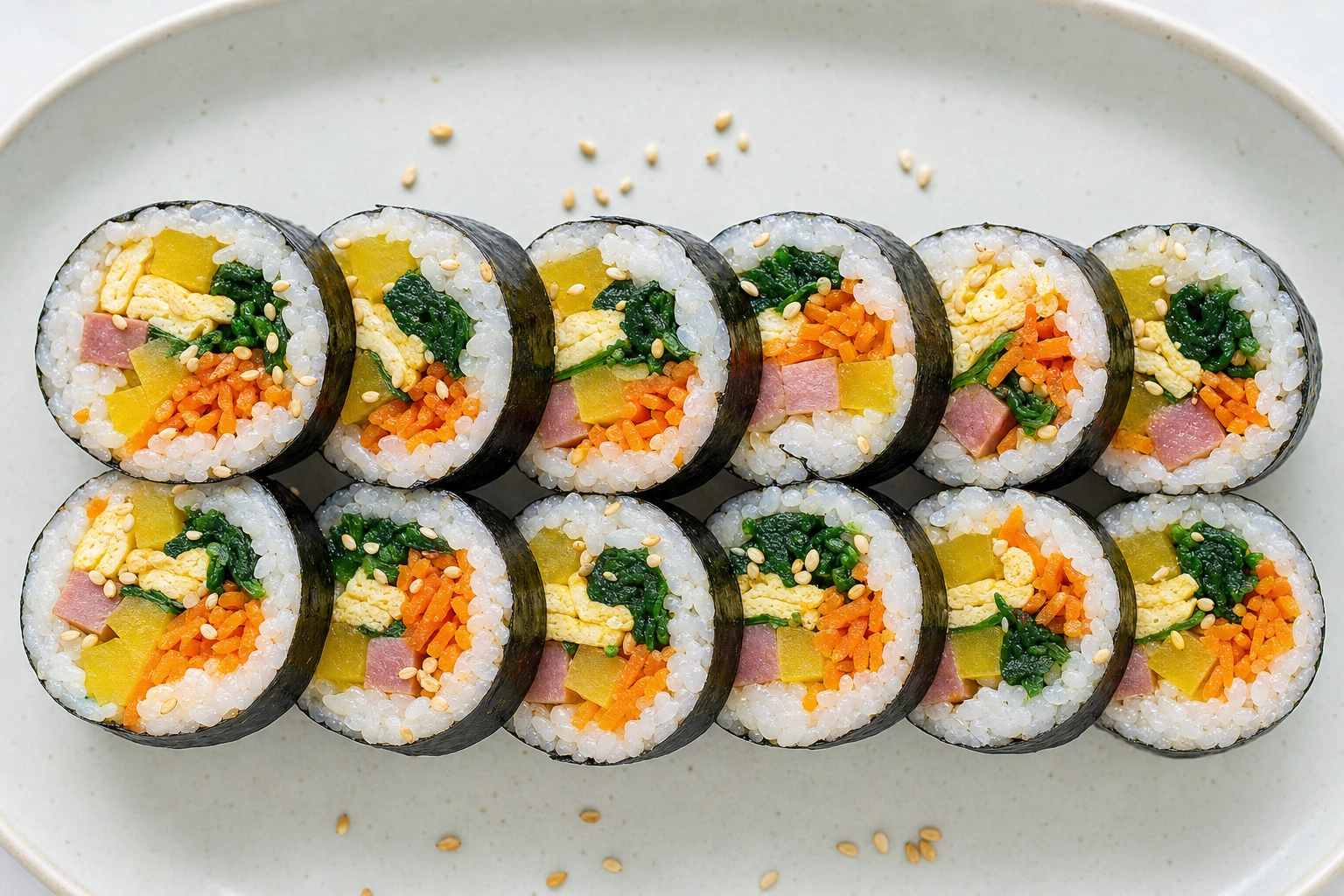 Overhead view of sliced Korean gimbap rolls showing colorful cross-sections of rice, vegetables and egg in seaweed
Naengmyeon
Cold buckwheat noodles in an icy broth are a refreshing contrast to all that grill heat. Lean into cool tones, show the ice and the clear broth, and let the condensation on the metal bowl signal "cold" — a great way to balance a menu of warm, red dishes.
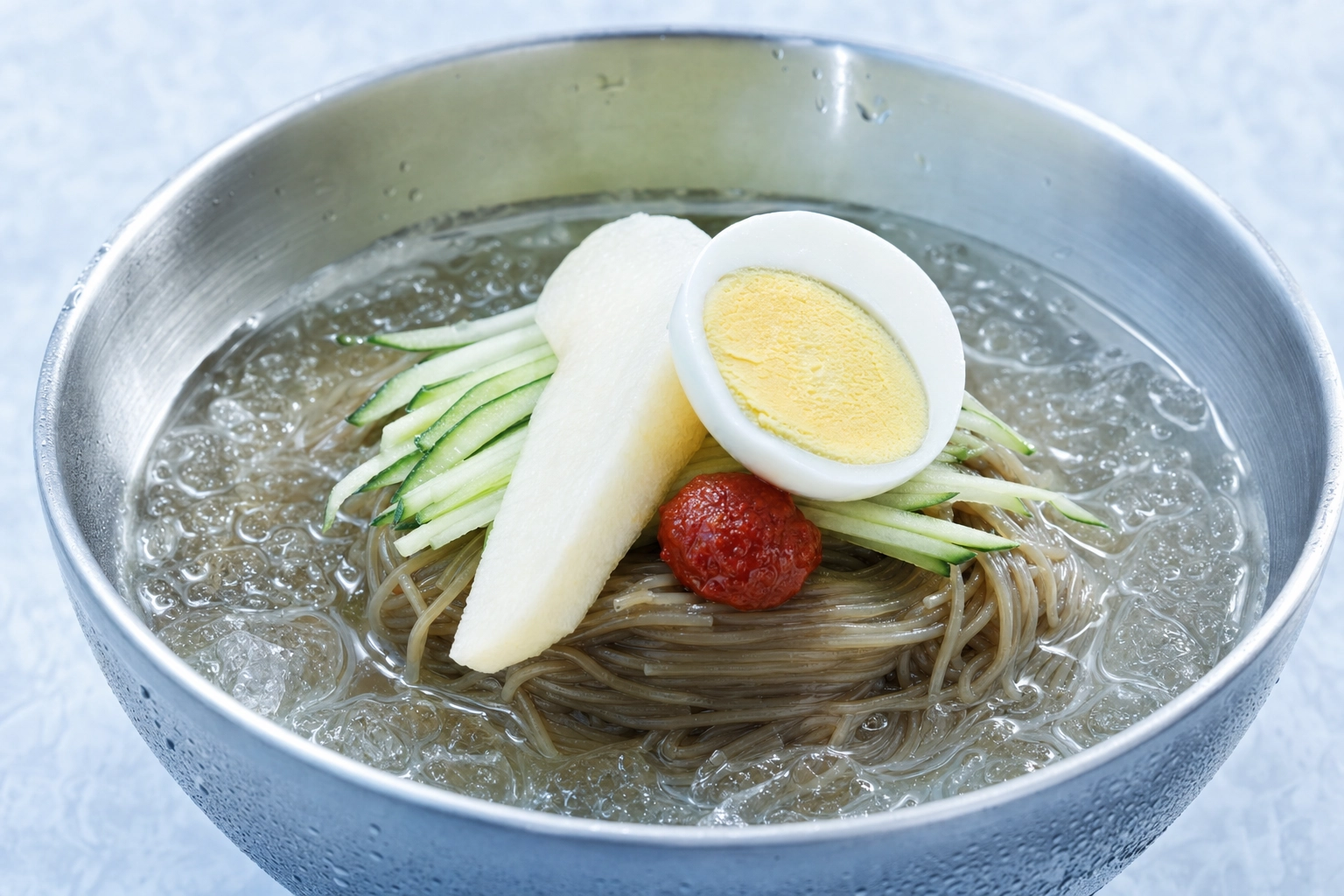 Korean naengmyeon cold buckwheat noodles in icy broth with cucumber, pear and boiled egg in a steel bowl
Japchae and bingsu
These two round out the set — the glossy glass noodles of japchae for a savory side that shines when tossed, and a tall, dreamy mound of shaved-ice patbingsu for the dessert that finishes the meal on a high note.
Keep one consistent look across your whole Korean menu
One great photo is nice. A whole menu that looks like it came from the same shoot is what builds a brand.
The problem most Korean restaurants have isn't a single bad picture — it's that the bulgogi was shot in daylight, the jjigae under tungsten, and the bingsu on someone's phone in the back. Customers feel that inconsistency even if they can't name it. The fix is to lock one look — the same lighting mood, background, and color treatment — and apply it to every dish, from the grill plates to the rice bowls to dessert.
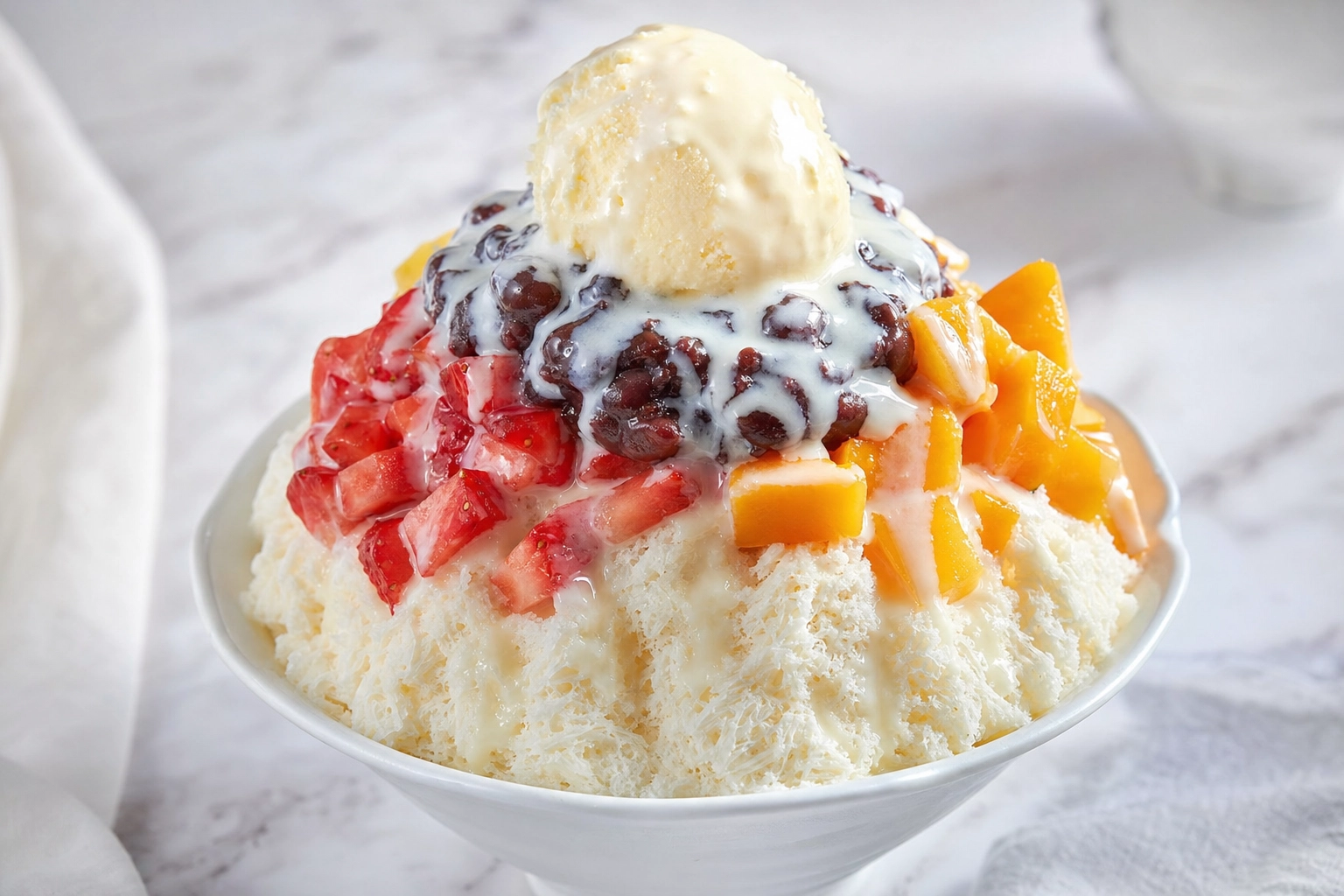 Tall Korean patbingsu shaved ice dessert with red bean paste, strawberry, mango and ice cream in a white bowl
This is where doing it yourself finally beats hiring out. Using saved styles and Builder Mode, you can run your whole menu through one consistent recipe, so your bibimbap images, your korean bbq pictures, and your kimchi close-ups all share a single visual signature across delivery apps, your printed menu, and social. That kind of consistency is what separates a polished brand from an amateur one — see how operators put it to work in our food photography for restaurants playbook, and browse more food photography by cuisine for styling ideas across the menu.
Frequently Asked Questions
How do I take good Korean BBQ photos at a dark restaurant table?
Get one directional light onto the grill — ideally a window or a single lamp from the side or behind — and turn away from the yellow overhead fixtures. Set your white balance on a white plate so the meat and reds look true, shoot at a 45-degree angle to catch char and steam, and fire the moment the meat is freshly flipped. If the booth is genuinely too dark, take the cleanest phone shot you can and correct the lighting afterward with an AI food photo editor.
What's the best angle for photographing bibimbap?
Straight overhead, at 90 degrees. Bibimbap is designed to be seen from above, with the seasoned vegetables arranged in contrasting-color wedges around a centered egg. Shoot it before it's mixed, while the colors are still distinct, and keep the glossy yolk as the sharpest, brightest point in the frame. For a sizzling dolsot (stone bowl) version, add a slightly lower angle to catch the steam and the crispy rice crust.
How do I stop gochujang and kimchi reds from looking muddy in photos?
It's almost always a white balance problem. Warm restaurant lighting pushes red toward muddy orange. Set a custom white balance on something neutral white, or correct the color temperature afterward, until your rice looks white rather than beige — the reds will snap back to vivid on their own. Side-lighting helps too, because it brings out the glossy sheen that makes gochujang and kimchi look fresh.
How do I capture the steam rising from a hot Korean stew?
Three things: heat, backlight, and a dark background. Shoot the jjigae while it's still actively bubbling, light it from behind or the side so the steam catches the light, and frame it against a darker backdrop so the wisps actually show up. A slightly faster shutter freezes the steam into clean tendrils. Steam disappears fast, so have your angle set before the bowl hits the table.
What are the best Korean dishes to photograph for a menu?
Lead with your most visual, most popular korean dishes. The reliable winners are Korean BBQ on a live grill (samgyeopsal, galbi, bulgogi), bibimbap, a bubbling jjigae, a full banchan spread, and a kimchi close-up. Beyond those, glossy tteokbokki, golden Korean fried chicken, colorful gimbap and japchae, and a tall, dramatic bingsu all photograph beautifully and round out a menu of popular korean food.
Can I get professional Korean food images without hiring a photographer?
Yes. A professional session costs $700–$1,400 and has to be repeated every time your menu changes, which is impractical for most Korean restaurants. The alternative is to take decent phone photos and transform them with an AI food photo editor, which corrects lighting and color, restores sizzle and gloss, and outputs 4K, menu-ready images for roughly $0.60 each — with a commercial license for menus, delivery apps, and social.
How do I make a banchan spread look full but not cluttered?
Style for rhythm, not maximum coverage. Use an odd number of dishes, vary their heights and bowl shapes, and leave a little negative space — bare table or clean linen — between them so the eye can move. Shoot overhead for a clean grid or 45 degrees for depth. Let the kimchi and colorful sides pop against a neutral surface, and remove anything that isn't part of the story, like used napkins or drink glasses.
Your Korean food images deserve better than stock photos
Anyone can pull generic korean food images off a stock site — and customers can tell. The spread that wins orders is your grill, your banchan, your kimchi, shot so the color, steam, and sizzle come through. Use the five shots and the lighting tricks above when you have time to set up. And when you don't, upload your phone photo to the AI food photo editor, pick a style, and have a menu-ready Korean shot back in about 90 seconds — at a fraction of the cost of a photographer, ready for every platform you sell on.