San Diego Food Photographer vs AI: Full Comparison
 Ali Tanis16 min read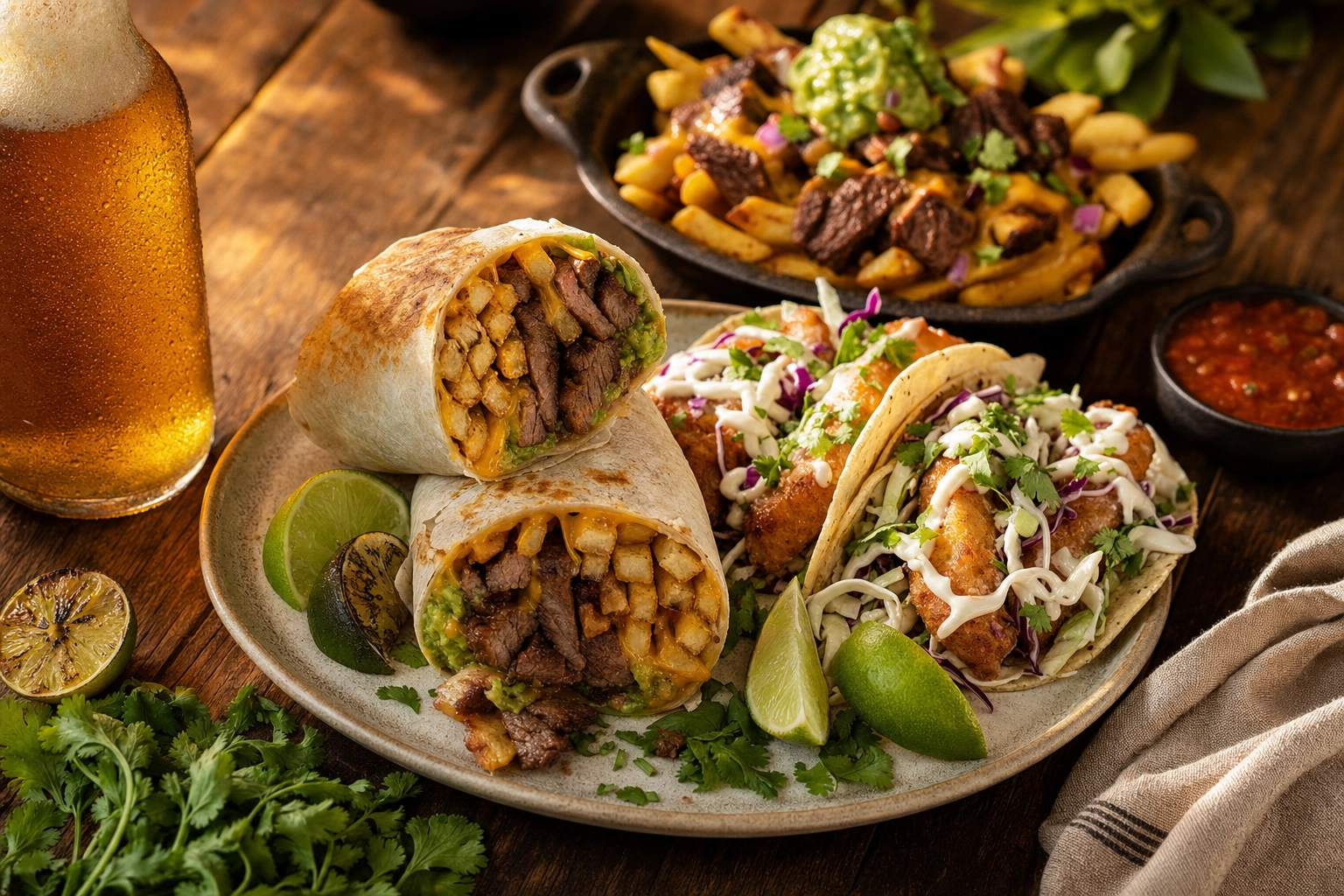
Searching for a San Diego food photographer? You won't run out of talent. This is a city where the food is the headline act — the birthplace of the California burrito, home to a fishing fleet that lands fresh seafood daily, and what locals (and the tourism board) call the craft beer capital of America. The photographers here are genuinely excellent, and their portfolios prove it.
But here's what those portfolio pages don't lead with: a professional shoot in San Diego runs $600–$1,200 in session fees alone, climbs to $2,150–$5,300+ once you add a food stylist, lighting, props, and retouching, and usually books two to four weeks out. For a one-time brand campaign, that's money well spent. For the Tuesday taco special you need photographed by Friday? It rarely pencils out.
This guide breaks down exactly what a San Diego food photographer charges in 2026, who the best ones are, and how AI food photography became the practical alternative for the everyday photo work that keeps a menu looking fresh.
Quick Summary: A San Diego food photographer charges roughly $600–$1,200 per session — often $2,150–$5,300+ all-in once you add styling, lighting, and retouching — and books 2–4 weeks out. FoodShot AI turns a phone photo of your dish into a studio-quality, menu-ready image in about 90 seconds, starting at $15/month. For the 80–90% of everyday photo needs, it's roughly 95% cheaper and effectively instant.
The San Diego Food Photography Landscape
San Diego didn't borrow its food identity — it built its own. The California burrito (carne asada, French fries, and cheddar folded into a flour tortilla) was invented here in the 1980s, widely credited to the original Roberto's taco shops; carne asada fries came out of the same kitchens. Add Baja-style fish tacos, ceviche and sea urchin pulled from local waters, and a beach-brunch scene that runs from Pacific Beach to La Jolla, and you've got one of the most photogenic food cultures in the country.
It's also a serious business. San Diego County's food system generates more than $17.5 billion in restaurant and retail sales and employs over 217,000 people — more than 15% of all jobs in the county — according to the San Diego Food System Alliance. The same region is the craft beer capital of America, with 150+ breweries clustered in spots like Miramar (nicknamed "Beeramar") and North Park's "Beer Boulevard."
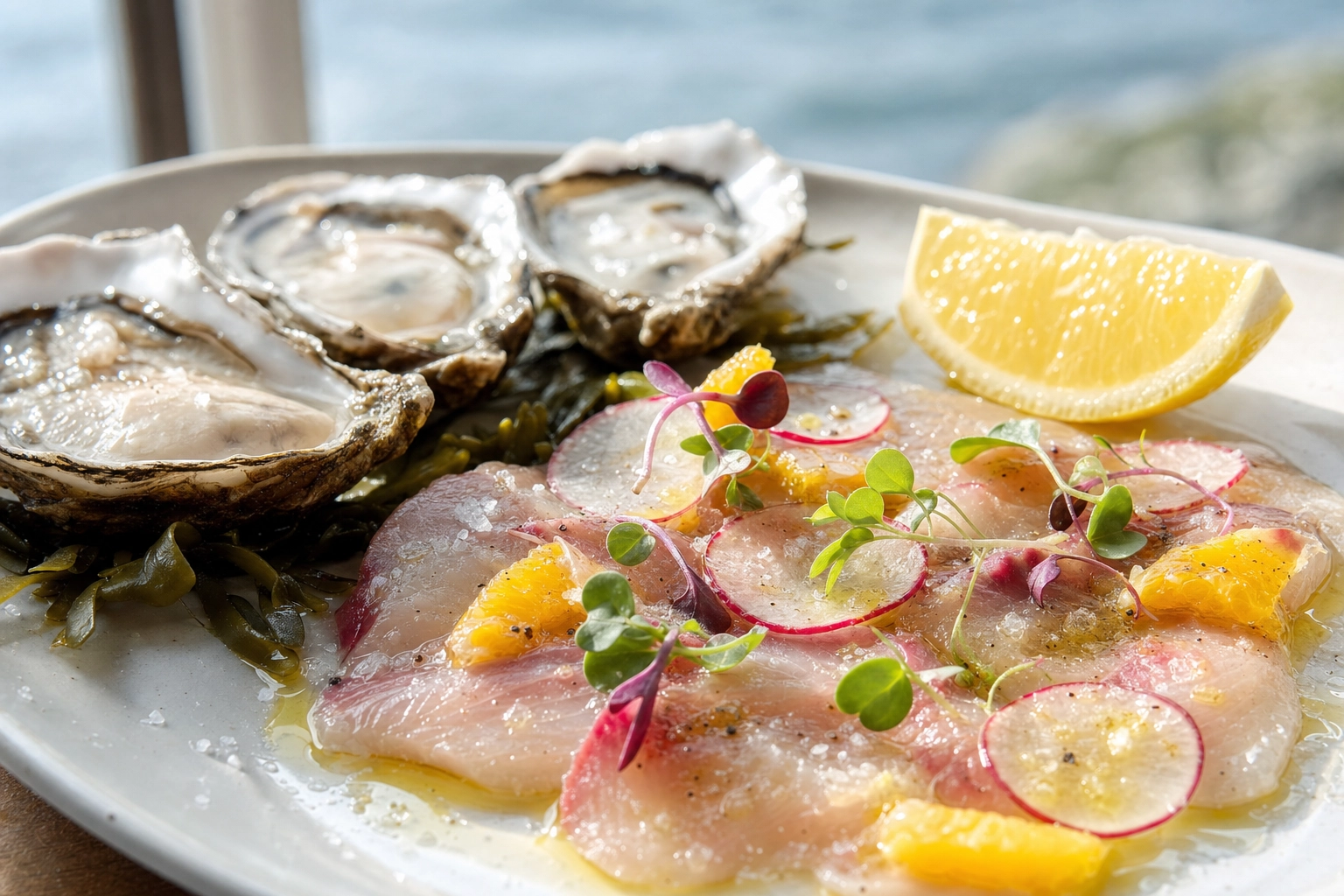 Fresh San Diego seafood close-up: shucked oysters and yellowtail crudo with citrus in cool coastal light
Then there's the light. San Diego averages 260+ sunny days a year, with a soft marine layer most mornings and warm, directional sun in the afternoons — close to ideal natural light for food photography. It's a big reason so many local shoots happen on location instead of in a rented studio.
All of which adds up to a highly competitive market where great visuals aren't optional. With nearly 5,000 restaurants in the city and a tourism economy where diners discover you on a phone screen before they ever walk in, your photos are doing the selling. Which brings us to what those photos actually cost.
What a San Diego Food Photographer Actually Charges
The number you'll see quoted is the session fee: roughly $600–$1,200 for a San Diego food photographer's time plus basic editing. Flat-rate, on-location half-days tend to land around $700–$1,500. San Diego generally runs 15–25% below Los Angeles at the entry and mid tiers — partly because so many shoots lean on that free coastal daylight instead of a rented studio.
But the session fee is the brochure number, not the invoice. Here's what a full professional food photo shoot actually costs once you add the production around it:
| Cost component | San Diego range |
|---|---|
| Photographer session fee (2–4 hours) | $600–$1,200 |
| Food stylist | $400–$1,000/day |
| Studio rental or on-location lighting | $500–$1,800/day |
| Photo assistant + payroll | $300–$450/day |
| Props, groceries, surfaces | $150–$350 |
| Post-production & retouching | $120–$220 |
| Travel & setup | $80–$250 |
| Total per shoot | $2,150–$5,300+ |
Entry-level photographers start lower — around $300–$600 a session — but you trade away experience and consistency for the savings. Established commercial names with editorial clients command $1,200+ before any production costs are added.
On a per-image basis, that works out to roughly $50–$350+ per finished photo. And because most restaurants refresh their images three to four times a year — seasonal menus, delivery-app updates, new specials — the figure to actually plan around is annual: about $6,500–$21,000+ per year on food photography alone.
For a full national breakdown by experience level and method, see our complete food photography cost guide. And if you're weighing California markets, our Los Angeles food photographer comparison shows how rates climb roughly 15–25% higher just up the coast.
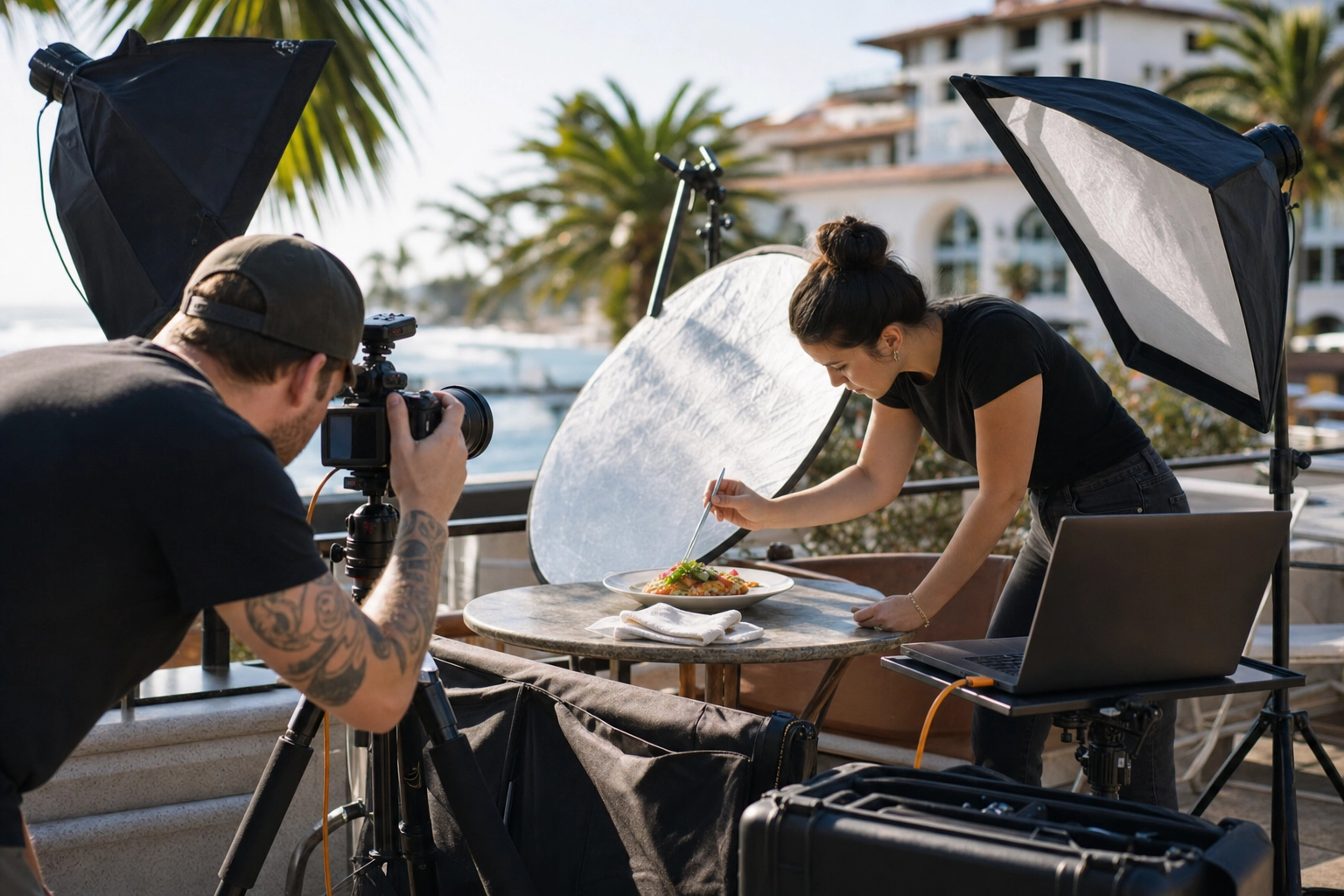 Professional food photographer and stylist shooting a dish on a sunny San Diego patio with reflector and tripod
7 of the Best Food Photographers in San Diego
San Diego has real, world-class food photography talent. If the traditional route fits your project, these are seven San Diego-based photographers whose work is genuinely worth knowing — each with a distinct style and client base. (This list intentionally shares zero names with our Los Angeles guide; everyone here is local to San Diego.)
- Megan Morello — A San Diego food, drink, and lifestyle photographer known for bright, modern, natural-light imagery. Her work leans into clean, fresh hospitality and editorial styling that suits cafés, restaurants, and food brands.
- Nancy Ingersoll — A commercial food and product photographer focused on restaurant and CPG brand storytelling. Nancy Ingersoll shoots both on location and in studio, with a portfolio spanning menu work, packaging, and branded content.
- Amy Carson — A commercial food and lifestyle photographer who also shoots drink and product for premium hospitality, CPG, advertising, and editorial clients. Her images carry a polished, art-directed feel built for brands.
- Chelsea Loren — A San Diego-based styled food and beverage photographer whose clients include restaurants, cafés, bakeries, breweries, cocktail bars, luxury hotels, and tourism boards. She's strong on editorial work, "hands-in-motion" lifestyle shots, and branded social media content.
- Marshall Williams — A Brooks Institute-trained photographer who has run a San Diego studio for roughly three decades. He specializes in lifestyle, food, and hospitality with a light, natural aesthetic, and his commercial client roster has included names like Jack in the Box, Qdoba, Hilton, and Marriott.
- Justin Galloway (Photo & Motion) — A San Diego-based food, beverage, product, and lifestyle photographer and director working since 2005. He shoots for food brands, agencies, grocery, packaging, and cookbook clients, and runs his own local rental studio.
- Eder Photo — A San Diego restaurant and magazine food photography studio serving the Gaslamp Quarter, East Village, Little Italy, La Jolla, Coronado, and North County. The focus is bold images that pop on menus and in editorial features.
Every one of these photographers does excellent work — that's not the issue. The challenge for a busy restaurant is everything around the photos: cost, availability, and speed. Like a lot of in-demand San Diego food and lifestyle photographers, most are booked two to four weeks out, and that window stretches during spring and fall menu-launch season, when half the restaurants in town want fresh images at once.
Why San Diego Restaurants Struggle With Traditional Food Photography
Beyond the price, three things make traditional food photography a poor fit for the day-to-day reality of running a San Diego restaurant.
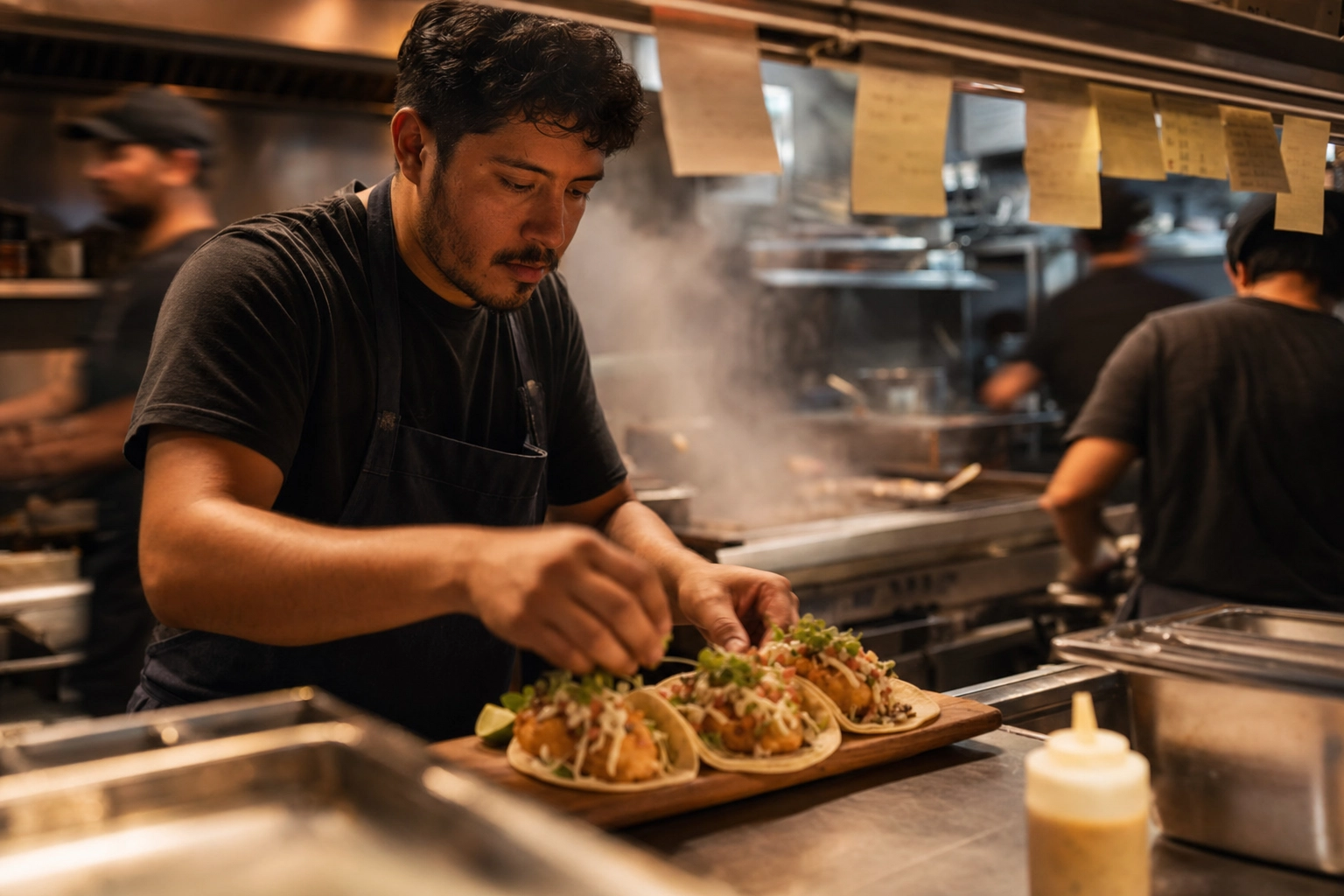 Line cook plating Baja fish tacos during peak service in a busy San Diego restaurant kitchen
The scheduling crunch is real. The best natural light — those soft mid-morning hours — is exactly when your kitchen is prepping or already deep into brunch and lunch service. Shooting around a full house means either disrupting service or paying for after-hours studio time. Either way, you're building a photo shoot around a kitchen that has other priorities.
Consistency falls apart fast. Hire one photographer for your grand opening, another for the fall menu, and a third for delivery shots, and your Instagram feed, your Uber Eats listing, and your printed menu start to look like three different restaurants. In a market where diners judge you on visuals first, that inconsistency quietly costs you orders.
San Diego menus move faster than booking windows. Taco shops run daily specials. Breweries rotate taproom collaborations. Seafood spots change the catch with whatever the Point Loma boats bring in. Brunch cafés swap dishes with the season. When tonight's special needs a photo by tomorrow morning, a two-to-four-week lead time simply doesn't work.
And none of this is one-and-done. Every refresh restarts the clock — and the invoice.
The AI Alternative: Menu-Ready Food Photos in 90 Seconds
FoodShot AI was built specifically for this gap. It isn't a generic photo filter or a text-to-image art toy — it's a purpose-built AI food photographer alternative that turns a real photo of your real dish into a professional, menu-ready image.
Here's the entire workflow:
- Snap a photo of your dish on any phone — no studio, no lighting rig, no food stylist.
- Choose a style from 200+ presets organized across Delivery, Menu, and Fine Dining categories.
- Download in about 90 seconds, ready for your menu, website, delivery apps, or social media.
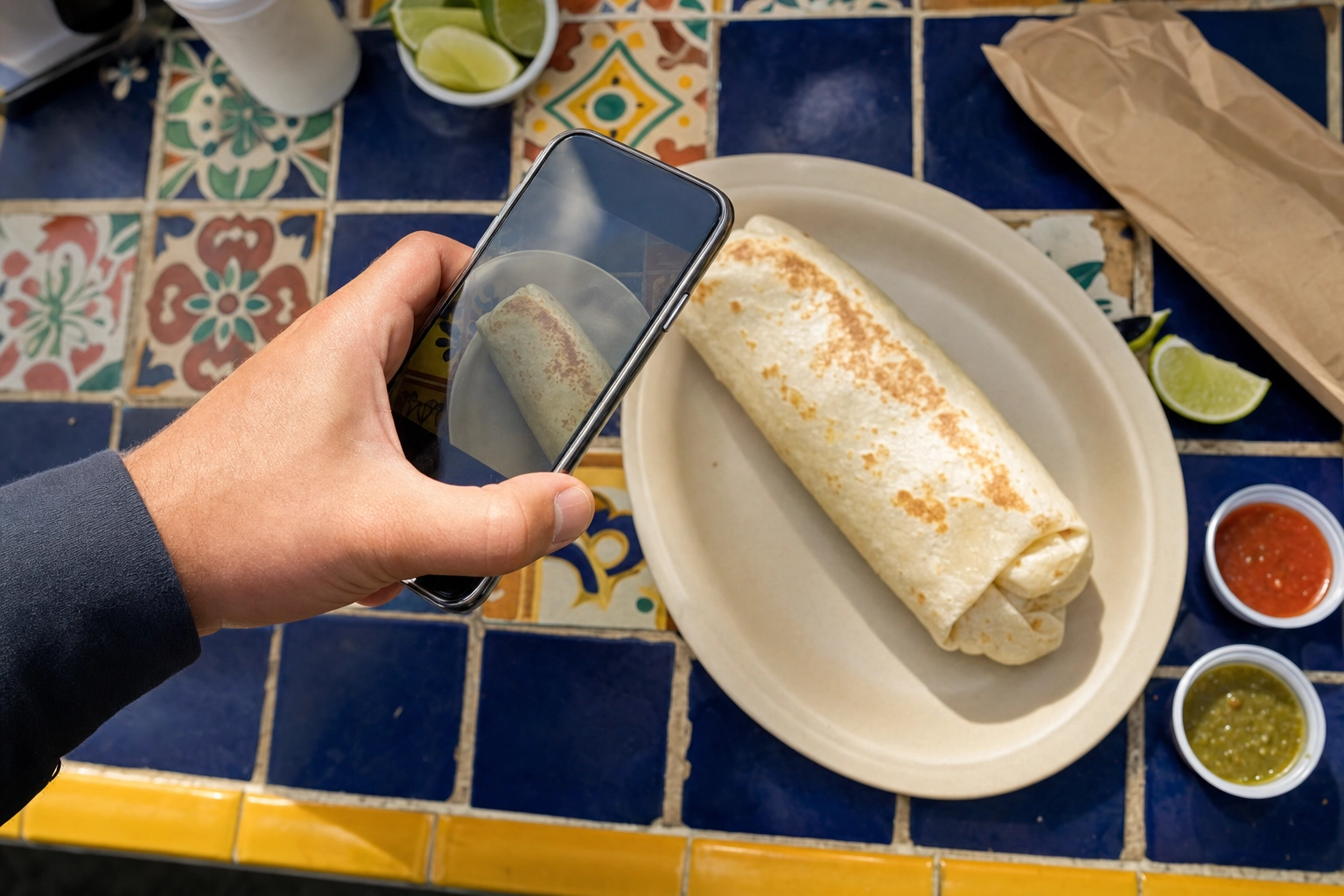 Hand using a smartphone to photograph a California burrito on a tiled taco shop counter in bright daylight
But the styles are only the starting point. FoodShot goes well beyond filters:
- Builder Mode lets you combine a background surface, a plate style, and your food to compose a scene from scratch.
- My Styles clones a look you love — upload a reference photo (a Pinterest pin or your own brand imagery) and match its lighting, props, and composition.
- Prompt-based editing adds a sauce drizzle, swaps a plate, brightens the lighting, or removes a distraction, just by describing it.
- Variations and angles come from a single upload, so you can test options without reshooting.
- Poster Mode turns a finished photo into a promo graphic using ready-made marketing templates.
- 4K, print-ready output means the same image works for a delivery thumbnail or a printed menu board.
Every paid plan includes a commercial license, watermark-free downloads, and private visibility. You can explore the full toolkit on the AI food photo editor page. The headline difference: where a traditional shoot costs thousands and takes weeks, this costs a few dollars and takes minutes — roughly 95% less than hiring a pro.
San Diego Food Photographer vs. FoodShot AI: Full Comparison
Here's the honest side-by-side for the everyday photo work most restaurants actually need:
| San Diego food photographer | FoodShot AI | |
|---|---|---|
| Cost per session | $2,150–$5,300+ all-in | — |
| Cost per image | $50–$350+ | $0.40–$0.60 |
| Time to first photo | 2–4 weeks (book + shoot + edit) | ~90 seconds |
| Images per session | 15–40 | 25–250 per month (plan-dependent) |
| Update frequency | Requires rebooking | Anytime, instantly |
| Style consistency | Varies by photographer | Uniform across every image |
| Commercial license | Often an add-on | Included on paid plans |
| Menu-change turnaround | Days to weeks | Same day |
| Works with phone photos | No (needs pro gear) | Yes — built for it |
The math is hard to argue with. A San Diego restaurant refreshing photos for seasonal menus, delivery platforms, and social posts spends roughly $6,500–$21,000+ a year going the traditional route. The same restaurant on FoodShot spends about $180–$1,188 a year depending on plan — a ~95% reduction, with new images available the moment the menu changes instead of three weeks later. For a closer look at how this plays out across a full menu, see our guide to AI food photography for restaurants.
Before and After: From Phone Snapshot to Menu-Ready
The most important thing to understand: FoodShot restyles your actual dish. It doesn't fabricate fake food — it takes the real plate you photographed and fixes everything a phone camera gets wrong. Here's what changes:
| Phone snapshot (before) | Menu-ready image (after) |
|---|---|
| Flat overhead fluorescent light | Soft, directional, appetizing light |
| Cluttered counter or prep station | Clean, on-brand background |
| Dull, grayish color | Vibrant, true-to-life color |
| Awkward angle and framing | Composition optimized for the platform |
| Looks different from every other shot | Consistent with your brand look |
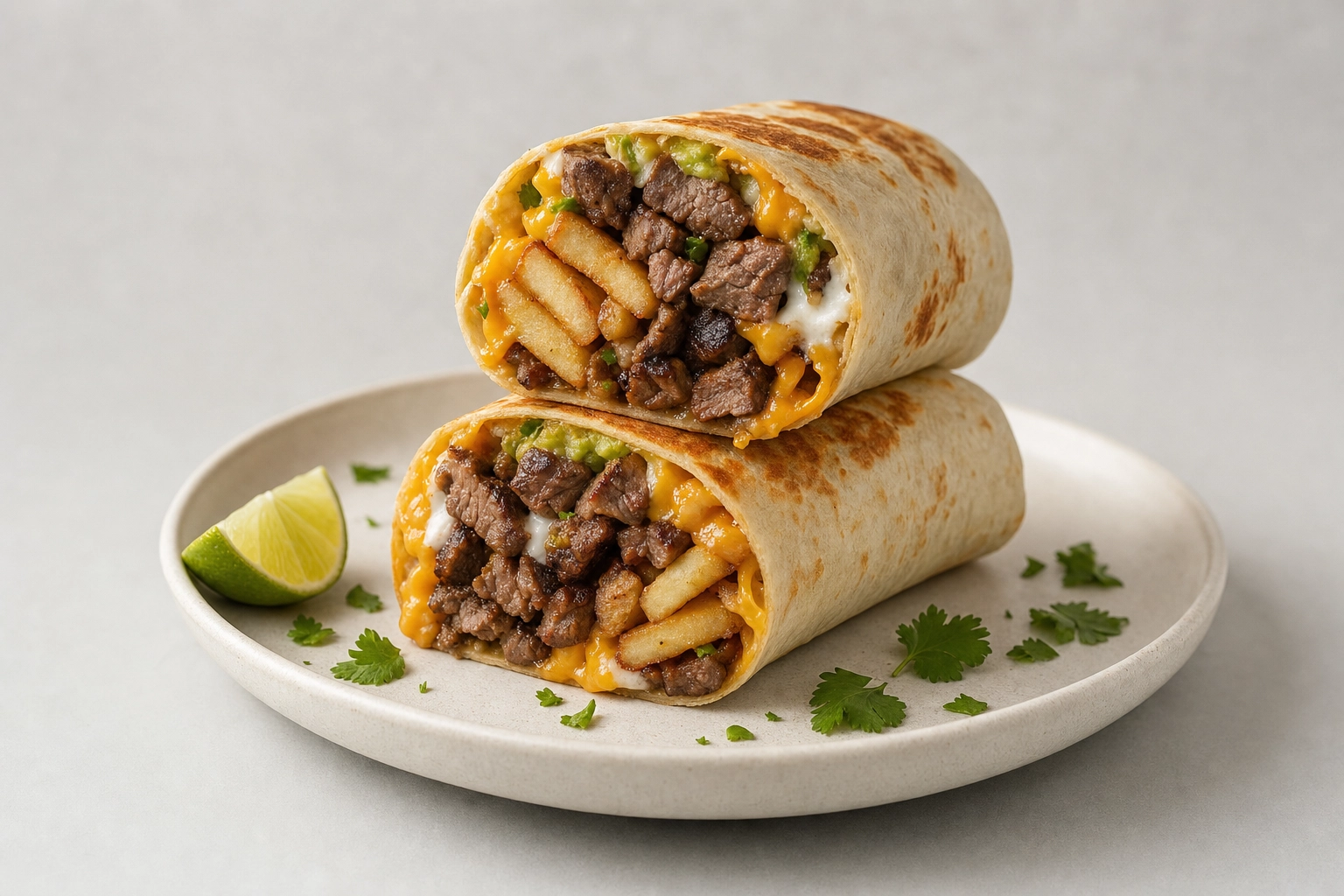 Menu-ready California burrito sliced to show carne asada and fries on a clean minimal studio background
Picture a quick phone shot of a California burrito on a stainless prep counter under kitchen lights — greasy-looking, gray, forgettable. Run it through a Delivery style and you get a clean, warmly lit hero image on a surface that matches your brand, with the carne asada and melted cheddar finally looking like something you'd want to order. Same dish, same ingredients — just photographed the way it deserves.
How San Diego Restaurants Use AI Food Photography
San Diego's food businesses put AI photography to work in some very specific ways:
Delivery apps. Photos are the difference between a scroll-past and an order. Grubhub reports that restaurants following menu best practices — adding pictures and descriptions — see as much as 70% more orders and 65% higher sales. FoodShot's Delivery styles produce images sized and lit for Uber Eats and DoorDash food photography right out of the box.
Taco shops and food trucks. When a stand needs every California burrito and fish taco shot fast and cheap, AI fits the workflow. See California burrito photography and food truck menu photography for the details.
Seasonal seafood and brunch menus. When the catch changes or the spring brunch menu drops, you can refresh the photos the same day instead of waiting on a booking.
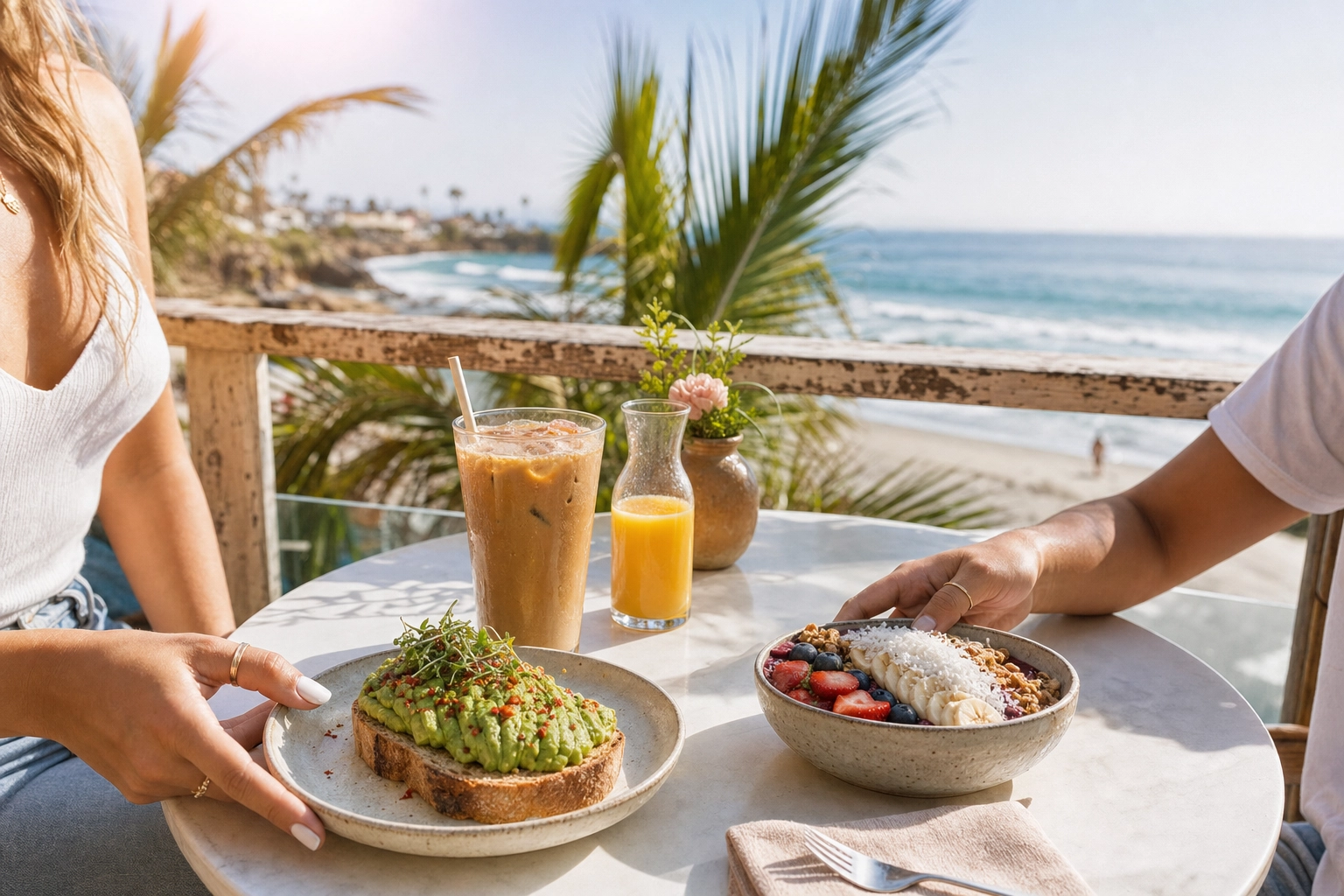 Bright San Diego beach brunch on a coastal café patio with avocado toast, acai bowl, and iced coffee
Breweries and taprooms. In the craft beer capital, food-and-beer pairings sell. AI craft beer photography keeps pint shots and shareable plates looking sharp for taproom menus and social posts.
Fine dining and hotels. Upscale venues use the Fine Dining styles for magazine-quality plating across menus, websites, and press kits.
The through-line is brand consistency: because every image runs through the same styles, your delivery apps, social media, and printed menu finally match — without coordinating three different photographers over two years.
When You Should Still Hire a San Diego Food Photographer
Let's be straight: AI doesn't replace a professional for every job. A San Diego food photographer is still the right call when you need:
- A brand launch or rebrand with bespoke creative direction and a human art director shaping the look from scratch.
- Print, billboard, or magazine work that demands maximum resolution and fully custom food styling.
- Cookbook photography with elaborate lifestyle scenes and environmental storytelling.
- Grand-opening PR shots — the hero images that define your restaurant's identity for press coverage.
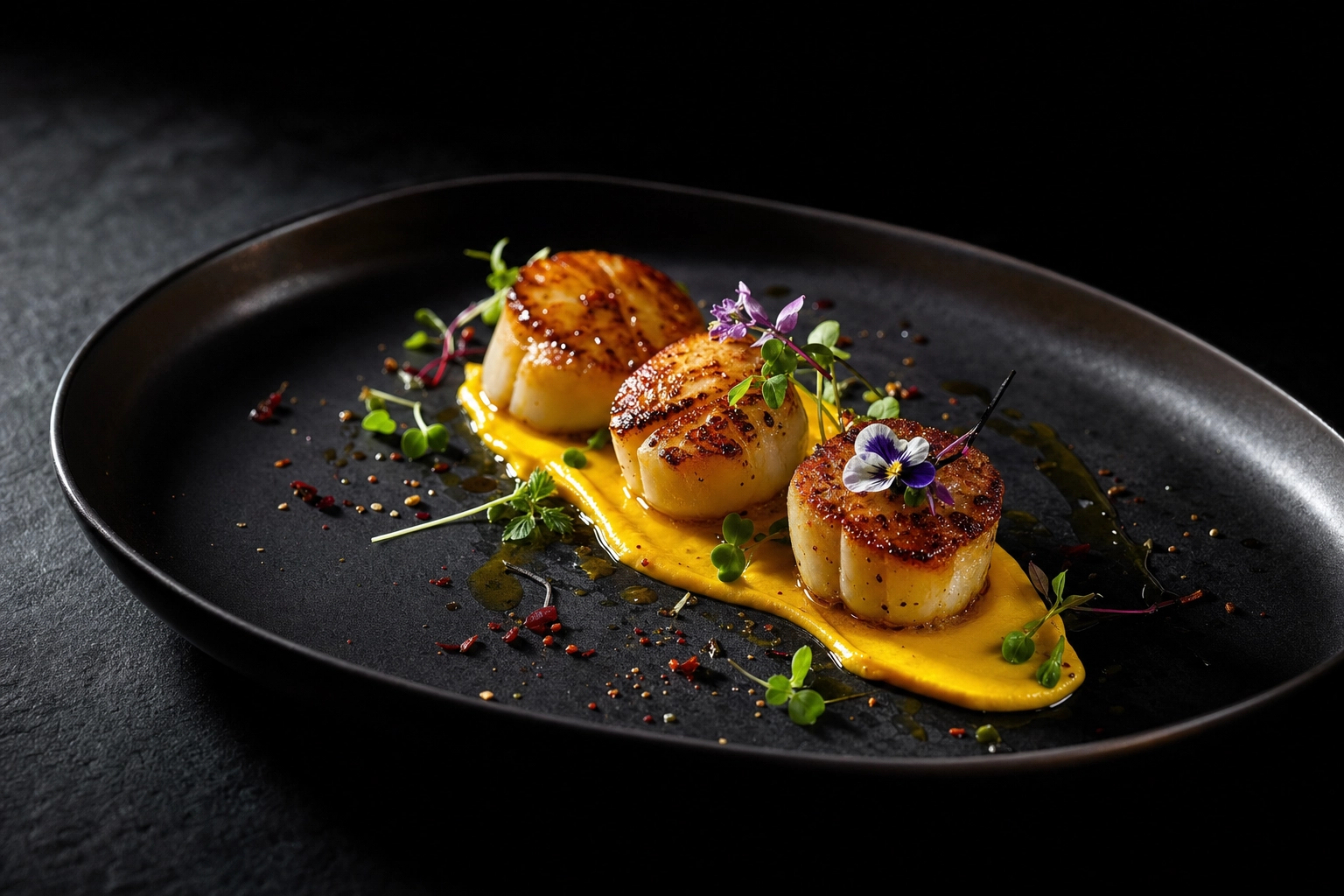 Moody fine-dining plate of seared scallops with saffron sauce on dark slate, editorial cookbook lighting
These are high-stakes, one-time projects where a pro's creative expertise is worth the cost and the wait. But they're maybe 10–20% of a restaurant's real photo needs. The other 80–90% — menu updates, delivery listings, daily specials, seasonal refreshes, social content — is exactly where AI wins.
For most San Diego restaurants, the smartest move is a hybrid: hire a photographer once for the signature hero shots, then use FoodShot for everything ongoing. You get bespoke creative when it truly matters and instant, affordable, on-brand images every other day of the year. When you're ready, see pricing — plans start at $15/month, and a free tier lets you test it first.
Frequently Asked Questions
How much does a food photographer cost in San Diego?
A San Diego food photographer typically charges $600–$1,200 for a session (time plus basic editing), or about $700–$1,500 for an on-location half-day. Once you add a food stylist, lighting or studio rental, props, an assistant, and retouching, a full shoot usually runs $2,150–$5,300+. That works out to roughly $50–$350+ per finished image, and most restaurants need three to four shoots a year.
Who are the best food photographers in San Diego?
Well-regarded San Diego food photographers include Megan Morello, Nancy Ingersoll, Amy Carson, Chelsea Loren, Marshall Williams, Justin Galloway (Photo & Motion), and the Eder Photo studio. Their work ranges from bright lifestyle and editorial imagery to commercial CPG, hospitality, and restaurant menu photography. All deliver strong results — the trade-offs are cost, lead time, and how often you can afford to rebook.
Can AI really replace a San Diego food photographer?
For most everyday needs, yes. AI food photography handles menu updates, delivery listings, social posts, and seasonal refreshes — the 80–90% of work that doesn't require a custom shoot. It won't replace a pro for a full brand launch, a cookbook, or large-format print, where bespoke art direction matters. A hybrid approach — one pro shoot plus AI for ongoing images — covers both ends.
Will AI food photos work for Uber Eats and DoorDash listings?
Yes. FoodShot's Delivery styles produce clean, well-lit images at the resolution and proportions those platforms expect, and they use your real dishes — which matters, because the apps favor original food photography. Given that menu photos can drive up to 70% more orders, optimized delivery images are one of the highest-return uses of the tool.
Is FoodShot AI good for taco shops, food trucks, and breweries?
It's a strong fit. Taco shops and food trucks get fast, low-cost photos of California burritos, fish tacos, and daily specials. Breweries and taprooms can shoot food-and-beer pairings for menus and social media. Because it works from a single phone photo with no equipment, it suits fast-moving, high-volume San Diego food businesses especially well.
Do I keep the commercial rights to my food photos?
Yes. Every paid FoodShot plan includes a commercial license, watermark-free downloads, and private visibility, so you can use your images on menus, delivery apps, websites, print, and social media. The free plan is watermarked and limited to personal use, and Enterprise plans add a resale license for agencies and franchises.