How to Start a Ghost Kitchen in 2026: Step-by-Step Guide
 Ali Tanis11 min read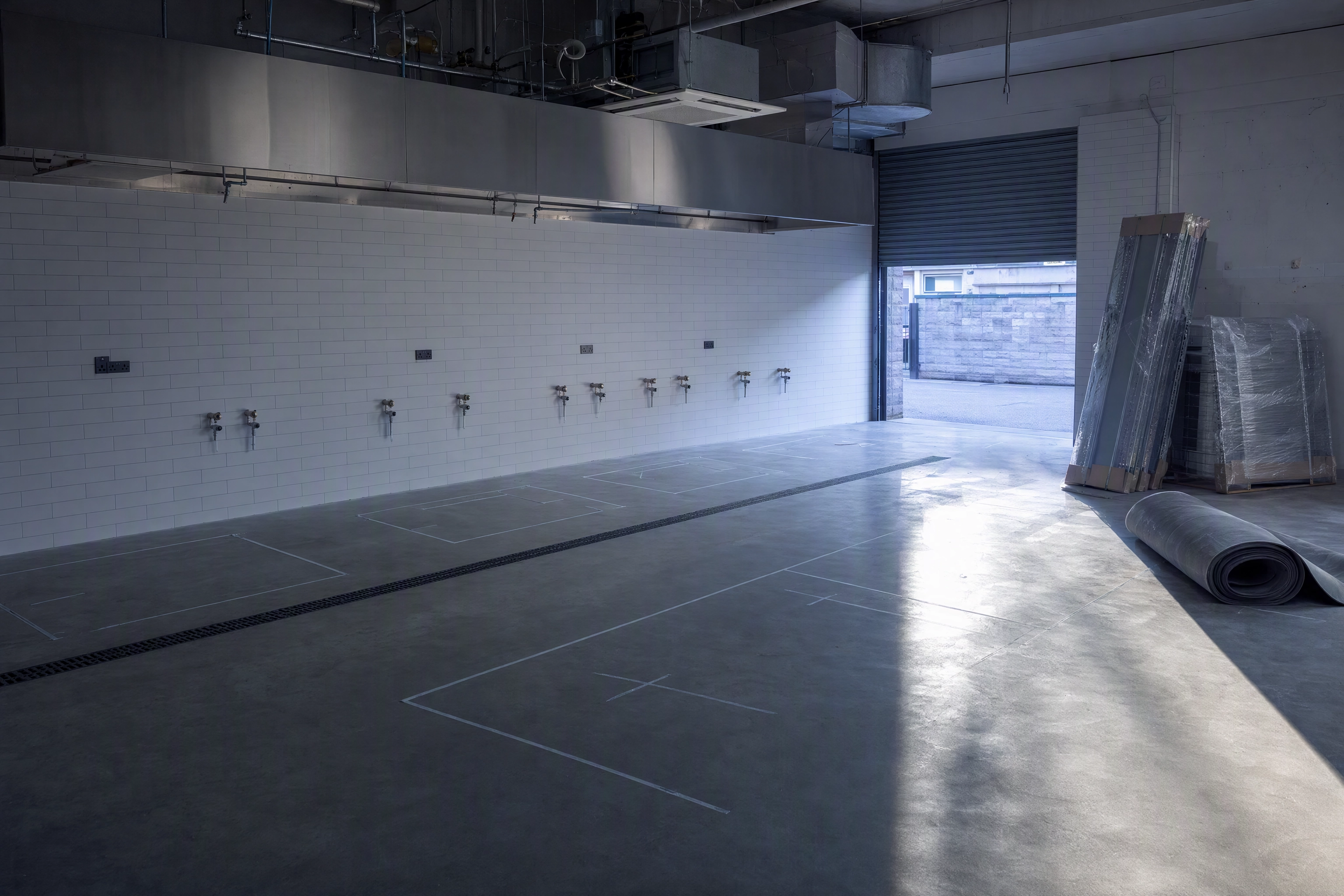
Most guides on how to start a ghost kitchen hand you ten bullet points and no invoices. This is the version with the money attached: nine steps in the order operators work them, real 2026 numbers, and the two failure modes that kill delivery-only brands.
Need the definition first? Read what a ghost kitchen is. This page is the doing part.
Quick Summary: Budget $20,000-$60,000 and 30-60 days inside a shared commissary, or $100,000-$200,000+ and 3-6 months for your own buildout. Plan for a 15-30% platform commission, hold the menu to 15-25 delivery-proof items, and photograph every dish before launch — the listing photo is your only storefront.
How to Start a Ghost Kitchen: The Nine Steps
| Step | Typical spend and time |
|---|---|
| 1. Choose delivery-proof dishes | $0, 1-2 weeks |
| 2. Research demand in the apps | $0, 3-5 days |
| 3. Secure kitchen space | $300-$7,000/mo, 1-6 weeks |
| 4. Licences, permits, food safety | $500-$3,000, 2-8 weeks |
| 5. Build the financial model | $0, 1 week |
| 6. Engineer the menu | $0, 1-2 weeks |
| 7. Onboard to platforms | $0, 3-10 days |
| 8. Photograph every dish | $15-$1,400, 1-3 days |
| 9. Soft launch and ramp | $500-$2,000, 4-8 weeks |
Steps 3 and 4 overlap and are the long pole.
Step 1: Pick a Concept That Survives a 25-Minute Car Ride
Delivery is a food-engineering problem before a culinary one. Your dish gets judged after eight minutes on a hot shelf and seventeen in a sealed bag on a car seat.
Things that travel: braises, curries, pizza, fried chicken in vented packaging, burritos, grain bowls, barbecue, cakes and cookies. Things that arrive as evidence against you: thin fries, limp within five minutes, delicate fish, anything crisp sitting in sauce.
The test costs one afternoon: cook the dish, pack it as a courier would, leave it on a counter 25 minutes, then eat it from the box. Still proud of it? You have a concept. If you flinch, change the dish or the packaging — not the marketing.
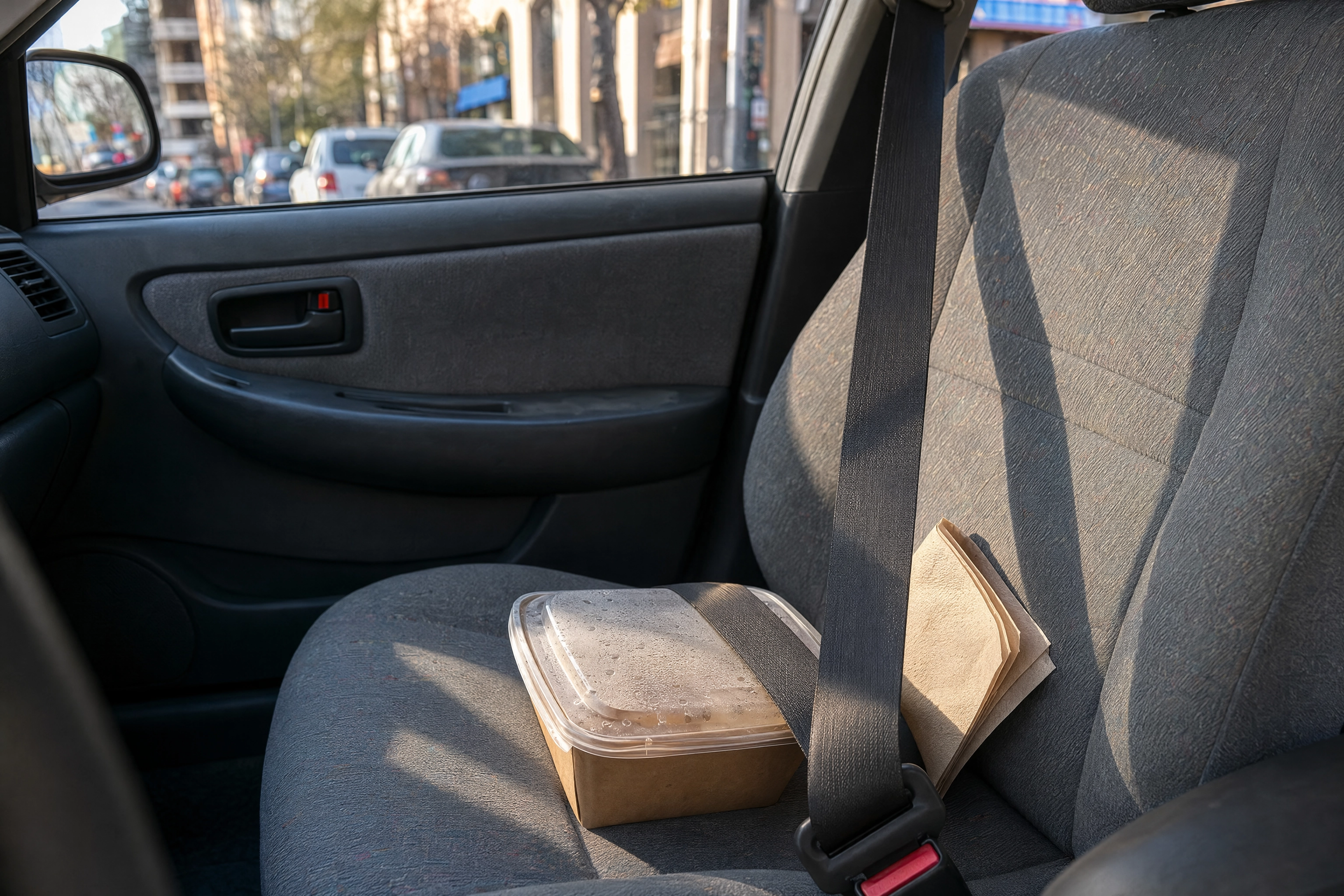 Sealed takeout container belted onto a car passenger seat, the 25-minute delivery ride that decides if a dish travels
Categories that reliably earn online orders skew toward burgers, fried chicken, pizza and desserts: strong margins, forgiving in transit, easy to photograph.
Step 2: Use the Delivery Apps as Your Market Research
You do not need a research firm, just a phone and an hour. Open the delivery apps at your target location and read the marketplace as a demand report.
Count the kitchens competing inside the delivery radius. Note the ratings floor: if the top five all sit at 4.8, the category is well served. Look for the real opening: visible demand with weak execution, where listings sit under 4.5 stars and half the items lack photos.
Screenshot the ticket sizes: they become the revenue line in step 5 and beat any industry forecast. Unlike restaurants with a dining room, you cannot win on atmosphere, so repeat this at three candidate locations.
Step 3: Choose Your Kitchen Space
Four realistic options, cheapest first:
- Shared commissary kitchen. $300-$1,500 a month, or $15-$50 an hour for booked shifts. Already licensed and inspected, so starting here removes weeks from your timeline, though you share equipment with other food businesses.
- Turnkey delivery-only unit. A 200-300 sq ft private space in a purpose-built facility costs $2,000-$7,000 a month in a major metro, utilities usually included. You get keys, a hood and a pickup area, but little leverage on rent.
- An existing restaurant's downtime. A cafe that only serves lunch has dead evening capacity. Renting that window is the lowest-risk entry in the business.
- Your home, where the law allows it. Legal in a minority of US counties under California's MEHKO programme. Cheap, but capped hard — see step 4.
Weighing a mobile option? The trade-offs are in ghost kitchen vs a food truck. One warning before you build out a raw shell: the ventilation hood alone costs $5,000-$20,000, turning a $40,000 budget into $150,000.
Step 4: Licences, Permits and Food Safety
The standard US stack: business registration, an EIN, a seller's permit, a county health permit, food handler cards, a certified food protection manager, and a commissary agreement if the space is shared. Expect $500-$3,000; health department review is the slowest item.
Apply before you sign a lease: health departments inspect the space, not the idea, and a lease on a non-compliant unit is an expensive lesson.
On home kitchens: California's AB 626 created the Microenterprise Home Kitchen Operation permit, but each county must opt in — the state programme overview lists current status. Los Angeles County has permitted them countywide since late 2024: a $597 application review fee plus a $347 annual health permit, with the fee subsidy expired since June 2026. The LA County MEHKO rules cap you at 30 meals a day, 90 a week and $100,000 in gross annual sales — a viable side business, not a scalable one. Outside opt-in counties, cottage food laws exclude hot meals sold through third-party apps.
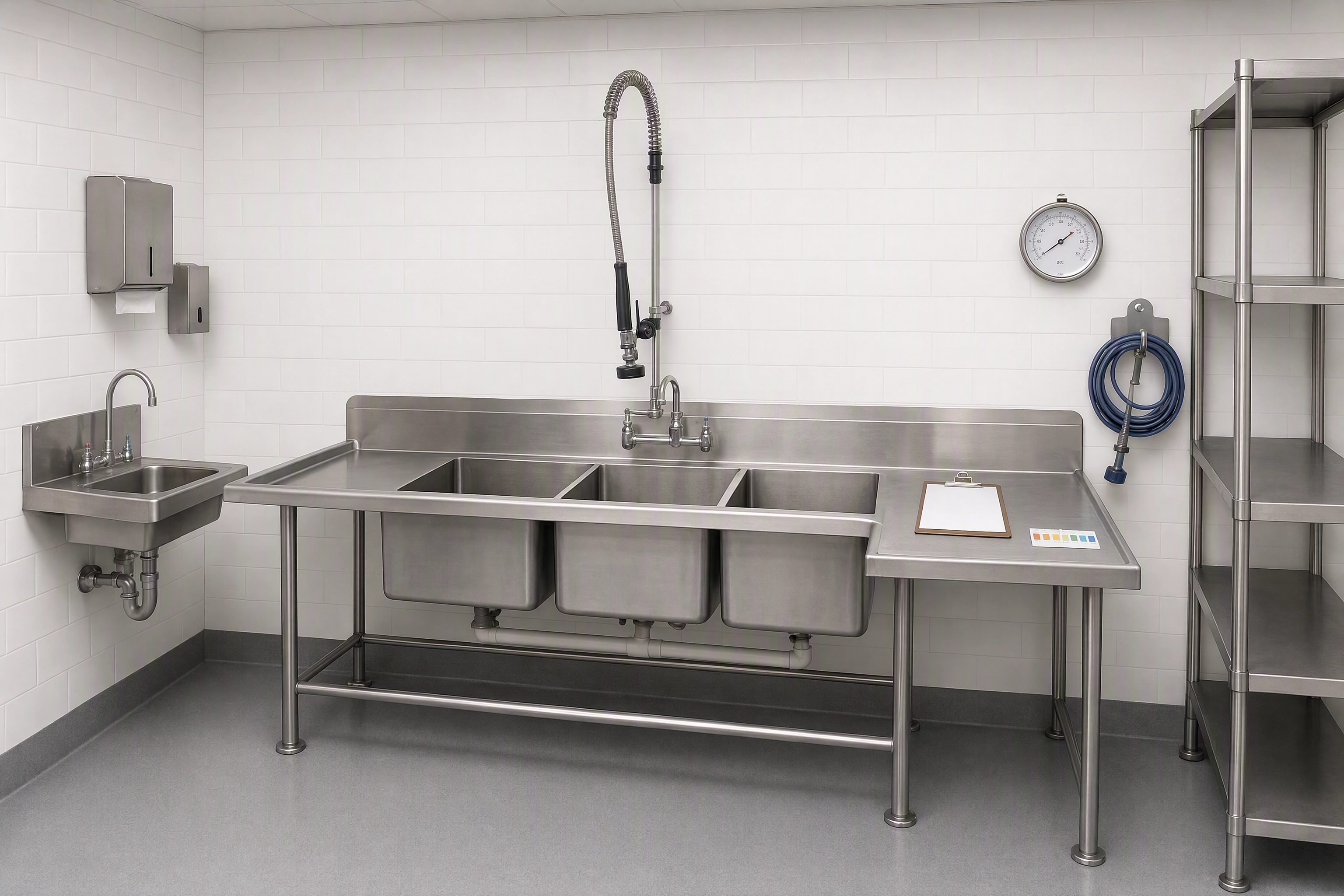 Stainless three-compartment sink and sanitizer test strips in an inspection-ready kitchen for ghost kitchen health permits
Step 5: Get the Numbers Straight Before You Spend
Three honest startup bands: $20,000-$60,000 through a commissary with minimal equipment, $40,000-$80,000 for a semi-private space you outfit yourself, $100,000-$200,000+ for an independent buildout. Then the monthly stack, which most people skip.
| Monthly line | Typical share |
|---|---|
| Rent and kitchen fees | 8-12% of sales |
| Platform commission | 15-30% of sales |
| Food cost | 28-32% of sales |
| Labour and staff | 25-32% of sales |
| Packaging | $0.40-$0.75 per bag |
| Utilities, insurance, tech | $1,500-$3,500 |
Delivery-only kitchens carry less overhead than restaurants with front-of-house staff, but the platform takes what the dining room used to cost. A benchmark: 50 deliveries a day at a $25 ticket is roughly $37,500 a month gross. After food at 30%, staffing at 30%, platform fees at 25% and rent at 10%, net margin lands between 5% and 15%. Break-even commonly arrives near month 10, so hold 3-6 months of expenses in reserve.
Build this in a spreadsheet before spending anything. If it only works at a 15% commission and full capacity, it does not work.
Step 6: Engineer the Menu for Delivery Margin
Fifteen to 25 items, maximum. Every item should share prep components with two others, so one braise, one sauce base and one dough carry half of it. A tight menu cooks faster, wastes less and photographs in one session.
Price for the commission you actually pay, not what you would charge across a counter. Then build the ticket with sides and bundles: commission is a percentage, so a bigger basket carries the same overhead and more contribution. The full method is in ghost kitchen menu planning.
Step 7: Get Listed on the Platforms
Have these ready before applying: business licence, health permit, EIN, bank details, priced item list and kitchen address. Uber Eats merchant sign-up requires a valid business or food licence from your local regulatory agency; others ask for the same. Onboarding takes 3-10 business days.
Know the real commission. DoorDash Partnership Plans charge 15% (Basic), 25% (Plus) and 30% (Premier) on delivery, with pickup at 6% across tiers. Uber Eats mirrors that band through Lite, Plus and Premium. Add payment processing and promotions and the true cost per order often lands nearer 30-40%.
Start on one or two third-party marketplaces, not five. Every extra tablet is another surface where a missed ticket becomes a refund and a rating hit. Platform mechanics are in running a ghost kitchen on DoorDash.
Step 8: Photograph Every Dish Before You Open, Not After
This is the step operators postpone and then regret. Traditional restaurants sell with a dining room, a smell and a server. Your online storefront is a thumbnail on a scrolling grid — that image is the brand.
The platform data is blunt. According to DoorDash's merchant photo guidance, menus with header images earn up to 50% more monthly sales, and logos add 23%. Merchants with header photos saw over 5x more sales in their first 28 days. Shoot every item, not just the bestsellers — platforms fill empty slots with imagery you did not choose.
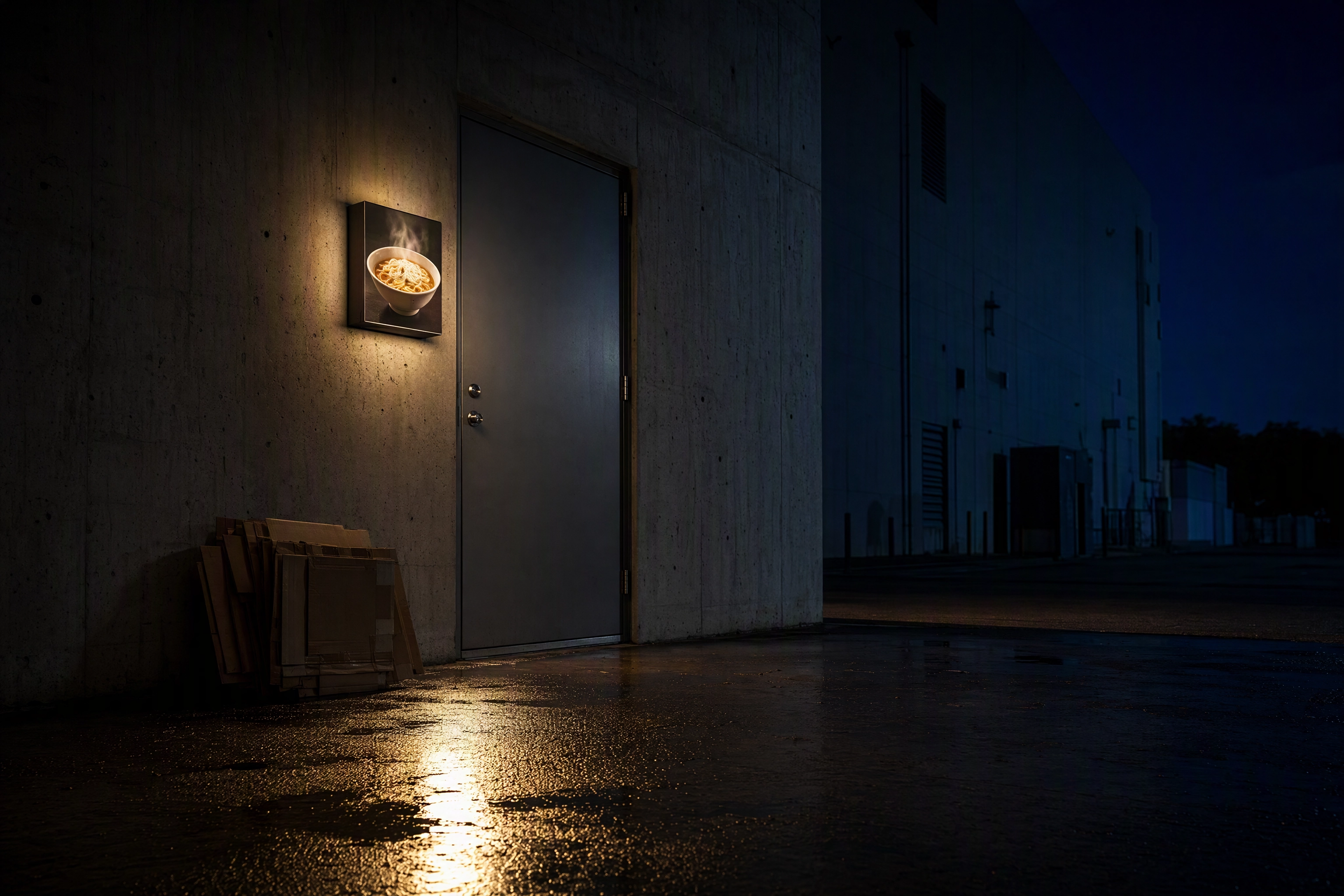 Unmarked delivery kitchen door at night lit only by one glowing dish photo, showing the listing photo as the whole storefront
The problem is timing. A professional session costs $700-$1,400 before you have revenue, so most operators go live with phone snaps shot under fluorescent light against stainless steel — the most common self-inflicted wound in this business. The practical alternative in 2026: shoot each dish on a phone and run it through AI food photography that rebuilds the lighting and surface — what photography for ghost kitchens and restaurant photography exist for, from $15 a month. Pixel specs and rejection reasons are in DoorDash photo requirements.
Step 9: Launch Week
Soft launch with a shortened menu and friends-and-family orders so you can time a real ticket end to end. Fix the bottleneck before strangers find you.
New listings get a short discovery boost, so spend it deliberately: a first-order promotion during your strongest daypart, not a permanent discount. Reply to every early review — your ratings floor is set in the first 50 orders, and protecting a 4.8 beats repairing a 4.2. For marketing beyond the apps, see ghost kitchen marketing.
The Two Failure Modes That Actually Kill Ghost Kitchens
Commission compression. A 30% commission on prices set for a counter leaves nothing once packaging and labour land. Operators rarely fail because sales are low; they fail because gross margin was never wide enough to absorb the platform. Model your worst tier.
Total platform dependence. The app owns the customer, the search ranking, the promotional lever and the refund decision. After the 2020-2021 boom the facility side collapsed: the largest US operators sold or closed their physical locations and pivoted to software, another lost its major restaurant partnerships, and thousands of thin virtual storefronts were delisted — a reckoning CNBC documented in 2024. The operators still trading built a direct ordering channel early.
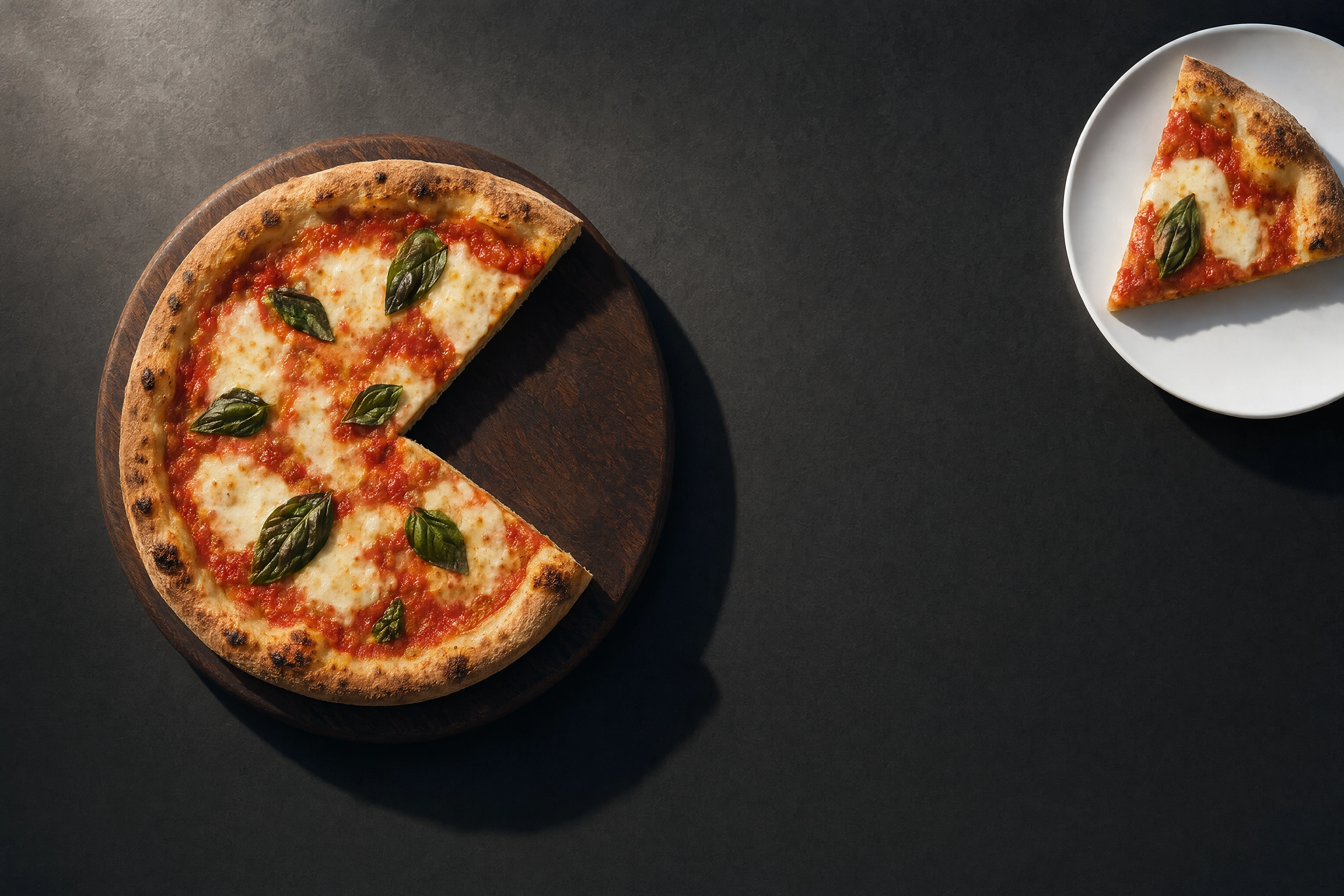 Pizza with a third cut away onto a separate plate, visualising the delivery commission taken from every ghost kitchen order
The same discipline applies whether you are starting a virtual brand, a food truck line or a catering operation: own the customer relationship, and never let one channel set your prices.
Frequently Asked Questions
How much does it cost to start a ghost kitchen in 2026?
$20,000-$60,000 through a shared commissary, $40,000-$80,000 for a semi-private space you outfit yourself, and $100,000-$200,000+ for an independent buildout where the hood alone runs $5,000-$20,000, plus 3-6 months of expenses in reserve.
Can I run a ghost kitchen from home?
Only where local law allows it. California counties that opted into MEHKO permit home meal production capped at 30 meals a day, 90 a week and $100,000 in annual sales. Elsewhere, cottage food rules exclude hot meals sold online through delivery apps, so you need a licensed commercial kitchen.
How long does it take to open?
Roughly 30-60 days moving into an already-licensed commissary, and 3-6 months or more building your own space. Health permitting and platform onboarding are the steps most likely to slip.
How do I start a ghost kitchen on DoorDash?
Register the business, secure a health permit for a licensed kitchen, then apply as a merchant with your licence, EIN, bank details and priced items. Choose a Partnership Plan at 15%, 25% or 30% commission, upload item photos plus a header image, and go live. Our DoorDash ghost kitchen guide covers each screen.
Is a ghost kitchen actually profitable?
It can be, at 5-15% net margin after volume is established. Margins beat a full-service restaurant because there is no dining room to staff, but only if pricing is engineered for a 25-30% commission.
Do I need a business plan to start a ghost kitchen?
You need a financial model more than a formal document. Lenders and commissary landlords will ask for a written plan, but what decides survival is a spreadsheet showing contribution margin per item at your worst commission tier, with repeat customers modelled honestly.