 Ali Tanis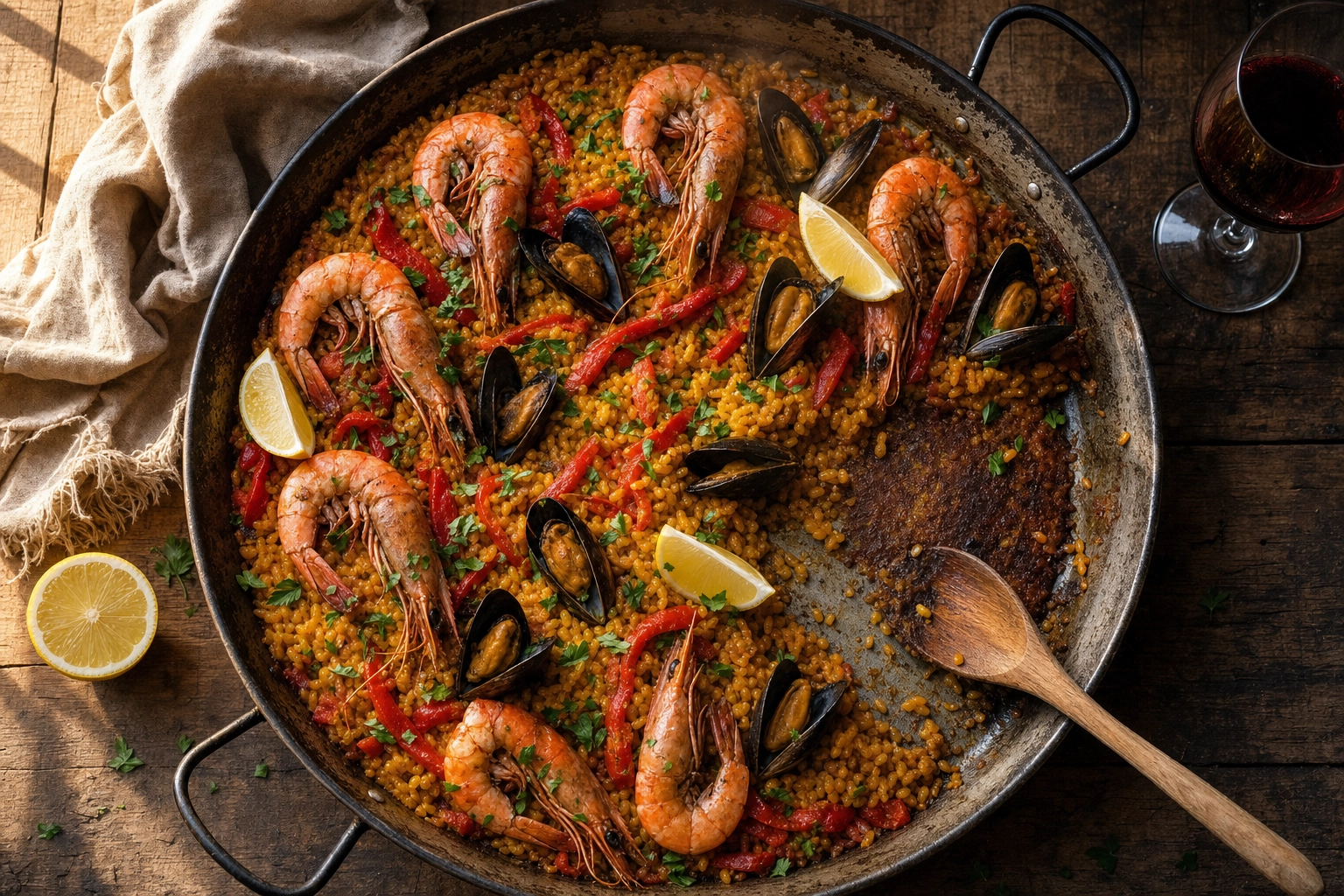
Spain plates its food for sharing, not for show — and that's exactly why it photographs so well. A paella pan lands in the middle of the table, a board of jamón gets passed hand to hand, and a dozen small cazuelas crowd around a bottle of Rioja. The drama is already there. The hard part is capturing it so the photo makes someone hungry instead of confused.
Most paella images online don't manage it. Search the term and you get thousands of near-identical stock photos — sterile white backgrounds, grey rice, no soul. That's the opposite of what a Spanish kitchen actually serves. This guide fixes that. You'll get the five shots every Spanish or tapas menu needs, the lighting and styling that reads as authentically Spanish, and a simple way to turn a phone snap of last night's paella into a menu-ready image. Consider it a food photography crash course built for Spanish menus.
Quick Summary: The best Spanish food images lean into the cuisine's rustic, communal character — saffron-gold paella shot from overhead, abundant tapas spreads, paper-thin jamón, and warm, textured surfaces. Nail five core shots (paella, tapas spread, jamón, patatas bravas, churros), light them with soft directional window light, and you've covered most of a Spanish menu. No studio required.
Why Spanish Food Is Built for the Camera
Three things make Spanish cuisine a gift for anyone holding a camera.
Color. The Spanish palette is loud in the best way: saffron-gold rice, smoked-paprika red, the deep ruby of jamón veined with ivory fat, bright green olives and parsley, the char on a grilled prawn. You barely have to style it — the ingredients do the work.
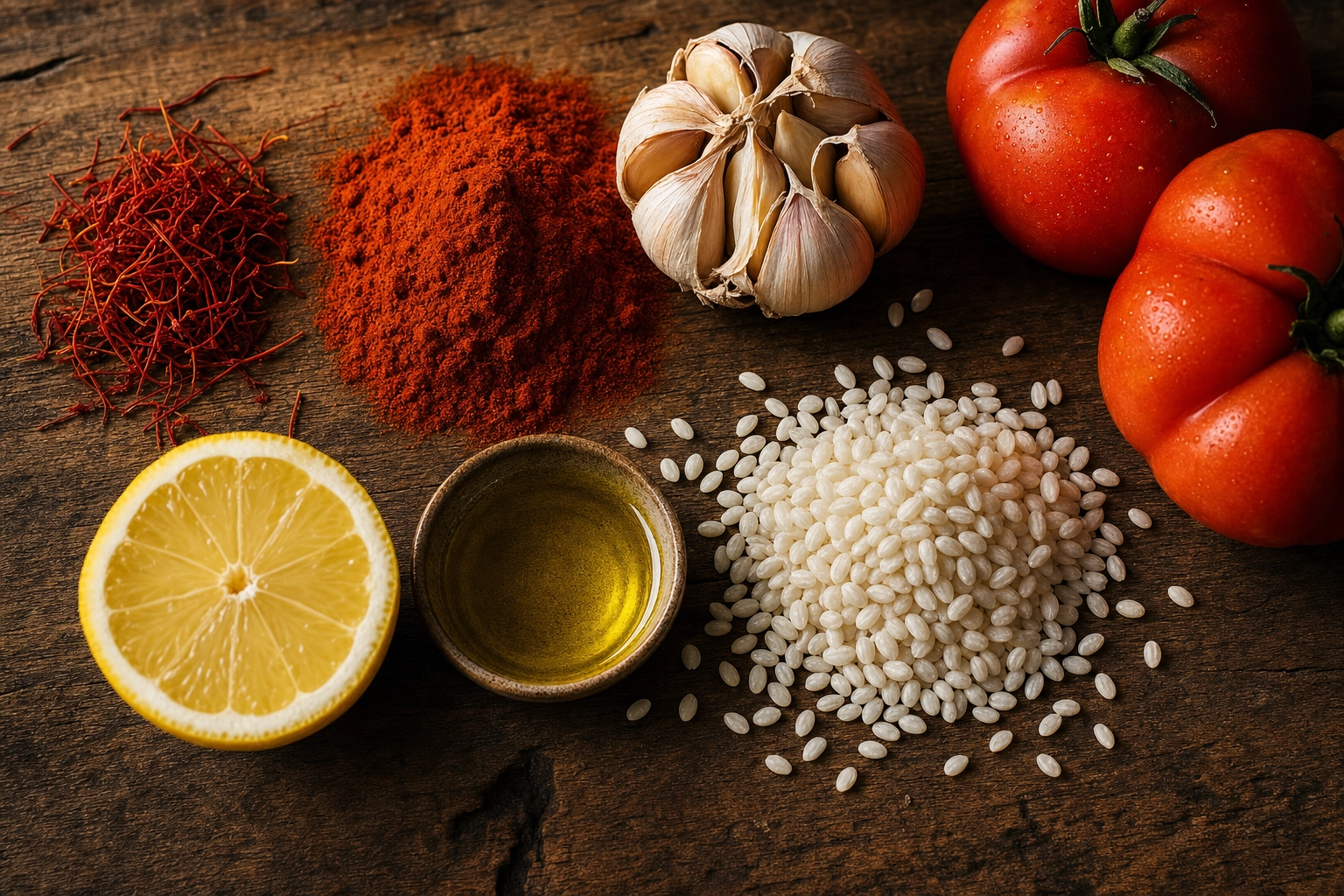 Overhead flat-lay of saffron threads, smoked paprika, garlic, tomatoes and Bomba rice for paella on weathered wood
Texture. This is rustic food, and rustic food has surface: the crackle of socarrat, the crisp edges of patatas bravas, the sugar crust on churros, the glisten of olive oil on garlic prawns. Texture is what makes a viewer feel they could reach into the frame.
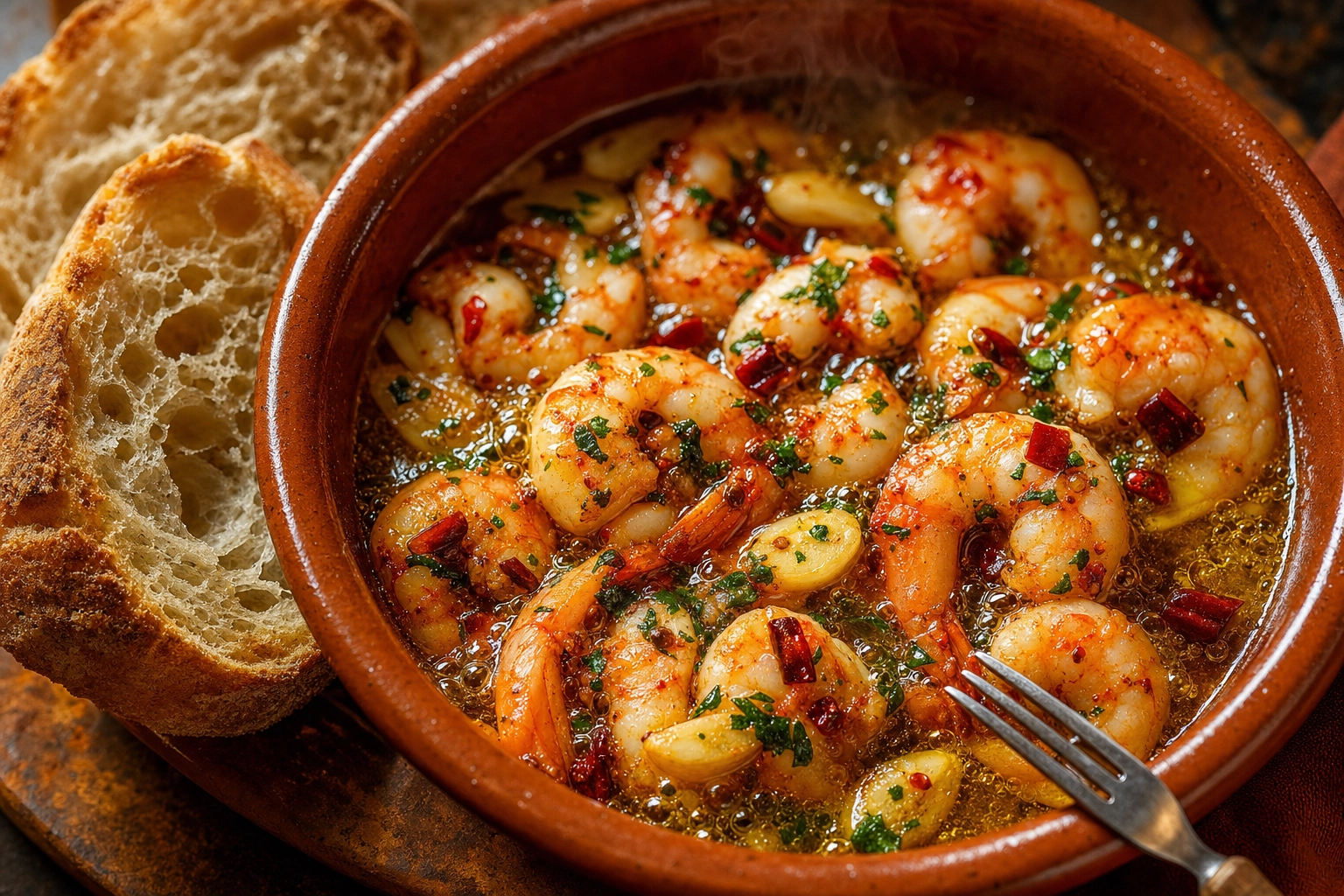 Overhead gambas al ajillo garlic prawns sizzling in olive oil with chili and parsley in a terracotta cazuela
Community. Spanish meals are shared. A paella feeds the table from one pan; tapas arrive as a sprawl of small plates; jamón is sliced to order and passed around. That sense of abundance — more food than one person could finish — is a powerful appetite trigger, and it's baked into how the food is served.
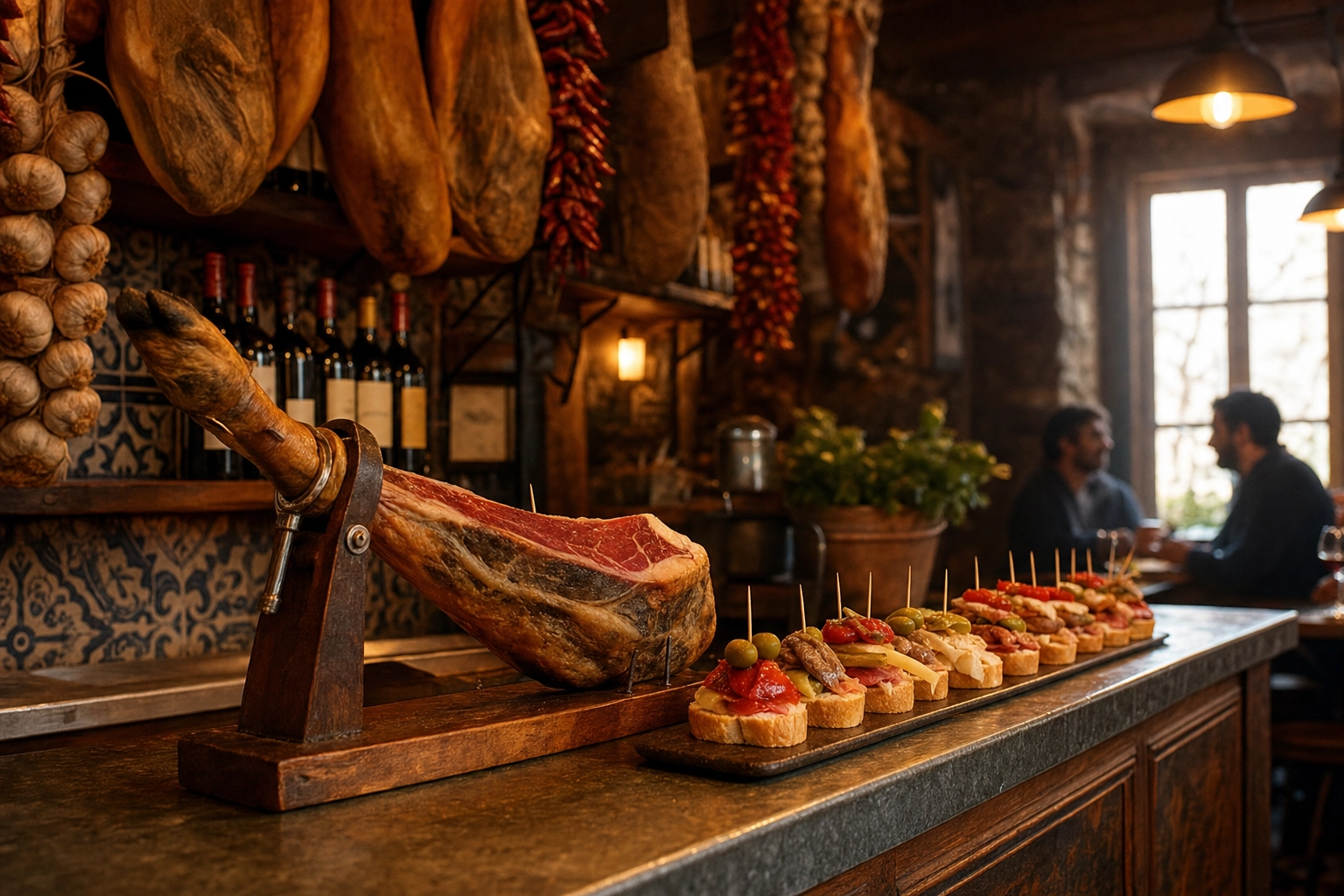 Traditional Spanish tapas bar interior with a jamon leg on a jamonero, a pintxos counter and hanging cured hams
This isn't just an aesthetic argument. Restaurant studies have repeatedly found that a menu item paired with an appetizing photo can sell up to 30% more — the kind of photography delivery apps reward with more orders, too. Strong paella images and tapas photos do the selling before a server ever says a word. For a tapas bar or Spanish restaurant, good Spanish food photography isn't decoration — it's one of the cheapest ways to sell more of what you already make.
The 5 Spanish Food Photos Every Menu Needs
You don't need a photo of all forty dishes. Five shots carry the weight of a Spanish or tapas menu — they cover your hero, your shareables, your premium item, and your dessert. Get these right and the rest of the menu falls into place around them.
1. Paella Images: Always Shoot From Directly Overhead
Paella is the photo people came to see, so it gets the hero treatment. The single most important decision is the camera angle: shoot it from directly overhead, at 90 degrees, flat-lay style. The pan is a perfect circle and the whole composition sits on one flat plane — overhead is the only angle that captures all of it at once. Of all the angles you could try, this is the one that shows the entire pan in a single frame, which is why nearly every great paella picture you've ever stopped on was shot from above.
Now style it for the lens:
- Reveal the socarrat. Socarrat is the thin, golden, lightly caramelized crust of rice that forms on the bottom of the pan — the most prized part of the dish, traditionally reserved for honored guests. Scrape a wooden spoon along one edge to lift and expose a patch of that crisp golden crust. It signals the paella is the real thing, not a soggy imitation.
- Arrange the seafood for the camera. Set mussels open-side up, fan the prawns so they read clearly to the camera, tuck in lemon wedges, scatter fresh parsley, and lay piquillo-pepper strips for color. In a real kitchen the toppings land where they land; for the photo, you place them.
- Keep it in the pan. Never plate paella for the shot. Half its identity is the wide, blackened pan and that golden crust — dish it onto a plate and you've thrown both away.
- Make the rice glow. Saffron and smoked paprika give paella its gold; bad white balance turns that gold to grey. Correct the color so the rice looks warm and luminous, add a wisp of steam if it's fresh off the heat, and you have paella images good enough to eat.
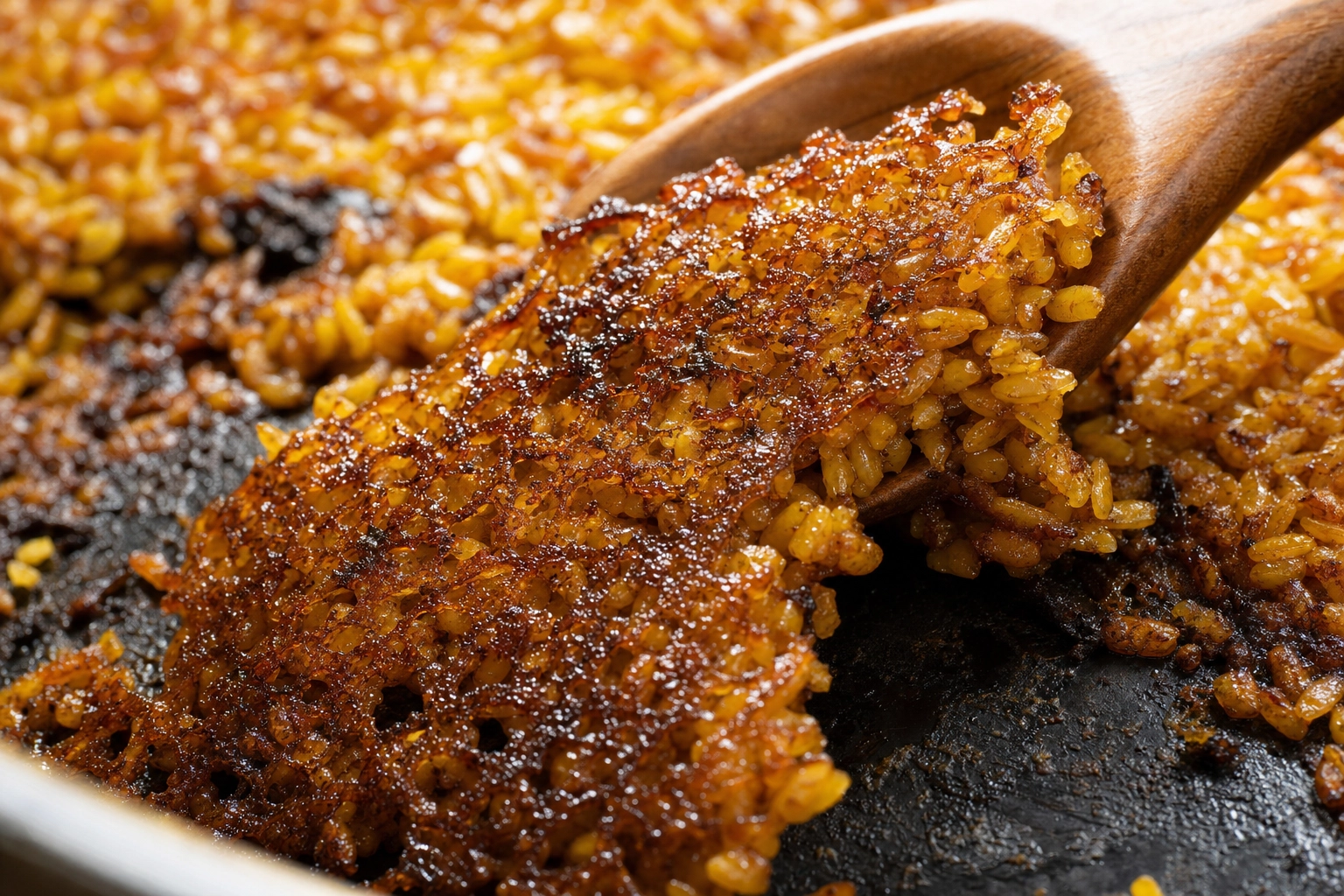 Macro close-up of crispy golden socarrat crust lifted on a wooden spoon from the bottom of a paella pan
A tight macro of that crust — grains caramelized and separate, not mushy — makes a great second frame. Pair the overhead hero with a close-up like this and you have a mini set of paella pictures that tells the whole story of the dish.
2. The Communal Tapas Spread
Great tapas photography lives and dies on one thing: abundance. If paella is the soloist, the tapas spread is the full chorus. One lonely dish of olives says nothing; eight overlapping plates crowding the frame say "pull up a chair." Bring multiple cazuelas and small plates together, let the edges overlap, and build the scene so it feels generous.
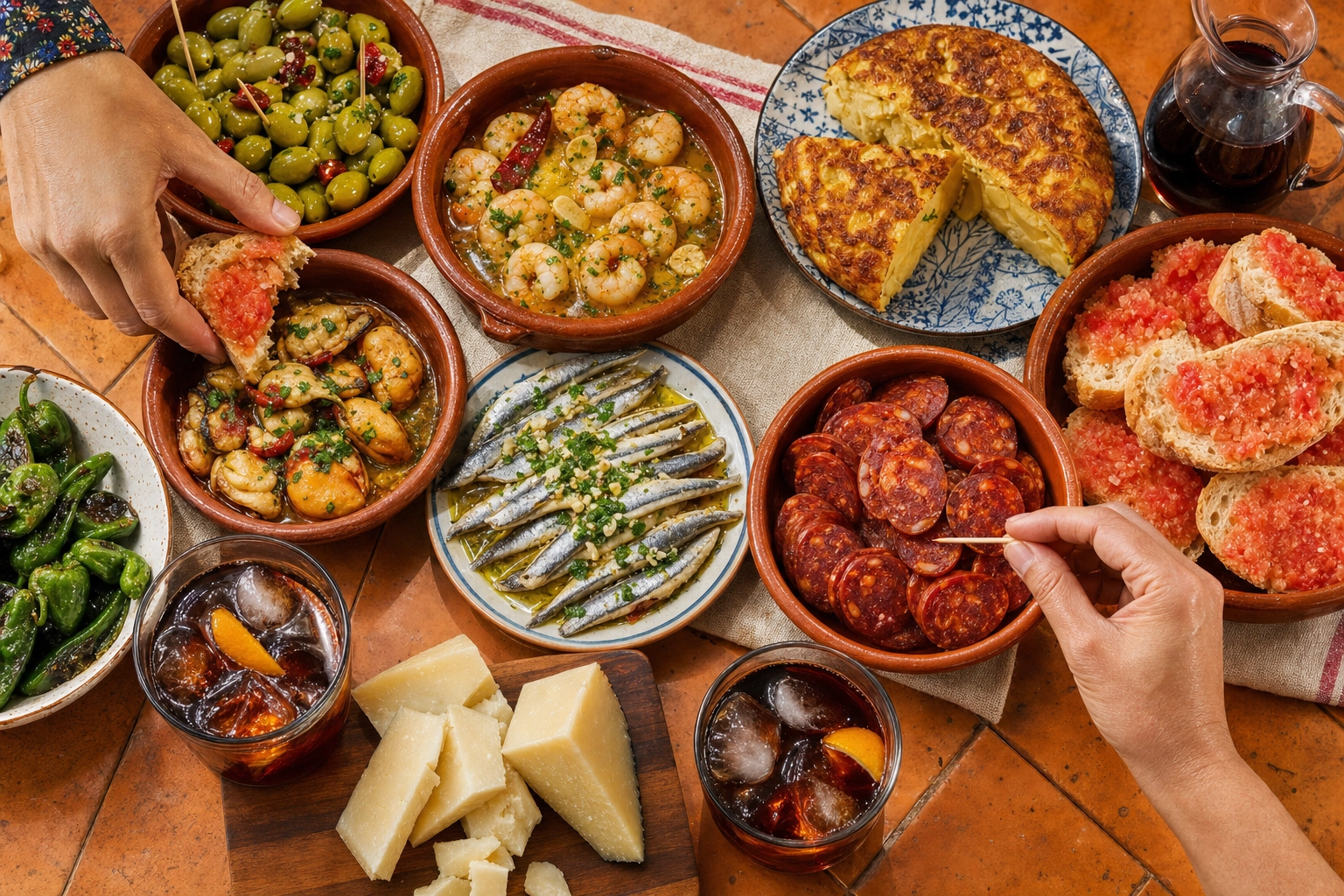 Overhead Spanish tapas spread with cazuelas of olives, garlic prawns, chorizo, tortilla and vermouth on a terracotta table
A few rules make the chaos look intentional:
- Shoot overhead or at a 45-degree (three-quarter) angle. A flat-lay turns a spread into a graphic mosaic; the three-quarter angle adds height and depth when your plates have dimension.
- Build layers and height. Stack a few pieces of pan con tomate, prop a board at the back, let a wine glass break the horizon. Flat spreads read as flat photos.
- Leave negative space. A clear corner of the table is where your menu headline, price, or promo text will live later.
A classic, photogenic spread might pair patatas bravas, gambas al ajillo (garlic prawns), blistered pimientos de padrón, marinated olives, croquetas, boquerones, and pan con tomate. Individual tapas photograph beautifully on their own, too — a single dish of charred, salt-flecked padrón peppers is its own little portrait.
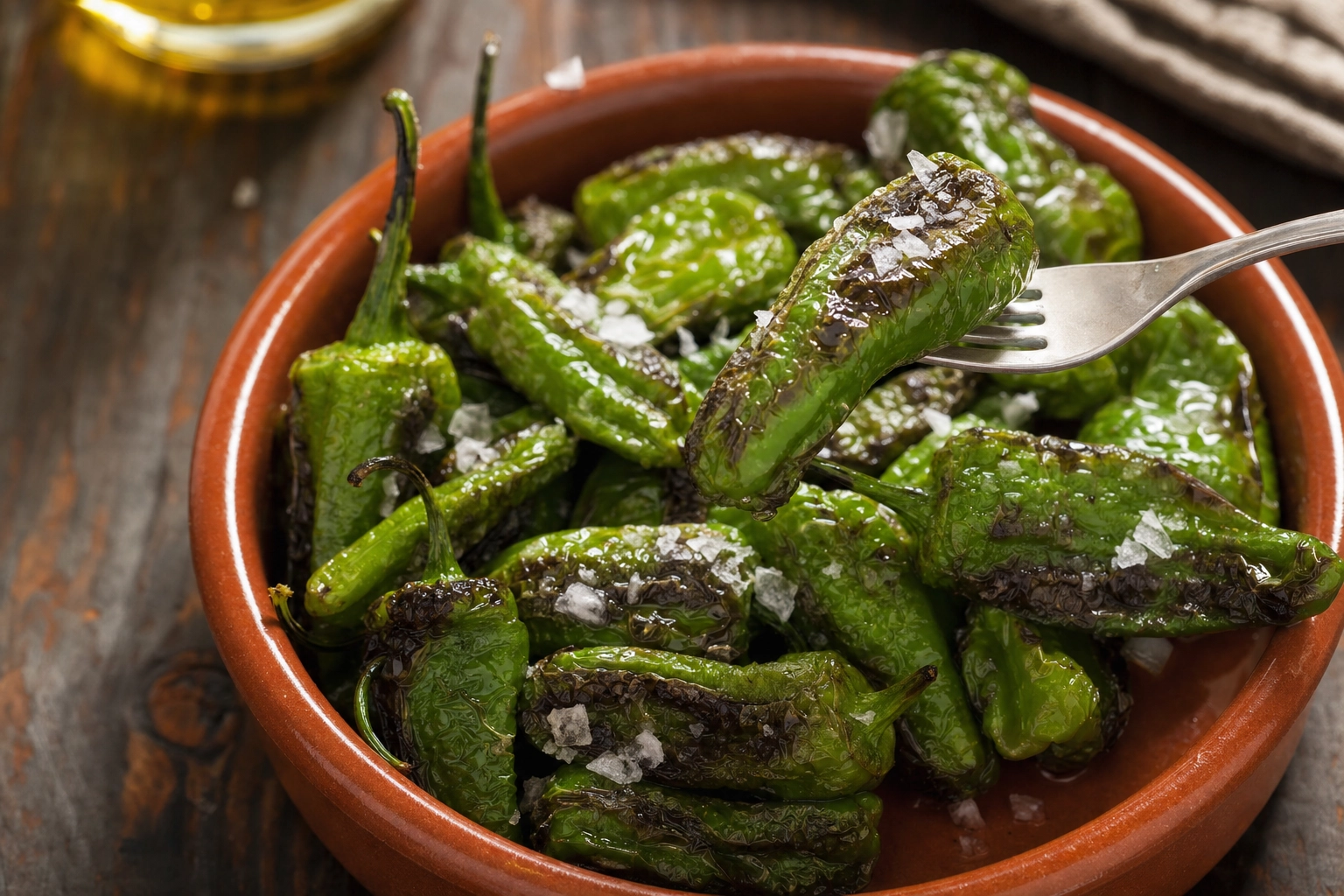 Close-up of blistered green pimientos de padron peppers with sea salt and olive oil in a terracotta dish
Because tapas is fundamentally bar food, this is the exact look that earns its keep for tapas bars and lounges — pour in a glass of vermouth or a jug of sangria and the shot doubles as a happy-hour ad.
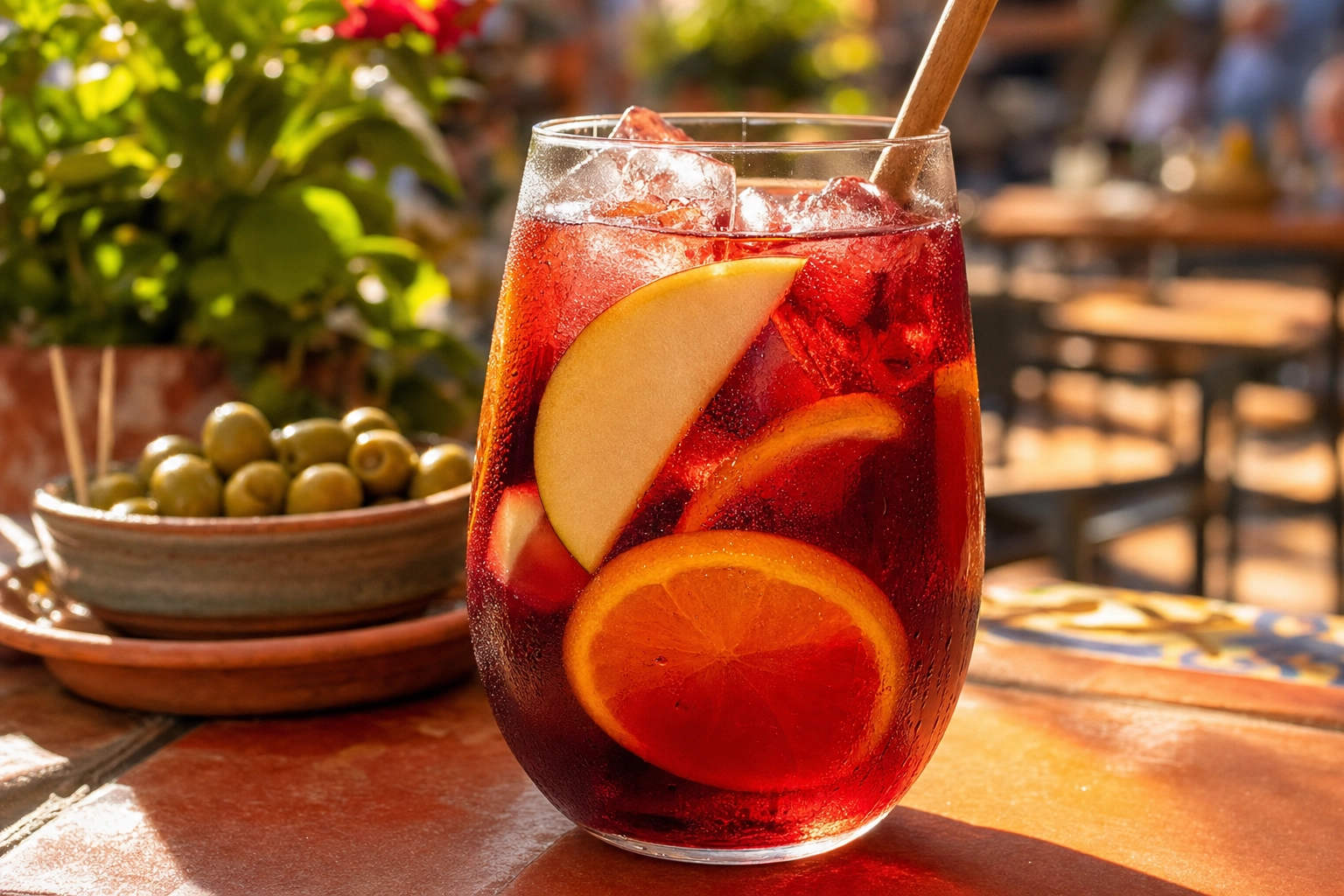 Glass of ruby-red Spanish sangria with citrus and ice glowing in the sun on a terracotta table beside olives
3. Jamón and the Charcuterie Board
Jamón is Spain's luxury item, and it should look like one. Whether it's Jamón Ibérico — from the black "pata negra" Iberian pig, acorn-fed for the top de bellota grade — or mountain-cured Serrano, the magic is in the slice: paper-thin, almost translucent, cut by hand so the marbled fat begins to melt at room temperature.
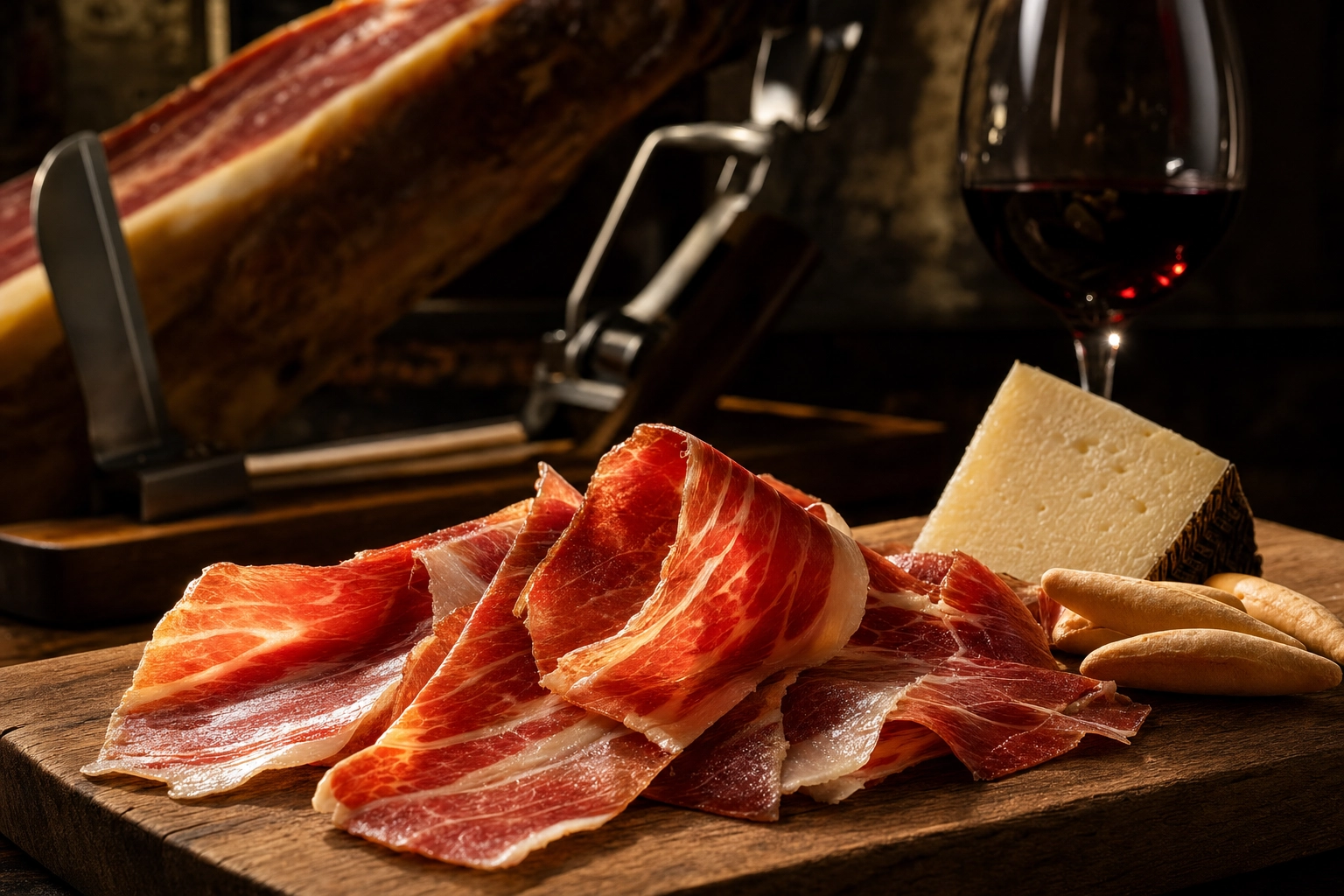 Backlit paper-thin jamon iberico slices showing ruby meat and ivory marbling on a board with Manchego and Rioja
Photograph that translucency. Side-light or gently backlight the slices so the light passes through them, revealing ruby-red meat threaded with ivory fat. That glow is the difference between "deli ham" and "this costs €30 a plate." Drape the slices in single, slightly overlapping layers rather than a heap — overlap shows off the marbling, a pile hides it.
Style the board the way a Spanish bar would: a wooden plank or warmed ceramic plate, a wedge of Manchego, a handful of picos breadsticks, a few olives, and a glass of Rioja just inside the frame. This refined, ingredient-forward look is also a natural for fine dining and tasting menus, where a single perfect plate of Ibérico carries real weight.
4. Patatas Bravas, the Hero Tapa
Patatas bravas is the most-ordered tapa on a lot of menus, so give it its own portrait. The whole appeal is contrast: crispy golden potato cubes, a slick of red-orange spicy bravas sauce, and a drizzle of white garlic aioli, usually served in a small cazuela.
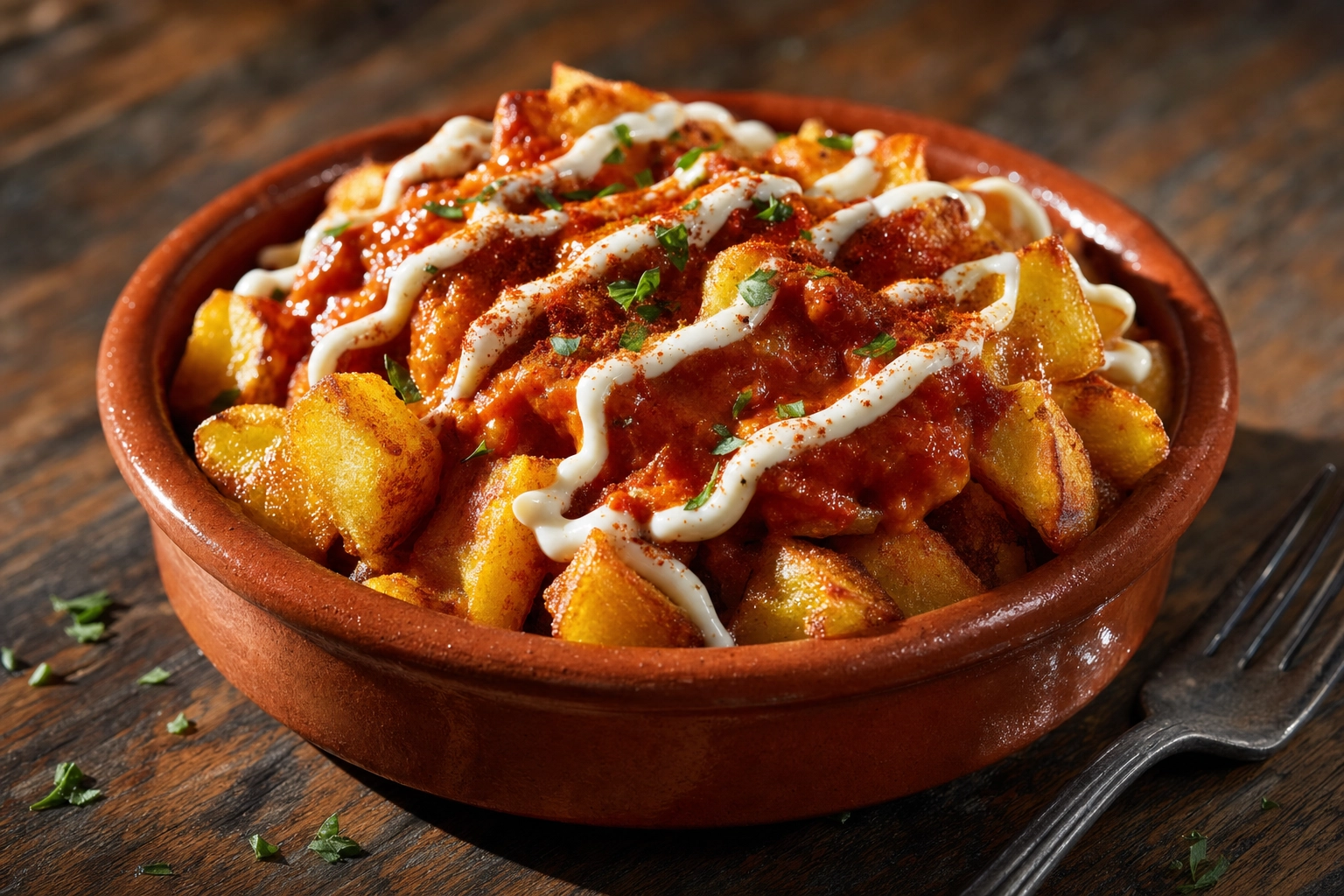 Close-up of patatas bravas in a terracotta cazuela with crispy potatoes, red bravas sauce and white garlic aioli
Shoot this one close, at roughly a 45-degree (three-quarter) angle — low enough to show the crunch on the edges of the potatoes, high enough to read the sauce pooling between them. Add the aioli last, right before you shoot, so it sits glossy and white on top instead of soaking in. Texture is the product here; light it from the side so every crisp edge throws a tiny shadow.
5. Churros With Chocolate
End on the sweet note. Churros are ridged sticks of fried dough — the star-shaped grooves come from the piping tip — dusted in sugar and served with a cup of thick, almost pudding-like hot chocolate for dipping.
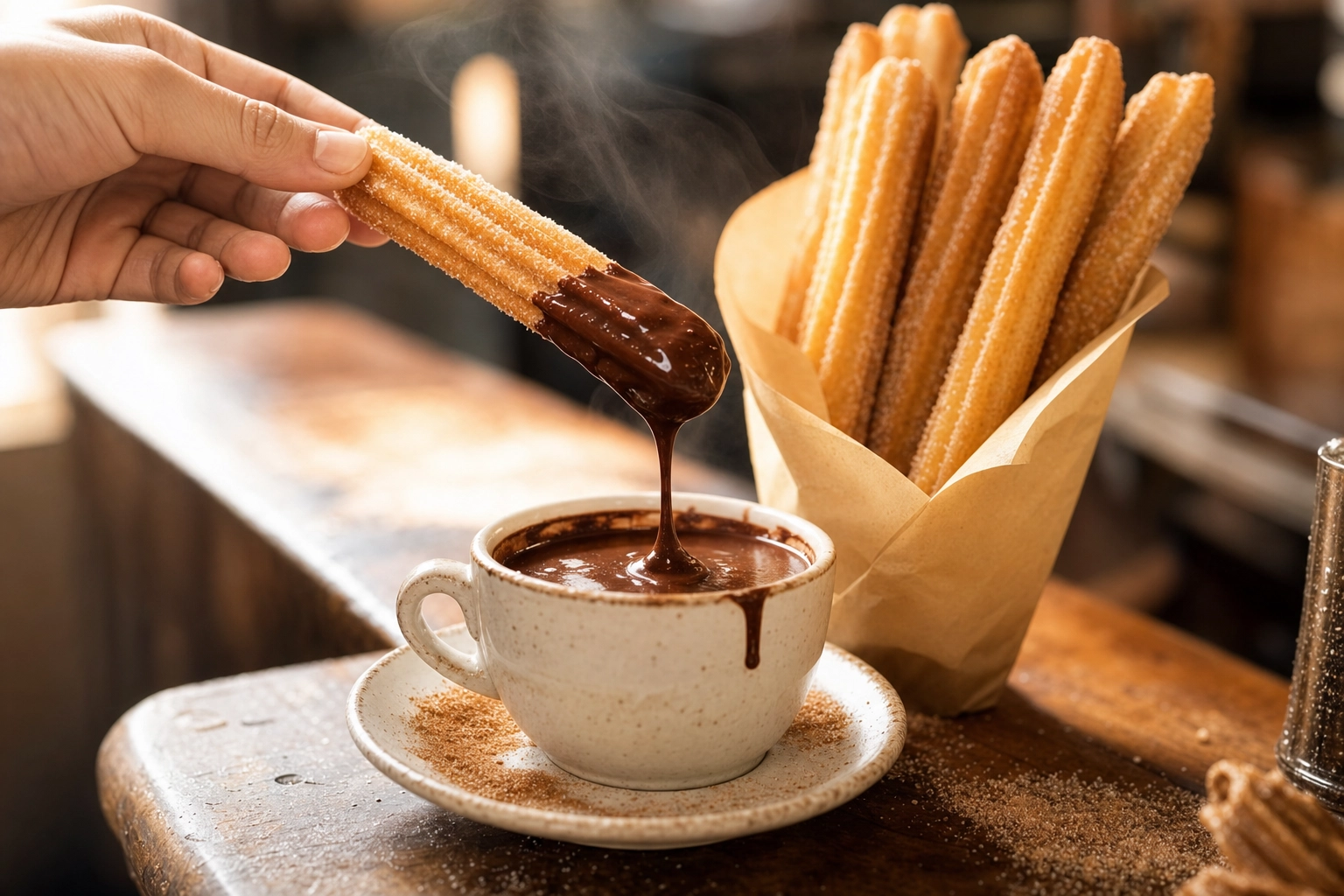 Hand dipping a sugar-dusted churro into thick hot chocolate with a chocolate drip, churros in a paper cone behind
Two angles work here. Straight-on, at eye level, shows off height if you stand the churros up in a cup or paper cone. But the shot that stops the scroll is the action shot: a single churro lifted from the chocolate mid-dip, a thick ribbon falling back into the cup. Capture the drip and you've captured the craving. Whether you plate them for a café dessert menu or a churrería window, keep the light warm and the background simple so the gold of the churros and the dark gloss of the chocolate stay the stars.
Beyond the Big Five: More Spanish Dishes Worth Shooting
The five core shots anchor your menu, but a Spanish kitchen has plenty more worth photographing. The same food photography rules apply — warm light, rustic surfaces, the right angles — so here's a quick steer on four more crowd-pleasers.
Tortilla española. The whole story is the cross-section, so cut a wedge and shoot it at a three-quarter angle to show the layers of potato and just-set egg. A slightly runny center reads as homemade.
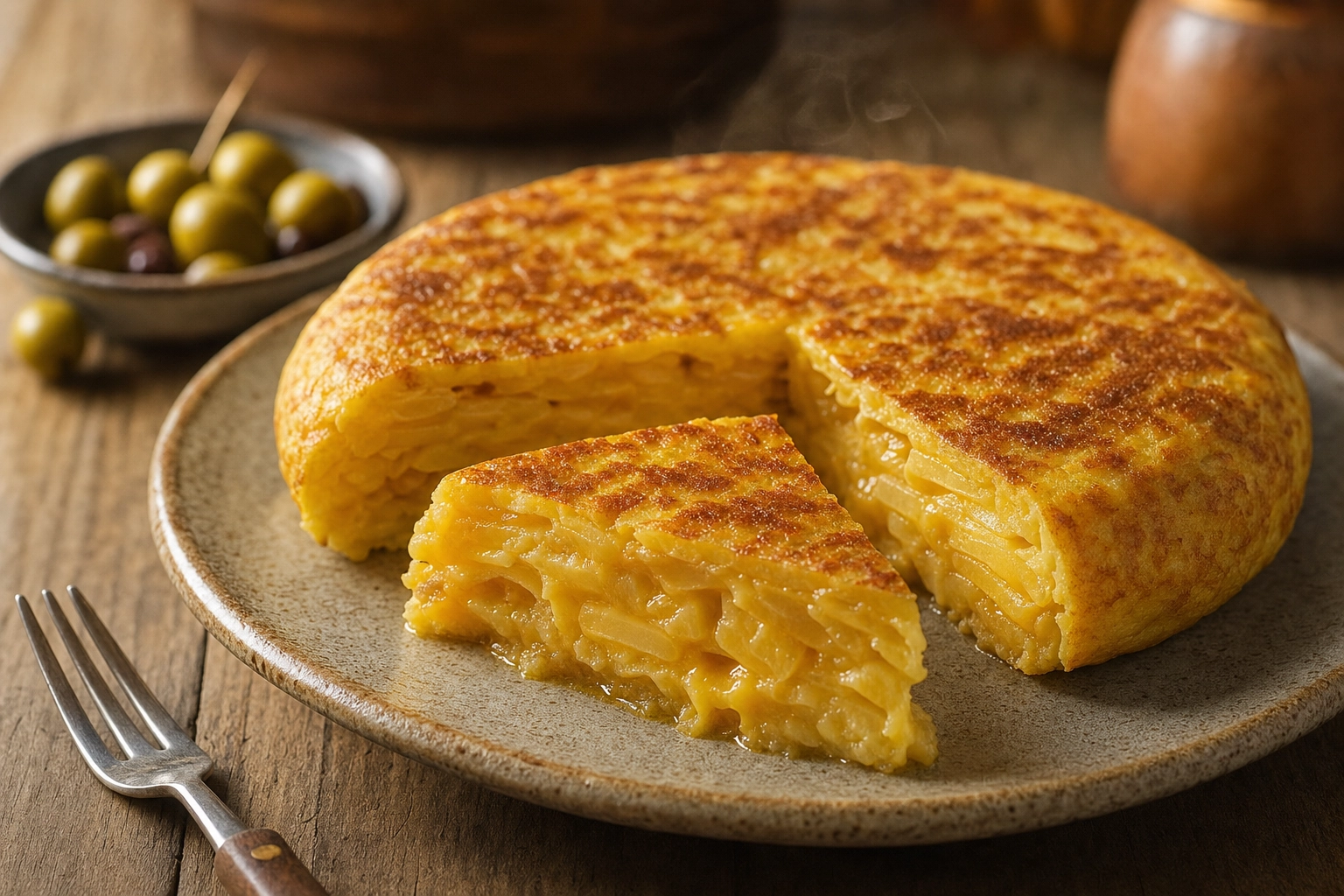 Close-up of a sliced Spanish tortilla espanola wedge showing layered potato and just-set egg on a rustic plate
Croquetas. Crisp outside, molten inside — so break one open and shoot fast while it still steams. The contrast between the golden crust and the creamy béchamel is the entire sell.
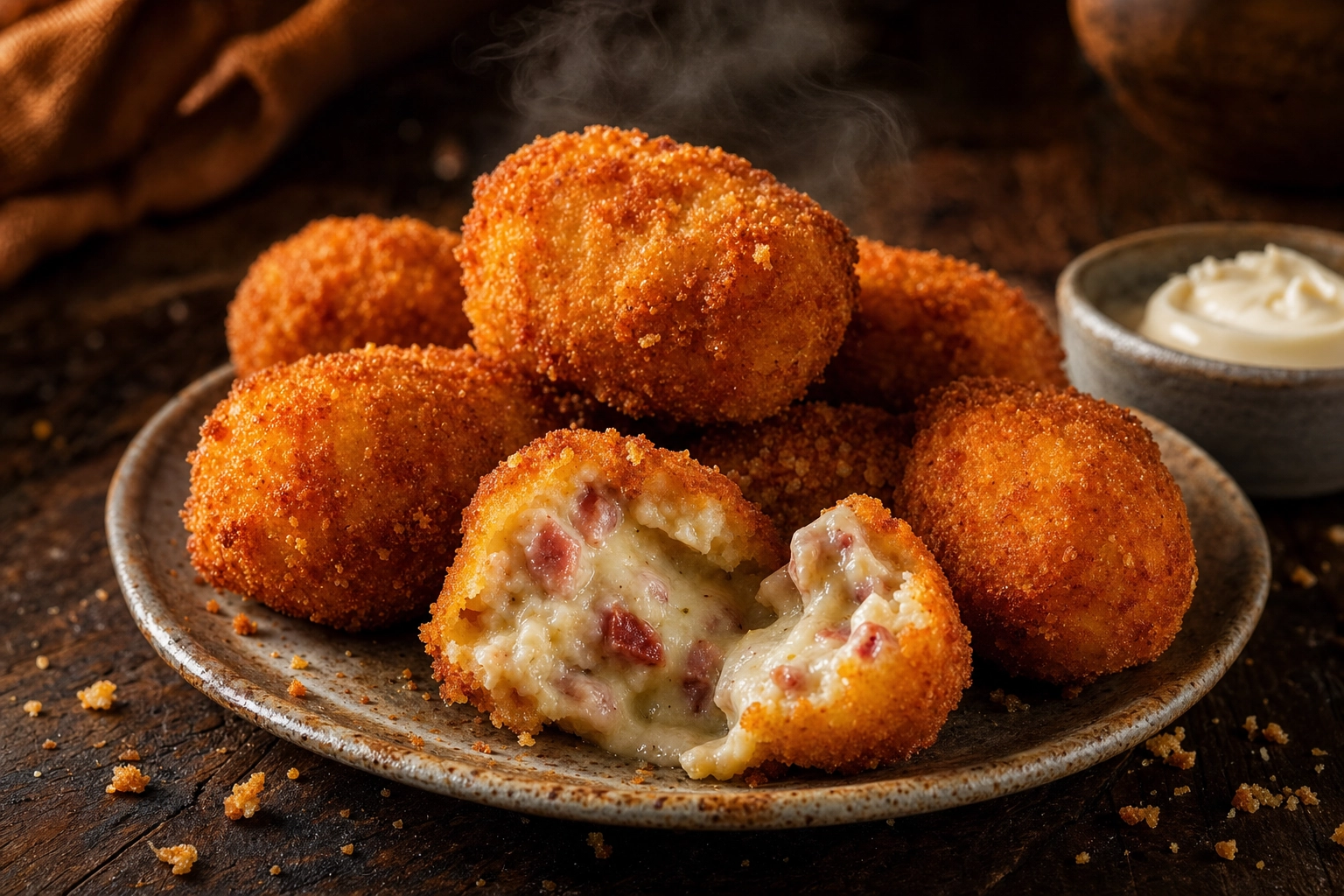 Golden Spanish croquetas with one broken open to show the creamy molten bechamel center on a rustic plate
Pulpo a la gallega. Shoot this Galician classic from straight overhead: the ring of paprika-dusted octopus on a round wooden plate is already a composition. Let the olive oil catch the light.
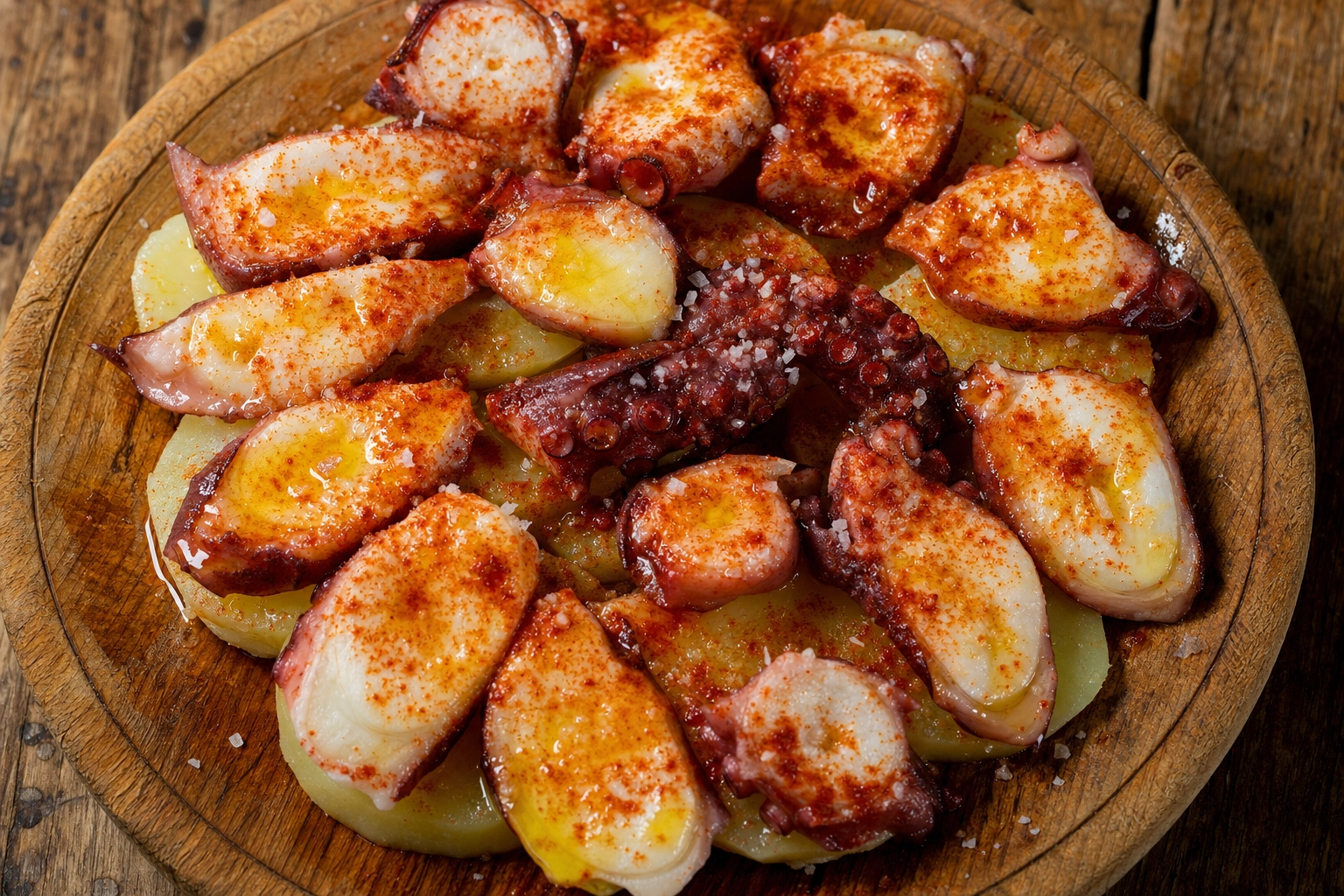 Overhead pulpo a la gallega octopus slices with paprika, sea salt and olive oil on a round wooden plate
Pan con tomate. Simple food needs texture and light. Get low, around 30 degrees, so the char on the bread and the glisten of oil and tomato do the talking.
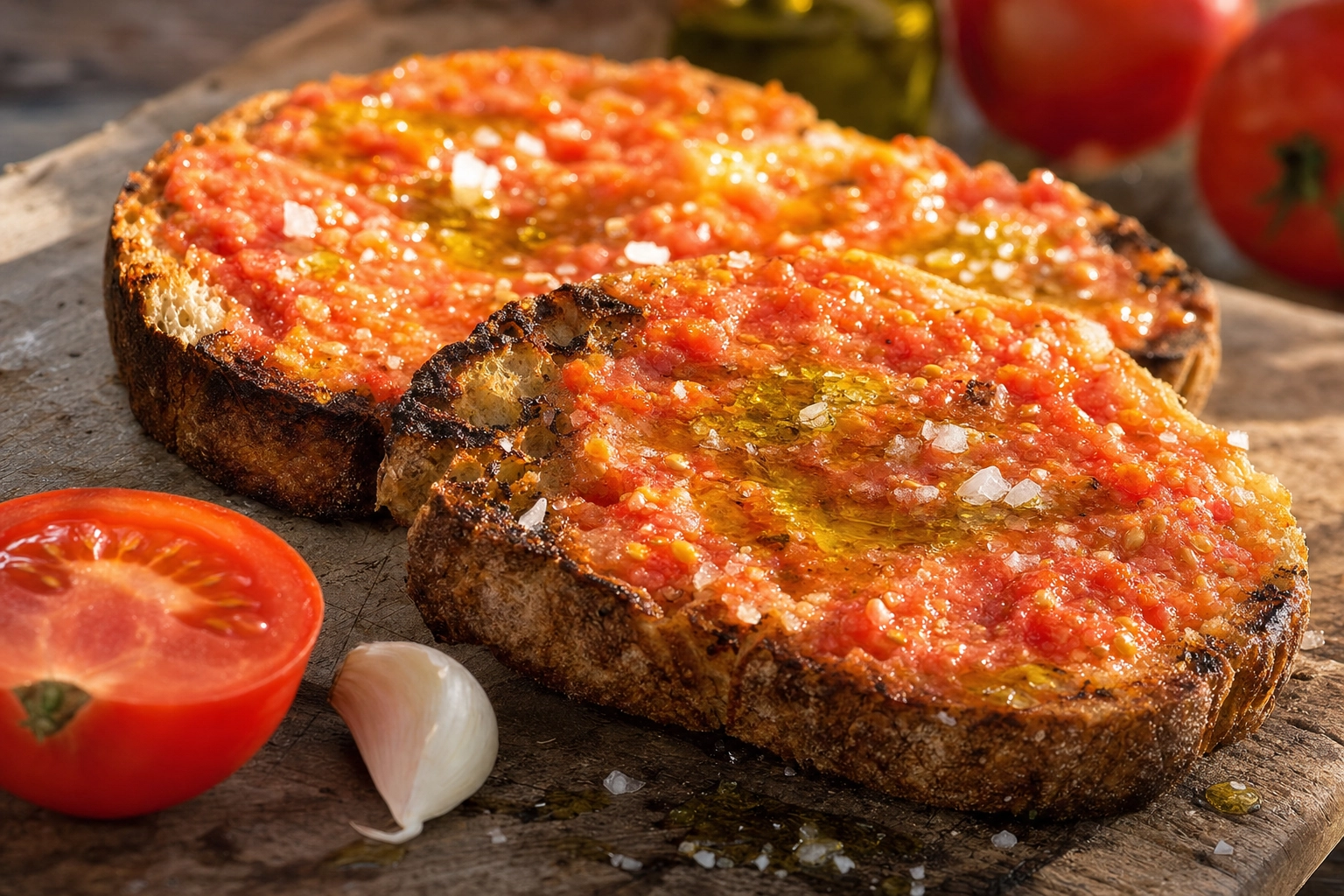 Close-up of pan con tomate, char-grilled bread rubbed with tomato and olive oil with flaky salt on a wooden board
Lighting and Styling: Nailing the Rustic Spanish Look
The dishes are only half the photo. The other half is the world you build around them — and for Spanish food, that world is warm, earthy, and a little weathered. The food photography fundamentals stay the same; only the props and palette turn Spanish, and most dishes look their best from just a few reliable angles.
Light it like a sunny afternoon. Soft, directional natural light is your best friend. Set up near a window so the light rakes across the food from one side, bringing out texture, and bounce a white napkin or piece of foam board on the opposite side to soften the shadows. Avoid hard overhead kitchen lights — they flatten food and turn saffron rice an unappetizing grey. For steam, drinks, or jamón, a touch of backlight adds life and translucency. You don't need an expensive camera for any of this — a phone handles it as long as the light is good.
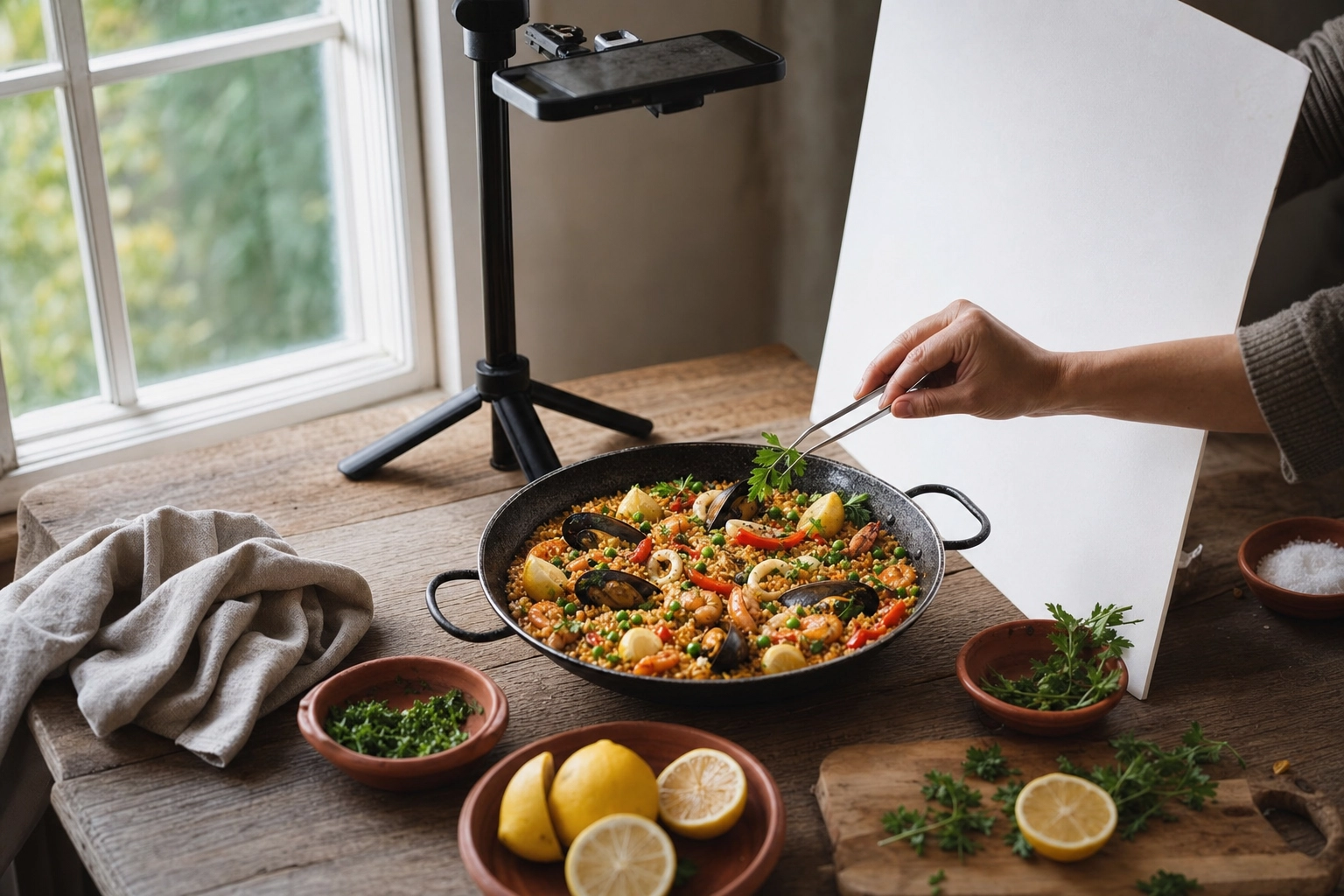 Food styling setup with window light, a white reflector and a phone on a tripod shooting down at a paella pan
Choose props that whisper "Spain." The surfaces and tableware carry the cultural cue:
- Weathered or dark wood, terracotta, and slate for surfaces
- Traditional clay cazuelas and a well-seasoned paella pan
- Linen runners instead of fussy tablecloths
- Vintage or matte cutlery, simple ceramic, a carafe of red wine
Keep it heavy-duty and earthy; delicate fine china fights the rustic, communal mood.
Match the camera angle to the dish. Three angles cover almost every Spanish plate:
- Overhead (90°): paella and tapas spreads — anything flat and arranged
- 45 degrees: patatas bravas, jamón boards, churros — anything with height and texture
- Straight-on: drinks, stacked churros, layered builds
Those three angles handle nearly the entire menu. Finish with color and garnish. A lemon wedge, fresh parsley, a dusting of paprika, or a final sheen of olive oil makes food look alive. And always leave a clean patch of background — that negative space is where menu text, prices, or a logo will sit when the image goes to work.
From Phone Snap to Menu-Ready: A Paella Before and After
Here's the honest version of restaurant photography: nobody on the line has time for a window setup and a foam-board reflector during service. So the paella photo you actually have is the one your cook grabbed on a phone camera — shot from chest height under yellow kitchen lights, the rice gone grey, a cluttered pass in the background, the socarrat invisible. It's a record of the dish, not a sales tool.
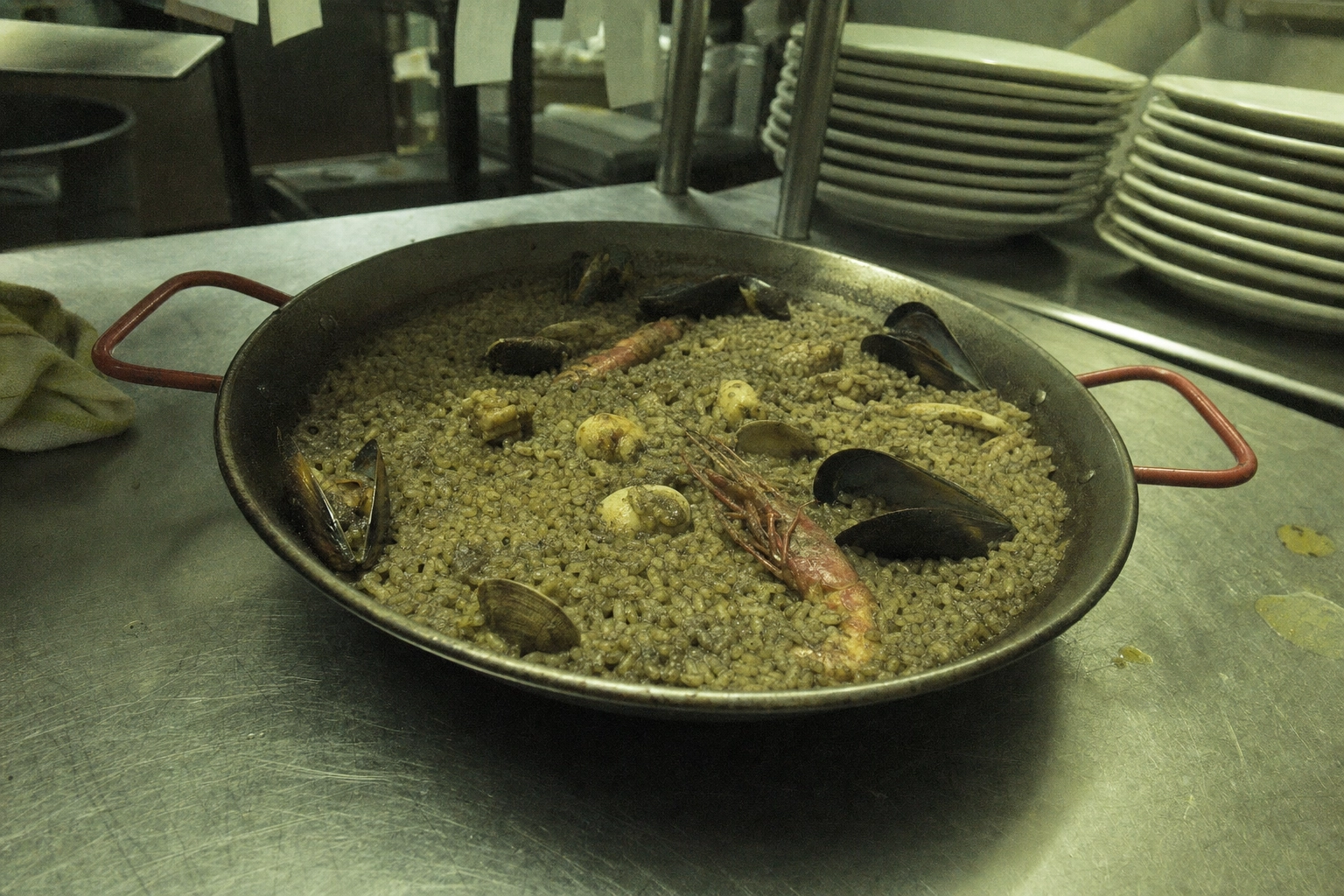 Dull amateur phone photo of paella under flat fluorescent kitchen light on a cluttered stainless pass, the before shot
The shot above is the reality. The fixes that close the gap are predictable, which is the good news:
- Lighting: kill the yellow cast and relight so the rice looks warm, not sickly
- White balance: push the saffron back to glowing gold
- Background: swap the messy stainless pass for a clean rustic surface
- Contrast and detail: bring back the socarrat and the gloss on the seafood
- Crop: straighten to a true overhead and fill the frame with the pan
Get those five things right and the same paella that looked grey on the pass turns into a menu-ready hero:
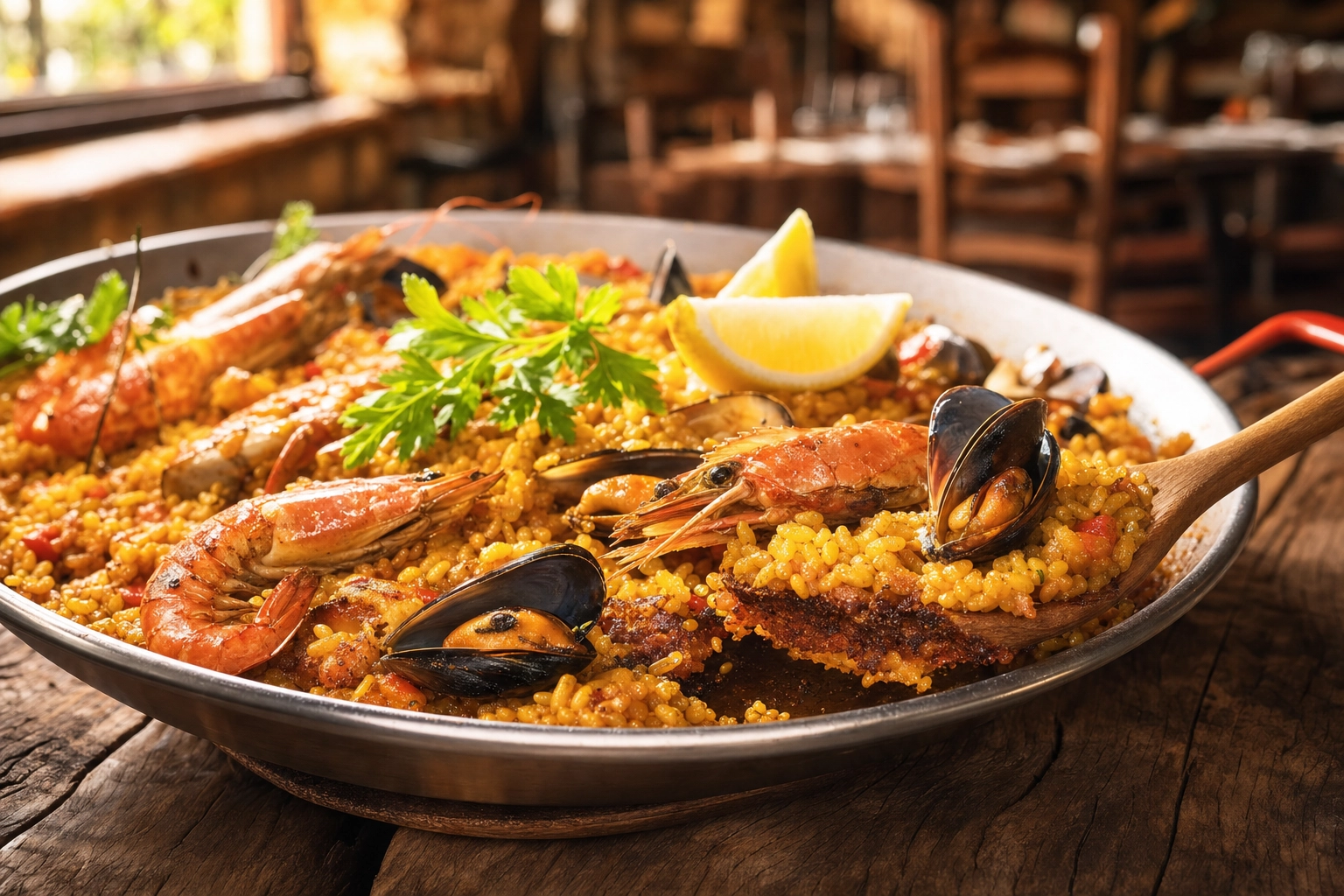 Angled paella shot with a wooden spoon lifting rice to reveal the crispy golden socarrat, menu-ready result in a restaurant
You can do all of that by hand if you know your way around an editor. Or you can hand the phone shot to an AI food photo editor: upload the snap, pick a rustic Spanish style, and get a 2K, menu-ready image in about 2 minutes — for roughly 95% less than a photography session. Builder Mode lets you set the background surface, the plate or pan, and the dish so every item matches; My Styles can learn your restaurant's look so the whole gallery stays on-brand. That's how you get consistent paella images across a menu without booking studio time. One thing worth saying plainly: the tool enhances the real paella you cooked — better light, cleaner background, truer color — it doesn't invent a fake dish. The food on the plate is still yours.
Build a Consistent Spanish Menu Gallery
One great paella picture is a win. A whole menu that looks like it was shot by the same hand is a brand. When every dish shares the same surfaces, light, and mood, customers start to recognize your restaurant before they read the name — on the menu, on the delivery app, on Instagram.
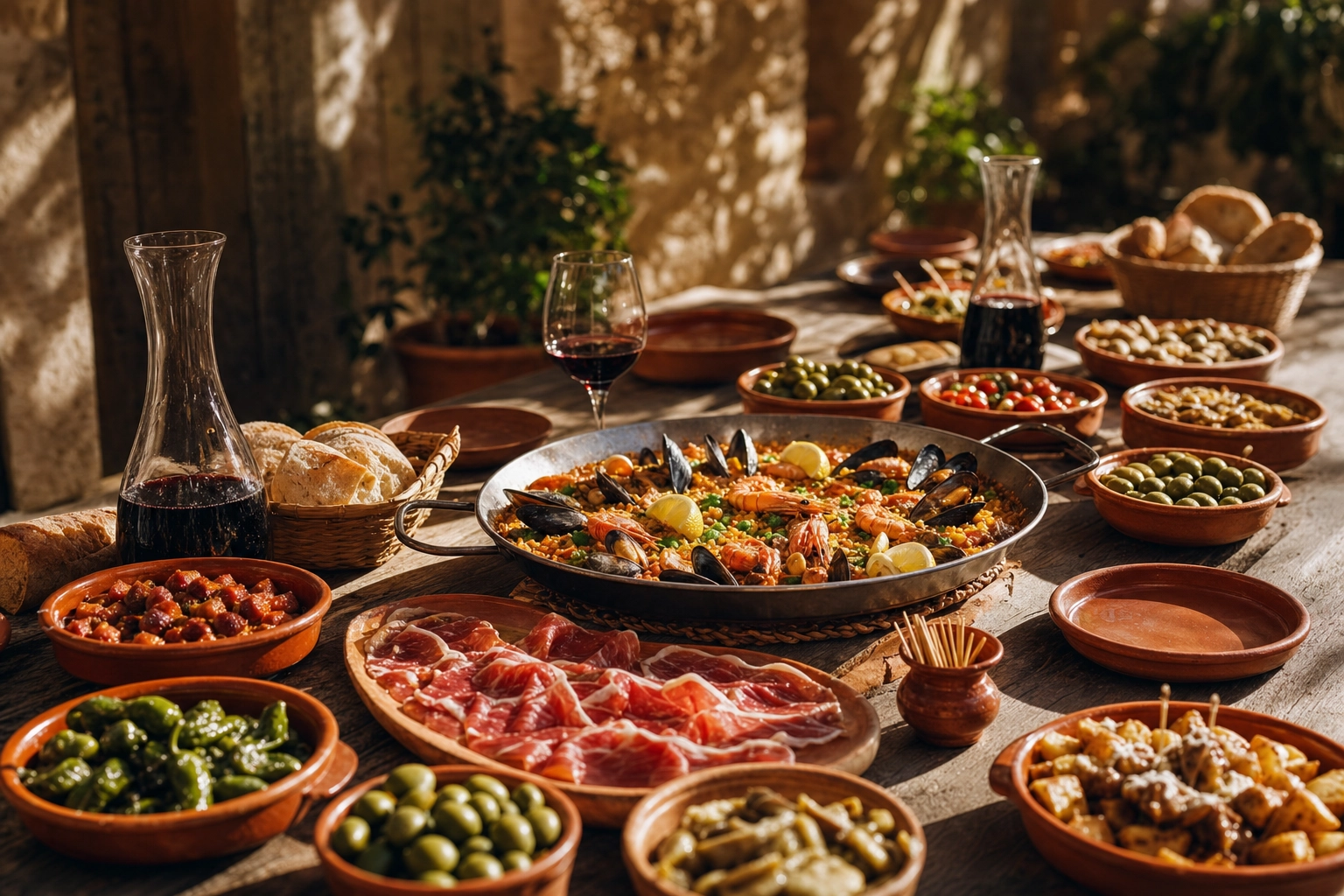 Long rustic table set with paella, tapas, a jamon board and red wine in one consistent warm Spanish style
That consistency is also what lets a small kitchen punch above its weight. A cohesive set of Spanish food photos makes a ten-table tapas bar look as polished as a chain. Spanish food sits inside the wider Mediterranean cluster, so the same warm, rustic visual system can carry a menu that wanders from paella and seafood plates to mezze without looking scattered. Whether you run a neighborhood tapas bar, a busy Spanish restaurant, or a white-tablecloth dining room, the five-shot list and the styling rules above scale to fit. Browse more food photography by cuisine if your menu crosses borders, or start from the Spanish food photography styles and build out from there.
Frequently Asked Questions
What angle is best for paella images?
Directly overhead, at 90 degrees. Paella is a wide, flat, circular dish, and a top-down flat-lay is the only angle that shows the full pan, the arrangement of seafood, and patches of golden socarrat in one frame. Use a 45-degree (three-quarter) angle only when you want to feature a single serving with some height to it.
How do I make paella rice look golden instead of grey in photos?
It's almost always a white-balance and lighting problem, not a cooking one. Yellow kitchen lights and auto white balance drain the warmth out of saffron rice. Shoot in soft, neutral light (window light is ideal), then correct the color so the rice reads as warm gold. A wisp of steam and a final brush of olive oil help it look freshly made rather than flat.
What background works best for Spanish food images?
Rustic, textured, and earthy. Weathered dark wood, terracotta, and slate all read as authentically Spanish and let the food's color pop. Avoid glossy white seamless backgrounds — they make Spanish food look like sterile stock photos and strip away the communal, homemade character that makes the cuisine appealing.
How do I photograph jamón so it looks premium?
Slice it paper-thin and light it from the side or behind so the light passes through the slices, revealing the translucent ruby meat and ivory fat marbling. Lay the slices in single, overlapping layers rather than a pile, and style with simple, high-quality props — a wooden board, Manchego, picos, a glass of Rioja. The translucency and visible marbling are what signal quality.
Can I get professional paella images without hiring a photographer?
Yes. Tools like FoodShot AI turn a phone photo of your actual dish into a studio-quality, menu-ready image in about 2 minutes, at roughly 95% less than a professional shoot. You upload the snap, choose a Spanish or rustic style, and export in 2K — useful when you need consistent paella pictures across your menu, delivery apps, and social channels without booking a studio day.
What props make food look authentically Spanish?
A well-seasoned paella pan, traditional clay cazuelas, weathered wood and terracotta surfaces, linen runners, matte ceramic, and a carafe of red wine. Add edible cues — lemon wedges, fresh parsley, a dusting of smoked paprika, a sheen of olive oil — and the scene reads as Spanish before anyone identifies a single dish.
Spanish food gives you a head start most cuisines don't: it's colorful, textured, and made to be shared. Good food photography just has to keep up with what's already on the plate. Shoot the five core dishes with soft light and rustic props, lean into the abundance, and you'll have Spanish food photos that actually sell the meal. And when service gets in the way of a proper setup, you can still get there — turn a quick phone snap into a menu-ready shot with the AI food photo editor and keep your whole Spanish gallery looking like one beautiful table.