Greek Food Photography: Gyros, Souvlaki & Mezze
 Ali Tanis19 min read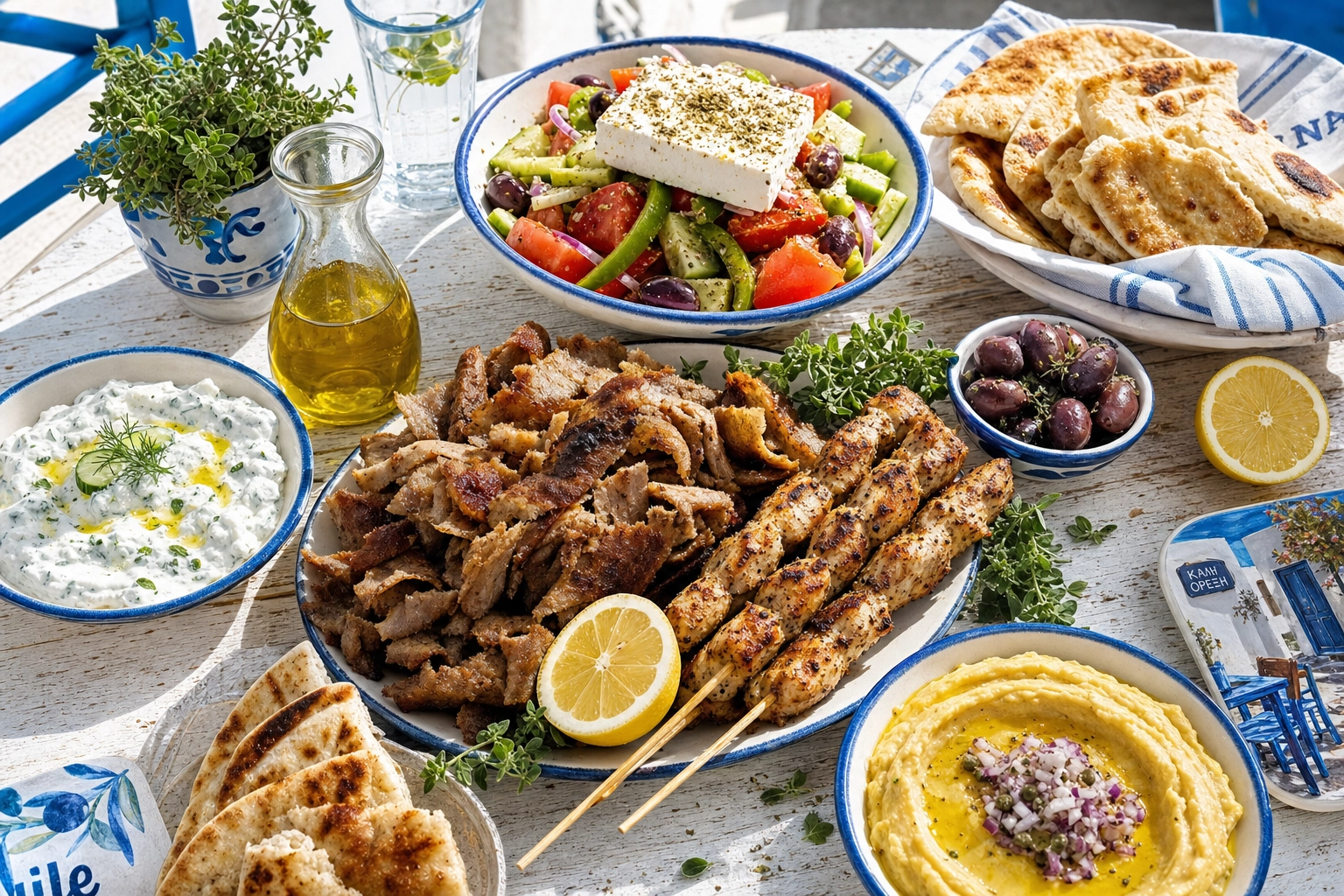
Walk past a great gyro shop in Athens and the food sells itself: meat turning on the spit, charred and glistening, warm pita coming off the grill, a wedge of lemon catching the light. Then you check that same shop's delivery-app page and it's a beige blur under a fluorescent tube. That gap is where most greek food images fall apart — and it's exactly where a little know-how pays off.
Greek cuisine is one of the most photogenic on the planet. It's packed with everything a camera loves: char on grilled meat, the glossy shine of olive oil, bright tomato red, snow-white feta, and deep purple-black Kalamata olives. This guide walks Greek restaurants and gyro shops through the bright Mediterranean aesthetic, the natural-light tricks behind it, and the five essential shots — from the gyro platter to a full mezze spread — that turn the most popular Greek dishes into photos that actually drive orders.
Quick Summary: Great Greek food photos come down to three things: a bright white-and-blue Mediterranean palette, natural side light that catches olive-oil sheen and char, and honest color that keeps tomatoes red and feta white. Nail those across five core shots — gyro/souvlaki platter, mezze spread, horiatiki salad, moussaka, and grilled seafood — and your menu will look as good as the food tastes.
Why Greek Food Is One of the Most Photogenic Cuisines on Earth
The good news for anyone running a Greek kitchen: the food is already doing most of the work. Greek dishes are built from high-contrast, naturally beautiful ingredients. Crisp char on a souvlaki skewer. The wet shine of olive oil over a salad. Creamy white tzatziki against terracotta. You're not fighting to make sad, brown food look exciting — the color and texture are already there. This is the kind of food people travel across Greece to eat, from Athens street corners to island tavernas, and it photographs as well as it tastes.
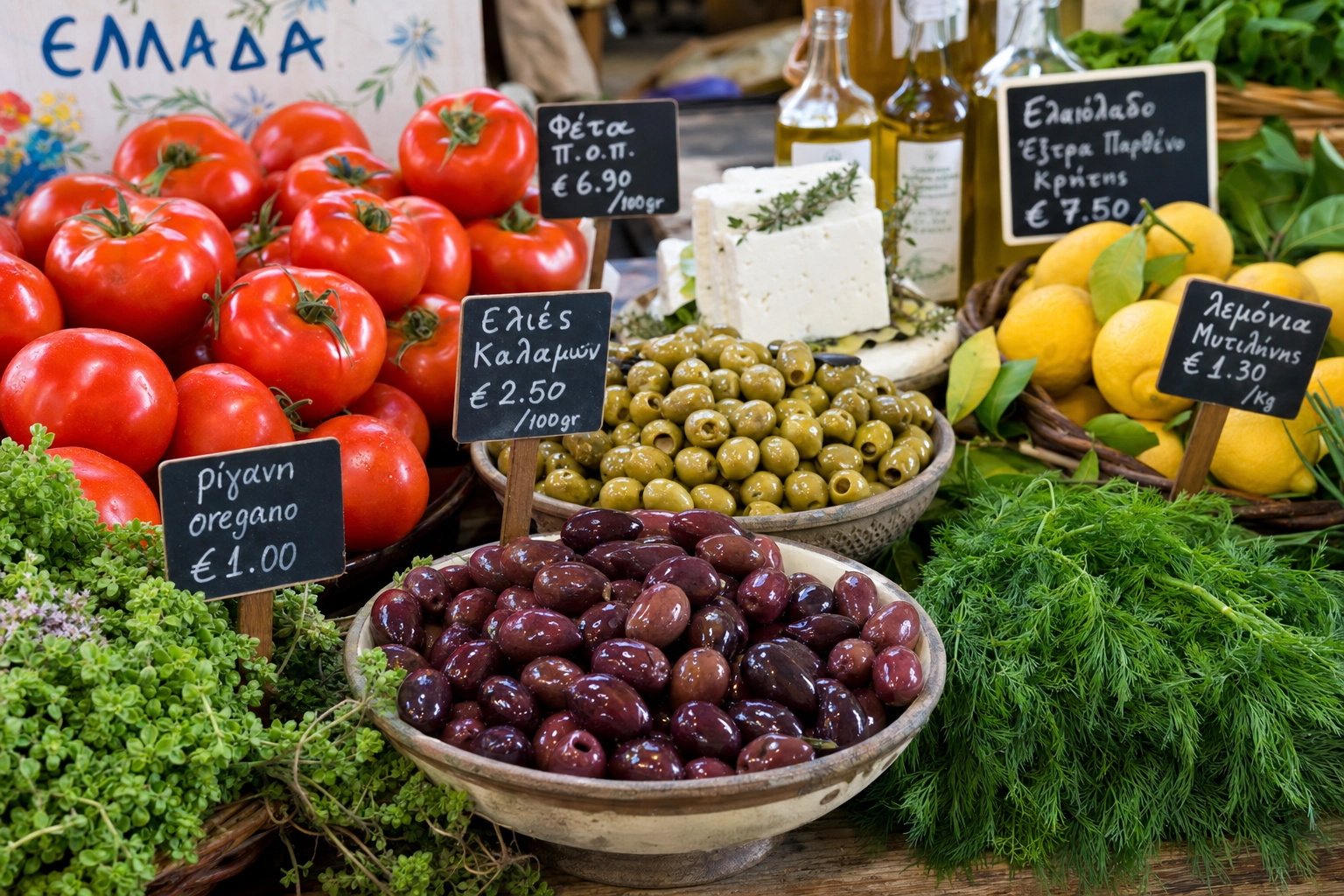 Fresh Greek ingredients at a market: ripe tomatoes, olives, feta, lemons, oregano and olive oil in daylight
The bad news: most Greek food photos throw that gift away. They're shot fast, under warm fluorescent or LED light, on a cluttered counter. The result is the thing every gyro shop owner knows too well — food that looked incredible on the plate turns greasy, orange, and flat on screen.
That gap matters more than ever. Diners now scroll delivery apps the way they once read menus, and the photo is what decides the order — which is why platforms like Uber Eats and DoorDash actively push restaurants to add a clear image to every item. For a gyro shop competing for taps or a taverna trying to fill tables, your greek food images aren't decoration. They're the storefront.
The fix isn't a $2,000 camera. It's understanding the look Greek food is supposed to have, then shooting (or editing) toward it. That look has a name, and it reaches well beyond Greece — it's the broader Mediterranean food photography style, one approach in a whole library of food photography by cuisine.
The Bright Mediterranean Aesthetic: White, Blue & Olive-Oil Sheen
If you want one mental image to anchor everything, picture a table somewhere in the islands of Greece: whitewashed walls, a brilliant blue door, sun pouring in, and a plate of food glowing in the middle. That's the Mediterranean aesthetic, and it rests on three pillars.
A White-and-Blue Palette
White surfaces and blue accents are the Aegean signature — whitewashed or weathered wood, marble, pale linen, and blue-rimmed ceramics. These cool, pale backgrounds do two jobs at once: they read instantly as "Greek," and they make warm food colors leap forward.
Color Contrast Is the Engine
Greek dishes are a gift of complementary colors: tomato red, feta white, olive green, Kalamata purple-black, lemon yellow. Set those against a pale background and the plate practically vibrates. The classic mistake is burying that contrast on a dark, busy surface where everything muddies together.
The Olive-Oil Sheen
This is the secret handshake of Greek food photography. Greece has, by several measures, the highest per-capita olive oil consumption in the world — the International Olive Council consistently ranks Greeks at the top, ahead of even Spain and Italy. Olive oil is in, on, and around nearly everything Greek, and that glossy sheen is what tells the eye "fresh, rich, just-served." You want to see it: on grilled meat, pooled in a salad, glistening across a dip like tzatziki.
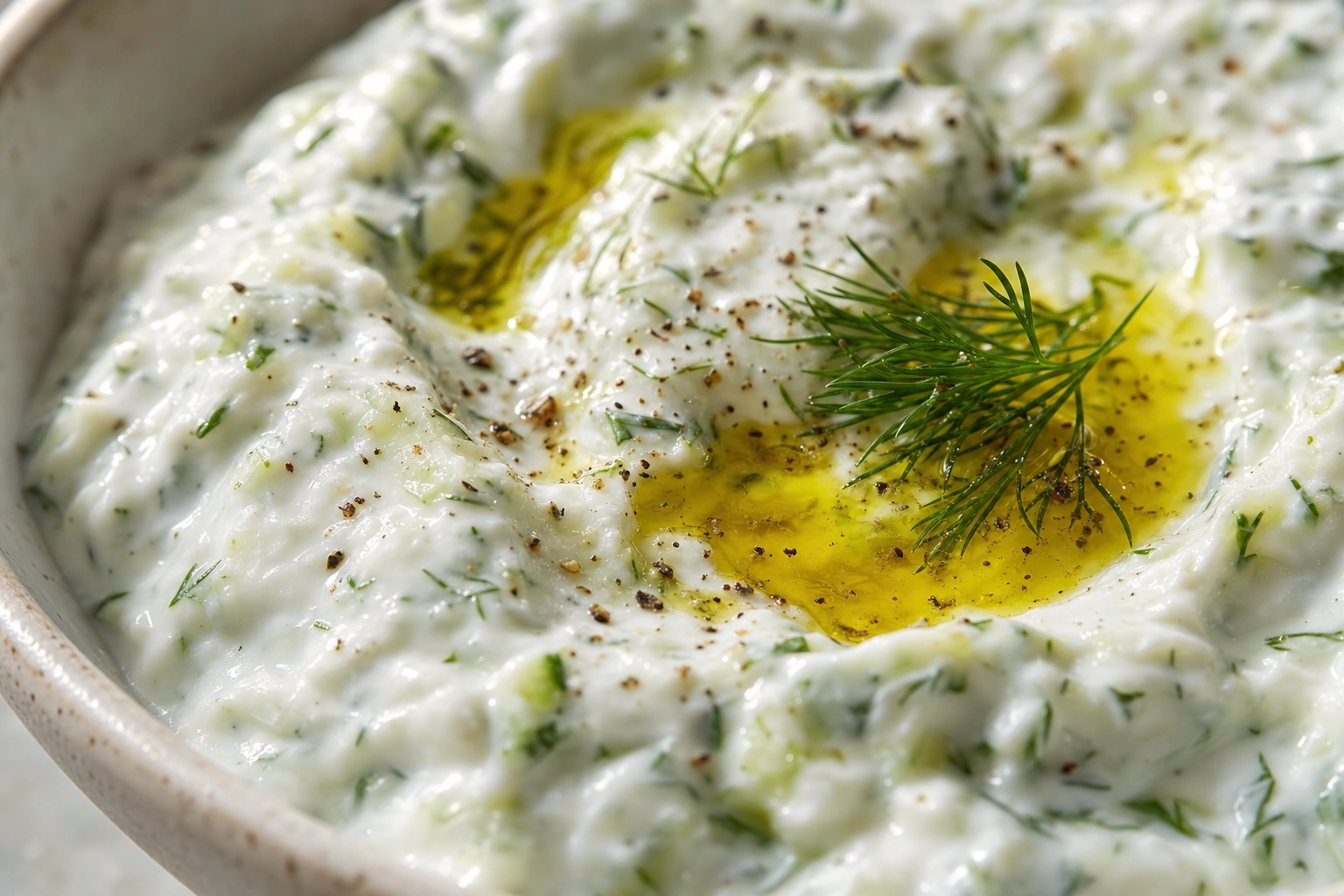 Macro of creamy Greek tzatziki dip with grated cucumber, dill and a glossy pool of olive oil on top
Build a small prop kit and you're most of the way to the aesthetic: blue-rimmed plates, a weathered wood board, a marble slab, a linen napkin, lemon halves, a sprig of fresh oregano or dill, a bowl of Kalamata olives, and a little carafe of olive oil for that finishing drizzle. Lock in this aesthetic and every dish on the menu starts to feel like part of one story — the foundation of all great greek food images.
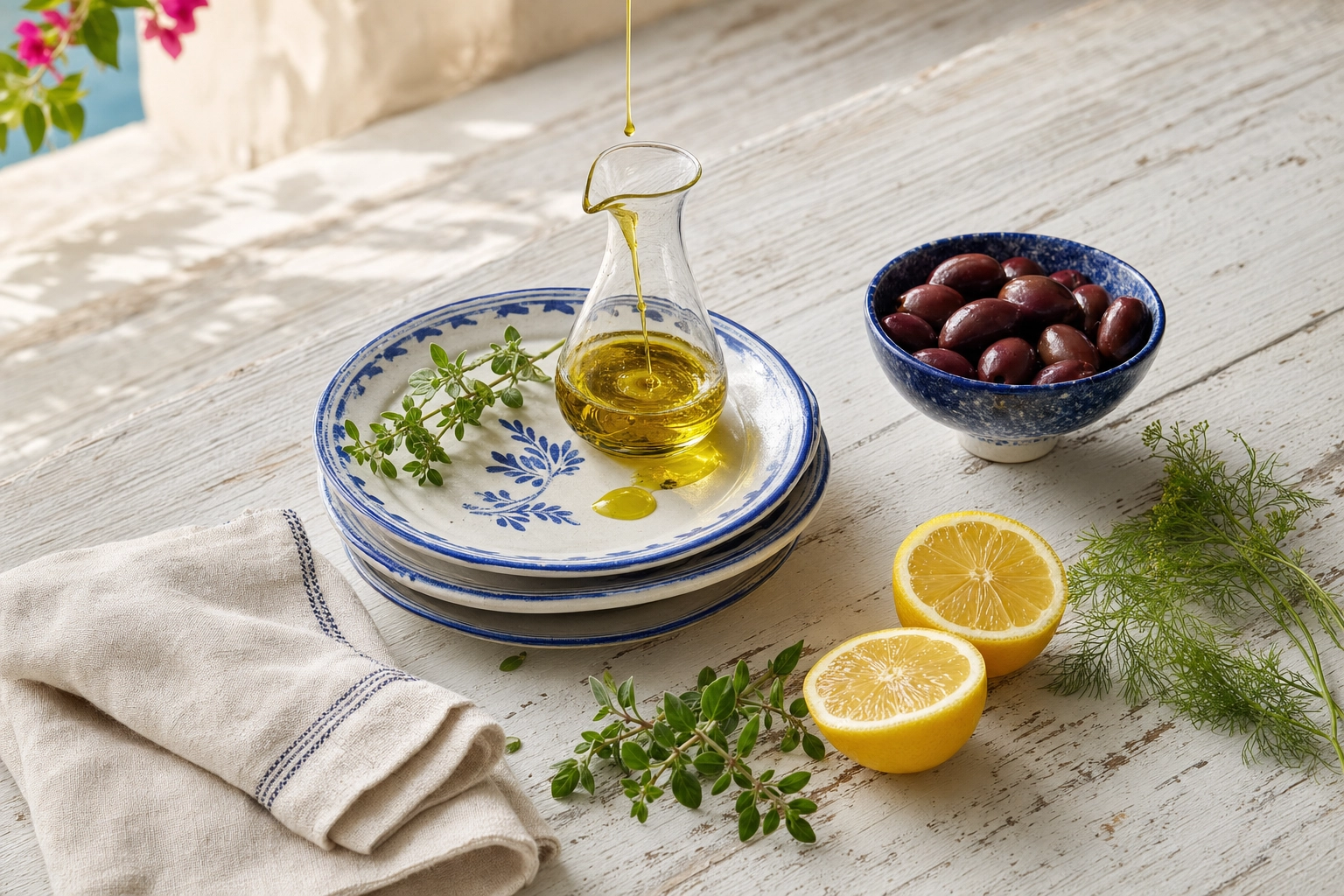 Greek food photography styling props: blue-and-white plates, olive oil carafe, lemons, Kalamata olives and oregano
Light It Like a Greek Island: Natural-Light Tips
In Greece, food is eaten outdoors in the bright sun, so light it that way. Bright, soft, natural daylight is the single biggest lever you have — and it's free.
A few rules do most of the heavy lifting:
- Shoot near a big window or in open shade. A large window with a sheer curtain, or a shaded spot outdoors, gives you the soft, even daylight that flatters every dish. Turn off the overhead restaurant lights if they're spilling into the frame.
- Light from the side or back, never flat-on. Front light (a phone flash, or a light right behind you) kills texture. Side light and backlight rake across the food and make olive-oil sheen and char pop. For a glistening gyro or a whole grilled fish, put the brightest light behind and slightly to one side.
- Bounce a little fill. Backlight looks great but leaves the front of the dish dark. A white card, a napkin, even a sheet of printer paper opposite the window bounces light back in and opens up the shadows. The pale surfaces you're already using help here too.
- Keep your white balance honest. Warm indoor bulbs push everything orange — deadly for Greek food, because they turn white feta yellow and red tomatoes brown. Aim for clean daylight around 5,000–5,500K so colors stay true.
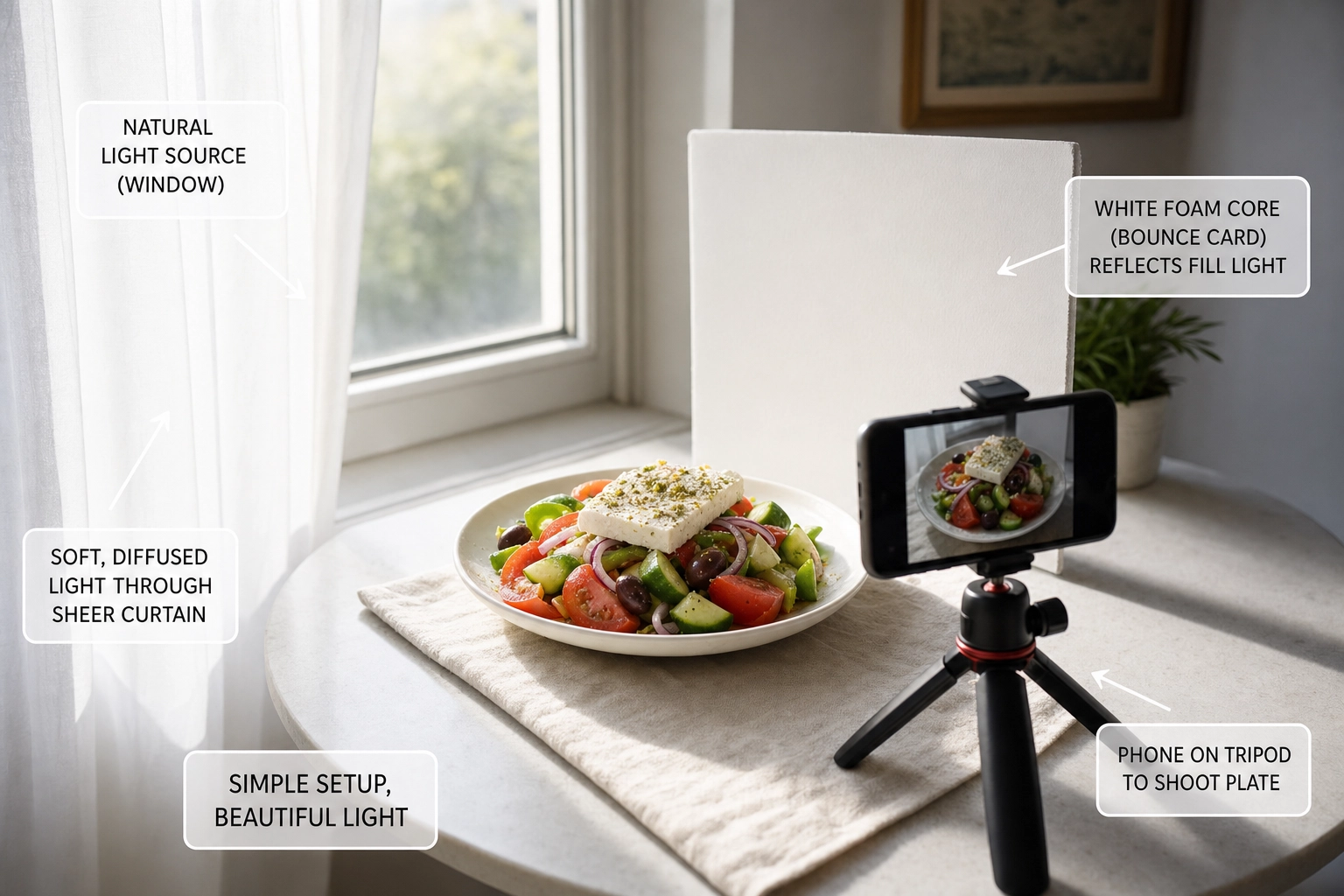 Natural-light food photography setup: a Greek salad beside a curtained window with a white bounce card and tripod
Light is the skill that rewards the most study, so if you want to go deeper, our natural-light food photography guide breaks down window direction, diffusion, and fill in detail.
The 5 Essential Greek Food Images Every Menu Needs
You don't need a hundred photos. You need five great ones. These five greek food images cover the vast majority of what a Greek restaurant or gyro shop needs for menus, delivery apps, and social — and together they tell the full story of the cuisine.
1. The Gyro & Souvlaki Platter (Your Hero Shot)
Start with the dish that pays the bills. First, a point of accuracy that makes the photo authentic: a gyro is meat (traditionally pork in Greece, often chicken) stacked and slow-roasted on a vertical rotisserie, then shaved into thin, crispy-edged ribbons — gyros literally means "turn." Souvlaki is marinated meat grilled on a skewer over charcoal (in Athens, the skewer itself is a kalamaki). Get the distinction right and your styling reads as the real thing.
Great gyro photography lives and dies on that shaved-meat texture; for souvlaki photos, it's all about the char on each cube. To shoot it:
- Use a 30–45° hero angle — high enough to see the spread, low enough to show height and the spilling pita.
- Show the char and the shaved-meat texture. Pile the gyro so the crispy edges catch the light; fan the skewers so every piece shows grill marks.
- Style the full plate: warm, slightly blistered pita, a quenelle of tzatziki, tomato wedges, raw red onion, a lemon half, and a few house-cut fries. Brush the meat with a little olive oil right before you shoot for that fresh-off-the-spit sheen.
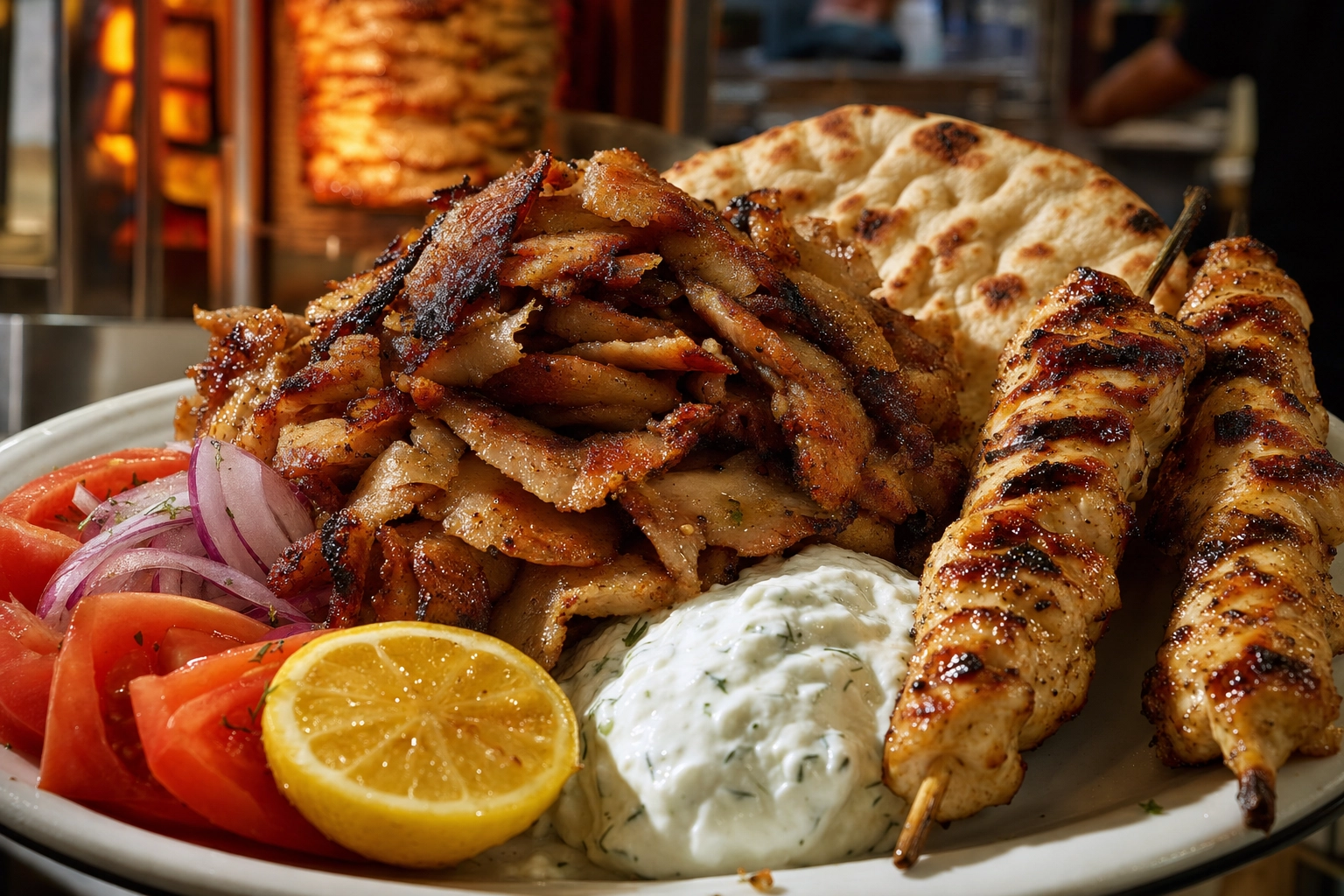 Close-up gyro and souvlaki platter with charred shaved meat, skewers, pita and tzatziki under directional grill light
Char is its own craft — the same techniques that make barbecue look incredible apply at the grill. Shoot the skewers right on the coals when you can: the smoke, flame, and glowing embers add drama you can't fake. Our guide to grilling and BBQ photography techniques digs into shooting sear, smoke, and char marks, and it translates directly to a gyro shop or food truck.
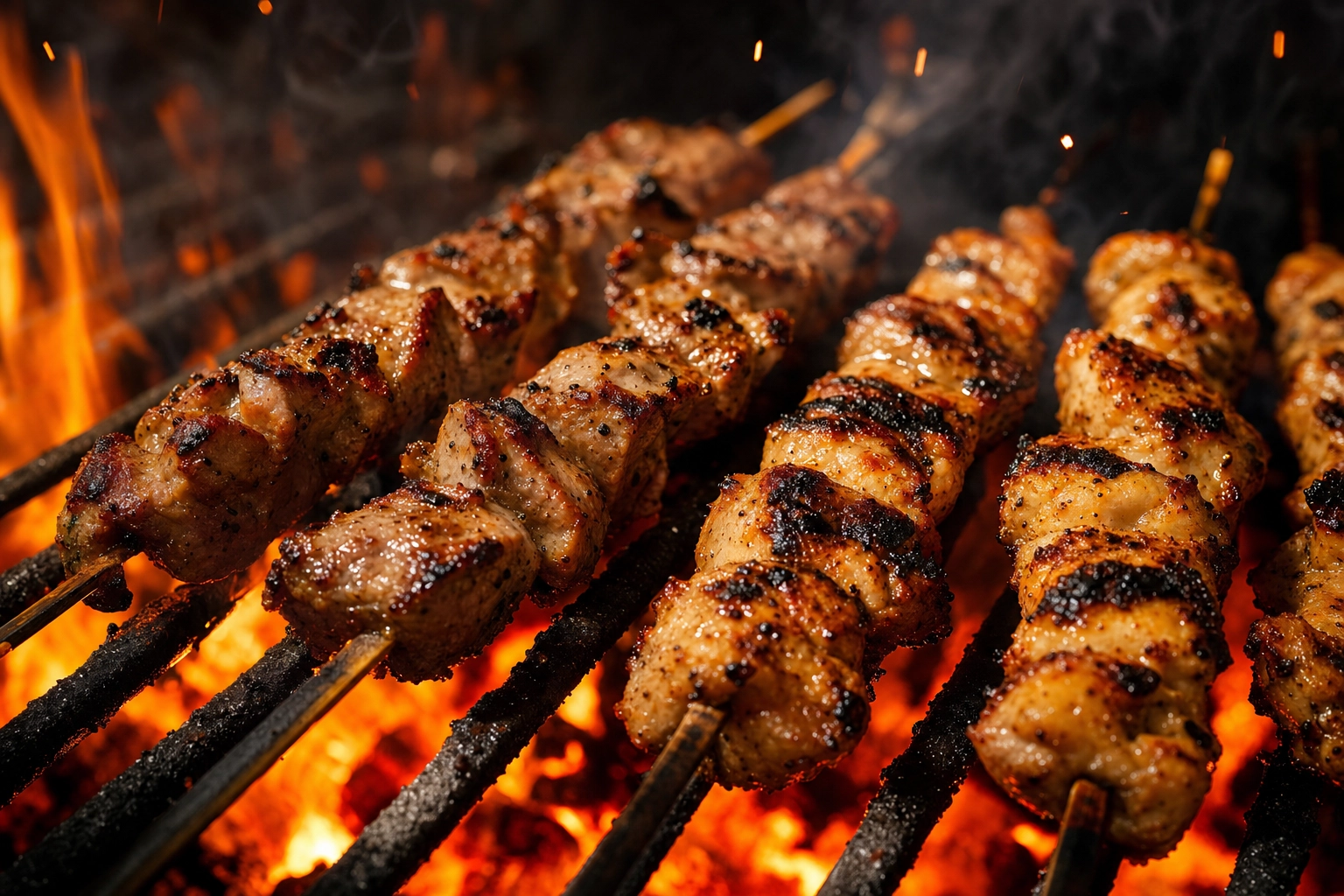 Pork and chicken souvlaki skewers with char marks grilling over glowing charcoal with rising smoke and flames
2. The Mezze Spread (The Overhead Showstopper)
Mezze is Greek hospitality on a table — lots of small plates meant to be shared — and it's built for one angle: straight overhead (flat lay). Shooting from directly above turns the whole spread into a graphic, colorful grid.
Build it with variety and height:
- Mix dips and bites: tzatziki, fava (the yellow split-pea purée), taramasalata, melitzanosalata (eggplant), dolmades (stuffed vine leaves), keftedes, a block of feta, olives, and warm pita.
- Vary the heights — a tall bowl of dip next to a flat plate of dolmades creates rhythm.
- Let your pale surface and blue ceramics frame everything, and leave a little intentional negative space so it doesn't feel cramped.
Right before the shutter, drizzle olive oil over the dips and scatter oregano. That last-second freshness is what separates a styled mezze from leftovers.
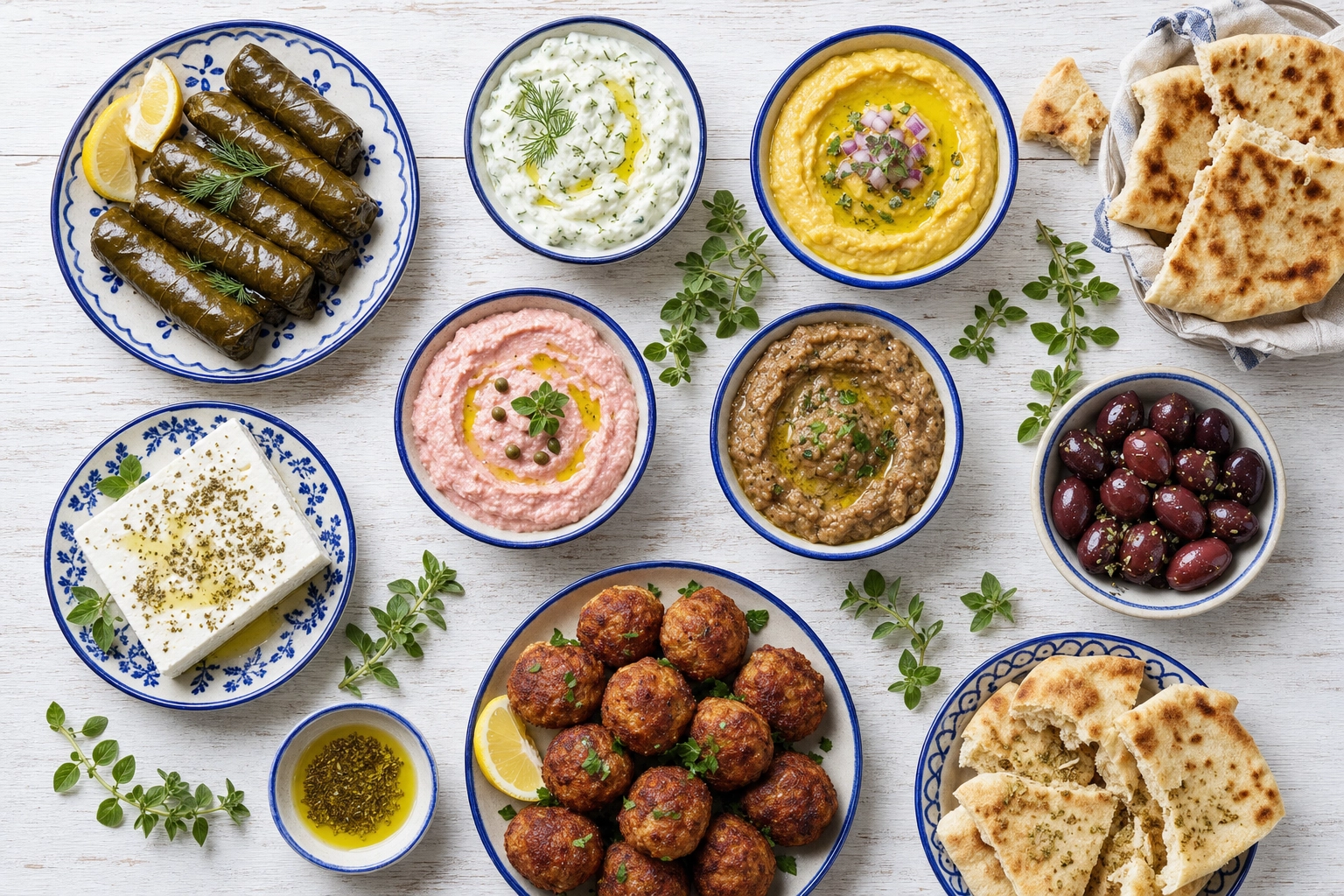 Overhead flat lay of a Greek mezze spread with tzatziki, fava, dolmades, feta, olives and pita on white wood
3. Greek Salad / Horiatiki (The Color Shot)
The most important thing about Greek salad photography? Get the salad right first. Authentic horiatiki — "village salad" — has no lettuce. It's chunky wedges of ripe tomato, cucumber, green pepper, and red onion, a generous handful of Kalamata olives, and a thick slab of feta laid on top (never pre-crumbled), finished with dried oregano and a heavy pour of olive oil.
- Shoot at 30–45° to show the height and that signature feta slab perched on top.
- Keep it rustic and piled high — horiatiki isn't a delicate composed salad, it's abundant.
- Add the oregano and the olive-oil drizzle as your very last move, then shoot immediately while everything's glossy and the tomatoes are still beading juice.
It's one of the easiest dishes to make crave-worthy because the colors do the work — the same principle behind all great salad photography.
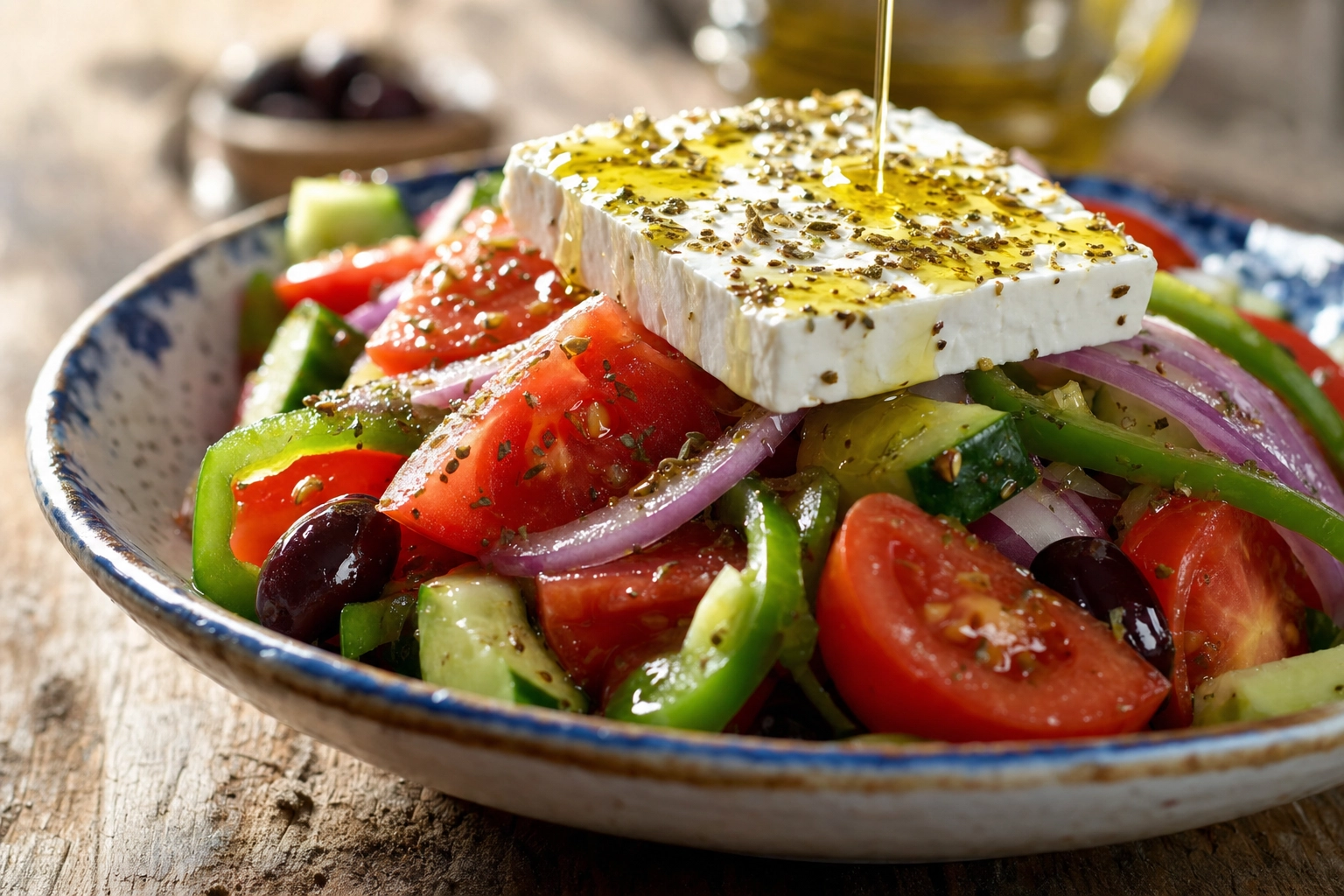 Macro of authentic Greek horiatiki salad with a feta slab, Kalamata olives and olive oil drizzle at 30 degrees
4. Moussaka (The Comfort Cross-Section)
Moussaka is the opposite of the salad: warm, rich, layered comfort food, and the money shot is the cross-section. Cut a clean square or wedge and plate it on its side so the camera sees the strata — silky eggplant, spiced minced meat in cinnamon-scented tomato, and that golden, baked béchamel cap.
- Use warm side light to model the layers and throw the soft shadows that show depth.
- A wisp of steam sells "just out of the oven" — and steam only reads against a darker background, so swap to a moodier surface for this one.
- Wipe the plate edges, keep the slice tall, and garnish with just a little parsley. Its cousin pastitsio (the Greek baked-pasta dish sometimes called Greek lasagna) shoots exactly the same way.
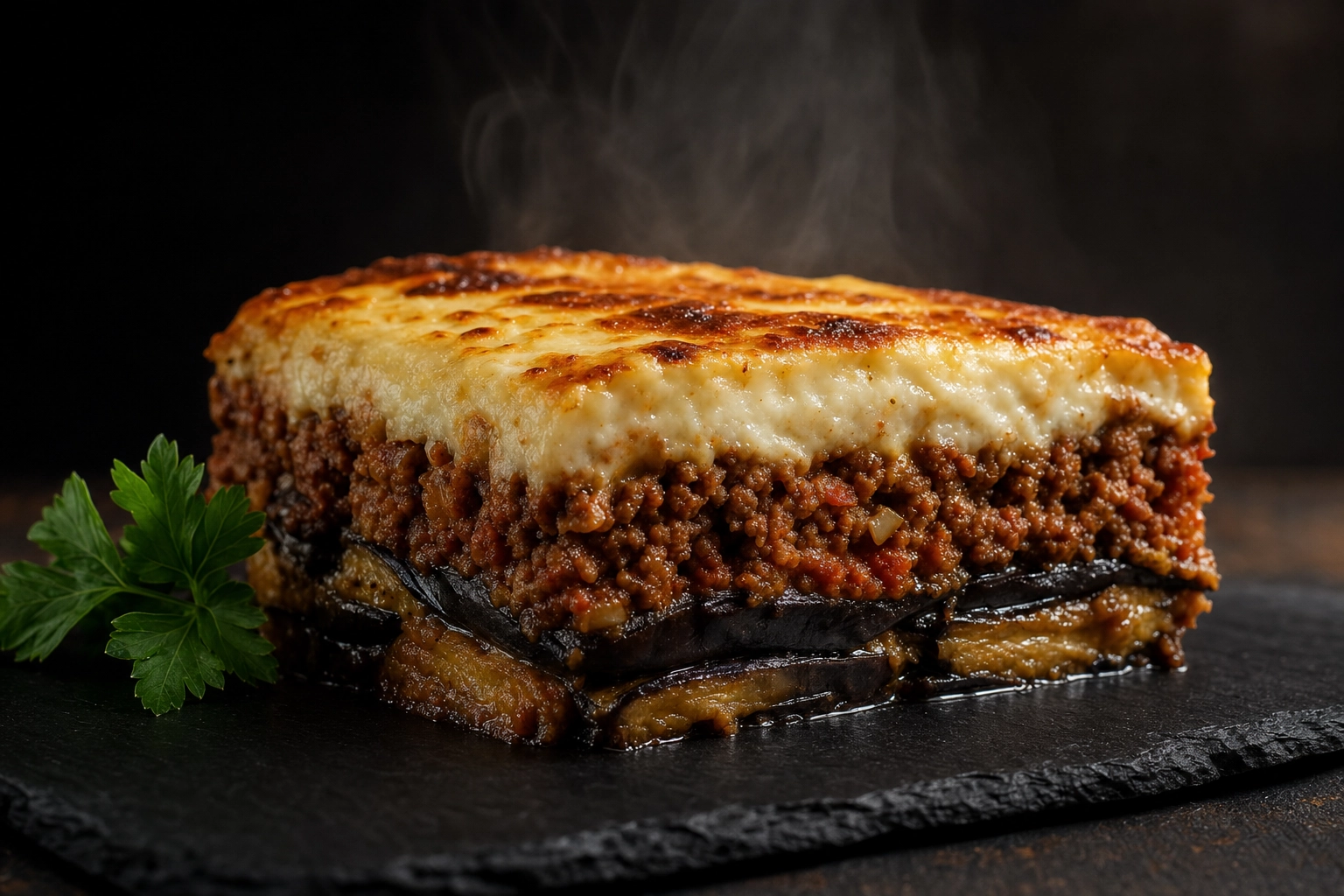 Cross-section of Greek moussaka showing eggplant, spiced meat and golden béchamel layers with steam on dark slate
5. Grilled Seafood (The Coastal Shot)
Nothing says the islands of Greece like seafood straight off the grill. A whole grilled fish (tsipoura/sea bream or lavraki/branzino), charred octopus, or shrimp saganaki carries the whole seaside-taverna story in one frame.
- Lean into the char marks and finish with ladolemono — that simple olive-oil-and-lemon dressing — for a bright, glossy coat.
- Style with lemon halves, a scatter of oregano, and maybe a few capers; keep props minimal and marine-toned.
- Shoot slightly elevated on a blue-rimmed plate over weathered wood or stone so it feels like a table by the water.
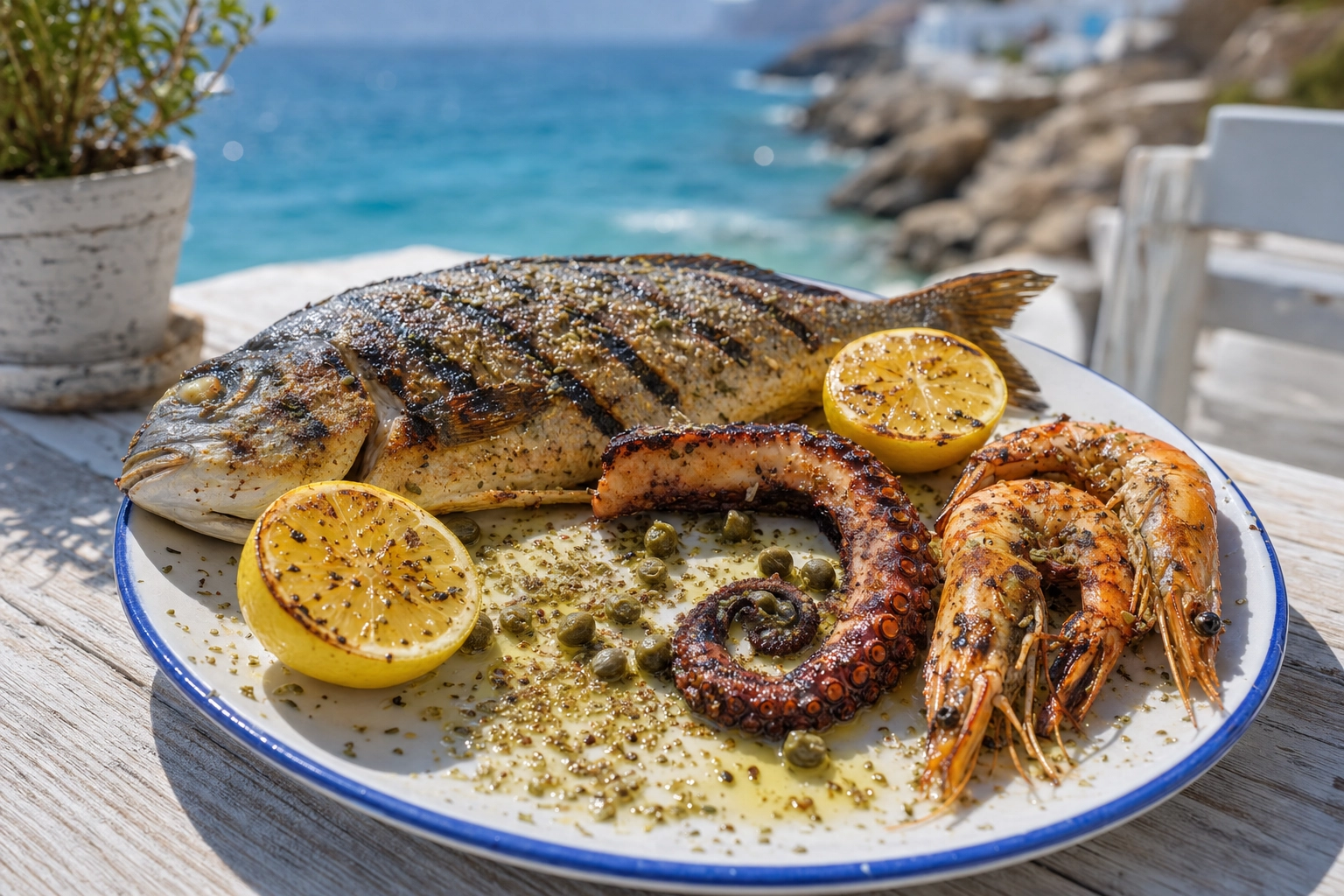 Whole grilled sea bream and charred octopus with lemon and olive oil on a blue plate by the turquoise Aegean
Octopus deserves a close-up of its own — get in tight on a single charred tentacle so the suckers, blister marks, and oily gloss fill the frame. For more on shooting fish, shellfish, and the tricky reflective surfaces they bring, see our seafood photography styles.
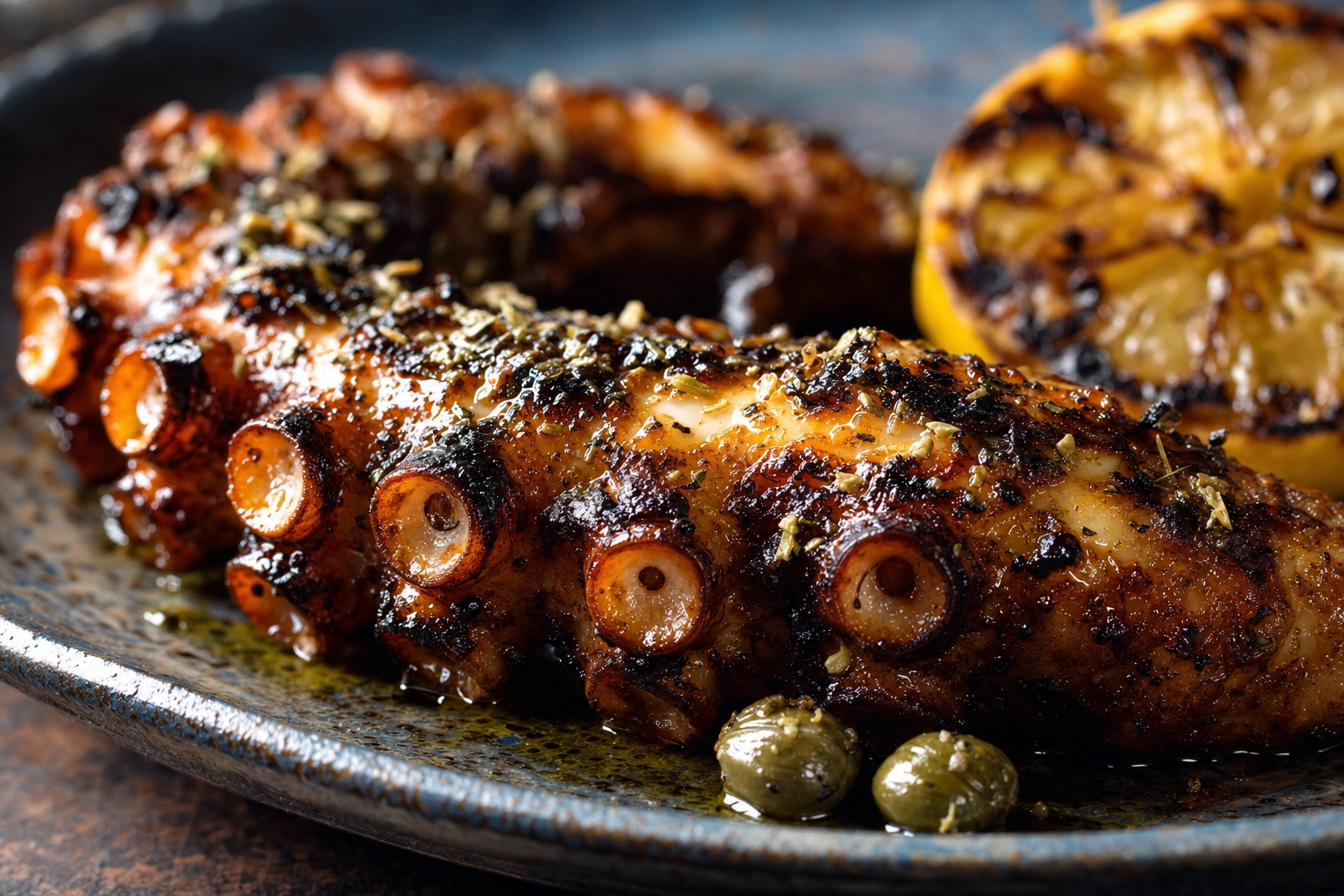 Macro of a charred grilled octopus tentacle glossed with olive oil, lemon and oregano on a blue-grey plate
More Popular Greek Dishes Worth Photographing
The big five carry most menus, but Greek cuisine runs deep across the mainland and the islands, and a handful of other traditional dishes earn a frame of their own — especially for social posts, specials boards, and seasonal features.
- Spanakopita and tiropita. Golden, flaky phyllo pies filled with spinach and feta (or just cheese). Shoot a cut piece at eye level so the camera catches the crisp, blistered layers and the filling spilling out.
- Dolmades. Glossy stuffed vine leaves photograph best lined up neatly and brushed with a little olive oil, with a wedge of lemon and a spoon of thick Greek yogurt alongside.
- Saganaki. Pan-fried cheese, sometimes flamed at the table — catch it sizzling in the skillet with a squeeze of lemon for an irresistible, theatrical shot.
- Gigantes plaki. Giant white beans baked in a sweet tomato sauce — a humble, rustic dish that glows in warm side light.
- Baklava and loukoumades. End on something sweet: honey-soaked baklava layered with walnuts and cinnamon, or loukoumades (Greek honey doughnuts). The honey sheen does all the styling work — just catch the drizzle in the light.
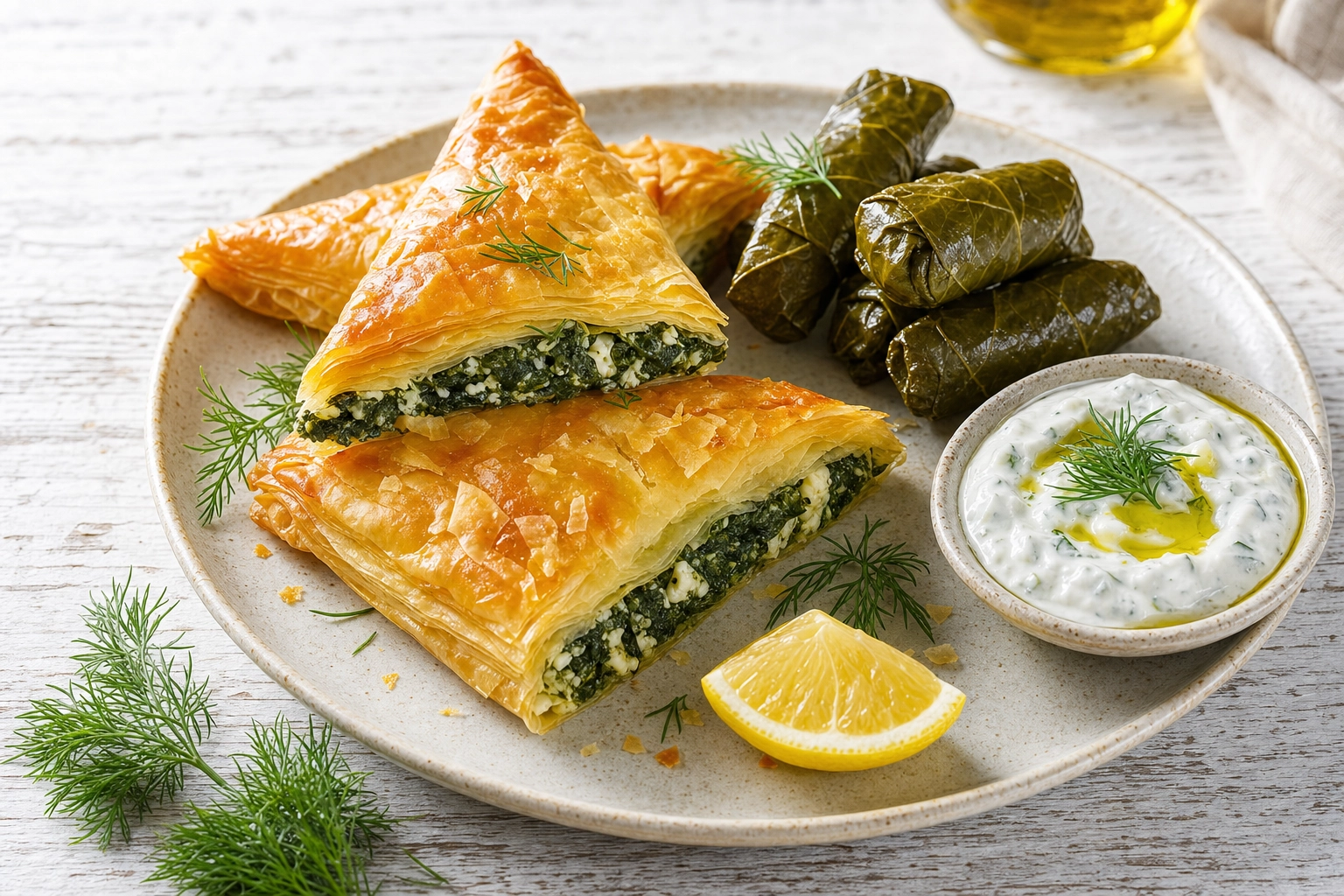 Greek spanakopita triangles with dolmades and tzatziki on pale stoneware in bright natural light
Dishes like flaming saganaki and a stack of charred grilled lamb chops (paidakia) bring movement and drama — exactly the kind of shots that stop a scroll on social media.
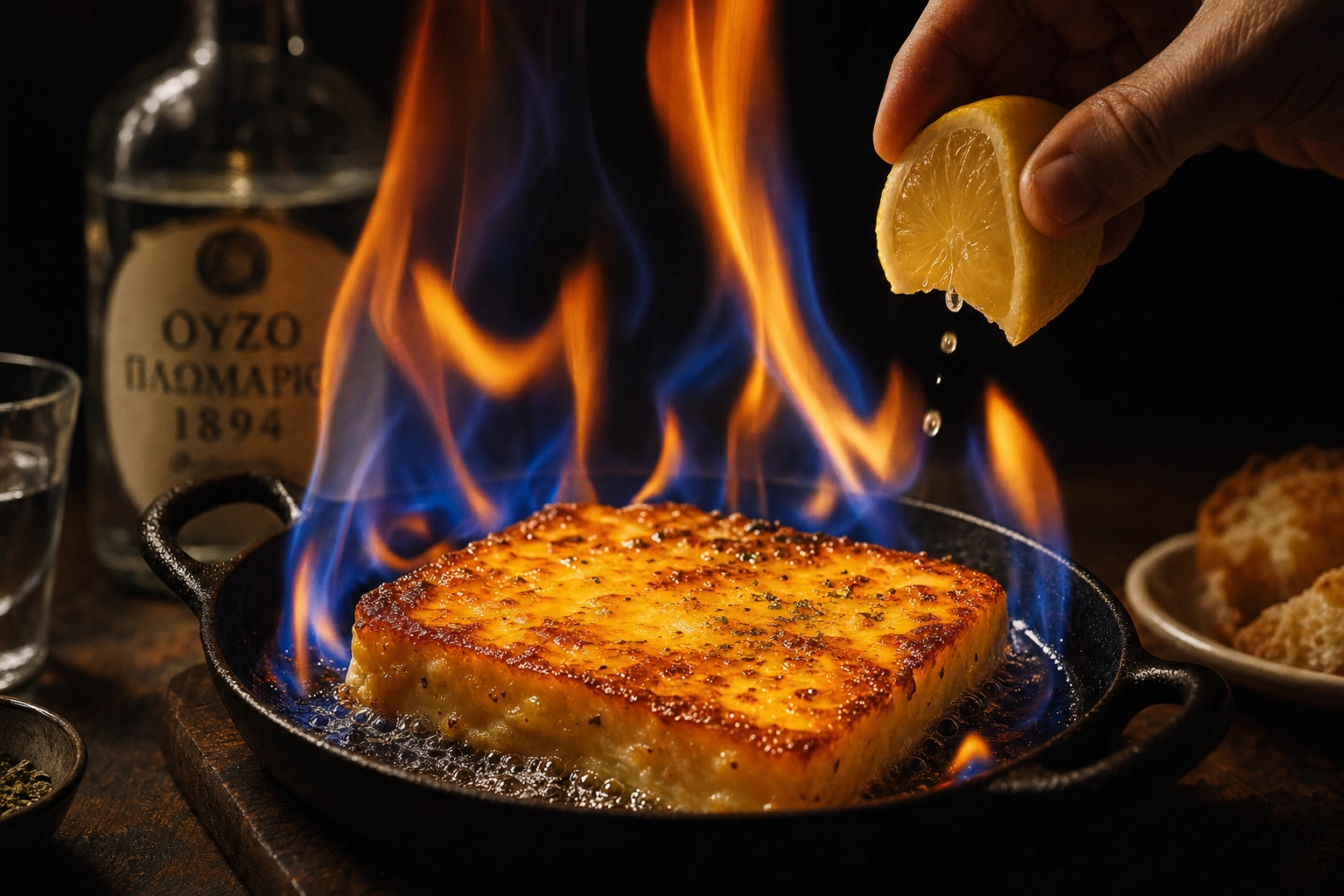 Greek saganaki fried cheese flambéing with flames in a cast-iron skillet, a lemon wedge ready to squeeze
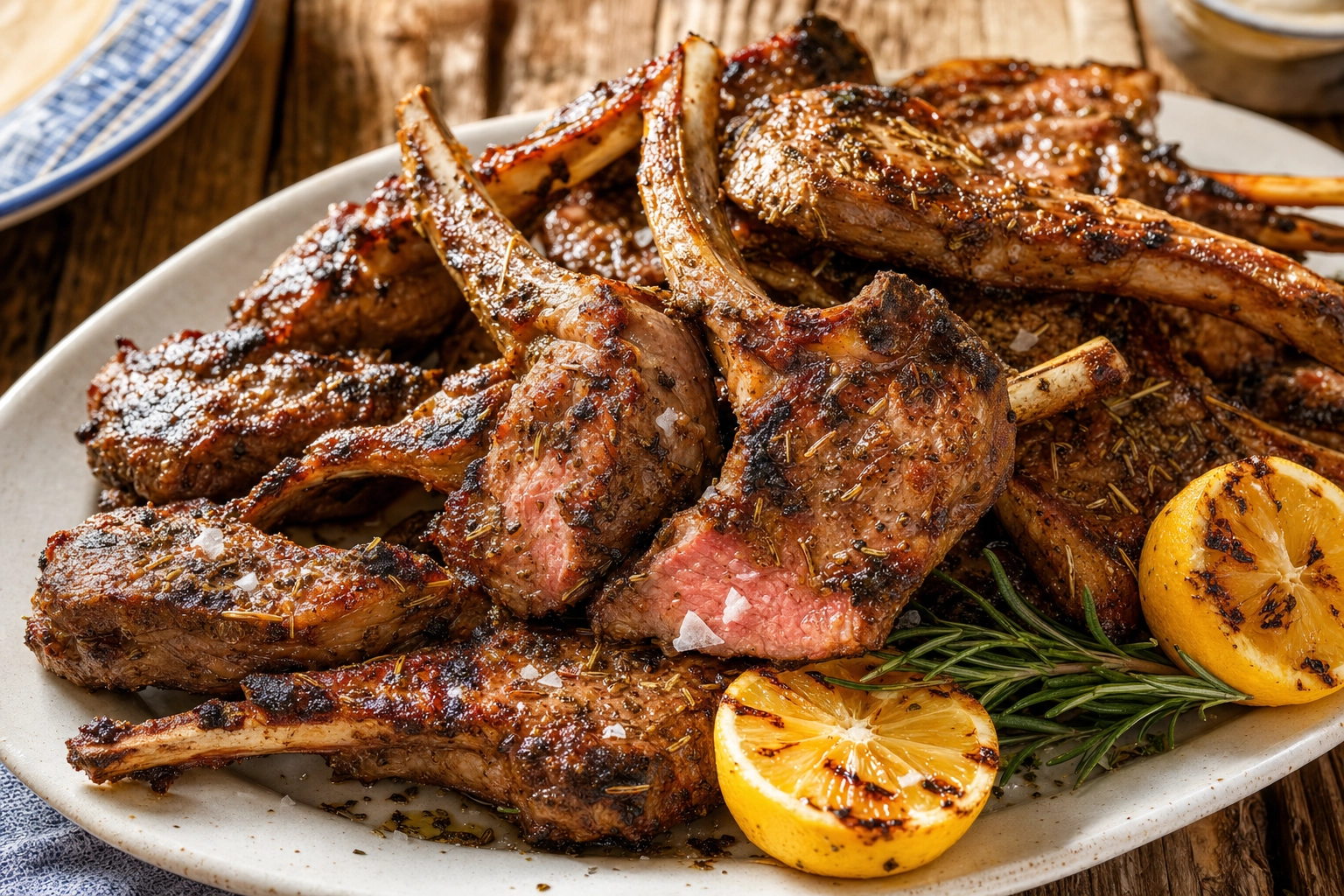 Greek grilled lamb chops (paidakia) with char marks, oregano and lemon stacked on a white platter
A bowl of thick Greek yogurt with honey and walnuts, a slice of pastitsio, or a plate of grilled lamb chops all make excellent greek food images too. The rule never changes across Greece and the islands: bright light, a pale background, and that final glint of olive oil or honey.
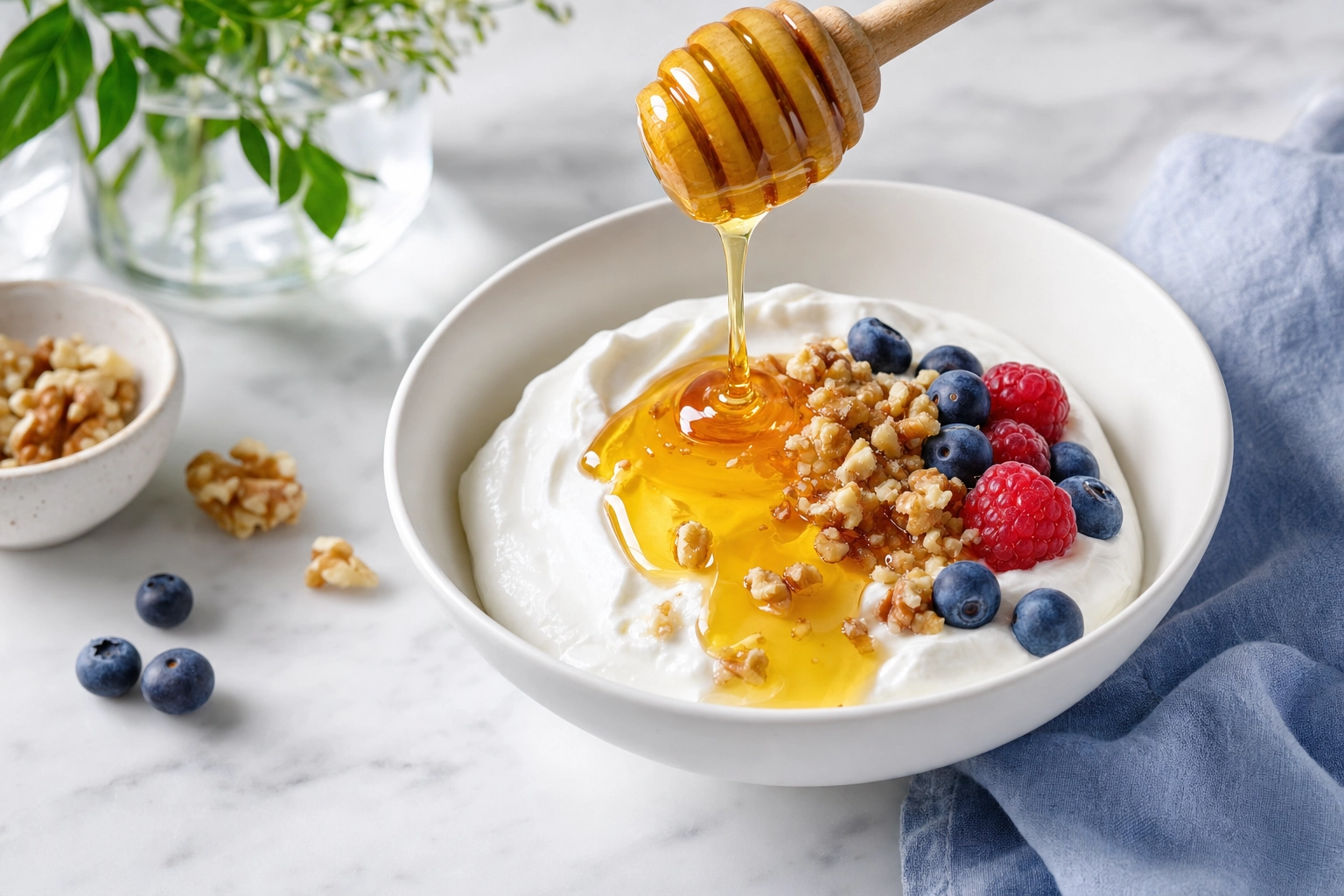 Bowl of thick Greek yogurt with a honey drizzle, crushed walnuts and berries on pale marble in bright light
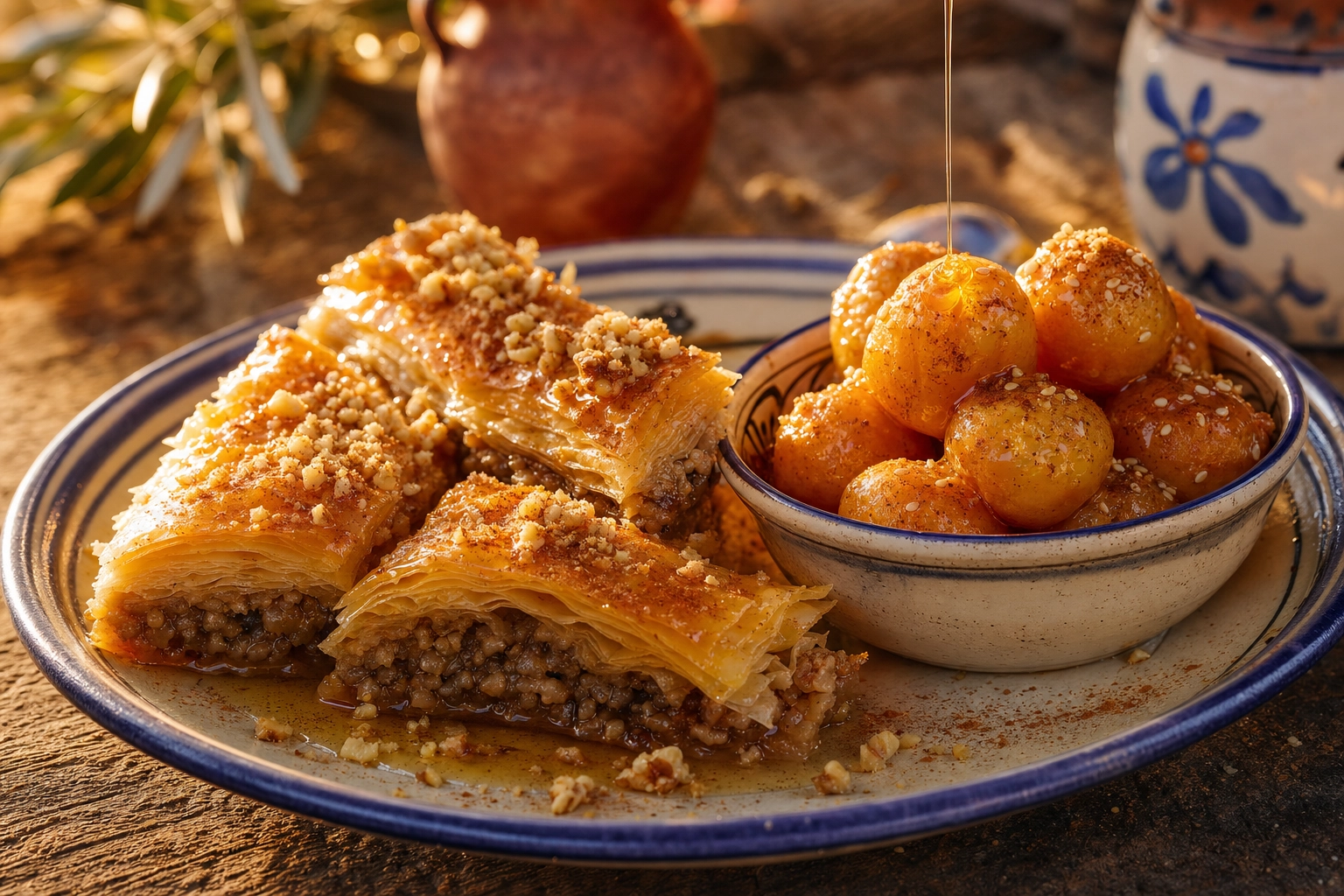 Greek desserts close-up: honey-soaked baklava with walnuts and loukoumades doughnuts on a blue-rimmed plate
Food-Styling Tricks That Make Greek Dishes Pop
A few small moves used by every food stylist will lift your greek food photos more than any camera upgrade:
- The oil-sheen brush. Keep a small brush and a dish of extra-virgin olive oil on set. A light coat on grilled meat or fish — and a fresh drizzle over salads and dips — restores the glossy, just-finished look the second before you shoot. Food dries out fast under any light; the brush brings it back. (It's the same trick behind great Indian tandoori shots.)
- Protect the char. Undercook proteins very slightly so they stay juicy and don't go gray on camera, and make sure every visible piece of a skewer shows grill marks. If you slice grilled meat, brush the cut face with a little oil so it glistens instead of looking dry.
- Use steam wisely. Steam looks fantastic on hot dishes like moussaka — but it only shows up against a dark background. Swap your pale Greek surface for something moody when you want to capture it.
- Garnish like a Greek kitchen, then move fast. Fresh oregano, dill, a lemon wedge, a final crumble of feta — add them last and shoot within a minute or two, before herbs wilt and oil soaks in.
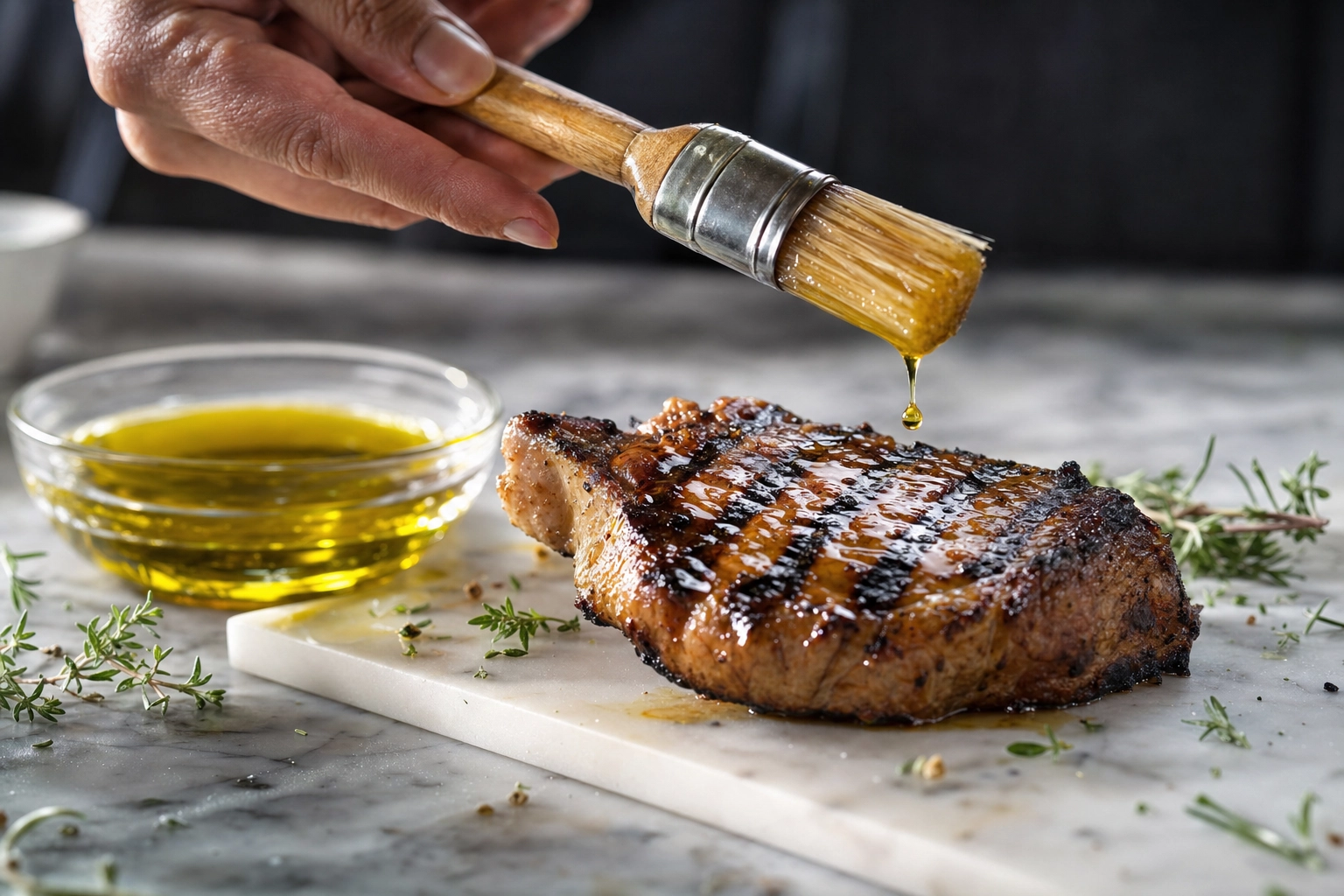 A hand brushing olive oil onto grilled meat with a pastry brush to add sheen, a food styling close-up
Before & After: Turning Phone Snaps into Menu-Ready Greek Food Images
Why most gyro-shop photos fall flat
Here's the honest reality: a slammed gyro shop at the Friday dinner rush cannot run a photo studio. Nobody's diffusing window light between orders, and a gyro wrap handed across the counter rarely gets styled at all. So most real-world greek food images start life as a quick phone snap on a steel counter under warm light — greasy, orange, and flat.
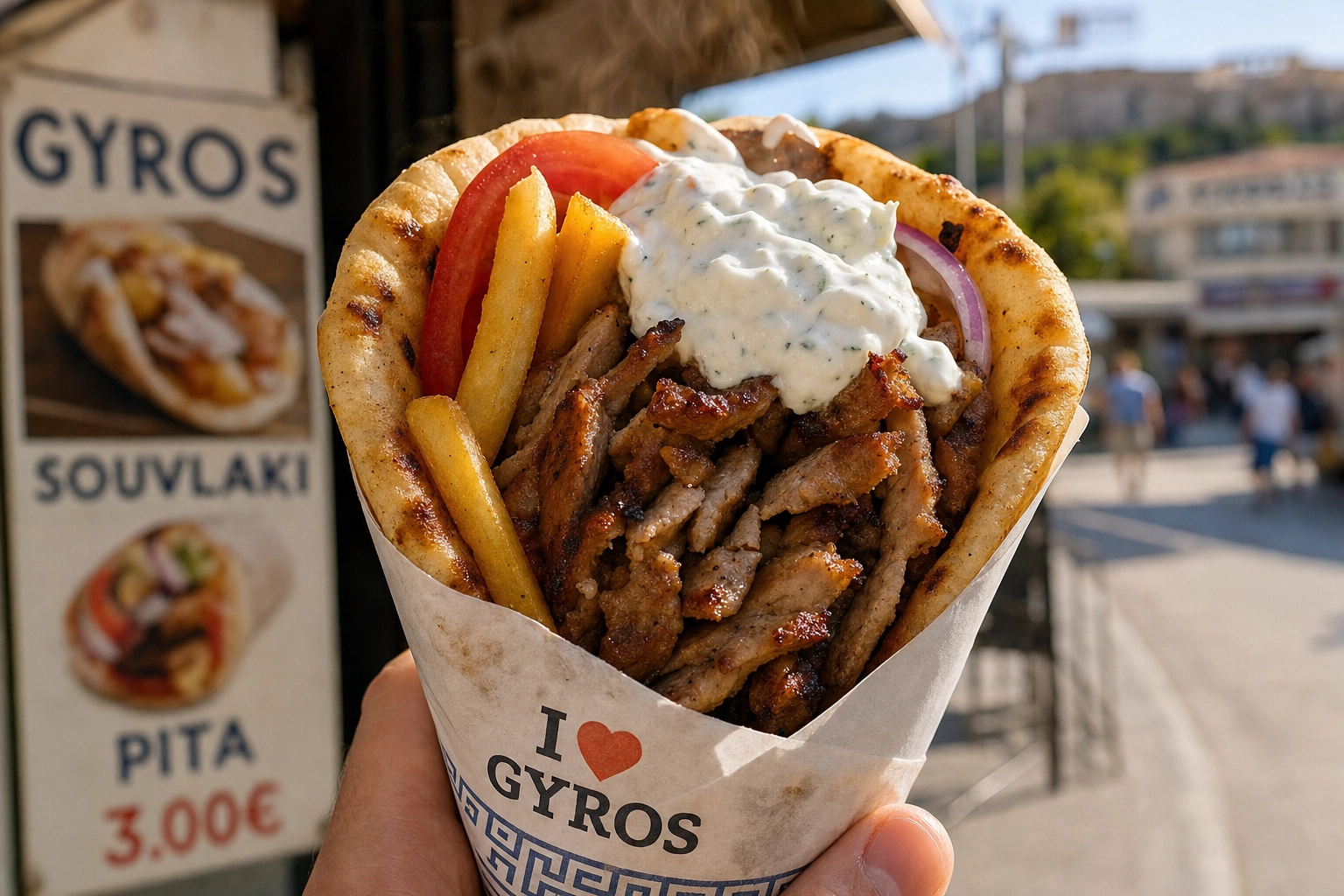 Greek gyro wrap in paper with charred pork, tomato, onion, fries and tzatziki held up against a sunny street
How FoodShot turns a snapshot into a menu-ready shot
That's the exact gap the FoodShot AI food photo editor was built to close. You snap a normal phone photo of your actual dish, upload it, and pick a Mediterranean style — and it transforms that snapshot into a studio-quality, menu-ready image in about 2 minutes, at roughly 95% less than the cost of a professional food photography shoot. The "before" is your real gyro; the "after" is the version that looks like a sun-soaked taverna somewhere in Greece.
A few things make it click for Greek menus specifically:
- Mediterranean styles bring the bright white-and-blue aesthetic, the natural-light look, and the olive-oil sheen automatically — no prop kit required.
- A consistent look across the whole menu. Saved styles and Builder Mode let you lock the same surfaces, lighting, and mood across every dish, so your gyro, salad, and moussaka look like one brand instead of fifteen different phones.
- Built for where the orders are. The output is sized and polished for delivery-app photos and works just as well for a dine-in restaurant menu, social posts, and printed boards.
The point isn't to fake your food — it's to make the photo finally match how good the real plate already is.
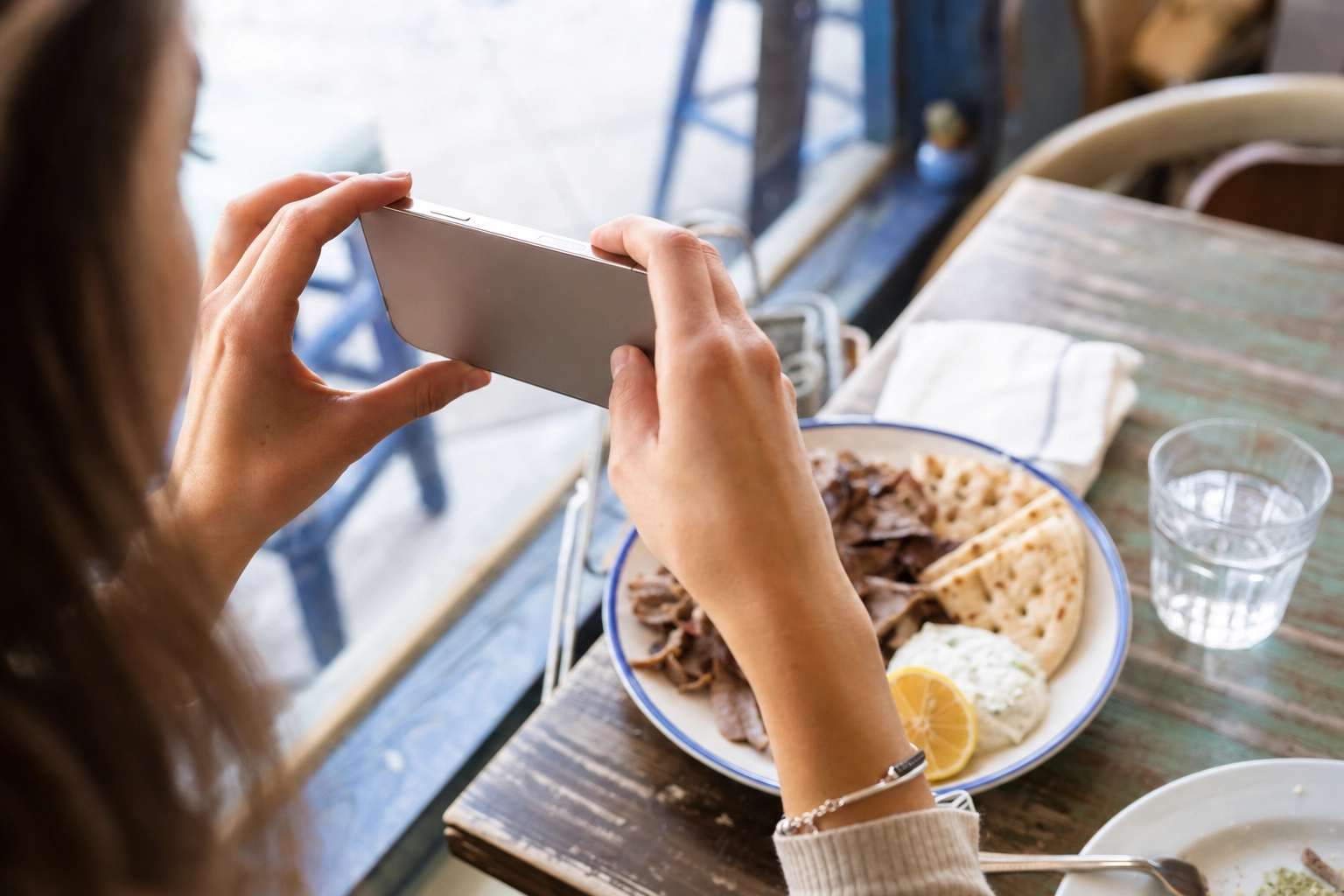 Hands holding a phone to photograph a Greek gyro platter by a window in a real taverna, behind the scenes
Frequently Asked Questions
What's the difference between a gyro and souvlaki?
A gyro is meat (traditionally pork in Greece, often chicken) stacked on a vertical rotisserie, slow-roasted, and shaved into thin ribbons — the word gyros means "turn," after the rotating spit. Souvlaki is small pieces of marinated meat grilled on a skewer over charcoal (in Athens, the skewer is called a kalamaki). Both are usually served with pita, tzatziki, tomato, and onion; the difference is rotisserie-shaved versus skewer-grilled. For photos, a gyro shows soft, crispy-edged ribbons, while souvlaki shows distinct charred cubes.
How do you take good photos of Greek food with a phone?
Three steps get you most of the way: (1) move the food next to a big window and turn off the overhead lights; (2) shoot with the light coming from the side or behind the dish to catch olive-oil sheen and char; (3) tap to set focus, then pull the exposure down slightly so the highlights don't blow out. Keep the background pale and simple, drizzle a little olive oil right before you shoot, and take several frames. If the lighting at your shop is hopeless, capture a clean phone photo anyway and use an AI food photo editor to fix the light and color afterward.
What's the best background for Greek food photography?
Pale, cool, and a little rustic. Whitewashed or weathered wood, white marble, pale linen, and blue-rimmed ceramics are the classic Greek choices — they read instantly as the Mediterranean aesthetic and make warm colors like tomato red and feta white pop. Save dark, moody backgrounds for the one or two dishes where you want to capture steam, like a hot slice of moussaka.
How do you make grilled meat look juicy and fresh in photos?
Brush it lightly with olive oil right before you shoot — that sheen is what the eye reads as "juicy." Undercook the meat slightly so it keeps its color instead of turning gray, make sure the char marks are visible, and if you slice it, oil the cut face so it glistens. Then shoot fast, because grilled meat dries out and dulls within minutes.
What are the most popular Greek dishes to photograph for a menu?
The five that earn a spot on almost every Greek menu are the gyro or souvlaki platter, a shared mezze spread, horiatiki (Greek village salad), moussaka, and grilled seafood such as whole fish or octopus. Beyond those, spanakopita, dolmades, saganaki, and baklava all photograph beautifully and round out a menu. Together they cover the full range of popular Greek dishes — street food, shared plates, comfort bakes, and coastal grills.
Can I create professional Greek food images without hiring a photographer?
Yes. A professional shoot is the gold standard, but it costs hundreds to thousands of dollars and takes days to schedule. The faster route is to shoot honest phone photos of your real dishes and use FoodShot AI's Mediterranean styles to transform them into studio-quality, menu-ready images in about 2 minutes each — at roughly 95% less than a traditional shoot. It's the practical option for a gyro shop or taverna that needs a full menu of consistent photos without closing the kitchen.
Ready to make your menu look as good as your food tastes? Try the FoodShot AI food photo editor, choose a Mediterranean style, and turn your next phone snapshot into a menu-ready Greek food image.