Jamaican Food Photography: Jerk, Patties & Rice
 Ali Tanis18 min read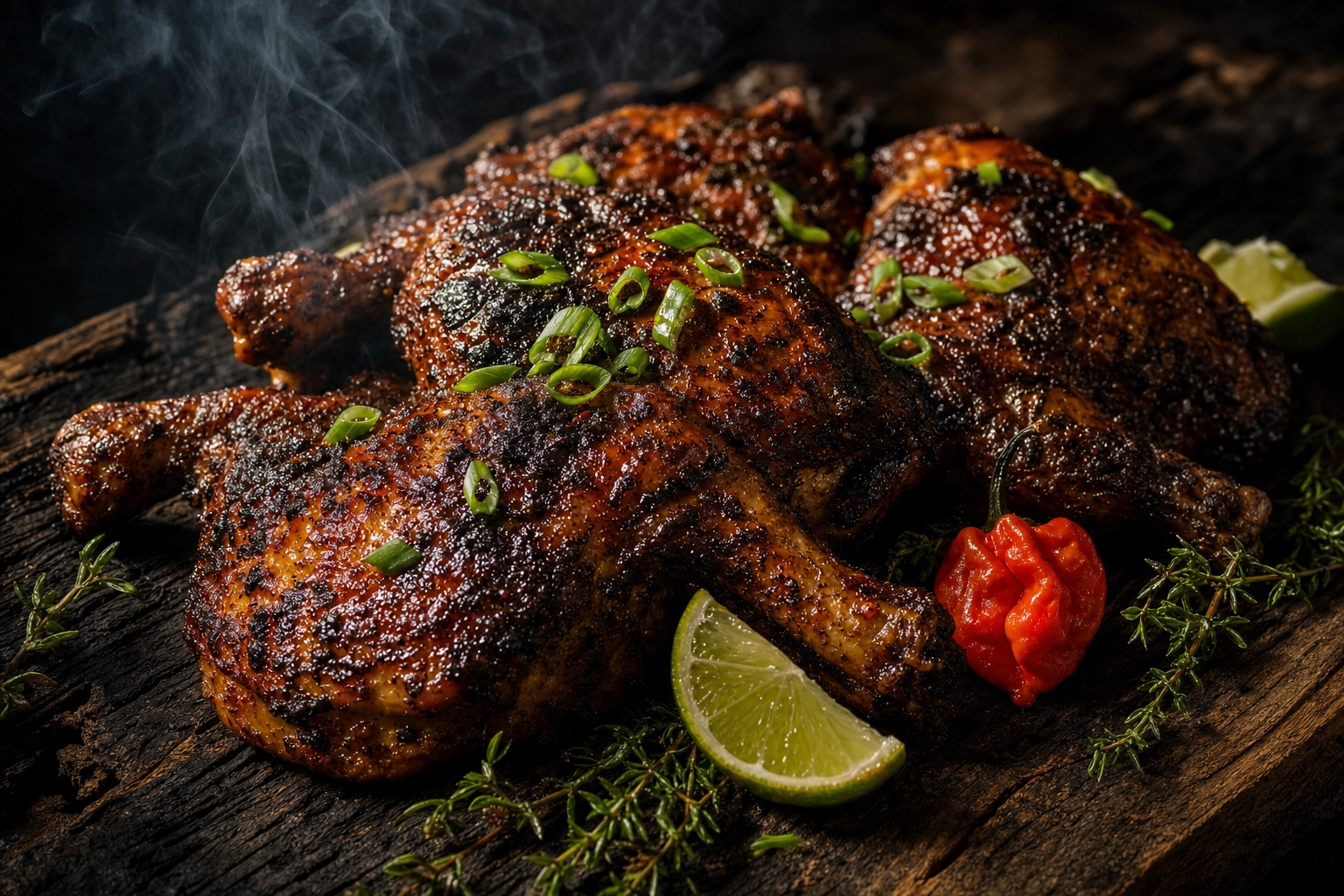
Jamaican food might be the most photogenic cuisine on the planet — and one of the trickiest to shoot. Picture it: mahogany-charred jerk chicken, oxtail swimming in glossy brown gravy, a flaky golden patty still steaming, rice and peas flecked with thyme, and a rum punch glowing red-to-orange in the glass. It's bold, smoky, and bursting with color.
But point a phone or camera at that same plate under fluorescent kitchen lights and the magic turns muddy, flat, and brown-on-brown — which is why so many Jamaican food pictures never do the cooking justice.
If you run a jerk spot, a Caribbean takeaway, or a food truck, this guide is for you. Think of it as a food photography crash course built for real kitchens: the aesthetic behind great Jamaican food pictures, the six shots every menu needs, and the exact lighting and styling tips for capturing char and dark sauces without them reading as "burnt."
Quick Summary: Great Jamaican food pictures come down to light and contrast: a dark, moody background with bright pops of color (scotch bonnet, scallion, lime), a glossy highlight on the meat, and steam caught with backlight. Shoot near a window and lean on the six shots below. For consistent, menu-ready results without a studio, FoodShot AI turns a phone photo into a professional image in about 2 minutes.
Why Jamaican Food Pictures Are So Hard to Get Right
Here's the honest truth most food guides skip: some of the tastiest food is the ugliest on camera, and Jamaican cooking is full of it.
The Brown-on-Brown Problem
Jerk chicken gets its soul from a dark, crusty char. Oxtail, brown stew chicken, and curry goat are all deep, glossy brown. Even rice and peas leans earthy.
Photograph any of it carelessly and you get "brown-on-brown" — the food blends into the sauce, the sauce blends into the plate, and nothing looks appetizing.
Why Phones Struggle With Dark Food
Most kitchens run on overhead fluorescent or warm tungsten bulbs, and both wreck dark food. Fluorescents add a green cast; tungsten dips everything in orange.
Then the camera, fighting to brighten a dark subject, cranks the ISO and hands you a grainy shot. Fix the light and most of the problem disappears.
Why It's Worth the Effort
On delivery apps, the picture is the menu. According to DoorDash's own merchant data from 2023–2025, high-quality menu photos can lift sales by up to 13% once you photograph at least half your menu, and Grubhub has reported professional photos boosting orders by roughly 30%.
Imagery is the first thing diners judge when trying a new place. On a busy restaurant listing, one great jerk chicken image is the difference between a scroll and an order. The good news: all that dark, dramatic depth is what makes Jamaican food stunning when you light it right — welcome to dark food photography.
The Jamaican Food Aesthetic: Bold, Smoky, and Full of Color
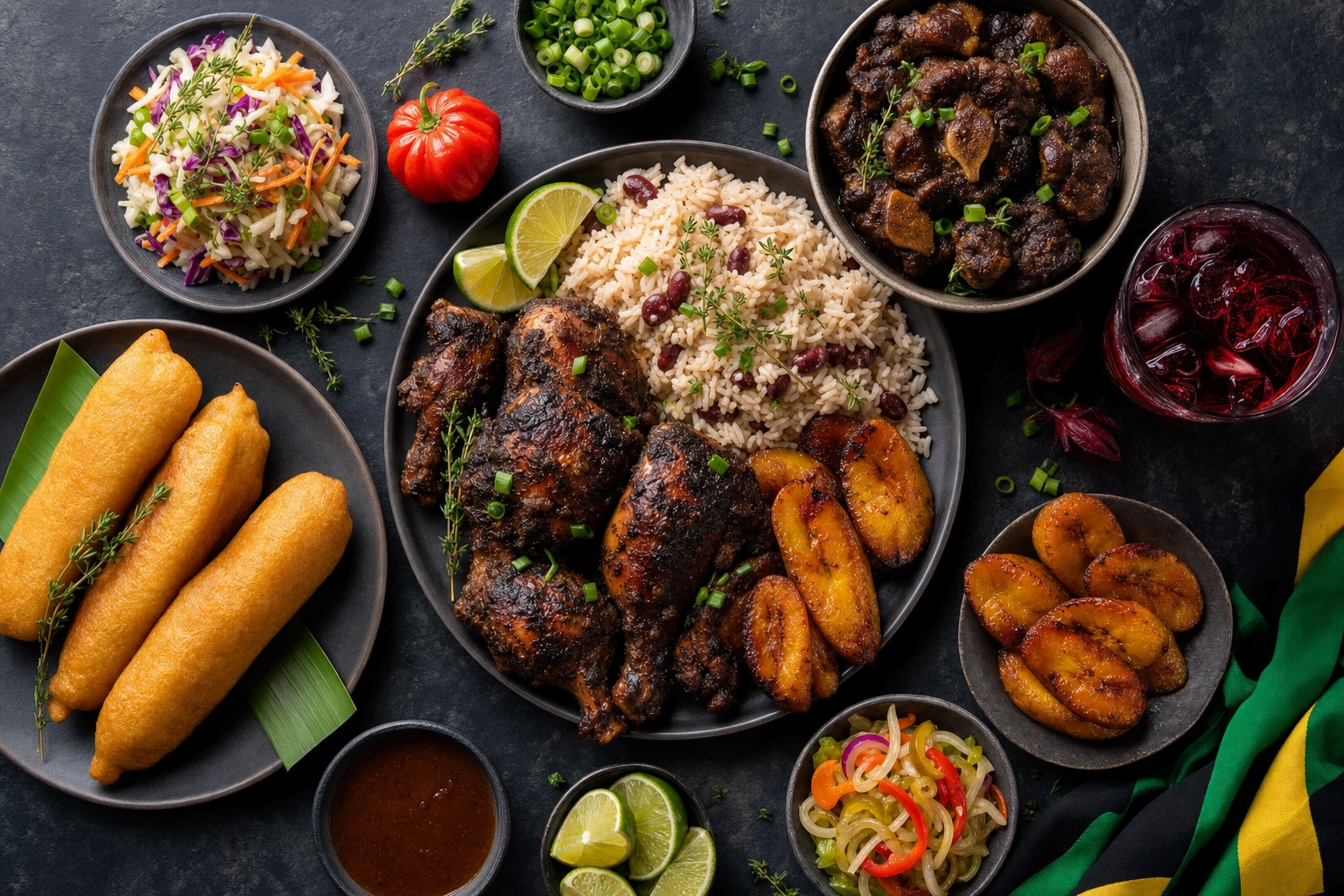 Overhead Jamaican food spread with jerk chicken, rice and peas, plantain, festival and oxtail on dark slate
Before you shoot a single plate, get clear on the look you're chasing. Jamaican food photography lives where two ideas that sound like opposites meet: dark and moody, yet vibrant and colorful.
The "dark" part is about mood, not underexposure. Dark food still needs careful light — you just let the shadows fall into a deep, rich background instead of flooding the scene with flat, even light. That drama makes char look intentional and gravy look luxurious.
The "colorful" part is the contrast that brings it to life. Jamaican plates are loaded with natural color: the fiery red of a scotch bonnet, the bright green of chopped scallion, the gold of fried plantain and festival, a wedge of lime, the deep ruby of a sorrel drink.
Against a dark backdrop, those colors pop like neon. That tension — a shadowy base with a few electric highlights — is the whole aesthetic in one sentence.
Your surfaces should reinforce it. Reach for charred wood, dark slate, weathered cast iron, a square of banana leaf, or the foil and brown paper you already use at the counter. These rustic textures feel authentic and hide a cluttered kitchen background. The same props work for one plate or a big catering spread.
The 6 Essential Jamaican Food Shots Every Menu Needs
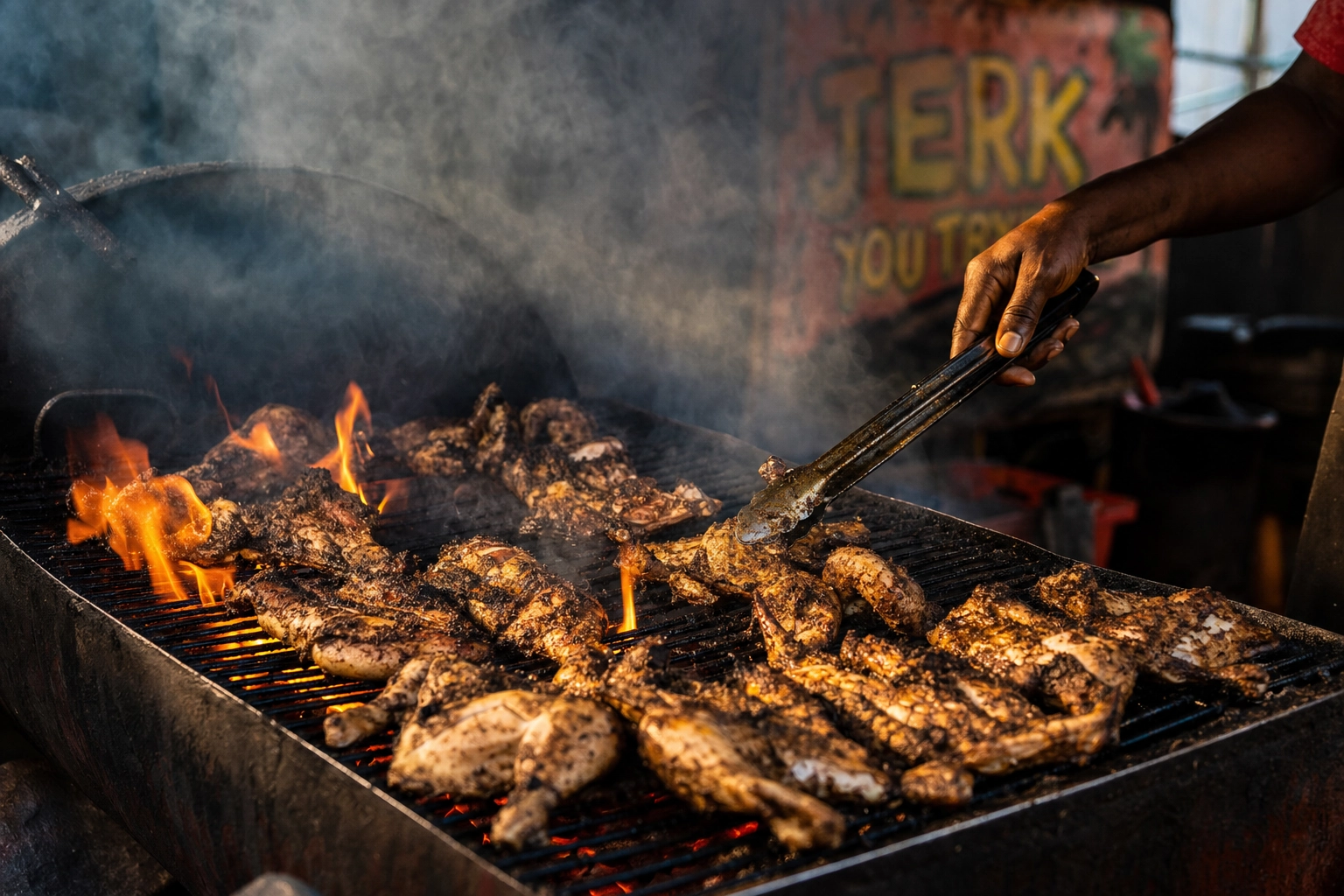 Jamaican jerk chicken searing over pimento-wood coals and flames on an oil-drum grill with billowing smoke
You don't need to photograph forty traditional Jamaican dishes to build a menu that sells. Nail these six and you've covered the full range of colors, textures, and cravings that define the cuisine — the shots that turn a plate into scroll-stopping Jamaican food pictures. Each has its own personality, and its own trap to avoid.
1. Jerk Chicken: The Mahogany-Char Hero Shot
Jerk is both a seasoning and a method: meat marinated in scotch bonnet, allspice (the dried berry of Jamaica's native pimento tree), thyme, scallion, garlic, and ginger, then grilled low and slow over pimento wood. What you're selling in a photo is that signature mahogany char — dark, crusty, lacquered edges with a whisper of smoke.
The mistake is letting "dark" slide into "black." You want to see the char: the crackle of the skin and the caramelized ridges, not a silhouette.
Light it from the side so those ridges catch a highlight, and brush a little reserved marinade or oil over the skin right before you shoot for a glossy sheen. Add a grilled scotch bonnet, a scatter of scallion, and a lime wedge for color, then catch a wisp of steam against the darker background. Nail it and you have your menu's anchor — the jerk chicken images customers screenshot and share.
2. Beef Patties: Flaky, Golden, and Steaming
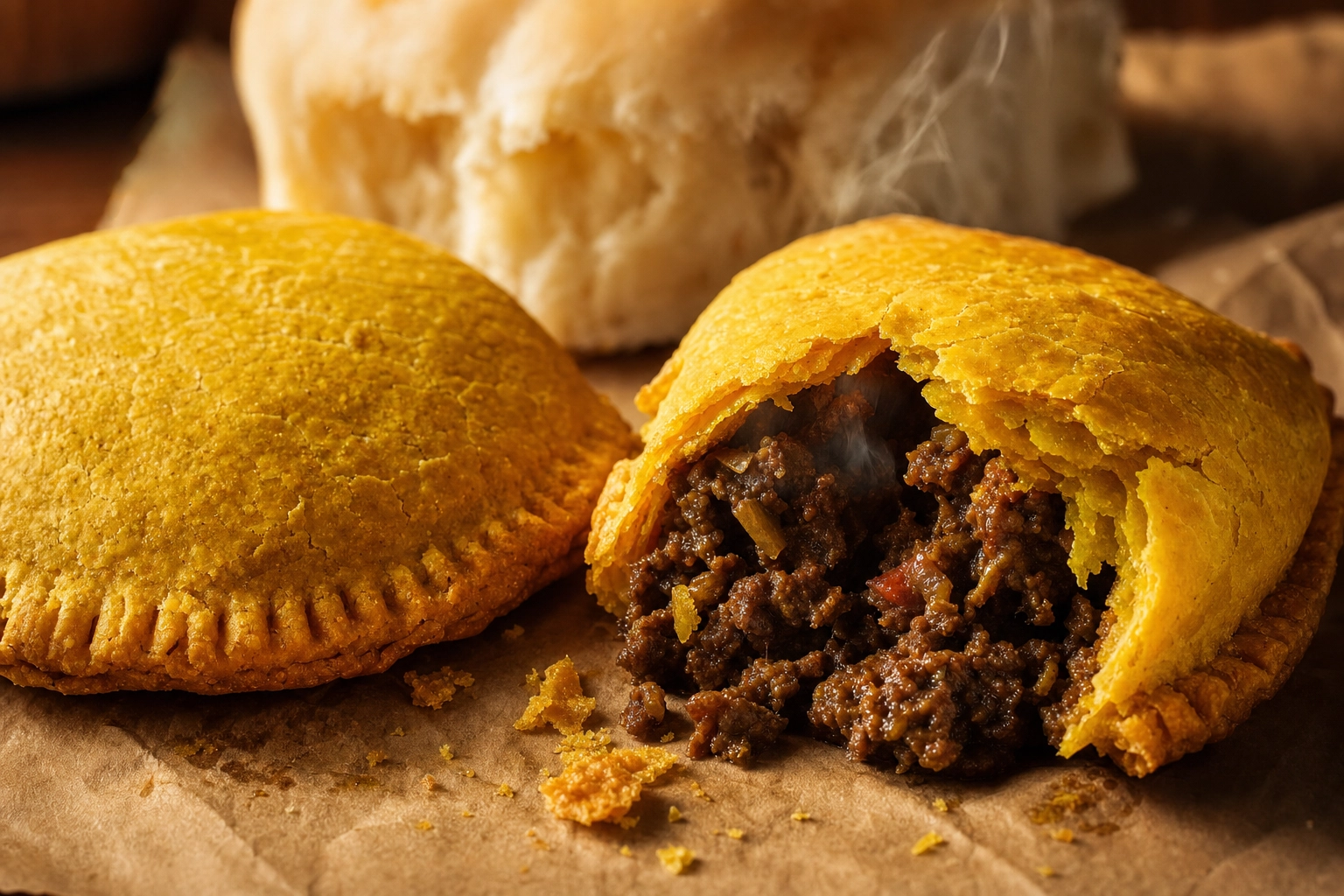 Jamaican beef patty broken open showing spiced filling and steam beside a whole flaky golden patty on brown paper
The Jamaican patty is a gift to food photography: that turmeric-yellow, flaky crust practically glows. The whole shot lives in the pastry.
Photograph one whole to show the crimped edge, then break a second open so the seasoned, peppery filling spills out with a curl of steam. That close-up cross-section is the image that sells.
Warm light suits patties — lean into cozy, golden tones, not cold shadows. Shoot on brown paper or beside coco bread, and move fast: flaky pastry looks best in the first minute or two, before it cools and the steam dies.
3. Rice and Peas: The Plate Anchor (and Why It Isn't Jollof)
Rice and peas is the foundation of the Jamaican plate — rice simmered in coconut milk with red kidney or gungo peas, thyme, scallion, and a whole scotch bonnet for aroma. Quick note that saves a common mix-up: rice and peas is not jollof rice. Jollof — the tomato-and-pepper rice from Nigerian and Ghanaian kitchens — is a different dish with a different color. If you're browsing jollof rice pictures for inspiration but cooking Jamaican, you're looking at the wrong plate.
On camera, rice turns flat and gluey in a hurry. Rake the grains gently with a fork so they read as distinct and fluffy, tuck in a sprig of thyme for a green accent, and shoot at a 45-degree angle to show the texture and the height of the mound. As the bed under your jerk or oxtail, style it to lift the hero, not steal the scene.
4. Oxtail: Glossy Gravy and Deep Browns
Oxtail is the boss level of Caribbean food photography — the ultimate brown-on-brown challenge: dark, tender meat braised for hours in an even darker gravy, with pale butter beans hiding in the sauce. Shot carelessly, it looks like a bowl of mud.
The secret is gloss and separation (more on that next): light the bowl from the side so the gravy glistens, then add bright markers — scallion, a thyme sprig, a butter bean nudged to the surface — so the eye can find the food. Serve it in a dark bowl and let the sheen do the talking.
5. Festival and Fried Plantain: The Bright Sides
Festival — slightly sweet, golden fried cornmeal dumplings — and caramelized fried plantain are the warm, high-color sides that rescue a dark plate. In food photography, they're the sunshine that balances the drama of jerk and oxtail.
Show the caramelization: the crisp golden edges of the plantain and the pillowy interior of a festival. Cluster several together rather than lining them up — a generous pile reads as "you get a lot" and breaks up the brown with pops of gold.
6. Rum Punch: The Tropical Pour
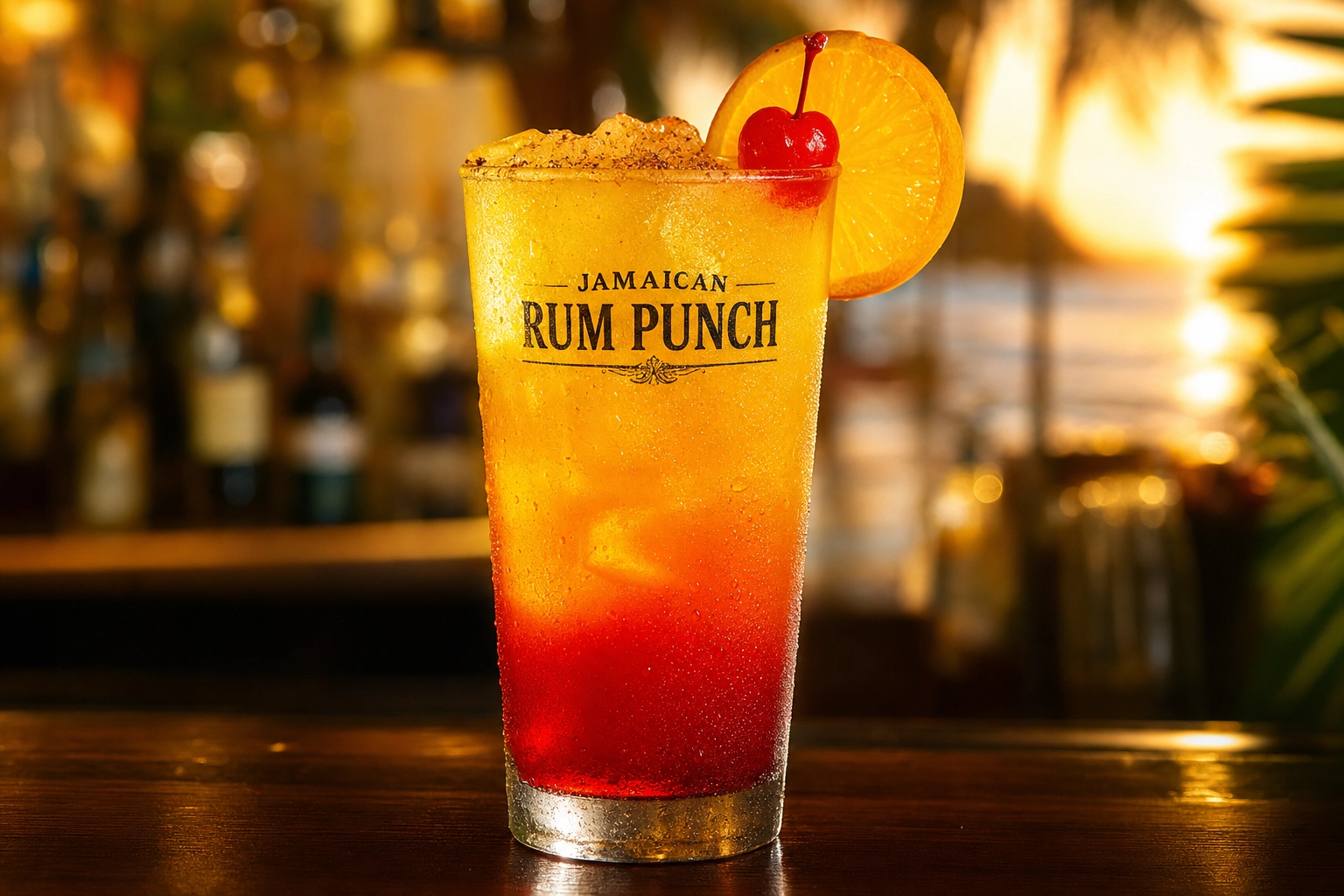 Layered red-orange Jamaican rum punch glowing backlit with orange wheel, cherry and grated nutmeg on a dark bar
Every Jamaican menu deserves one shot that isn't a plate, and rum punch is it. Layered from deep red at the bottom to sunset orange and yellow up top, garnished with fresh fruit and grated nutmeg, it's pure island color.
Backlight the glass so the drink glows and the layers separate — light passing through liquid is one of the most appetizing effects in food photography. Catch the condensation for freshness and shoot straight-on to celebrate the height. A tall drink adds variety to a menu of flat plates, and it's an easy upsell for bar and lounge menus.
How to Capture Char and Dark Sauces
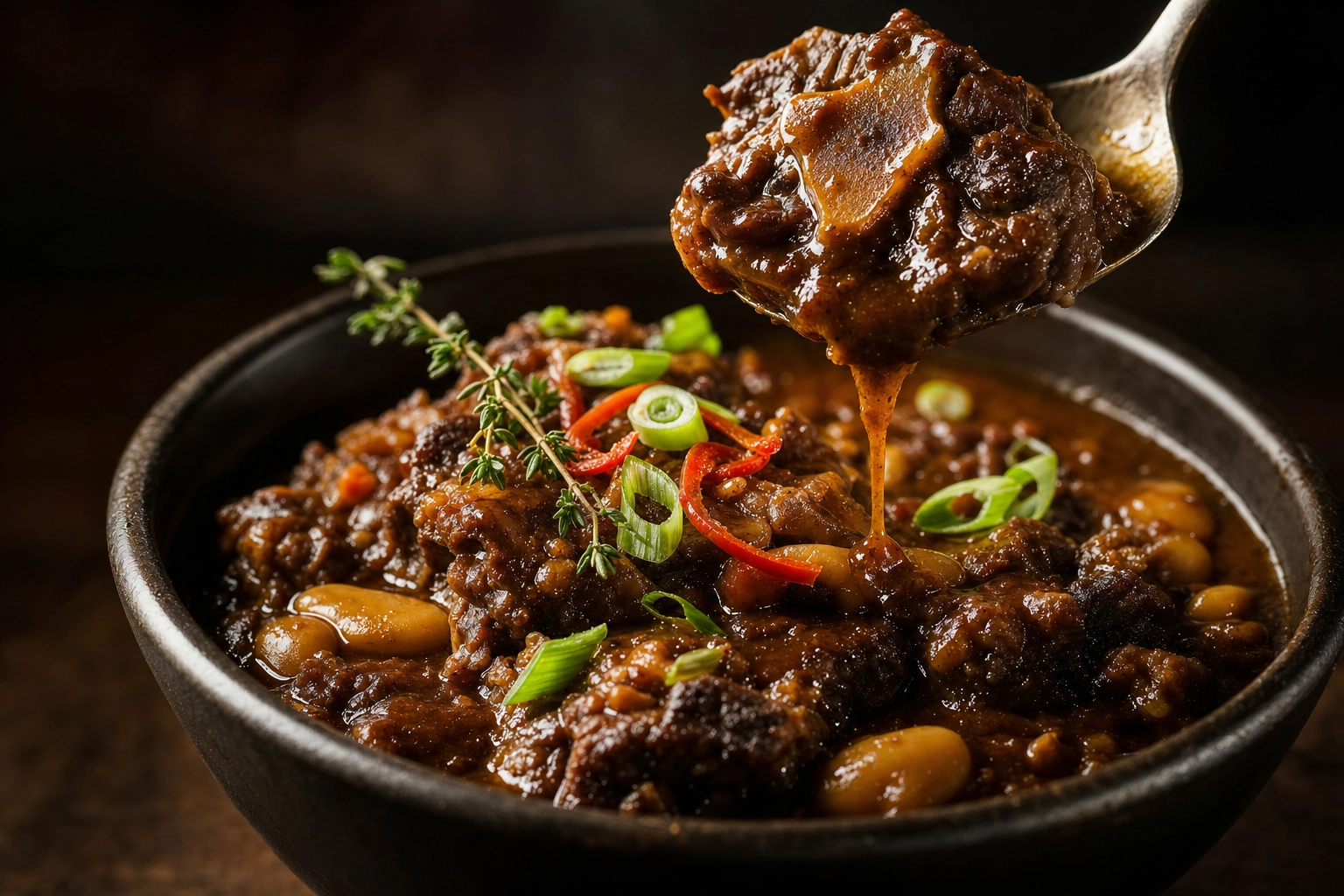 Glossy Jamaican oxtail with rich mahogany gravy and butter beans, side-lit spoon drizzle over a dark bowl
Every dish above shares one challenge — dark food, dark sauce, low contrast. Master these food photography skills and jerk, oxtail, brown stew, and curry will all photograph like a dream. They're the same fundamentals behind great BBQ and smoked-meat photography and craveable chicken photography: control the light, force the contrast, add a highlight.
Light It From the Side or Back
Put your main light — a window, a doorway, a softbox — to the side of the dish or behind it, never blasting straight down from the front. Front light flattens char into a shapeless dark patch and blows out the gloss.
Side light rakes across the surface so your camera reads texture: the crackle of jerk skin, the pull of shredded oxtail, the ridges of grill marks. As the old rule of meat photography goes, meat with no shine looks boring — so angle your light to leave a clear highlight across the surface.
Backlighting does double duty, catching steam and smoke to say "fresh off the grill." To deepen the mood, use a dark card as negative fill on the shadow side; to lift the shadows instead, bounce a white reflector back toward the dish.
Add Gloss Before You Shoot
Shine sells, and it's the first thing a food stylist reaches for. A glossy surface reads as fresh, juicy, and hot; a matte one reads as dry and cold.
Keep a small brush and a little neutral oil at your shooting spot. Right before you press the shutter, brush oil, melted butter, or reserved jerk marinade over the chicken skin, or spoon fresh gravy over the oxtail to revive its sheen.
Then shoot immediately — hot food photographs best in its first couple of minutes, before the fat congeals and the colors dull.
Play Dark Against Bright
Dark surfaces are your friend. A slab of charred wood, dark slate, or a black cast-iron skillet deepens the mood and hides the messy background of a working kitchen.
But dark food on a dark plate on a dark surface needs rescuing, and that's the job of a few deliberate color pops: a lime wedge, a scatter of scallion, a red scotch bonnet, a sprig of thyme, a coin of gold plantain. This contrast is the heart of dark food photography — keep props minimal and authentically Caribbean, and let the food star.
Dial In Your Camera or Phone
You don't need a pro camera, but a few settings help. Shoot at an aperture around f/5 to f/7 so the whole dish stays sharp — for menu work you want deep depth of field, not a blurry, thrown-out background.
Because dark food photography uses less light, a tripod earns its keep: mount your camera on it and you can hold the ISO low and the shutter speed slow with zero blur. Set your white balance cooler to kill that orange tungsten cast. Here's a quick settings checklist for shooting dark food:
- Camera or phone on a tripod to stay sharp in low light.
- Aperture f/5–f/7 so the whole dish holds focus.
- Low ISO (100–400) to keep grain out of the shadows.
- Manual white balance to cancel the orange or green cast from indoor bulbs.
- Locked focus and exposure on the food — use RAW or Pro mode if your phone has it.
Go Easy in Editing
A light edit finishes the shot; a heavy one ruins it. In editing, nudge exposure and contrast, lift the shadows just enough to reveal the char, and warm the color a touch — then stop.
Oversaturated, over-sharpened food looks fake, and fake is the fastest way to lose a hungry customer's trust. If editing isn't your thing, that's exactly where AI takes over (more on that below).
A Simple Phone Setup for a Busy Jerk Spot
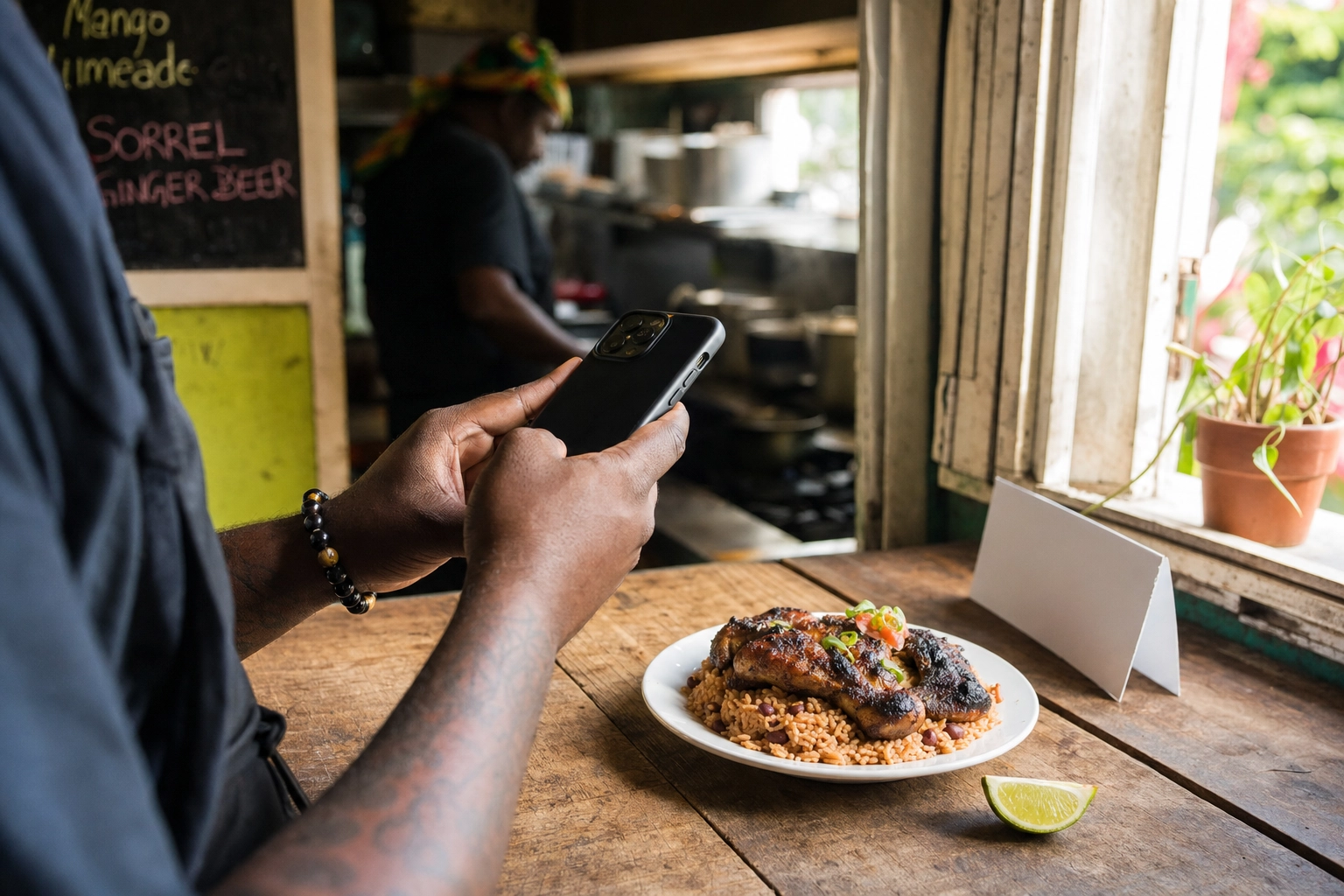 Cook photographing a plate of jerk chicken and rice with a smartphone by a sunlit window in a Caribbean restaurant
Let's be realistic. You're running a line, tickets are stacking up, and you don't have time to build a studio between orders. Great food photography here starts with one thing: light. This setup takes two minutes and works with the phone in your apron.
Find Your Light
The best free light in any restaurant is daylight from a window or open door. Carry the plate to it and switch off the overhead fluorescents — mixing daylight with tungsten is what creates those ugly casts. Soft, indirect natural light from the side is all you need.
Pick Your Angle by Dish
Use a 45-degree angle for piled plates like jerk over rice and peas — it's how we naturally see food set in front of us. Shoot straight-on to show height, like a stacked patty or a tall rum punch. Go directly overhead — a flat lay — for spreads and combo platters.
A cheap phone tripod keeps the camera steady, frees both hands for styling, and locks your angle and composition so every dish matches.
Style in Ten Seconds
Wipe the plate rim clean and give your phone lens a quick wipe too — smudges scream "amateur." Put the best-looking piece of chicken front and center. Add garnish last so it looks fresh, and shoot the moment the plate is built, while the steam is still rising.
If you run one of the food trucks and jerk stands that live and die by their photos — or you're constantly refreshing delivery app photos for a full menu — set up one repeatable corner by the window and these tips will save you hours every week.
From Phone Snap to Menu-Ready in About 2 Minutes
Even with every tip above, styling and lighting forty menu items — and re-shooting them every menu change — is a second job you don't have time for. That's the gap FoodShot AI fills.
FoodShot is an AI food photo editor built for food businesses. Snap a normal photo on your phone, pick a style, and get back a studio-quality, menu-ready image in about 2 minutes — for roughly 95% less than the $700–$1,400 a professional food photographer charges per session.
It works with the real plate you cooked; it enhances your actual jerk chicken rather than inventing a fake one, which keeps your AI food photography honest to what customers receive.
Features Built for Jamaican Menus
- 200+ styles across delivery, menu, and fine-dining looks — including the moody, dark backgrounds that flatter char and gravy.
- Builder Mode combines a background, surface, and plate — oxtail on charred wood, patty on brown paper, every time.
- My Styles lets you upload a reference photo — even one you match a look from Pinterest — so every dish shares one signature look.
- Before/after results, 2K resolution for print menus, and export sizes that fit Uber Eats and DoorDash out of the box.
Consistency is the real prize. When your jerk chicken, oxtail, rice and peas, and rum punch all share the same lighting and mood, your Jamaican food images look like a brand instead of a scrapbook — the kind of feed that wins content creators followers and restaurants orders.
Start with ready-made Jamaican food photography styles tuned for these dishes, and browse more food photography by cuisine if you serve a wider Caribbean menu.
Frequently Asked Questions
How do I photograph jerk chicken so it doesn't look burnt?
Light it from the side rather than the front so the char reads as texture instead of a black blob, and brush a little oil or reserved marinade on the skin for a glossy sheen.
Add a lime wedge and some scallion for contrast, catch a bit of steam against a dark background, and shoot while it's hot. The whole trick to jerk chicken food photography is showing the mahogany color and crackle of the crust, not burying it in shadow.
Why do my Jamaican food pictures look muddy or orange?
Almost always, it's the lighting. Overhead fluorescent bulbs add a green cast and warm tungsten bulbs add an orange one, and both turn dark food to mud.
Turn off the overhead lights, move the plate to a window for soft daylight, and set your camera or phone's white balance cooler to neutralize the color. That one change fixes most muddy, orange food photos instantly.
What's the best background for Caribbean food photography?
Dark, warm, and textured. Charred or weathered wood, dark slate, cast iron, a banana leaf, or the brown paper and foil you already have all work beautifully.
They deepen the mood, make dark food look rich, and let bright garnishes pop. Avoid shiny white plates and busy patterns, which flatten the drama and compete with the food.
What's the difference between rice and peas and jollof rice?
They're two different dishes from two different regions. Jamaican rice and peas is rice cooked in coconut milk with red kidney or gungo peas, thyme, and scotch bonnet, giving it an earthy, savory-sweet flavor.
Jollof is a West African dish — common in Nigeria and Ghana — built on a tomato-and-pepper base, which gives it a reddish-orange color. If you're photographing a Jamaican plate, rice and peas is the one you want.
How can a small Caribbean restaurant get professional food photos on a budget?
Start with free daylight and the six-shot list above — a phone, a window, and a $15 tripod can cover a whole menu.
When you need polish and consistency without hiring a photographer, an AI food photo editor like FoodShot turns your phone snaps into studio-quality images for a few dollars a month, versus the $700–$1,400 a pro charges per shoot.
Which Jamaican dishes should I photograph first for my menu?
Lead with your best-sellers and most photogenic plates: jerk chicken, oxtail, and a beef patty almost always earn their spot.
Follow with rice and peas as the plate anchor, a bright side like festival or fried plantain, and a rum punch for color. Those six cover the full range of textures and cravings and give any listing an instant lift.
Make Your Jamaican Menu Camera-Ready
Jamaican food already has everything a great photo needs — color, smoke, char, and soul. Your only job is to light it so the camera can see what your customers already taste.
Master the six shots, control your contrast, and lean on these tips — a window, a dark surface, a tripod — the next time you plate up. And when you want menu-ready food photography in minutes instead of hours, let FoodShot's AI food photo editor do the heavy lifting on your next batch of Jamaican food photography.