
Soul Food Photography: Fried Chicken to Cornbread
 Ali Tanis24 min read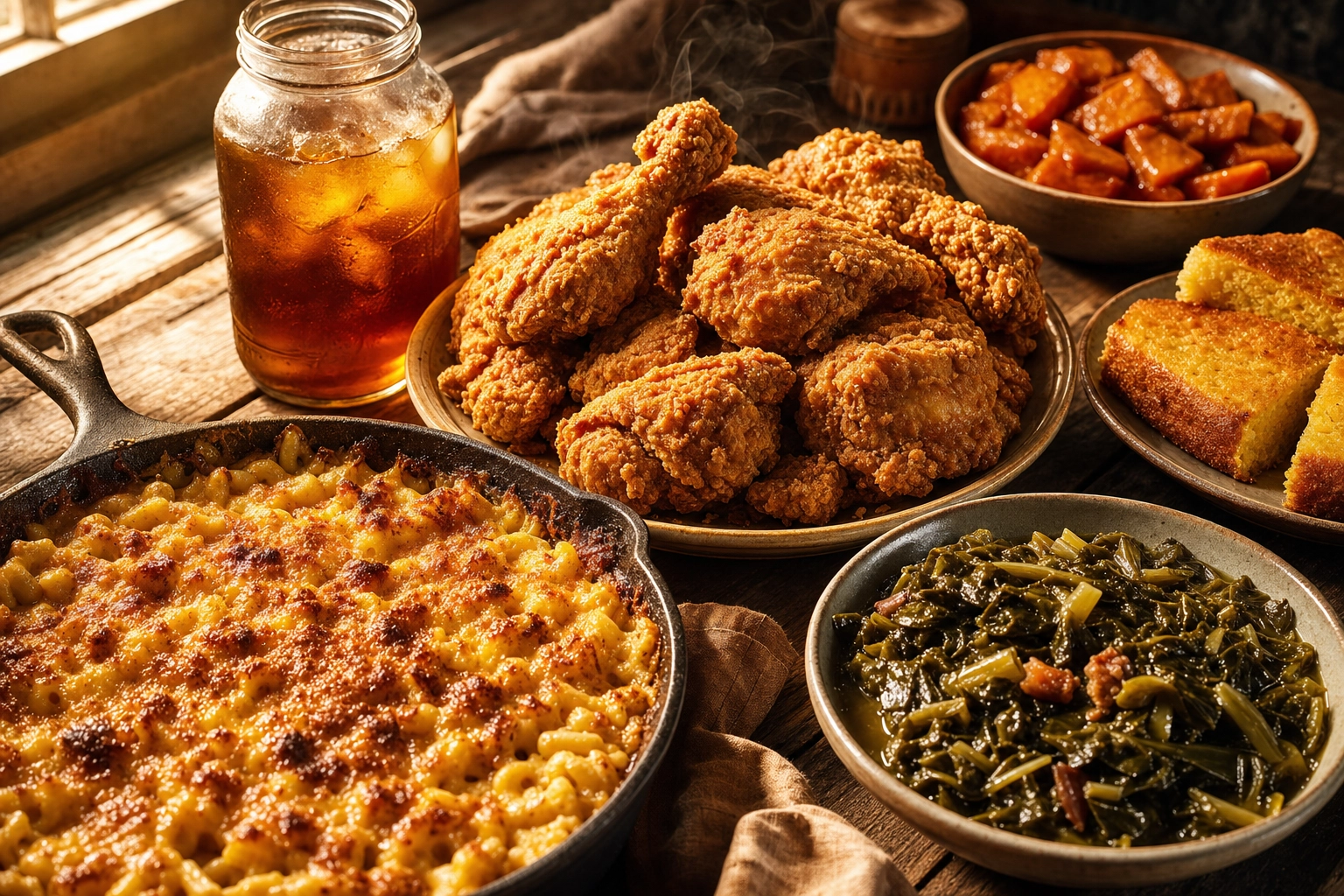
Search "soul food pictures" and you'll scroll past a wall of stock photos — generic fried chicken on white plates, anonymous mac and cheese, watermarked cobbler that has nothing to do with your kitchen. None of it sells your Sunday dinner plate. None of it makes the person scrolling a delivery app stop on your spot.
This guide is about the other kind of soul food picture: the one of the soul food dinner you actually cook. Whether you run a soul food restaurant, a gospel-brunch room, a Southern soul food kitchen, a soul food truck, or you cater church anniversaries and family reunions, the photo is the first bite. It has to deliver the crunch of the crust and the steam off the greens before anyone tastes a thing.
Here's the catch: soul food is one of the hardest cuisines on earth to photograph. This Southern comfort food is warm, brown, and gloriously messy in person — and a phone camera turns all that soul into a flat, greasy-looking smudge. This is a practical, restaurant-tested playbook for fixing that: the six shots every soul food menu needs, how to light a golden crust so the texture pops, how to keep dark greens from going muddy, and a 2-minute shortcut for the nights you're too slammed to style a plate.
Quick Summary: Great soul food pictures come down to warmth, texture, and abundance. Light fried chicken and cornbread from the side so raking light catches every craggy ridge, nudge your white balance warm so the crust glows golden (not greasy), and fight the brown-on-brown with color — the green of collards, the red of hot sauce, a melting pat of butter. Every soul food dinner menu needs six core shots: the fried chicken hero, the Sunday-dinner plate, the mac and cheese pull, cornbread and biscuits, the greens and sides, and peach cobbler. When the dinner rush leaves no time to shoot, FoodShot AI turns a real phone photo of your soul food into a menu-ready image in about 2 minutes.
Why Soul Food Pictures Are So Hard to Get Right
Soul food behaves like an easy subject and then betrays you. A loaded soul food plate looks incredible on the dinner table — and the camera sees something completely different.
It's brown on brown on brown. Fried chicken, baked mac, cornbread, smothered pork chops, candied yams — a Sunday dinner plate that's deeply satisfying in person reads to a sensor as one monochrome heap of tan and amber. Without contrast and color, the eye has nowhere to land.
Fluorescent light is the enemy. The overhead lights in most kitchens and dining rooms flatten everything. That craggy, shatter-crisp fried chicken crust you worked to build turns smooth and plasticky. The deep pot-likker greens collapse into a muddy near-black. The caramelized marshmallow on the candied yams loses its glow.
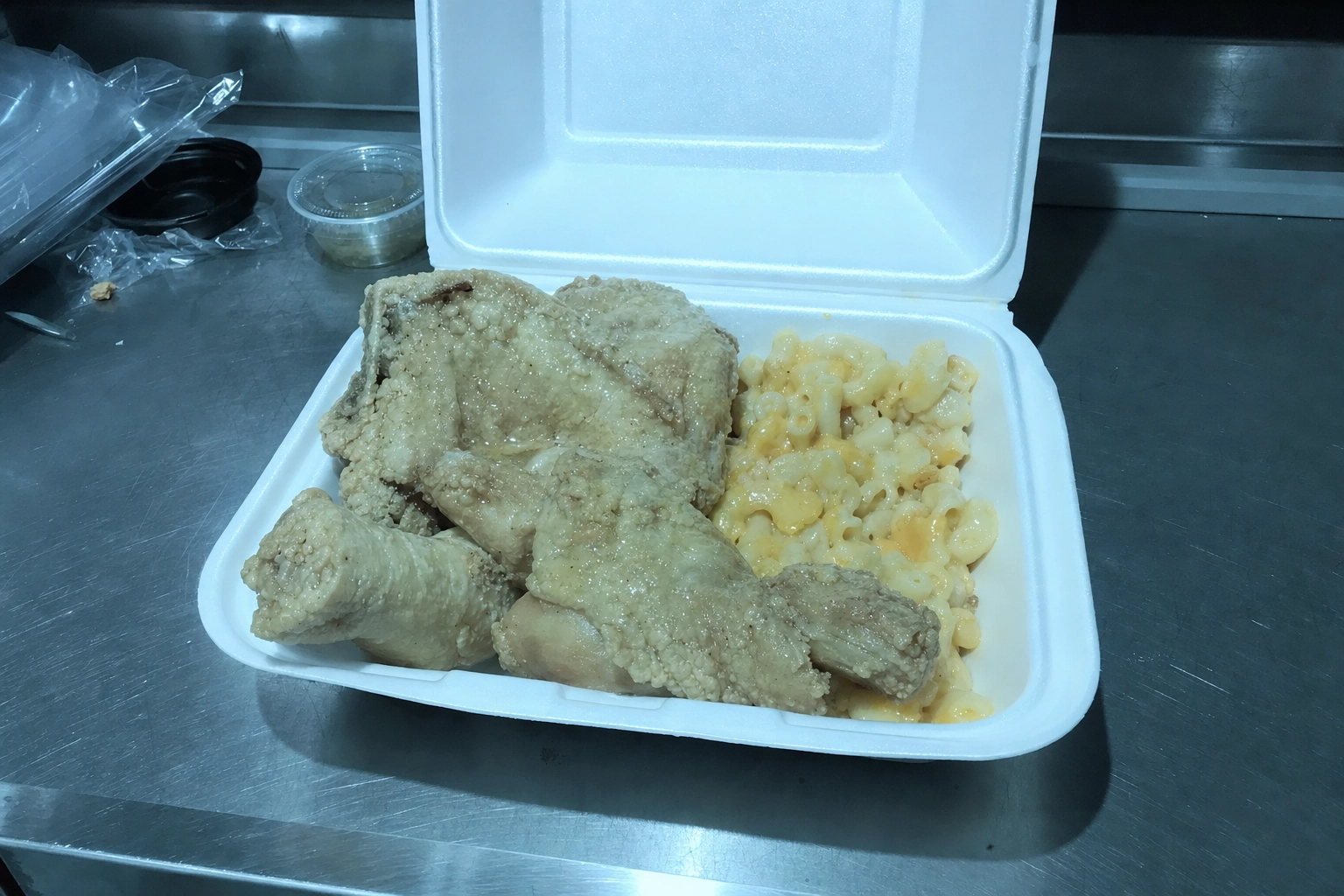 Pale flat fried chicken and mac in a styrofoam takeout box under harsh fluorescent light, a bad soul food photo
Texture is the entire point — and the hardest thing to capture. Crunch is a feeling. The whole promise of this Southern soul food is the crackle of the crust, the crispy top on the mac, the bubble of the cobbler. You have to make people feel that through a screen, and flat light erases it.
You're racing the clock. Hot soul food cools fast. As it does, the skin tightens and dulls, the sheen fades, the steam disappears, and the plate slumps. Every technique in this guide is built to win that race.
And it's worth winning. Restaurants with professional menu photos see roughly 25–30% more orders on delivery apps, and a Google-commissioned survey found that diners rate food photos as 1.44x more important than the written description when deciding what to order. On a delivery thumbnail, your fried chicken competes against every other fried chicken in town at the size of a postage stamp. The soul food picture is the menu.
One more thing worth saying out loud. Soul food isn't generic comfort food. It's the cuisine of African Americans — born in the home kitchens of the rural South and carried north by the roughly six million people of the Great Migration, for whom this Southern cooking became, as historians put it, memory made edible. The Smithsonian's National Museum of African American History and Culture has documented how that migration reshaped the way America eats. When you photograph a soul food dinner of fried chicken, greens, and cornbread, you're documenting a tradition with real heritage. It deserves the same care a restaurant gives a fine-dining tasting menu — not a quick, greasy snapshot in a foam box.
The Soul Food Look: Warm, Hearty, and Abundant
Before you shoot a single plate, get clear on the look you're after. Great soul food images share three qualities: they're warm, they're textured, and they're abundant.
Warm means golden. The color temperature of a soul food photo should lean toward honey and amber, never cold blue — think late-afternoon window light, the kind that makes a cornbread crust glow. Hearty means you can feel the weight of the meal: the heft of a drumstick, the pull of melted cheese, the gloss of gravy. Abundant means plenty — a piled plate, an overflowing soul food platter, a table set for Sunday dinner after church. These are meals built for sharing; scarcity looks sad, but generosity looks like home. A great soul food meal photographs like an open invitation.
Within that, there are two register ideas worth knowing. The bright register — clean light wood, white marble, airy daylight — is the modern, editorial look that contemporary Southern soul food rooms and gospel-brunch spots use to feel fresh and current. The dark, rustic register — weathered wood, cast iron, dramatic shadow — pushes a pile of fried chicken or a smothered-meat platter into moody, magazine-worthy territory. Most soul food menus use both: bright for the brunch and the sides, dark and dramatic for the hero shots.
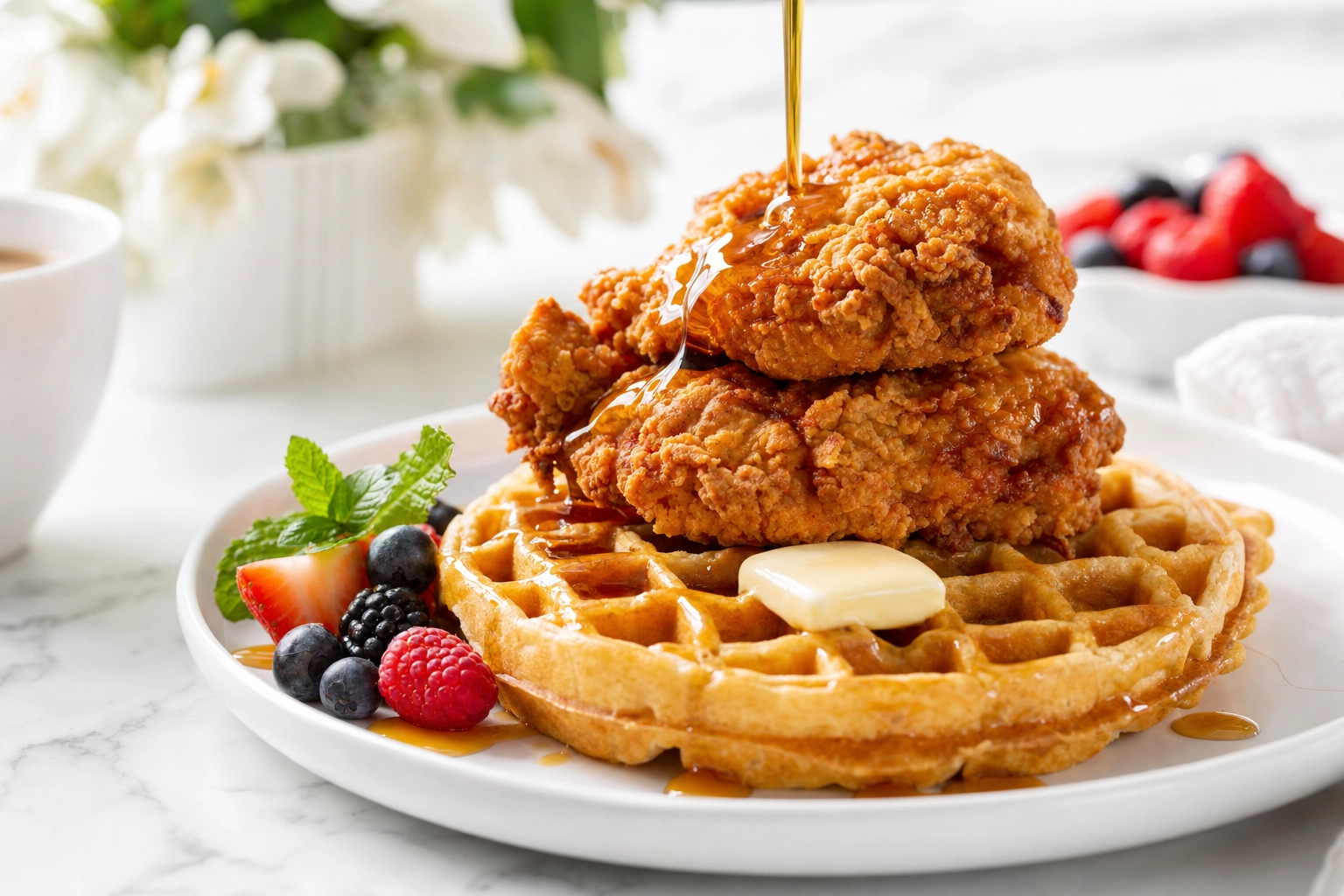 Southern fried chicken and waffles with maple syrup pouring over in bright morning light for a gospel brunch menu
Chicken and waffles is the dish that lives right on that bright-register line — a gospel-brunch staple that wants clean marble, fresh fruit, and a glossy syrup pour shot in soft morning light. (For more on syrup pours and brunch plating, our breakfast and brunch photography guide goes deep.) If you want those registers applied dish by dish — buttermilk fried chicken, smothered meats, collards, candied yams, cobbler — our soul food photography page breaks down the exact style for each. And because warmth lives and dies on light, it's worth reading our full food photography lighting guide alongside this one.
The 6 Soul Food Shots Every Menu Needs
Build out these six soul food photos for your top sellers and you've covered roughly 95% of everything you'll ever need: the menu board, delivery-app thumbnails, your Instagram grid, the website hero, and the deck you send when someone asks you to cater a dinner party. Think of them as your six core plating and shot ideas — master these soul food plates and the rest of your menu falls into place.
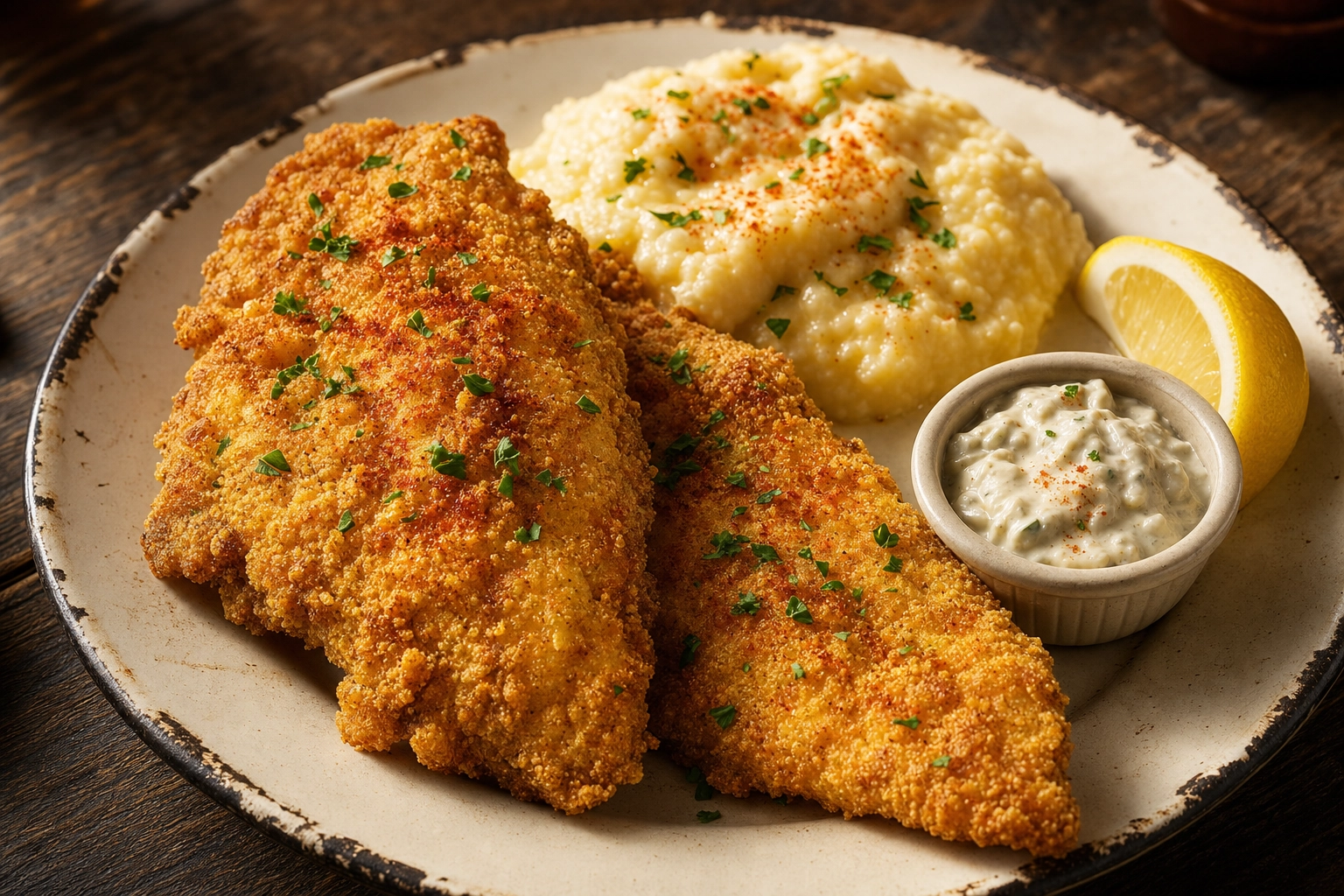 Golden cornmeal-crusted fried catfish with creamy grits, lemon and tartar sauce on a rustic plate in warm side light
Many soul food kitchens add a fried catfish or seafood plate to the lineup, and the same rules apply: rake the light across the cornmeal crust, add a lemon wedge and a dusting of paprika for color, and let the grits glow. Whatever you call your house Southern soul food, these six shot ideas are the template for every meal you plate.
1. The Fried Chicken Crispy-Crust Hero
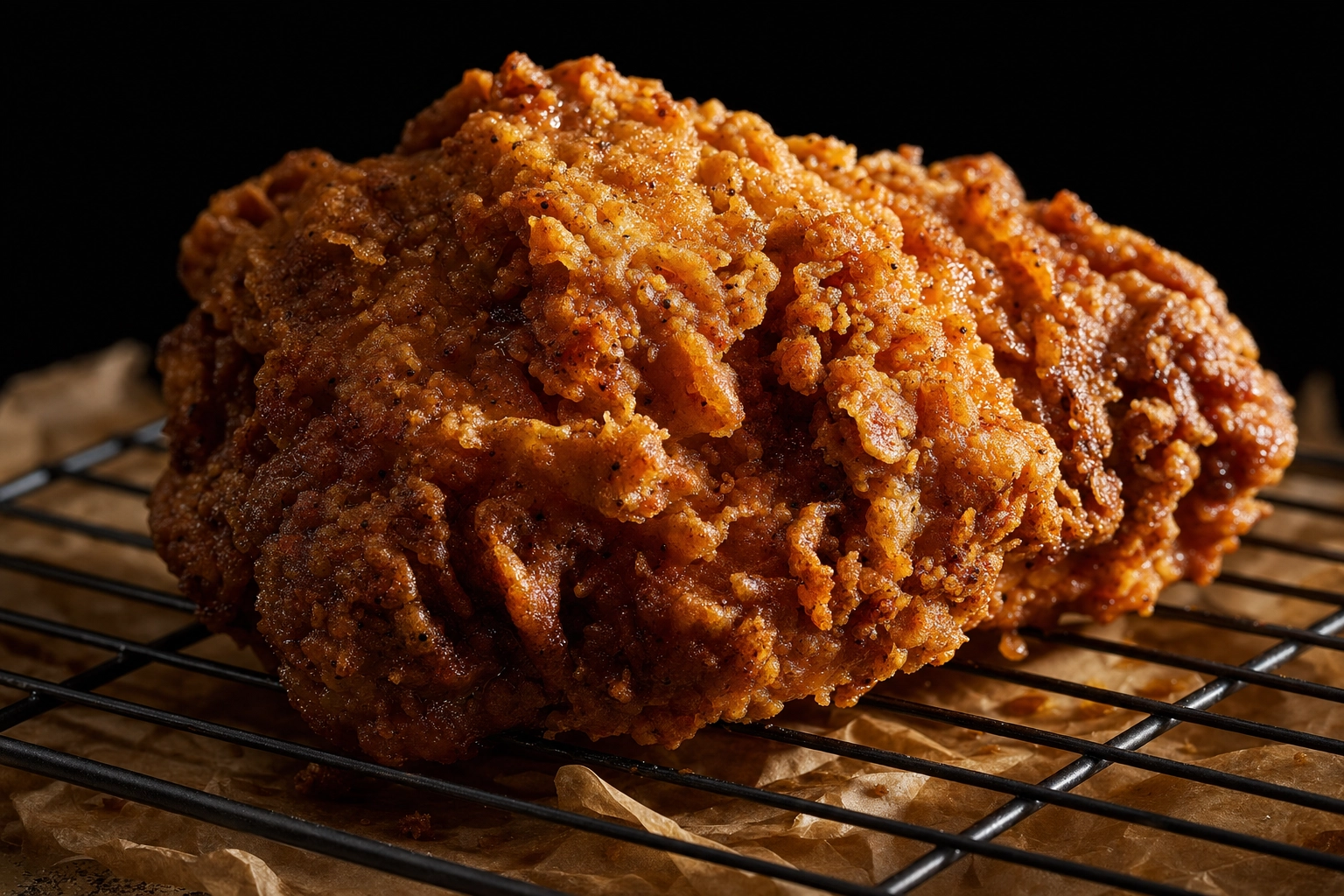 Macro close-up of craggy golden buttermilk fried chicken crust lit by raking side light revealing crispy texture
Fried chicken is the face of soul food, so this is the shot that has to land. The goal is to make the crust look audible — like you can hear the crunch.
Pile the pieces high. A lonely drumstick looks like a sample; an overflowing heap of thighs, wings, and drumsticks looks like a feast. As you stack, rotate each piece so its craggiest, most textured face turns toward the camera and toward your light. Shoot it on a wire rack, a metal tray, or crumpled parchment for that just-out-of-the-fryer feel.
The single most important move: keep your light low and to the side. When light skims across the crust at a shallow angle, every peak and crater throws a tiny shadow — and those micro-shadows are what make the texture readable on screen. Brush the pieces with a whisper of neutral oil right before you shoot so they catch a soft highlight instead of looking dry and matte. If you serve Nashville hot, lean into it: that fiery red-orange cayenne oil is a gift, because it breaks the brown monochrome with real color.
Fried chicken is deep enough to be its own discipline — our fried chicken photography page and the full chicken photography playbook go further on crust, sauce, and sandwich cross-sections.
2. The Soul Food Plate (The Sunday Dinner Spread)
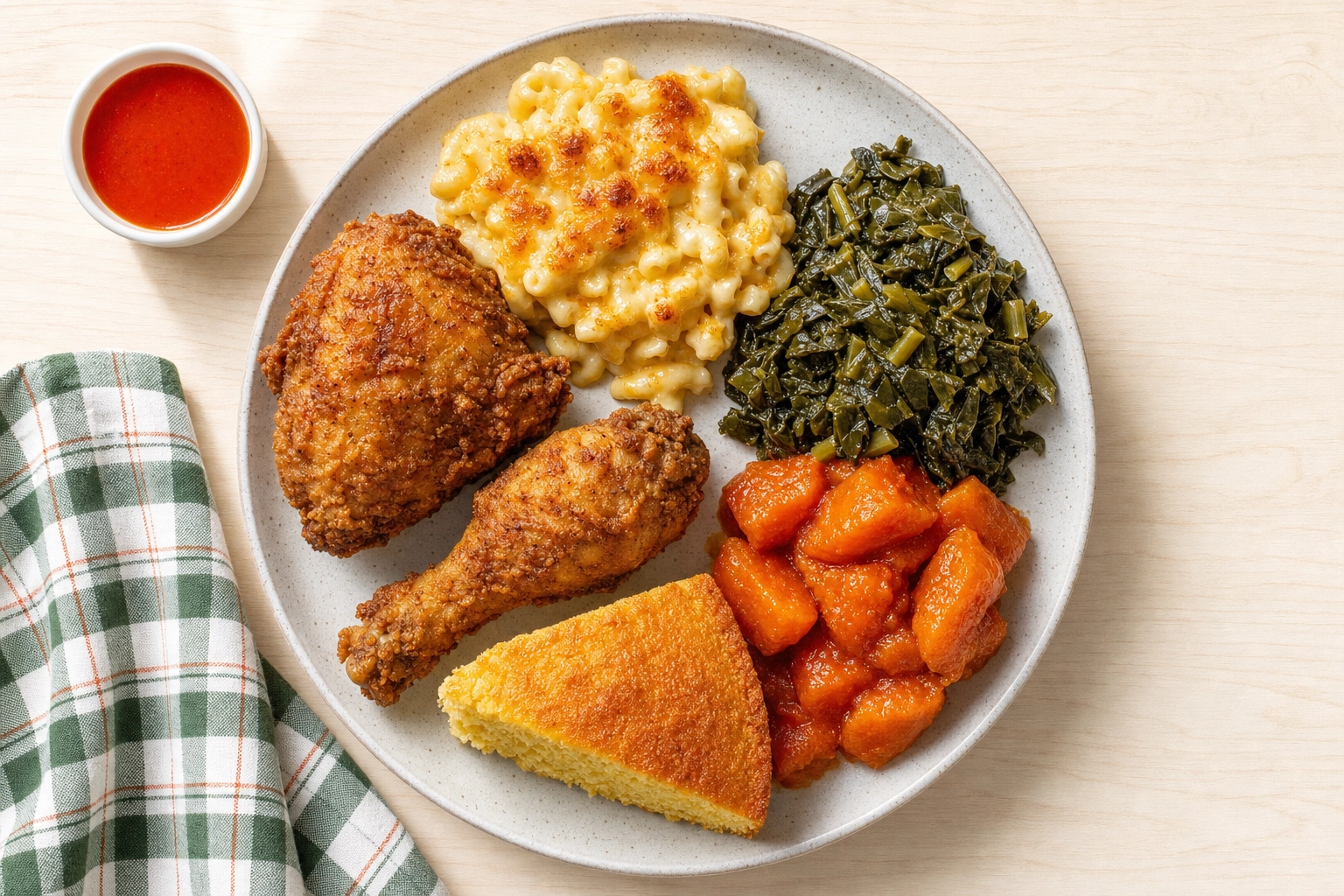 Overhead flat-lay of a soul food combo plate with fried chicken, mac and cheese, collard greens, yams and cornbread
If the fried chicken hero sells one dish, the soul food plate sells the whole experience. This is the classic Sunday dinner plate: a piece or two of fried chicken, two or three sides, and a wedge of cornbread, all crowded onto one combo plate the way it's actually served.
Shoot it from directly overhead (flat-lay) for that "look at this haul" abundance, where the eye takes in every element at once. Or drop to a low three-quarter angle when you want depth, height, and a curl of steam. Either way, the secret weapon is color contrast: let the deep green of the collards, the red of a hot-sauce bottle, the gold of the cornbread, and the orange of candied yams break up all that brown. A packed soul food platter on a long table — multiple platters, mason jars of sweet tea — is the dinner-spread shot caterers live on, whether it's a Sunday-dinner rush or a catered dinner party. It says come hungry.
3. The Mac & Cheese Pull
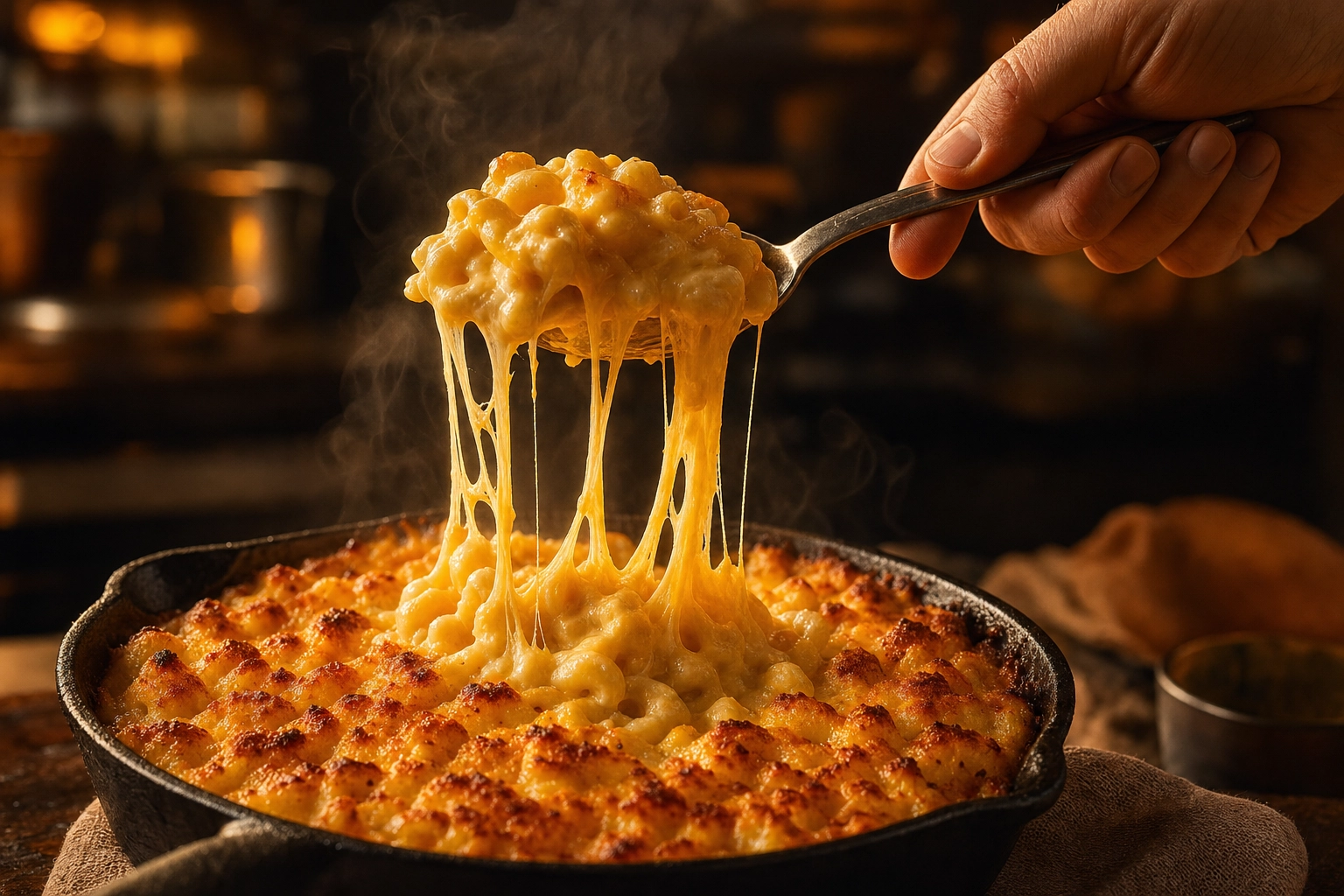 Hand lifting a spoon from baked mac and cheese in a cast-iron skillet creating a stretchy melted cheese pull
Baked mac and cheese — the real kind, with a crispy, blistered golden top — is a soul food dinner signature, and it has a built-in money shot: the pull. Sink a spoon or fork in and lift slowly so a strand of melted cheese stretches up and catches the light. That stretch is irresistible; it's the mac-and-cheese equivalent of a pizza cheese pull.
Shoot the crispy baked crust with raking side light so the golden ridges and browned edges stand out. A cast-iron skillet or a well-worn baking dish sells the homemade story better than a clean white bowl. If it's straight out of the oven, grab the steam while you can — it vanishes in seconds.
4. Cornbread & Buttermilk Biscuits
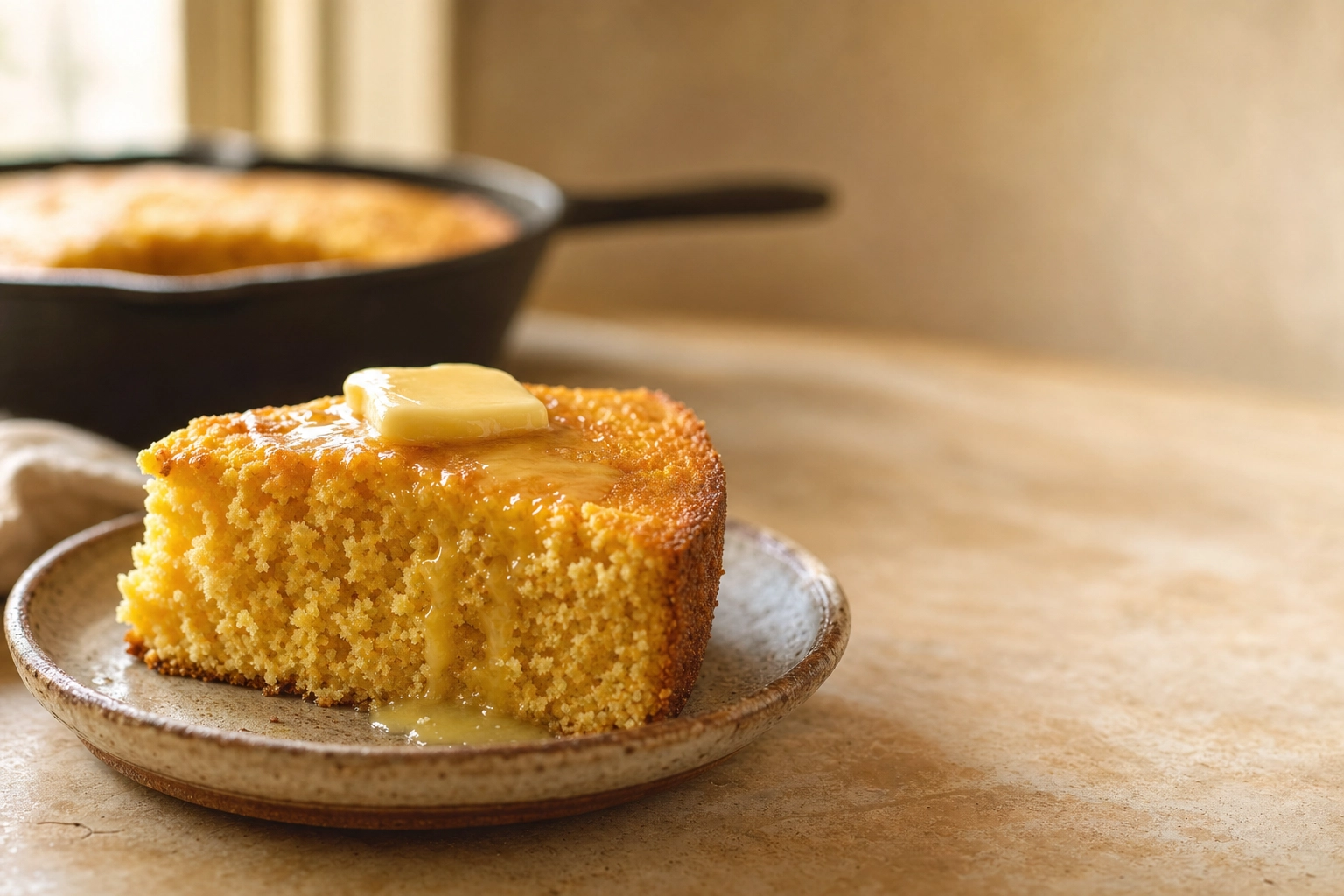 Eye-level close-up of a golden cornbread wedge with a pat of butter melting into the warm crumb in soft window light
The other half of this article's title, and a shot people scroll right past when it's done lazily. The fix is texture plus a single, perfect detail.
Shoot a cast-iron cornbread wedge or a stack of buttermilk biscuits at eye level so you can see the tender, craggy crumb and the crisp browned edge where the batter met the hot skillet. Then add the killer detail: a pat of butter melting into the warm crumb. That glossy, half-melted butter does two jobs at once — it adds a sheen that reads as warmth, and it silently tells the viewer the bread is fresh and hot. For more on capturing crumb, steam, and golden crust on baked goods, our baking photography guide goes deep.
5. Collard Greens & the Sides
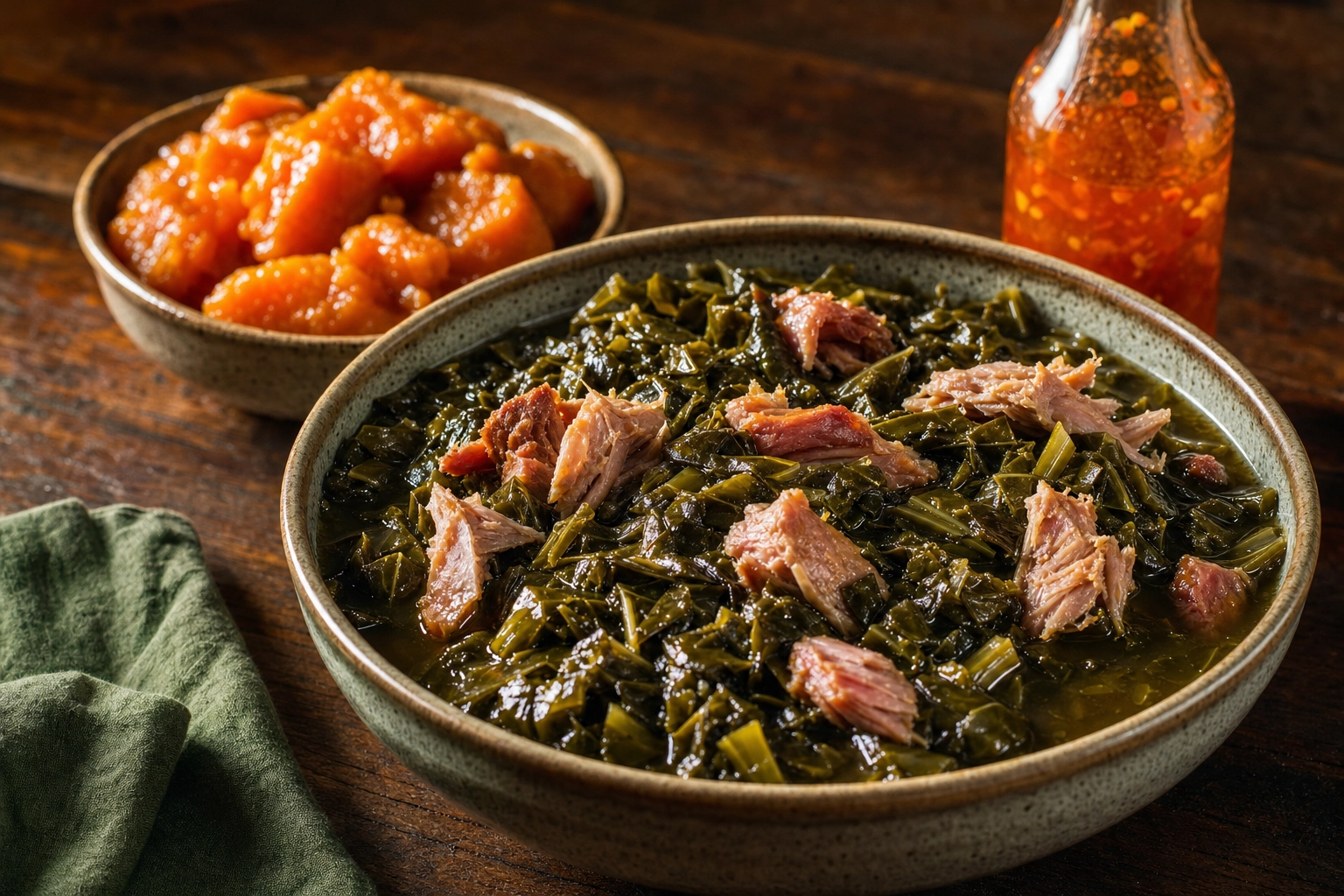 Bowl of glossy collard greens with pot likker and smoked turkey beside candied yams and hot-pepper vinegar
Here's the danger zone. Dark, slow-cooked collard greens are the hardest thing on the whole soul food dinner to photograph, because to a camera they collapse into a muddy, lifeless near-black.
The rescue is light and gloss. Catch the pot likker — that pool of smoky cooking liquor at the bottom of the bowl. It's reflective, so it bounces light back and gives the greens life and depth. Pull a few chunks of smoked turkey or ham hock up to the surface for texture, light the bowl from the side with a white card filling the shadows so it doesn't sink to black, and stand a bottle of hot-pepper vinegar nearby for a hit of color.
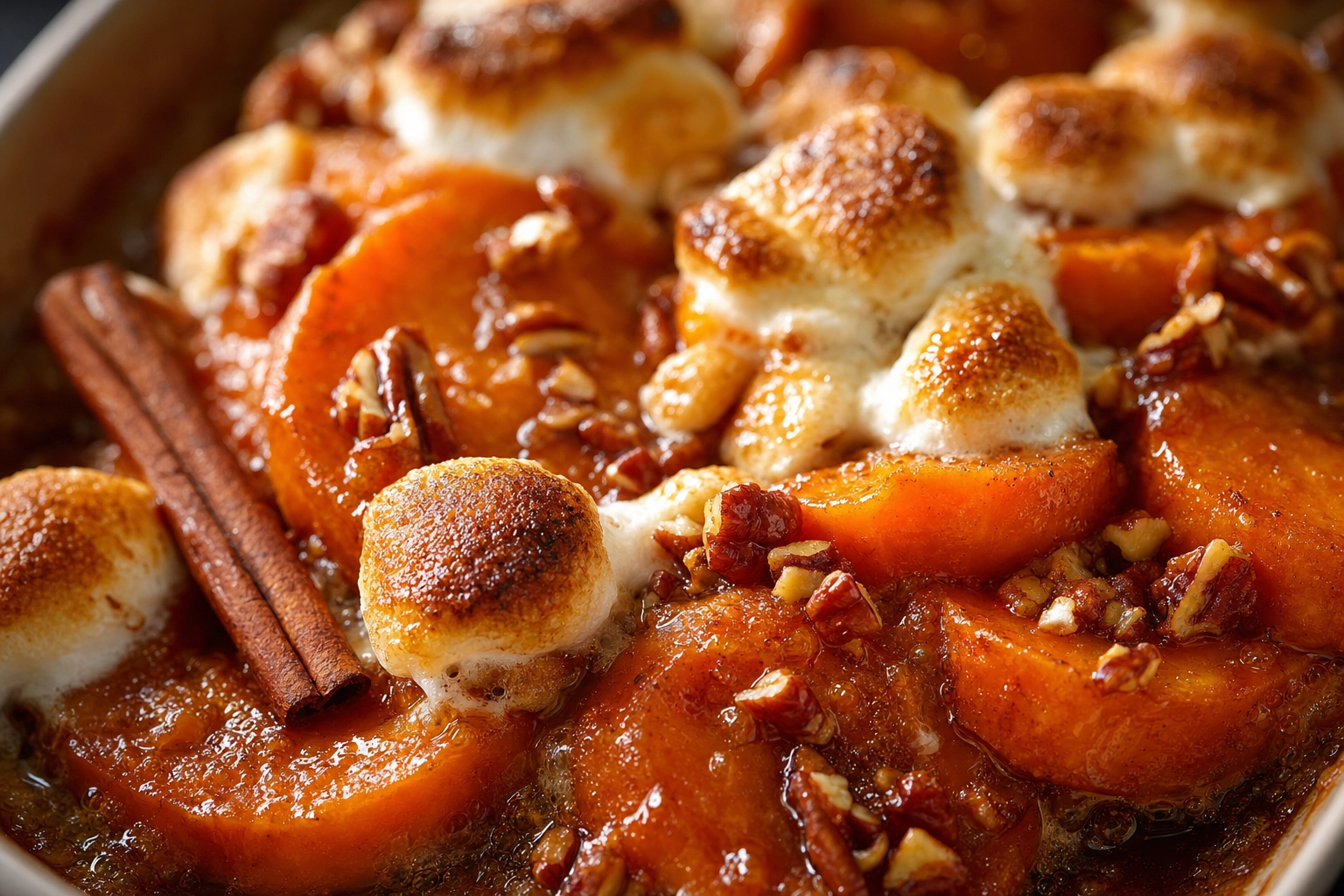 Macro of candied yams in brown-sugar syrup topped with caramelized golden marshmallows and chopped pecans
The same thinking carries the rest of the sides. Candied yams are all about catching the caramelized, glossy marshmallow glow on top — shoot the bubbling, broiler-blistered surface up close. Black-eyed peas and rice (Hoppin' John) want a fresh scatter of green onion to lift the beige. And smothered meats — oxtails, turkey wings, pork chops in onion-pepper gravy — live on the glossy sheen of that gravy, so light them to make the sauce shine rather than go flat.
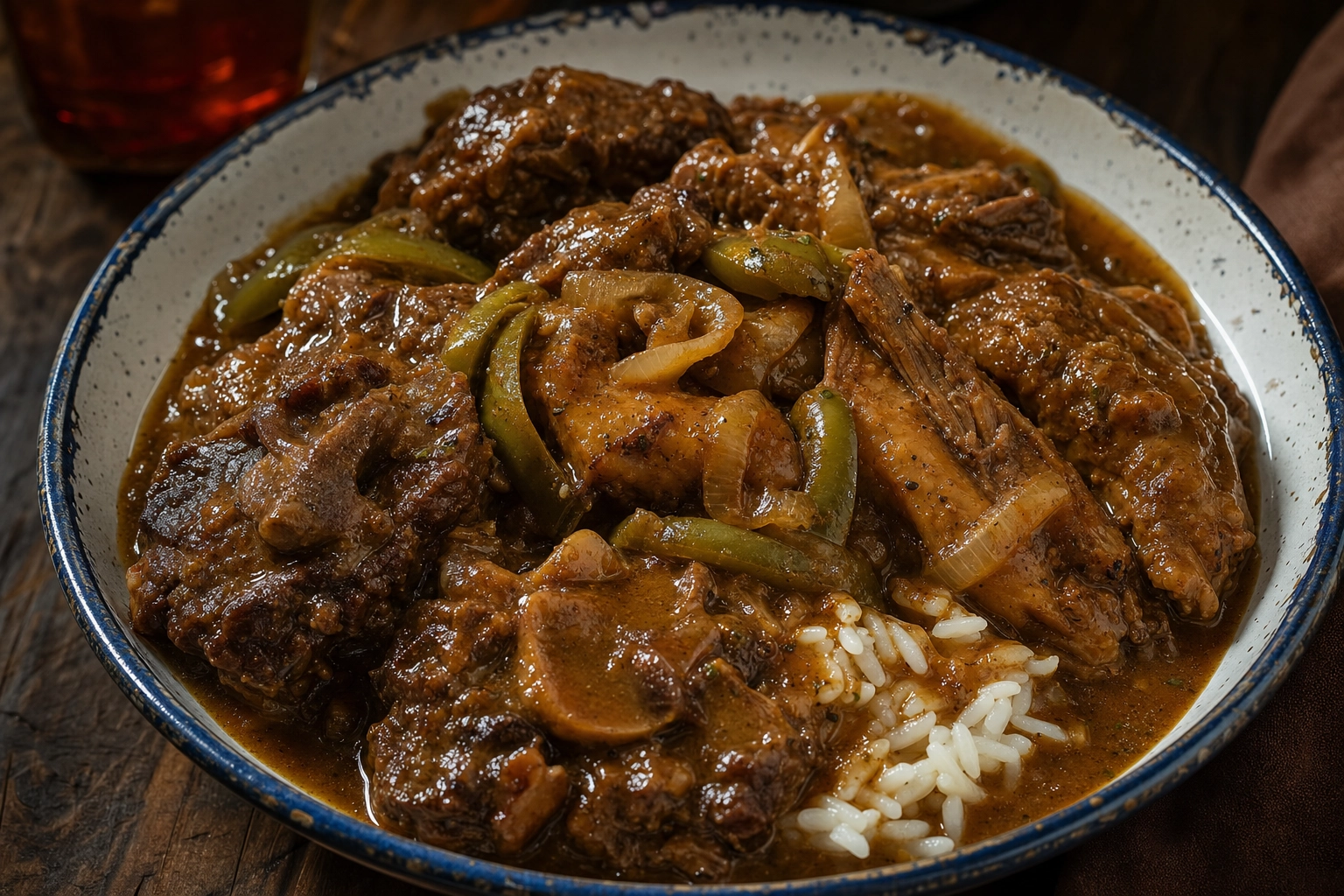 Smothered oxtails and turkey wings in glossy onion-pepper gravy over rice in a rustic bowl with side lighting
6. Peach Cobbler & Sweet Potato Pie
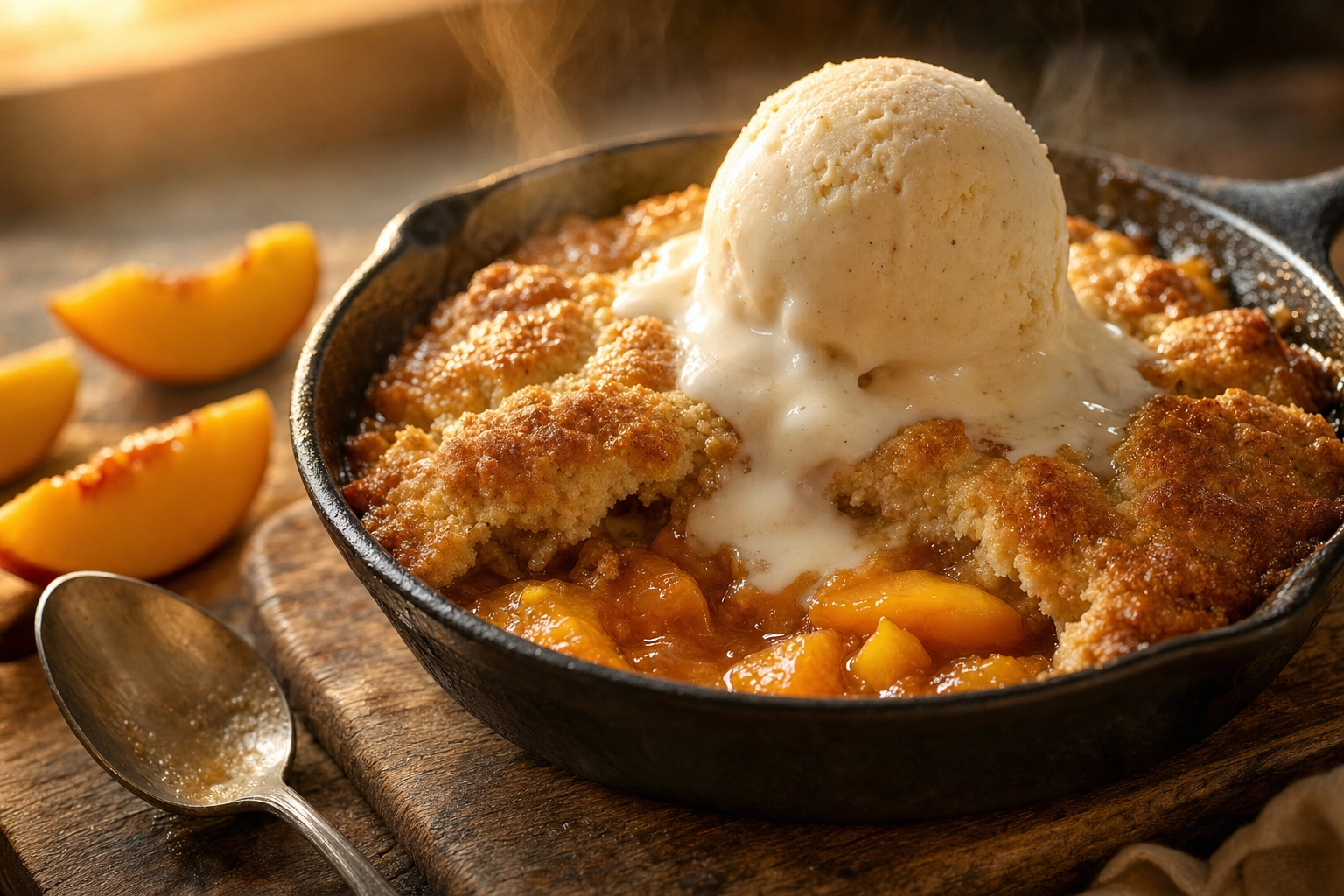 Bubbling peach cobbler in a cast-iron skillet topped with a scoop of vanilla ice cream just starting to melt
End on dessert, because soul food sweets photograph beautifully and they close the sale. Peach cobbler is the headliner: a bubbling, syrupy peach filling under a golden biscuit top, ideally in a rustic cast-iron skillet or an individual ramekin so it looks homemade.
The move that makes it irresistible is a scoop of vanilla ice cream set on the warm cobbler — photographed at the exact moment it just starts to melt. That first glossy slump of melting ice cream catches the light and quietly tells the viewer the cobbler is warm from the oven. The same warm, late-afternoon light flatters Southern sweet potato pie, banana pudding layered with vanilla wafers, and a dense slice of pound cake — the desserts that close out every soul food dinner.
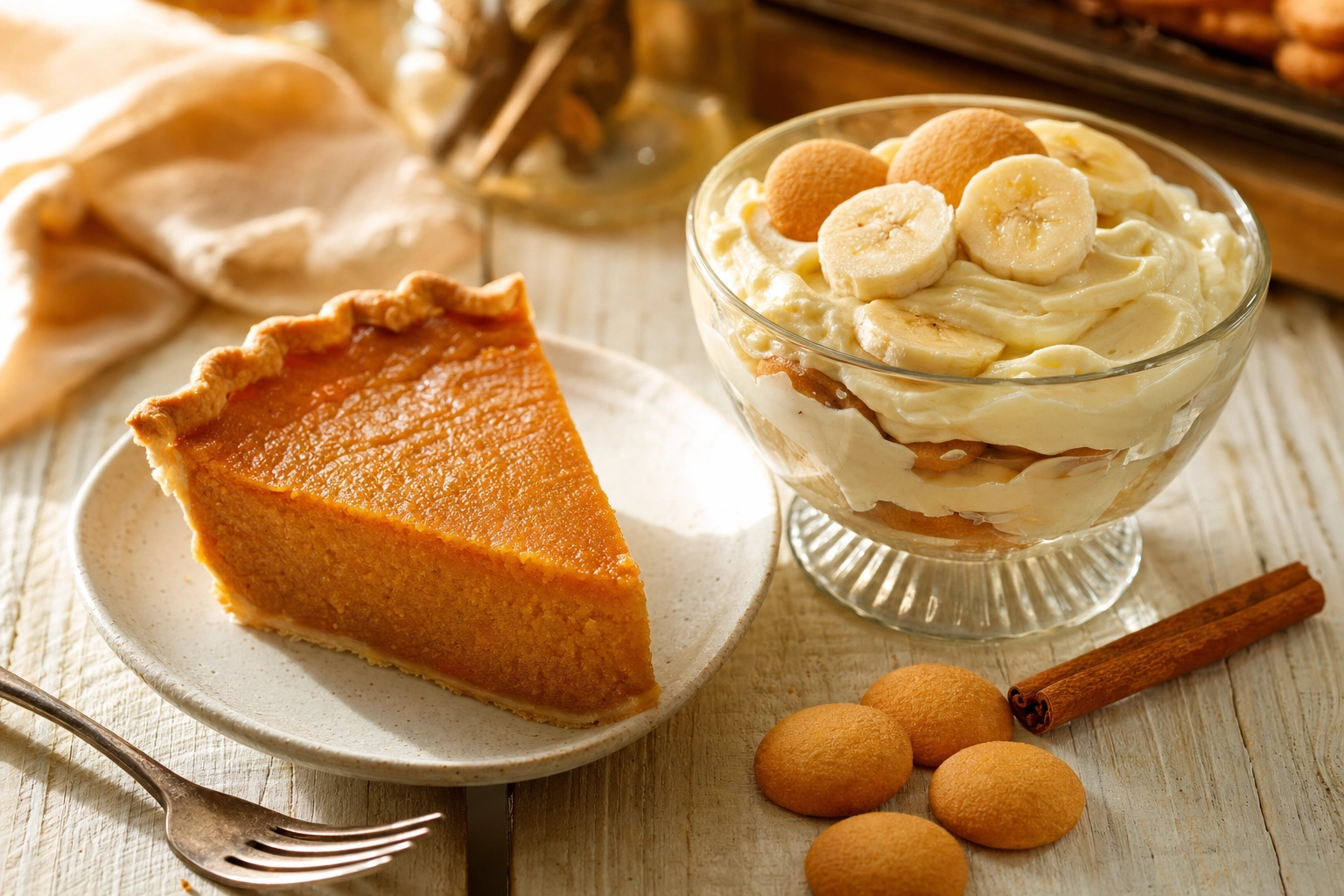 Slice of sweet potato pie beside a dish of banana pudding with vanilla wafers in warm afternoon light
Banana pudding deserves its own close-up: served in a clear glass dish, those layers of custard, banana, and vanilla wafers read instantly when you shoot them from the side. Our dessert photography guide has more plating ideas for these sweet finishes.
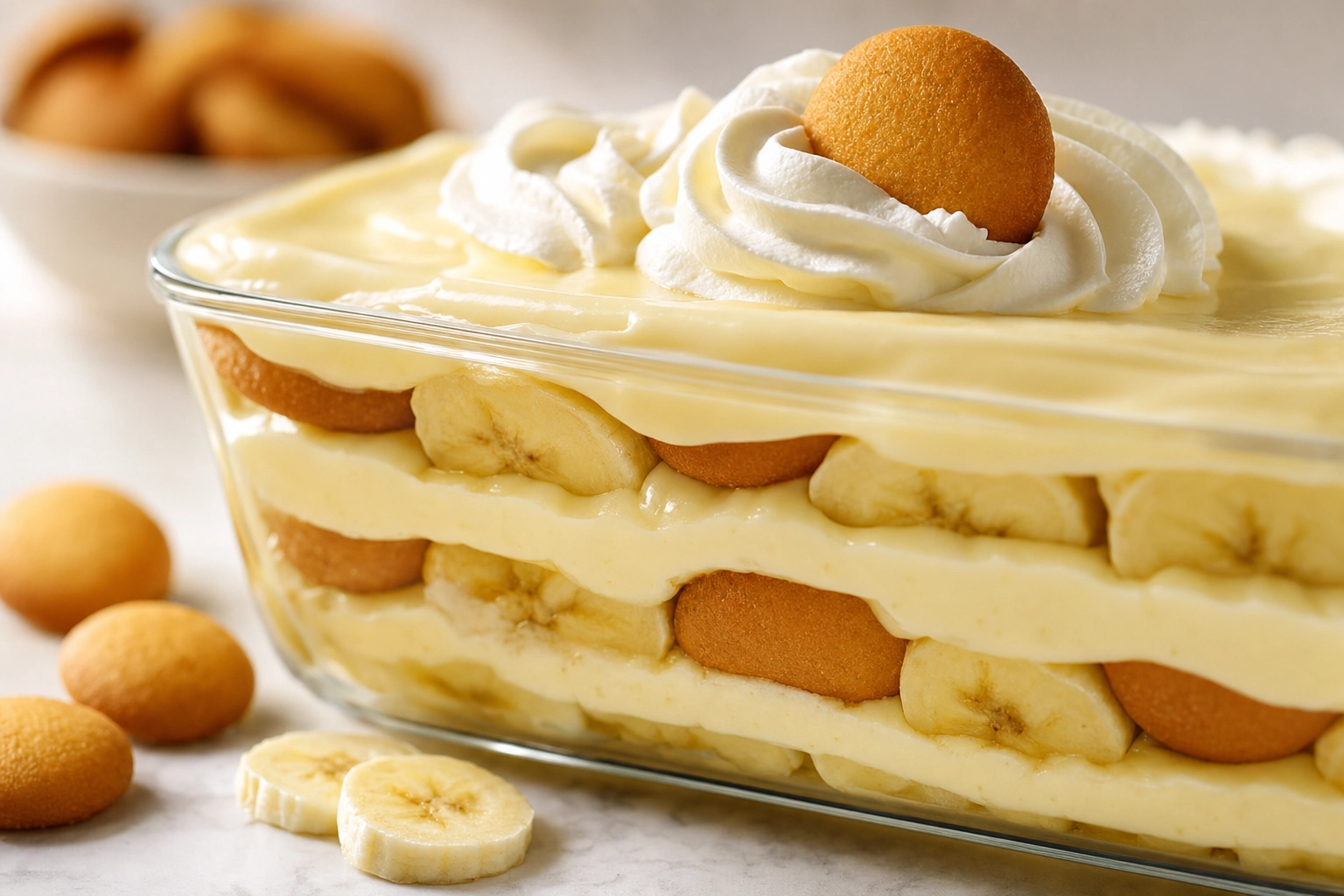 Macro of layered Southern banana pudding with vanilla wafers, banana slices and whipped cream in a glass dish
Warm Lighting & Golden-Crust Texture Tips
If you take one thing from this guide, make it this: most bad soul food pictures are just badly lit soul food pictures. Fix the light and you fix 80% of the problem. It comes down to a few simple lighting ideas.
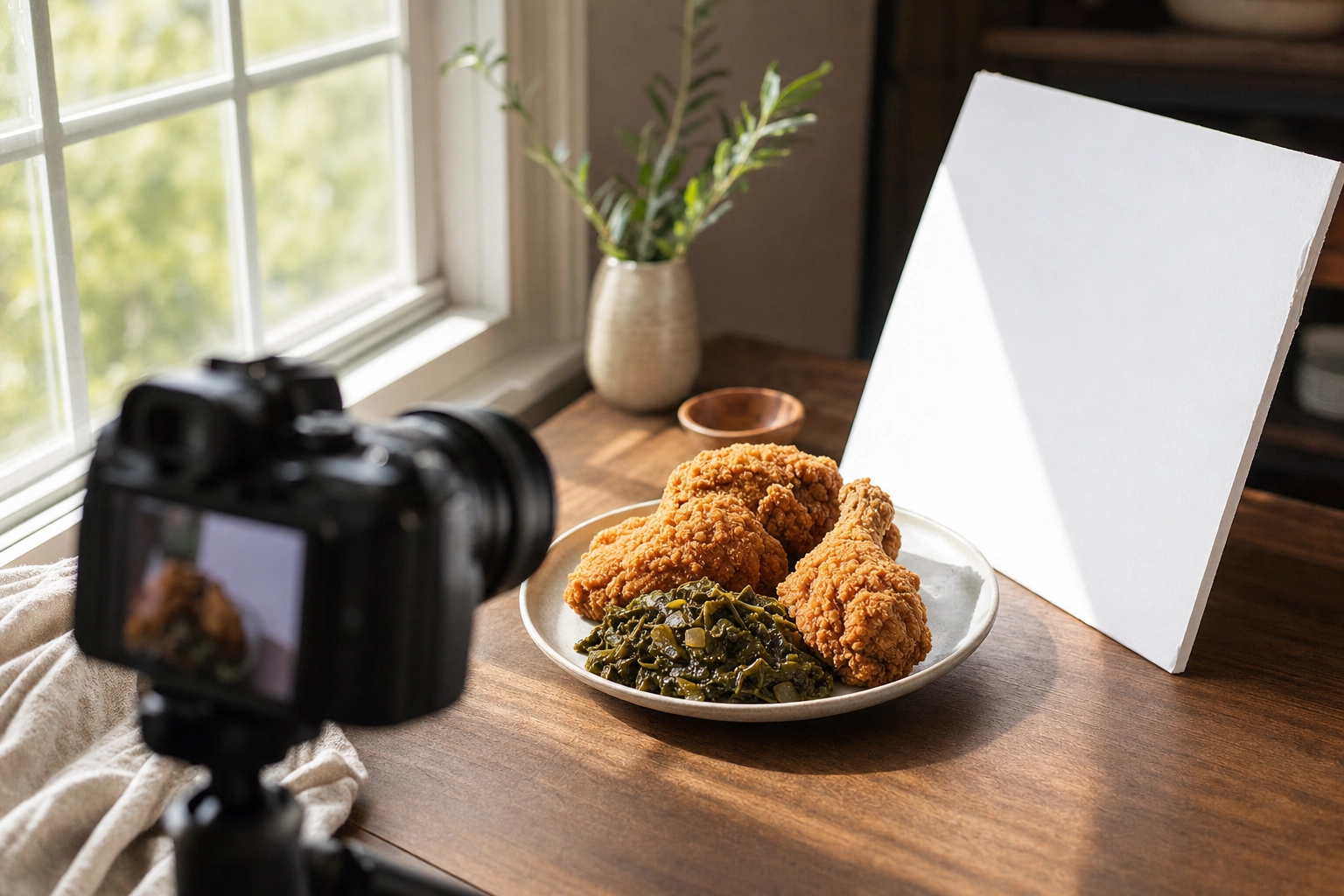 Soul food plate lit by soft window light with a white reflector card bouncing fill into the shadows
Rake the light across the crust. Put your main light — a big window or a softbox — to the side of the food, roughly 45 to 90 degrees off-center, never straight on from the camera. That low, skimming angle (photographers call it raking light) makes every ridge of fried-chicken crust and every browned peak of cornbread cast a micro-shadow. Those shadows are the texture.
Keep it warm. Soul food wants honey, not ice. Shoot near a window in the late afternoon, or nudge your white balance a touch warmer, so the crust reads rich and golden. Don't overcook it into neon orange — aim for honeyed, not radioactive. Warm tones are what make this Southern comfort food feel like Sunday dinner.
Chase the sheen. A matte, dry piece of chicken looks old; a piece with one soft highlight looks fresh from the fryer. Brush a little neutral oil or pan jus on fried chicken and smothered meats, let butter melt on cornbread, and keep gravy glossy. That golden-brown color even has a name — the Maillard reaction, the browning of proteins and sugars that gives crust both its flavor and its color. Your lighting job is to make it glow.
Fill the shadows and kill the flash. Dark meat and dark greens sink into black if you let them, so prop a sheet of white foam board on the shadow side to bounce a little light back. And never, ever use your phone's on-camera flash — it blasts the food head-on, flattens all that hard-won texture, blows the glossy bits into hot white spots, and greys out the golden tones. Soft side light beats it every single time. If lighting is where you struggle most, the food photography lighting guide walks through the clock method, LED panels, and DIY diffusers step by step. The r/foodphotography community is also a great place to see real before-and-after examples from other cooks.
Plating & Styling Soul Food for the Camera
Light gets you most of the way; styling closes the gap between "good" and "menu-ready." A few simple plating ideas do most of the heavy lifting.
Lead with abundance. Pile it on. A generous plate reads as appetite and value, which is the entire emotional promise of a soul food dinner. An overfilled platter almost always beats a tidy, half-empty one.
Choose vessels with character. Cast iron, speckled enamelware, sectioned combo plates, a mason jar of sweet tea sweating on the table — these prop ideas carry the story. A pristine white restaurant plate can look clinical; a worn skillet looks like somebody's grandmother's kitchen, the place these family recipes came from.
Fight brown-on-brown on purpose. This is the golden rule for an all-brown cuisine. Build in deliberate pops of color: the green of collards or a parsley garnish, the red of hot sauce, a wedge of lemon, the bright orange of candied yams, a few pickle slices. Brown food pops hardest against its complementary colors, which is why a little green or red does so much work. Steal these color ideas for every soul food plate you shoot.
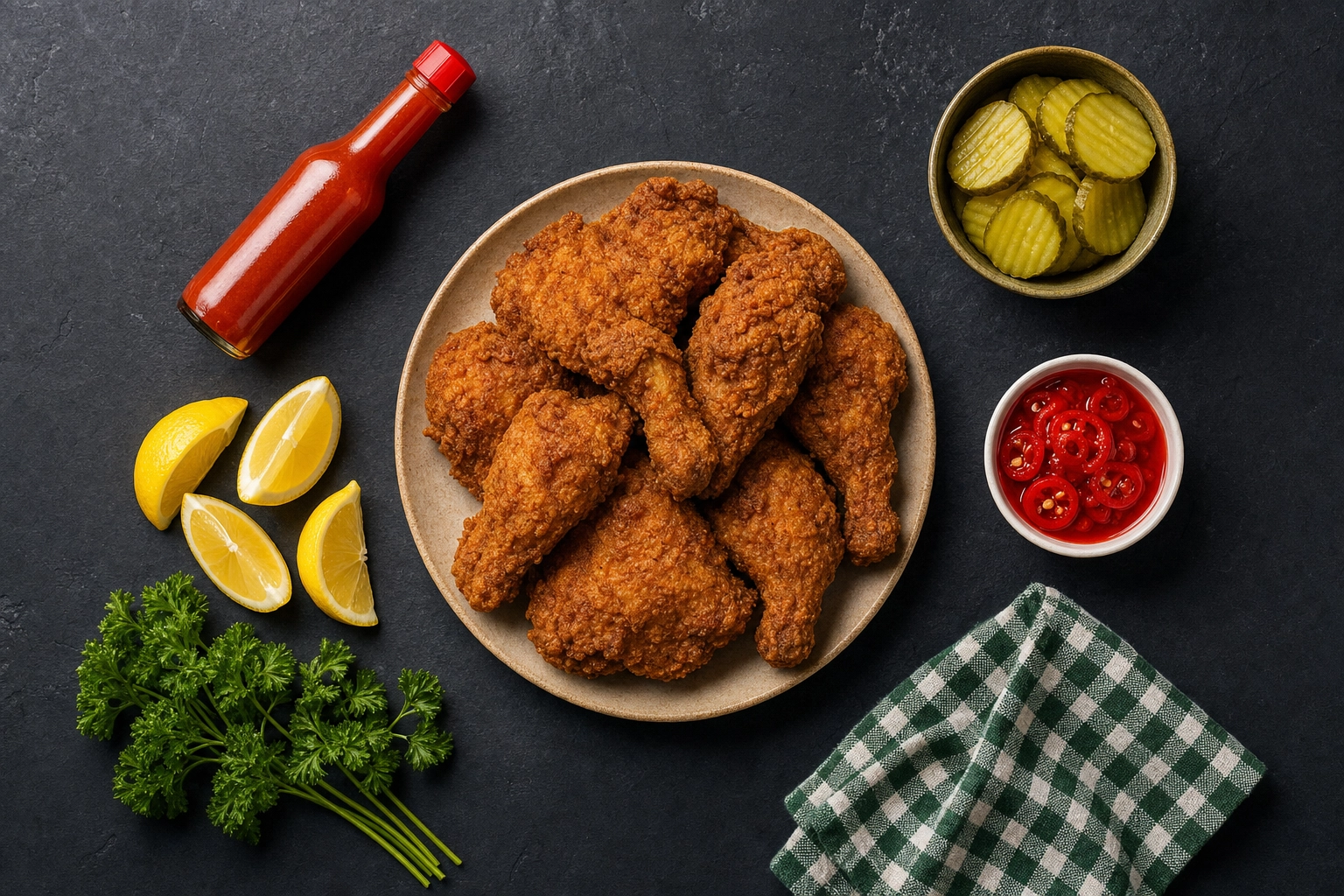 Overhead flat-lay of fried chicken surrounded by hot sauce, lemon, parsley and pickles to add color contrast
Style for freshness, then get out of the way. Wipe stray drips off the plate rim, add a fresh garnish at the last second, and tuck the tallest element toward the back so the plate has height. Food stylists even hide small props under a stack to build fullness — the same trick a pro uses to make a sandwich stand tall.
One clarification while we're here: soul food is not barbecue. They share a table and they're often cousins, but smoked brisket, ribs, and pulled pork are their own visual language — char, bark, smoke ring, glaze. If your menu runs in both directions, shoot the smoked side using our BBQ and grilling photography approach, and keep your soul food pictures focused on the fry, the bake, and the smother.
From Six Shots to a Full Soul Food Menu
Once you've nailed the six core soul food plates, the same playbook scales to your entire menu — and to your catering deck. Photograph every new Sunday-dinner special, every seasonal side, and every dessert in the same warm register so the whole menu reads as one kitchen. A consistent Southern soul food look is what makes ten different dishes — and dozens of meals — feel like one brand, and the same plating ideas simply scale up.
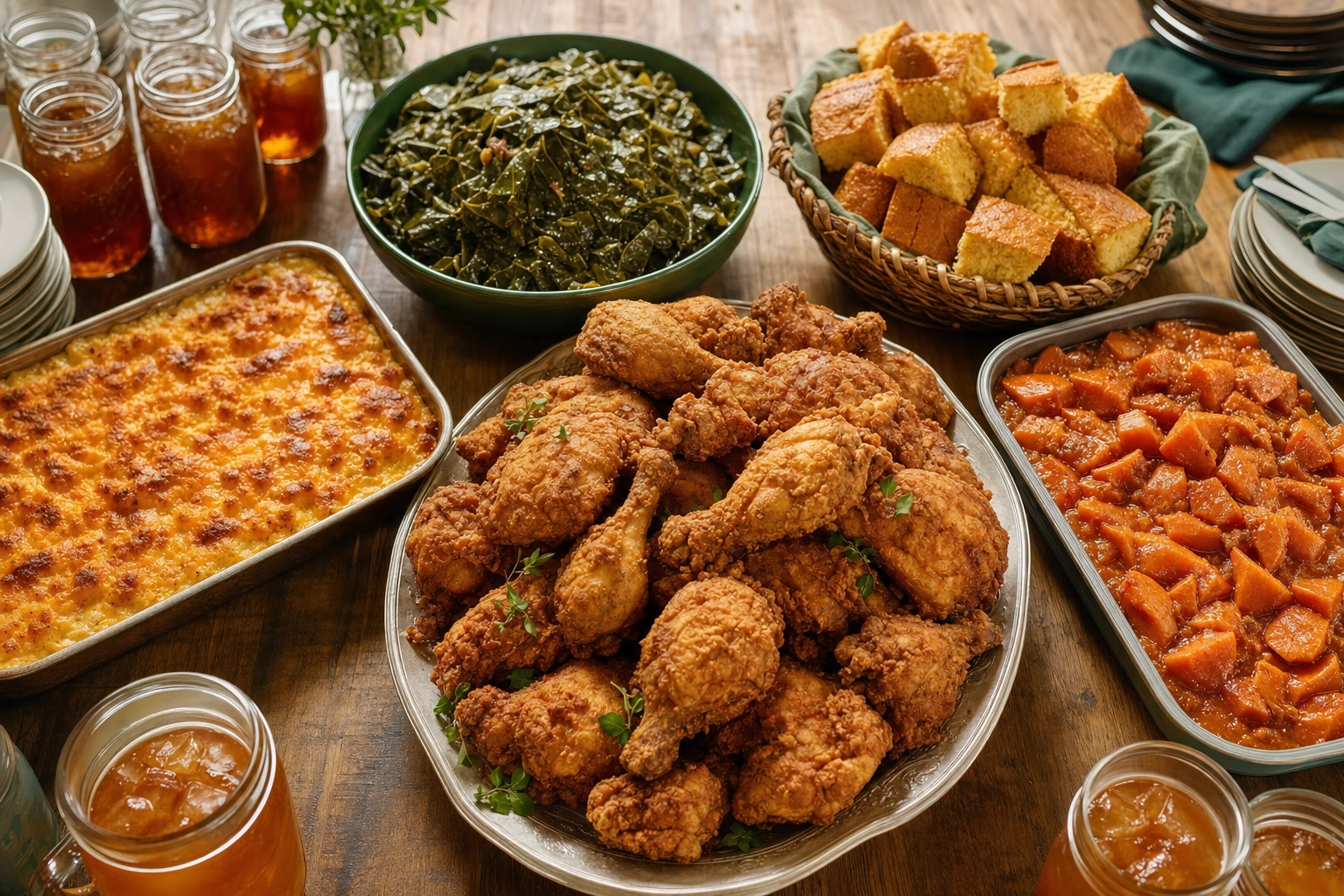 Family-style soul food catering platters of fried chicken, mac and cheese, greens and cornbread on a long table
For catering, shoot family-style soul food platters the way they actually arrive — big trays of fried chicken, deep pans of mac, bowls of greens — at a church anniversary, a repast, or a backyard dinner party. Those abundant platter shots win bids and fill a proposal deck, because they sell the feeling of feeding a crowd a whole meal. Keep a simple running shot list of plating ideas so nothing slips: the hero plate, the combo plate, each side, each dessert, a few clean soul food plates for the à la carte menu, and the overflowing platters you bring out for events and parties.
As you add new soul food recipes — a new smothered dish, a new cobbler, a holiday meal — drop them into the same lighting and styling template. Consistency across plates, platters, and party trays is what turns a handful of good photos into recognizable soul food pictures, whether you're posting weekday family meals, Sunday-dinner specials, or a full holiday spread. Build a deep library of soul food photos and house recipes shot the same way, and a single soul food platter instantly reads as yours.
Before & After: From Phone Snap to Menu-Ready in About 2 Minutes
Here's the honest problem with everything above: on a packed Sunday afternoon, with a line out the door and plates flying out of the kitchen, nobody has time to set up raking light and style a combo plate. The soul food dinner is gone in two minutes. That's exactly the gap AI food photography was built to close.
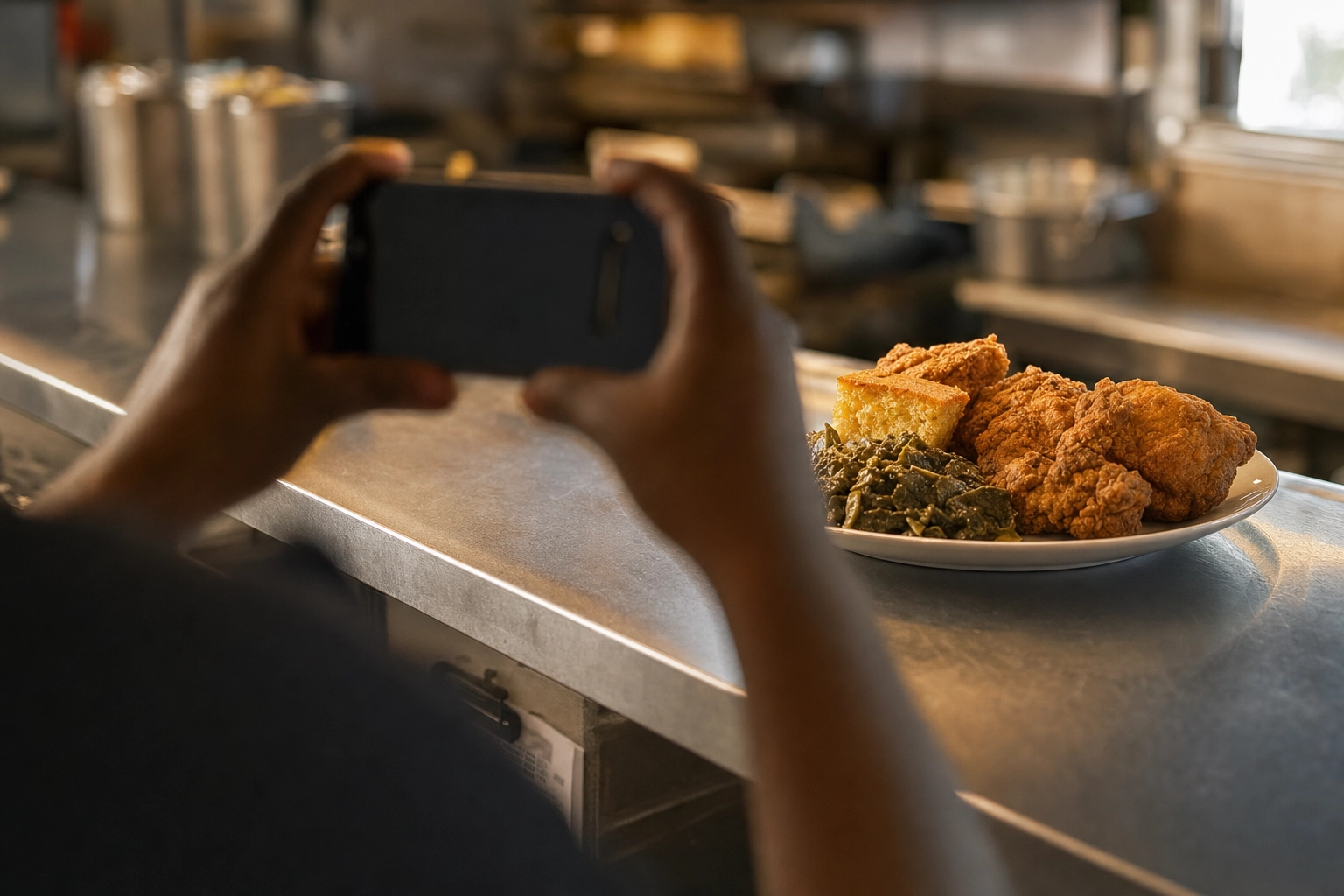 A cook's hands holding a phone photographing a fried chicken and cornbread plate on a restaurant kitchen pass
Take a normal phone photo of the dish — even a quick one under your regular kitchen lights — and run it through an AI food photo editor trained specifically on food. In about 2 minutes, a dim, flat, foam-box snapshot of fried chicken and greens becomes a warm, crisp, menu-ready soul food picture: the crust regains its golden ridges, the greens come back from muddy-black, the mac top crisps up, and the whole plate glows in that Sunday dinner register.
The workflow is short. Upload your real photo. Pick a style — FoodShot's soul food styles are tuned for exactly this Southern cuisine, or use Builder Mode to combine a background, a plate, and your dish into a custom scene. Generate variations and you'll get a handful of style ideas from a single upload, so you can pick the best. Refine with a prompt in plain English: warm the tones, crisp the crust, brighten the background, make the greens glossy. Then download a 2K, print-ready file for your menu, your delivery listings, and your socials.
The math is why restaurants do this. A professional food shoot runs roughly $700–$1,400 per session and has to be repeated every time the menu changes; AI gets you a comparable result for about 95% less, starting at $15 a month. For a soul food kitchen, gospel-brunch room, or Sunday-dinner caterer that needs dozens of consistent soul food images and doesn't have a studio budget, that's the difference between great photos and no photos. You can see the cuisine-specific styles, dish by dish, on the soul food photography page, and browse the rest of our photography guides by cuisine if you cook across Southern traditions.
Frequently Asked Questions
How do I take good soul food pictures with my phone?
Start with light. Move the plate next to a big window, turn off the overhead fluorescents, and shoot with the window to the side so the light rakes across the crust and reveals texture. Get in close, tap to focus on the crispiest part, add a pop of color (hot sauce, greens, lemon), and never use the flash. A clean phone photo in good side light beats a sloppy DSLR shot every time — and if you want your soul food images to look truly professional, run that phone photo through an AI editor afterward.
Why does my fried chicken look greasy and flat in photos?
Two culprits: flat light and no sheen control. Head-on light (especially a phone flash) erases the craggy texture of the crust and turns glossy spots into harsh white blow-outs that read as grease. Switch to side lighting so the crust casts tiny shadows, brush on just a whisper of neutral oil for an even, soft highlight instead of greasy hot spots, and warm up your white balance so the chicken looks golden rather than pale and oily.
What is the best lighting for soul food photography?
Soft, warm, directional light. A large window in the late afternoon is ideal and free; position it to the side or slightly behind the food, and bounce a white card into the shadows to keep dark meat and dark greens from going black. If you shoot at night or in a windowless kitchen, a single daylight-balanced LED panel through a diffuser does the same job. Our full food photography lighting guide covers exact setups for comfort food.
How do I make collard greens and dark sides look appetizing instead of muddy?
Light the gloss. Dark greens read as a black hole to a camera, so your job is to find and light the reflective surfaces: catch the shiny pot-likker pool, pull glossy chunks of smoked turkey or ham hock to the top, and light from the side so the wet leaves shine instead of flattening. A white fill card on the shadow side keeps them from sinking to black, and a bottle of hot-pepper vinegar or a sprinkle of red pepper flakes adds the color contrast that makes the greens on your dinner plate look fresh.
Is soul food photography the same as Southern food or BBQ photography?
They're related but not identical. Soul food is the specific Black American culinary tradition — buttermilk fried chicken, collards and pot likker, mac and cheese, candied yams, cornbread, sweet potato pie. Broader Southern food photography overlaps heavily but also includes things like shrimp and grits or Lowcountry seafood, while BBQ is its own world of smoke, bark, and char. The warm, abundant, golden styling here works for all Southern comfort food, but if you smoke and grill, shoot that with a dedicated grilling and smokehouse photography approach. Either way, your Southern soul food deserves the same warm, golden, abundant treatment described in this guide.
Can AI really make my soul food pictures look professional?
Yes, with one caveat: it works best as an enhancer of real food, not a fabricator of fake food. Tools like FoodShot AI take an actual photo of your actual dish and restyle the lighting, background, and finish to a studio standard — they preserve your fried chicken's real crust and your real plating, they don't invent a dish you don't serve. That's the right use for a restaurant: your soul food dinner, your portions, just lit and styled the way a pro photographer would have done it, in about 2 minutes.
How many soul food photos does my menu actually need?
Start with the six shots in this guide — the fried chicken hero, the combo plate, the mac and cheese pull, cornbread and biscuits, the greens and sides, and the cobbler. Those cover your menu board, your delivery thumbnails, your website, and your social feed for your best sellers. From there, add one clean photo for every dish you sell on a delivery app, since every item with a picture outperforms one without. Consistency matters more than volume: shoot every soul food dinner in the same warm register so your brand looks like one kitchen across every plate, platter, and meal, whether you're posting Sunday-dinner specials, new soul food recipes, or one perfect soul food platter.