
Peruvian Food Photography: Ceviche, Lomo & More
 Ali Tanis15 min read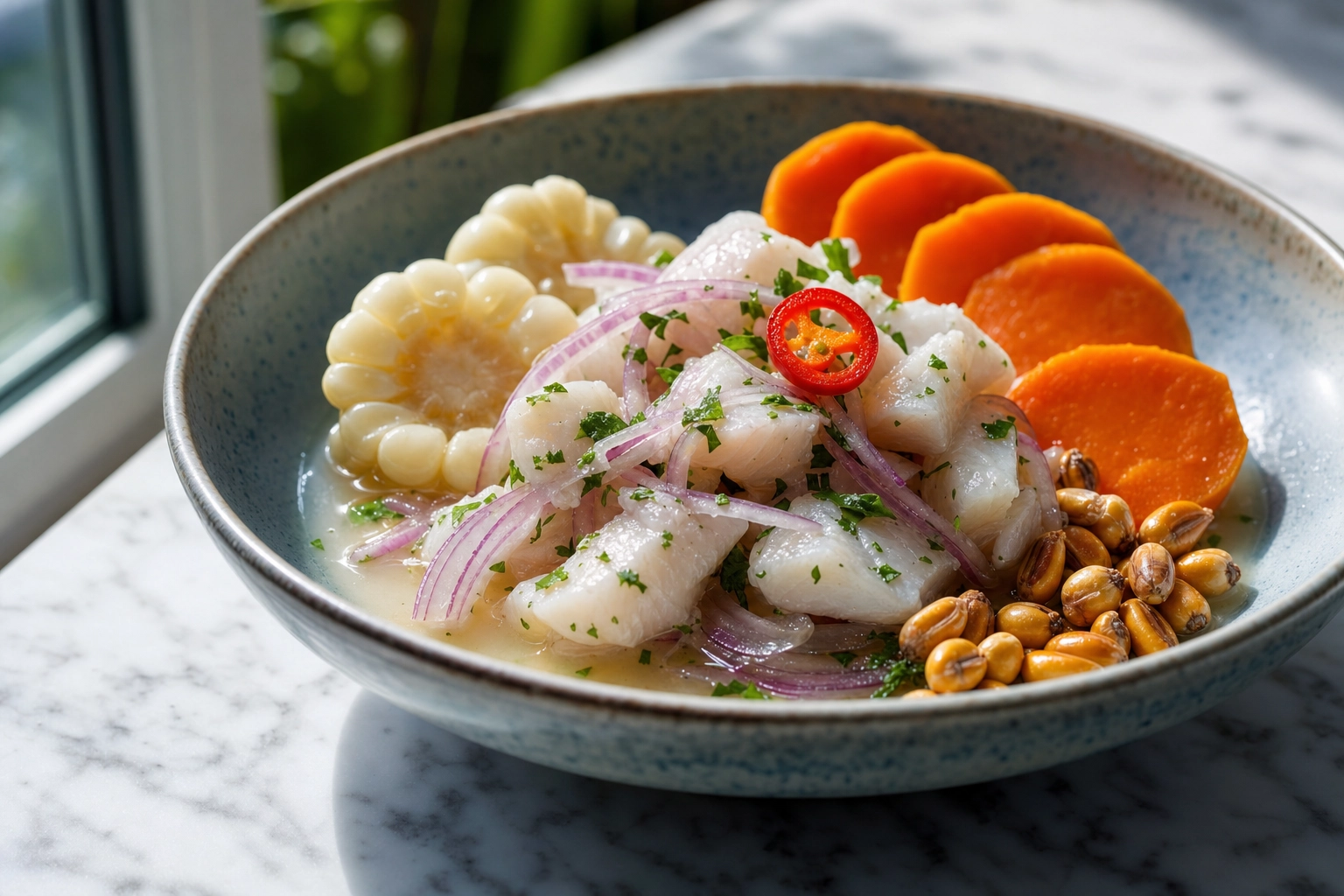
Search peruvian food images and you'll drown in stock photos: grey ceviche on a bare white plate, a tired bowl of lomo saltado lit like a passport photo, the same fifty pictures recycled everywhere. None of it looks like what a real cevichería serves — bright, cold, citrus-sharp, a little loud. And dull photos have never cost more, because Peruvian cuisine is having the biggest moment of its life.
In 2025, Maido in Lima was named the best restaurant in the world — a Nikkei (Japanese-Peruvian) kitchen — and the win made headlines worldwide. Central, also in Lima, held the crown in 2023. Heading into 2026 there are more than 4,800 Peruvian restaurants across 60-plus countries, and the market is on track to nearly double to over $15 billion by 2034. When the fine-dining conversation keeps circling back to Lima, the bar for how Peruvian food should look rises with it — diners now expect ceviche and tiradito shot like the editorial, elegant food it has become.
This guide delivers that: the fresh, colorful, elegant aesthetic that reads as authentically Peruvian, the five shots every Peruvian or Nikkei menu needs, how to color-grade for bright citrus tones, and a 2-minute way to turn a phone snap into a menu-ready image.
Quick Summary: The best Peruvian food images lean into the cuisine's fresh, colorful, elegant character — bright leche de tigre, electric ají amarillo yellow, precise plating. Nail five core shots (ceviche, lomo saltado, anticuchos, causa, pisco sour), light them in the bright coastal register or the dramatic Nikkei one, protect the citrus colors in the edit, and you've covered most of a Peruvian menu.
Why Peruvian Food Photographs Like Nothing Else
Three things make Peruvian cuisine a gift for anyone with a camera — even a phone.
Color. Peru has arguably the loudest natural palette in world cuisine, and none of it is artificial: ají amarillo peppers glow electric yellow, rocoto chilies burn red, leche de tigre carries a violet-tinged white, and choclo, camote, purple chicha morada and cilantro fill in the rest. The ingredients do the styling for you.
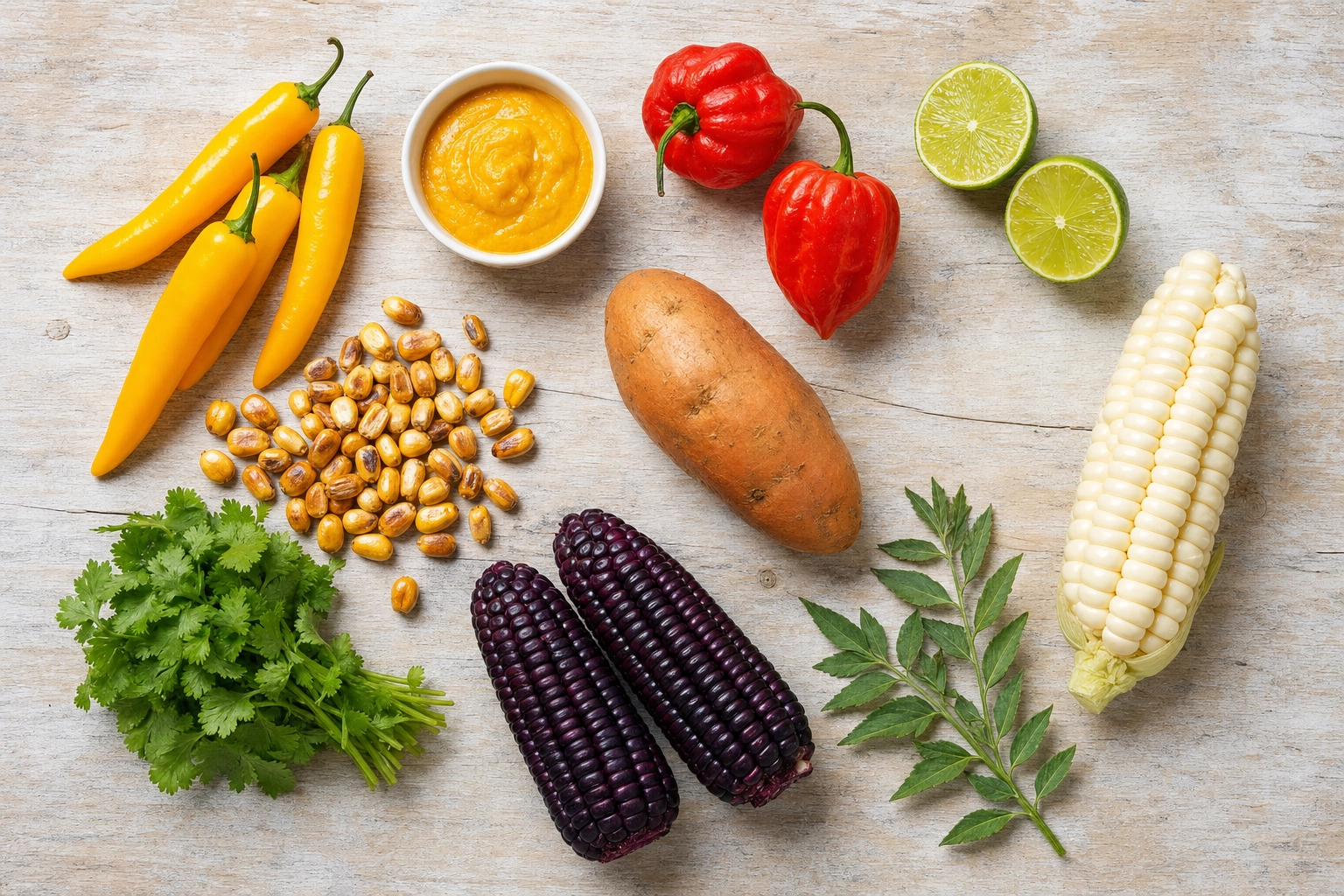 Overhead flat-lay of Peruvian ingredients: ají amarillo, rocoto, limes, choclo, purple corn, camote and cancha
Freshness. Ceviche is raw fish cured in citrus and served cold, glistening, minutes old. That just-cut quality is a primal appetite trigger — and tiraditos, causas and a frosted pisco sour all trade on the same freshness.
Elegance. Modern Peruvian and Nikkei plating is architectural: clean lines, precise quenelles, sauce dotted with intent. It's fine-dining food now, and it deserves better than the flat overhead delivery snap most kitchens default to.
Remember where the look comes from. Peruvian cuisine is 500 years of layered tradition — Andean, Spanish, Chinese (Chifa), Japanese and African — across three regions: a seafood-rich Pacific coast that gives the cevichería its corvina, shrimp and octopus; the potato-and-corn Andes; and the fish and fruit of the Amazon. The Nikkei influence reshaped how Peru treats its seafood and ceviche, shortening the citrus cure from hours to minutes so the fish stays fresh. That layered heritage is why, in 2026, Peruvian and Nikkei menus are multiplying from Lima to New York, Miami and Madrid — and why menu photography suddenly matters.
And it pays: studies find a menu item with an appetizing photo can sell up to 30% more, and one Google survey found diners rate food photos 1.44x more important than the written description. Strong peruvian food pictures sell before a server says a word — unlike a soulless stock image that could belong anywhere.
The 5 Peruvian Food Photos Every Menu Needs
You don't need forty photos. Five shots carry a Peruvian or Nikkei menu — the cold hero, the wok classic, the fire dish, the elegant starter, the national cocktail. Master these five peruvian food images and the rest falls into place.
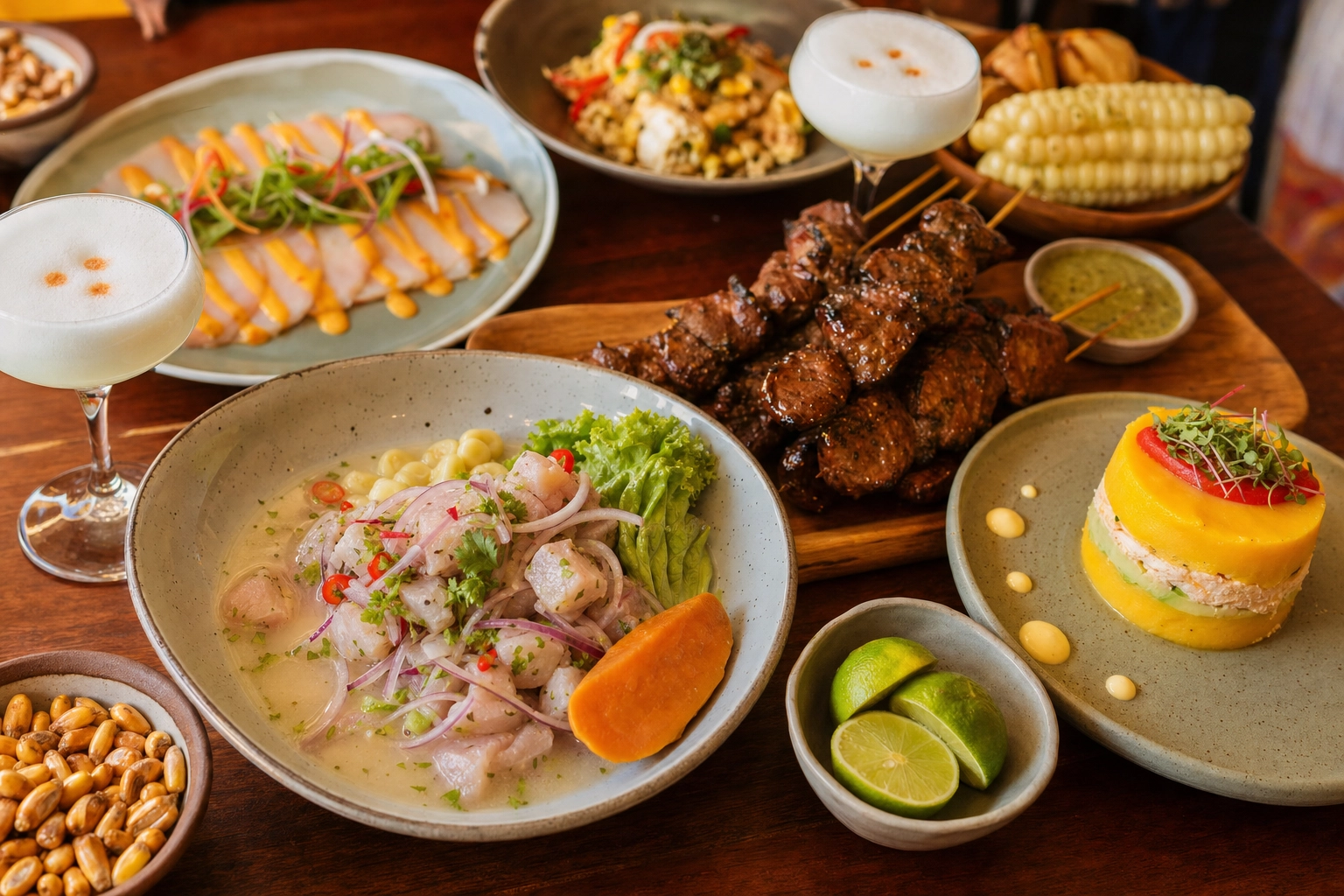 Shared Peruvian table spread with ceviche, tiradito, causa, anticuchos and pisco sours in warm afternoon light
1. Ceviche: The Fresh, Cold Hero Shot
Great ceviche pictures respect one fact: the dish changes while you shoot. The citric acid keeps "cooking" the fish — leave it too long and the flesh turns grey, the onion wilts, the leche de tigre clouds. So shoot it first, fast, and cold: plate, style in under a minute, fire. Every cevichería has its own recipe; the camera rules don't change.
- Give the leche de tigre its moment. The "tiger's milk" marinade — lime juice, fish trim, red onion, garlic, ginger, cilantro stalks, salt and ají — is the soul of the dish. Let it pool; a little liquid reads fresh, not messy.
- Build height. Fan camote (sweet potato) rounds, stand a disc of choclo so its big kernels catch light, scatter cancha (toasted corn), add red onion slivers and a spicy rocoto or ají limo chili slice for color.
- Angle: overhead or 45 degrees. Overhead makes a clean graphic circle for a menu grid; 45 degrees gives the choclo and camote height. Shoot both.
- Protect the color. Ceviche lives or dies on white balance — keep the whites cool so the leche de tigre stays bright. Grey ceviche looks dead.
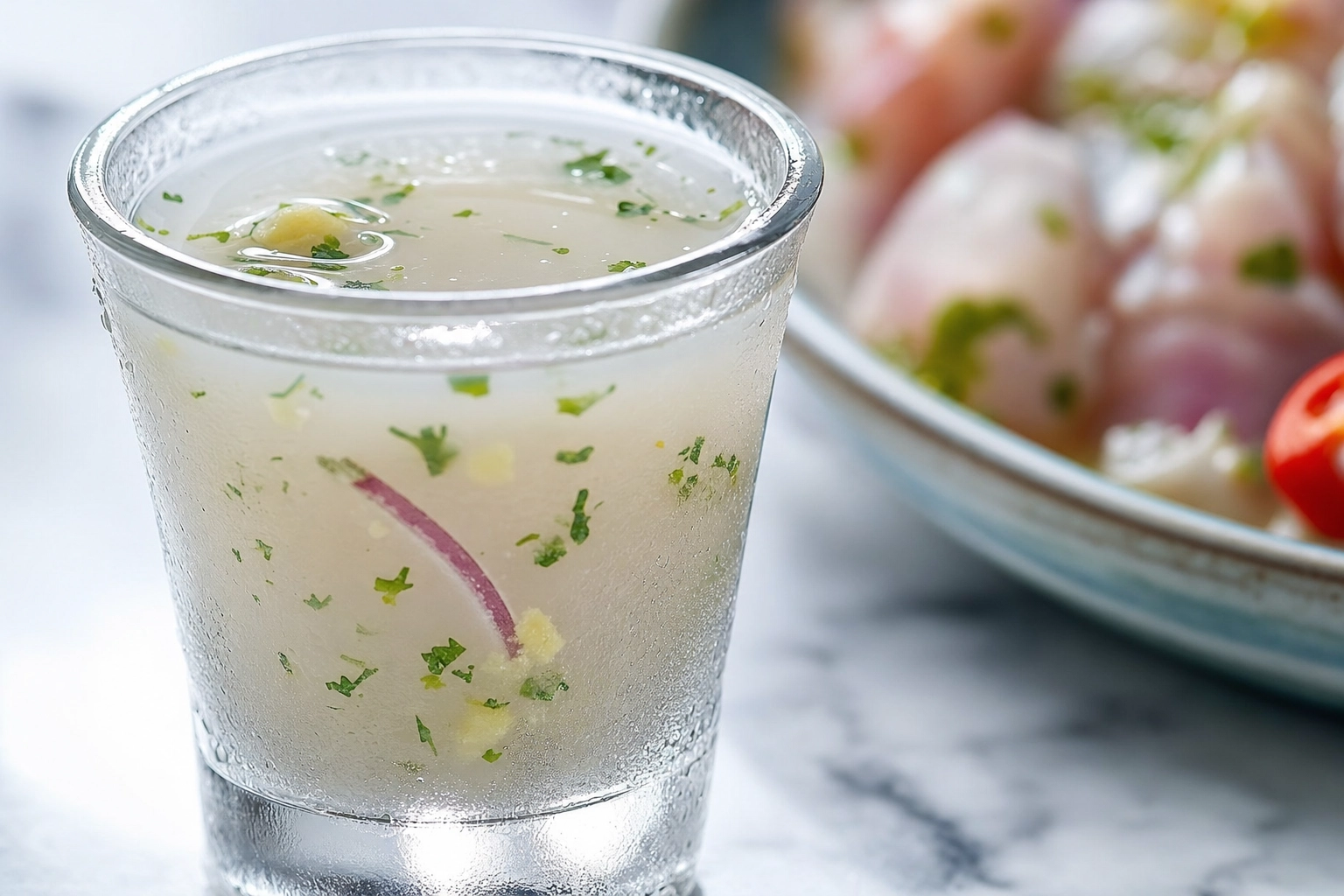 Macro close-up of a shot glass of cloudy leche de tigre tiger's milk with cilantro and ginger flecks
For a second frame, get tight on a glass of leche de tigre served alongside — that cloudy, citrus-bright liquid is a photo in itself, the kind of detail that makes your ceviche images feel like a real kitchen, not a stock library. Want variety for the menu? A ceviche mixto adds shrimp, octopus and scallops; a Nikkei version fans avocado and trades the onion for a squeeze of yuzu. Just don't over-marinate — the shots that sell are the freshest. Since ceviche is raw seafood, see our seafood photography tips for shooting glistening fish.
2. Lomo Saltado: Sear, Gloss and Steam
Lomo saltado is Peru's great Chifa (Chinese-Peruvian) dish: sirloin seared in a screaming wok with red onion, tomato and ají amarillo, splashed with soy and vinegar, tossed with fries, served with rice. Smoky, glossy, generous — the counterweight to cold, bright ceviche.
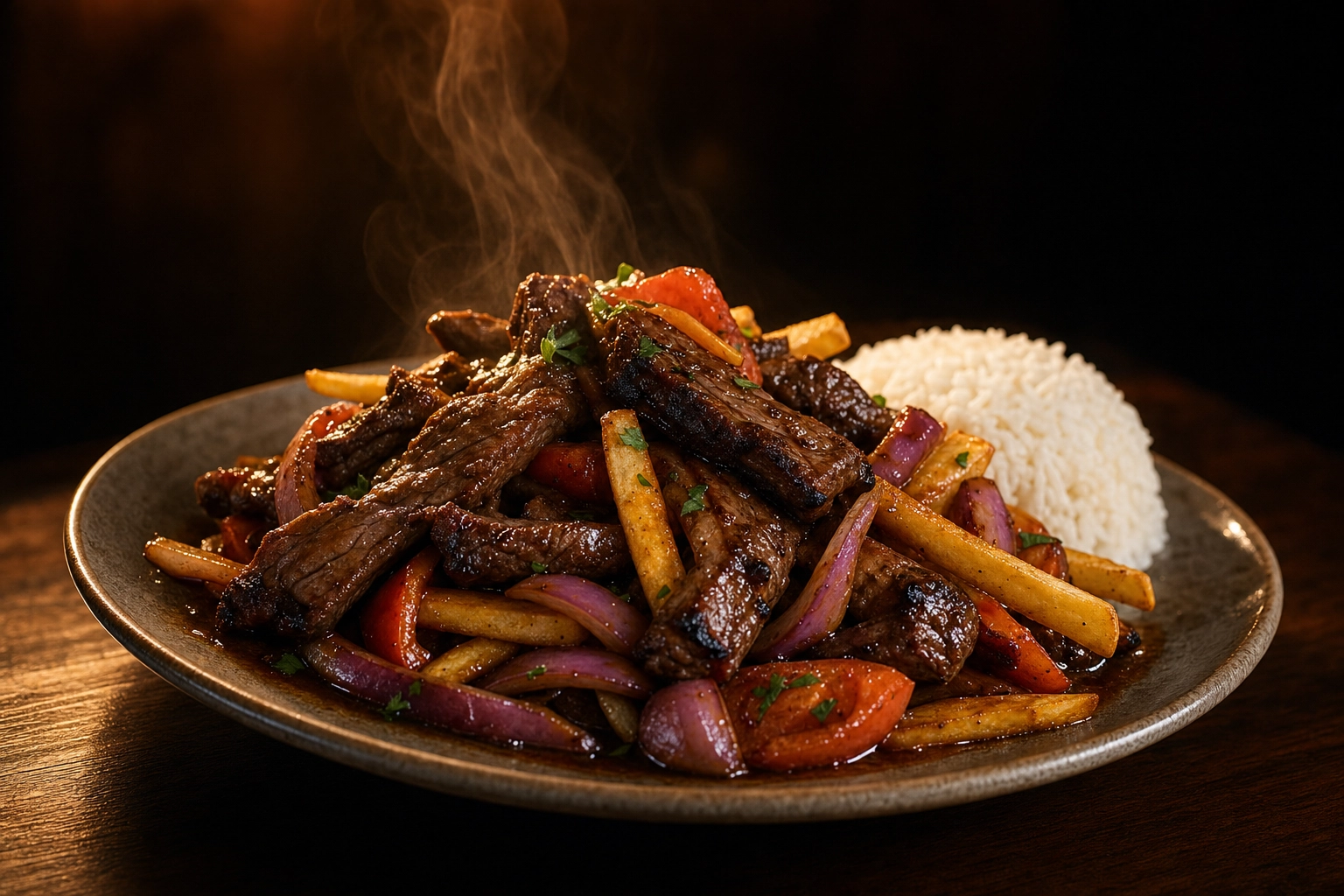 Peruvian lomo saltado with seared beef, fries and glossy sauce, steam rising, shot at a 45-degree angle
- Angle: 45 degrees or eye-level. This dish has height; a flat overhead kills it. A lower angle shows the seared beef, the sauce and the fries.
- Chase gloss and char. Set a few dark-seared strips proud on top, pool a little sauce, and slide crisp fries out.
- Get the steam. Backlight the plate and shoot the moment it hits the pass — that rising wisp separates appetizing lomo saltado photography from leftovers.
3. Anticuchos: Char, Skewers and Smoke
Anticuchos are Peru's grill icon — traditionally beef heart marinated in ají panca, garlic, cumin and vinegar, grilled hard over coals, served with potato, choclo and a bright ají sauce. The hero is one thing: char.
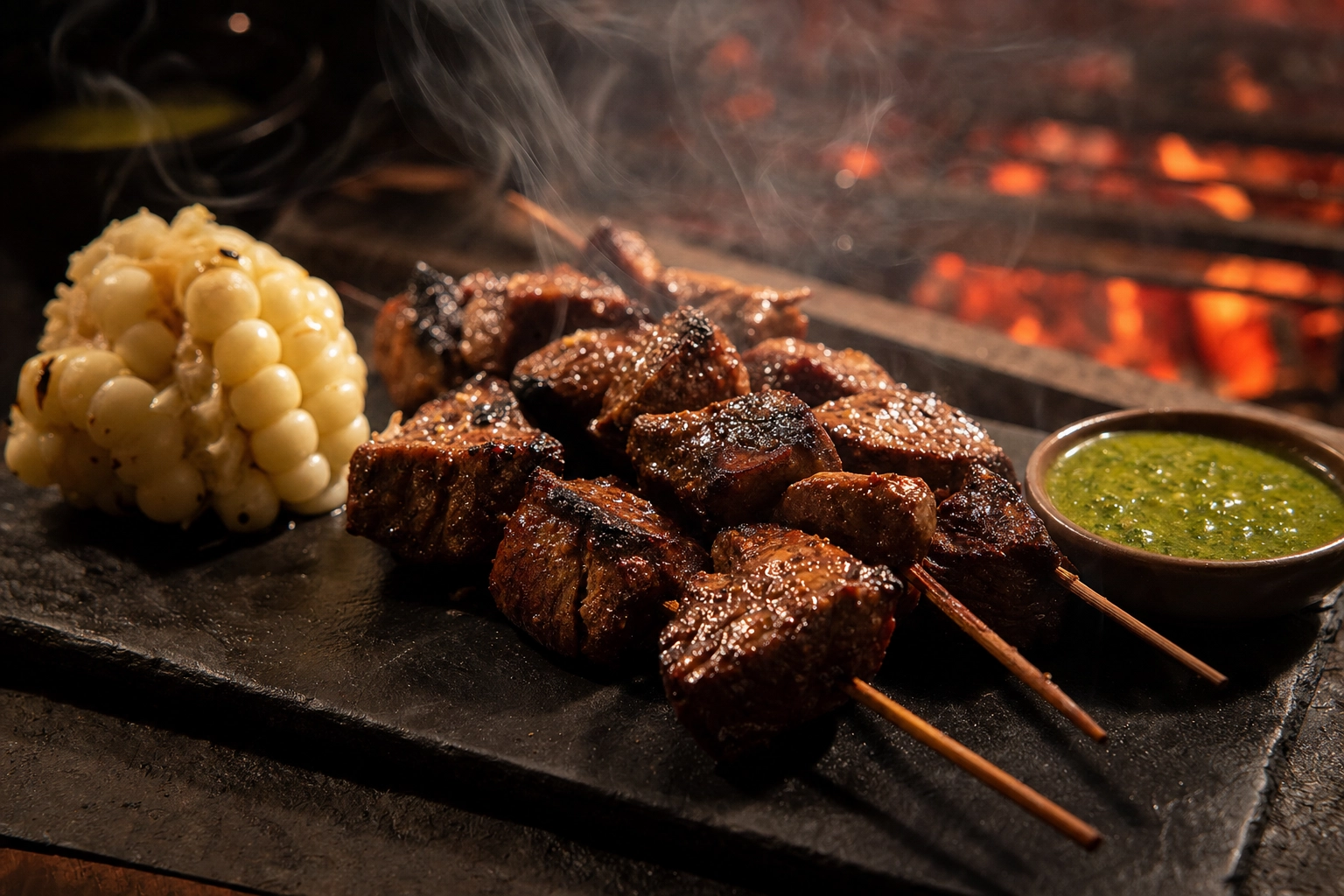 Char-grilled Peruvian anticuchos beef heart skewers on a dark slate board with smoke and glowing coals
- Catch the char at its peak. Caramelized, blistered edges read smoky; seconds later they read burnt. Pull the shot when the crust is dark and glossy, not black.
- Brush for glisten. A swipe of glaze or oil right before shooting wakes the surface up.
- Angle: eye-level or a low 30 degrees. Lean the skewers so they overlap; a dark board or slate keeps focus on the meat. Add a ramekin of ají and a curl of smoke.
- Light it dramatically — glowing coals and deep shadow, not bright coastal daylight.
4. Causa: The Elegant Layered Terrine
If ceviche is freshness and anticuchos fire, causa is elegance: whipped yellow potato (papa amarilla) with ají amarillo and lime, layered with avocado and a chicken, tuna or crab salad, molded into a terrine. Modern kitchens plate this traditional dish like fine dining — photograph it that way.
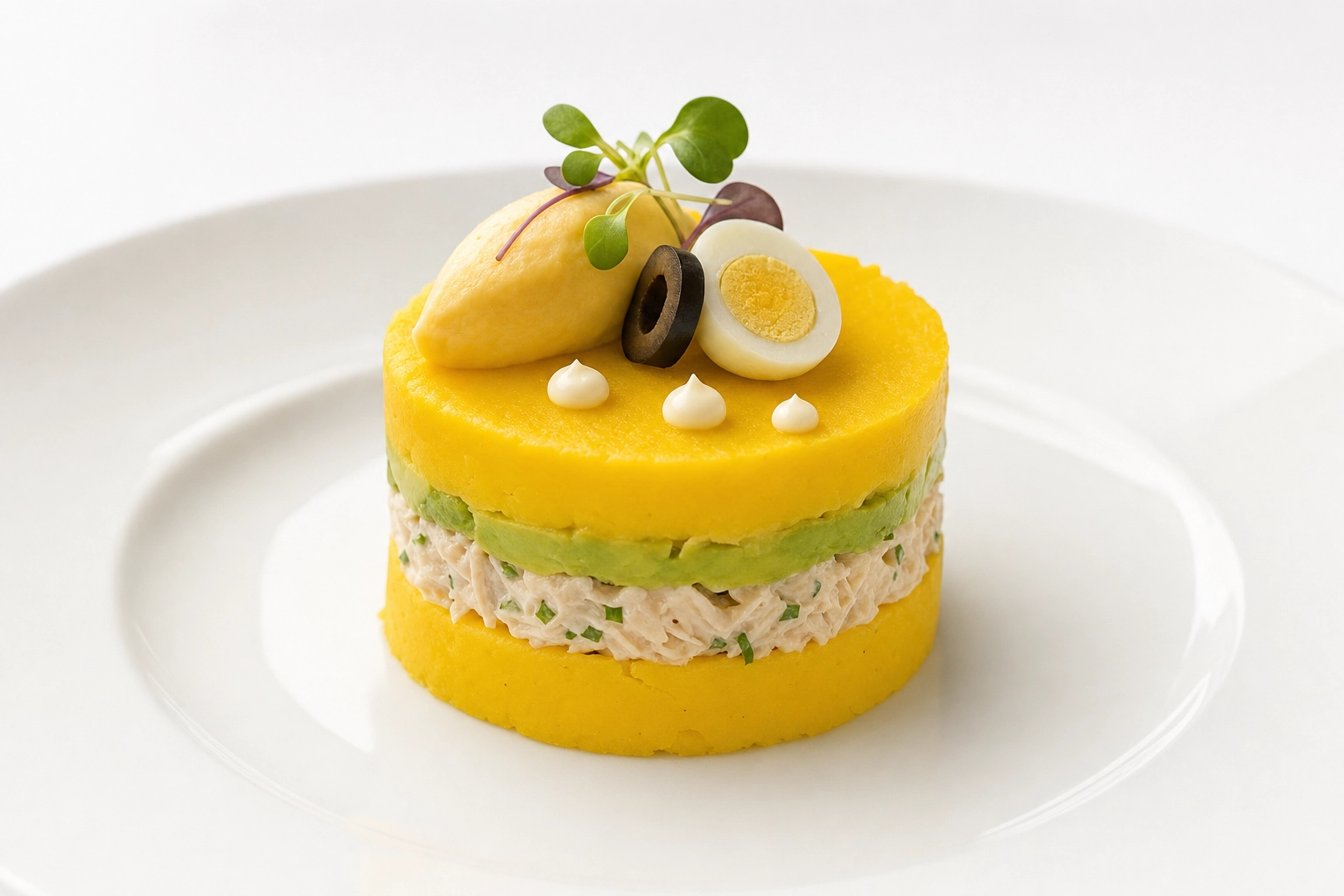 Elegant plated Peruvian causa terrine showing yellow potato, avocado and chicken layers with microgreens
- Angle to reveal the layers. Eye-level or a slight 45 degrees so the yellow-white-orange strata read. The cross-section is the story.
- Keep edges sharp. Wipe the plate, keep the mold crisp, don't overload — a quenelle, a few microgreens, a dot of aioli, an olive or quail egg. Restraint reads refined.
- Give it room. Negative space says "tasting menu"; clutter says "buffet."
- Guard the yellow — papa amarilla is the first color to wash out under fluorescents.
5. Pisco Sour: Peru's National Cocktail
End with a drink. The pisco sour — pisco, fresh lime juice, simple syrup, egg white and a few drops of Angostura bitters, shaken hard — is Peru's national cocktail, and its frothy foam cap with three dots of bitters is one of the most photogenic things behind any bar.
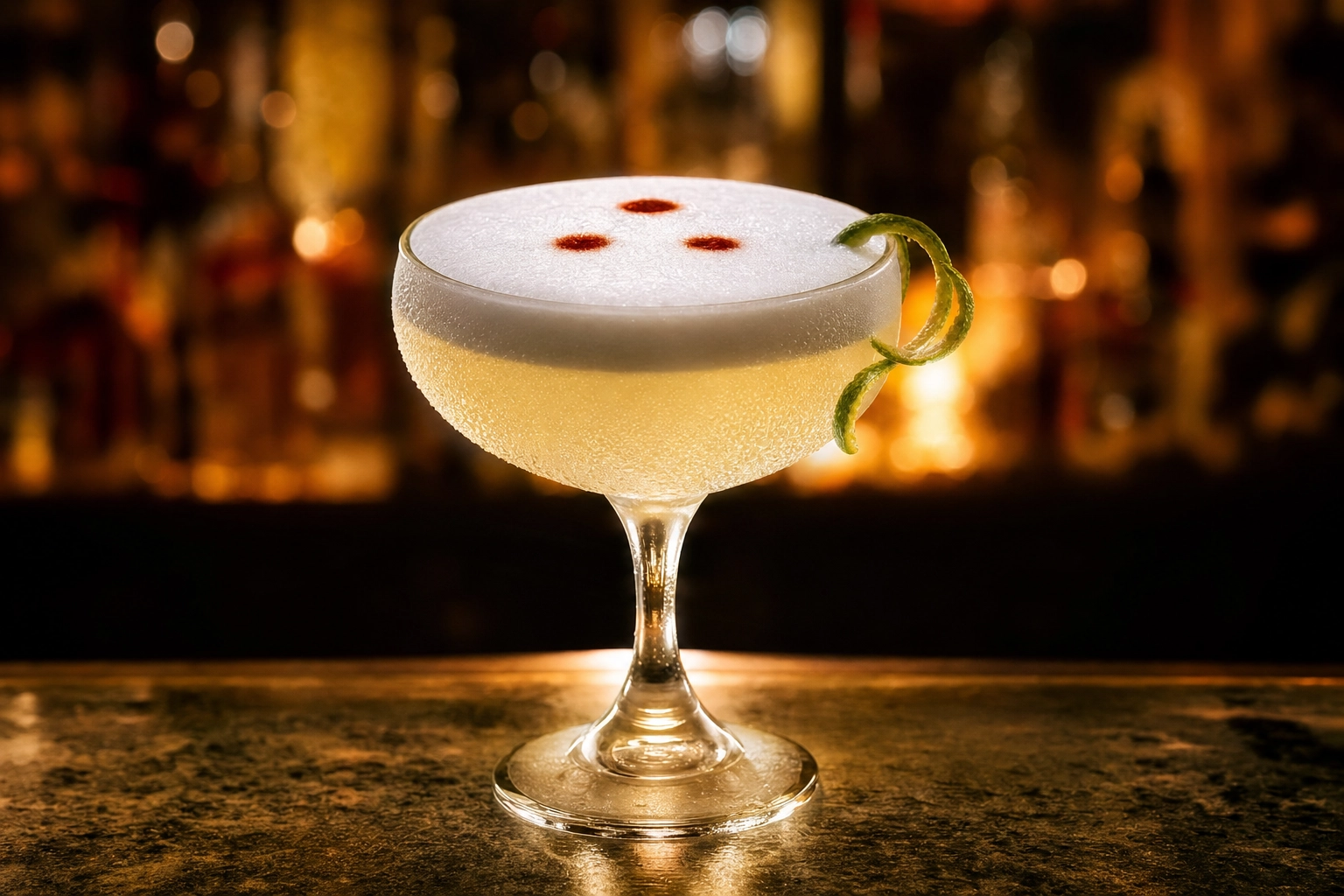 Pisco sour cocktail with frothy foam cap and three Angostura bitters drops, backlit against a moody bar
- Angle: straight-on at eye level. This is a portrait — shoot the glass head-on so the foam and bitters read.
- Shoot immediately. The foam collapses in a minute or two; have the camera ready and catch the bitters while the dots are crisp.
- Make it glow. Backlight the glass, add condensation, tuck a lime just inside the frame, keep a bright bar or moody lounge soft behind.
A pisco sour shot pulls double duty for the menu and for bars and lounges and cocktail menus — happy-hour ad and fine-dining aperitif in one.
Beyond the Big Five: More Peruvian Dishes Worth Shooting
A few more traditional dishes round out a full set of peruvian food images:
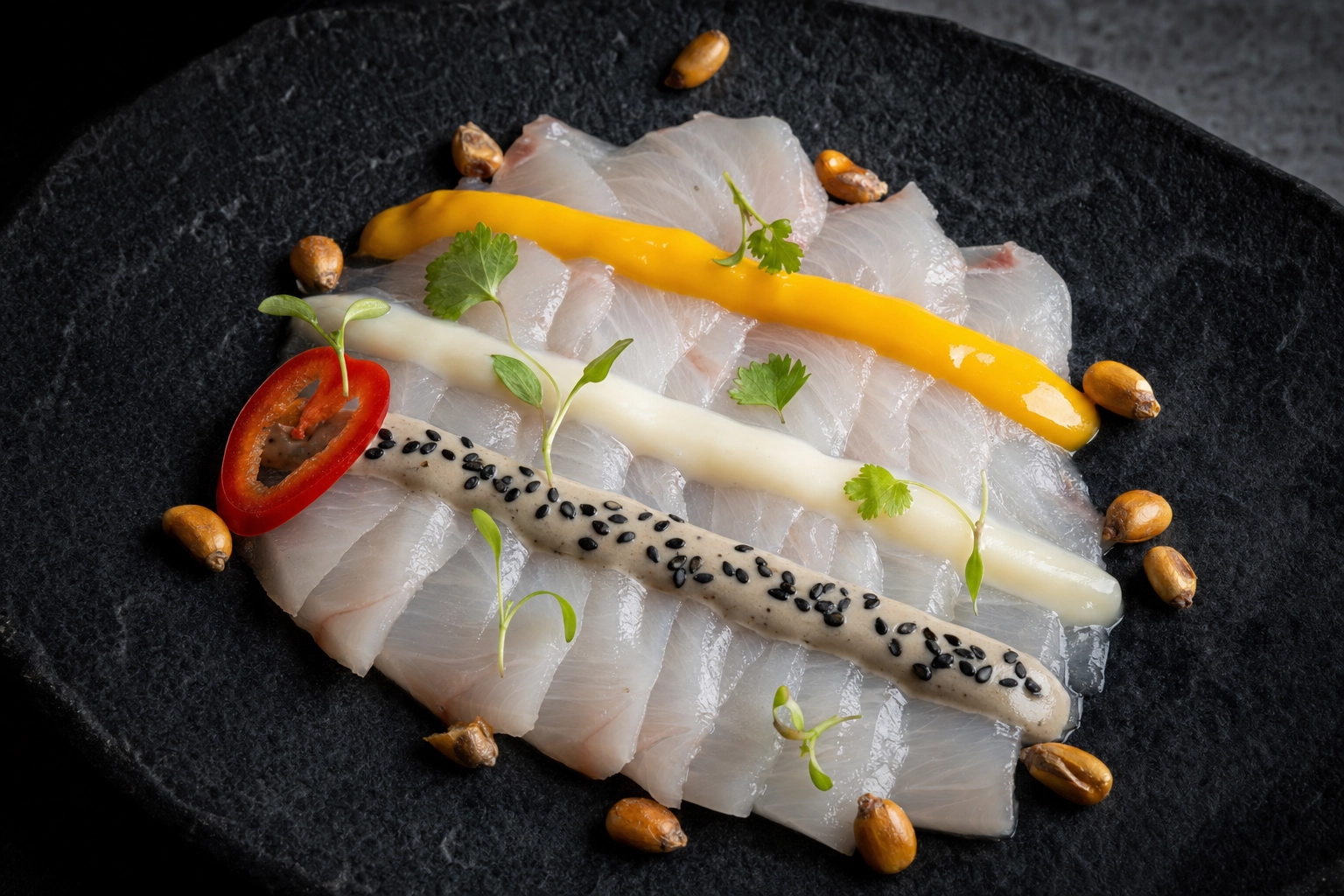 Overhead Nikkei tiradito: thin fish slices with ají amarillo and leche de tigre sauce lines on dark slate
- Tiradito — the Nikkei star. Sashimi-thin fish, no onion (the clearest difference from ceviche), dressed in clean lines of ají amarillo, leche de tigre or yuzu. Shoot from directly above so the knife work and sauce lines read.
- Pollo a la brasa — wood-fired rotisserie chicken, mahogany skin, bright green ají verde. The pollería hero.
- Ají de gallina and papa a la huancaína — creamy saffron-yellow sauces that wash out fast; treat their color like causa's.
- Picarones — squash-and-sweet-potato donut rings in chancaca syrup. Shoot the pour, or one ring lifted mid-drip.
- Chicha morada — the deep-purple corn drink that drops a jewel-toned pop into any spread.
Lighting and Styling: The Fresh, Elegant Peruvian Look
Peruvian food splits into two lighting registers, and mixing them is the big mistake.
Two Lighting Registers, Never Mixed
The bright coastal register suits the fresh dishes — ceviche, tiradito, causa. Soft, directional daylight, open airy shadows, cool whites so the citrus pops. The modern-Lima, World's-50-Best look.
The dramatic register suits the fire-and-comfort dishes — anticuchos, lomo saltado, pollo a la brasa. Warmer, moodier, directional light, deep shadows, a sense of heat and smoke. The Nikkei and highland look.
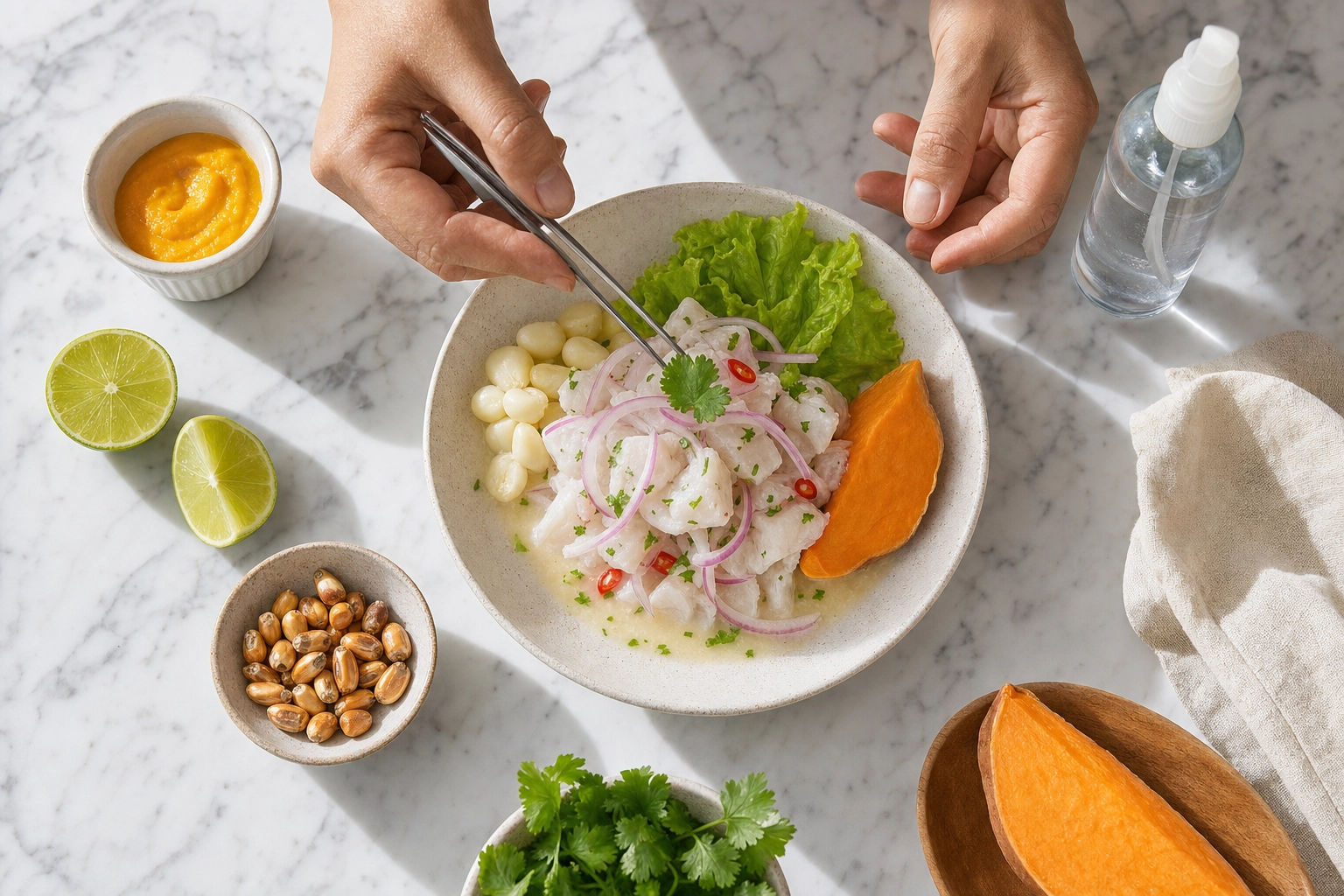 Hands styling a bowl of Peruvian ceviche with tweezers on marble surrounded by ají, lime and cancha props
Surfaces and Props That Read as Peruvian
- Match the surface to the register. White Carrara marble or pale wood for bright dishes; dark slate or walnut for dramatic ones; painted tile for café energy.
- Use props with restraint. Camote, choclo, cancha, a ramekin of ají, a rocoto slice, huacatay, halved limes — a few authentic ingredients, never a pile.
- Leave negative space for a price, dish name or promo line later.
Let Peru's raw ingredients carry the styling. Few cuisines give you this much color straight out of the walk-in.
Color Grading for Bright Citrus Tones
The edit that makes or breaks peruvian food images is white balance. Cool fluorescent cevichería tubes do two ugly things: they turn bright leche de tigre muddy grey and drain ají amarillo's yellow to pale mustard.
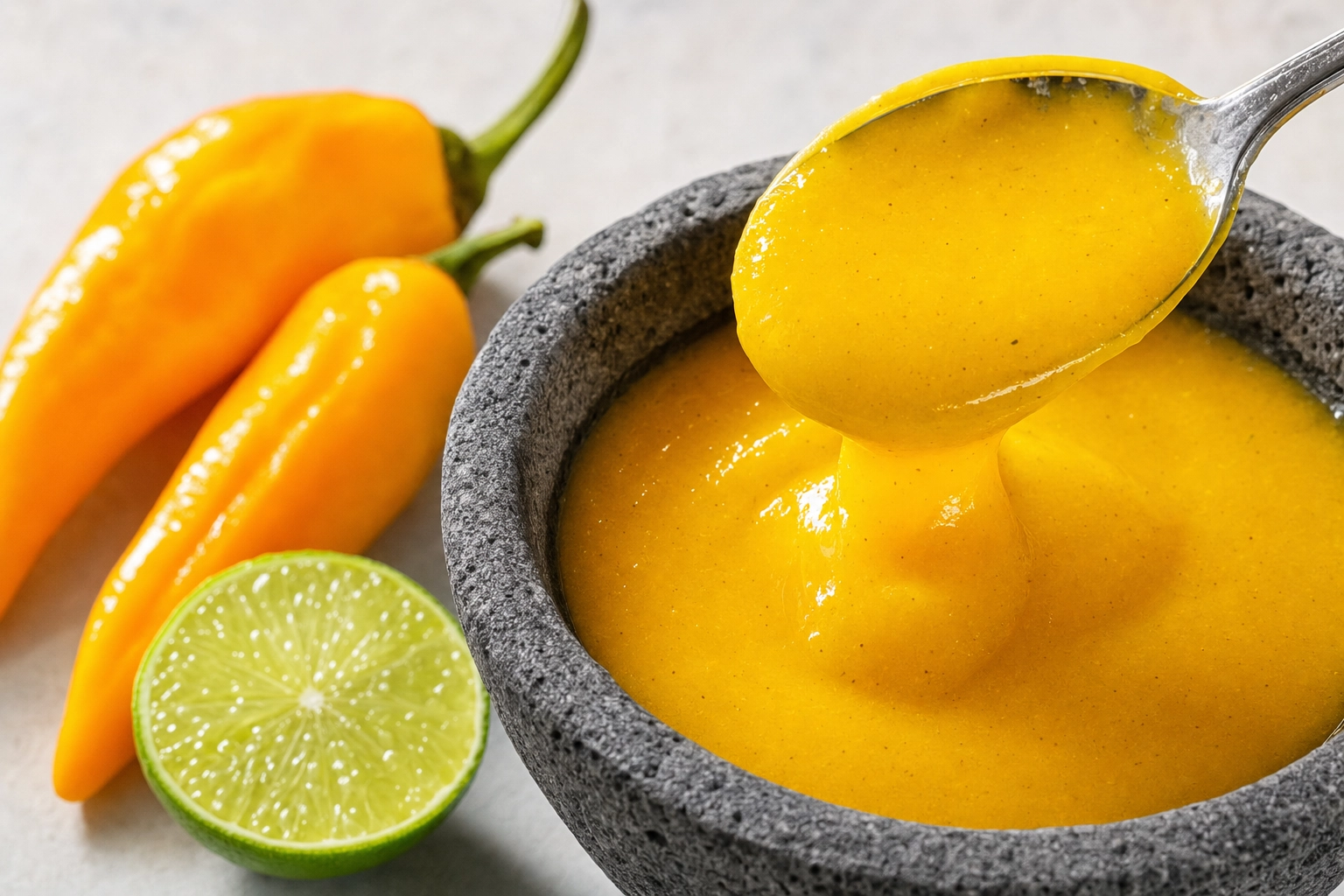 Macro of vivid electric-yellow ají amarillo sauce on a spoon beside fresh ají amarillo peppers and lime
Aim for cool, clean whites and saturated, warm accents. Nudge the white balance until the leche de tigre reads bright and slightly violet, then lift the signatures — ají amarillo yellow, rocoto red, cilantro green, camote orange — without tipping the frame to neon. A little contrast and clarity makes the raw fish look wet and fresh. For the full step-by-step, see our food color grading guide.
From Phone Snap to Menu-Ready: A Ceviche Before and After
The honest problem: a cevichería can't stop lunch service for a shoot. The fish is "cooking" by the second, the pass is stainless chaos, the light is flat fluorescent. So most Peruvian restaurants settle for a phone snap — muddy grey leche de tigre, dull fish, cluttered background — a picture that undersells a dish diners would happily pay $22 for.
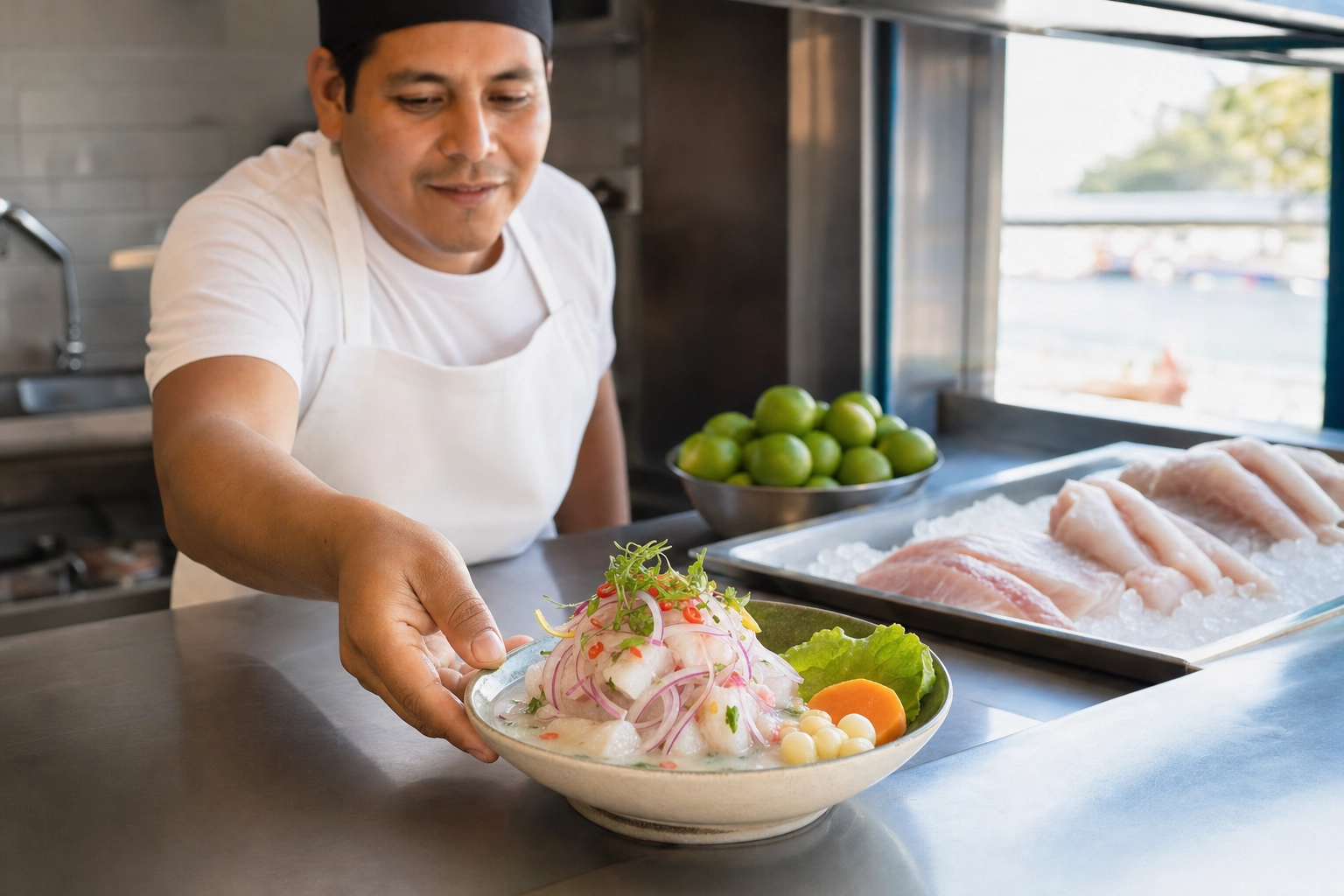 Cook plating fresh ceviche at a stainless pass in a bright modern cevichería kitchen with limes and fish on ice
In 2026 that gap is closed by AI food photography. Upload the snap, pick a bright editorial cevichería style, and in about 2 minutes the same ceviche returns on clean marble under cool light: the leche de tigre reads fresh, the choclo and camote pop, the fish looks just-cut. No studio, no reshoot when tomorrow's catch changes, and roughly 95% less than the $700–$1,400 a pro session costs — ready for the menu, the website and delivery-app listings.
See the styles built for this cuisine on our AI Peruvian food photography styles page, or start from any dish in the AI food photo editor.
Build a Consistent Peruvian Menu Gallery
One great photo is nice. A menu where every dish looks like the same restaurant is a brand.
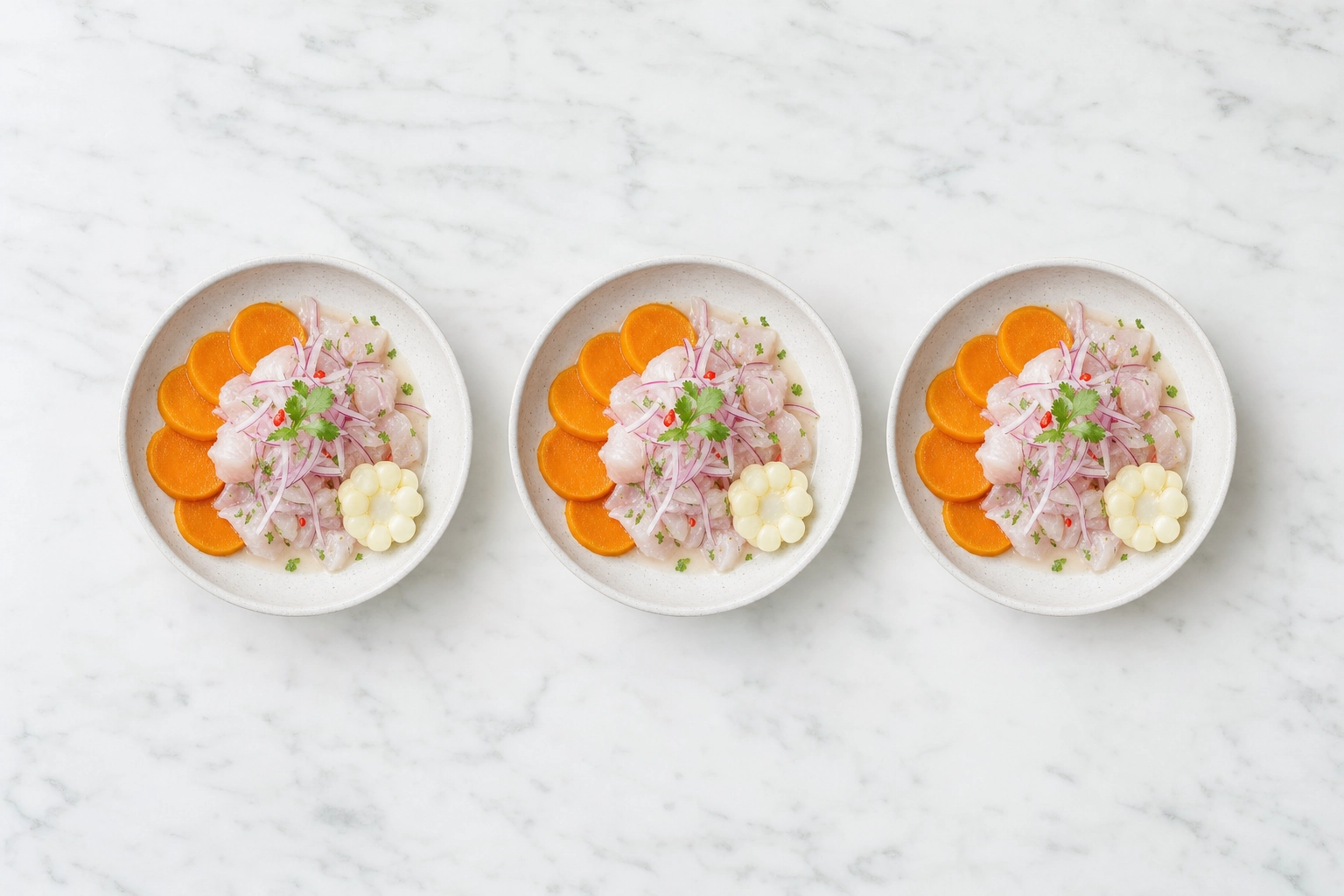 Consistent Peruvian food images: three matching ceviche bowls in a row on white marble
Lock a few decisions and repeat them: one surface, one light direction, one plating language across the ceviche, lomo saltado, anticuchos, causa and pisco sour. For fine-dining and Nikkei tasting menus — a meal can run past ten courses — that through-line is the whole game, and it's what fine dining menu photography is built to hold. Reference-style matching a look you already love keeps multi-location chains and diaspora Peruvian caterers on-brand from Lima to Miami, so the flagship's ceviche and the new location's read as one kitchen. Run other concepts too? Browse food photography by cuisine to see how the look adapts.
Your Peruvian Food Images, Menu-Ready in About 2 Minutes
You don't need a Lima studio or a four-figure photographer to make Peruvian food look Peruvian in 2026. Style fast and cold, pick the right register, protect the color, let the ingredients talk. When service is slammed and the light is bad, upload the snap and let the AI food photo editor hand back bright, brand-consistent peruvian food images in about 2 minutes — plans start at $15/mo.
Frequently Asked Questions
How do you take good pictures of ceviche?
Work fast and cold. The citrus keeps "cooking" the fish, so plate and style in under a minute, then shoot before the flesh greys and the onion wilts. Show the leche de tigre pooling, build height with choclo and camote, shoot overhead or at 45 degrees, and keep the white balance cool so the marinade stays bright.
What is the best camera angle for lomo saltado?
Eye-level or a 45-degree three-quarter angle. Lomo saltado is a tall, saucy dish, so a flat overhead flattens it — a lower angle shows the seared beef, the glossy sauce and the fries, and lets you catch the steam that makes it look hot off the wok.
Why does my ceviche look grey or dull in photos?
Two reasons: time and white balance. The lime acid turns fish opaque and grey within minutes, so a photo taken ten minutes late already looks tired — shoot immediately. And cool fluorescent light muddies the leche de tigre; correcting white balance and lifting the citrus colors restores the freshness.
What makes Peruvian food photography different?
Color, freshness and elegance in one cuisine: an unusually loud palette (electric ají amarillo, violet-white leche de tigre, rocoto red), raw citrus-cured seafood, and — thanks to Lima's Nikkei and fine-dining scene — an expectation of precise, editorial plating. Great peruvian food images balance all three.
Do I need a professional photographer for my cevichería?
Not in 2026. A pro shoot runs $700–$1,400 and must be redone whenever the catch or menu changes. AI turns a phone snap into a menu-ready image in about 2 minutes for a fraction of that — which is why so many cevicherías, pollerías and Nikkei restaurants now shoot in-house.
What props and surfaces work best for Peruvian food images?
Match them to the register. Fresh coastal dishes: white marble or pale wood with a few cues — camote, choclo, cancha, a ramekin of ají, halved limes. Grilled and Chifa dishes: dark slate or walnut, warmer light. Keep props minimal; Peru's ingredients carry the frame themselves.
Related Reading
- Food color grading guide — the white-balance and color workflow behind bright, fresh shots.
- Spanish food photography guide — the rustic, communal look, shot by shot.
- AI Peruvian food photography styles — cuisine-specific styles for cevicherías, pollerías and Nikkei kitchens.