
Taco Food Truck Menu Ideas: What Actually Sells in 2026
 Ali Tanis11 min read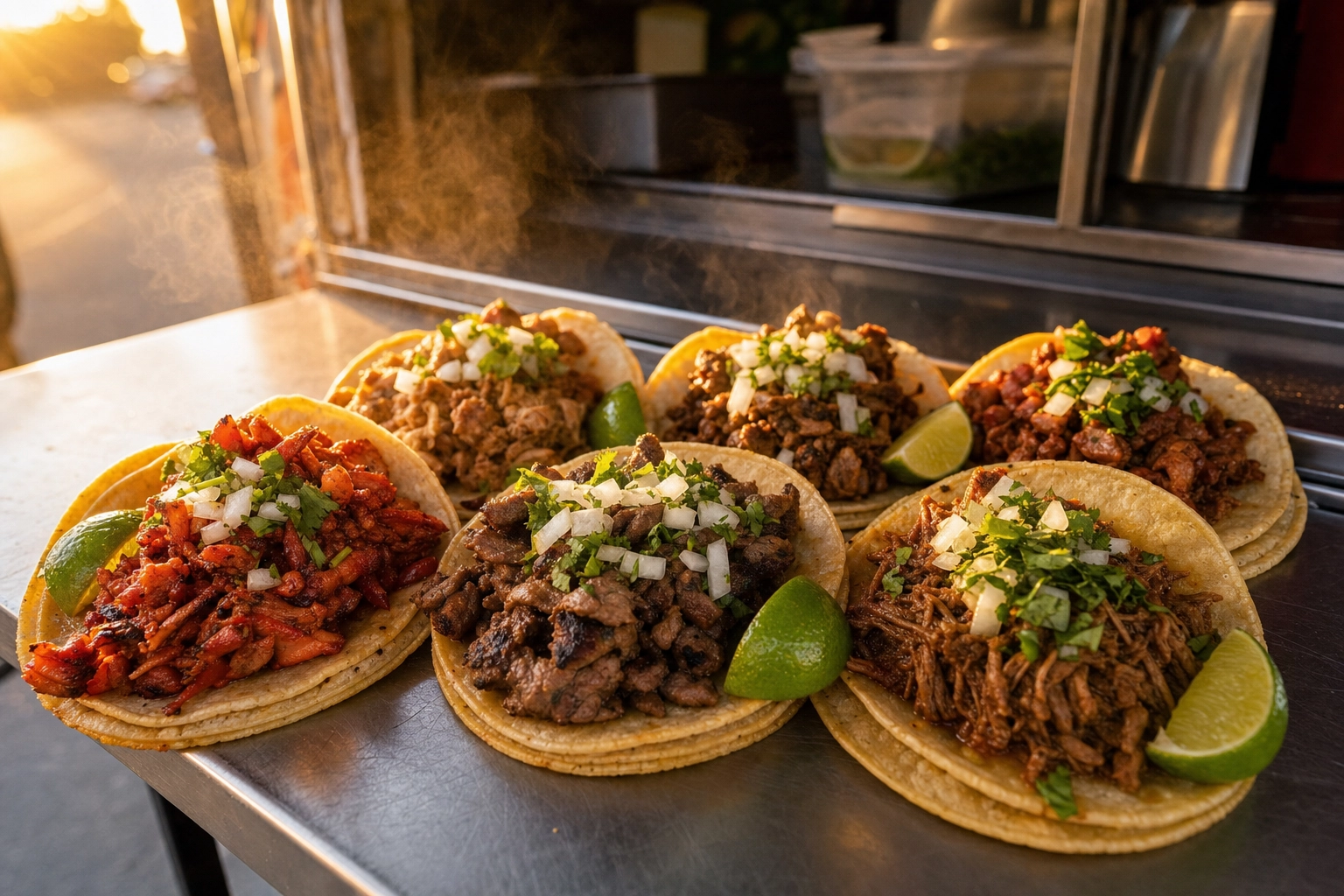
Most first-time operators design the truck before the menu. That's backwards. On a mobile kitchen the size of a walk-in closet, the menu is the machine: it decides how fast your line moves, how much food you throw away, and whether each order clears a profit. Get the taco food truck menu right and a used rig can pull $250,000 or more a year. Get it wrong and you'll prep twelve proteins for a crowd that only ever orders three.
Quick Summary: The taco food truck menus that actually sell keep it to six to eight items, lean on five proven proteins, and make their real margin on cheap sides and house salsas — not on twenty specialty tacos. Price each taco to a 28-32% food cost, differentiate with the toppings, and run a rotating weekly special to bring regulars back.
Why 6-8 Items Beat 20 on a Taco Food Truck Menu
A taco food truck menu is an operations document, not a wish list. Every item you add is another ingredient to hold at temperature, another prep task before service, and another thing that can run out or spoil. It also slows the person at the window, because more options mean more decision fatigue and a longer line behind them.
The trucks that move volume keep the board to six to eight items: four or five proteins, two or three sides, and a drink. That's enough choice to feel abundant and tight enough that your cook can hit every ticket in under two minutes. For the same lean-menu discipline applied to other cuisines, our broader food truck menu ideas guide is worth a read.
At festivals and catering gigs, cut even harder. A three-to-five-item menu with pre-portioned proteins lets one truck push 250 covers in six hours instead of 80 on a slow street corner. You lose a little variety and gain a lot of throughput.
The Protein Lineup That Sells
Five proteins cover the overwhelming majority of taco demand. The trick is balancing prep-heavy signatures against batch-cooked workhorses so your labor stays sane during a rush.
Al Pastor and Carnitas (Pork)
Al pastor is the showpiece: pork marinated in achiote and dried chiles, traditionally shaved off a vertical trompo and finished with a little pineapple and a scatter of raw onion. It's prep-heavy and worth it, because it's the taco people photograph. Carnitas is the workhorse cut of pork — braised low and slow in the commissary and held all service with almost no labor at the window. Running both gives you a signature and an easy default without doubling your prep. Some trucks even sneak chorizo into the mix for a spicier pork option that costs almost nothing to add.
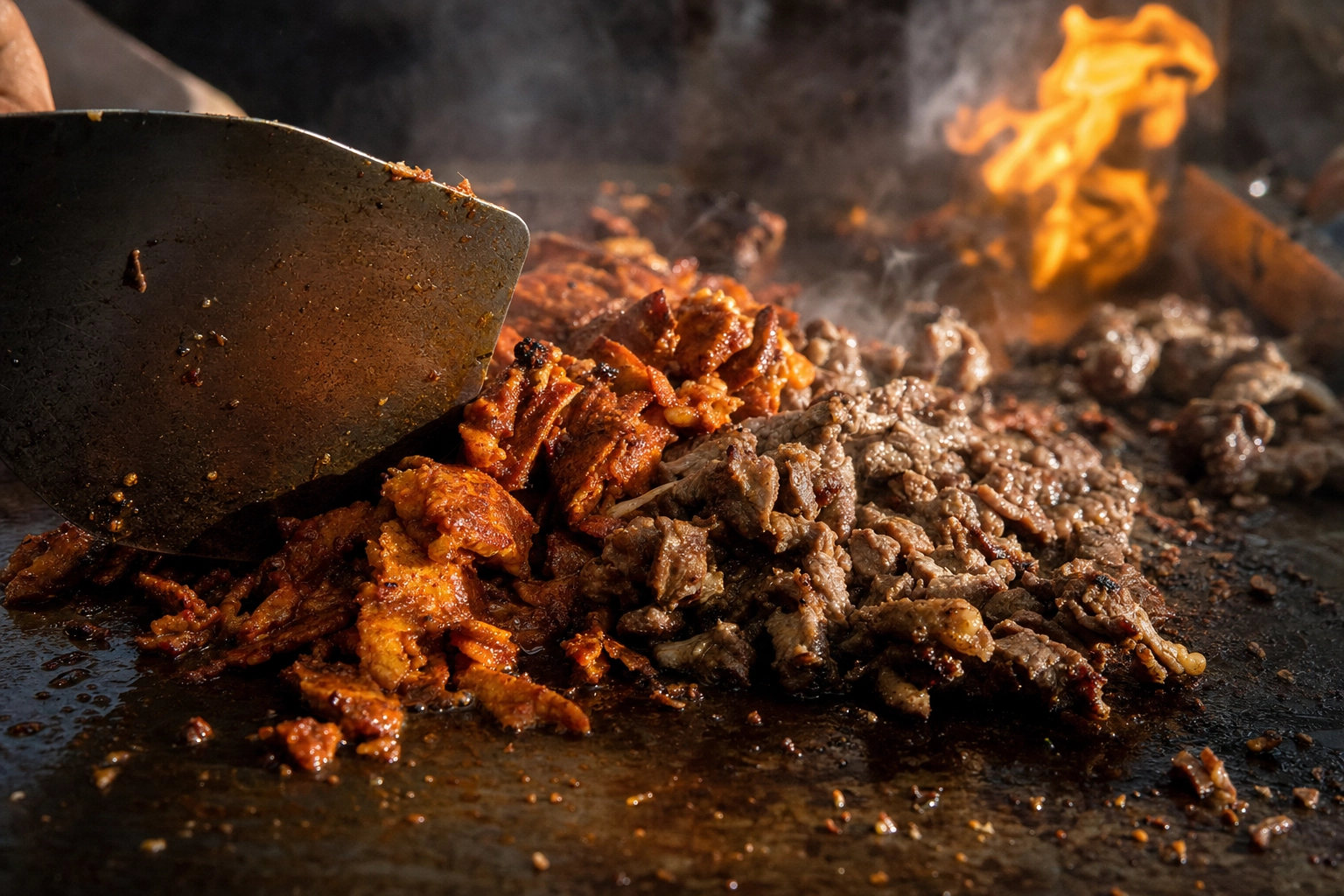 Al pastor and carne asada cooking on a taco truck flat-top griddle
Birria (Beef)
Birria is stewed beef, originally goat from Jalisco and popularized as beef out of Tijuana because beef gave a higher yield. It's served with a cup of consomé for dipping, and when you fold it into a tortilla with melted cheese you get the quesabirria that took over social feeds. This isn't a fad you can ignore: birria's appearance on U.S. menus has grown 144% over four years. It carries a higher food cost and longer prep than asada, so price it a dollar or two above your other tacos.
Carne Asada and Veggie
Carne asada — grilled steak cooked to order on the plancha — is the fastest protein on the board and the benchmark most customers judge you by. Keep the steak seasoned simply and the char aggressive. For the fifth slot, a veggie option built on rajas, mushrooms, or vegan chorizo lowers your blended food cost and captures the whole-group order that walks away when one person can't eat meat. Most trucks add pollo asado as a sixth, value-priced choice; chicken is the cheapest protein you can put in a tortilla, and a good chicken taco keeps families ordering.
Taco Food Truck Menu Math: What Each Taco Actually Makes
Here's why tacos have the best risk-reward of any food truck category. A street taco with two to three ounces of protein carries a food cost of roughly $0.85 to $1.30. Sell it for $4 to $5 and you're looking at a contribution margin north of 70% on that single unit.
The number that keeps you honest is food cost percentage. Aim for 28-32% on your core tacos. Above 35% means your portions are too generous or your price is too low, and the fix is a scale, not guesswork. The formula is simple: divide your fully-loaded cost per serving by your target food cost. A chicken taco whose meat, tortilla, and toppings cost $1.35, priced at a 28% target, comes out to $4.82 — round it to $5.
Don't chase margin by shrinking portions, though. A truck running a 20% food cost on sub-three-ounce tacos will lose its regulars inside two months. Build a 5% waste factor into every plate cost before you price, and bump it to 8-10% on anything with avocado, seafood, or fresh herbs. Remember the container, too: unlike a restaurant, every order you sell leaves in packaging you paid for.
None of this makes you rich overnight. Food trucks net 6-9% after everything, versus 3-5% for a brick-and-mortar restaurant. At a typical ticket, that means selling somewhere around 200 to 275 tacos a day to make a real living. Volume and discipline, not a twenty-item board, are what get you there.
Salsas and Toppings: Your Cheapest Differentiation
Two trucks can sell the same carne asada and one will have a line around the block. The difference is almost always the finish. The classic street taco is dressed simply — a little diced white onion, chopped cilantro, and one good salsa on a warm corn tortilla, served hot — and that restraint is a feature, not a shortcut.
Where you separate yourself is the salsa program. Offer at least a bright red salsa roja and a tomatillo salsa verde, then add a house pico de gallo for the people who want fresh over fire. A pickled red onion costs pennies and reads as a signature; a scatter of raw white onion and cilantro should be free. Guacamole and sour cream are fair upcharges, because avocado is genuinely expensive and customers expect to pay for it. Finish a few tacos with cotija or queso fresco and you've got the cheese-flecked contrast that photographs beautifully.
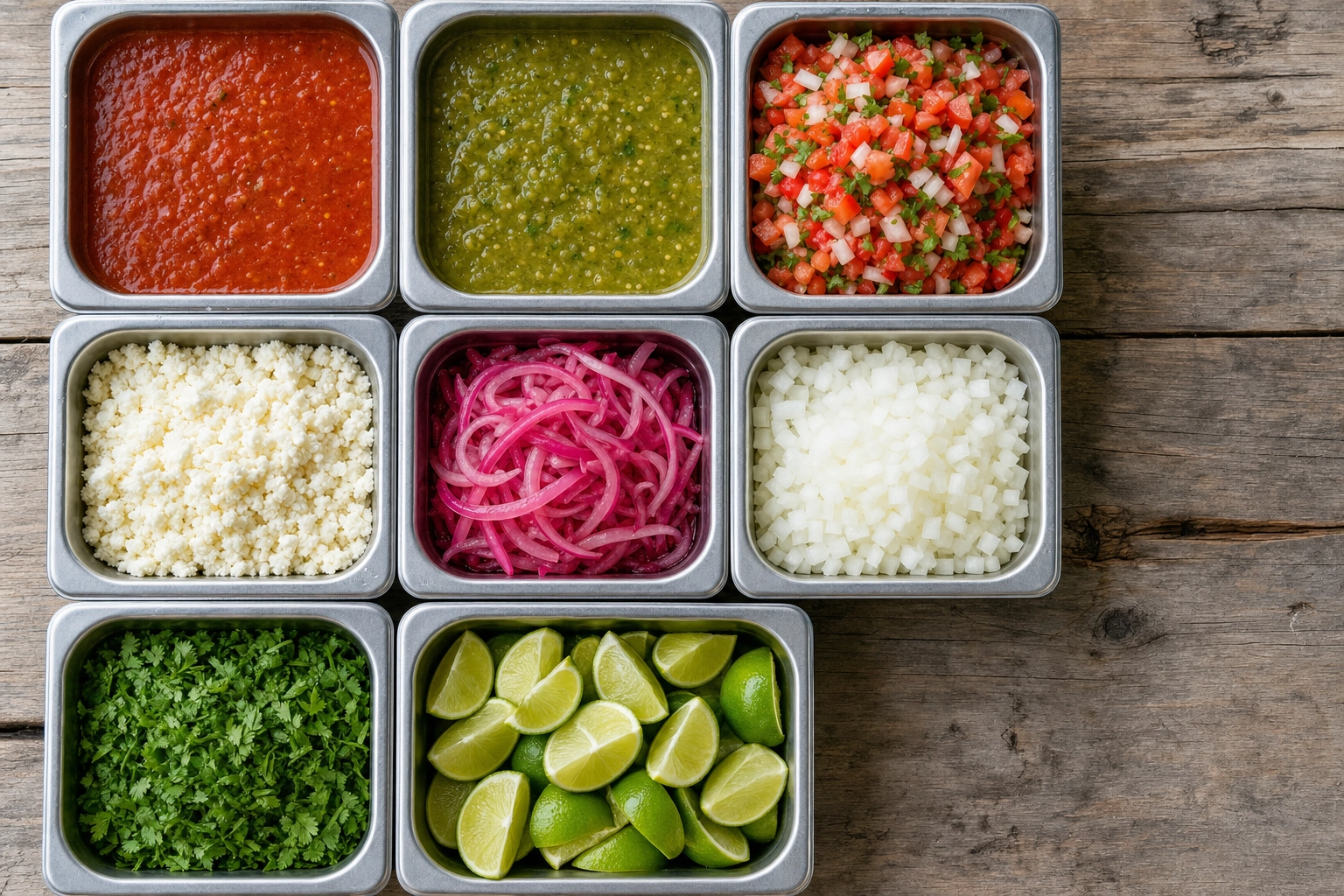 Overhead view of house salsas, diced onion and cilantro toppings on a taco truck
The economics here are quietly excellent. Fresh salsas, onion, and pico de gallo are among the lowest-cost items you touch, and they're the single biggest lever on whether someone comes back. Cheap to make, hard to copy exactly, and the reason your regulars pick you over the truck two blocks away.
Upsells That Lift the Ticket
A taco alone is a small ticket. The money is in what you add to it. The best upsell in the business is chips and salsa: a $3 side of tortilla chips costs about $0.40 to plate, a food cost near 13%. That side is where the margin actually lives — a $15 three-taco plate at 27% food cost blends down under 25% the moment you attach it.
Beyond chips, a short list of hearty add-ons does the heavy lifting. A quesadilla on a flour tortilla with melted cheese and any protein is a near-zero-effort upsell. Loaded asada fries — fries, cheese, meat, a drizzle of crema — travel well and feel indulgent. A burrito folds your existing fillings, refried beans, and rice into a higher-priced single item, and a side of black beans or a cheese-topped elote adds cheap, high-margin volume. And don't skip drinks: aguas frescas like horchata and jamaica are delicious, high-margin, and turn a $9 order into a $13 one. Industry-wide, average tickets land between roughly $8 and $16.50, and sides and drinks are what push you toward the top of that range.
The Rotating Special That Brings People Back
A fixed menu feeds first-timers. A rotating special turns them into regulars. Run one limited-time protein or taco each week — a Baja fish on Fridays, a chile verde midweek, a seasonal mole — and you give people a reason to check your location and come back before it's gone. It's also the cheapest R&D you'll ever do: test a new item as a special, watch how it sells, and only promote it to the permanent taco food truck menu if it earns the slot.
Specials also keep you ahead of trends without betting the whole menu on them. Beef birria is mainstream now, and some critics argue the hype has already peaked; a weekly special lets you ride whatever comes next without reprinting your board. Post it the night before and you've built a marketing calendar for free.
Make the Tacos Look as Good as They Taste
Here's the part most operators underrate. Your menu board and your delivery listing live or die on how the tacos look. A blurry, gray photo of a beautiful al pastor taco loses to a competitor's sharp one every time, and customers notice — one of the most common complaints on delivery apps is that the food "looked nothing like the menu photo." That mismatch costs you repeat orders and reviews, and price-sensitive customers already scrutinize every dollar.
The problem is that a food truck is the hardest place on earth to shoot food. You're in harsh midday street light that blows out highlights and drops ugly shadows across the plate, working over a stainless counter with a busy background and no time to style anything mid-service. Our food truck photography guide covers fighting those conditions on-site, and the Mexican food photography breakdown gets into styling tacos specifically.
This is exactly where a phone photo plus AI restyling fits. Snap the taco on your counter and turn that raw shot into a clean, studio-lit image that still matches the real dish — no reshoot, no photographer, no lull in service. It's how a one-truck operation gets a menu board and delivery listings that look like a chain's. FoodShot AI is built for exactly this: see how operators approach food truck menu photography, then use a matching set of shots to build a consistent food truck menu board that sells before a customer tastes anything.
Frequently Asked Questions
How many items should a taco food truck menu have?
Six to eight for a fixed street menu — about four or five proteins plus a couple of sides and drinks. Cut to three to five items at festivals and catering events, where pre-portioned proteins and speed matter far more than variety.
What are the most profitable taco truck menu items?
Sides and drinks, not the tacos themselves. Chips and salsa run around a 13% food cost, and aguas frescas are nearly pure margin. Among proteins, chicken and simple veggie tacos carry the lowest cost, while carne asada and pork deliver the best mix of margin and demand.
How much should I charge per taco in 2026?
Most street tacos sell for $4 to $5, with birria and seafood running $5.50 and up because of higher ingredient and prep costs. Price to a 28-32% food cost rather than copying the truck next door, and add roughly a dollar per item at festivals to cover event fees.
What proteins does every taco truck menu need?
A reliable core is al pastor or carnitas (pork), carne asada (steak), birria (beef), and a veggie option, with chicken as a common value add. That lineup covers pork, beef, steak, poultry, and a meat-free choice — authentic Mexican variety without overloading your prep.
Corn or flour tortillas for a taco truck?
Corn is traditional for street tacos and what most customers expect, so make it your default. Keep flour on hand for quesadillas, burritos, and guests who prefer it — a flour tortilla holds heavier, saucier fillings without falling apart.
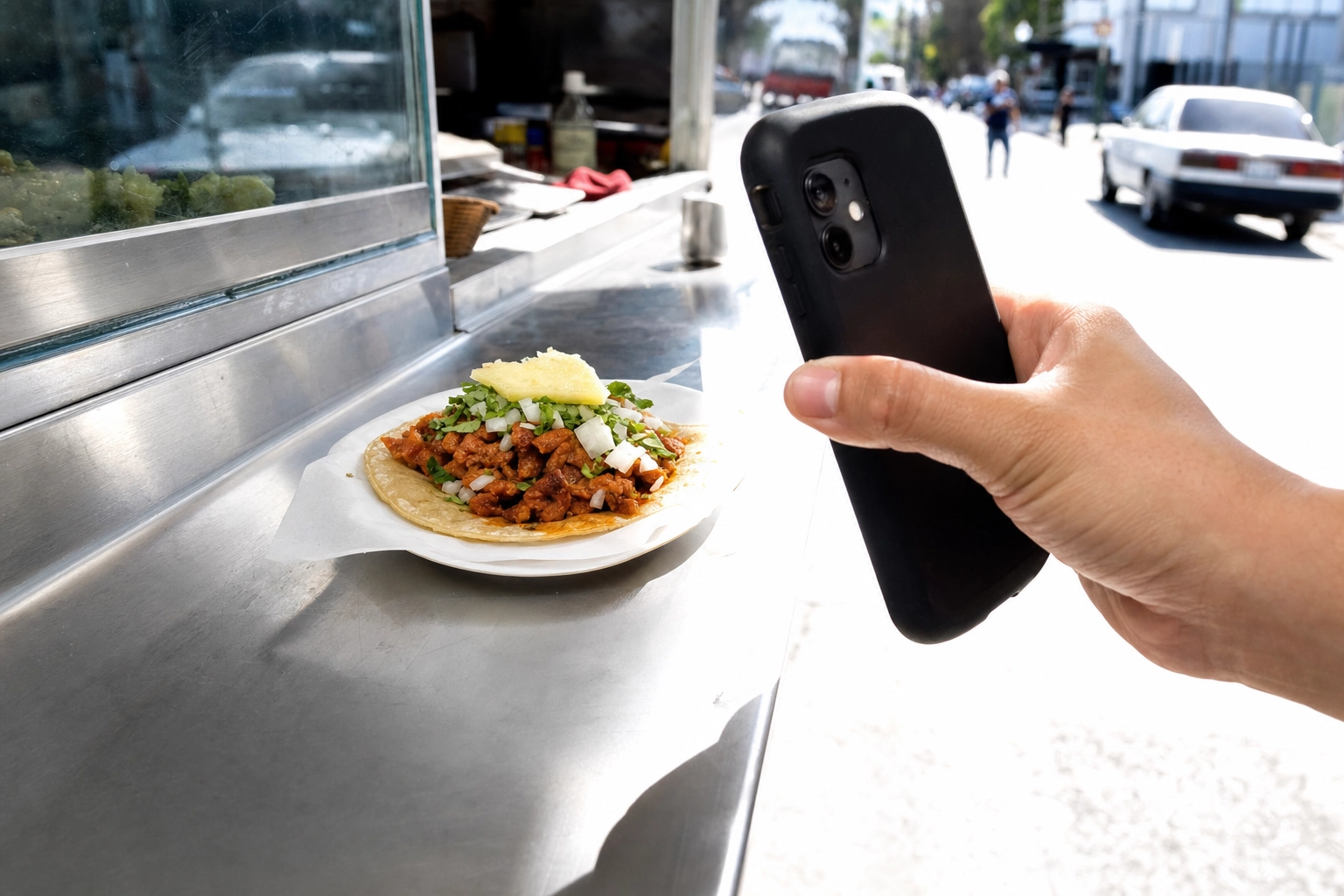 Operator photographing a taco with a phone in harsh midday street light beside a food truck