 Ali Tanis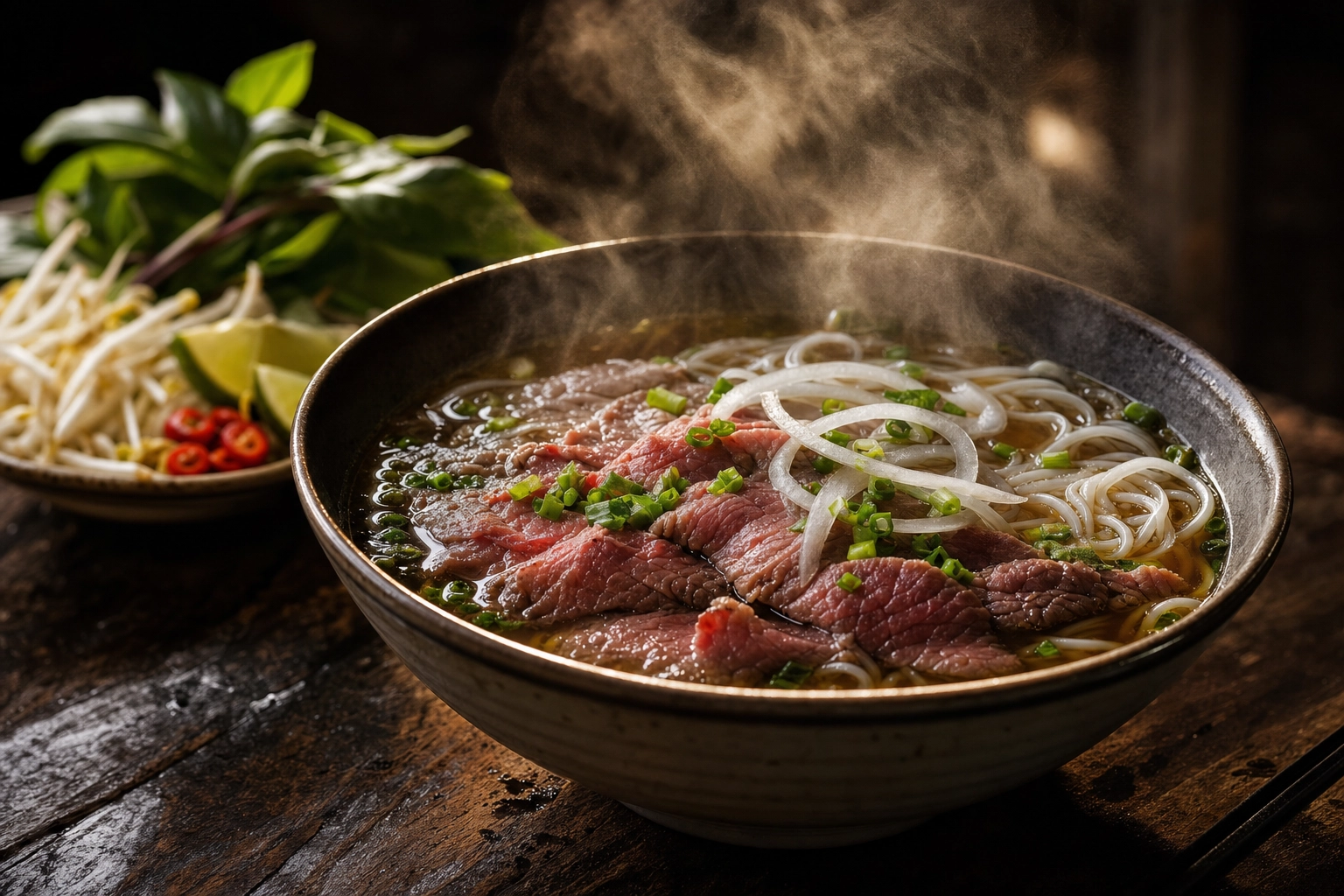
A great bowl of pho can stop someone mid-scroll. The problem? Most pho images never capture what makes the dish irresistible in person — the curl of steam off the broth, the glossy tangle of rice noodles, the little garden of Thai basil and lime waiting on the side. Snap it a minute too late and you're left with a flat, gray soup that looks nothing like the bowl your kitchen just sent out.
If you run a pho shop or a Vietnamese restaurant, these photos are doing real work — on your menu, your delivery listings, your Instagram. This guide walks through how to shoot pho and the rest of your menu (banh mi, rolls, vermicelli bowls, broken rice) so the pictures sell as hard as the food does.
Quick Summary: The hardest part of any pho photo is the steam and broth, and they only cooperate for about a minute. Backlight the bowl against a dark background, shoot at a 25–45° side angle within the first 30–60 seconds, and style an herb plate alongside. The same broth-and-steam playbook carries the rest of a Vietnamese menu — banh mi cross-sections, translucent rice-paper rolls, vermicelli bowls and broken-rice plates.
Why great pho images are so hard to capture
Pho looks effortless on the table and fights you on camera. The reason comes down to three things happening at once: a hot, reflective broth; soft rice noodles that slump the moment they sit; and steam that vanishes in under a minute.
Get the timing wrong and the broth turns into a flat gray mirror, the herbs wilt, and the bowl reads "leftovers" instead of "just served." That's why so many pho pictures online look dull even when the pho itself is excellent.
It's worth getting right. Restaurants with professional menu photos see roughly 25–30% more orders on delivery platforms, and a Google-commissioned survey found that looking at the photo is about 1.44x more influential than reading the description when a customer decides what to order. For a pho shop, the bowl in the photo is the bowl people order. Pho is the noodle-soup sibling of ramen, so if you also serve ramen, our ramen photography guide and the wider Asian food photography guide run on the same broth-and-steam logic.
How to shoot a hero pho image: steam, broth and the noodle lift
Every Vietnamese menu needs one knockout bowl of pho. Here's how to build it, one decision at a time.
Backlight the steam (the single most important move)
Backlight is the difference between a pho photo that looks alive and one that looks cold. Put your main light — a big window works perfectly — behind the bowl, angled back toward the camera. Backlight does two jobs at once: it lights up the rising steam so it actually shows, and it lays a bright rim along the edge of the broth and the noodles.
Then stack the deck so the steam reads on camera:
- Use a dark background. Steam is nearly invisible against white. A dark wood table, a slate surface, or a deep charcoal backdrop makes those wisps pop.
- Shoot the second it's served. Steam is heaviest in the first 30–60 seconds. Plate the bowl, then shoot — don't carry it across the room first.
- Cool the room if you can. Steam condenses and shows more in cooler air, which is why a hot kitchen is the worst place to catch it.
- Use a faster shutter. A quick shutter freezes crisp, defined steam; a slow one turns it into a vague haze.
- Kill the glare. Broth is a mirror. A black card (a "flag") held just out of frame on the camera side cuts the hotspot reflecting off the surface.
Avoid flat, head-on front lighting — it's the fastest way to make a beautiful bowl look like a cafeteria tray. Our food photography tips cover backlighting and steam in more depth.
Choose your angle: 3/4 side vs straight overhead
Two angles do most of the work for pho.
A three-quarter side angle — camera roughly 25–45° above the table — is your steam angle. It shows the depth of the bowl, the noodles and beef breaking the surface, and, crucially, the steam rising into the frame. This is almost always the right call for a hero pho image.
A straight overhead (90°, shooting down) is the natural phone angle, and it's great for showing everything in the bowl at a glance — the slices of rare beef, the scallions, the noodles fanned out. The trade-off: from directly above, you lose the steam entirely. Use overhead when the toppings are the story; use the side angle when the steam and warmth are.
Style the bowl and the herb plate on the side
Pho styling splits along regional lines, and knowing which one you're shooting keeps it authentic.
Southern, Saigon-style pho comes with a separate herb plate — a generous pile of Thai basil, sawtooth coriander (ngo gai), bean sprouts, lime wedges and sliced chili, with hoisin and sriracha nearby. That plate is a gift to your photo: it adds color, freshness and story right next to the bowl. This is the "pho with the herb side" look most people picture.
Northern, Hanoi-style pho is the opposite — clear broth, wider noodles and restraint, with just scallion, onion and cilantro. Lean into that simplicity: a clean bowl, beautiful broth, no clutter.
A few quick styling moves either way: arrange the beef and noodles so the best pieces face up, drop in a few neat rings of white onion, keep the cilantro fresh, and stage the chopsticks and condiments at a natural angle rather than dead center.
The noodle lift: add motion and heat
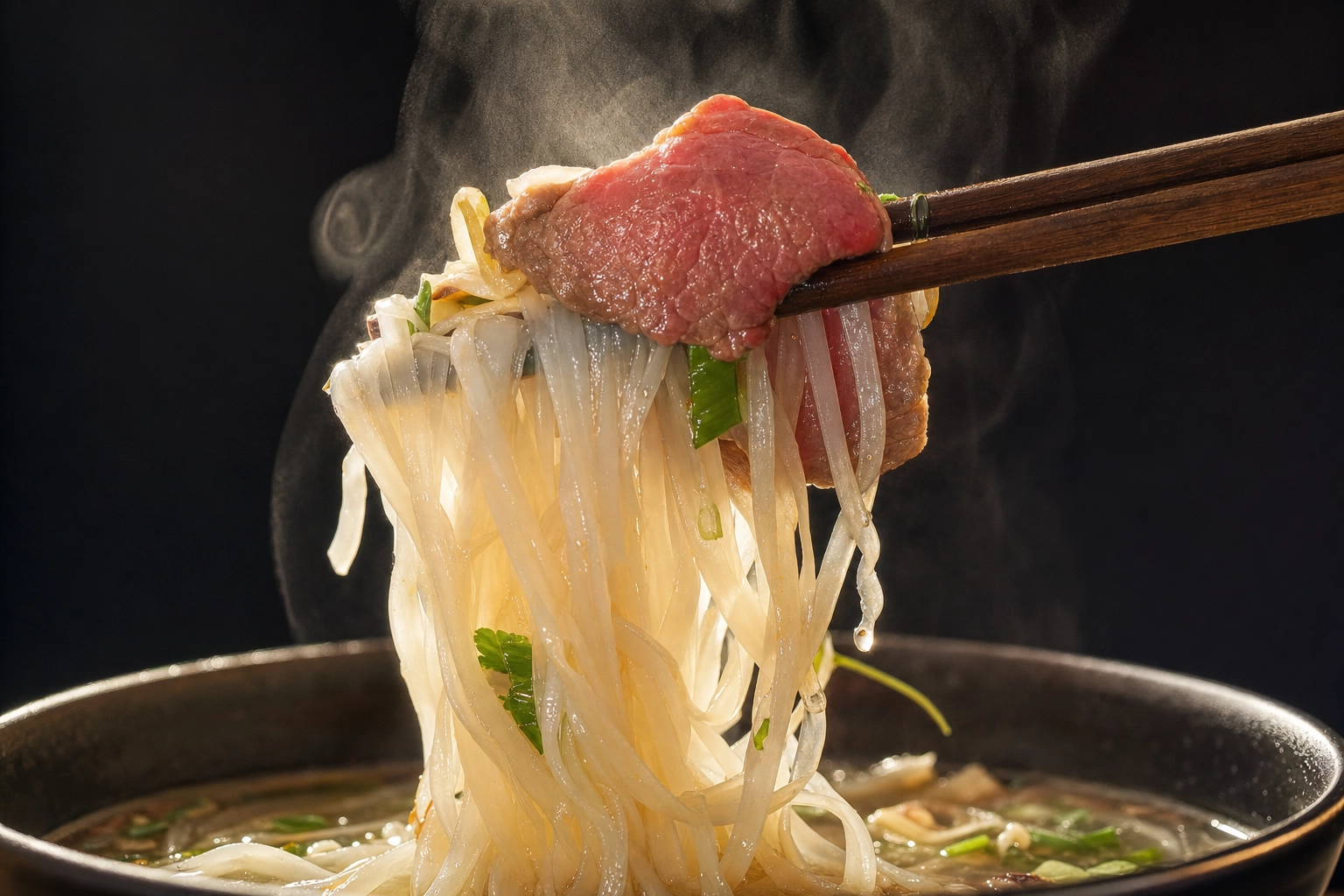 Chopsticks lifting steaming rice noodles and a slice of rare beef from a bowl of pho — a dynamic pho image against a dark background
The single most appetizing pho shot usually isn't the still bowl — it's the lift. Chopsticks pulling up a tangle of rice noodles (bonus points for a slice of rare beef riding along) instantly says hot, fresh and ready to eat. Steam trailing off the lifted noodles is the cherry on top.
You'll need a second pair of hands: one person lifts while you shoot. Fire in burst mode so you can pick the frame where the noodles hang in the most pleasing curve, and keep that same dark, backlit setup so the steam stays visible.
From phone snap to menu-ready: a pho before and after
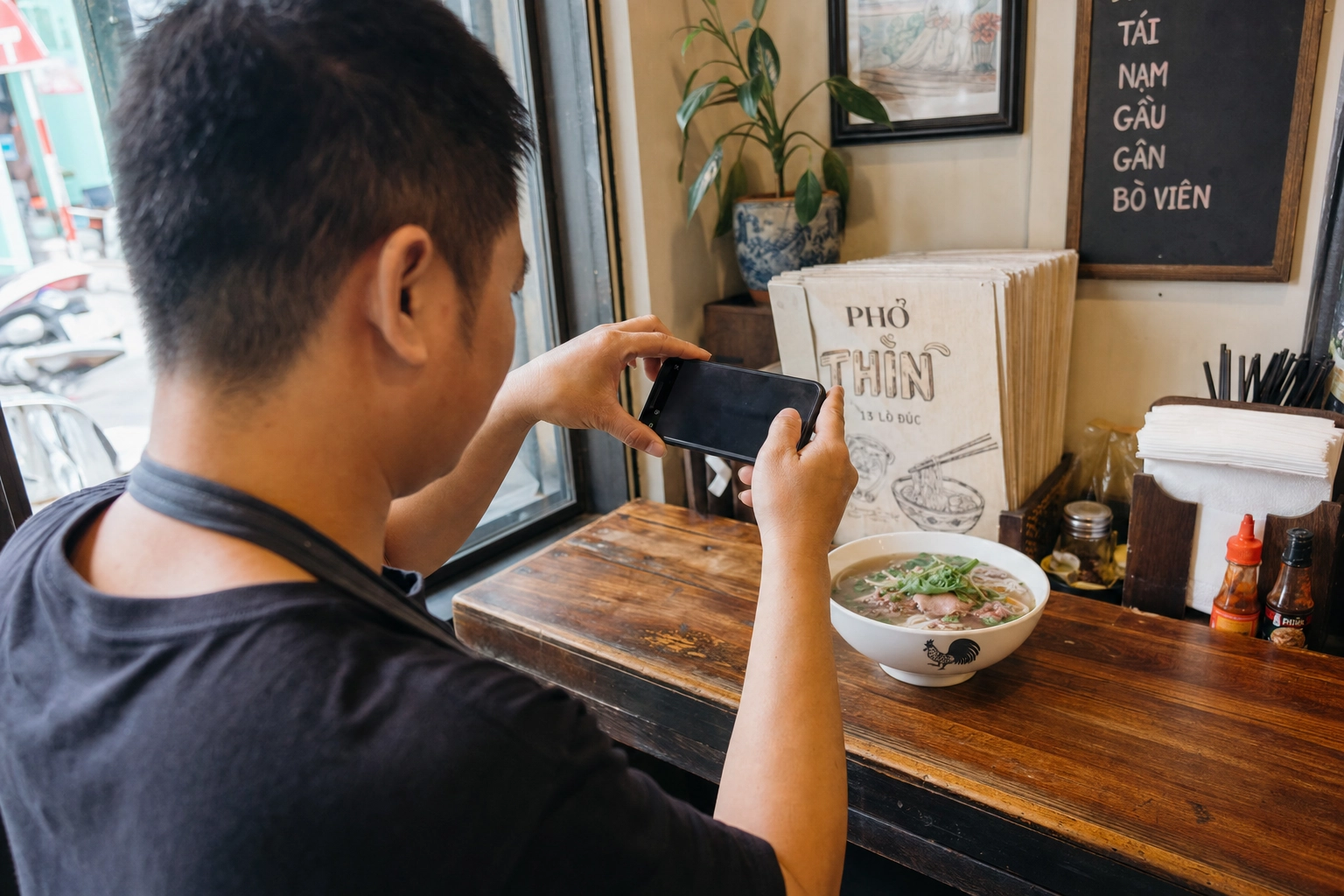 Pho shop cook photographing a fresh bowl of pho with a smartphone on a wooden counter in soft daylight
Here's the honest starting point for most pho shops: a quick phone photo snapped under warm fluorescent shop lights, on a busy table, between tickets. The broth looks orange-gray, there's no steam, the background is a clutter of napkin dispensers, and the white balance is off. It happens to everyone.
The fixes are predictable:
- Warm and correct the broth so it reads rich, not muddy.
- Drop in a clean, dark background and clear the clutter.
- Bring back the rim light and the steam that make it look fresh.
- Lift the noodles or sharpen the garnishes so there's a clear focal point.
You can do all of that by hand in an editor — or you can let AI carry the heavy lifting. FoodShot's food photo editor is built specifically for this: upload your phone photo, pick a style, and get a clean, relit, menu-ready bowl back in about 90 seconds. It restyles the real bowl you actually serve — it doesn't invent fake food — and it costs roughly 95% less than a professional shoot, which typically runs $700–$1,400 per session and has to be redone every time the menu changes.
If you're capturing the starting photos yourself, our guides on taking better food photos with your phone and getting photos that meet delivery-app specs will sharpen your input — and the better the input, the better the result.
5 essential Vietnamese food shots every menu needs
Pho earns the hero spot, but a complete set of Vietnamese food pictures needs a few more dishes to look right on a menu, a website or a delivery app. Here are the five that matter most.
1. The flagship pho image: steam and an herb plate
Your headliner. Bring it all together: backlit steam, a three-quarter side angle, beef and noodles facing up, and that herb plate staged just behind or beside the bowl. Hoisin and sriracha in frame add color and signal "build your own." If you shoot only one of your pho images for the menu, make it this one.
2. Banh mi cross-section (the layer reveal)
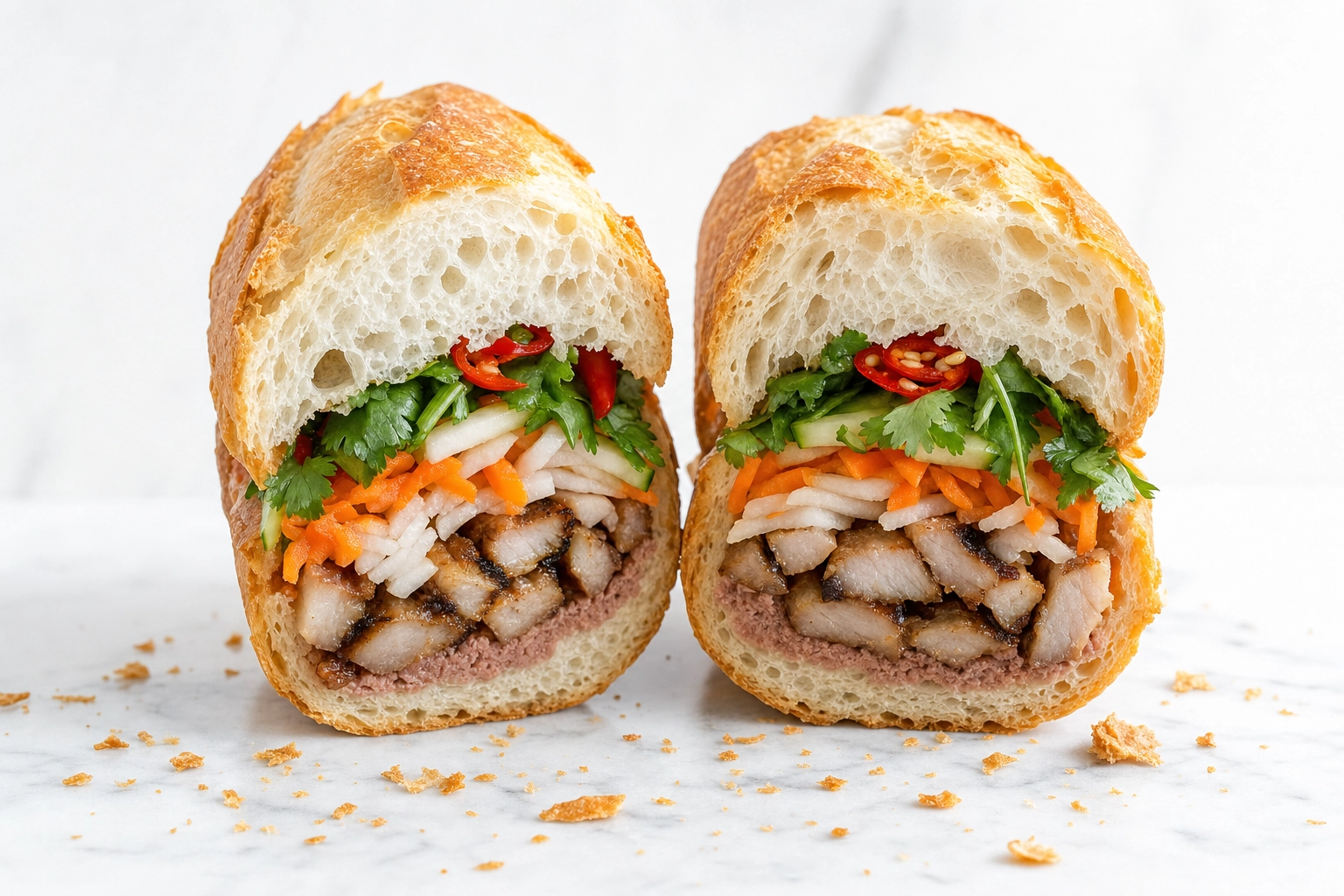 Banh mi cut on a diagonal showing layered pickled carrot, daikon, cilantro, chili and grilled pork inside a crusty baguette
Banh mi photography lives and dies on the cross-section. Cut the sandwich on a sharp diagonal and stand the halves so the camera looks straight into the filling. The whole point is the reveal: orange pickled carrot and white daikon (do chua), green cilantro, red chili, cucumber, the pâté and your protein all stacked in one bite.
A few details sell it. Leave a scatter of crumbs from the crackly Vietnamese baguette — that shattering crust is the signature. Use bright side light to separate the colorful layers, and shoot close. This is one shot where a lighter, brighter surface usually beats a dark one.
3. Rice-paper rolls (goi cuon): backlight the translucency
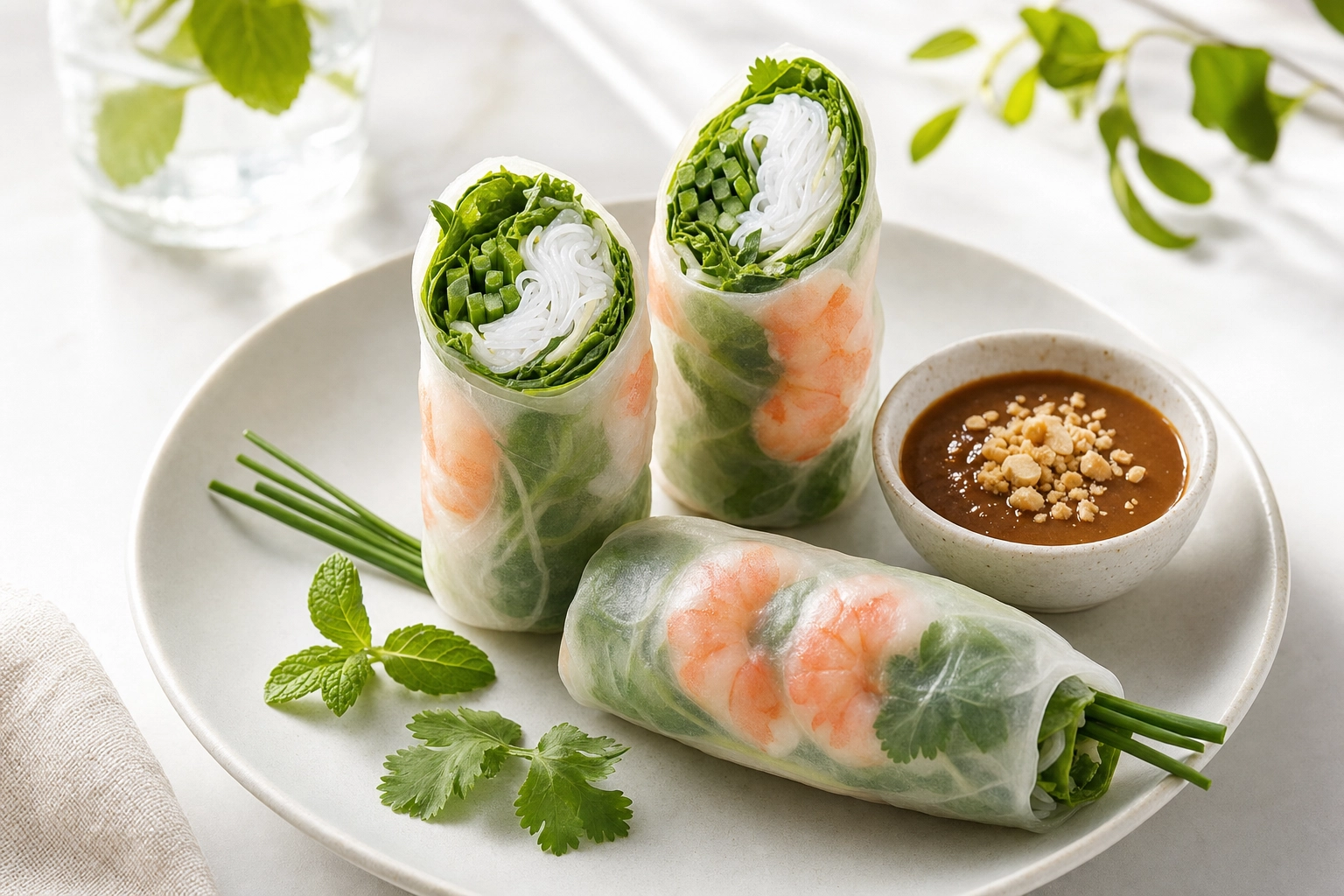 Backlit Vietnamese fresh spring rolls with translucent rice paper revealing pink shrimp and herbs, beside peanut dipping sauce
Fresh spring rolls are all about translucency — the magic is seeing pink shrimp, green herbs and vermicelli glowing through the thin rice-paper wrapper. Backlight or strong side light is mandatory here; it turns the wrapper luminous instead of dull and pasty.
Cut the rolls on the bias and stand a couple upright to show the spiral cross-section, line the rest up in a tidy row, and add a small dish of peanut-hoisin dipping sauce with crushed peanuts on top. Tight, clean and bright.
4. Vermicelli bowl (bun): the overhead garden
A bun bowl — bun thit nuong with grilled lemongrass pork, or Hanoi-style bun cha — is a "garden in a bowl": cool rice vermicelli under grilled meat, with shredded lettuce and herbs, cucumber, bean sprouts, pickled veg, crushed peanuts and fried shallots. Because the appeal is the variety of components, shoot this one straight overhead so every section reads clearly. Pour the nuoc cham just before you shoot so everything looks fresh and glossy rather than soaked.
5. Com tam (broken rice): the composed plate portrait
Com tam is a Southern classic served on a plate, not in a bowl — broken rice with a grilled pork chop (suon nuong), shredded pork skin, a steamed egg-and-pork meatloaf, and often a fried egg, with sweet-savory fish sauce on the side. Treat it like a portrait of a plate: a 45° angle works well, the char marks on the pork chop are your texture, and a brush of scallion oil (mo hanh) adds an appetizing sheen. Balance the components and leave a little breathing room so it looks composed, not crammed.
Surfaces, props, and lighting for Vietnamese food images
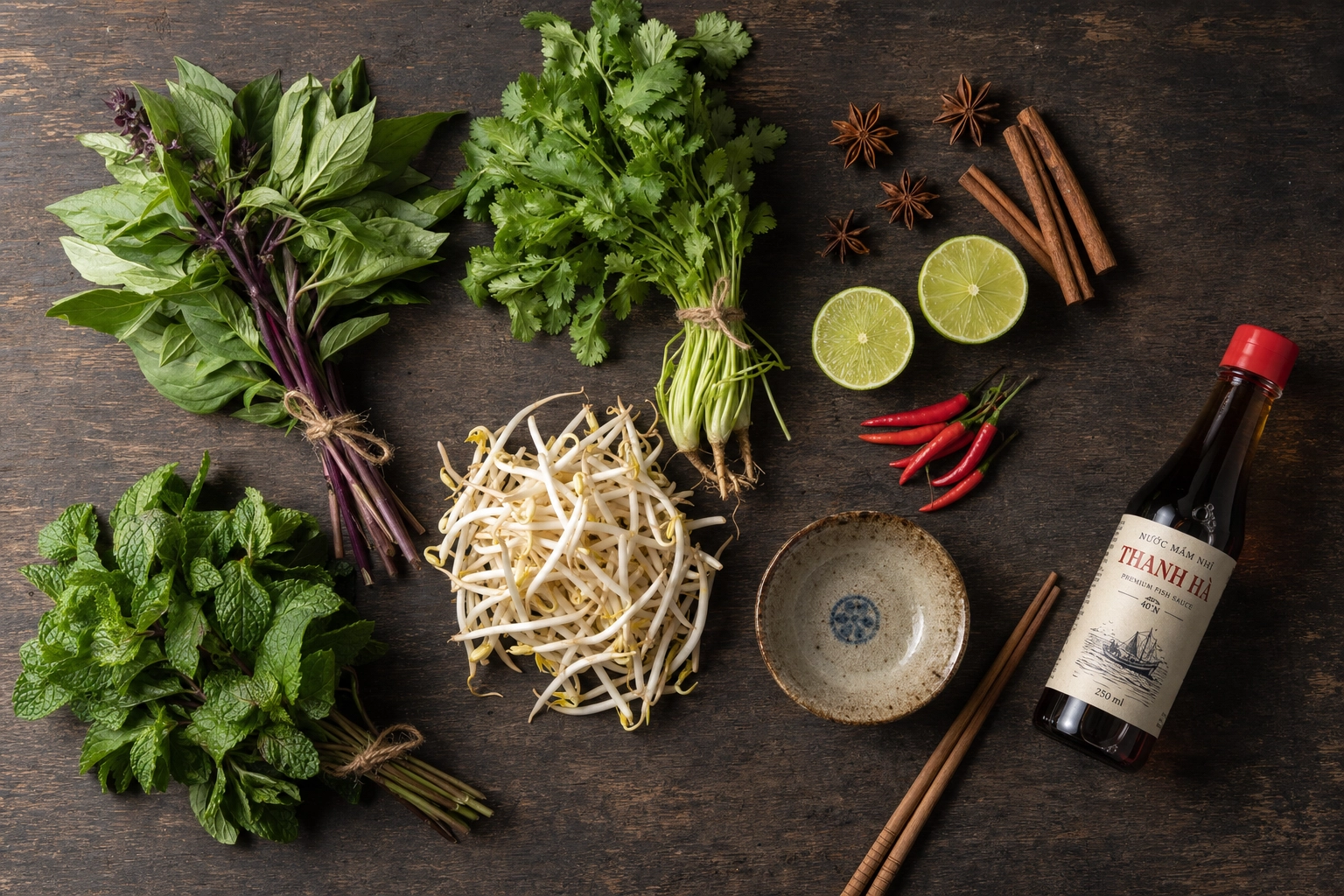 Overhead flat-lay of Vietnamese herbs, lime, chili, star anise and chopsticks used as food photography props on dark wood
The right surroundings make your Vietnamese food images feel authentic instead of generic.
- Surfaces: Warm, lived-in materials suit the cuisine — dark or weathered wood, rustic ceramic, enamelware, a banana leaf or woven bamboo. Match the mood to the dish: dark and moody for a steaming bowl, brighter and cleaner for banh mi and rolls.
- Props: Chopsticks, a lime wedge, fresh red chili, a sprig of Thai basil, a bottle of fish sauce or hoisin — these add story and color. The rule is simple: props should support the dish, never bury it. One or two beats a cluttered table every time.
- Light: One big window is all you need. Side light brings out texture; backlight brings out steam and translucency. Keep your white balance warm but accurate, so the broth looks rich and the herbs look genuinely green rather than yellow.
If you want a starting point for looks, you can browse styles by cuisine to see how different cuisines are lit and staged.
Edit and scale a whole Vietnamese menu with AI
One great pho image is a win. A whole menu where every dish shares the same lighting, color and mood is what actually makes a brand look professional — on your printed menu, your website, and especially on delivery apps where your photos sit shoulder to shoulder with competitors'.
That consistency is hard to hit by hand across 30-plus dishes. It's where AI food photography for restaurants earns its keep. With FoodShot you can:
- Apply one of 200+ styles across every dish so your pho images, banh mi and bowls all match.
- Use Builder Mode to combine a background, surface and plate, or My Styles to lock in your brand's exact look from a reference photo.
- Turn finished shots into promo posters with Poster Mode, and export print-ready 4K.
- Batch a stack of dishes at once on the Scale plan when you're refreshing a full menu.
It's the same workflow whether you're shooting pho, ramen — pho's noodle-soup cousin, or poke bowls; the broth, noodle and bowl challenges rhyme across all of them. Paid plans start at $15/month for 25 images — about $0.60 a photo — and there's a free plan (watermarked) if you just want to test a bowl or two first.
Frequently asked questions
How do I make pho images look professional using only my phone?
Three things matter most: light, timing and angle. Shoot near a big window with the light coming from behind the bowl, take the photo within the first minute while steam is still rising, and use a three-quarter side angle (about 25–45° above the table). Tap to focus on the front rim of the bowl, skip your phone's flash, and shoot a burst so you can pick the frame with the best steam. From there, an editor — or an AI tool like FoodShot — can clean up the background and color.
How do you capture the steam rising from a bowl of pho?
Backlight it against a dark background. Steam only shows when light hits it from behind and there's a darker area behind it for contrast. Shoot the instant the broth is ladled in, keep the room on the cooler side, and use a fast shutter so the steam stays crisp instead of blurring into haze. If the natural steam is faint, reshoot with fresh, hotter broth rather than trying to fake it.
What is the best angle for pho pictures — overhead or side?
Use a side angle (25–45°) when you want steam and depth — that's the classic hero shot. Use a straight overhead (90°) when you want to show every topping clearly, like the rare beef, scallions and noodles. Overhead is the easy phone angle, but it won't capture steam, so most menu-worthy pho photos use the side angle.
How do I photograph banh mi so the layers show?
Cut it on a sharp diagonal and shoot the cross-section head-on. The diagonal cut exposes more of the filling, so the camera sees the pickled carrot and daikon, cilantro, chili and protein all at once. Use bright side light, keep a few crust crumbs in the frame for authenticity, and shoot close. A lighter surface usually works better for banh mi photography than a dark one.
What background and surface work best for Vietnamese food images?
Warm, natural materials — dark or weathered wood, rustic ceramic, enamelware, banana leaf or woven bamboo. Use darker surfaces for steaming bowls of pho (steam pops against dark) and brighter, cleaner surfaces for banh mi and fresh rolls. Whatever you choose, keep it simple so the dish stays the star.
How long do I have before a bowl of pho stops looking fresh on camera?
About a minute. Steam is heaviest in the first 30–60 seconds, and rice noodles start to slump and soak up broth soon after. Set up your shot completely — light, angle, props, focus — before the bowl arrives, then plate it and shoot immediately. If it sits too long, start over with a fresh bowl; tired pho always looks tired in photos.
Can I get menu-ready pho photos without hiring a photographer?
Yes. A professional shoot runs roughly $700–$1,400 per session and has to be redone whenever your menu changes. Instead, you can take a decent phone photo of your real bowl and use FoodShot to relight it, clean the background and apply a consistent menu style in about 90 seconds — at around 95% less cost. It enhances the actual dish you serve rather than generating fake food, so the photo still matches what lands on the table.
Your pho already tastes the part. With backlight, a fast shutter and the right angle — plus a little AI cleanup — your pho images can finally look the part too. Try it on your next bowl with FoodShot.