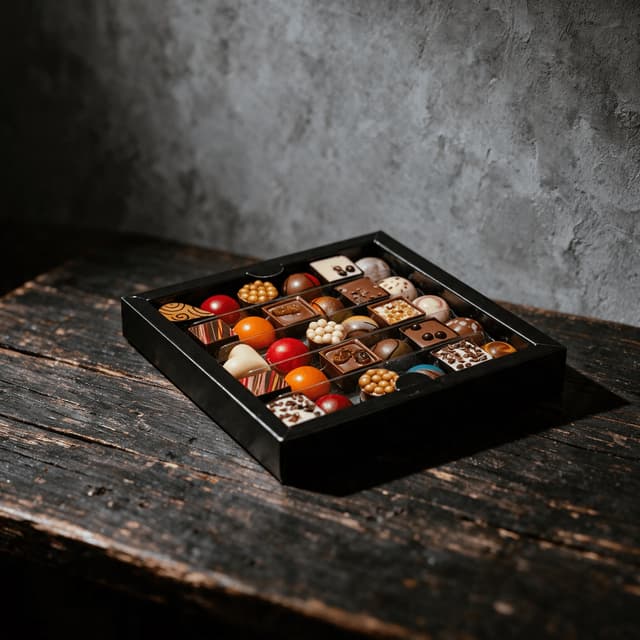
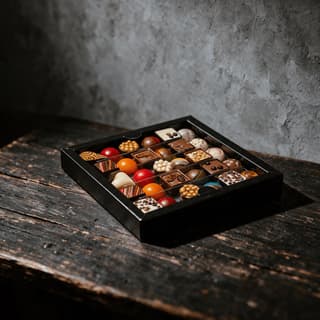
Open sixteen piece bonbon collection box with glossy hand painted chocolates seated in dark brown paper cups on weathered dark wood
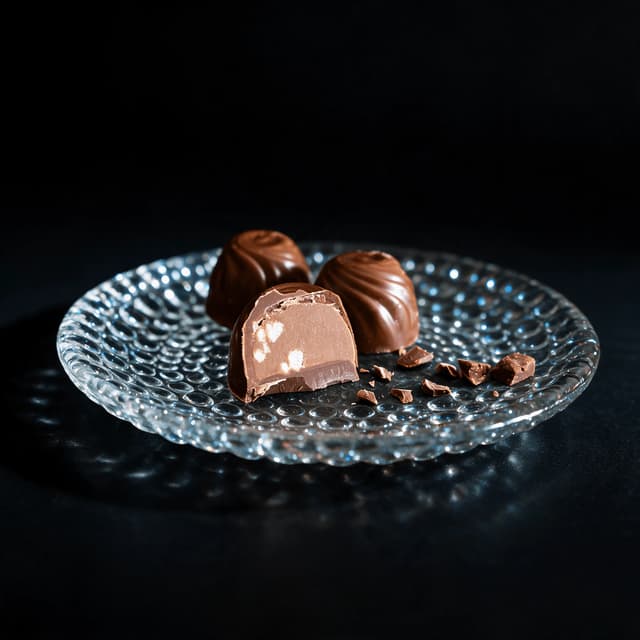
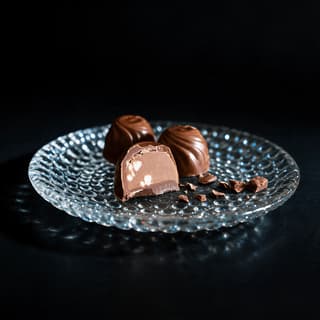
Single dark chocolate bonbon cut clean in half standing upright showing a smooth caramel ganache layer under a thin glossy shell
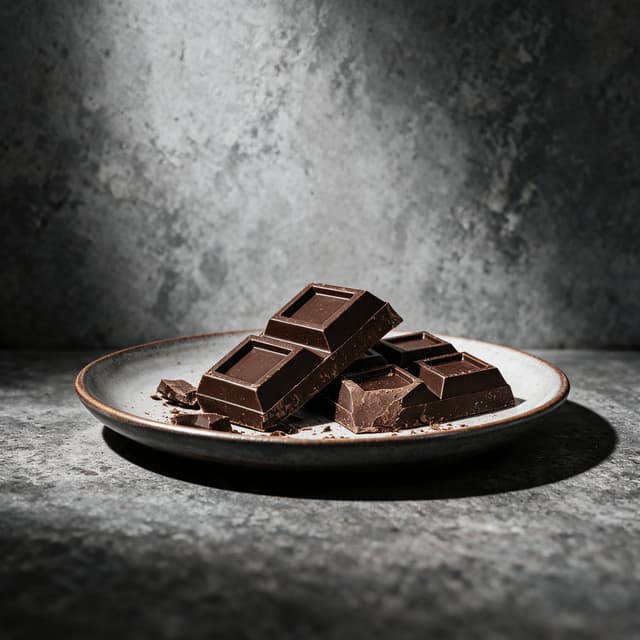
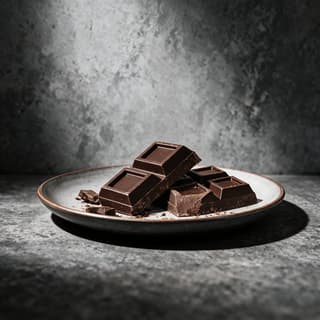
Thick pieces of single origin dark chocolate stacked on a dark stoneware plate on grey concrete, one piece showing a matte fracture edge and the others a glossy moulded face
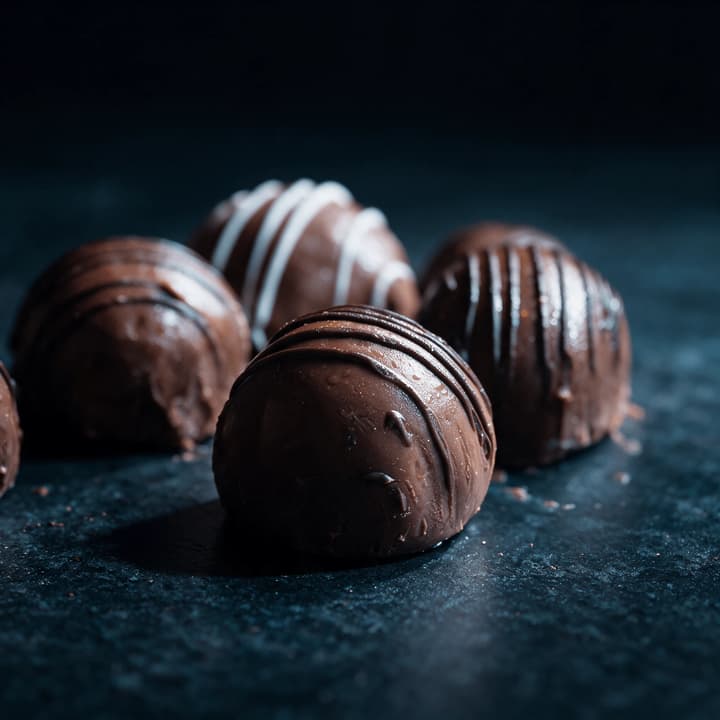
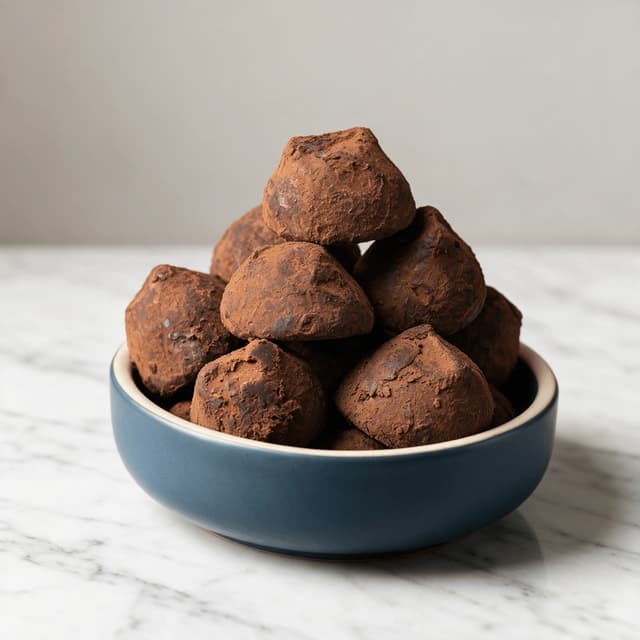
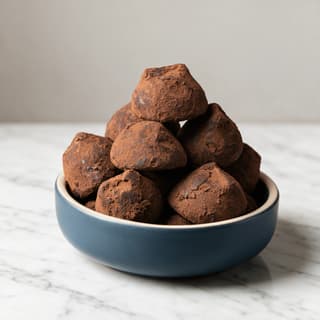
Shallow footed white ceramic bowl holding six hand rolled chocolate truffles heavily dusted in cocoa powder on white marble
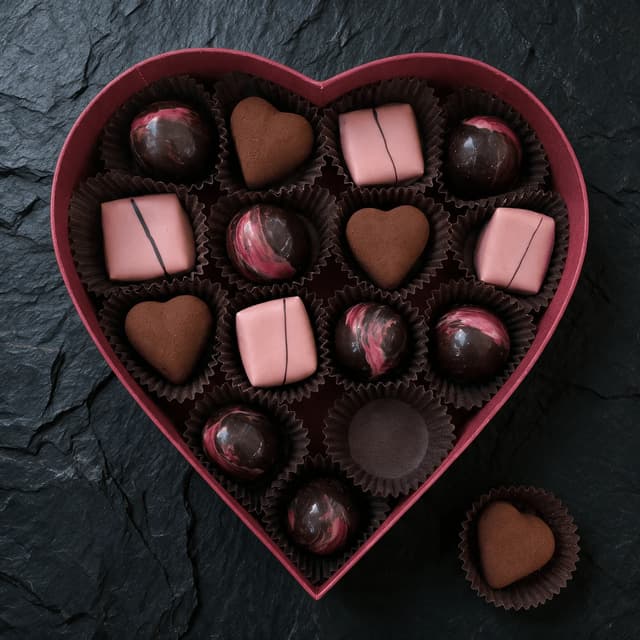
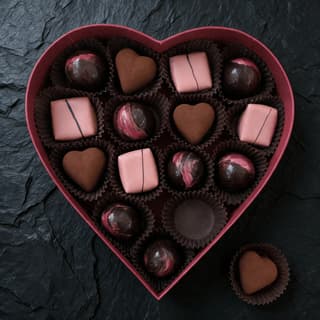
Open heart shaped chocolate gift box photographed from directly above on dark slate, twelve glossy hand finished bonbons seated in fluted brown cups with one cocoa dusted heart resting beside the box
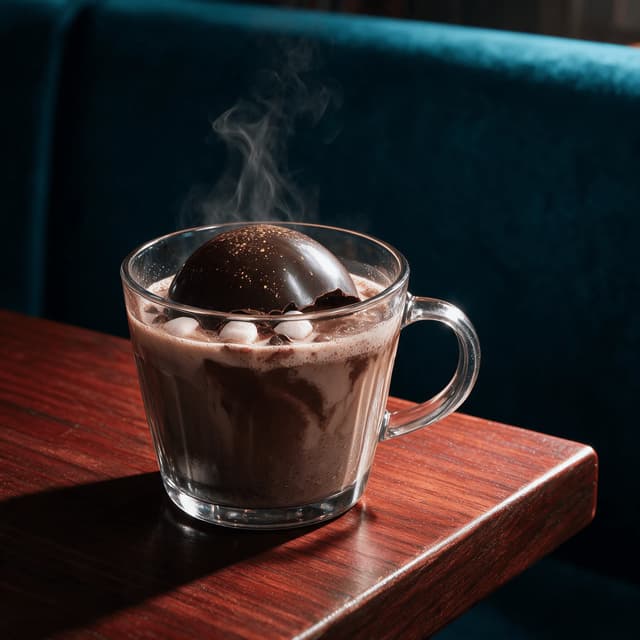
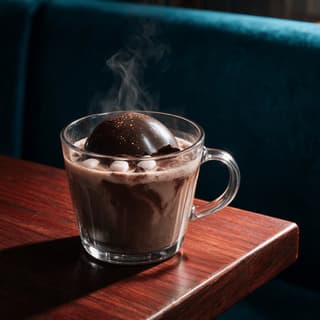
Hot chocolate bombe in a clear glass mug with the shell half melted open and marshmallows floating in dark cocoa on a dark wood counter
For Chocolatiers, Bean-to-Bar Makers & Confectioners

Your shine is the proof.

Tempered chocolate is a mirror. Every phone shot catches the ceiling light, the window, your own hands and the whole room behind you — and the one thing that took three years to learn, that clean bloom-free gloss, comes back as flat grey. Run a chocolate business on how the work actually looks: photograph the open box once on your bench, upload it, and get the shine, the true cocoa-butter colour and the snap back in about 90 seconds. One look across the whole collection, and the same look again when the seasonal boxes land.

Cancel anytime30,000+ food businesses

Trusted by teams on

DoorDashUber EatsGrubhubDeliverooJust EatWoltOpenTableYelpFoodpandaToast

Upload your chocolatiers dish → Get menu-ready photos

Original smartphone food photo before FoodShot AI enhancement
Studio-quality food photography generated by FoodShot AI
50,000+

Photos generated

95%

Cost savings

150s

Average time

Chocolatier & Bean-to-Bar Portfolio

Every piece in the collection, shot with the shine still on it
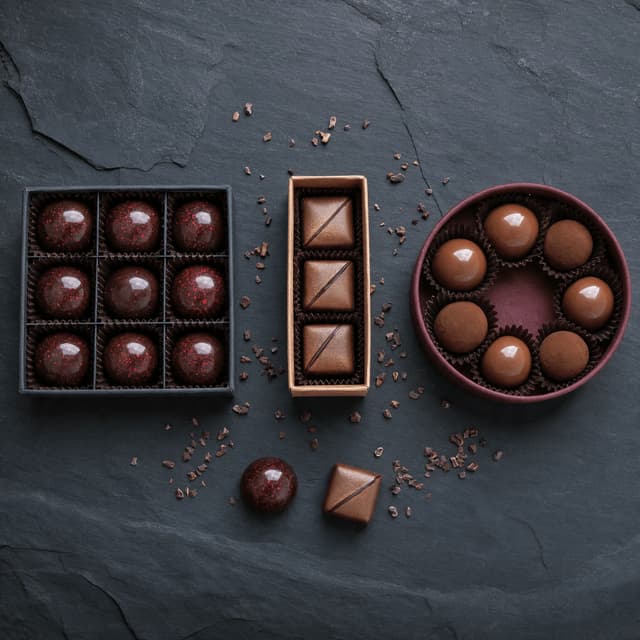
Three open chocolate collection boxes of different sizes arranged side by side from above with assorted glossy bonbons in each

Collection Boxes That Sell the Whole Gift

Open lids, even rows, every top glossy
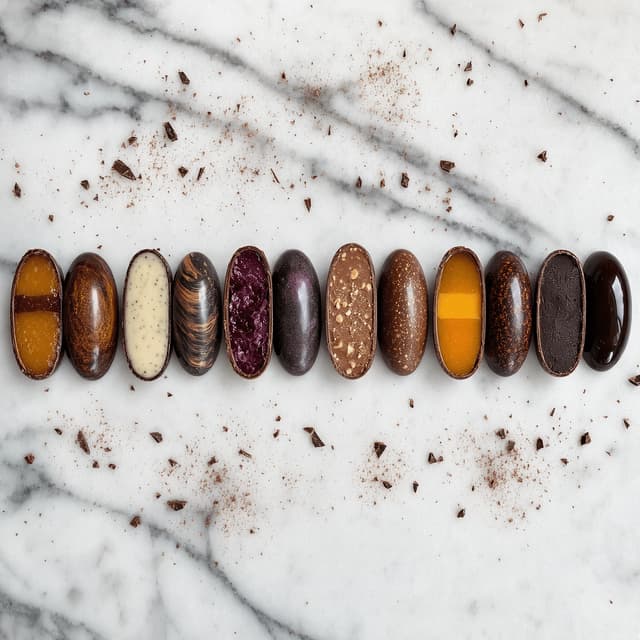
Row of six chocolate bonbons each cut in half from above showing six different coloured ganache and caramel fillings on white marble

Cut Bonbons With the Ganache Showing

Clean cuts, layered fillings, no smear
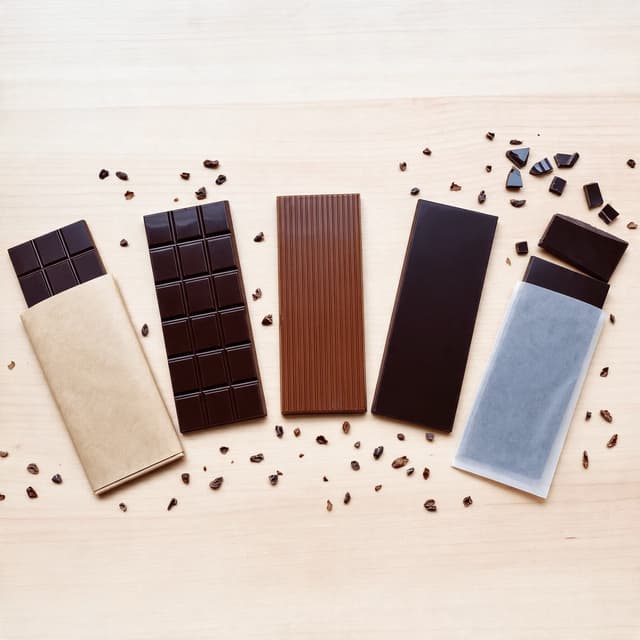
Five single origin chocolate bars fanned out from above with unprinted wrappers and scattered cocoa nibs on pale blond wood

Single-Origin Bars and Bean-to-Bar Work

Snap edges, moulds and true cocoa colour
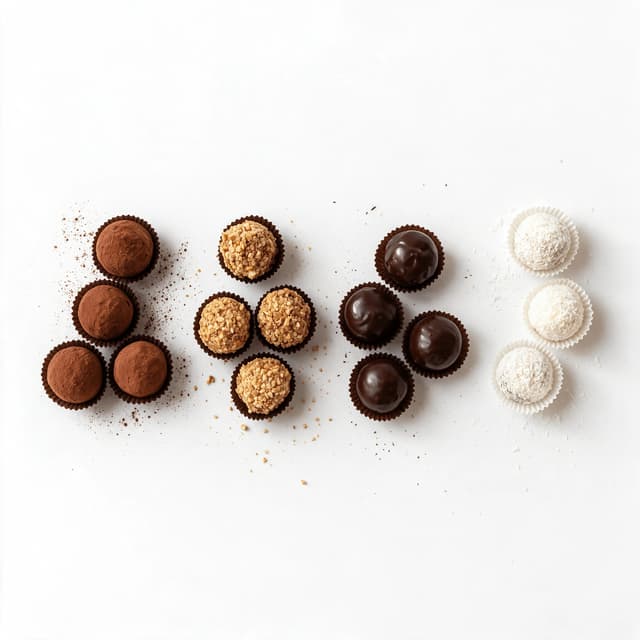
Spread of hand rolled chocolate truffles in fluted paper cups with four different coatings arranged across a seamless white surface

Hand-Rolled Truffles, Dusted and Textured

Cocoa bloom that reads soft, not grey
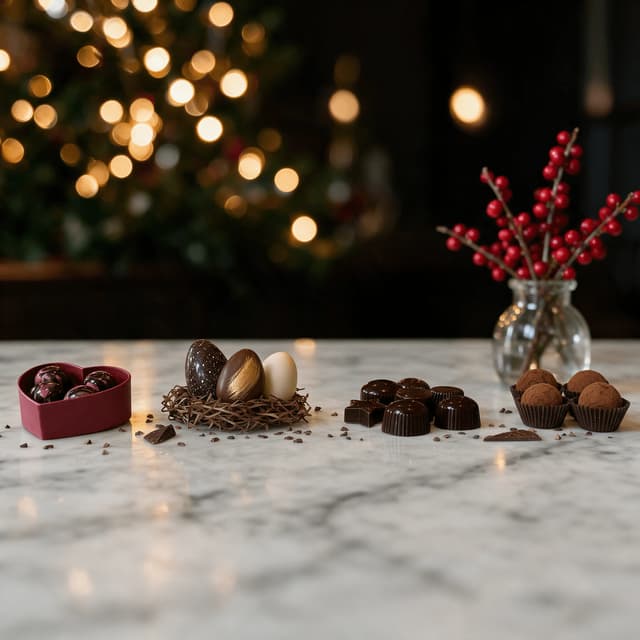
Seasonal chocolate spread with a small heart box moulded eggs and festive foil free pieces arranged evenly on white marble with soft bokeh

Seasonal Boxes Ready Before the Season

Valentine's, Easter and Christmas sets
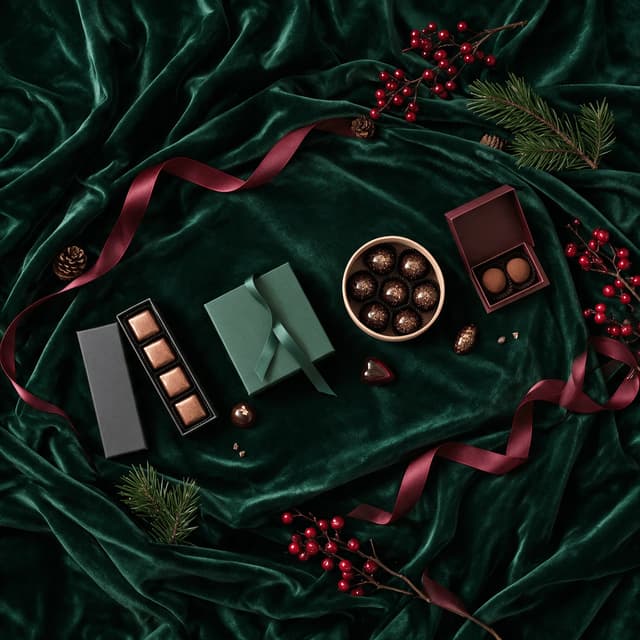
Overhead spread of four unbranded chocolate gift boxes with satin ribbon on deep green velvet with loose bonbons between them

Corporate and Branded Gift Sets

Client-ready images for wholesale decks
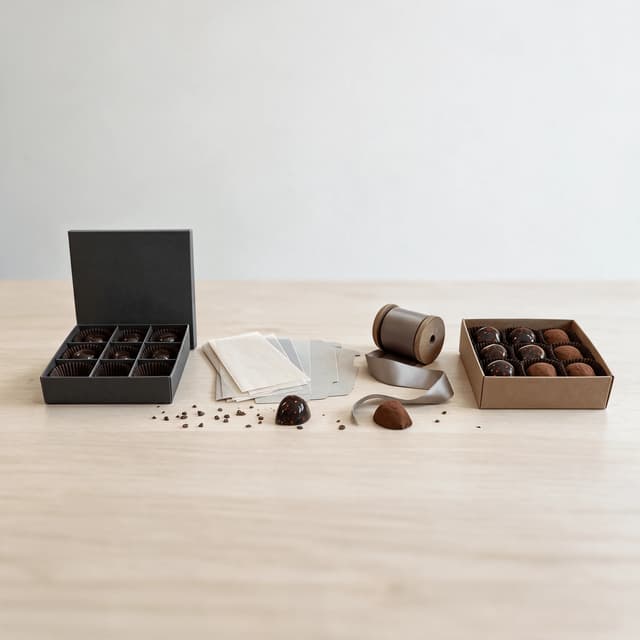
Chocolate packaging spread on pale wood with an open box a ribbon spool folded glassine sheets and a part filled tray of bonbons

Packaging, Ribbon and the Unboxing Shot

Lids, sleeves and the reveal moment

Features

Built for a product engineered to be photographed

Chocolatier Styles

Lighting that treats gloss as the subject

100+ curated styles built for the way chocolate actually behaves in front of a lens — as a mirror. Dark slate, charcoal wood and black-glass grounds for bonbons and enrobed pieces, where a tempered shell needs something dark to reflect or it returns a grey wash instead of a shine. Raw concrete and pale maple for bean to bar work, where a snapped edge has to read as a fine dense matte fracture right beside a mirror-gloss moulded face — two opposite surfaces on one object, in one exposure. Marble, cream paper and velvet for boxed collections and seasonal gifting, where sixteen pieces have to sit at exactly the same brightness or the box looks half-finished. The whole library stays at the premium craft gift tier this trade actually sells in. It is the difference between a photo that proves you can temper and one that quietly suggests you cannot. If you sell your boxes into hampers, our gift basket businesses page covers that side.

Explore styles

Builder Mode

Surface plus vessel plus piece equals a collection

Pick a surface — dark slate, distressed workshop wood, white marble, emerald velvet. Choose a vessel — an open collection box, a fluted paper cup, a bare slab, a ribboned gift set. Upload your bench photo. Builder Mode composites all three into one coherent image, so the guitar cutter, the tempering machine, the blue roll of paper towel and the strip light overhead never make it into the frame. That is the real problem in a chocolate workshop: the product is immaculate and the eighteen inches around it is a working production room. It is also what makes a chocolate business look like a house rather than a camera roll — every piece on the same ground, at the same scale, under the same key light, so a customer scrolling your shop sees one collection instead of forty unrelated snapshots taken across two years. For cottage-scale baked goods rather than confectionery, our home bakers page covers that trade.

Try Builder Mode

My Styles

One house look that survives every season

Upload a photo of your best-shot box as a style reference. Every new piece you shoot — a Valentine's heart collection, an Easter moulded range, a Christmas advent set, a summer fruit ganache, a one-off collaboration bar — automatically matches that exact lighting, angle and mood. For a business with a hard Q4 and a harder February, that consistency is the whole game: the seasonal boxes land inside the identity you already built instead of starting a second one beside it, and last year's photographs still sit correctly next to this year's. It also solves the wholesale problem. Gift retail buyers ask for images months ahead, and a line sheet where every product sits in one look reads as a supplier who can hold a standard. Shoot the range once in an afternoon and you have the shop, the listings and the buyer deck from the same set. For the craft of the subject itself, see our chocolate photography guide.

Match your brand

More to explore

One tool, endless possibilities

Before → After

From phone snap to studio shot

See the transformation. Same food, completely different result.

Raw phone food photo before AI enhancement
Studio quality food photo after FoodShot processing

Multi-variation

One photo, endless options

Generate multiple styles from a single upload. Pick the best.
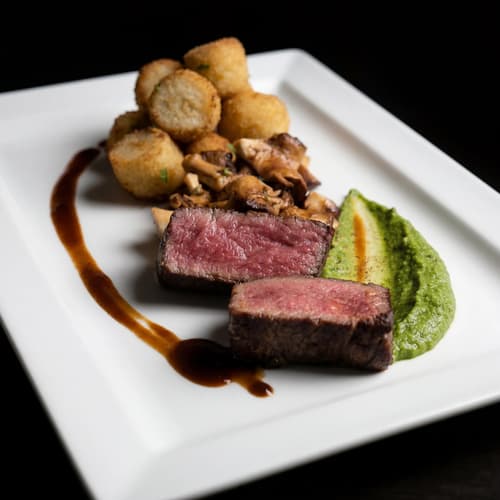
Food photo variation - delivery app style
Food photo variation - restaurant menu style
Food photo variation - social media style
Food photo variation - fine dining style

Poster Mode

Marketing-ready designs

Pick a template, drop your food.
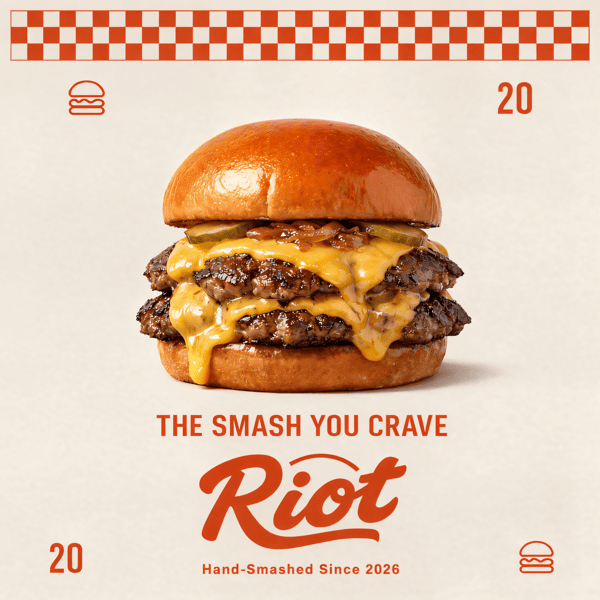
Smash burger restaurant poster design
Cocktail bar promotional poster
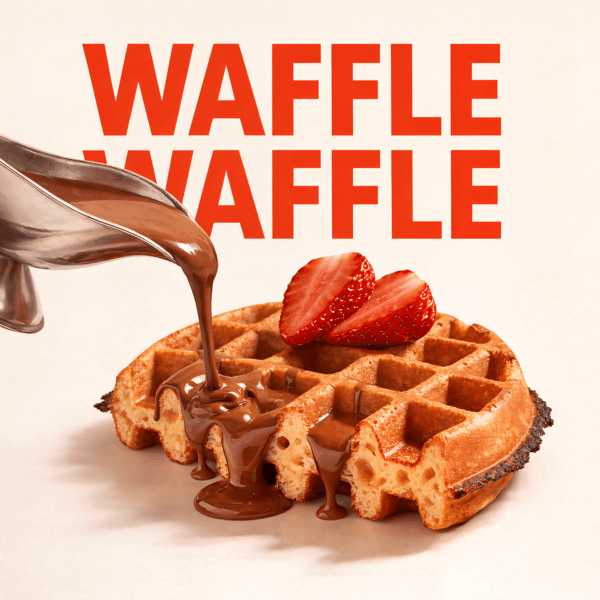
Waffle social media advertisement
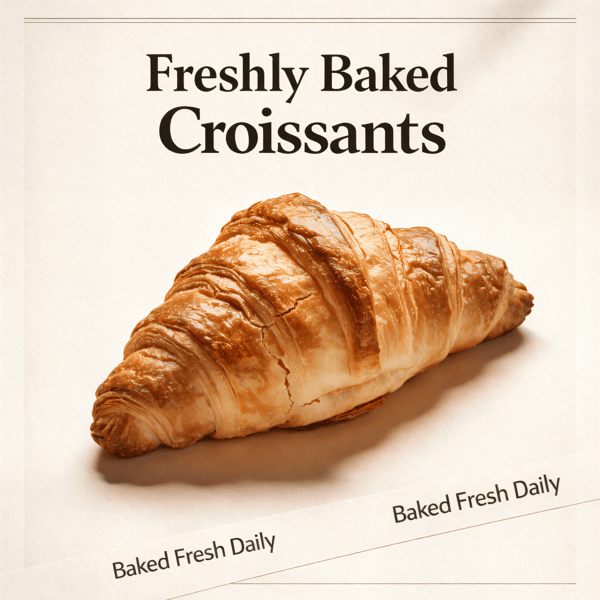
Croissant bakery marketing poster

Prompt Editing

Describe it, get it

Add sauce, swap plates, change lighting — just type what you want.
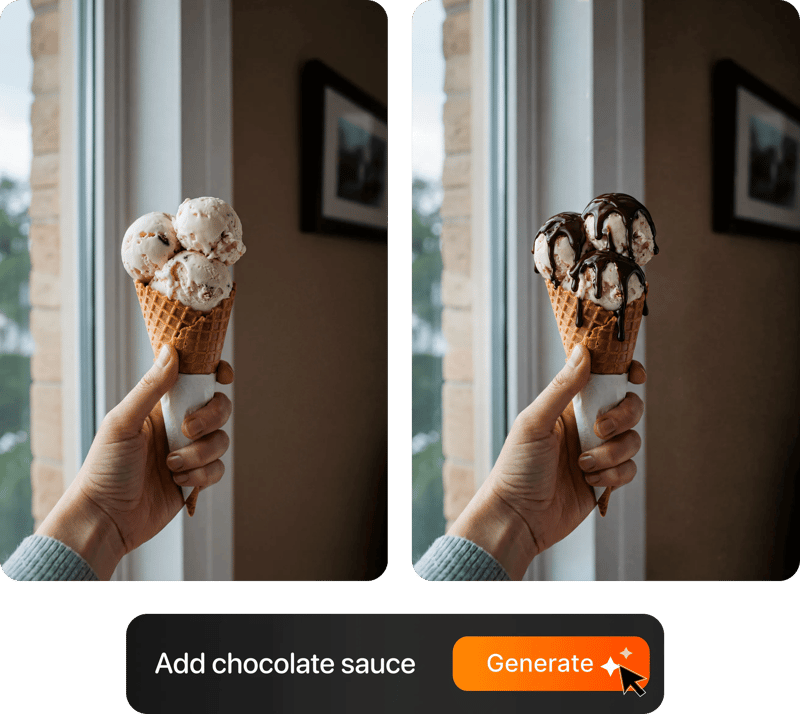
Prompt-based food photo editing

200+ Styles

Styles for every vibe

From clean white to moody fine dining. One tap.
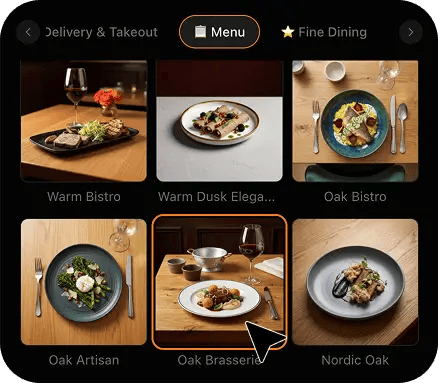
FoodShot 200+ food photography style presets grid

4K Resolution

Ultra-high resolution output

Up to 4K resolution output. Print-ready quality for menus, billboards, and packaging — no upscaling needed.

4K

Perfect For

Every kind of maker selling chocolate by the box

From a one-person atelier tempering forty kilos a week to a bean-to-bar maker wholesaling single-origin bars into gift retail, the problem is identical: a mirror-finish product, a working production room behind it, and two selling seasons that decide the year.

🍫

Bonbon Chocolatiers

You hand-paint cocoa butter into a mould, temper it to a mirror, and the phone gives you back a grey dome with a strip light across it. Shoot one open box on your bench, upload it, and get the gloss and the true colour of the transfer back — the piece the customer actually opens, not the version your ceiling lighting recorded.

🌱

Bean-to-Bar Makers

Your whole story is origin, roast and temper, and none of it survives a flat snapshot: the snap edge disappears and a seventy percent Madagascar looks the same as a supermarket bar. Restyling puts a raking light back across the fracture so the grain reads, while the moulded face still returns a clean unbroken shine.

🍬

Truffle & Confectionery Makers

Cocoa-dusted and hand-rolled pieces are the hardest thing you make to photograph, because the finish that reads as velvet in the hand reads as dusty grey through a lens. One frame on the bench comes back with the powder soft and deep again, and a tray of twenty-four looks like a range rather than a repeat.

💝

Seasonal & Gift Collections

Valentine's and Q4 decide the year, and both need photographs weeks before the product is in the case. Shoot the collection the day it comes off the bench, run it through one style, and the shop listings, the seasonal campaign and the gift range all launch from the same set instead of three separate rushed shoots.

🎀

Corporate Gifting Suppliers

Corporate buyers order from a deck in September for December, and they are comparing you against a supplier with a photography budget. A clean consistent set of box images — lids on, lids off, ribbon, the piece detail — does more for a wholesale enquiry than any amount of copy about your single-origin sourcing.

🛍️

Market Stalls & Pop-Ups

You sell in person for six weekends and online for the rest of the year, so the webshop has to carry a product nobody can taste first. Photograph the stall range once before the season, and every listing, every market post and every pre-order page runs on images that hold together across all of them.

Reviews

Loved by food businesses

FoodShot AI changed my life as a Pastry Chef. Designing menus and plating used to be so time-consuming. Now I upload mockups and the AI does it all!
App Store

Happy Girl Pastry Chef

App Store

Great for small business! The app is easy to use. Smooth and professional results. Multiple background/settings/styles to choose. Highly recommend!
App Store

Trangbi89

App Store

This app helped me enhance my food photoshoot. Thanks to this app, I can now create pro-quality photos for my Menu.
App Store

Lalalisaoh

App Store

Excellent

Fabio Lima

Google Play

Great

Iván Fabricio Amador Pavón

Google Play

Cool

Darut Thollab

Google Play

For marketing and advertising we can use it as an enhancement. Really solid tool.

Reddit User

r/restaurantowners

Oohhh woowwww... Seriously amazing. The quality blew me away.

Remarkable-92

r/restaurantowners

FoodShot AI changed my life as a Pastry Chef. Designing menus and plating used to be so time-consuming. Now I upload mockups and the AI does it all!
App Store

Happy Girl Pastry Chef

App Store

Great for small business! The app is easy to use. Smooth and professional results. Multiple background/settings/styles to choose. Highly recommend!
App Store

Trangbi89

App Store

This app helped me enhance my food photoshoot. Thanks to this app, I can now create pro-quality photos for my Menu.
App Store

Lalalisaoh

App Store

Excellent

Fabio Lima

Google Play

Great

Iván Fabricio Amador Pavón

Google Play

Cool

Darut Thollab

Google Play

For marketing and advertising we can use it as an enhancement. Really solid tool.

Reddit User

r/restaurantowners

Oohhh woowwww... Seriously amazing. The quality blew me away.

Remarkable-92

r/restaurantowners

FAQ

Chocolate Photography FAQ

Common questions about photographing a mirror-finish product, keeping cocoa-butter colour true, and building a seasonal collection you can post and sell from months ahead.

hello@foodshot.ai

FoodShot AI is a powerful, AI-driven content creation platform that helps you create high-quality food photography for menus, social media marketing, and promotional materials with ease. Transform any food photo into professional-grade visuals in seconds.

It's simple! Upload a photo of your food, choose your desired style (menu photography or social media format), and click generate. For poster creation, select from our professional templates, add your text, and create marketing-ready content instantly.

Yes! Download our mobile app from the App Store to create stunning dish photos on the go. Access all features directly from your iOS device.

Yes! FoodShot AI is now available on Android. You can download it from Google Play and start creating professional food photos directly from your Android device.

With paid plans, you own full commercial rights to all generated images. Use them for your restaurant, marketing campaigns, social media, or any commercial purpose without restrictions. Free plan images include watermarks and are for personal use only.

Yes! For bulk processing needs, please email us at hello@foodshot.ai for our Enterprise plan options.

Yes, subscriptions renew month-to-month. To cancel, open Settings, click Manage subscription and choose Cancel subscription — fully self-serve, takes under a minute. Your plan stays active until the end of the billing period.

Yes, plan changes take effect immediately. You can upgrade or downgrade directly from your account dashboard. The new pricing will be adjusted for your current billing cycle.

We offer a full refund if you haven't used any credits in your current billing period. Refund requests must be made within 7 days of payment. Previous billing periods are non-refundable. Simply contact us at hello@foodshot.ai if you're not satisfied.

No, unused credits do not roll over to the next month. This applies to both monthly and yearly plans. Credits refresh every month regardless of your billing plan.

Yes! With our custom photography feature, you can upload your own reference images to create consistent branded content. Upload your restaurant's signature background, plating style, or any reference photo, and FoodShot AI will generate new images matching that exact style.

Absolutely! Once you upload a custom background or reference template, you can use it for all your future generations. This is perfect for maintaining consistent branding across all your food photography. Save your favorite backgrounds and create a cohesive visual identity for your restaurant.

FoodShot AI supports all major image formats including JPG, PNG, WEBP, and HEIC. For best results, we recommend using high-quality images with good lighting. The AI will analyze your reference and apply the same style, lighting, and composition to your food photos.

Yes! You can upload your own poster designs and templates. Whether it's your restaurant's branded template or a custom design, simply upload it and FoodShot AI will intelligently place your food photos while preserving your design elements, logos, and text.

All paid plans include unlimited custom template uploads. You can build an entire library of your brand's templates, backgrounds, and reference styles. Free plan users can try the feature with our pre-made templates.

No. FoodShot never sends a photographer, never runs an on-site or studio shoot, never prints boxes, sleeves, labels or packaging, and never tempers, moulds or fabricates a piece of chocolate for you. It restyles photos you take yourself. You temper and finish the real collection exactly the way you sell it, take a phone photo of the open box on your own bench, upload that photo, and FoodShot re-lights and re-stages that exact image — the same pieces, the same finishes, the same box. What changes is the light, the surface underneath and the background behind it. What does not change is the product: if your ruby ganache is a muted dusty pink rather than a bright candy pink, it stays a muted dusty pink. That matters commercially as well as ethically, because a chocolate box is a gift bought on the strength of a photograph and opened in front of somebody else, and a maker whose photographs promise a piece the customer does not receive finds out about it in the first week of the season.

You cannot avoid it, and you should stop trying. A correctly tempered shell is a mirror by definition, so it will reflect whatever is in front of it — a ceiling light, a window, your phone, your own face. The mistake is fighting that at the bench, moving the box around the room looking for an angle where nothing reflects, and ending up with a piece lit so flatly that the gloss disappears entirely and the chocolate reads as grey. Do the opposite. Take the photo in whatever light your workshop has, hold the phone steady, get the whole box square in the frame and accept the reflections. Restyling replaces the environment the chocolate is reflecting, so instead of a strip light and a ceiling tile the shell returns a soft controlled key and a dark ground. The shine you spent three years learning to produce is what finally shows up in the image, and it shows up the same way on every piece in the box.

Colour fidelity is the constraint the whole thing is built around, because for a chocolatier the colour is the product specification. A hand-splattered deep red cocoa butter has to stay that red, a ruby ganache has to stay dusty rather than turning candy pink, and a seventy percent Madagascar has to keep the reddish cast that distinguishes it from a bar you could buy anywhere. What actually corrects is the damage your room does. Warm retail bulbs push everything yellow, a cool workshop strip light pushes it grey, and a phone camera trying to average both will crush the difference between a milk bar and a dark one. Restyling neutralises that cast and puts a controlled key light back, so what you see is the piece as it looks in daylight on your bench. The test is simple and you should run it: photograph one box, look at the result beside the real box, and check the transfer colour first.

That is the case this is built for, because a chocolate business does not have a steady year — it has two selling peaks and a long quiet middle, and both peaks need photographs weeks before the product is even in the case. The workflow is to shoot the collection the day it comes off the bench, while the temper is perfect and nothing has been handled. One frame per piece, plus one of the open box and one of the closed box with its ribbon, is enough for a whole seasonal range, and that is an afternoon rather than a shoot day. Run the set through a single style and every image lands in one look. The shop listings, the seasonal campaign, the gift-retail line sheet and the pre-order page then all launch from the same photographs instead of three separate rushed sessions in the worst week of your year. It also means next February starts with a set that still matches the last one.

Those are the two channels where photography does the most commercial work, because neither buyer ever tastes the product before committing. A gift retail buyer builds a range from a line sheet in the spring for a December delivery, and a corporate client picks a supplier from a deck in September. Both are comparing your images against a competitor who has a photography budget, and a set that visibly comes from four different days under four different lights reads as a supplier who cannot hold a standard. What you want is the same box shot lid-on and lid-off, the same key light across every product, and a piece-level detail shot for the range you are pushing. One reference style locks all of that. Keep every user-facing image free of readable text and logos, add your own branding in your deck or listing template afterwards, and the same set carries the webshop, the wholesale sheet and the corporate proposal.

All of them, and bars in particular are worth the effort because they are the hardest to make look like craft. A wrapped bar photographed flat is a rectangle, and nothing in the picture communicates that you roasted and conched it yourself. What works is the pairing: the moulded face turned to hold a long clean specular next to a snapped edge showing that fine dense matte fracture, which is the visual proof of temper that a customer recognises even if they cannot name it. Packaging and unboxing scenes work the same way — an open box with the lid propped behind it, folded glassine, a loose curl of ribbon and a part-filled tray. Keep boxes, wrappers and ribbon unprinted in the photograph, because clean unbranded packaging restyles far more reliably than printed artwork and lets you overlay your own design afterwards. If you also run a frozen or scooped line, our <a href="/use-cases/ice-cream-shops">ice cream shops</a> page covers that trade.

Your collection deserves better photos.

Join 10,000+ chocolatiers, bean-to-bar makers and confectioners turning quick bench phone shots into glossy, colour-true product images in about 90 seconds.

Start Creating
Cancel anytimeFull commercial licenseStudio-quality results