How to Promote Your Restaurant on Social Media (2026)
 Ali Tanis13 min read
Want to know how to promote restaurant on social media without wasting time or money? You need three things: great food photos, a consistent posting rhythm, and a strategy that prioritizes connection over constant selling.
This guide breaks it all down — how to set up your profiles, what to post, how to promote on a budget, and how to measure what's actually working. Whether you're learning how to market a restaurant on social media for the first time or refining an existing approach, these are the tactics that fill tables.
Quick Summary: 74% of diners use social media to decide where to eat, and 84% want to see food photos before visiting. Below you'll learn how to promote restaurant on social media step by step — from Instagram, TikTok, and Facebook setup to content pillars, budget-friendly tactics, paid advertising basics, and the metrics that matter. The foundation of social media success? Professional-quality food photography.
Why Social Media Marketing Is Essential for Restaurants
Social media marketing isn't optional for restaurants anymore. According to a 2025 Restroworks industry survey, 90% of restaurants consider social media "very or extremely important" to their marketing strategy. Deloitte Digital's 2025 State of Social research found restaurants reported an average 9.9% increase in B2C revenue directly from social media in 2024.
The data is hard to argue with:
- 74% of diners use social media to decide where to eat
- 84% of diners want to see food photos on social channels before visiting
- 55% of TikTok users visited a restaurant after seeing it on the platform
- 57% of diners have made a reservation through social media
No other marketing channel lets you show someone exactly what their meal will look like, get them excited, and link to a reservation page — all in one scroll. Understanding how to promote restaurant on social media starts with picking the right platforms.
How to Set Up Your Restaurant Social Media Profiles
You don't need to be everywhere. Being great on two or three platforms beats being mediocre on six. Here are the four that matter most for restaurants.
Instagram: Your Visual Menu
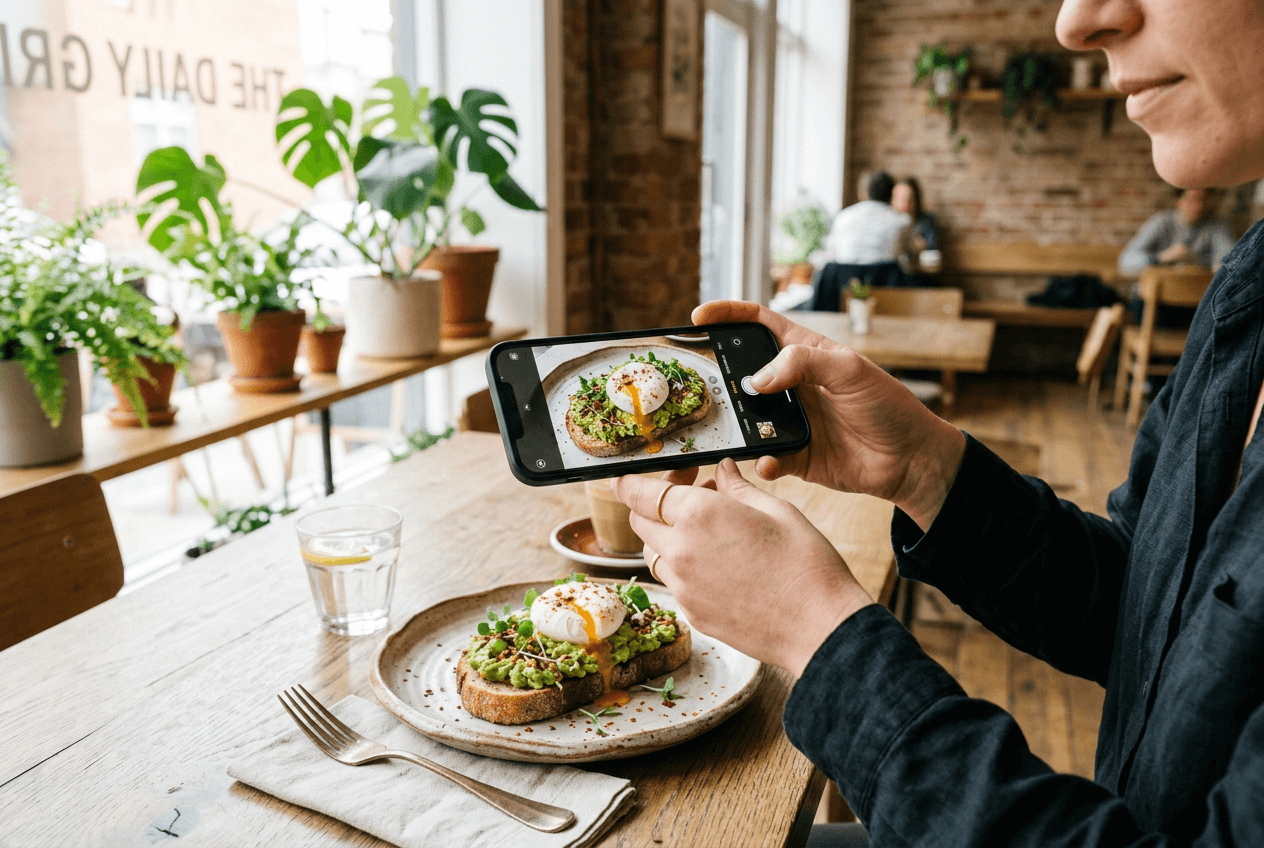 Restaurant owner photographing artful avocado toast dish on smartphone for Instagram social media content
Instagram is the most important social media platform for restaurants. Its engagement rate (2.2%) is 10x higher than Facebook's, and Instagram content is now indexed by Google. A well-captioned post with location keywords can appear when someone searches "best tacos in [your city]."
Set up your profile for success:
- Switch to a Business account (free — gives you analytics and contact buttons)
- Add your address, phone number, and a link to your menu or booking page in your bio
- Create Highlights for menu categories (Appetizers, Mains, Desserts, Drinks)
- Use a consistent photo style across your grid — this is your first impression
The #Food hashtag has over 250 million posts. Your photos are competing in that space. If they look amateur, you're losing potential customers before they even consider visiting.
TikTok: Reach New Diners Fast
TikTok has become a real restaurant discovery engine. Industry data shows 41% of diners aged 18-24 use TikTok to find places to eat, and 55% of users visited a restaurant after seeing it on the platform.
TikTok rewards authenticity over production quality. A 15-second clip of your chef plating a dish can reach more people than a polished ad.
What works on TikTok for restaurants:
- Cooking process videos (the sizzle, the flame, the pour)
- Plating transformations (messy-to-beautiful)
- "Day in the life" at your restaurant
- Responding to food trends and challenges
- Menu item reveals and seasonal specials
Facebook: Still the Discovery King
Despite newer platforms, Facebook remains #1 for restaurant discovery — 59% of diners use it to find new places. It's critical for older demographics: 80% of diners aged 54+ use Facebook for restaurant research.
Your Facebook Business Page needs:
- Complete business info (hours, address, phone, website)
- A "Book Now" or "Order Food" call-to-action button
- Your menu uploaded or linked
- Reviews enabled — 75% of diners choose restaurants based on Facebook reviews
Post 3-4 times per week. Facebook's algorithm rewards conversation, so ask questions: "Which new dessert should we add to the menu?"
Google Business Profile: The Listing You Can't Skip
Your Google Business Profile (GBP) appears in Google Maps, local search results, and "near me" searches. It's your most important online listing.
Keep it updated with:
- Accurate hours (including holidays)
- Fresh food photos — add new ones monthly
- A direct link to your menu and online ordering
- Responses to every review
73% of diners will choose a competitor if a restaurant doesn't respond online. A simple "Thanks for visiting! Hope to see you again" goes a long way.
The 5 Content Pillars for Restaurant Social Media
Running out of ideas is the #1 reason restaurants quit social media. These five content pillars solve that — rotate between them and you'll never stare at a blank screen.
1. Professional Food Photos (Your #1 Priority)
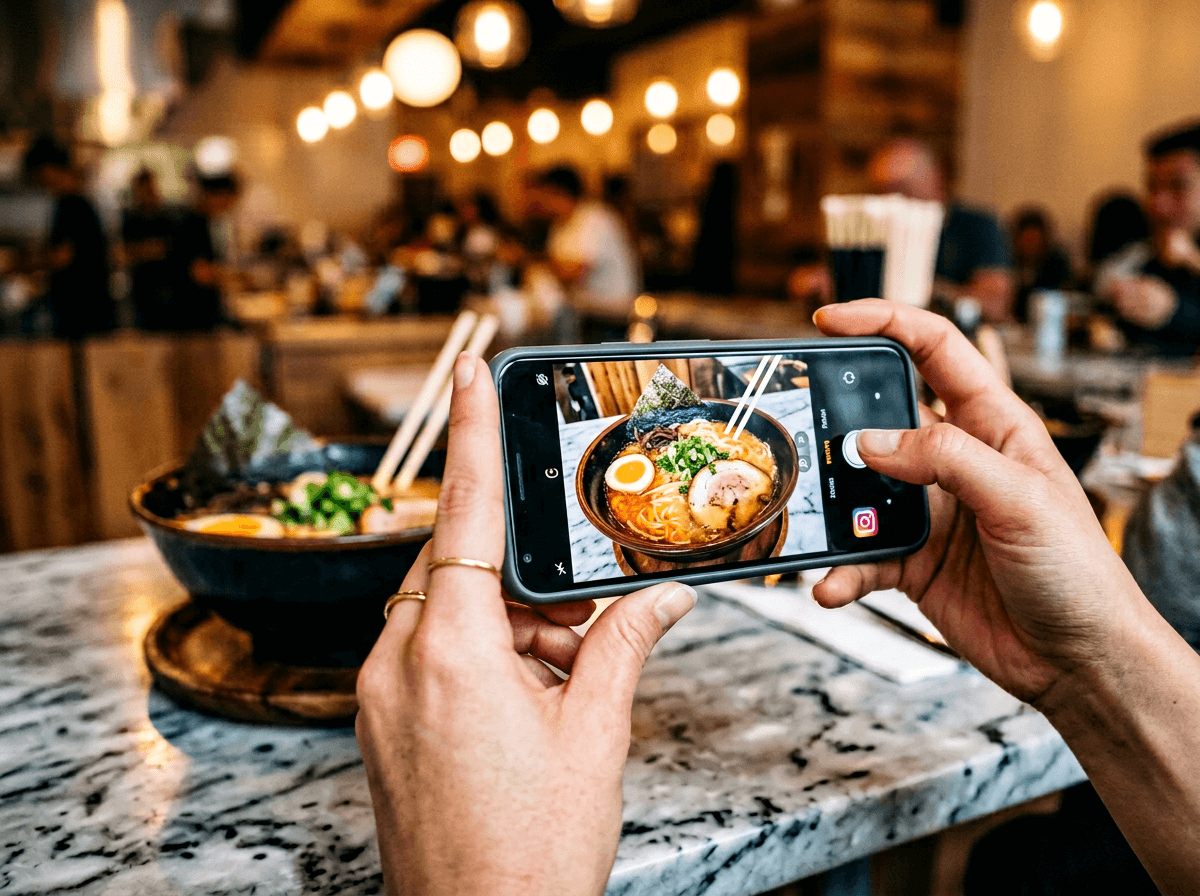 Hands capturing ramen bowl food photo on smartphone for restaurant social media content creation
This is the foundation everything builds on. When 84% of diners want food photos before visiting and 40% try a new restaurant after seeing photos online, your images are your most powerful sales tool.
Here's the multiplier: 86% of diners post about their meal if it looks visually appealing. Great food photography generates free marketing from every customer who walks in.
What separates good food photos from bad:
- Lighting: Natural light near a window beats flash every time. Our iPhone food photography tips cover specific techniques.
- Backgrounds: Clean, uncluttered surfaces work best.
- Consistency: Similar style across photos makes your feed cohesive.
- Angles: 45-degree works for most dishes. Flat-lay is ideal for pizza, boards, and spreads.
The budget reality: Professional food photographers charge $150-$500+ per hour, which adds up for a full menu. A smartphone plus the right technique gets you surprisingly close. Tools like FoodShot AI's food photo editor transform a phone photo into a professional shot in 90 seconds — at a fraction of the traditional food photography cost.
Invest in food photos first. Every other content pillar works better when your food looks amazing.
2. Behind-the-Scenes Kitchen Content
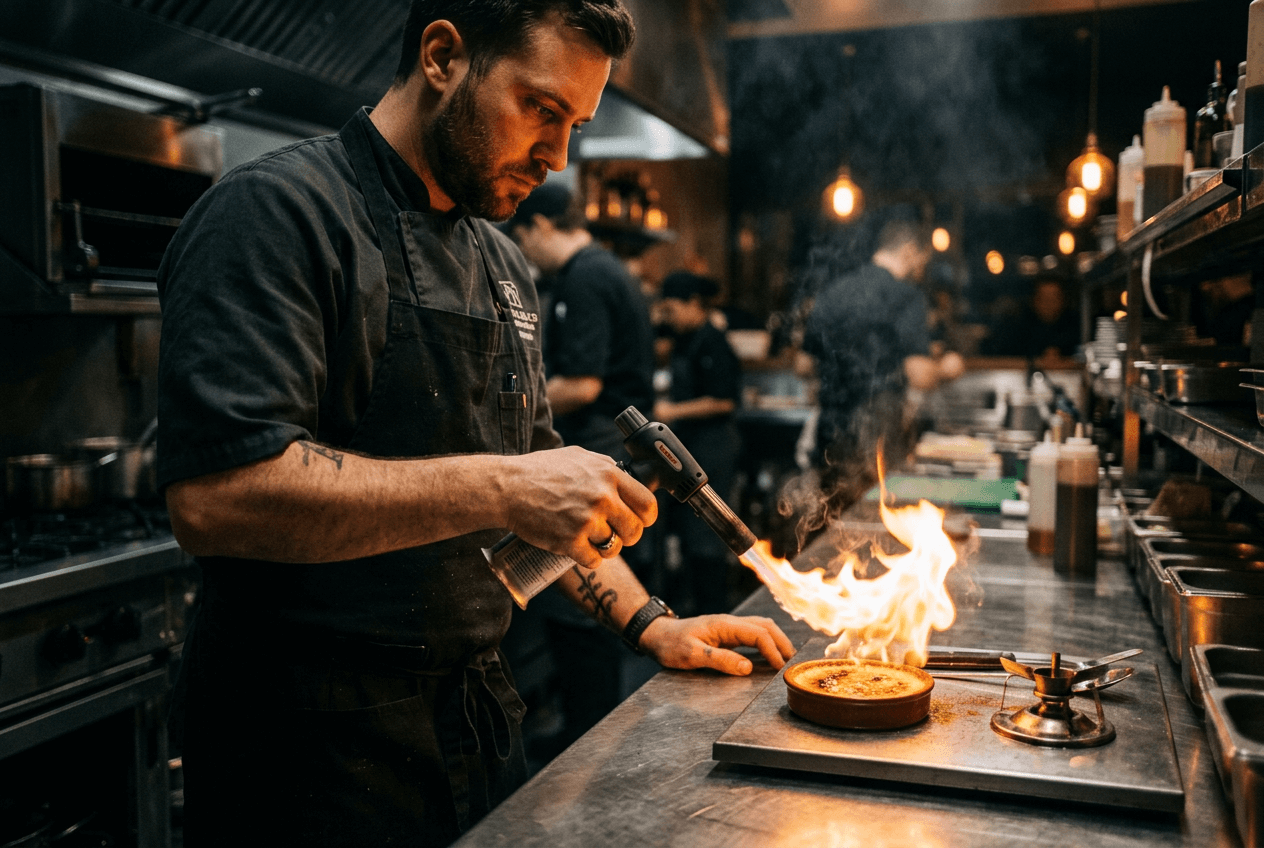 Chef torching creme brulee in restaurant kitchen behind-the-scenes content for TikTok social media
Short-form video dominates social media algorithms. Restaurants using video see 2-3x faster audience growth than those relying on static posts alone.
Kitchens are content goldmines:
- Sauce drizzled over a finished plate
- Dough stretched for handmade pasta
- A flambé moment (social media gold)
- Morning prep with fresh ingredients
Posting daily Stories boosts engagement by about 27%. One quick phone video per day during service is all you need.
3. Staff Spotlights and Team Stories
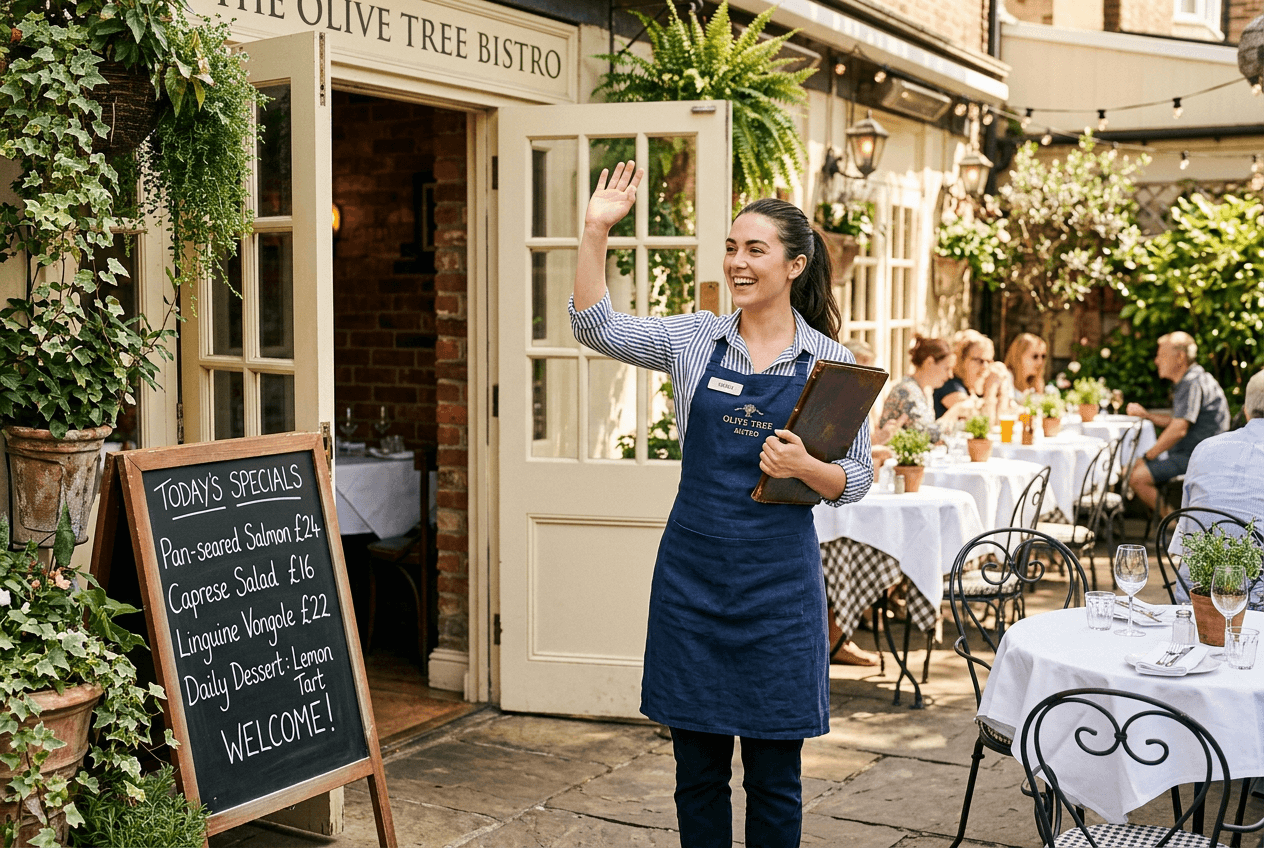 Friendly restaurant server greeting guests at bistro entrance for staff spotlight social media post
Posts featuring people perform 44% better than food-only images. Your staff make your restaurant unique, and customers love putting faces to the experience.
Ideas that work:
- "Meet the Chef" posts with a quick Q&A
- A server's favorite dish recommendation
- Your bartender's cocktail of the week
- Anniversary celebrations for team members
This content humanizes your brand and makes your restaurant feel like a place with real people.
4. Customer Features and User-Generated Content
User-generated content drives 4x higher conversion than branded content. When a real customer posts about their meal, their followers trust it far more than your own marketing posts.
How to encourage UGC:
- Create a branded hashtag (#DineAt[YourName] or #[YourName]Eats)
- Add table cards encouraging photo sharing
- Reshare customer posts to your Stories (always credit them)
- Run a monthly "best photo" contest with a free appetizer prize
This fills your content calendar with authentic posts and builds genuine community around your restaurant.
5. Community Involvement and Local Ties
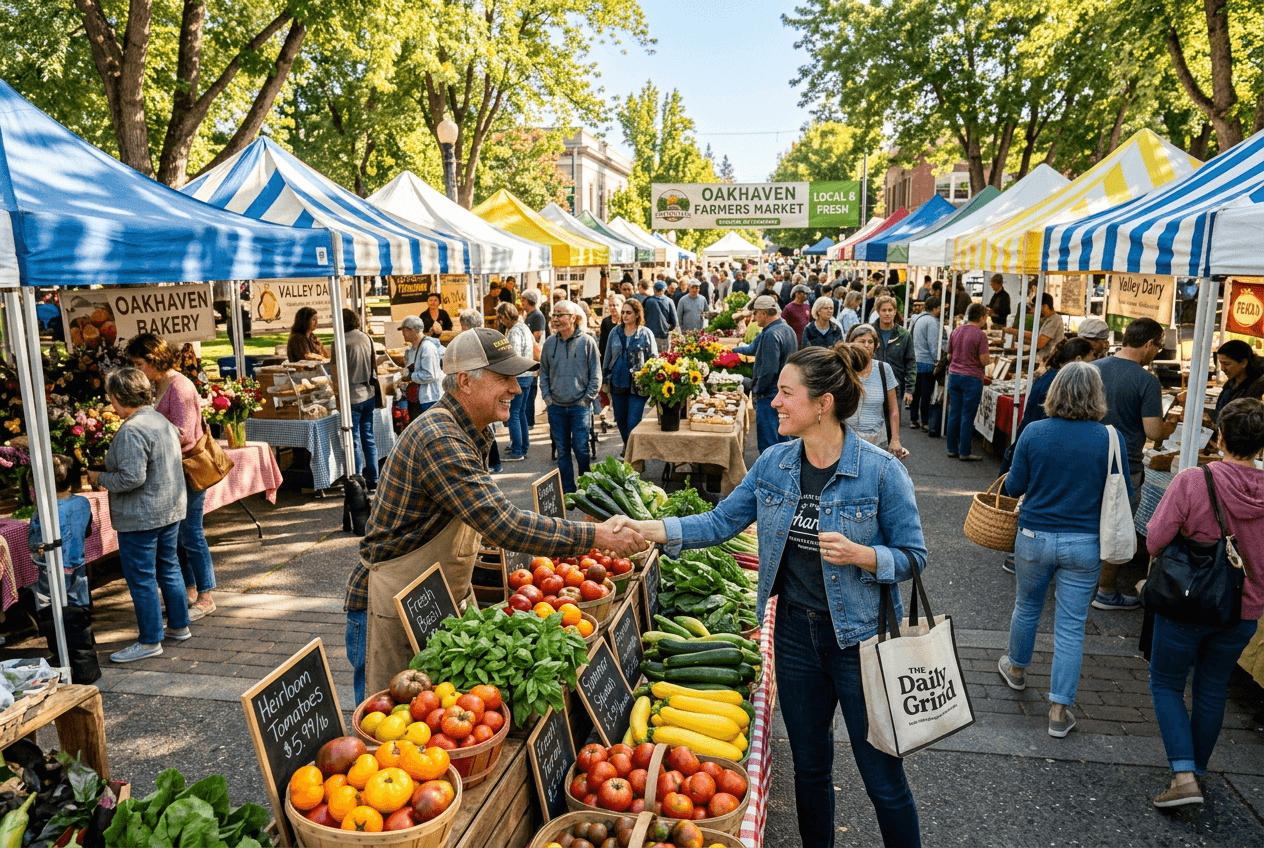 Restaurant owner partnering with local farmers market vendor for community-focused social media content
Customers want to support restaurants that feel like part of their neighborhood. Highlighting local connections separates you from chain restaurants.
Post about:
- Partnerships with local farms ("Our tomatoes come from [Local Farm], 20 miles away")
- Charity events, food drives, or community sponsorships
- Local food festivals or farmers markets
- Neighborhood shout-outs to nearby businesses
When your restaurant feels like part of the community, customers become advocates — not just diners.
The 80/20 Content Rule: How to Promote Restaurant on Social Media Without Being Pushy
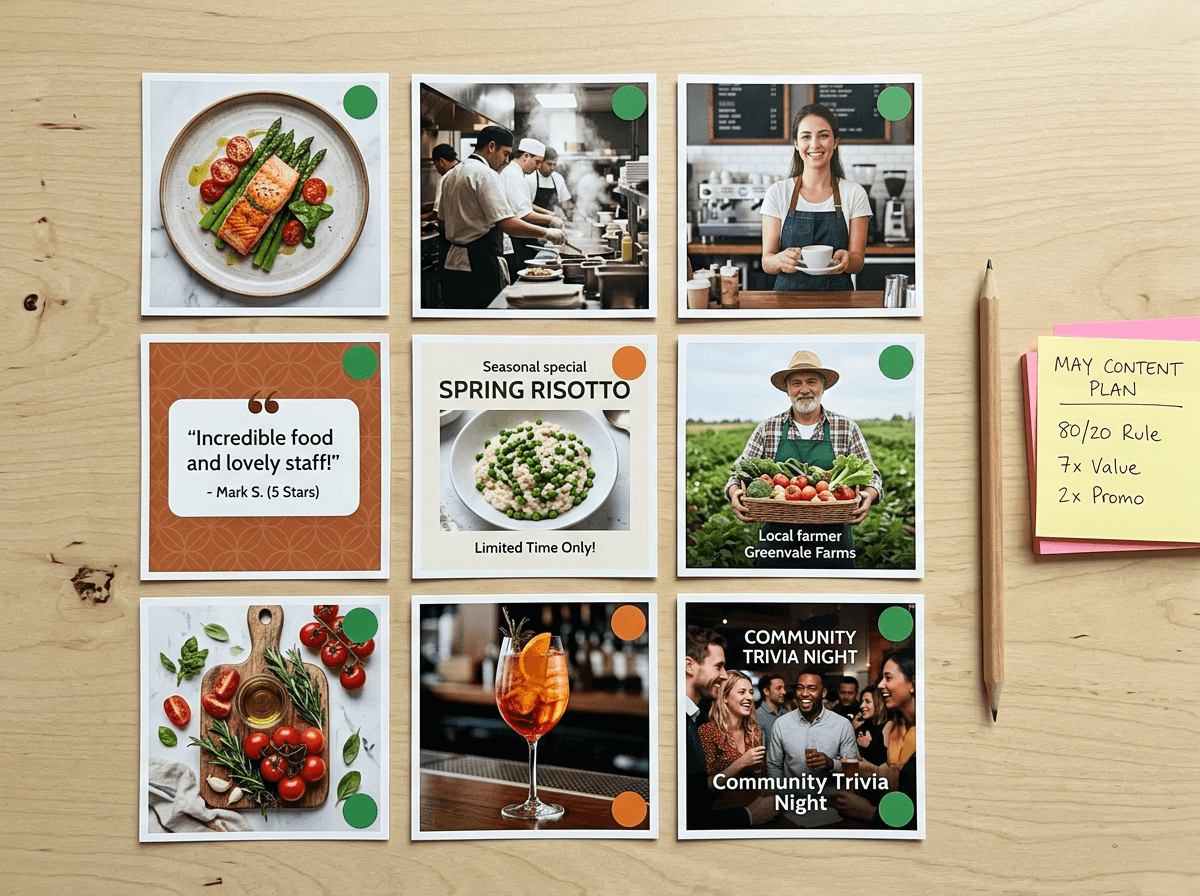 Restaurant social media content grid showing 80/20 rule with value and promotional post planning
Most restaurants get this wrong: every post is a promotion. "Come try our new special!" "Happy hour at 5!" "Book now!"
That's a fast path to getting unfollowed. The 80/20 rule fixes this:
- 80% value posts: Food photos, kitchen videos, staff stories, recipes, cooking tips, local features
- 20% promotional posts: Specials, events, menu launches, holiday reservations
People follow restaurants for inspiration and entertainment, not ads. When 80% of your content is enjoyable, the promotional 20% actually gets seen and acted on.
Value post examples: Close-up of your best pasta, behind-the-scenes plating video, "meet our pastry chef" spotlight, customer review reshare.
Promotional post examples: "Valentine's Day prix fixe — reservations open," "New cocktail menu Friday," "Free dessert with any entrée this weekend."
Budget-Friendly Restaurant Social Media Promotion Tactics
You don't need a big budget to grow on social media. These four tactics for social media management for restaurants cost almost nothing.
Run a User-Generated Content Campaign
Create a branded hashtag and incentivize customers to use it. "Share your meal with #EatAt[Name] for a chance to win a free appetizer" costs one appetizer and generates dozens of tagged posts — each one a personal recommendation to that customer's followers.
Master Local Hashtags
Generic hashtags put you in a pool of millions. Local hashtags reach people who can actually walk through your door.
Build a hashtag strategy:
- 3-5 broad: #foodie, #instafood, #foodphotography
- 3-5 local: #[YourCity]Eats, #[Neighborhood]Food, #[YourCity]Restaurants
- 1-2 branded: #[YourRestaurantName]
Monitor local hashtags too — when someone asks for restaurant recommendations, jump in with a friendly comment.
Partner with Local Food Influencers
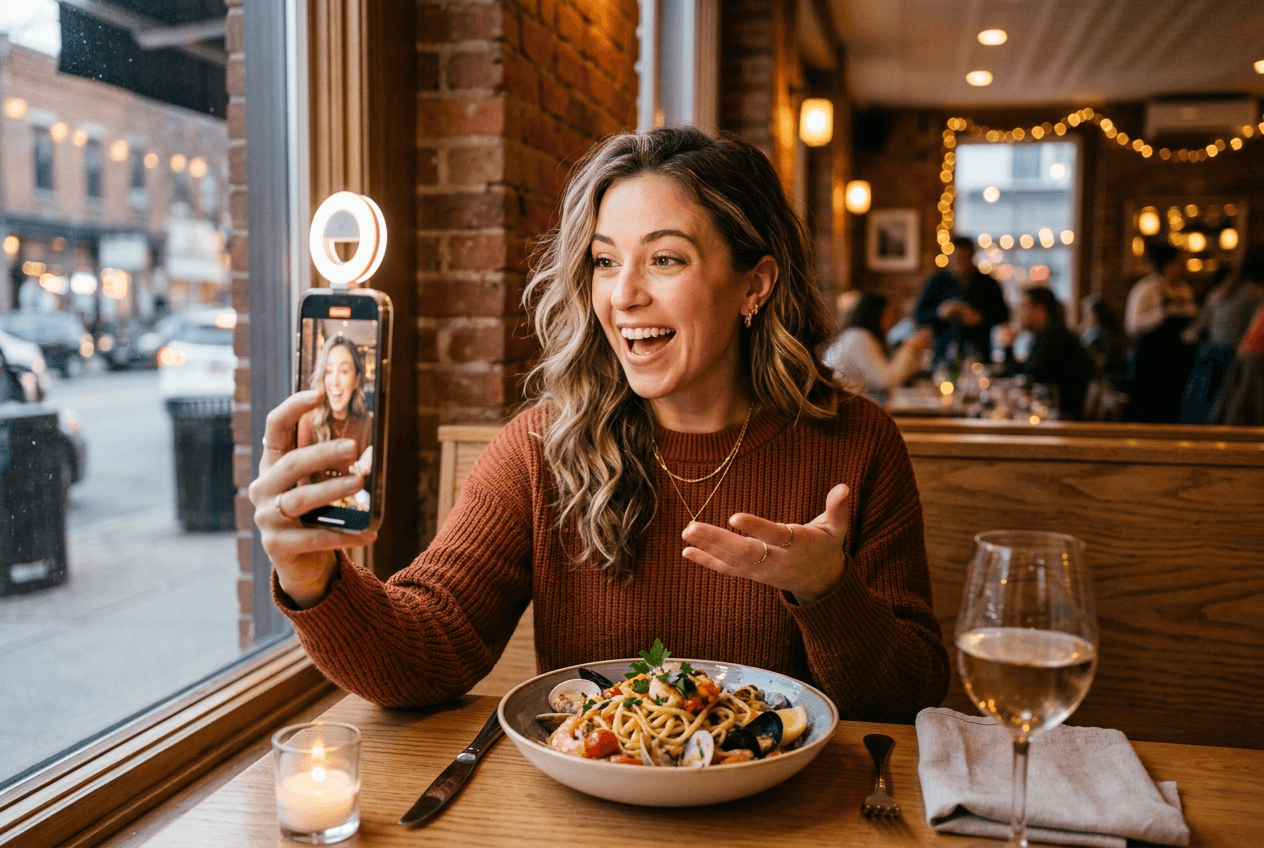 Food influencer filming restaurant review video for social media partnership promotion
Micro-influencers (1,000-10,000 followers) in your city often drive more foot traffic than big names because their audience is local and trusts them.
The approach:
- Search local food hashtags for creators covering restaurants in your area
- Invite them for a complimentary meal
- Let them share their honest experience — don't script it
- Ask them to tag your restaurant and use your hashtag
The return on a $50-100 meal can be hundreds of new followers and real visits.
Cross-Promote with Neighboring Businesses
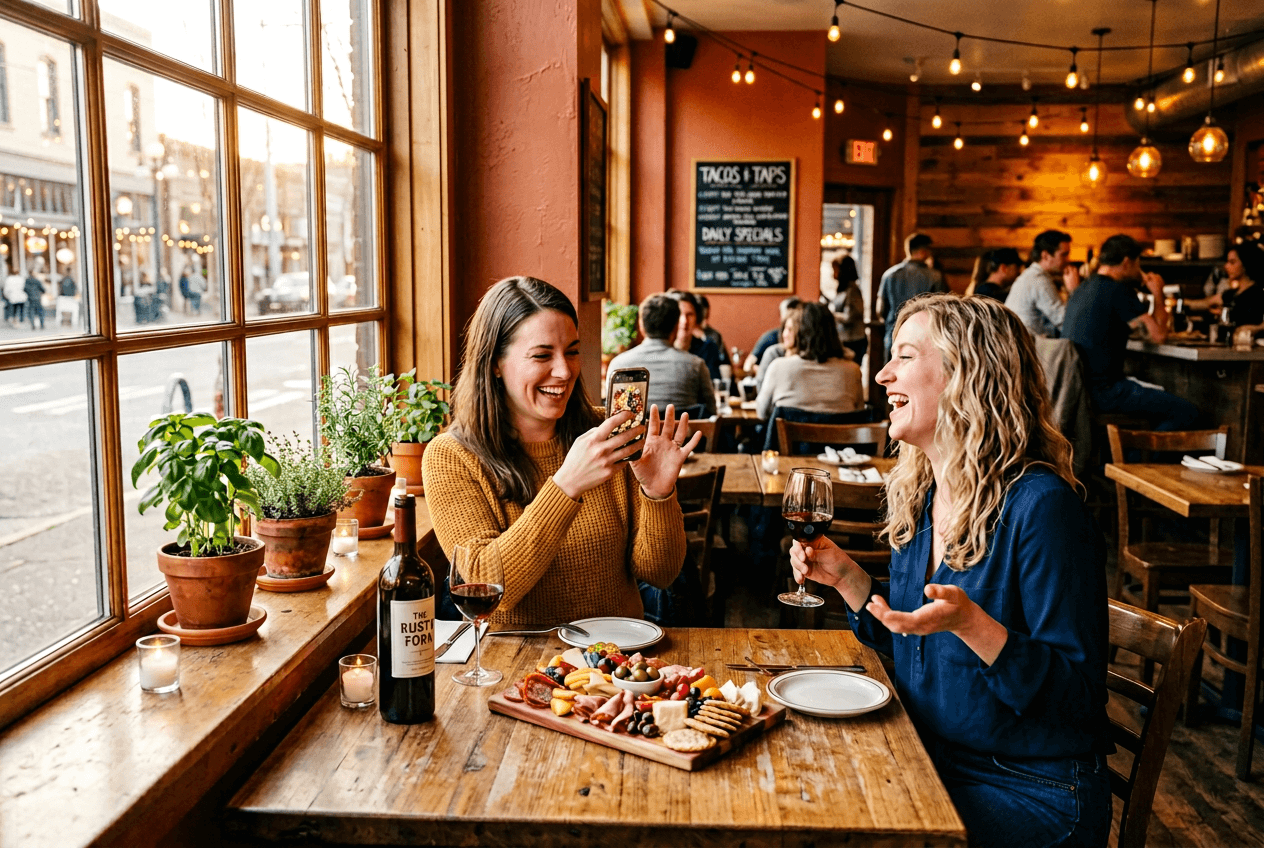 Diners sharing food photos at a cozy restaurant creating user-generated social media content
That coffee shop next door, the brewery down the block — they have audiences full of your potential customers.
Cross-promotion ideas:
- "Show a receipt from [Shop Next Door] and get 10% off lunch"
- Co-host a neighborhood event and promote on both accounts
- Tag local suppliers in posts (they'll reshare to their audience)
Social Media Advertising for Restaurants: Paid Ads Basics
Organic reach is declining. Paid social media advertising for restaurants helps you reach local diners beyond your current followers.
Instagram Food Photo Ads
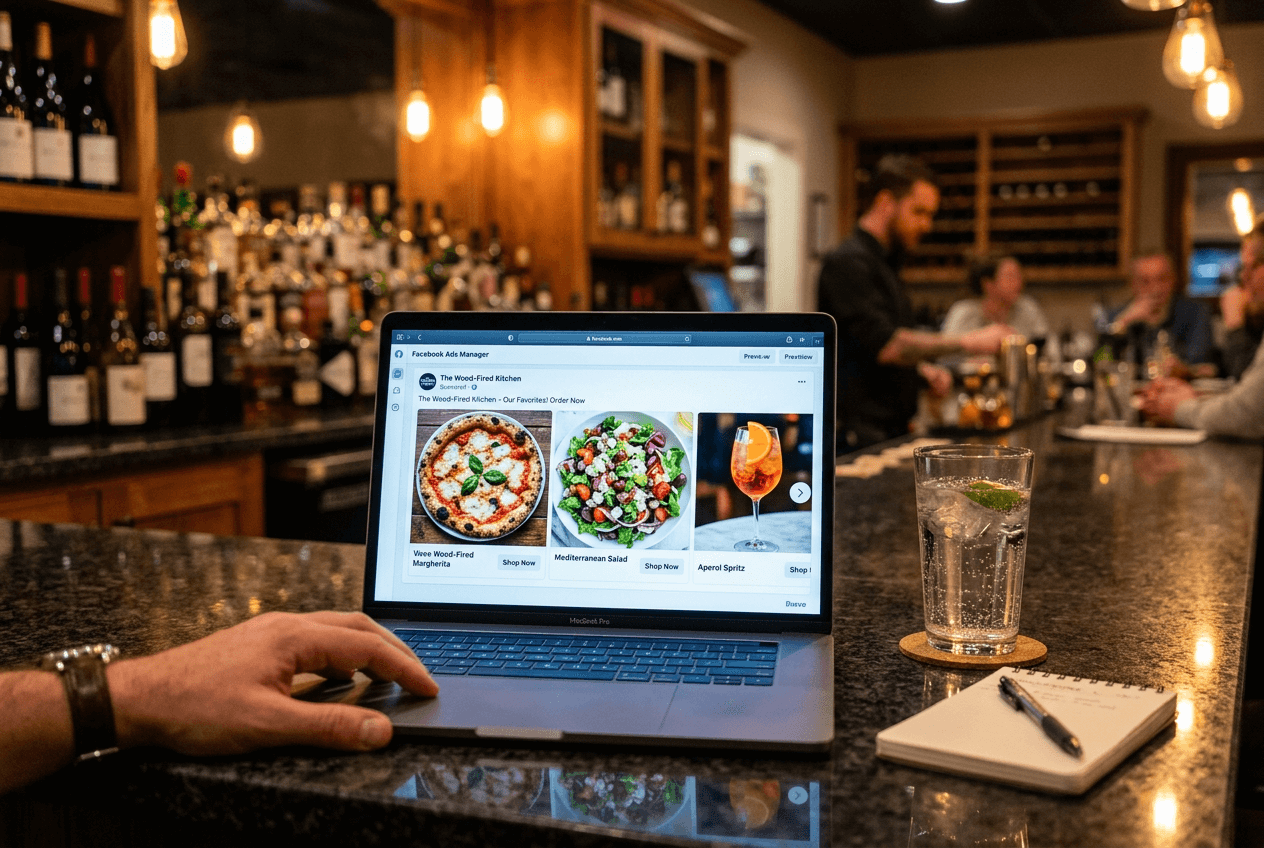 Restaurant paid social media advertising campaign with food photo carousel ads on laptop screen
Your best organic food photos make your best ads. That gorgeous burger shot that got 200 likes? Boost it.
Getting started:
- Start with $5-10/day ($150-300/month)
- Target by location (5-15 mile radius)
- Add interests: "dining out," "food and drink," "restaurants"
- Clear CTA: "Book a Table," "View Menu," or "Order Now"
Professional-quality food images lower your cost-per-click and boost conversions. This is where food photography investment pays off directly.
Facebook Local Targeting
Facebook's ad targeting is incredibly precise — zip code, age, dining interests, even followers of similar restaurants.
Best ad types:
- Carousel ads showcasing 3-5 dishes
- Event ads for special nights or seasonal menus
- Offer ads with trackable discount codes
Start with $200-500/month and let Facebook's algorithm optimize delivery.
Google Search and Display Ads
Google Ads capture people at highest intent — searching "restaurants near me" or "[cuisine type] in [your city]."
- Local Search Ads: Top of Google Maps results. Budget: $10-20/day.
- Display Retargeting: Show ads to website visitors who didn't book.
How to Measure Restaurant Social Media Success
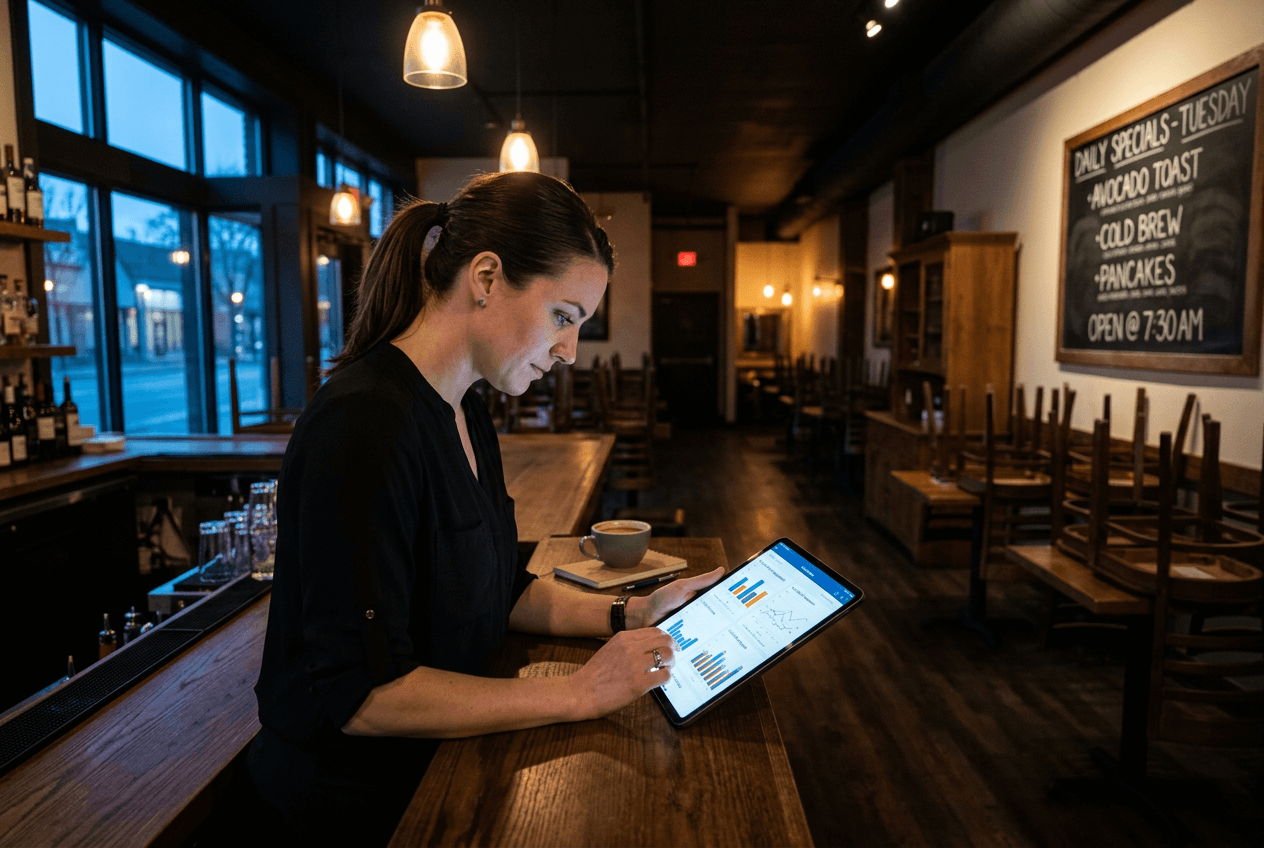 Restaurant manager reviewing social media analytics on tablet before opening to measure marketing success
Posting without tracking is like cooking without tasting. Every platform gives you free analytics — use them.
The 4 Metrics That Matter
1. Reach — How many unique people saw your content. Track monthly. Growing = content getting discovered.
2. Engagement Rate — Likes + comments + saves + shares ÷ reach. Average restaurant rate: 1-3%. Above 3% = content resonates. Below 1% = experiment time.
3. Website Clicks — People who clicked to your menu, booking page, or ordering link. This bridges social media activity and business results.
4. Reservation/Order Conversions — The ultimate metric. Track with unique promo codes, "how did you find us?" questions, or UTM links in your bio.
Review monthly. Double down on what drives engagement and clicks. Social media management for restaurants isn't about posting more — it's about posting smarter.
Also make sure your menu photos for delivery apps look polished, and avoid the food photography mistakes that kill online orders.
Frequently Asked Questions
How often should a restaurant post on social media?
Aim for 3-5 posts per week on Instagram, plus daily Stories. On TikTok, 3-4 videos weekly. On Facebook, 3-4 posts weekly. Consistency matters more than frequency — three posts every week beats seven one week then silence the next.
What's the best social media platform for restaurants?
Instagram is the strongest all-around choice because of its visual focus, high engagement, and Google indexing. If customers skew younger (under 30), add TikTok. If older (45+), prioritize Facebook. Most restaurants succeed focusing on Instagram plus one other platform.
How much should a restaurant spend on social media advertising?
Start with $200-500/month on Instagram or Facebook ads. That reaches 10,000-50,000 local people. Many single-location restaurants spend $500-1,000/month with significant returns in reservations and orders.
Do restaurants need professional food photos for social media?
Professional-quality, yes. A professional photographer, not necessarily. Better cameras and AI food photography tools have narrowed the gap. What matters is good lighting, clean composition, and consistent style. Check our iPhone food photography tips for techniques, or try FoodShot AI to transform phone photos into professional images in 90 seconds.
How long does it take to see results from restaurant social media marketing?
Expect 2-3 months of consistent posting before meaningful follower growth. Paid ads drive results within days. By month six, most restaurants report noticeable increases in new customer visits from social media.