Mediterranean Food Photography: Mezze & Grain Bowls
 Ali Tanis19 min read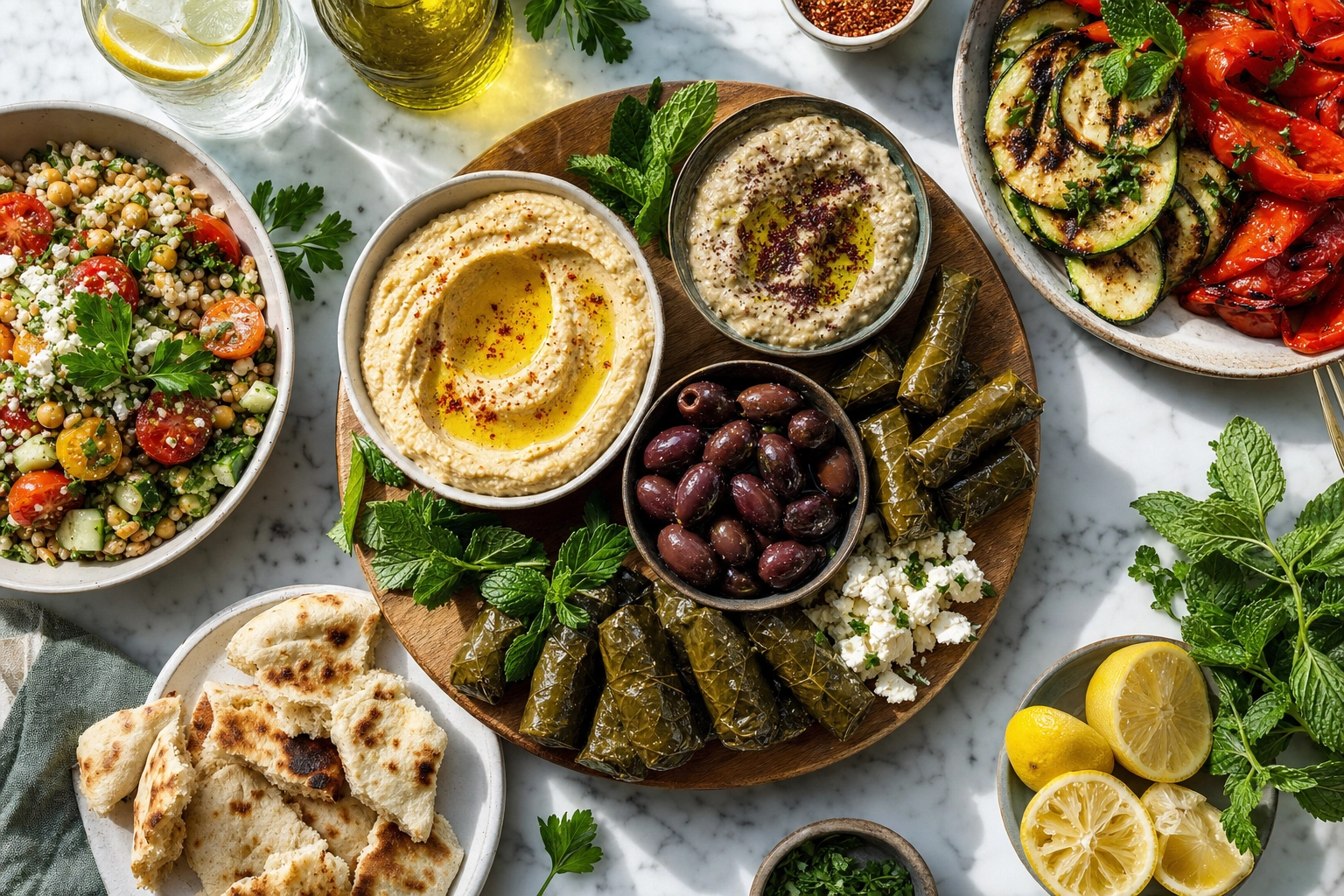
Mediterranean food is having the biggest moment of its life. Bowl bars are opening on every corner, the Mediterranean diet has been named the best overall diet by U.S. News & World Report eight years running, and diet-conscious diners now read "olive oil and grains" as "good for me." On paper it's the most photogenic cuisine on earth — jewel-bright vegetables, herb green everywhere, the glossy shine of good olive oil.
So why do most Mediterranean food pictures, snapped on a phone between orders, come out looking like a sad beige bowl in bad light?
That gap is what this guide fixes. Search "mediterranean food pictures" and you'll scroll a million identical stock plates of someone else's grain bowl — and diners can smell a stock photo across a delivery app. Unlike the endless Mediterranean recipes online, your menu has one job: sell the exact dish a guest can order right now. This isn't a recipes roundup; it's about making your own food look as good as it tastes — the bright, abundant aesthetic, the one camera angle that does the heavy lifting, the five shots that carry any Mediterranean menu, and the 2-minute shortcut for when the lunch rush won't wait.
Quick Summary: Great Mediterranean food pictures come down to three things: the fresh-bright-abundant look (an olive-green, lemon-yellow and creamy-white palette on marble and pale wood, lit with soft daylight), the overhead flat-lay angle that suits bowls and platters, and five workhorse shots — the mezze platter, the overhead grain bowl, the hummus swirl, falafel and pita, and a grilled-vegetable spread. Shoot them on a phone, or turn phone snaps into menu-ready images in about 2 minutes with an AI food photo editor like FoodShot.
Why Mediterranean Food Is the Hardest "Easy" Cuisine to Photograph
Here's the cruel joke of Mediterranean food photography: the ingredients are gorgeous, and that's exactly why it's easy to get wrong. When everything is fresh, healthy and subtly colored, the camera has nothing dramatic to grab — and your phone flattens all of it. The same chickpea bowl that looks mouthwatering on a recipes blog can turn gray the moment it hits your delivery menu.
Four things go wrong, again and again:
- Olive-oil sheen dulls fast. That gloss is your top freshness cue, but oil soaks into a warm grain base within minutes, so a vibrant bowl reads dry and tired.
- Char turns to mud. Grilled eggplant, zucchini and peppers look alive in person; under flat light those char marks collapse into a muddy-brown smear.
- Fresh things wilt. Feta sweats, herbs go limp and greens lose their snap at room temperature. The clock starts the second the dish hits the pass.
- Everything reads beige. Pile a tan grain, a beige protein, a cream sauce and toasted chickpeas in one bowl and the camera sees a single muddy blob.
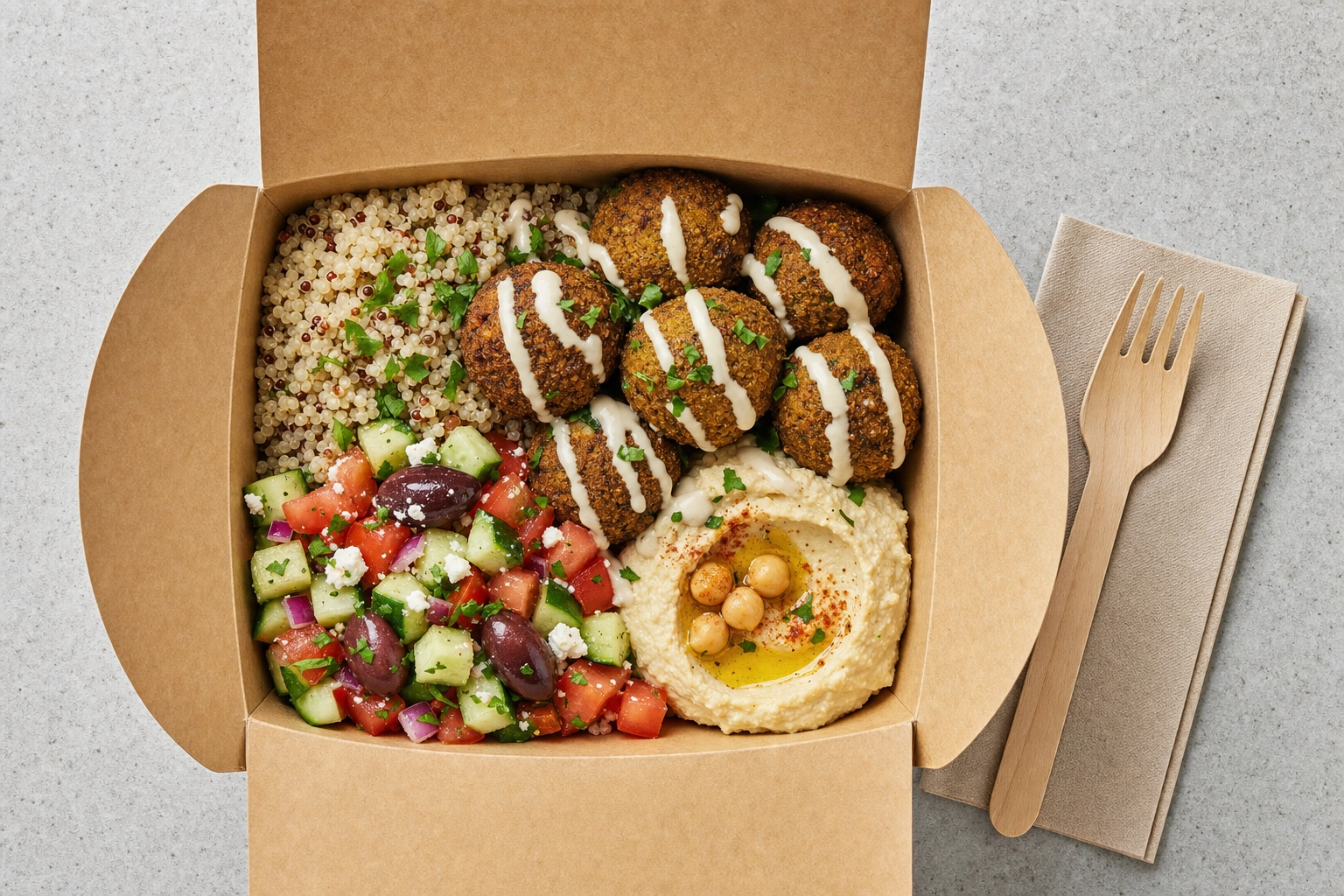 Overhead Mediterranean grain bowl in a kraft takeout container with falafel, hummus and salad
The stakes are real, because Mediterranean food is no longer niche. It's the fastest-growing corner of fast casual: Cava alone reported over $950 million in revenue in fiscal 2024, up roughly 33%, and the category still makes up only about 10% of the U.S. fast-casual market. Roughly a third of those orders come through delivery apps, where your photo is a thumbnail fighting a dozen others — brutal for ghost-kitchen Mediterranean brands especially. Mediterranean-diet wellness concepts are now a category of their own, and they all compete on how fresh the food looks.
There's a cultural layer too. The Mediterranean diet isn't just trendy — UNESCO added it to its Representative List of the Intangible Cultural Heritage of Humanity in 2010, and it has topped U.S. News & World Report's best-diet ranking for eight straight years. Diners arrive with that diet's health halo in mind, expecting "fresh and healthy" to be obviously true in the photo. A dull picture breaks a promise. And stock photos won't save you: a generic library bowl is someone else's lunch, while your own food is the only image that's honest and ownable.
The Fresh, Bright, Abundant Aesthetic That Makes Mediterranean Food Pictures Work
Before you touch a camera, fix the target in your head. Nearly every great Mediterranean food picture shares one feeling: a sun-drenched coastal table — generous, relaxed and alive. Think a whitewashed terrace over the Aegean at noon, not a candlelit steakhouse. Bright, not brooding. Abundant, not precious.
Paint With the Mediterranean Palette
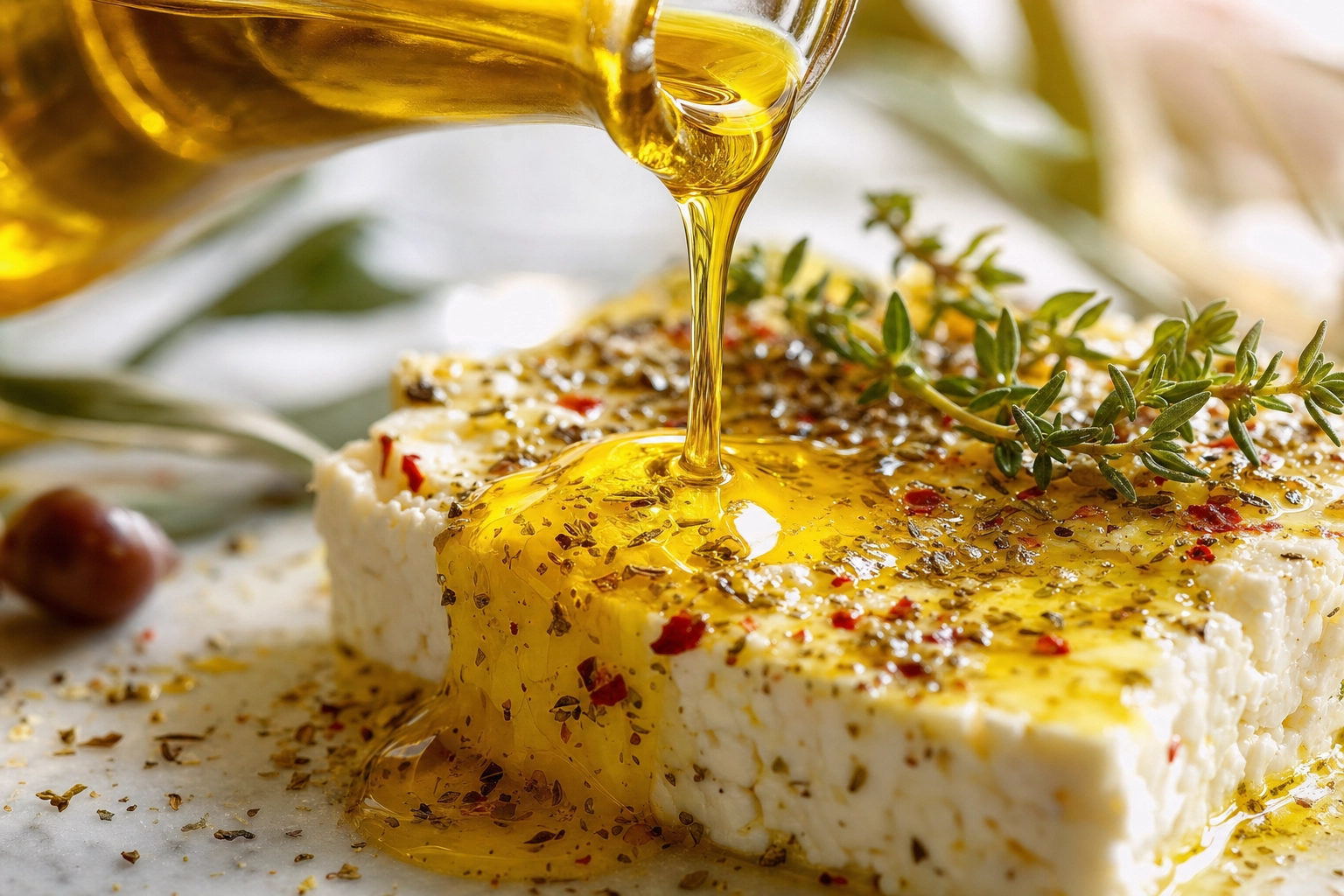 Golden olive oil poured over a slab of feta with oregano and chili, the stream catching the light
The fastest shortcut to "this looks Mediterranean" is color:
- Olive green — herbs, olives, oil, parsley, mint.
- Lemon yellow — citrus halves, saffron, turmeric-warmed grains.
- Creamy white — feta, labneh, yogurt, tahini, hummus.
- Tomato-and-sumac red — cherry tomatoes, roasted peppers, that rust-red dust on top.
- Earthy beige — chickpeas, grains, pita, falafel.
Build two or three of these into every frame and the dish reads "Mediterranean" before anyone names it. And running through all of it is olive oil — the connective tissue of the cuisine. Its sheen is the single most important "fresh and alive" signal you can put in a photo, whether it pools in a hummus well, glosses a grain bowl or slicks a charred pepper.
Surfaces and Props That Tell the Story
Mediterranean food belongs on bright, slightly rustic materials: white or Carrara marble (the classic coastal surface), pale blond wood (warmer, bowl-bar casual), rumpled linen, and terracotta or matte ceramic. For props, a few earn their keep — lemon halves, a scatter of Kalamata or Castelvetrano olives, a sprig of mint or oregano, a dusting of sumac or za'atar, a small cruet of olive oil. The keyword is few. The biggest mistake in homemade Mediterranean food images is cramming olives, lemons, a herb plant and three dips into one frame. Pick one or two props that hint at a story, then stop.
Light It Like a Mediterranean Afternoon
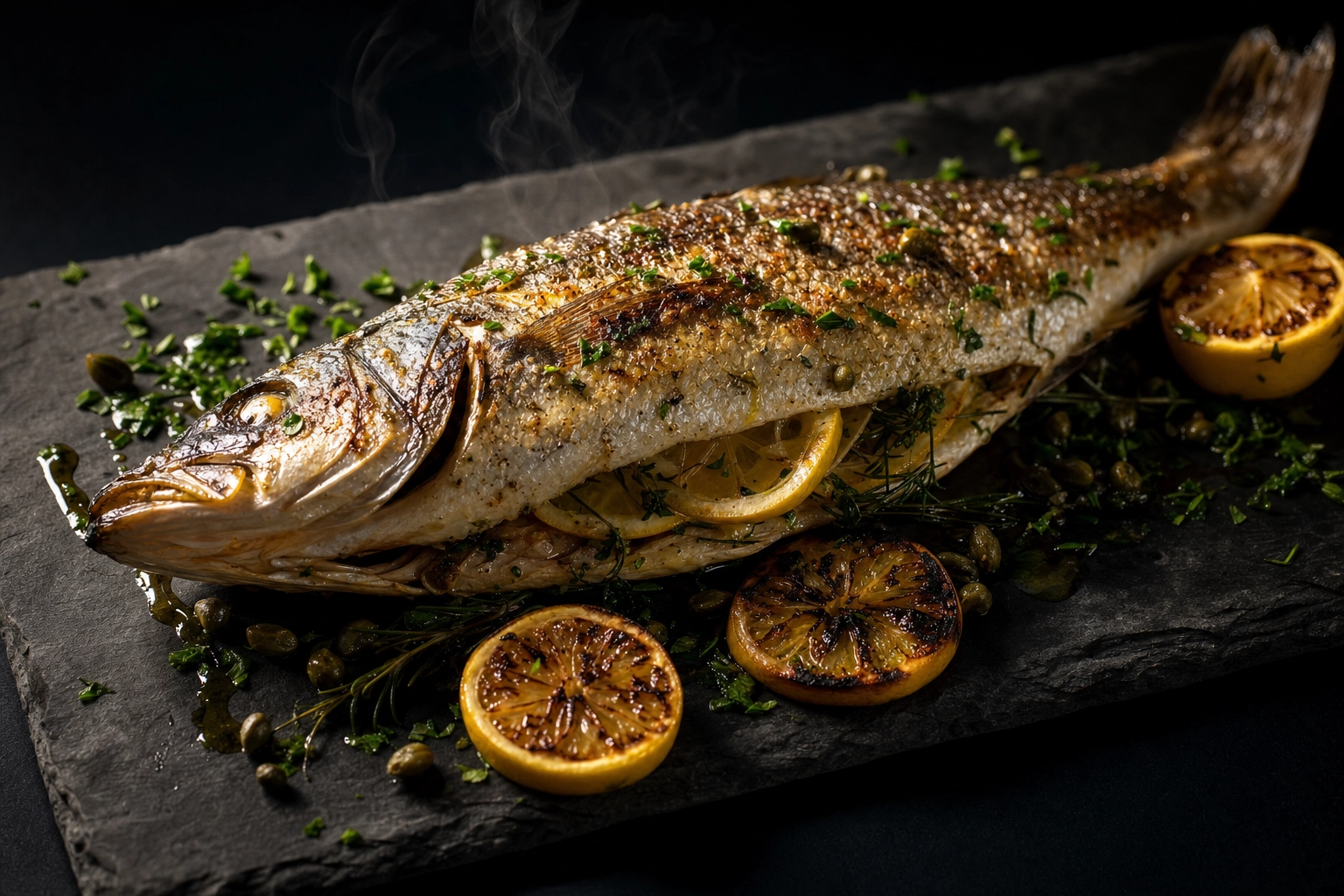 Whole grilled branzino with lemon and herbs on dark slate under dramatic warm side light
The default here is bright, soft, diffused daylight — a big window with a sheer curtain, or open shade just out of direct sun. Hard noon light blows out the feta; flat restaurant fluorescents cast a yellow-green tint that makes greens look sickly. Direction is your friend: light from the side or slightly behind rakes across textures and lights up that oil sheen, and a cheap sheet of white foam board bounces it back so shadows don't go muddy. Save dark, moody lighting for the exceptions — a whole grilled branzino, charred lamb, an evening mezze with a glass of ouzo. That dramatic register is what Greek tavernas and coastal fine-dining rooms reserve for hero seafood. For bowls, dips and salads, keep it bright.
Why Overhead and Flat-Lay Is Your Power Angle
Most cuisines make you choose an angle. Mediterranean food chooses for you: shoot from above.
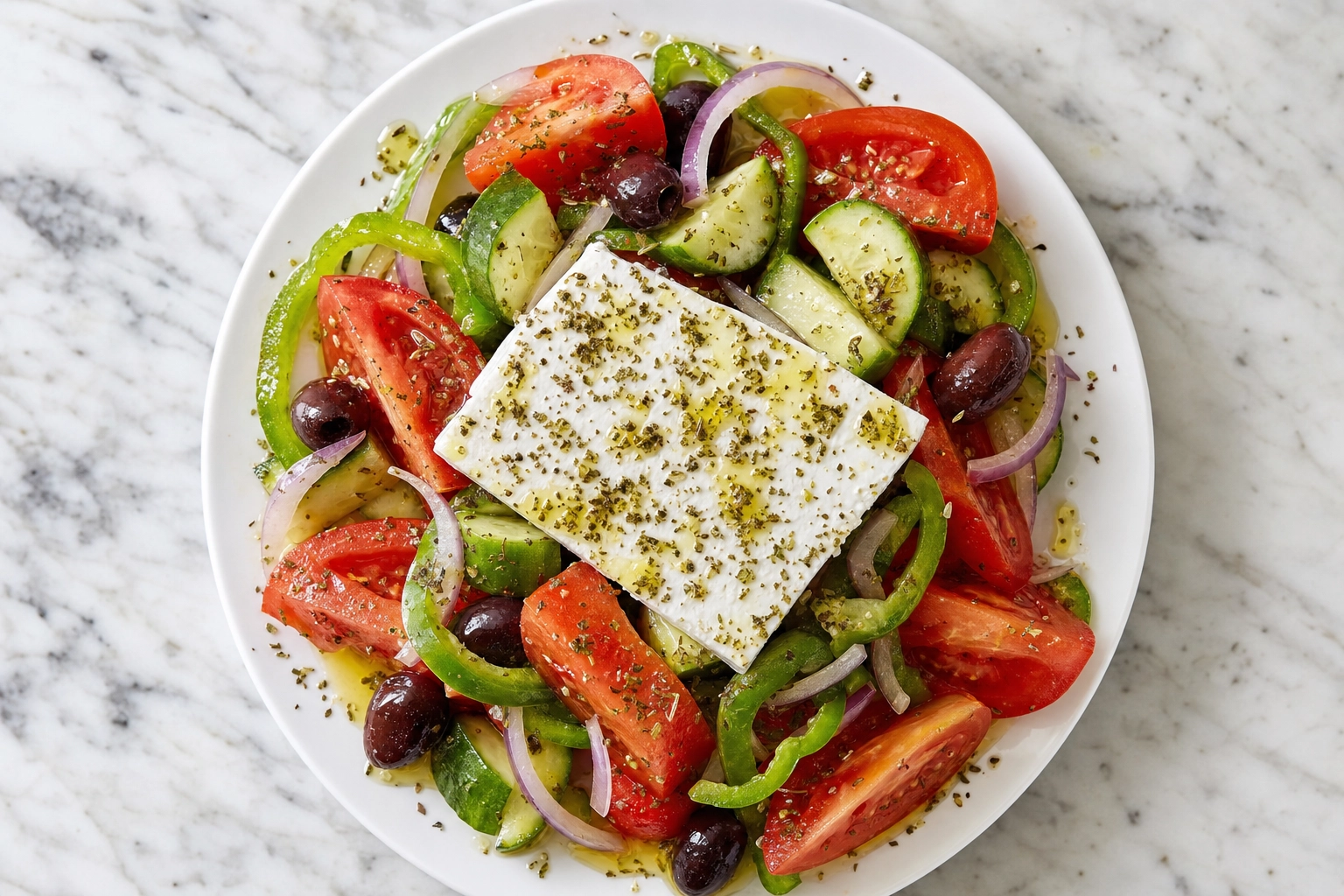 Overhead Greek horiatiki salad with tomato, cucumber, olives and a slab of feta on marble
Look at the menu — bowls, platters, spreads, boards. These are composed on a flat plane, so they're built to be seen from the top. Take a Greek horiatiki salad: from straight above, the tomato wedges, cucumber, olives and that proud slab of feta read as one abundant, colorful composition. The 90-degree overhead (flat-lay) angle shows every ingredient edge to edge, turns a bowl into a wheel of color, and reads instantly on a tiny delivery-app thumbnail.
Switch to a 45-degree, three-quarter angle only when height is the story: a pita stack, a drizzle mid-pour, a falafel cross-section. The rule of thumb: flat, composed bowls go overhead; tall things and action shots go to 45 degrees.
Shooting a clean flat-lay on a phone is mostly discipline:
- Keep the lens parallel to the table so the bowl looks round, not warped.
- Turn on grid lines and center the bowl, or use the rule of thirds for a wide spread.
- Shoot from a step stool so you're directly over the dish, arms steady.
- Watch your shadow — position the soft light to the side, not blocked by your head.
The 5 Essential Mediterranean Food Shots Every Menu Needs
You don't need all forty menu items. Five Mediterranean food images do most of the selling, because they cover the dishes diners look for first.
1. The Mezze Platter (Your Abundance Hero)
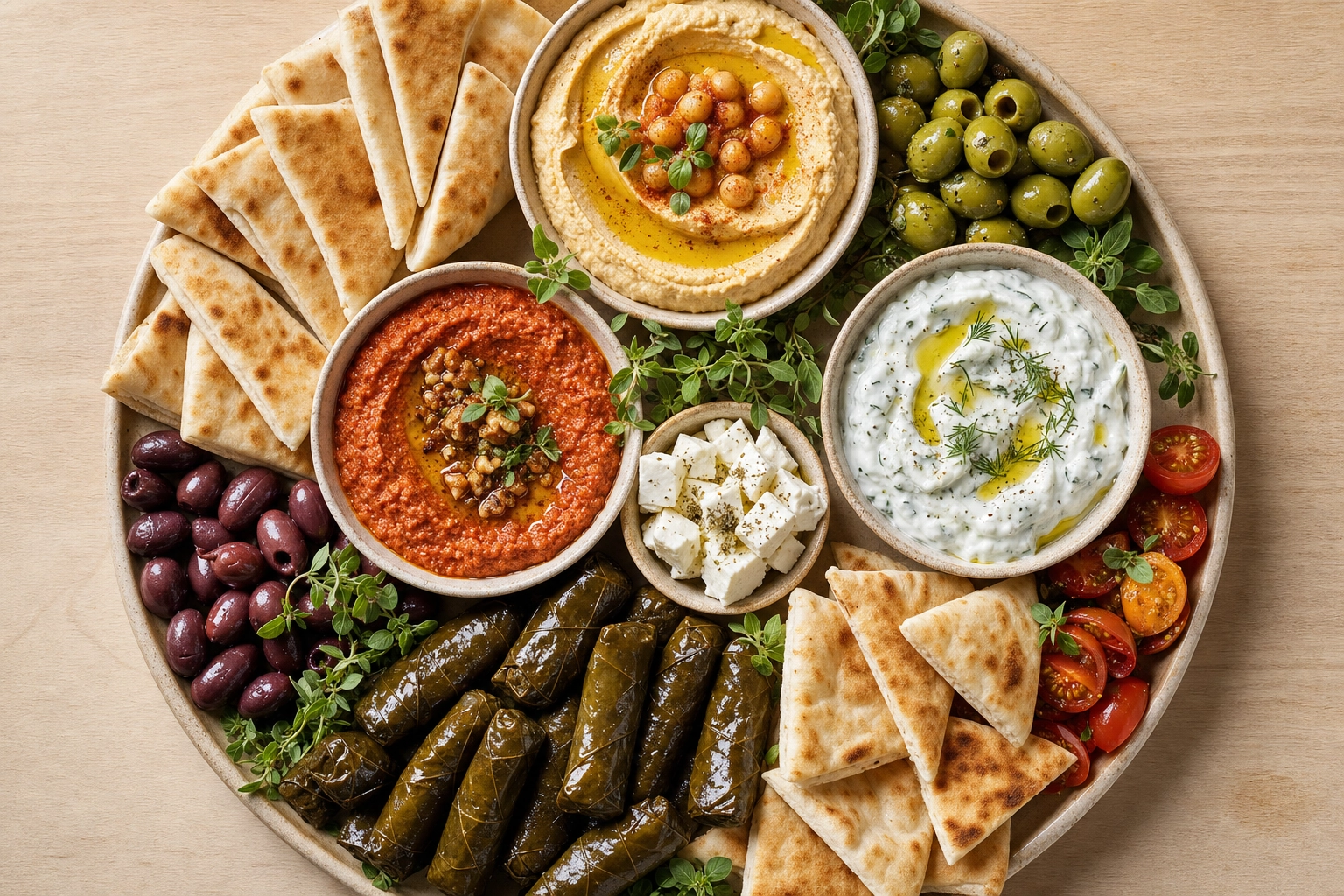 Overhead Lebanese mezze platter on pale wood with hummus, tzatziki, olives, dolmades and pita
Mezze is the soul of the Eastern Mediterranean table — small shared plates that turn eating into an event. The word traces to the Persian maza, "to taste," and the tradition runs across Greece, Turkey, Lebanon and the wider Levant (the cousin of Spanish tapas and Italian antipasti). A generous Lebanese mezze is the gold standard: hummus and baba ghanoush, tabbouleh and fattoush, olives, feta, dolmades and warm pita. It's also the centerpiece of any Mediterranean catering spread.
It's the most shareable shot you can make, because abundance is something the camera can see. Build it for the lens: group elements in odd numbers, vary their height and color, and leave deliberate negative space — a little breathing room makes a board look more intentional, not emptier. Anchor with the dips, fill the gaps with pita, olives and bright pickles, and finish with a scatter of herbs. Shoot it dead overhead on marble or pale wood and you've got the cover model of your menu.
2. The Grain Bowl, Shot Straight Down (The Buddha-Bowl Money Shot)
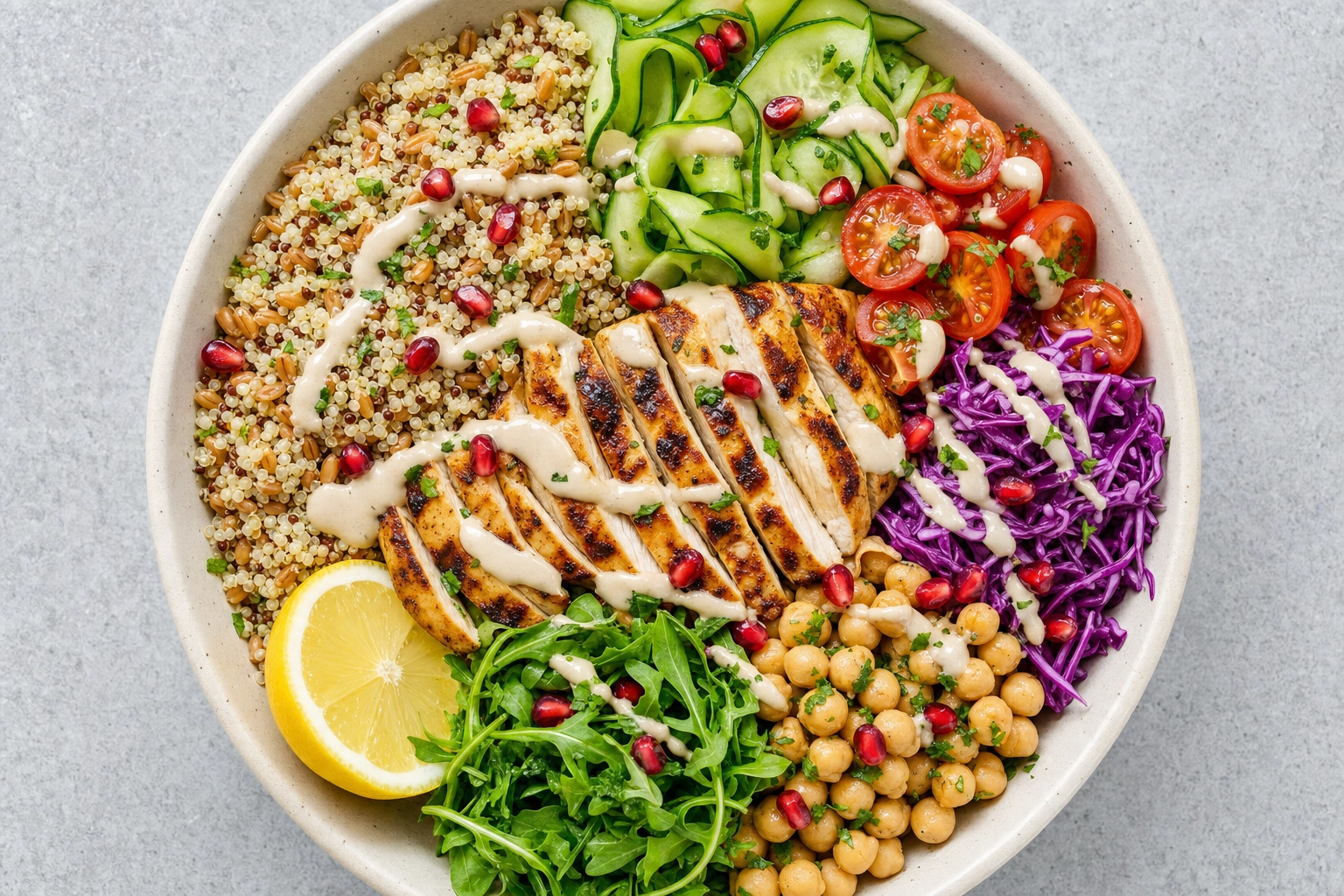 Overhead Mediterranean grain bowl with sectioned quinoa, grilled chicken, vegetables and tahini drizzle
This is the workhorse of every bowl bar and fast-casual Mediterranean restaurant — and the hardest shot to keep from going beige. The fix is composition. Treat the bowl like a color wheel:
- Keep the sections separate. Don't toss it — arrange grain, protein, greens, sauce and each topping in its own wedge so colors stay distinct.
- Build height. A flat, low bowl reads sad; mound the components and let a cucumber ribbon or lemon wedge break the rim line.
- Drizzle last, on camera. A ribbon of tahini, yogurt or harissa is the finishing move.
- Force one bright pop. Pomegranate arils, a halved cherry tomato or purple cabbage breaks the tan and gives the eye somewhere to land.
Straight down, every time — it's the same composed-bowl logic in our salad and grain-bowl photography styles.
3. The Hummus Swirl and Olive-Oil Drizzle
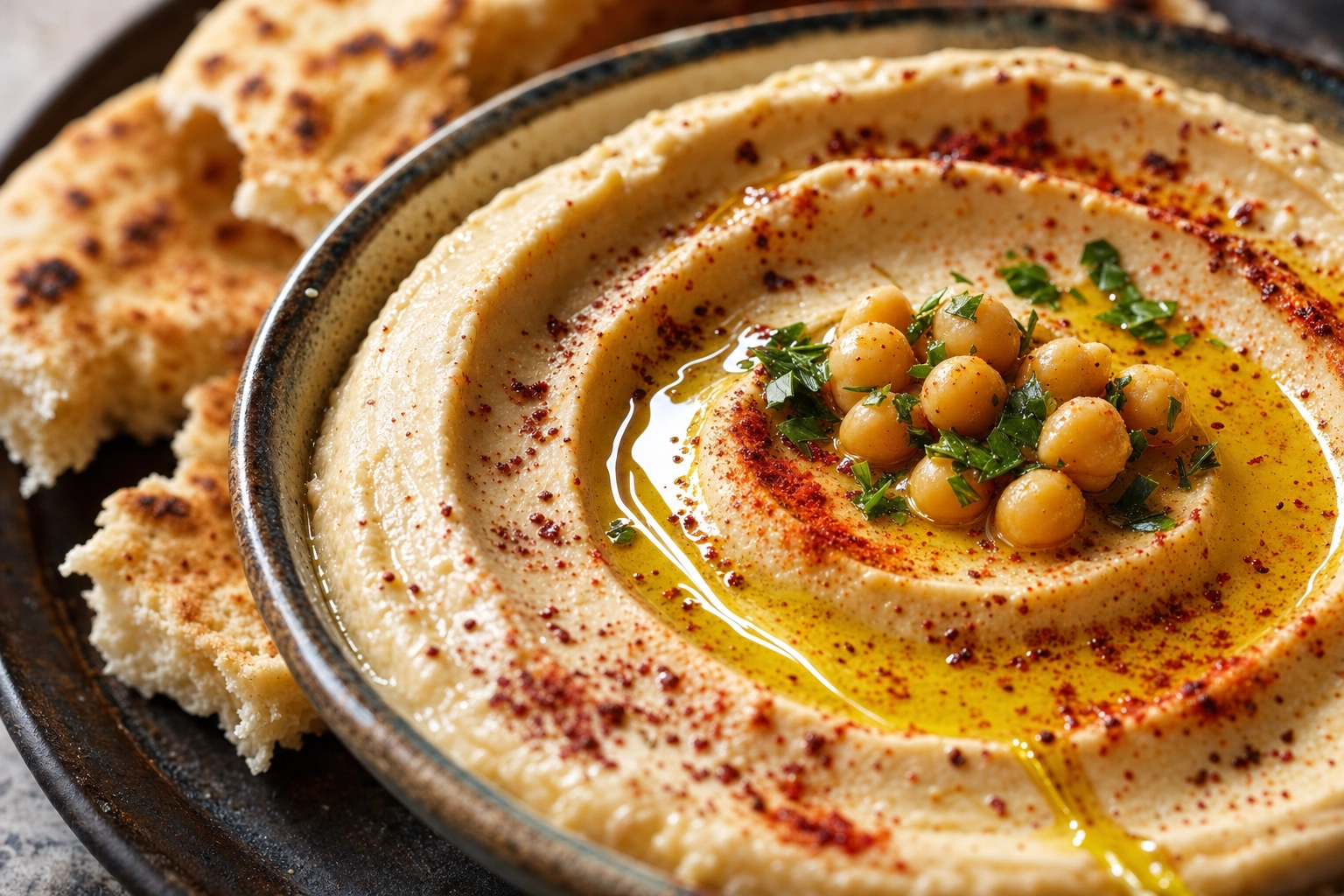 Close-up of hummus with a spiral swirl, olive oil pool, sumac and chickpeas beside warm pita
Few hummus images look appetizing by accident — the great ones are styled. Spread the hummus thick, then drag the back of a spoon in a circle to carve the signature swirl and a shallow well. That well exists to pool olive oil. The oil is the hero: angle your light so it catches a bright highlight, because dull, matte hummus looks like spackle. Finish with sumac or paprika for rust-red contrast, whole chickpeas, chopped parsley and a final thread of oil, with warm pita alongside for scale. Then move fast — the sheen dulls within minutes as the oil absorbs, so style first, shoot second. Both 45-degree and overhead angles work.
4. Falafel and Pita (The Texture Close-Up)
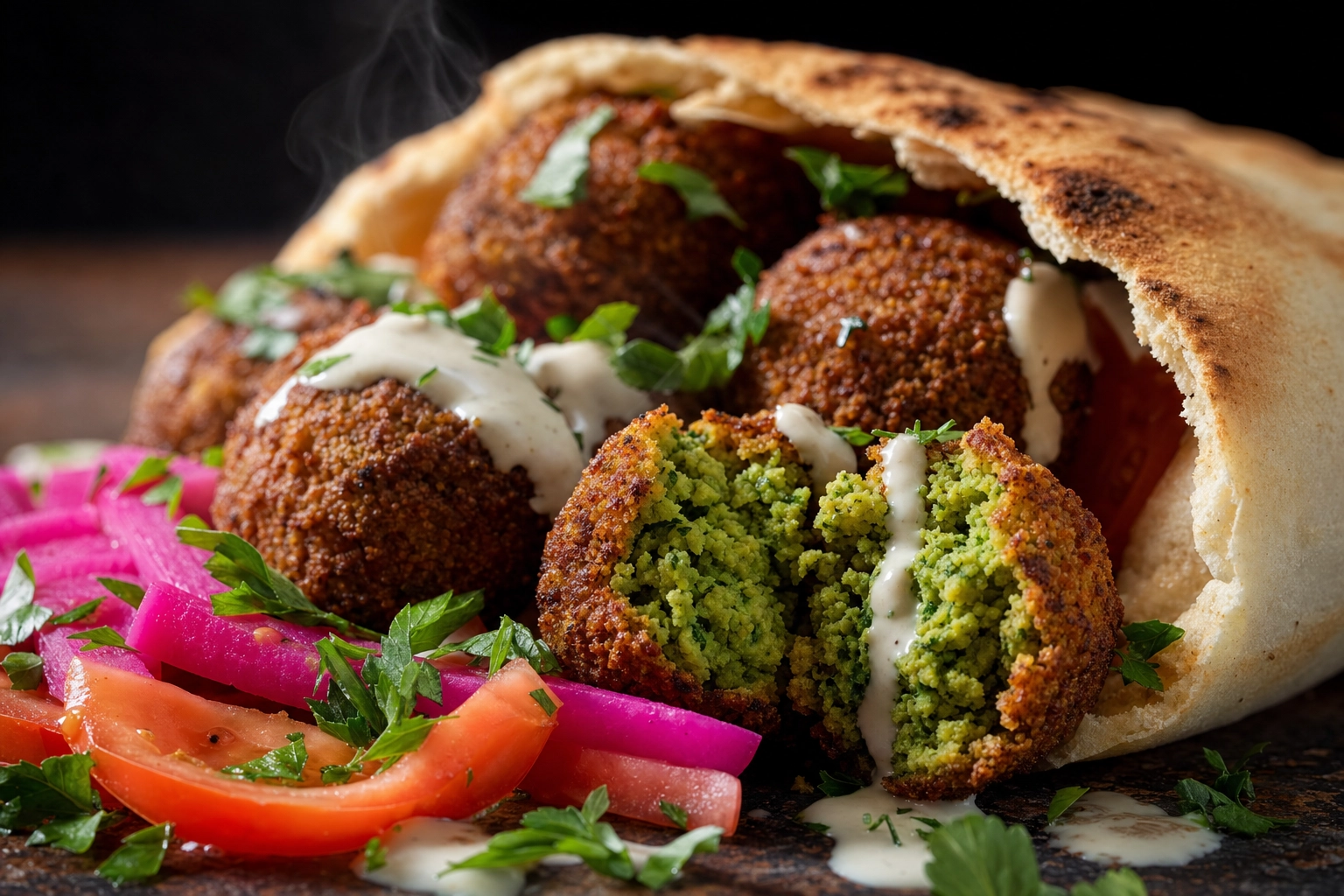 Falafel broken open showing herb-green interior and crisp crust with pita, tahini and pickled turnips
If the grain bowl is about color, falafel pictures are about texture — and the money shot is the cross-section. Break a falafel and show the craggy, herb-green interior against the deep golden crust; that contrast is the whole appeal. Light it warm and from the side so it rakes across the bumpy crust and makes it three-dimensional — flat front light makes falafel look like a hush puppy. Style the serve with a torn pita, a drizzle of tahini, a few pickled turnips, tomato and herbs. Crisp brown against white tahini and fresh green is what turns a fried ball into something crave-worthy.
5. The Grilled-Vegetable Spread (Make Char the Star)
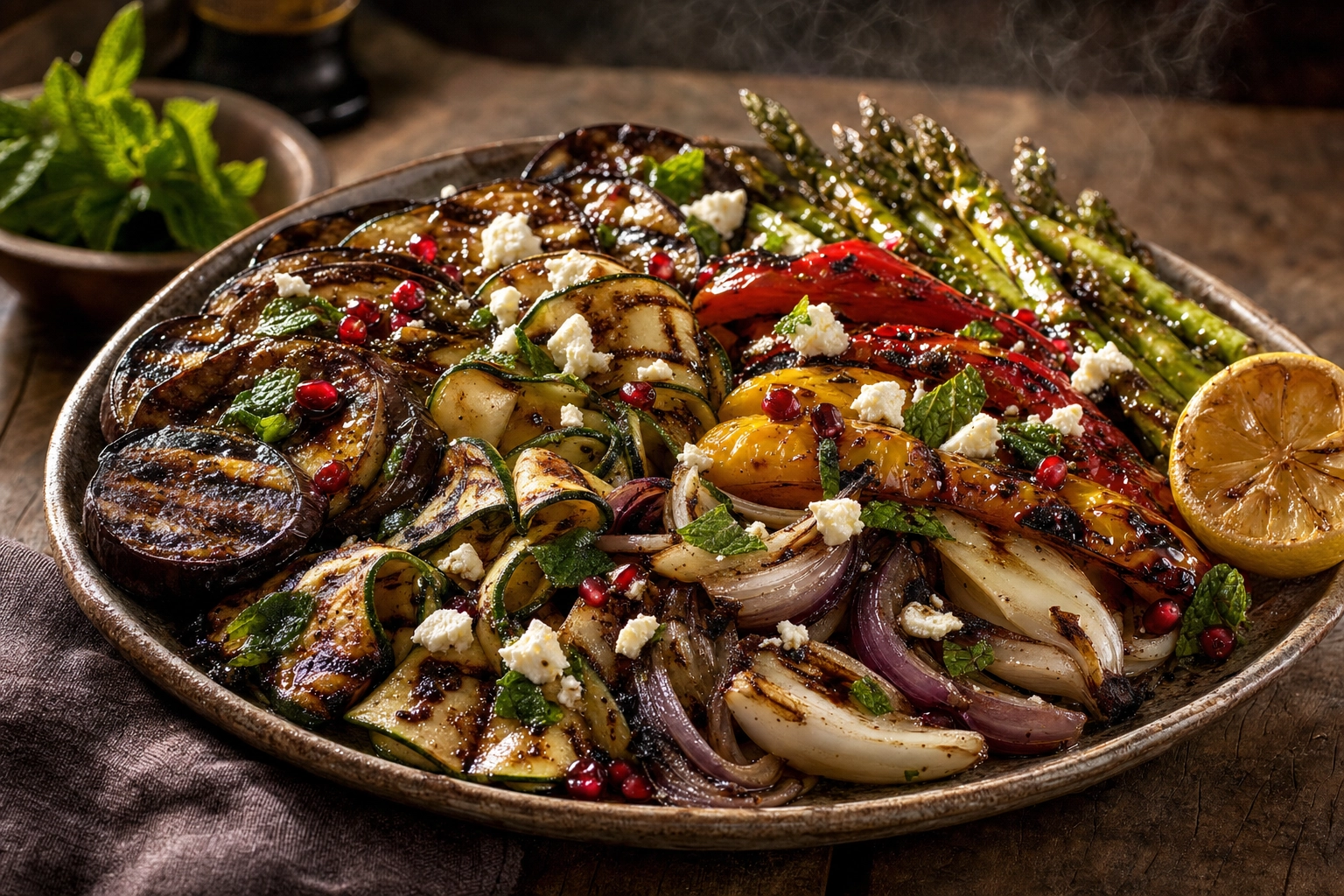 Grilled vegetable platter with charred eggplant, zucchini, peppers, feta and herbs in warm light
Charred eggplant, zucchini, peppers, onions and asparagus are some of the most beautiful things in the Mediterranean kitchen — and the easiest to ruin, because flat light turns those grill marks into a muddy-brown blur. Rescue them with warm, directional side light that separates the charred edges from the soft flesh and catches the oil gloss. Brush the vegetables with olive oil and a little balsamic or pomegranate-molasses glaze right before shooting, then finish with torn herbs, a squeeze of lemon and crumbled feta. Lay it out as an abundant overhead platter, or move to 45 degrees on a single hero vegetable.
A Few More Popular Mediterranean Dishes Worth Shooting
Beyond the big five, several popular Mediterranean foods deserve their own frame — and they all follow the same bright, abundant rules.
Gyros and shawarma. Shoot the cross-section: shaved meat, tomato, onion and a tahini or tzatziki drizzle spilling from a warm pita, at a 45-degree angle that shows the stack and the drip.
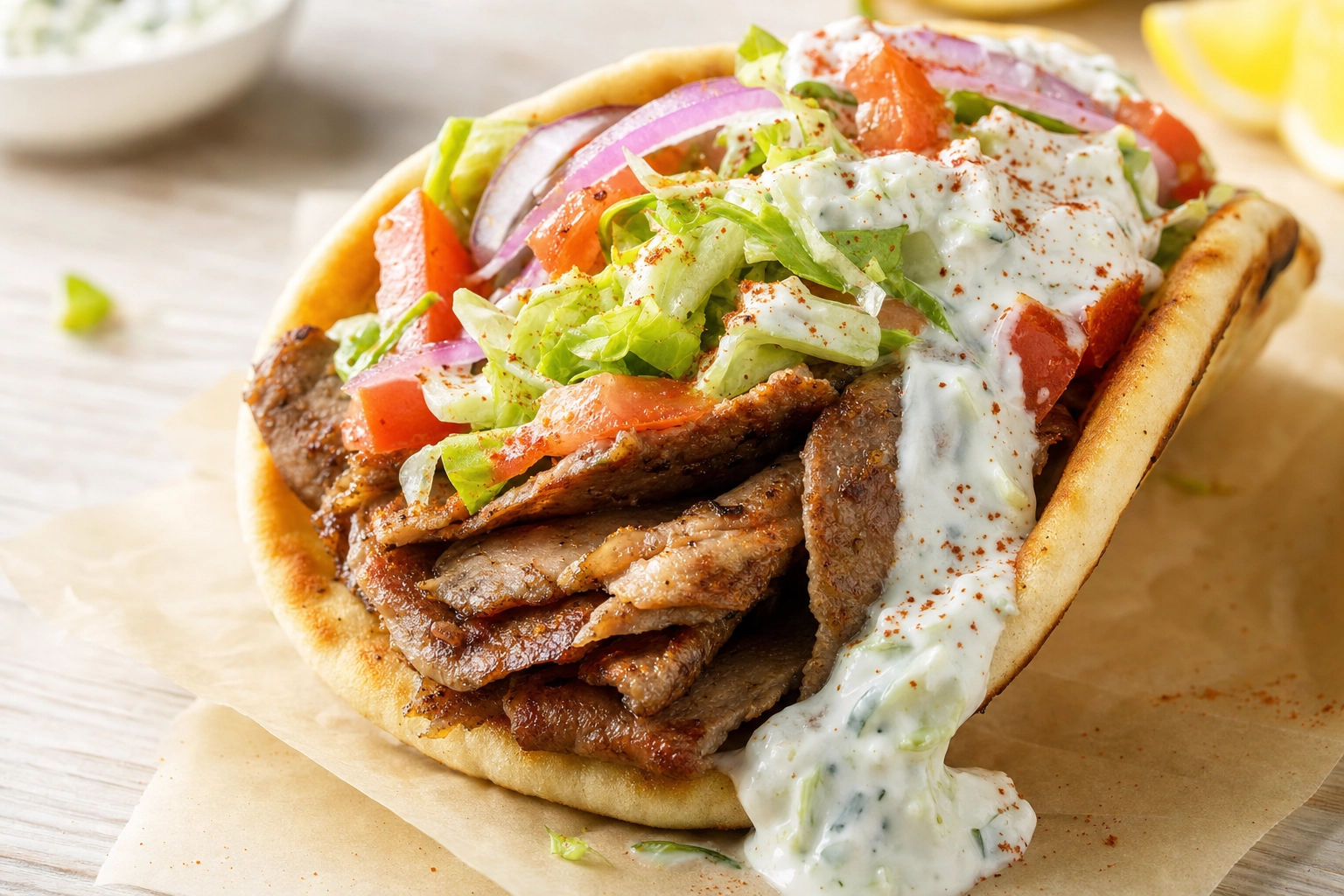 Open Greek gyro on pita with roasted meat, tomato, onion and tzatziki at a 45-degree angle
Kofta and kebab skewers. Grilled meat is all about char and sheen — shoot at 45 degrees over herbed rice with a cooling yogurt sauce, sumac onions and grilled lemon for contrast.
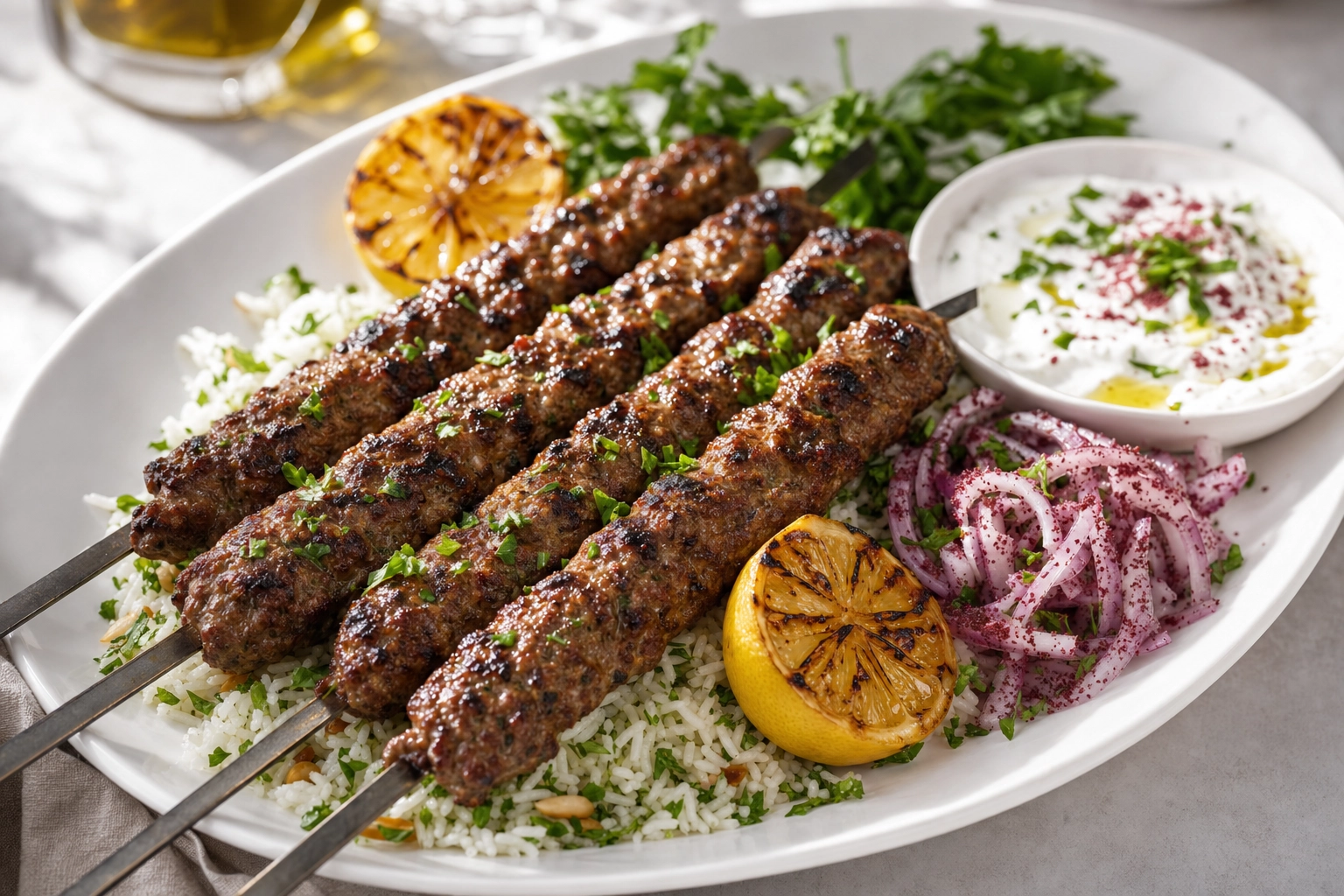 Grilled lamb kofta kebab skewers on a platter with herbed rice, yogurt sauce and sumac onions
Dolmades. Those glossy stuffed grape leaves are a mezze staple — line them up tight, hit the olive-oil sheen, and add lemon and a dollop of yogurt for a clean macro.
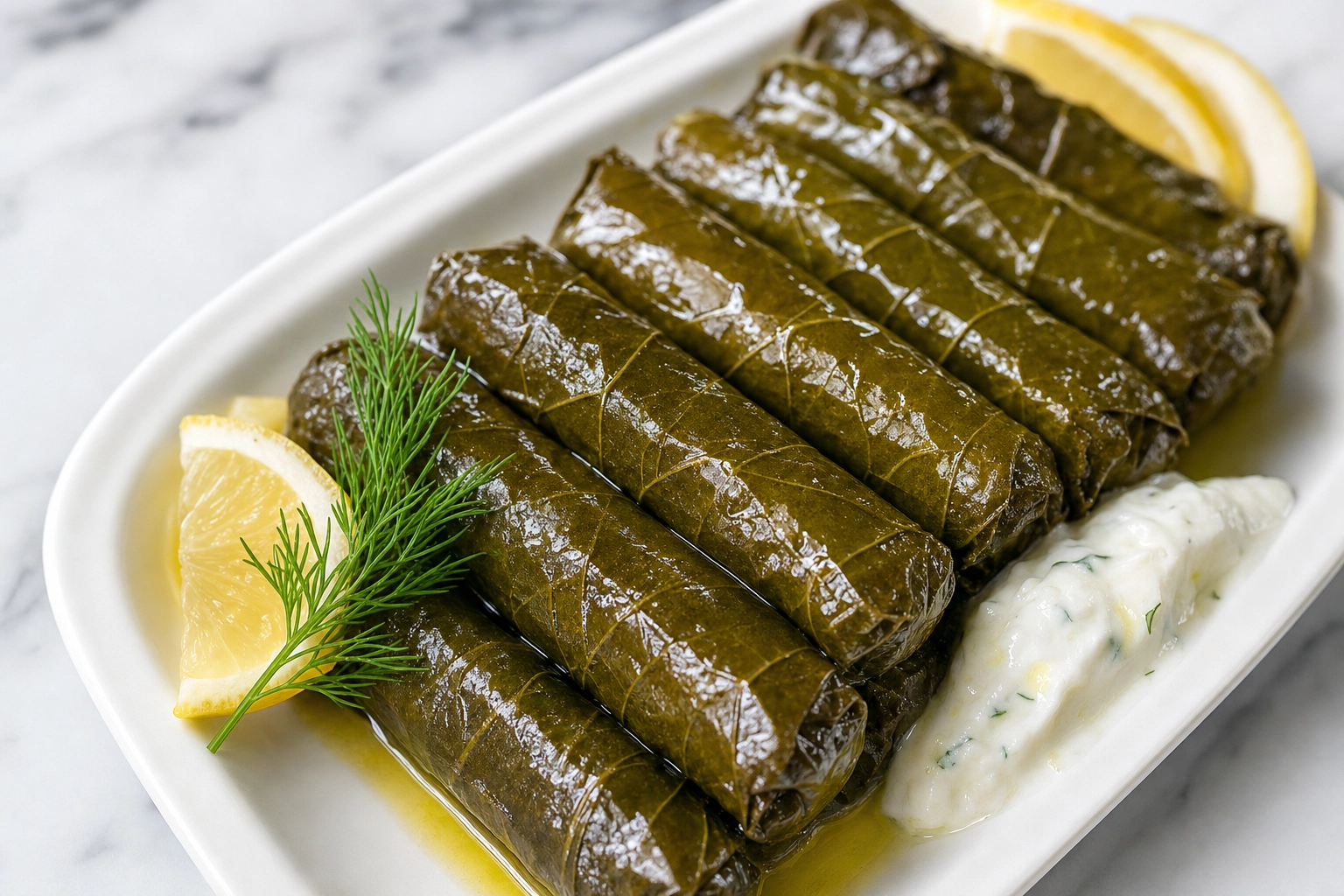 Close-up of glossy dolmades stuffed grape leaves with lemon and yogurt on a white dish
Tabbouleh and fattoush. These herb-forward salads are pure color — shoot them overhead so the parsley green, tomato red and golden pita chips read as a fresh mosaic.
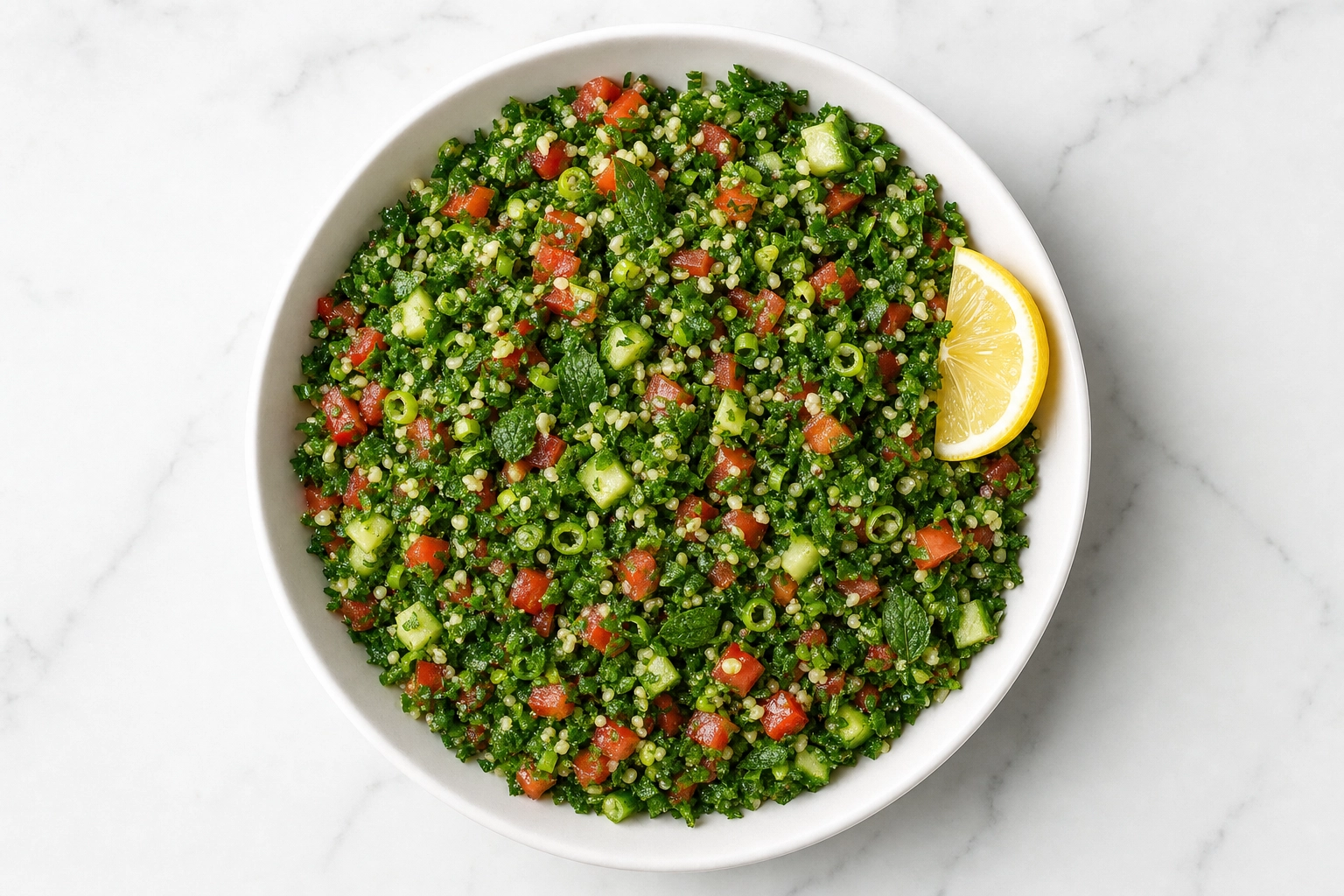 Overhead tabbouleh salad with parsley, tomato, bulgur and lemon in a white bowl on marble
Shakshuka. The brunch hero, and a favorite at cafés and brunch spots: shoot the pan from above while the yolks are still glossy and the red pepper-and-tomato sauce bubbles at the edges, steam rising.
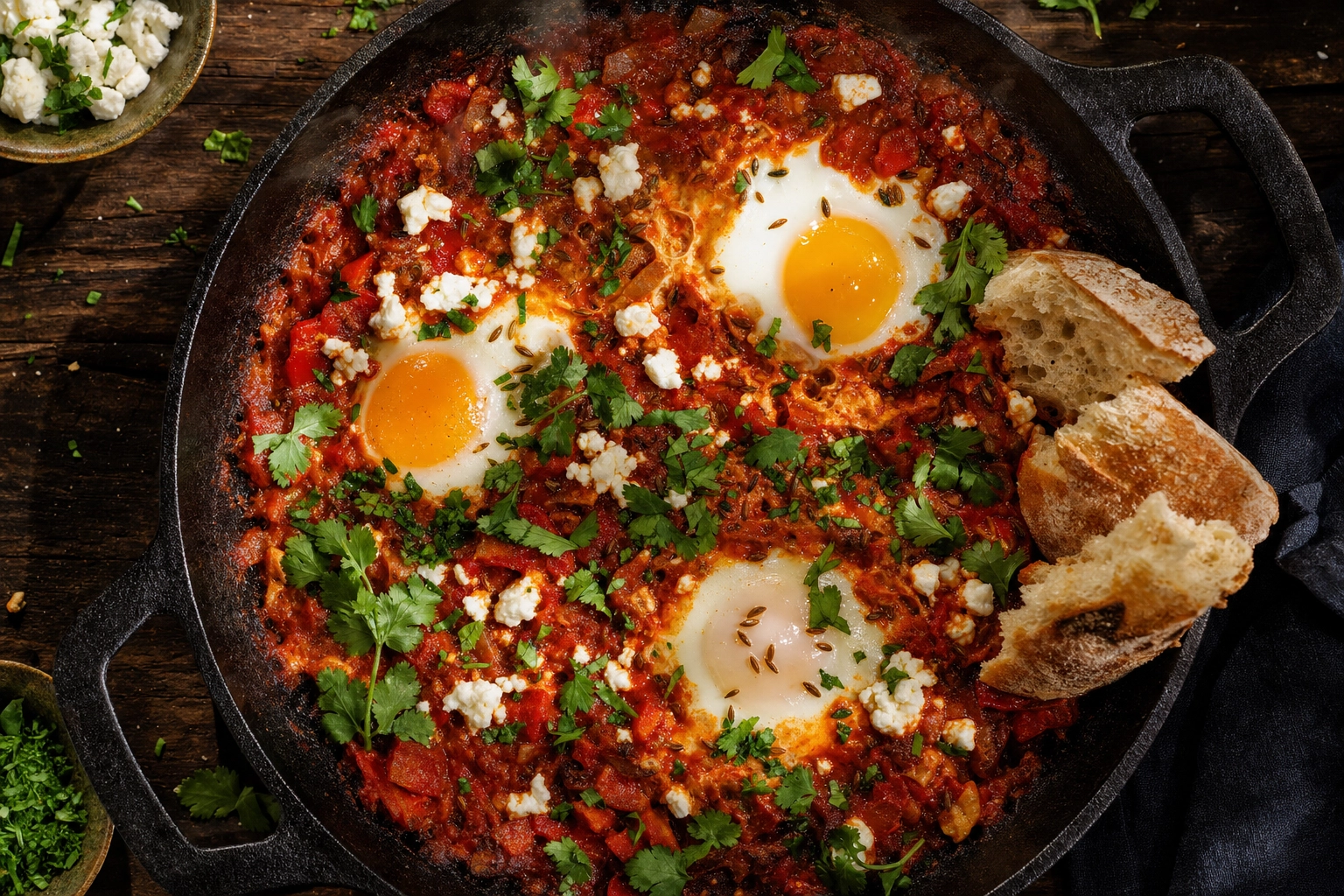 Overhead shakshuka skillet with poached eggs in red tomato sauce, feta and herbs
Baklava. End on something sweet — a 45-degree macro on the flaky phyllo layers and glossy honey syrup, with a pistachio crumb catching the light.
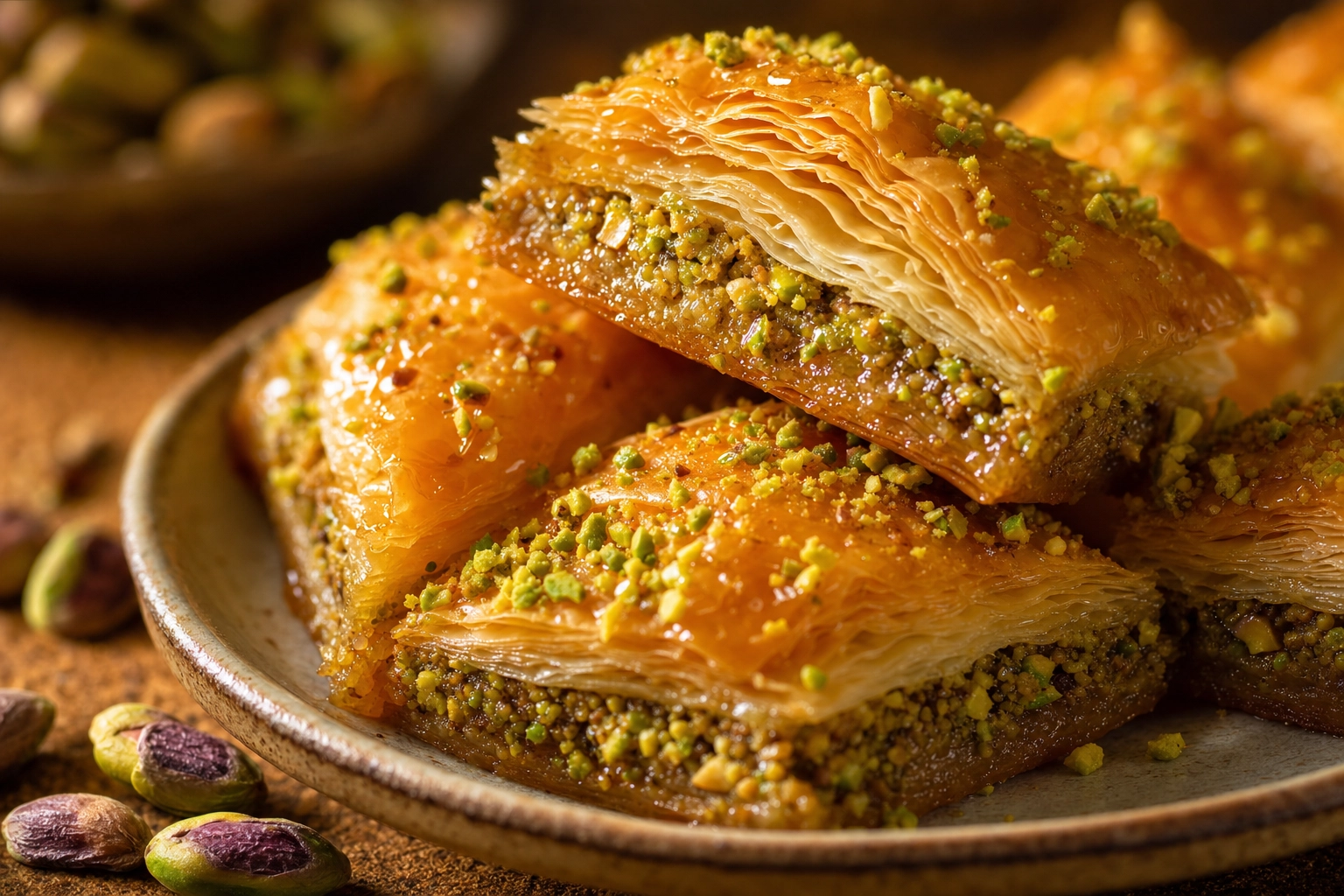 Macro of golden baklava showing flaky phyllo layers and pistachio with glossy syrup
The Styling and Lighting Toolkit (Pro Tricks That Travel)
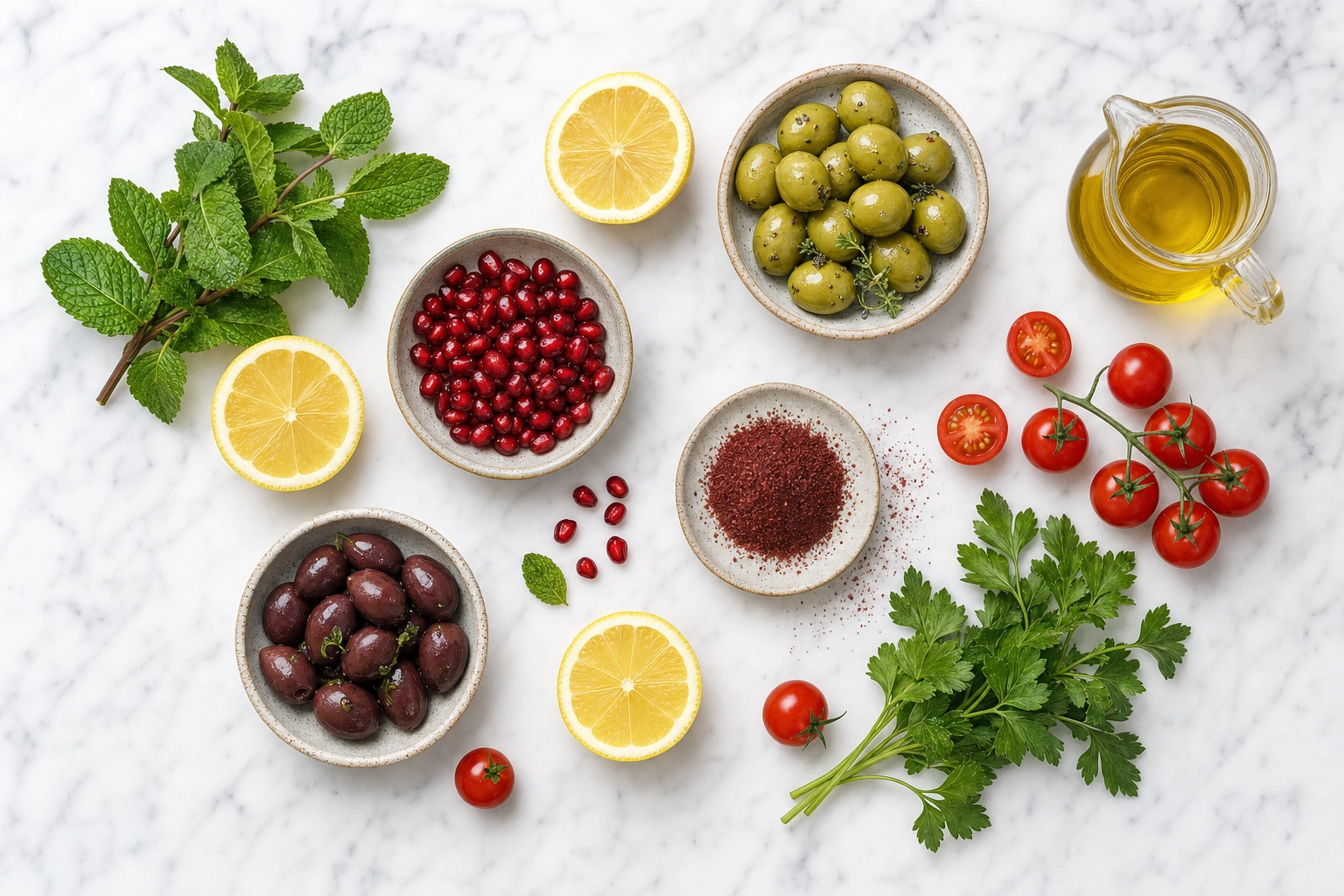 Overhead flat-lay of Mediterranean styling props: lemons, olives, sumac, herbs, pomegranate and olive oil
A few habits make every shot above stronger. Keep these within arm's reach and your Mediterranean food pictures get noticeably better:
- Manage the sheen. Keep olive oil and a soft brush at your station; brush it on last second and mist greens with water. Sheen equals freshness.
- Carry a color pop. Cherry tomatoes, pomegranate, lemon, sumac or purple cabbage break up any frame drifting beige.
- Build up, not flat. Mound, lean and stack — dimension separates a styled plate from a cafeteria tray.
- Garnish at the very end. Herbs, microgreens and the final thread of oil go on just before you shoot; they wilt.
- Clean the frame. Wipe the bowl rim, sweep crumbs, kill fingerprints. The details separate menu-ready from snapshot.
- Dial in the phone. Wipe the lens, tap to lock focus and exposure on the food, shoot in soft shade, and bounce light with white foam board.
From One Great Shot to a Whole Menu: Consistency Is the Brand
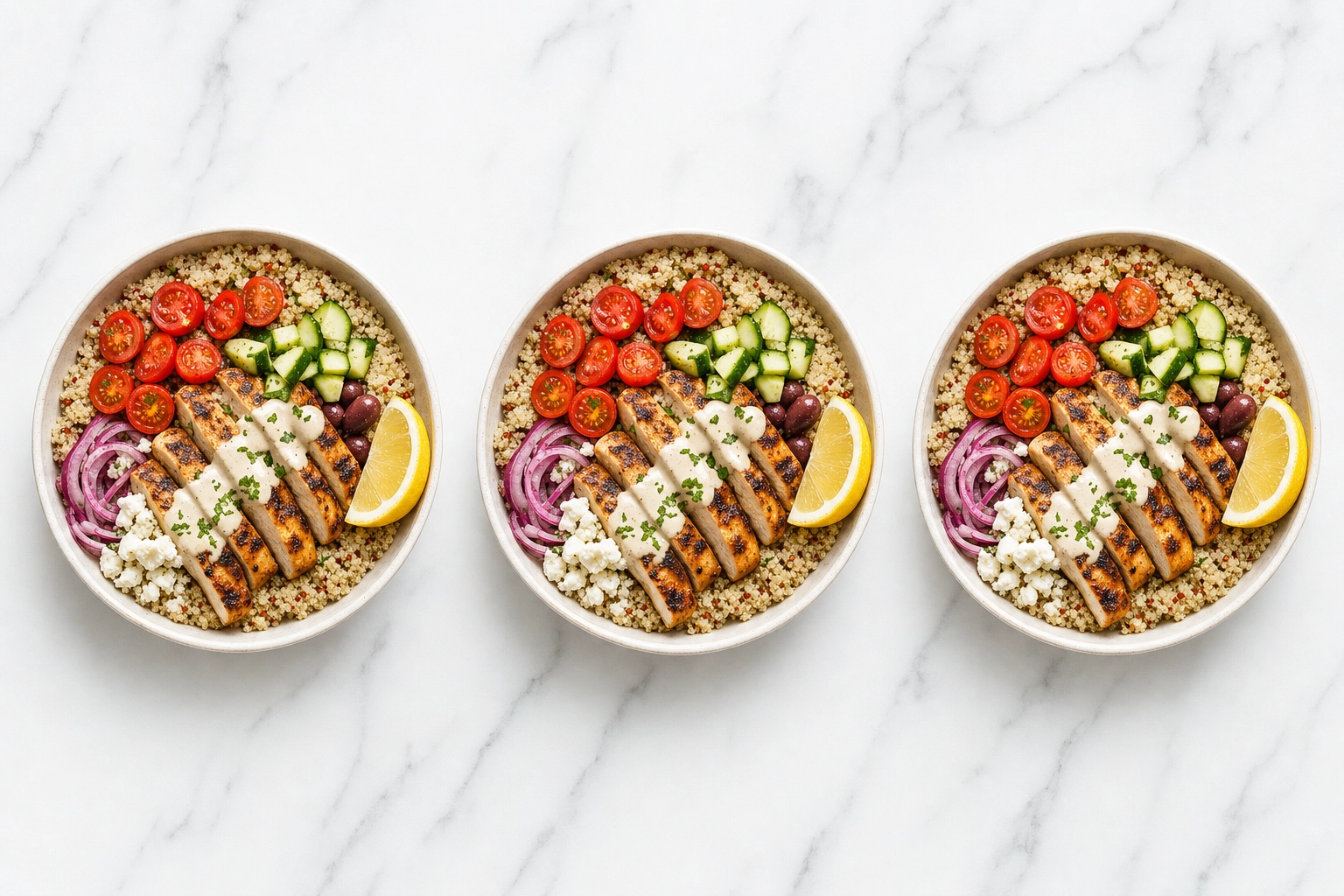 Three identically styled Mediterranean grain bowls in a row on marble showing menu consistency
Shooting one stunning grain bowl is doable on a slow afternoon. Shooting forty — plus next week's rotation and the new location's menu — so they all look like one kitchen? That's the real job, and where DIY quietly falls apart. Consistency turns nice photos into a brand: the same surface, same light direction, same angle and same crop on every dish. A recipes site can get away with one beautiful hero shot; your restaurant needs forty that match. Get it right and your delivery menu looks like a coordinated grid; get it wrong — one bowl bright and overhead, the next dim and tilted — and the whole menu reads amateur. For a multi-location restaurant this is existential: the flagship's harvest bowl has to read as the same chain as the new store's, or you don't have a brand, you have a collection of lunches.
From Phone Snap to Menu-Ready in About 2 Minutes
In a lunch rush, with weekly bowl rotations and no studio, no food stylist and no spare hour, you are not going to style and light five hero shots a day. That's the gap the FoodShot AI food photo editor closes. Snap a real dish on your phone, upload it, pick a style, and get a studio-quality, menu-ready image back in about 2 minutes — for roughly 95% less than the $700–$1,400 a professional food shoot costs.
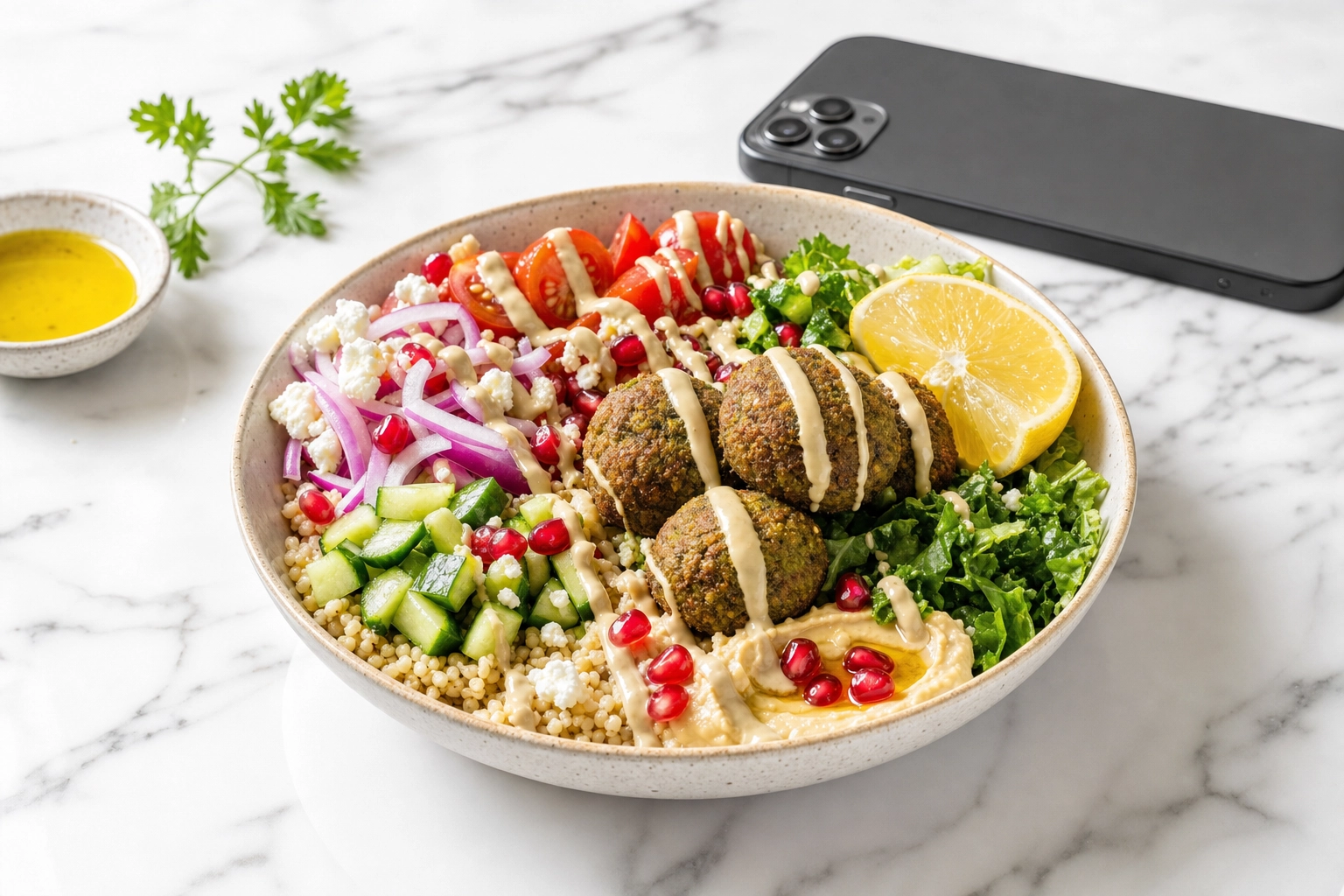 Studio-quality Mediterranean grain bowl on white marble beside a face-down smartphone
Picture the before: a quick overhead phone shot under kitchen fluorescents — flat, a little yellow, the oil dull, every ingredient melting into the same tan. The after: the same bowl, bright and clean, greens green again, sauce glossy, colors separated, squared to a perfect top-down angle. Same food, completely different result.
The tooling maps onto the five shots:
- 200+ styles, including the bright-marble and top-down looks for bowls, mezze and dips.
- Builder Mode to compose the scene one decision at a time — surface, plate, props and light — so every dish shares one visual language.
- My Styles to lock one brand look across every new bowl, seasonal drop and location. You can even match a reference photo's look you already love.
- Multi-variation, Poster Mode and 2K output for delivery thumbnails and printed menus, with a 2x upscale when a billboard needs a bigger file.
It enhances your real food — it restyles and relights the dish you actually serve, it doesn't invent a fake one — and paid plans include a commercial license. Browse the AI Mediterranean food photography styles built for bowls, mezze and coastal plates, or see how it works across restaurant food photography and delivery-app photos for Uber Eats and DoorDash.
Frequently Asked Questions
What makes a good Mediterranean food picture?
Three things, stacked: the right palette (olive green, lemon yellow, creamy white and a pop of tomato-or-sumac red), a bright overhead or flat-lay angle that shows the whole composed dish, and visible freshness — glossy olive oil, crisp herbs and clear color separation. Get those and the photo says "fresh and abundant" before anyone reads a word.
What is the best angle for photographing grain bowls and mezze platters?
Overhead, at a true 90 degrees. Bowls, platters and mezze spreads are composed on a flat plane, so a top-down flat-lay shows every ingredient edge to edge and reads beautifully on a small delivery-app thumbnail. Switch to 45 degrees only when height or action is the story — a pita stack, a sauce drizzle mid-pour, or a falafel cross-section.
How do you photograph hummus so it looks appetizing?
Spread it thick, then drag a spoon in a circle to carve a swirl and a shallow well. Pool olive oil in the well and light it from the side so the oil catches a bright highlight. Finish with sumac or paprika, whole chickpeas and parsley, set warm pita alongside, and shoot before the sheen dulls. Styling, not luck, is what makes hummus images look professional.
How do you make falafel look good in photos?
Show texture. Halve a falafel so the camera sees the herb-green, craggy interior against the golden crust, and light it warmly from the side to make that crust three-dimensional. Style it with torn pita, a tahini drizzle and bright pickled vegetables. The contrast between crisp brown, white tahini and fresh green is what makes falafel pictures crave-worthy.
What are the most popular Mediterranean foods to photograph for a menu?
The most popular Mediterranean food — and the most photogenic — includes the mezze platter, grain and Buddha bowls, hummus and other dips, falafel and pita, grilled vegetables, a Greek horiatiki salad, whole grilled fish like branzino, gyros and souvlaki, and baklava for dessert. These are the staples of the Mediterranean diet and the dishes diners search for and order first.
Can I use AI for Mediterranean food pictures instead of stock photos or a photographer?
Yes — and it beats stock photos, because the images are your actual food, not a generic library bowl diners have seen a hundred times. An AI food photo editor like FoodShot turns a real phone snap into a polished, menu-ready image in about 2 minutes, at a fraction of a photographer's cost, while keeping a consistent look across your menu. It enhances the real dish you serve rather than fabricating a fake one.
Keep Building Your Menu Photo Library
The Mediterranean coast is a big place, and so is its food. Once you've nailed bowls and mezze, keep going with our Greek food photography guide for gyros, moussaka and baklava, or cross the water to Italian food photography for pasta and antipasti. When you're ready to make the look your own, explore the Mediterranean styles built for bowls, mezze and coastal plates or browse food photography by cuisine — and let your Mediterranean food photography look as fresh, bright and abundant as the food actually is.