
40 Bakery Menu Ideas With Bake Times and Prices
 Ali Tanis21 min read
Most bakery menu ideas lists stop at a name and a price. The questions that decide whether an item earns its spot come first: can your oven bake it before you open, will it still sell at 4 p.m., and what does it cost to make? This list answers all three for 40 items, from sourdough to sausage rolls, and flags which ones a home kitchen can legally sell. Once the menu is set, the case and your Instagram feed still have to sell it, which is where bakery product photos come in.
Quick Summary: The bakery menu ideas that sell out and still make money are the ones your oven can finish before opening and your case can sell before they go stale. Brownies, scones, biscuits and focaccia cost $0.25–0.70 in ingredients per piece and sell for $3–5. Croissants cost about as little but take two to three days of dough work and sell only on the day they're baked, so give the pre-dawn oven to same-day items and bake anything that keeps three days the afternoon before.
The 40 bakery menu ideas at a glance
Here are 40 bakery menu ideas with the oven time, how many fit one pan, how long each sells, the ingredient cost per piece and a suggested 2026 US price. The last column says whether most US cottage food laws let you sell it from a home kitchen. Rows 1–7 are breads, 8–14 laminated pastry, 15–18 sweet buns, 19–23 quick breads, 24–31 cookies and bars, 32–36 cakes and pies, and 37–40 savory bakes.
How to read it:
- Oven times are for a conventional oven. Set a convection oven about 25°F lower.
- Ingredient cost uses BLS average prices for September 2026: all-purpose flour at $0.545 a pound, butter at $3.96 a pound, eggs at $2.27 a dozen and sugar at $1.02 a pound. Wholesale flour runs cheaper, European-style butter for lamination costs about twice as much, and packaging is not included.
- Price is a typical range for a US independent shop in 2026. Your street sets the final number.
- Sell within is a quality window for shelf-stable items and a food safety limit for the rest.
- Home kitchen "Yes" means allowed under most state cottage food laws. "No" means it needs refrigeration or contains meat, so most states require a licensed kitchen. Entries like "Glaze only" name the version most states allow.
| # | Item | Oven | Batch | Sell within | Ingredient cost | Price | Home kitchen |
|---|---|---|---|---|---|---|---|
| 1 | Country sourdough loaf | 45 min, 475°F | 2 per home oven | 2–3 days | $0.70–1.20 | $10–14 | Yes |
| 2 | Sourdough focaccia square | 25 min, 450°F | 12 per half sheet | Same day | $0.30–0.60 | $4–5 | Herb only |
| 3 | Baguette | 25 min, 475°F | 5 per baguette tray | 8 hours | $0.30–0.45 | $4–5 | Yes |
| 4 | Bagel | 20 min, 425°F, after a 1-min boil | 8 per half sheet | Same day | $0.15–0.30 | $2.50–3.50 | Yes |
| 5 | Brioche loaf | 35 min, 350°F | 1 per 9×5 pan | 3 days | $2.70–4.00 | $10–12 | Yes |
| 6 | Milk bread rolls, pack of 6 | 22 min, 350°F | 12 per 9×13 pan | 2–3 days | $0.85–1.10 | $7–9 | Yes |
| 7 | Soft pretzel | 13 min, 450°F | 6 per half sheet | 6 hours | $0.20–0.30 | $3.50–4.50 | Yes |
| 8 | Butter croissant | 18–20 min, 400°F | 8 per half sheet | Same day | $0.30–0.60 | $4–5.50 | Yes |
| 9 | Pain au chocolat | 18–20 min, 400°F | 8 per half sheet | Same day | $0.55–0.95 | $4.75–5.75 | Yes |
| 10 | Almond croissant (day-old) | 15–18 min, 350°F | 8 per half sheet | 24–48 hours | +$0.45–0.70 | $5.50–6.50 | Yes |
| 11 | Ham and cheese croissant | 20 min, 400°F | 8 per half sheet | 4 h unchilled | $1.20–1.70 | $6.50–7.50 | No |
| 12 | Kouign-amann | 25–30 min, 375°F | 12 per muffin tin | Same day | $0.40–0.65 | $5.50–6.50 | Yes |
| 13 | Fruit danish | 18–20 min, 400°F | 8 per half sheet | Same day | $0.60–1.00 | $4.75–5.75 | Fruit only |
| 14 | Morning bun | 25–30 min, 375°F | 12 per muffin tin | Same day | $0.45–0.75 | $5–6 | Yes |
| 15 | Cinnamon roll | 25 min, 350°F | 12 per 9×13 pan | 24 hours | $0.55–0.85 | $5–6 | Glaze only |
| 16 | Cardamom bun | 15 min, 400°F | 12 per half sheet | Same day | $0.45–0.70 | $5–6 | Yes |
| 17 | Concha | 15–18 min, 350°F | 9 per half sheet | 24–48 hours | $0.25–0.40 | $2–3.50 | Yes |
| 18 | Chocolate babka | 40–45 min, 350°F | 1 per 9×5 pan | 3 days | $3.50–5.00 | $14–18 | Yes |
| 19 | Blueberry muffin | 22 min, 375°F | 12 per tin | 2 days | $0.60–0.80 | $3.75–4.50 | Yes |
| 20 | Fruit scone | 20 min, 400°F | 12 per half sheet | Same day | $0.45–0.65 | $3.75–4.50 | Yes |
| 21 | Banana bread loaf | 60 min, 350°F | 1 per 9×5 pan | 3–4 days | $2.80–3.60 | $10–12 | Yes |
| 22 | Lemon drizzle loaf | 50–55 min, 350°F | 1 per 9×5 pan | 3–4 days | $2.80–3.50 | $11–14 | Yes |
| 23 | Buttermilk biscuit | 12–15 min, 450°F | 12 per half sheet | Same day | $0.25–0.35 | $3–4 | Yes |
| 24 | Chocolate chip cookie, 4 oz | 15–18 min, 350°F | 6 per half sheet | 3–5 days | $0.70–1.00 | $3.50–4.50 | Yes |
| 25 | Decorated sugar cookie | 9 min, 350°F, then 8–12 h to dry | 12 per half sheet | 1–2 weeks sealed | $0.30–0.45 | $3.50–6 | Yes |
| 26 | Shortbread finger | 25 min, 325°F | 24 per 9×13 pan | 2 weeks | $0.12–0.22 | $2–3 | Yes |
| 27 | Fudgy brownie | 30 min, 350°F | 24 per half sheet | 4–5 days | $0.45–0.70 | $4–5 | Yes |
| 28 | Blondie | 25–30 min, 350°F | 24 per half sheet | 4–5 days | $0.40–0.50 | $3.75–4.50 | Yes |
| 29 | Lemon bar | 20 + 22 min, 350°F | 24 per half sheet | 3 days, chilled | $0.50–0.60 | $4–4.75 | Rarely |
| 30 | French macaron | 15 min, 300°F, then 24 h rest | 15 per half sheet | 3–5 days, chilled | $0.15–0.30 | $2.75–3.50 | Buttercream fill |
| 31 | Granola, 12-oz bag | 35 min, 325°F | 3 bags per half sheet | 4–6 weeks | $2.00–3.00 | $9–12 | Yes |
| 32 | Cupcake | 18–20 min, 350°F | 12 per tin | 2 days | $0.40–0.60 | $3.75–4.75 | Buttercream |
| 33 | 8-inch layer cake, pre-order | 30–35 min, 350°F | 3 pans per cake | 3 days | $15–25 | $60–95 | Buttercream |
| 34 | Basque cheesecake slice | 55 min, 400°F | 12 per 9-inch cake | 5 days, chilled | $1.10–1.35 | $7–8 | No |
| 35 | Fruit hand pie | 25–30 min, 400°F | 8 per half sheet | 2 days | $0.55–0.80 | $5–6 | Yes |
| 36 | 9-inch fruit pie | 60–75 min, 400°F then 375°F | 1 per pie plate | 2 days | $7–10 | $28–36 | Fruit only |
| 37 | Quiche slice | 40–45 min, 350°F | 8 per 9-inch quiche | 3 days, chilled | $0.90–1.15 | $7–9 | No |
| 38 | Sausage roll | 25–30 min, 400°F | 10 per half sheet | 4 h unchilled | $0.80–1.00 | $5.50–6.50 | No |
| 39 | Baked empanada | 20–25 min, 400°F | 10 per half sheet | 4 h unchilled | $0.50–1.05 | $4.50–6 | No |
| 40 | Cheddar and chive scone | 20–22 min, 400°F | 12 per half sheet | Same day | $0.55–0.75 | $4–4.75 | Varies |
Read the table by its middle columns. Sixteen of the 40 items sell only on the day they're baked, and those decide your pre-dawn oven. The other 24 keep a day or longer and can bake the afternoon before, or wait in the freezer as dough. If you also pour coffee, our cafe menu ideas cost 40 counter items by food cost, and the food truck menu ideas hub covers other formats.
Breads that bring regulars back every week
Bread is the cheapest thing a bakery makes and the most habit-forming. A country sourdough loaf takes $0.70–1.20 in flour and salt and sells for $10–14, but it needs 18–24 hours of fermentation before its 45 minutes in the oven, so it's planned two days ahead, not that morning.
Home sellers can charge more than they expect. In a September 2026 pull of 172 full-size sourdough loaves from 64 home vendors, Homegrown found 94 priced between $12 and $15.99, and none above $20.
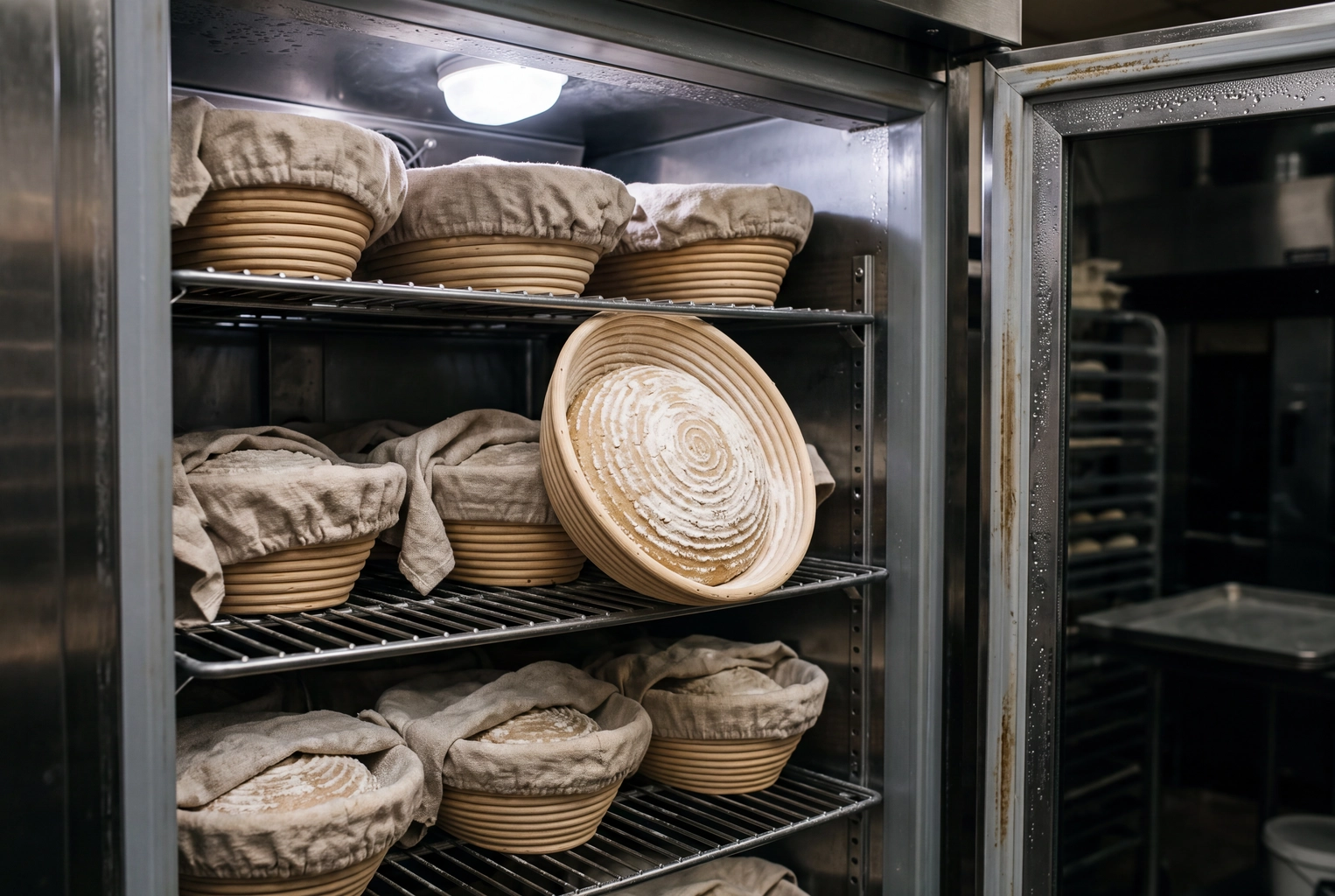 Sourdough loaves proofing overnight in rattan bannetons inside a bakery fridge, planned two days before the bake
Focaccia is the most forgiving bread here: one half sheet, no shaping, 12 squares that sell as a snack in the morning and as a sandwich base at lunch. Baguettes and soft pretzels are the opposite, cheap to make but stale within hours, so bake them in small waves instead of all at opening. Bagels freeze well sliced, which turns day-old stock into a frozen half dozen. Brioche and milk bread rolls keep three days and double as French toast or burger buns for a cafe next door. For crust and crumb shots, see our bread photography guide.
Laminated pastries: highest margin, shortest shelf life
Croissant-dough pastries have some of the lowest ingredient costs per dollar of sales on this list: a butter croissant costs about $0.30–0.60 to make and sells for $4–5.50. What they cost instead is time. Laminated dough runs over two to three days of mixing, chilling, folding in butter, shaping and proofing, and the result is at its best for a few hours.
That makes the croissant both your benchmark item and your biggest waste risk. Freeze shaped, unbaked croissants so you can bake 16 at a time instead of 60, and plan a second life for leftovers. A day-old croissant split, brushed with syrup and filled with frangipane becomes an almond croissant that sells for a dollar or two more than the original.
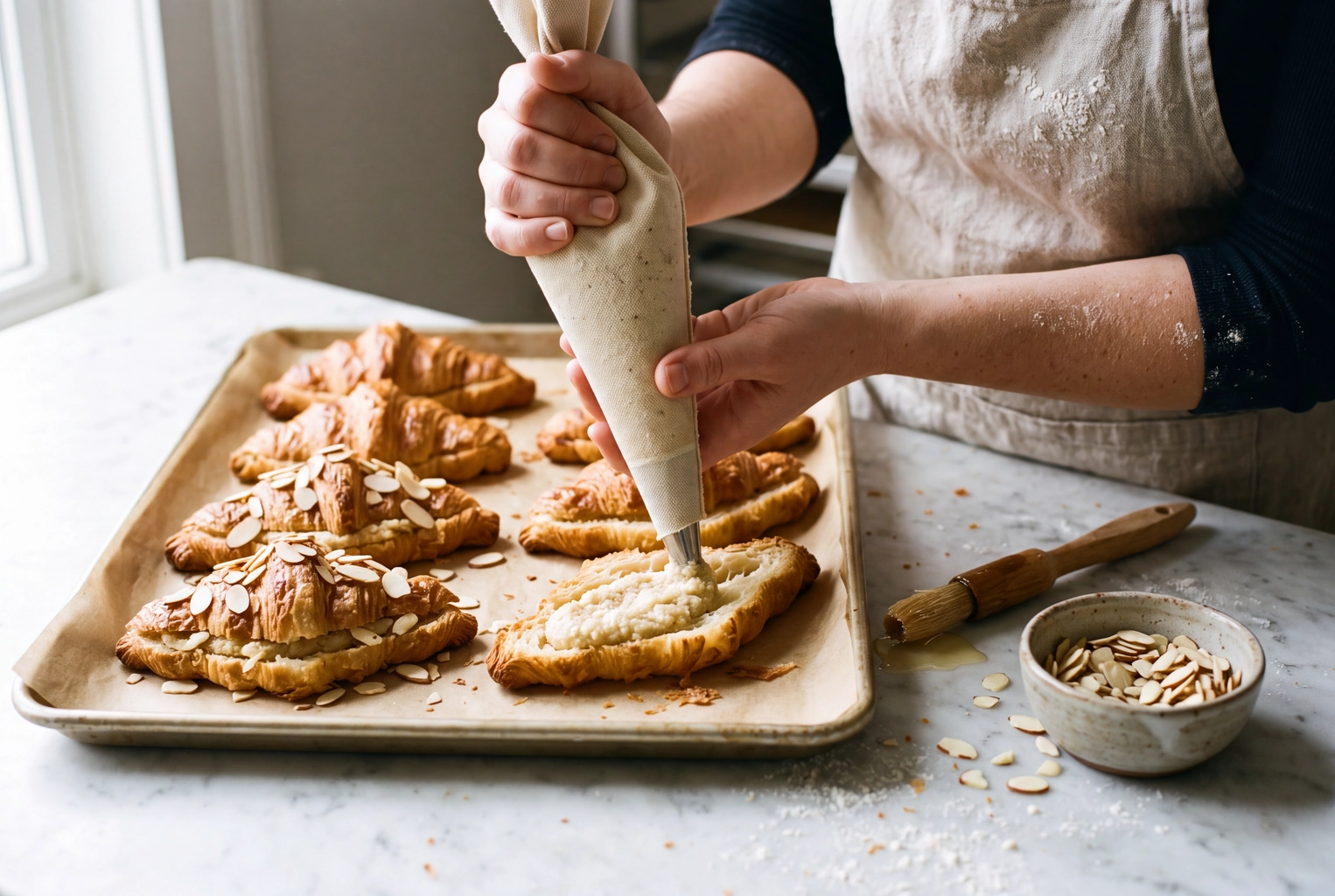 Baker piping frangipane into day-old croissants to sell them as almond croissants, a bakery menu idea that cuts waste
Morning buns and kouign-amann use laminated dough rolled or folded with sugar and baked in muffin tins, so the sugar caramelizes around them. Pain au chocolat adds two chocolate batons for about $0.25–0.40. A ham and cheese croissant takes pastry into lunch, but the ham makes it a food that needs temperature control, so it belongs in a licensed kitchen. Keep fruit danishes to fruit fillings if you bake at home, since pastry cream and cream cheese fillings need the fridge.
Sweet buns and quick breads for the morning rush
Enriched buns and quick breads are the middle of a bakery menu: $0.25–0.85 in ingredients, $2–6 at the counter, and many hold a day or more. They also solve the oven problem, because muffin batter, scones and biscuits freeze unbaked and go straight into the oven from frozen with a few extra minutes.
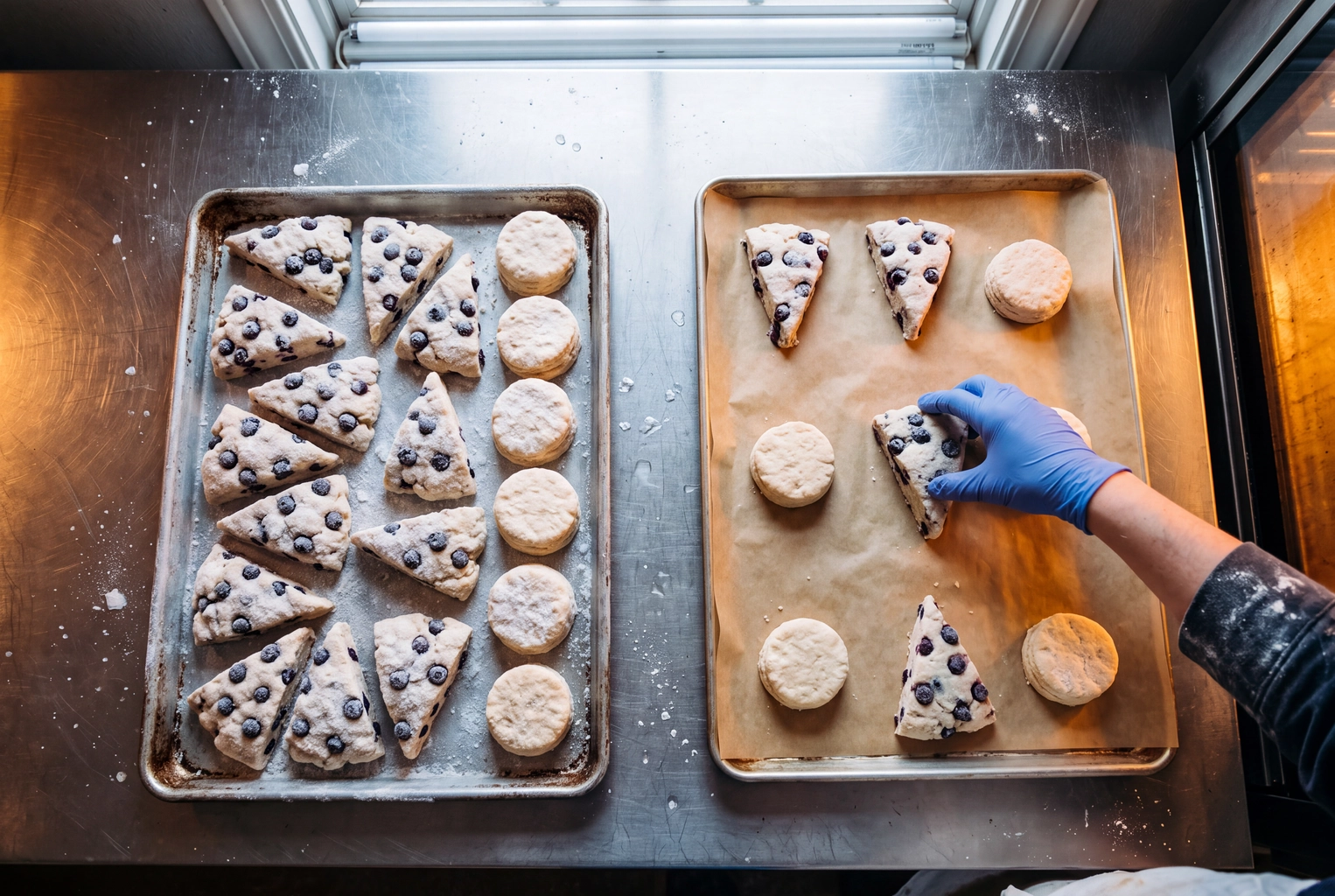 Frozen unbaked blueberry scones and buttermilk biscuits moved straight onto a sheet pan to bake from frozen
Cinnamon rolls are often the first tray to sell out, but the topping decides where you can make them. Cream cheese frosting needs refrigeration, so most cottage food laws only allow a powdered-sugar glaze. Cardamom buns and conchas give the case a point of view at the same cost, and chocolate babka is the one sweet loaf here priced like a gift, at $14–18.
Quick breads are where home bakers undercharge most. Across 25 quick bread listings, Homegrown's 2026 price guide found a $10 median, with 8 listings at $6 or less, though a banana bread uses about $1.00 of butter and two eggs. Price banana bread and lemon drizzle loaves at $10–14 whole. Sold by the slice, ten slices at about $4 earn more than three times the whole-loaf price, which is why cafes slice them.
Blueberry muffins and fruit scones are the morning staples at $0.45–0.80 to make. Buttermilk biscuits are the cheapest item in the group at $0.25–0.35 each and bake in 12–15 minutes, which makes them the best top-up when the case runs short at 10 a.m.
Cookies and bars: the items that pay for the case
Cookies and bars are the bakery menu ideas that carry you through slow days: low cost, little hands-on time, and a shelf life of three days to two weeks. A half sheet of fudgy brownies yields 24 bars at about $0.55 each in ingredients, sells at $4–5 apiece, and can bake the afternoon before.
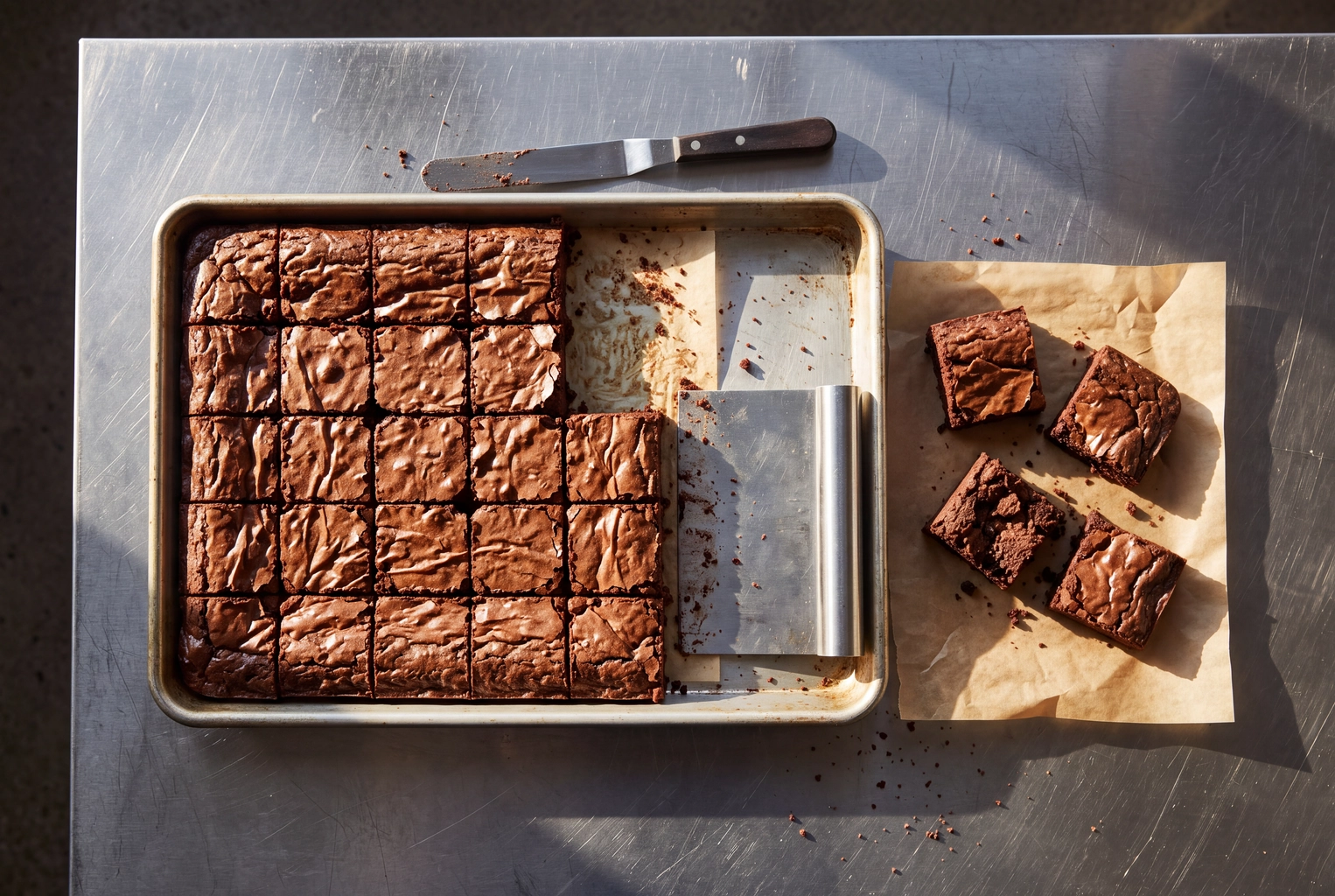 Half sheet of fudgy brownies cut into 24 squares, one of the bakery items to sell that keeps for days
Scoop chocolate chip cookie dough into 4-ounce balls and freeze them. Baking six at a time keeps warm cookies in the case all day without mixing a second batch. Decorated sugar cookies sell at $40–70 a custom dozen and keep one to two weeks heat-sealed, though royal icing needs 8–12 hours to dry. Shortbread and granola are oven fillers: bake them when the oven would otherwise sit idle, then sell them for weeks.
Two items here look like cookies but behave like custards. Lemon bars set with eggs and need the fridge, and Utah's cottage food rules list them with the custards it doesn't allow. Macarons are fine with buttercream or jam but not with a cream ganache under rules like Utah's. For case shots of all of these, see our cookie photography guide.
Cakes, pies and savory bakes
Cakes and pies are the high-ticket half of a bakery menu: an 8-inch layer cake costs $15–25 to make and sells for $60–95, but it pays only when it's pre-ordered. Savory bakes such as quiche, sausage rolls and empanadas turn a morning shop into a lunch stop, and nearly all of them need refrigeration.
Take whole cakes and pies by pre-order with a deposit, so you bake to a list. Cupcakes cover walk-ins at $3.75–4.75. Fruit pies are the easy keepers: Illinois Extension says they can sit loosely covered at room temperature for up to two days, while pies made with eggs or dairy go in the fridge. Hand pies use the same dough and fruit in a $5–6 single portion.
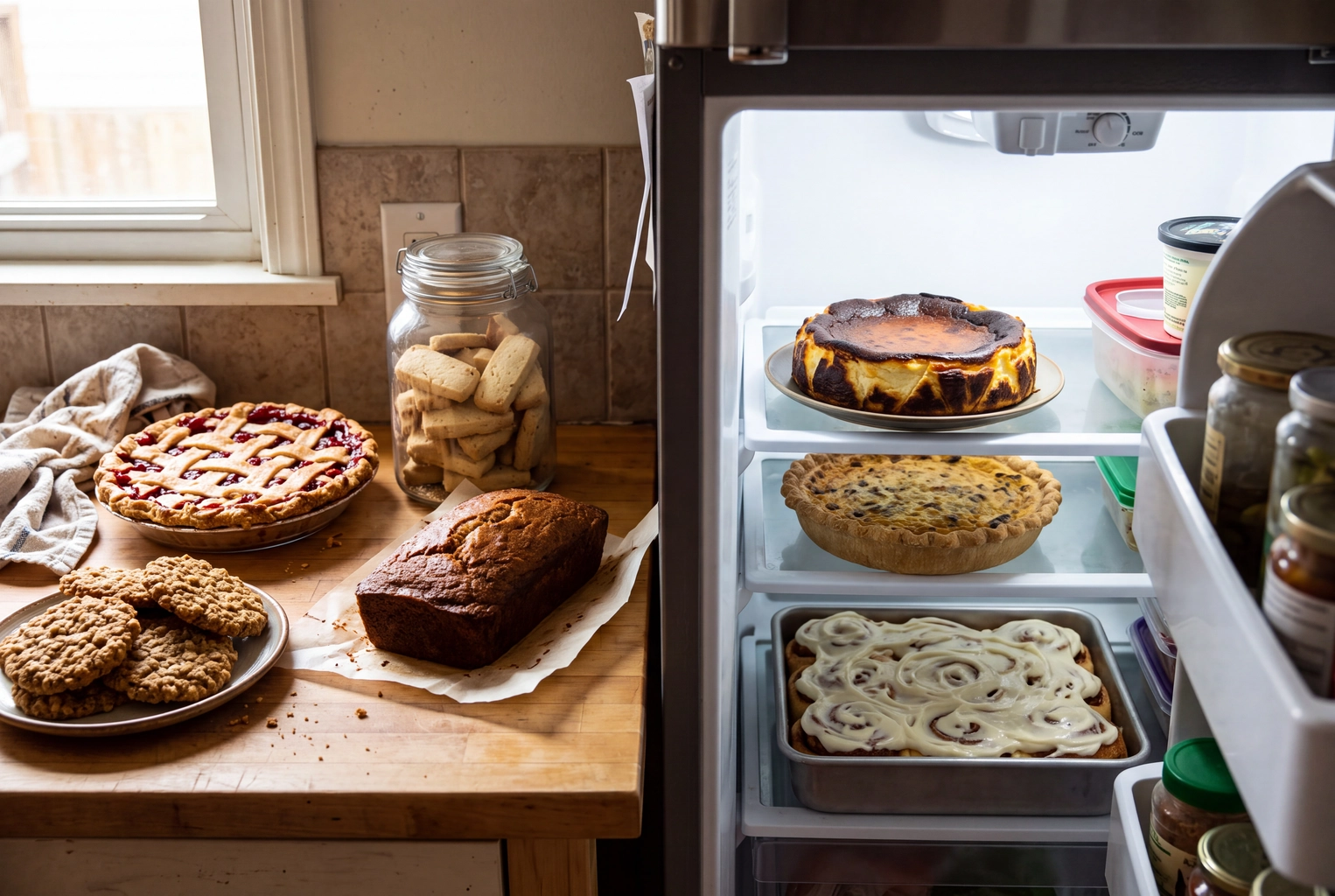 Home kitchen with shelf-stable pie, cookies and banana bread on the counter and cheesecake and quiche in the fridge
Basque cheesecake, quiche, sausage rolls and empanadas are TCS foods, short for time/temperature control for safety. In a licensed kitchen, the FDA Food Code lets refrigerated, ready-to-eat food made in-house be held up to 7 days at 41°F with a date mark (section 3-501.17), or, under written procedures, held without temperature control for up to 4 hours and then sold or discarded (section 3-501.19). Home kitchens are a different story. Michigan's cottage food rules, for one, rule out cheesecake, custard and cream pies and cakes with cream cheese frosting. Texas is an exception: since September 1, 2025, a cottage operator who registers with Texas DSHS can sell refrigerated foods, though meat is still excluded.
How do you fit a bakery menu into one oven before opening?
Split the menu by shelf life. Items that go stale by evening get the pre-dawn oven, and anything that keeps three days or more bakes the afternoon before. Then run the morning loads from hottest to coolest, so each change is a short step down instead of a wait for the oven to climb back up.
Here is that plan for one full-size convection oven, which takes five full sheet pans (ten half sheets) per load, for a 7 a.m. opening. Temperatures are convection settings, 25°F below the table.
| Load | Start | Convection temp | What goes in | Yield |
|---|---|---|---|---|
| Afternoon 1 | 1:00 p.m., day before | 325°F | 1 half sheet each of brownies and blondies, 6 banana and lemon loaves | 48 bars, 6 loaves |
| Afternoon 2 | 2:15 p.m., day before | 300°F | 4 half sheets of granola, 2 pans of shortbread | 12 bags, 48 fingers |
| Morning 1 | 4:00 a.m. | 425°F | 2 half sheets of focaccia, 2 of biscuits | 24 squares, 24 biscuits |
| Morning 2 | 4:30 a.m. | 375°F | 4 half sheets of croissants and pain au chocolat, 1 each of fruit and cheddar scones | 32 pastries, 24 scones |
| Morning 3 | 5:00 a.m. | 350°F | 2 tins of muffins, 2 tins of morning buns | 24 muffins, 24 buns |
| Morning 4 | 5:30 a.m. | 325°F | 2 pans of cinnamon rolls, 4 half sheets of cookies | 24 rolls, 24 cookies |
| Morning 5 | 6:00 a.m. | 325°F | 2 half sheets of almond croissants from yesterday's croissants | 16 almond croissants |
That's 216 pieces before opening, plus 48 bars, six loaves and 12 bags of granola from the day before: 17 menu items from one oven. Three habits make it work:
- Shape the day before. Croissants, buns and rolls are shaped in the afternoon and held cold overnight, so 4 a.m. is for proofing and baking, not mixing. A retarder-proofer automates this; a fridge and an early alarm also work.
- Freeze dough, not baked goods. Unbaked scones, biscuits and cookie dough balls go from freezer to oven, so a second wave at 10 a.m. takes 20 minutes, not a new batch.
- Leave the oven free after 6:30. An empty oven at opening is your sell-out insurance for whatever moves fastest that day.
A home oven fits about two half sheets per load, roughly a fifth of this capacity. That's why home bakers sell by pre-order: you bake to a list instead of a guess.
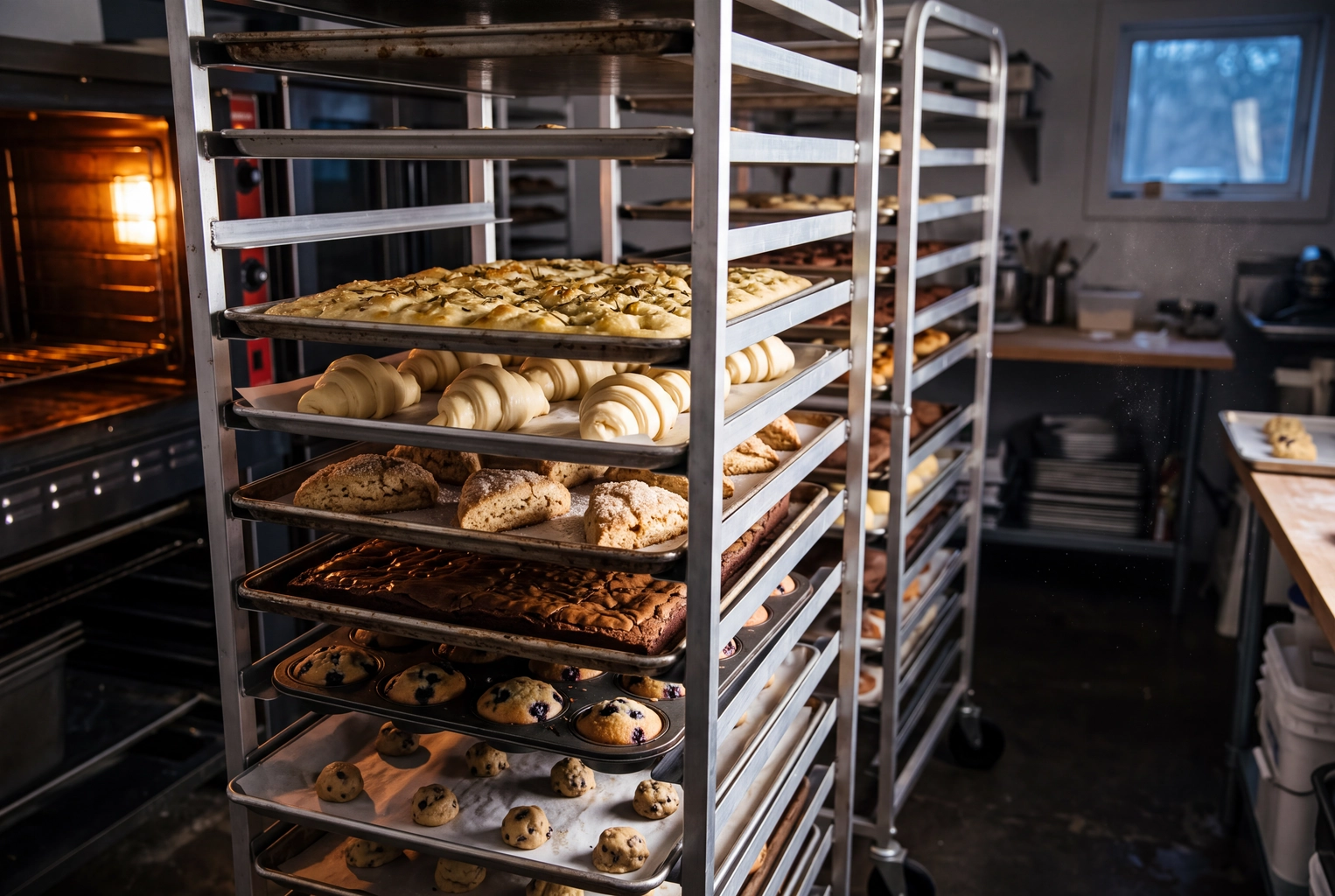
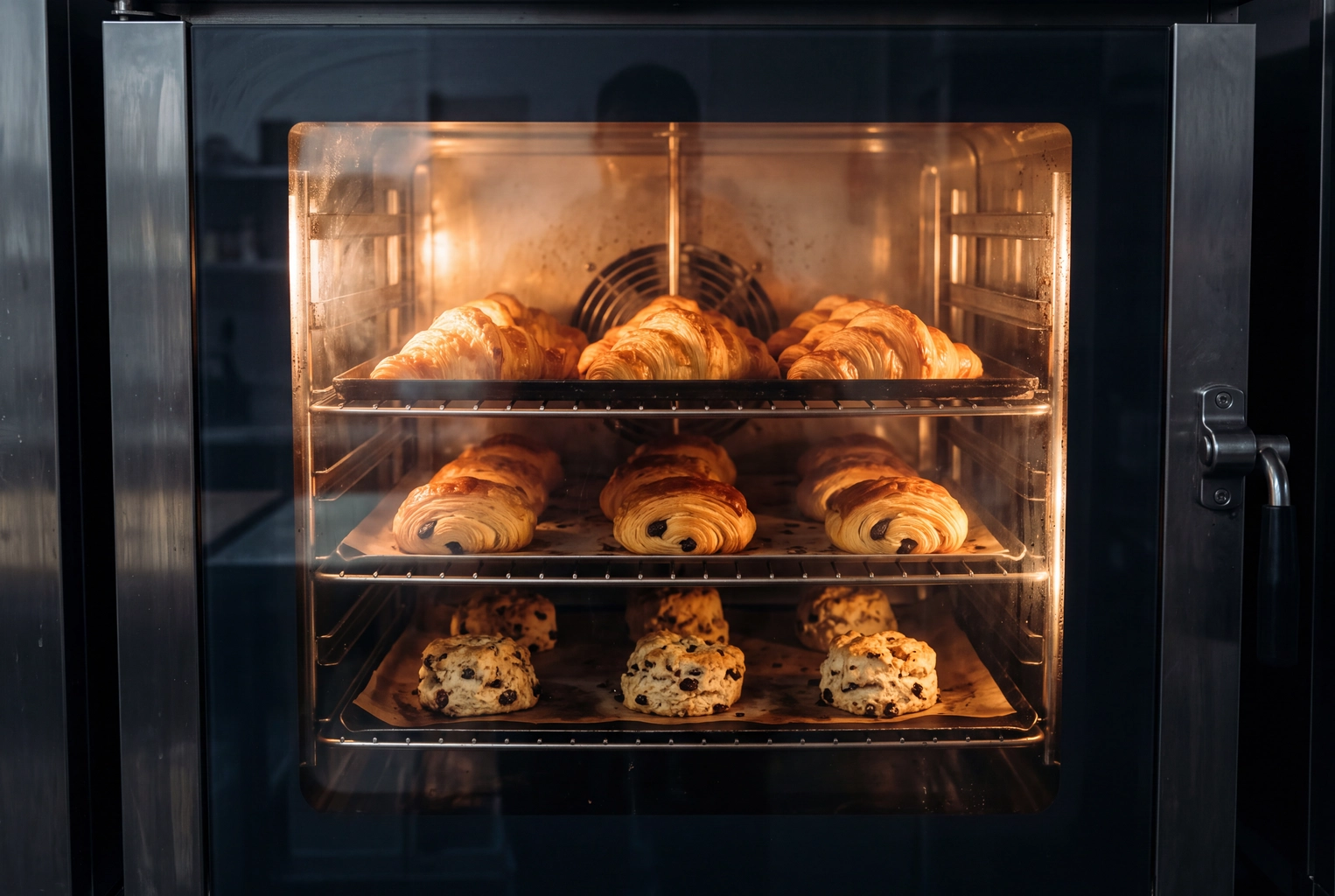 Croissants, pain au chocolat and scones baking on three racks of a convection oven before a bakery opens
What does a bakery item cost to make?
At September 2026 US prices, a butter croissant costs about $0.30 in ingredients and a fudgy brownie about $0.55, so both sell at 6–12% ingredient cost. In a bakery the expensive parts are labor and whatever doesn't sell, not flour and butter. Here is the math, with chocolate priced at about $8 a pound since BLS doesn't track it.
| Line | Butter croissant (1 of 26) | Fudgy brownie (1 of 24) |
|---|---|---|
| Flour | 38 g: $0.05 | 8 g: $0.01 |
| Butter | 21 g: $0.18 | 14 g: $0.12 |
| Sugar | 4 g: $0.01 | 25 g: $0.06 |
| Eggs | Egg wash: $0.02 | A third of an egg: $0.06 |
| Chocolate and cocoa | None | 17 g: $0.30 |
| Milk, yeast and salt | $0.04 | None |
| Ingredient cost | $0.30 | $0.55 |
| Menu price | $4.75 | $4.50 |
| Ingredient cost % | 6% | 12% |
European-style butter at about $8 a pound lifts the croissant to roughly $0.49, still about 10%. Neither number is the problem. The croissant took three days of dough handling and the brownie took under an hour, oven time included, and a croissant still in the case at close is a total loss unless it becomes tomorrow's almond croissant.
So price laminated pastry on labor and keepers on volume. At the midpoint of each range in the table, single pieces land at about 6–21% ingredient cost and plain breads under 13%. Enriched loaves, quick breads, pies, cakes and granola land at about 24–31%, because customers compare whole items with supermarket prices. Use our menu pricing formulas to check each line against your own costs.
How many items should a bakery menu have?
Count oven loads, not ideas. One full-size convection oven supports about 15–20 daily items, like the 17 in the plan above. A home oven, at about a fifth of that capacity, supports 5–8 product types. That's roughly the shape of this established market seller's menu on r/AskBaking, seven products with flavor variations: three or four sourdough flavors, buttermilk biscuits, a sandwich bread, brownies, two or three scones, a bar or pound cake, and cookies or muffins.
Use the table to build a short list with three kinds of item: keepers in most groups, so a slow Tuesday doesn't end in the bin; one same-day star that people come for; and one pre-order item with a high ticket, such as a layer cake or a whole pie. Then give leftovers a ladder. Day-old croissants become almond croissants, unsold loaves become croutons or bread pudding, and cake trimmings become cake pops. If you're still choosing between a home kitchen and a storefront, our guide to opening a bakery compares the costs.
Photograph the menu so it sells before the case opens
Much of a bakery menu now sells before anyone sees the case: a pre-order drop posted midweek, a story the morning of, a delivery listing. Each needs a photo that matches the last one, taken in a kitchen with mixed light at 5 a.m. Printed menu templates from Canva or Adobe Express handle the layout, but they still need photos worth placing.
Our bakery photoshoot ideas cover shooting a full case in one session. FoodShot is built for the weekly part: upload a phone shot of each item, and Builder Mode puts the whole drop on the same surface and backdrop, while My Styles locks one reference photo so next week's drop matches this week's. Poster Mode turns the lineup into a weekly drop poster from ready-made templates. Each photo takes about a minute, and plans start at 25 photos for $15 a month, with a commercial license on every plan. If you sell from home, see how it works for photos for home bakers, and for the posting side, our bakery marketing ideas.
Frequently Asked Questions
What are the most profitable bakery items?
By ingredient cost per sale, laminated pastry wins: a croissant costs about $0.30 to make at September 2026 prices and sells for $4–5.50. After labor and waste, cookies, brownies, scones, biscuits and focaccia usually come out ahead, because they take minutes of hands-on work and either freeze as dough or keep for days.
What should a home bakery menu include?
Five to eight items that don't need refrigeration and keep at least a day: a sourdough or sandwich loaf, one cookie, brownies or blondies, scones or muffins, a quick bread and a pre-order cake with American buttercream. Check your state's cottage food list before adding anything with cream cheese, custard or meat, and see what home bakery insurance costs before your first market.
How do you price bakery items?
Start from ingredient cost per piece and add packaging. Then set a price that keeps single items under about 20% ingredient cost and whole loaves, pies and cakes under about a third. Check the result against two or three local cases. For sourdough, Homegrown's September 2026 data put more than half of home loaves between $12 and $15.99.
How long do baked goods last in the case?
Croissants, baguettes, scones and biscuits are best within 6–8 hours. Muffins and cinnamon rolls hold a day or two, brownies and blondies four to five days, and shortbread and heat-sealed decorated cookies one to two weeks. Anything with cream cheese, custard or meat belongs in the fridge, date-marked, for no more than 7 days under the FDA Food Code.
Can I sell cheesecake or cream cheese frosting from a home kitchen?
In most states, no. Both need refrigeration, and most cottage food laws cover only foods that don't. A few states have opened the door: Texas, since September 1, 2025, lets a cottage operator who registers with the state health department sell refrigerated foods like cheesecake, kept cold and labeled with the date it was made.