12-Month Restaurant Marketing Plan, Pre-Filled
 Ali Tanis23 min read
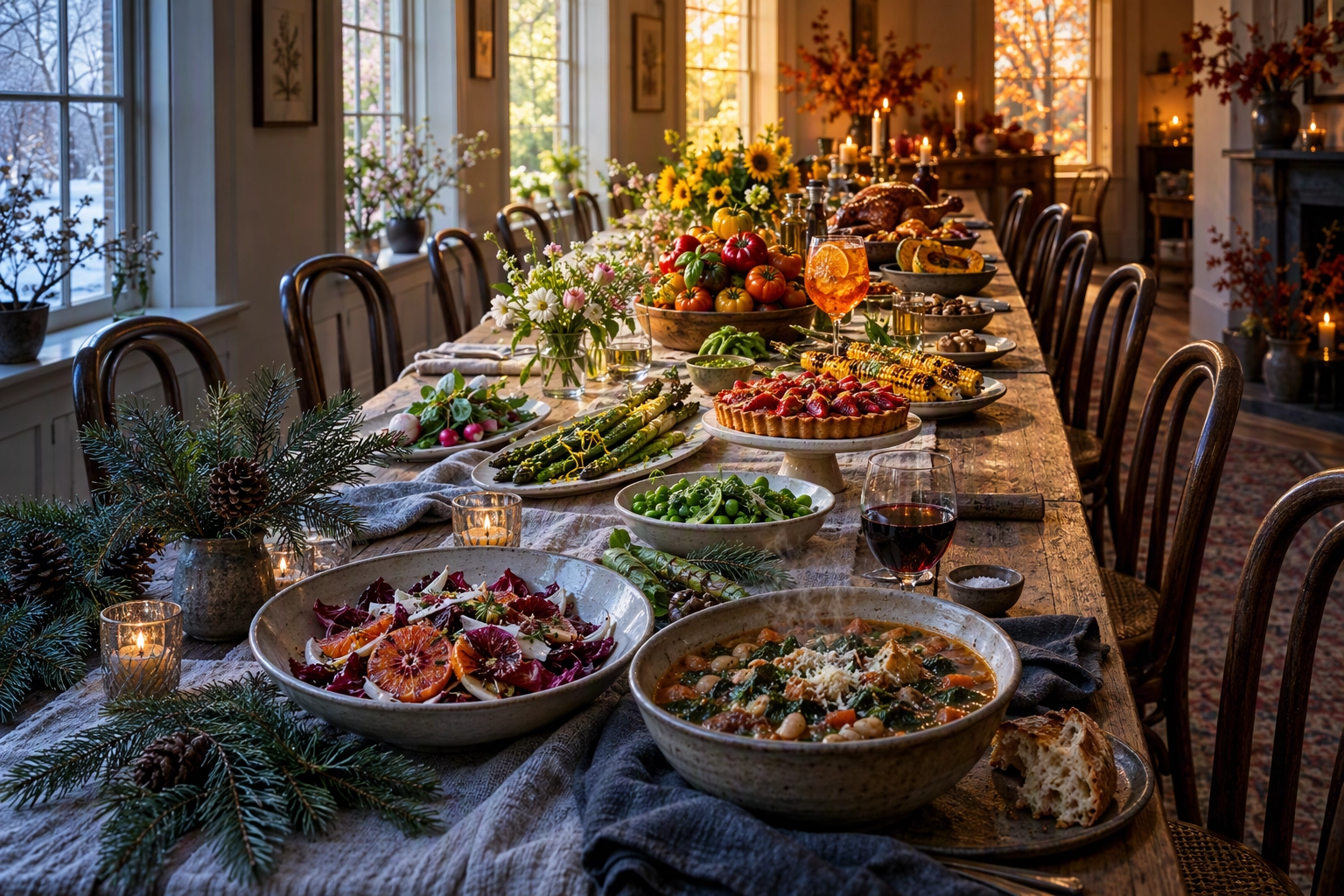
A restaurant marketing plan is a short document that says which customers you want more of, what you'll offer them, where you'll tell them, what it costs and how you'll know it worked, all tied to a 12-month calendar. Most free templates stop at blank boxes. This one comes with 2027 already filled in: the key dates that move covers, the menu-change points, a campaign theme for each month and the photo batch to shoot before each campaign goes live. If photos are the part that always slips, our restaurant food photography workflow turns a phone shot of a new dish into a menu-ready image, and the monthly batch below is built around it.
Quick Summary: A restaurant marketing plan fits on one page plus a 12-month calendar. Budget 3–6% of revenue, give each channel one job, and plan every campaign backwards from its date, with photos shot a month ahead. Review five KPIs per channel every quarter and cut what doesn't bring customers back.
What Is a Restaurant Marketing Plan?
A restaurant marketing plan is a one-to-three-page document plus a calendar. It names the customers you want more of, the offers and channels that will reach them, what you'll spend, the key dates and the numbers you'll check each quarter. Your restaurant marketing strategy is the why ("own weeknight dinners for nearby offices"). The plan is the who, what and when. A business plan covers everything from leases to payroll; the marketing plan is the part focused on winning customers and bringing them back.
Why write it down? Because reacting costs more than deciding ahead. The National Restaurant Association's 2026 State of the Restaurant Industry report projects $1.55 trillion in sales, yet its chief economist noted that 60% of operators reported softer customer traffic the year before. In a year like that, the restaurant that posts on social media when someone has a spare minute loses to the one that shot its Mother's Day brunch photos in April.
Write it in Q4. October and November give you time to price holiday menus, book January's photo batch and commit the money before a slow February forces the question. For the tactics themselves, pull from our 50 restaurant marketing ideas. Your restaurant marketing plan is where you decide which of them run, when, and with what money.
The One-Page Restaurant Marketing Plan Template
Copy this restaurant marketing plan template into a doc and fill in the right-hand column. The middle column is a worked example for a hypothetical 90-seat neighborhood Italian restaurant doing $1.5 million a year with a $40 average check. It shows the level of detail that makes a plan usable.
| Section | Worked example (90-seat Italian, $1.5M) | Your restaurant |
|---|---|---|
| 1. Positioning: who you're for and why they pick you | The neighborhood's weeknight pasta place for families and nearby offices. Warm, unfussy brand voice. | |
| 2. Target customers: two segments you want more of | Families with kids (Mon–Thu, 5–7 pm). Office groups of 6–12 (lunch, private room). | |
| 3. Goals: three, each with one number and a deadline | Increase weeknight covers by 15 a night by June 30. Repeat share from 32% to 38% by Dec 31. Private dining from $8K to $12K a month in Q4. | |
| 4. Budget: annual total and the covers it must earn | 4% of sales = $60,000 ($5,000 a month). Breaks even at 184 extra covers a month. | |
| 5. Channels: each one and its single job | Google Business Profile gets us found. Social media makes people hungry. Email and SMS bring them back. | |
| 6. Offers: what you'll give, and to whom | Kids eat free on Tuesdays. A $35 office lunch prix fixe. A birthday dessert for loyalty members. | |
| 7. Calendar: key dates, menu changes, campaigns | Spring menu April 1. Mother's Day May 9. Fall menu September 15. | |
| 8. Content schedule: photo batch date and shot list | First Monday of each month, 2–4 pm, 20–25 shots. | |
| 9. Owners: one name per channel | Owner: spend and review. GM: email and SMS. Lead server: social media. | |
| 10. Review: when you check the KPIs | First Tuesday of January, April, July and October. |
Rows 4 and 8 are the two most templates skip. A budget that isn't converted into covers can't be judged. A calendar without a content schedule launches campaigns with last year's photos, or none, and that's where most marketing efforts stall.
How to Write a Restaurant Marketing Plan in 7 Steps
Writing a marketing plan for a restaurant takes about one afternoon with last year's POS reports. Work through the steps in order. Each one fills a row of the template, and together they help you turn a pile of ideas into a schedule your team can follow.
Step 1: Pull Last Year's Numbers
Start with data from your POS, not a brainstorm. Export covers and sales by month and by day of week, your top ten sellers by margin, and where customers came from: reservation source, dine-in versus delivery, first visit versus repeat. That data shows the slow months to fix and the busy ones not to waste money on.
Then run a quick market analysis. Read your last 50 reviews and note the words that repeat, good and bad. Check three nearby competitors: their prices, their star rating, how often they post and which events they run. Half a page of SWOT analysis is enough. The point of the analysis is to find one gap your brand can own.
Step 2: Name the Two Guests You Want More Of
Pick two customer segments, not seven personas. A useful segment has a time slot and a reason to come: "families, Monday to Thursday, 5–7 pm, who want fast and kid-friendly" beats "millennial foodies." Different marketing strategies suit each one: families respond to value offers, office groups to easy group booking. Every campaign in your restaurant marketing plan should serve one of the two. If it serves neither, cut it.
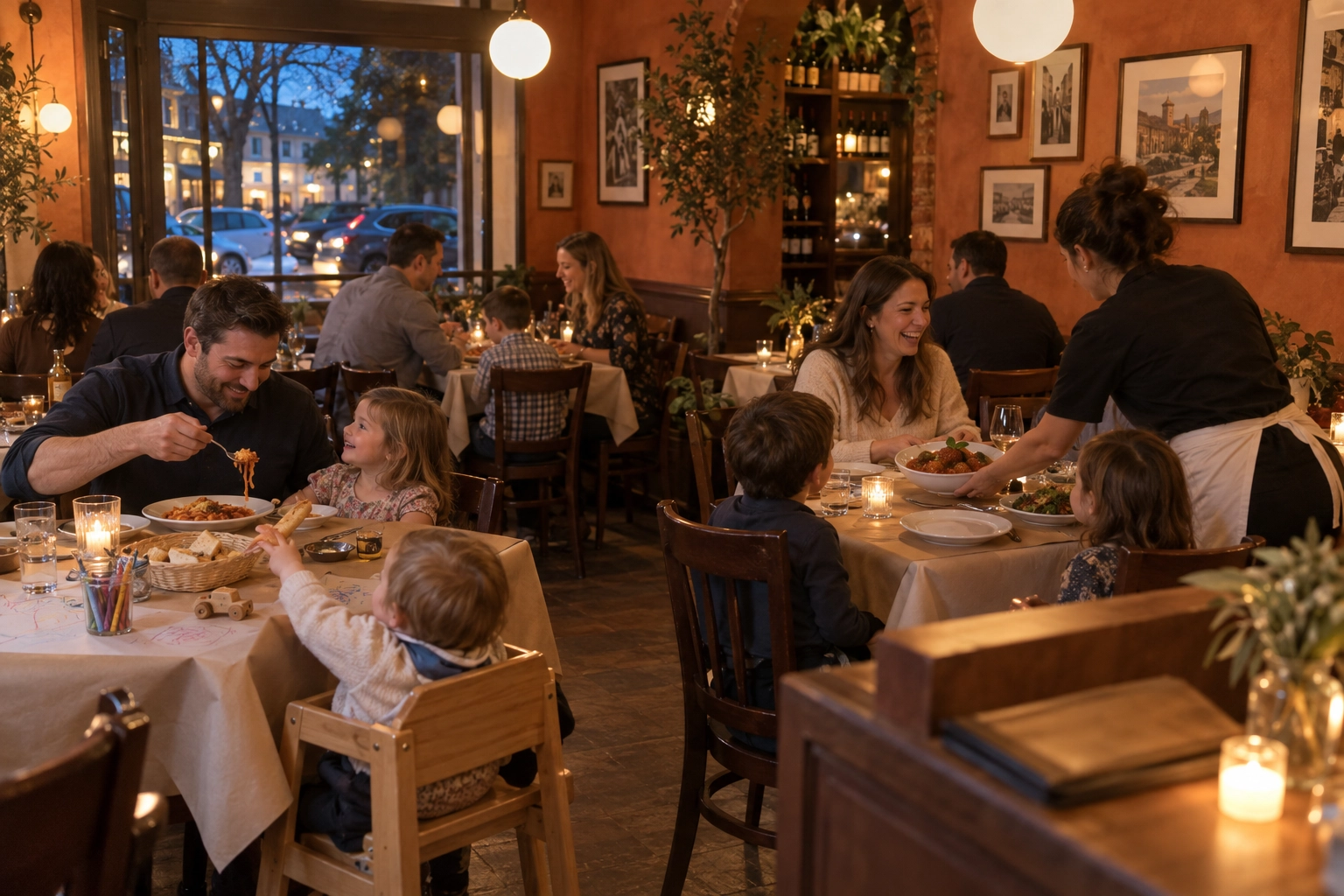 Families with young kids eating rigatoni at a neighborhood Italian restaurant on a weeknight, a target customer segment
Step 3: Set Three Goals, Each With One Number
Tie goals to covers or revenue, not likes. "Increase weeknight covers by 15 a night by June 30" is a goal. "Grow our social media presence" is a wish. Give each goal one number, one deadline and one owner, and create one goal per segment plus one for repeat visits. If you can't measure it from your POS, your reservation system or your Google Business Profile, rewrite it until you can say what success looks like.
Step 4: Set the Budget and Turn It Into Covers
Most established restaurants set aside 3–6% of revenue for marketing, and more in year one. Our guide on how much a restaurant should spend on marketing works through three examples line by line. The step that makes your number defensible is converting it into customers:
Extra covers needed per month = monthly budget ÷ (average check × (1 − food cost %))
At $5,000 a month, a $40 check and a 32% food cost, each guest leaves $27.20 after food. You need 184 extra covers a month, about six a day, to break even. If you can't name the channels that will bring six more customers a day, the budget is too big or pointed at the wrong marketing strategies. Keep roughly 10% as a test reserve you're allowed to lose.
Step 5: Give Every Channel One Job
Each channel does one of three jobs: get found, get chosen or bring customers back. Google Business Profile, Maps and delivery apps get you found. Photos, reviews, your menu and social media get you chosen. Email, SMS and a loyalty program bring people back.
Reviews belong in the plan as a weekly task, because they help customers decide. BrightLocal's Local Consumer Review Survey 2026 found that 97% of consumers read reviews and 41% "always" do, up from 29% a year earlier. Our playbook for Google Business Profile covers the photo side, our restaurant social media strategy covers posting, and our roundup of restaurant marketing tools compares the software. Pick tools after strategies, never before.
Step 6: Fill In the 12-Month Calendar
Plan every campaign backwards from its date. A rhythm that works: decide the offer eight weeks out, shoot the photos four to six weeks out, open bookings or pre-orders three to four weeks out, and send reminders the week of. Restaurants that skip this step end up promoting Valentine's Day on February 10. The pre-filled calendar below covers national dates. You add local events: your city's restaurant week, home games, street festivals and the school calendar.
Step 7: Schedule the Content That Feeds It
Every campaign needs images: the new dish, the special, a poster for the window, a story for social media, all in your brand's look. Content is the line in a restaurant marketing plan that slips most often, so put one photo session on the calendar each month and treat it like a supplier delivery that can't be missed. The section after the calendar shows how to build that session into your month.
The 12-Month Restaurant Marketing Calendar, Pre-Filled for 2027
This restaurant marketing plan calendar lists the 2027 key dates that move covers, a menu-change point, one campaign theme per month and the photo batch to shoot that month for the next month's campaigns. Fixed dates such as July 4 repeat every year. Movable ones such as Easter, Mother's Day and Thanksgiving were computed for 2027, so recheck them when you roll the plan forward.
| Month | Key dates (2027) | Menu change point | Campaign theme | Photo batch to shoot this month |
|---|---|---|---|---|
| January | New Year's Day (Fri 1). Dry January. MLK Day (Mon 18). NFL playoffs. | Lighter dishes and zero-proof drinks. | Win back holiday customers and push gift card redemption. | Valentine's prix fixe, game-day platters, three mocktails. |
| February | Lunar New Year (Sat 6). Mardi Gras and National Pizza Day (Tue 9). Ash Wednesday (Wed 10). Valentine's Day and Super Bowl LXI (Sun 14). Presidents' Day (Mon 15). National Margarita Day (Mon 22). | Lent Friday fish specials from Feb 12. | Two-night Valentine's: Saturday date night, Sunday game-day takeout. | St. Patrick's specials, Easter brunch, spring menu test dishes. |
| March | St. Patrick's Day (Wed 17). NCAA tournament from mid-March. Good Friday (26). Easter (Sun 28). | Spring menu tasting. | Easter brunch bookings and tournament bar specials. | Full spring menu and patio drinks. |
| April | Spring menu launch (first week). Patio opening. National Grilled Cheese Day (Mon 12). | Spring menu goes live. | New menu launch and patio season. | Mother's Day brunch and Cinco de Mayo plates. |
| May | Cinco de Mayo (Wed 5). Mother's Day (Sun 9). Graduations. National Burger Day (Fri 28). Memorial Day (Mon 31). | Mother's Day prix fixe. | Mother's Day reservations, opened in mid-April. | Summer menu, Father's Day and July 4 items. |
| June | Juneteenth (Sat 19). Father's Day (Sun 20). Graduation parties. | Summer menu goes live. | Father's Day and grad-party catering. | July 4 takeout, desserts for National Ice Cream Day, summer cocktails. |
| July | Independence Day (Sun 4, observed Mon 5). National French Fry Day (Tue 13). National Ice Cream Day (Sun 18). Summer restaurant weeks. | Rotating summer specials. | Fill slow weeknights: happy hour and heat-wave lunches. | Back-to-school family bundles and fall test dishes. |
| August | Back to school. Summer restaurant week in many cities. NFL preseason. | Fall menu tasting. | Family bundles and teacher or office catering. | Full fall menu and game-day wings. |
| September | Labor Day (Mon 6). NFL season opens. National Coffee Day (Wed 29). | Fall menu goes live mid-month. | Fall launch and football Sundays. | Halloween specials, Thanksgiving to-go, holiday party menus. |
| October | National Taco Day (Mon 4). Halloween (Sun 31). Holiday party bookings open. | Holiday party menus set. | Book holiday parties and take Thanksgiving pre-orders. | Gift card creatives and Christmas and New Year's Eve menus. |
| November | Veterans Day (Thu 11). Thanksgiving (Thu 25). Black Friday (26). Small Business Saturday (27). | Thanksgiving to-go and winter menu. | Gift cards from Black Friday through Cyber Monday. | New Year's Eve prix fixe, winter dishes, January's lighter menu. |
| December | Christmas Eve (Fri 24). Christmas Day (Sat 25). New Year's Eve (Fri 31). | New Year's Eve prix fixe. | Last-minute gift cards and New Year's Eve bookings. | Dry January drinks and early Valentine's dishes. |
Notice the photo column runs a month ahead of the campaign column. That one-month lead is what lets a campaign launch with fresh images instead of a scramble, and it's the part no other restaurant marketing plan template fills in for you.
Q1: The February 14 Collision, Lent and a Slow Start
In 2027, Valentine's Day and Super Bowl LXI land on the same Sunday, February 14, with the game at SoFi Stadium in Inglewood. That puts February's two biggest occasions on one day, so run two campaigns instead of one: a Saturday, February 13 date night and a Sunday game-day menu.
Both crowds are large. The National Retail Federation's 2026 Valentine's Day survey found 39% of consumers planned an evening out, worth $6.3 billion. The National Chicken Council's 2026 Wing Report projected 1.48 billion wings eaten during Super Bowl LX. A date-night room should sell Saturday as Valentine's night and offer a quiet, game-free Sunday dinner. A wing or pizza kitchen should open game-day pre-orders by February 1.
The rest of the quarter is about filling a slow start. January wins back holiday customers and brings December's gift cards in for redemption. Lunar New Year falls on Saturday, February 6, per the Smithsonian. Lent runs from Ash Wednesday, February 10, so Friday fish specials run February 12 through Good Friday, March 26.
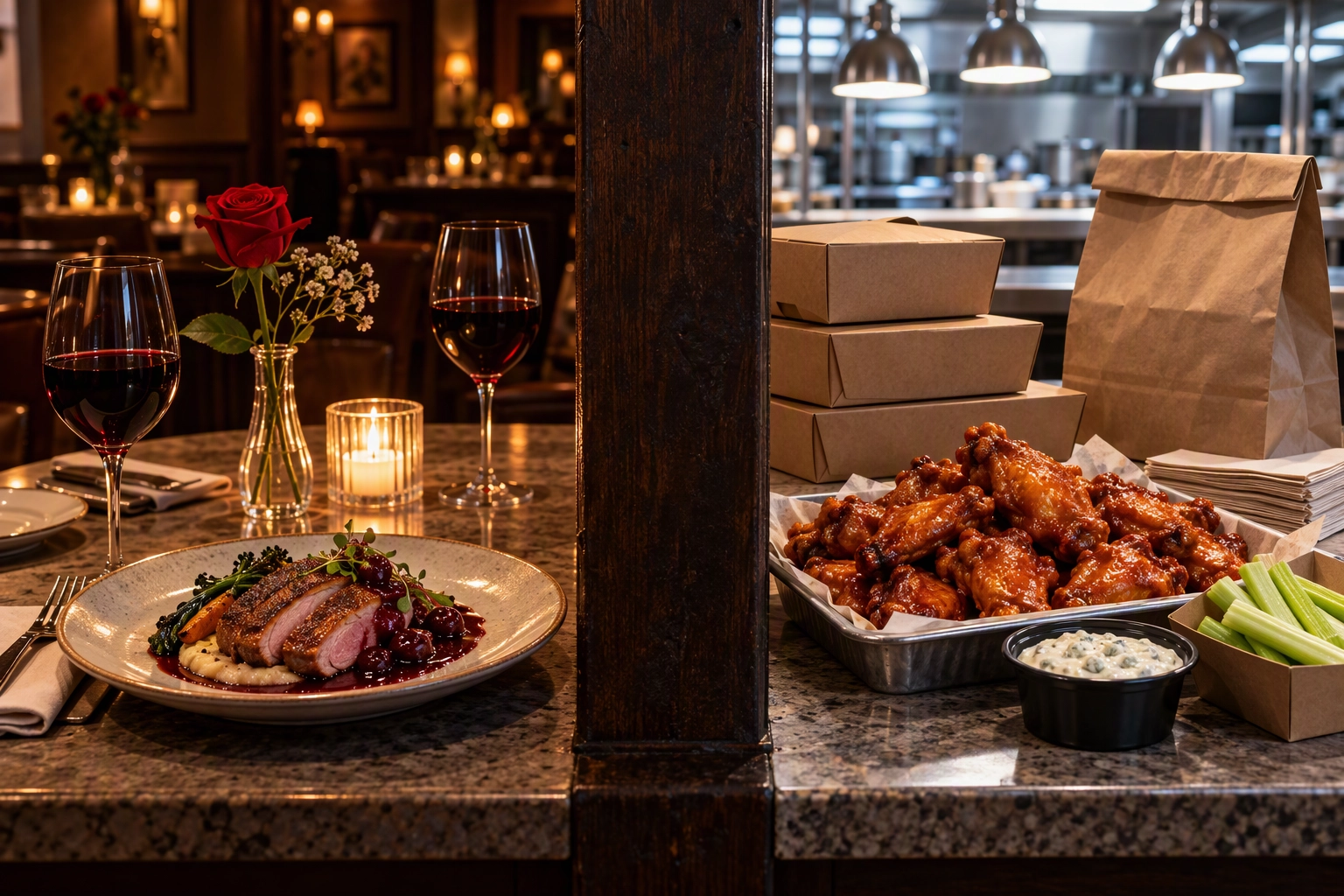 Candlelit Valentine dinner for two beside a game-day wings takeout order, Valentine's Day and Super Bowl on Feb 14, 2027
Q2: Spring Menu and the Biggest Day of the Year
Mother's Day, Sunday, May 9, is the date to protect in Q2. OpenTable called it restaurants' biggest day of 2025, with a 12% increase in traffic over the year before, and the National Restaurant Association forecast that 80 million American adults would dine out on Mother's Day 2026, as Nation's Restaurant News reported. Open reservations in mid-April with photos from April's batch.
Easter falls early, on March 28, so a spring menu can launch on April 1 without competing with brunch. Cinco de Mayo is a Wednesday, which makes it a weeknight event worth promoting like one. Memorial Day, May 31, starts patio season. Father's Day follows on June 20.
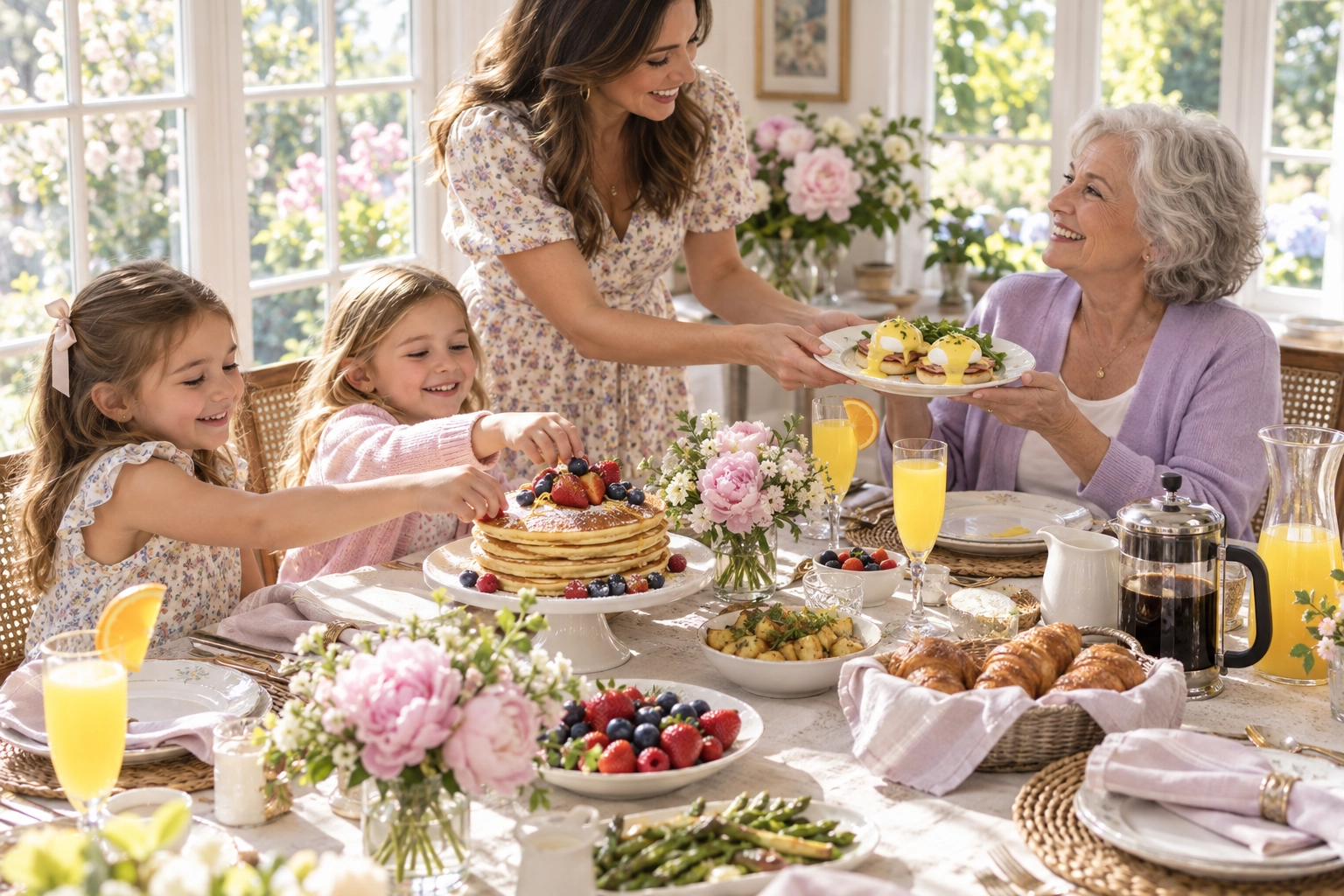 Three generations sharing Mother's Day brunch by a sunny window, the busiest restaurant day in a marketing calendar
Q3: Patio Season and Slow Weeknights
July 4 falls on a Sunday in 2027, observed Monday, July 5. Many neighborhoods empty out over a long weekend, so plan takeout platters and catering rather than a dine-in push. Summer restaurant weeks vary by city, so check yours and decide by spring whether to take part in those events.
The rest of summer is about weeknights. Your POS data shows which two nights are weakest. Use targeted slow-night promotions on your weakest two nights instead of brand ads. Taste the fall menu in August and launch it mid-September, when football Sundays start feeding bar traffic.
Q4: Gift Cards, Parties and Next Year's Plan
Q4 pulls cash forward. Holiday party bookings open in October. Thanksgiving is November 25, followed by Black Friday and Small Business Saturday on the 26th and 27th, the natural window for gift card promotions. Christmas Day is a Saturday and New Year's Eve a Friday, which makes December 31 a strong night for a prix fixe.
Our guide to holiday sales week by week fills in the tactics. The October quarterly review doubles as next year's working session, so the 2028 restaurant marketing plan is drafted before the rush, not after it.
 Guest picking a twine-tied gift card envelope from a basket at a restaurant host stand in December, a Q4 marketing campaign
The Monthly Photo Batch: Your Content Production Schedule
Every campaign in the calendar needs fresh images a month before it runs, so book one photo session a month. Cover the new dishes, next month's specials and the campaign creatives. Shoot on a phone during the afternoon lull and style everything in one sitting. Your menu, Google profile, delivery listings and ads then show the same dishes at the same time, and your brand looks consistent everywhere.
It pays where customers choose. DoorDash says menus with item photos saw up to 44% more monthly sales, and the same images feed Instagram, email headers and window posters. If delivery sales matter to you, a complete photo set is the cheapest fix on the list.
A typical monthly shot list has 20–25 images:
- New or seasonal dishes: 4–8, each from two angles (overhead and 45 degrees).
- Next month's specials: 2–3 plates or drinks.
- Campaign creatives: a poster or table tent, a 4:5 feed post and a 9:16 story.
- Delivery gaps: any menu item still showing an old or missing photo.
Run the session the same way every month:
- Pick a fixed slot, such as the first Monday from 2 to 4 pm.
- Plate each dish once and shoot it on a phone near a window, with no flash.
- Style the batch in one sitting. FoodShot turns each phone shot into a menu-ready image in about a minute. Upload two or three of your best existing photos to My Styles so every month matches your brand, and use Poster Mode to create the campaign creatives.
- Export the sizes each channel needs and file them by month.
A 20–25 image batch fits the 25-photo plan at $15 a month, and a group shooting several menus fits 100 photos for $45 (see pricing). Our spending guide uses $8,000 a year for four quarterly half-day shoots with a photographer, and a quarterly shoot can't keep pace with a monthly calendar anyway. For seasonal looks, start from the Thanksgiving styles and Christmas styles. If you'd rather hire a photographer, here's how to plan a menu photoshoot.
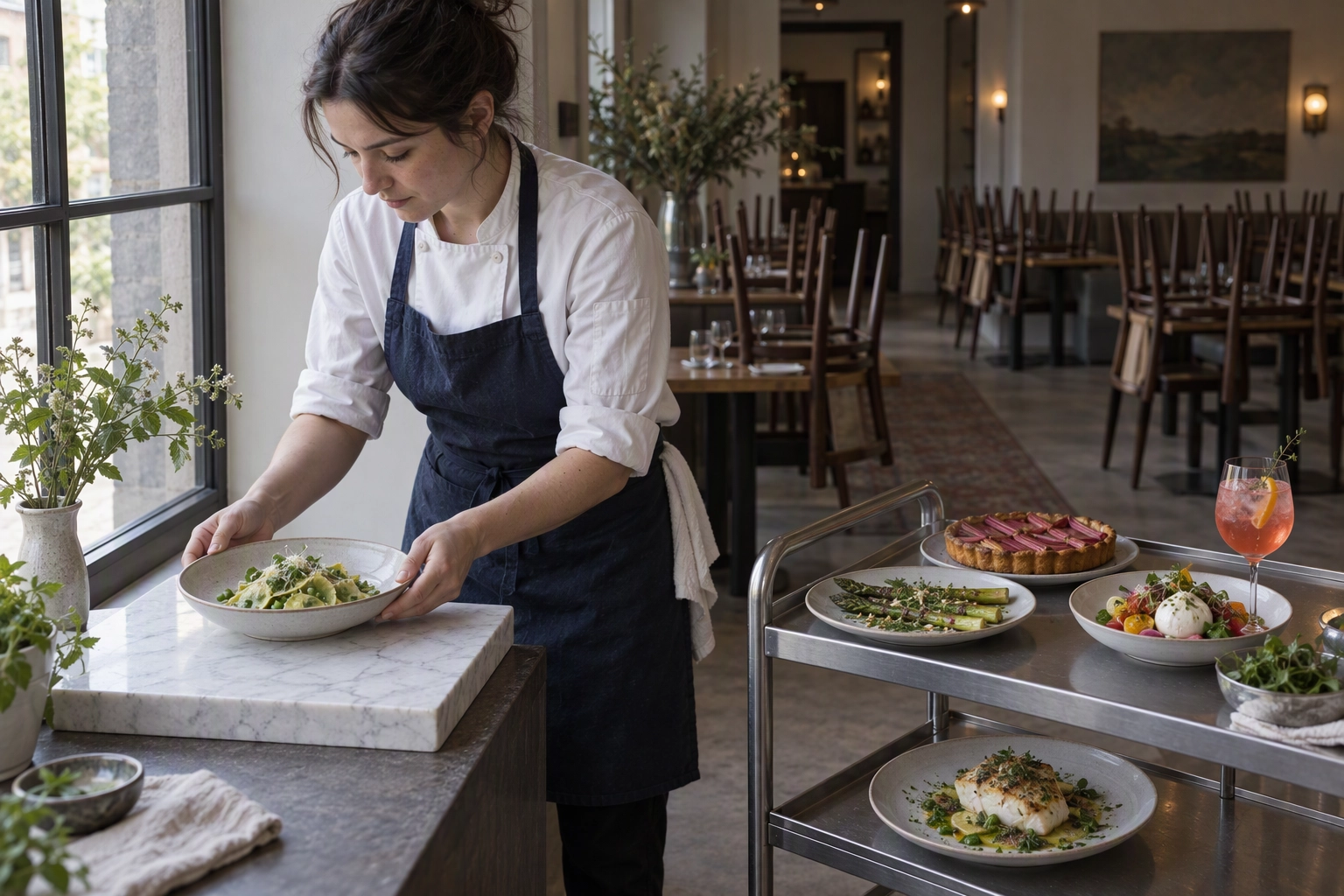 Cook setting next month's dishes by a window in an empty dining room for the monthly restaurant photo batch
Five KPIs to Track in Your Restaurant Marketing Plan
Track five numbers per channel every month and judge them every quarter. A restaurant marketing plan is only as good as the numbers you check, and each set below runs from reach to revenue, which helps you see exactly where a channel leaks. Most restaurants already own the tools that report them: Business Profile's Performance view, Instagram Insights, your email platform, delivery merchant portals and your POS.
| Channel | The five KPIs | Where to find them |
|---|---|---|
| Google Business Profile | 1. Profile views from Search and Maps. 2. Calls. 3. Direction requests. 4. Website and menu clicks. 5. New reviews and average rating. | Business Profile Performance; reviews in Maps. |
| Instagram and TikTok | 1. Reach to non-followers. 2. Saves and shares per post. 3. Profile visits. 4. Link taps to booking or ordering. 5. Messages asking to book. | Instagram Insights; TikTok analytics. |
| Email and SMS | 1. New subscribers per month. 2. Click rate. 3. Orders or bookings per send. 4. Return visits per 1,000 sends. 5. Unsubscribes per send. | Your email or SMS platform, matched to POS or reservation data. |
| Delivery apps | 1. Store-page views to orders. 2. Orders and net payout after fees. 3. Average order value. 4. Rating. 5. Promo sales per $1 spent. | DoorDash, Uber Eats and Grubhub merchant portals. |
| Website and direct ordering | 1. Visits from Google. 2. Booking or order conversion rate. 3. Direct share of orders versus apps. 4. Covers booked from campaign links. 5. Repeat-customer share of covers. | Google Analytics 4, reservation system, POS. |
For email, judge return visits, not opens. Bloom Intelligence's 2026 restaurant benchmarks, measured on its own network of restaurant clients, found one-time blasts brought back 0.27% of recipients, while a new-guest welcome email brought back 7.2% and a win-back email 6.5%. Build those automated emails before you plan more blasts; they are the loyalty engine of the whole plan.
The One-Page Quarterly Review Sheet
Once a quarter, spend 60 minutes on one page: what you planned, what happened, and a keep, fix or kill verdict for each line. A restaurant marketing plan that is never reviewed becomes a file in a drawer. Print this sheet, fill the Actual column from your KPI table, and bring it to the meeting.
 Restaurant owner and general manager reviewing a one-page quarterly marketing review sheet on a sunny patio before opening
| Line | Target | Actual | Verdict (keep, fix, kill) | Change for next quarter |
|---|---|---|---|---|
| Revenue vs. same quarter last year | ||||
| Covers vs. same quarter last year | ||||
| Repeat-customer share of covers | ||||
| Marketing spend vs. budget | ||||
| Cost per extra cover (spend ÷ extra covers) | ||||
| Google Business Profile | ||||
| Instagram and TikTok | ||||
| Email and SMS | ||||
| Delivery apps | ||||
| Website and direct ordering | ||||
| Next quarter's photo batches booked |
Then answer five questions, in this order:
- Which campaign brought the most extra covers per dollar? Do more of it.
- Which channel is weakest at KPI 5, the revenue end? Fix it or kill it.
- Did every campaign launch with fresh photos on time? If not, move the batch earlier.
- Which key dates fall in the next 90 days? Lock their offers eight weeks out.
- What one thing will we stop doing?
Hold the review in the first week of January, April, July and October. Keep last quarter's sheet stapled behind the new one, so trends are visible without a spreadsheet or new tools, and success is measured rather than remembered. If one line keeps landing on "fix," revisit the marketing strategy behind it, not just the tactic.
Four Ways Restaurant Marketing Plans Fail
Most restaurant marketing plans fail in execution, not on paper. These four failure points show up again and again, and each has a simple fix you can build in from day one.
Campaigns Without Assets
The offers are set, the email is drafted, and there's no photo of the dish. So the team posts last spring's picture or a dark phone shot. The fix is the one-month lead in the calendar: no campaign goes on the plan without a photo batch scheduled before it.
Measuring Likes Instead of Covers
Follower counts are easy to grow and hard to bank. Put the revenue-end KPI first in every review: bookings, orders, covers, repeat share. Social media engagement only matters when it moves those, so judge marketing efforts by covers, not hearts.
Starting Holiday Promotion Too Late
Mother's Day tables fill weeks ahead, and holiday parties book in October. A promotion that starts the week of the holiday reaches customers who already have plans. The eight-week rhythm from Step 6 prevents this.
Discounts as the Only Lever
Discounts train customers to wait for the next one. Mix in value that costs less than it looks: a free dessert for Mom, a kids' meal on Tuesdays, a chef's special. Price new items using menu engineering so promoted dishes are also your profitable ones, and your efforts protect margin as well as traffic.
Frequently Asked Questions
How long should a restaurant marketing plan be?
One page for the plan and one page for the calendar. Long plans don't get reread. Keep the detail in the calendar and the KPI table, where the team actually looks each week.
What should a restaurant marketing plan include?
Include positioning, two target customer segments, three goals with numbers, a budget converted into covers, channels with one job each, offers, a 12-month calendar, a content schedule, an owner per channel and quarterly review dates. The template above has all ten.
How much should a restaurant spend on marketing?
Most established restaurants spend 3–6% of revenue, and new restaurants often spend more in their first year. Put that figure in row 4 of your restaurant marketing plan and turn it into extra covers needed per month to check it's realistic. Our guide to restaurant marketing spend has three worked examples.
When should I write next year's restaurant marketing plan?
In October or November. That leaves time to price holiday menus, book January's photo batch and lock the spend before a slow first quarter. Then update the calendar monthly and rewrite the plan once a year.
What's the difference between a restaurant marketing plan and a restaurant marketing strategy?
The strategy is the direction: who you serve and why they should choose you. The plan is the execution: which marketing strategies run, on which dates, through which channels, for how much, and how you'll measure success.
What's a good marketing plan for a new restaurant?
Use 30-60-90 days before you plan a full year. Spend the first 30 days on visibility: a complete Google profile, accurate listings, photos of every dish and your first reviews. Spend days 31 to 60 to build an email list and create a simple loyalty offer, then double down on what worked. Our grand opening ideas cover the launch itself.