Running a Ghost Kitchen on DoorDash: Setup, Costs & Photos
 Ali Tanis15 min read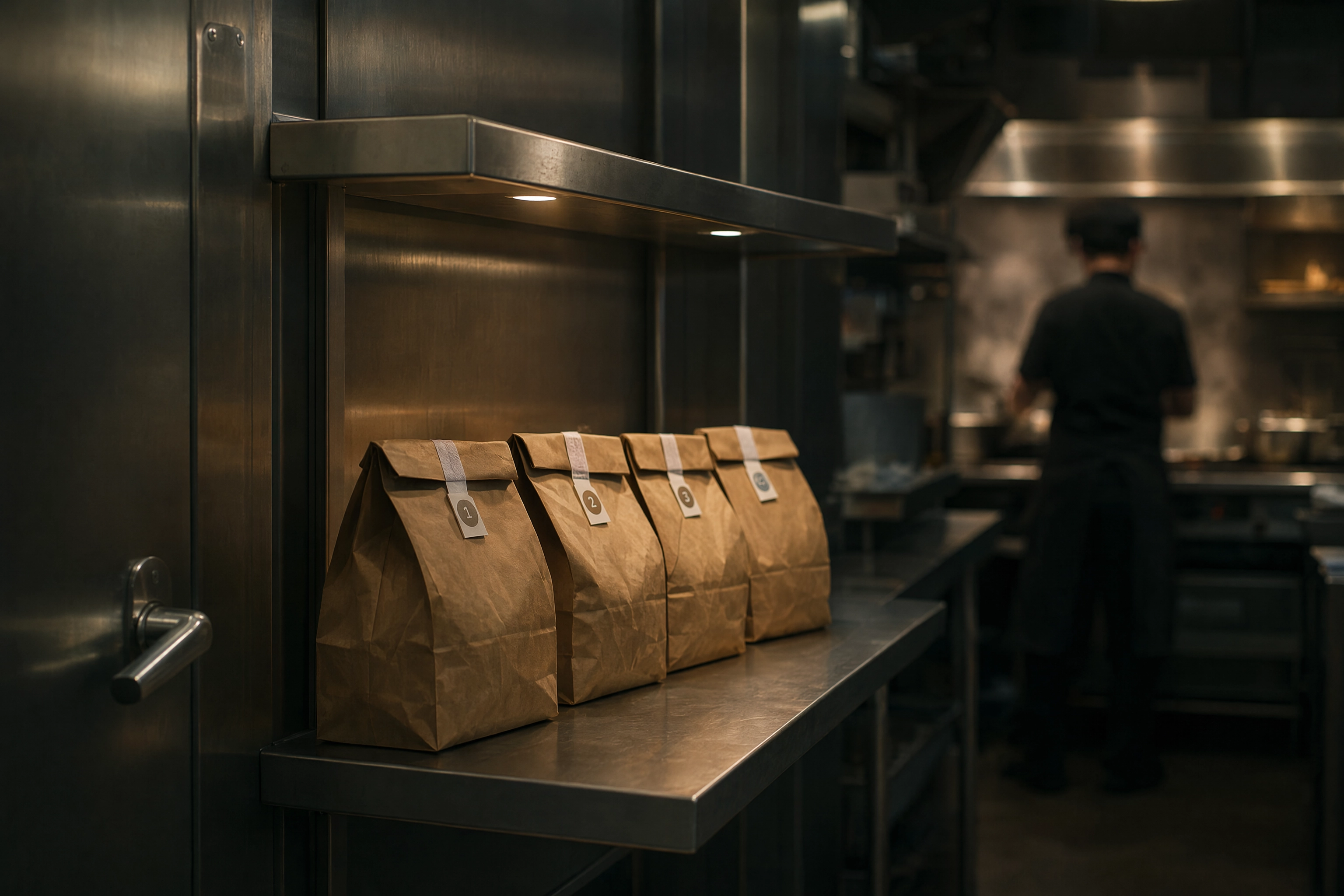
A DoorDash ghost kitchen is a delivery-only food business that lives on the app as a single listing — a photo, a name, a star rating, and a delivery estimate — with no dining room, no signage, and no walk-in customers. The kitchen cooks, a Dasher grabs the bag, and dinner drives away. Nobody ever sees the building. That one fact changes how you set it up, what it costs, and why a single thumbnail decides whether you make rent.
If you're researching how a ghost kitchen on DoorDash actually works — or typing "ghost kitchen DoorDash" into a search bar at 1 a.m. — this is the operator's answer. We'll cover the DoorDash ghost kitchen requirements, how to list a virtual brand, what commission does to your margin, why one kitchen runs several brands, how to build a menu that survives the drive, and the listing mechanics that decide whether anyone sees you. For the demand-side playbook — promotions, DashPass, ads — we'll point you to a deeper guide instead of repeating it.
Quick Summary: A DoorDash ghost kitchen is a delivery-only virtual brand run from a licensed commercial kitchen. Setup is cheap and fast, but the app takes 15–30% commission on every delivery order (6% on pickup), and one address can list up to 10 virtual brands. With no storefront, your listing photo is the entire brand — the biggest lever on whether a customer taps you or scrolls past.
Sealed takeout bags on a numbered courier pickup shelf inside a windowless DoorDash ghost kitchen at night
What Running a DoorDash Ghost Kitchen Really Means
On the app, you're not a restaurant — you're a listing. Customers never see your space, staff, or plating; they see a tile in a scrolling wall of tiles and decide in about a second. Unlike traditional restaurants, you get no foot traffic, no signage, and no second chance from a host at the door.
Separate two things operators constantly blur. A ghost kitchen is a place — the licensed physical kitchen where food is cooked for delivery only. A virtual restaurant is a concept — the name, menu, and photos that live on the app. One kitchen can host many virtual brands, and a virtual brand can run out of an existing restaurant's kitchen with no dedicated ghost kitchen at all. New to this? Our guide to what a ghost kitchen is covers the full model and the real 2026 startup math.
There are two ways in: rent time in commissary or shared commercial kitchens and launch a standalone brand, or spin up a DoorDash virtual restaurant from a kitchen you already pay for. Either way, getting listed is the easy part. The thumbnail is the business.
DoorDash Ghost Kitchen Requirements: How to List a Virtual Brand
The ghost kitchen delivery app setup is short. You have three venue options — commissary kitchens, shared commercial kitchens, or your own build-out — and all of them work as long as they're properly licensed.
- Secure a licensed commercial kitchen. The platform's virtual brand requirements are explicit: a virtual brand must operate out of a licensed commercial kitchen. Residential kitchens — including those with Cottage Food permits — aren't allowed. Sort this first; it drives your permits, inspection, and registered address.
- Sign up as a DoorDash merchant and add your store. Create a Marketplace listing: hours, service area, and menu. A commissary can register several stores at one address.
- Build a differentiated menu. The platform requires meaningful differentiation between brands — you can't re-skin one menu under five logos and expect it to stick.
- Set the brand identity — name, logo, photos — then go live. Menu photos pass through a review queue before they appear, so this is the step that usually sets your launch date.
Then expect the virtual kitchen badge: the app labels brands with no brick-and-mortar location so customers know it's a delivery-only concept. You can't hide that you're a ghost kitchen, so the play isn't secrecy — it's looking like a real, well-run brand anyway. That's a photo-and-menu problem, not a disguise problem.
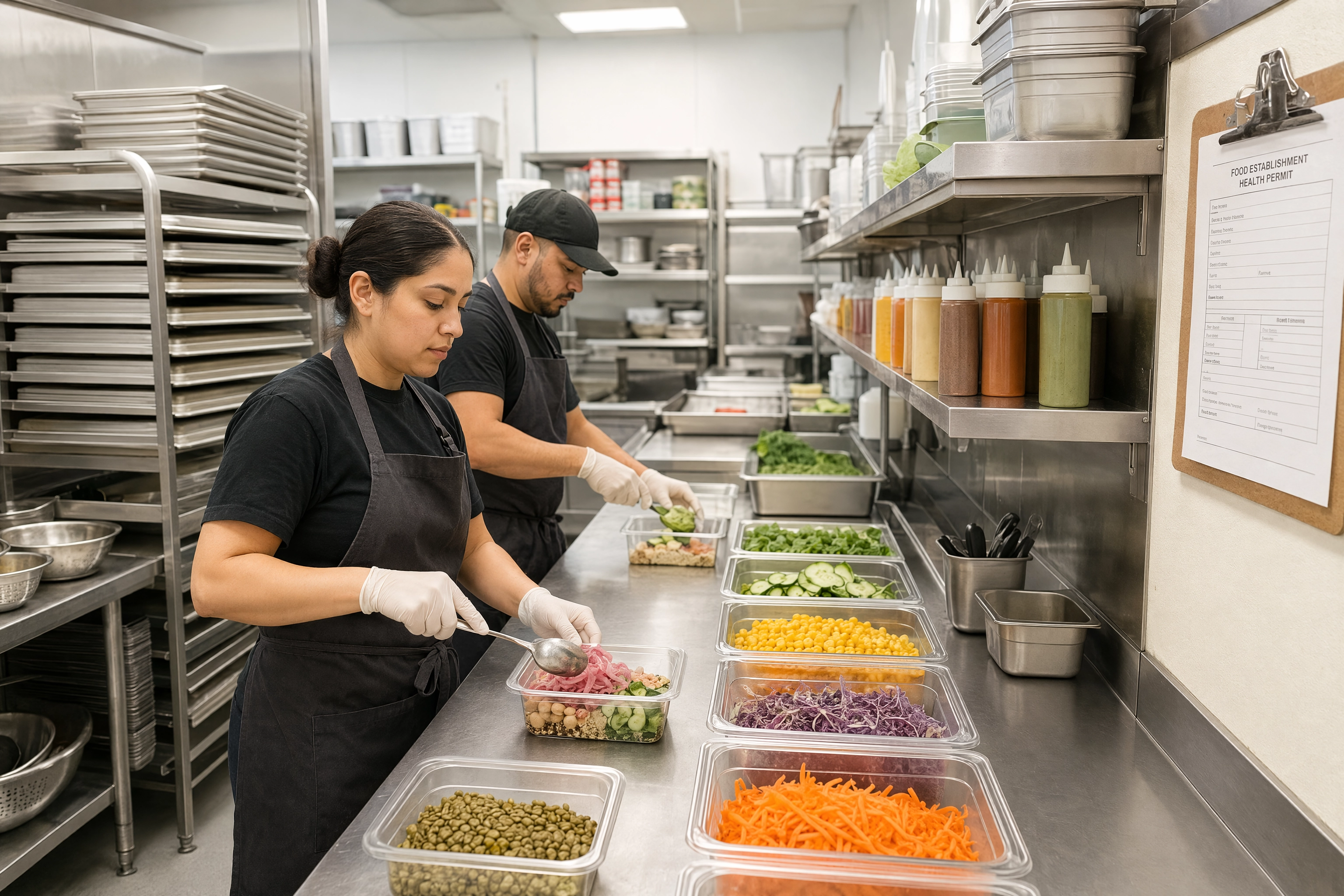 Cooks prepping on a stainless line in a licensed shared commissary kitchen used to launch a virtual brand
What a DoorDash Ghost Kitchen Costs
Here's the number everyone came for. DoorDash charges restaurants a commission on each order — a percentage of the subtotal, not a flat fee — across three partnership plans.
| Channel / plan | Delivery commission | Pickup | What it buys |
|---|---|---|---|
| Basic | 15% | 6% | Smallest delivery radius, local exposure |
| Plus | 25% | 6% | Larger radius + access to DashPass customers |
| Premier | 30% | 6% | Max radius, automatic ads, free photoshoot + $200 credit |
| Online Ordering (your own site) | 0% + 2.9% + $0.30 processing | — | Direct orders — you keep the customer and the data |
There are no monthly, activation, or cancellation fees; the commission is the cost. Higher tiers buy visibility and reach, not better food handling — so the real question is how much you'll pay for placement.
On a single $30 delivery order, Basic takes $4.50 and Premier takes $9.00. If food and packaging cost roughly $12, that order leaves about $13.50 in contribution on Basic versus $9.00 on Premier — before labor, rent, and any ad spend. Multiply that ~$4.50 swing across a few thousand orders a month and the tier decision becomes a real salary. It's the single biggest cost lever in your day-to-day operations.
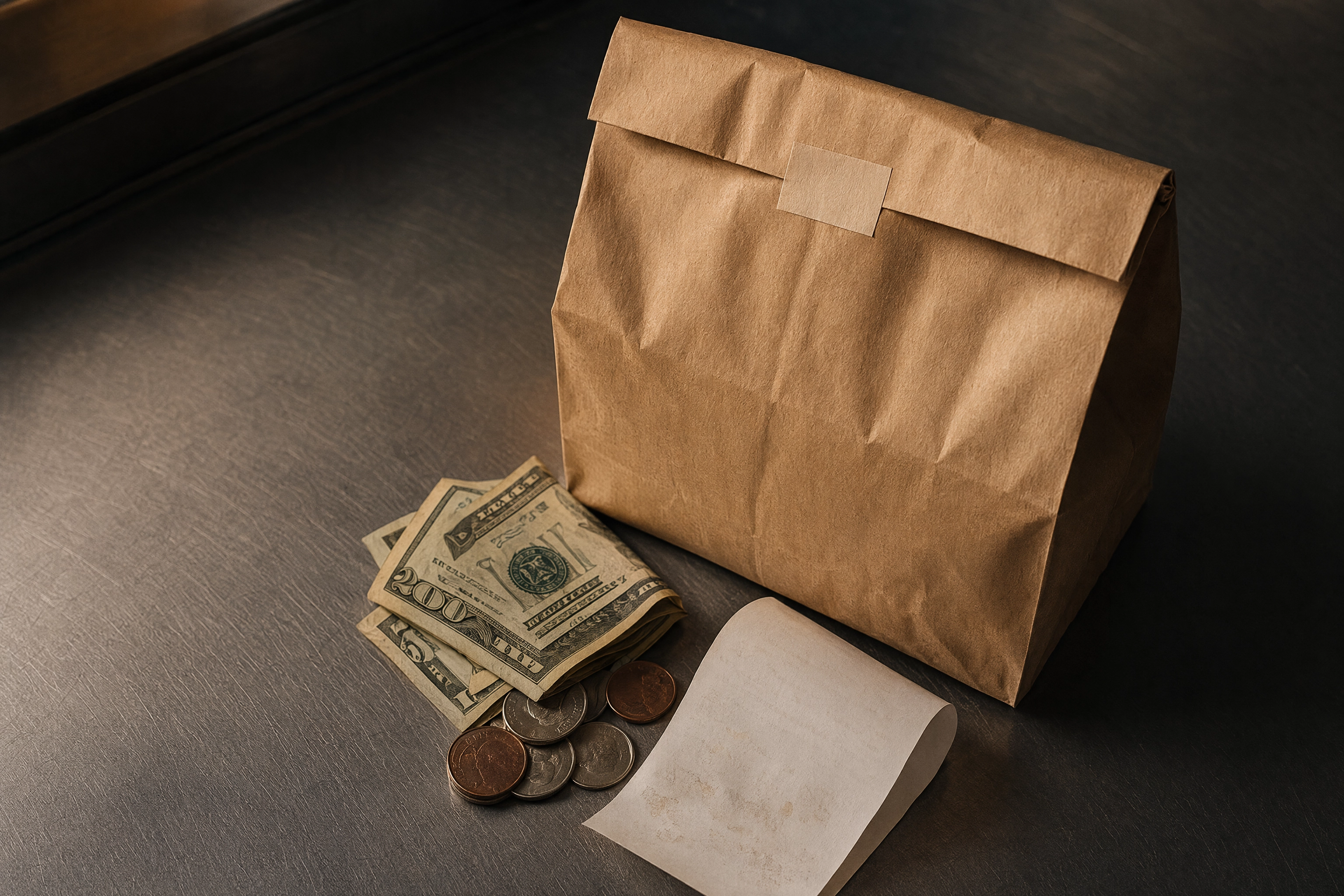 A sealed delivery bag, receipt and cash illustrating the commission taken from every DoorDash order
The point that separates a business from a hobby: commission is a percentage, and it scales with your success. Brick-and-mortar restaurants pay fixed rent whether they sell $20,000 or $80,000; a ghost kitchen pays more every time it sells more. It's the rent you pay instead of a lease, and there's a crossover volume where "cheap to start" stops being cheap — the pillar guide works through that math.
So treat the Marketplace as one channel, not the whole business. The platform's own Online Ordering is commission-free — you pay only card processing (about 2.9% + $0.30). The three-layer strategy is Marketplace for discovery, a direct ordering site for repeats, and white-label delivery (Dashers via Drive) for logistics. Our ghost kitchen marketing playbook covers how to move repeat customers onto your own site, so we won't rehash the funnel here.
Why One Kitchen Runs Several Virtual Brands
Walk into a managed ghost kitchen and one line is cooking for a burger brand, a wings brand, a poke brand, and a breakfast brand at once. The logic behind most multi-brand operations is simple.
- Spare capacity is free money. A fryer idle from 2–5 p.m. can cook a second concept without adding rent.
- More brands mean more shelf space. Each DoorDash virtual restaurant is another tile in search, another set of categories to rank in, another shot at a hungry scroller.
- Shared ingredients keep cost down. One braised chicken thigh can headline a sandwich brand, a rice-bowl brand, and a taco brand off the same prep.
It's the same reason the biggest cloud kitchens and dark kitchens stack five, eight, even ten brands onto one line. The platform caps it at no more than 10 virtual brands per store address (with exceptions for established commissary operators or written approval), and refund or cancellation abuse can get a brand terminated.
Here's the catch most first-timers miss: the app — and its customers — punish sameness. On Reddit you'll find shoppers picking apart the pizza place that lists "NY Pizza, Ma's Pizzeria, and Freaking Good Pizza" with one menu and the same tired photos. When people sense five names hiding one kitchen, trust collapses and conversion with it. Run multiple brands and each needs a genuinely distinct identity — its own name, its own menu angle, and above all its own photography.
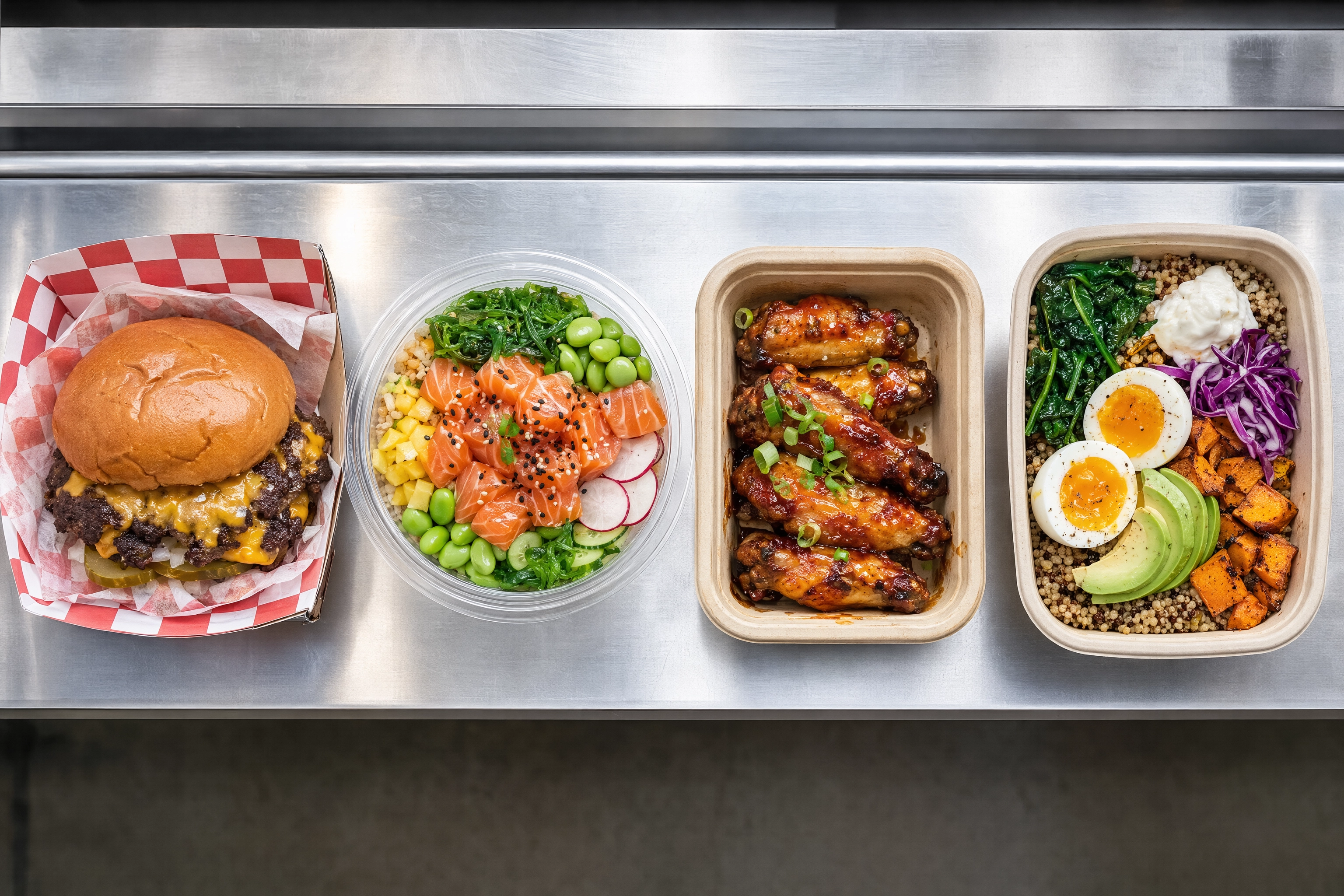 Four different packaged meals from separate virtual brands lined up on one stainless ghost kitchen pass
Building a Menu That Survives the Drive
A DoorDash ghost kitchen menu is engineered for 25 minutes in a sealed bag, not the 90-second walk from pass to table. The best ghost kitchens design for travel first and flavor-on-arrival second, because the food has to win that second problem.
Items that travel well: pizza (built for a box), fried chicken and wings (crispy holds for 20+ minutes), burgers with vented packaging, sandwiches with dry fillings, rice and grain and poke bowls, pasta in oil or a thick tomato sauce, tacos with sturdy tortillas, plus curries, stews, and mac and cheese.
Items that betray you: french fries (soggy in about five minutes), tempura and thin fried coatings, cream-sauce pasta that turns gluey, dressed leafy salads, soft-shell tacos with wet fillings, soufflés, steak (it keeps cooking in the box), and most seafood.
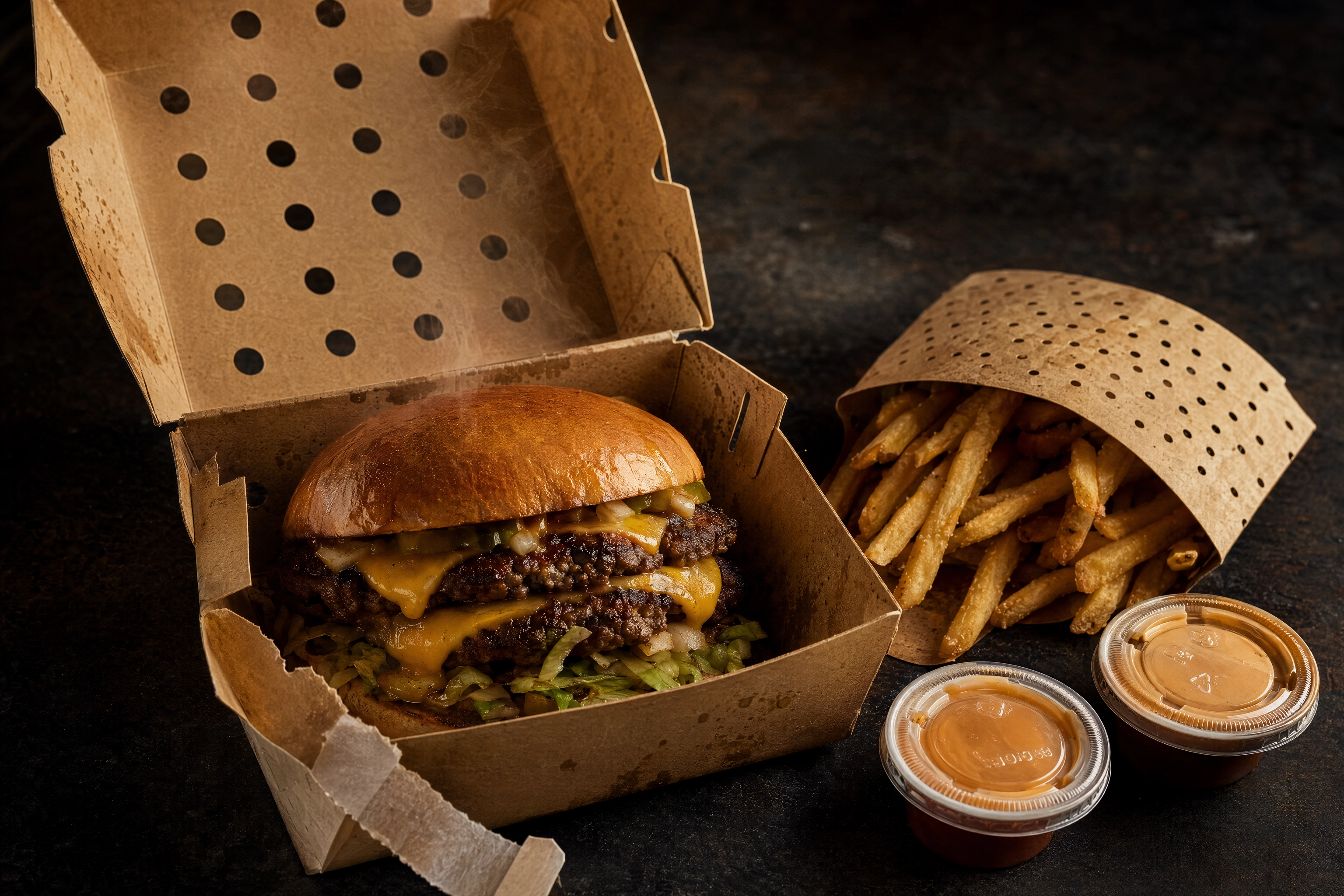 Close-up of vented takeout packaging with a burger, separated fries and side sauces built to travel for delivery
Packaging is part of the recipe, not an afterthought. Vent containers so steam escapes, pack sauces on the side, separate hot from cold and crispy, and seal every bag with a tamper-evident sticker. Budget roughly $1–3 per order — cheaper than a one-star review about a soggy burger. For the full build — pricing, ingredient cross-utilization across 8–12 base ingredients, and category structure — see our guide to ghost kitchen menu planning.
One tension to resolve up front: DoorDash rewards menu prices that match your in-store prices with better visibility, but you also need margin to absorb 15–30% commission. The answer isn't inflating prices until you're demoted — it's engineering the menu around high-margin, travel-proof items and moving repeat customers to your commission-free direct channel over time.
The Listing Mechanics That Decide If Anyone Sees You
You can cook the best food in the ZIP code and still starve if the algorithm buries you on page three. The platform doesn't publish its ranking formula, but the levers are well understood, and they reward disciplined operations.
- Conversion rate is king. The share of people who view your listing and actually order is the signal the algorithm weighs most. Convert at 10% while a rival converts at 5% and you get shown more often, because you earn more per session. Photos and price move this more than anything.
- Ratings and reliability keep you on the platform. Aim for a 4.3-star average or better, with under 5% canceled orders and under 5% inaccurate orders. Enforcement is real — in 2023, Uber Eats delisted roughly 5,000 virtual kitchens for quality violations, and DoorDash holds similar standards.
- Category placement is a free lever. The app displays your menu categories in the order you set them. Put your highest-margin, fastest-selling category first; most restaurants leave them random and quietly lose orders.
- Price parity. DoorDash surfaces "menu matches in-store prices" signals and rewards listings that keep them honest.
Every DoorDash ghost kitchen fights the same cold start. A brand-new virtual brand has zero ratings and zero conversion history, and thousands of new restaurants list every quarter. You climb by nailing the controllable inputs on day one: a complete menu, sharp descriptions, honest pricing, tight operations, and photos strong enough to convert before you've earned a single review. For the full demand engine — DashPass, sponsored listings, promotions, and peak-hour strategy — lean on our guide to get more orders on DoorDash rather than reinventing it.
Your Listing Photo Is the Entire Storefront
A traditional restaurant markets itself with a sign, a smell, a lit window, and a host who smiles. You have none of that. A DoorDash ghost kitchen has exactly one piece of storefront: the image on the tile. It isn't marketing. It's the building.
That photo is also the biggest input into the conversion rate the algorithm rewards. Dark phone snaps get scrolled past, which drags your conversion down, which tells the algorithm to show you less — a doom loop. Bright, appetizing, on-brand photos do the opposite.
The specifics: the app wants item photos at a minimum of 1400×800 pixels in a 16:9 frame, and it crops thumbnails to a 1:1 square — so center the food. Just as important, the accuracy rules want the photo to represent the dish a Dasher actually delivers. No fantasy food. The full spec sheet lives in our get more orders on DoorDash guide.
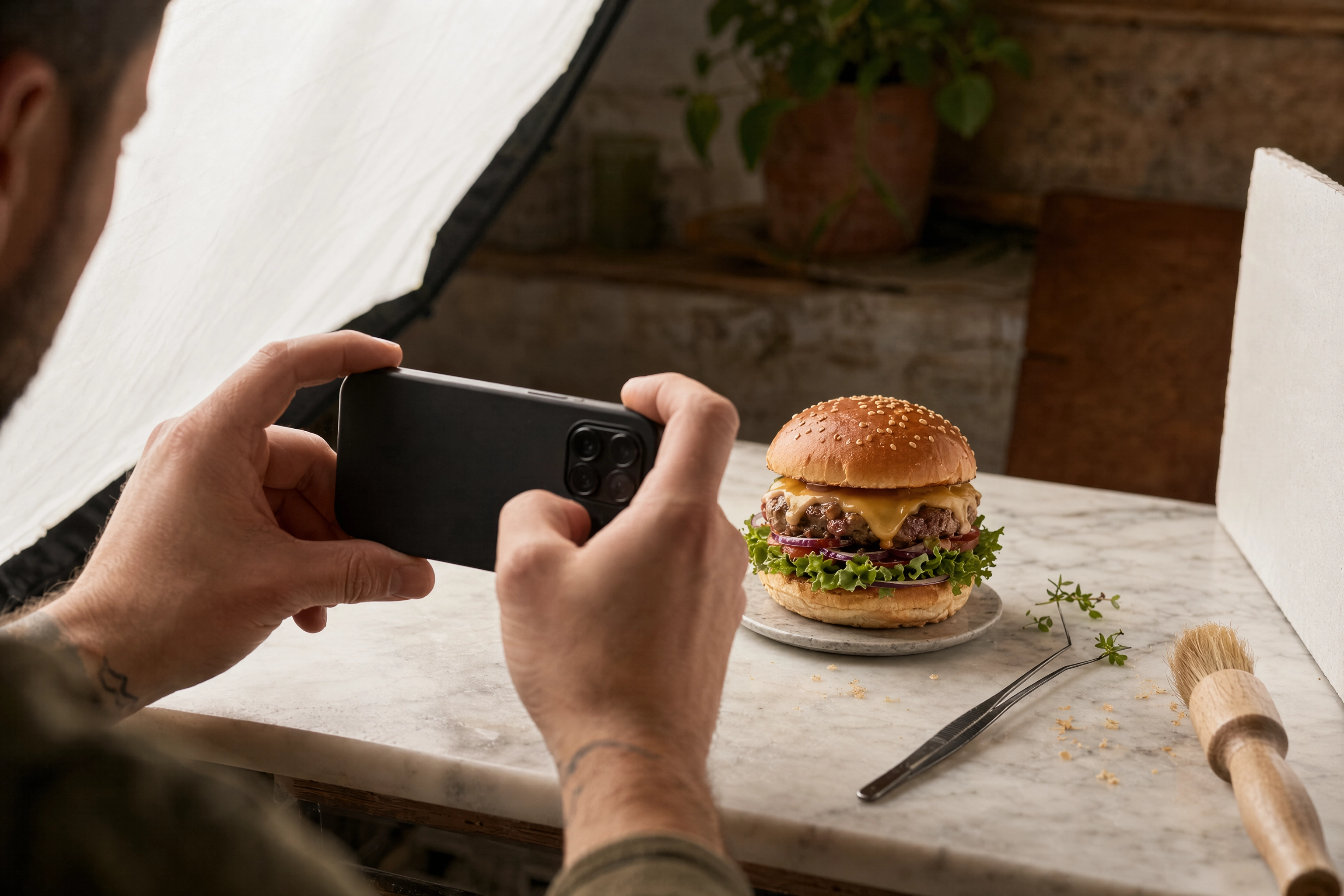 Hands using a phone to photograph a styled burger on a small studio set to create a delivery menu thumbnail
Now stack the multi-brand reality on top. Four virtual brands with 20-item menus is 80 distinct, on-brand, spec-compliant photos — and they can't look like siblings, or you trip the "same kitchen, five names" alarm. The traditional options don't fit:
- A professional photographer runs $300–$1,400+ per session and needs rebooking every time you change the menu.
- The free Premier photoshoot is a great start but typically caps around 20 item photos — nowhere near a multi-brand catalog.
- DIY phone snaps are free and usually look it.
This is the gap AI food photography was built to close. You photograph the real dish on a phone, run it through a delivery-optimized style, and get a 4K, menu-ready image in about 90 seconds — one that already meets those dimensions. Because it enhances your actual food instead of inventing a fake plate, it stays on the right side of the accuracy rules. And because you can give each concept its own look, you can build a distinct photo set for every virtual brand without four separate shoots — then re-shoot the moment a seasonal item changes, for a few cents instead of another day rate. FoodShot AI is purpose-built for this workflow, with delivery-app-ready menu photos and a commercial license on paid plans.
The uncomfortable truth of this business is that your food does 0% of the persuading until the photo has already won the tap. Fix the photos first.
Frequently Asked Questions
Is a ghost kitchen the same as a virtual brand on DoorDash?
No. A ghost kitchen is the physical, licensed kitchen where food is cooked for delivery. A virtual brand — a DoorDash virtual restaurant — is the concept that appears on the app: a name, menu, and photo set. One ghost kitchen can host up to 10 virtual brands at the same address.
How many virtual brands can I run from one kitchen on DoorDash?
DoorDash allows no more than 10 virtual brands per store address, with exceptions for established commissary operators or written approval. Every brand must also meet the platform's menu-differentiation and quality requirements, so the practical limit is often lower than 10.
How much does DoorDash charge a ghost kitchen?
DoorDash charges 15% commission on delivery for Basic, 25% for Plus, and 30% for Premier, plus a flat 6% on pickup across all plans. Orders placed through its own Online Ordering (your direct site) are commission-free — you pay only card processing of about 2.9% + $0.30.
Do I need a commercial kitchen to run a ghost kitchen on DoorDash?
Yes. DoorDash ghost kitchen requirements state you must operate from a licensed commercial kitchen. Residential kitchens, including those under Cottage Food permits, are not allowed. You can rent a commissary or shared kitchen, or run your brand from an existing restaurant kitchen.
Does DoorDash tell customers when a restaurant is a ghost kitchen?
Yes. The app applies a virtual kitchen badge to brands with no brick-and-mortar location, so customers know they're ordering from a delivery-only concept. You can't hide it — which is exactly why a credible name, menu, and photo set matter so much.
What food works best for a DoorDash-only ghost kitchen?
Food that holds heat and texture for 20–30 minutes: pizza, fried chicken and wings, burgers with vented packaging, rice and grain bowls, tacos with sturdy tortillas, curries, and stews. Avoid fries, cream-sauce pasta, dressed salads, and most fried seafood — or fix them with smarter packaging and sauces on the side.
Can I use the same photos for two different virtual brands?
You shouldn't. DoorDash requires meaningful differentiation between virtual brands, and customers distrust listings that obviously share one kitchen. Each brand needs its own distinct look — different styling, plating, and mood — which is far easier when you can generate a unique photo set per brand instead of booking separate shoots.
The Bottom Line
Running a DoorDash ghost kitchen is one of the cheapest ways to put a food brand in front of the largest delivery audience in the country — DoorDash processed 933 million orders in the first quarter of 2026 alone, per its Q1 2026 results. Getting listed takes a licensed kitchen and an afternoon. Protecting your margin takes discipline about tiers, packaging, and a direct channel.
But the thing that actually decides whether you survive is the smallest: a thumbnail. With no storefront to walk into, your listing photo is the brand — and for a multi-brand operator, making every concept look like a real, distinct restaurant is the whole game. Nail the setup, respect the commission math, then spend your energy where customers make the decision: on the picture.