How Much Does Uber Eats Charge Restaurants on a $30 Order?
 Ali Tanis19 min read
How much does Uber Eats charge restaurants? In the US, a commission (Uber calls it a Marketplace Fee) of 20%, 25% or 30% of the food subtotal on every delivered order, depending on whether you're on the Lite, Plus or Premium plan, and 7% on pickup orders (10% until Uber validates your pickup prices). On a $30 delivery that is $6, $7.50 or $9, with card processing included. We checked every rate on Uber's merchant pricing page on November 2, 2026, then ran one $30 order and a $10,000 month through each plan. Once you pick a plan, the commission is fixed. What you still control is the channel mix (marketplace delivery, pickup or your own online ordering), your delivery menu prices and how many people who open your listing actually order, which is where your delivery app menu photos earn their keep.
Quick Summary: Uber Eats keeps $6 (Lite), $7.50 (Plus) or $9 (Premium) of a $30 delivered order in the US, and $2.10 of a $30 pickup with validated in-store pricing. On a $10,000 month with $300 of ads, restaurants net $7,895, $7,342.50 or $7,145. Plus has to sell about 12% more than Lite, and Premium about 18% more, just to match Lite's profit.
How Much Does Uber Eats Charge Restaurants in 2026?
Uber Eats charges US restaurants a Marketplace Fee of 20% of the subtotal on Lite, 25% on Plus and 30% on Premium for orders its couriers deliver, 15% when your own staff deliver, and 7% on pickup orders once Uber has validated that your pickup prices match your in-store prices. Card processing is included, and the US pricing page lists no monthly or sign-up fee.
Uber Eats US plans, checked on Uber's merchant pricing page on November 2, 2026
| Plan | Delivery by Uber couriers | Pickup | Uber One members | What the higher rate buys |
|---|---|---|---|---|
| Lite | 20% | 7% (10% if not validated) | Not eligible, no option to pay in | Shown when customers search for your store |
| Plus | 25%, or 30% on Uber One orders | 7% (10%) | Included for an extra 5 points | 0% for the first 30 days, more placement, a lower customer Delivery Fee, ads and offers |
| Premium | 30% | 7% (10%) | Included at no extra cost | 0% for 30 days, lowest Delivery Fee, ads matched up to $100 a month, a menu photo package Uber values at $250+, fee refunds in low-order months |
| Self-delivery | 15% with your drivers, 25% if an Uber courier covers | 7% (10%) | Certain benefits apply | Shown on the homescreen, in search and in categories |
The Uber Eats commission rate applies to the menu price of the items (Uber's terms call it the Retail Price), before any discount you fund and excluding sales tax. The Delivery Fee and Service Fee customers pay at checkout sit on top of their bill and don't come out of your payout. Uber says the Marketplace Fee covers couriers, demand programs such as Uber One delivery discounts, payment processing and insurance.
What changed on March 11, 2026
Uber raised its US commission rates on March 11, 2026, according to its help center notice on the change. Lite went from 15% to 20%, pickup from 6% to 7% (or 10% without validated pricing), and Plus started billing Uber One member orders at 30%. Premium stayed at 30%. Restaurants on a negotiated custom delivery rate had 3% added, capped at 30%. If you joined on Lite before March and sit outside the capped markets below, every delivered order now costs a third more than it did.
The 13 markets where Lite is 15%
Local fee-cap laws keep Lite at 15% on delivery in 13 places Uber lists: New York City, New Jersey, Los Angeles, Beverly Hills, Palm Springs, San Francisco, Alameda County, Seattle, Spokane, Portland, Washington DC, Minneapolis and Philadelphia. The fine print differs by city:
- New York City: 15% delivery, 5% pickup, plus 3% for card processing.
- New Jersey and Palm Springs: 15% delivery, 5% pickup.
- San Francisco and Alameda County: 15% on both delivery and pickup.
- Portland: 15% delivery, 4% pickup, plus payment processing.
- Philadelphia: 15% in total, split into 10% for delivery and 5% for other fees.
Your actual rates are in Uber Eats Manager under Payments, then Payouts, in the Uber Fees section.
What Does Uber Eats Take From One $30 Order?
On a $30 marketplace order delivered by a courier, Uber Eats keeps $6 on Lite, $7.50 on Plus and $9 on Premium, and a Plus order from an Uber One member costs $9 too. Pickup is the cheap channel at $2.10 with validated in-store pricing. Here is every way a $30 ticket can reach a customer, per order:
| Order type ($30 subtotal) | Uber takes | You keep | Effective rate | Delivery price that nets $30 |
|---|---|---|---|---|
| Lite, delivered | $6.00 | $24.00 | 20% | $37.50 |
| Plus, delivered | $7.50 | $22.50 | 25% | $40.00 |
| Plus, Uber One member | $9.00 | $21.00 | 30% | $42.86 |
| Premium, delivered | $9.00 | $21.00 | 30% | $42.86 |
| Self-delivery, your driver | $4.50 | $25.50 before driver pay | 15% | $35.29 |
| Self-delivery, Uber courier backup | $7.50 | $22.50 | 25% | $40.00 |
| Pickup, validated pricing | $2.10 | $27.90 | 7% | Keep at $30 |
| Pickup, not validated | $3.00 | $27.00 | 10% | Keep at $30 |
| Online ordering via Webshop, pickup | $1.04 | $28.96 | 3.5% | Keep at $30 |
The last column is the menu-price markup line: what a $30 in-store dish would have to cost on your delivery menu for you to net the same $30. The formula is in-store price ÷ (1 − fee rate), so Lite needs a 25% markup, Plus 33% and Premium 43%. You don't have to pass on the whole fee: a 15% markup on Plus lifts the dish to $34.50 and nets you $25.88. Pickup stays at $30 because pickup prices above in-store prices cost you the 7% rate.
Against DoorDash, the commission gap is at the entry tier. DoorDash Basic takes 15%, so the same $30 order costs $4.50 there against $6 on Uber Eats Lite, while the 25% and 30% tiers match. Our breakdown of DoorDash fees for restaurants runs this ticket through all three big apps, and DoorDash vs Uber Eats vs Grubhub compares reach and features beyond price.
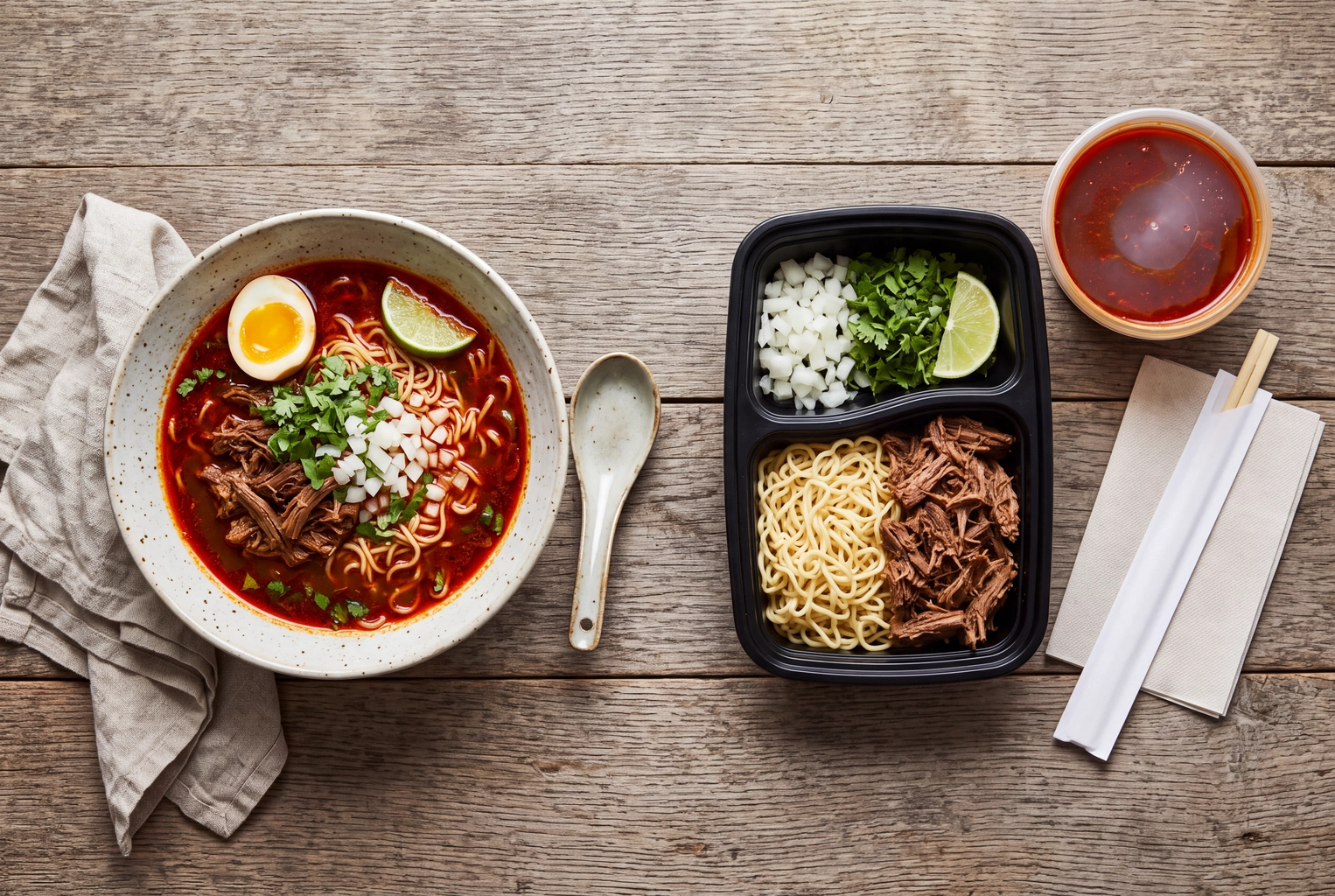 Birria ramen plated for dine-in beside the same dish packed for delivery, the menu markup restaurants weigh on Uber Eats
Add a $5-off offer and the cost climbs to 40-50%
A restaurant-funded "$5 off a $30 order" pushes the cost of a Lite order to about 40% of the menu price and a Premium order to about 50%. Uber takes its Marketplace Fee from the pre-discount $30, per its marketing tool FAQ, and Uber's US merchant terms, last modified June 2, 2026, add a $0.99 Offer Redemption Fee to each order where a customer redeems an offer you fund.
| Plan | Fee on $30 | Your discount | Offer fee | Total cost | You keep |
|---|---|---|---|---|---|
| Lite | $6.00 | $5.00 | $0.99 | $11.99 | $18.01 |
| Plus | $7.50 | $5.00 | $0.99 | $13.49 | $16.51 |
| Premium | $9.00 | $5.00 | $0.99 | $14.99 | $15.01 |
The FAQ still says a promotion carries no additional fee, which contradicts the terms, so check the "Special offer" row on your weekly payment statement after your first campaign. Offers can still pay: Uber says a global holdout test it ran in June 2025 found offers can drive 23% more orders and a 15% lift in sales, even after discounts. Set a minimum subtotal so the discount lands on bigger baskets.
A $10,000 Month Through Each Uber Eats Plan
On $10,000 of monthly Uber Eats sales, a restaurant nets $7,895 on Lite, $7,342.50 on Plus and $7,145 on Premium after the Marketplace Fee, pickup fees and $300 of ads, an effective rate of 21.1%, 26.6% and 28.6%. Self-delivery leaves $8,320, but before you pay a single driver.
The assumptions, so you can swap in your own numbers:
- A $30 average ticket: about 283 delivered orders ($8,500) and 50 pickup orders ($1,500).
- Pickup prices validated, so pickup costs 7%.
- On Plus, 30% of delivery sales come from Uber One members. Uber doesn't publish the share; your payment report shows yours.
- $300 a month of ads on every plan. Premium's match returns $100 of that as ad credit, so we count its cash cost as $200.
- Food and packaging at 32% of menu price, or $3,200.
| Per month | Lite | Plus | Premium | Self-delivery |
|---|---|---|---|---|
| Marketplace Fee on delivery | $1,700 | $2,252.50 | $2,550 | $1,275 |
| Pickup fees (7%) | $105 | $105 | $105 | $105 |
| Ads, cash | $300 | $300 | $200 | $300 |
| Card processing | Included | Included | Included | Included |
| Total paid | $2,105 | $2,657.50 | $2,855 | $1,680 + drivers |
| You net | $7,895 | $7,342.50 | $7,145 | $8,320 − drivers |
| Effective rate | 21.1% | 26.6% | 28.6% | 16.8% + drivers |
| Left after food and packaging | $4,695 | $4,142.50 | $3,945 | $5,120 − drivers |
Two lines move the result most. On Plus, every extra 10 points of Uber One sales adds $42.50 a month here. And an unvalidated pickup menu turns the $105 pickup line into $150, or $540 more a year.
 Manager counting a month of takeout bowls, lids and bags in restaurant dry storage, the packaging behind a $10,000 Uber Eats month
How much more Plus and Premium have to sell
To leave the same $4,695 as Lite after food and packaging, Plus needs about $11,245 of monthly sales, 12% more, and Premium about $11,810, 18% more. That only ties Lite; profit growth starts above it. In orders, Lite's 333 become roughly 375 on Plus and 394 on Premium.
Whether that's realistic depends on what the higher plans unlock for you. Plus and Premium put you in front of Uber One members, who the company says order twice as much as non-members, but its footnote says that figure is global, across rides and food, for October to December 2025, not a restaurant number. Premium also refunds your Marketplace Fees in any of your first six months with fewer than 20 orders, as long as you stay online at least 95% of your listed hours and keep cancellations under Uber's limit. Run your own dish costs through our food cost calculator before you trust the 32%.
Which Uber Eats Plan Should You Pick?
Pick Lite if most of your Uber Eats orders come from people who already know your name, Plus if you need new customers to find you, and Premium only if its placement, Uber One reach and perks will bring roughly 18% more sales. Self-delivery fits restaurants that already pay drivers.
| Your situation | Best fit | Why |
|---|---|---|
| Regulars search for you by name | Lite | Cheapest courier rate, and search visibility is all you need |
| Brand-new store with no reviews | Premium at launch, then reassess | 0% for 30 days, fee refunds in months under 20 orders, photo package |
| Suburb where Uber One members order a lot | Plus or Premium | Lite stores can't serve members at all |
| You already employ drivers (pizza, takeout) | Self-delivery | 15%, and Uber passes the customer Delivery Fee you set to you |
| You're in one of the 13 capped markets | Lite | 15% delivery matches the self-delivery rate without paying drivers |
| Office lunches and party trays | Any plan, catering channel | Uber's terms list a 20% catering fee, below Plus and Premium |
The help center says you can switch packages at any time through support, so treat the choice as a monthly test rather than a commitment. Run a plan for a full month, compare order counts in Uber Eats Manager against the month before, and move back if the math doesn't hold. Our guide on how to get more orders on Uber Eats covers what to do with the extra visibility once you're paying for it.
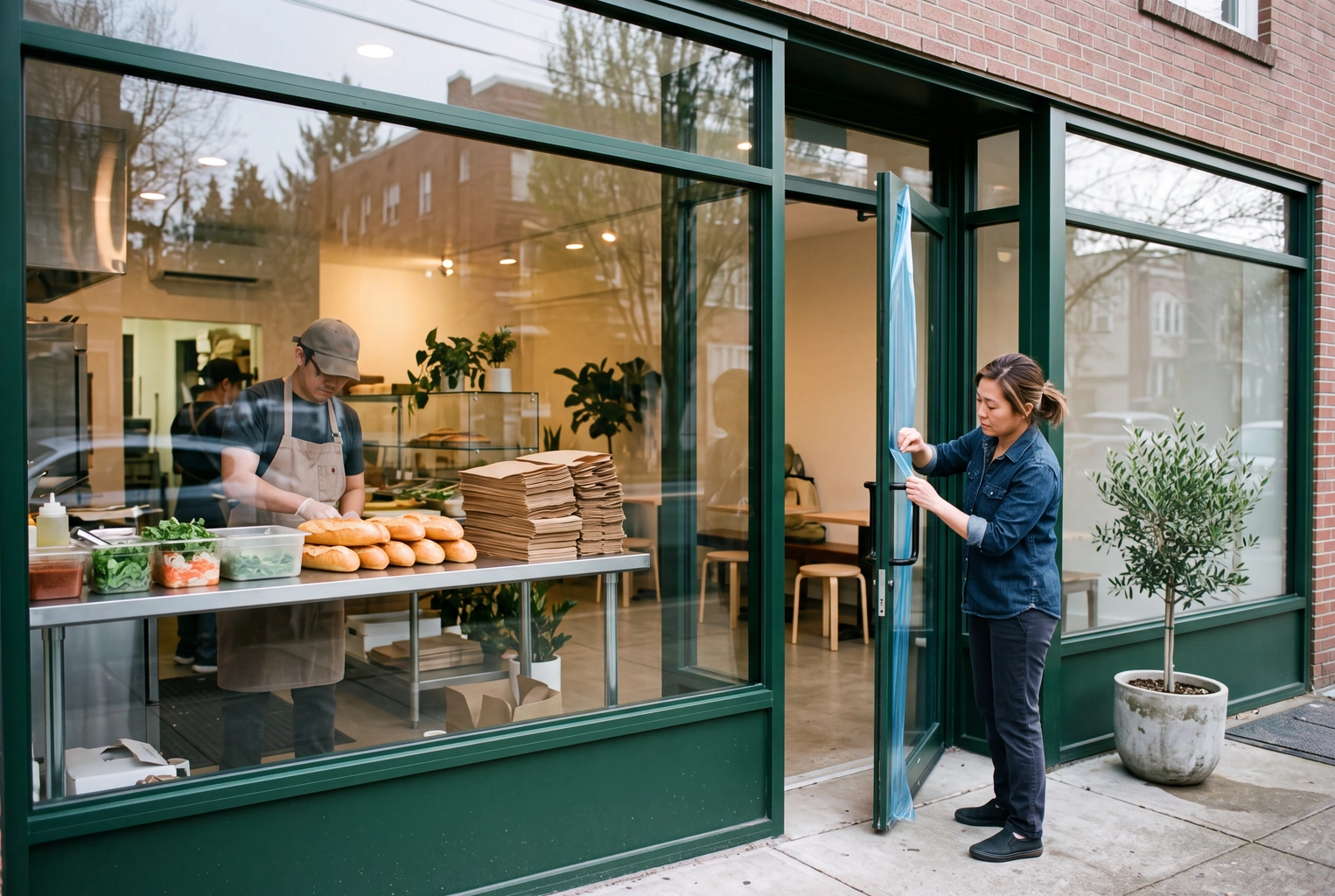 Owner opening a new Vietnamese sandwich shop in its first week, when Uber Eats Premium launch perks matter most
Why Your Pickup Fee Might Be 10%, Not 7%
Pickup costs 7% only after the platform has validated that your pickup prices are no higher than your in-store prices. Until then it is 10%. On the $1,500 of monthly pickup sales in our example, that gap is $45 a month for a one-time upload.
The steps, from the help center:
- Sign in to Uber Eats Manager, choose Menu Pricing, then Upload.
- Upload your in-store menu as a JPG, PNG or PDF file, or a link, and submit it.
- In the Menu tab, set each item's Pickup price (the right-hand column) to match the in-store price. Delivery prices can stay higher.
- Uber reviews submissions on a rolling basis and applies the 7% rate within 10 days.
Restaurants on a Toast integration are validated automatically. Two catches sit in the terms. You have to send menu updates at least three business days before new in-store prices go public. And if your prices stop matching, Uber can move you to 10% for the rest of your contract, backdated to the date of non-compliance. New restaurants get the 7% rate for a 30-day grace period from their first order.
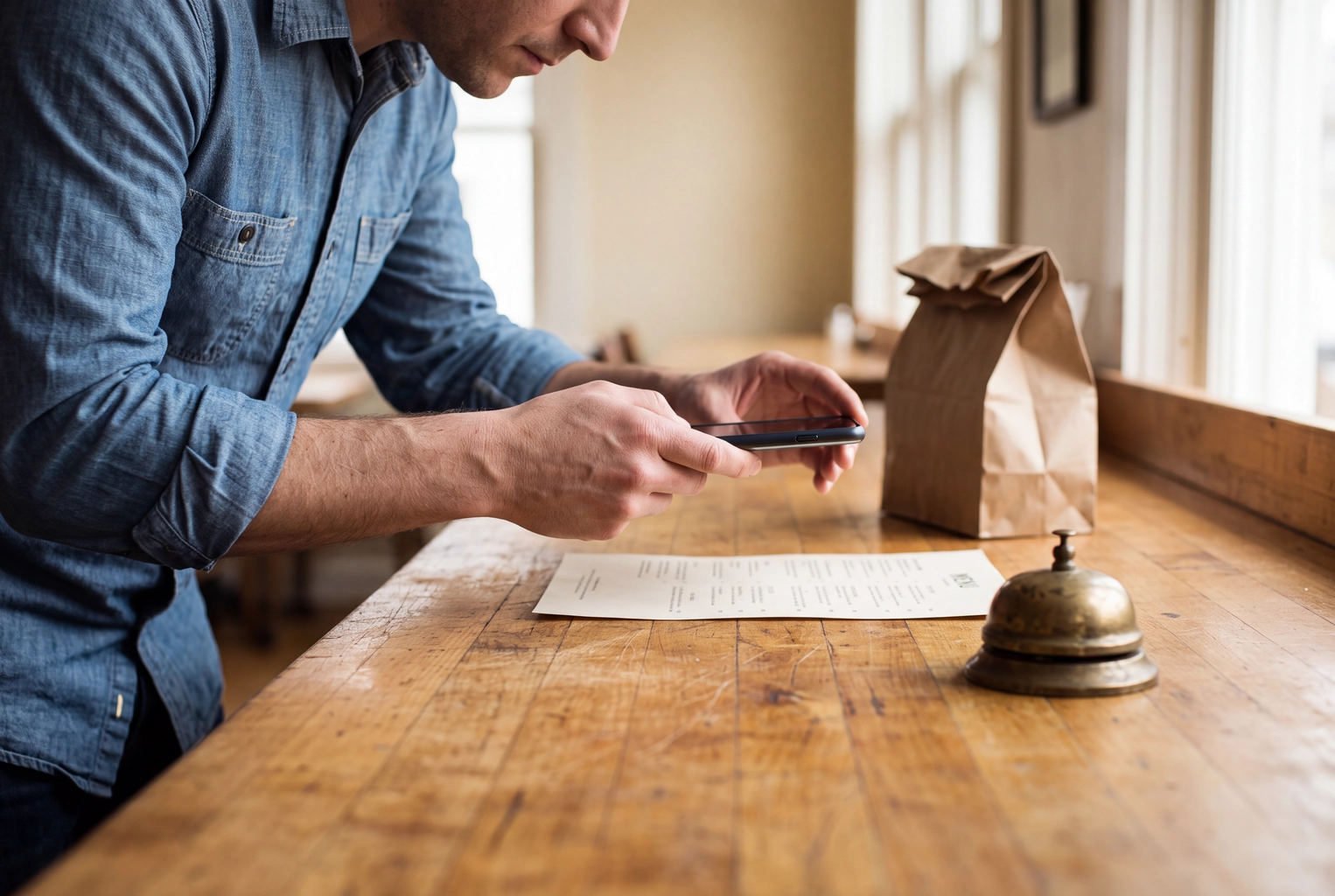 Manager photographing the printed in-store menu to upload to Uber Eats Manager and validate pickup pricing at 7%
When Pickup, Self-Delivery or Uber Direct Beat Marketplace Delivery
Marketplace delivery is the most expensive way to sell a $30 order. Pickup at 7% always beats it. Self-delivery beats Lite only if each drop costs you less than $1.50 plus any delivery fee you charge, and Uber Direct, Uber's courier service for orders placed on your own channels, roughly ties Premium on a $30 order and beats Lite above about $47.
Uber Direct sends an Uber courier to orders customers place on your website, ordering app or phone line, from $7.99 per delivery, with no Marketplace Fee and no listing on the marketplace required. Webshop, Uber's online ordering page for your own site, costs 2.5% + $0.29 per order. Together, a $30 order costs $0.75 + $0.29 + $7.99 = $9.03 if you absorb the whole delivery cost.
| Order subtotal | Lite (20%) | Plus (25%) | Premium (30%) | Webshop + Uber Direct from $7.99 |
|---|---|---|---|---|
| $20 | $4.00 | $5.00 | $6.00 | $8.78 |
| $30 | $6.00 | $7.50 | $9.00 | $9.03 |
| $45 | $9.00 | $11.25 | $13.50 | $9.41 |
| $60 | $12.00 | $15.00 | $18.00 | $9.78 |
The break-even points are $47.31 against Lite, $36.80 against Plus and $30.11 against Premium. Charge the customer a $2.99 delivery fee and they fall to $30.23, $23.51 and $19.24. In practice:
- Under about $25: marketplace delivery is cheaper unless you charge a delivery fee.
- Large and catering orders: a flat courier fee beats any percentage.
- Weekly regulars: move them to direct ordering on your own site with a bag insert. Their first order came from the platform; the tenth doesn't have to.
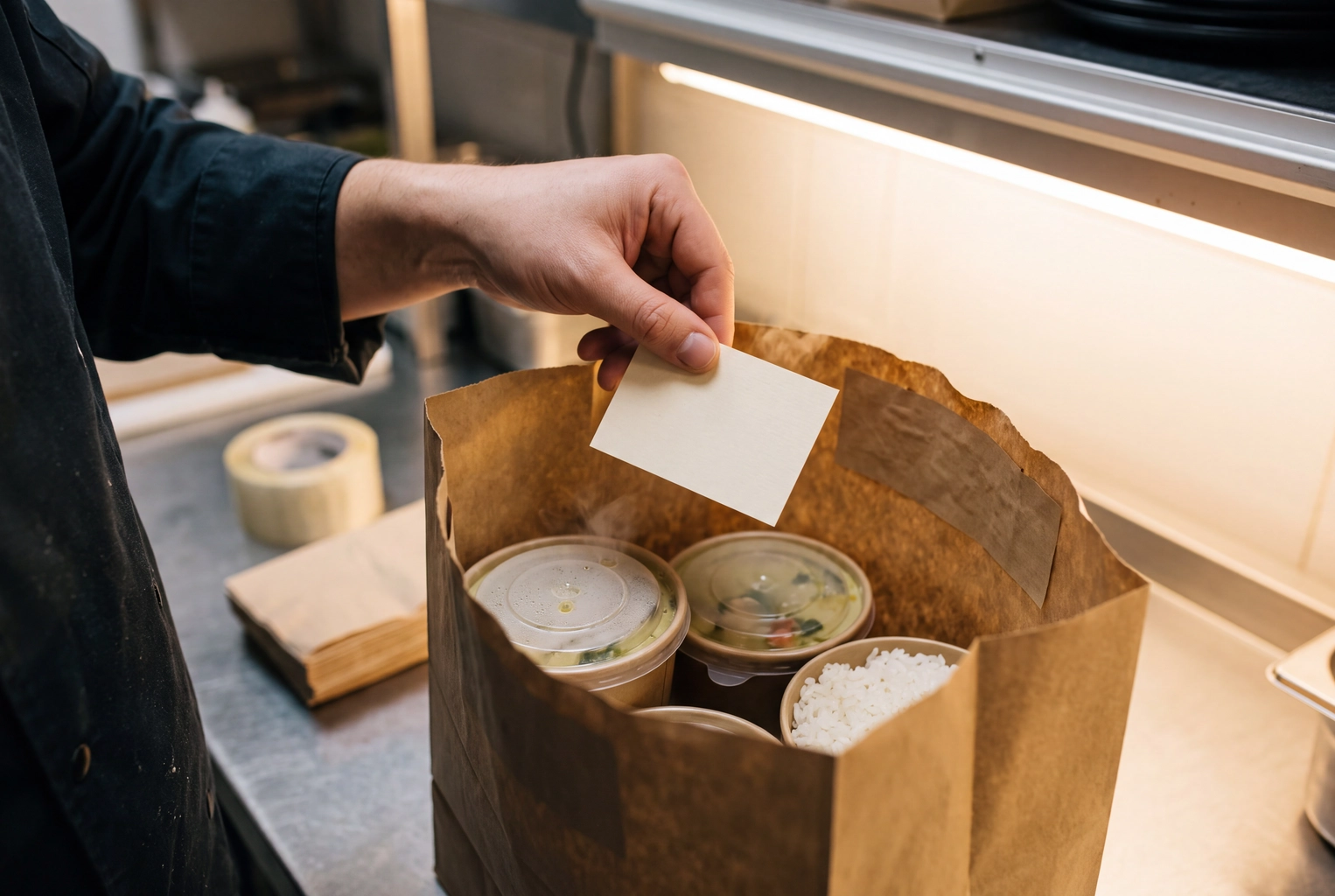 Cook slipping a card into a takeout bag to move Uber Eats regulars to direct ordering on the restaurant's own site
Treat $7.99 as Uber's floor, not your quote. Pricing depends on distance and market, so ask for the rate for your address. And your own channel only works for people who already know you; Uber Eats is still how strangers find you.
Self-delivery saves 5 points against Lite, or $1.50 on a $30 order, and 15 points against Premium, or $4.50. You set the customer Delivery Fee and Uber passes it to you, though Uber One members must be charged $0. A driver paid $18 an hour who completes two deliveries an hour costs $9 a drop before mileage, far more than the lower rate saves. It works when drivers are already on shift for phone orders, as they are at many pizzerias.
Other Charges on an Uber Eats Statement
Beyond the commission, six optional or situational charges can show up, all listed in Uber's US merchant terms. Only the ads appear on the pricing page:
- Tablet: $4.99 a week for a Wi-Fi tablet, $6.99 with a data plan and $8.99 with data and a printer, or about $22 to $39 a month per device. A POS integration avoids it.
- Ads: cost-per-click Sponsored Listings with a daily or weekly budget you set, shown as Ad spend on your statement.
- Offer redemption: $0.99 per order where a customer redeems an offer you fund.
- Catering: 20% on catering orders delivered by Uber couriers, 15% self-delivered and 10% picked up. This replaces your plan rate on those orders.
- Dine Out: 0% until January 1, 2027, then 7% on orders customers eat at your restaurant through the app.
- Sales tax on fees: Uber quotes its fees before sales tax and adds it where applicable.
Uber charges nothing for access to Uber Eats Manager or the platform's merchant tools. For channel-by-channel ideas beyond fees, see how to increase restaurant delivery sales.
How Uber Eats Fees Differ Outside the US
Outside the US, Uber Eats uses different plans and rates, and some countries still charge an activation fee. These are the published rates on Uber's Canadian, UK and Australian pricing pages on November 2, 2026; your own contract may differ.
| Country | Delivery | Self-delivery | Pickup | Notes |
|---|---|---|---|---|
| Canada | 20% Lite, 25% Plus, 30% Premium | 15% | 10% with validated pricing | Plus adds 5% on Uber One orders; Webshop online ordering 2.9% |
| United Kingdom | 30%, or 33% for Uber One members | 13% | 13% | £650 activation fee; rates exclude VAT |
| Australia | 30% | 16% | 8% | Uber Direct priced as a fixed fee plus distance |
With the Commission Fixed, Conversion Is the Lever Left
Once you've picked a plan, the commission is set; what still moves is how many people who open your store on the platform actually order. The company puts a number on menu content: US and Canada merchants who added photos and descriptions to at least 70% of their items within their first seven days earned on average $330 more in sales per week than merchants below 70%, according to Uber's merchant site. That's a comparison between groups, not a controlled test, but $330 a week is about $1,430 a month in sales.
Gaps now cost you twice. Uber lets customers submit photos for items without one, then selects and enhances the best. If you don't fill the gap, a stranger's phone shot might.
Your options for item photos:
- Premium's photo package, which Uber values at $250 or more. Whether it covers your whole menu is covered in our look at the Uber Eats photoshoot.
- A photographer, which suits a launch but not the dish you add next month.
- Your phone plus FoodShot. Shoot the real dish, then fix the light, background and plate surface: about a minute per photo, 2K (2048 px) output, 200+ styles, from $15 for 25 photos a month on the FoodShot pricing page.
Keep the food honest: our guide to the AI edits Uber Eats allows shows where the line sits, and the Uber Eats photo requirements list the sizes. Virtual brands and ghost kitchens that exist only on the apps feel this most, because the listing is the whole storefront.
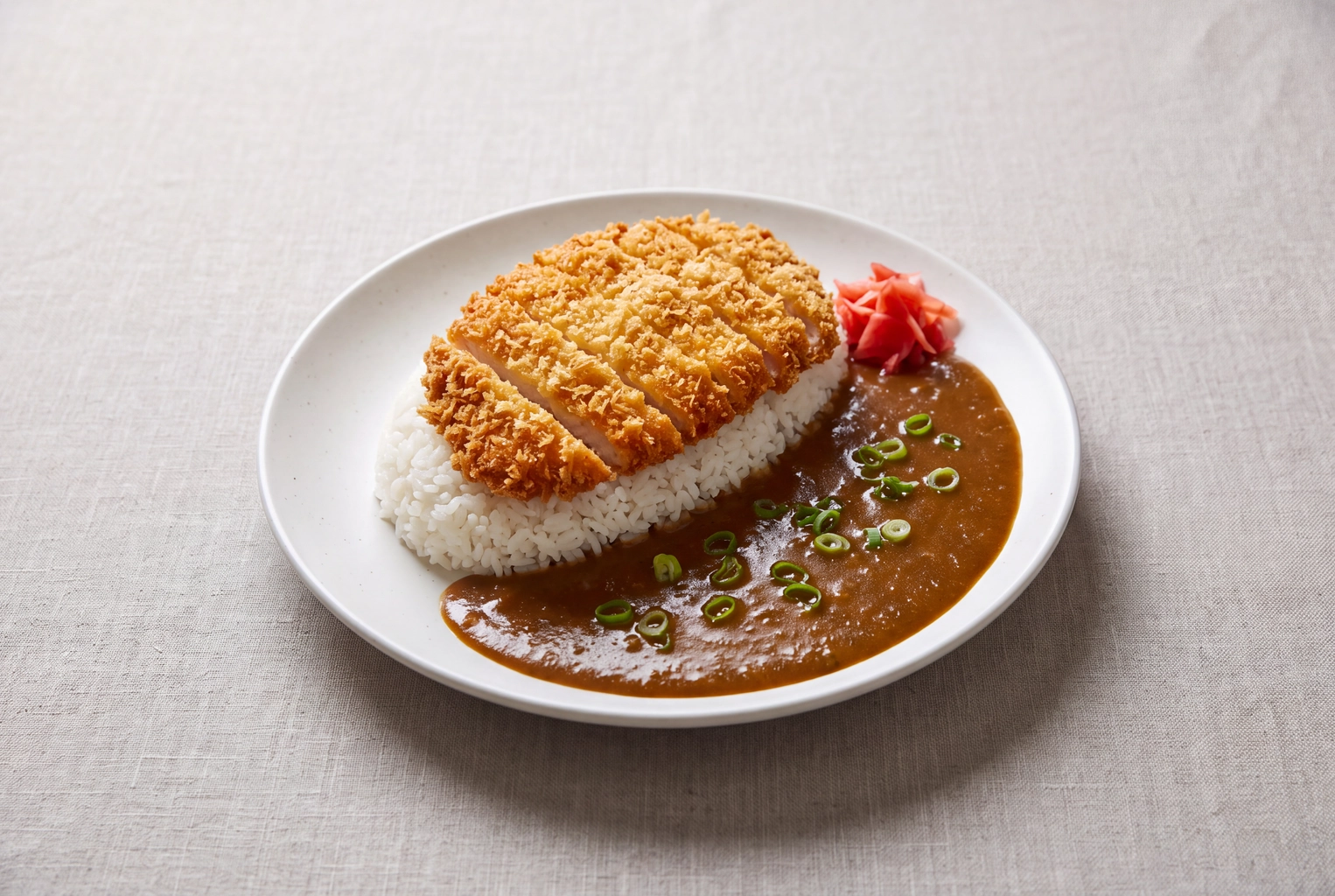 Chicken katsu curry centered on a white plate in soft daylight, a clean Uber Eats menu photo that helps listings convert
Frequently Asked Questions
How much does Uber Eats take from a $30 order?
$6 on Lite, $7.50 on Plus and $9 on Premium for a delivered order in the US, and $9 on Plus when the customer is an Uber One member. A $30 pickup costs $2.10 with validated in-store pricing or $3 without. Card processing is included.
Does Uber Eats charge restaurants for card processing?
Not on standard US marketplace orders, because Uber says the Marketplace Fee covers payment processing. The exceptions are capped markets such as New York City, where Lite adds 3% for card processing, and Portland. Online ordering through Webshop on your own site carries 2.5% + $0.29.
Does Uber Eats charge restaurants a monthly or sign-up fee?
Uber's US pricing page lists no monthly subscription or activation fee for Lite, Plus, Premium or Self-delivery. Recurring costs come only from what you opt into: a rented tablet at $4.99 to $8.99 a week, ads and offers. The UK is different, with a £650 activation fee.
Is Uber Eats cheaper than DoorDash for restaurants?
Not at the entry tier. DoorDash Basic charges a 15% commission against 20% on Uber Eats Lite, a $1.50 difference on a $30 order, except in the 13 US markets where Lite is also 15%. The 25% and 30% tiers match, but Uber Eats Plus bills Uber One orders at 30%, and Uber's 7% pickup rate is a point above DoorDash's 6%.
Can restaurants charge higher prices on Uber Eats?
Yes, on delivery. You set item prices in Uber Eats Manager, and a $30 dish has to be listed at $37.50 on Lite, $40 on Plus or $42.86 on Premium for you to net $30. Keep pickup prices at in-store levels, or pickup rises from 7% to 10%. Our menu pricing formulas help set a delivery price per dish.
Can I switch Uber Eats plans?
Yes. Uber's help center says you can switch to a different package, and commission rate, at any time by contacting support. New stores on Plus or Premium pay 0% for their first 30 days on the platform, which makes the higher plans easiest to test at launch.