Ghost Kitchen Menu Planning: Design a Menu That Sells Online
 Ali Tanis23 min read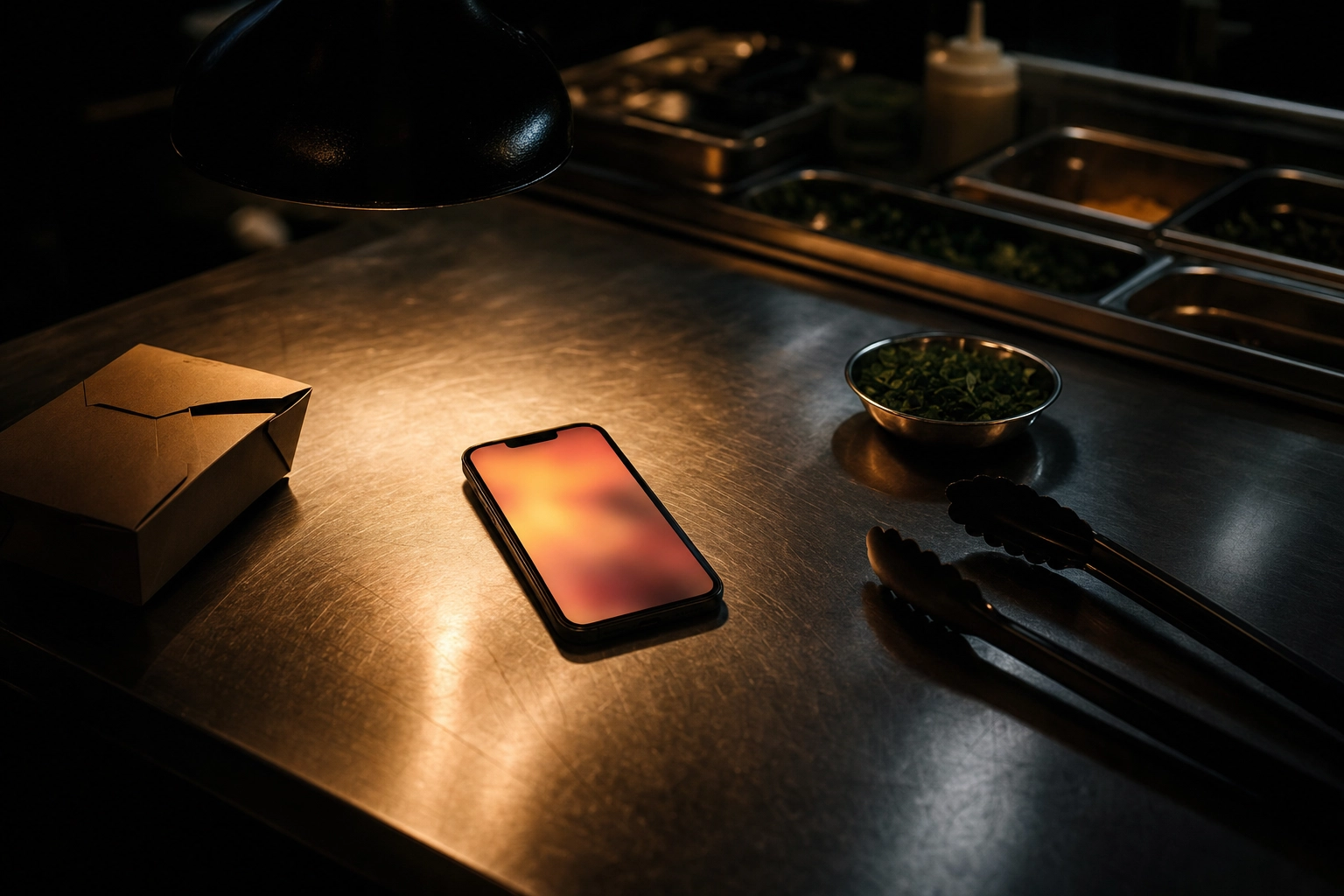
Most ghost kitchen menus fail for the same reason: they're treated like restaurant menus that just happen to live online. They're not. A ghost kitchen menu is a digital storefront — a few thumbnails and 200-character blurbs competing against dozens of cuisines on a 6-inch phone screen. There's no ambiance to set the mood, no server to upsell the special, no smell of garlic drifting across the dining room. Every conversion has to happen through a photo and a sentence.
That changes everything about how you plan the menu.
This guide is the tactical playbook we wish existed when we first started shooting menus for ghost kitchens. It pulls from delivery-platform research, real virtual brand operators, and 2026 data on what's actually working on DoorDash, Uber Eats, and Grubhub right now. No fluff, just the decisions that move the needle.
Quick Summary: A high-performing ghost kitchen menu has 15–25 tightly engineered items, every item shot to platform spec, descriptions made for mobile, and prices padded 10–20% above dine-in to survive 30–40% effective platform fees. Photography drives the largest single lift — professional images can raise menu conversion 25–70% across the major delivery apps.
Smartphone glowing on a dark commercial kitchen counter representing a ghost kitchen menu as a digital storefront
Why a Ghost Kitchen Menu Isn't Just a Restaurant Menu Online
A dine-in menu can lean on the room. The candle, the smell of bread, the server saying "the lamb tonight is excellent." A ghost kitchen has none of that. The customer is scrolling at 11:42 p.m. in bed, comparing your jerk chicken to four other jerk chicken listings, and deciding in roughly six seconds.
That reality forces five shifts in how the menu has to work:
- No ambiance. The photo is the dining room. If it looks like a cafeteria tray, you're done.
- No upselling. There's no server to say "add a side." Upselling has to be baked into the menu structure with bundles, combos, and "add to your order" cross-sells.
- Tiny real estate. Each item gets roughly 60×60 to 200×200 pixels of thumbnail and one line of description on the listing surface. Anything beyond that requires a tap, and most people don't tap.
- Brutal comparison. A customer searching "pizza near me" sees your menu next to fifteen other pizza menus, ranked partly by photo quality and partly by paid promotion. Your menu isn't competing with the restaurant next door — it's competing with every restaurant within a 30-minute drive of the delivery driver.
- Data over instinct. Delivery platforms tell you exactly what's working: item-level conversion, repeat rate, basket attachment. Menu planning becomes a measurement loop, not a debate at the chef's table.
That last point is the real unlock. A ghost kitchen menu is the only restaurant menu in history where you can A/B test a photo, see the conversion lift on a dashboard, and decide whether to keep it — all within 14 days. The data will help you make decisions that used to take seasons of trial and error in a dine-in setting.
Keep the Ghost Kitchen Menu Small: 15–25 Items Maximum
The biggest mistake new ghost kitchen operators make is porting their full dine-in menu — 60 items, eight categories, three protein options each — and expecting it to work online. It doesn't. The math, the ops, and the customer psychology all push toward a tighter menu.
Why smaller wins on delivery:
- Decision fatigue is real. Research on menu choice consistently shows that beyond a certain point, more options reduce orders. Customers default to familiar items or abandon the cart entirely.
- Speed beats variety. Delivery platforms rank restaurants partly on prep time and order acceptance rate. A tight menu means faster prep, fewer errors, and higher platform ranking.
- Inventory waste shrinks. Fewer ingredients, more cross-utilization, less spoilage. A 15-item menu built around 8–10 shared ingredients beats a 40-item menu with 35 SKUs.
- Quality stays consistent. Every cook can master 18 items. No one can master 60.
The 15–25 item sweet spot in practice:
A balanced ghost kitchen menu typically structures like this:
- 6–10 hero items (the actual revenue drivers — what people search for and order)
- 4–6 variants or builds (sauces, proteins, "make it a combo" upgrades)
- 3–5 sides (fries, slaw, a vegetable, a starch)
- 2–4 drinks and desserts (the easy attachment items that lift average ticket)
That gets you to 15–25 SKUs, almost all sharing prep and ingredients. Bigger chains running ghost kitchens like Sam's Crispy Chicken or Fuku keep their menus deliberately tight for exactly this reason — every additional SKU is operational drag.
Cut bottom performers every 60 days. Platform analytics make this painless. If an item gets fewer than 5% of orders and has a conversion rate below the menu average for two months, kill it. That ingredient inventory and prep time goes toward promoting something that converts.
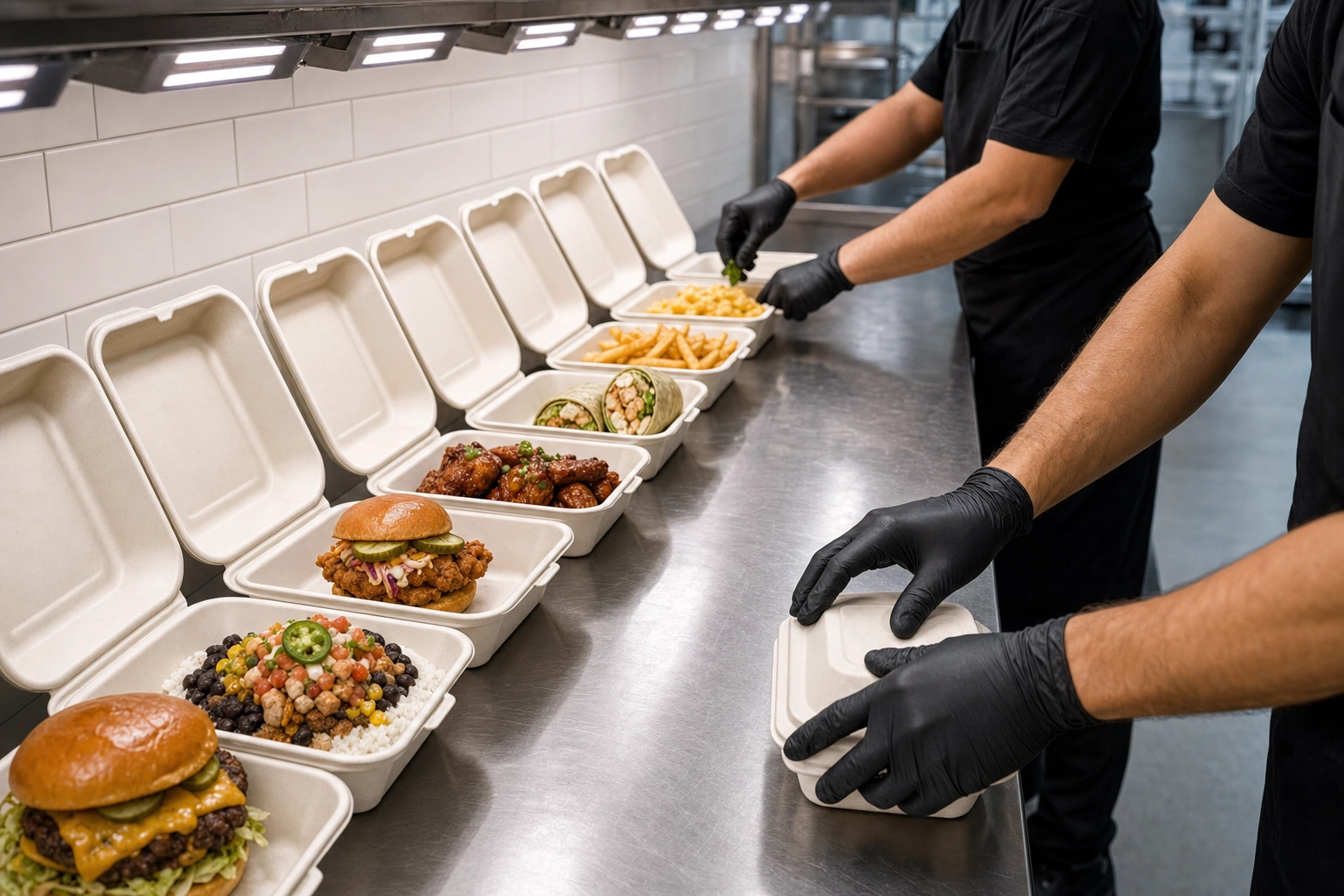 Focused commercial kitchen prep line with a small menu of delivery-ready dishes lined up in takeout containers
Menu Engineering for Delivery: What to Put on (and Keep Off) the Menu
A delivery menu is engineered around one brutal constraint: the food has to survive 20–30 minutes inside a heat bag, jostling in a car, before someone eats it. That filter alone disqualifies a huge chunk of restaurant cooking.
Foods that travel well (and why they dominate delivery):
- Pizza — Designed for boxes. Stays warm. Pizza is consistently the most-ordered delivery category in the U.S.
- Fried chicken and wings — Travel for 20+ minutes without dying. Cheap to prep, high margins, sauce on the side keeps crispness.
- Burgers — Work great with vented clamshells that release steam. Toast the bun, wrap separately if needed.
- Sandwiches and wraps — Dry fillings only. Avoid wet sauces that soak the bread.
- Bowls — Poke, grain, rice, salad bowls with separated dressings. Almost made for delivery.
- Tacos and burritos — Hard shells or thick tortillas. Skip soft tacos; they steam into mush.
- Pasta — Al dente, oil-based or thick tomato sauces. Cream sauces congeal.
- Curries, stews, mac and cheese — Sealed containers, eat-hot foods that hold heat well.
Foods that struggle (and what to do instead):
- Crispy fries lose their crisp inside a paper bag. Either use vented mesh containers or replace with thick-cut steak fries that hold structure better.
- Soufflés, tempura, soft-shell tacos — Don't.
- Cream-sauce pasta — Reformulate with sturdier sauces or skip the category.
- Dressed salads — Always pack dressing separately, in a portion cup, with a note.
- Runny poached eggs, ice cream, hot dishes with cold sides — Either skip or build separation into the packaging.
Margin math (the part most operators get wrong):
Plan every item to hit a 65–70% gross margin before fees. Why so high? Because once a 25–30% platform commission, 2–5% processing, and the occasional promo are taken out, your real margin lands closer to 30–40%. After food cost (~30%) and labor (~25%), you're often looking at single-digit net margins. The only way to survive that is to start with a fat gross margin.
Packaging is part of the menu. Vented lids for fried food, leakproof seals for wet dishes, compartmentalized trays for bowls. Cheap packaging will tank reviews faster than mediocre food. Budget $1–$3 per order for packaging on most items.
Ingredient cross-utilization. The strongest ghost kitchen menus run on 8–12 base ingredients that flex across 15+ menu items. One braised chicken thigh can become a sandwich, a bowl, a wrap, a side, and a kid's meal. That's how you keep food cost down and prep speed up.
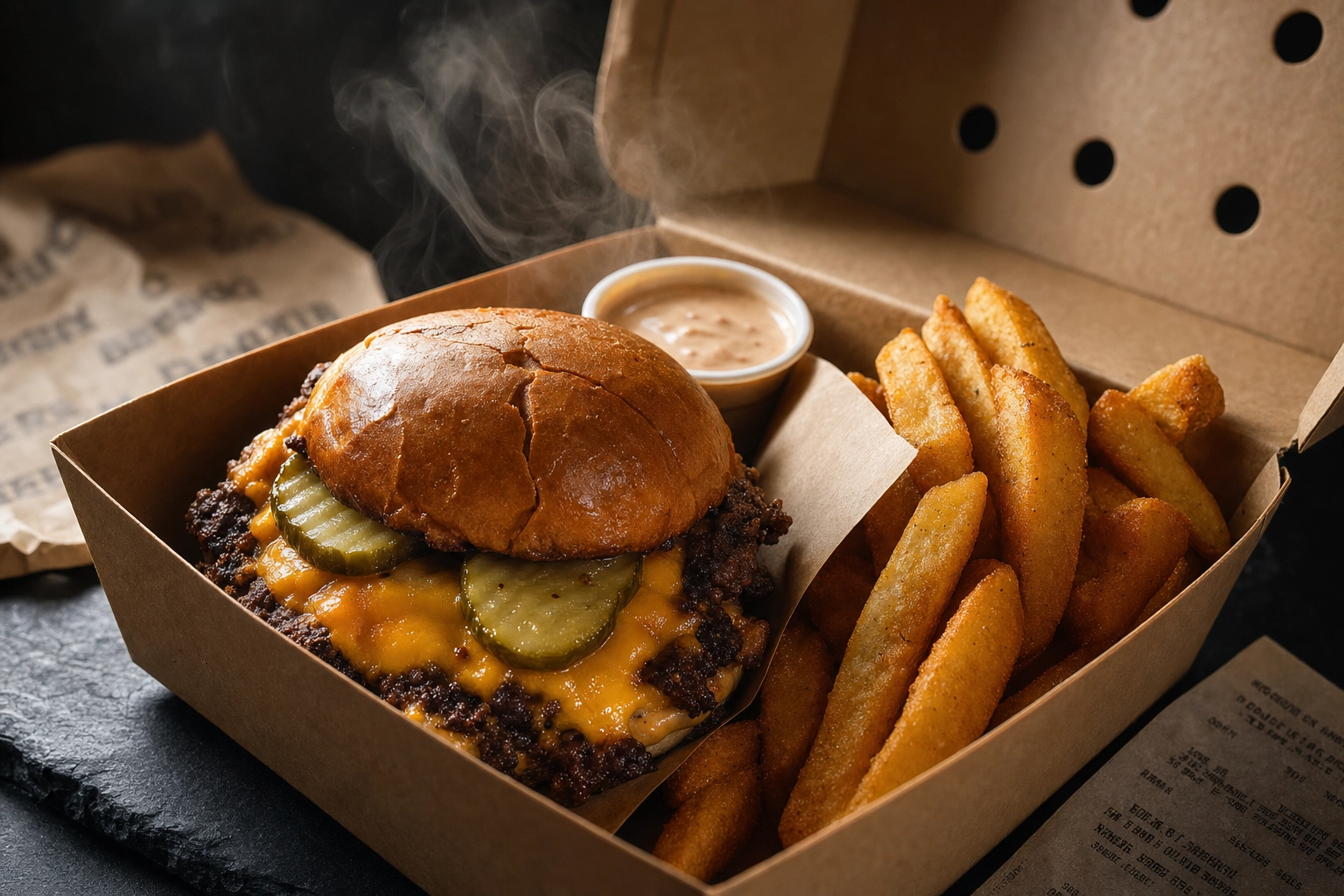 Close-up of a well-engineered vented takeout container with a burger and fries built to travel well for delivery
Running Multiple Virtual Brands From One Kitchen
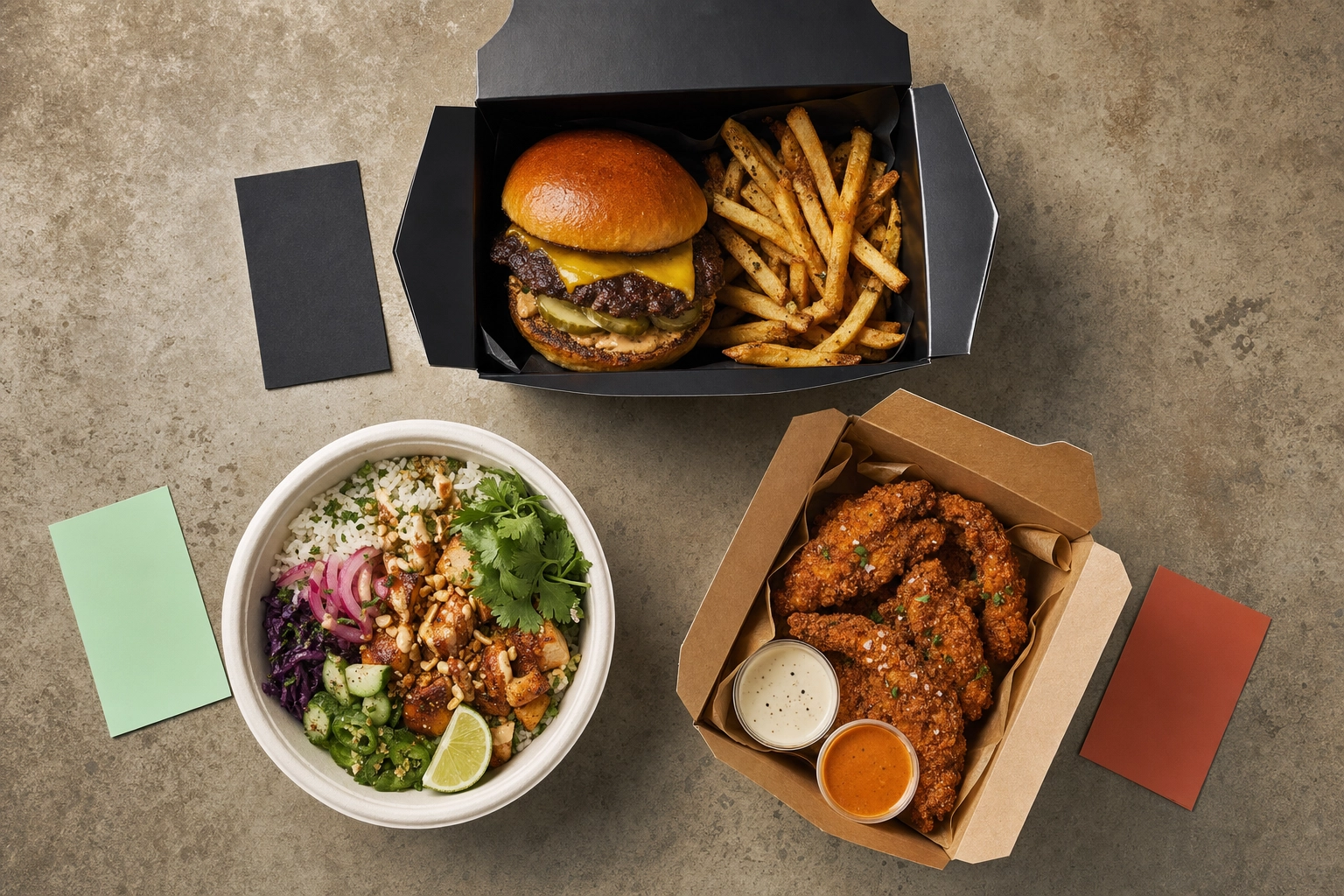
This is the lever most ghost kitchens underuse. The same physical kitchen, the same staff, the same ingredient bin can power three or four virtual brands, each listed separately on DoorDash and Uber Eats, each targeting a different customer.
The core idea: instead of one listing for "Joe's Kitchen," you launch separate, focused brands: "Joe's Crispy Chicken Sandwich Co.," "Joe's Wing Lab," and "Joe's Late Night Tenders." Same fryer, same chicken, three storefronts.
Why this works:
- Search behavior is cuisine-specific. People search "chicken sandwich" or "wings" — not "Joe's Kitchen." A focused brand ranks better on the platform search.
- Each brand can dial in its photography and voice. A wing brand can be loud and late-night. A bowl brand can be clean and health-forward.
- You can test concepts without committing. Launch a brand for $0 in physical buildout. If it doesn't hit 25 orders/day in 90 days, kill the listing.
- Different demographics, same kitchen. A late-night dessert brand serves a totally different customer than your lunch wraps — but both use the same oven.
The proven model in practice: Operators like C3 built portfolios with concepts including Krispy Rice, Umami Burger, and Sam's Crispy Chicken — distinct brands sharing operational infrastructure. Virtual Dining Concepts ran MrBeast Burger across 1,000+ host kitchens at its peak, alongside brands like Mariah's Cookies and Pardon My Cheesesteak. Chains like Denny's have launched in-house virtual brands (The Burger Den) to monetize idle kitchen capacity.
Where this goes wrong: In 2024, Uber Eats removed roughly 8,000 virtual brands for being duplicate menus listed from the same address. The lesson: each virtual brand needs to feel genuinely distinct — distinct photos, distinct descriptions, distinct positioning. Platforms (and customers) are wise to the "same menu, three names" trick, and it kills reviews.
When to launch a new virtual brand vs. expand the current menu:
- New brand → when you want to target a different daypart, cuisine search, or demographic without diluting your existing brand
- Expand current menu → when your top brand is converting well and you want to lift basket size from the same customer
The rule of thumb: never run more than four virtual brands from a single small kitchen. Each one is a small business to manage, and the marginal returns flatten fast.
 Three visually distinct virtual brand takeout meals arranged as a flat lay representing multi-brand strategy from one ghost kitchen
Your Photos Are Your Storefront (Treat Them That Way)
On a delivery app, the photo isn't decoration. The photo is the storefront. It's the sign, the window, and the host stand combined into one 60×60 pixel thumbnail. Everything else — the description, the price, even the reviews — is secondary to whether that first image stops the scroll.
The data on this is consistent across every platform:
- Grubhub: Restaurants with photos see 30–70% more orders.
- DoorDash: Items with photos generate roughly 44% more monthly sales. Header images on store pages lift orders ~50%, and adding a logo lifts another ~23%.
- Deliveroo: Professional photos drive an estimated 24% order increase.
- Just Eat: Items with quality images see roughly 4x more basket additions.
- LimeTray's study across QSR menus found a 25%+ conversion-rate increase on photo-based versus text-only menus.
These are independent data points from five different platforms saying the same thing: photos move orders. A lot.
The thumbnail test. Open the delivery app on your phone and pull up your menu. Now squint. Can you instantly tell what each dish is? If a customer can't read the dish at thumbnail size in under one second, the photo isn't working. Tight crops on the food, clean backgrounds, high contrast — these read better at small sizes than wide-angle "lifestyle" shots will help.
Every item needs a photo — not just the bestsellers. A menu with photos on some items and not others looks half-finished. Customers default-skip the items without photos. If you're going to be on the platform, commit and shoot the whole menu.
Platform-specific specs to plan around:
- DoorDash: 16:9 aspect ratio recommended for hero images; item photos 1:1 or 4:3 at minimum 1400×1400 px
- Uber Eats: 5:4 aspect ratio for item photos, minimum 1200×1200 px, under 8MB
- Grubhub: Landscape orientation, HD minimum (1920×1080)
For a deep dive on these specs and how to nail them, see our full guide on food photography for delivery apps and the Uber Eats photo requirements breakdown.
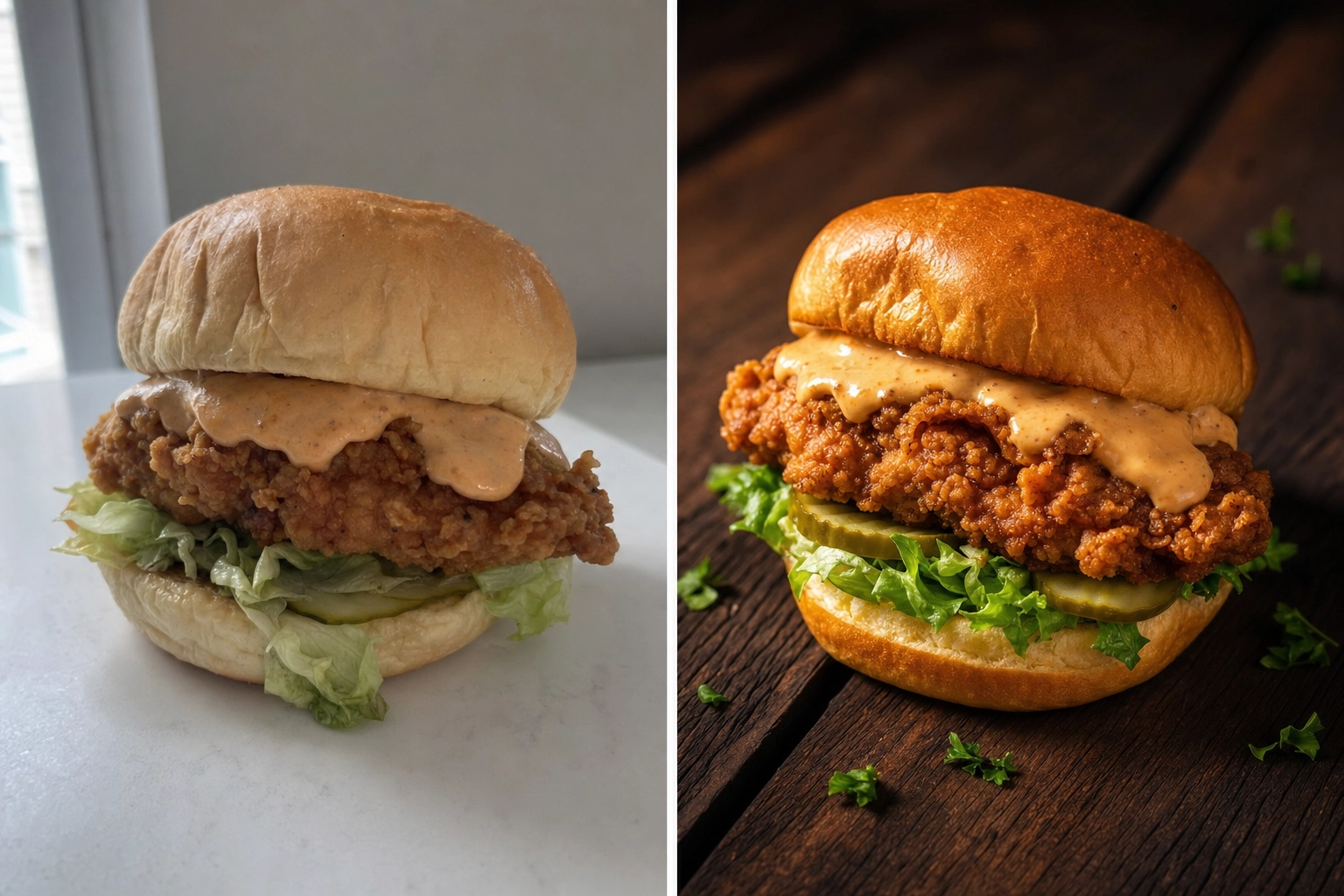
Consistency across a virtual brand. Every photo within one brand should feel like it belongs to the same restaurant. Same angle (usually 45° or overhead), same plate style, same lighting temperature, same color palette in the background. Mixing styles across items makes the brand look like a copy-paste of stock photos — and customers can sense it.
Phone shots → menu-ready images. Most ghost kitchens don't have $1,400 to spend on a photo shoot per concept (and a multi-brand operator might need four shoots). The realistic path in 2026 is to shoot raw clean phone photos under decent natural light, then use AI food photography for ghost kitchens to upgrade them to studio-quality outputs at 2K — same dish, no reshoot, polished and consistent across all brands.
 Side-by-side comparison of an amateur phone food photo and a polished professional version of the same chicken sandwich
Writing Descriptions That Sell When Customers Can't See or Smell the Food
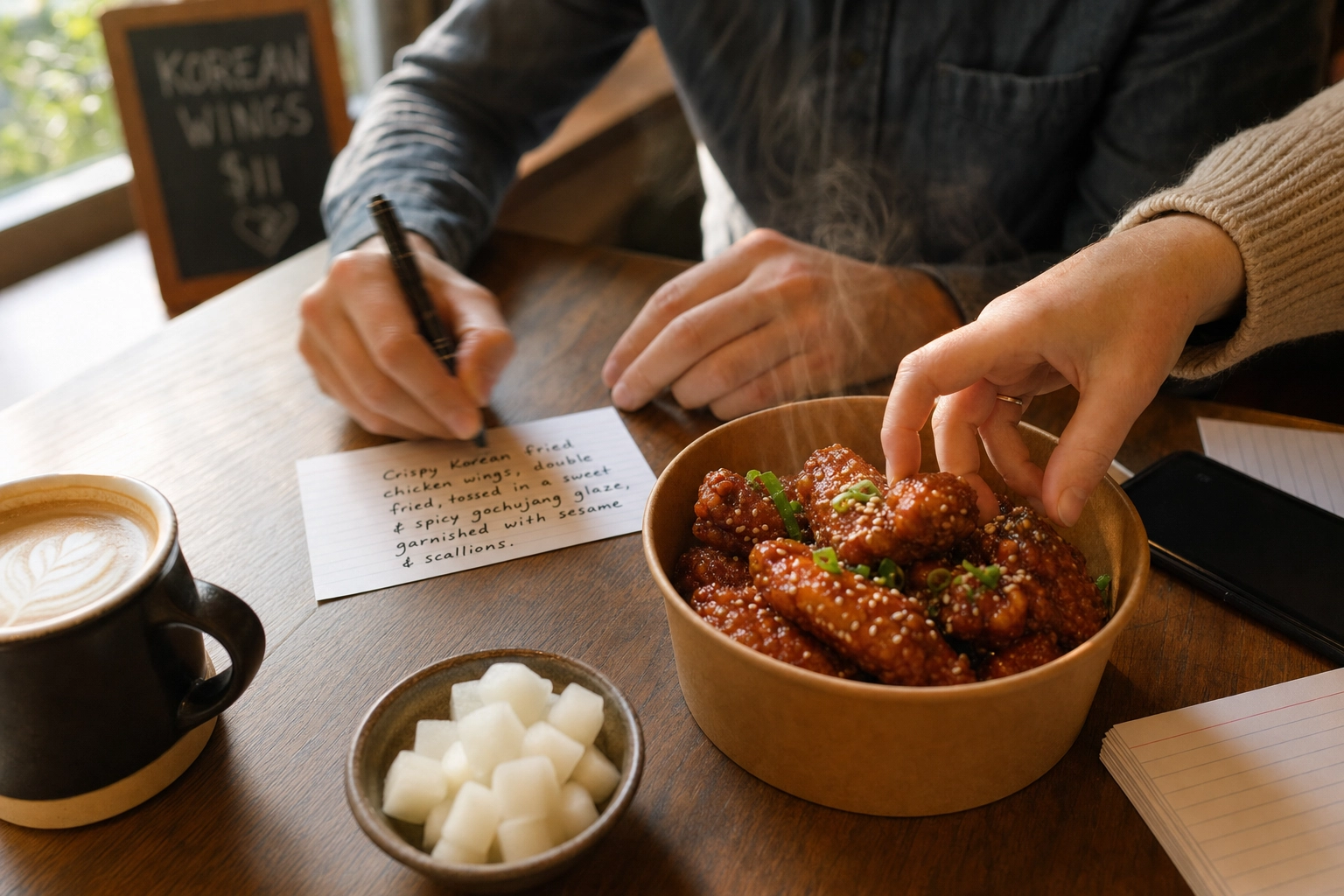
A great photo stops the scroll. A great description closes the sale. And on a 6-inch screen, "great" means specific, short, and sensory.
The mistake most operators make is writing descriptions like menu poetry: long, flowery, full of adjectives like "luscious" and "tender." On a phone, that's a wall of gray text. People skim three words and tap away.
The 3-part description formula:
- Hook (5–8 words): A flavor promise or unique selling point.
- Build (1–2 sentences): Specific ingredients and how it's prepared.
- Close (1 line): Portion, pairing, or who it's for.
Total: under 200 characters. Sometimes shorter.
Before / after — a weak description rewrite:
❌ Weak: "Our delicious classic burger is made with premium beef and the freshest toppings. Slow-cooked to perfection and served with love."
That sentence says nothing. Every burger restaurant claims this.
✅ Strong: "Smashed 80/20 brisket blend, aged cheddar, pickled red onion, special sauce. Toasted Martin's potato roll. Add bacon for $2."
The strong version names the meat blend, the cheese, the bun brand, the upsell. It tells the customer exactly what they're getting and gives them a clear next step.
Specific beats adjective-heavy. "Braised 12 hours in red wine" lands harder than "slow-cooked." "1.5 oz of crystallized ginger" beats "a hint of ginger." Specificity reads as expertise and earns trust before the food shows up.
Mention texture and temperature. Customers can't feel the crunch or warmth until they bite. Cue them: "crispy skin," "molten center," "served piping hot," "cool and creamy." These sensory anchors do the work that the dining room would normally do.
Include search-relevant terms. Delivery apps have internal search. If your dish is vegan, gluten-free, spicy, or keto-friendly, say so in the description, not just in the tags. Customers searching "spicy chicken" want to find "spicy" in the description.
Keep it under 200 characters. Mobile listings truncate. Anything beyond a couple of lines gets clipped. Front-load the most important words.
For deeper dives on writing menu copy that converts on delivery, our cloud kitchen marketing playbook goes into the broader content strategy.
 Hands writing a menu description on a card next to a glazed Korean fried chicken dish for a ghost kitchen listing
Pricing Strategy: Protecting Margin After Platform Fees
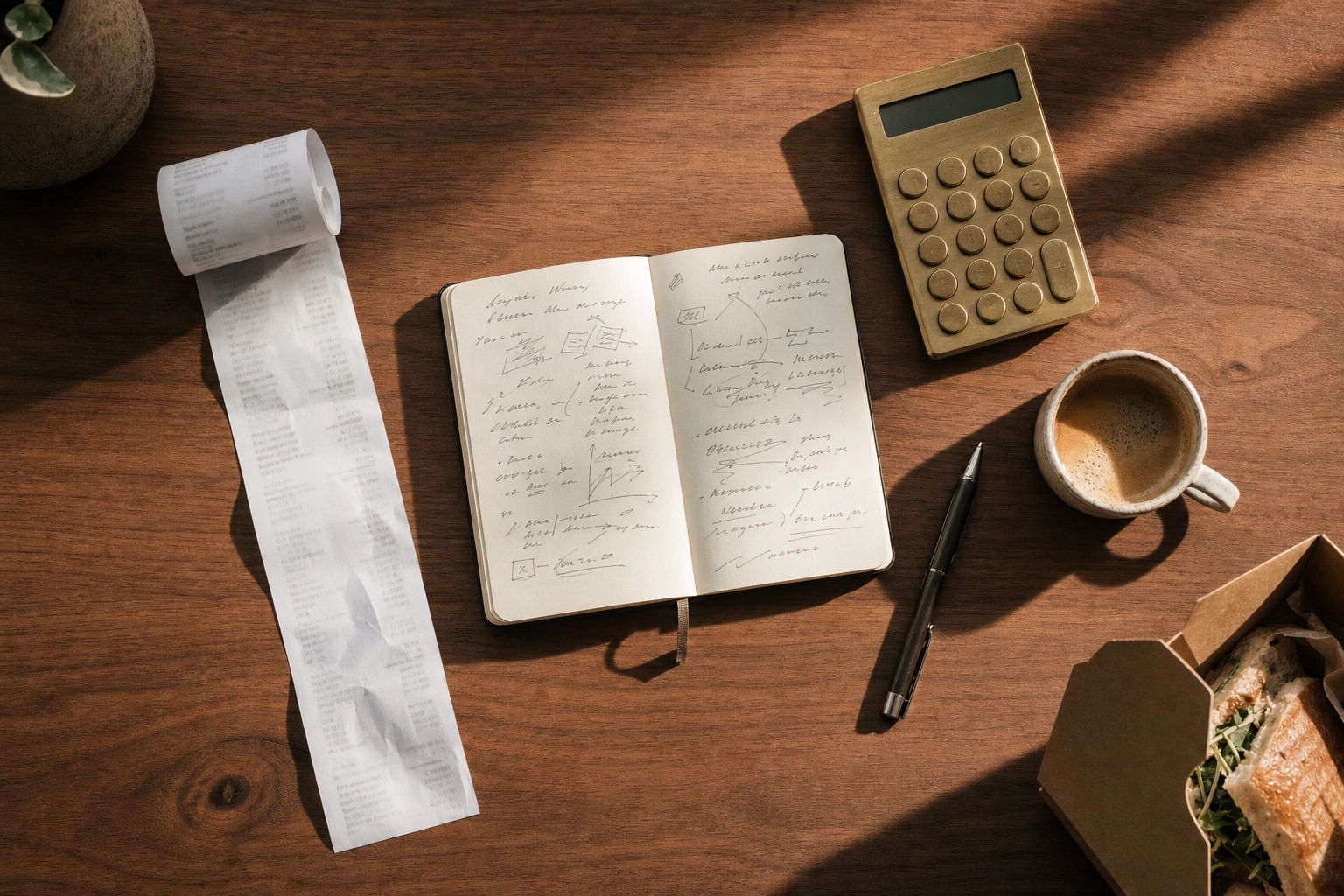
If you priced your ghost kitchen menu the same as your dine-in menu, you're losing money on every order. The platform fees are the reality you have to design around — and the math is more brutal than most operators expect.
The 2026 fee landscape:
- DoorDash runs three commission tiers — roughly 15%, 25%, and 30% — depending on whether you want basic visibility, plus marketing, or top placement. Pickup orders are around 6%.
- Uber Eats charges similar 15–30% commission on marketplace delivery, plus a flat 2.5% + $0.29 on their commission-free Webshop product.
- Grubhub has Basic, Plus, and All-Access plans at roughly 5%, 15%, and 20% marketing commission, with an additional 10% if you want them to handle delivery via their fleet.
On paper, that looks manageable. In reality, when you stack on processing fees, platform-driven promos, refunds, and packaging, the effective cost lands around 30–40% of revenue. That's the number to plan around — not the headline commission rate.
A real P&L on a $30 ghost kitchen order:
| Line | Amount |
|---|---|
| Customer pays | $30.00 |
| Platform commission (28% effective) | –$8.40 |
| Processing (3%) | –$0.90 |
| Net revenue | $20.70 |
| Food cost (30%) | –$9.00 |
| Packaging | –$2.50 |
| Labor (allocated) | –$5.00 |
| Net profit | $4.20 |
That's a 14% net margin on a well-run order. Drop the average ticket to $18 with no bundle, and net profit can vanish entirely. This is why every line of the pricing strategy matters.
The delivery premium. Most successful ghost kitchens price 10–20% above their dine-in equivalent. A $14 burger on the dine-in menu becomes a $16–$17 burger on Uber Eats. Customers expect a delivery premium and don't punish it — but they do compare you against other restaurants in the same cuisine, so don't price into a different tier.
Bundle relentlessly to lift average ticket. The single biggest lever is pulling the cart from $18 to $25+. Combos that pair a hero item with a side and a drink at a $4–5 discount over à la carte pricing convert hard. Most platforms will surface combos with their own visual treatment on the menu, which doubles as free promotion.
Use promos selectively. Platform-driven promos like "$5 off your order" can spike traffic, but they come out of your margin, not the platform's. Use them to acquire new customers or push a slow day — not as a permanent discount. The math on a 20%-off promo on top of a 30% commission is usually a loss leader at best.
Item-level pricing strategy. Within your menu, designate a couple of hero items as high-margin (think 75%+ gross), priced at the upper end. Use a few traffic-driver items (popular but lower margin) to bring people in. The mix matters more than any single item.
For more on lifting orders on DoorDash specifically, see our companion piece on getting more orders on DoorDash.
 Overhead flat-lay of a restaurant operator workspace with receipt, calculator, and notes representing ghost kitchen pricing strategy
Optimizing the Menu With Delivery Platform Analytics
Every major platform — DoorDash Merchant Portal, Uber Eats Manager, Grubhub for Restaurants — gives you item-level performance data for free. Most operators barely look at it. The ones who do build a 30–50% gap on their competitors within a year.
The metrics that actually matter:
- Menu view → order conversion rate. Industry benchmark on delivery apps is roughly 20%. Below 15% and something on the menu is broken (photos, prices, or descriptions). Above 25% and you're outperforming the platform average.
- Item-level conversion. Which dishes are getting opened but not added to cart? Those are the items to fix first — usually a weak photo or unclear description.
- Average order value (AOV). Healthy ghost kitchens land in the $25–$35 range on DoorDash (the platform average is around $37). If yours is $18, your bundle strategy needs work.
- Repeat order rate. The single best leading indicator of long-term ghost kitchen profitability. New customers are expensive (often subsidized by you via promos). Repeat customers are pure margin.
- Star rating. Below 4.5 and the platform throttles your visibility. Treat ratings like cash.
Run a monthly menu audit. Pull the report. Sort by orders. Cut the bottom 20% of items and reallocate that prep time and ingredient cost into promoting the top 20%. Do this every month for six months and the menu will essentially optimize itself.
A/B test photo and description swaps on the top 5 items. Swap one variable at a time — new photo, same description, two weeks. Measure the conversion lift. Keep what wins. Move to the next item. Most successful operators run this loop continuously to find what truly converts.
Mind the seasonality and local trends. Winter shifts orders toward comfort food: pasta, soups, mac and cheese. Summer favors bowls, salads, lighter fare. Local trends matter too — a college town has a different late-night pattern than a suburban family neighborhood. Read your data, adjust the menu featuring, repeat.
Customer photos and reviews are free QA. When customers post their own photos in reviews, you're seeing exactly what your food looks like after a 25-minute delivery. If it looks bad in customer photos, your packaging or build is broken — and no amount of marketing photography fixes that. Read every review for the first 90 days. After that, weekly.
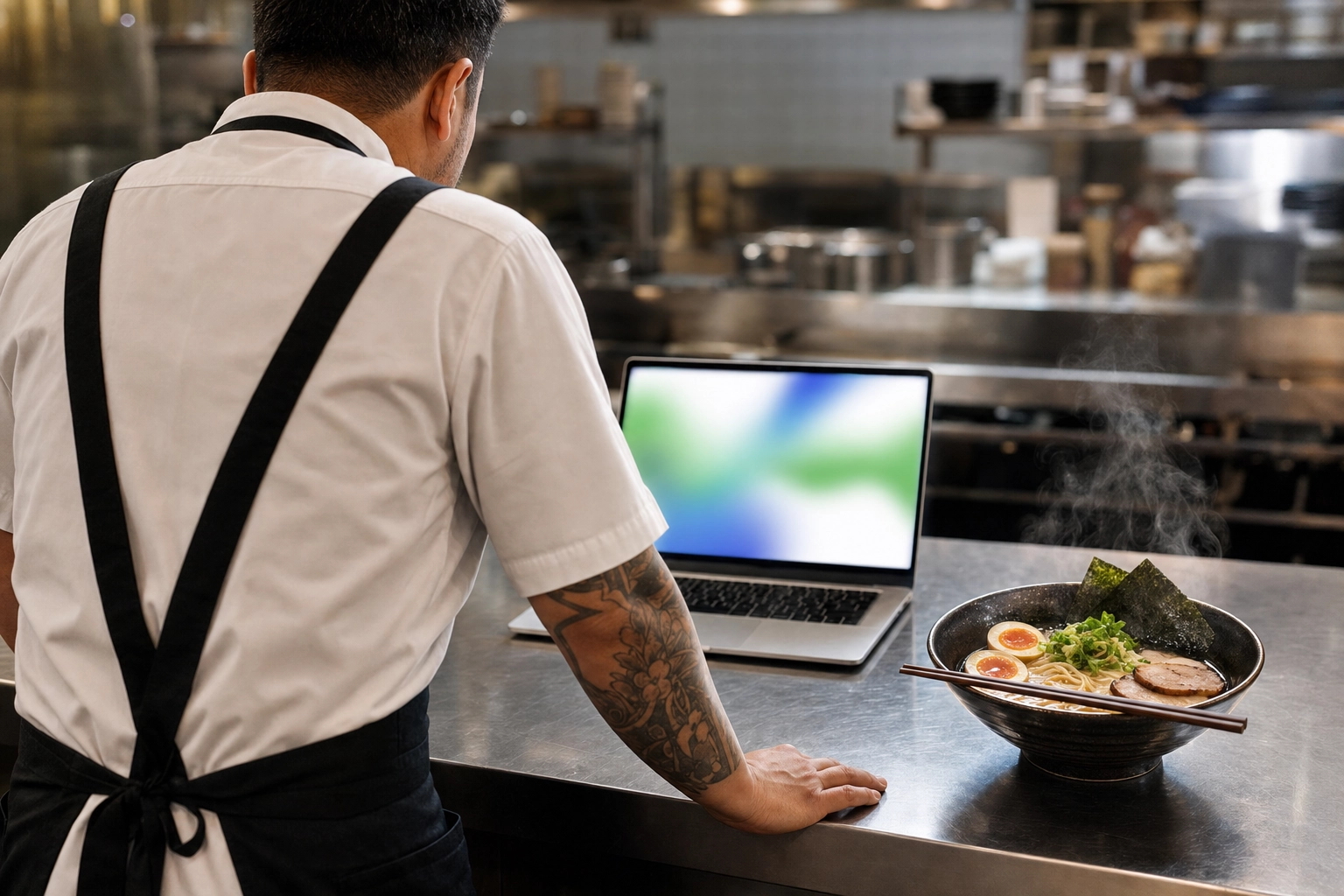 Chef-operator analyzing delivery platform menu performance data on a laptop next to a plated dish in a ghost kitchen
A 30-Day Action Plan to Rebuild Your Ghost Kitchen Menu
If your menu hasn't been overhauled in the last six months, here's a tight, executable plan to rebuild it. One month, four sprints.
Week 1 — Audit.
- Pull the last 90 days of platform analytics for every active virtual brand.
- Rank every item by total orders, item conversion rate, and gross margin.
- Build a three-column list: Keep (top performers), Fix (mid-tier, weak photo/description), Cut (bottom 20% by orders and conversion).
- Decide whether the menu should be 15, 20, or 25 items — and stop adding before you cut.
Week 2 — Rewrite.
- Apply the Hook → Build → Close formula to every item description.
- Cap each description at 200 characters.
- Add search-relevant terms (spicy, vegan, gluten-free) where accurate.
- Update prices to hit the 10–20% delivery premium and 65–70% gross margin.
Week 3 — Reshoot.
- Plan one consistent visual style per virtual brand: same angle, same background, same lighting.
- Shoot every menu item on the same day (or batch by brand if you run more than two).
- For DIY kitchens, shoot under bright, even natural light, then run images through an AI food photography workflow to find studio-grade consistency without booking a photographer.
- Resize and crop for each platform's spec — DoorDash, Uber Eats, Grubhub.
Week 4 — Relaunch and measure.
- Push the new menu live.
- Reset your benchmark metrics: conversion rate, AOV, repeat rate, star rating.
- Run platform promos for the first 7–10 days to help drive initial volume on the new listings (this is one of the few times platform promos are worth it).
- After 14 days, check the data and iterate.
Ongoing — 60-day review cadence.
- Every two months, pull the data, cut bottom performers, A/B test the top five, and update any seasonal items.
- This is the routine that compounds. A ghost kitchen menu run on this cadence for 12 months is almost always 30–50% more profitable than one left untouched.
For a structured approach to the photography sprint in Week 3, our menu photoshoot guide and restaurant food photography guide walk through the prep workflow step-by-step.
Frequently Asked Questions
How many items should a ghost kitchen menu have?
Aim for 15–25 total items, and 8–15 per virtual brand if you run multiple concepts from one kitchen. The sweet spot is wide enough to give customers a meaningful choice but tight enough that prep stays fast and ingredients cross-utilize. More than 25 items almost always slows kitchen throughput and dilutes conversion.
What foods travel best for delivery?
Foods that hold heat and structure for 20–30 minutes: pizza, fried chicken, wings, burgers (with vented packaging), sandwiches with dry fillings, bowls (rice, grain, poke), pasta with oil or thick tomato sauces, tacos with hard or thick tortillas, curries, stews, and mac and cheese. Avoid soufflés, tempura, cream-sauce pasta, soft-shell tacos with wet fillings, dressed leafy salads, and most fried items that go soggy in a closed bag.
How much should I raise prices for delivery apps?
Most ghost kitchens price 10–20% above their dine-in equivalent on delivery platforms. That offsets the 25–30% commission and protects margin. Customers expect a delivery premium and don't punish it — but staying within the typical price band for your cuisine matters more than the exact percentage. Test, watch conversion, adjust.
Do I really need a photo for every menu item?
Yes. Items without photos consistently underperform items with photos by a wide margin — DoorDash's own data points to a ~44% monthly sales lift on items with images. A half-photographed menu also signals that the brand isn't fully invested, which suppresses overall conversion across the listing. Shoot every item, even the sides.
Can one ghost kitchen run multiple virtual brands?
Yes, and it's one of the highest-leverage moves available. The same kitchen, staff, and ingredient bin can power three or four virtual brands, each targeting a different cuisine search or daypart. The key is making each brand genuinely distinct — separate photography, voice, and positioning. Platforms now actively remove brands that are clearly duplicate menus from the same address, so the brands need to feel real.
How often should I update my ghost kitchen menu?
Pull analytics monthly, do a full audit every 60 days, and a major refresh (new photos, new descriptions, new items) at least twice a year. Seasonal updates — comfort food rotation in winter, lighter items in summer — can lift conversion meaningfully. The cadence matters more than the size of any single change.
What's a good conversion rate on DoorDash or Uber Eats?
Roughly 20% menu-view-to-order is the healthy benchmark on delivery apps. Above 25% is strong. Below 15% means something in the funnel is broken — usually weak photos, unclear descriptions, or prices that are out of band for the cuisine.
Should I write my own menu descriptions or hire a copywriter?
Either works, but the discipline matters more than the source. Follow the Hook → Build → Close formula, keep it under 200 characters, lead with specifics, and include search-relevant terms. A chef who knows the dish and applies the formula will out-write a generic copywriter who doesn't. If you do hire, brief them on the constraints — most copywriters default to magazine-style prose, which dies on a phone screen.
The Bottom Line
A ghost kitchen menu isn't a list of dishes — it's a digital product. It has to perform inside an app, against direct competitors, on a small screen, in seconds. The operators winning in 2026 are the ones who treat the menu like a product manager treats a feature: tight scope, sharp positioning, real measurement, and a willingness to cut what doesn't work.
If you do nothing else from this guide, do these three things this week:
- Cut your menu to 15–25 items, ranked by conversion and margin.
- Reshoot every item to platform spec, with one consistent look per virtual brand.
- Rewrite every description using the Hook → Build → Close formula.
That alone, in our experience working with delivery-only operators, typically lifts conversion 20–40% within the first 60 days. The rest of the playbook compounds from there.
If you're ready to overhaul the photo side without booking a four-figure photo shoot per brand, AI food photography for ghost kitchens is built specifically for this workflow — phone photos in, menu-ready 2K images out, consistent across every virtual brand on every platform.