How to Become a Food Content Creator (8 Ways to Get Paid)
 Ali Tanis20 min read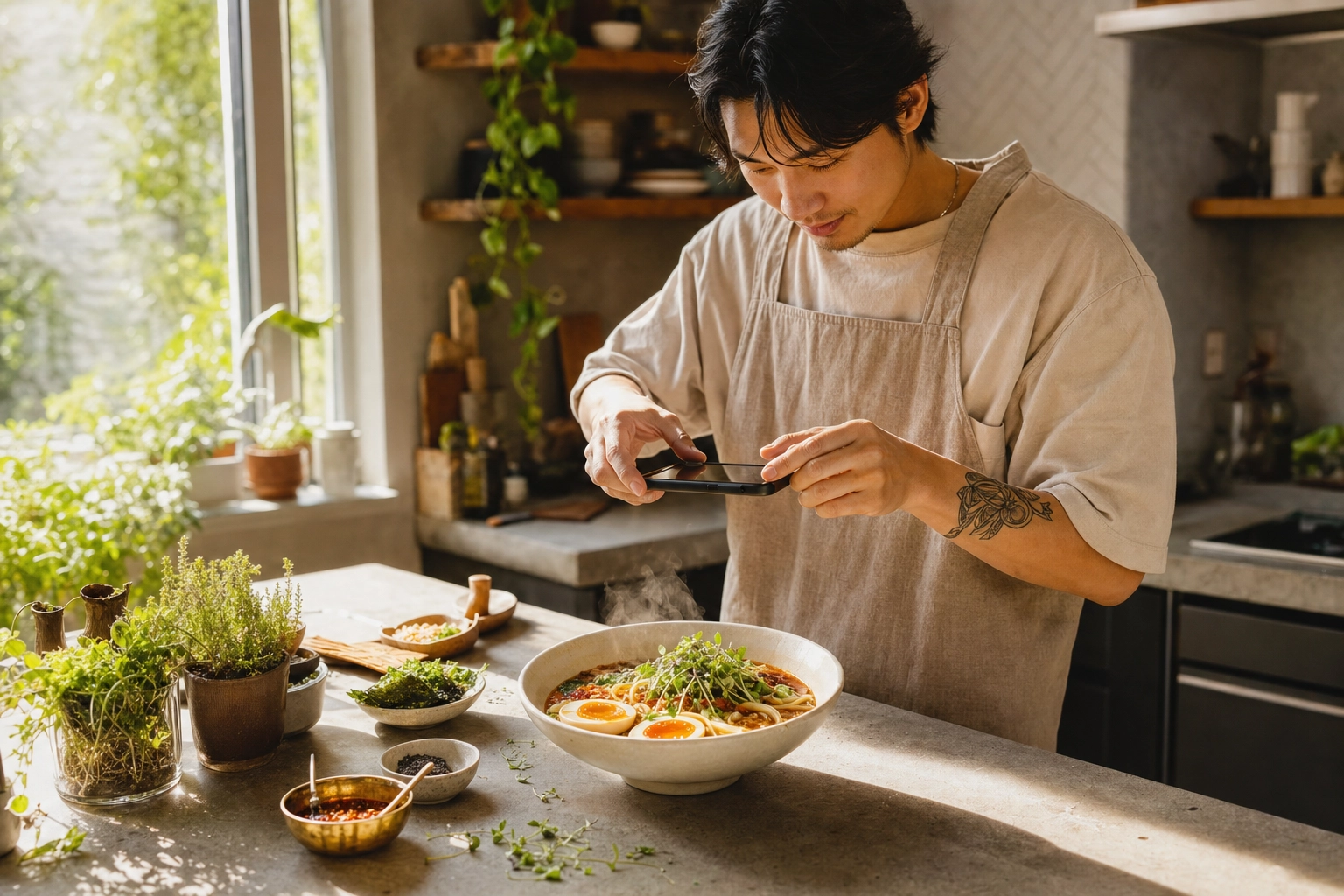
Food content creation became a real career in the last five years. Not just a hobby, not just an Instagram side project — a legitimate path that can pay anywhere from $50 a month to over $185,000 a year, depending on how seriously you treat it.
The barrier to entry is lower than ever. The bar for quality is higher than ever. Both things are true at once.
This guide is the practical roadmap for becoming a food content creator across every social media platform that matters in 2026 — not just blogging. We'll cover what a food content creator actually does, the platforms and niches that work, the gear you need (and don't need), how to build an audience, the eight ways creators make money, and what realistic income looks like at each stage.
Quick Summary: Food content creators publish food-focused content across Instagram, TikTok, YouTube, blogs, Pinterest, and UGC platforms. Starter gear costs $100–$300 (phone, tripod, light, AI photo editor). Most creators see first income at 6–12 months and meaningful revenue at 12–18 months. Top creators earning across three or more income streams averaged $185,000 in 2025. Photography quality is the single biggest predictor of growth — AI tools now let beginners produce studio-quality visuals from day one.
What Is a Food Content Creator (And Why It's Different From a Food Blogger)
A food content creator publishes food-focused media — photos, videos, recipes, reviews, education — across one or more digital platforms in exchange for audience attention. That attention then converts into income through brand deals, ad revenue, products, or services.
The "content creator" label matters because it's broader than "food blogger." A food blogger writes for a website they own. A food content creator might never publish a single blog post.
Some creators live entirely on Instagram. Some build YouTube empires without a blog. Some make $5,000 a month producing UGC for brands without ever showing their face on social media. Some run Substack newsletters with thousands of paid subscribers. The platforms differ. The skills overlap.
The career spectrum looks roughly like this:
- Casual creator: Posts food content for fun. No income. 1–10K followers.
- Side hustler: Earns $200–$2,000/month from brand deals, UGC, or affiliate income. 10–50K followers.
- Full-time creator: Income covers living costs. $5,000–$15,000/month across multiple streams. 50K–500K followers.
- Media business: Multi-employee operation with cookbooks, courses, products, and a recognized personal brand. $185,000+/year.
If you want a step-by-step guide focused specifically on the blog-as-business path — domain, WordPress, recipe plugins, SEO, ad networks — read our complete food blogger guide. This article zooms out to cover the entire creator landscape.
The Food Content Creator Ecosystem in 2026
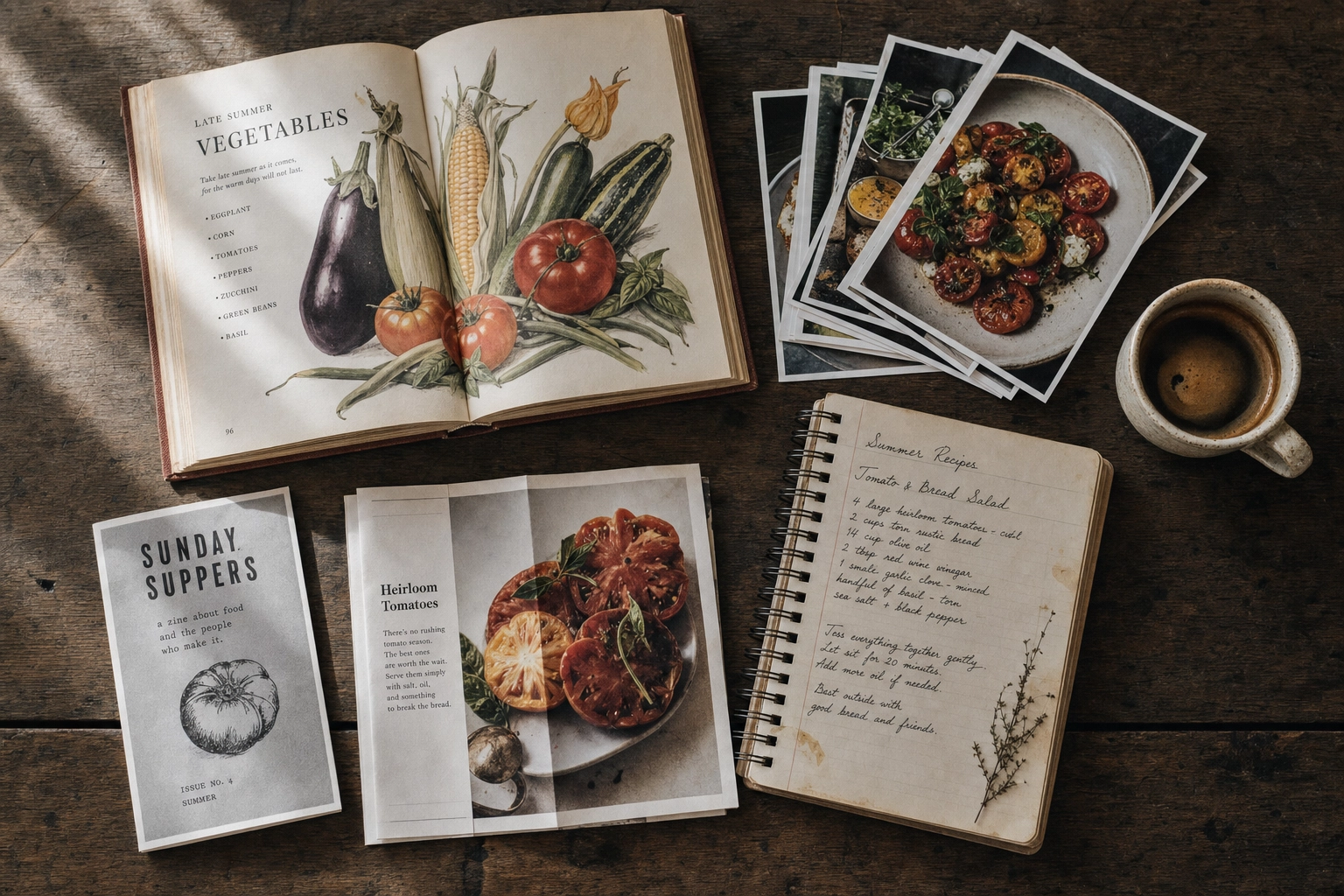 Overhead still life of cookbook, printed food photos, recipe journal and espresso showing food content variety
Each social media platform rewards different content. Knowing what each one is actually good at saves you months of trying to be everywhere at once.
Instagram is the visual flagship. Reels now drive most reach (the static feed is mostly for archival), and brand deals on Instagram pay better than almost any other social media platform. Food creators with 100K followers typically charge $500–$2,000 per sponsored Reel. Best for: photogenic food, lifestyle-driven creators, brand partnerships.
TikTok rewards quick, hook-first cooking videos and trend-jacking. Per-post pay is lower than Instagram, but virality potential is much higher — a 30-second TikTok clip can hit a million views in a week. The Creator Rewards Program pays roughly $0.02–$0.04 per 1,000 qualified views, so platform earnings stay modest unless you go viral repeatedly. Best for: experimental recipes, comedy-cooking, fast tutorials, trend-based content.
YouTube is where the long game lives. Tutorial videos earn ad revenue (food channels typically see CPMs of $3–$15) and command the highest sponsorship rates per video. The catch: production effort is 5–10x higher than short-form. Best for: technique-driven creators, educators, anyone who wants to teach in depth.
Pinterest is the underrated traffic machine. Pins are evergreen — a single recipe pin can drive blog visits for years. Pinterest food creators earn primarily through ads on their linked blog and affiliate links inside recipes. Best for: recipe bloggers, dessert and seasonal content, aspirational visuals.
Food blogs remain the most stable income source for one reason: you own the platform. Algorithms can't kill your traffic overnight. Display ad networks like Mediavine and Raptive only work on owned websites with 50,000+ monthly sessions, but once you hit that threshold, ad revenue compounds. Median food bloggers earn $9,169 per month according to a RankIQ survey of 803 bloggers.
Substack and Patreon turned subscriptions into a real category. According to Lumanu's 2025 creator economy data, top consistent creators now earn 30–40% of their income from monthly supporters — bypassing brand deals and social media platforms entirely.
UGC (User-Generated Content) is the audience-free path. UGC creators don't post on their own social media accounts — they produce short videos and photos that brands license for their own marketing. Average pay sits around $185 per video according to Collabstr's 2026 creator pricing data, with rates from $50 for beginners to $500+ for experienced creators. Best for: people who want creator income without growing a personal audience.
You don't need to be on every platform. Pick one home base, add one secondary, and ignore the rest until you have systems that scale.
Finding Your Niche: 9 Food Creator Specializations
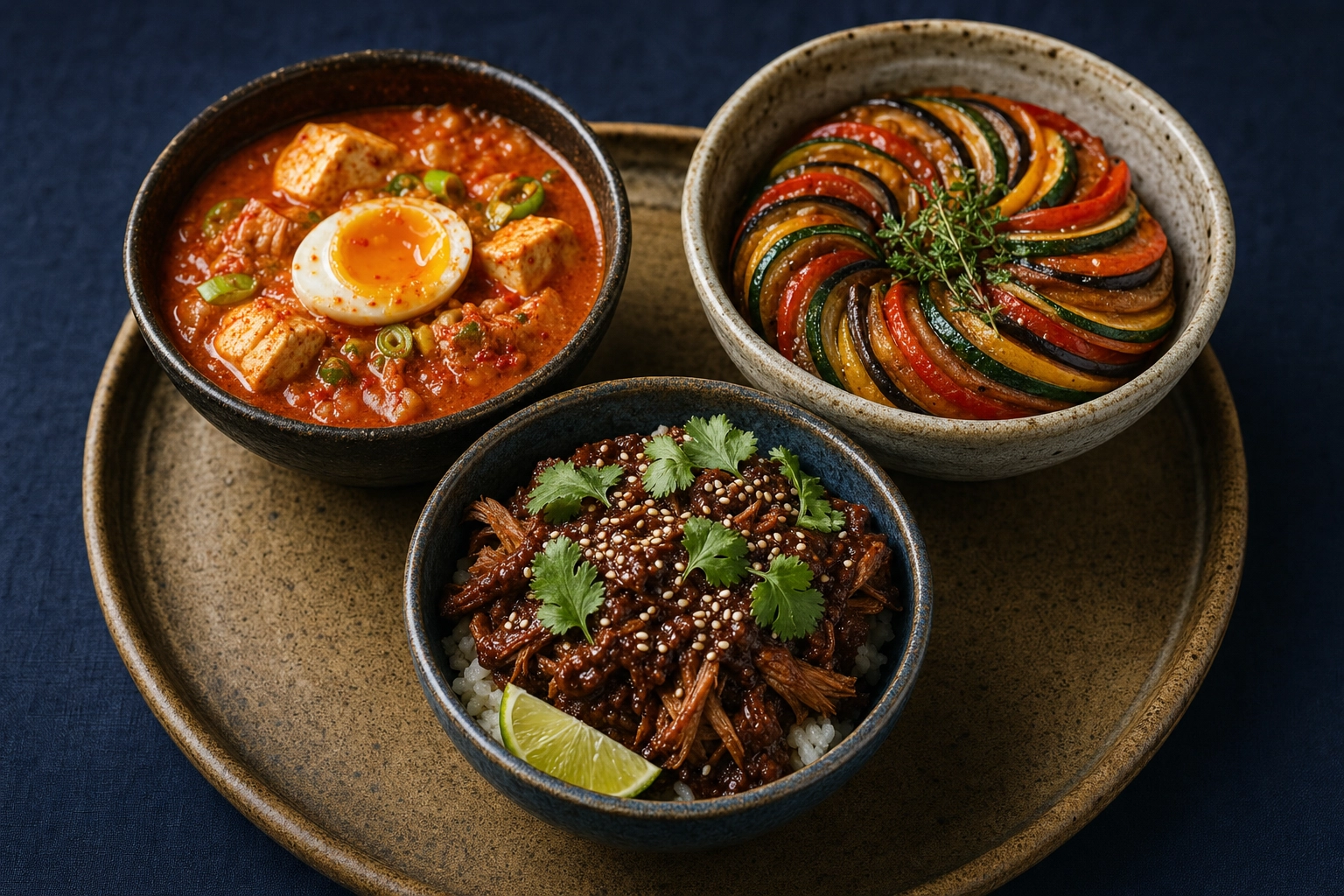 Three bowls showing Korean kimchi jjigae French ratatouille and Mexican mole demonstrating food creator niche cuisines
The fastest way to fail as a food creator is to be "general food." Pick a tighter lane and the audience finds you. Pick everything and you fight every other generalist.
1. Recipe development. You create original recipes, photograph them step by step, and publish across blog, Pinterest, and Instagram. The most lucrative model — recipes monetize through ads, affiliate kitchen gear, brand deals on ingredients, and eventual cookbook deals. Tiffy Cooks has reported earning $45,000–$55,000 per month through this approach.
2. Restaurant and food reviews. You visit restaurants and post reviews. Local restaurant partnerships pay anywhere from comp meals to $1,000+ per featured visit. Harder to monetize via display ads (less evergreen than recipes) but easier to land local sponsorships.
3. Food styling and photography. You're the visual specialist. Your content showcases technique, but your real income often comes from B2B services — restaurants, cookbook authors, and CPG brands hiring you to shoot their products. See our food photographer career path and commercial food photography guides for this route specifically.
4. Cooking tutorials. Step-by-step instruction, often technique-focused (knife skills, sauce-making, bread fundamentals). YouTube is the natural home. Educators tend to build slower but stickier audiences.
5. Food science and the "why" of cooking. A growing niche led by creators like Adam Ragusea and Ethan Chlebowski. You explain the chemistry, history, and reasoning behind techniques rather than just demonstrating them. High intellectual barrier, low competition.
6. Cultural and regional cuisine. Single-cuisine focus — authentic Sichuan recipes, Filipino home cooking, Levantine baking. Cultural specificity creates devoted communities and clear brand identity. Many of TikTok's top food creators in 2026 build entirely on this.
7. Specialized diets. Keto, gluten-free, vegan, low-FODMAP, allergy-friendly. Built-in audience with high purchase intent (people on restrictive diets actively seek recipes). Brand deals tend to pay above average because the audience is targeted.
8. Baking and pastry. Visual-first, skill-driven, and great for short-form video. Decorating videos, sourdough series, and pastry tutorials all perform well. Higher equipment cost (oven, scales, specialty tools) but strong audience loyalty.
9. Food travel and street food. Combines cuisine with destination content. Affiliate income from hotels, tours, and travel gear; sponsored content from tourism boards. Travel costs are real, but content compounds across multiple platforms.
Three questions to validate any niche before you commit:
- What do friends and family already ask you about food? That's your first audience signal.
- Can you sustain 200+ pieces of content on this topic without going stale?
- Type your niche into Google. Are people actually searching for it?
The sweet spot: genuine personal interest meets proven audience demand.
Essential Tools and Gear for Food Content Creators
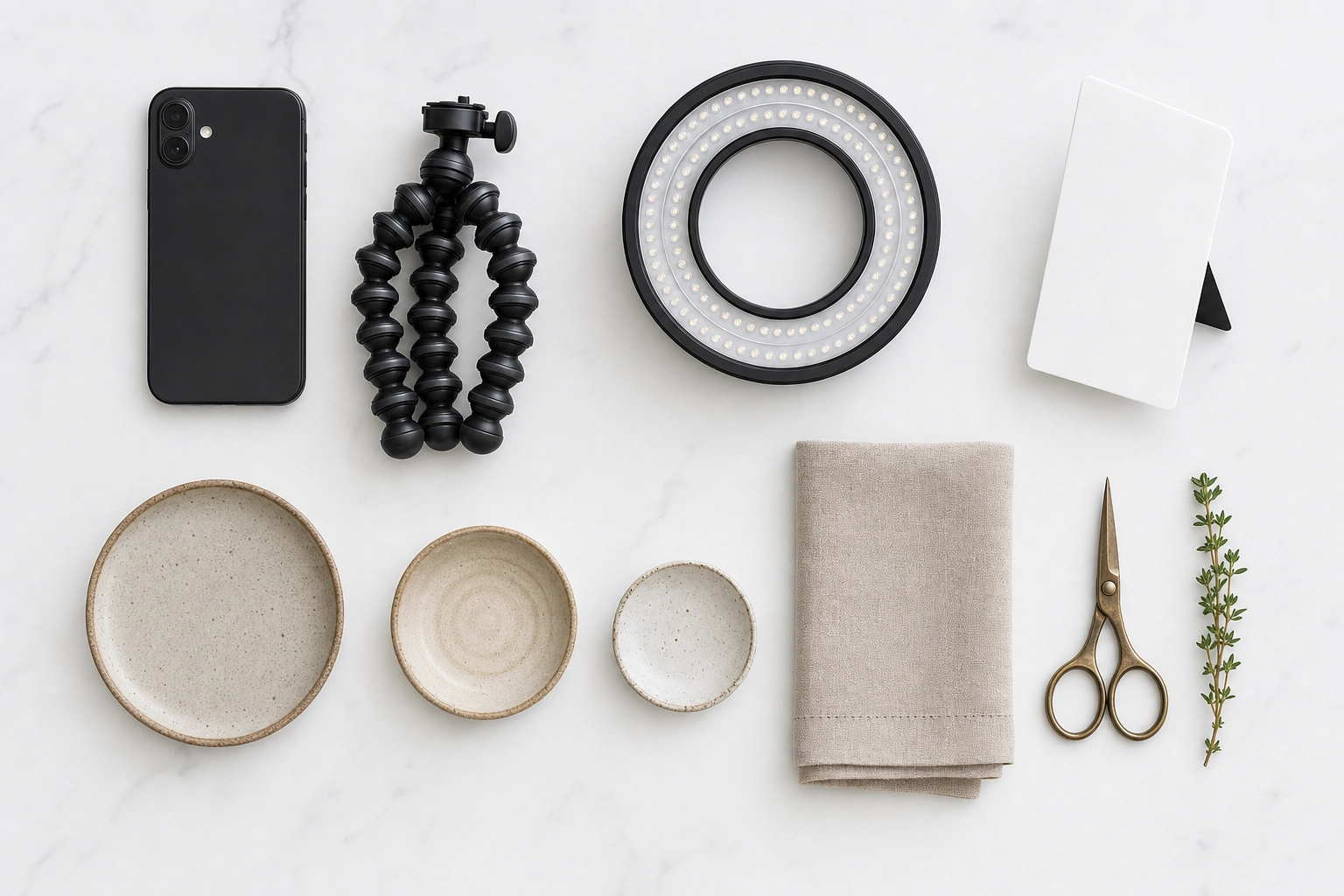 Overhead flat lay of food creator essential gear including smartphone tripod ring light reflector and props on white marble
Most "food creator gear" lists are aspirational marketing. Here's what actually moves the needle, ranked by ROI.
Day one essentials (under $300 total):
- Smartphone. Any iPhone 12+ or Pixel 6+ shoots food content that rivals entry-level DSLRs. Don't buy a camera. Use the phone you already own.
- Tripod with overhead arm ($30–$80). Non-negotiable for cooking videos. Look for one with a flexible arm that mounts directly above a counter or stovetop. Without it, every video is shaky and unusable.
- Natural light + a $20 reflector. A window with indirect daylight beats almost any artificial setup. A white foam board from a craft store fills shadows for free.
- One ring light or softbox ($30–$100). For nighttime shoots or light-starved kitchens. Look for adjustable color temperature (2700K–5500K) so daylight balance matches across content.
- Editing apps (free or under $10/month). Lightroom Mobile and Snapseed for photos. CapCut and InShot for video. VSCO for color filters.
- AI food photo enhancement. This is the new must-have. FoodShot AI takes any phone snap and produces studio-quality output in about 2 minutes — closing the photography skill gap that used to take new creators 6–12 months to bridge.
Add later, after you have audience traction:
- Lavalier or shotgun microphone ($50–$200). Only if you do voiceovers or talking-head content. Audio quality matters more than image quality on YouTube.
- DSLR or mirrorless camera ($800–$2,500). Phones are great, but full-frame cameras still win for cookbook-quality work. Most creators don't need this for the first two years.
- Specialty props. Linen napkins, vintage cutlery, ceramic plates. Build the prop closet slowly — buy props for specific shoots rather than stocking up.
For context on what a single professional photo session costs: $700–$1,400 per half-day, plus styling and editing fees that often double the total. The entire creator starter kit listed above costs less than a single hour with a commercial food photographer.
Why Photography Quality Makes or Breaks Your Content
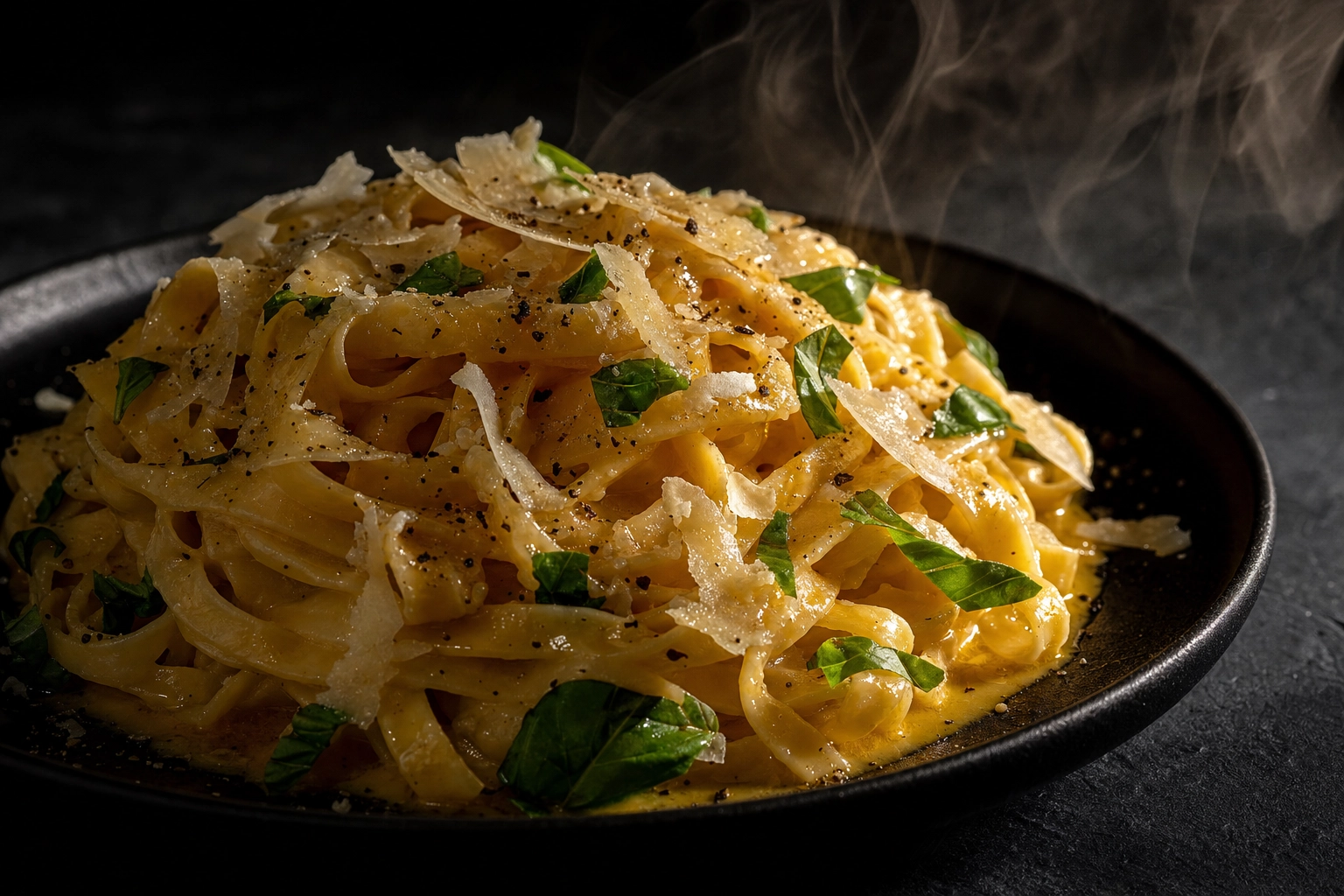 Dramatic dark moody close-up of Italian fettuccine pasta with parmesan showing professional food photography quality
Food is visual content. People scroll past hundreds of social media posts a minute. Yours has roughly half a second to earn the stop.
The data on this is brutal:
- Pinterest pins with high-quality photography earn 4–8x the saves of low-quality ones, according to platform creator studies.
- Instagram's algorithm prioritizes engagement, and engagement on food posts correlates almost perfectly with image quality.
- Recipe posts with professional-looking photography see 2–3x the click-through to blogs.
For new creators, this used to be a chicken-and-egg problem. You needed great photos to grow an audience, but learning food photography takes 6–12 months of practice. By the time your photos got good, you'd often given up. AI tools changed the math.
FoodShot AI transforms phone photos into studio-quality visuals in about 2 minutes. Upload any food photo, choose from 200+ photography styles (bright flat-lay, dark and moody, café aesthetic, fine dining, editorial close-up), and the AI handles lighting, composition, and color grading. The "My Styles" feature lets you upload one of your best-performing photos as a reference, and every future shot matches your exact aesthetic — the kind of visual consistency that builds a recognizable brand.
This doesn't replace learning photography (you should still study composition and lighting). It does mean your content can look professional from your first post instead of your hundredth. See FoodShot for content creators for how creators are using it across Instagram, TikTok, Pinterest, and recipe blogs.
If you want to build the underlying skill set in parallel, our food photography tips and food styling guide cover fundamentals like the rule of thirds, light direction, and plate composition. The combination — real photography skills plus AI enhancement — produces visual consistency far beyond what either alone can deliver.
Building Your Audience: Platform-Specific Strategies
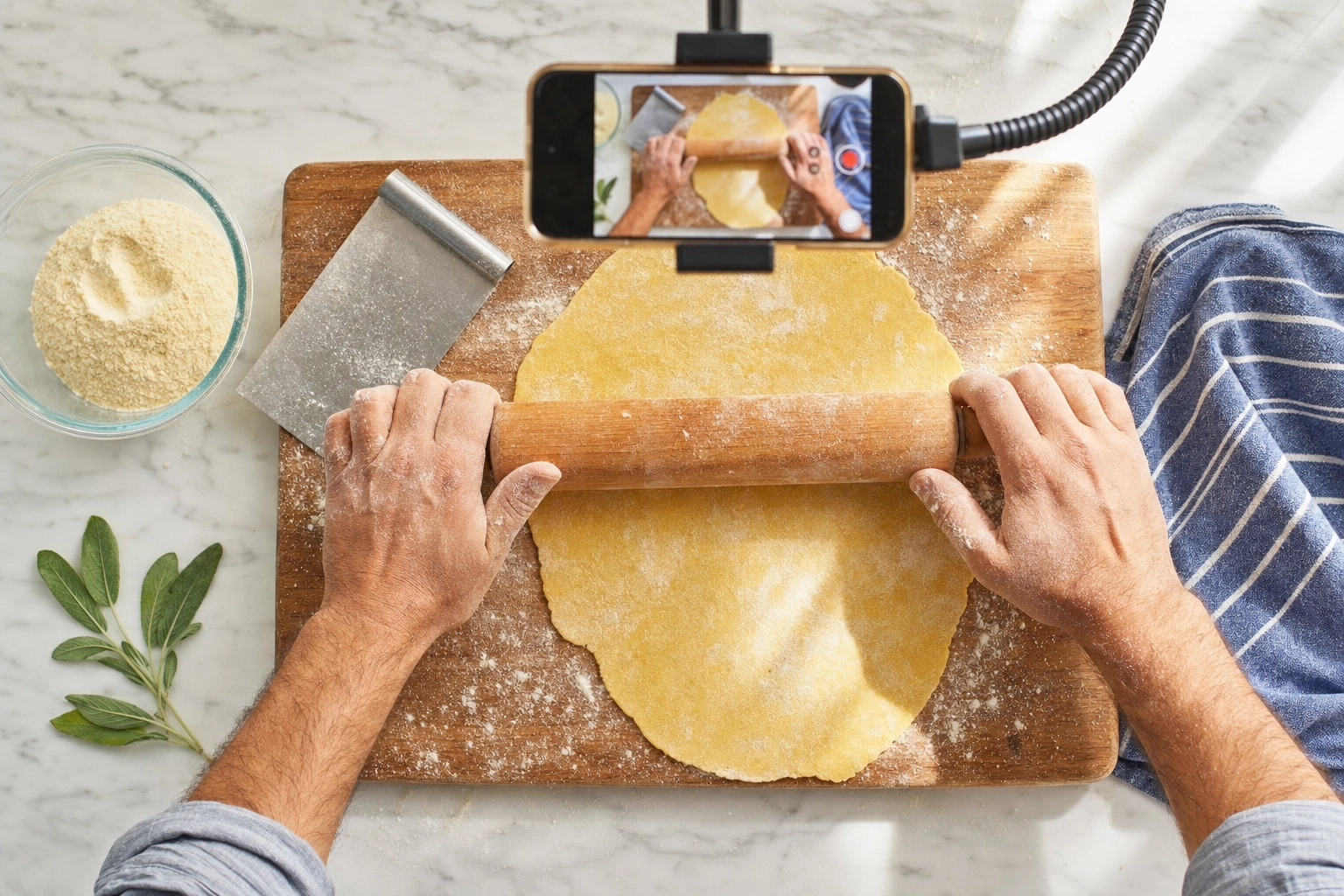 Hands rolling fresh pasta dough being filmed from above by smartphone on tripod showing audience building content creation
Audience growth on food content follows the same fundamentals every other niche follows: pick your platform, pick your pillars, post consistently, and engage with your community. Where food differs is the production speed — a single cooking session can fuel a week of social media content if you plan it right.
Define 3–4 content pillars. Pillars are recurring themes that signal what you're about. A recipe-development creator might use: signature recipes, ingredient deep-dives, cooking technique breakdowns, and behind-the-scenes kitchen reality. Every piece of content slots into one pillar. Audiences subscribe to themes, not random posts.
Match posting frequency to platform reality:
- TikTok: 1–2 videos per day during growth phase. The algorithm rewards volume more than any other platform.
- Instagram: 4–7 posts per week, with at least 3 Reels.
- YouTube: 1–2 videos per week if doing long-form, 3–5 Shorts per week.
- Blog: 1–2 SEO-optimized recipe posts per week.
- Pinterest: 5–15 fresh pins per day across your existing recipes.
Master the hook for short-form. TikTok and Reels live and die in the first three seconds. The opener should answer one question: why should I keep watching? "I made this in my apartment last night" beats "today we're going to make…" by a wide margin.
Repurpose ruthlessly. A single 90-minute cooking session can produce: one long blog post with a recipe card, three Instagram Reels (full process, hero shot, plate close-up), five TikToks (different angles, hook variations, B-roll), one YouTube long-form, and 10+ Pinterest pins. Plan content around shoot days, not platforms.
Engagement matters more than follower count for monetization. Brands pay micro-creators (10K–100K followers) with strong engagement rates more per follower than mega-influencers. A creator with 25,000 highly engaged followers and 4.8% engagement often earns more than a creator with 250,000 followers at 0.8% engagement.
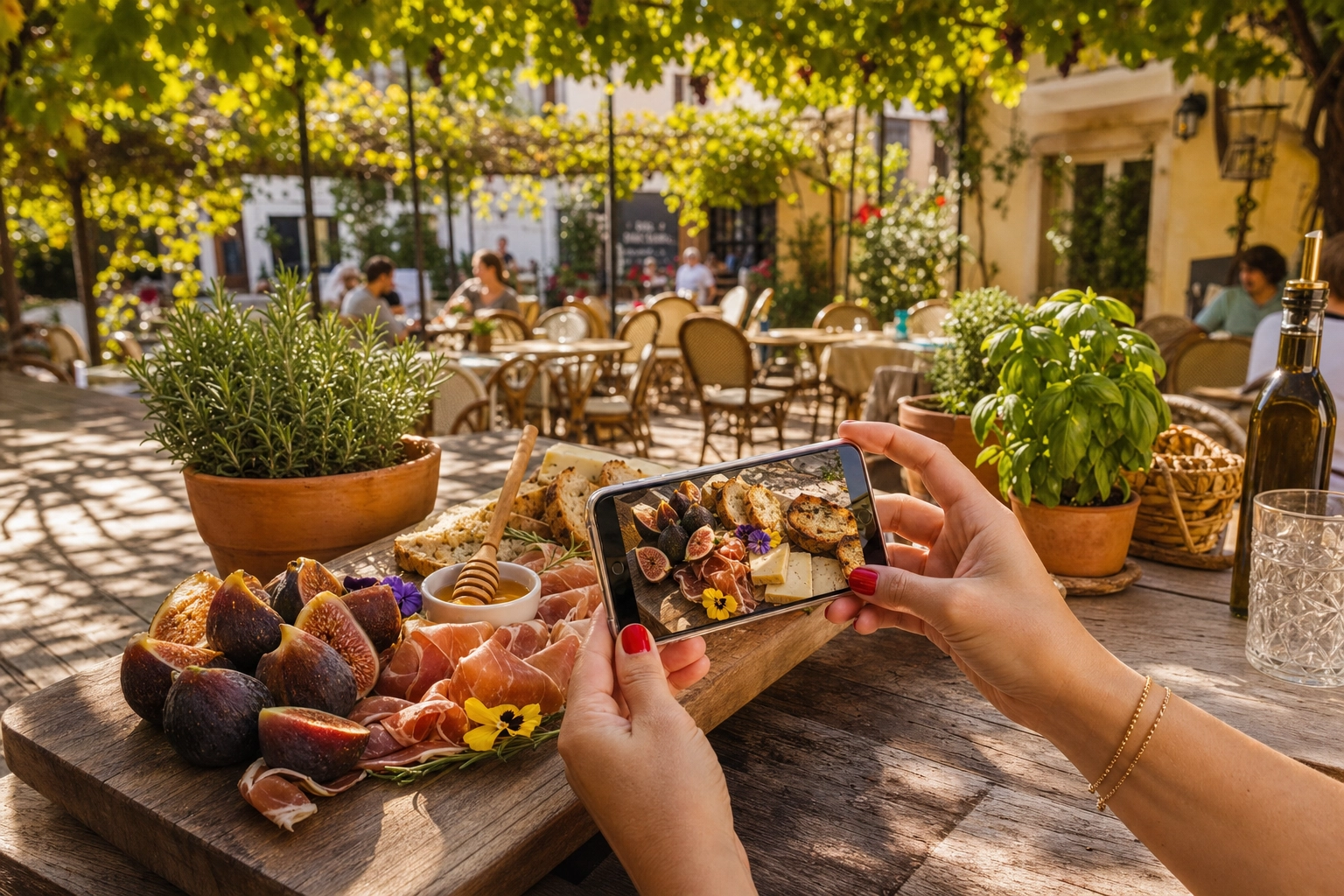 Hands photographing styled brunch charcuterie board on outdoor Mediterranean cafe terrace showing audience building strategy
Don't expect rapid growth in the first six months. Most successful food creators describe the first half-year as "yelling into the void." Compounding kicks in around the 6–12 month mark — if you've stayed consistent.
How Food Content Creators Make Money: 8 Income Streams
 Warm coffee shop scene with planner and cappuccino representing food creator income streams and business planning
The mistake most new creators make is treating one income stream as the whole strategy. Top earners stack multiple streams — Lumanu's 2025 data found that creators earning $185,000+ had at least three active revenue sources.
1. Brand deals and sponsored content. The headline category. Food and drink influencers charge an average of $190 per sponsored social media post in 2026 (Collabstr data), but actual ranges by audience size:
- Nano (1K–10K followers): $25–$250 per post
- Micro (10K–100K): $250–$1,000 per post
- Macro (100K–1M): $500–$2,000 per post
- Mega (1M+): $5,000–$10,000+ per post
YouTube long-form sponsorship slots typically pay 2–5x the equivalent Instagram rate.
2. UGC content licensing. Brands pay you to produce content they post on their own channels. No audience required. Beginner UGC creators charge $50–$150 per video; established creators charge $200–$500+. The average sits at $185 per asset (Collabstr 2026). UGC is the fastest income path for creators without an existing following — many start earning within 30–60 days of starting outreach.
3. Affiliate marketing. Earn commission on products you recommend. Food creators typically work with Amazon Associates (cookware, gadgets, ingredients), specialty programs (ButcherBox, Misfits Market, ThriveMarket), and meal kit services (HelloFresh, Blue Apron). Commissions range from 3% (Amazon) to 30%+ (subscription services). Realistic income: $200–$5,000+ per month for established creators.
4. Display ad revenue. Available only to creators with owned websites. Mediavine, Raptive, and similar networks require 50,000+ monthly sessions. Once you qualify, expect $15–$45 per 1,000 sessions on food blogs. The Midwest Foodie blog reportedly earned over $530,000 in 2025 primarily through display ads.
5. Platform creator funds. TikTok's Creator Rewards Program pays $0.02–$0.04 per 1,000 qualified views. YouTube AdSense on long-form video typically pays $3–$15 per 1,000 views for food content. Instagram's bonus programs come and go. Treat platform funds as a bonus, not a strategy.
6. Subscriptions (Patreon, Substack, memberships). Direct support from your most engaged fans, typically $5–$15/month per subscriber. This is the fastest-growing income category — 30–40% of top consistent creator income now comes from subscriptions, up sharply from 2023. The math: 500 paid subscribers at $8/month = $48,000/year.
7. Digital products. Cookbooks (digital and print), meal plan PDFs, photography presets, online courses, recipe membership sites. Margins are high (often 90%+), and one product can sell for years. Bites by Bianca reportedly hit $77,000 in her first full-time year, much of it from digital products.
8. Physical products and brand extensions. The graduation tier. Sauce lines, cookware collaborations, packaged snacks, kitchen tool brands. Requires capital, supply chain knowledge, and audience scale — but commands the highest valuations when creators successfully build product businesses.
One trend reshaping all of this: performance-based contracts now appear in 68% of brand-creator deals, up from 42% in 2023 (Lumanu data). More brands are paying for measurable outcomes — clicks, conversions, foot traffic — instead of flat-rate posts. Creators who can demonstrate results command premium rates.
Realistic Income Expectations and Timelines
 Young creator on floor with printed food photos sticky notes and sketchbook planning food content creator timeline
The single most damaging myth in food content creation is the overnight success story. Most full-time creators worked for 18–36 months before quitting their day jobs. Here's what realistic looks like.
Months 0–6: Foundation phase. Income: $0. You're learning your camera, your editing workflow, your voice, your niche. Most accounts plateau under 1,000 followers in this window. The work is unglamorous and unpaid. Almost every creator who quits, quits here.
Months 6–12: First income drip. Income: $50–$500/month. Small brand deals, first UGC clients, early affiliate commissions, possibly platform creator fund payments. Audience is growing but still small (5K–20K range). The income isn't life-changing — but it proves the model works.
Months 12–18: Meaningful revenue. Income: $1,000–$5,000/month for engaged creators. Multiple income streams kick in. Brands start reaching out instead of just being pitched. Consistent posting and authentic engagement on social media compound. This is when creators decide whether to go full-time.
Year 2 and beyond: The wide range. Income: $0 to $200,000+. The variance is enormous. Median full-time food bloggers earn $9,169/month according to RankIQ's survey of 803 bloggers. ZipRecruiter pegs the average US food blogger income at $62,275/year, with top earners clearing $124,500. Top media-business creators with three or more income streams averaged $185,000 in 2025 (Lumanu).
Honest reality check: Most food creators never reach full-time income. Industry estimates suggest fewer than 5% of creators in any niche earn livable wages. The ones who do generally combine three things: genuine craft skill, business discipline, and the patience to compound for 2+ years.
Hidden costs to budget for:
- Ingredients: $200–$1,000/month, depending on niche. Recipe testers report this is the biggest unexpected expense.
- Equipment upgrades: $500–$3,000 over the first two years.
- Software: Editing apps, scheduling tools, AI photo tools, email service providers. $50–$200/month.
- Self-employment taxes: US creators pay 15.3% self-employment tax on top of income tax. Set aside 25–30% of every payment.
Frequently Asked Questions
How many followers do you need to make money as a food content creator?
Zero, if you go the UGC route — brands pay UGC creators for content production regardless of personal following. For audience-based monetization, the practical floor is around 5,000–10,000 engaged followers. Nano-creators with strong engagement can earn $25–$250 per sponsored post even at small follower counts. The bigger threshold is 50,000 monthly sessions on a blog, which unlocks premium ad networks like Mediavine and Raptive.
Do I need a DSLR camera or is my phone enough?
A modern phone (iPhone 12 or newer, Pixel 6 or newer, recent Samsung Galaxy) is enough for the first two years. The image sensors in current flagship phones rival entry-level DSLRs for static food photography. The skill gap matters more than the gear gap. Once you've grown an audience, a dedicated mirrorless camera (around $1,000–$1,500) becomes worth the investment for cookbook-level work. Our how to take good food photos guide covers the techniques that matter most regardless of camera.
Should I start with Instagram, TikTok, or YouTube?
Pick one based on your strengths. If you're naturally photogenic and good with short videos, TikTok grows fastest. If your photography is your edge, Instagram and Pinterest reward strong visuals. If you're a teacher who can sustain 10-minute explanations, YouTube has the best long-term economics. Don't try to launch on three social media platforms at once — your content quality will suffer everywhere. Start with one, master it for six months, then expand.
How long does it take to become a full-time food content creator?
Realistically, 18–36 months from first post to replacing a full-time income, assuming consistent effort and decent content quality. Some outliers hit it in 12 months. Many take 4+ years. The variability comes from niche, platform choice, business skill, and luck (algorithm timing, viral moments, lucky brand introductions). Treat it as a 2–3 year project, not a 6-month sprint.
What's the difference between a food blogger and a food content creator?
A food blogger publishes recipes and food content on a website they own — usually self-hosted WordPress with a recipe plugin. A food content creator is the broader category that includes bloggers, but also Instagram-only creators, TikTok cooks, YouTube food educators, UGC producers, Substack newsletter writers, and food podcasters. All food bloggers are content creators. Not all content creators are bloggers.
Do I need to be a trained chef to become a food content creator?
No. Most successful food creators are passionate home cooks, not credentialed chefs. Audiences often prefer relatable home cooking to formal training — they want recipes they can actually replicate. Culinary school helps if you're targeting professional kitchens or fine-dining content, but it's not a prerequisite. Authenticity and consistent quality matter more than credentials.
How do food creators get brand deals when starting out?
Three approaches work for new creators. First, pitch brands directly with a short, professional email describing your audience, niche, and what you can deliver — most successful nano-creator deals start this way. Second, sign up to creator marketplaces like Collabstr, Aspire, or Influence.co, which list active brand campaigns. Third, focus on UGC initially, since UGC briefs are easier to find and don't require an existing audience. Build a portfolio of 5–10 strong pieces before pitching anyone.
Is it too late to start as a food content creator in 2026?
No, but the playbook has changed. Saturation is real on every social media platform, and "post pretty food photos" is no longer enough. What works in 2026 is tight niche selection, distinct point of view, and consistent multi-platform execution. The good news: AI tools have collapsed the production-quality gap that used to take years to close. New creators can produce visually competitive content from week one. The bad news: more competition means more discipline required to stand out.
Becoming a food content creator in 2026 is one of the most accessible creative careers in existence — and one of the most competitive. The gear barrier is low. The skill barrier is mostly time and consistency. The income ceiling is genuinely high if you stack income streams and treat content creation as a real business.
The single fastest way to accelerate the journey: solve the photography problem on day one. Beautiful, consistent visuals are what separate creators who grow from creators who plateau. Try FoodShot for content creators and see what your phone snaps look like with professional lighting, composition, and styling applied automatically. Then explore pricing when you're ready to scale your output.