What Is Commercial Food Photography? A Business Guide
 Ali Tanis13 min read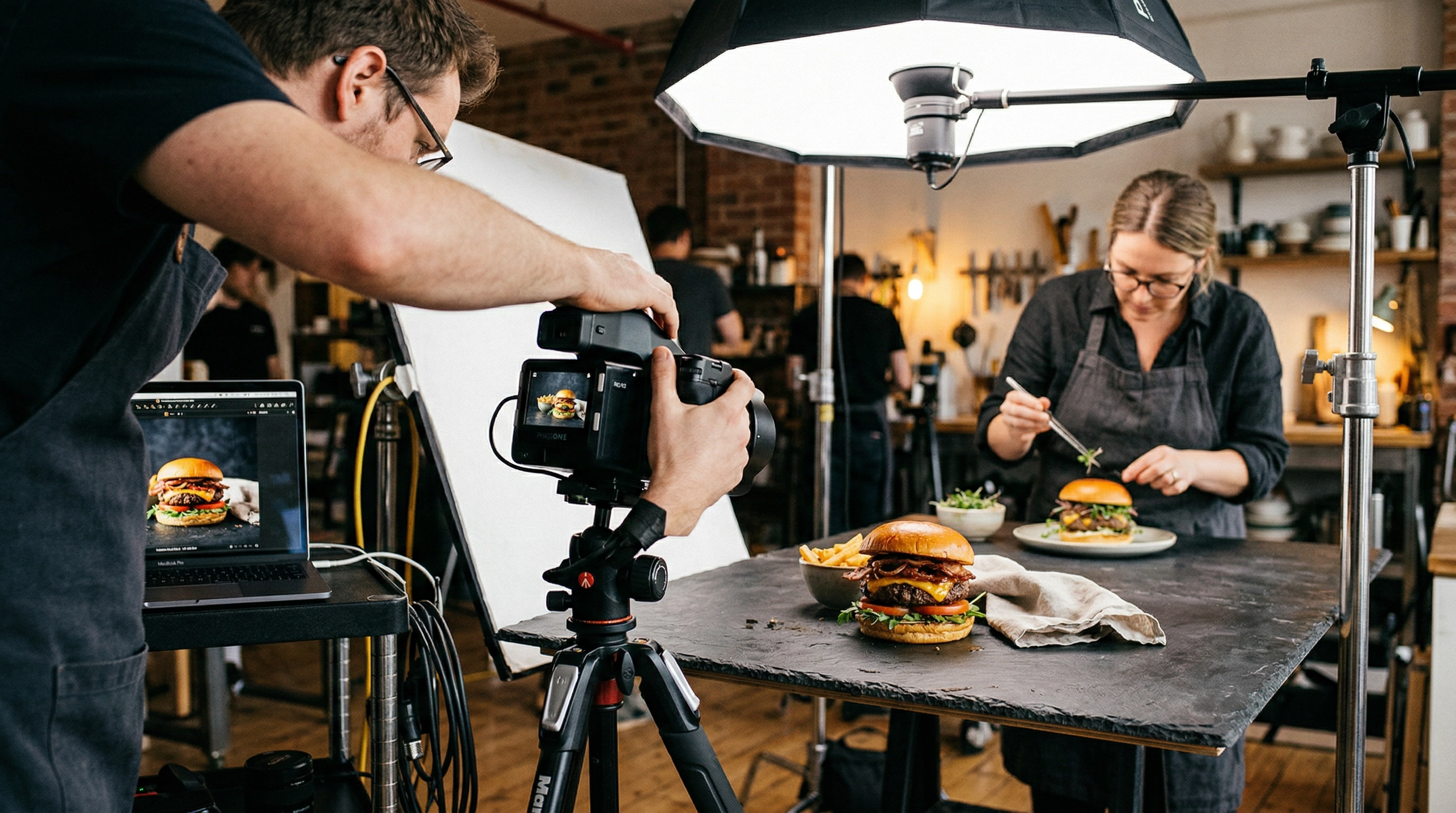
So what is commercial food photography, exactly? It's the professional craft behind every menu image that makes you hungry, every cereal box that catches your eye in the grocery aisle, and every Instagram ad that stops your thumb mid-scroll. Commercial food photography exists to serve one purpose: creating images that sell food. But what separates it from the photo you snapped at brunch?
Quick Summary: Commercial food photography is food imagery created for a specific business purpose — advertising, packaging, menus, or marketing. Unlike editorial or amateur food photography, it's client-driven, involves licensing and usage rights, often requires a full production crew, and costs anywhere from $300 for a local restaurant shoot to $30,000+ per day for major ad campaigns. AI tools are now making commercial-quality results accessible to smaller businesses at a fraction of traditional costs.
What Is Commercial Food Photography?
Commercial food photography is any food image created to promote, sell, or market a product or brand. Wikipedia defines food photography broadly as "a still life photography genre used to create appealing still life photographs of food," but the commercial part is what matters here: the image exists to serve a business goal, not artistic expression or personal enjoyment.
That distinction changes everything about how the photo gets made.
In commercial food photography, every creative decision — the camera angle, the lighting style, the plate, the background surface, even the specific drip of sauce — is driven by a client brief, brand guidelines, or a marketing objective. The photographer isn't shooting what looks pretty to them. They're executing a vision that's been approved by art directors, brand managers, and sometimes entire committees before the camera comes out of its bag.
This is different from editorial food photography, where the goal is storytelling — think magazine spreads and cookbook layouts that use natural light and artful props to evoke a mood. And it's worlds apart from amateur food photography, where you're simply capturing a meal to share with friends using your phone. If you want a broader overview of what food photography is, that guide covers every genre from fine art to documentary food work.
Types of Commercial Food Photography
Not all commercial food photography work looks the same. The budget, production scale, equipment, and creative expectations vary dramatically based on where the final images will be used.
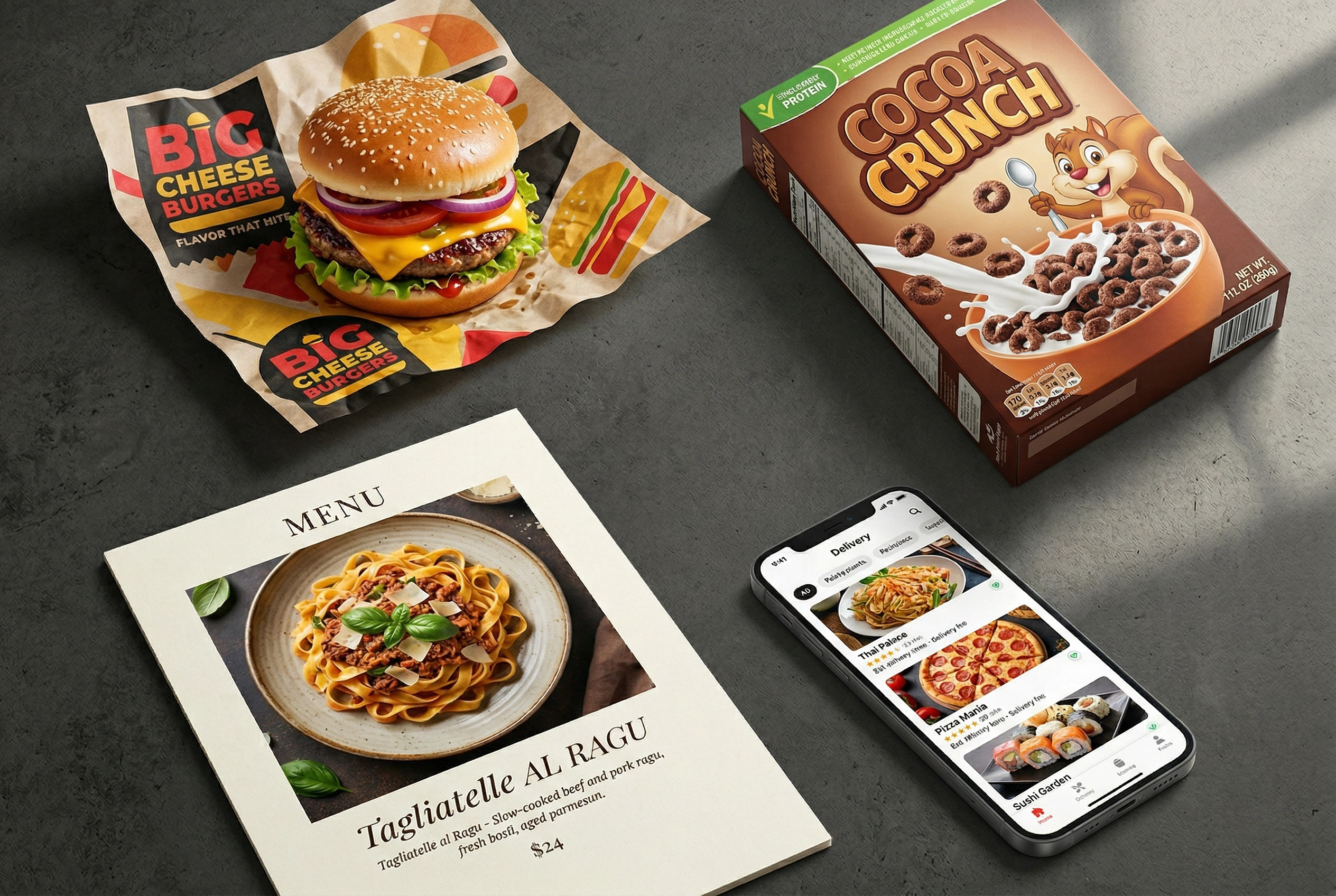 Flat-lay showing four types of commercial food photography including advertising packaging menu and delivery app images
Advertising Campaigns
This is commercial food photography at its most ambitious. Think national billboard campaigns for fast-food chains, full-page magazine ads for beverage brands, or digital campaigns for CPG companies launching a new product line.
Advertising shoots are the highest-budget tier, typically running $10,000–$30,000+ per day in total production costs. They involve full creative teams (art director, food stylist, prop stylist, photographer, digital tech, producer), multiple days of pre-production, and extensive post-production retouching. The goal is creating a single "hero" shot so compelling it drives millions of dollars in consumer behavior.
Product Packaging
Every food product you see on a grocery shelf was photographed for that package. Packaging photography demands extreme precision — colors must match printed output exactly, compositions must fit specific label dimensions, and brand guidelines dictate every detail down to the angle of a parsley garnish.
This is some of the most technically demanding commercial food photography work. Photographers use specialized studio equipment and controlled lighting setups to ensure color accuracy across print runs. It often requires compositing (combining multiple shots into one final image) and meticulous calibration. Packaging shoots typically cost $3,000–$15,000 depending on the number of product SKUs.
Menu Photography
For restaurants, menu photography is the most common entry point into commercial food photography. A typical shoot covers 10–50 dishes for use on printed menus, websites, and digital ordering systems.
Local restaurant menu shoots range from $500–$3,000, depending on the photographer's experience, style, and your city's market rate. That's still a significant investment for a small business — which is exactly why so many are exploring alternatives. Our restaurant photography pricing guide breaks down costs by market, and our food photography tips can help you prepare dishes for the camera.
Delivery Platform Images
This is the fastest-growing segment of commercial food photography. Platforms like Uber Eats and DoorDash have specific image requirements — minimum resolution, lighting standards, background expectations — and restaurants need professional-looking photos for every item on their delivery menu.
That can mean 20–100+ images per restaurant, making traditional photography cost-prohibitive for many businesses. This is where delivery app photography strategies have evolved rapidly, with AI tools and smarter phone photography techniques filling the gap for budget-conscious restaurant owners.
Social Media Content
Brands need a constant stream of fresh food imagery for Instagram, TikTok, Pinterest, and paid social campaigns. Social media food photography sits in an interesting gray zone between commercial and editorial — brands want the polished, professional look of commercial work but the authentic, natural lifestyle aesthetic that performs well on social platforms.
The demand here is for volume and speed: not one perfect hero shot, but dozens of on-brand images every month. Our social media marketing for restaurants guide covers strategy, while the restaurant social media promotion post covers platform-specific tactics.
What Makes Commercial Different from Amateur Food Photography
The gap between a commercial food photo and a well-lit iPhone shot isn't just about camera quality or equipment. It comes down to four key professional differences:
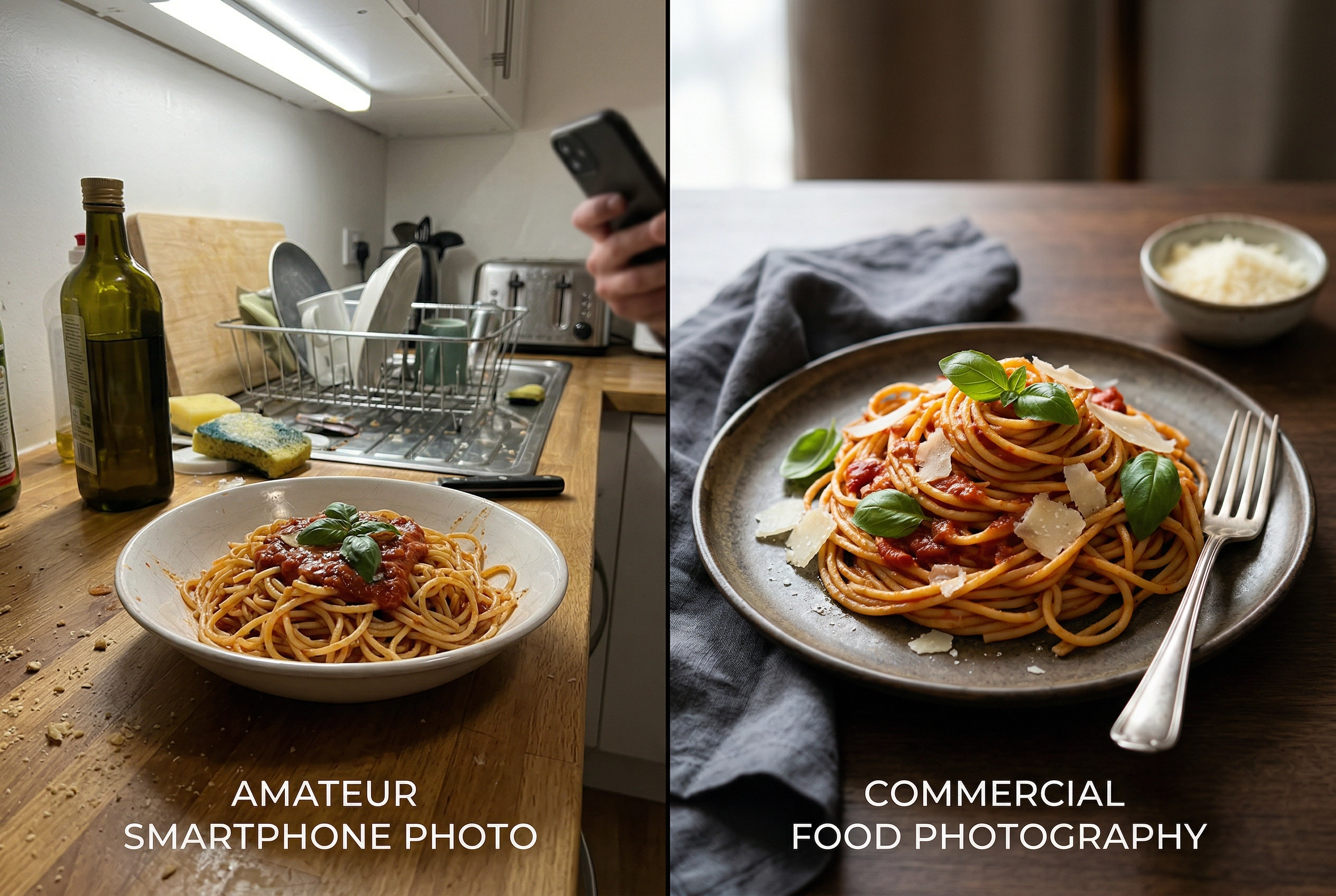 Side-by-side comparison of amateur versus commercial food photography of the same pasta dish
Licensing and Usage Rights. When a commercial food photographer delivers images, they're not just handing over files — they're granting a license that specifies exactly how the client can use those photos. Usage rights define the media (print, web, social), geography (local, national, global), duration (6 months, 1 year, perpetual), and exclusivity. According to the American Society of Media Photographers, photographers retain copyright by default — a standard commercial license typically adds 50–100% on top of the production fee. A full copyright buyout, where the client owns the images outright, can cost 100–200% more.
Amateur food photography has no licensing structure. You snap it, you post it, done.
Client Briefs and Creative Direction. Commercial food photography follows a creative brief that dictates the mood, color palette, styling approach, composition, and sometimes exact camera angles. Multiple stakeholders — brand managers, art directors, marketing teams — approve the direction before a single photo is taken. The photographer's job is to execute this vision with technical excellence.
Production Scale. A professional commercial food shoot is a team effort. On set you'll typically find:
- Photographer — directs lighting and captures shots using professional food photography equipment
- Food stylist ($500–$1,200/day) — makes every dish look camera-perfect using specialized food styling techniques
- Prop stylist — sources and arranges surfaces, plates, utensils, and backgrounds (see our props guide)
- Art director — ensures the images match the brand's creative vision
- Digital tech — manages tethered shooting and monitors image quality on screen
- Producer — coordinates logistics, schedules, and budgets
An amateur food photo? That's you, your phone, and maybe a window for natural light.
Post-Production. Commercial retouching is extensive. Color correction to brand-exact specifications, removing imperfections, compositing multiple elements, ensuring consistency across an entire campaign — this is hours of skilled editing work per image, not a quick filter. Post-production alone can add $150–$250 per image.
The Commercial Food Photography Production Process
Whether you're commissioning commercial food photography for the first time or exploring a food photography career, here's what the production workflow looks like from concept to final delivery:
Concept and Creative Brief
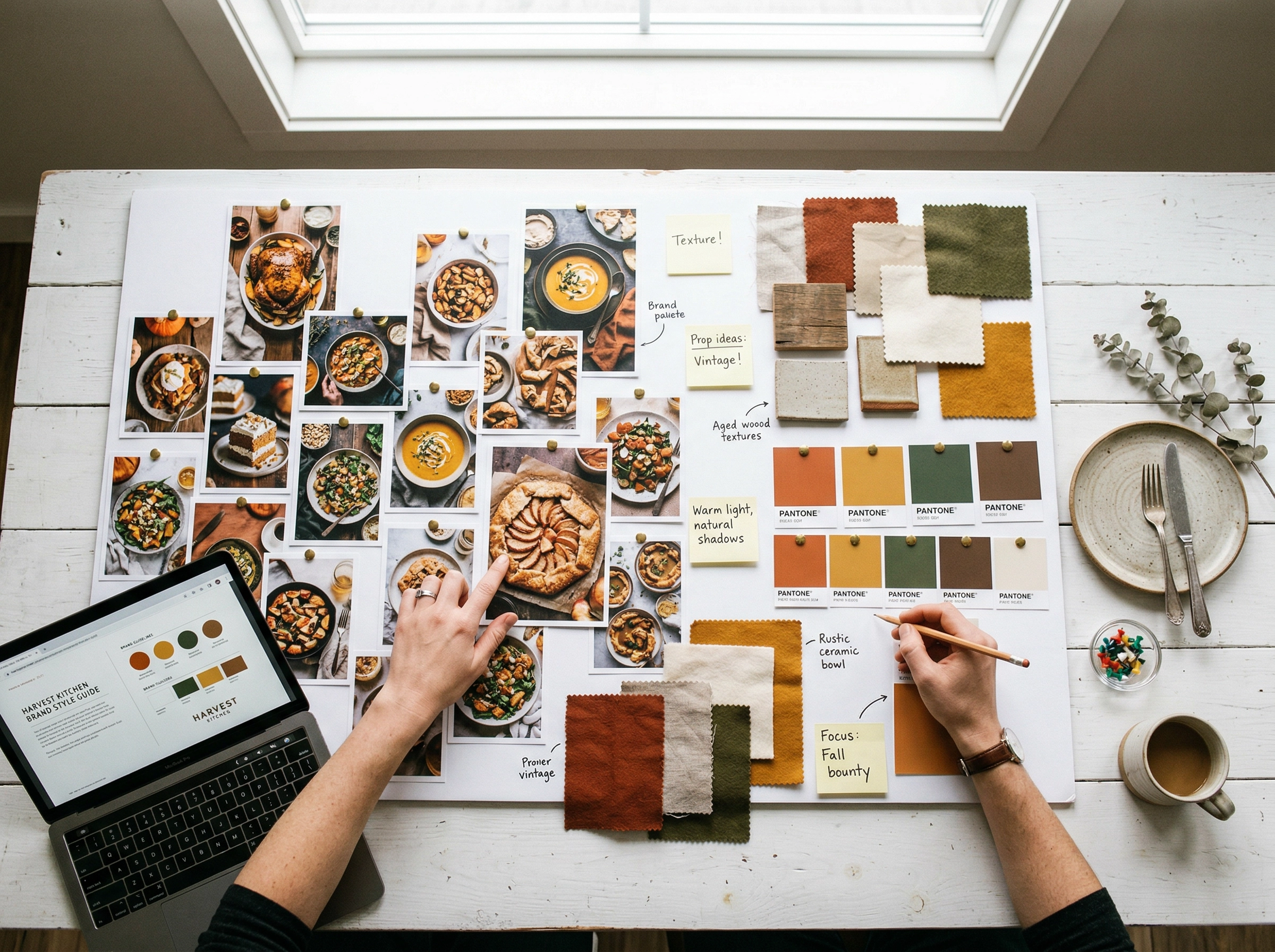 Mood board and creative brief planning for a commercial food photography campaign on conference table
Everything starts with the brief. The client or agency creates a document specifying campaign goals, target audience, mood, style references, and shot requirements. The photographer then builds a mood board — a visual collage of reference images, color palettes, and styling ideas that translates the brief into a concrete creative direction.
For large campaigns, the mood board goes through multiple approval rounds before anyone books a studio or sources a single prop.
Pre-Production
This is the planning phase where details get locked in. The team scouts locations (or books a studio), the prop stylist sources surfaces and tableware, the food stylist creates a prep list and tests recipes, and the photographer plans their lighting setup. A detailed shot list maps out every image to be captured, with specific compositions and camera angles sketched in advance.
For a 10-dish restaurant shoot, pre-production might take half a day. For a major national ad campaign, it can take weeks of work.
Shoot Day
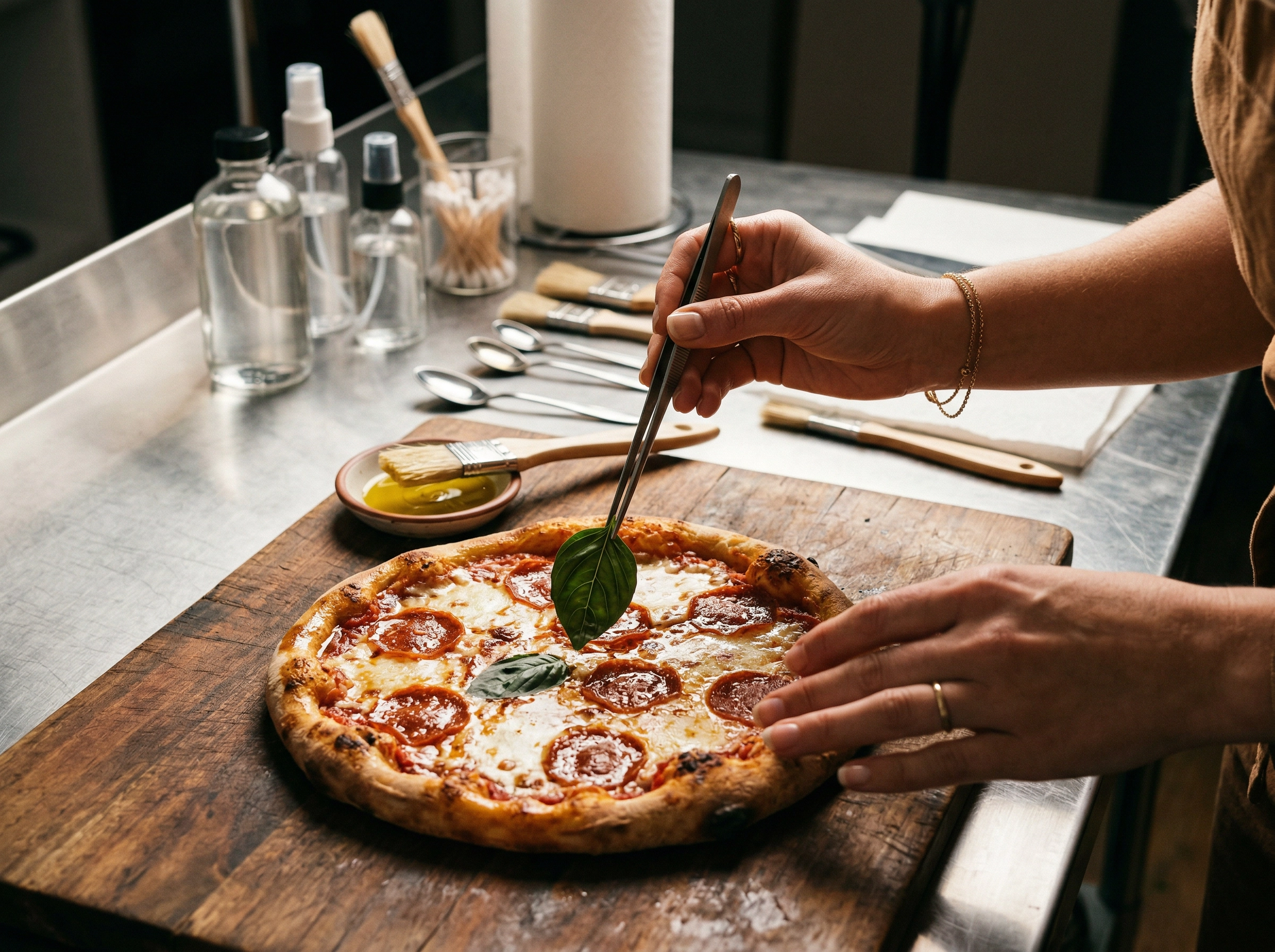 Food stylist using tweezers to place garnish on pizza during commercial food photography production
A typical commercial food shoot runs 8–12 hours. The food stylist prepares "stand-in" dishes first — versions used to set up lighting and test composition. Once the lighting and framing are approved, they prepare the "hero" dish — the final, camera-ready version styled to perfection.
Most shoots produce 10–30 final images per day, though advertising campaigns might spend an entire day creating just 2–3 perfect hero shots with multiple angles.
The photographer shoots tethered (camera connected to a monitor) so the art director and client can review each image in real-time and request adjustments on the spot. This collaborative, iterative process is a hallmark of professional commercial work.
Post-Production and Delivery
After the shoot, the retoucher takes over. This phase includes color correction, blemish removal, compositing, and formatting images for different output sizes (print, web, social). Post-production typically takes 2–5 business days and involves 2–3 rounds of client revisions.
Final delivery includes high-resolution files in multiple formats, accompanied by the licensing agreement specifying permitted usage rights.
What Commercial Food Photography Costs
Commercial food photography pricing spans an enormous range depending on scope, style, and usage rights:
| Scope | Typical Cost |
|---|---|
| Local restaurant shoot (10–20 dishes) | $500–$3,000 |
| Mid-range commercial (full day) | $3,000–$7,500 |
| Major advertising campaign (per day) | $10,000–$30,000+ |
| Per-image (commercial grade) | $25–$500+ |
Those numbers reflect the photographer's creative fee alone. Add a food stylist ($500–$1,200/day), prop stylist ($400–$800/day), studio rental ($750–$2,500/day), and retouching ($150–$250 per image), and a full production can reach $2,990–$7,750 all-in for a single metro-area shoot.
For a detailed breakdown of every line item, hidden cost, and budget strategy, see our complete food photography cost guide.
How AI Is Changing Commercial Food Photography
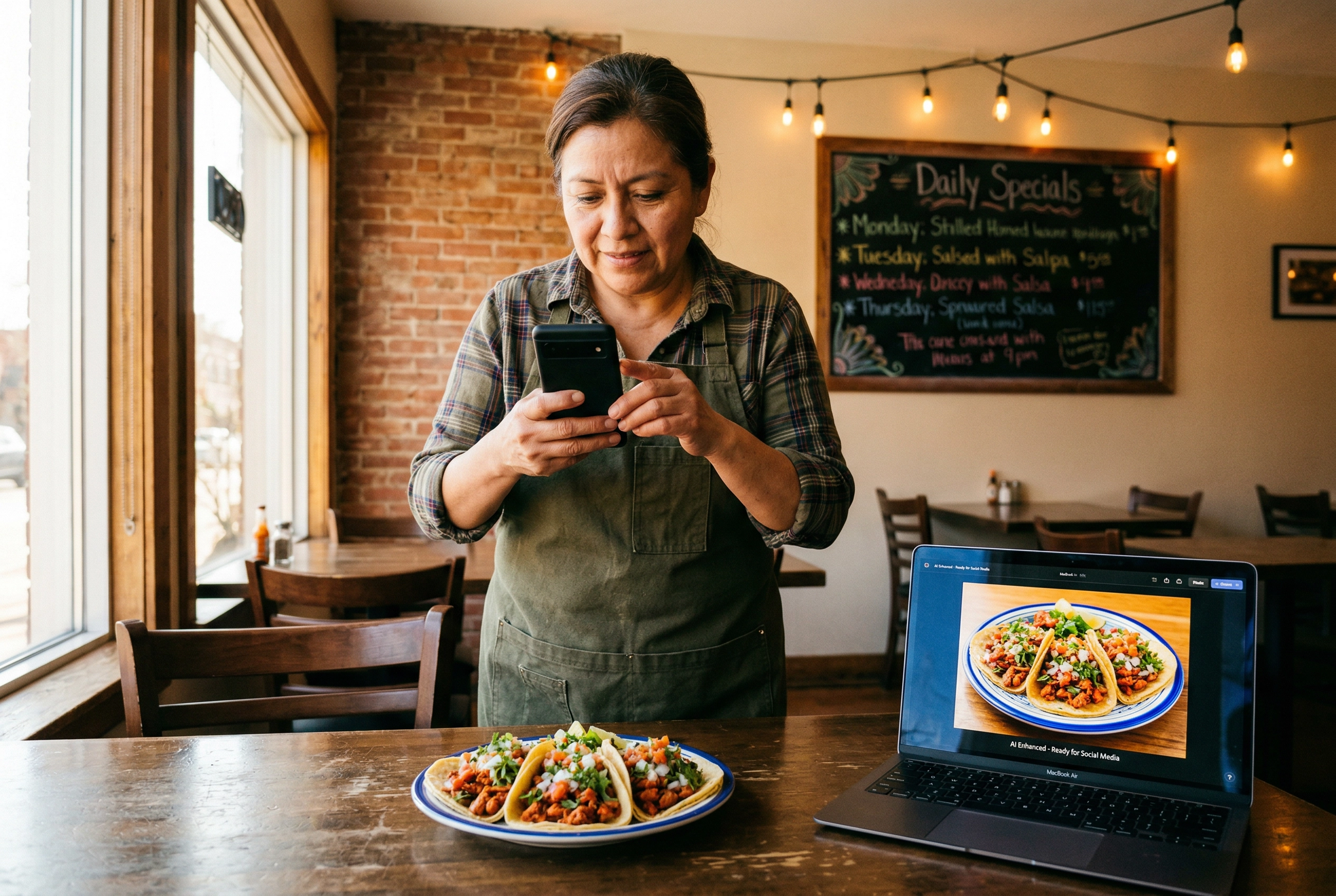 Small restaurant owner using smartphone to photograph tacos for AI-enhanced commercial food photography
Here's the reality: the cost of traditional commercial food photography puts it out of reach for the vast majority of food businesses. A local pizzeria doesn't have $3,000 for a professional menu shoot. A taco truck can't justify $500 per image for delivery app listings.
AI tools are changing this equation. Rather than replacing commercial food photographers, they're expanding who can access commercial-quality results.
FoodShot AI is purpose-built for this use case. You upload a photo of your actual dish — taken with your phone — and the AI transforms it into a professional-quality image in about 2 minutes. With 30+ style presets (Delivery, Restaurant, Fine Dining, Instagram), background replacement, and poster template creation, it handles the routine commercial food photography needs that used to require a full production crew, studio lighting, and professional equipment.
The economics tell the story:
- Traditional commercial shoot: $25–$500+ per image
- FoodShot AI: Starting at $0.36/image on the Scale plan ($99/month for 250 images)
For delivery platform photos, social media content, and menu updates — the high-volume, routine work that makes up the bulk of commercial food photography needs — AI delivers comparable quality at roughly 95% less cost. According to Forbes, AI-powered photography tools are among the fastest-growing segments of the creative tech industry.
This doesn't mean AI replaces the art and craft of professional food photography. It means a cafe owner in a small town now has access to commercial-quality imagery for their Uber Eats menu, their Instagram posts, and their printed menus — without needing a $3,000 production budget. For a detailed comparison, see our AI vs. hiring a photographer breakdown.
When You Still Need a Human Photographer
Honesty matters more than a sales pitch. Here's when AI isn't the right tool and a professional human photographer is worth every dollar:
Major advertising campaigns. When Coca-Cola shoots a holiday campaign or McDonald's launches a new product, they need emotional storytelling, precise creative direction, and human artistry that only a professional team can deliver. These are six-figure productions with specific artistic visions that AI can't replicate.
CPG product packaging. Packaging requires exact color accuracy across print runs, precise compositions for specific label dimensions, and the kind of controlled studio work that demands hands-on expertise and specialized equipment.
Cookbook and editorial shoots. Cookbooks require a consistent editorial vision across hundreds of images — a cohesive style that tells a story across chapters. This narrative arc requires a human creative director and food stylist working together through every recipe.
Lifestyle campaigns featuring people. Any shoot with human hands, interaction, or lifestyle scenarios requires a photographer, models, and a traditional production setup.
A practical rule of thumb: AI handles the 80% of commercial food photography that's functional — delivery apps, menus, social media, and basic marketing. Human photographers handle the 20% that's aspirational — brand campaigns, packaging, and premium editorial work. Most food businesses need the former far more than the latter.
Frequently Asked Questions
How much does a commercial food photographer charge?
Rates range widely based on scope, style, and market. A local restaurant shoot costs $500–$3,000 total, while major advertising campaigns run $10,000–$30,000+ per day. Per-image pricing for commercial-grade work falls between $25–$500. Our food photography cost guide breaks down every pricing model and budget strategy in detail.
Do I need commercial food photography for my restaurant?
Yes — but you may not need a traditional photographer. Professional-quality food images directly impact online orders, menu engagement, and social media performance. Research consistently shows that high-quality food photos increase conversion rates on delivery platforms. The question is whether your budget calls for a full production shoot or an AI-powered solution like FoodShot AI that creates commercial-quality results from phone photos.
What's the difference between commercial and editorial food photography?
Commercial food photography is client-driven and designed to sell a product or promote a brand. Every creative decision — from lighting to props to composition — follows a brief approved by stakeholders. Editorial food photography is story-driven, used in magazines, cookbooks, and blogs to evoke mood through natural light and more personal styling. Editorial gives the photographer more creative freedom; commercial prioritizes the brand's vision and business objectives.
Can AI replace commercial food photography?
For routine needs — delivery app images, social media content, menu updates — AI tools now produce results that rival traditional commercial food photography at a fraction of the cost. For high-stakes work like advertising campaigns, product packaging, and cookbook shoots, professional human photographers remain essential. The practical answer: AI handles everyday commercial photography needs, while professionals handle the premium projects. Our traditional vs. AI food photography comparison has the full analysis.