How to Start a Food Blog & Become a Food Blogger (8 Steps)
 Ali Tanis16 min read
Wondering how to become a food blogger in 2026? Good news — food blogging is still the most profitable blog niche you can start. A RankIQ survey of 803 bloggers found food bloggers earn a median income of $9,169 per month, beating travel, finance, and lifestyle bloggers combined.
But the landscape has shifted dramatically. AI tools have transformed food photography. Short-form video dominates social media. The bar for quality content keeps rising every year.
This complete guide shows you how to become a food blogger step by step — from picking your niche and building your website to creating great food photography, learning SEO, growing your audience, and making real money from your blog. Every tip is actionable. The timeline is honest.
Quick Summary: Start a food blog in 2026 by choosing a tight niche, setting up WordPress, mastering phone photography (AI tools like FoodShot make this far easier), learning basic SEO, and publishing consistently. Most food bloggers earn their first income within 6–12 months and hit meaningful revenue around 12–18 months. Total startup cost: under $200.
Is Food Blogging Still Worth Starting in 2026?
With over 600 million blogs worldwide and 7.5 million posts published daily, is there room for new food bloggers? Absolutely — but how to become a food blogger successfully looks different than it did five years ago.
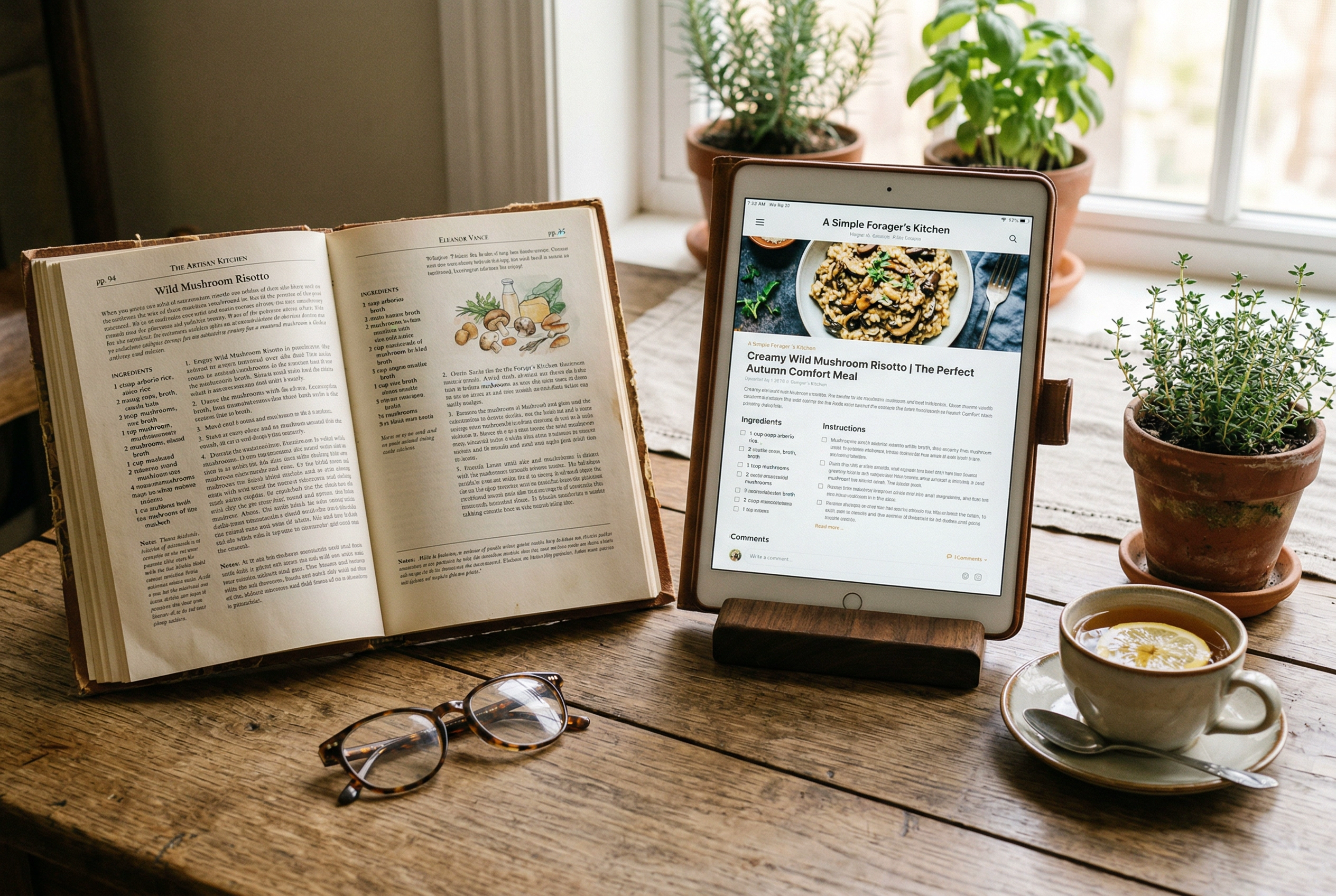 Open cookbook beside tablet showing food blog representing the evolution from print to digital food content creation
Here's what the numbers actually say about food blog income and opportunity:
- Food blogs get more organic search traffic than any other blogging niche
- The average US food blogger earns $62,275/year, with top earners clearing $124,500 (ZipRecruiter, March 2026)
- Established bloggers like Midwest Foodie earned over $530,000 in 2025 from blog revenue
- Newer bloggers like Bites by Bianca made $77,000 in her first full-time year
- Food bloggers have the highest median income of any blogging category
The "start a blog, add ads, retire" fantasy is dead. What's thriving is building a food content brand that earns across multiple channels: display ads, affiliate partnerships, sponsored posts, digital products, and freelance food photography.
Step 1: Choose a Niche Specific Enough to Win
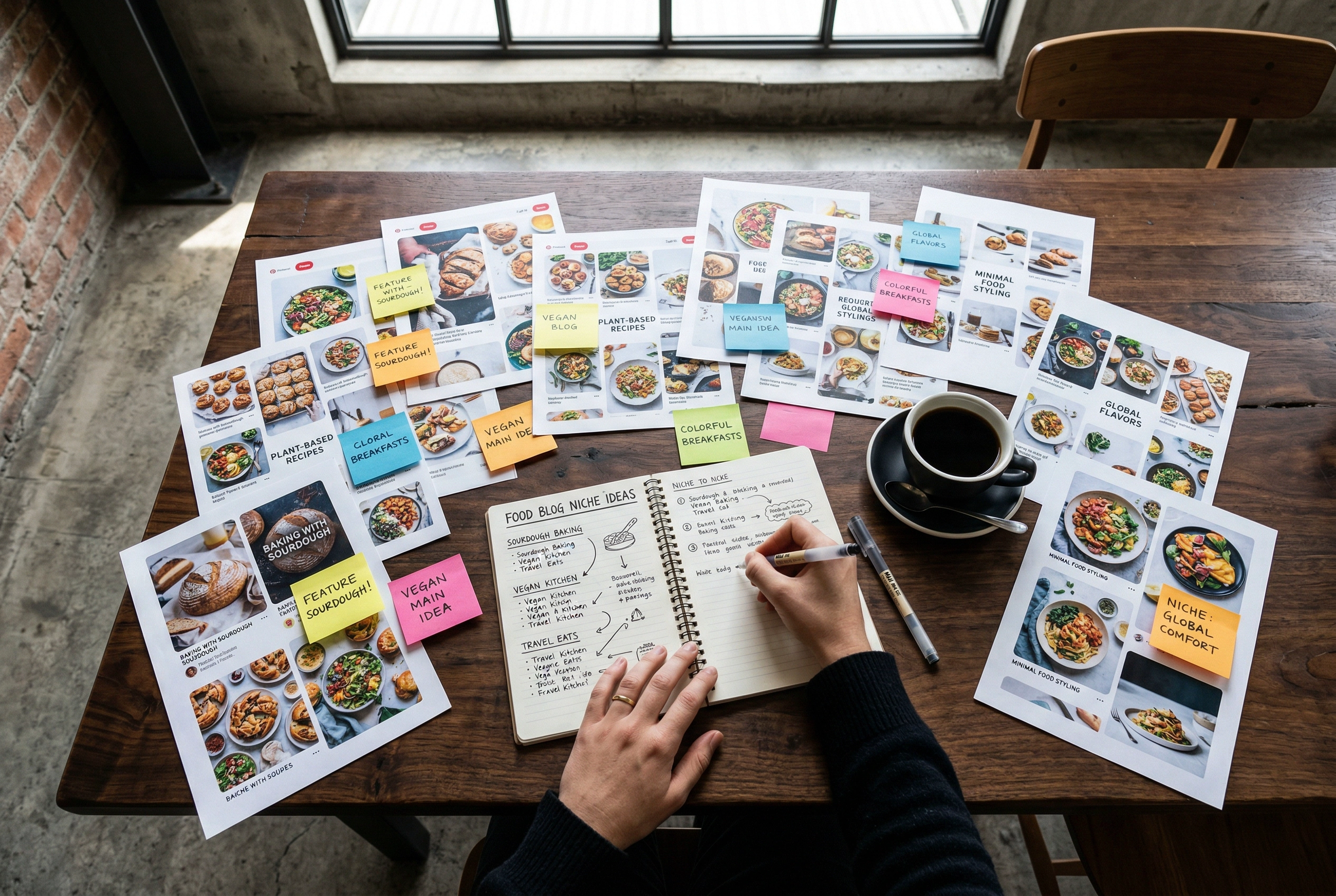 Food blogger brainstorming niche ideas in notebook surrounded by Pinterest food inspiration on dark wood table
This is the most important decision when figuring out how to become a food blogger. A general "I write about food" approach won't work. You need a niche tight enough to beat established food bloggers in search results, but broad enough to sustain years of recipe development and content creation.
Three Main Food Blog Categories
Recipe blogs are the most profitable model for food bloggers. You develop original recipes, photograph the cooking process, and publish step-by-step posts with photos. Each recipe earns simultaneously from display ads, affiliate links, and brand deals.
Restaurant review blogs cover dining in a specific city or region. They attract local brand partnerships but are harder to monetize with display ads since the content isn't as evergreen as recipes.
Food travel blogs combine cuisine and travel — street food guides, regional cooking deep-dives, food-focused destinations. They earn through affiliate marketing (hotels, tours, cookware) but require a travel budget to sustain.
Finding Your Angle
Don't pick "recipes." Pick "15-minute weeknight dinners for families" or "gluten-free baking for beginners" or "authentic Thai street food at home."
Ask three validation questions before committing:
- What do people already ask you to cook? Friends and family are your first audience signal.
- Can you sustain 200+ posts on this topic? Too narrow and you'll run dry. Too broad and you'll never rank on Google.
- Are people searching for this? Type your niche idea into Google. Autocomplete suggestions represent real search demand from real people.
The sweet spot: genuine cooking passion meets proven search volume.
Step 2: Set Up Your Blogging Platform
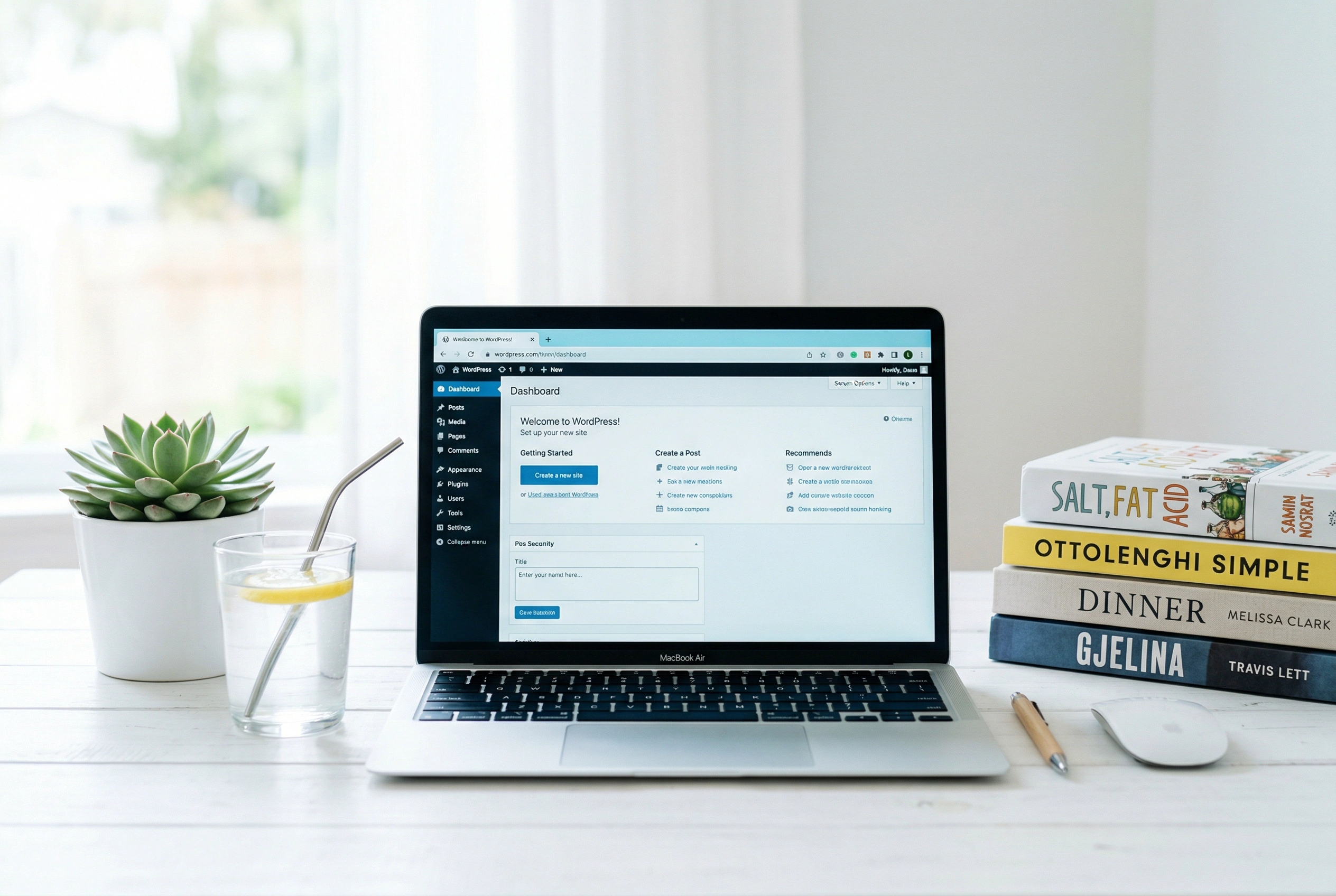 Clean minimal desk setup with laptop showing blog dashboard alongside cookbooks and succulent plant
Your platform choice affects design, SEO, monetization, and costs. Choose wisely — switching later is painful and time-consuming.
WordPress (Self-Hosted): The Gold Standard for Food Blogs
Most successful food bloggers use self-hosted WordPress. Here's why it dominates:
- Recipe plugins (WP Recipe Maker, Recipe Card Blocks) add schema markup automatically, getting your recipes into Google's rich results with star ratings and cook times
- Full SEO control over every element of your website and content
- Ad network compatibility — Mediavine, Raptive, and all premium ad networks work seamlessly with WordPress sites
- Thousands of food-specific themes built for recipe display and food photography showcase
Startup cost: Domain ($10–15/year) + hosting ($3–10/month) + theme ($0–80) = under $200 for year one.
Squarespace or Wix: Easier, but Limited
Beautiful templates and easier setup, but no recipe plugins. That means no schema markup, no rich snippets in Google, and significantly less organic traffic. Fine for portfolio sites — not for recipe blogs serious about earning money.
Social-First (Instagram/TikTok): Supplement, Not Foundation
Builds a following fast, but serious limitations for food bloggers: you don't own the platform, no passive ad revenue, no Google search visibility, and limited monetization. Use social media to drive traffic to your food blog, not as a replacement. Read our social media marketing guide for restaurants for promotion strategies.
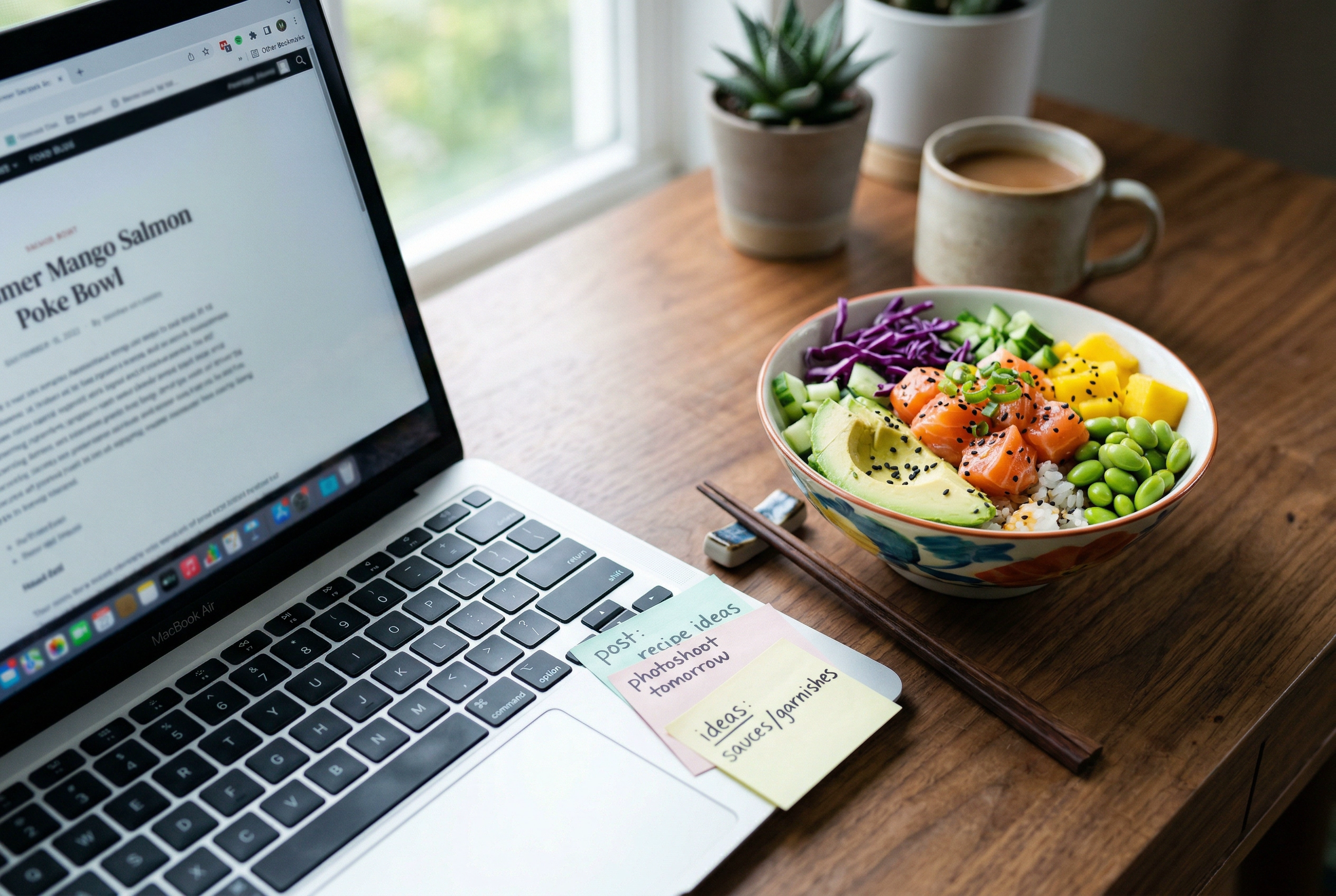 Colorful poke bowl beside laptop with content planning sticky notes on modern wooden desk
Step 3: Gather Your Food Blog Equipment
You don't need expensive photography gear to start a food blog. Most readers won't notice the difference between a well-shot phone photo and a DSLR image — especially after AI enhancement.
The Starter Kit
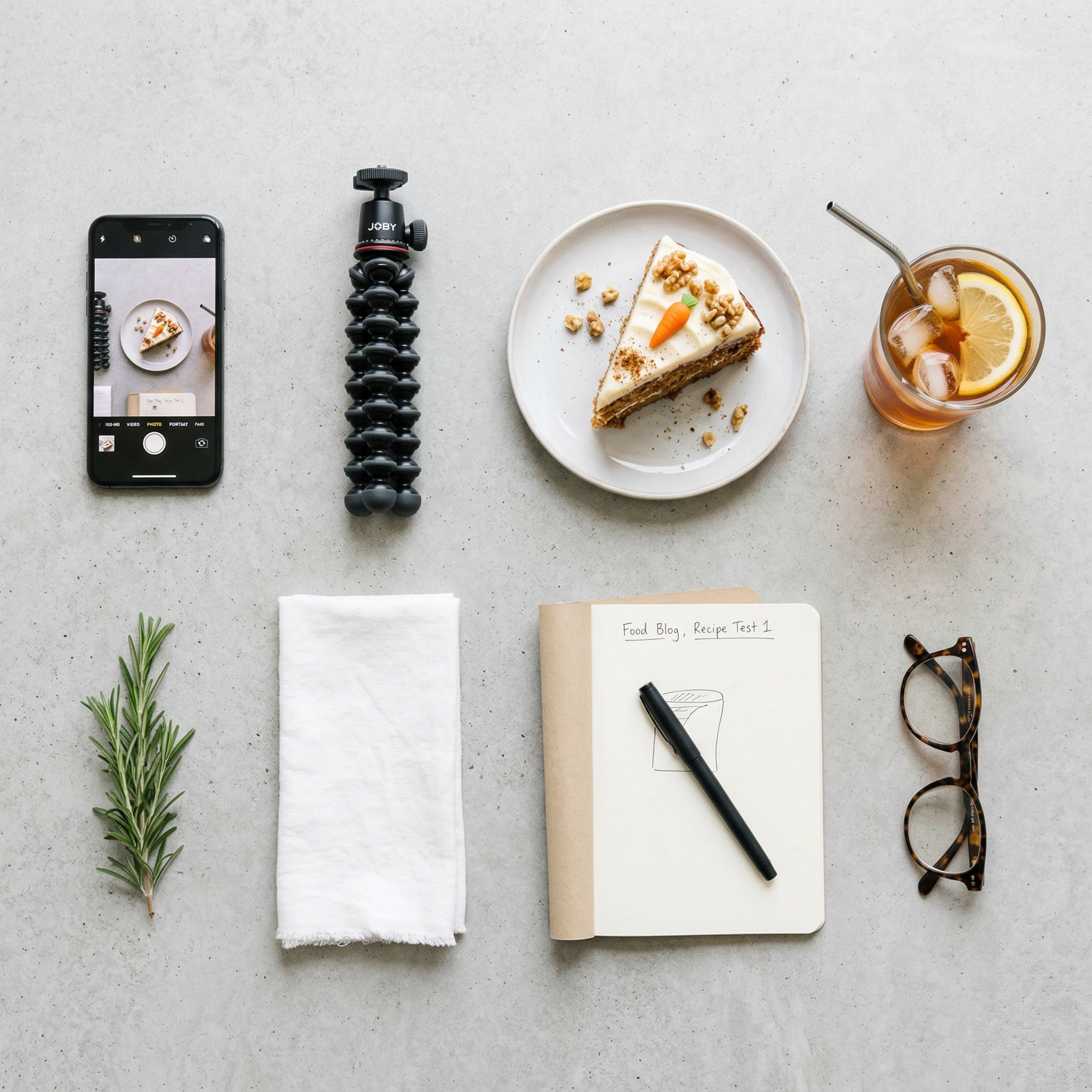 Flat-lay of essential food blogging starter kit with phone, tripod, styled plate, and notebook on gray surface
- A recent smartphone. Any phone from the last 3–4 years works great for food photography. See our iPhone food photography tips and iPhone camera settings for food guides.
- A window. Natural light is the best lighting for food photography. No ring light needed yet.
- Basic props. White plates, linen napkin, wooden cutting board. Our food photography props guide has a complete list.
- An AI food photo editor. FoodShot AI transforms phone photos into professional food photography in about 2 minutes. Upload your food photo, choose a style preset (30+ options), and the AI handles lighting, composition, and styling. Built specifically for food content creators and bloggers.
More detail in our complete food photography equipment guide.
Why AI Tools Change Everything for Beginner Food Bloggers
The biggest barrier to becoming a food blogger used to be photography skill. Learning lighting, styling, and how to edit food photos takes months of practice. AI tools like FoodShot compress that learning curve for new bloggers:
- Turn phone snaps into professionally styled food images
- Try different backgrounds and plating without reshooting
- Create social media posts and Pinterest pins from one photo
- Maintain consistent visual branding across all blog content
This doesn't replace learning photography (keep at it!), but it means professional-looking food blog content from day one.
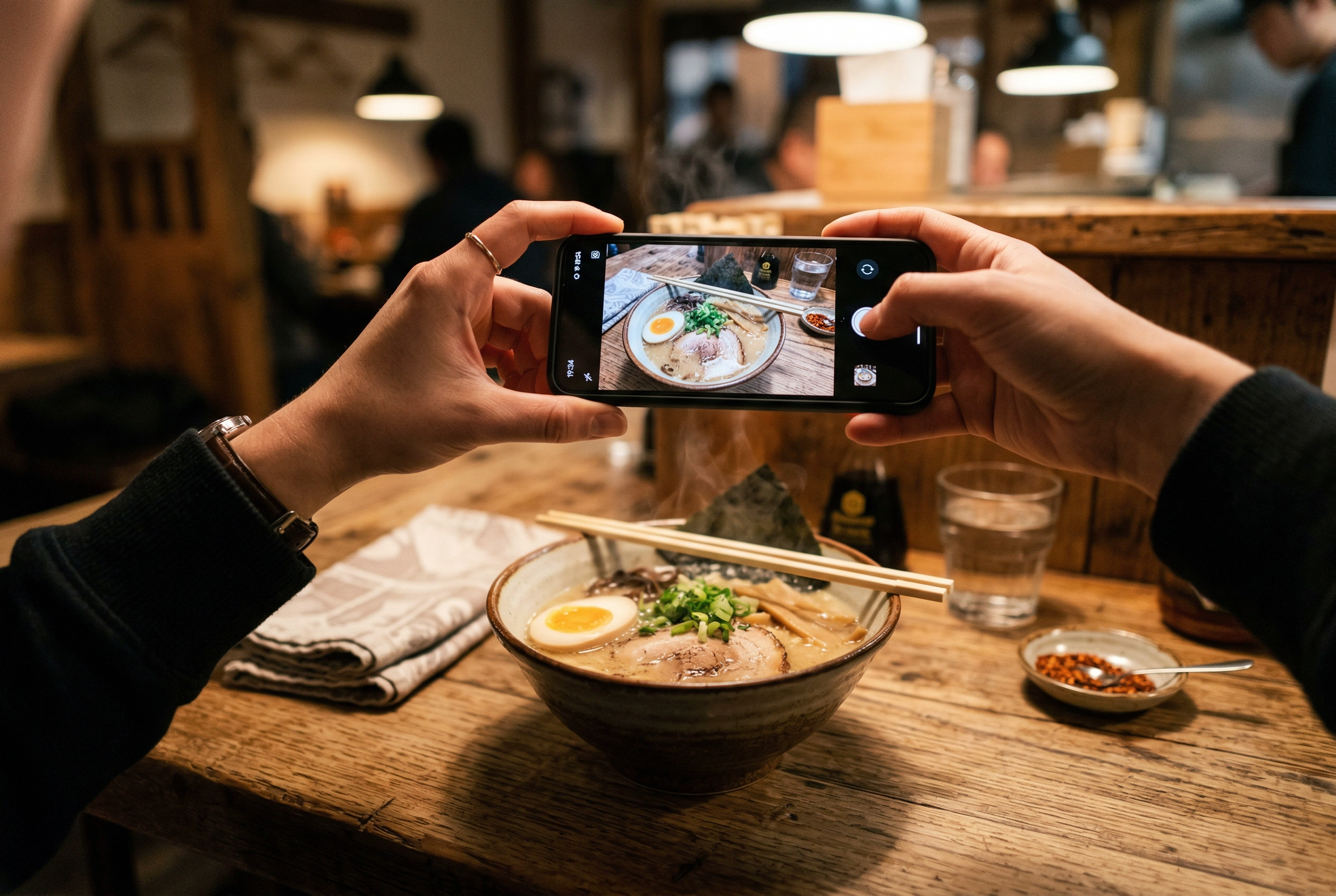 Hands holding smartphone photographing a steaming bowl of ramen on rustic wooden table with warm lighting
Step 4: Learn Food Photography Fundamentals
Even with AI tools, understanding the basics makes every food photo significantly better. Master these three areas and you'll produce better images than most beginner food bloggers. For a complete beginner's primer, start with our guide on what food photography is.
Lighting Is Everything
Natural window light, diffused through a sheer curtain. That's your secret weapon. Avoid overhead kitchen lights — they create ugly shadows and yellow color casts. Our food photography lighting guide covers advanced techniques.
Two Essential Camera Angles
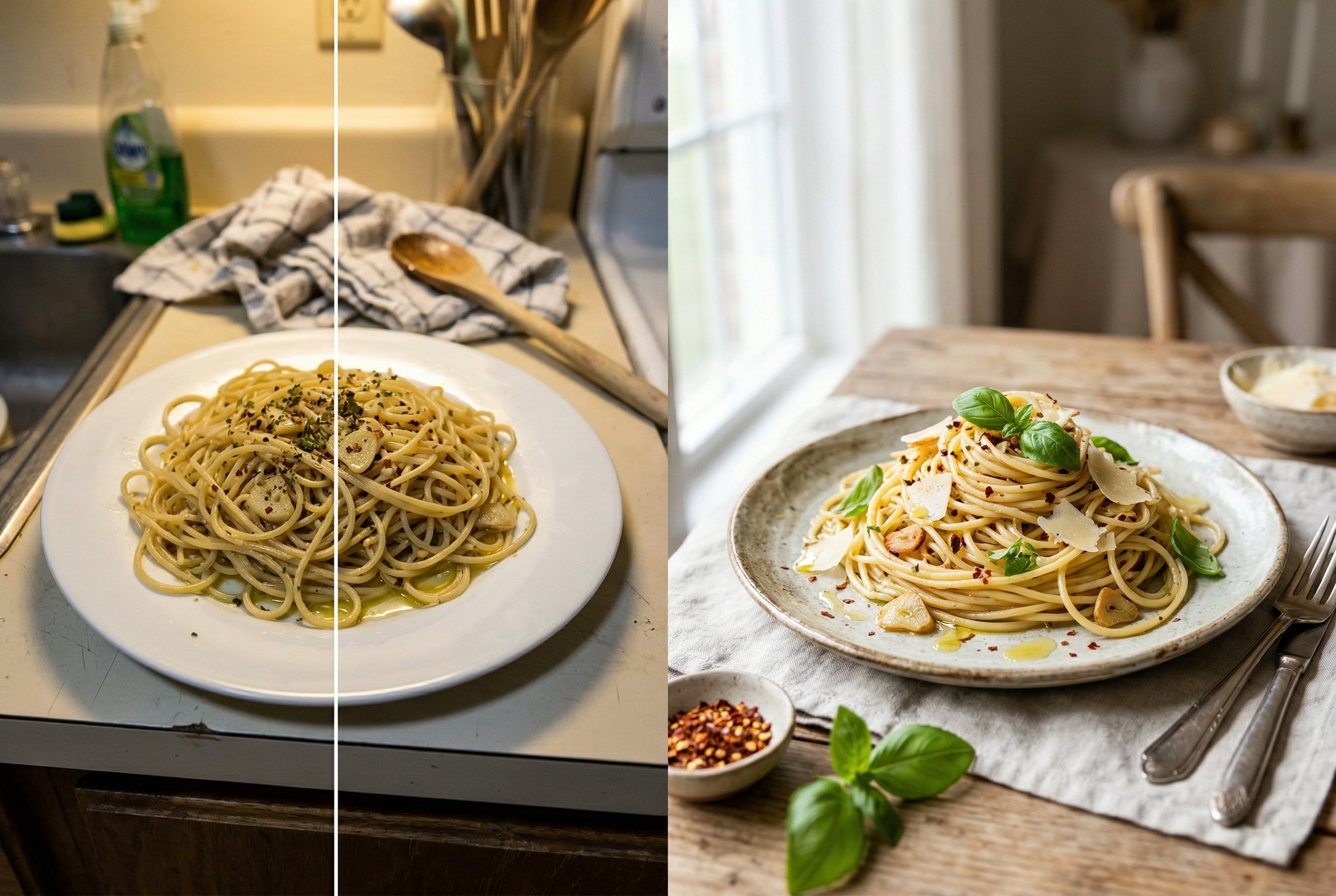 Before and after food photography comparison showing casual pasta snapshot versus professionally styled version
- Overhead (flat lay): Perfect for bowls, pizzas, salads, and composed plates. Keep your phone parallel to the surface.
- 45-degree angle: Natural dining perspective. Great for stacked foods, drinks, layer cakes, and anything with height.
Style Your Food Simply
Less is more. Clean plate, simple background, one or two props (fresh herbs, linen napkin, vintage fork). Our food styling guide goes deeper into plating and composition techniques.
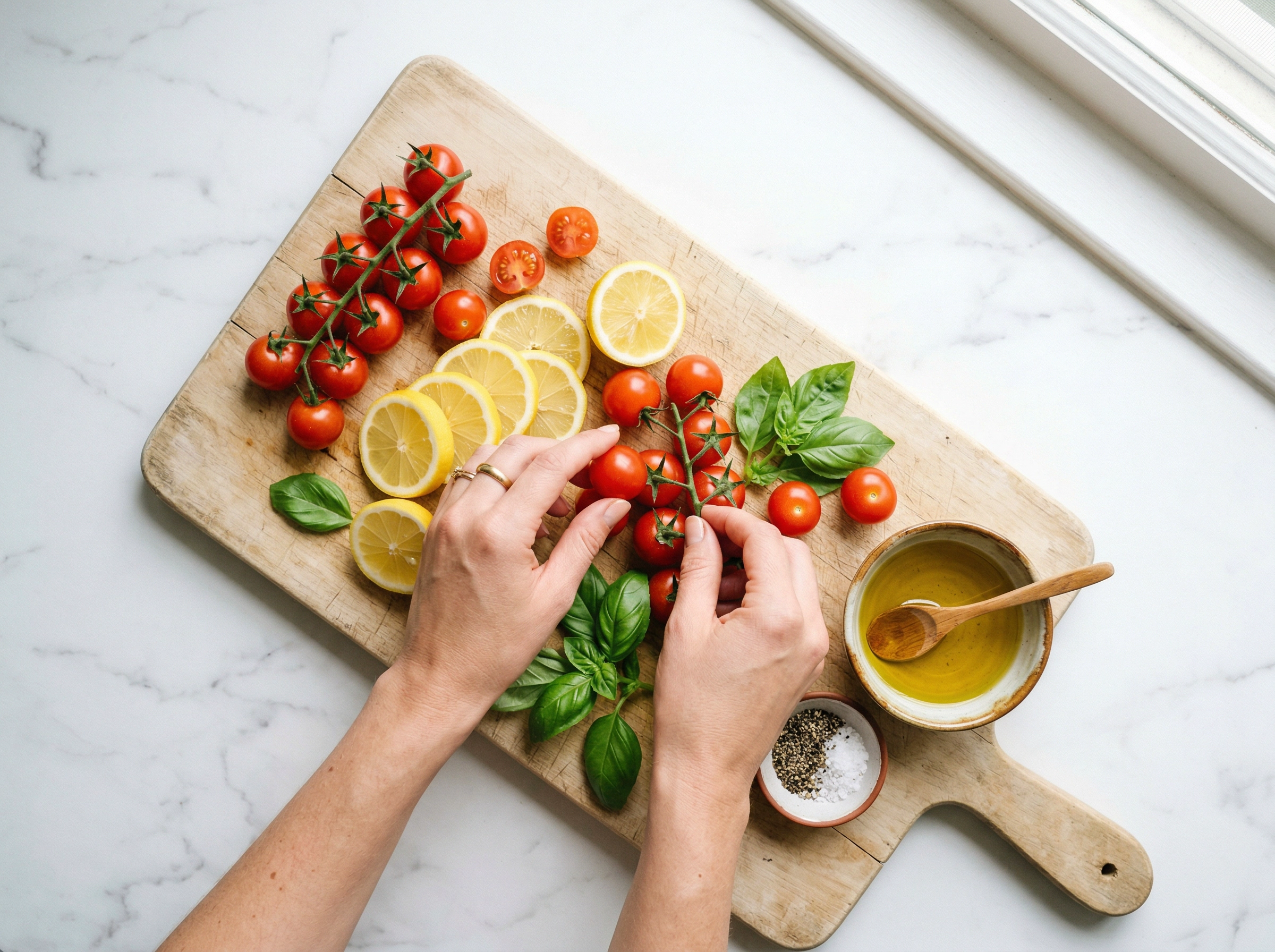 Fresh recipe ingredients styled on cutting board for food blog photography with natural overhead lighting
For the full walkthrough, read our 20 food photography tips that work with phones or DSLRs. Also check out our phone food photography guide for step-by-step instructions.
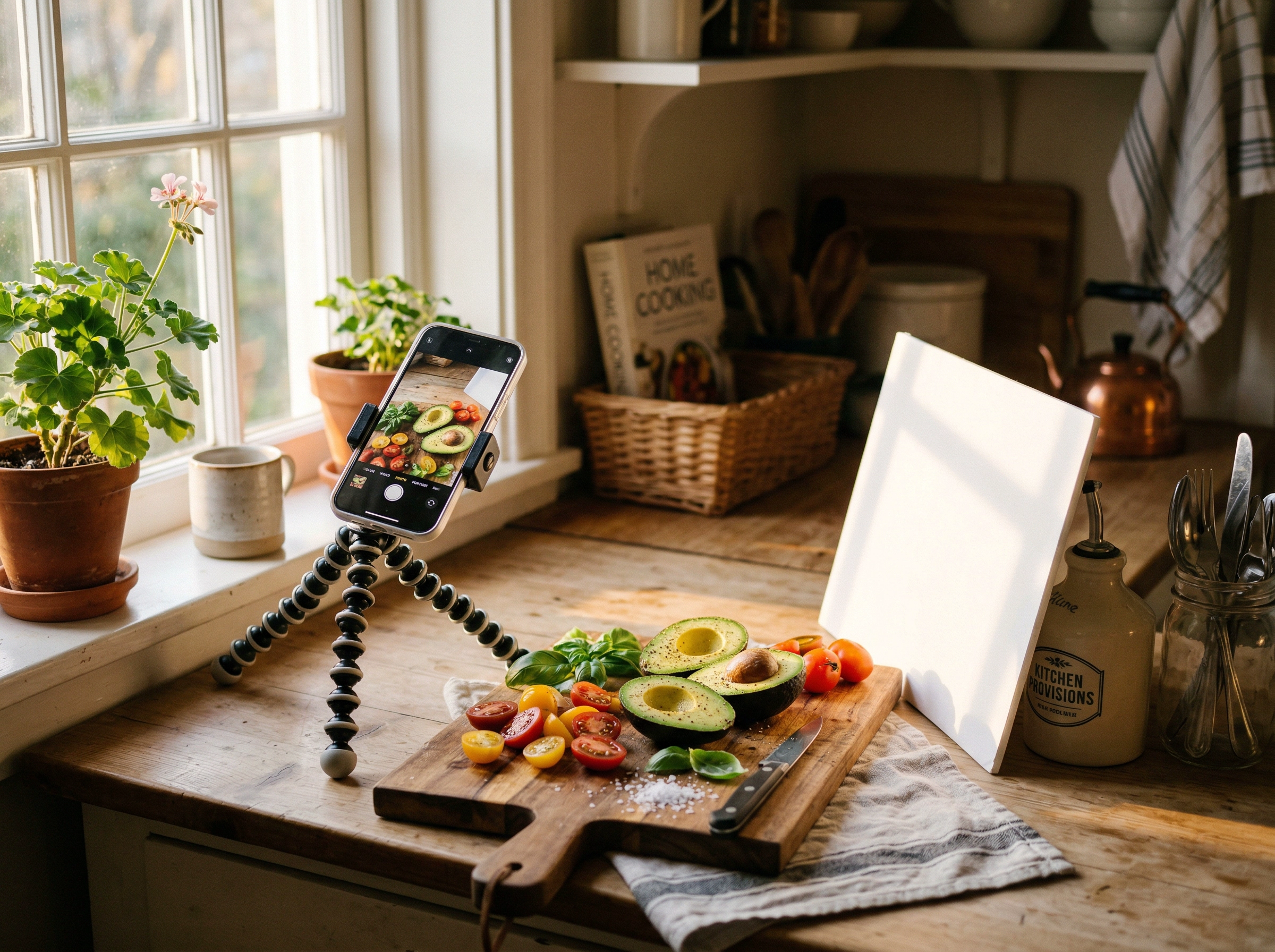 Beginner food photography setup with smartphone tripod, reflector, and fresh ingredients in natural window light
Step 5: Create Your First 10 Blog Posts
Don't launch an empty food blog. Don't wait for perfection either. Publish 10 solid posts before promoting anything online.
What Each Recipe Post Needs
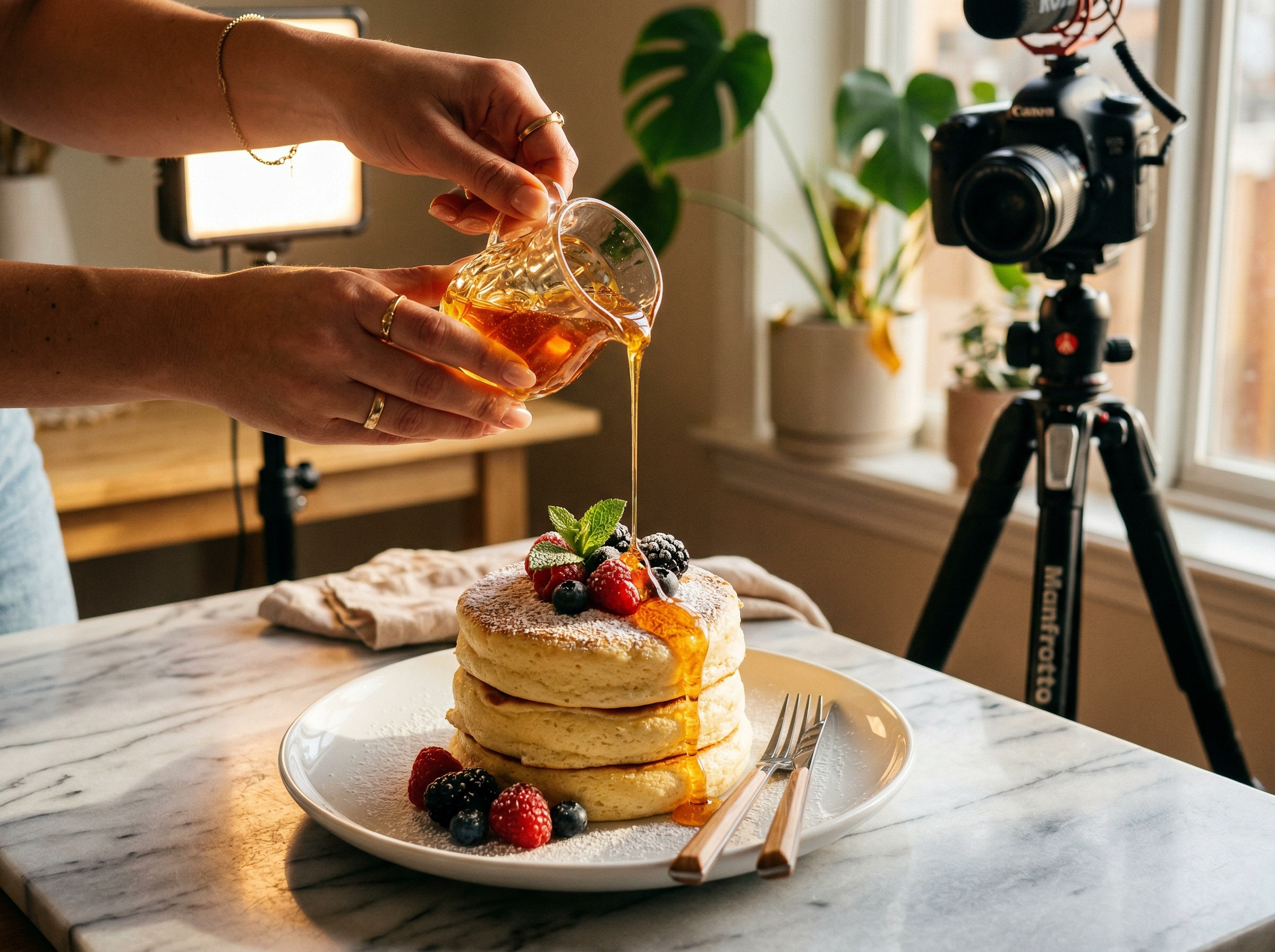 Hands drizzling honey over Japanese souffle pancakes with berries while photographing for food blog content
- Keyword-targeted title ("Easy 30-Minute Chicken Stir Fry" — not "My Tuesday Dinner")
- Brief personal intro (2–3 paragraphs max — readers came for the recipe)
- Recipe card with structured data via your recipe plugin
- Process photos showing key cooking steps (hero shot + 3–4 in-progress images)
- Tips, variations, and storage instructions that genuinely help readers
- "Jump to Recipe" button — improves reader experience and engagement metrics
Content Mix for Your First 10
- 6–7 original recipes in your niche
- 1 roundup post ("10 Easy Weeknight Pasta Recipes for Busy Parents")
- 1 how-to guide ("How to Season Cast Iron Like a Pro")
- 1 personal story with a food angle
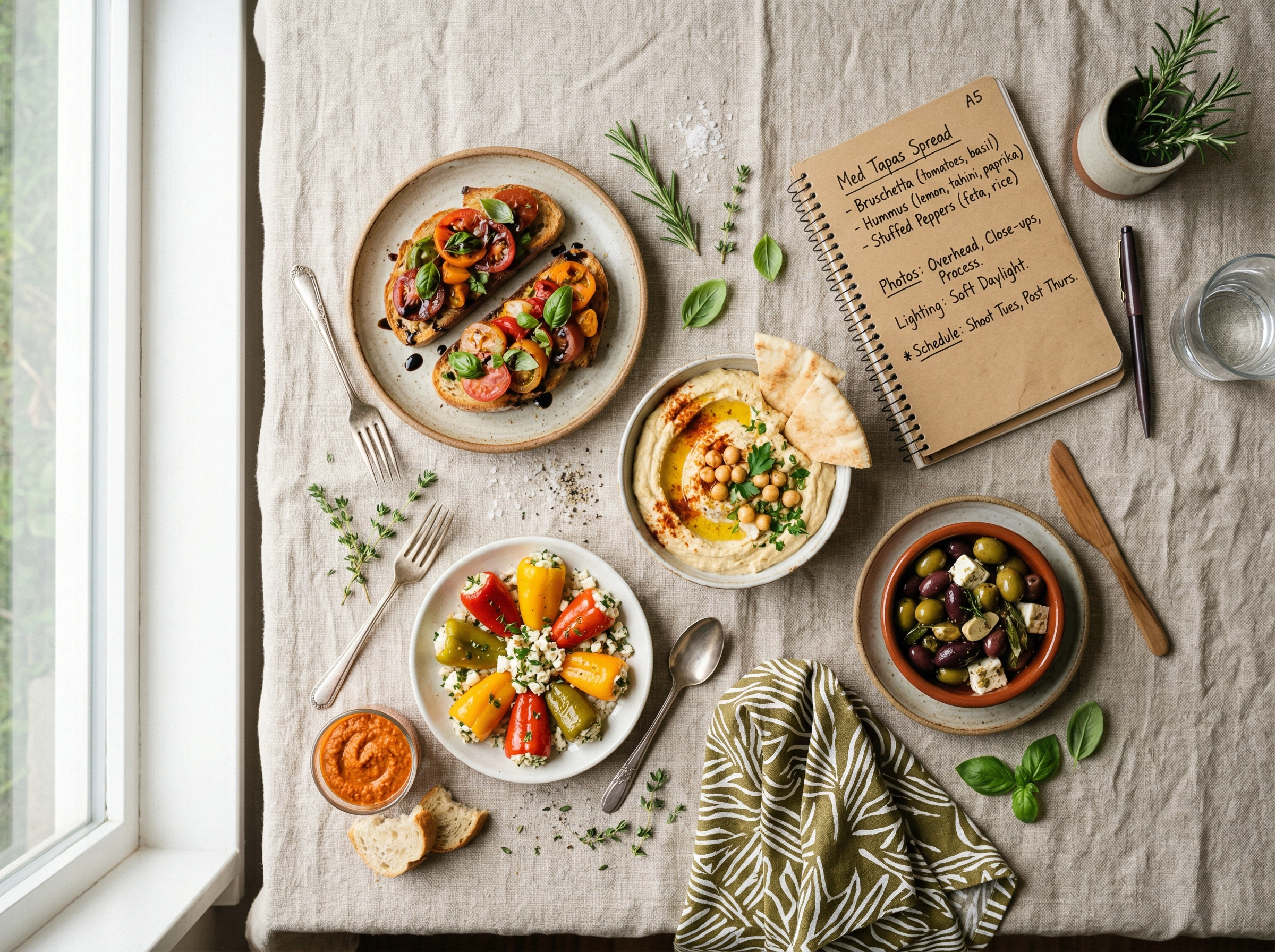 Overhead view of styled Mediterranean tapas plates on linen tablecloth with content planning notebook for food blogging
This mix helps Google understand your blog's topic while keeping your audience engaged.
Quality Always Beats Quantity
Each recipe post on a successful food blog takes roughly 4 hours — between developing, cooking, photographing, writing, and SEO optimization. Ten excellent posts outperform fifty rushed ones. In year one, credibility with both Google and readers matters more than volume.
 Hand writing food blog post ideas in notebook beside laptop with croissant and espresso in morning light
Step 6: Master SEO (It's Not Optional for Food Bloggers)
Google is the #1 traffic source for food blogs. SEO is the difference between a hobby blog nobody reads and a business that earns money while you sleep.
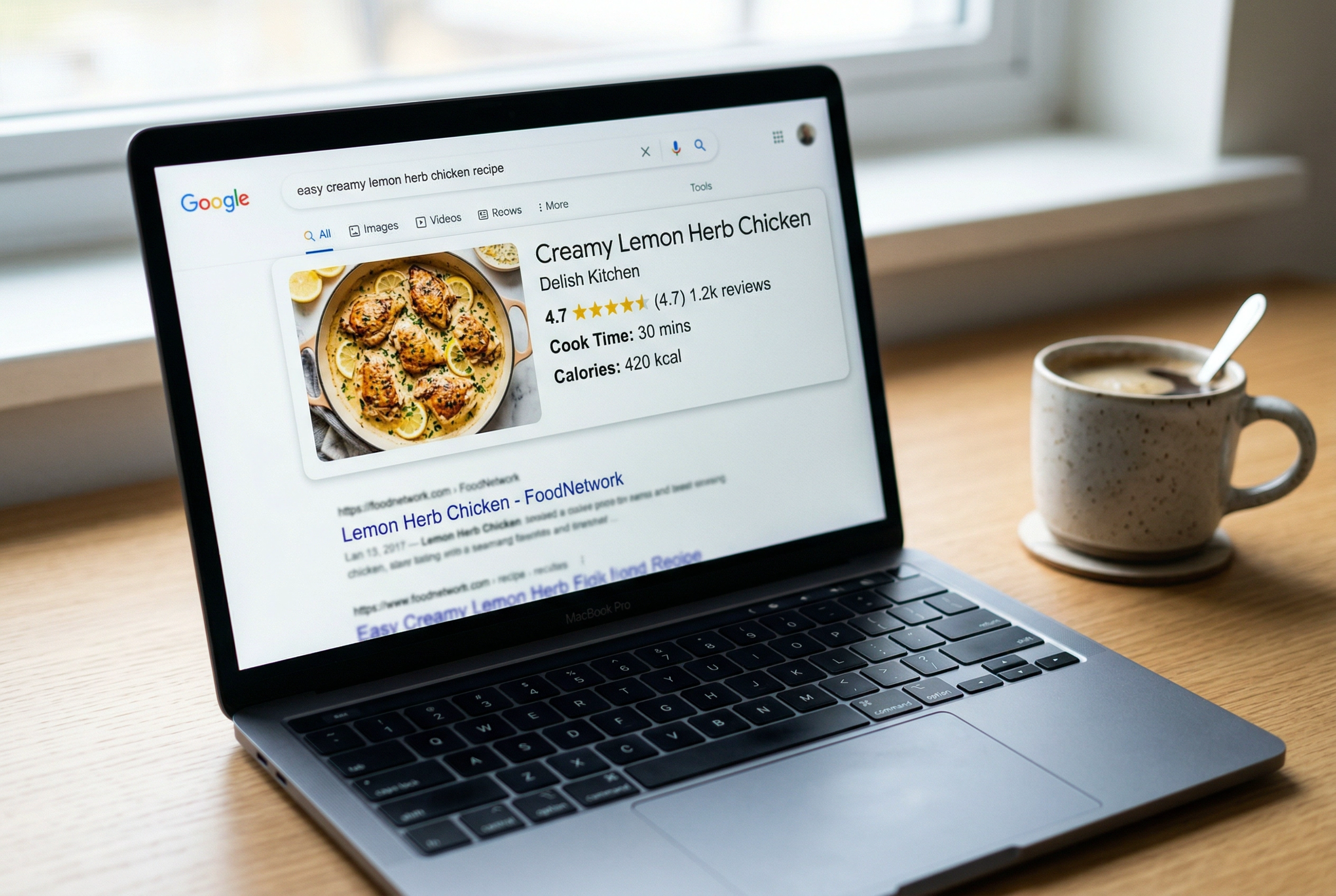 Laptop screen showing Google search results with recipe rich snippets demonstrating food blog SEO success
Keyword Research Basics
Before writing any blog post, research what real people search for online. Don't guess.
Free tools to start with:
- Google Autocomplete — type recipe ideas, note the suggestions
- Google Search Console — shows which search queries send traffic to your site
- "People Also Ask" boxes — goldmines for blog post and content ideas
Target long-tail keywords (3–5 words). "Chocolate cake recipe" has massive competition. "Easy chocolate cake recipe no eggs" is achievable for new food blogs.
On-Page SEO Checklist for Every Post
- Title tag: Primary keyword near the beginning
- Meta description: Compelling, under 155 characters
- URL: Short and descriptive (
/easy-chicken-stir-fry) - Headings: Related keywords used naturally in H2s and H3s
- Image alt text: Describe each photo for search and accessibility
- Internal links: Connect related recipes and posts across your food blog
Recipe Schema Markup: Your Secret Weapon
Recipe schema tells Google your recipe's ingredients, cooking time, nutrition info, and ratings. With schema, your recipes appear as rich results — those eye-catching cards with food photos, star ratings, and cook times at the top of search results.
Recipe plugins like WP Recipe Maker generate this markup automatically. Without schema, your blog is invisible in Google's recipe search — and that's where massive food blog traffic comes from.
 Food blogger working on laptop at a cozy cafe with layered cake and latte beside rainy window
Step 7: Build Your Food Blog Audience
Great content needs distribution. Here's how to grow your readership and build a loyal audience for your food blog.
Choose 1–2 Social Media Platforms
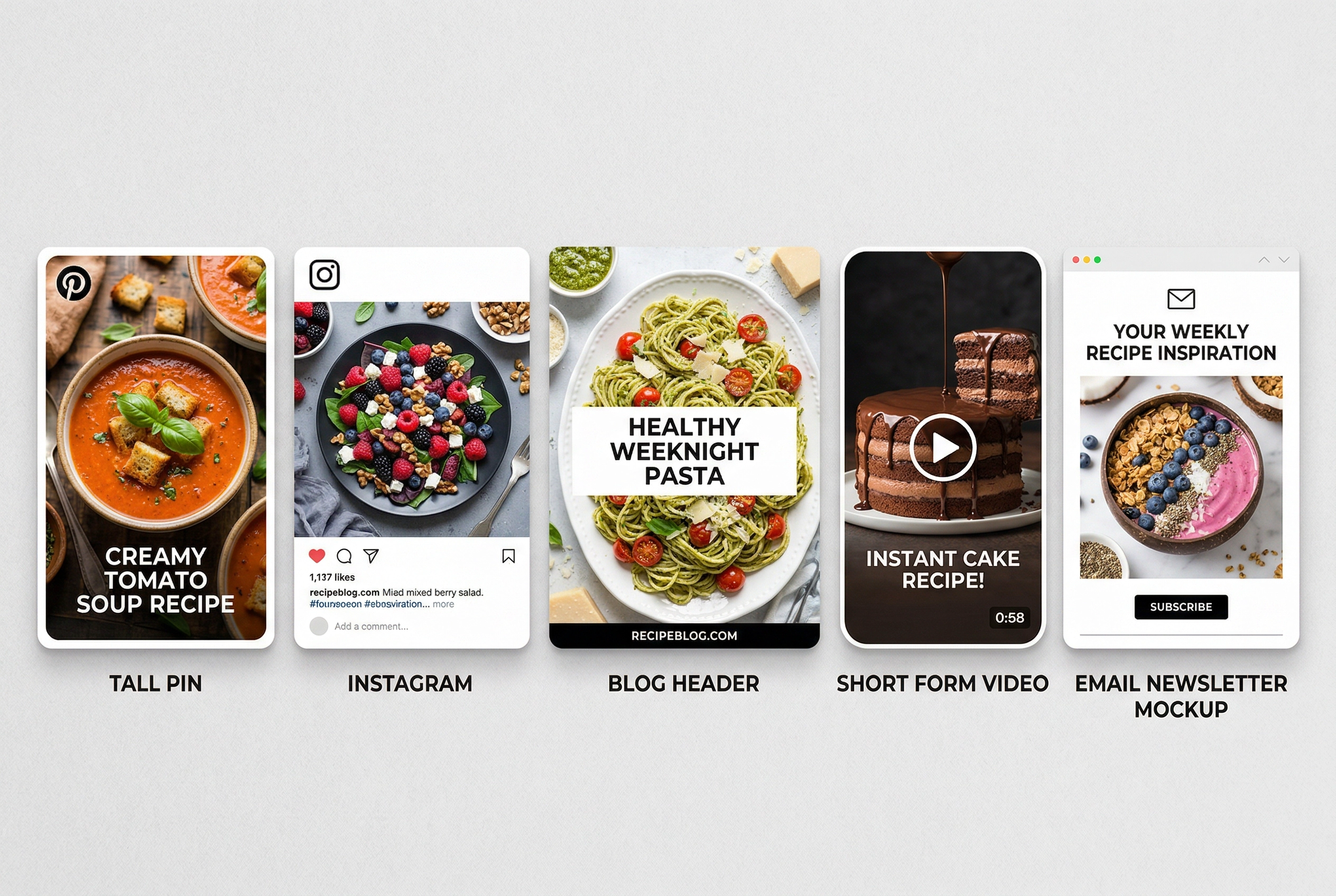 Multi-platform food content layouts showing Pinterest pin, Instagram post, blog header, and email newsletter formats
Don't spread thin across every platform. Pick one or two and commit:
- Pinterest — Massive traffic driver for food bloggers. Pins last months. Users actively search for recipes. Create eye-catching pin images with tools like FoodShot's poster templates.
- Instagram — Great for building community and landing brand deals. Reels get the best reach. See our Instagram food photography guide for content tips.
- TikTok — Outstanding for discovery and viral potential among new audiences. Lower blog conversion rate than Pinterest, but excellent for brand awareness.
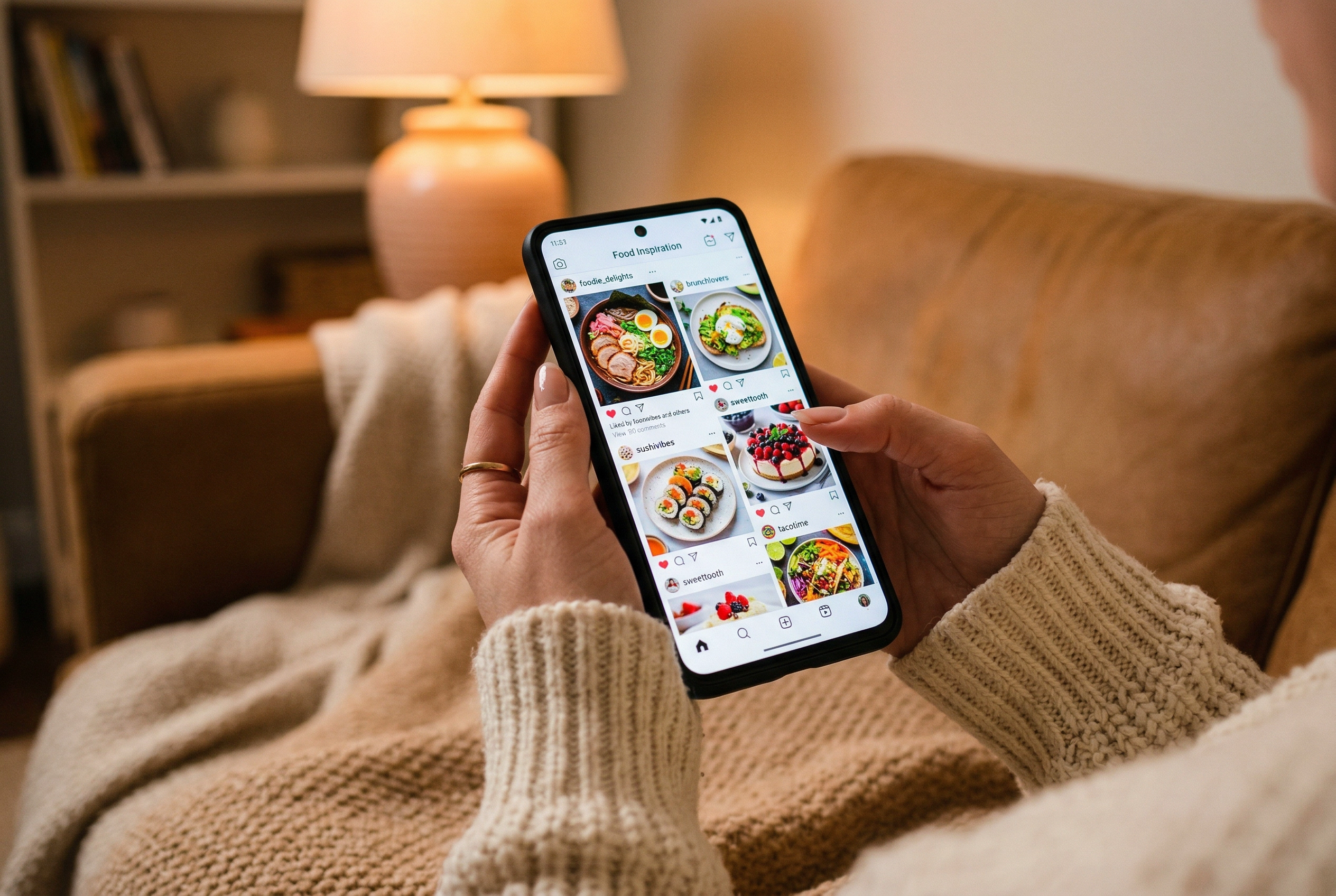 Woman scrolling food content on smartphone in cozy living room with warm evening lighting
Start Your Email List From Day One
Email subscribers are the only audience you truly own as a food blogger. Social algorithms shift constantly. Google rankings fluctuate. Your email list stays with you no matter what.
Offer a free resource — weekly meal plan, mini recipe ebook, printable pantry checklist — in exchange for signups. 100 engaged email subscribers beat 10,000 passive social followers for driving blog traffic.
Engage With the Food Blogging Community
Comment on other food blogs. Join food blogger Facebook groups. Collaborate through guest posts and recipe round-ups. The food blogging community is welcoming, and collaboration accelerates growth faster than creating content alone.
Step 8: Monetize Your Food Blog
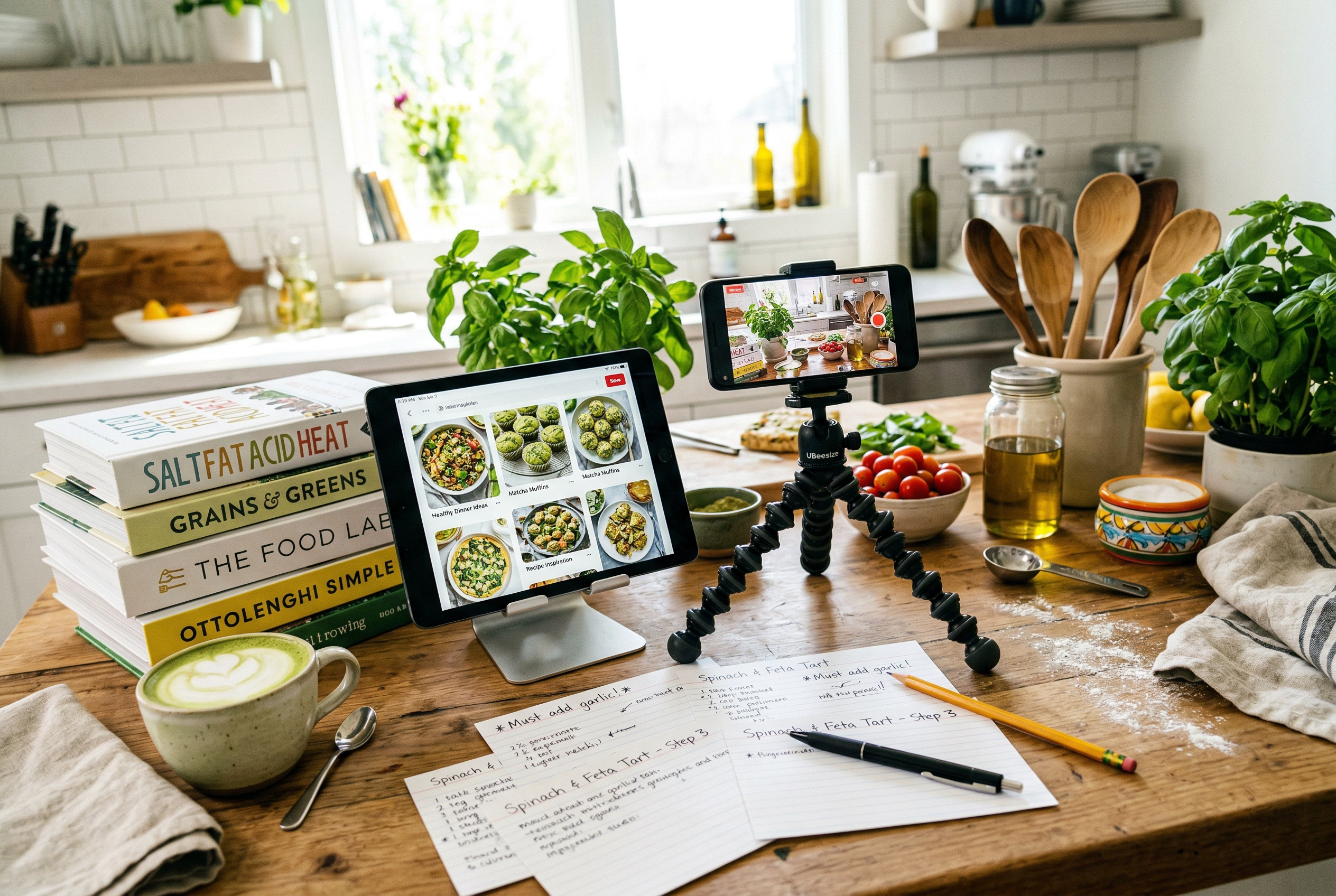 Kitchen counter with food blogging tools including smartphone tripod, cookbooks, Pinterest on tablet, and recipe cards
Here's a realistic breakdown of how food bloggers actually make money from their blogs.
Display Ads: The Primary Income Stream
| Ad Network | Traffic Requirement | Typical RPM |
|---|---|---|
| Google AdSense | No minimum | $2–5 |
| Mediavine Journey | 1,000 sessions/month | $8–15 |
| Mediavine | 50,000 sessions/month | $15–35 |
| Raptive | 25,000 pageviews/month | $20–45 |
72% of food bloggers earning $2,000+/month use Mediavine or Raptive, not AdSense. The RPM gap is enormous and directly impacts your food blogging income.
Affiliate Marketing
Recommend products you actually use in your cooking — kitchen tools, cookware, specialty ingredients, pantry staples. Amazon Associates pays 1–4%. Niche kitchen brand programs often pay 8–15% commission.
Sponsored Content and Brand Partnerships
Food brands pay bloggers $200–$5,000+ per post to feature their products in original recipe content. You typically need 5,000–10,000 followers or meaningful blog traffic before brands approach you for paid work.
Additional Revenue Streams
- Digital products: Ebooks, meal plans, printable recipe card collections
- Online courses: Teach cooking, food photography, or food styling
- Freelance photography: Shoot for restaurants and food brands. See our photo editing workflow guide.
- Cookbook deals: Requires an established audience, but publishers actively scout successful food blogs
 Moody autumn dinner spread on farmhouse table with roasted chicken and candlelight for food blog photography
Your 12-Month Food Blogging Roadmap
A realistic timeline for how to become a food blogger and start earning, from zero to income.
 Meal prep containers with colorful healthy dishes arranged for food blog photography on white kitchen counter
Months 1–3: Build the Foundation
- Set up WordPress with a food theme and recipe plugin
- Publish 10–15 posts targeting low-competition keywords
- Set up Google Search Console and Analytics
- Build your photography workflow: phone + FoodShot AI for enhancement
- Create Pinterest and one other social media account
- Study our phone food photography guide and best food photography apps
- Traffic: 100–500 monthly pageviews | Income: $0
Months 4–6: Build Growth Momentum
- Publish 2 new blog posts per week consistently
- Launch an email list with a compelling free download
- Apply for affiliate programs (Amazon Associates plus niche programs)
- Learn Pinterest SEO and start a regular pinning schedule
- Engage actively with other food bloggers online
- Experiment with short-form recipe videos (Reels or TikTok)
- Traffic: 1,000–5,000 pageviews | Income: $0–50/month
Months 7–12: Start Earning Real Money
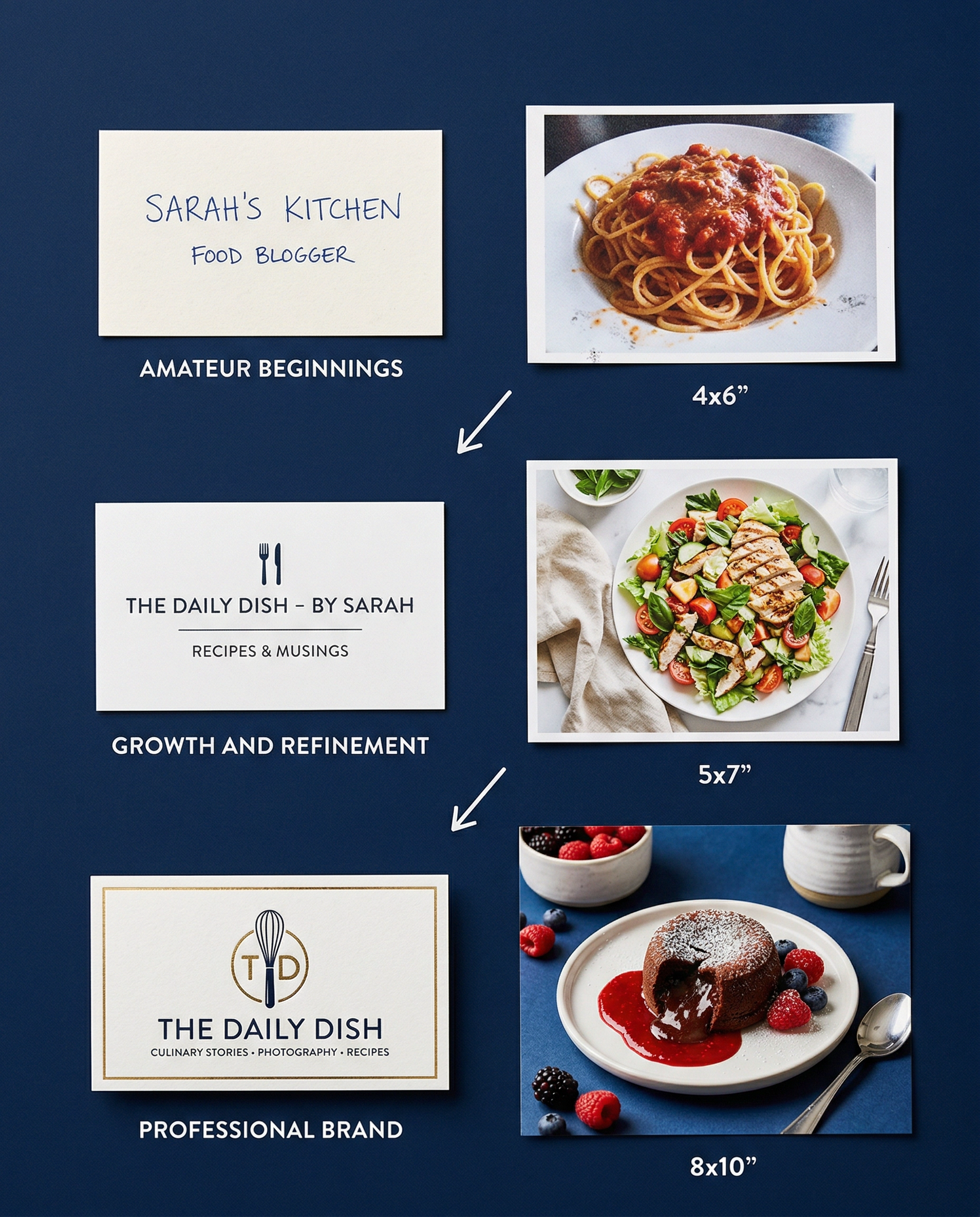 Visual progression showing food blog brand evolution from amateur to professional photography and branding
- Reach 50+ published blog posts
- Apply for Mediavine Journey (1,000 sessions minimum)
- Pitch brands for your first sponsored content partnerships
- Add seasonal content and holiday recipes
- Update your earliest posts with better photos and improved SEO
- Create your first digital product (themed recipe ebook, seasonal meal plan)
- Traffic: 5,000–25,000 pageviews | Income: $100–$1,000/month
Beyond Year One
Every recipe post is an asset earning monthly through ads and affiliate links. At 100+ quality posts with good SEO, food blogging revenue compounds significantly. Many bloggers report year-two income is 3–5x year one as Google sends more traffic to a growing recipe library.
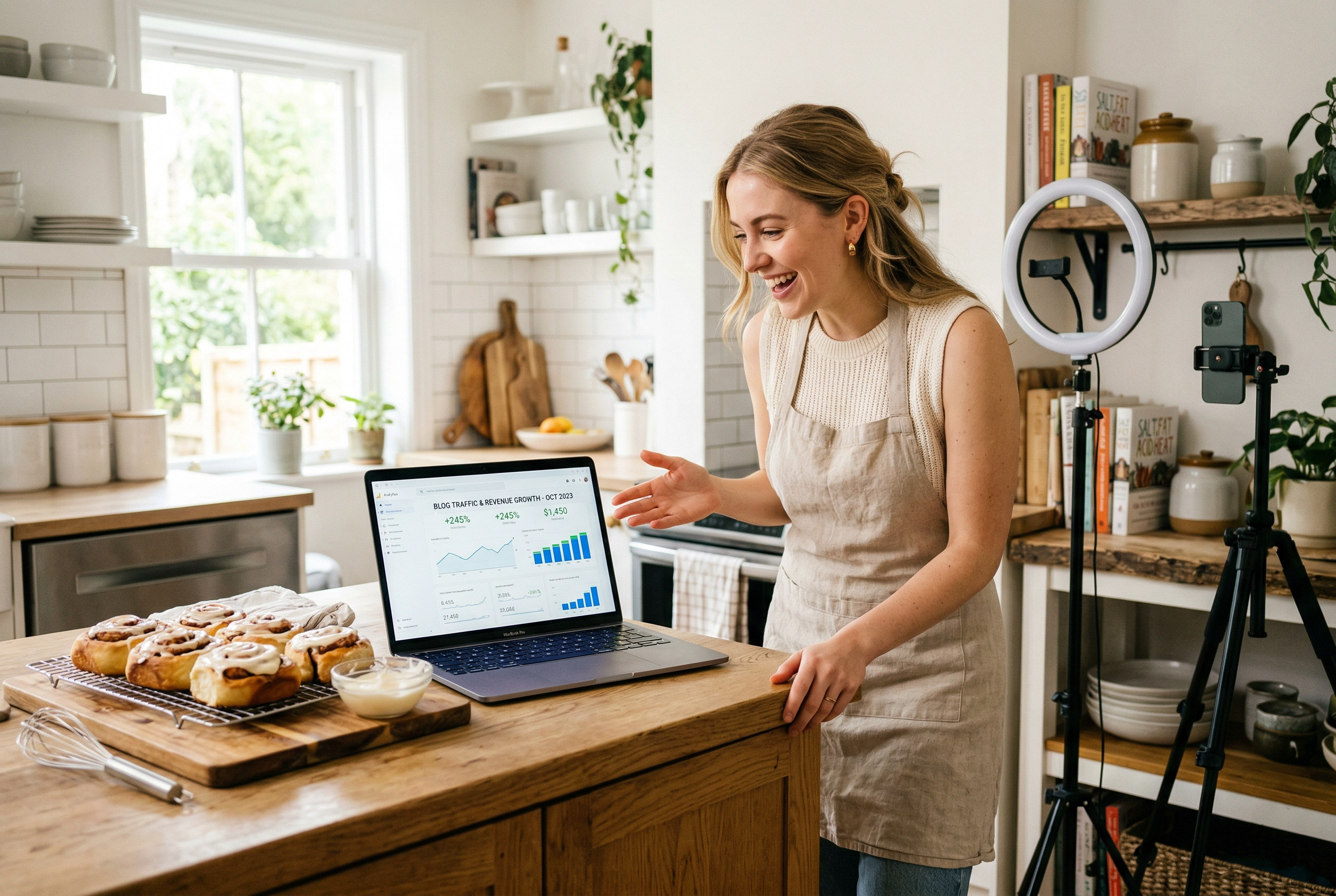 Food blogger celebrating growth milestone at kitchen island with baked goods and analytics on laptop screen
Frequently Asked Questions
How much does it cost to start a food blog?
Around $50–200 for year one. That includes a domain name ($10–15), hosting ($3–10/month), and an optional premium WordPress theme ($0–80). You can start with free themes and your existing smartphone — no professional photography equipment needed. FoodShot plans start at $15/month for food bloggers who want photo enhancement right away.
How long does it take to make money food blogging?
Small amounts come within 6–12 months from affiliate links and AdSense. Meaningful food blogging income ($1,000+/month) takes 12–24 months of consistent publishing. The key: traffic volume. You need 1,000 sessions/month for Mediavine Journey, 25,000–50,000 for premium ad networks where serious revenue lives.
Do I need professional photography equipment to start a food blog?
No. A recent smartphone and natural window light is genuinely all you need. Our guide on taking food photos with your phone walks through the full process. AI tools like FoodShot bridge the gap between amateur and professional-quality food images while you develop your photography skills.
What's the best blogging platform for food bloggers in 2026?
Self-hosted WordPress. It's the only platform with robust recipe plugins for schema markup, full monetization flexibility, and compatibility with every major ad network. Squarespace and Wix lack the recipe-specific tools food bloggers need.
Can I start a food blog as a side hustle?
Most successful food bloggers started while working full-time. Budget 8–15 hours per week for recipe development, cooking, photography, writing, and social media promotion. The beauty of food blogging: create content on your own time, and it earns ad revenue 24/7.
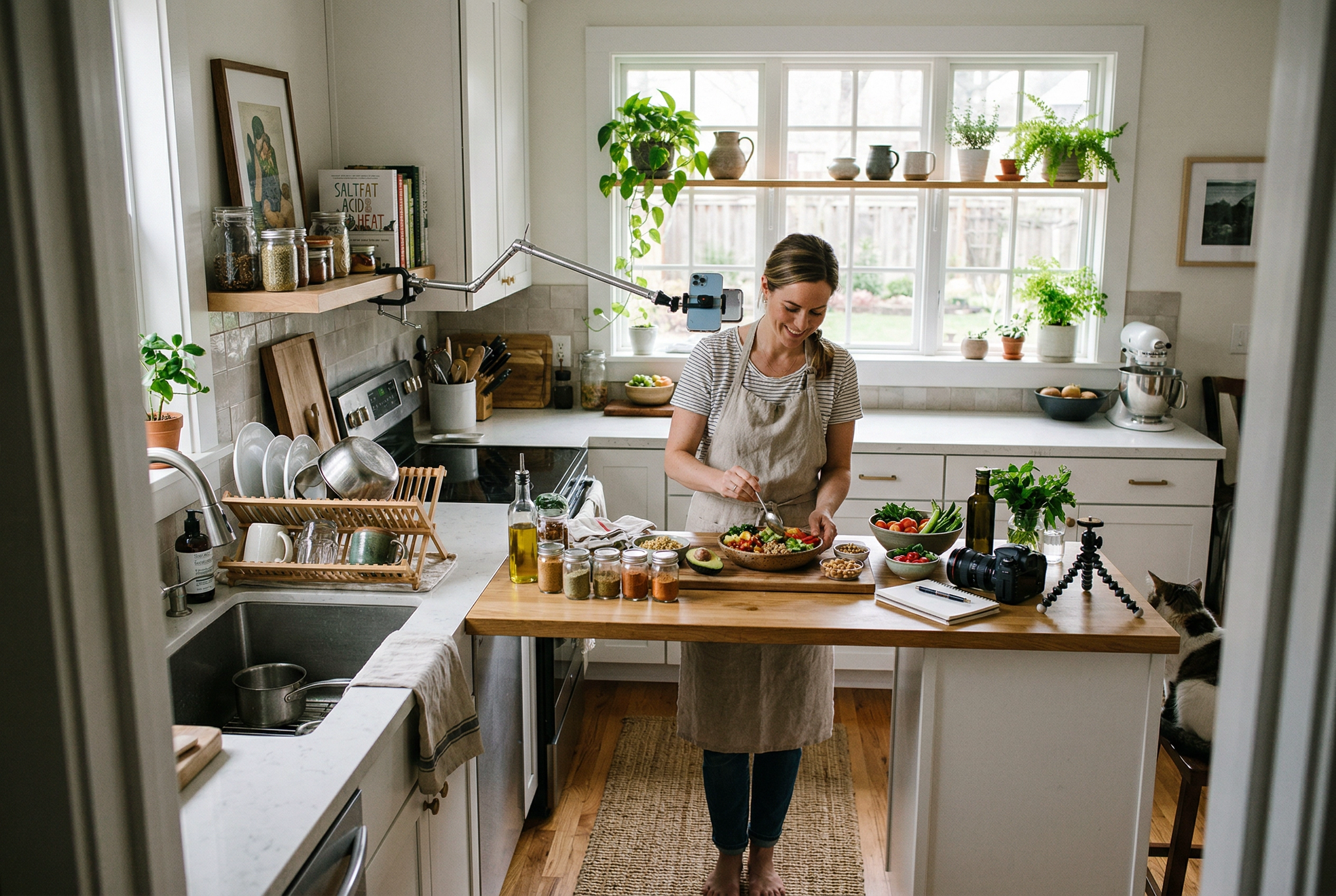 Home kitchen setup showing food blogger assembling grain bowl with overhead phone mount for content creation
 Dynamic action shot of hands tossing fresh salad in wooden bowl with ingredients in motion for food blog