30 Best Food Photography Props & Where to Find Them
 Ali Tanis18 min read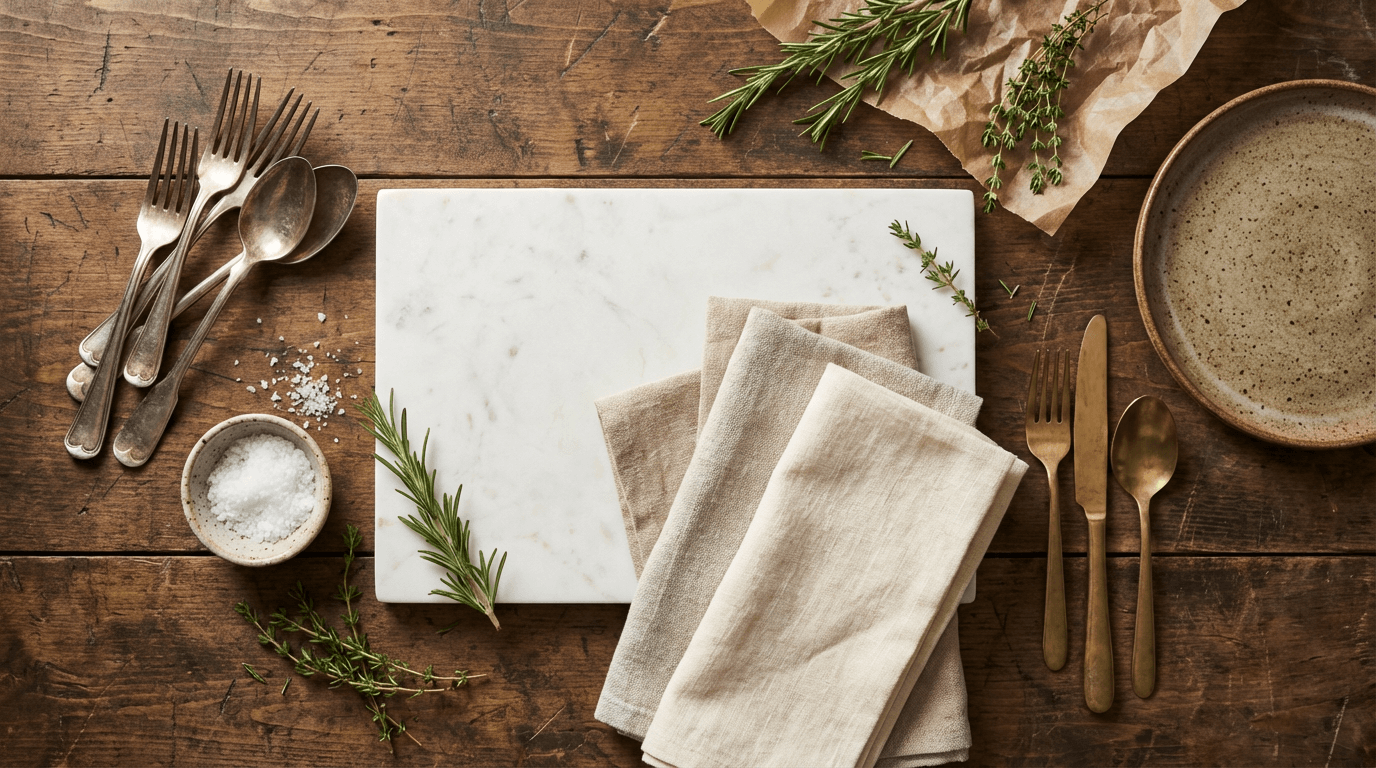
Building a food photography prop collection is one of the most exciting (and potentially expensive) rabbit holes in food styling. The difference between a forgettable food photo and a scroll-stopping one often comes down to what's around the food — the textured board underneath, the vintage fork beside it, the crumpled linen peeking from the corner.
Quick Summary: You don't need 30 food photography props on day one. Start with 5 essentials (a wooden board, matte plate, linen napkin, parchment paper, and fresh herbs) for under $30. Build from there. Or skip the physical prop closet entirely — AI food photography tools can now digitally create the same styled backgrounds and atmospheres in minutes.
This guide covers 30 food photography props that working photographers, food bloggers, and restaurant owners actually reach for — organized by category, with real price ranges and specific places to find them.
Why Food Photography Props Matter
Props don't just "decorate" a food photo. They do three specific jobs:
- Set the mood. A cast iron skillet screams comfort food. A marble slab whispers elegance. Props signal what kind of eating experience the viewer should imagine.
- Add depth and layers. A flat photo of food on a blank surface looks like a mugshot. Props create foreground and background elements that pull the viewer's eye through the frame.
- Tell a story. A scattered pile of flour, a half-squeezed lemon, and a crumpled kitchen towel suggest someone just finished making something — and that narrative keeps people looking at your photography longer.
The cardinal rule of food styling: the food is always the star. Props should support it, never upstage it. Stick to matte finishes (glossy creates glare), neutral or muted tones, and items slightly smaller than what you'd normally use for eating — smaller plates make portions look more generous on camera.
Now, here are the 30 props worth owning.
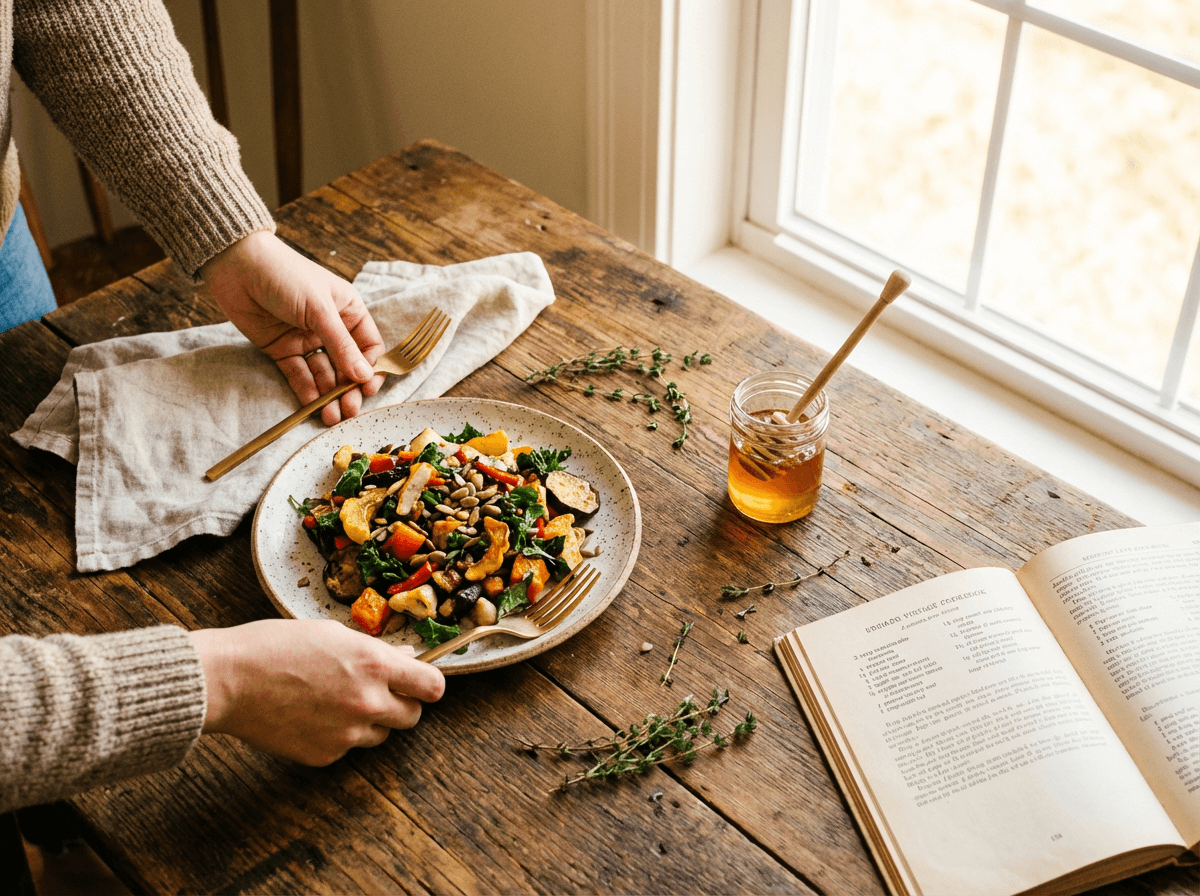 Hands arranging food photography props including gold flatware, ceramic plate, linen napkin, and fresh herbs on rustic table
Surfaces & Backdrops (Props 1–5)
Every food photo starts with what's underneath the food. Your surface sets the canvas for the entire shot — get this right and the rest falls into place. According to a 2026 guide on commercial food photography trends, textured backgrounds like wood, marble, and handmade papers are in high demand for professional shoots.
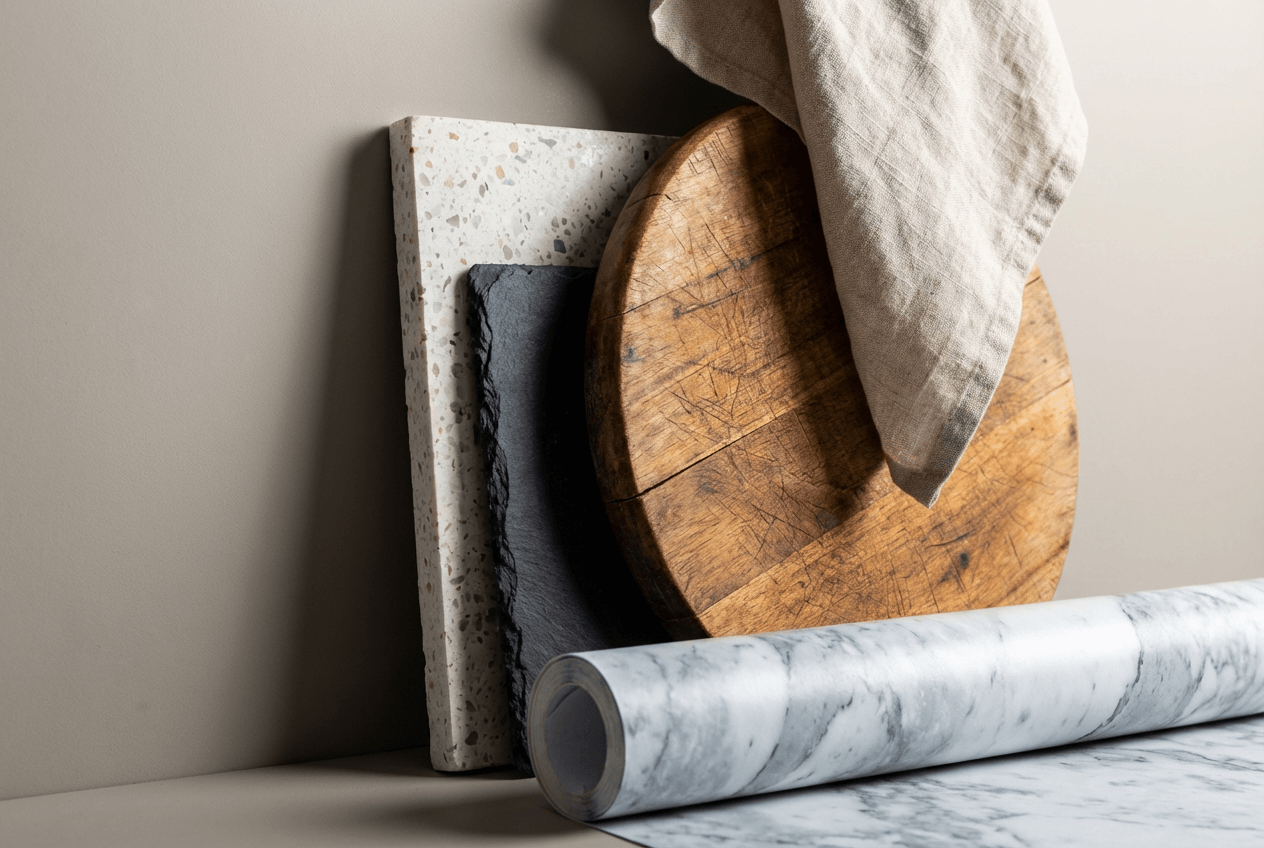 Food photography surfaces and backdrops including marble vinyl, stone tiles, rustic wooden board, and linen tablecloth
1. Marble Board or Slab
Marble's cool, veined surface adds instant luxury without competing with the food. It's the perfect prop for pastries, charcuterie boards, cocktails, and any dish that benefits from a clean, elegant foundation. Look for pieces with subtle gray veining rather than busy patterns.
Where to buy: HomeGoods, TJ Maxx (check the bathroom section — marble vanity trays are the perfect hidden find), Amazon, Target Price range: $10–$30
2. Rustic Wooden Board
Warm, textured, and endlessly versatile. A wooden cutting board or serving plank works for everything from artisan bread to grilled meats. Older boards with knife marks and patina look better on camera than brand-new ones — that antique character adds authenticity to your photography.
Where to buy: Thrift stores, antique shops, artisan fairs, Amazon, kitchen supply stores Price range: $8–$25
3. Vinyl Photography Backdrop
If you don't have space for heavy stone or wood surfaces, vinyl food photography backdrops are a game-changer. They're lightweight, rollable, wipeable, and come in realistic marble, concrete, weathered wood, and dark stone patterns. Most food bloggers own 3–5 of these.
Where to buy: Etsy (search "food photography backdrop"), Amazon, specialty shops like V-Flat World or Club Backdrops Price range: $15–$40
4. Stone or Ceramic Tiles
The most underrated budget hack in food photography. A single large-format tile from the hardware store gives you a textured, photogenic surface for under $3. Subway tiles, terrazzo, and dark slate all photograph beautifully. Stack a few different styles for variety.
Where to buy: Home Depot, Lowe's, any local tile store Price range: $1–$3 per tile
5. Linen Tablecloth or Runner
Draped linen adds softness and warmth beneath other props. The wrinkled, lived-in look is the point — never iron it. Natural oatmeal and off-white tones are the most versatile, but muted sage or dusty blue create perfectly moody backdrops for food photography.
Where to buy: IKEA, Etsy, HomeGoods, H&M Home Price range: $10–$25
Plates & Dishes (Props 6–10)
The plate is where the food lives. Choose plates that make the food the hero — smaller, shallower, and matte-finished for the best results in your photography.
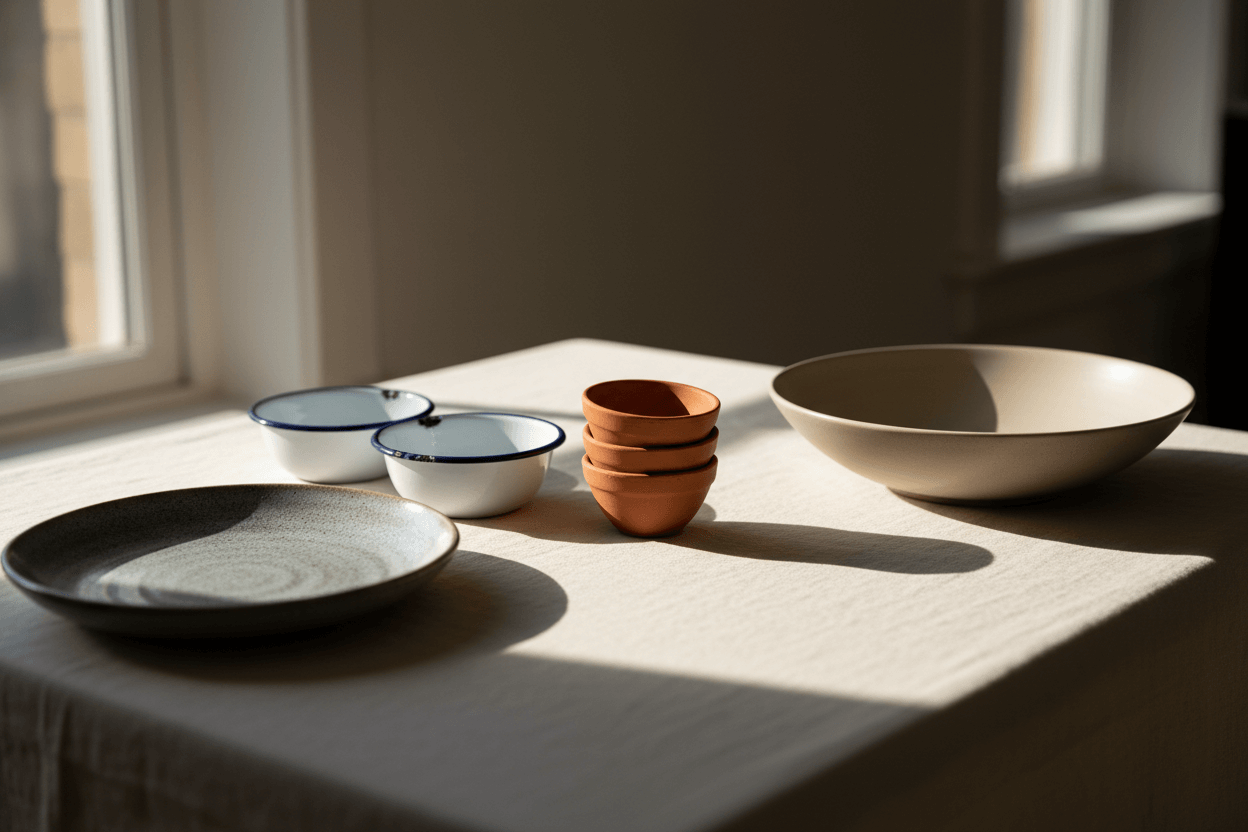 Curated food photography plates collection with speckled ceramic, enamelware bowls, pinch bowls, and matte stoneware
6. Speckled Ceramic Plates
Handmade-looking ceramic plates with speckled glazes have become the default prop for food photography — and for good reason. Each one is slightly unique, the texture catches light beautifully, and they make even simple dishes look intentional and beautifully styled.
Where to buy: Etsy (search "handmade ceramic plate"), Crate & Barrel, local pottery studios Price range: $12–$40 each
7. Matte Stoneware Bowls
Matte finishes eliminate the reflections and glare that ruin food photos under studio lighting. Stoneware in cream, gray, or soft terracotta works with virtually any cuisine. Perfect for soups, grain bowls, pasta, and anything saucy.
Where to buy: Target, World Market, West Elm, IKEA Price range: $8–$20
8. Vintage Enamelware
White enamel with a colored rim (usually blue, red, or black) is a food photography classic. Enamelware is lightweight, stackable, nearly indestructible, and adds instant farmhouse charm. Chipped pieces are fine — they add beautiful antique character.
Where to buy: Thrift stores, antique shops, Etsy, flea markets Price range: $3–$15
9. Small Pinch Bowls & Ramekins
These tiny workhorses hold sauces, dips, garnishes, spices — all the supporting cast elements that make a composed shot feel complete. Having 5–8 in different shapes and sizes gives you endless food styling flexibility for your prop collection.
Where to buy: Amazon, Target, IKEA (the GLADELIG line is great), Dollar Tree Price range: $1–$5 each
10. Cake Stand or Pedestal
Want to instantly elevate a dessert? Literally elevate it. A cake stand adds height, creates visual hierarchy, and makes baked goods look like they belong in a beautiful bakery window. Marble or ceramic versions are perfect for photography.
Where to buy: Anthropologie, Target, Amazon, HomeGoods Price range: $15–$45
Flatware & Utensils (Props 11–14)
A fork or spoon in the frame suggests a person — someone about to eat, mid-bite, or just finished. That human element makes food photos feel alive rather than clinical. Different flatware styles signal different aesthetics in your food photography.
11. Gold or Brass Flatware Set
Gold flatware is the fastest way to make a food photo look expensive and beautiful. It pairs perfectly with dark, moody backdrops and adds warmth to any setting. You only need 2–3 pieces (a fork, knife, and spoon) for most shots.
Where to buy: Amazon, Target, Sur La Table Price range: $15–$30 for a basic set
12. Vintage Silverware
The opposite of gold's polish: vintage silverware with patina, tarnish, and worn handles tells a story of many meals. It's perfect for editorial, rustic, and cottage-style food photography. Mismatched pieces from antique shops and flea markets look better than matching sets.
Where to buy: Thrift stores, estate sales, flea markets, eBay Price range: $0.50–$5 per piece
13. Modern Minimalist Cutlery
Clean lines, thin profiles, matte finish. Modern cutlery is the right choice for contemporary plating, delivery app photos, and any shot where you want the utensils to be present but not attention-grabbing. If you're shooting food for delivery platforms like Uber Eats or DoorDash, this is the style to reach for.
Where to buy: IKEA, CB2, Amazon Price range: $10–$25 for a set
14. Wooden Serving Spoons & Spatulas
Organic, warm, and subtly textured. Wooden utensils add a handmade, kitchen-to-table feeling that metal can't replicate. They're especially effective in overhead flat-lay compositions where you want visual variety in shapes and materials across your food photography scene.
Where to buy: HomeGoods, Etsy, craft fairs, Amazon Price range: $3–$12
Textiles & Paper (Props 15–19)
Textiles soften a scene and add beautiful layering. The number-one mistake beginners make? Ironing their linens. In food photography, wrinkles are your friend — they create texture and visual interest that perfectly complements the food.
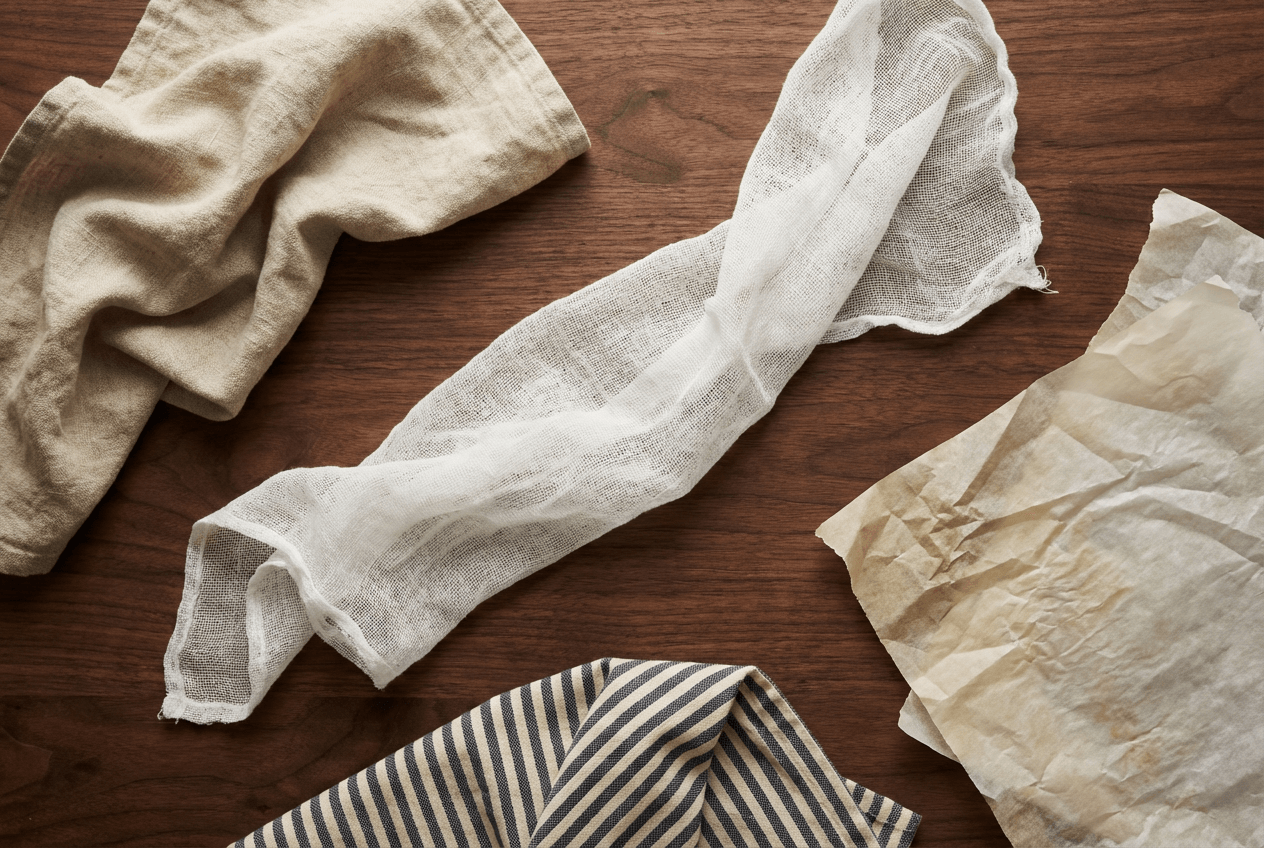 Food photography textiles including wrinkled linen napkin, cheesecloth, crumpled parchment paper, and striped kitchen towel
15. Linen Napkins (Neutral Tones)
The single most versatile textile prop in food photography. A linen napkin can be bunched beside a plate, draped under a bowl, or folded as a backdrop accent. Stick to natural, oatmeal, gray, and cream tones — they work with everything.
Where to buy: IKEA, Etsy, HomeGoods, H&M Home Price range: $3–$8 each
16. Muslin or Cheesecloth
Cheesecloth adds an ethereal, airy texture that's hard to replicate with anything else. It works beautifully draped loosely across a surface, wrapped around bread or cheese, or flowing off the edge of the frame to create movement in your photos.
Where to buy: Craft stores (Joann, Michaels), Amazon, grocery stores Price range: $5–$10 per yard
17. Kitchen Towels (Striped or Plaid)
A classic striped kitchen towel instantly says "home cooking." It adds a pop of pattern without overwhelming the food. Choose muted stripes — navy, burgundy, or forest green — over bright primary colors that steal focus from your subject.
Where to buy: Target, IKEA, HomeGoods, World Market Price range: $3–$8 each
18. Parchment Paper
You probably already own this prop. Crumple a sheet of parchment paper and spread it out again, and you've created an instant textured surface that's perfect under baked goods, sandwiches, or anything you'd actually serve on paper. The perfect free food photography prop.
Where to buy: Your kitchen drawer, any grocery store Price range: $4–$6 per roll
19. Burlap or Jute Runner
Heavy-textured burlap adds an earthy, autumn-harvest feel. It's best used as a background layer beneath plates and boards rather than in direct contact with food. Perfect for Thanksgiving shoots, rustic bread photos, and farm-to-table aesthetics.
Where to buy: Craft stores, Amazon, Etsy Price range: $5–$12
Small Props & Garnishes (Props 20–24)
These are the finishing touches that separate an amateur shot from a beautifully styled one. Food photographers call them "scatter" elements — loose ingredients and tiny details that make a scene feel real and lived-in.
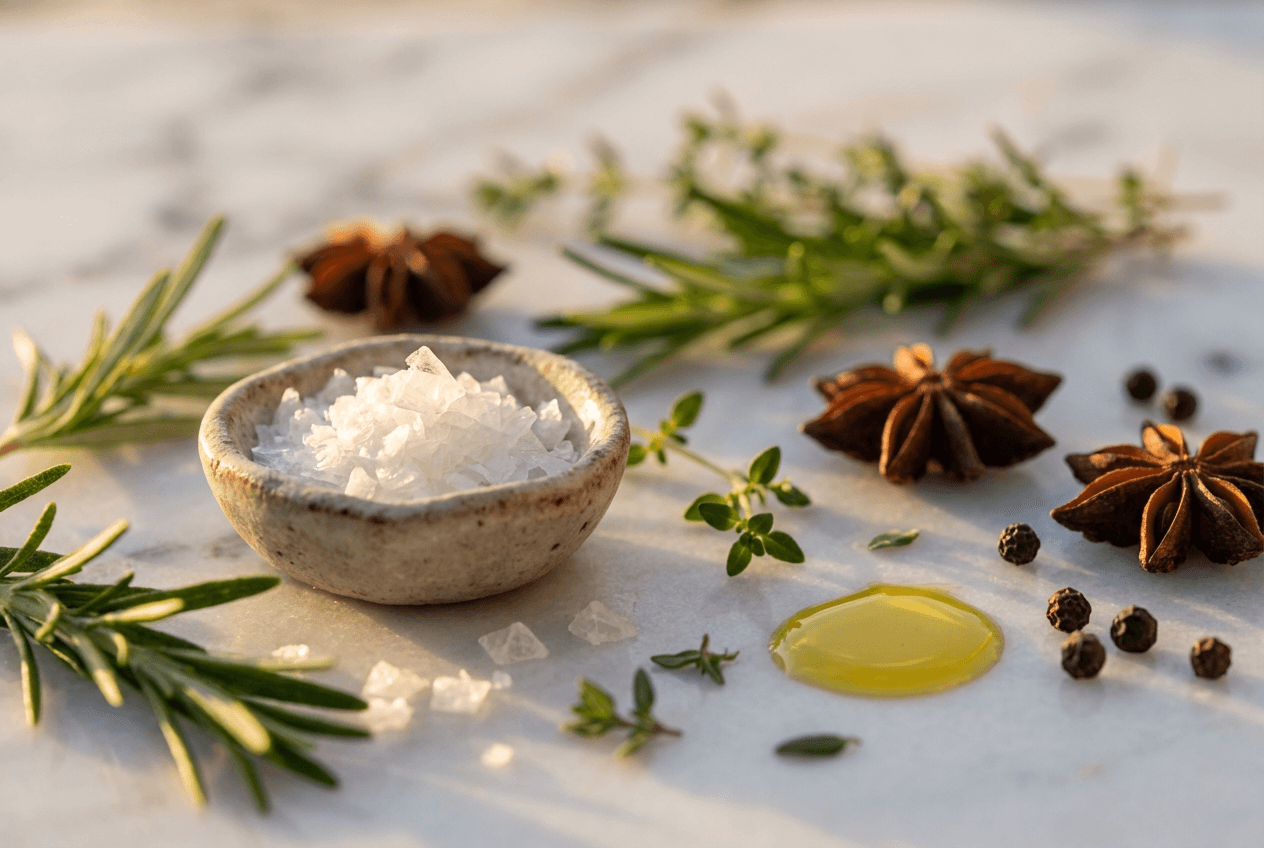 Food photography garnish props with fresh herbs, star anise, sea salt flakes, peppercorns, and olive oil on marble
20. Fresh Herbs (Rosemary, Thyme, Basil)
A sprig of rosemary or a few scattered basil leaves brings instant life and color to any food photo. Fresh herbs also hint at how the dish was made, connecting the viewer to the cooking process. Buy them the day of your shoot — wilted herbs photograph poorly and look anything but fresh.
Where to buy: Any grocery store, farmer's market, or your windowsill garden Price range: $2–$4 per bunch
21. Whole Spices (Peppercorns, Star Anise, Cinnamon Sticks)
Whole spices are incredibly photogenic food photography props. Their natural shapes, textures, and deep colors (think cracked black pepper, rust-orange cinnamon, and star anise's perfect geometry) create beautiful scattered textures, especially on dark surfaces.
Where to buy: Grocery store bulk aisle, specialty spice shops, Amazon Price range: $3–$8
22. Olive Oil in a Glass Cruet
A small glass bottle of golden olive oil adds a Mediterranean luxury feel and tells the viewer the dish involves quality ingredients. It works beautifully as a background prop at a slight blur — present but not in focus. It's the perfect accent for pasta, salad, and bread photography.
Where to buy: HomeGoods, World Market, or just pour your olive oil into a decorative bottle from your pantry Price range: $5–$15 for a display cruet
23. Flaky Sea Salt (in a Pinch Bowl)
Maldon sea salt or a similar flaky finishing salt in a tiny bowl is a food stylist's secret weapon. It suggests the dish was just finished — seasoned to perfection at the last moment. The translucent flakes catch light beautifully in photos.
Where to buy: Grocery store (Maldon runs about $6–$8) Price range: $5–$10
24. Scattered Flour or Crumbs
The "messy-on-purpose" look. A light dusting of flour around a freshly rolled dough, or a few crumbs trailing from a broken cookie, makes baking shots feel alive and in-progress. The key word is light — a dusting, not a snowstorm.
Where to buy: Your pantry Price range: Free
Glasses & Vessels (Props 25–27)
Glassware adds height, transparency, and visual variety to compositions dominated by opaque plates and boards.
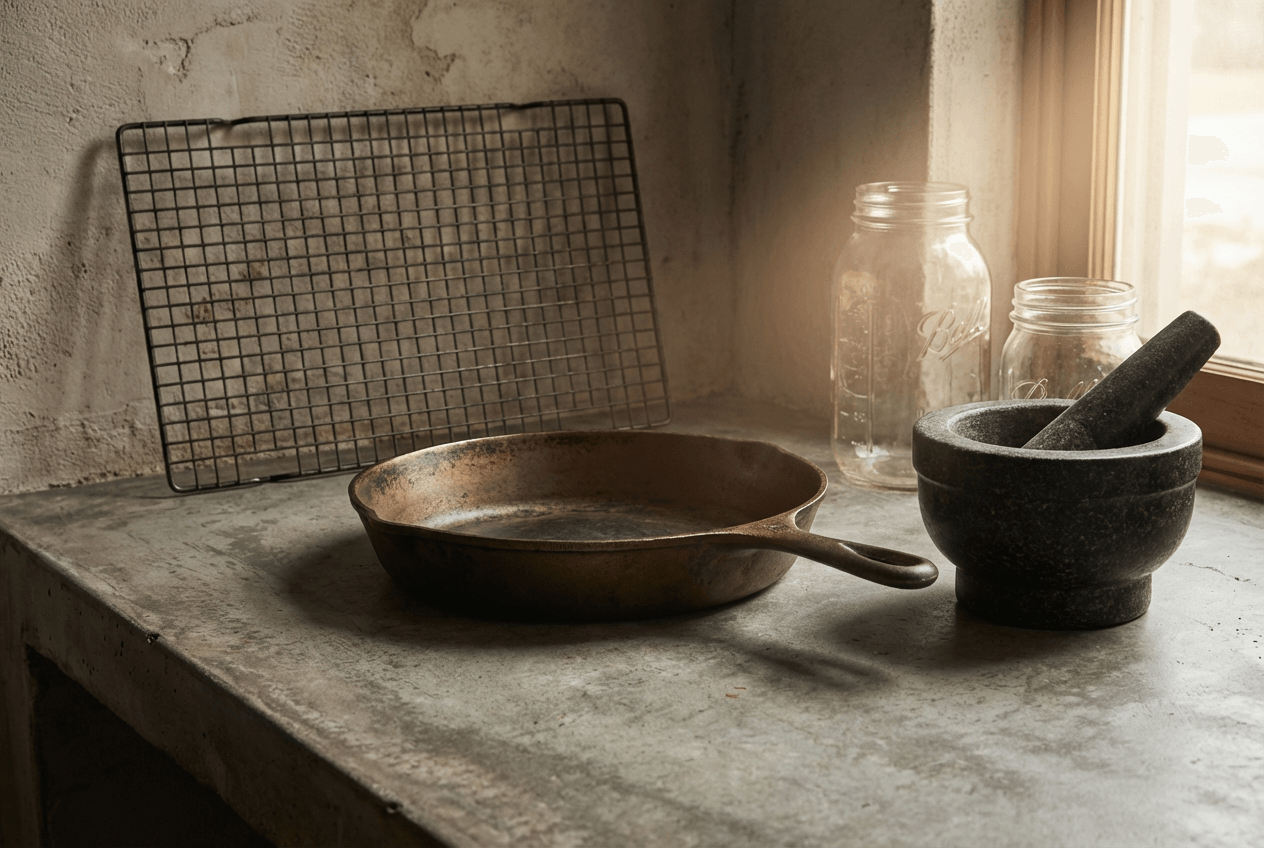 Food photography kitchen tools including cast iron skillet, stone mortar and pestle, wire cooling rack, and mason jars
25. Mason Jars
The Swiss Army knife of food photography props. Mason jars work for layered desserts, overnight oats, cold drinks, flower arrangements, utensil holders, and dry ingredient displays. Their chunky glass and vintage vibe fit casual and rustic aesthetics perfectly.
Where to buy: Grocery stores, Amazon, antique shops (for genuinely old ones with character) Price range: $8–$15 for a set of 4–6
26. Thin-Walled Wine Glasses or Coupes
Delicate, thin-walled glass photographs far more elegantly than thick, heavy glassware. Coupe glasses are particularly photogenic props for cocktails, dessert drinks, and parfaits. The thin walls let the beautiful colors of the contents shine through.
Where to buy: IKEA (excellent budget options), Williams-Sonoma, thrift stores (a goldmine for glassware) Price range: $3–$15 each
27. Vintage Teacups
Mismatched, hand-painted vintage teacups add charm and personality to food photography styling. They're perfect for styled tea settings, small desserts like mousse or pudding, or even as small vases for herb sprigs. Thrift stores and antique shops are overflowing with them.
Where to buy: Thrift stores, antique shops, Etsy, estate sales Price range: $1–$8 each
Kitchen Tools (Props 28–30)
Functional kitchen tools add authenticity — they tell the viewer this food was made, not just plated. Well-worn tools with visible use tell better stories than shiny new ones.
28. Cast Iron Skillet
Dark, heavy, and oozing with character. A well-seasoned cast iron skillet provides its own dark, textured surface and works as both a cooking vessel and a serving prop. It's especially effective for comfort food, breakfast dishes, and one-pan meals. Lodge sells excellent ones starting around $20.
Where to buy: Lodge (direct), Amazon, Target, thrift stores Price range: $20–$35
29. Wire Cooling Rack
Essential for baking photography. A cooling rack with baked goods on it immediately communicates "freshly baked" — the viewer can almost smell the cookies. It also adds visual interest through its grid pattern and creates a beautiful layered effect when placed over a wooden board.
Where to buy: Amazon, kitchen supply stores, Walmart Price range: $8–$15
30. Mortar and Pestle
Heavy, stone, tactile, and beautiful. A mortar and pestle suggests handmade cooking and artisanal preparation. It works as a hero prop (filled with freshly ground pesto or spice paste) or as a background element. Stone or marble versions photograph best in food photography.
Where to buy: HomeGoods, Amazon, World Market, Target Price range: $15–$30
Where to Buy Food Photography Props (by Budget)
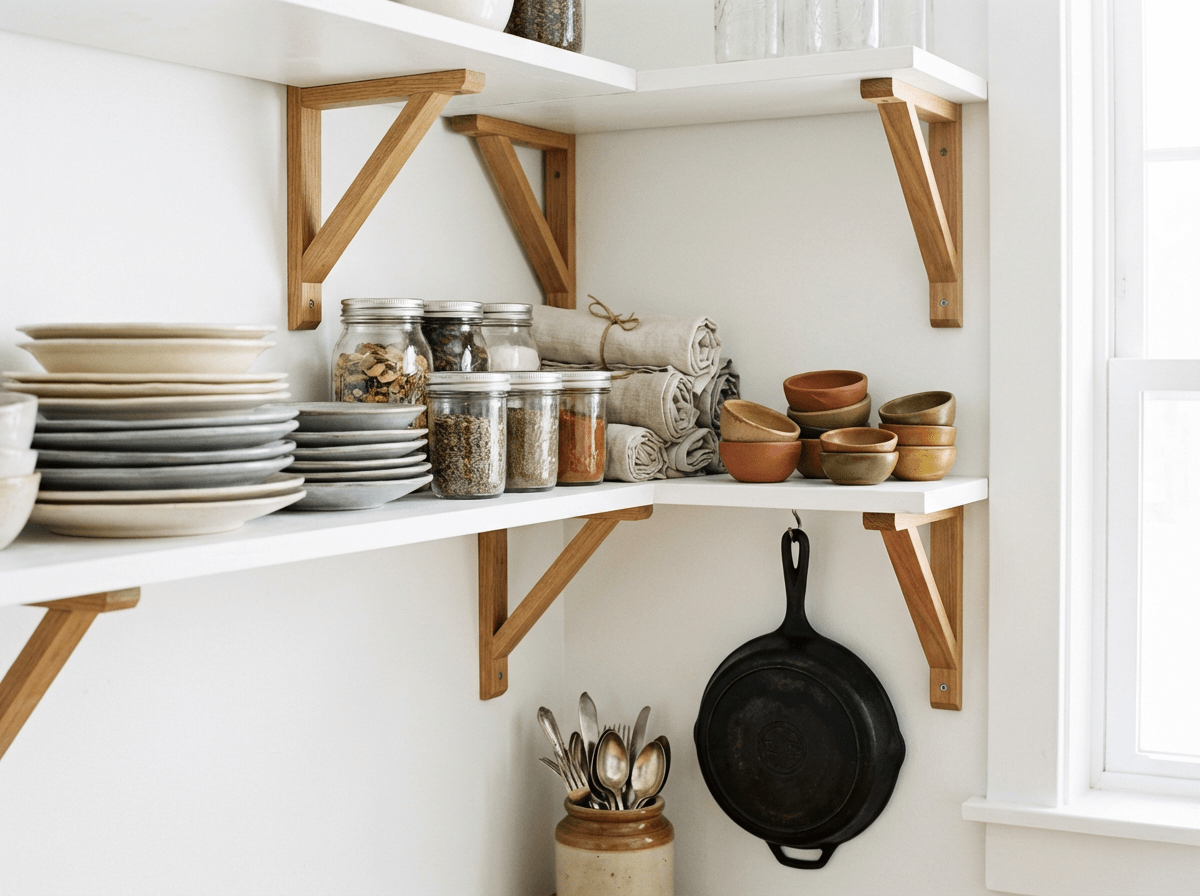 Organized food photography prop collection on shelves with vintage plates, mason jars, linen napkins, and kitchen tools
Not sure where to start shopping for your prop collection? Here's your priority list, organized by budget:
Under $5 per item — Thrift stores and your kitchen Goodwill, Salvation Army, garage sales, and estate sales are where most professional food photographers find their best props. Vintage silverware for $1, enamelware for $3, unique ceramic bowls for $2. Also: raid your own kitchen. Parchment paper, herbs, wooden spoons, and kitchen towels are already there.
$5–$20 per item — Mid-range retailers TJ Maxx and HomeGoods are the sweet spot for food photography props — quality items at discount prices. Target, IKEA, and World Market are also reliable for basics like stoneware, linen napkins, and serving boards.
$20–$60 per item — Premium shops Anthropologie, West Elm, Crate & Barrel, Williams-Sonoma, and Sur La Table carry beautiful pieces that photograph exceptionally well. Shop here selectively — one or two hero plates or boards, not your entire collection.
Online anywhere Etsy is unbeatable for unique handmade ceramics and vintage finds. Amazon covers the basics at competitive prices. eBay is the hidden gem for antique metal props and enamelware.
Pro tip: Build your prop collection slowly. A $50–$100 starter kit from thrift stores covers 80% of what you need. Add specialty pieces gradually as your food photography style develops. Many experienced photographers say their most-used props cost under $5.
The AI Alternative: Get the Look Without a Prop Closet
Here's something most food photography prop guides won't tell you: you can skip the prop closet entirely for many use cases.
If you're a restaurant owner, cafe operator, or food delivery business, you probably don't need 30 physical props. You need your food to look professional fast — for your menu, your Uber Eats listing, or your Instagram feed. That's where AI food photo editing comes in.
FoodShot AI lets you:
- Replace backgrounds with professional settings — luxury restaurant interiors, rustic wooden surfaces, marble countertops, beach-side cafes — without owning any of those backdrops for food photography
- Choose from 30+ style presets (Fine Dining, Rustic, Instagram, Delivery-Ready) that automatically adjust lighting, mood, and styling to match professional aesthetics
- Clone any style from a reference image — find a Pinterest food photo you love, upload it alongside your dish photo, and FoodShot recreates that exact lighting, composition, and atmosphere with your food
- Add garnishes and styling elements digitally — sauces, herbs, toppings — that would otherwise require physical food photography props
The cost comparison is stark. A decent physical prop collection runs $200–$500 to build, takes months of thrifting, and requires storage space. FoodShot's Starter plan is $15/month for 25 professional-quality image transformations, with results in about 2 minutes per photo. For a deeper look at the differences, check out our comparison of traditional vs AI food photography.
Physical props still matter for bloggers, professional food photographers, and anyone building a distinctive visual style with hands-on styling. But for restaurant owners who need menu-ready photos of 50 dishes by next week? AI handles that faster and cheaper. Some cafes are already using this approach to refresh their entire visual menu in an afternoon.
The smartest approach is a hybrid: keep a small collection of your favorite physical props for hands-on shoots, and let AI handle the backgrounds, lighting, and styling polish. If you're just starting your iPhone food photography journey, this combination gives you professional results without the professional price tag. Explore the different style presets and templates available to see what's possible without buying a single prop.
Frequently Asked Questions
What are the most essential food photography props for beginners?
Start with five: a wooden cutting board (as a surface), one matte plate, a linen napkin, parchment paper, and fresh herbs. These five items, all available for under $30 total, give you enough variety for a wide range of food shots. Add a second plate style and some vintage silverware when you're ready to expand your prop collection.
How much should I budget for a starter prop collection?
If you shop primarily at thrift stores and use items from your kitchen, $50–$100 builds a solid beginner collection. Buying everything new from mid-range retailers pushes that to $150–$300. Start small and add pieces as you figure out your food photography style — buying 20 props at once before you know your aesthetic is how people end up with closets full of unused plates.
Where can I find cheap food photography props?
Thrift stores (Goodwill, Salvation Army) are the gold standard — vintage silverware for under $1, unique plates for $2–$5. Also check: hardware stores for stone tiles ($1–$3), dollar stores for pinch bowls, your own kitchen for parchment paper and herbs, and estate sales for antique kitchen tools at a fraction of retail. Online, Etsy and eBay offer great vintage finds with more selection than any single store.
Do I really need physical props for food photography?
It depends on your use case. Food bloggers and professional photographers typically build physical collections for hands-on control and a signature style. But restaurant owners, delivery businesses, and marketers increasingly use AI tools like FoodShot that digitally replace backgrounds, adjust lighting, and add food styling — getting professional results from a smartphone photo in about 2 minutes. The best approach for most people: a small core collection of 5–10 physical food photography props, plus AI tools for backgrounds and polish.