AI Generated Food Images: Real vs Fake (What Restaurants Need)
 Ali Tanis12 min read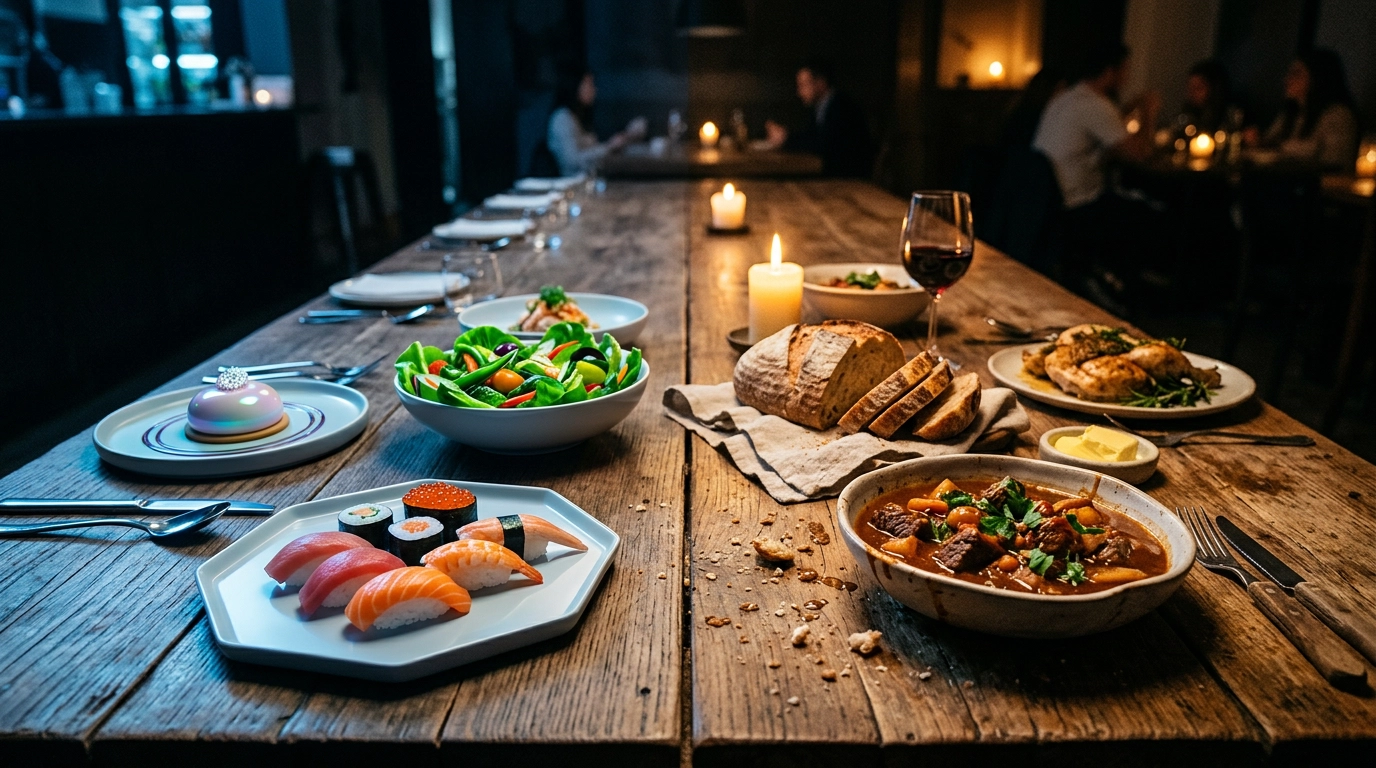
AI generated food images are everywhere in 2026 — on delivery apps, social feeds, and restaurant websites. But here's what most people don't realize: there are two fundamentally different types of AI food images, and picking the wrong one could cost your restaurant customers and credibility.
Quick Summary: AI food generation creates fictional dishes from text prompts — beautiful but fake. AI food enhancement transforms your real photos into professional visuals while keeping the actual dish intact. For restaurants selling real food to real people, enhancement is almost always the right call. Here's why.
The Two Types of AI Generated Food Images (And Why It Matters)
When people search for ai generated food images, they're usually thinking about tools like Midjourney, DALL-E, or Recraft — type a description, get a photorealistic food photo. That's AI food generation. The food in the image has never existed on any plate.
But there's a second category that works completely differently: AI food enhancement. You upload a real photo of your real dish, and AI improves the lighting, background, composition, and styling — while keeping your actual food front and center.
This distinction sounds subtle, but for restaurants, it's the difference between marketing your real menu and marketing a fantasy.
Here's the simplest way to think about it:
| AI Food Generation | AI Food Enhancement | |
|---|---|---|
| Input | A text prompt | A real photo of your dish |
| Output | A fictional food image | Your dish, professionally styled |
| The food is... | Imaginary | Real |
| Best for | Concept art, mockups | Menus, delivery apps, marketing |
For a deeper technical breakdown of how these tools create images under the hood, check out our guide on how AI food image generators work.
How AI Food Generation Actually Works
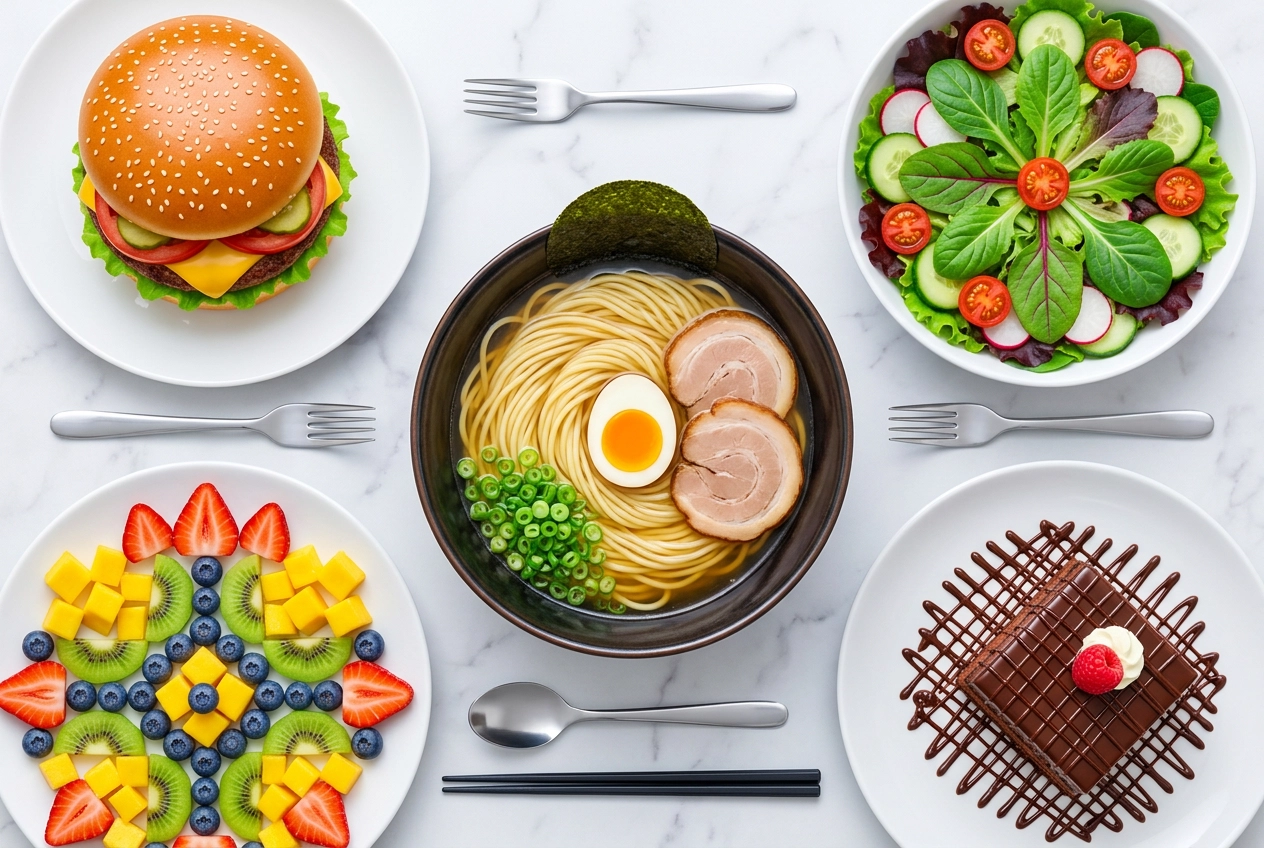 AI generated food showing uncanny perfection with impossibly symmetrical dishes that look too perfect to be real
AI food generators use diffusion models — the same technology behind tools like Midjourney and DALL-E. You type something like "a gourmet wagyu burger with caramelized onions, truffle aioli, on a rustic wooden board, soft natural lighting" and the AI generates a photorealistic image from scratch.
The results are genuinely impressive. A 2024 study from the University of Oxford found that 297 participants consistently rated ai generated food images as more appetizing than real food photos — at least when they didn't know the images were AI-created.
Why? The researchers found that AI optimizes for symmetry, glossiness, ideal lighting, and color saturation — all features known to make food visuals look appealing. The AI even repositions food to avoid pointing at the viewer, which humans subconsciously find threatening.
But here's the catch: the food in these ai food images has never existed. It's a statistical composite of what the AI has learned food should look like. That wagyu burger? It's pixels, not protein.
For a food blogger creating editorial content or a chef brainstorming new plating concepts, that's perfectly fine. For a restaurant promising customers they'll receive a dish that looks like the photo? That's where things get complicated.
The Authenticity Problem: When AI Created Food Photos Meet Real Customers
The gap between ai generated food visuals and reality isn't just a philosophical issue. It's creating real backlash.
The Forkable Scandal
In late 2025, San Francisco-based catering platform Forkable quietly replaced real restaurant photos with AI-generated images across its site — without telling the restaurants. Restaurant owners only found out when Forkable sent an email after the swap was already live.
Emily Winston, founder of popular chain Boichik Bagels, described seeing AI-generated versions of her bagels with oddly uniform slices and a mysteriously labeled "pink label" schmear: "If you're ordering off a menu, you want it to look like the actual food — it just doesn't look right. It looks like you're ordering fake, fake food."
Customers noticed too. One regular Forkable user told Eater SF his office Slack channel lit up: "Am I going crazy or does that not look like food?"
Forkable's co-founder later admitted they "moved too quickly" and announced a return to real photography.
Reddit Is Not Having It
If you need more evidence, search Reddit. A post titled "This restaurant using sloppy AI images instead of real photos of the food" on r/mildlyinfuriating pulled 18,000+ upvotes and hundreds of comments. Another thread — "Restaurant used AI instead of real photos of their food" — got 4,200+ upvotes. The sentiment is overwhelming: customers feel deceived by ai food images that don't represent reality.
One commenter put it bluntly: "The AI photos probably looked better than how their food actually looks. By a large margin too, or they wouldn't risk the backlash."
The Oxford Study's Warning
Remember that Oxford research showing AI generated food images look tastier? The same study found that AI tends to make food appear more energy-dense than it really is — adding extra fries, piling on more whipped cream, making portions look larger. Professor Charles Spence warned this could "foster unrealistic expectations about food among consumers."
That's the core problem for restaurants. When the beautiful AI image shows a burger with six layers and your kitchen serves three, you've created an expectation gap that reviews and refund requests will quickly fill.
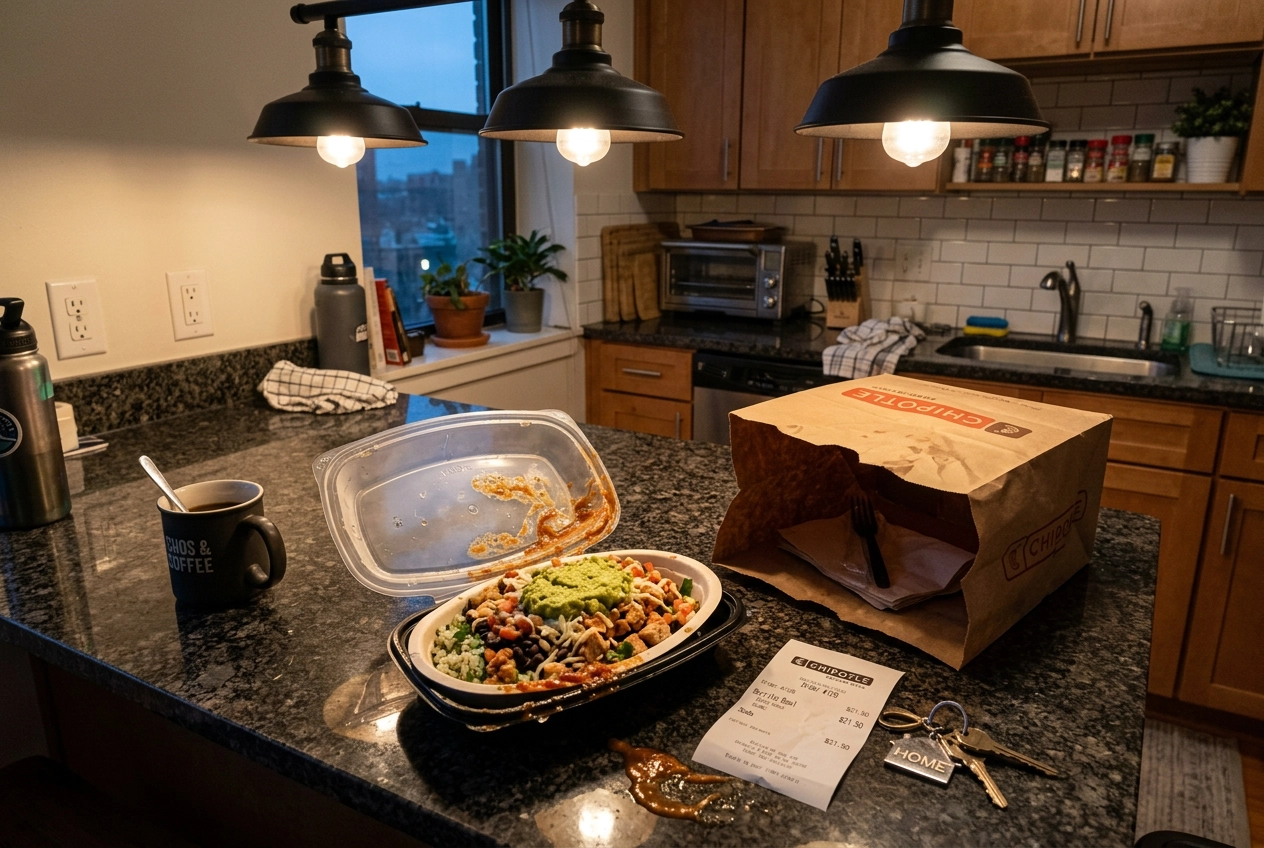 Real food delivery order arriving in takeout container showing authentic restaurant food versus AI generated expectations
What Delivery Platforms Actually Say About AI Food Photos
This isn't just about consumer perception. The major delivery platforms are drawing a clear line between enhancement and generation of food photos.
DoorDash launched AI photo tools in April 2025, but with a specific focus: "improving lighting, resolution, framing and plating — to help restaurants showcase their dishes more accurately." Their Background Enhanced Menu Photos feature transforms customer photos into clean, professional images "without altering the appearance of the food itself."
Uber Eats rolled out similar AI enhancement tools through their 2025 Merchant Impact Report. But when they launched a feature inviting customers to photograph their deliveries, they specifically advised users "not to submit AI-generated or heavily edited images" because the platform is "looking for authentic photos."
Both platforms share the same principle: photos must accurately represent the dish a customer will actually receive. Enhancement that makes your real food look better? Encouraged. AI generated food images of dishes that don't exist? That's the risk zone.
For the full breakdown of what each platform requires, see our guides on Uber Eats photo requirements and food photography for delivery apps.
DoorDash even permanently banned a driver in December 2025 for using AI-generated photos to fake proof of delivery — signaling just how seriously they're taking AI manipulation in their ecosystem.
Real Consequences of Using AI Generated Food Images on Menus
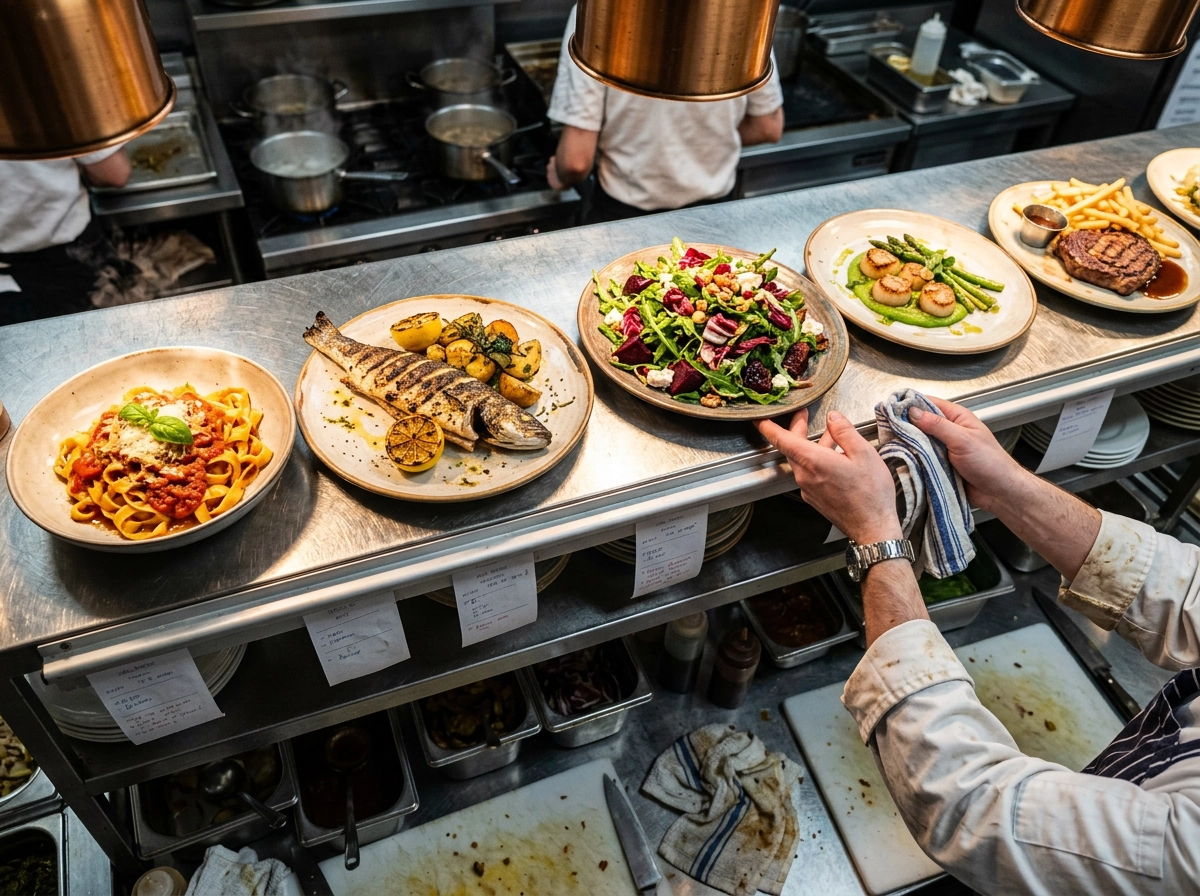 Restaurant kitchen pass with authentic real food dishes lined up showing genuine imperfections that build customer trust
Let's get specific about what's at stake when restaurants use ai generated food photos instead of real ones:
Expectation mismatches drive refunds. When a customer orders based on a flawless AI-generated image and receives a dish that looks different (even if it tastes great), they feel misled. On platforms like DoorDash and Uber Eats, they can request a refund with a single photo — and they do.
Negative reviews compound. "Looks nothing like the picture" is one of the most common complaints in delivery app reviews. These reviews stick around long after you've changed your photos, and they tank your ratings on the platform.
Trust evaporates. A 2026 TODAY report highlighted the growing trust crisis in food delivery photos. Customers are becoming savvy at spotting ai food images — and once they suspect you're using them, the assumption shifts to "they're hiding how bad the food really looks."
Legal gray areas. While there's no specific regulation banning AI generated food images on menus (yet), consumer protection laws around false advertising apply broadly. If a customer can argue that your menu photo is materially different from what they received, you could face complaints or regulatory scrutiny.
None of this means AI has no place in restaurant food photography. It just means the type of AI matters enormously.
The Better Approach: Enhancing Real Food Photos With AI
 Cafe owner placing fresh croissant on plate showing authentic food presentation that AI enhancement preserves
Here's what makes more sense for 99% of restaurants: start with your actual dish and make it look incredible.
AI food photography tools that focus on enhancement work with what you already have. You snap a photo of your real pad thai, your actual sourdough loaf, your genuine tiramisu — then AI handles the professional styling without creating fictional visuals.
With FoodShot, the workflow takes about 2 minutes:
- Take a photo of your dish with any smartphone (here's how to take great food photos with your phone)
- Upload it and choose from 30+ style presets — Delivery, Restaurant, Fine Dining, Instagram, and more
- Download a professional-quality image where the food is still recognizably your food
Need to swap a cluttered kitchen background for a clean marble surface? Done. Want to adjust the lighting from harsh fluorescent to warm natural? Done. Need the same dish styled differently for DoorDash and Uber Eats? Done.
The critical difference: the dish itself stays authentic. Your burger still has three layers, not six. Your salad has your actual portion size. When a customer orders, what arrives matches what they saw — and that builds the kind of trust that generates repeat orders.
This is the same philosophy DoorDash and Uber Eats use in their own AI tools. They're not generating fictional food images. They're making real food look its best. And for restaurants comparing the costs of food photography, enhancement tools like FoodShot start at $9/month — roughly what a single professional photo would cost from a traditional photographer.
When AI Food Generation Actually Makes Sense
 Menu development mood board with food concept sketches showing when AI food generation is appropriate for brainstorming
To be fair, there are legitimate use cases for ai generated food images:
- New menu development. Designing a dish that doesn't exist yet? Text-to-image tools let you visualize concepts before committing ingredients and kitchen time.
- Marketing brainstorms. Need a quick mockup for a campaign pitch? Generated images work for internal presentations where the goal is direction, not accuracy.
- Editorial and artistic content. Food bloggers creating magazine-style spreads or social media art — where the image is clearly creative, not a representation of a specific dish — can use ai food generation freely.
- Seasonal or thematic visuals. Creating holiday-themed imagery for social posts where the goal is mood, not menu accuracy.
The rule is simple: if the image represents food you actually serve, use a real photo. If it represents a concept or creative idea, generation is fair game.
How to Choose the Right Approach for Your Restaurant
Still not sure which approach fits your situation? Here's a quick decision framework:
Use AI Enhancement when:
- Photos go on delivery apps (DoorDash, Uber Eats, Grubhub)
- Images appear on your printed or digital menu
- You're posting "real dish" content on social media
- Website photos show your actual offerings
- Marketing materials feature specific menu items
Use AI Generation when:
- Visualizing a dish concept before cooking it
- Creating internal mockups for menu planning
- Making artistic social media content (clearly stylized)
- Building mood boards for restaurant design or branding
For most restaurants, enhancement covers 90%+ of their needs. If you're looking to avoid common food delivery photography mistakes, starting with a real photo and enhancing it is the safest and most effective path.
Wondering whether AI tools or a traditional photographer makes more sense for your budget? We've done an honest comparison of AI vs hiring a food photographer that breaks down the real costs.
Frequently Asked Questions
Can customers tell if food photos are AI-generated?
Increasingly, yes. While ai generated food images can fool people in controlled studies (like the Oxford research), real-world consumers are getting better at spotting telltale signs: overly uniform textures, impossible symmetry, strange artifacts on utensils or garnishes, and food that looks "too perfect." Reddit threads with thousands of upvotes show customers actively calling out suspected AI food images on delivery apps.
Are AI-generated food images allowed on Uber Eats and DoorDash?
Both platforms emphasize that menu photos must accurately represent the food customers will receive. DoorDash uses AI to enhance photos but specifically states their tools work "without altering the appearance of the food itself." Uber Eats has asked contributors not to submit "AI-generated or heavily edited images." AI-enhanced photos of real dishes are generally accepted; fully generated fictional food images are riskier and may violate platform guidelines.
What's the difference between AI food generation and AI food enhancement?
AI food generation creates a completely new image from a text description — the food in the image has never existed. AI food enhancement starts with a real photo of a real dish and improves lighting, backgrounds, styling, and composition while keeping the actual food intact. Generation creates fiction; enhancement improves reality.
How does AI food photo enhancement preserve authenticity?
Enhancement tools like FoodShot work with the actual pixels of your uploaded food photo. The AI adjusts the surrounding elements — background, lighting, color balance, plating context — but the food itself remains your real dish. Your burger still looks like your burger, just photographed as if you had studio lighting and a professional background.
Is AI food photography worth it for small restaurants?
For most small restaurants, yes — if you choose the right approach. Professional food photography typically costs $300–$1,400+ per session. AI enhancement tools like FoodShot start at $9/month for 25 images, giving you professional results from smartphone photos. That's enough to cover a full menu with money left over for seasonal updates and social media content. The key is starting from a real photo of the dish you serve, checking each result against the real plate, and following each platform's photo rules, because some delivery apps, such as Deliveroo, do not accept AI-generated images at all.