
How Much Does a Food Truck Cost? $50K–$175K in 2026
 Ali Tanis14 min read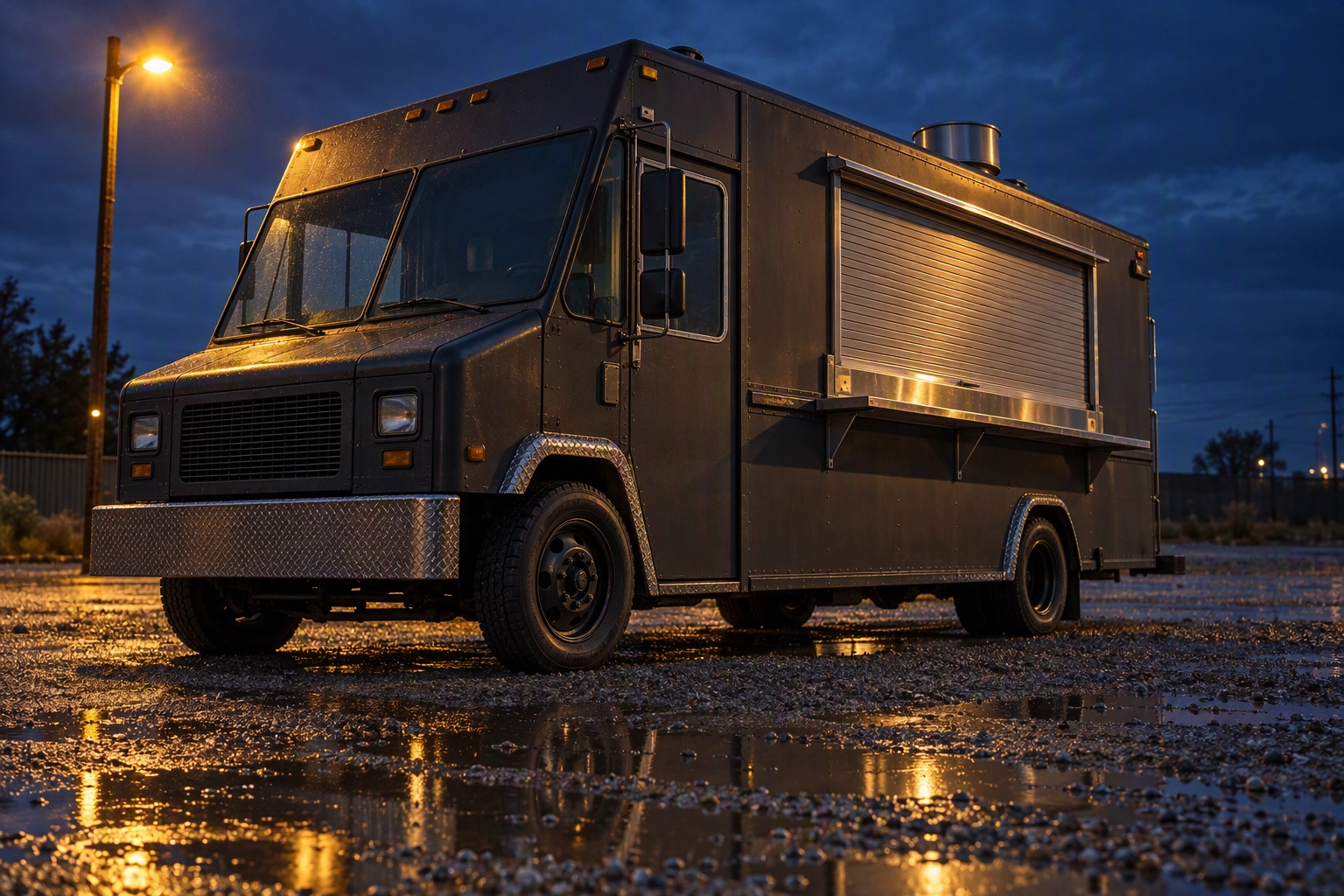
How much does a food truck cost in 2026? Between $50,000 and $175,000 to get on the road. Most first-time owners land between $85,000 and $130,000 once the vehicle, the fit-out, permits, insurance and a cash reserve are all counted. A lean used rig in a light-regulation county opens nearer $50,000. A new build in an expensive metro clears $200,000.
That spread isn't vagueness. It comes down to three choices: what you drive, what you cook, and which city you park in. Below is every line priced, so you can defend the number to a lender instead of guessing at it.
Quick Summary: How much does a food truck cost in 2026? Plan on $50,000–$175,000 all-in, with $85,000–$130,000 as the realistic middle. The vehicle eats 50–60% of your startup costs and equipment another 15–25%. The line almost everyone forgets is working capital, and it needs $8,000–$25,000 of its own.
How Much Does a Food Truck Cost? The Three-Number Answer
Here is the whole guide in three numbers.
- Lean launch — $52K to $78K. Used vehicle, secondhand prep gear, a six-item menu, a cheap-fee county.
- Realistic first truck — $98K to $148K. Where most working owners actually land.
- Premium new build — $178K to $255K. Custom fabrication, heavy cook line, expensive metro.
Sticker price on the vehicle is about half the story. Every dollar you put into the truck drags another 60 to 90 cents behind it in equipment, compliance and reserve cash. Nobody plans to run out of startup money in week nine. Plenty of food truck businesses do, because they budgeted for the truck and not for the business around it.
Truck vs. Trailer vs. Cart: 2026 Prices
The format you pick sets the ceiling on your startup costs before you write a single recipe.
| Format | Price, vehicle plus basic fit-out | What you are really buying |
|---|---|---|
| Used step van, equipped | $30K–$85K | Fastest route to service; condition risk is yours |
| New turnkey truck from a dealer | $50K–$175K | Warranties, working gear, no fabrication wait |
| Custom fabricated build | $90K–$255K | Exact layout for your line; 12–24 week lead time |
| Food trailer | $20K–$80K | Same kitchen, 20–40% cheaper; you supply the tow vehicle |
| Food cart | $8K–$38K | Cheapest legal entry; small menu, no drive-away |
Used step vans dominate first-time buying for an obvious reason. A used listing today averages around $46,800, roughly a third of a comparable new rig. You also inherit somebody else's engine and somebody else's code violations.
Trailers are the quiet value play. Skip the drivetrain and the same cook line costs 20–40% less. You pay for that in setup time at every stop, and in owning a tow vehicle rated for the load.
Carts are a narrower business, not a lesser one. Coffee, shaved ice and dessert concepts run profitably on $8K–$38K of gear — see how coffee carts present a two-item board.
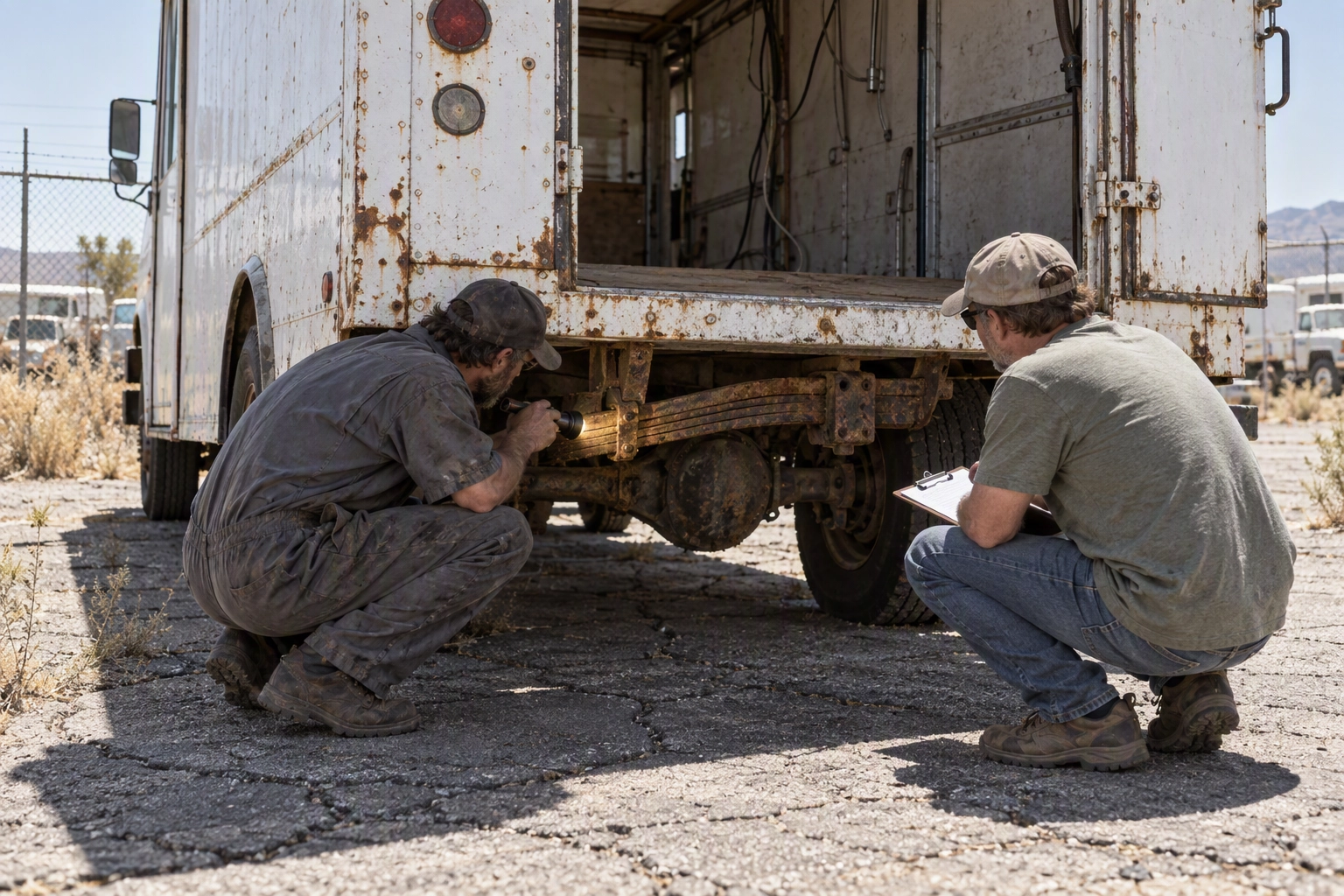 Buyer and mechanic torch-lighting the rusted rear axle of a used step van on a dealer lot before agreeing a used food truck price
Build-Out and Equipment: $15,000 to $45,000
Ask how much does a food truck cost and most people picture the vehicle. The kitchen bolted inside it is where the surprises live. Equipment is 15–25% of total startup costs, and the code-sensitive half cannot be negotiated away.
| Line item | Installed cost in 2026 |
|---|---|
| Type I hood plus UL 300 wet-chemical fire suppression | $3K–$6K new, $5K–$10K as a retrofit |
| Commercial generator, 8,000W | $3K–$7K |
| Three-compartment sink, hand sink, water heater, tanks | $2K–$5K |
| Refrigeration: undercounter plus prep table | $2.5K–$6K |
| Cook line: range, griddle, fryer | $4K–$15K |
| Propane system, regulators, pressure test | $1K–$3K |
| Electrical panel, conduit, interior finish | $3K–$8K |
Two rules decide this section. Anything that makes grease-laden vapour needs a Type I hood with automatic suppression. And your grey water tank has to be at least 15% larger than your fresh tank. Miss either and you fail inspection on day one.
A truck listed at $35,000 with no certified suppression system is really a $45,000 truck. Same for missing NSF sinks: figure $3,000–$5,000 of plumbing work to pass health review. Read any equipment list as a liability sheet, not a features list.
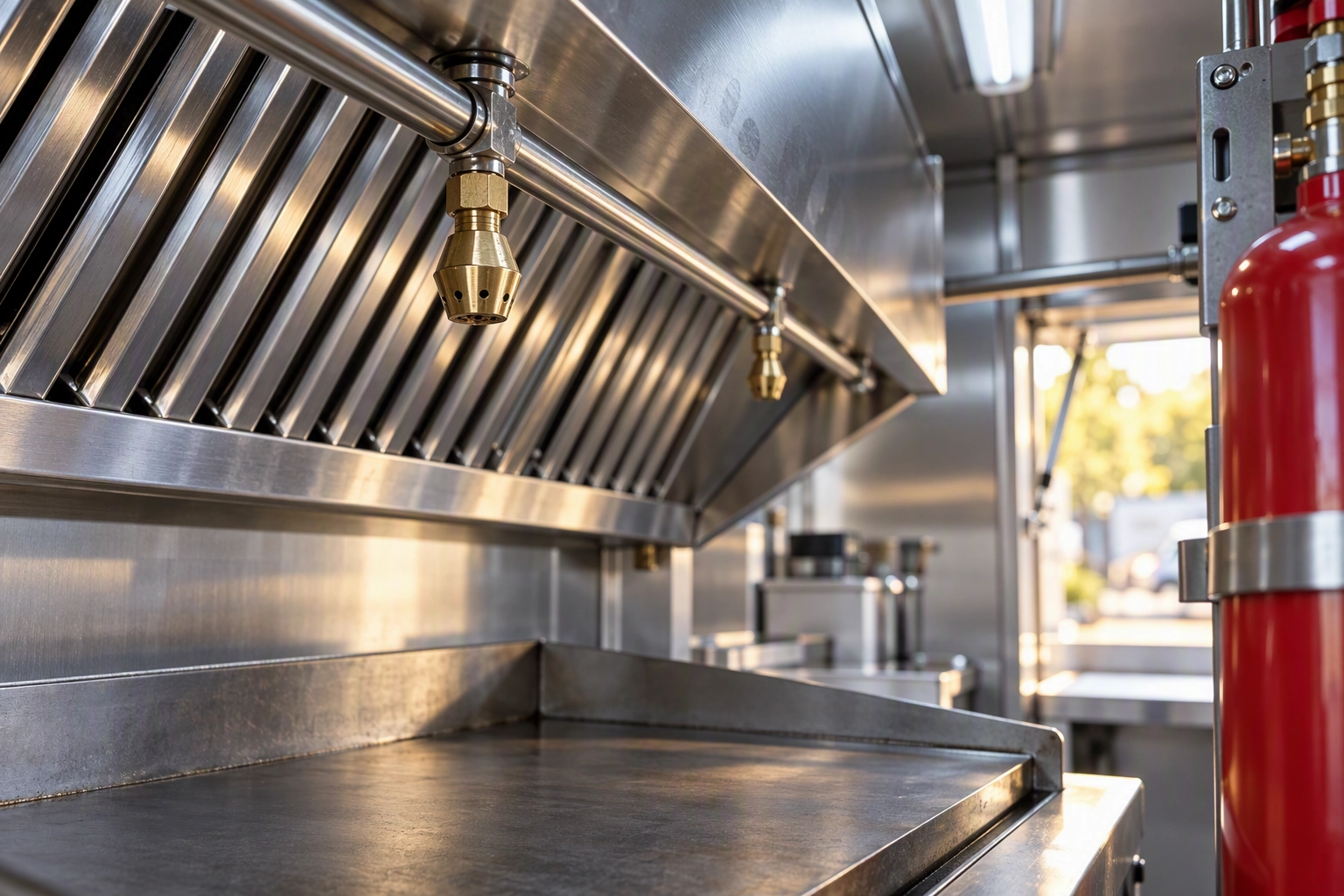 Macro of a brass fire suppression nozzle under a stainless Type I hood above a cold griddle, the food truck equipment line nobody can skip
Your menu drives this line harder than your vehicle does. A griddle-and-fryer taco truck needs a fraction of the gear a full BBQ smoker program does, and a Mexican food truck concept sits between the two. Trim the dish list first, then price the kitchen. Our food truck menu ideas breakdown is built around that trade.
Wrap, Branding and Menu Photos: $1,500 to $9,000
A wrap is not decoration. It is the only advertising that follows you to every stop.
- Full wrap, 14–16 ft truck: $3,500–$5,500
- Full wrap, 22 ft truck or trailer: $5,500–$8,500
- Partial wrap or cut decals on painted panels: $1,500–$3,000
- Menu board, printed or digital: $150–$2,000
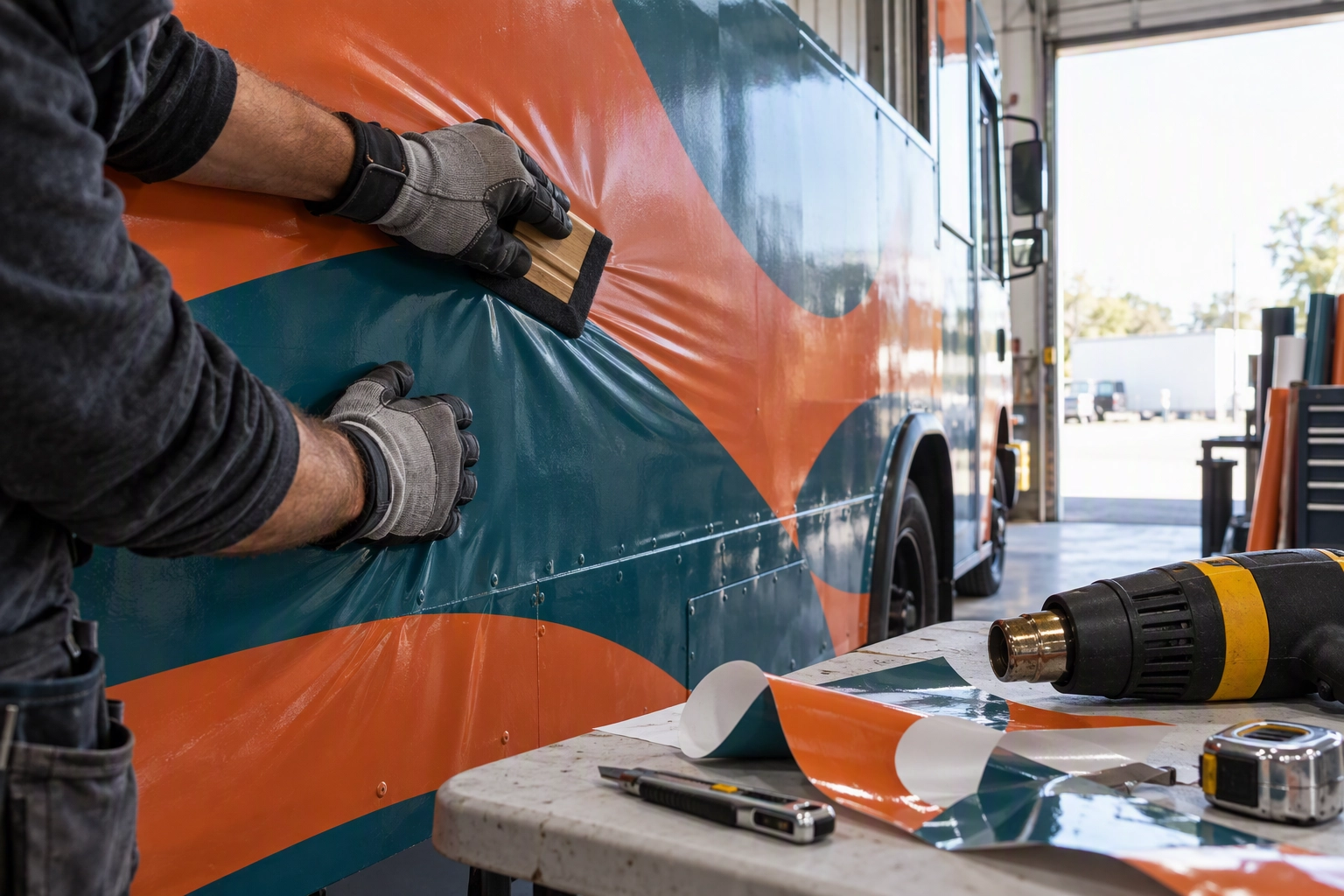 Wrap installer squeegeeing printed vinyl onto a food truck side panel in a daylit garage bay, the $3,500 to $8,500 branding line
Insist on cast vinyl, not calendered. Calendered film is thicker, shrinks in heat and commonly peels inside two years, which means paying twice. Cast film costs roughly 20% more and lasts around three times as long.
Plan for photography separately and early. Your wrap, your menu board and your delivery-app listings all need the same set of dish photos, and a service window gives you maybe four feet of eye contact. A studio shoot runs $700–$1,400 a session. FoodShot AI turns phone snaps of your own dishes into 4K menu-ready shots from $15/mo, which is why we built food truck photo styles as a dedicated set. Our food truck photography guide covers shooting source images in a moving kitchen, and how to take good food photos covers the basics if you are starting cold.
Permits and Licensing: $590 to $17,000 a Year
The answer to how much does a food truck cost changes more by zip code than by cuisine. This line has the widest geographic swing in the whole business, and it is the one most spreadsheets get wrong.
| Approval | Typical annual fee |
|---|---|
| Mobile food facility health permit | $200–$1,200 |
| City or county business license | $50–$500 per city |
| Fire inspection and suppression certification | $100–$400 |
| Seller's registration or sales tax account | $0–$200 |
| Food handler cards, per employee | $10–$40 |
| Parking or vending authorisation, where required | $0–$1,500 |
Most food truck businesses total $500–$5,000 in year one. The outliers are brutal. Indianapolis runs about $590 a year. Los Angeles County lands at $6,000–$9,000 once its mobile food facility approval ($774–$1,060) stacks with city fees. Boston can exceed $17,000. New York City caps its street-vending permits outright, and the grey-market lease on one runs $15,000–$25,000 a year.
Timeline matters as much as money. Austin can clear in 2–4 weeks; Los Angeles and New York often take 8–12 weeks. Every week you hold a financed truck without approval is a week of payments against zero revenue. In complex markets a compliance consultant at $500–$1,500 pays for itself.
Before you commit to a city, call the health department and ask for the current fee schedule in writing. The SBA's guidance on business licenses is a decent starting map, and the FDA Food Code explains the sink and temperature rules your inspector is working from.
Commissary, POS and Insurance: The Recurring Stack
Three recurring costs start before your first service and never stop.
Commissary kitchen: $350–$2,000 a month. Most jurisdictions require a certified commercial facility for prep, storage, water fill, grease disposal and truck washing. You cannot legally skip it in most of the country. Hourly agreements beat fixed contracts while your volume is unproven. If you are weighing a fixed kitchen against wheels, our ghost kitchen vs food truck comparison and the ghost kitchen rent numbers put the two side by side.
POS and tech: $500–$3,000 upfront, then $50–$150 a month. Card reader, receipt printer, cash drawer, router and a mobile hotspot. Offline card capture is the feature that matters, because festival wifi always dies.
Insurance: $2,000–$6,000 a year. Commercial auto on the vehicle runs $1,500–$3,500; a $1 million general liability policy adds $500–$1,500. Add equipment coverage and workers' comp and you can reach $9,000. Venues and event organisers ask for a certificate before they let you park, so this is not an optional line either.
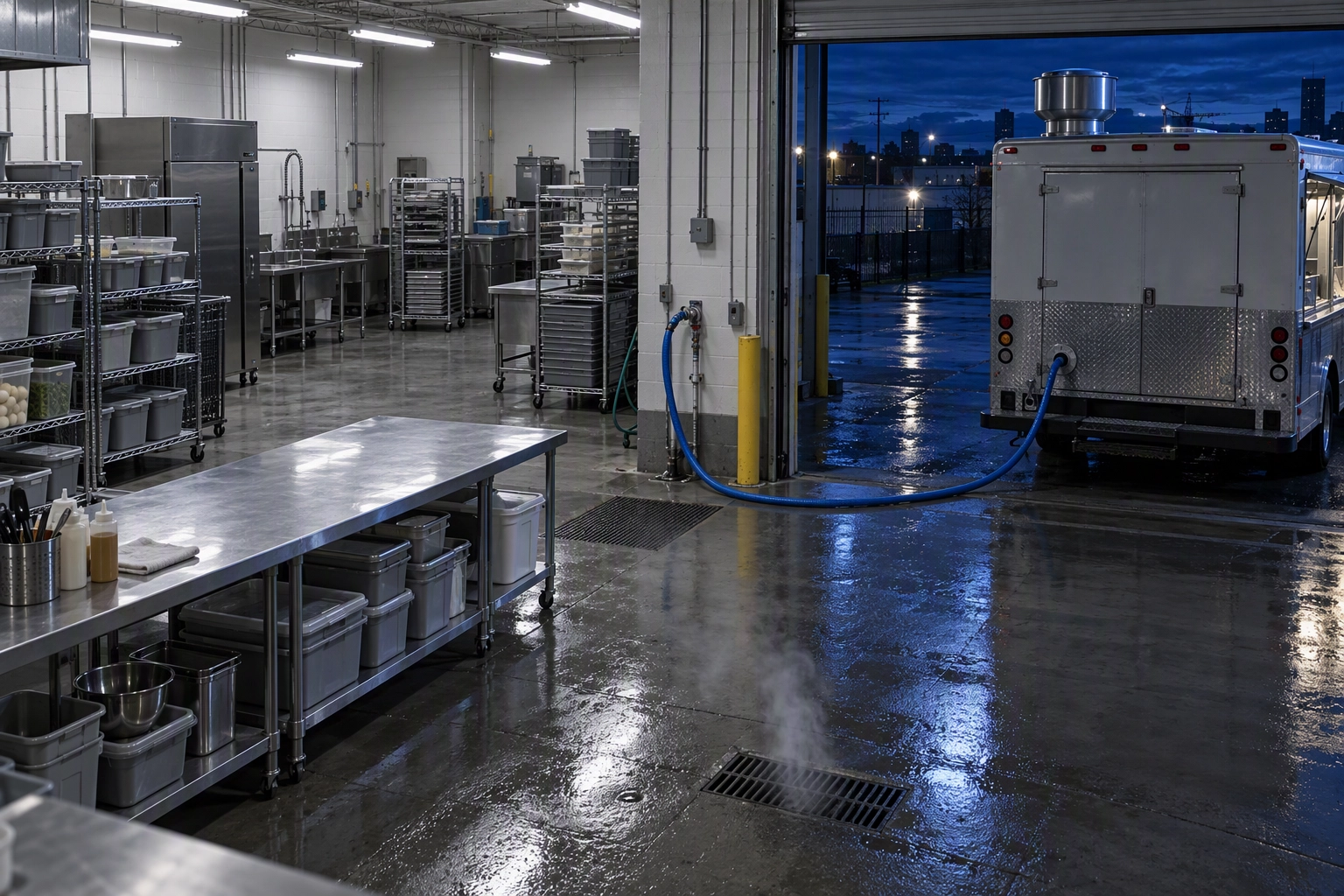 Food truck reversed into a shared commissary loading bay before dawn with a water hose running to its fresh tank, the $350 to $2,000 monthly cost
Inventory and Working Capital: The Line That Kills Budgets
Opening inventory is small: $1,000–$3,000 covers food, packaging, gloves, sanitiser and smallwares for the first fortnight.
Working capital is not small, and it is where new owners get wiped out. Commissary fees, insurance, loan payments, fuel, propane and payroll all bill on schedule whether you sold forty covers or four hundred. Add your recurring fixed costs, multiply by three, and treat that figure as untouchable. For a single truck that usually means $8,000–$25,000 sitting in the account at launch.
Commissary fees, health-code modifications on used vehicles and working capital shortfalls are the three most common triggers of an early closure. Two of the three are budgeting failures, not market failures. That is why so many people underestimate startup costs and still blame the concept.
Three Realistic 2026 Food Truck Startup Costs
| Lean used | Realistic mid | Premium new | |
|---|---|---|---|
| Vehicle | $32K | $58K | $130K |
| Fit-out and equipment | $12K | $34K | $60K |
| Wrap and branding | $2K | $5K | $8.5K |
| Permits, licenses, consultant | $1.5K | $4K | $9K |
| POS and tech | $0.8K | $1.8K | $3K |
| Insurance, first year | $2.2K | $4K | $6K |
| Opening inventory | $1.2K | $2.2K | $3.5K |
| Working capital reserve | $8K | $16K | $25K |
| Total | $59.7K | $125K | $245K |
These three columns are the honest answer to how much does a food truck cost, depending on which business you are actually starting.
The lean column assumes a used step van that passes fire and plumbing review, a menu you can run on a griddle and a fryer, and a county charging under $1,500 in fees. It is achievable. It is also the version where a blown transmission in the second season ends the business.
The middle column is what most viable first trucks cost: a sound used vehicle with a partial refit, real branding, and a reserve big enough to survive a slow opening stretch.
The premium column buys a custom rig built to your exact line, warranties on every appliance, and no fabrication surprises. It makes sense only when demand is proven, usually by a catering book or an existing brand. Before you commit at that level, run the numbers in a food truck business plan and pressure-test them. If events are your market, our catering and concessions and venues pages show what those buyers expect to see.
Should You Rent a Food Truck Instead?
Renting starts around $1,800 a month and usually includes training and a permitted, inspected vehicle. Renting is the cheapest way to find out whether your concept sells before you gamble six figures, and plenty of owners rent for a season and then buy. Renting costs more per year once you are established, so treat it as a testing tool rather than a destination. We cover the full rent-versus-buy maths in a separate guide.
How to Cut $10,000 to $20,000 Without Failing Inspection
- Buy used where safety is not involved. Prep tables, shelving, refrigeration and smallwares from restaurant auctions save 30–50%. Never take used fire suppression, used generators or used fryers.
- Take a partial wrap. Cut vinyl on painted panels saves $2,000–$4,000 and upgrades easily once revenue is real.
- Pay the commissary hourly. Fixed contracts make sense only after your schedule is full.
- Start food service on a trailer. Same kitchen, 20–40% less capital, and you can move up to a truck later.
- Cut the dish list before you cut the kitchen. Six items done well need less steel, less storage and less waste. Our menu engineering piece shows how to pick the six.
Marketing is the one line worth protecting. A truck nobody can find earns nothing, so read our food truck marketing playbook and the social media guide for food truck businesses before you trim that column. Sharp menu descriptions, a tidy digital board and good photos on DoorDash and Uber Eats cost far less than another appliance and pay back faster — the same burger and taco shots work in every ad you run.
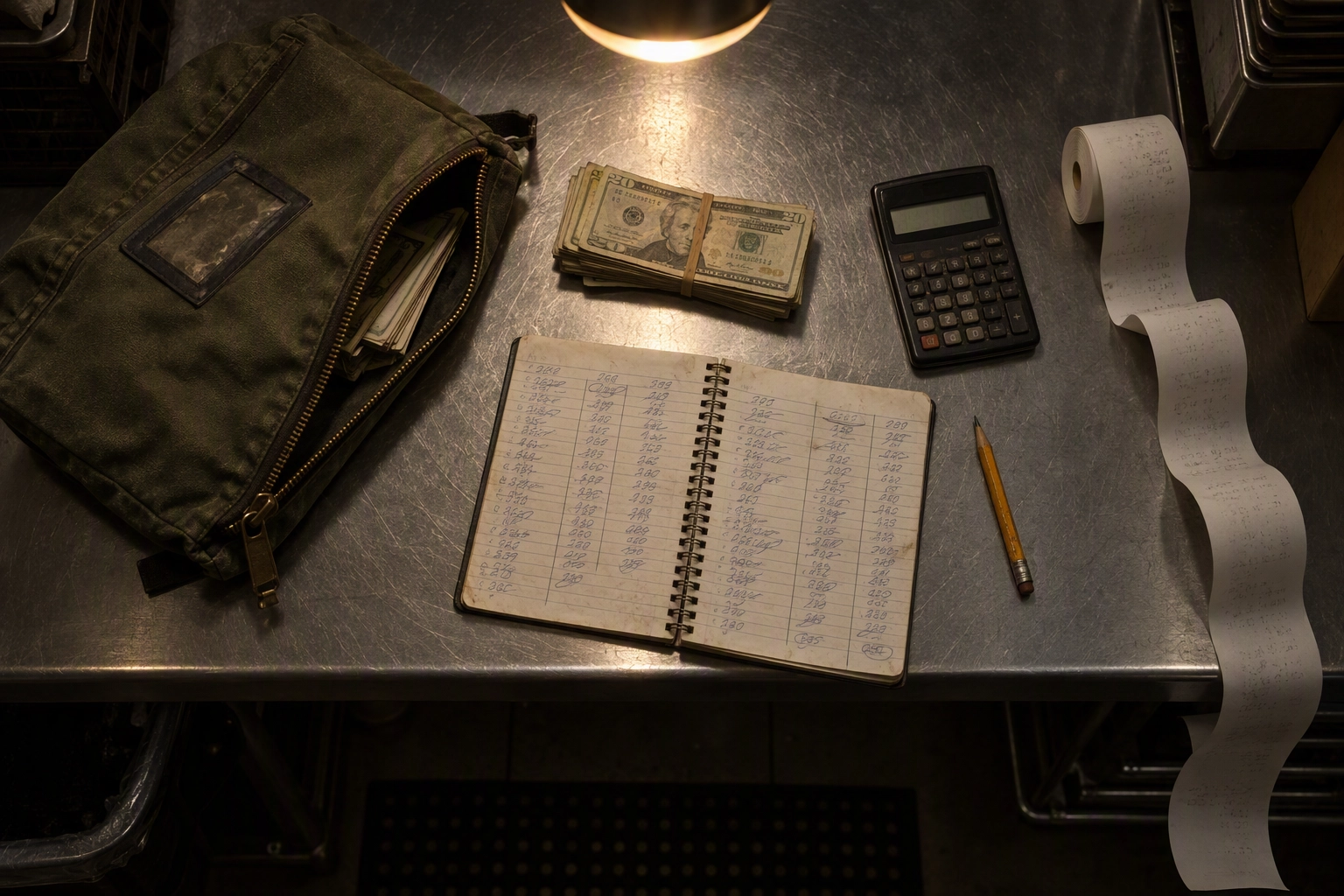 Closing-time flat-lay of a deposit bag, banded notes, receipt roll and calculator on a stainless prep counter, the working capital reserve a food truck budget needs
Frequently Asked Questions
How much does a food truck cost if you buy used?
A used truck with a working kitchen runs $30,000–$85,000, with the average listing near $46,800. Add $5,000–$15,000 for the repairs and code work almost every used rig needs: suppression recertification, plumbing corrections, tyres and brakes. Get an independent mechanical inspection and a health pre-review before money changes hands.
How much does a food truck cost per month to run?
Fixed costs land between $3,000 and $8,000 for a single truck before food and labour. That covers kitchen access at $350–$2,000, insurance at roughly $170–$500, a loan payment of $900–$2,500, fuel and propane at $400–$900, POS software, and renewal fees amortised across the year.
How much does a food truck cost in California?
More than almost anywhere else. Los Angeles County's mobile food facility approval alone is $774–$1,060 a year, and stacked county, city and state requirements push first-year compliance to $6,000–$9,000. California also requires a state-issued HCD insignia on the unit on top of county environmental health clearance. Budget $110,000–$160,000 all-in for a solid mid-range truck there.
How much does a food truck cost to build from an empty van?
A self-managed conversion runs $25,000–$60,000 on top of a $10,000–$25,000 van. Owners doing their own carpentry and buying food truck equipment secondhand have finished for around $30,000 total. The risk is real: a conversion that fails fire or plumbing review costs more to fix than a professional job would have.
How much does a food truck cost compared with a food trailer?
A trailer delivers the same kitchen for 20–40% less, typically $20,000–$80,000 against $30,000–$175,000 for a truck. You give up drive-away mobility and need a tow vehicle rated for the weight. For fixed pods, breweries and festival lots, a trailer is usually the better buy.
How much does a food truck cost to insure and license in year one?
Together, $2,500–$11,000 for most operators: $2,000–$6,000 of insurance plus $500–$5,000 of permits and licenses. High-fee cities break that model completely, with Boston passing $17,000 in approvals alone. Get written quotes for both before you sign anything on a vehicle.
How much does a food truck cost to start compared with a restaurant?
A food truck business opens for roughly a quarter to a third of a small bricks-and-mortar restaurant, which typically needs $275,000–$500,000 with fit-out and a lease deposit. The trade is capacity and weather risk: a truck seats nobody and sells nothing in a storm.
So How Much Does a Food Truck Cost? The Number to Write Down
Take one figure from this breakdown: $98,000 to $148,000 is what a serious first truck costs in 2026, fully funded. Anything under $50,000 means you are buying somebody else's problem, and anything over $175,000 needs proven demand behind it.
Price the vehicle last. Price the approvals, the commissary, the insurance and the reserve first, because those four decide whether the business survives its first slow stretch. Then spend what is left on steel — and make sure the food looks as good on the window as it does in the pan. That part, at least, costs $15 a month.