
How to Open a Restaurant: 15 Steps, 12–18 Months, $375K
 Ali Tanis23 min read
If you want to learn how to open a restaurant without paying for every lesson twice, start with the calendar, not the menu. Recipes take weeks. Permits, construction, and a liquor license take months, and they decide your launch date. This guide covers the 15 steps in the order they actually happen, with a month-by-month timeline, one budget table, and a checklist you can print.
Quick Summary: A full-service restaurant with a real buildout usually takes 12 to 18 months to open, and the most widely cited survey puts the median startup cost at about $375,000. Begin the lease and permit work early, hold a cash reserve for a slow first year, and get photos and listings live before your first guest walks in.
What Do You Need to Open a Restaurant?
At minimum, you need eight things:
- A concept and a business plan that proves the numbers work.
- Funding for the build, plus a cash reserve.
- A space that is zoned for food service and can pass fire and health review.
- A lease with terms you can survive.
- Licenses and permits from your city, county, and state.
- A kitchen and dining room built to code.
- A menu, suppliers, and a trained team.
- Systems and marketing: POS, listings, photos, and a launch plan.
The odds are better than the folklore suggests. The line that "90% of restaurants fail in year one" doesn't hold up. Research on 81,000 full-service restaurants in the western US, using 20 years of Bureau of Labor Statistics data, found that 17% of independent full-service startups closed in their first year. Other service businesses did slightly worse, at 19%.
The market is big, but margins are thin. The National Restaurant Association projects $1.55 trillion in 2026 restaurant and foodservice sales. It also expects only 1.3% real growth, and 60% of operators reported softer customer traffic last year. Demand is there. Budget as if every dollar has to earn its place.
How Long Does It Take? A Realistic 12–18 Month Timeline
Most online advice quotes six to 12 months. That's realistic for a counter-service concept moving into a former restaurant. A full-service restaurant with a major buildout and a liquor license usually needs 12 to 18 months. Owners in Reddit's r/restaurantowners describe projects that took "a little over 12 months" and "almost 18."
The reason is the critical path, and it runs through government offices. In Washington, DC, a standard building permit for a restaurant buildout takes 90 to 180 days before any wall comes down. An interior buildout then runs roughly three to six months after approval, and a ground-up building takes six to 12. Gas and electric hookups can take four to 12 weeks, so experienced builders apply for utilities the same day they submit the building permit.
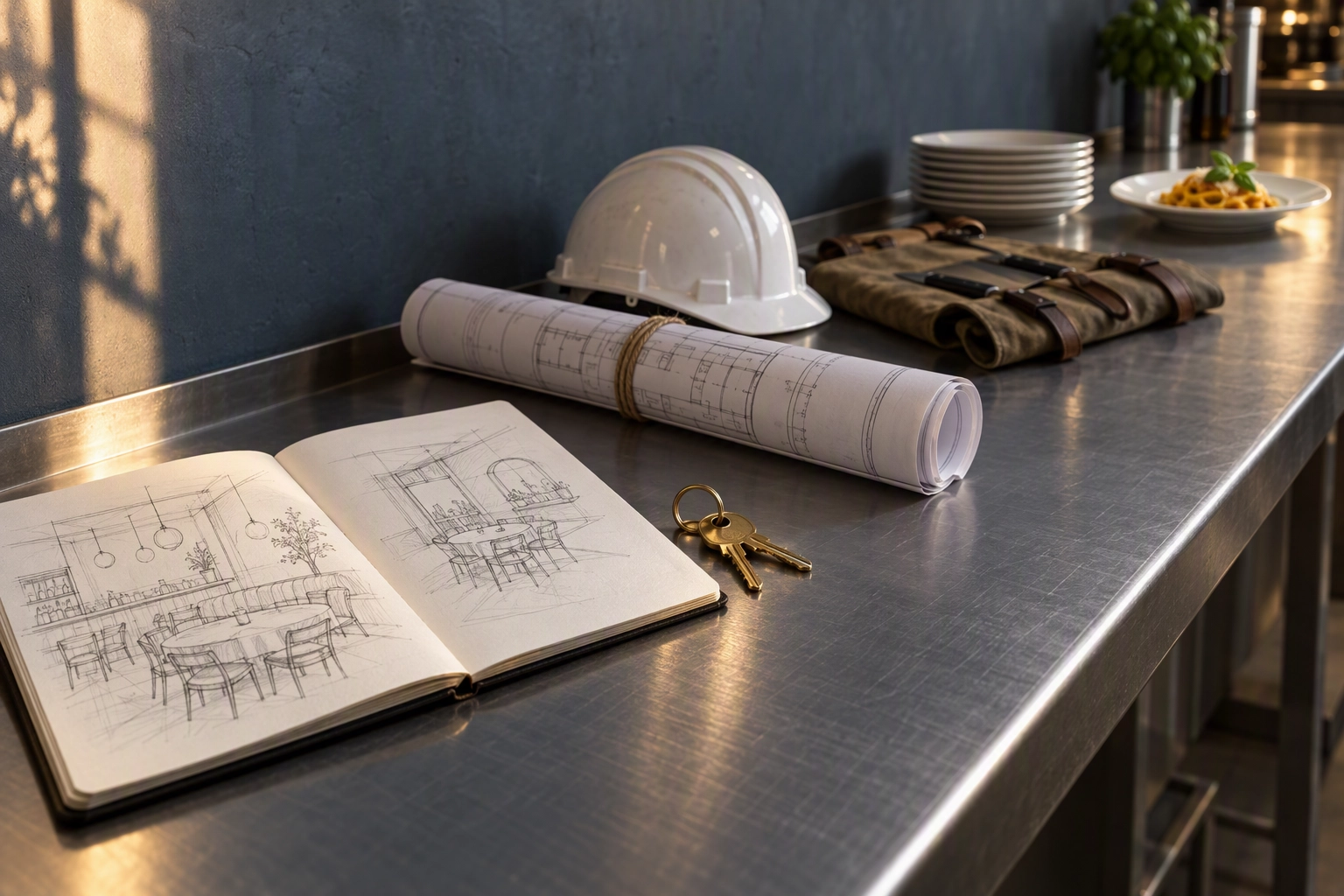 Objects lined along a steel counter from concept sketchbook to plated dish, a restaurant opening timeline of 12 to 18 months
| Months to go | What happens | What sets the pace |
|---|---|---|
| 18–15 | Concept, market research, pop-up test, business plan | Your own discipline |
| 15–12 | Funding, entity setup, lender and investor meetings | Lender underwriting |
| 12–9 | Site search, zoning checks, pre-lease code consults, lease negotiation | Landlord and zoning office |
| 9–6 | Architect drawings, design review, building permit, liquor license filing, utility applications | Permit queues (often 90–180 days) |
| 6–2 | Construction, equipment, menu testing, suppliers, POS, brand | Contractor and inspections |
| 2–0 | Hiring, training, final inspections, photos and listings, pre-opening marketing | Food permit sign-off (often 2–3 weeks after construction wraps) |
| Opening weeks | Soft opening, then grand opening 1–2 weeks later | Your team's readiness |
The phases overlap. You'll negotiate a lease while the business plan is still in draft, and you'll test recipes while drywall goes up. The rule is simple: nothing on the permit track should wait for anything on the creative track.
What It Costs: The Startup Budget in One Table
The figure everyone quotes comes from a RestaurantOwner.com member survey: a median startup cost of about $375,000. The same survey shows that where you build matters as much as what you cook. Renovating a space that was already a restaurant cost a median of about $275,000. Converting a non-restaurant space cost about $425,000, and new construction about $650,000.
Two caveats before you plug these into a spreadsheet. The survey is several years old, so treat its medians as a floor. And the equipment and tech ranges below are published estimates, not audited averages.
| Budget line | Typical figure | Source |
|---|---|---|
| Total startup cost (median, independents) | About $375,000 | RestaurantOwner.com survey |
| Buildout: renovate a former restaurant | About $275,000 median | RestaurantOwner.com survey |
| Buildout: convert a non-restaurant space | About $425,000 median | RestaurantOwner.com survey |
| Buildout: new construction | About $650,000 median | RestaurantOwner.com survey |
| Kitchen equipment | $75,000–$150,000 (small counter service); $150,000–$400,000 (full service) | Homebase estimates |
| Furniture, décor, bar | $10,000–$25,000 (small); $75,000–$200,000 (full service) | Homebase estimates |
| POS and tech systems | $15,000–$40,000 (full service) | Homebase estimates |
| Licenses and permits | $1,000–$15,000 | Industry permit guides |
| Liquor license (state fees) | About $300 to $14,000+; far more in quota states | Industry permit guides |
| Pre-opening and training | $12,000 (limited service), $20,000 (bar), $25,000 (full service) medians | RestaurantOwner.com survey |
| Menu and listing photos | From $15 a month with an AI tool | FoodShot AI pricing |
| Working capital | $50,000–$100,000 (counter service); $150,000–$500,000 for 6+ months (full service) | Homebase estimates; 25% of surveyed owners needed a year to turn a profit |
Add a contingency line on top of your pre-opening restaurant budget. The surveyed owners reported median annual sales of $1.1 million and a median net profit of 5.5%. That's about $60,500 a year for a median restaurant, so one construction surprise can erase a full year of profit.
How to Open a Restaurant in 15 Steps
The steps follow the order the calendar forces on you. Steps 3 through 6 are the critical path, so start them as soon as your funding looks likely.
Step 1: Define the Concept and Write the Business Plan
A concept is four decisions: who you serve, what you serve, what they pay, and how they're served. "Neapolitan pizza, counter service, priced for families who live within a short drive" is a concept. "Great food and a warm vibe" is not.
Test the idea before you spend real money. London's Som Saa began as a pop-up in Peckham, ran a one-year residency at Climpson's Arch, and opened a permanent site in Spitalfields in 2016. A pop-up, market stall, or supper club tells you what guests will pay for and come back for. If your idea is delivery-first, read up on what a ghost kitchen is before you sign for a dining room you may not need.
What Goes in the Business Plan
The SBA describes two formats: a traditional plan that can run dozens of pages, and a lean one-page version. Lenders and investors commonly request the traditional plan, so write that one if you need outside money. Cover:
- Concept and market analysis: who lives and works nearby, and who already feeds them.
- Menu and pricing: a sample menu with plate costs.
- Operations: hours, service style, seat count, and staffing model.
- Management team: who has run a kitchen or a dining room before.
- Marketing plan: how your first guests will hear about you.
- Financials: startup costs, a monthly sales forecast, break-even point, and prime cost.
Prime cost (food plus labor) is the line most worth stress-testing. Restaurant365, a restaurant accounting platform, puts a sustainable prime cost at roughly 60% of sales. If your model needs a prime cost well above that, rethink the concept before you sign anything.
Step 2: Line Up Funding (and a Cash Reserve)
Most first-time owners combine several sources: personal savings, partners or friends-and-family investors, a bank loan, and equipment financing. Leasing equipment instead of buying it lowers the upfront check, which helps cash flow, though you'll pay more in total.
The SBA's 7(a) loan program is the main government-backed option. It guarantees loans up to $5 million that can cover real estate, working capital, equipment, and furniture and fixtures. For smaller gaps, SBA microloans go up to $50,000 through intermediary lenders. Either way, expect a lender to ask for your business plan, your financials, and how much of your own money is at risk.
Then fund the reserve before you fund the décor. In the RestaurantOwner.com survey, a quarter of owners were profitable within two months, but another quarter needed a full year. If you can't cover operating costs like rent, payroll, and food through a slow first year, you're betting on being in the lucky quarter. If the budget won't stretch, compare ghost kitchen rent as a lower-cost way to prove the concept.
Step 3: Choose a Location You Can Actually Permit
Location sets your rent, your traffic, and your rules. San Francisco's official guide to opening a restaurant gives advice that applies almost anywhere:
- Check zoning even if the space was a restaurant before, because the last tenant may have operated without approval.
- If you want to serve alcohol, confirm the location allows it.
- Before signing, consult the health and fire departments about sprinklers, kitchen hoods, exits, and capacity.
- Ask the water utility for a capacity-charge estimate, which can be high if the space was never a restaurant.
Then walk the block at breakfast, lunch, dinner, and late night. Count how many people pass, where they park, and which lunch spots are already full.
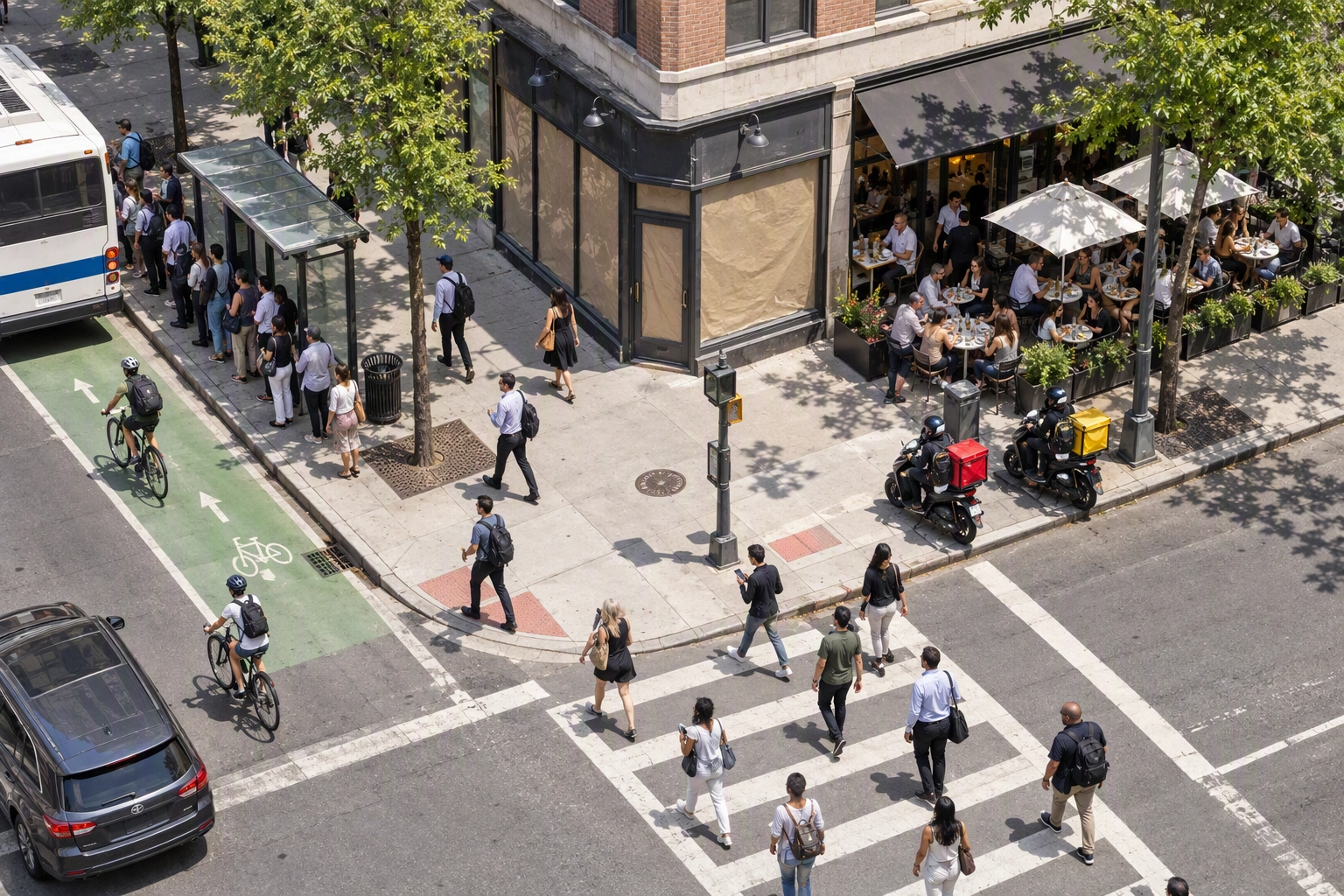 Drone view of a vacant corner storefront beside a busy cafe patio at lunchtime, choosing a restaurant location by foot traffic
The case for a second-generation space is strong. In the survey above, renovating a former restaurant cost about $150,000 less than converting a non-restaurant building. Existing hoods, grease traps, and plumbing are expensive to install and slow to approve.
Step 4: Negotiate the Lease Like Your Biggest Contract
Nearly every source says total occupancy cost (rent plus common-area charges, taxes, and insurance) should be 6% to 10% of sales. Treat that as a ceiling, not a target. Restaurant accountants at The Fork CPAs advise staying at or under 8%, ideally 5% to 7%. One analysis of public restaurant companies' 10-K filings found rent between 1.6% and 7.7% of sales.
Run the math before you fall for a room. At the survey's median sales of $1.1 million, 8% is $88,000 a year, or about $7,300 a month in total occupancy cost. If the landlord's number is well above that, the deal only pays off if you beat the median.
Clauses to negotiate hardest:
- Contingencies: tie the lease to your permit approvals and, if you need one, your liquor license.
- Tenant improvement (TI) allowance: landlord money toward the buildout. It's usually repaid through higher base rent, so compare offers over the full term.
- Percentage rent: check the sales breakpoint and read it alongside the TI clause.
- Equipment responsibility: in a former restaurant, spell out who owns and repairs the hood, grease trap, and HVAC.
- Assignment rights: without them, selling the business later becomes very hard.
Pay a lawyer who handles restaurant leases to review it. A few hours of legal fees cost less than one bad clause over the life of the lease.
Step 5: Apply for Licenses and Permits
Requirements vary by state, county, and city, so begin with the SBA's licenses and permits guidance and your city's small business portal. Some cities help more than you'd expect. New York City, for example, offers consultative inspections for new food service establishments before they open. Industry permit guides estimate that most restaurants need eight to 12 permits and licenses, costing $1,000 to $15,000 and taking three to six months.
The Core List
- Business registration with your state, plus an EIN from the IRS, which is free.
- Seller's permit for sales tax.
- Food service establishment permit from the health department, usually after a plan review of your kitchen drawings.
- Building permits, plus mechanical, electrical, and plumbing sign-offs.
- Certificate of occupancy, which typically needs sign-off from both building and food safety inspectors.
- Fire department approval for hood suppression, exits, and capacity.
- Sign permit for exterior signage.
- Music licensing if you play recorded music.
- A certified food protection manager. The FDA Food Code (section 2-102.12) requires the person in charge to pass an accredited exam, and most states have adopted the code.
The Liquor License
File this one first. Liquor licenses come from state alcohol authorities and often require background checks and a public notice. In South Carolina, for example, you post a notice at the premises for 30 days, and processing takes 30 to 90 days. State fees run from about $300 to more than $14,000. In quota states that cap the number of licenses, buying one on the open market can cost far more.
Step 6: Design the Layout and Kitchen
Plan the kitchen first and fit the dining room around it. In the RestaurantOwner.com survey, the kitchen took up about a third of total floor area in a median 120-seat restaurant.
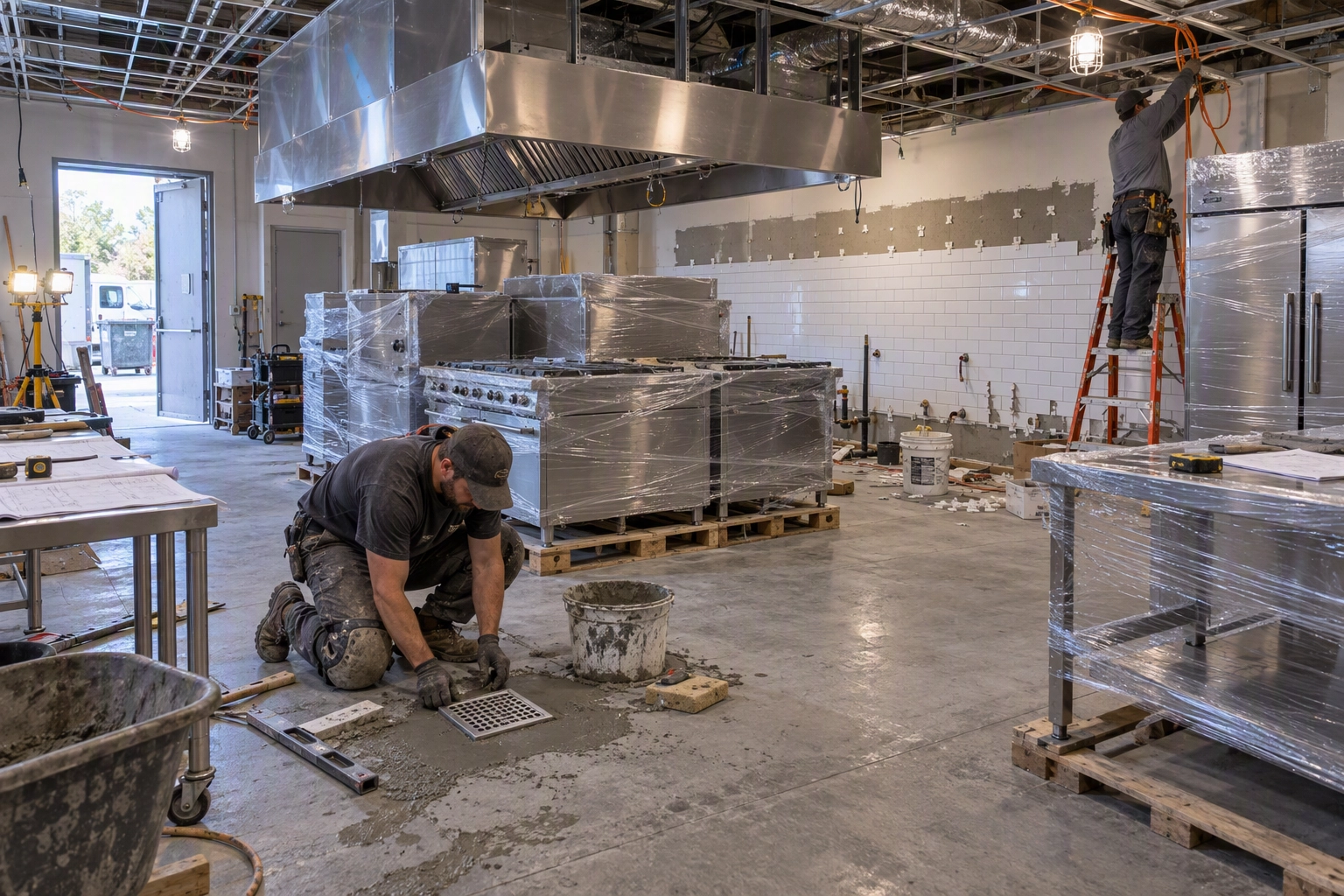 Restaurant kitchen buildout with shrink-wrapped stainless equipment on pallets while a plumber fits a floor drain
Hire an architect or designer with restaurant experience, because the local food safety office will review your drawings before construction starts. Design around the flow of food and staff: receiving, storage, prep, cooking, plating, the pass, and dish return, with no crossed paths. The big-ticket items are the hood and fire suppression, walk-in cooler, grease trap, and cook line. They drive both costs and review time.
Buy new for anything that touches safety or runs all day. Consider used for stainless tables, shelving, and smallwares. In the dining room, seat count, table mix, and aisle width set your revenue ceiling, so model a busy Saturday before you lock the floor plan.
Step 7: Develop and Cost the Menu
Keep the first menu shorter than you want. Fewer dishes mean fewer ingredients, less waste, faster training, and more consistent plates during the chaotic first weeks.
Cost every dish down to the garnish. A widely used benchmark is food cost of 28% to 35% of the menu price, with prime cost near 60% of sales. Write standardized recipes with weights and yields, then set each price from the plate's cost, not from what the place down the street charges.
Test each dish until the line can hit it on a slammed Friday, not just a quiet Tuesday. Then use menu engineering to sort dishes by popularity and margin, so your best plates earn the best positions.
Step 8: Set Up Suppliers
Most restaurants use a broadline distributor such as Sysco or US Foods for staples. They add specialty and local suppliers for produce, meat, seafood, bread, and coffee. Open accounts early, because credit applications and first deliveries need lead time.
For each supplier, settle:
- Delivery days and order cutoffs
- Minimum order size
- Payment terms
- Credit policy for short or damaged deliveries
Build an order guide and par levels from your tested recipes. Order lean for the first services, and you'll learn your real usage within the first two weeks.
Step 9: Hire and Train Your Staff
Hire leaders first. A general manager and a head chef can help build your systems and hire the rest of the staff. Homebase's startup guide allows one to two months for hiring and training, and that's tight for a full-service room.
Budget wages realistically. The Bureau of Labor Statistics puts the median hourly wage for waiters and waitresses at $16.94 as of May 2025, and the median for cooks at $17.19 as of May 2024. Local minimum-wage laws may push your numbers higher. The labor market is tight, too. The National Restaurant Association expects industry employment to reach 15.8 million in 2026, and nearly three-quarters of operators intend to hire, yet expect trouble finding experienced managers and chefs.
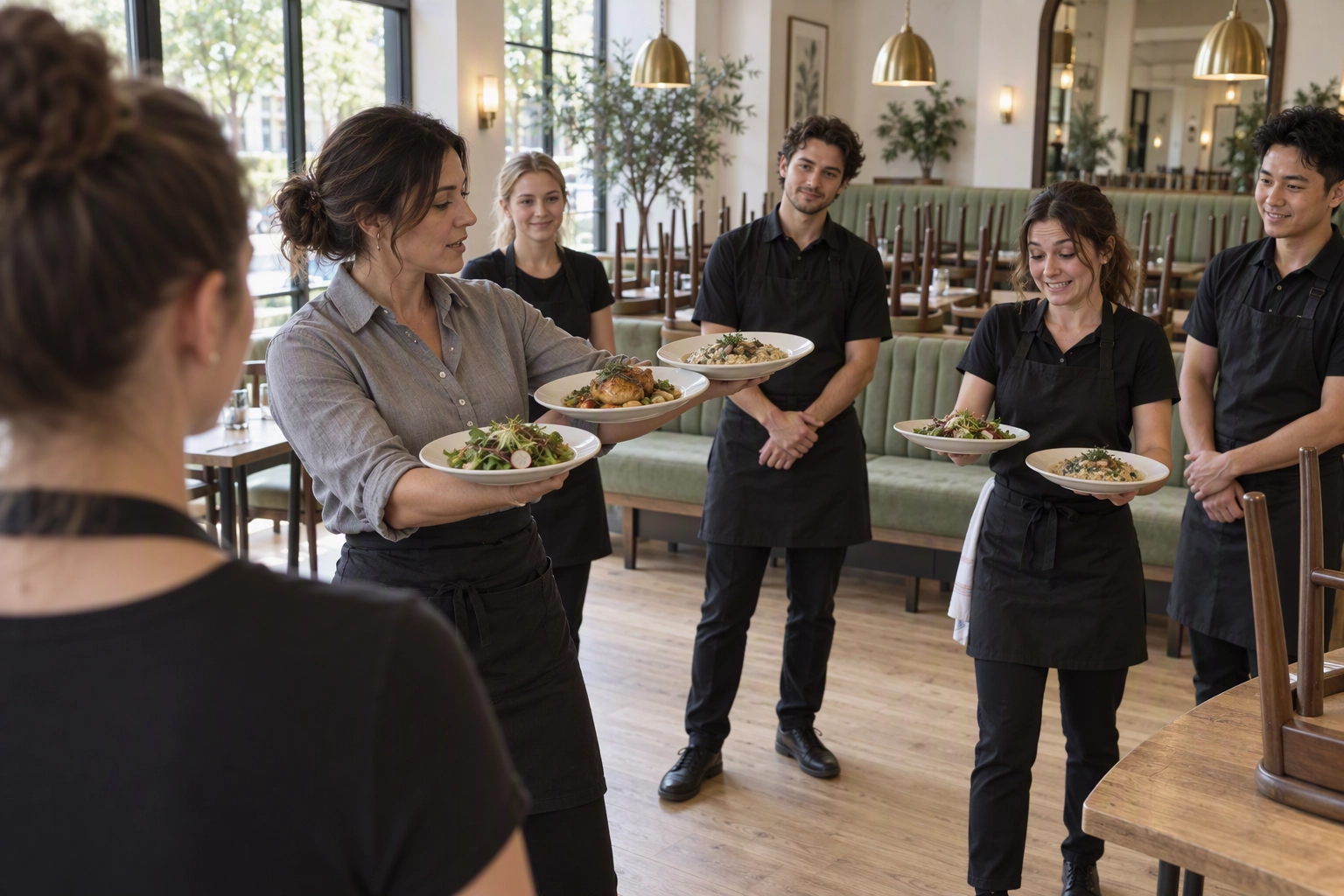 New restaurant staff practicing a three-plate carry with their general manager in an empty dining room before opening
Pre-opening restaurant training is a real budget line. Surveyed owners reported medians of $12,000 for limited service, $20,000 for bars, and $25,000 for full service. Run full practice services, not just tastings: ring orders through the POS, fire tickets, and time them.
Step 10: Choose Your POS and Tech Stack
Your point-of-sale system becomes the center of your operating data. Popular options include Toast, Square, and Clover. Before you sign, compare hardware costs, processing rates, contract length, and whether the POS connects to the rest of your stack:
- Online ordering and delivery-app integration
- Reservations and waitlist (OpenTable, Resy)
- Scheduling and payroll
- Inventory management and recipe costing
- Accounting
Watch the per-order fees. DoorDash, for example, charges a 2.9% + $0.30 processing fee on orders placed through its Commerce Platform. Our roundups of AI tools for restaurants and restaurant marketing software cover which tools are worth paying for.
Step 11: Build the Brand
Your brand is everything guests can see before they taste anything: name, logo, signage, interior, uniforms, voice, and photos. Pick the name early. Check it with your state, as a trademark, and as a domain, and confirm the sign you want is allowed.
Keep one visual system across the sign, the menu, the website, and your social profiles. When people see your Instagram grid and then walk in, it should feel like the same place. Our restaurant photoshoot ideas help you plan brand images beyond plated food, like the room, the team, and the bar.
Step 12: Design the Menu
A menu is a sales tool, not a list. Our full guide on how to design a restaurant menu covers layout, pricing psychology, and typography. The short version:
- Put your highest-margin dishes where eyes land first.
- Write menu descriptions that sell, and keep them to about 20 words.
- Decide whether a photo menu fits your concept.
- If you'll use screens, read our guide to digital menu boards, or browse these menu board ideas for counters.
- Menu design software ranges from free to about $49 a month.
Step 13: Get Photography and Listings Live Before Day One
Most checklists skip this step. Guests now meet your food online before they meet it on a plate, and a new place with an empty listing looks closed.
Google Business Profile
Claim and verify your Google Business Profile as soon as you have an address and signage. Google has reported, in data from the mid-2010s, that businesses with photos get 42% more requests for directions and 35% more clicks through to their websites. Add hours, a menu, and real dish photos before your first preview night.
Delivery Apps
If you'll offer delivery, photos aren't optional. DoorDash reports that menus with item photos saw up to 44% higher monthly sales, and it estimates that 38% of customers use menu photos to choose where to order. For new stores, DoorDash found that merchants with header photos saw over 5x more sales in their first 28 days. Each app has its own specs, so check our guides to DoorDash photo requirements, Grubhub photo requirements, and which AI edits delivery apps allow. For the wider playbook, see food photos for delivery apps and our tips to get more orders on Uber Eats.
How to Get the Photos
Shoot during menu testing, when dishes are final but you still have time. You have three options, compared in detail in DIY vs pro vs AI food photography:
- DIY with a phone: fine for social, if you learn basic food photo technique.
- Hire a photographer: best for a launch campaign; prep it with our menu photoshoot guide.
- Use AI: FoodShot AI turns phone photos of your dishes into studio-quality, menu-ready images in about 90 seconds, with 200+ styles across delivery, menu, and fine dining looks. Paid plans start at $15 a month and include a commercial license. The free plan is watermarked and for personal use only, so it isn't meant for listings. See how restaurants use it and the pricing page.
Whether you run a pizzeria, a cafe, or a fine dining room, the rule is the same: the photo has to match the plate that arrives. Our restaurant food photography guide covers how to stay honest.
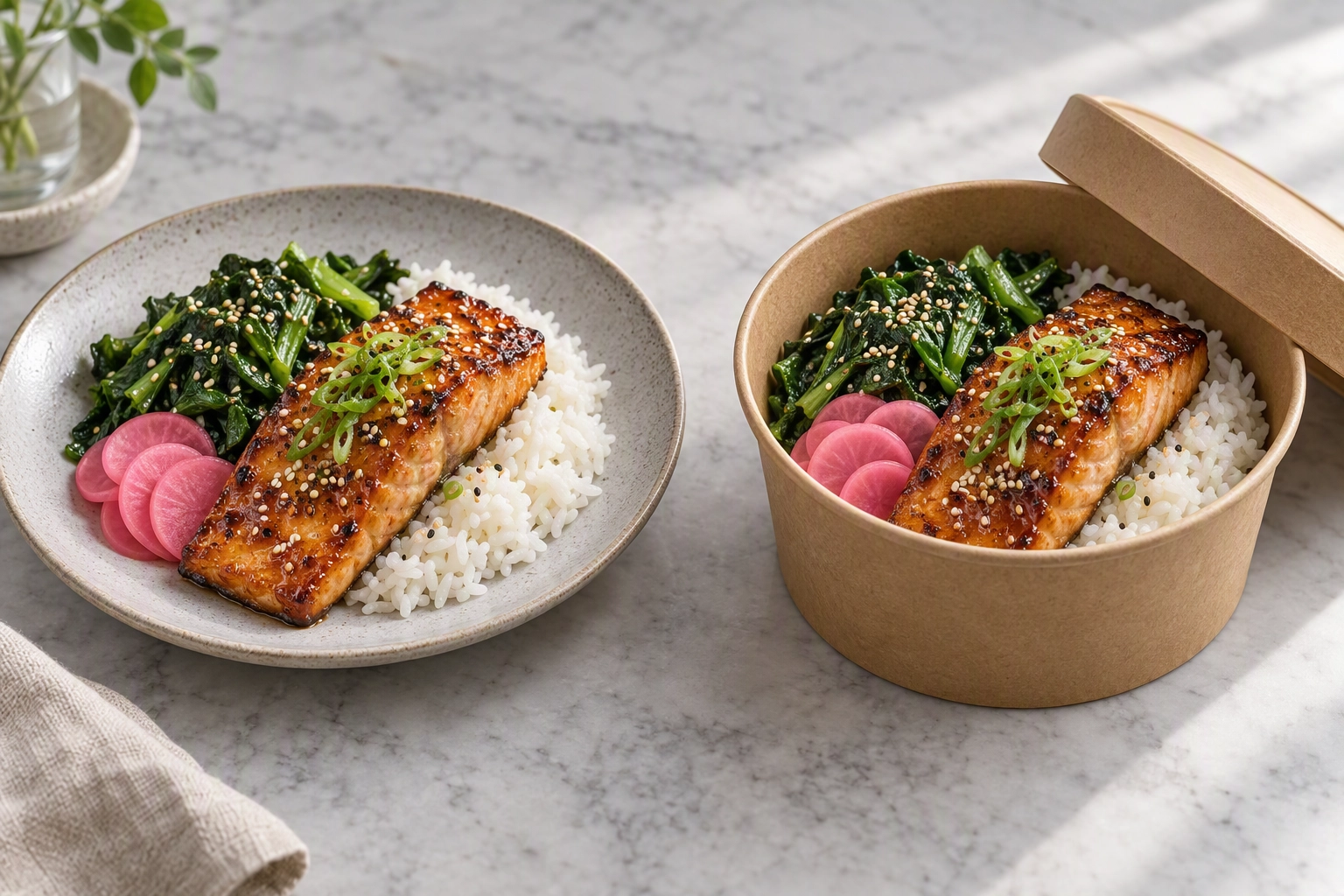 The same miso-glazed salmon dish plated and packed in a delivery bowl, so restaurant menu photos match what arrives
Step 14: Start Marketing Before the Doors Open
Build an audience while the windows are still papered over.
- Social accounts: post construction progress, menu testing, and team introductions. Our restaurant Instagram marketing playbook fits into about 100 minutes a week.
- Email and SMS list: collect sign-ups on the construction wall and your website, then use them for preview-night invites.
- Local press and creators: pitch neighborhood outlets, and invite local food influencers to a preview night.
- Paid social: a small, geo-targeted budget goes a long way; see Instagram ads for restaurants and social media advertising.
- Campaign ideas: borrow from these restaurant marketing campaigns, and use AI for restaurant marketing where it saves time.
Step 15: Run a Soft Opening, Then the Grand Opening
The Soft Opening
A soft opening is an invite-only rehearsal with real guests and real orders. Most run from a few days to two weeks. Use it to test:
- Ticket speed with a full dining room
- POS, printers, and online ordering
- Station setup and prep lists
- Service steps and table turns
- Portion sizes and plate consistency
Invite friends, family, neighbors, and a few local business owners who'll give blunt feedback. Many restaurants serve a limited menu and comp or discount the meals. Hold a short staff debrief after every service, and fix one thing before the next.
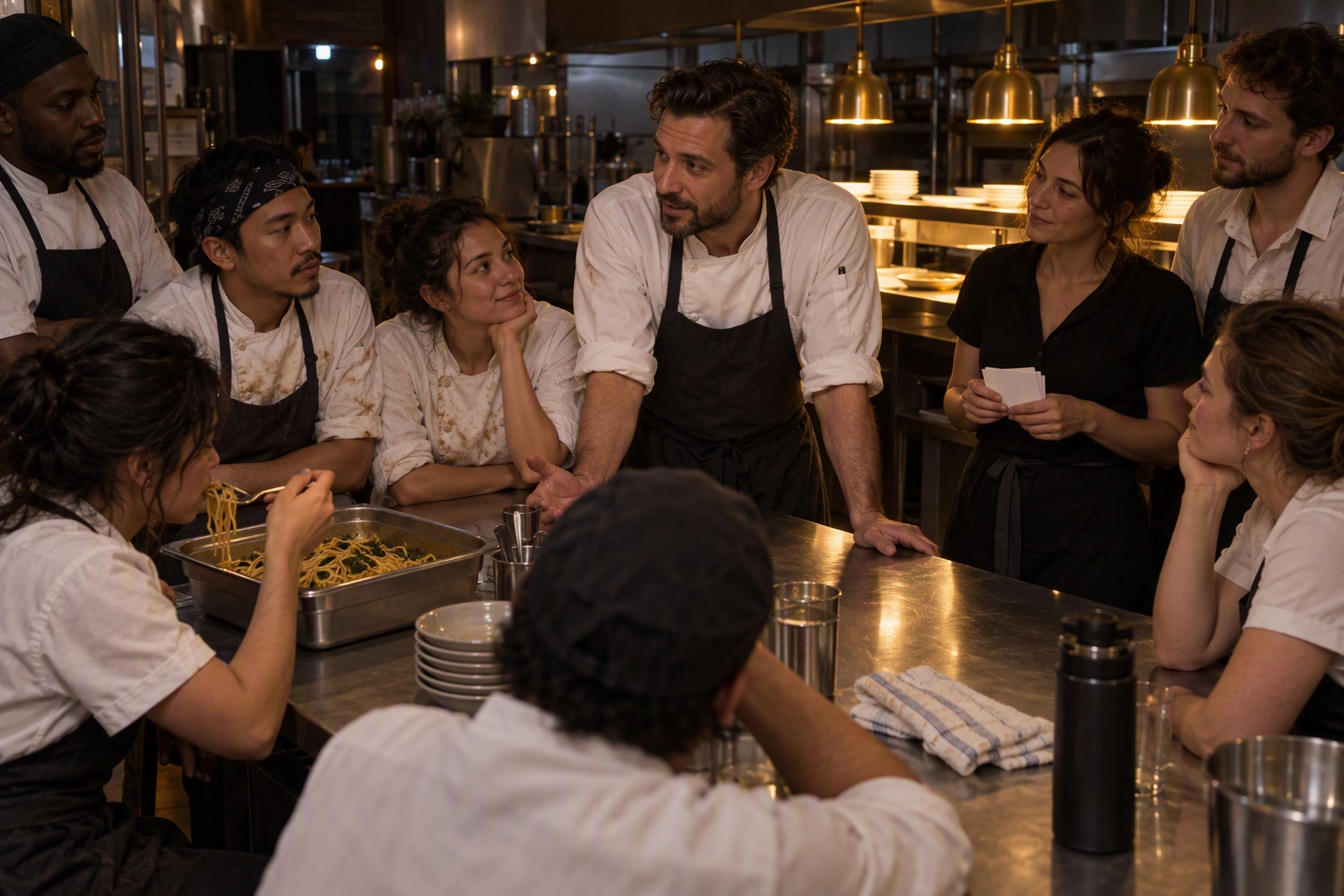 Restaurant team debriefing around a steel prep table late at night after a soft opening service
The Grand Opening
Hold the grand opening about one to two weeks after the rehearsal period, once the line holds its pace. Give people a reason to come on that day: a ribbon cutting, a one-day dish, or a charity tie-in. Confirm that listings, hours, and photos are final, and keep the first month's schedule heavy. Your first reviews arrive fast, and they stick.
Opening a Restaurant Checklist (Print This)
This is how to open a restaurant, condensed to one page. Items are grouped by when they usually happen.
18 to 12 Months Out
- Define the concept, service style, and target guest
- Test with a pop-up or market stall
- Write the business plan and financial model
- Line up funding and a cash reserve
- Form your business entity and get an EIN
12 to 6 Months Out
- Shortlist locations; check zoning and alcohol rules
- Consult health and fire departments before signing
- Negotiate the lease with permit contingencies
- Hire the architect; submit plan review and building permits
- File the liquor license application
- Apply for utilities
6 to 2 Months Out
- Build out the space and order equipment
- Develop, test, and cost the menu
- Open supplier accounts
- Choose the POS and tech stack
- Finalize brand, signage, and menu design
- Hire the general manager and head chef
The Final 8 Weeks
- Hire and train staff; certify a food protection manager
- Pass final inspections; receive the certificate of occupancy and health permit
- Shoot menu photos; publish Google and delivery listings
- Begin pre-opening restaurant marketing and collect sign-ups
Opening Weeks
- Run preview services and debrief daily
- Fix issues and finalize the menu
- Hold the grand opening
- Track sales, food cost, and labor every week
Frequently Asked Questions
How much does it cost to open a restaurant?
The most widely cited figure is a median of about $375,000, from a RestaurantOwner.com member survey. Renovating a former restaurant ran about $275,000, while new construction ran about $650,000. Your concept, size, and city move the number more than anything else.
How long does it take to open a restaurant?
A counter-service concept in a former restaurant can open in six to 12 months. A full-service restaurant with a major buildout and a liquor license typically takes 12 to 18 months, mostly because of permit and construction lead times.
Can you learn how to open a restaurant with no experience?
Yes, but don't learn on your own savings first. An r/restaurantowners thread on exactly this question asks for tips "besides don't." The practical advice there: check the local workforce, match your hours to what you sell, and get experience first. Work a season in a busy kitchen, run a pop-up, or partner with an experienced chef or GM. A restaurant consultant can also help fill the gaps.
What licenses do you need to open a restaurant?
Usually a business registration, an EIN, a seller's permit, a food service establishment permit, building permits, a certificate of occupancy, fire approval, a sign permit, and a liquor license if you serve alcohol. In states that follow the FDA Food Code, the person in charge also needs food protection manager certification.
Do most restaurants fail in the first year?
No. BLS-based research on 81,000 full-service restaurants in the western US found that 17% of independent startups closed in year one, compared with 19% for other service businesses. The risk continues after year one, which is why a cash reserve matters more than a perfect launch.
What is the cheapest way to open a restaurant?
Lease a second-generation restaurant space, skip the liquor license at first, and keep the menu short. Or prove demand with a lower-overhead format. See how to start a ghost kitchen, or compare ghost kitchen vs food truck costs.
Should you hire a restaurant consultant?
If you've never run a restaurant, a consultant can earn their fee on the lease, layout, and menu costing alone. Our guide to food consultants explains the roles, the costs, and when one is worth it.