What Is a Food Consultant? Roles, Costs & When You Need One
 Ali Tanis16 min read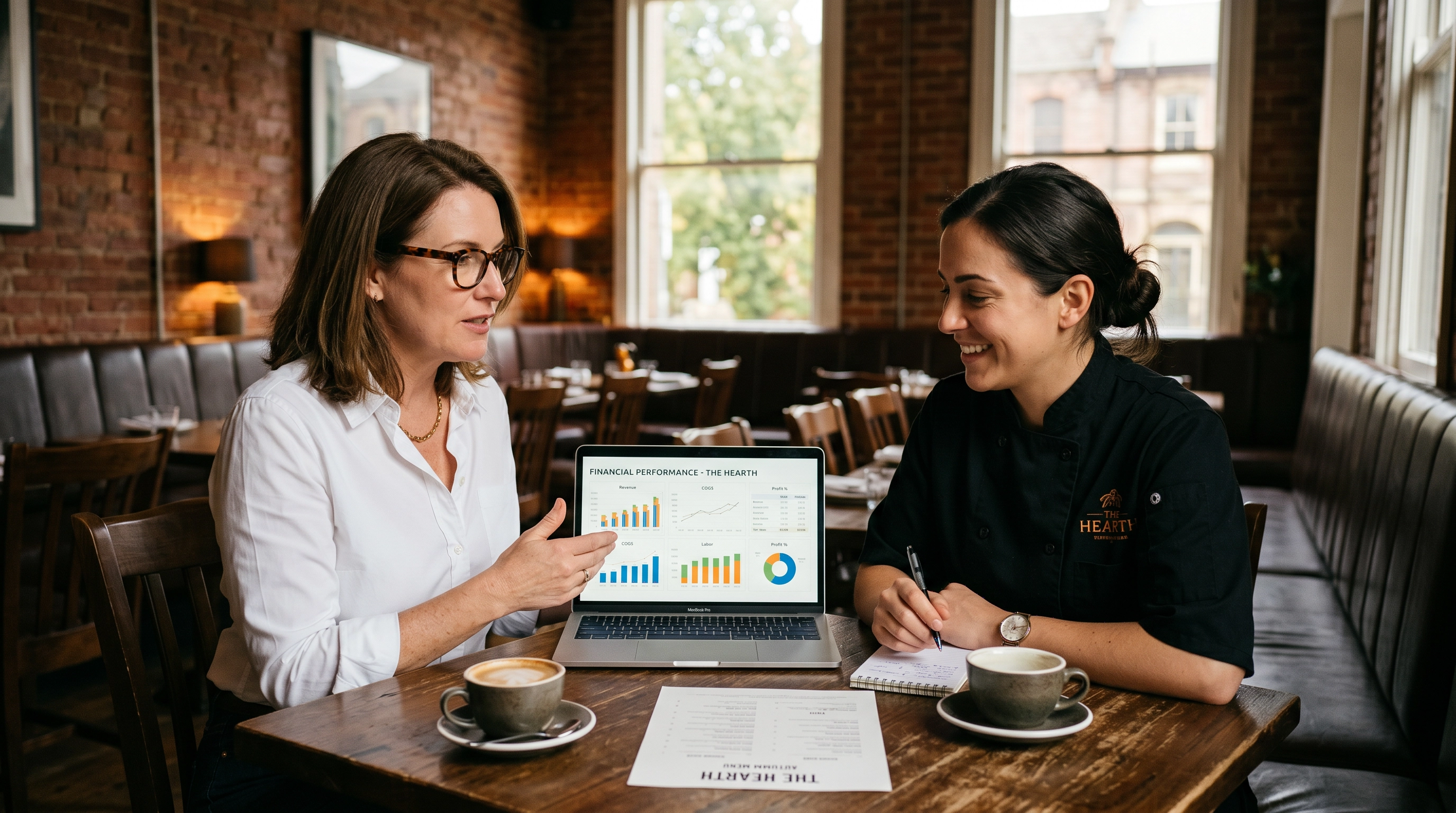
A food consultant is a paid expert who helps food businesses make more money, serve better food, or stay out of trouble — usually by fixing a specific problem the owner can't solve alone. Most restaurants never hire one. Some hire the wrong one. A few find the right one at the right moment and save their business.
This guide covers what food consultants actually do, the main specialties, when it's worth hiring one (and when it isn't), what you should expect to pay, and — something most guides skip — what modern food consultants now recommend for the single biggest marketing lever most restaurants ignore: their photos.
Quick Summary: A food consultant is an independent expert who advises food businesses on menu development, operations, branding, marketing, or safety. Expect to pay $75–$300/hour, $2,000–$25,000 per project, or $1,500–$5,000/month on retainer. Hire one when launching, struggling with profitability, rebranding, or expanding. Forward-thinking consultants now pair traditional playbooks with AI tools like FoodShot for affordable, on-demand visual marketing.
What Is a Food Consultant?
A food consultant is an independent professional who provides specialized expertise to businesses in the food industry — restaurants, cafés, food trucks, catering companies, ghost kitchens, CPG brands, hotels, and food manufacturers. They're hired to solve problems the internal team either can't solve or doesn't have bandwidth to solve.
The word "consultant" gets thrown around loosely in the food world, so a few clarifications help:
- A chef cooks. A chef consultant advises other kitchens on how to cook, plate, and build menus — but typically isn't running your line day-to-day.
- An accountant keeps books. A food consultant with financial expertise interprets those books and tells you your food cost is too high, your labor ratio is broken, or your menu mix is killing margins.
- An employee works for you. A consultant is an outside expert who brings experience from dozens of other businesses and leaves once the engagement ends.
Most food consultants work independently or through specialized firms. At the top of the profession, many hold credentials from the Foodservice Consultants Society International (FCSI), which maintains a global directory of vetted professionals and is often the first place large projects look for talent.
What Does a Food Consultant Actually Do?
Food consultants cover a surprisingly wide range of work. A single engagement might touch several of these areas, or focus on just one:
Menu development and engineering. This is the most common reason restaurants hire consultants. A menu consultant builds or rebuilds your menu with an eye on food cost percentages, contribution margin, kitchen capacity, and customer psychology. They decide what goes on the menu, how it's priced, where it sits on the page, and which items get promoted.
Operations optimization. Kitchen workflow, line layout, prep schedules, inventory systems, vendor contracts, labor scheduling, waste reduction. A good operations consultant will walk your kitchen during service, count steps, time tickets, and find the bottlenecks you can't see because you're inside them.
Branding and concept. For new restaurants, this means concept development from scratch — cuisine, price point, target diner, atmosphere, name, visual identity. For existing restaurants, it's a rebrand: repositioning to reach a new audience or shed an outdated image.
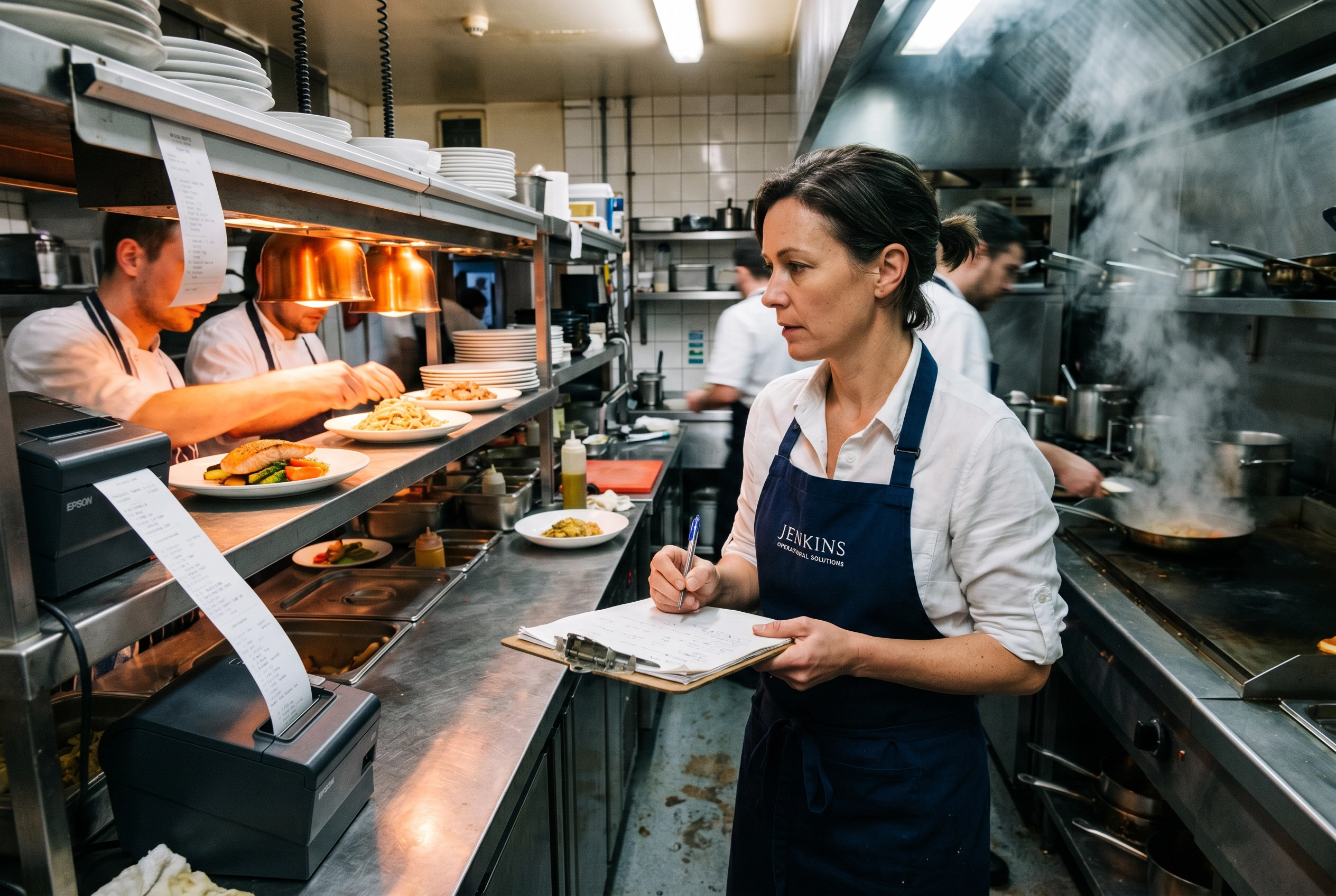 Food consultant taking notes on a clipboard while observing line cooks during dinner service in a restaurant kitchen
Marketing strategy. Customer acquisition plans, loyalty programs, social media direction, delivery-platform optimization, PR, partnerships. Marketing consultants in food tend to specialize — you want someone who has moved the needle for restaurants similar to yours, not a generalist who also does plumbing clients. If you're looking for inspiration before hiring, our guide to restaurant marketing ideas covers tactics you can start testing today.
Food safety and compliance. HACCP plans, health inspection prep, allergen protocols, recall procedures, FDA food safety compliance for manufacturers. This is specialized, credentialed work — food safety consultants often hold certifications like HACCP, SQF, or BRCGS and charge accordingly.
Cost management and P&L analysis. Reading the financials, diagnosing what's really wrong (is it food cost, labor, pricing, or traffic?), and building a recovery plan. The best food consultants live and die by the numbers rather than vibes.
Types of Food Consultants (And Which One You Need)
"Food consultant" is an umbrella term. Under it sit specialists who rarely overlap:
| Type | What they focus on | Who hires them |
|---|---|---|
| Restaurant / Operations Consultant | Whole-business issues, openings, turnarounds | Independent restaurants, small chains |
| Menu Consultant | Recipes, engineering, pricing, culinary direction | Restaurants with stale menus or margin problems |
| Food Product / R&D Consultant | CPG formulation, shelf life, scale-up | Packaged food brands, ghost kitchens with retail ambitions |
| Food Safety Consultant | HACCP, audits, compliance, recalls | Manufacturers, commissaries, multi-unit operators |
| Food Marketing Consultant | Branding, digital, photography, social | Restaurants competing in crowded markets |
| Beverage / Bar Consultant | Cocktail programs, wine lists, BOH margin | Restaurants, hotels, bars |
| Design / Kitchen Consultant | Layout, equipment selection, capacity planning | New builds, renovations |
| Franchise / Multi-Unit Consultant | Systems, brand consistency, expansion | Growing concepts, franchisors |
Picking the wrong type is the most common expensive mistake. A brilliant menu consultant will not fix your health inspection problem. A food safety expert will not save your struggling marketing. Start with the problem, not the title.
When Should You Hire a Food Consultant?
Five situations where a consultant typically pays for themselves:
1. You're launching a new restaurant or food business. Pre-opening is the highest-leverage moment for consulting. UC Berkeley researchers using U.S. Bureau of Labor Statistics data found roughly 17% of restaurants fail in their first year — lower than the 90% myth, but still one in six. The National Restaurant Association puts early-stage closures closer to 30%. The biggest failure drivers — bad concept, wrong location math, broken unit economics, weak opening systems — are exactly what consultants diagnose before you sign a lease.
2. Profitability is slipping. Sales are flat or declining. Food cost crept from 28% to 34%. Labor's at 35% and you can't figure out why. This is classic consultant territory — someone with an outside eye and a hundred P&Ls worth of pattern recognition can often find the leak in one week.
3. You're planning a rebrand, concept shift, or major menu overhaul. Changing your positioning is risky. A consultant who has managed rebrands helps you keep existing customers while attracting new ones — and avoids the common trap of reinventing so completely that your regulars don't recognize you.
4. You're expanding to delivery, adding a ghost kitchen, or launching a virtual brand. Delivery economics are different from dine-in. Packaging, menu engineering, platform ranking, photography, commissions — a consultant who specializes here can cut your mistakes by months.
5. You're scaling to multiple locations or franchising. Going from one to many requires systems, brand standards, training materials, and operating manuals you never needed as a single unit. Multi-unit consultants build the playbook.
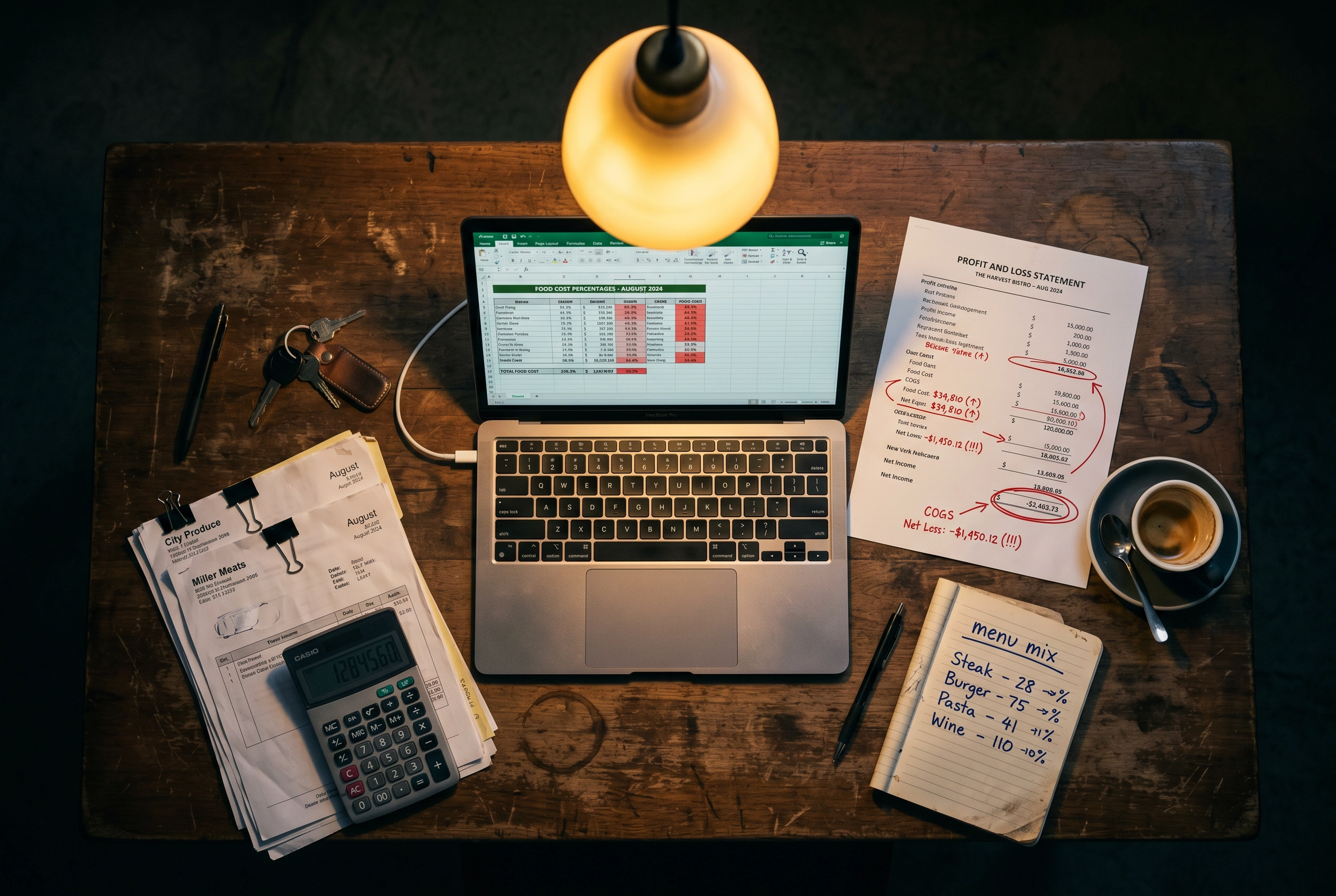 Overhead view of a restaurant office desk with P&L statement, laptop spreadsheet, and handwritten notes on food cost analysis
When NOT to hire a consultant: if you're still in the idea stage with no data, no location, and no menu, you're too early — learn first, hire later. If you're hoping a consultant will tell you what you want to hear, save your money. And if you can't clearly articulate the problem you're trying to solve, spend a week writing it down before you spend $10,000 trying to fix it.
How Much Do Food Consultants Charge?
Pricing ranges more than most people expect. Here's what the market actually looks like in 2026:
Hourly: $75–$300/hour. This is the default billing method for small projects, audits, and advisory calls. ZipRecruiter salary data shows average hourly wages around $49/hour for food consultants overall, but those numbers include salaried positions. Chef consultants on industry forums commonly quote $75–$125/hour for simple work and up to $250/hour for complex menu development or standards-building projects. High-end experts in major markets charge $300+.
Per project: $2,000–$25,000. Scoped engagements are common. A focused menu engineering project for a small restaurant might run $2,000–$5,000. A full pre-opening package — concept, menu, operations manual, training — can hit $15,000–$25,000 or more. Kitchen design projects tend to price based on the kitchen build cost (often 5–10%).
Retainer: $1,500–$5,000/month. For ongoing advisory relationships — typically 4–10 hours per month of consultant time plus availability for questions. Retainers work well for restaurants that need regular strategic input without a full hire.
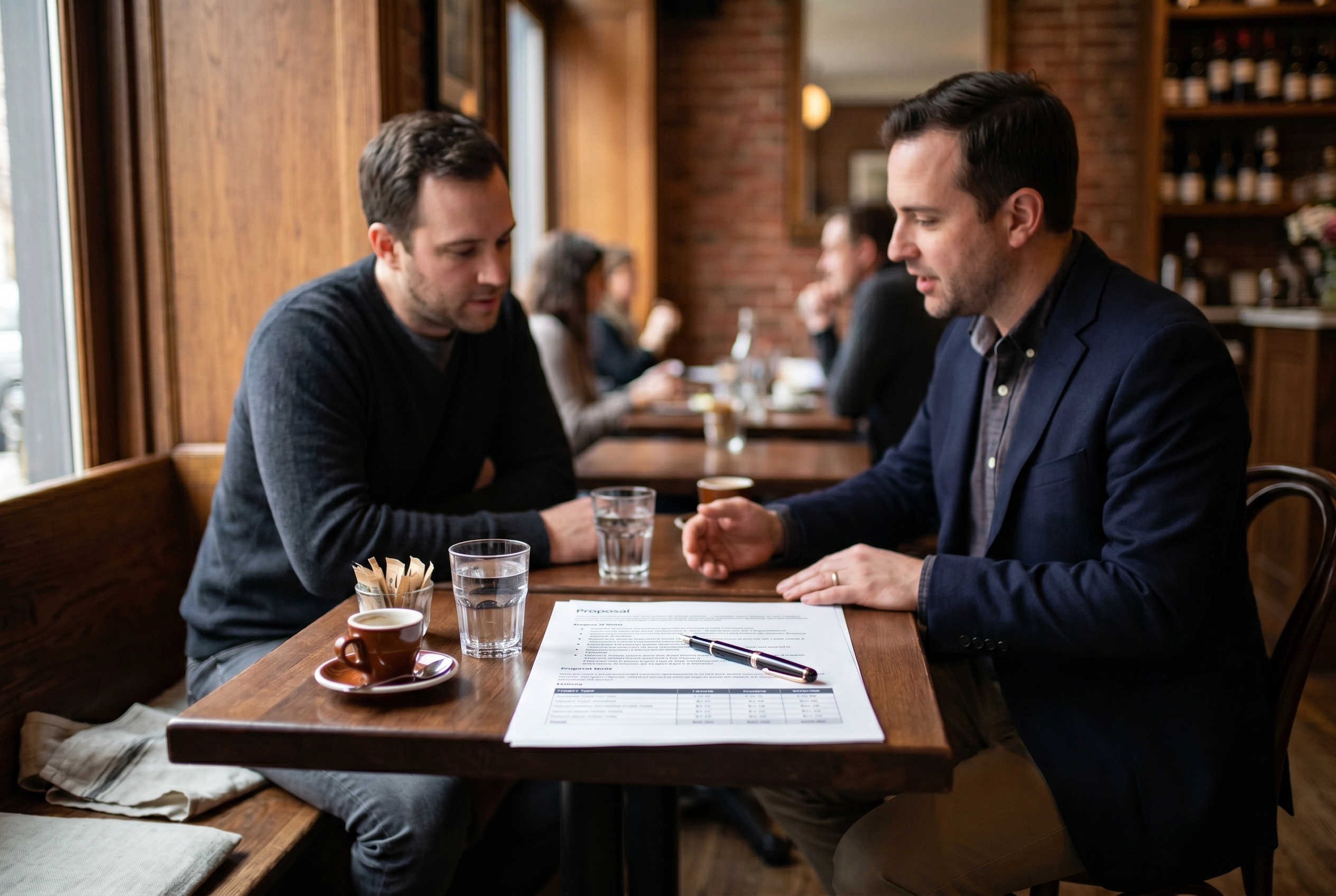 Food consultant and restaurant owner reviewing a scope-of-work proposal with pricing tiers at a café table
Day rates: $1,000–$5,000/day. For on-site work, training, or concentrated problem-solving. Restaurant Business magazine has noted that consultants who value themselves at a $120,000/year compensation level typically quote around $500/day, $2,500/week, or $10,000/month for full-time commitments — though experienced specialists charge multiples of that.
Equity or revenue share. For startups that can't afford cash fees, some consultants take 2–10% equity or a percentage of top-line revenue for a defined period. This is more common in the bar/cocktail world and with celebrity chef consultants.
What drives the price: scope, deliverables, consultant experience, market (NYC and LA cost more), and how much of your success depends on the outcome. A $300/hour consultant who cuts your food cost by 3 points may earn back their fee in the first month. A $75/hour consultant who tells you what you already know is expensive at any rate.
Red flags on both ends: rates under $50/hour usually mean someone building a portfolio (fine for small tasks, risky for pivotal decisions). Rates over $500/hour should come with a résumé to match — name-brand restaurants opened, published case studies, multi-unit references.
What Food Consultants Recommend for Visual Marketing
Ask any experienced food consultant about the highest-ROI fix they recommend to restaurants, and menu photography shows up on almost every list. The reason is simple and well-documented: a Cornell University School of Hotel Administration study found that adding a photo to a menu item increased sales of that item by about 6% — an outsized return for a production cost that's a rounding error on the P&L.
Photography is also how consultants know you'll show up on the channels that matter:
- Delivery apps. Uber Eats, DoorDash, and Grubhub openly prioritize listings with professional photography. Most consultants recommend one photo per menu item for delivery — a massive jump from the "a few hero shots" many restaurants have.
- Social media. Instagram and TikTok are image-driven. Restaurants without a steady supply of fresh food photos die on the algorithm.
- Google Business Profile. Google's own data shows listings with photos get significantly more clicks and calls than those without.
- Menu design. Dine-in menus with well-placed photos can lift average ticket on high-margin items.
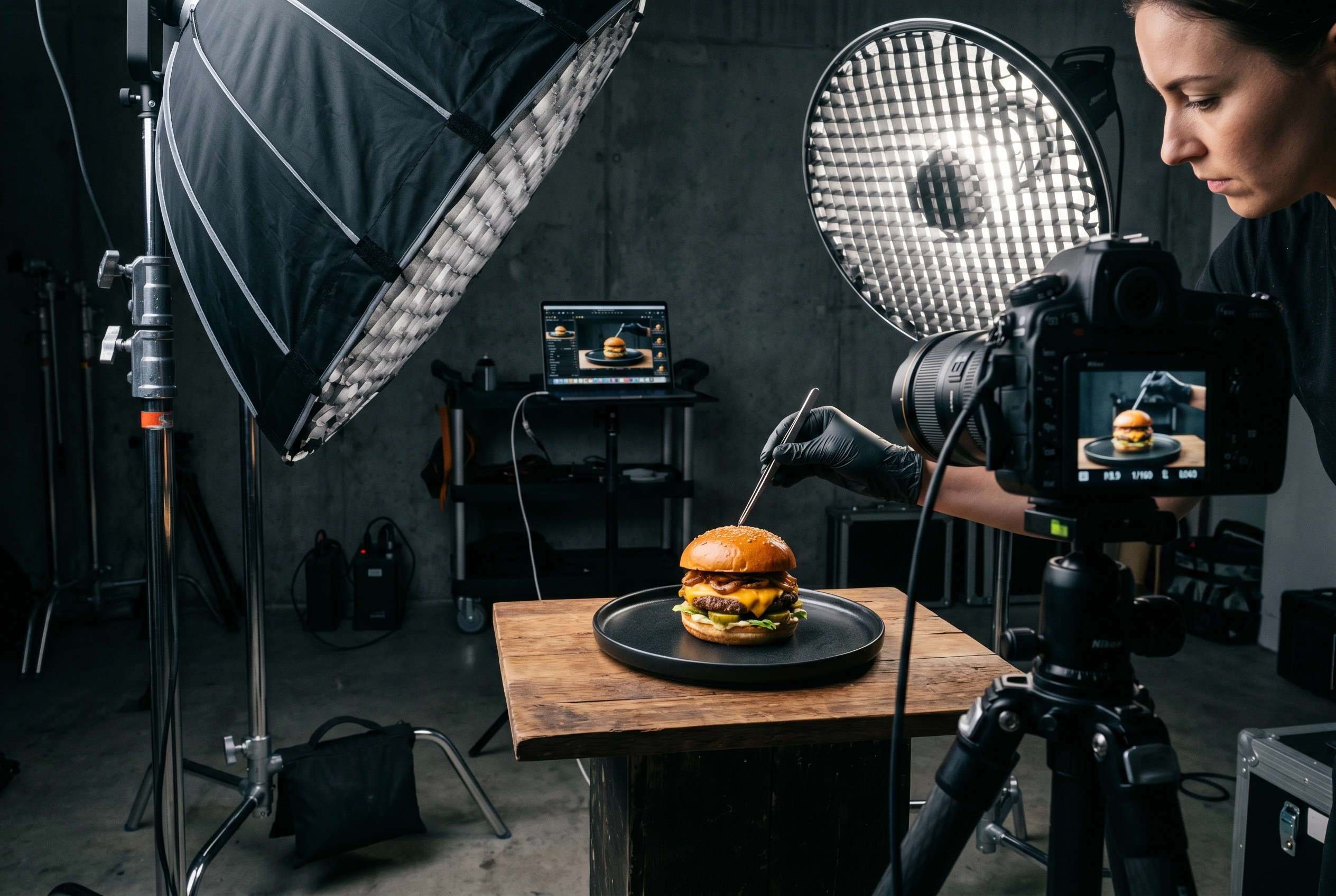 Professional food photography studio shoot with softbox lighting, food stylist placing sesame seed on a burger with tweezers
The traditional consultant recommendation has been a professional food photography shoot. Here's what that actually costs in 2026, and why it's where things get complicated:
- Photographer session fee: $700–$1,400 in major US markets
- Food stylist: $500–$1,200/day (most clients don't realize this is usually separate)
- Studio rental (if not on-site): $750–$2,500/day
- Post-production and retouching: $150–$250
- Assistant fees: $350+
- Total for a typical menu shoot: $2,990–$7,750
Our breakdown of food photography costs in 2026 goes deeper on the pricing math, and the DIY vs pro vs AI comparison covers the trade-offs for each approach. For consultants, the problem with recommending only traditional shoots is practical: clients change menus constantly. Seasonal updates, limited-time specials, daily features, delivery-app catalogs — the shoot happens twice a year at most, and the rest of the year you're working with outdated imagery or phone photos that undercut everything else you're doing.
How AI Photography Is Changing What Consultants Recommend
The stack has shifted. Five years ago, a food consultant's visual marketing recommendation was "hire a food photographer, budget $5,000–$7,500, redo it annually." In 2026, the forward-thinking recommendation looks more like this:
One professional shoot per year (or per major brand initiative) for hero campaigns, packaging, PR, and signature dishes — the images that need perfect art direction and will live in marketing materials for 12+ months.
An AI food photography tool on monthly subscription for everything else: weekly specials, seasonal menus, new dish launches, delivery-app catalog updates, social media content, and multi-location consistency.
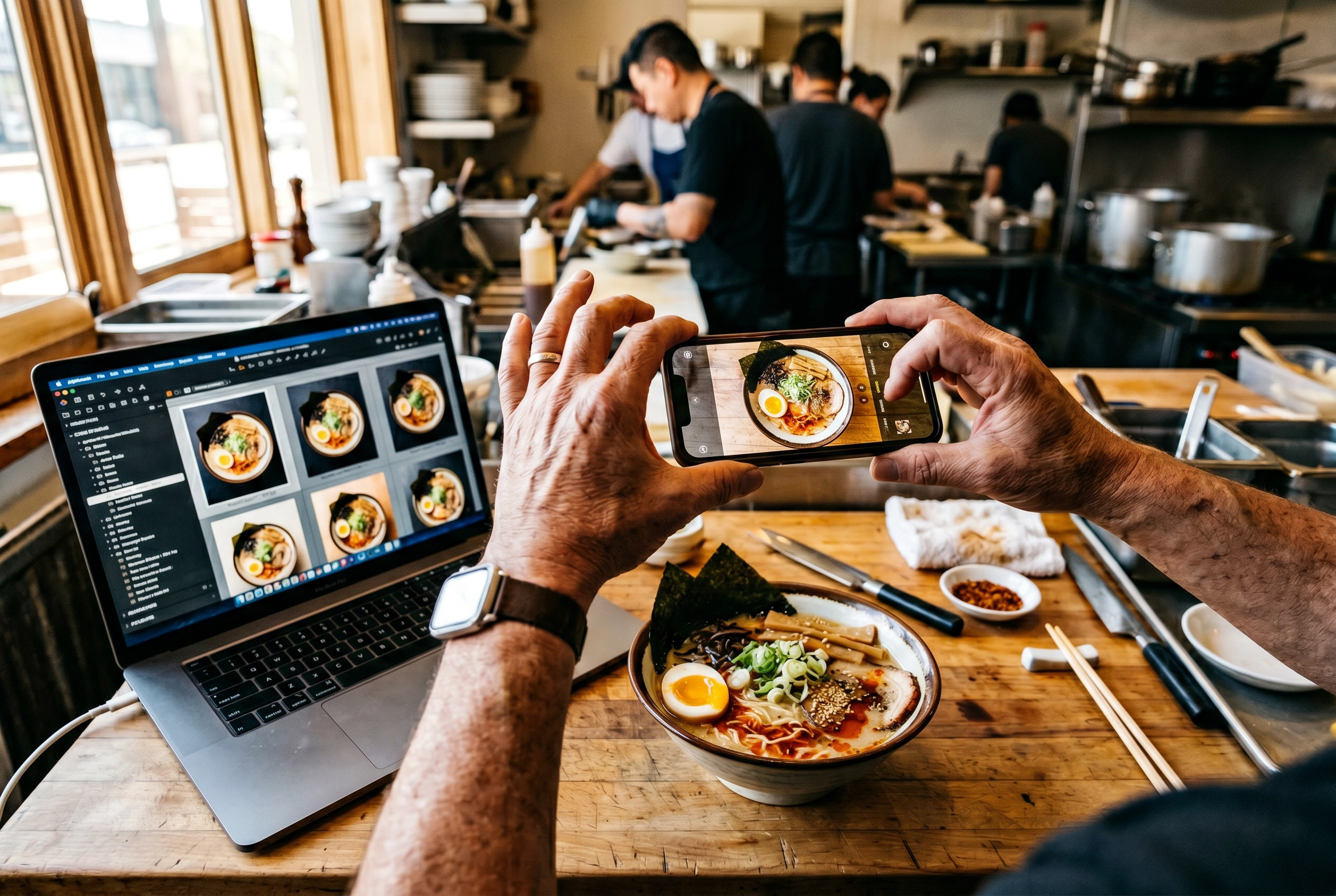 Restaurant owner photographing a bowl of ramen with a smartphone while an AI-enhanced version appears on a laptop beside the dish
This hybrid is not a downgrade. It's a rebalance driven by math. A $15/month AI tool costs roughly what a single professional image used to cost — and generates unlimited studio-quality photos from phone snaps of the actual dish. A Starter plan at $15/month produces 25 menu-ready images. A Business plan at $45/month produces 100. For the price of one traditional shoot, a restaurant can run AI photography for 3–5 years.
For consultants specifically, this changes what they can offer clients:
- Faster deliverables. Menu redesigns no longer wait for a photo shoot slot — images can be produced in the same week.
- Scalable to client size. A $15/month tool fits the budget of a single café as easily as it fits the budget of a 30-unit chain.
- Brand consistency across multi-location clients. Tools like FoodShot's My Styles feature let consultants upload a client's brand reference once and apply it to every future dish, keeping visuals consistent across locations that each shoot their own raw photos.
- Recurring value. A shoot is a one-and-done deliverable. A photography workflow is something the client uses every week — and remembers where it came from.
FoodShot specifically was built for this workflow. It's the reason we maintain a dedicated use case for food consultants — the tool is designed to handle multiple client brands, 200+ photography styles across cuisines from fine dining to delivery, and bulk processing for consultants working with chains. Many consultants now include a FoodShot subscription in their onboarding package or recommend it as the ongoing visual tool after the engagement ends. For deeper context, our guide to commercial food photography covers the business-side fundamentals every consultant should understand, and the menu photoshoot planning guide helps structure the annual hero shoot.
This doesn't replace traditional photographers for work that needs them. It replaces the default assumption that every dish, every update, and every platform requires a full studio production.
How to Find and Hire the Right Food Consultant
A few practical steps that save money:
1. Start with FCSI and specialized firms. The FCSI directory is the most credentialed starting point. Beyond that, ask your restaurant association, your POS vendor, your distributor rep, and other operators you trust for referrals.
2. Match the specialty to the problem. A concept development expert is wrong for a food safety crisis. Write your problem statement first — in one paragraph — and hire accordingly.
3. Ask for case studies and references. Real consultants have real receipts: restaurants they've opened, turnarounds they've delivered, menus they've engineered. Call two references, not one. Ask what went wrong, not just what went right.
4. Get deliverables in writing. The scope-of-work document should list every deliverable, every deadline, and every meeting. "I'll advise on marketing" is not a scope. "I'll deliver a 90-day social media calendar, review weekly, and train your marketing coordinator in four sessions" is a scope.
5. Trial before retainer. Start with a scoped project. If it goes well, extend to retainer. Locking yourself into a 12-month retainer with a consultant you've never worked with is how expensive mistakes happen.
If you're also evaluating tools your consultant might plug you into, our restaurant marketing software guide covers the platforms that typically appear in modern consulting playbooks.
Frequently Asked Questions
Is a food consultant the same as a restaurant consultant?
They overlap but aren't identical. "Restaurant consultant" usually refers specifically to restaurant operations — menus, service, kitchen, location. "Food consultant" is broader and includes work with CPG brands, food manufacturers, catering companies, and anything adjacent to the food industry that isn't necessarily a restaurant. In practice, many consultants do both, but you should confirm their core experience matches your business type.
How long does a typical food consulting engagement last?
Short projects run 2–8 weeks (menu audit, opening setup, specific fix). Ongoing retainers average 3–12 months. Pre-opening engagements for new restaurants often run 4–6 months from concept through opening. Multi-unit expansion projects can stretch 12–24 months. Anything longer than a year on a single problem is usually a sign the engagement should have ended.
Do food consultants guarantee results?
Very few do, and you should be skeptical of any who promise specific revenue outcomes. What good consultants offer is deliverables (a completed menu, an operations manual, a marketing plan) and expertise applied in good faith. Results depend on execution, which is usually on the operator's side. Performance-based pricing — where the consultant earns a bonus tied to hitting specific KPIs — is a reasonable middle ground and increasingly common.
Can I be my own food consultant?
For small, localized problems — yes, often. Owner-operators who read widely, study their numbers, and talk to peers can self-diagnose most common issues. What owners generally can't do is see their own business from the outside. The real value of a consultant is pattern recognition from dozens of other restaurants and the confidence to say "this is broken, here's exactly how to fix it." If you can get that from a trusted peer for free, you don't need to pay for it.
Do food consultants work with small restaurants, or only chains?
Both. Large firms cater to chains and enterprise clients. Independent consultants often prefer single-unit operators and small regional groups because the work is more varied. Budget is the real filter — a solo operator with $3,000 to spend can find strong menu or marketing consultants, but probably not a $300/hour kitchen design specialist.
What's the difference between a food consultant and a chef consultant?
A chef consultant is almost always a working or former executive chef who consults on culinary direction — recipe development, plating, kitchen leadership, menu creation. A food consultant may or may not have a culinary background; many come from operations, finance, or marketing. If your problem is "my food isn't good enough," hire a chef consultant. If your problem is "my food is great but my business isn't working," hire a food consultant with operations or marketing expertise.