50 Restaurant Marketing Ideas That Actually Drive Revenue
 Ali Tanis20 min read
Most "restaurant marketing ideas" articles give you the same 10 recycled tips from 2018. Set up a Yelp page. Post on Instagram. Launch a loyalty card. Groundbreaking stuff.
You need restaurant marketing ideas that actually drive revenue — strategies tied to real money, not vanity metrics. Here are 50 proven restaurant promotion ideas organized by category, each with a cost estimate and effort level so you can pick what fits your budget right now.
Quick Summary: This guide covers 50 restaurant marketing ideas across five categories: visual marketing, digital marketing, social media, local marketing, and loyalty/retention. Each includes a cost and effort rating. The highest-ROI starting point? Upgrading your food photography — restaurants with professional photos see 25–70% more orders on delivery platforms alone.
How to read the ratings:
- Cost: 💰 = Free or under $50/mo | 💰💰 = $50–$500/mo | 💰💰💰 = $500+/mo
- Effort: ⚡ = A few hours to set up | ⚡⚡ = Ongoing weekly commitment | ⚡⚡⚡ = Significant time investment
Visual Restaurant Marketing Ideas (1–10)
Visuals sell food. That's not opinion — it's data. According to Grubhub, restaurants with menu photos get up to 70% more orders than text-only listings. Menus with professional food photography increase sales by 20–45%. If you only act on a few restaurant marketing ideas from this list, start here.
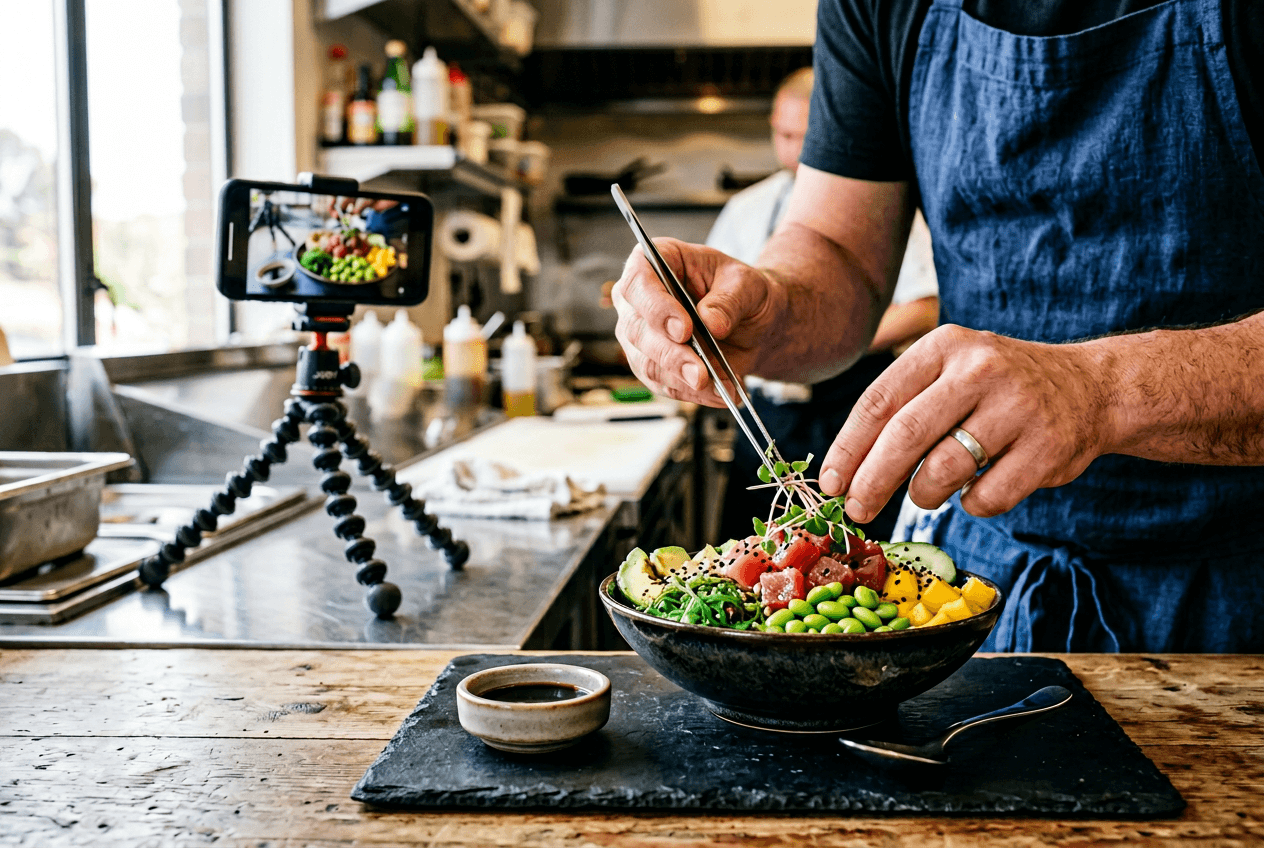 Chef plating a dish with smartphone on tripod ready to capture professional food photography for restaurant marketing
1. Upgrade Your Food Photography
The single highest-ROI restaurant marketing idea on this list. Merchants with quality food photos average $31.5K in monthly processing versus $4.9K without — over 5x higher revenue.
You don't need a $2,000 photo shoot. AI food photography tools let you upload a smartphone photo of any dish and get professional, platform-ready visuals in about 90 seconds. FoodShot AI's food photo editor costs a fraction of hiring a photographer, and you can update photos whenever your menu changes. See our food photography cost breakdown for a full comparison.
💰 Cost: Low ($9/mo with AI tools) | ⚡ Effort: Low
2. Create Short-Form Video Content
A 15-second Reel of a cheese pull, sauce drizzle, or sizzling pan outperforms static photos in Instagram and TikTok algorithms. You don't need a videographer — a phone on a tripod and natural light work fine. Focus on textures and motion: pouring, breaking, slicing, steaming.
💰 Cost: Free | ⚡⚡ Effort: Medium (consistency matters)
3. Redesign Your Menu with Photos
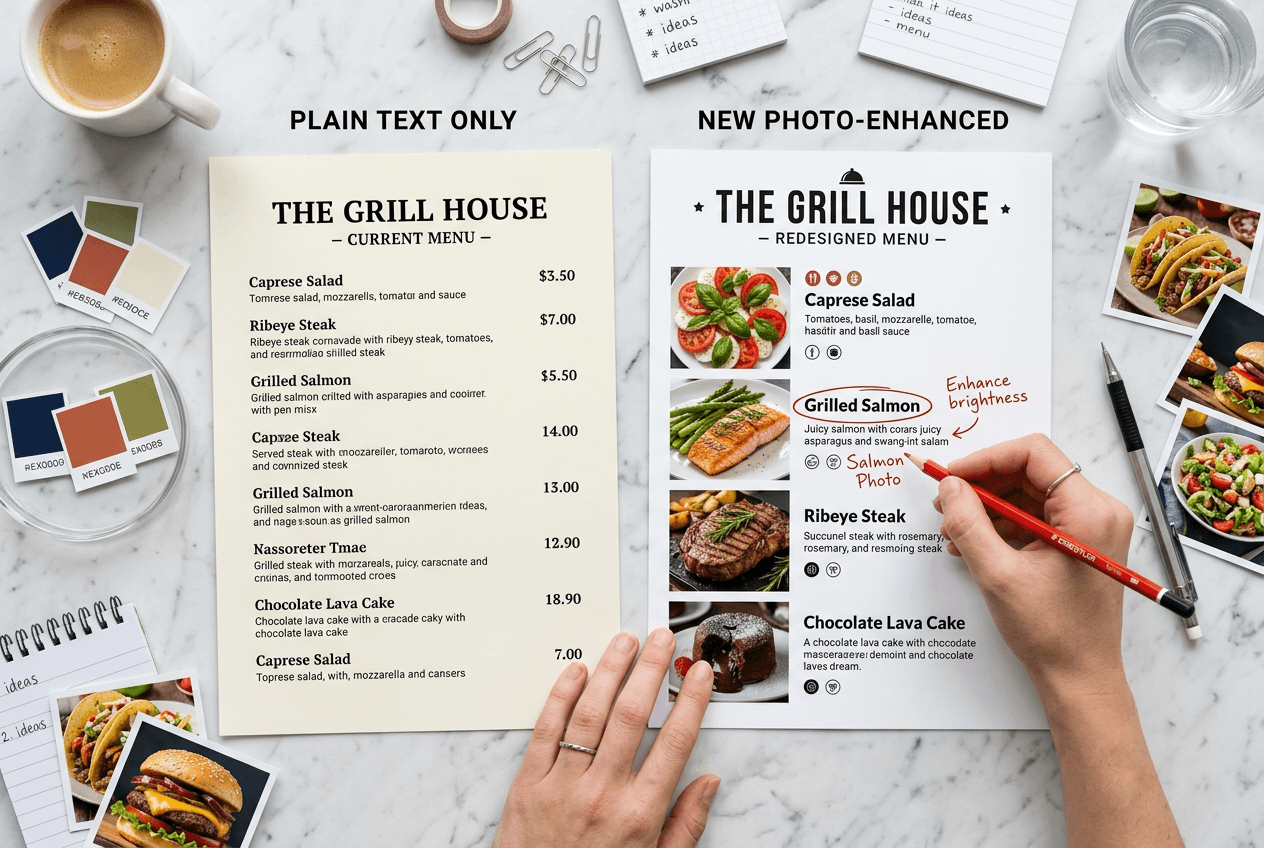 Restaurant menu redesign comparing text-only menu with photo-enhanced menu layout featuring professional food images
Text-only menus leave money on the table. Adding food photos next to your highest-margin items nudges customers toward those dishes. Restaurants switching from text-based to image-based menus report a 25% increase in conversion rates. Prioritize your top 10 most profitable items first.
💰 Cost: Low ($50–$200 for design + photos) | ⚡⚡ Effort: Medium
4. Update Your Delivery App Listing Photos
DoorDash, Uber Eats, and Grubhub all give algorithmic preference to restaurants with complete, high-quality photo sets. DoorDash reports a 15% delivery volume increase for photo-optimized listings. Check our guide on food photography for delivery apps and tips to get more orders on DoorDash.
💰 Cost: Low | ⚡ Effort: Low
5. Build an Instagram-Worthy Interior Feature
A neon sign, mural wall, flower arch, or dramatic lighting setup near the entrance — give customers a reason to take photos and tag your restaurant on social media. It's free advertising every time someone posts. Some restaurants report a single "Instagrammable" feature generates hundreds of tagged posts per month.
💰💰 Cost: Moderate ($200–$2,000) | ⚡⚡ Effort: Medium
6. Refresh Your Food Photos Seasonally
A winter menu photographed in summer lighting looks off. Refreshing food photos quarterly keeps your brand current and gives you fresh social media content. With AI tools, you can batch-process an entire menu in under an hour.
💰 Cost: Low | ⚡ Effort: Low
7. Design Eye-Catching Window Displays
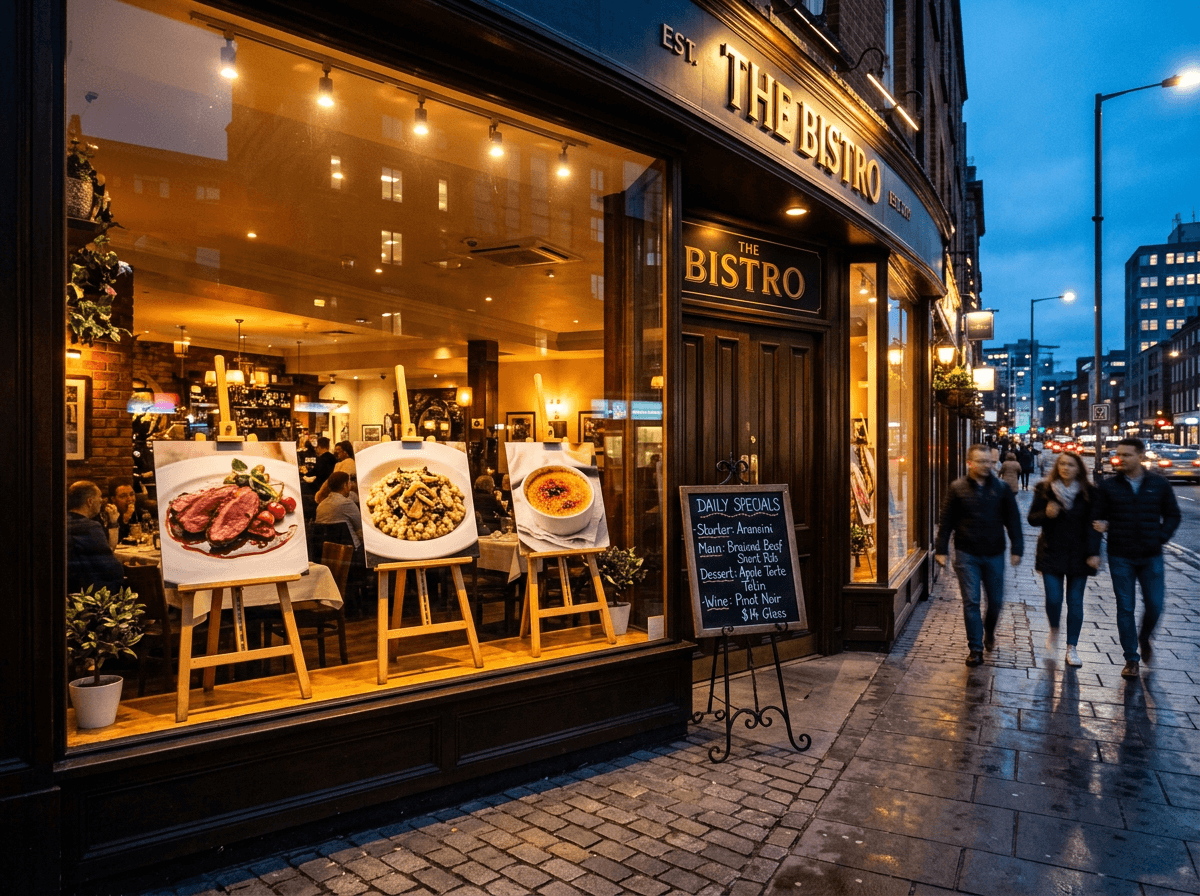 Eye-catching restaurant window display featuring food photography and daily specials attracting pedestrians at dusk
Foot traffic still matters. A well-lit window display featuring your best dish photography, daily specials, or seasonal promotions can stop pedestrians mid-stride. Print large-format photos of your most photogenic dishes and update monthly — the cost is minimal and the impression immediate.
💰 Cost: Low ($30–$100 per print) | ⚡⚡ Effort: Medium
8. Create a Signature Dish Visual Identity
Pick your most iconic dish and make it the star of everything: social media profiles, menu cover, website hero, delivery app thumbnail, and window display. When customers see that dish, they should immediately think of your restaurant. This is one of the simplest restaurant advertising ideas that pays off across every channel.
💰 Cost: Low | ⚡ Effort: Low
9. Add Fresh Photos to Your Google Business Profile
Google's own data confirms restaurant listings with photos receive 42% more direction requests. Upload new food photos weekly — it signals to Google that your business is active and improves your local search visibility.
💰 Cost: Free | ⚡ Effort: Low
10. Post Before-and-After Plating Transformations
Show raw ingredients on a cutting board, then the finished plated dish. These side-by-side or Reel-format transformations perform well on social media because they tell a story, showcase your craft, and generate strong engagement.
💰 Cost: Free | ⚡ Effort: Low
Digital Restaurant Marketing Ideas (11–20)
89% of consumers research a restaurant online before visiting. If your digital presence is weak, you're invisible to most potential customers. These restaurant marketing ideas help you get found, stay top-of-mind, and convert browsers into paying diners.
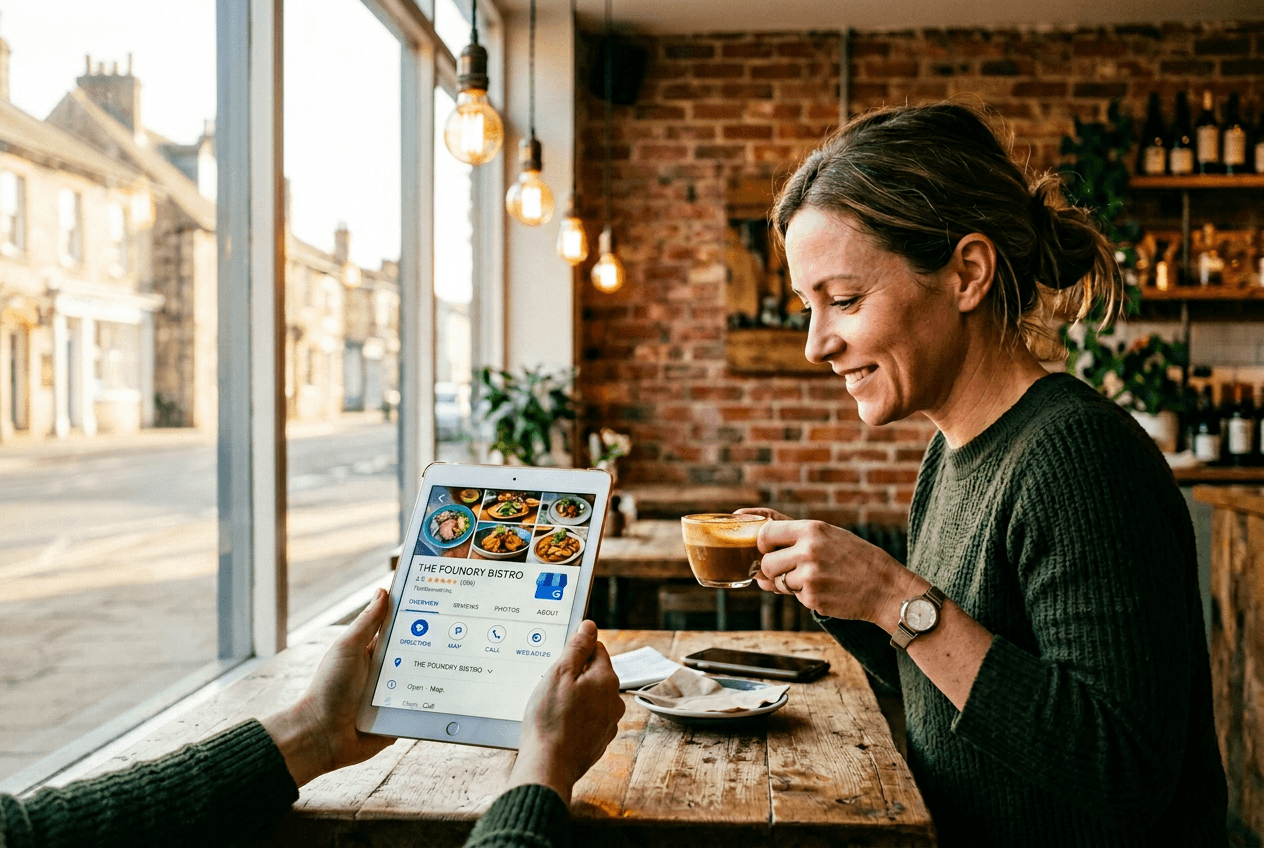 Restaurant owner reviewing Google Business Profile on tablet during morning planning session at their cafe
11. Optimize Your Google Business Profile
The #1 free marketing tool for any restaurant business. Fill out every field: hours, menu link, photos, attributes (outdoor seating, Wi-Fi, dietary options), and post weekly updates about specials or events. Restaurants posting weekly Google Business Profile updates gain 3–7x more direction requests. Respond to every review — 33% of consumers say reviews are the top factor when trying a new restaurant.
💰 Cost: Free | ⚡⚡ Effort: Medium (weekly upkeep)
12. Launch an Email Newsletter
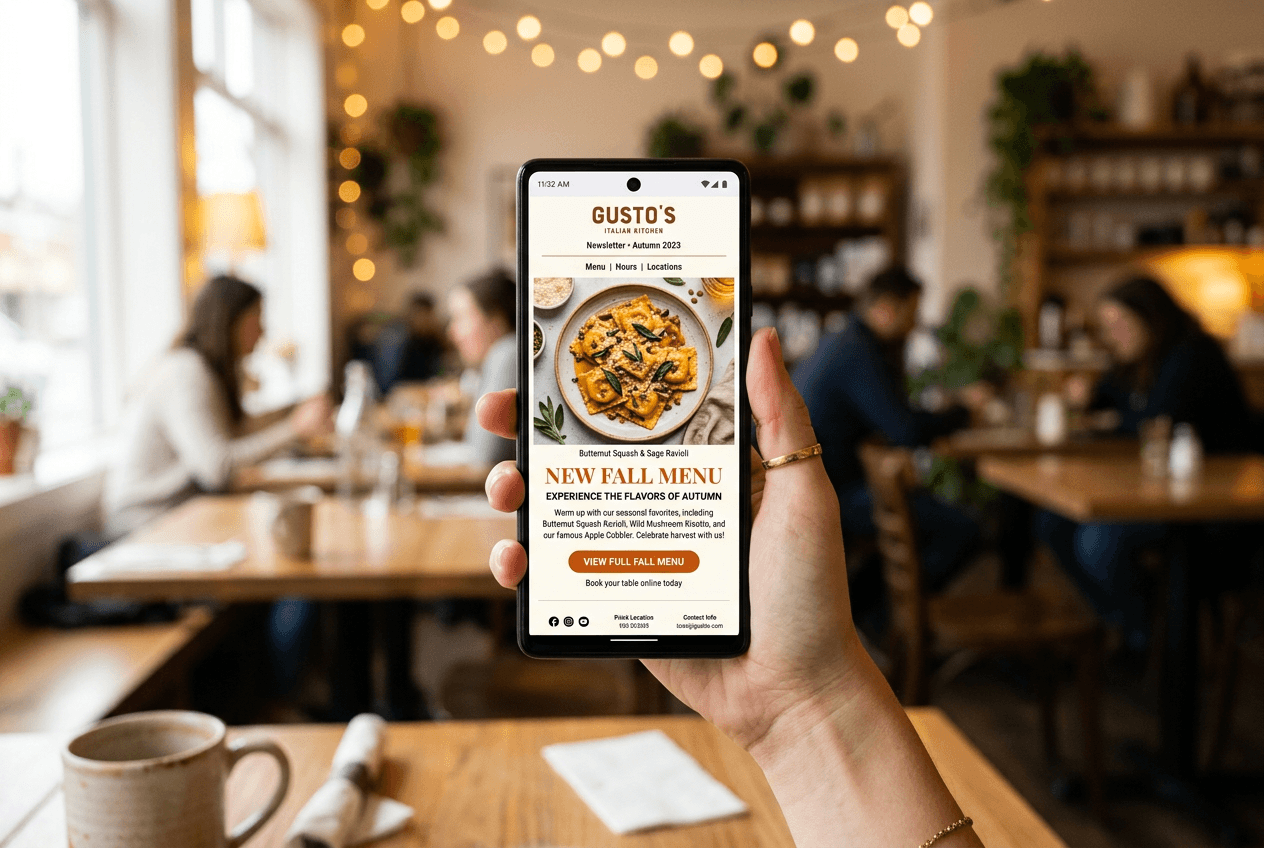 Restaurant email newsletter displayed on smartphone showing seasonal menu promotion with food photography
Email marketing delivers a 4,400% ROI — $44 back for every $1 spent. Collect customer emails at checkout, through your website, or via Wi-Fi login. Send a monthly newsletter with new menu items, upcoming events, exclusive offers, or a chef's note. According to the TouchBistro 2026 State of Restaurants Report, 51% of operators have already automated email marketing.
💰 Cost: Low (free to $50/mo) | ⚡⚡ Effort: Medium
13. Partner with Local Micro-Influencers
Forget celebrity influencers. Local food accounts with 2,000–20,000 followers drive more meaningful engagement — their audiences actually live near your restaurant. Invite them for a complimentary meal and ask for authentic social media content. Influencer posts see 8–15% engagement rates on average, far above typical brand posts.
💰 Cost: Low (cost of a meal) | ⚡⚡ Effort: Medium
14. Build a Fast, Mobile-Friendly Website
59% of restaurant website sessions come from smartphones. If your site is slow or missing your menu, you're losing customers. At minimum you need: a menu (with photos), hours, location, online ordering link, and reservation button. Prioritize speed — every extra second costs you conversions.
💰💰 Cost: Moderate ($500–$3,000) | ⚡⚡⚡ Effort: High (initial build)
15. Run Geo-Targeted Google Ads
Restaurant PPC campaigns convert 6–12% of clicks into reservations or orders. Run ads only within 5–10 miles of your location targeting keywords like "best [cuisine] near me." Start with $10–$20/day and measure what converts.
💰💰 Cost: Moderate ($300–$600/mo) | ⚡⚡ Effort: Medium
16. Claim and Optimize All Review Listings
Yelp, TripAdvisor, OpenTable, Google — claim your restaurant's listings on every review platform. Ensure your name, address, phone number, and hours are identical everywhere. Actively manage reviews: thank positive reviewers, respond professionally to negative ones, and ask happy customers to leave feedback.
💰 Cost: Free | ⚡⚡ Effort: Medium (ongoing)
17. Set Up SMS Marketing
Text messages have a 98% open rate versus email's ~20%. Use SMS for flash deals, reservation reminders, or exclusive offers. Keep messages brief and infrequent (2–4 per month). Collect phone numbers at checkout or through your website.
💰 Cost: Low ($20–$75/mo) | ⚡ Effort: Low
18. Start a Restaurant Blog
A blog boosts your SEO, positions your restaurant as a culinary authority, and gives you content to share across channels. Write about seasonal menus, the story behind your dishes, or local food culture. Even one post per month helps. Include keywords your customers actually search.
💰 Cost: Free | ⚡⚡⚡ Effort: High
19. Optimize Your Online Ordering Listings
Beyond photos, optimize delivery platform listings with compelling descriptions, accurate categories, and strategic pricing. Create meal bundles and use platform-specific promotions. Online ordering customers visit businesses 67% more frequently than walk-in-only customers.
💰 Cost: Low (commission-based) | ⚡⚡ Effort: Medium
20. Run Retargeting Ads on Social Media
Someone visited your website but didn't book? Retargeting ads on Facebook and Instagram show them your best dishes while they scroll. Install the Meta Pixel, create an audience of past visitors, and run ads with "Book tonight" or "Order now." These ads cost 50–75% less per click than cold advertising.
💰💰 Cost: Moderate ($150–$400/mo) | ⚡⚡ Effort: Medium
Social Media Marketing Ideas for Restaurants (21–30)
74% of diners use social media to decide where to eat. 68% check a restaurant's social accounts before their first visit. Social media isn't optional — it's your digital storefront. For a complete playbook, read our guide to social media marketing for restaurants. Need campaign inspiration? See the best restaurant social media campaigns.
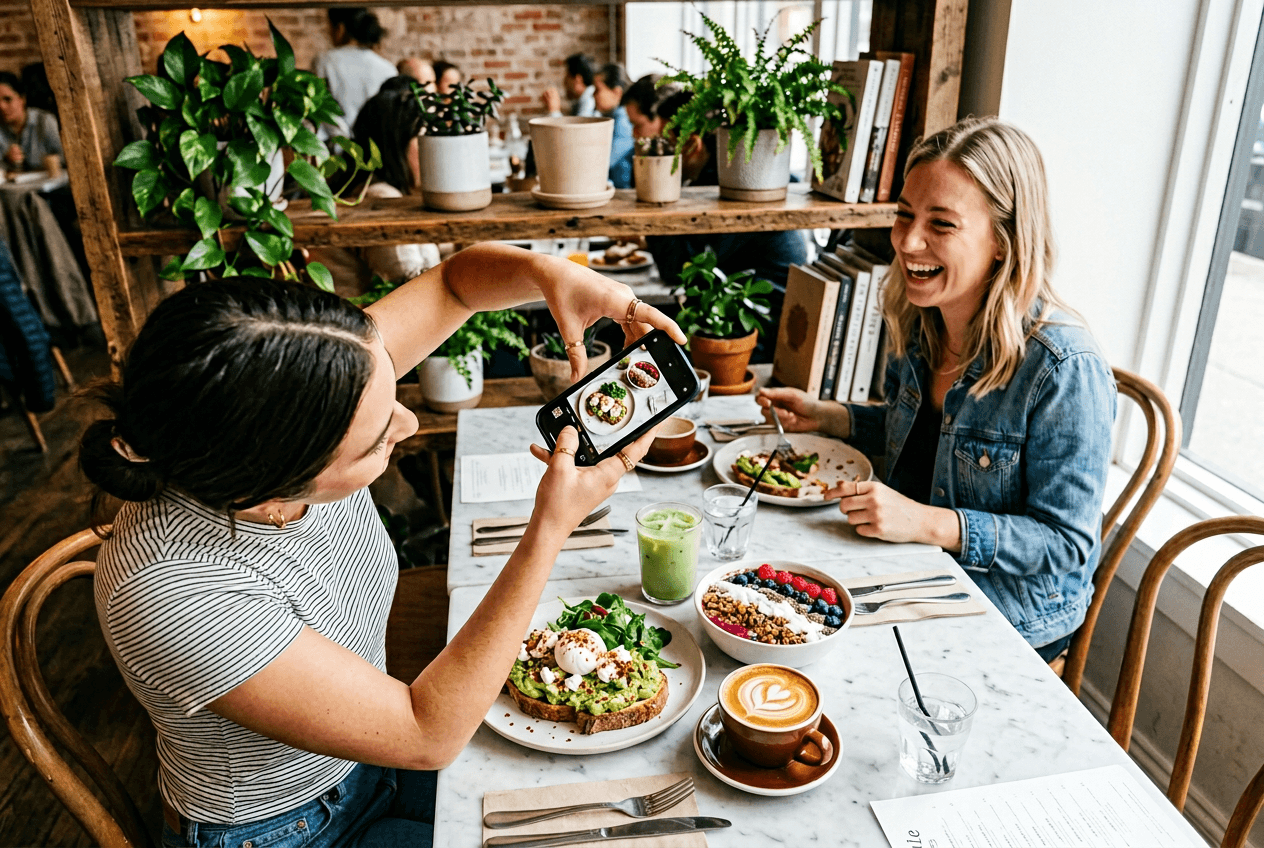 Customer photographing brunch dishes for social media, creating user-generated content at a trendy restaurant
21. Create a 30-Day Content Calendar
Stop posting randomly. Map out a month of content: 40% food photos and menu highlights, 30% behind-the-scenes and staff content, 20% customer features and UGC reposts, 10% promotions. Batch-create content on one day to save time.
💰 Cost: Free | ⚡⚡ Effort: Medium
22. Launch a User-Generated Content Campaign
UGC drives 4x higher conversion than branded content. Create a branded hashtag (#EatAt[YourName]), print it on table tents, and repost customer photos. Offer a small incentive like a free appetizer for tagged posts. It's authentic, free restaurant marketing that builds community.
💰 Cost: Free | ⚡ Effort: Low
23. Go Behind-the-Scenes on TikTok
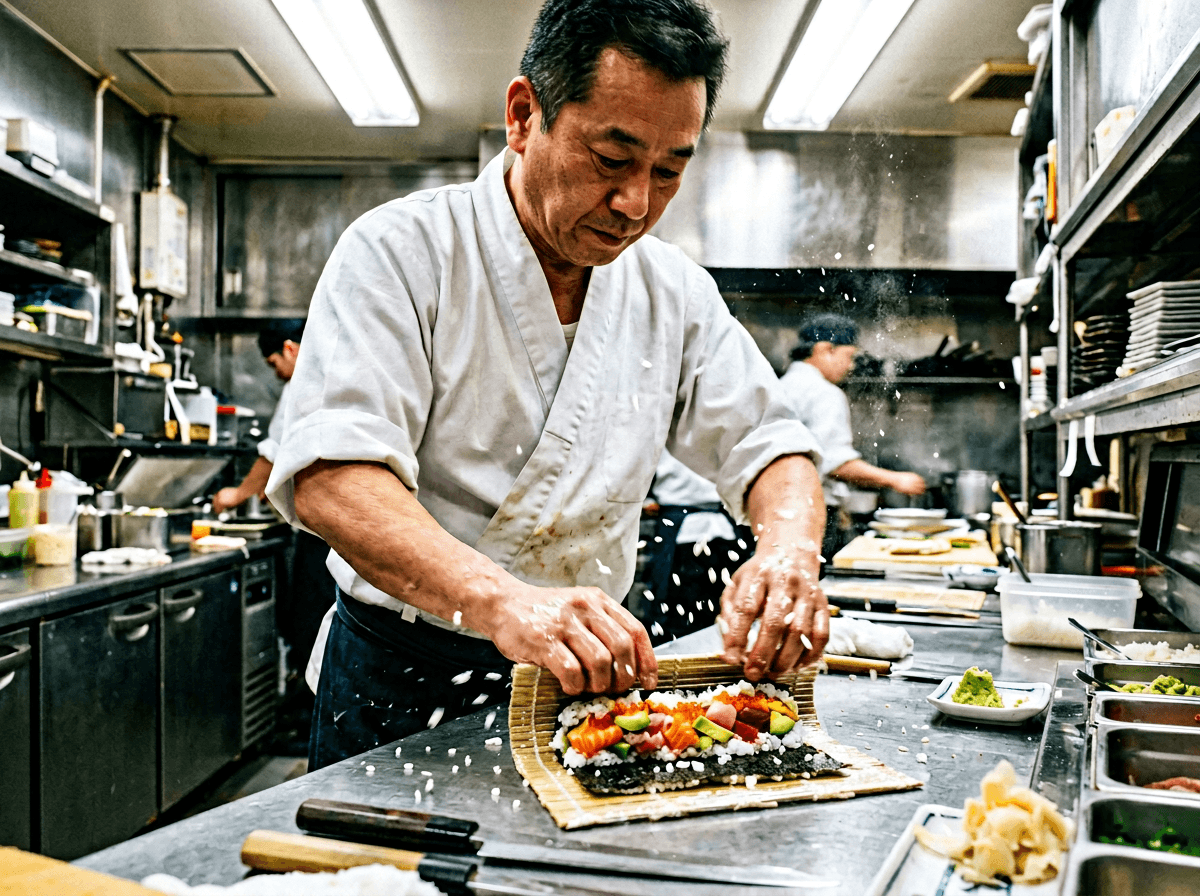 Chef assembling sushi in a behind-the-scenes kitchen video moment for TikTok restaurant marketing content
Morning prep, dough being kneaded, sauces simmering, the dinner rush — TikTok audiences love raw, unpolished kitchen footage. Just hit record, show your process, and let the food speak. Restaurant TikToks routinely go viral because food content is one of the platform's strongest categories.
💰 Cost: Free | ⚡⚡ Effort: Medium
24. Host Instagram Live Cooking Sessions
Teach followers how to make a signature dish live. It creates real-time engagement, humanizes your brand, and generates more profile visits than standard posts. Promote sessions 48 hours ahead and save replays to your highlights.
💰 Cost: Free | ⚡⚡ Effort: Medium
25. Run Social Media Contests and Giveaways
"Tag a friend who needs this meal" or "Share for a chance to win a $50 gift card." Simple contests dramatically expand your restaurant's reach. Set clear rules, a deadline, and announce the winner publicly. The cost of a gift card is trivial compared to the exposure.
💰 Cost: Low ($25–$100) | ⚡ Effort: Low
26. Use Location Tags and Neighborhood Hashtags
Every post should include a geo-tag and 3–5 local hashtags (#[YourCity]Eats, #[Neighborhood]Food). This is how local diners discover restaurants when browsing Instagram Explore. Costs nothing, takes 10 seconds per post.
💰 Cost: Free | ⚡ Effort: Low
27. Share Customer Testimonials as Social Content
Screenshot a glowing Google review. Film a 15-second video testimonial at the table. Social proof is the most persuasive form of restaurant marketing — 33% of diners say reviews are the #1 factor for choosing a new restaurant. Turn your best reviews into social media content.
💰 Cost: Free | ⚡ Effort: Low
28. Spotlight Your Staff
"Meet our head chef, Maria. She's perfected this mole recipe for 15 years." People connect with people, not logos. Staff spotlights humanize your restaurant brand and build emotional connections with customers. One feature per week keeps content fresh.
💰 Cost: Free | ⚡ Effort: Low
29. Create Themed Weekly Content Series
Taco Tuesday, Wine Wednesday, "Plating Friday" — recurring themes create anticipation and a built-in social media content framework. Your audience starts expecting specific posts on specific days, making your restaurant marketing predictable and effective. For more ideas, see how to promote your restaurant on social media.
💰 Cost: Free | ⚡⚡ Effort: Medium
30. Collaborate with Local Food Bloggers
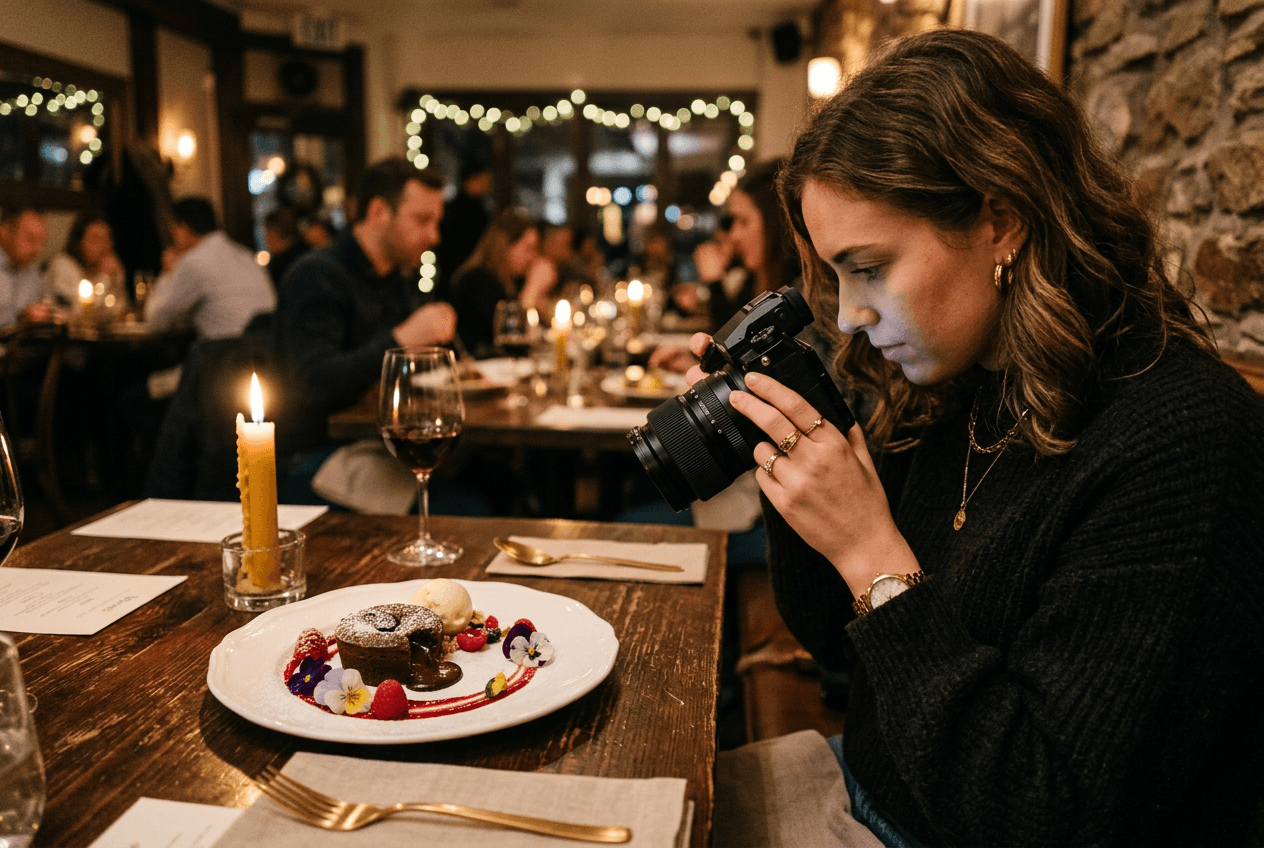 Food blogger photographing an elegant dessert at a restaurant table for a review and social media post
Invite 3–5 local food bloggers for a complimentary tasting event. Bloggers create in-depth, SEO-friendly content that drives traffic to your restaurant for months. Check our tips on Instagram food photography to help them capture your dishes beautifully.
💰 Cost: Low (cost of meals) | ⚡⚡ Effort: Medium
Local Restaurant Marketing Ideas (31–40)
Every restaurant is a local business at its core. The customers within a 10-mile radius are your bread and butter — literally. These creative restaurant marketing ideas help you become a neighborhood institution. For the tools to execute these strategies, see our roundup of the best restaurant marketing tools.
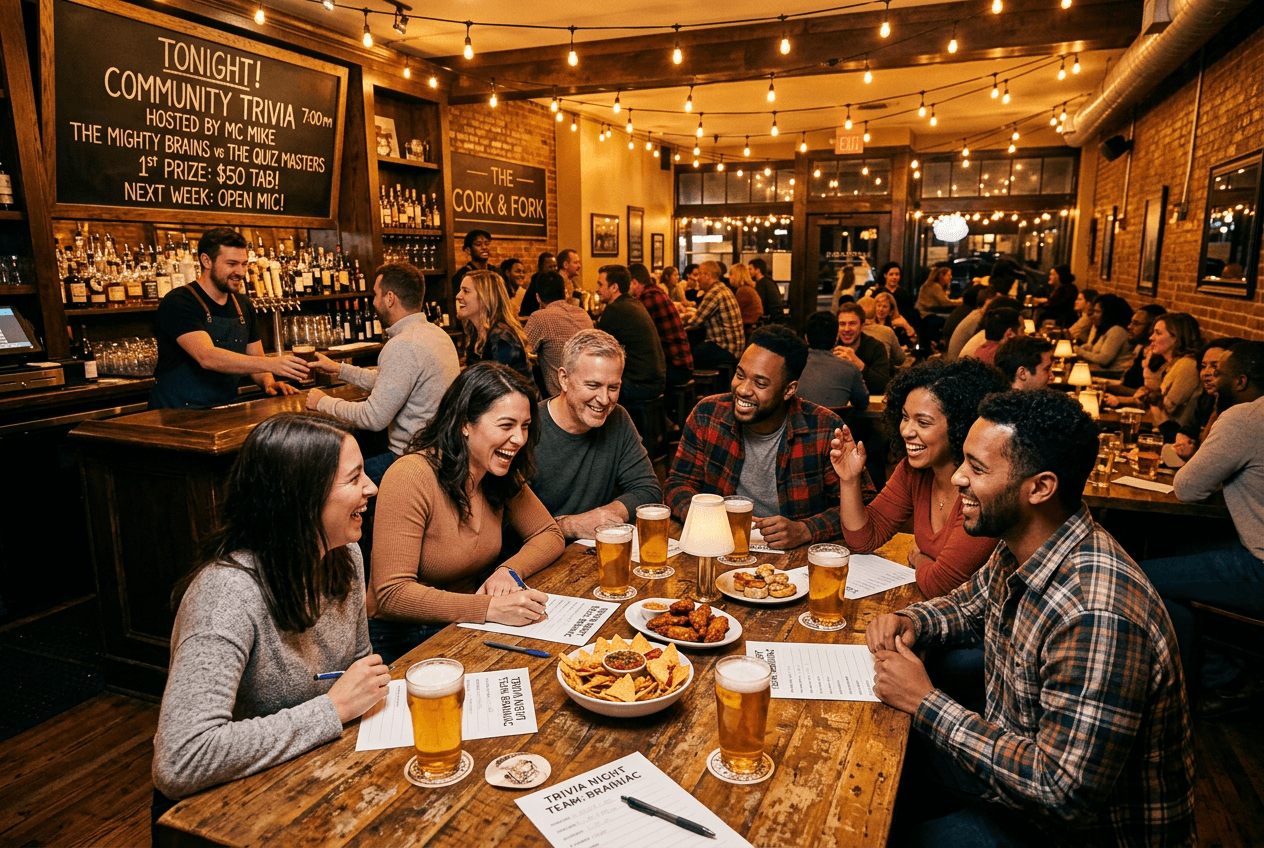 Neighborhood restaurant hosting a trivia night community event with groups gathered around tables under string lights
31. Host Weekly Community Events
Trivia night, live music, karaoke, open mic, game night — events give customers a reason to visit on slower nights (typically Monday–Wednesday). Promote them on social media and your Google Business Profile. The cost is minimal, but the recurring foot traffic and bar revenue add up fast.
💰 Cost: Low ($0–$200/event) | ⚡⚡ Effort: Medium
32. Cross-Promote with Neighboring Businesses
Partner with the gym, boutique, or salon nearby. Offer "Show your receipt from [business] for 10% off dinner." It's free, builds relationships, and introduces your restaurant to nearby customers. They promote you, you promote them.
💰 Cost: Free | ⚡ Effort: Low
33. Organize Charity and Fundraiser Nights
"We'll donate 15% of tonight's sales to [local charity]." Charity nights drive traffic, earn goodwill, and get local press coverage. Partner with schools, shelters, or food banks. Promote two weeks ahead on social media and through the partner's channels.
💰 Cost: Low (a portion of revenue) | ⚡⚡ Effort: Medium
34. Sponsor Local Sports Teams or Events
Get your restaurant on Little League jerseys, 5K banners, or school programs. Sponsorship costs are often low ($200–$1,000/season), and you reach families who eat out regularly. Builds long-term community brand recognition.
💰💰 Cost: Moderate ($200–$1,000) | ⚡ Effort: Low
35. Participate in Local Food Festivals
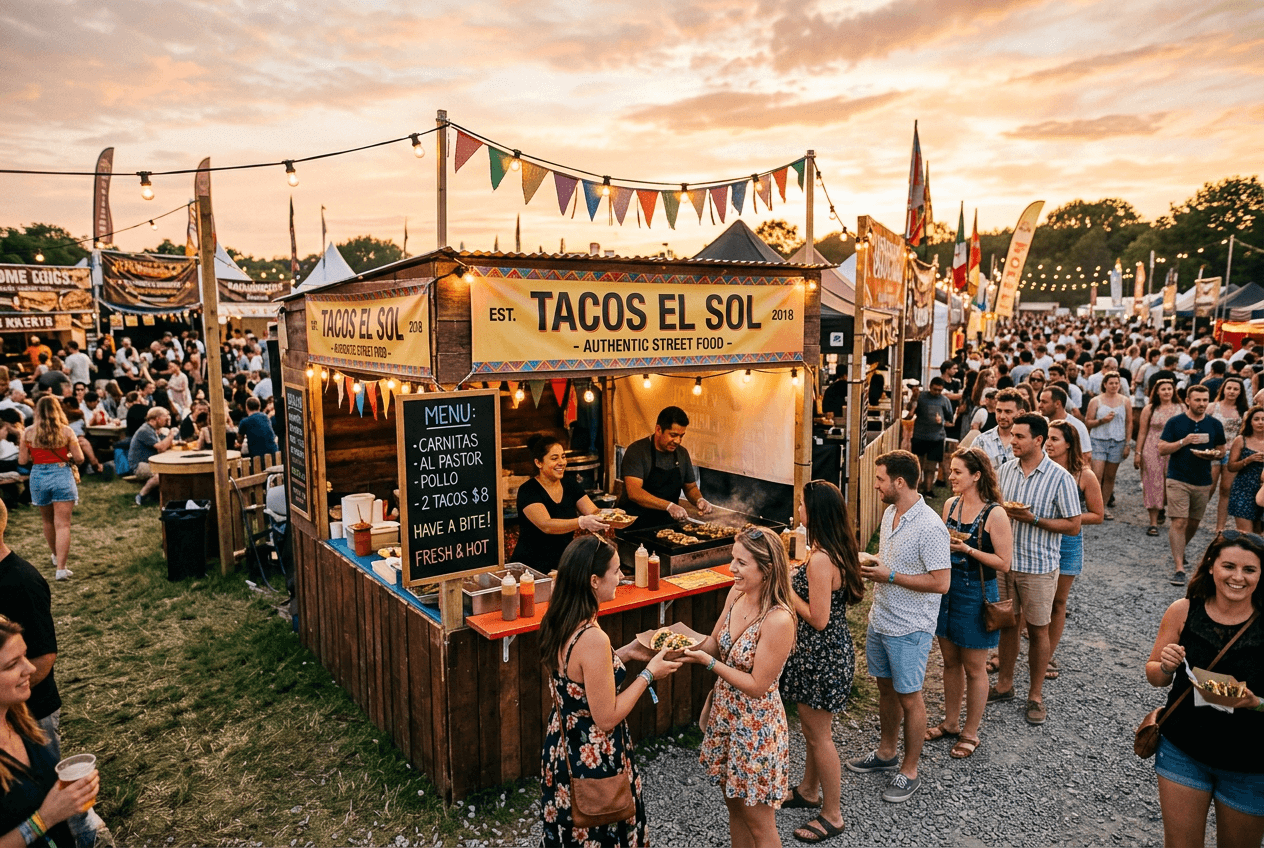 Restaurant booth at a local food festival serving sample dishes to attendees during golden hour
Food festivals put your best dishes in front of hundreds of potential new customers in a single day. Hand out samples, collect email addresses for your marketing list, and bring QR-coded business cards linking to online ordering. The booth fee pays off in new customer acquisition.
💰💰 Cost: Moderate ($300–$1,500) | ⚡⚡⚡ Effort: High
36. Launch a Pop-Up or Food Truck
Test new neighborhoods without committing to a second location. Pop-ups create urgency — "available this weekend only." Food trucks extend your reach to offices, farmers markets, and festivals. Both generate social media content and bring new customers to your restaurant.
💰💰💰 Cost: High ($500–$5,000+) | ⚡⚡⚡ Effort: High
37. Offer Cooking Classes or Workshops
Charge $50–$150 per person for a hands-on class teaching your signature dish. New revenue stream, memorable experience, powerful marketing — attendees post about it, talk about it, and return as regulars.
💰 Cost: Low (ingredients only) | ⚡⚡⚡ Effort: High
38. Create a Neighborhood Food Trail
Partner with 4–5 nearby restaurants for a "food walk" with a passport card that stamps each stop. Diners who complete it get a reward. Drives foot traffic to the whole neighborhood and positions your restaurant as a destination.
💰 Cost: Low ($50–$100 for passports) | ⚡⚡ Effort: Medium
39. Distribute QR-Coded Flyers Strategically
Place flyers with a QR code (linking to your menu or online ordering) at office buildings, hotel lobbies, apartment mailrooms, and co-working spaces within a 1-mile radius. A $100 print run generates meaningful walk-in traffic.
💰 Cost: Low ($50–$150) | ⚡⚡ Effort: Medium
40. Partner with Local Hotels and Tourism Boards
Hotels need dinner recommendations. Tourism boards need restaurant partners for visitor guides. Reach out to concierge teams and offer exclusive discounts for guest referrals — a steady stream of high-spending first-time visitors.
💰 Cost: Free to Low | ⚡ Effort: Low
Loyalty and Customer Retention Ideas (41–50)
The math: a 5% increase in customer retention correlates with a 25% increase in profit. Acquiring new customers costs 5–7x more than keeping existing ones. Currently, 61% of restaurant operators offer loyalty programs, and 90% of loyalty program owners report positive ROI with an average return of 4.8x. These restaurant marketing ideas focus on turning first-time visitors into lifelong regulars.
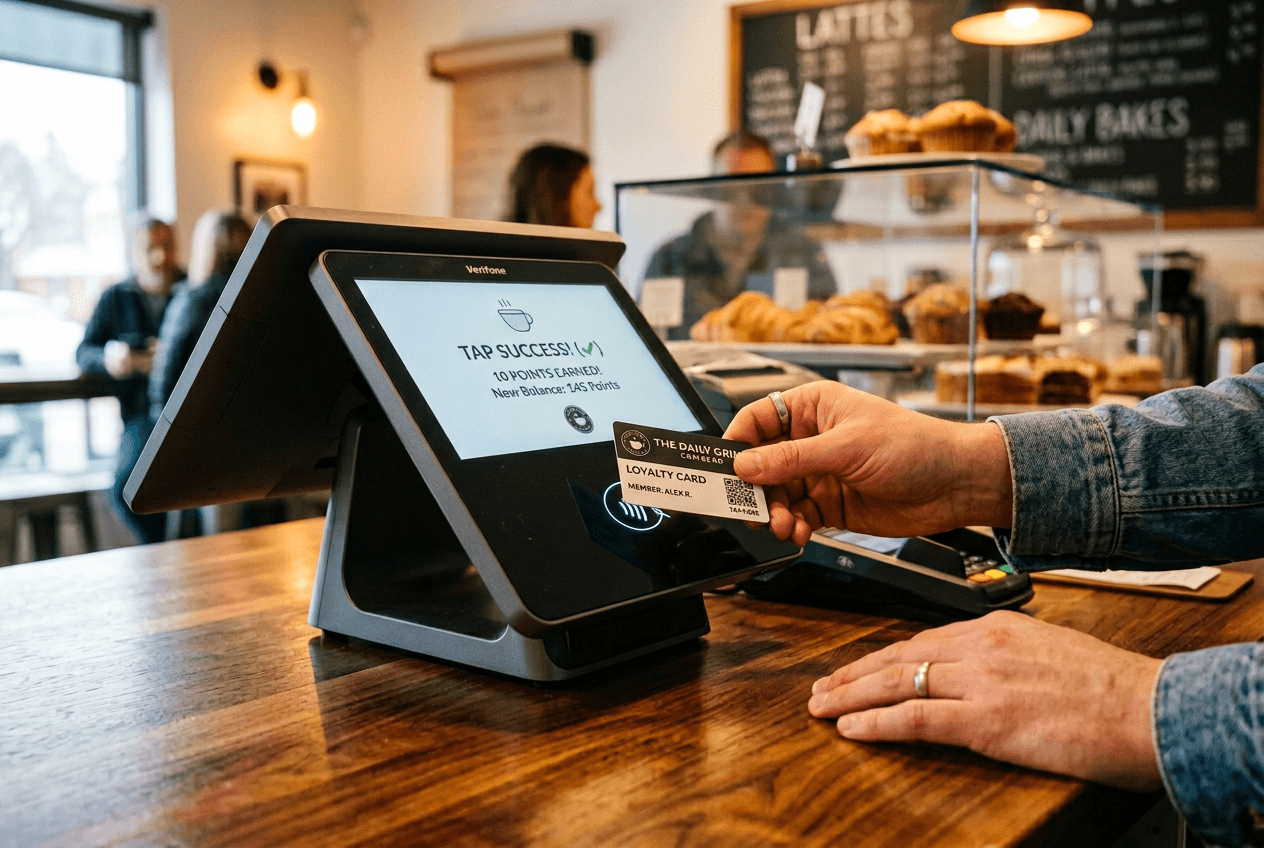 Customer tapping a digital loyalty rewards card on a restaurant POS terminal to earn points
41. Launch a Digital Rewards Program
Points-per-visit, points-per-dollar, or digital punch-card — pick a format and go mobile. Restaurants with loyalty apps report a 23% increase in visit frequency and up to 30% boost in customer lifetime value. Use a platform integrated with your POS so rewards track automatically.
💰💰 Cost: Moderate ($50–$200/mo) | ⚡⚡ Effort: Medium
42. Offer Birthday and Anniversary Specials
Collect birthdates at loyalty or email signup. Send a personalized offer — free dessert, complimentary drink, or 20% off — a week before their birthday. Small gesture, guaranteed restaurant visit, and birthday diners always bring a group.
💰 Cost: Low | ⚡ Effort: Low (automate it)
43. Create a VIP or Chef's Table Experience
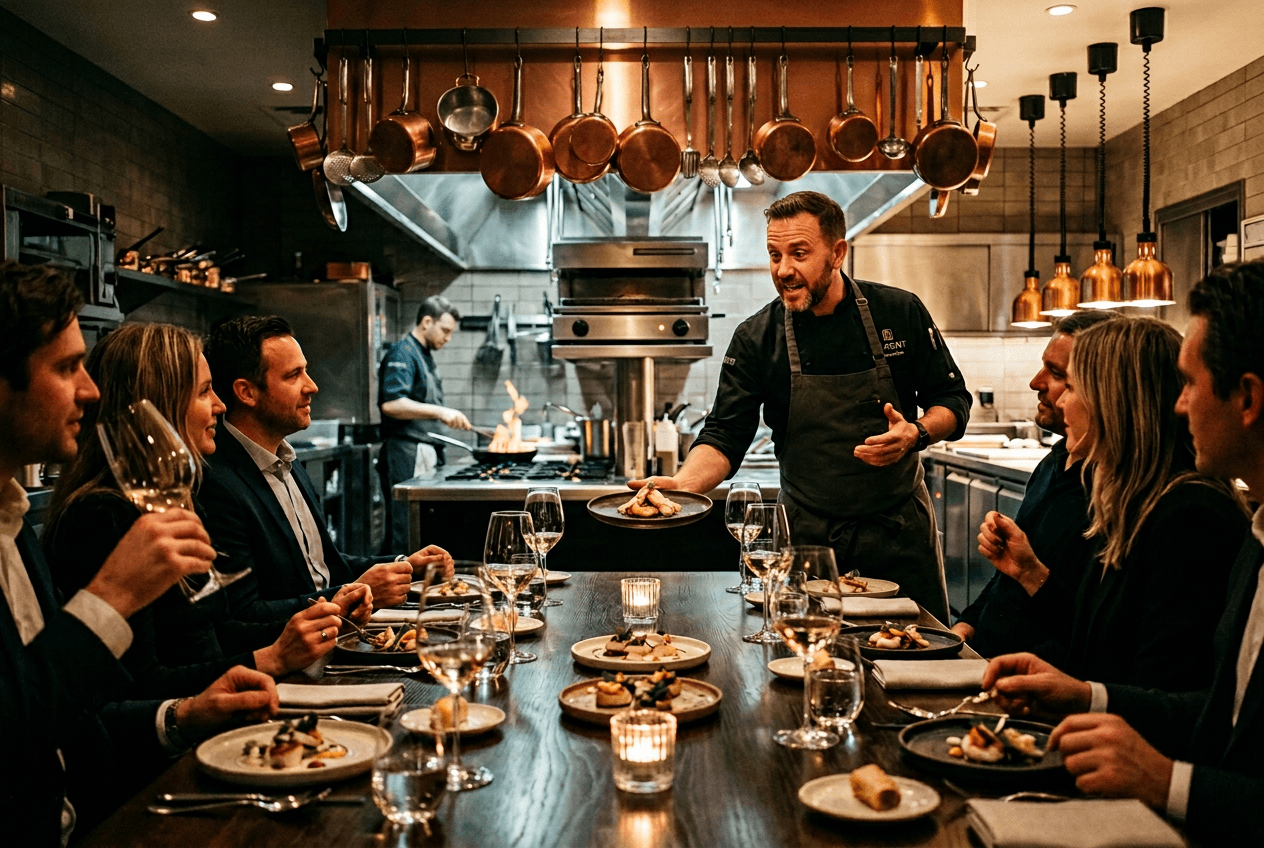 Exclusive chef's table VIP dining experience with guests seated at an intimate table in a restaurant kitchen
Offer an exclusive monthly tasting menu — 5 courses, 10 seats, $75–$150/person. Market it as the "Chef's Table." This creates premium revenue, generates social media content from attendees, and makes regulars feel special. Scarcity sells it.
💰 Cost: Low (food cost) | ⚡⚡ Effort: Medium
44. Send Personalized Thank-You Messages
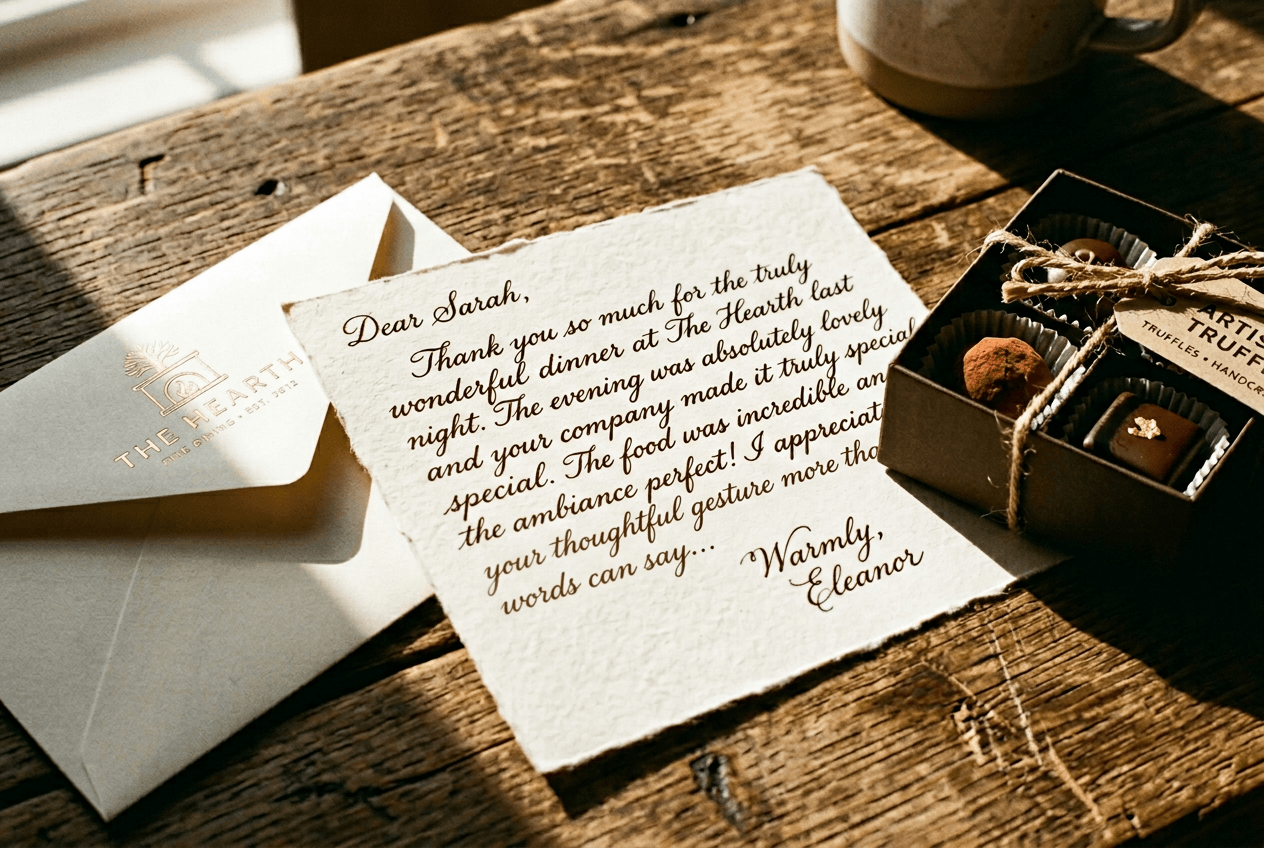 Handwritten restaurant thank-you note on premium stationery next to artisan chocolates for customer appreciation
After a first visit, large order, or special occasion — send a handwritten card or personalized email. Takes two minutes, creates an emotional connection no ad campaign replicates. Train hosts to collect names and emails for this purpose.
💰 Cost: Free | ⚡ Effort: Low
45. Build a Secret or Off-Menu Selection
Create 2–3 dishes not on the printed menu — available only to regulars, loyalty members, or those "in the know." Secret menus generate word-of-mouth and make customers feel like insiders. Casually mention: "We have something special off-menu tonight."
💰 Cost: Low | ⚡ Effort: Low
46. Launch a Referral Program
"Bring a friend, you both get 15% off." Referral programs cost roughly one-third of paid advertising per new customer, and referred customers have higher lifetime value. Track with a simple code or digital link.
💰 Cost: Low | ⚡ Effort: Low
47. Offer First-Time Visitor Incentives
A free appetizer, 10% discount, or complimentary drink removes the risk of trying somewhere new. Promote on your Google Business Profile, delivery apps, and social media. The goal: convert a trial into a repeat customer.
💰 Cost: Low | ⚡ Effort: Low
48. Create Seasonal Challenges and Limited-Time Offers
"Try all 5 fall specials for a free entrée." Seasonal challenges create urgency, encourage repeat visits, and generate social buzz. Limited-time promotions tap into FOMO — customers visit because the dish won't last forever.
💰 Cost: Low | ⚡⚡ Effort: Medium
49. Build a Customer Feedback Loop
Place a QR code on every table linking to a 2-question survey. Monitor weekly, then publicly show you act on feedback — post about changes on social media. Turns critics into restaurant advocates.
💰 Cost: Free | ⚡⚡ Effort: Medium
50. Surprise and Delight Your Regulars
The restaurant marketing idea that doesn't feel like marketing — and that's why it works. Randomly comp a dessert. Upgrade a regular to the better table. Remember their name. Send a holiday card. These micro-moments of generosity create customer loyalty no discount or ad can buy.
💰 Cost: Low | ⚡ Effort: Low
How to Market a Restaurant: Where to Start
Fifty restaurant marketing ideas can feel overwhelming. Here's a practical roadmap:
No budget: Start with ideas 9 (Google Business Profile photos), 11 (GBP optimization), 22 (UGC campaign), 26 (local hashtags), and 44 (thank-you messages). All free, all doable this week.
Small budget ($100–$300/mo): Add ideas 1 (AI food photography), 12 (email marketing), 17 (SMS), and 41 (loyalty program). Highest ROI per dollar.
Ready to invest: Layer on 15 (Google Ads), 20 (retargeting), 35 (food festivals), and 43 (VIP experiences) for a complete restaurant marketing strategy covering acquisition and retention.
For a full toolkit, explore our guide to the best restaurant marketing tools for 2026. Building a visual brand from scratch? Our restaurant branding guide walks through the entire process.
Frequently Asked Questions
How much should a restaurant spend on marketing?
The benchmark is 3–6% of gross revenue for established restaurants, up to 10% for new ones. A restaurant doing $500,000 annually should budget $15,000–$30,000/year ($1,250–$2,500/month). Start with free restaurant marketing ideas from this list, then reinvest profits into paid channels.
What is the most effective restaurant marketing strategy?
The data points to two winners: professional food photography (25–70% more orders) and Google Business Profile optimization (how most consumers find local restaurants). Email marketing and social media marketing round out the top tier. The best approach is a mix across visual, digital, local, and retention strategies.
How do I market my restaurant with no budget?
Optimize your Google Business Profile, post consistently on social media, encourage online reviews, use location tags on every post, launch a UGC campaign, and learn how to promote your restaurant on social media without ads. FoodShot AI's free plan also lets you create 3 professional food photos at no cost.
Do restaurant loyalty programs actually work?
90% of loyalty program owners report positive ROI averaging 4.8x. Restaurants with mobile loyalty apps see 23% more visit frequency and up to 30% higher customer lifetime value. Smaller restaurants see 15–25% sales increases after launching programs. The key: make it digital and genuinely rewarding.