Hotel Food Photography: A Visual Guide for Hotels & Resorts
 Ali Tanis15 min read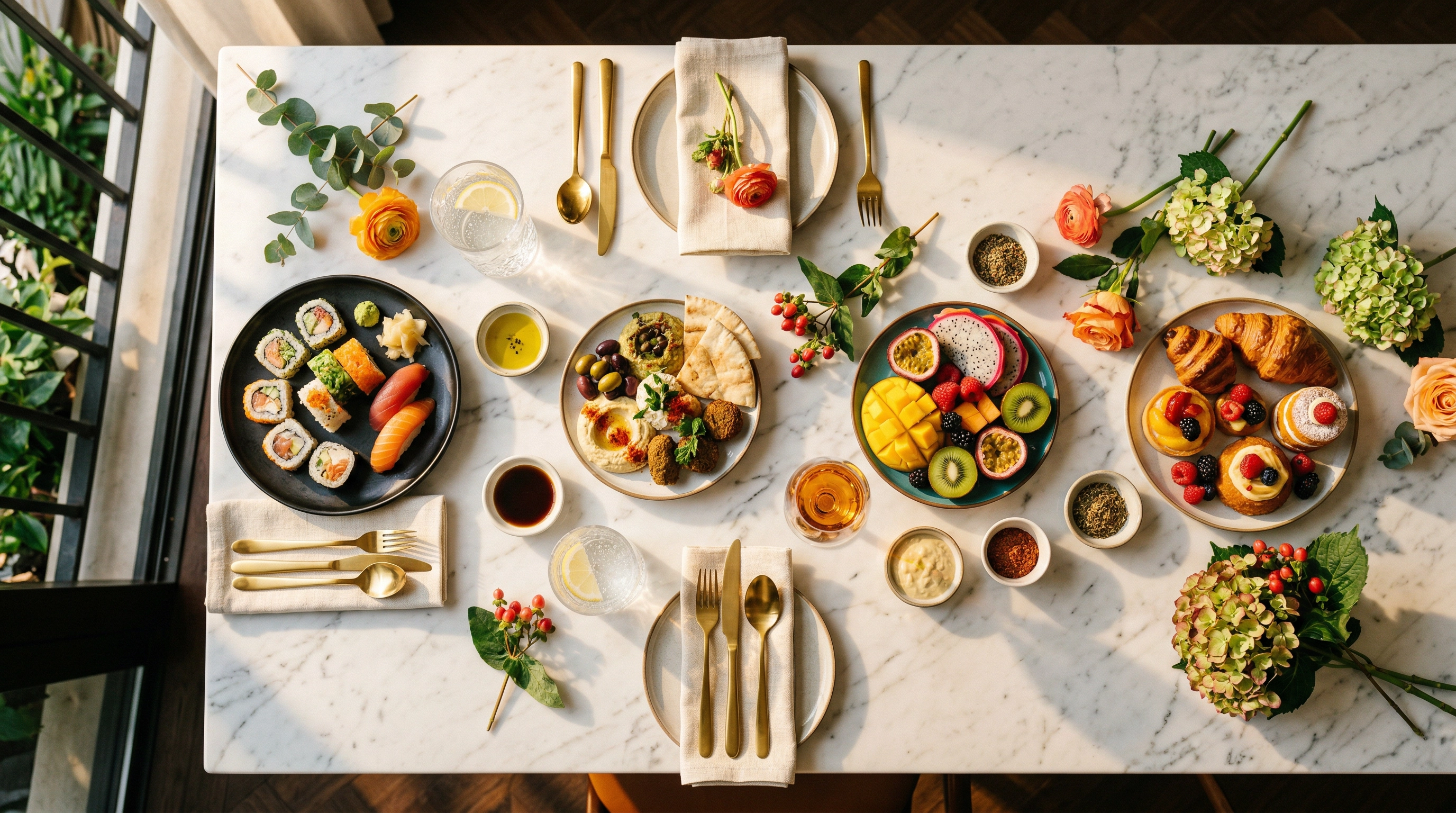
Hotel food photography is one of the most overlooked revenue drivers in hospitality. Your property's food visuals shape guest expectations long before check-in — from OTA listing galleries to room service QR menus. A TripAdvisor study found that 87% of travelers consider photos a crucial factor when choosing where to stay, and non-aesthetic food images rank among the top three booking deal breakers.
Yet most hotels treat food photography as an afterthought, cycling through the same poorly lit phone snapshots across their website, OTA listings, and dining menus.
This guide covers every touchpoint where hotels and resorts need professional food visuals, the unique challenges hospitality properties face, and practical tips for producing consistent, high-quality imagery across all of them — without booking a photographer for every seasonal menu change.
Quick Summary: Hotels need food photography across 7+ distinct touchpoints — from in-house restaurants and room service to banquet catalogs, minibars, pool bars, breakfast buffets, and seasonal events. Professional photography shoots cost $1,500–$7,500/day and produce only 10–18 images, making full-menu coverage prohibitively expensive for multi-outlet properties. AI-powered tools like FoodShot AI let hotel F&B teams maintain brand-consistent food imagery across every outlet at a fraction of the cost.
Why Hotel Food Photography Matters More Than You Think
Hotels are visual products. Guests can't touch, taste, or smell your property before booking — they rely almost entirely on imagery to make decisions worth hundreds or thousands of dollars.
The data backs this up:
- Properties with professional photography see a 98% increase in booking engagement compared to those with amateur images (IcePortal research)
- Hotels with 100+ photos on TripAdvisor are 283% more likely to receive a booking inquiry (HospitalityNet)
- High-quality hotel photos drive a 15% increase in conversion rates on direct booking websites
Food photography specifically matters because dining is no longer a side amenity — it's a primary booking driver. Guests choosing between two similarly-priced luxury beachfront resorts will gravitate toward the one whose breakfast buffet looks like a destination, not a cafeteria.
This applies across every channel:
- OTA listings (Booking.com, Expedia): Food photos appear in property galleries alongside rooms and pools. Weak food images create a jarring quality gap that undermines your luxury positioning.
- Direct website: Your restaurant pages, room service menus, and dining event promotions all rely on strong food photography to convert browsers into guests.
- Social media: Instagram and TikTok are where travelers discover hotels. Beautiful food content is among the most shareable hotel imagery — and it costs nothing when guests repost it.
The takeaway? Hotel food photography isn't a nice-to-have. It's a revenue tool that directly impacts your occupancy rate and average daily rate.
The 7 Places Hotels Need Food Photography
Hotels have more food photography touchpoints than almost any other type of food business. A standalone restaurant needs photos for one menu and maybe social media. A hotel with five dining outlets, room service, banquet operations, and a minibar needs hundreds of polished images — each with a distinct look and feel.
Here's where every hotel and resort property needs professional-quality food visuals.
1. In-House Restaurant Menus
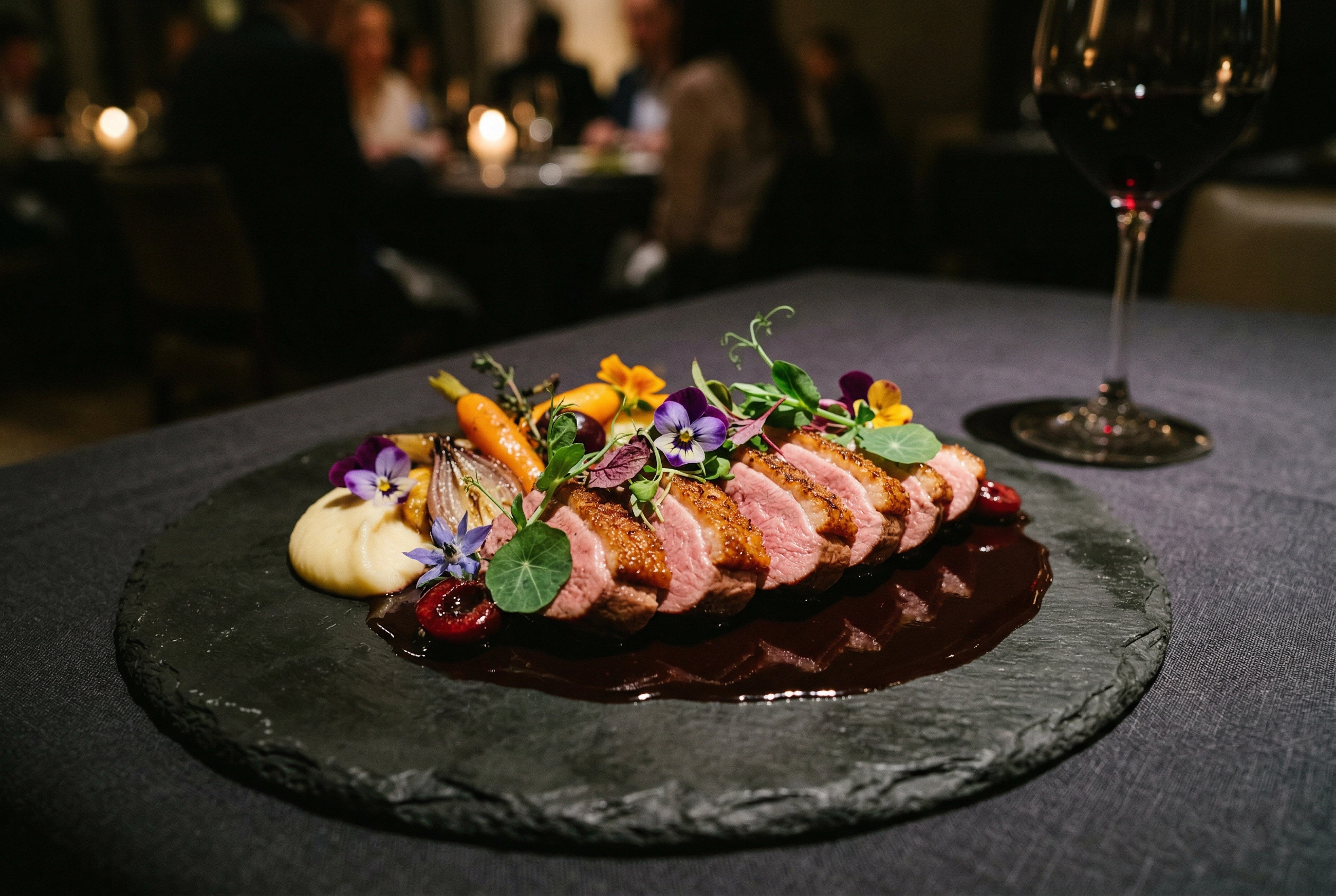 Fine dining hotel restaurant entrée with seared duck breast on dark slate plate and moody lighting
Your signature restaurant is often the crown jewel of the property. Its photography needs to match — think editorial-quality images with intentional styling, proper plating, and backgrounds that reflect the restaurant's concept.
The challenge: many hotels operate multiple restaurant concepts under one roof. A Japanese izakaya, an Italian trattoria, and a rooftop grill bar each demand completely different visual treatments. Same hotel, three distinct photographic identities.
Quick photography tips for hotel restaurants: Shoot signature dishes from a 45° angle to capture height and plating detail. Use the restaurant's own tableware and surfaces for authenticity. Natural window light works best when available.
For more detailed composition fundamentals that apply across all your outlet styles, our guide to food photography techniques covers angles, lighting, and styling approaches in depth.
2. Room Service and In-Room Dining
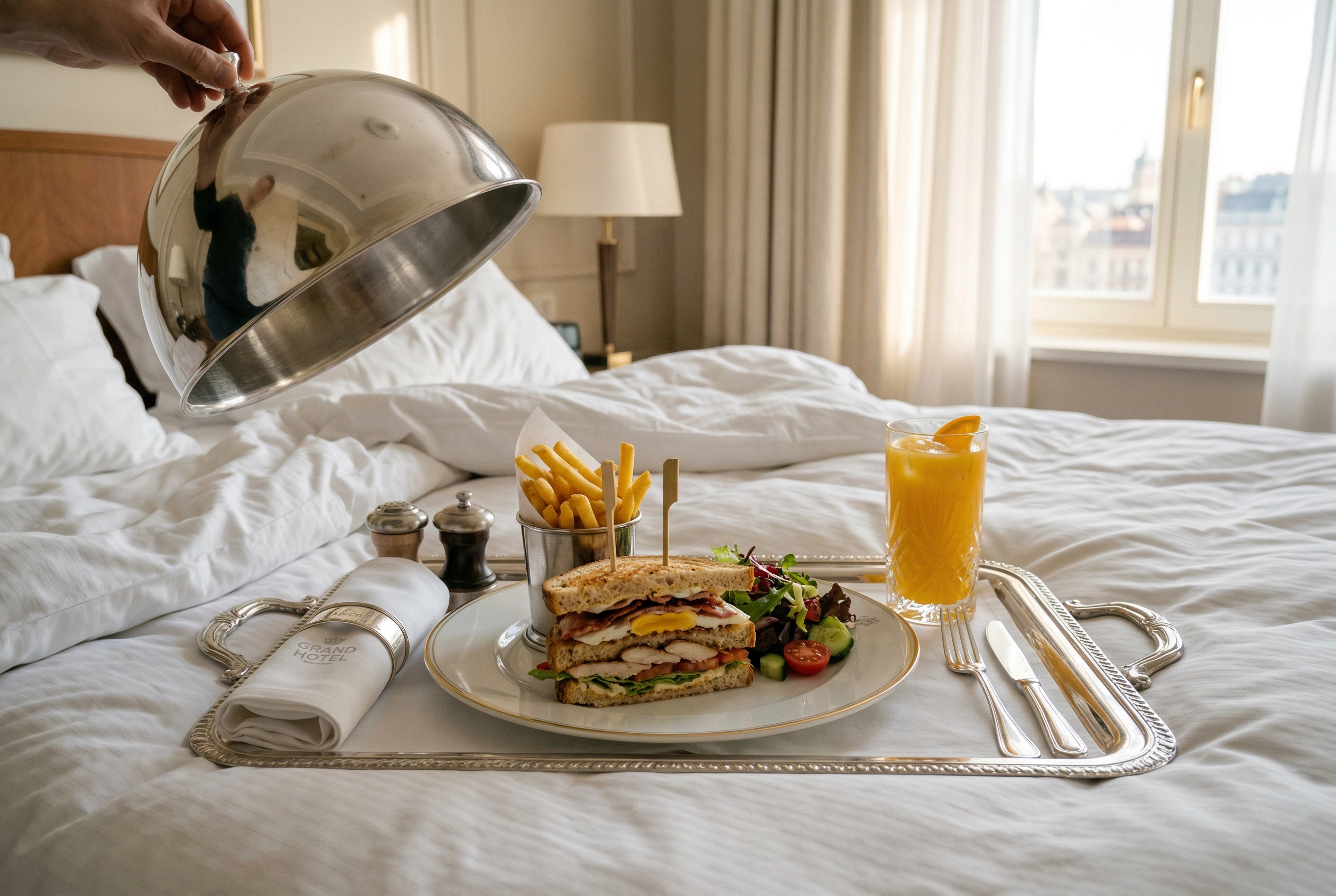 Silver room service tray with gourmet food and fresh juice on luxury hotel bed
Room service is a high-margin revenue stream — and guests order almost exclusively based on what they see. There's no server describing the wagyu burger or recommending the truffle pasta. The photo does all the selling.
Post-pandemic, QR code digital menus have become standard for in-room dining. These display on phone screens, so your food images need to be sharp, well-lit, and appetizing at small sizes. Hotels that invest in quality room service photography consistently report higher average order values.
The visual challenge: room service dishes need to look both luxurious and approachable. A silver cloche and crisp white linen communicate premium quality. A cluttered, poorly lit phone snapshot communicates "order Uber Eats instead."
3. Banquet and Catering Catalogs
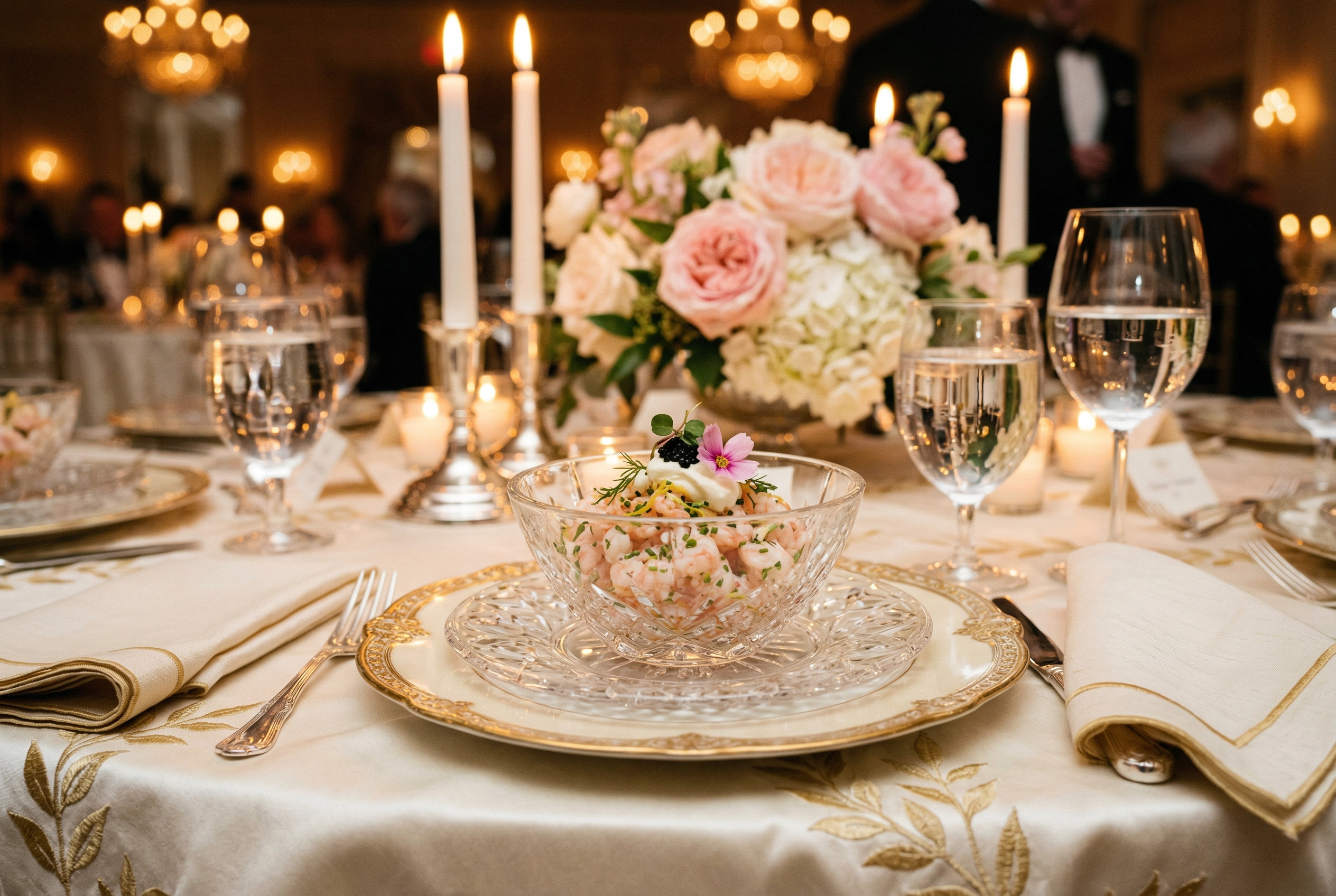 Luxury hotel banquet appetizer on crystal charger plate with elegant table setting and candle bokeh
This is where hotel food photography directly influences the highest-value decisions. A wedding coordinator choosing between your hotel and the venue down the street will compare banquet catalogs side by side. Corporate event planners selecting a conference dinner package for 500 attendees are making $50,000+ decisions based partly on how your food looks on paper.
Banquet catalogs need:
- Individual plated courses for set menu presentations
- Buffet spread overviews showing variety and abundance
- Passed appetizer close-ups for cocktail reception packages
- Themed table settings for wedding and gala packages
All of this needs to be print-quality — meaning 4K resolution minimum. Low-resolution phone photos simply won't pass muster in a luxury brochure that's selling $200-per-plate dining experiences.
4. Minibar and In-Room Amenity Displays
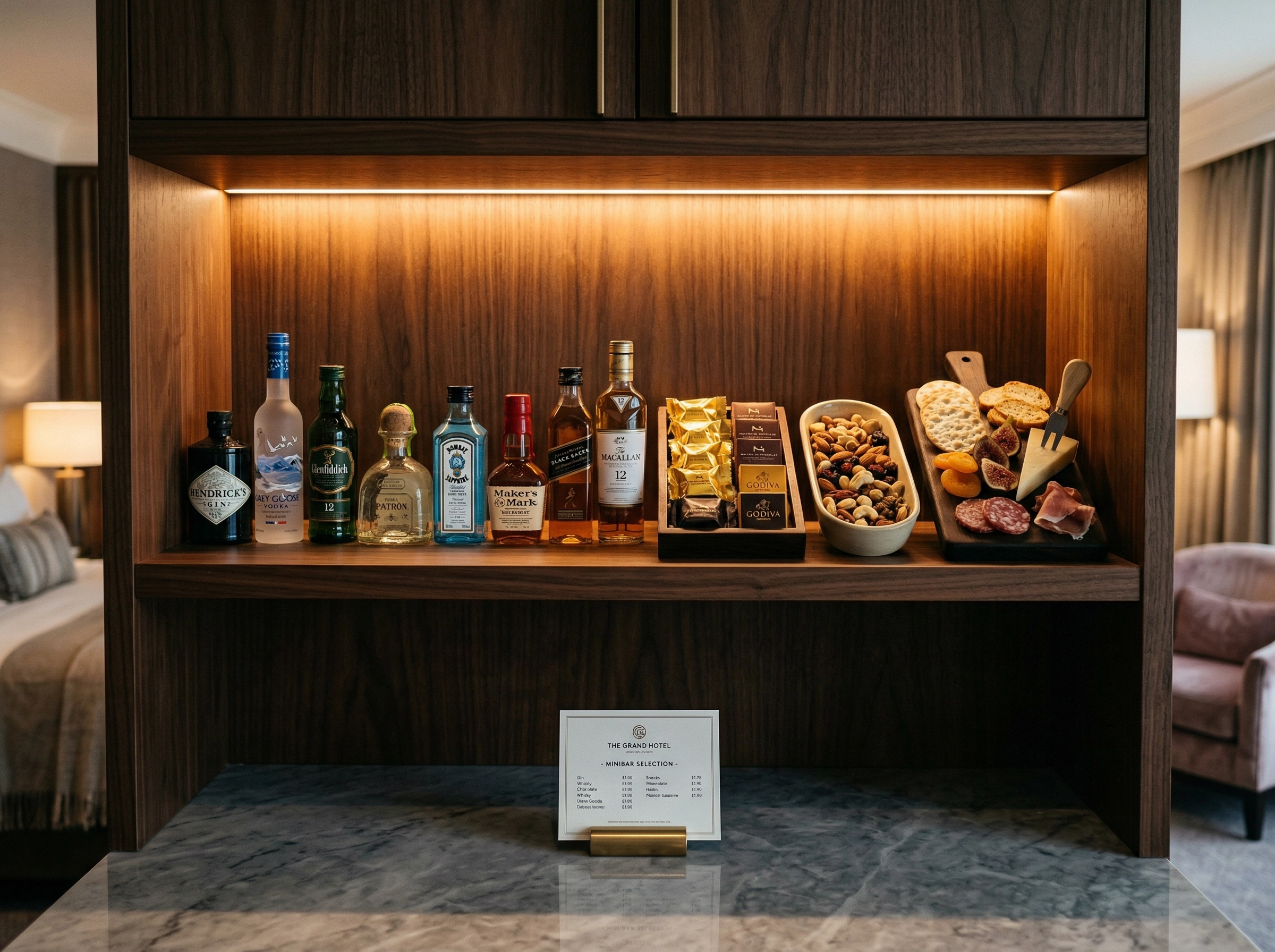 Premium hotel minibar display with artisan snacks and spirits in dark walnut cabinet with warm LED lighting
Often overlooked, but minibar and amenity photography drives incremental revenue that adds up fast across hundreds of rooms.
Think about it: a photo of artisan chocolate truffles on the minibar card versus a plain text listing of "Chocolate Truffles — $8." One sells. The other lists.
This extends to welcome amenities, turndown treats, and VIP packages. A luxury resort offering a cheese-and-wine welcome basket to suite guests should photograph it beautifully — it's part of the premium promise that justifies your nightly rate.
5. Pool Bar and Outdoor Dining Menus
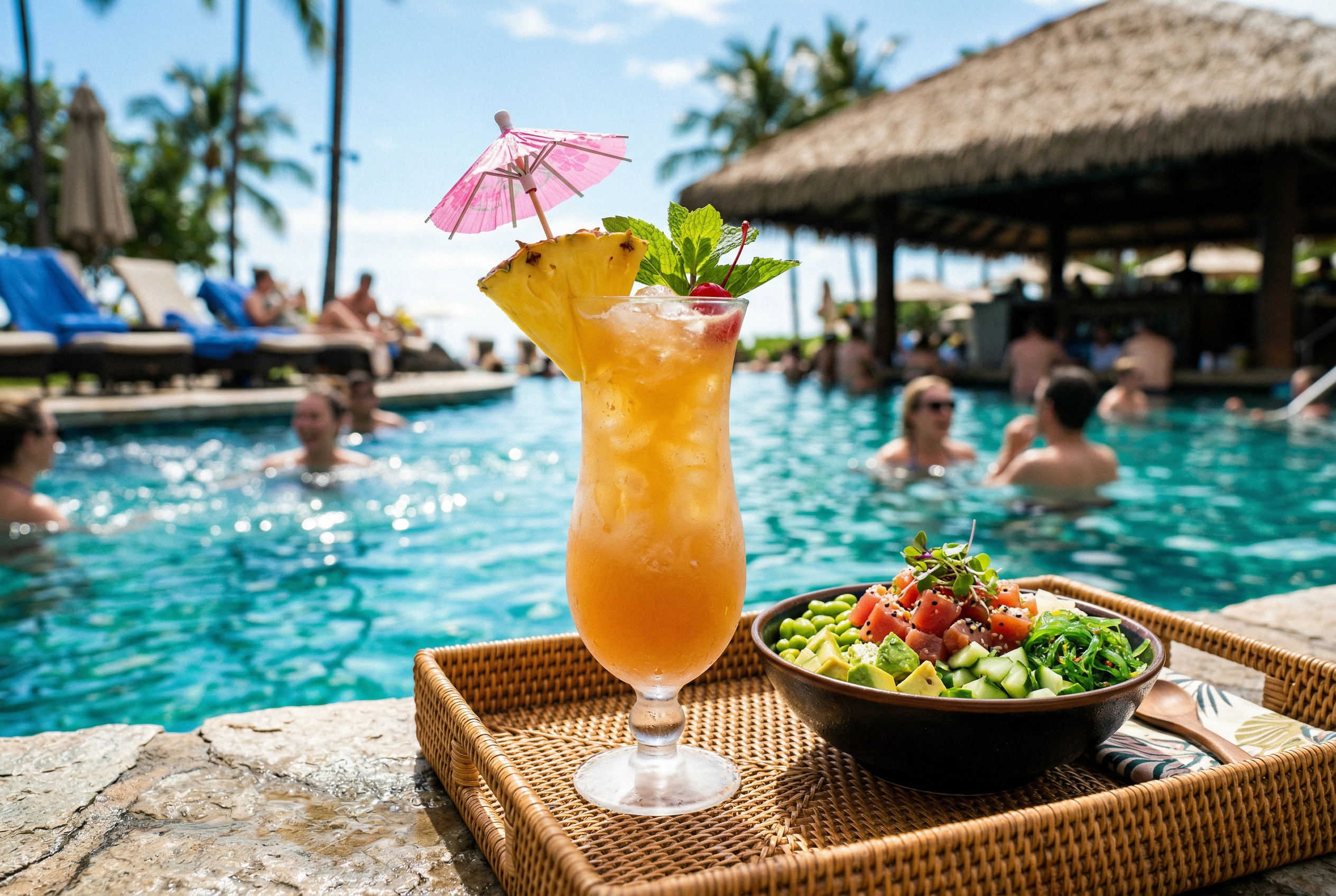 Tropical cocktail and poke bowl at resort pool bar with turquoise water background
Pool bars and beach dining at resorts require a completely different photographic approach than indoor restaurants. The aesthetic is bright, vibrant, and lifestyle-oriented — think tropical cocktails with condensation droplets, fresh poke bowls against turquoise water, grilled seafood with a sunset backdrop.
The practical challenge: outdoor lighting is harsh and unpredictable. Midday sun creates ugly shadows on food. Overcast skies flatten colors. Getting consistent, professional-looking outdoor food photos without a photographer on standby is tough — and it's one reason why AI food photography tools have become popular with resort properties.
6. Breakfast Buffet Promotion
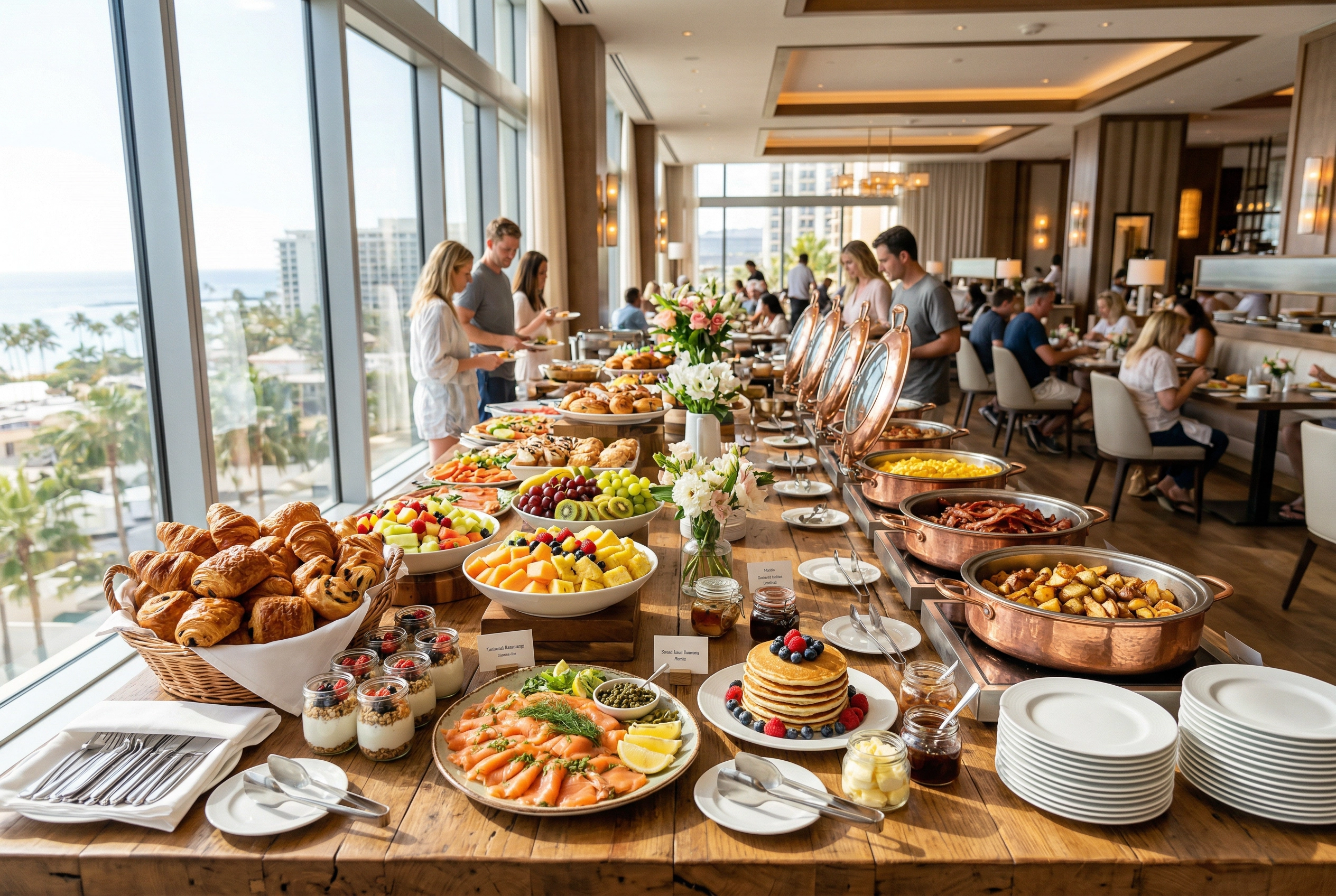 Lavish hotel breakfast buffet spread with pastries, fruit, and fresh dishes in sunlit restaurant
Breakfast is the single most searched hotel amenity on booking platforms. Travelers want to know: "Is breakfast included? What does it look like?"
Hotels that showcase abundant, beautifully photographed breakfast spreads on OTA listings gain a measurable booking advantage. The goal is to convey variety (fresh pastries, cooked stations, local specialties, healthy options) and freshness.
Photography tips for hotel breakfast displays: Use overhead flat-lay angles to capture the full buffet spread. Photograph individual hero items (a stack of fluffy pancakes, a fresh fruit platter) separately for social media close-ups. Morning natural light from restaurant windows is your best asset — time your shoot for the golden hour.
This is also prime social media content. A stunning breakfast flat-lay with the hotel's ocean view in the background is the kind of image guests repost — essentially free marketing for your property.
7. Seasonal Dining Events
Holiday brunches, wine pairing dinners, Valentine's Day prix fixe menus, summer seafood festivals — hotels run dozens of seasonal food events annually. Each one needs promotional photography, and the timeline is always tight.
You might have two weeks between finalizing a holiday menu and needing images for the email campaign, website banner, and social media ads. Booking a professional photographer with that turnaround — especially during peak season — often isn't feasible.
Seasonal events also multiply the volume problem. If your hotel already has 200 menu items across outlets, add four seasonal updates per year and you're looking at 300–400+ additional images annually.
The Unique Challenges of Hotel Food Photography
Hotels face hospitality food photography challenges that standalone restaurants simply don't encounter. Understanding these challenges is the first step to solving them.
Wildly Different Lighting Conditions
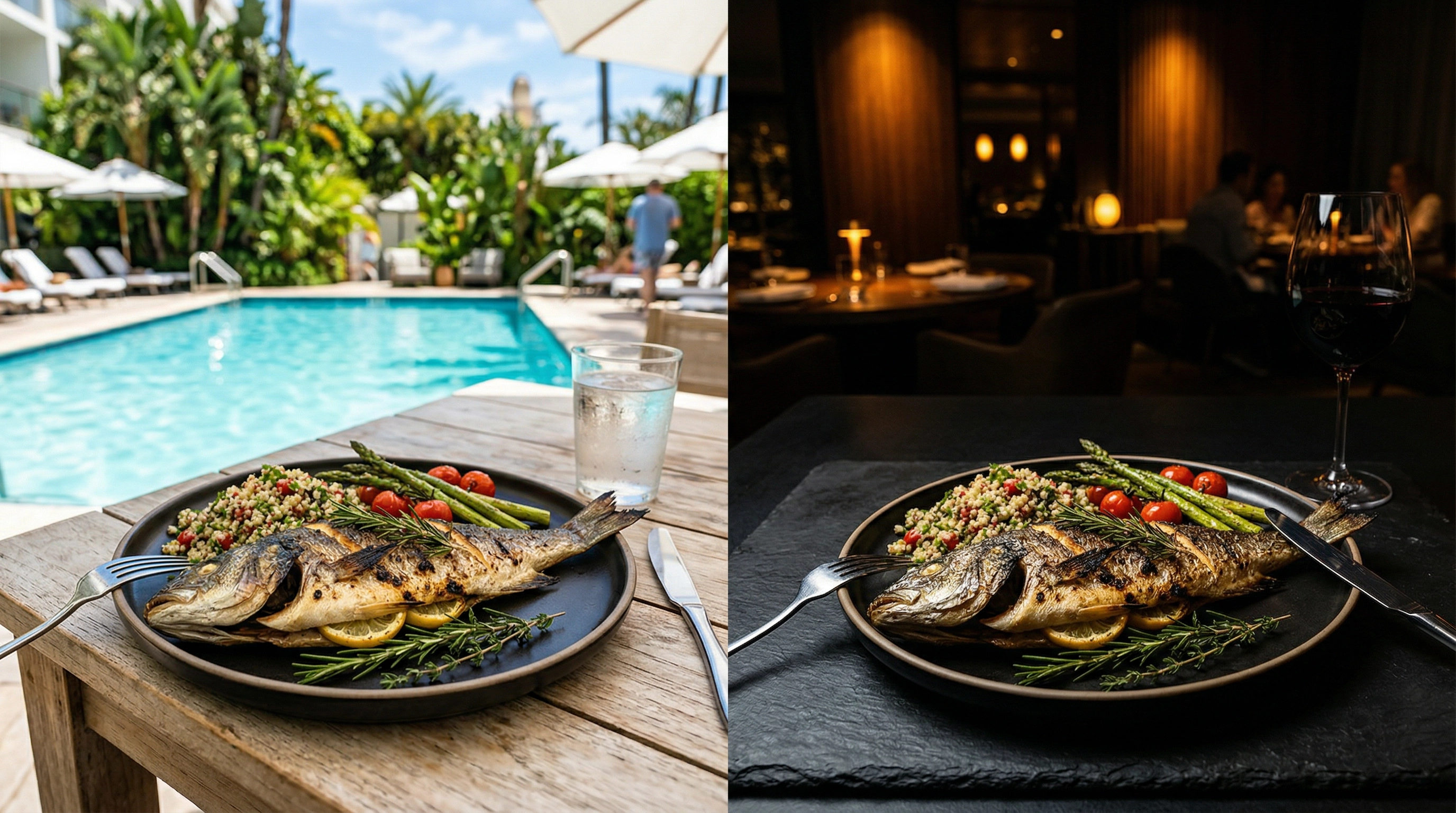 Split comparison of hotel food photography in bright outdoor poolside versus dark fine dining lighting
A hotel's dining outlets span every possible lighting scenario:
| Outlet | Lighting Challenge |
|---|---|
| Pool bar / beach dining | Harsh midday sun, deep shadows |
| Fine dining restaurant | Low ambient light, candlelight |
| Breakfast buffet | Mixed natural + overhead fluorescent |
| Banquet hall | Warm tungsten + cool LED overheads |
| Room service (guest rooms) | Inconsistent lamps, window light varies by floor |
| Lobby café | Large windows with shifting daylight |
A professional photographer adjusts for each setting — but that means different equipment setups, longer shoot days, and higher costs. And if your F&B team snaps photos with a phone, these lighting variations produce wildly inconsistent results across your property's food imagery.
Massive Menu Scale
Here's the math that makes hotel food photography expensive:
A mid-size hotel with 5 dining outlets averaging 40 menu items each has 200 dishes that need photography. A professional food photographer typically delivers 10–18 polished images per shoot day. At that pace, covering every dish takes 11–20 full shooting days.
At hotel photography rates of $1,500–$7,500 per day, you're looking at $16,500–$150,000 just for one complete menu cycle. Add a food stylist ($500–$1,500/day) and it escalates further.
Now multiply by seasonal menu changes, and you understand why many hotels simply don't photograph their full menus — leaving revenue on the table with text-only listings.
Brand Consistency Across Properties
For hotel chains and groups managing multiple properties, visual consistency is the hardest problem in hospitality food photography. Property A uses a local photographer in Miami who shoots bright and tropical. Property B uses someone in Chicago who prefers dark and moody. Property C has the F&B manager taking iPhone shots.
The result: your brand looks different at every location. A guest who chose your resort in Bali based on stunning food imagery arrives at your sister property in Dubai and encounters a jarring visual disconnect.
Enforcing photographic brand standards across 10, 50, or 100+ properties through traditional photography is a logistical and financial nightmare — one that most hotel groups struggle to solve.
Three Approaches to Hotel Food Photography (Compared)
There's no single right answer for every hotel. Here's an honest comparison of your three main options for producing food photography at hospitality scale.
| Factor | DIY (Staff Phone Photos) | Professional Photographer | AI-Powered (FoodShot AI) |
|---|---|---|---|
| Cost per image | $0 (staff time only) | $80–$200+ | ~$0.40–$1.00 |
| Quality | Inconsistent, often poor | Excellent (editorial-grade) | Professional, consistent |
| Speed | Instant | 2–4 weeks (booking + delivery) | Under 150 seconds |
| Brand consistency | Low | Medium (varies by photographer) | High (locked style templates) |
| Scalability | High volume, low quality | Low volume, high quality | High volume, high quality |
| Best for | Social stories, internal use | Hero shots, flagship launches | Full menu coverage, multi-property |
The reality: most hotels benefit from a hybrid approach. Use professional photography for hero shots and lifestyle imagery of your flagship restaurant. Use AI-powered enhancement for the other 90% — the full menu catalog, room service imagery, seasonal updates, and multi-property brand consistency.
DIY Staff Photography
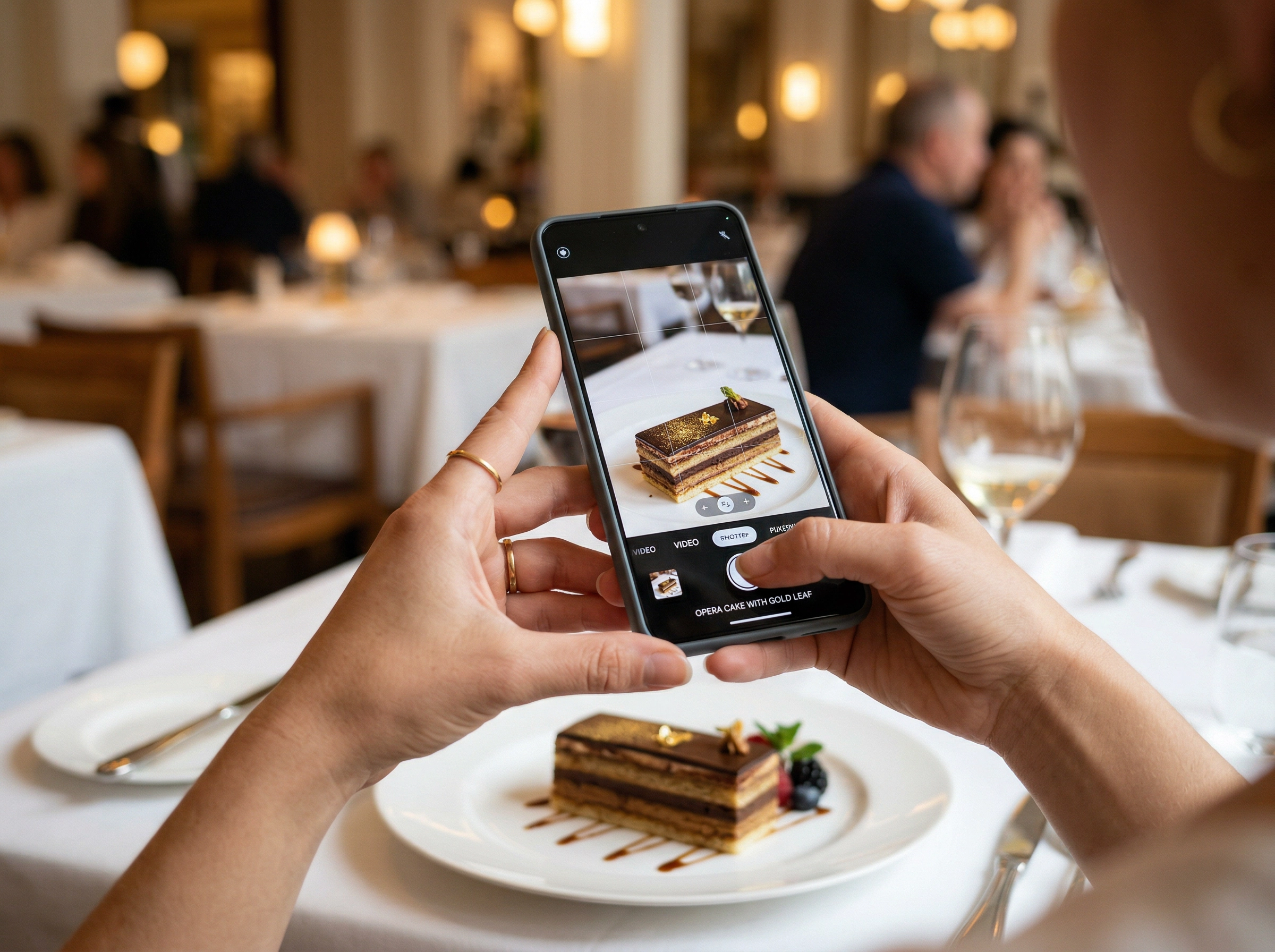 Hotel staff hands photographing plated dessert with smartphone in restaurant setting
Having your kitchen team snap photos with their phones works for Instagram Stories and internal communications. It doesn't work for OTA listings, printed menus, or brand-standard marketing materials.
That said, phone photography has improved dramatically. If your team follows basic principles — natural light, clean backgrounds, good food photography fundamentals — the raw photos become excellent starting material for AI enhancement. A quick phone snap in the kitchen is all you need to get started.
Professional Photography
For your property's hero imagery — the signature restaurant's tasting menu, the flagship cocktail, the grand ballroom's wedding setup — hiring a professional photographer remains the gold standard. A skilled commercial food photographer brings lighting expertise, styling skills, and creative direction that no tool can fully replace.
The limitation is purely economic: at $1,500–$7,500 per day producing 10–18 images, professional photography isn't viable for photographing 200+ menu items across multiple hotel outlets. For tips on planning your next professional shoot efficiently, see our menu photoshoot guide.
AI-Powered Food Photography
AI food photo tools fill the gap between DIY and professional photography — delivering consistent, menu-ready quality at scale.
The workflow is straightforward: your kitchen team plates the dish, snaps a photo with any smartphone, and uploads it to a tool like FoodShot AI. The AI handles background replacement, lighting correction, color grading, and professional styling — producing a studio-quality image in under 150 seconds.
This approach is ideal for hotels and resorts because it solves the three core challenges simultaneously: lighting inconsistency (the AI normalizes it), menu scale (hundreds of images at minimal cost), and brand consistency (style templates lock in your look across every property).
How Hotels Use FoodShot AI for Brand-Consistent Food Photography
FoodShot AI was built for exactly this type of multi-outlet, high-volume hotel food photography challenge. Here's how hotel F&B teams use it in practice:
My Styles — Lock In Your Brand Look
The My Styles feature lets you upload reference photos that define your property's visual identity. Take your best existing professional photos — the ones that perfectly represent your brand — and use them as style references. FoodShot then matches that exact aesthetic across every new dish your team photographs.
This is particularly powerful for hotel chains. Upload your corporate brand's reference style once, and every property produces food images with the same polished look — regardless of who took the phone photo or what the kitchen lighting looks like.
Builder Mode — Match Each Outlet's Aesthetic
A pool bar needs a different visual feel than a fine dining restaurant. Builder Mode lets you combine specific background surfaces, plate styles, and your food photo into cohesive compositions tailored to each outlet. Use a rustic wood surface for the Mediterranean grill. Switch to polished marble for the lobby patisserie. Tropical rattan for the beach bar.
Bulk Processing for Menu-Wide Updates
On the Scale plan ($99/month for 250 credits), hotel teams can process 5 images simultaneously — making full seasonal menu updates across outlets practical in a single afternoon rather than a week-long professional photography shoot.
The math: 250 images per month at $99 works out to roughly $0.40 per image. Compare that to $80–$200+ per image with a professional photographer, and the economics of AI-powered hotel food photography become compelling — especially for luxury properties managing 200+ dishes across multiple restaurants.
Enterprise API for Hotel Groups
Hotel chains operating dozens of properties can integrate FoodShot's Enterprise API directly into their content management workflows, allowing individual properties to generate brand-consistent food imagery that meets corporate visual standards without a centralized photography team.
Frequently Asked Questions
How much does hotel food photography cost?
Professional hotel food photography typically runs $1,500–$7,500 per shoot day, producing 10–18 finished images. With a food stylist, that's $2,000–$9,000 per day all-in. A full-property food photography project for a hotel with 5+ dining outlets can cost $16,500–$150,000+. AI alternatives like FoodShot AI reduce this to roughly $0.40–$1.00 per image. For a deeper look at restaurant photography pricing, see our detailed cost comparison.
Can hotel kitchen staff take food photos good enough for marketing?
Not directly for finished marketing materials — but staff-taken phone photos are the perfect starting material for AI enhancement. The key is basic food photography fundamentals: plate the dish on a clean surface, use natural light when possible, hold the camera steady. FoodShot AI handles the rest — correcting lighting, replacing backgrounds, and applying professional styling that matches your hotel's brand.
How many food photos does a typical hotel need?
A hotel with 5 dining outlets averaging 40 items each needs approximately 200 base images. Add seasonal variations (4 updates/year), room service, banquet packages, and promotional materials, and most hotels require 300–500+ food images annually. Multi-property hotel chains multiply this number per location.
What's the best camera angle for hotel food photography?
It depends on the dish. Flat-lays (90° overhead) work best for breakfast buffet spreads and multiple-dish layouts. A 45° angle suits most plated entrées because it shows both the top and the height of the dish. Eye-level shots work for layered items like burgers, stacked desserts, and tall cocktails. Our photography techniques guide covers each angle with visual examples.
How often should hotels update their food photography?
At minimum, every time the menu changes — typically quarterly for seasonal rotations. Hotels should also refresh food images for major promotional periods (holiday season, summer, wedding season) and whenever dishes are significantly re-plated or redesigned. Properties using AI food photography tools often update more frequently since the cost and time barriers are essentially eliminated.