6 Types of Restaurant Loyalty Programs and What Each Costs
 Ali Tanis20 min read
Restaurant loyalty programs come in six shapes: punch card, points, visit-based, tiered, paid membership and app-based. The right one for you depends less on what Starbucks does and more on how often your regulars come in and how much each visit is worth. Software runs from $0 for a paper stamp card to about $500 a month for a branded ordering app with rewards built in.
Below is one table that puts all six side by side: the restaurant format each fits, the monthly software cost (checked in October 2026), the setup effort and a real restaurant running it. After that comes the reward-cost math most guides skip. And then the part software comparisons ignore: a reward only pulls customers back if it looks worth earning, which is why your restaurant food photos matter as much as the points engine.
Quick Summary: Cafes, bakeries and food trucks should start with a punch card ($0 to $95 a month). Fast casual and pizza spots fit a points or visit-based program in their POS ($49 per location on Square Plus). Save tiers, paid memberships and branded apps for when you have the visit data and direct-order volume to pay for them. Price every reward at food cost, not menu price: a "buy 9, get the 10th free" latte costs a typical cafe about 3% of what that regular spends, not 10%.
The 6 Restaurant Loyalty Program Types at a Glance
The six types of loyalty programs differ in what earns the reward: a purchase (punch card), a dollar (points), a qualifying visit (visit-based), a year of spending (tiered), a monthly fee (paid membership) or an order in your own app (app-based). Cost and setup effort rise roughly in that order. Most independents should start near the top of this table.
| Type | How customers earn | Best-fit format | Typical monthly software cost | Setup effort | Real example |
|---|---|---|---|---|---|
| Punch card | One stamp per qualifying purchase; full card = free item | Coffee shops, bakeries, juice bars, food trucks | $0 on paper; $25 to $95 for Apple/Google Wallet stamp cards (Loopy Loyalty) | Low: an afternoon | Caffè Nero: 9 stamps = a free hot drink |
| Points | Points per dollar, redeemed at set thresholds | Fast casual, QSR, takeout with mixed ticket sizes | $49 per location in Square Plus; Toast is quote-only, commonly reported near $185 for its marketing bundle | Low to medium: 1 to 2 days with staff training | Chipotle Rewards: 10 points per $1 |
| Visit-based | One credit per visit above a minimum purchase | Pizzerias, delis, lunch counters with steady tickets | Same POS tools as points ($49 per location on Square Plus) | Low: about a day | Domino's Rewards: 10 points per $5+ order, rewards at 20, 40 and 60 |
| Tiered | Status levels unlock faster earning and perks | Multi-unit restaurant groups with high visit frequency | Custom quotes from Thanx, Paytronix or PAR Punchh | High: weeks to months (Thanx cites an 87-day average launch) | Starbucks Rewards: Green, Gold (500 Stars), Reserve (2,500 Stars) since March 2026 |
| Paid membership | Customer pays a monthly fee for a recurring perk | Drink-led cafes, breweries with mug clubs | $0 for Square Subscriptions plus card fees; $90 per location for Subport | Medium: 1 to 2 weeks of pricing math and rules | Panera Sip Club: $14.99 a month, capped at 30 drinks per billing cycle |
| App-based | Rewards live inside your own ordering app | Restaurants with real direct online-order volume | About $229 to $409 (ChowNow annual plans); $249 + 5% per order or $499 flat (Owner.com) | High: several weeks, including app store review | MyMcDonald's Rewards: 100 points per $1 in the app |
Prices are list prices we checked in October 2026. The sources are named in each section below. Setup effort is our estimate of the work involved, not a vendor promise. Most POS loyalty tools can run more than one mechanic: Square Loyalty lets customers earn per visit, per dollar, per item or per category, and Toast Loyalty lets you choose dollars or visits.
Why bother at all? The National Restaurant Association reports that 78% of consumers are more likely to visit a restaurant where they can earn points, even when it's less convenient. It also found that 67% of restaurants already run a program. In Restaurant365's 2026 mid-year operator survey, loyalty programs ranked second only to Google reviews and search as the channel driving the most customer traffic (19% of operators named it). Competition for customer loyalty is real, though. Deloitte's restaurant loyalty research found that 67% of members belong to two or more programs, so yours is fighting for a slot in a crowded wallet.
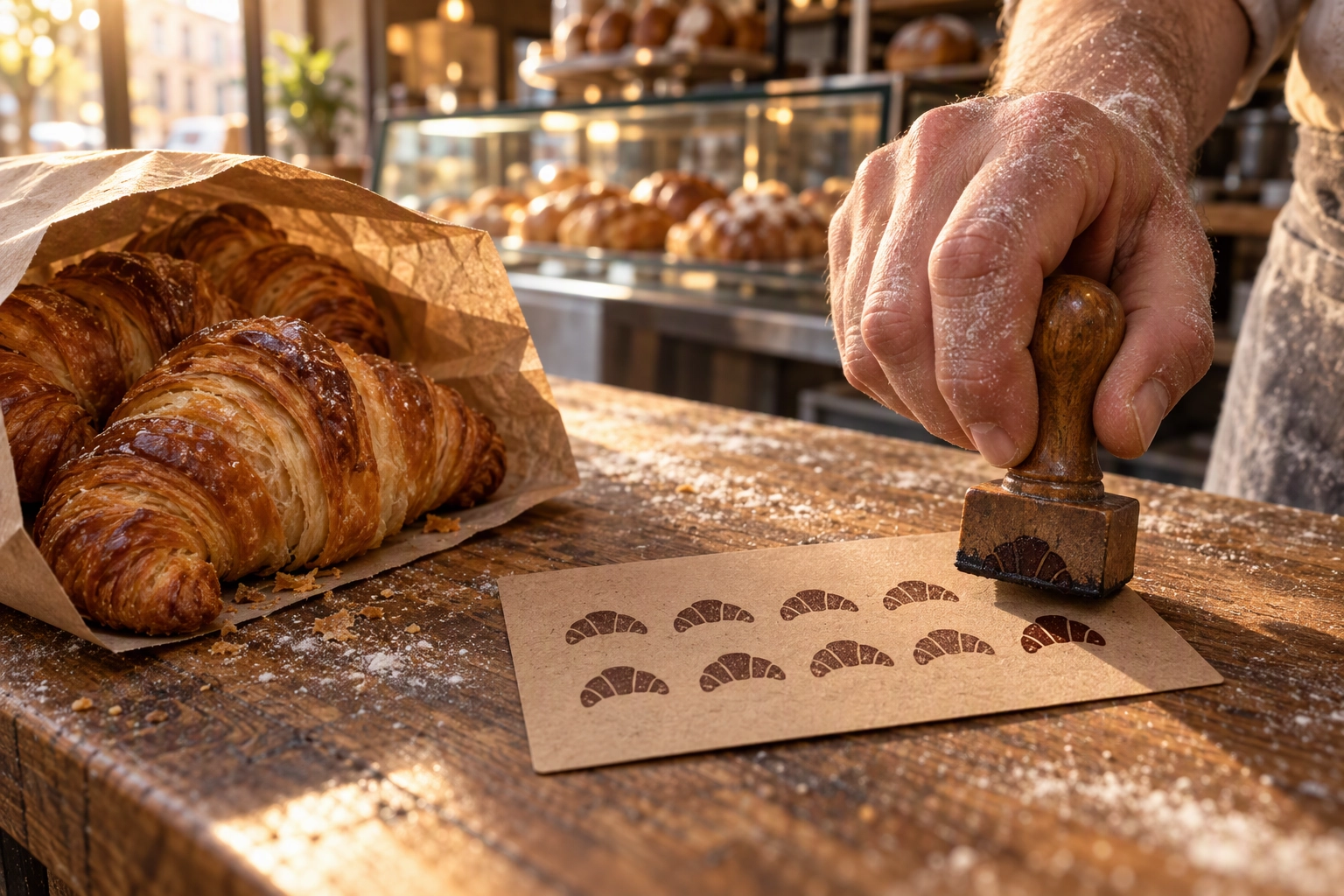 Baker pressing a croissant-shaped stamp onto a kraft punch card, the simplest restaurant loyalty program for bakeries
Punch Cards: The Cheapest Way to Start
A punch card gives one stamp per qualifying purchase and a free item when the card is full. It's the cheapest restaurant rewards program to launch: a box of printed cards or a $25-a-month digital wallet card. It fits businesses where most tickets look alike, like one coffee, one pastry or one smoothie.
Caffè Nero runs the classic version. Customers receive a stamp for each barista-made drink on a paper card or in the app, and 9 stamps get them a free hot drink. Stamps never expire, and the full-card reward stays valid for 18 months. It's simple enough that nobody needs it explained twice.
Paper costs nothing in software, but you learn nothing about who's coming back, and a stamp is easy to fake. Digital wallet stamp cards fix both. Loopy Loyalty charges $25 a month for one card design and one location, $69 for its Growth plan and $95 for Ultimate. The card lives in Apple Wallet or Google Wallet, so customers never download an app. It also runs without any POS system, which matters for food trucks and market stalls.
The weakness is that a punch card treats a $4 coffee and a $40 catering box the same way. Bakeries can fix that with item-based stamps, such as one stamp per sourdough loaf or per dozen, instead of one per receipt. And put the reward on the card itself. A stamp card that shows the drink customers are working toward, using the same cafe menu photos you run on your board, makes the reward's value feel concrete by the tenth visit. Our coffee shop marketing calendar covers the traffic side; the card is the retention side.
Points Programs: Best When Ticket Sizes Vary
A points program gives points per dollar spent and lets customers redeem them at set thresholds, so a $60 family order counts for more than a $9 lunch. It suits fast casual and quick-service restaurants with mixed ticket sizes. It's also the default setting in most POS loyalty tools.
Chipotle Rewards is the textbook case: 10 points for every $1, redeemable for free food, relaunched in April 2026 as "Rewards on Repeat." Chick-fil-A uses the same 10-per-dollar base, and its first rewards start at 200 points, about $20 of purchases.
Costs for an independent are modest if you already run the right POS system. Square bundles Square Loyalty into Square Plus at $49 per location per month, alongside unlimited email campaigns and 500 free texts. Three locations come to $147. Toast doesn't sell loyalty on its own. It's quote-based and commonly reported at around $185 a month as part of a marketing bundle with gift cards and email.
The design rule that matters most: put the first reward close. People speed up as they near a goal, which is why the ninth stamp feels urgent and the second one doesn't. Build a ladder, with a side or drink early, an entrée in the middle and a meal for two at the top. If you're weighing POS-bundled loyalty against standalone email and SMS tools, our restaurant marketing software comparison has the shortlist.
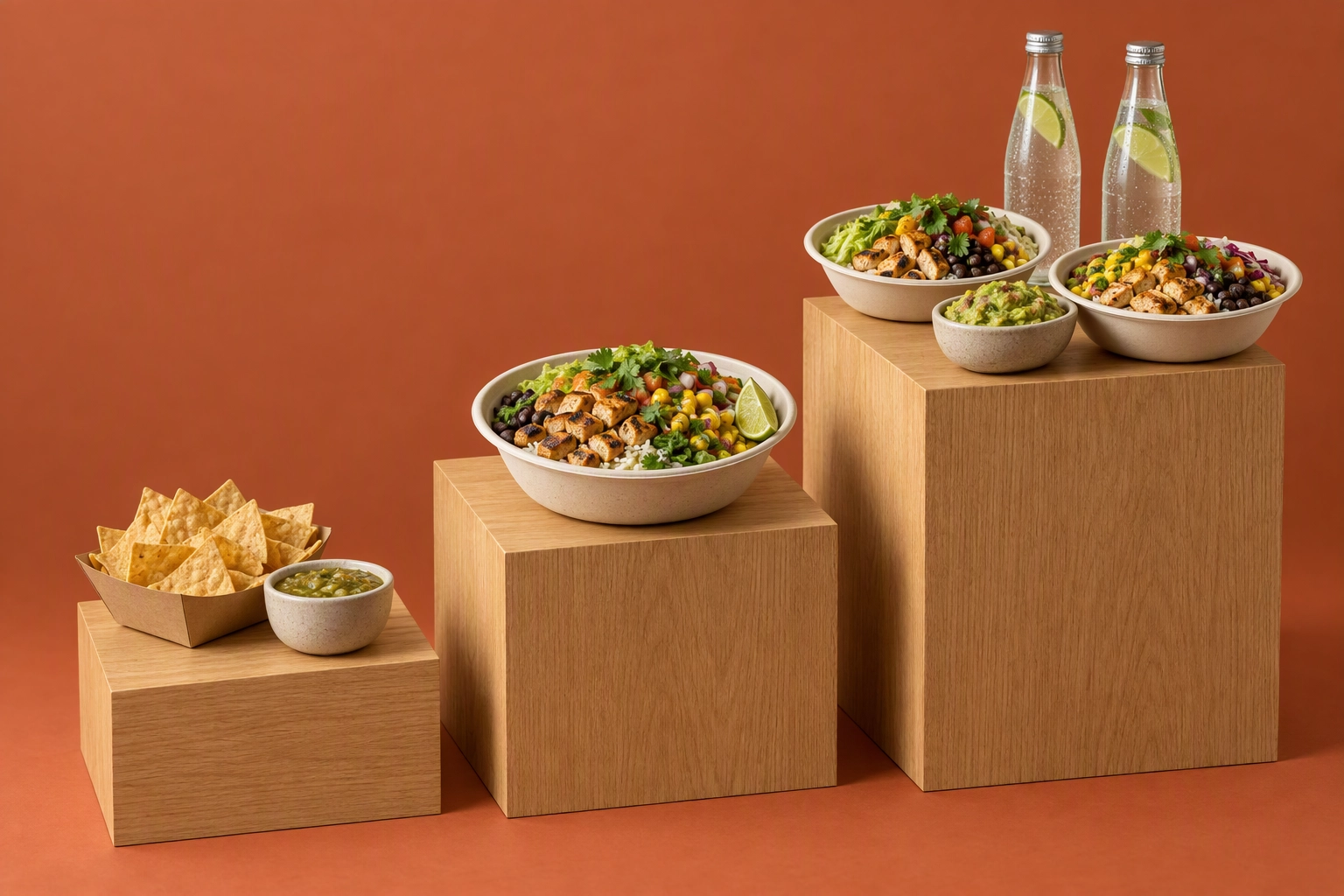 Points program reward ladder: chips and salsa, a burrito bowl and a meal for two on rising oak blocks
Visit-Based Rewards: Built for Pizza and Lunch Regulars
A visit-based program counts qualifying visits, not dollars: every order above a minimum purchase gets the same credit. It works when tickets are fairly steady, like at a pizzeria, deli or lunch counter. It's also easy for customers to track, because the math is just "how many times have I been in?"
Domino's is the best-known example. Since its September 2023 overhaul, Domino's Rewards gives 10 points on every order of $5 or more, with one qualifying order per day. Customers redeem 20 for a dip or drink, 40 for bread and 60 for a medium two-topping pizza. Two orders unlock the first reward.
The minimum purchase is what protects your margin. Without it, a customer can split one order into three and collect three credits. Square sets this up as a "visit" program with an optional minimum, so the cost is the same $49 per location on Square Plus.
The downside is the mirror image of points: a $300 catering order gets the same credit as a single slice. Pair a visit program with a separate catering or group-order perk so your biggest tickets don't feel ignored.
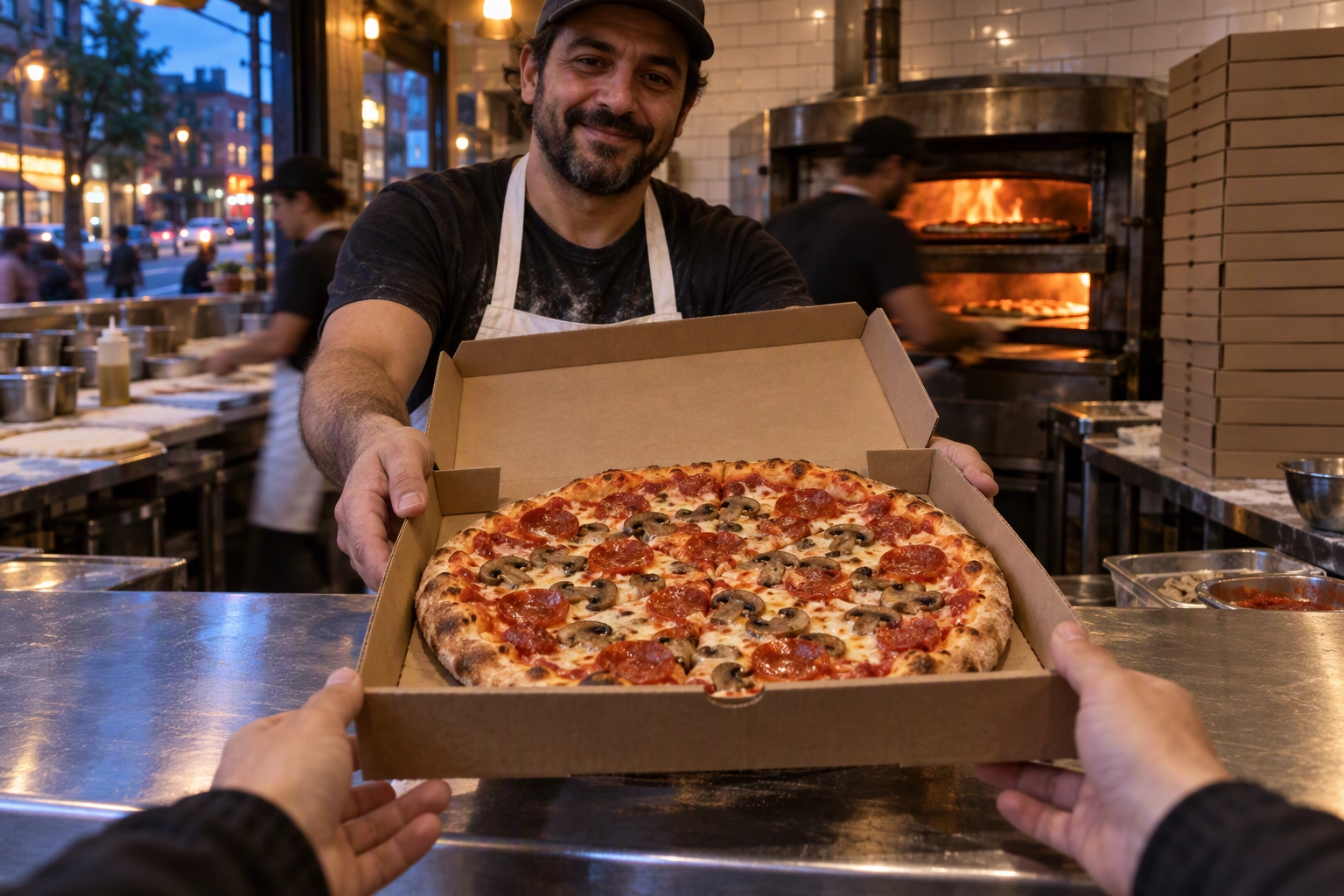 Pizza maker handing a regular a free medium pizza, the payoff of a visit-based restaurant loyalty program
Tiered Programs: Worth It Only With Frequency Data
A tiered program sorts members into status levels based on a year of activity, and higher levels unlock faster earning or exclusive offers. It's built to reward your most frequent customers. It pays off for brands with high visit frequency and enough data to set thresholds people can actually reach.
Starbucks relaunched its program on March 10, 2026 with three levels: Green, Gold (500 Stars in a year) and Reserve (2,500 Stars once at Gold). Each level gets faster Star collection and perks like Stars that don't expire. At launch, Starbucks placed its top 5% of 2025 members at Reserve and the next 20% at Gold, so the thresholds came from real purchase data. Chick-fil-A One runs four tiers: Member, Silver at 1,000 points, Red at 4,000 and Signature at 10,000, with 10, 11, 12 and 13 points per dollar.
Tiers also carry the biggest risk to customer loyalty when they change. Points-and-miles writers worked out that the Starbucks relaunch cut the top rate for Green members by about 25% against the old structure. That's what people talked about, not the new perks.
Most small-business POS tools don't do true tiers. A real tiered program usually means an enterprise platform such as Thanx, Paytronix or PAR Punchh, all priced by custom quote per location; Thanx says its launches average 87 days from contract to go-live. An independent can get most of the effect without software. Keep a regulars list and give the top names recognition: a held table, a first taste of new dishes or a seat at one of your restaurant events before tickets go public. The Capital Grille's Concierge program, which the National Restaurant Association highlights, works this way, with priority reservations and exclusive invitations to wine tastings instead of discounts. That's an experience regulars can't get anywhere else.
 Maitre d greeting regular diners at a steakhouse host stand, the recognition perk behind a tiered loyalty program
Paid Memberships: Cash Up Front, Cost Per Visit Later
A paid membership charges customers a monthly fee for a recurring perk, usually a daily drink or a standing discount. You collect revenue before anyone orders, but you carry the cost of every redemption. It only works on items that cost little per serving and on customers who visit often.
Panera's Sip Club is the model everyone copies. It launched in April 2022 at $10.99 a month and now costs $14.99 a month or $119.99 a year. From August 19, 2026, Panera caps it at 30 drink redemptions per billing cycle. That cap tells you the economics: an "unlimited" member who pours twice a day can cost more than the fee.
Smaller versions work too: a brewery mug club with an annual fee and a bigger pour, or a cafe "daily drip pass" for one coffee a day. The software is cheap. Square Subscriptions lets you create recurring plans in the Square Dashboard at no monthly cost (card fees still apply), but you'll track redemptions by hand. Subport, at $90 per location per month, adds a branded app on top of Square that enforces rules like one drink every two hours.
Write three rules before you launch: which items are included (drip, not lattes), how often subscribers can redeem, and how cancellation works. Then price the fee off food cost, using the same logic as our menu pricing formulas. The cost section below walks through the numbers.
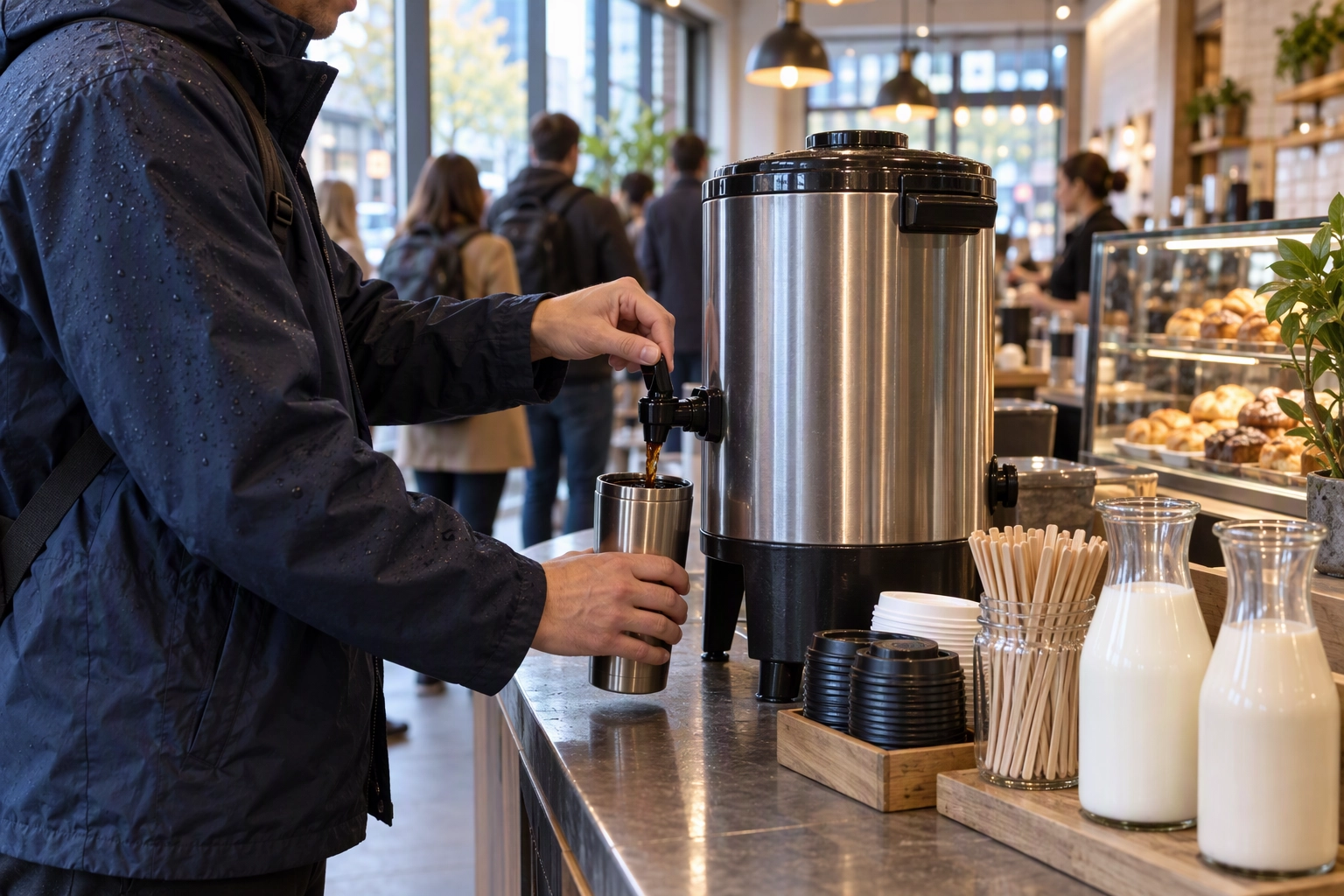 Commuter refilling a travel tumbler at a self-serve drip coffee station, the daily perk of a paid coffee membership
App-Based Loyalty: When Direct Online Orders Matter
App-based loyalty puts rewards inside your own ordering app, so every reward happens on a channel you own, with no marketplace commission. It's the most expensive option for an independent business. It only pays back when a meaningful share of online orders already comes to you directly.
McDonald's shows the logic at scale. MyMcDonald's Rewards gives 100 points per $1 in the McDonald's app, rewards start at 1,500 points, and they can't be redeemed on DoorDash or Uber Eats orders. The program exists to pull customers into the app.
For independents, ChowNow's plans with an app, loyalty and email run about $229 to $409 a month on annual billing, per G2's 2026 listing. Owner.com lists $249 a month plus a 5% per-order fee, or $499 a month flat with a 5% fee charged to diners instead.
Run the break-even before you sign. Delivery marketplace commissions can reach 30% per order; our breakdown of DoorDash fees shows the plans. On a $30 average order at a 25% commission, every order you move to your own app saves $7.50. A $300-a-month app needs about 40 shifted orders a month just to break even. If you're nowhere near that, a points program in your POS does the loyalty job for a sixth of the price. Work through our guide to growing direct delivery sales first.
Which Loyalty Program Fits Your Restaurant Format?
Match the program to visit frequency and ticket spread. Daily visits with similar tickets point to punch cards or paid memberships. Weekly visits with mixed tickets point to points. Steady delivery orders point to visit-based or app-based, and fine dining calls for recognition, not discounts.
| Your format | Start with | Why it fits | Skip for now |
|---|---|---|---|
| Coffee shop or cafe | Digital punch card, then a paid drink club | Daily visits, similar tickets | Tiers |
| Bakery or pastry shop | Item-based stamps on the product you want to push | Rewards the loaf or the dozen, not every $3 cookie | Your own app |
| Food truck | Apple/Google Wallet stamp card from a QR code at the window | No POS lock-in, works wherever you park | Paid membership |
| Pizzeria | Visit-based with a minimum purchase | Steady tickets, high repeat rate | Paper cards (easy to fake) |
| Fast casual or QSR | Points through your POS | Tickets range from solo lunch to family order | Paid membership, unless drinks sell all day |
| Casual full-service | Points plus birthday and occasion offers | Fewer, bigger visits | Punch cards |
| Fine dining | Recognition: priority reservations, chef's table invites | Discounts cheapen the experience | Points per dollar |
| Bar or brewery | Mug club (paid) or visit-based | Regulars come for the room as much as the drinks | Your own app |
| 10+ locations | Tiered or app-based on an enterprise platform | Enough data and volume to tune tiers | Paper anything |
Food trucks have it easiest. A wallet card needs nothing but a QR code taped to the window, and it slots neatly into the rest of our food truck marketing ideas.
What Do Restaurant Loyalty Programs Really Cost?
The real cost of a loyalty program is software, plus the food cost of every reward, plus a little staff time at the register. Value rewards at what they cost you to make, not at menu price. A free $5 latte costs a cafe the espresso, milk and cup, which is closer to $1.25 than $5.
Here's the same math across three programs. The food-cost figures are our assumptions for illustration. Plug in your own numbers from a food cost calculator, or borrow the per-item food cost percentages in our cafe menu ideas list.
| Program | Rule | Reward at list price | Reward at food cost | Share of the regular's spend |
|---|---|---|---|---|
| Punch card (cafe) | 9 paid lattes at $5, the 10th free | $5, or 10% of $50 in drinks | $1.25 | 2.8% of $45 paid |
| Points (fast casual) | 10 points per $1; a $12 bowl at 1,200 points | $12, or 10% of $120 | $3.60 at 30% food cost | 3.0% of $120 |
| Paid membership (cafe) | $15 a month; member pours 20 drip coffees | $60 of coffee at $3 each | $8 at $0.40 a cup | Club keeps $7 before any add-on purchase |
Now scale the punch card up. A cafe where 120 cards fill each month has sold 1,080 paid lattes, or $5,400. The free drinks cost about $150 at food cost, plus $25 for a Loopy Starter plan. That's $175 a month, roughly 3% of the revenue those regulars brought in. The 10% "discount" exists only on the board.
Two ways to make the math better. Pick reward items with high margin and high appeal, the "stars" of menu engineering, or a new item you want people to try. And keep loyalty in context: it's one of the cheaper levers in our list of 25 cost-ranked ways to increase restaurant sales, because it works on customers you've already paid to acquire.
Make the Reward Look Worth Earning
A reward only pulls customers back if they can picture it. Every surface where people check progress should show the actual reward item, photographed well, not clip art or a line of text. That means the wallet pass, the app reward tile, the "two stamps to go" email and the counter card.
Those surfaces have real specs. Apple's Wallet developer guide sets the strip image behind a store card's main fields at 375 × 123 points, which is 1125 × 369 pixels on a 3x iPhone screen. That's a wide, shallow crop where one plated item reads best and a busy table spread turns to mush. A counter card is the opposite problem. A 2048-pixel image printed at 300 dpi covers about 6.8 inches, enough for a 4 × 6 card or a table tent.
This is where FoodShot fits. Snap the reward item on your phone, choose one of 200+ styles, and you receive a 2K, menu-ready photo in about 2 minutes. Use the same style on the wallet pass, the app tile, the email and the counter card, so the reward looks like one product everywhere. Poster Mode adds marketing-ready layouts to create the print version. The Starter plan is $15 a month for 25 photos (see FoodShot pricing). It's the same reason photo menus outsell text-only ones: people order what they can see.
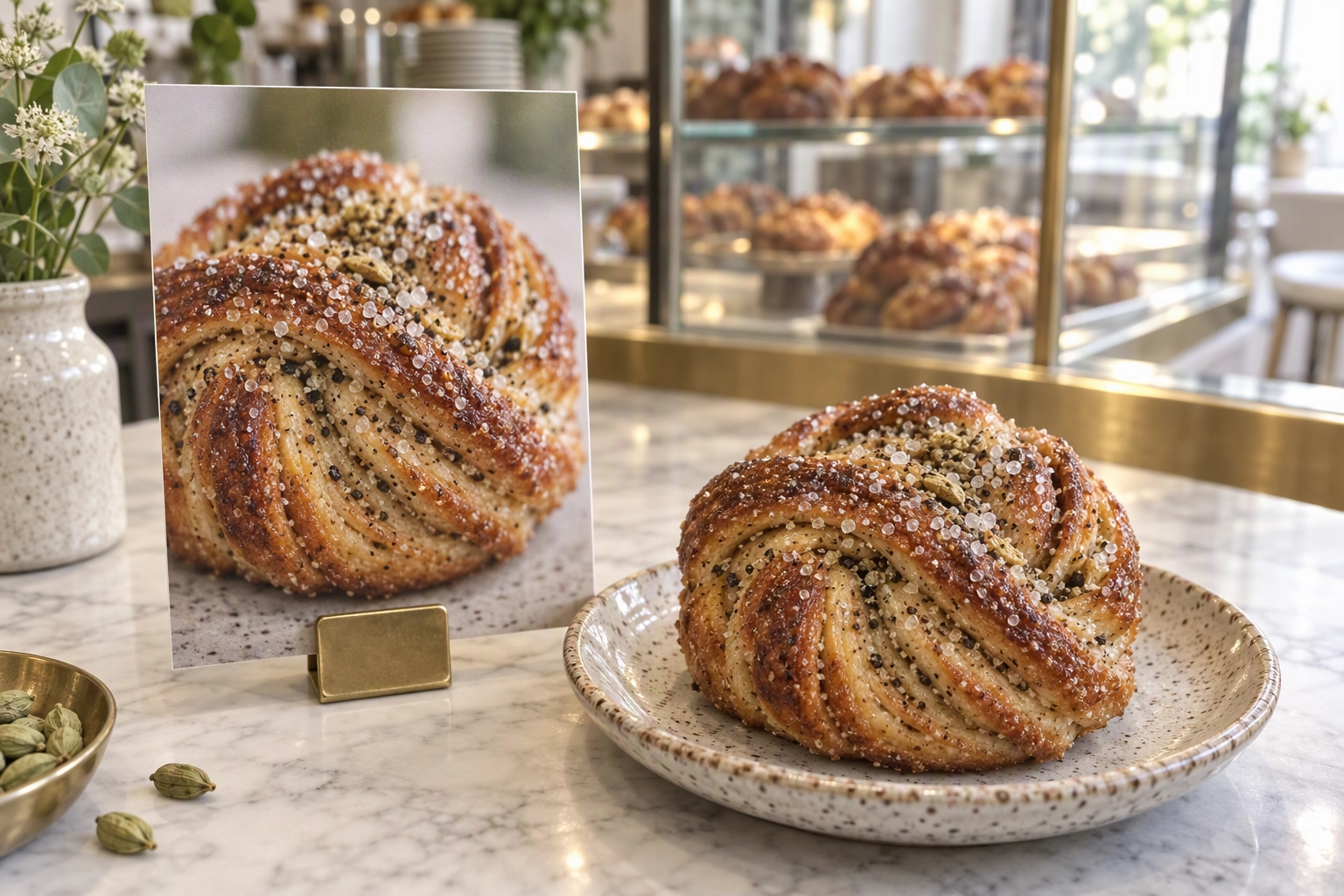 Counter card printed with a cardamom bun photo beside the real bun, a reward photo that makes a loyalty reward worth earning
4 Mistakes That Sink Restaurant Loyalty Programs
Most failed restaurant loyalty programs don't fail on software. They fail on four design and habit mistakes that quietly drain customer loyalty, and each one is cheap to fix.
- The first reward is too far away. If a regular needs 15 visits before anything happens, most stop counting. Domino's first reward comes after two orders, and Chick-fil-A's starts around $20 of purchases.
- Nobody asks at the register. Enrollment lives or dies at the counter. Give staff one line, "Want today's visit to count toward a free cinnamon bun?", and track sign-ups per shift.
- Set and forget. One owner on r/restaurantowners put it bluntly: a loyalty program "goes beyond the typical set & forget." Check redemption rates monthly, and run bonus-earning days on slow shifts; both Square and Toast support bonus offers. Our restaurant promotions list has slow-night ideas that pair well.
- Changing the rules quietly. Starbucks' 2026 changes drew loud criticism, while Panera announced its 30-drink cap months ahead. Give notice, honor what customers have already banked, and lead with the new value they get.
Frequently Asked Questions
Are restaurant loyalty programs worth it for a small restaurant?
Usually, if you start cheap. A $25-a-month digital stamp card at a cafe pays for itself once it brings back about seven extra $5 lattes a month, assuming a $1.25 drink cost. The National Restaurant Association's finding that 78% of consumers favor restaurants where they can collect points is the demand side. Your job is to keep the reward cost near 3% of what regulars buy.
What is the cheapest restaurant loyalty program?
A paper punch card, where you pay only for printing. The cheapest digital option is a wallet stamp card, from $25 a month with Loopy Loyalty, with no POS system required. If you already pay for Square Plus ($49 per location), its rewards program is included at no extra cost.
How much should a loyalty reward be worth?
Aim for about 5% to 10% back at list price. "Buy 9, get the 10th free" is 10%, and so is a $12 bowl for 1,200 points at 10 per dollar. At a 25% to 30% food cost, that's roughly 1.5% to 3% of what the customer buys. That's why a generous-looking reward can still be cheap.
Can I run a loyalty program without a POS system?
Yes. Paper punch cards and Apple or Google Wallet stamp cards don't need a POS integration; staff stamp with a scanner app on any phone. That's why they suit food trucks, pop-ups and market stalls.
How do I get customers to sign up for a rewards program?
Ask at payment, every time, and give new customers something on day one, such as a sign-up bonus they can use on the next visit. Put a QR code on the counter card, receipts and takeout bags. Show the reward item's photo wherever you ask, because customers sign up for a cinnamon bun, not for "points."
Loyalty keeps the customers you already have. For getting new ones through the door, start with our 50 restaurant marketing ideas. If you sell gift cards, these gift card promotions feed new customers straight into your program.