Restaurant Social Media Strategy: A 2026 Step-by-Step Plan
 Ali Tanis17 min read
Most restaurants post on social media without a plan — and it shows. Building a restaurant social media strategy is the single most important digital marketing step you can take in 2026, yet most restaurant owners skip straight to posting and hope engagement follows.
That's a costly mistake. According to Deloitte Digital's 2025 State of Social research, restaurants with a deliberate social media strategy saw a 9.9% average revenue increase from social channels. Social-first brands — those that treated social as a key business function — saw a 14.1% lift.
This guide walks you through the seven steps to build a restaurant social media strategy from scratch: audit, goals, platform selection, content pillars, weekly calendar, visual standards, and metrics. Whether you're a single-location cafe or a growing multi-unit hospitality brand, this is the framework.
Quick Summary: A winning restaurant social media strategy starts with an honest audit, sets revenue-tied goals (not vanity metrics), picks 1–2 key platforms, splits content into four pillars (food photography 40%, behind-the-scenes 25%, community/UGC 20%, promotions 15%), builds a repeatable weekly calendar, locks in visual standards for brand recognition, and tracks metrics monthly. Follow the seven steps below to build yours.
Want the broader picture? Our complete guide to social media marketing for restaurants covers platform deep-dives, hashtag tactics, influencer partnerships, and paid ads. This article focuses specifically on building the strategic framework.
Step 1: Audit Your Current Social Media Presence
You can't build a social media strategy for restaurants without knowing where you stand now. Before creating anything new, spend 30 minutes documenting your current digital presence.
The 15-Minute Profile Audit
Run through this checklist for every active social account:
- Profile completeness: Name, bio, hours, address, website link, menu link, contact info — all current?
- Visual consistency: Do your last 12 posts look like they came from the same restaurant brand?
- Follower growth: Gaining or losing followers month-over-month?
- Engagement rate: Total engagements (likes + comments + shares + saves) ÷ followers × 100. Instagram benchmarks for restaurants sit around 1.5–3%. TikTok averages 2.5–6.2%.
- Response time: How fast do you reply to comments and DMs? Industry data shows 73% of consumers will choose a competitor if a restaurant doesn't respond promptly on social media.
Competitor Check
Pick three direct competitors (similar cuisine, neighborhood, price range) and three aspirational brands whose digital marketing you admire. For each, note:
- Which platforms they're active on and their follower counts
- How often they post
- What content types earn the most engagement
- Which local food influencers or creators they work with
- What they do that you currently don't
Need inspiration for what great restaurant social media looks like? Our roundup of best restaurant social media campaigns breaks down what top hospitality brands are doing right now.
Audience Snapshot
Pull demographics from your Instagram Insights or TikTok analytics:
- Age split: Which group dominates? 67% of Gen Z consumers use social media for restaurant decisions — but your actual audience may skew older.
- Location: Are most followers local (potential customers) or distant food enthusiasts?
- Active hours: When are people actually online?
Write this all down. You'll reference it in every step that follows.
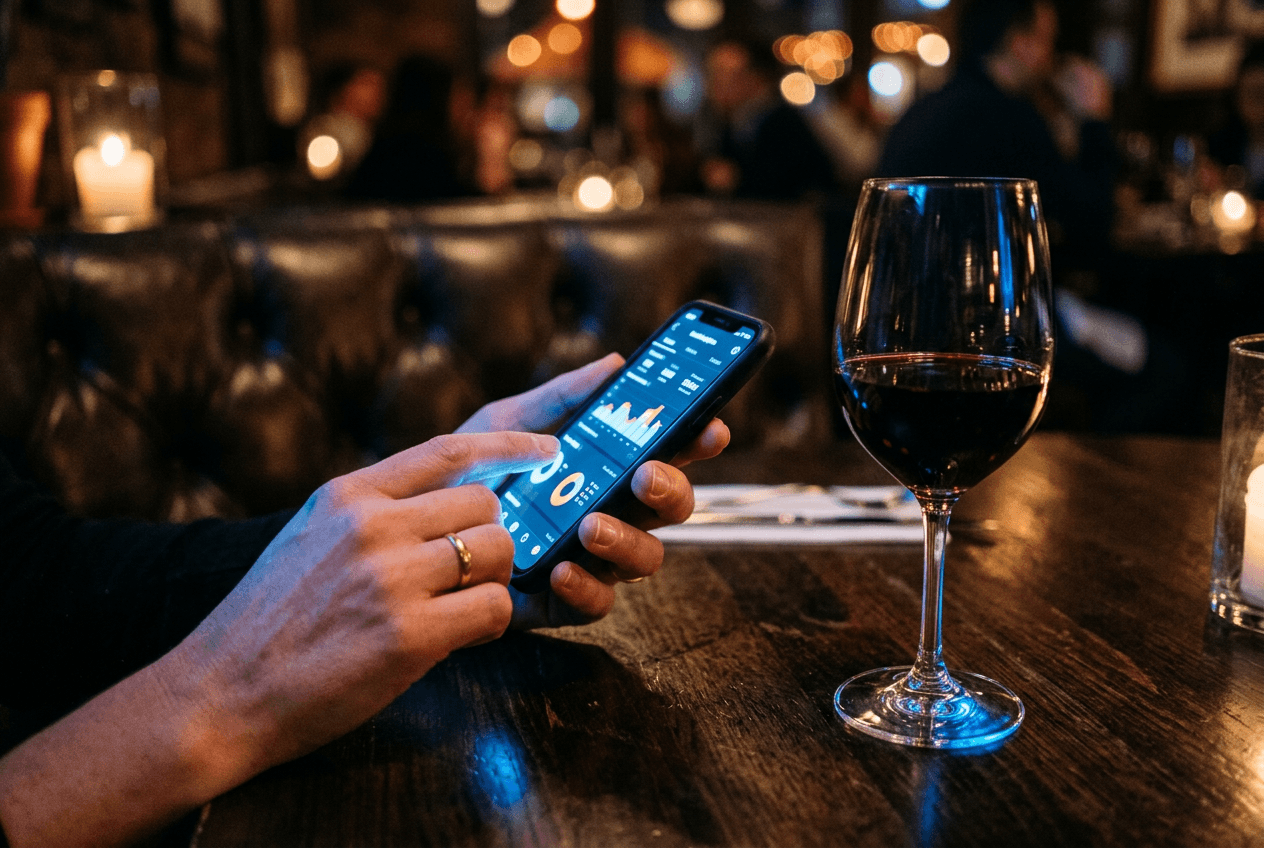 Restaurant owner reviewing social media analytics on smartphone in dimly lit booth during social media audit
Step 2: Set Goals That Actually Drive Revenue
Here's where most restaurant marketing efforts go wrong: owners set goals around followers and likes. Those are vanity metrics. They feel good but don't help your business grow.
Tie every social media goal to a business outcome instead.
Vanity Metrics vs. Revenue-Tied KPIs
| Vanity Metric | Revenue-Tied Alternative |
|---|---|
| Follower count | Website clicks from social → reservation conversions |
| Post likes | DM inquiries about catering, events, or reservations |
| Impressions | Delivery orders from social promo codes |
| Video views | In-store mentions ("I saw you on Instagram") |
| Comments | Tagged UGC posts (free marketing from real customers) |
SMART Goal Examples for Restaurants
Every goal should be Specific, Measurable, Achievable, Relevant, and Time-bound:
- "Increase Instagram-driven website visits by 25% within 90 days."
- "Generate 15 delivery order promo code redemptions per month from social posts."
- "Grow tagged UGC posts to 30 per month by launching a branded hashtag campaign in Q2."
- "Book 10 catering inquiries via Instagram DMs per quarter."
If a key metric doesn't eventually lead to a reservation, a delivery order, or a repeat visit, it's nice-to-know — not need-to-track. Deloitte's research found that 90% of restaurants now consider social media very or extremely important to their overall digital marketing strategy. Your goals should reflect that importance with measurable business outcomes.
Step 3: Choose Your Platforms Strategically
You don't need to be everywhere. You need to be excellent where your customers actually spend time.
Hospitality industry data shows 99% of full-service restaurants already have a social media presence. The question isn't whether to be on social media — it's which platforms deserve your team's focused energy and marketing budget.
Platform Selection Matrix
| Platform | Best For | Content That Works | Restaurant Type Match |
|---|---|---|---|
| Visual branding, local discovery | Reels, Stories, food photos, carousels | All restaurants — fine dining, cafes, bakeries | |
| TikTok | Viral reach, younger audiences | Short-form video, trends, BTS | Fast-casual, unique concepts, bars, food trucks |
| Local community, events, older demographics | Events, promotions, reviews, longer posts | Family restaurants, neighborhood spots, chains | |
| Google Business | Local search, SEO, reservations | Photos, updates, reviews, Q&A | Every restaurant (non-negotiable) |
| Long-term discovery, food inspiration | Vertical food photos, infographics | Bakeries, cafes, specialty food businesses |
The One-Platform-First Rule
Pick one primary platform and become excellent at it before spreading thin. You'll get more growth being outstanding on one platform than mediocre on four.
For most restaurants in 2026, that primary platform is Instagram:
- Instagram posts have been indexed by Google since mid-2025, so your food photos now double as SEO content
- Reels average around 2.2% engagement — higher than static posts
- 74% of consumers use social media to decide where to eat, and Instagram is the key visual discovery platform for food
Want to maximize your Instagram specifically? Our Instagram food photography guide covers hashtags, editing, and what actually performs.
Your secondary platform should fill a gap. Need video virality and access to younger people? Add TikTok. Need local community engagement for your neighborhood spot? Add Facebook. Running a bakery wanting long-tail digital discovery? Consider Pinterest.
A note on influencers and creators: Whichever platforms you choose, pay attention to which food creators and influencers are active there. Deloitte found consumers follow an average of 13 creators versus just 7 brands — so collaborating with local food influencers can dramatically extend your reach. Our social media marketing guide covers influencer partnerships in depth.
 Organized mise en place ingredient bowls in grid pattern representing structured social media platform strategy for restaurants
Step 4: Define Your Content Pillars
Content pillars are the categories every post falls into. They prevent the daily "what should I post?" paralysis and keep your restaurant social media content plan balanced between selling and building community.
Here's the split that works for most restaurants:
🍽️ Food Photography — 40% of Posts
Your workhorse content. High-quality food photos drive significantly more engagement than other content types, and 40% of consumers have tried a restaurant specifically because of food photos they saw online.
What to post:
- Hero shots of signature dishes
- New menu items and seasonal specials
- Close-up detail shots — textures, sauces, garnishes
- Before-and-after transformations (raw ingredients → finished plate)
Photo quality is the single biggest lever here. We cover this in Step 6, but the short version: professional-looking food images dramatically outperform amateur snapshots. You don't need to hire a photographer for every shot — tools like FoodShot AI's food photo editor can transform any smartphone photo into a polished, menu-ready image in about 2 minutes.
For shooting tips, see our food photography guide and phone photography tutorial.
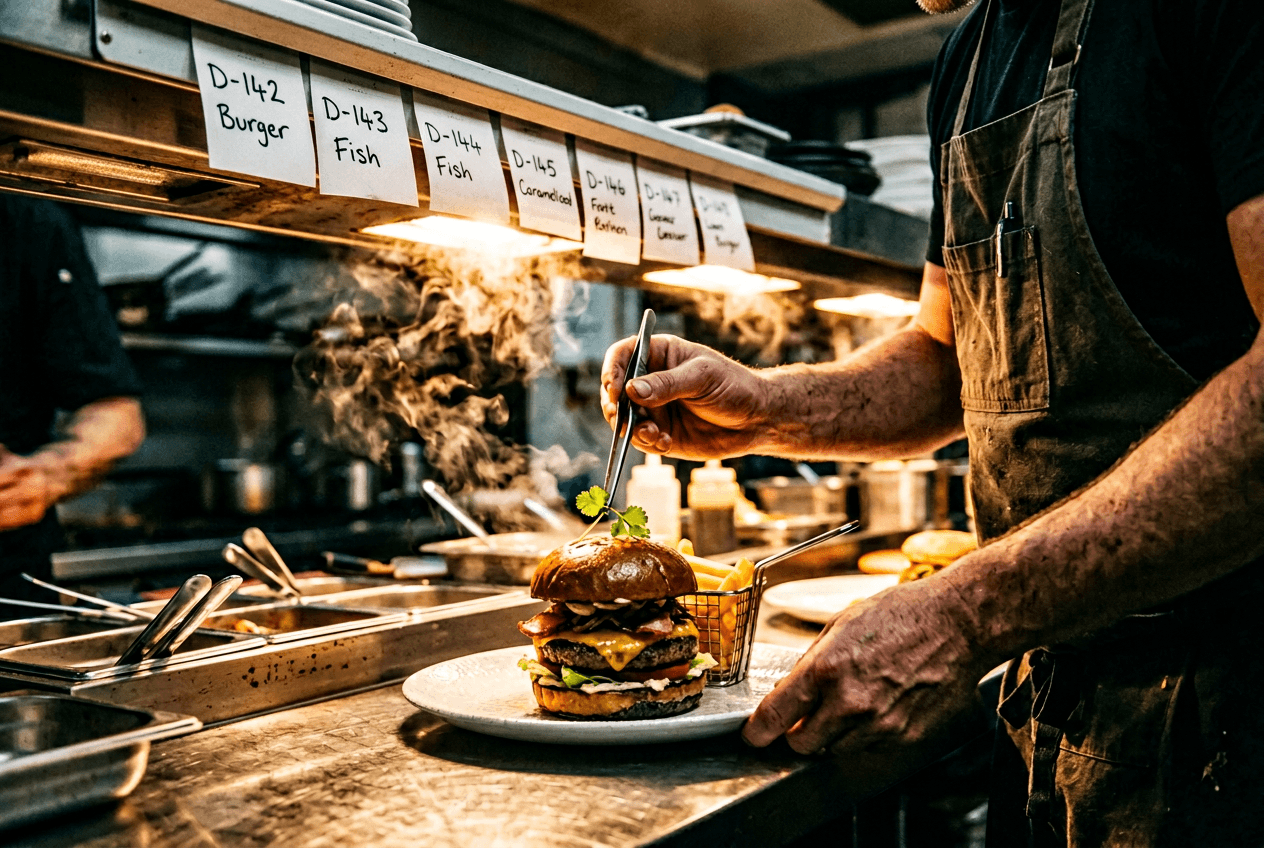 Chef plating gourmet burger at kitchen pass with dramatic backlit steam representing food photography content creation
🎬 Behind-the-Scenes — 25% of Posts
People follow restaurant brands on social media because they want to feel connected, not just hungry. BTS content humanizes your business and builds the loyalty that drives repeat visits.
What to post:
- Kitchen prep and cooking process videos
- Staff and team spotlights ("meet the team" features)
- Supplier visits, market runs, ingredient sourcing stories
- Day-in-the-life content from your chef or owner
Deloitte Digital found that 51% of restaurants promoting behind-the-scenes content and events on social media see increased in-store visits. This pillar isn't marketing fluff — it drives real foot traffic.
📸 Community & UGC — 20% of Posts
User-generated content converts at roughly 4x the rate of brand-created content. It's also free.
What to post:
- Reshared customer photos and Stories (always credit the people who created them)
- Reviews and testimonials turned into visual quote graphics
- Local community partnerships, event highlights, and charity tie-ins
- Customer spotlights — "regulars of the week"
How to encourage more UGC:
- Create a branded hashtag and share it in your bio, on menus, and on table tents
- Respond to every customer who tags you — restaurants that engage with mentions see about 23% higher engagement
- Run monthly "share your meal" photo contests
🎉 Promotions & Offers — 15% of Posts
Cap promotions at 15%. Feeds dominated by discounts train followers to wait for deals instead of visiting at full price.
What to post:
- Limited-time offers and seasonal specials
- Happy hour and event announcements
- Loyalty program highlights and sign-up CTAs
- Delivery app exclusive deals (pair with strong delivery app food photography)
For paid amplification of your top-performing promotional posts, even a small budget ($100–$200/month) can significantly boost reach. Our social media marketing guide covers paid ad strategy in detail.
Step 5: Build a Weekly Content Calendar
A content calendar transforms your restaurant social media plan from "I'll figure it out today" into an automated workflow. Here's a template you can start using now.
Weekly Content Calendar Template
| Day | Platform | Pillar | Format | Example Post |
|---|---|---|---|---|
| Monday | Instagram Feed | 🍽️ Food Photo | Reel or Carousel | Hero shot of weekly special with a short recipe story |
| Tuesday | Instagram Stories | 🎬 BTS | Story series (3–5 slides) | Morning kitchen prep, supplier delivery arrival |
| Wednesday | Instagram + Facebook | 📸 UGC | Repost + caption | Customer photo reshare with a personal thank-you |
| Thursday | Instagram Feed | 🍽️ Food Photo | Static photo or Reel | Close-up texture shot of a popular dish |
| Friday | TikTok + Reels | 🎬 BTS | Short-form video | Weekend prep energy, plating process, team hype |
| Saturday | Instagram Stories | 🎉 Promo | Story with link | Weekend special, event reminder, or delivery deal |
| Sunday | Instagram Feed | 📸 UGC | Carousel | "Week in review" — best customer photos and team moments |
Adapt this to your business. A breakfast-only spot might shift heavy posting days to Thursday–Saturday to build weekend anticipation. A bar might focus Wednesday–Friday to drive happy hour traffic.
Batch Creation Workflow
You don't need to create content every day. Successful restaurant social media managers batch their work:
- Photo session (1–2 hours, once weekly): Shoot 10–15 food photos and 3–5 short videos. Need help editing those food photos afterward? Build that into the same block.
- Caption writing (30–45 minutes): Write all captions in one sitting. It's faster when you stay in writing mode.
- Scheduling (30 minutes): Queue posts for the week using a scheduling tool. Our roundup of best restaurant marketing tools includes several options.
- UGC curation (15 minutes, every other day): Check tagged posts and DMs. Save the best customer content for your community pillar.
Total time: 3–5 hours per week. That's the real commitment — not the daily grind most restaurant owners fear.
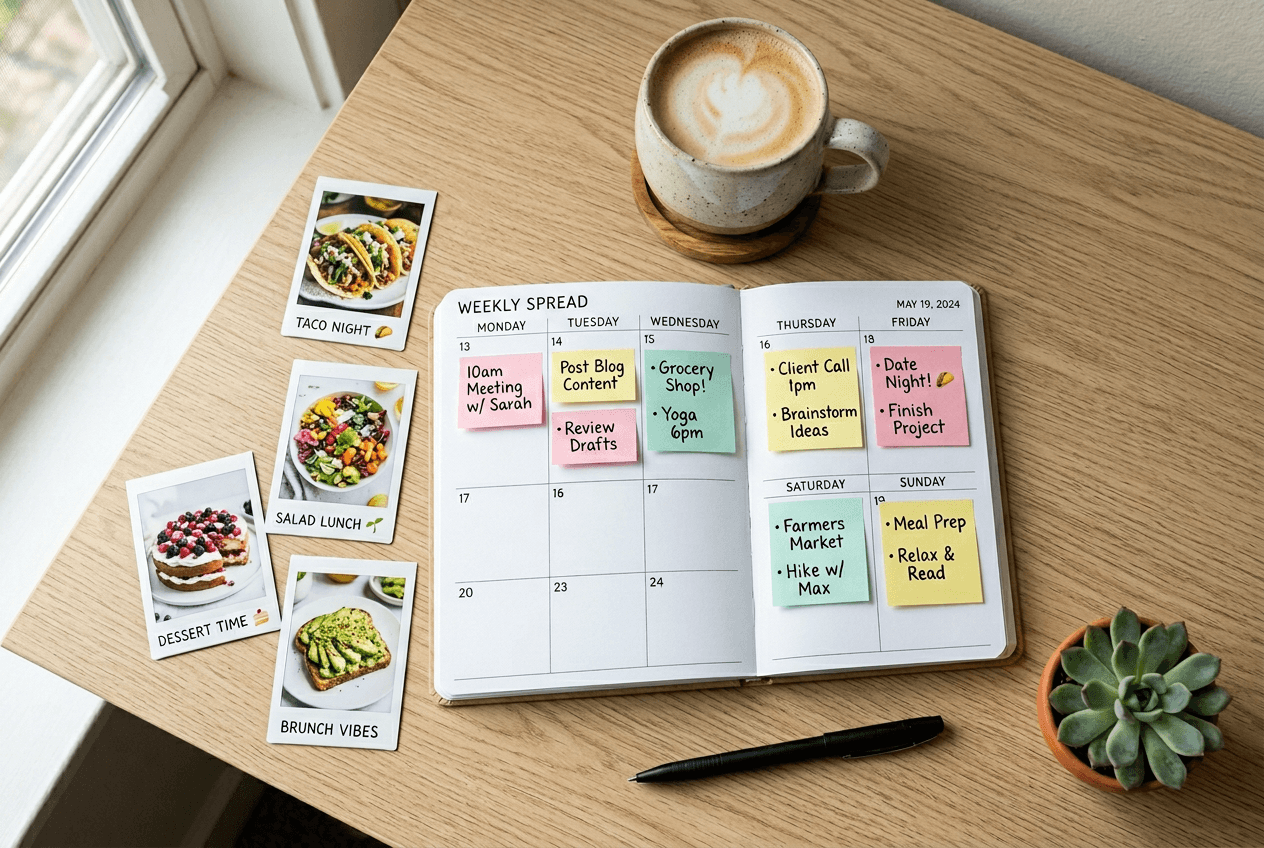 Weekly restaurant social media content calendar flat-lay with sticky notes, food polaroids, and coffee on oak desk
Step 6: Set Visual Standards That Build Brand Recognition
Consistent visuals are the key difference between a feed that looks like a curated digital magazine and one that looks like a random photo dump.
Restaurants posting daily Stories see about 27% more engagement than those that don't. But frequency only works when the visuals are recognizable. Followers should spot your post in their feed before even reading the caption.
Your Simple Visual Style Guide
Document these five key elements and apply them to every post:
-
Color palette: Pick 2–3 dominant colors that match your restaurant's brand identity. A rustic Italian spot might use warm terracottas and olive greens. A modern poke bar might lean into bright whites and ocean blues. (Haven't built your brand identity yet? Our restaurant branding guide covers the full process.)
-
Photography style: Decide on your standard angles (overhead flat-lay vs. 45-degree vs. eye-level), lighting mood (bright and airy vs. dark and moody), and surfaces/backgrounds. Then stick with the choices.
-
Editing consistency: Apply the same treatment to every food photo — same brightness, same contrast, same color temperature. This is where most restaurant feeds fall apart. One post is warm and golden, the next is cool and blue, and the whole feed looks chaotic.
-
Typography and overlays: If you add text to promotional images, use the same fonts, colors, and placement every time. Templates help enormously here.
-
Aspect ratios: Instagram feed posts perform best at 4:5 (portrait) or 1:1 (square). Reels and Stories are 9:16 (vertical). Delivery apps have their own requirements — our delivery app photography guide covers the specifics.
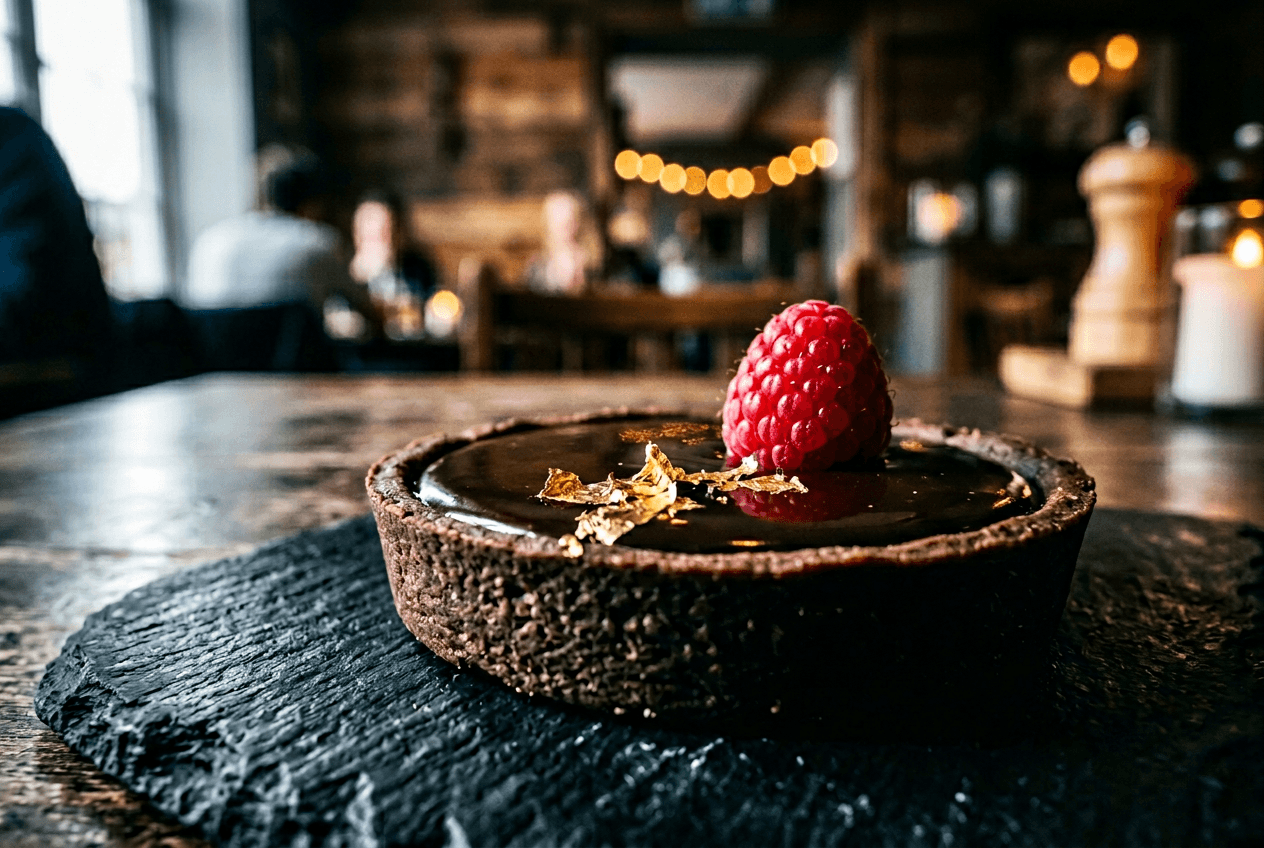 Macro close-up of chocolate tart with gold leaf showing professional food photography visual standards for restaurants
Why Photo Quality Is Your Biggest Growth Lever
40% of consumers have tried a restaurant specifically because of food photos they saw online. If those photos are dim, blurry, or unappetizing, you're actively pushing potential customers toward competitors.
Three practical paths to consistently strong food photography:
- Hire a photographer: $500–$1,500 per session. Great quality, but expensive for weekly content needs. (Full pricing breakdown.)
- Learn to shoot: Invest time in smartphone photography fundamentals. Our phone food photography guide is a solid starting point.
- Use AI tools: Upload your smartphone food photos to an AI food photo editor that transforms them into studio-quality images in about 2 minutes. This is the most cost-effective option for the volume of content a social media calendar demands — and it keeps your visual standards consistent post after post.
Most restaurants get the best results from a combination: learn the basics, then use AI to polish every image before it goes live.
Step 7: Measure, Optimize, Repeat
A strategy without measurement is just a content schedule. Build a monthly review habit so your restaurant social media strategy actually improves over time.
Monthly Review Checklist
Every 30 days, pull these key numbers:
| Metric | Where to Find It | What Good Looks Like |
|---|---|---|
| Follower growth rate | Platform analytics | 3–5% monthly growth |
| Engagement rate | Platform analytics | Trending upward from your Step 1 baseline |
| Website clicks | Link-in-bio tool or UTM tracking | Increasing = growing purchase intent |
| Delivery / reservation conversions | POS data, promo code redemptions | Direct revenue you can attribute to social |
| Top-performing posts | Platform analytics | Reveals which content pillar resonates most |
| Average response time | Platform analytics | Under 4 hours = strong community management |
If you're running paid social ads, also track cost-per-click and return on ad spend separately. Even a small paid budget should be measured against the actual revenue it drives.
The 90-Day Optimization Cycle
- Days 1–30: Execute the strategy exactly as planned. Don't change anything yet. Collect clean baseline data.
- Days 31–60: Review results. Double down on the content pillar driving the most engagement and business growth. Tweak or cut what's underperforming.
- Days 61–90: Experiment. Test a new format, try different posting times, collaborate with local food creators, or launch a UGC campaign. Compare results against your first 60 days.
After 90 days, you'll have enough data to make meaningful adjustments — and the cycle restarts. The restaurants that win the digital marketing game on social media aren't the ones that post the most. They're the ones that learn the fastest.
For more tactical ideas on promotion beyond organic social, see our guide on how to promote your restaurant on social media.
 Restaurant manager reviewing social media performance metrics at cafe counter during morning strategy review
Frequently Asked Questions
How much time should a restaurant spend on social media per week?
Plan for 3–5 hours per week using the batch workflow from Step 5. That covers one photo/video session (1–2 hours), caption writing and scheduling (about 1 hour), and daily engagement — responding to comments, DMs, and tags (15–20 minutes per day). Restaurants with multiple locations or heavy delivery operations may need 8–10 hours for their team to manage.
What is the best social media platform for a small restaurant?
Instagram is the strongest starting point for most restaurants in 2026. It combines visual food storytelling, local discovery features, Reels for short-form video, and Stories for daily engagement. Since mid-2025, Instagram posts are indexed by Google, giving your content extra search visibility. If your audience skews heavily under 25, prioritize TikTok instead.
How often should a restaurant post on social media?
Aim for 4–5 feed posts per week on your primary platform, plus daily Stories. Consistency matters far more than volume — posting three times a week every week outperforms posting seven times one week then going dark the next. Use the content calendar template in Step 5 to stay on track.
Can I handle restaurant social media myself or should I hire someone?
Many restaurant owners and operators handle their own social media marketing successfully with 3–5 hours of batched work per week. If that's not realistic given your kitchen and floor responsibilities, hiring a freelance social media manager typically costs $500–$1,500 per month. Start by doing it yourself to learn what resonates with your audience — then bring in help once you've built your brand voice and content pillars.
How long before a restaurant social media strategy shows results?
Expect engagement improvements — higher interaction rates, more DMs, increased profile visits — within 30–60 days of consistent posting. Revenue impact (more reservations, delivery orders, or walk-in traffic from social) typically takes 90 days. Deloitte Digital's research showed committed hospitality brands averaged a 9.9% revenue increase from social media, but that reflects sustained strategy execution — not a quick marketing fix.