What Is a Virtual Kitchen? How to Start One in 2026
 Ali Tanis26 min read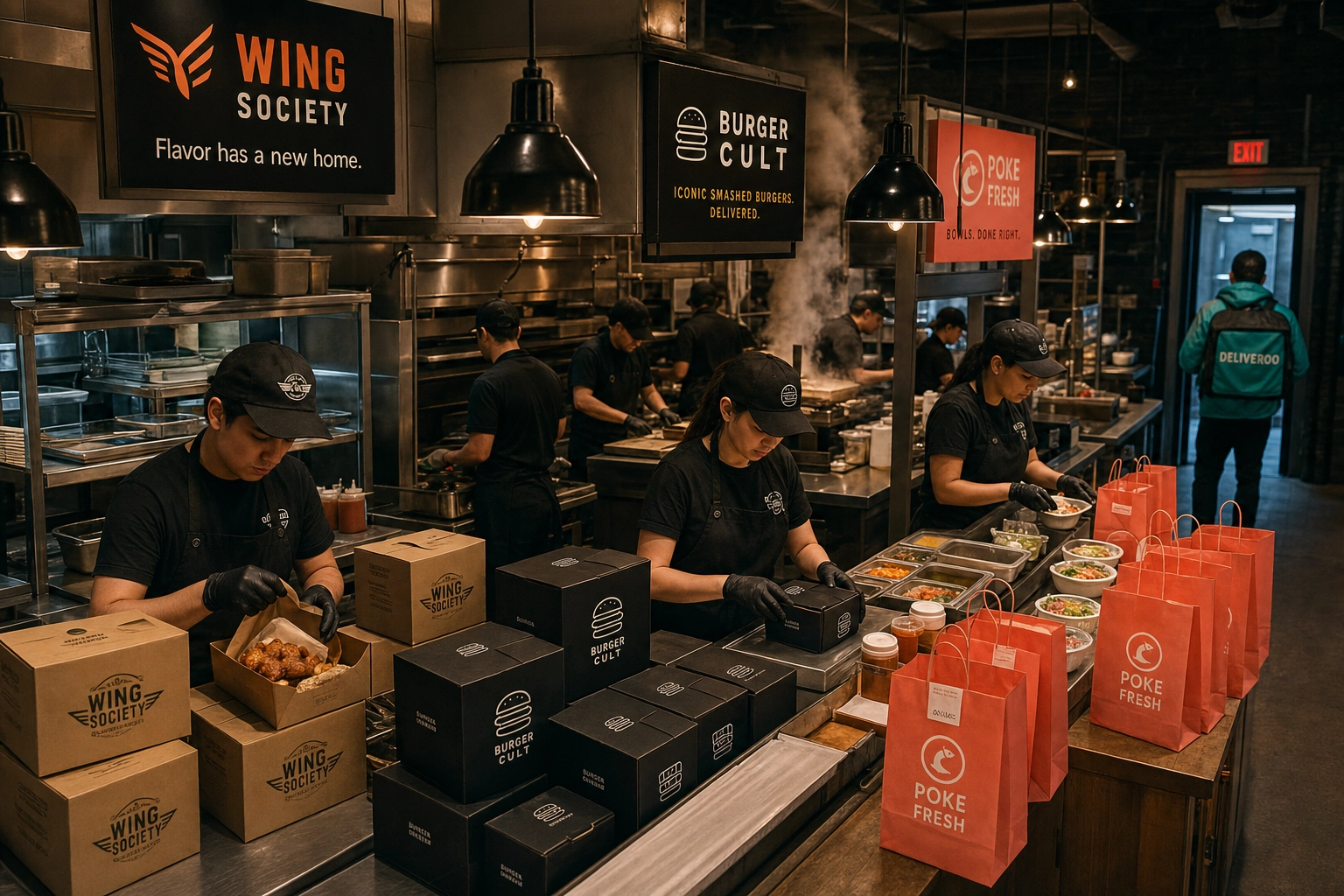
A "new" Thai restaurant pops up on DoorDash. The photos look great. The menu is tight. Reviews are strong. You order. The driver picks up your food from… your neighborhood pizzeria.
That's a virtual kitchen — and there are tens of thousands of them on delivery apps right now. Some of the biggest names in food, from Wingstop to Applebee's to IHOP, run them. Independent operators are using them to double their revenue without doubling their rent. And in 2026, with the global online food delivery market projected to hit $284 billion, more restaurants are launching virtual brands every week.
This guide walks through exactly what a virtual kitchen is, how the model differs from ghost kitchens and cloud kitchens, the realistic cost to launch one, and the eight steps to get yours live in 60 days.
Quick Summary: A virtual kitchen is a delivery-only restaurant brand that operates from an existing restaurant's kitchen — no dine-in space, no separate lease, no new staff. The model lets restaurant owners monetize idle kitchen capacity by launching a second (or third, or fifth) digital-only concept on platforms like DoorDash and Uber Eats. Realistic startup cost is $5,000–$15,000, break-even typically hits in 60–120 days, and well-run virtual brands earn 12–22% net margins versus 3–9% for traditional restaurants.
What Is a Virtual Kitchen?
A virtual kitchen is a delivery-only restaurant brand that operates out of an existing restaurant's physical kitchen, using its space, equipment, and staff. The brand exists entirely online — customers find it on DoorDash, Uber Eats, Grubhub, or a branded ordering site, and there's no signage, no dining room, no walk-up counter.
In practice, a virtual kitchen is what happens when a restaurant owner looks at their kitchen at 2 PM — empty fryers, idle line cooks, dead air between lunch and dinner — and decides to put that capacity to work. They build a second brand designed entirely around delivery: a different name, a different menu, a different aesthetic. From the customer's perspective, it's a separate restaurant. From the operator's perspective, it's the same kitchen running a parallel business.
The model has been around since 2015, when India-based Rebel Foods pioneered the cloud kitchen concept. It exploded during the 2020 pandemic when dine-in revenue collapsed and delivery surged. Since then, it has matured from a survival tactic into a deliberate growth strategy. According to industry reporting, roughly 41% of independent restaurants now operate at least one virtual brand alongside their main concept.
Virtual kitchens go by other names too — virtual restaurant, virtual brand, delivery-only brand — and the terminology gets confusing fast. Which brings us to the next section.
Virtual Kitchen vs Ghost Kitchen vs Cloud Kitchen vs Dark Kitchen
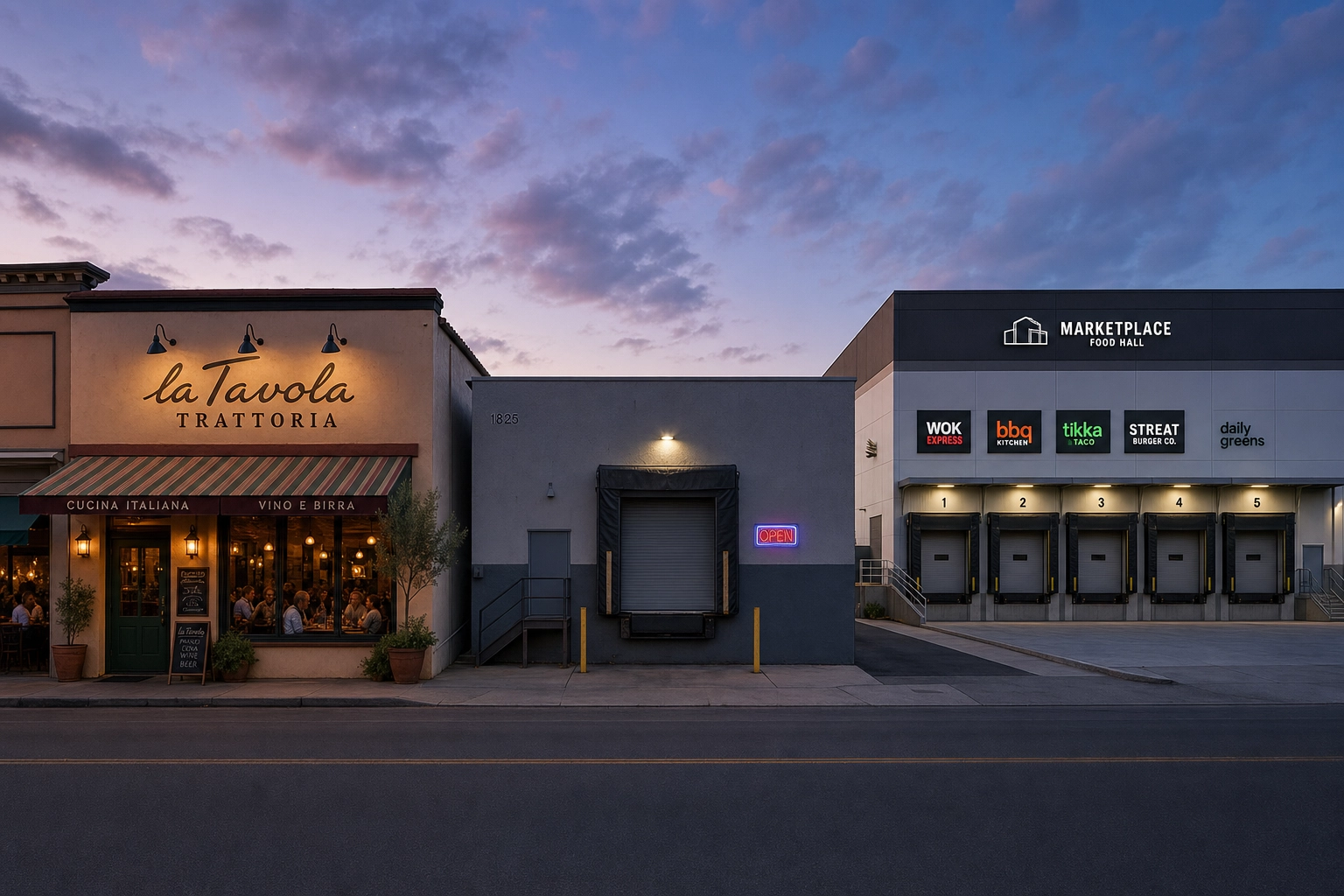 Three different restaurant building types showing virtual kitchen versus ghost kitchen versus cloud kitchen facilities at dusk
Industry sources use these terms interchangeably, which makes research painful. Here's the most useful way to think about them: the distinction isn't about delivery (they're all delivery-only), it's about where the kitchen lives and who owns it.
| Model | Physical Location | Capital Required | Best For |
|---|---|---|---|
| Virtual kitchen | Inside an existing restaurant | $5K–$15K | Restaurant owners adding a delivery brand to existing operations |
| Ghost kitchen | Standalone commercial facility, delivery-only | $30K–$500K+ | Operators who want a delivery-first business without an existing restaurant |
| Cloud kitchen | Multi-brand commercial facility (Kitchen-as-a-Service) | $20K–$50K per brand | Multi-brand operators leasing space from KaaS providers like CloudKitchens, Kitchen United, or Rebel Foods |
| Dark kitchen | Same as ghost kitchen (mostly British/European term) | $30K–$500K+ | UK/European market |
The cleanest distinction, and the one major delivery platforms now use: a virtual kitchen runs from an existing restaurant's kitchen, while a ghost kitchen is a dedicated delivery-only facility built specifically for the purpose. A cloud kitchen typically refers to a shared commercial facility that hosts multiple brands at once, often operated by a third party that rents kitchen space by the month.
If you already own a restaurant and want to add delivery brands, you're talking about a virtual kitchen. If you're building a delivery-first business from scratch with no dine-in room, you're talking about a ghost or cloud kitchen.
How Virtual Kitchens Actually Work
The mechanics are simpler than they sound. Picture a casual Italian restaurant that does $40,000 a month in dine-in business. The kitchen is humming during dinner service from 5 PM to 10 PM, but it's mostly idle from 2 PM to 5 PM and after 10 PM.
The owner launches a virtual brand called "Late Night Wings Co." It uses the same fryers, the same prep cooks, the same walk-in cooler. The menu shares ingredients with the Italian menu — the breading is similar to what's used on chicken parmesan, the marinara doubles as a dipping sauce. It runs only on DoorDash and Uber Eats, only between 9 PM and 1 AM.
Here's how an order flows:
- A customer scrolls Uber Eats at 11:30 PM and taps Late Night Wings Co.
- The order prints on a separate ticket printer (or pops up on a tablet color-coded for the virtual brand).
- The same line cook fires the wings on the same fryer they used for calamari three hours earlier.
- The food goes into branded Late Night Wings Co. packaging — different boxes, different stickers, different inserts.
- A DoorDash driver picks it up at the back door.
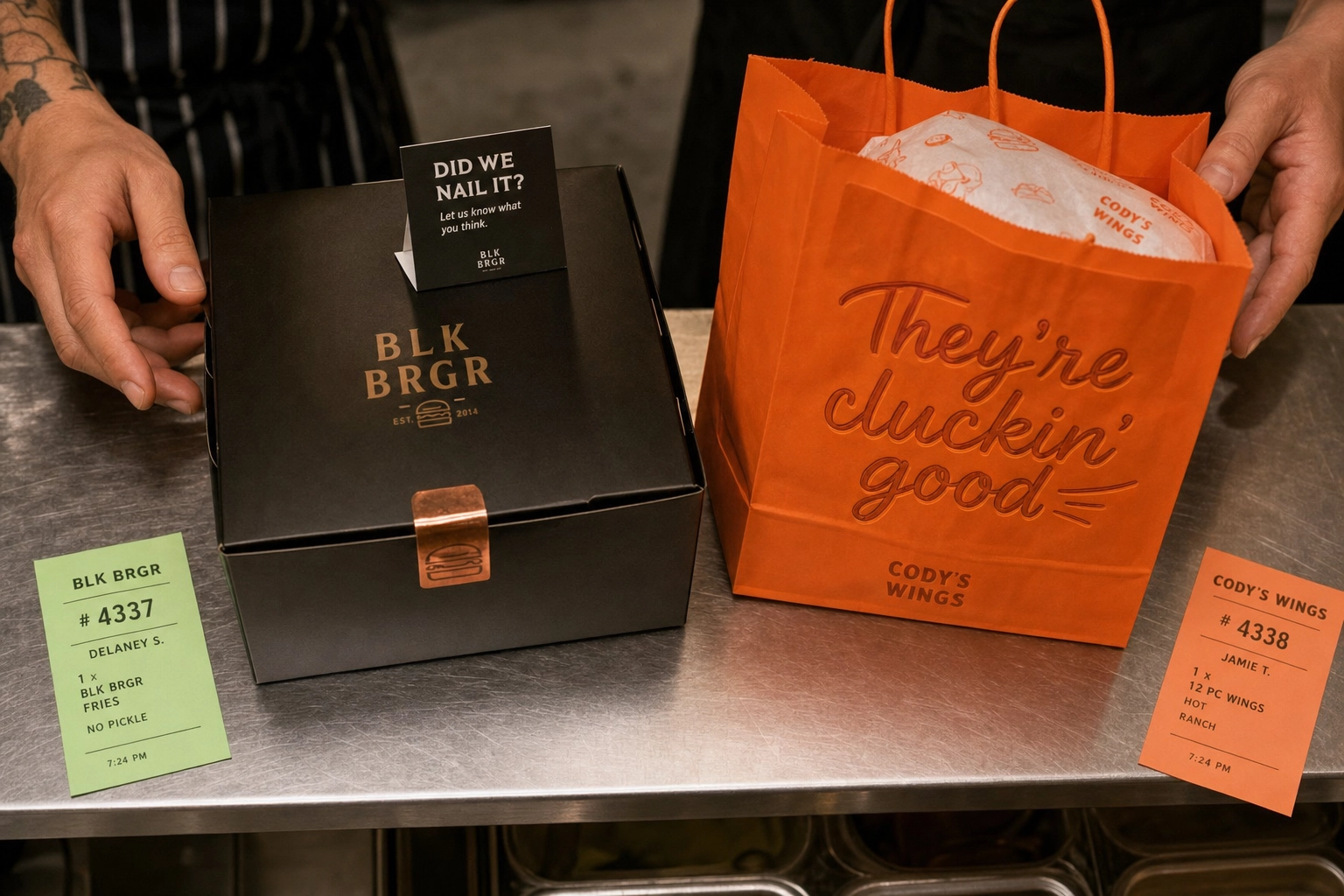 Overhead view of two distinct virtual brand delivery orders ready for pickup at a restaurant kitchen pass
The customer never sees the Italian restaurant. From their perspective, they ordered from a wing specialist. From the operator's perspective, they made $14 in incremental revenue on a kitchen that would have been empty.
Multi-brand setups are common. IHOP operates multiple delivery-only brands — Thrilled Cheese, Super Mega Dilla, Pardon My Cheesesteak, Tender Fix — from its existing pancake-house kitchens. Hooters runs Hootie's Burger Bar, Hootie's Bait & Tackle, and Hootie's Chicken Tenders as virtual brands. Chuck E. Cheese launched Pasqually's Pizza & Wings to capture adult delivery customers who'd never order from a kids' birthday venue. The food is largely the same; the brand is what the customer pays for.
Why Virtual Kitchens Are Booming in 2026
Three forces are driving the surge.
Delivery demand keeps climbing. The global online food delivery market reached $284 billion in 2026 and is projected to hit $468 billion by 2031, a compound annual growth rate of 10.47%, according to industry market reports. In the United States, DoorDash alone holds about 56% of the delivery market. Per the National Restaurant Association, 53% of US adults consider takeout or delivery essential to the way they live. Among millennials, 71% are more likely to order delivery than they were before the pandemic. Among Gen Z, 69% prefer delivery — outpacing every other generation.
Restaurant economics are brutal. Real estate, labor, and food costs have all risen faster than menu prices. Full-service restaurants now run on 3–9% net margins on a good year. Adding revenue without adding rent is one of the only levers that actually moves the needle.
The risk profile is dramatically lower than opening a new location. Opening a new restaurant in 2026 costs $275,000 to over $1 million according to industry data, with a year of construction and a 50% five-year failure rate. Launching a virtual brand from your existing kitchen costs five figures, takes six to eight weeks, and can be shut down in a day if it doesn't work. That asymmetry — small downside, real upside — is why every major chain has tested the model.
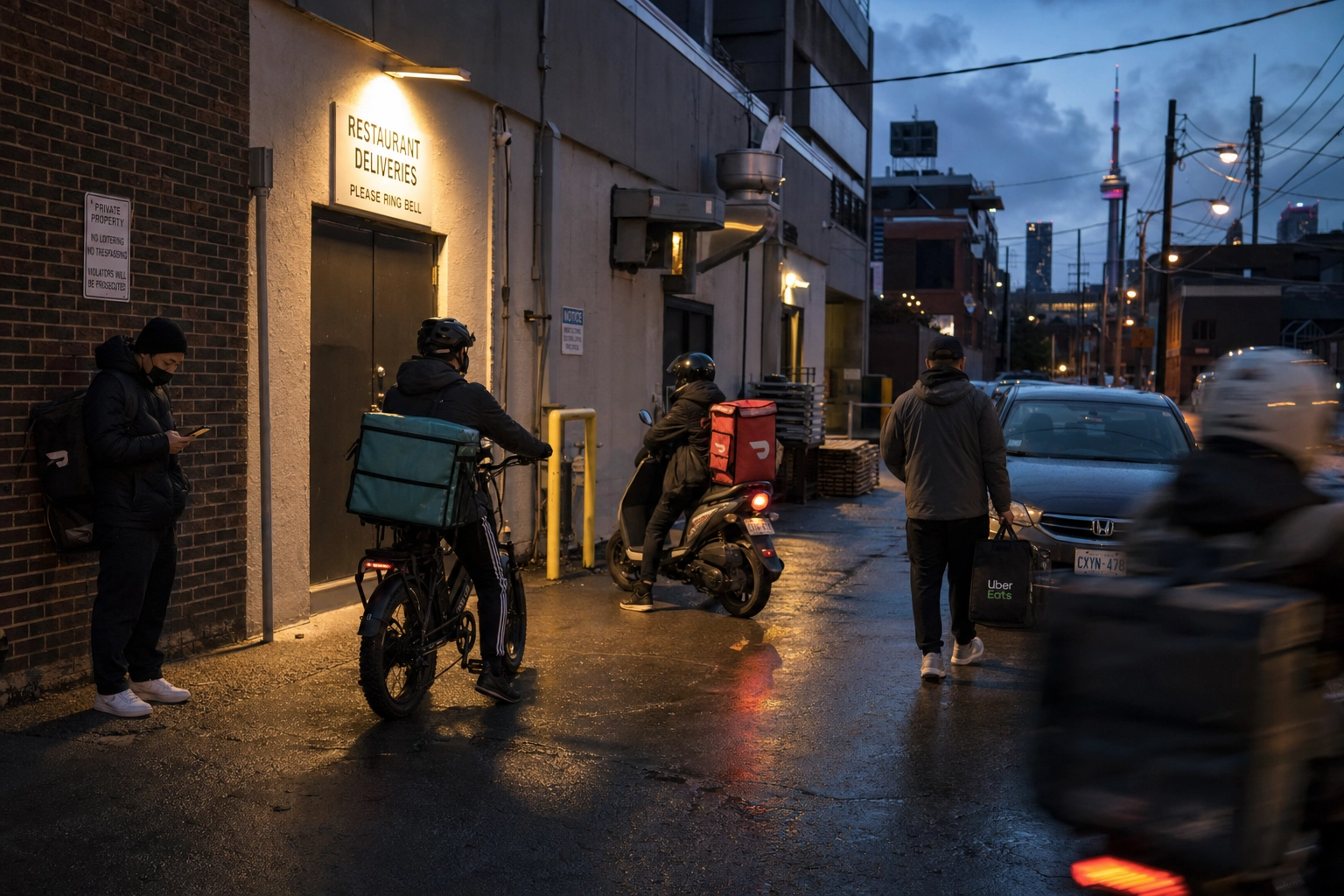 Multiple food delivery couriers waiting at a restaurant back door at dusk illustrating the booming delivery market
The marquee success stories make the math obvious:
- Wingstop's Thighstop launched in June 2021 as a virtual brand to monetize the chicken thigh — a cut Wingstop hadn't sold and a way to hedge against rising wing prices. Within months, Thighstop's menu was rolled into Wingstop's main menu after proving demand. The virtual brand was effectively a free product test that became a permanent revenue line.
- Applebee's Cosmic Wings (Cheetos-flavored chicken wings) launched in February 2021 from roughly 1,300 Applebee's kitchens. After demonstrating it outperformed Applebee's-branded wings on delivery apps, items moved into the parent brand's core menu.
- Guy Fieri's Flavortown Kitchen operates virtually in 170+ locations through partner restaurants — a chef-licensed model where the brand collects royalties without owning a single building.
These aren't theoretical case studies. They're billion-dollar chains using virtual kitchens to test concepts, hedge supply risk, and capture incremental revenue without capital expenditure.
How to Start a Virtual Kitchen From an Existing Restaurant: 8 Steps
Here's the realistic playbook for launching a virtual brand from your existing restaurant. Plan on 6–8 weeks from decision to first paid order.
Step 1: Audit Your Kitchen Capacity
Before anything else, get honest about whether your kitchen can actually handle another brand. Walk through a typical week and identify:
- Dead hours. When is your kitchen idle? Most full-service spots have a 2–5 PM gap. Pizzerias often go quiet from 9 PM to 11 PM weekdays. Breakfast diners are dark from 2 PM on.
- Equipment utilization. Which fryers, grills, ovens, and prep stations are at 30% during your dead hours?
- Staff bandwidth. A line cook handling tickets for two brands is fine. Four brands at peak service is a quality disaster waiting to happen.
A useful rule: don't add a virtual brand unless you have at least 20–40% spare capacity during the hours that brand will operate. If you're already at peak, virtual kitchens will hurt your existing business more than they'll add to it.
Step 2: Pick a Concept That Complements Your Existing Menu
The best virtual brands share ingredients and equipment with your main concept but target a different customer or daypart. Examples:
- A pizza shop launching a wings brand — same ovens, same fryer, same chicken supplier, but reaches customers who'd never order pizza on a Tuesday night.
- A burger restaurant launching a fried chicken sandwich brand — same buns, same fryer, same lettuce/tomato prep.
- An Italian restaurant launching a meatball sub or pasta-bowl brand for the lunch crowd.
- A breakfast diner running a late-night taco brand from the same flat-top.
Avoid concepts that share your kitchen's weaknesses. If your dinner service is already plagued by ticket times, layering a third brand on top will torch your reputation across all of them.
Step 3: Develop a Tight, Delivery-Optimized Menu
Eight to twelve menu items is the sweet spot. Every additional dish multiplies prep work, inventory complexity, and the chance of a botched order.
Three rules for delivery menu engineering:
- Every dish must travel. No soufflés, no crispy-rice-based dishes that go soggy, no plating that depends on a fresh garnish. If it isn't great after a 25-minute car ride, cut it.
- Cross-utilize ingredients. A virtual brand should share 70%+ of its ingredients with your main menu. Fewer ingredients to stock, less waste, simpler prep.
- Price for delivery economics. Platform commissions are 15–30% per order. A $12 dish on Uber Eats nets you $8.40. Build that into your pricing or watch your margin disappear.
For a deeper dive into delivery menu engineering, see our guide on ghost kitchen menu planning.
Step 4: Build a Brand Identity That Lives Online
Your virtual brand has no storefront, no neon sign, no aroma. The brand exists in three places: the listing thumbnail, the packaging, and (maybe) a website.
A workable brand identity needs:
- A memorable, search-friendly name that's distinct from your main brand. Customers don't want to feel deceived. "Late Night Wings Co." is better than "Tony's Italian Wings" if Tony's Italian is your main restaurant.
- A simple logo and color palette that holds up at thumbnail size. Detail is wasted on a 200-pixel-wide image.
- A focused brand promise. "Best wings in town, delivered hot, after 9 PM." Not "elevated American comfort food experience." Virtual brands win on specificity.
- Domain and social handles that match the brand name. Even if you never build out the website, lock the URLs.
Resist the urge to launch five brands at once. Get one to 4.5 stars and 30+ orders a day before adding a second.
Step 5: Photograph Every Menu Item Like Your Business Depends on It
Because it does. On a delivery app, your food photo is your storefront, your menu, your sales pitch, and your first impression in a single 200×200 pixel rectangle.
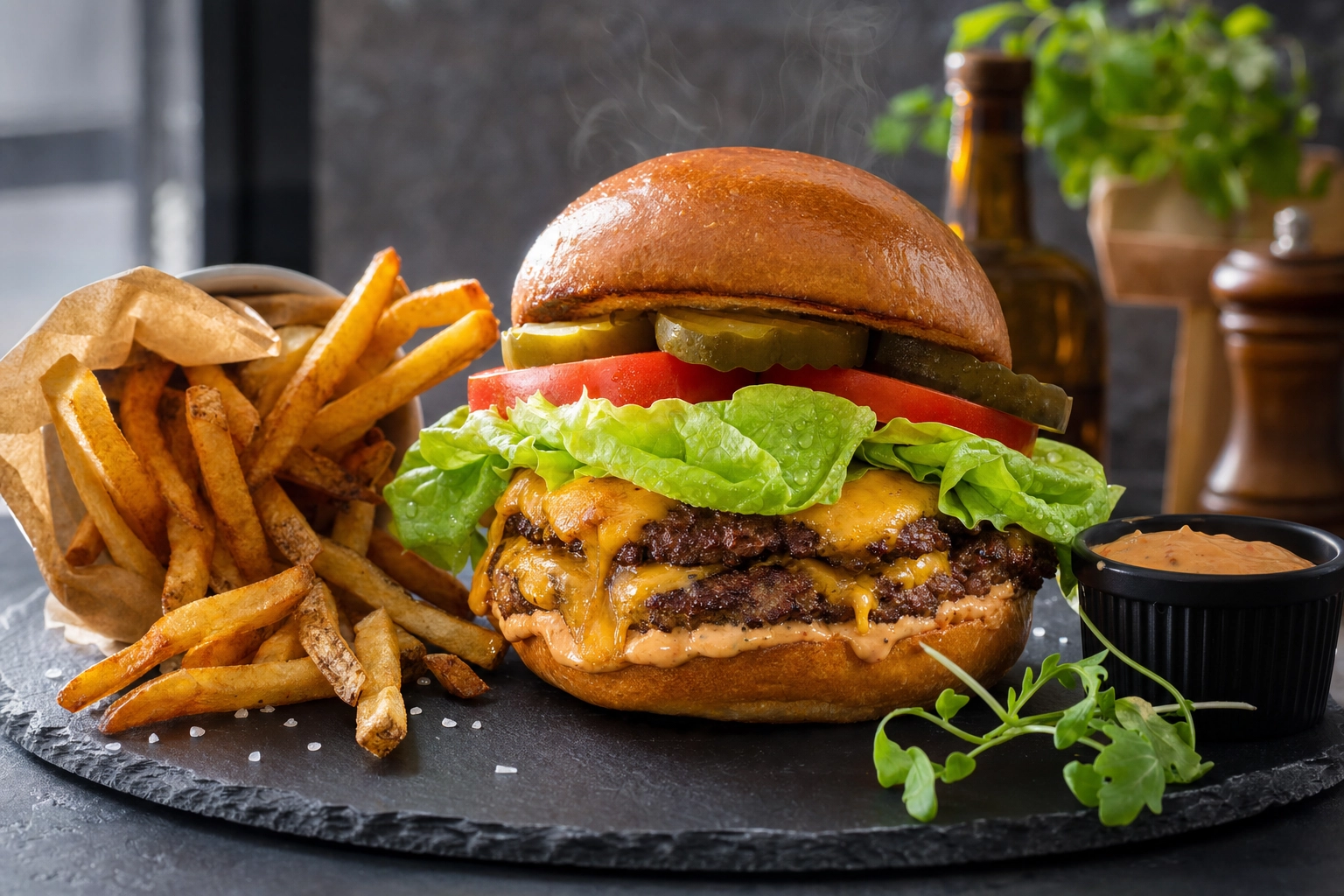 Editorial food photography of a smash burger styled for delivery app menu listing showing professional photography quality
Industry data is unambiguous on the impact:
- Restaurants with quality menu photos see roughly 25% higher conversion rates on delivery apps.
- Listings with professional photography report 35%+ more total orders than listings with smartphone snaps.
- Conversely, low-quality photos can suppress orders worse than no photo at all — they signal a low-effort operator.
Traditional food photography costs $700–$1,400 per session, with 1–2 weeks turnaround. For a virtual brand testing a 12-item menu — and updating dishes monthly to chase trends — that math doesn't work.
This is where AI food photography became the default for new virtual kitchens. With tools like our AI food photography platform, an operator can photograph an entire menu in an afternoon, generate platform-specific variations (square thumbnails for Uber Eats, 16:9 for hero images), and update dishes in seconds when something changes. Cost drops from thousands per session to dollars per image.
For platform-specific specs, see our food delivery app photography guide.
Step 6: Set Up on Delivery Platforms
Pick at least two platforms to start. DoorDash dominates the US market at roughly 56% share, but Uber Eats and Grubhub each capture customers DoorDash doesn't. Listing on multiple platforms also reduces your exposure to algorithm changes on any one of them.
Each platform has its own listing requirements:
- DoorDash uses square thumbnails and 1400×800 hero images, with strict rules against blurry or unrelated photos.
- Uber Eats prefers high-quality 1:1 thumbnails plus background-cleaned hero shots.
- Grubhub requires consistent format across all menu items in a category.
To manage orders across platforms without juggling three tablets, use an order aggregator. Options include Otter, Deliverect, Cuboh, and Chowly — all consolidate incoming orders into a single dashboard or printer. Most cost $80–$300 per month and pay for themselves the first time you avoid double-booking your kitchen.
Configure store hours that match the brand's intended daypart. Late Night Wings Co. opening at noon makes no sense; Late Night Wings Co. running 9 PM to 2 AM does.
Step 7: Train Staff and Run a Soft Launch
A virtual brand looks easy on paper and breaks in the kitchen. Before paid launch:
- Walk the line through every dish. Every cook should make every menu item three times.
- Set up separate ticket flow. Color-coded tickets, dedicated printers, or a clearly labeled tablet for the new brand. Mixing tickets is how customers end up with the wrong food.
- Standardize packaging. Have a packaging station with the new brand's containers, stickers, and inserts laid out. Speed and consistency come from setup.
- Soft launch for 7–14 days. Run limited hours, ideally with platform listings turned on but not promoted. Catch the operational issues before customer reviews catch them.
Step 8: Launch, Measure, and Iterate
The first 30 days determine whether your virtual brand survives. Most operators who fail at virtual kitchens fail in this window — they launch and then forget to optimize.
Run platform-paid promotions in week one to drive review velocity (20% off first orders, free delivery, sponsored placement). The goal isn't profit yet; it's getting to 50+ ratings fast so the algorithm starts surfacing you.
Track these metrics weekly:
- Conversion rate (visits to orders) — should be 3–6% on a healthy listing
- Average order value — benchmark against your category
- Star rating — target 4.5+ within 90 days
- Repeat order rate — 25%+ within 90 days is a healthy signal
- Time-to-pickup — under 25 minutes prevents driver dropouts
Cut the bottom 20% of menu items after 60 days. Double down on the photography, descriptions, and pricing of your top three sellers.
The Hard Challenges Virtual Kitchen Operators Face
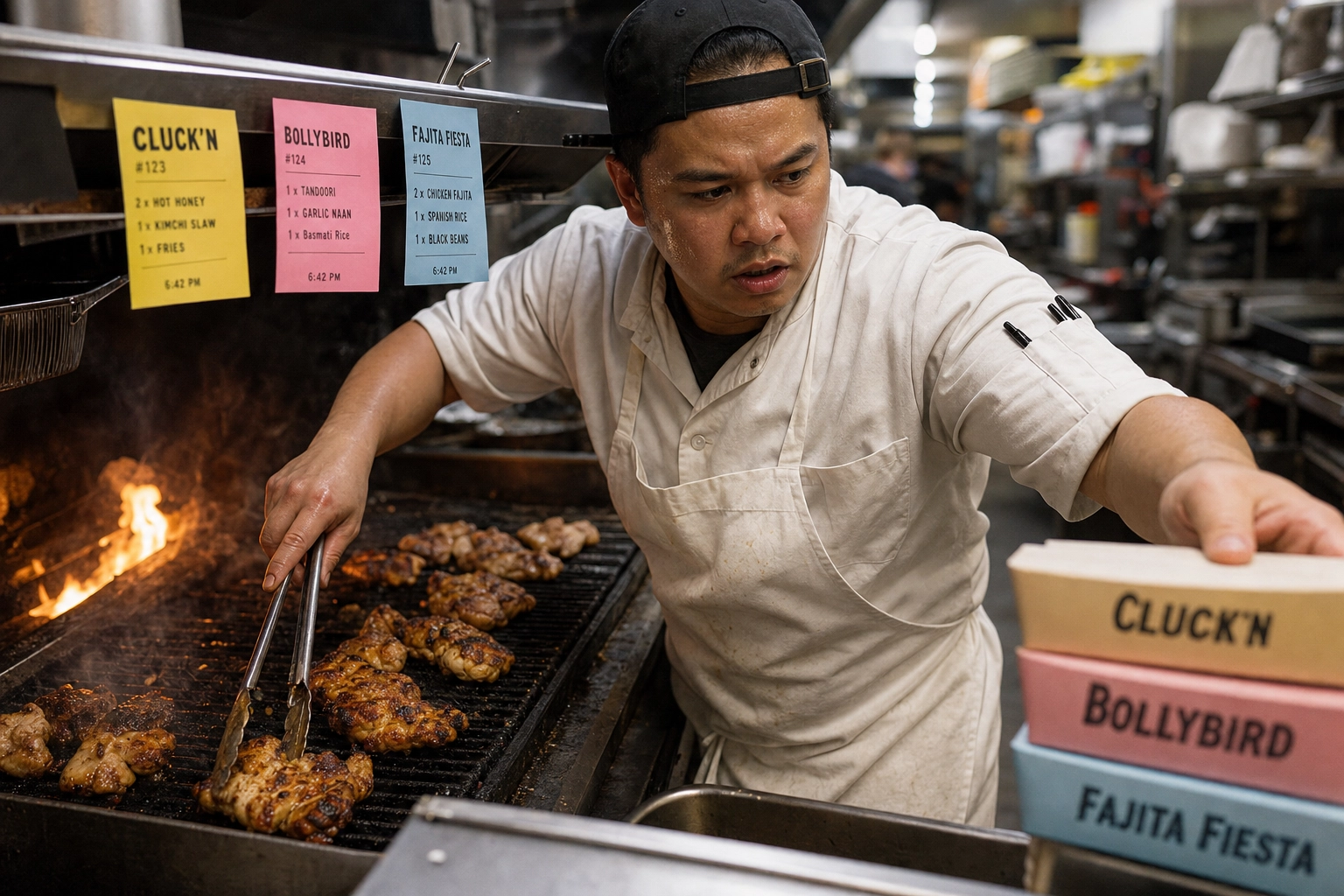 Stressed restaurant line cook juggling tickets from multiple virtual brands during peak service showing quality control challenges
For every Wingstop Thighstop story there are dozens of virtual brands that quietly disappear. The common failure modes:
Quality control collapses across brands. A line cook handling tickets for the main restaurant and two virtual brands inevitably under-executes one of them. Pull up any restaurant subreddit and you'll find operators admitting their virtual brands shipped sloppy product because the team was overwhelmed. This is the single biggest reason virtual brands fail. The fix is uncomfortable: cap the number of brands at what your kitchen can actually deliver, even if that's one.
Kitchen capacity has a hard ceiling. Every brand consumes prep time, ticket throughput, fryer space, and counter real estate. The math seems abstract until your fryers are full at 7 PM and you have to choose which brand's order gets delayed. Plan capacity before launch, not after the order volume arrives.
Delivery logistics are out of your hands. Once the order leaves the back door, third-party drivers control the experience. Cold food, wrong addresses, missing items — customers blame your brand even when DoorDash's driver is at fault. Mitigate with tamper-evident packaging, items that hold heat well, and obsessive accuracy in the kitchen.
Platform commissions eat margins. A 15–30% take rate on every order is the biggest tax in restaurant history. Virtual brands that depend solely on DoorDash and Uber Eats run on knife-edge margins. The strategic counter is building a direct ordering channel — your own website where repeat customers can order without the platform tax. It takes time to build, but each direct order earns 20–30% more than a platform order.
Reputation is fully review-driven. A traditional restaurant can recover from a bad week because regulars remember the good months. A virtual brand's entire reputation lives in 47 visible reviews. One streak of cold-food complaints, and the algorithm buries you. Respond to every review, fix patterns immediately, and treat the first 100 reviews as your foundation.
Customers can feel deceived. Reddit threads about virtual restaurants are full of customers who feel tricked discovering their "new local Thai spot" is actually their neighborhood Denny's. The honest answer: be transparent about your brand. Some operators include a small note on packaging acknowledging the parent restaurant. The deceptive ones get burned eventually.
Marketing Your Virtual Kitchen: Photography Is Your Storefront
A traditional restaurant has dozens of marketing surfaces: signage, windows, ambient music, the smell of bread, the bartender's smile, foot traffic, neighborhood word-of-mouth. A virtual kitchen has one: a thumbnail.
That thumbnail does everything. It tells the customer what cuisine you serve, how skilled your kitchen is, what brand personality you have, and whether you look professional or like a hobby. A hungry customer scrolling DoorDash at 7 PM gives your photo about two seconds before they keep scrolling.
Photography is the highest-leverage marketing investment in a virtual kitchen. It's not "important" — it's existential.
What top-performing virtual kitchen photos share:
- Dish-first composition. The food fills 70%+ of the frame. No empty plates, no oversized backgrounds.
- Clear, vibrant colors. Slightly warmer than reality. Heavy filters and grayscale don't sell food.
- Consistent style across the menu. The 12 items in your listing should look like they came from the same brand. Inconsistent photos signal an amateur operation.
- Distinct visual identity per virtual brand. If you run three brands from one kitchen, each one needs its own aesthetic. Same photo style across three brands tips off algorithms (and customers) that something's off.
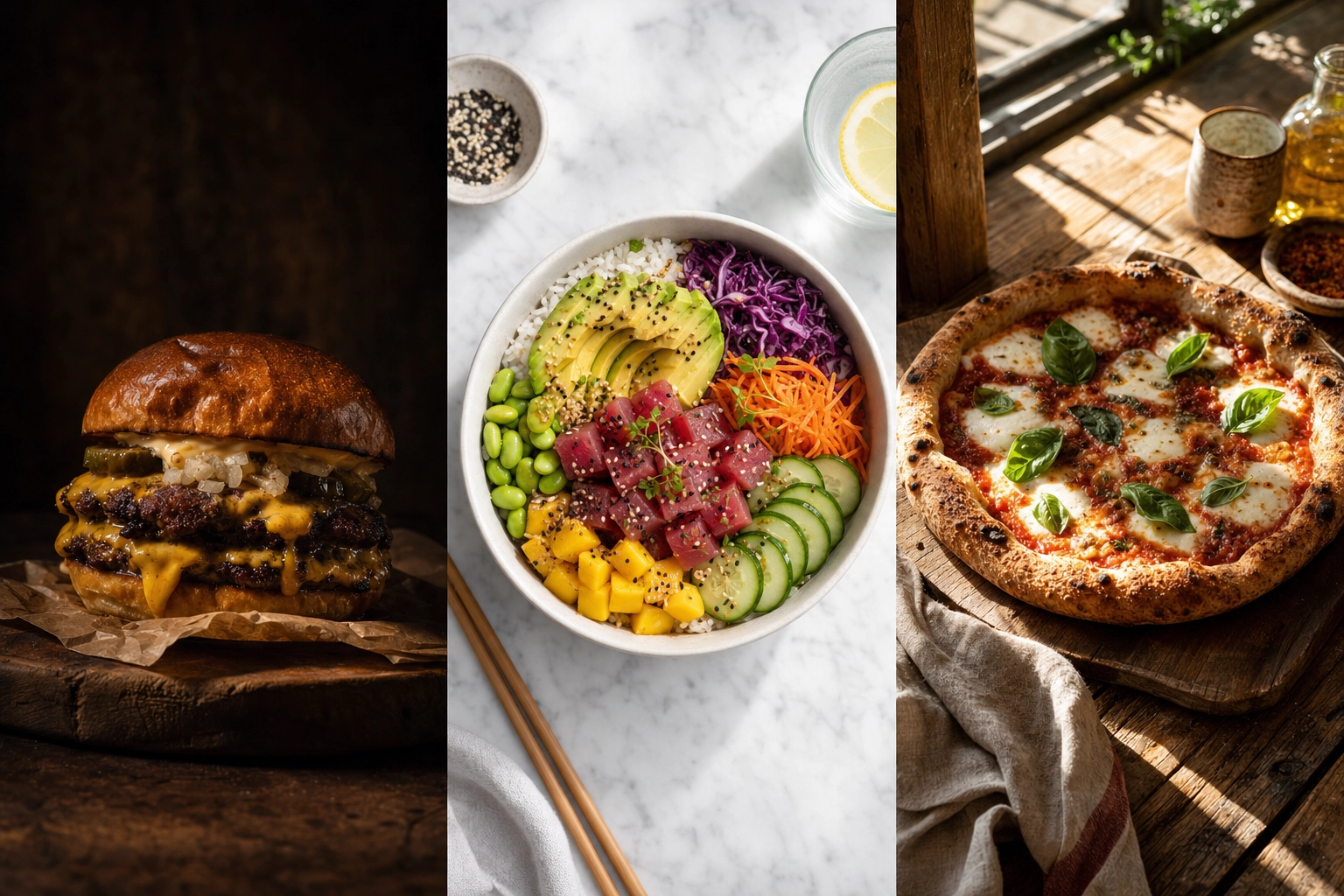 Three different food photography styles for three virtual brands operating from the same kitchen showing distinct brand identities
That last point is where most multi-brand operators fail. They photograph everything in the same studio with the same lighting, and three "different restaurants" end up looking identical. Modern AI food photography tools solve this by letting operators apply distinct visual styles per brand from the same source images — moody dark backgrounds for the late-night wing brand, bright airy whites for the wellness bowl brand, rustic wooden surfaces for the artisan pizza brand. See our ghost kitchen photography use case for examples of this in action.
Photography isn't the whole marketing story, but it's the gating factor. Every other tactic — paid promotions, social media, direct ordering — depends on photos that convert. For a complete delivery-only marketing playbook, see our ghost kitchen marketing playbook and cloud kitchen marketing strategies guides.
Tools and Technology You'll Need
Virtual kitchens run on a small but specific tech stack. The non-negotiables:
Order aggregation software. Otter, Deliverect, Cuboh, and Chowly all do roughly the same thing — combine orders from DoorDash, Uber Eats, and Grubhub into one tablet so your kitchen doesn't drown in three printers. Pick one with strong restaurant POS integrations. Budget $80–$300 per month.
A POS with virtual restaurant support. Toast, Square, and Clover all offer virtual restaurant modules. Look for the ability to print tickets to specific kitchen stations, run separate menus by brand, and track sales per brand for accounting. If you already have a POS, check if it supports a "virtual restaurant" or "second brand" feature before swapping platforms.
Analytics tools. Native delivery platform dashboards give basic data — orders per day, average ticket, top items. Third-party menu engineering tools layer on profitability per dish, conversion per item, and benchmarks against similar restaurants in your zip code. For broader options, see our roundup of the best restaurant marketing software.
A direct ordering channel. Long-term, the most important investment is your own ordering site. Direct orders avoid the 15–30% platform commission entirely, capture customer data the platforms hide from you, and let you market to repeat buyers via email and SMS. Sauce, BentoBox, and ChowNow all build branded ordering sites for restaurants. Even a basic version reaches break-even fast.
AI food photography. A virtual brand with 12 menu items needs 12+ photos at launch and refresh photography monthly as menus evolve. AI tools have collapsed the cost from thousands per shoot to single-digit dollars per image. For multi-brand operators running three or more virtual concepts, this is the difference between launching brands quickly and getting stuck in photo-shoot bottlenecks. Our delivery app menu photography page shows specific examples for DoorDash and Uber Eats listings.
Inventory management. When one kitchen feeds three brands, ingredient tracking gets complicated fast. Software that syncs with your POS and tracks usage by brand prevents the "we ran out of buns at 8 PM" disaster.
That's the core stack. Everything else (loyalty programs, advanced CRM, customer review tools) is a nice-to-have until you're consistently profitable.
Virtual Kitchen Cost Breakdown and Expected ROI
Here's a realistic budget for launching a single virtual brand from an existing restaurant. Numbers reflect 2026 US market rates.
| Category | Realistic Range |
|---|---|
| Brand identity (name, logo, colors, basic guidelines) | $500–$3,000 |
| Initial food photography (10–15 dishes) | $300 (AI) to $1,500 (traditional) |
| Menu R&D and ingredient testing | $500–$1,500 |
| Branded packaging (containers, stickers, inserts — first run) | $1,000–$3,000 |
| Delivery platform setup | $0 (signup is free) |
| Order aggregator software (3-month setup) | $250–$900 |
| POS configuration / virtual brand module | $200–$1,000 (one-time) |
| Initial paid promotions (first 30 days) | $1,500–$3,000 |
| Direct ordering site (optional but recommended) | $500–$2,000 |
| Total launch cost | $5,000–$15,000 |
Compare that to opening a new restaurant in 2026: $275,000 to over $1 million according to industry data, with a one-year build-out. Or even a dedicated ghost kitchen: roughly $30,000 on the low end at a Kitchen-as-a-Service facility, climbing to $493,000+ for a custom build. The virtual kitchen is the lowest-risk entry into delivery for anyone who already operates a kitchen.
Ongoing economics look like this for a well-run single-brand virtual kitchen:
- Revenue: $20,000–$80,000 per month at 25–100 orders per day with $20–$30 average ticket
- Food cost: 28–32% of revenue (similar to a traditional restaurant)
- Labor: 10–18% (much lower than a traditional restaurant because there's no front-of-house)
- Platform commission: 15–30% of revenue (the biggest line item)
- Packaging: 4–6% of revenue
- Software / aggregator / website: 1–3% of revenue
- Net margin: 12–22% for a healthy operator
Compare that to traditional restaurant net margins of 3–9% in 2026 and the model's appeal becomes clear. The math relies on three things: minimal incremental rent (since you already pay for the kitchen), low labor cost (since you're using existing staff during their existing shifts), and high enough order volume to absorb platform commissions.
Break-even timeline is typically 60–120 days at 25–50 daily orders. The biggest variable is review velocity — virtual brands with 4.5+ stars and 100+ reviews within 90 days reach the break-even threshold faster because the platform algorithms reward them.
A second variable is multi-brand leverage. Once you've built the operational muscle to run one virtual brand, the second one launches faster and costs less — most of the platform setup, staff training, and packaging logistics carry over. Operators running three to five virtual brands from one kitchen routinely report incremental revenue of $30,000–$100,000 per month on near-zero incremental rent. See FoodShot AI pricing plans for what photography costs look like across multiple brands.
Is a Virtual Kitchen Right for Your Restaurant?
Run through this honest checklist:
✅ You have spare kitchen capacity during specific dayparts (lunch, late night, mid-afternoon)
✅ Your equipment can handle a complementary cuisine without major new purchases
✅ Your staff has bandwidth to take on additional tickets without quality dropping
✅ You can articulate a clear brand promise that's distinct from your main concept
✅ You can commit to managing two brand identities — separate social media, separate review monitoring, separate optimization
✅ You're operationally tight on your existing brand — virtual brands magnify problems, they don't fix them
If you check at least four of those, a virtual kitchen is likely a high-ROI move.
If you check fewer than three — especially if your existing operation is already strained — focus on fixing the core business first. A struggling restaurant doesn't recover by adding a second brand. It recovers by getting the first one right.
If you don't have an existing restaurant at all, a virtual kitchen isn't the right model — you're looking at a ghost kitchen or cloud kitchen instead. The capital required is higher, the time-to-launch is longer, and the math is different.
For everyone else: the virtual kitchen is the lowest-risk experiment in modern restaurant economics. You're testing demand for a new concept using infrastructure you already pay for, with the option to shut it down on a Tuesday if it doesn't work. That asymmetry — small downside, real upside — is why this model isn't going away.
Frequently Asked Questions
What is the difference between a virtual kitchen and a ghost kitchen?
A virtual kitchen operates from an existing restaurant's physical kitchen, using its space, equipment, and staff to produce delivery-only orders for a digital-only brand. A ghost kitchen is a standalone commercial facility built specifically for delivery, with no dine-in space and often hosting multiple brands under one roof. The simplest test: if there's a dining room somewhere in the building, the delivery brand operating from that kitchen is virtual. If the building exists only to make delivery food, it's a ghost kitchen.
How much does it cost to start a virtual kitchen?
Realistic launch costs for a virtual kitchen built from an existing restaurant run $5,000–$15,000. That covers brand identity, initial food photography, menu R&D, branded packaging, software, and 30 days of platform-paid promotions. Ghost kitchens cost dramatically more — $30,000 at the low end via Kitchen-as-a-Service facilities, climbing to $493,000+ for custom builds — because they require new real estate and equipment.
Are virtual kitchens profitable?
Yes, well-run virtual kitchens earn net margins of 12–22%, compared to 3–9% for traditional full-service restaurants. The model works because you're adding revenue on top of fixed costs you already pay (rent, base utilities, kitchen equipment depreciation). Profitability depends on three things: order volume above 25–50 per day, kitchen utilization that doesn't sacrifice quality on the main brand, and active management of platform commissions through promotions and direct ordering.
Can I run multiple virtual kitchens from one restaurant?
Yes — many operators run 2–10 virtual brands from a single kitchen. Some Kitchen-as-a-Service operators (Rebel Foods, for example) run 45+ brands per facility. That said, quality drops sharply when one kitchen team can't keep up, and most successful single-restaurant operators stop at 3–5 active brands. Capacity, not creativity, is the bottleneck. Always test with one brand to 4.5+ stars before adding a second.
Do I need a separate license for a virtual kitchen?
Usually no — if you're operating from your existing licensed kitchen, your existing food service license and health department permits cover virtual brands. You may need to register the new brand name with your state as a DBA ("doing business as"), update your business insurance to reflect the additional revenue, and ensure your tax filings track virtual brand income separately. Local regulations vary, so confirm with your state restaurant association or local health department before launching.
How long does it take to launch a virtual kitchen?
A focused operator can launch a virtual brand in 4–8 weeks. Typical timeline: 1 week for concept selection and menu development, 1–2 weeks for brand identity and photography, 1–2 weeks for delivery platform setup and order aggregator integration, then 1–2 weeks of staff training and soft launch before going fully live. Operators who already have brand and photography assets ready can compress this to 2–3 weeks. Don't rush the staff training step — that's where most launches break.