What Is Food Photography? The Beginner's Complete Guide
 Ali Tanis18 min read
What is food photography? It's the reason you paused while scrolling Instagram last night. It's why that restaurant menu made you order the burger instead of the salad. And it's the force behind a global photographic services industry worth over $37 billion in 2025 that continues to grow.
Whether you're a restaurant owner looking to boost online orders, a food blogger building your audience, or someone curious about a creative career path, understanding food photography is the starting point. This guide covers everything: what food photography actually is, the different types, the techniques that matter, who needs it, and how technology is making it accessible to everyone.
Quick Summary: Food photography is a specialized genre of still life photography focused on making food look as appetizing as possible. It's used across menus, packaging, social media, cookbooks, and advertising. Whether you're a restaurant owner, food blogger, or aspiring photographer, understanding food photography basics — lighting, composition, styling, and color — is essential for creating images that drive real business results.
What Is Food Photography?
Food photography is a still life photography genre dedicated to creating compelling, appetizing images of food. It's a branch of commercial photography, and its output shows up in places you encounter daily: restaurant menus, product packaging, cookbooks, delivery app listings, billboards, social media feeds, and magazine spreads.
According to Wikipedia's definition, food photography is "a still life photography genre used to create appealing still life photographs of food" whose output is "used in advertisements, magazines, packaging, menus or cookbooks." But that clinical definition undersells what makes it special.
What separates food photography from simply taking a picture of your lunch is intention. A professional food photograph is designed to make the viewer hungry — to communicate taste, texture, aroma, and freshness through a single, two-dimensional image.
It's also deeply collaborative. A typical professional food shoot involves:
- A photographer who controls the camera, lighting, and final composition
- A food stylist who prepares and arranges the food to look its absolute best
- A prop stylist who selects backgrounds, plates, linens, and utensils
- An art director who oversees the visual concept and brand alignment
For restaurants and small food businesses, this level of production isn't always realistic — which is exactly why AI food photography tools and smartphone techniques have become so valuable. But understanding the fundamentals helps you create better food images regardless of your budget or setup.
A Brief History of Food Photography
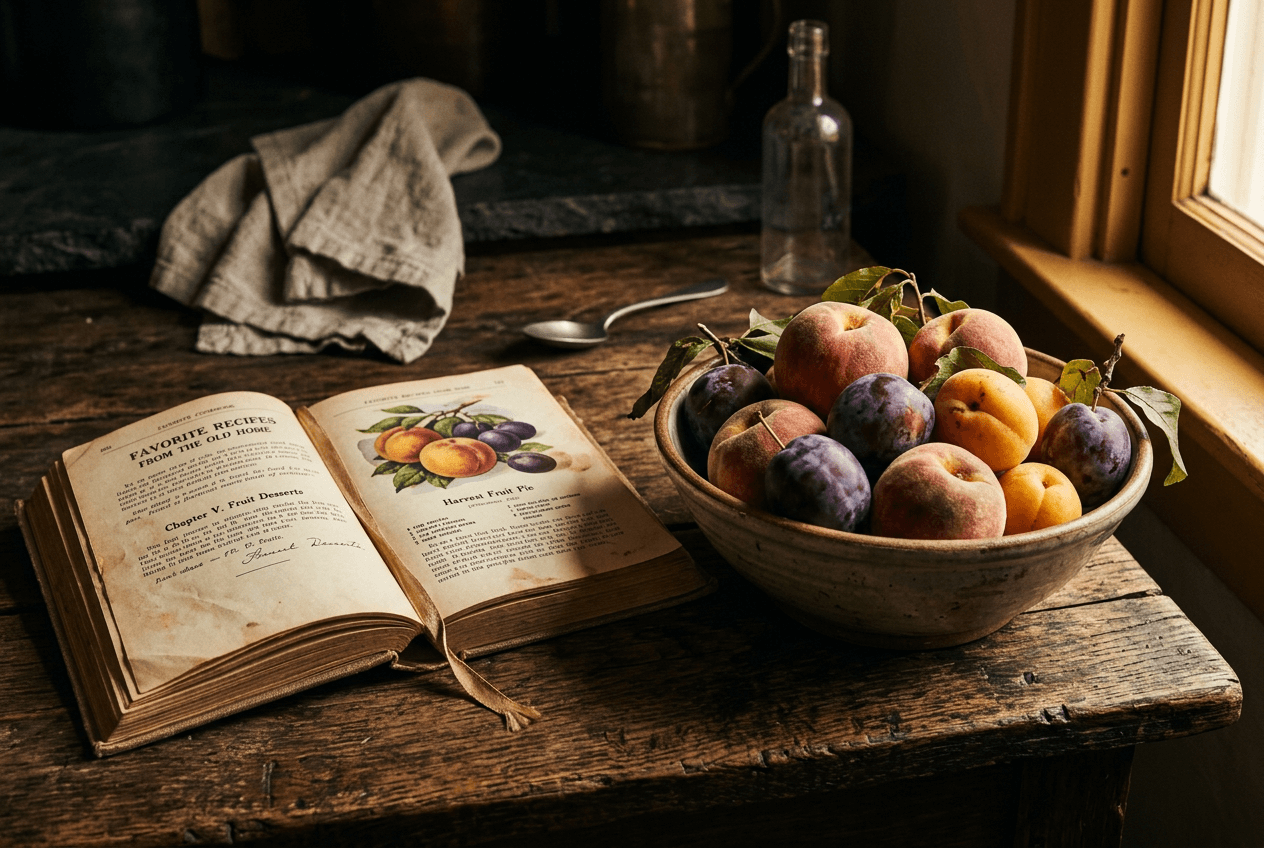 Vintage still life scene with antique cookbook and fruit arrangement evoking the early history of food photography
Food photography has a surprisingly long history. The first known photograph featuring food as a primary subject dates to 1845, when William Henry Fox Talbot captured a daguerreotype of peaches and a pineapple. For decades after, food images were deeply influenced by still-life painting traditions — think lush arrangements of fruit symbolizing abundance and fertility.
The early cookbook era (1900s–1930s). Before color film, food photographs in cookbooks and magazine ads were shot in black and white, sometimes with color hand-painted over the prints using pastels or watercolors. Color food photography didn't arrive until around 1935, when photographer Nickolas Muray adapted the three-color carbro process for commercial use.
The "cookbooklet" boom (1940s). Brands like Crisco and Aunt Jemima began publishing free promotional pamphlets — "cookbooklets" — filled with vivid food photographs alongside recipes. These weren't just instructional; they were selling a lifestyle. Clean kitchens, happy families, and impossibly perfect food.
The studio era (1960s–1980s). Film cameras became the standard for food photography, and elaborate sets were built to showcase dishes. Photographers used mirrors, glass, and aluminum foil to manipulate light and enhance their subjects. Food was styled within an inch of its life — and often made inedible in the process.
The trend shifts. Food photography has cycled through distinct aesthetic trends: from overhead flat-lay shots → romantic side-lit arrangements with abundant props → "food porn" excess → and, most recently, a return to clean, natural, minimal styling with selective focus and extreme close-ups.
The social media revolution (2010s–present). The combination of smartphones, digital cameras, and platforms like Instagram fundamentally democratized food photography. Suddenly, anyone dining out could capture and share their meal. The phrase "phone eats first" became a cultural phenomenon. Today, 74% of people use social media to decide where to eat, and 84% of Gen Z actively try food trends they discover on platforms like TikTok and Instagram.
Types of Food Photography
Not all food photography serves the same purpose. Understanding the different types helps you choose the right approach for your specific needs — whether you're shooting for a delivery app, a restaurant menu, or a cookbook.
Commercial and Advertising Photography
This is food photography with a clear mission: sell something. Commercial food images appear in print ads, digital campaigns, billboards, delivery app banners, and brand marketing materials.
The style tends to be polished, sharp, and precise. Deep depth of field ensures every detail is visible. Colors pop. The food looks flawless — because it often took a team of stylists hours to make it that way.
So what is commercial food photography in practice? Think of a McDonald's billboard or a Starbucks seasonal campaign. These images are created by teams with substantial budgets, but the principles behind them — clean lighting, careful composition, intentional color palettes — apply to businesses of any size. For more on these principles, explore our food photography tips.
Editorial Photography
Editorial food photography is where art meets cuisine. Found in magazines, cookbooks, food blogs, and feature articles, editorial images prioritize storytelling and emotion over pure product promotion.
There's more creative freedom here. The photographer might capture steam rising from a pot, flour-dusted hands mid-knead, or a table scattered with the beautiful aftermath of a shared meal. The food styling, props, lighting, and composition work together to create a mood — cozy, rustic, elegant, vibrant.
Editorial work is what you'd see in publications like Bon Appétit or Saveur, and it's become a massive influence on how food bloggers and content creators approach their own photography.
Packaging Photography
This is the most technically demanding type of food photography. Packaging photography must accurately represent a food product's contents while making it look appealing enough to grab attention on a crowded retail shelf.
The food is typically shot against clean, often white, backgrounds so images can be isolated and placed into various packaging layouts. Every element — from the angle of a drizzle to the exact size of a garnish — is meticulously controlled. This is the type of photography you see on frozen food boxes, sauce jars, cereal boxes, and snack bags.
Menu and Restaurant Photography
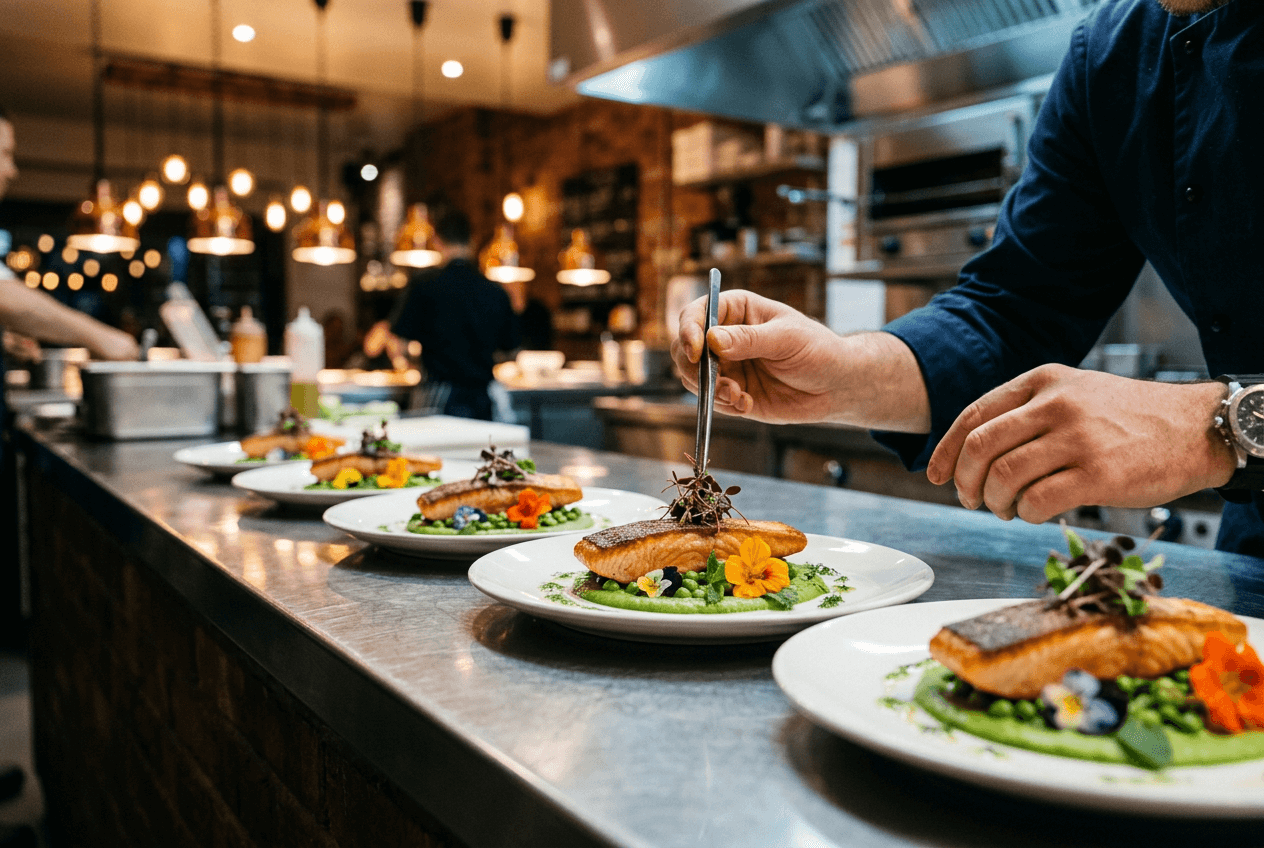 Chef garnishing a row of identically plated restaurant dishes during a professional menu photography session
Menu photography requires consistency above all. Every dish in a restaurant's collection needs to be shot in a similar style, with matching lighting, backgrounds, and color profiles.
This is especially critical for food delivery app photography. Platforms like Uber Eats and DoorDash are visual marketplaces — diners scroll through thumbnail images and make snap decisions. Listings with professional photos consistently outperform those without. Our guide on menu photos for Uber Eats and DoorDash covers the specific requirements for each platform.
For cafes and fine dining restaurants, menu photography also shapes the brand identity. A rustic cafe's warm, natural-light food images communicate something very different from a fine dining establishment's dark, moody compositions.
Social Media Food Photography
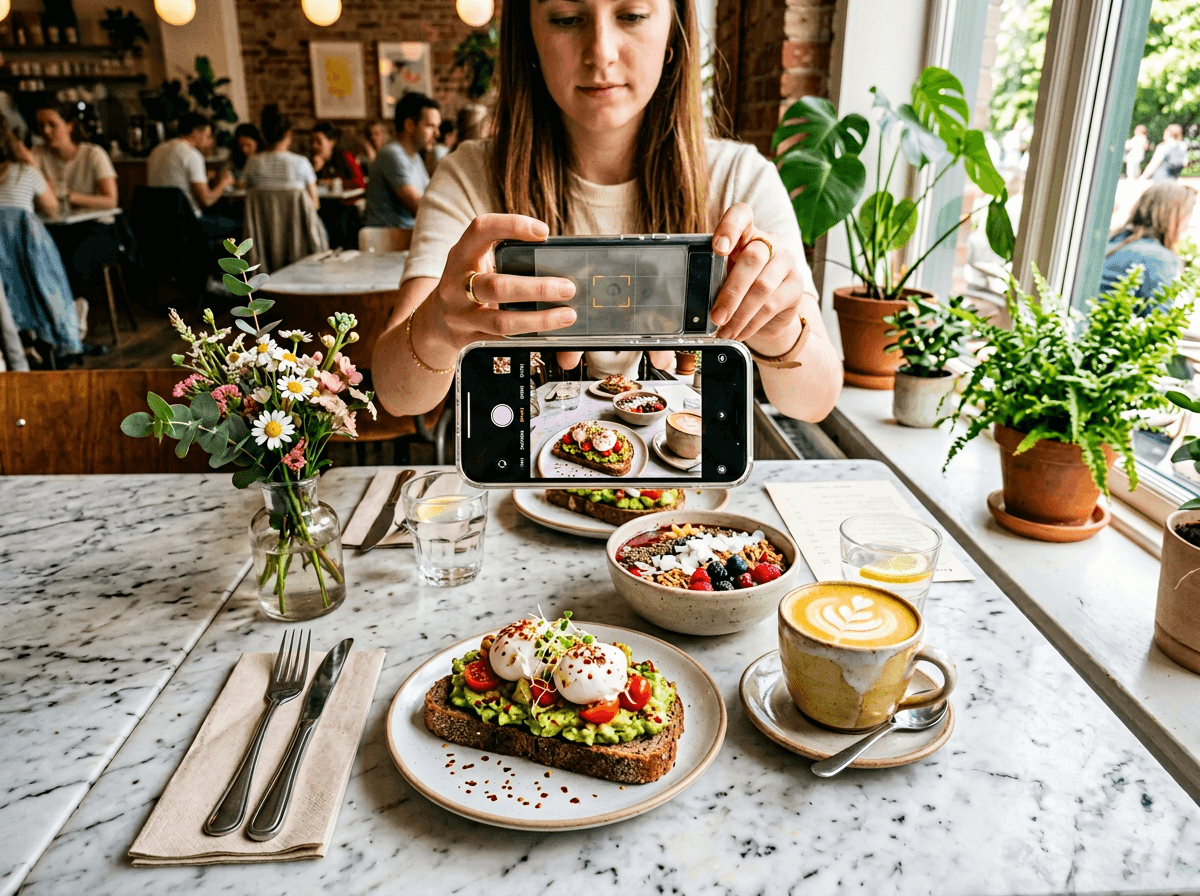 Smartphone capturing social media food photography of a colorful brunch spread in a sunlit cafe
Social media food photography is the most democratized type. Anyone with a smartphone can participate, and the results range from casual snapshots to highly curated content that rivals professional editorial work.
Each platform has its own visual language:
- Instagram: Square and vertical formats, emphasis on composition and color grading, Stories and Reels for behind-the-scenes content
- TikTok: Video-first, but thumbnail images matter; authentic, in-the-moment aesthetic
- Pinterest: Vertical images dominate, aspirational and highly styled, drives long-term traffic for food content — try Pinterest-style food photography to match trending aesthetics
The stat that 74% of diners use social media to choose restaurants underscores why this type of food photography matters so much for food businesses. Even if you never hire a professional photographer, understanding how to take great food photos for social media directly impacts your bottom line.
The Key Elements of Great Food Photography
What separates a scroll-stopping food image from a forgettable one? Four essential elements.
Lighting
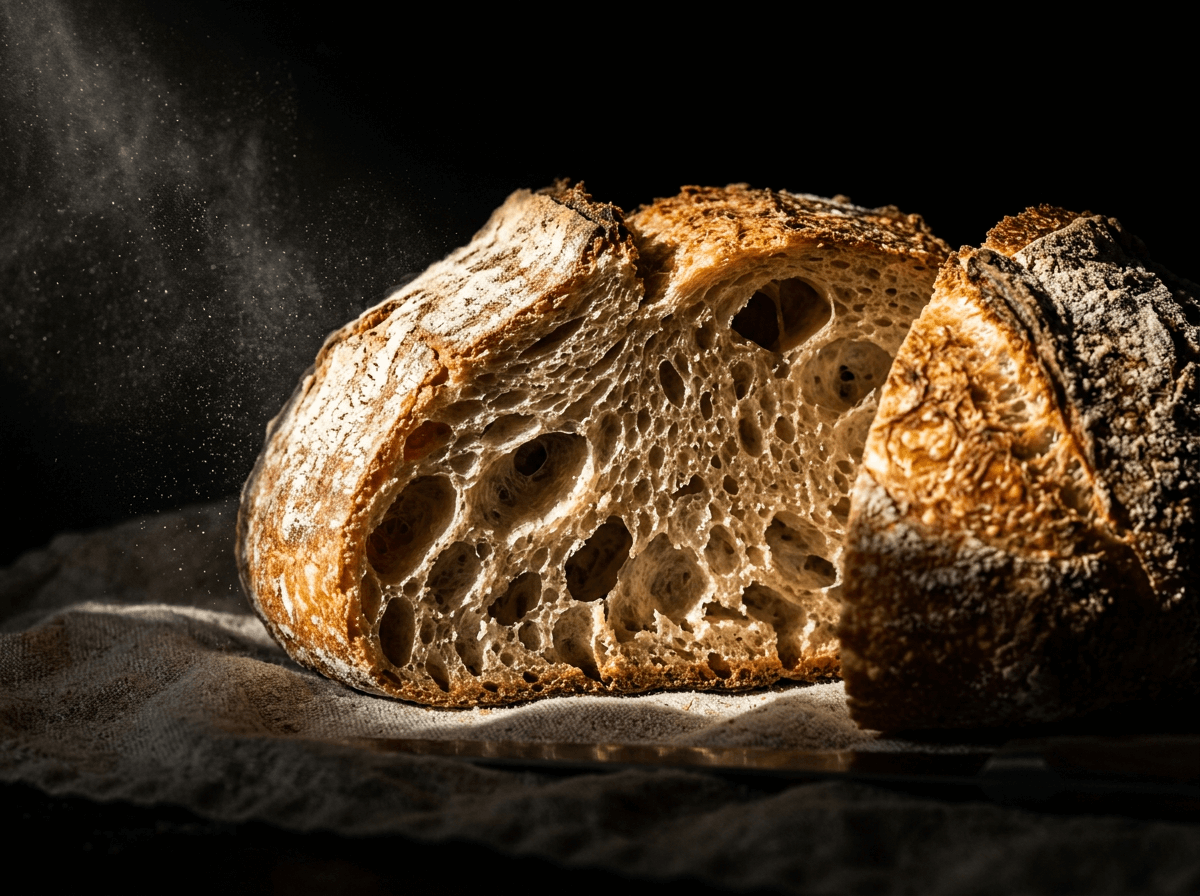 Dramatic side-lit close-up of sourdough bread showing how lighting reveals food texture in photography
Lighting is the single most important element in food photography — full stop. The same dish can look completely different depending on how it's lit.
Natural light is the gold standard for most food photography. Position your setup near a large window, and you'll get soft, diffused light that naturally enhances colors and textures. Morning and late afternoon light are ideal, offering a warm, golden quality. For a deep dive, check out our food photography lighting guide.
The direction of your light matters just as much as the quality:
- Side lighting (from the left or right) creates depth through shadows and highlights — the best choice for revealing texture
- Backlighting (from behind the food) gives a luminous, airy quality and beautifully highlights steam, liquids, and translucent ingredients
- Front lighting (from the camera's position) tends to flatten textures — generally avoid it for food
If natural light isn't available, artificial lighting with diffusers and softboxes can replicate the effect. The one light source to always avoid? Overhead fluorescent lighting. It casts an unflattering yellow-green tone that makes even the freshest food look institutional.
Composition and Angles
Composition is how you arrange every element in the frame — the food, the props, the negative space, the background. Strong food photography composition follows many of the same principles used in other visual arts:
- Rule of thirds: Place the main subject off-center for a more dynamic image
- Leading lines: Use utensils, napkins, or table edges to guide the viewer's eye toward the food
- Negative space: Don't crowd the frame — let the food breathe
- Layering: Create depth by placing elements at different distances from the camera
Camera angle dramatically changes how a dish is perceived:
| Angle | Best For | Example |
|---|---|---|
| Overhead (90°) | Flat dishes, bowls, spreads, pizza | Flat-lay shots popular on Instagram |
| 45-degree | Most dishes — the natural dining perspective | General-purpose, most versatile |
| Eye level (0°) | Tall dishes, stacked burgers, layered cakes, beverages | Showcases height and layers |
A common beginner mistake is using the same angle for every dish. Match your angle to the food's strongest visual feature. Our food photography tips guide covers composition techniques in more detail.
Food Styling and Props
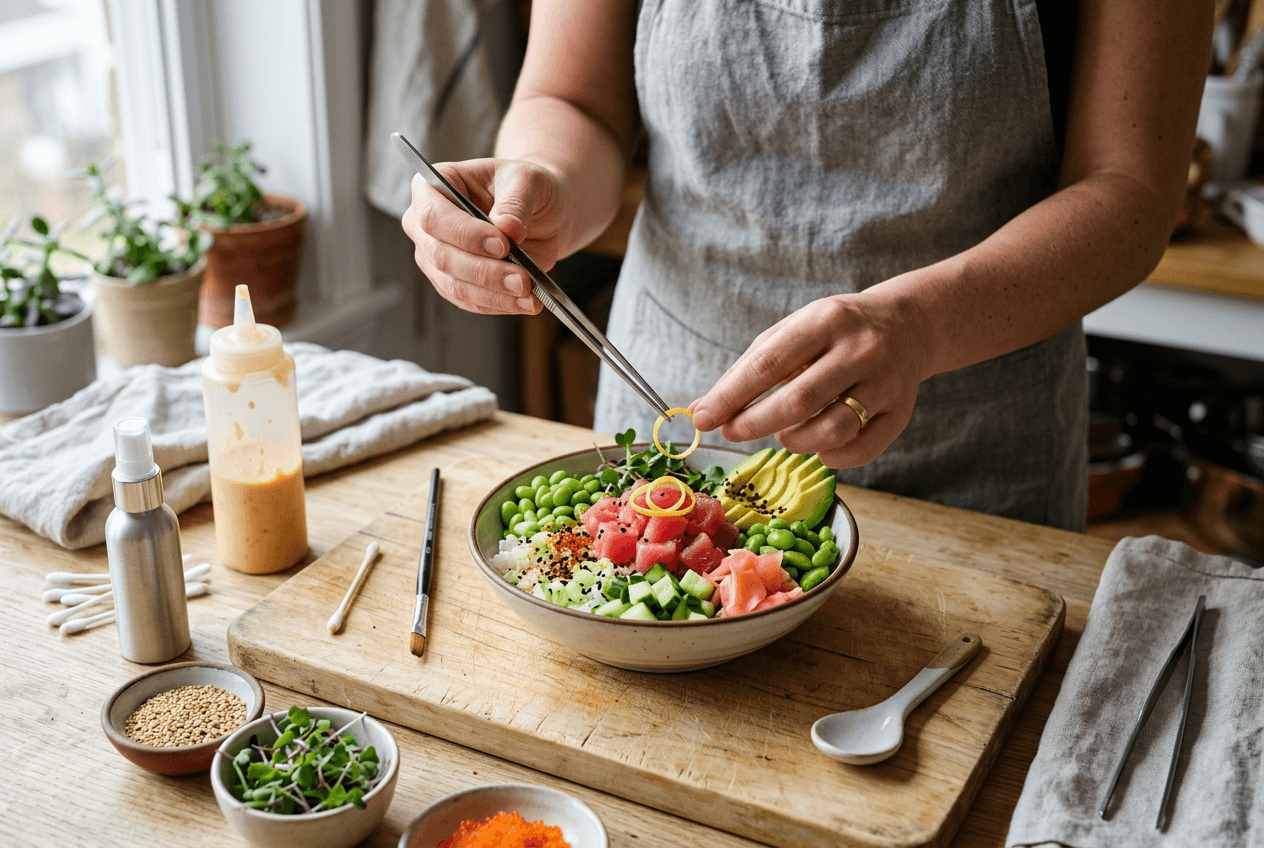 Food stylist using tweezers to carefully garnish a colorful poke bowl with professional styling tools nearby
Food styling is the art of making food look its best for the camera. In professional settings, the food stylist selects the best-looking specimen — called the "hero" — and carefully prepares it for its close-up while lower-quality stand-ins are used during setup and lighting tests.
Professional food stylists typically have culinary training and an arsenal of industry tricks: acrylic ice cubes that don't melt under hot lights, glycerin sprayed on glass to simulate condensation, vegetable oil brushed on surfaces to enhance shine, and strategic tweezering of every garnish.
For everyday food photography, props play a supporting role. Think of them as the set dressing:
- Plates and bowls that complement (not compete with) the food's colors
- Utensils, linens, and cutting boards that suggest context and use
- Scattered ingredients (herbs, spices, flour) that tell the story of how the dish was made
The key rule: props should enhance the food, never distract from it. You can also explore FoodShot AI's style presets to see how different backgrounds and presentations change a dish's appeal.
Color and Texture
Color and texture are what make food photography feel tactile — they're the closest you can get to communicating taste through an image.
Color theory applies directly to food photography. Warm tones (reds, oranges, golden browns) naturally stimulate appetite, which is why so many fast-food brands use red in their branding. Cool tones (blues, grays) tend to suppress appetite — making them poor choices for backgrounds unless you're deliberately going for contrast.
Complementary backgrounds amplify the food's natural colors. A bright green salad pops against a warm wooden board. Rich chocolate cake looks decadent on a dark slate surface. The background should serve the food, not fight it.
Texture adds dimension. Crispy, bubbly, gooey, crumbly, smooth — close-up photography that reveals these textures makes viewers almost feel the food. Side lighting is your best friend here, as it creates the small shadows that reveal surface detail.
Who Needs Food Photography?
Short answer: anyone who sells or shares food. Here's how it breaks down by industry.
Restaurants and Cafes
Restaurant photography is no longer optional. Your menu, website, Google Business profile, social media pages, and delivery app listings all need high-quality food images. Restaurants that invest in photography see measurable returns in foot traffic, online orders, and social engagement. Learn how one cafe transformed their entire visual approach in our cafe menu refresh case study, or explore our dedicated guide to cafe food photography.
Food Delivery Businesses
In the delivery app economy, your food photos are your storefront. Customers on Uber Eats, DoorDash, and Grubhub can't smell or see your food in person — they make purchasing decisions based almost entirely on images. Avoid the most common pitfalls with our guide on food delivery photography mistakes, and learn platform-specific best practices in our menu photos for Uber Eats and DoorDash guide.
Food Bloggers and Content Creators
For food bloggers, photography isn't a supplement to the content — it is the content. A recipe blog with mediocre photos will struggle to gain traction regardless of how good the recipes are. Pinterest, Instagram, and even Google image search drive substantial traffic to food blogs, and the quality of your images determines your click-through rate.
Food Brands and Publications
CPG (consumer packaged goods) brands need food photography across their entire product lifecycle: packaging design, e-commerce listings, advertising campaigns, social media, and PR materials. Food publications — from Bon Appétit to local food magazines — exist primarily as vehicles for beautiful food imagery paired with compelling stories.
Food Photography Career Paths
Interested in food photography as more than a hobby? The field offers several distinct career paths.
Food Photographer
Professional food photographers in the United States earn between $49,000 and $87,000 annually, with a median around $60,000, according to Glassdoor salary data. Freelance photographers at the top of the industry can earn significantly more, especially those specializing in advertising work for major brands. The U.S. Bureau of Labor Statistics tracks photographer employment trends more broadly.
Building a career requires a strong portfolio, industry networking, and often a specific niche — whether that's restaurant photography, product photography, or editorial work for publications.
Food Stylist
Food stylists combine culinary training with visual art skills to prepare and arrange food for photography sessions. It's a specialized career that's grown alongside the content creation boom — brands, agencies, and media companies all need stylists for their shoots.
Social Media Content Creator
The newest career path in food photography blends photography skills with marketing knowledge and platform expertise. Content creators may work directly with restaurants and food brands, or build personal audiences on Instagram, TikTok, and YouTube that they monetize through partnerships and sponsorships.
This path has the lowest barrier to entry — all you need is a smartphone, a good eye, and consistency — but the competition is fierce.
Essential Equipment for Food Photography
You don't need to spend thousands to get started with food photography. Here's a realistic overview:
Camera options: Modern smartphones (especially the iPhone 15 Pro and later) produce remarkable food photos. For those wanting more control, mirrorless cameras offer the best balance of quality and flexibility. For specific recommendations, read our complete food photography equipment guide.
Lenses: A 50mm prime lens is the classic food photography workhorse. Macro lenses (90mm or 100mm) capture stunning close-up details. Zoom lenses around 24–70mm offer versatility for different shooting angles.
Essential accessories: A sturdy tripod (especially for overhead shots), reflectors or white foam boards to bounce light, and diffusion material to soften harsh window light. These simple, affordable tools make a dramatic difference in your food photography.
Already shooting with an iPhone? Our iPhone food photography tips guide covers everything you need to maximize your smartphone results.
The AI Revolution in Food Photography
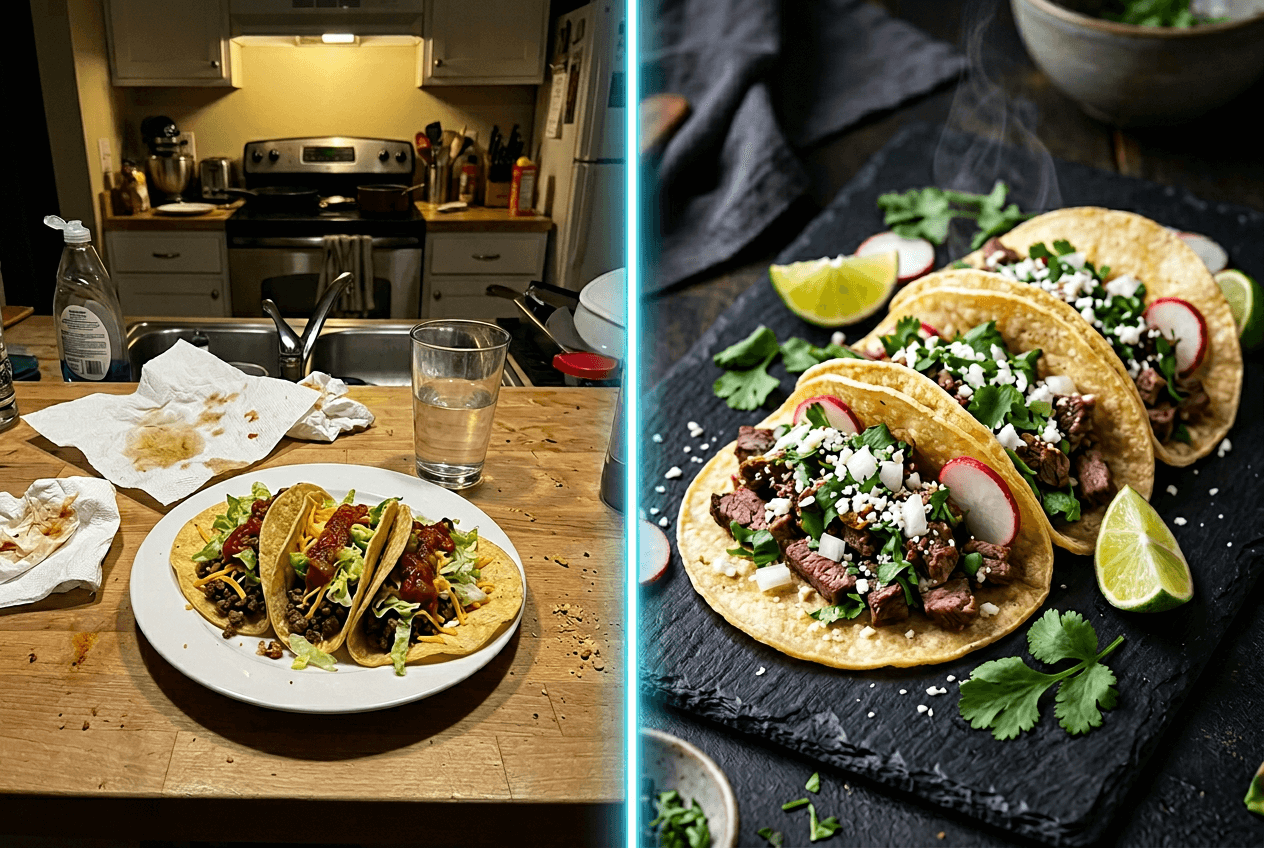 Before and after comparison showing AI transformation of a casual taco photo into professional food photography
Here's the reality for most small food businesses: professional food photography is expensive. A single session with a photographer, food stylist, and prop stylist can cost anywhere from $500 to $1,500+, and that's before post-production. For a full menu refresh, you're looking at thousands of dollars. Our detailed food photography cost breakdown shows what restaurants actually pay in 2026.
This cost creates a gap. Large chains and well-funded brands can afford professional photography for every menu item and marketing campaign. Small restaurants, independent cafes, and solo food entrepreneurs often can't — which means they're competing with inferior images, or no images at all.
AI is closing that gap fast.
Tools like FoodShot AI let you upload a smartphone photo of any dish, choose from 30+ professional styles (fine dining, delivery-ready, Instagram-optimized, and more), and get studio-quality results in about 2 minutes. The cost? Starting at $15/month for 25 images — roughly 95% less than a traditional photo shoot.
This isn't about replacing professional photographers. High-end editorial shoots, major advertising campaigns, and complex brand work still benefit enormously from human expertise and creativity. But for the daily content needs of a busy restaurant — updating delivery app listings, refreshing social media, photographing seasonal specials — AI food photography makes professional-quality food images accessible to everyone.
For a full comparison, read our traditional vs AI food photography analysis covering cost, time, and quality differences.
Frequently Asked Questions
What is the difference between food photography and food styling?
Food photography is the act of capturing the image — controlling the camera, lighting, and composition. Food styling is the art of preparing and arranging the food itself to look its best on camera. They're complementary skills that work together. A food stylist makes the dish camera-ready; the photographer captures it in the most compelling way. On professional shoots, these are typically separate roles handled by different specialists.
Do I need expensive equipment for food photography?
No. Modern smartphones, particularly newer iPhone models, are capable of producing professional-quality food images when paired with good natural lighting and basic composition skills. That said, a dedicated camera gives you more control over depth of field, focus, and low-light performance. Start with what you have and upgrade as your skills (and needs) grow. Our food photography equipment guide breaks down options at every budget level.
How much does professional food photography cost?
Professional food photography typically ranges from $150 to $500+ per image, or $500 to $1,500+ per session. Full menu shoots for restaurants can run $2,000–$5,000 depending on the number of dishes and the production complexity. Read our complete food photography cost guide for detailed pricing breakdowns by project type.
Can I use my smartphone for food photography?
Absolutely. Smartphone cameras have improved dramatically, and the vast majority of social media food photography is shot on phones. The keys are using natural light (shoot near a window), keeping your compositions simple, and editing lightly to enhance colors and contrast. For step-by-step techniques, try our iPhone food photography tips.
What is commercial food photography?
Commercial food photography is any food photography created with the intent to promote or sell a product, service, or brand. This includes restaurant menu photos, food packaging imagery, advertising campaigns, delivery app listings, and marketing materials. It's the broadest and most business-relevant category of food photography, and it's where the vast majority of the industry's revenue is generated.