Detroit Food Photographer Cost: $800–$1,800 a Day in 2026
 Ali Tanis10 min read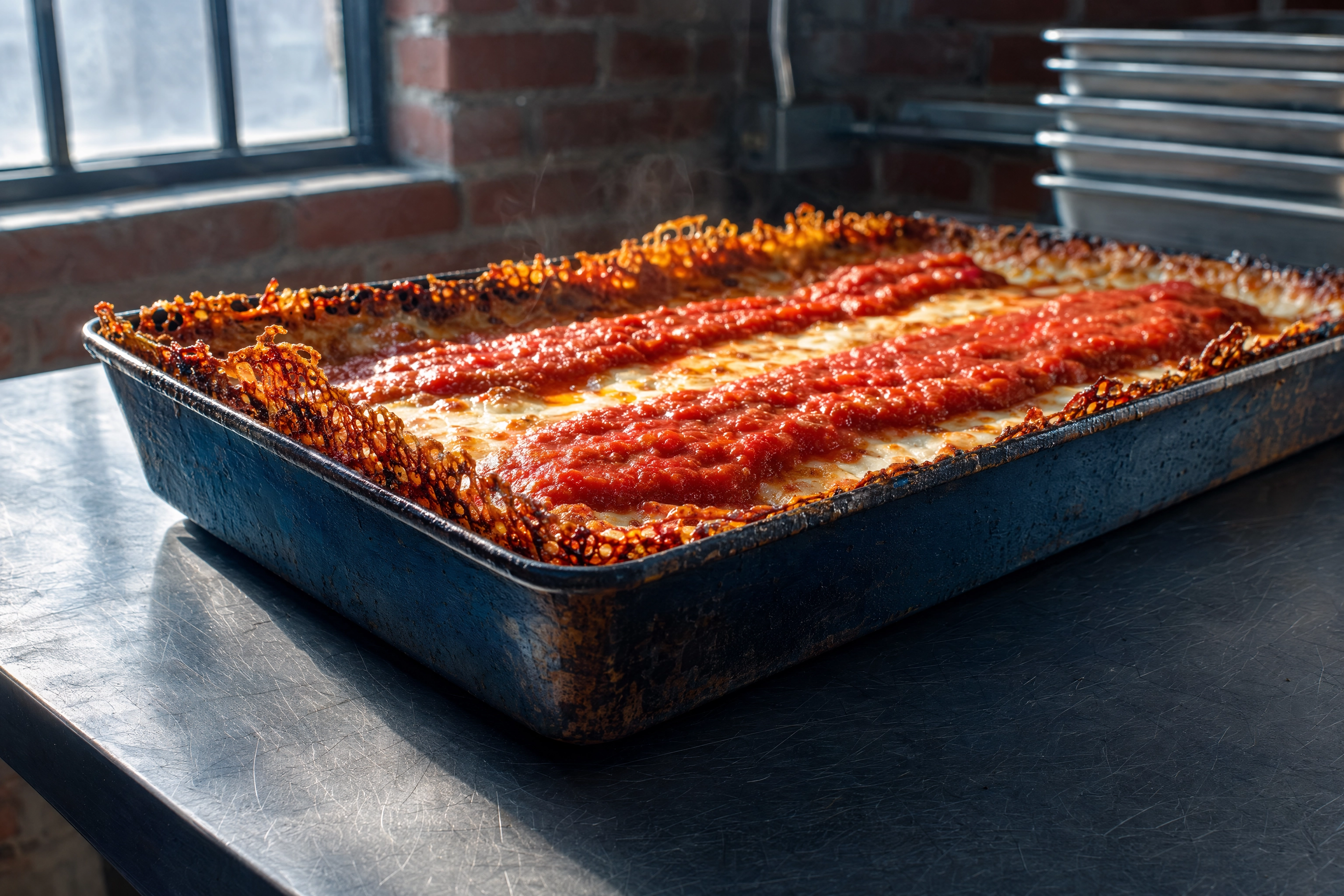
Hiring a Detroit food photographer costs less than the same brief in Chicago or New York — roughly $300–$600 for a half day and $800–$1,800 for a full one. That is the easy half. The harder half: an independent here runs a thinner margin than a funded coastal group, so the same invoice bites deeper. Below: honest local rates, what inflates a quote, when hiring wins, and where AI covers the recurring marketing images no booking can.
Quick Summary: A Detroit food photographer charges about $299 an hour on location, $300–$600 for a half day and $800–$1,800 for a full day in 2026, or $75–$200 per finished image. Hire a human for people, the room and brand campaigns. Use AI for the weekly dish and delivery images, from $15/mo.
Detroit Kitchens Are Suddenly Being Judged Nationally
This April the Michelin Guide confirmed an American Great Lakes edition, with Detroit among six cities its inspectors are canvassing now. The first selection is revealed next year. No Michigan restaurant has ever held a star, so every serious kitchen in the metro is effectively auditioning.
That is not the only signal. A downtown wine bar reached the James Beard Best New Bar finals this year, and two metro-Detroit chefs were Best Chef: Great Lakes semifinalists. A large New York hospitality group confirmed its first Detroit restaurant downtown. National capital and press are arriving in a city that spent a decade rebuilding an independent dining scene.
The consequence is unglamorous. Your images now sit beside Chicago's and New York's in the same search results and the same delivery carousel. Nobody grades them on a Michigan budget. Photography has moved from nice-to-have to a line item every operator here must price honestly.
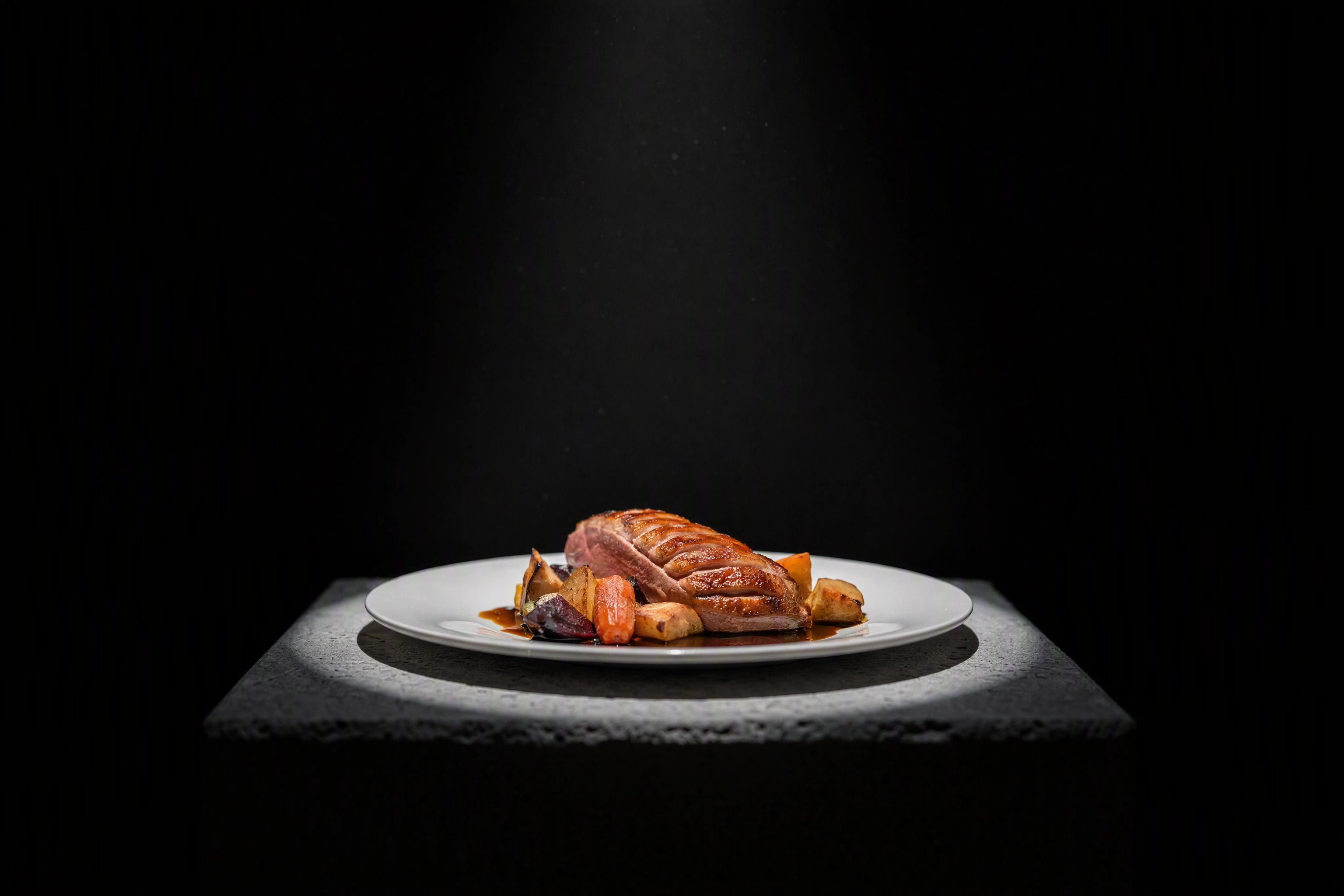 Plated duck dish lit like a museum exhibit on a plinth, a Detroit restaurant kitchen under national scrutiny
What a Detroit Food Photographer Actually Charges
The metro has one published rate card and it is portrait-led: $149 for the first in-studio image, $99 for each additional, $299 an hour for on-location coverage. Useful, but not a plated-dish quote. Here is the honest composite for commercial photography across southeast Michigan.
| Line item | Detroit range |
|---|---|
| Half day, about four hours | $300–$600 |
| Full day | $800–$1,800 |
| Per finished image | $75–$200 |
| Menu shoot, 20–30 dishes | $1,200–$2,500 |
| Stylist, per day | $500–$1,200 |
| Studio rental and props | $100–$500 |
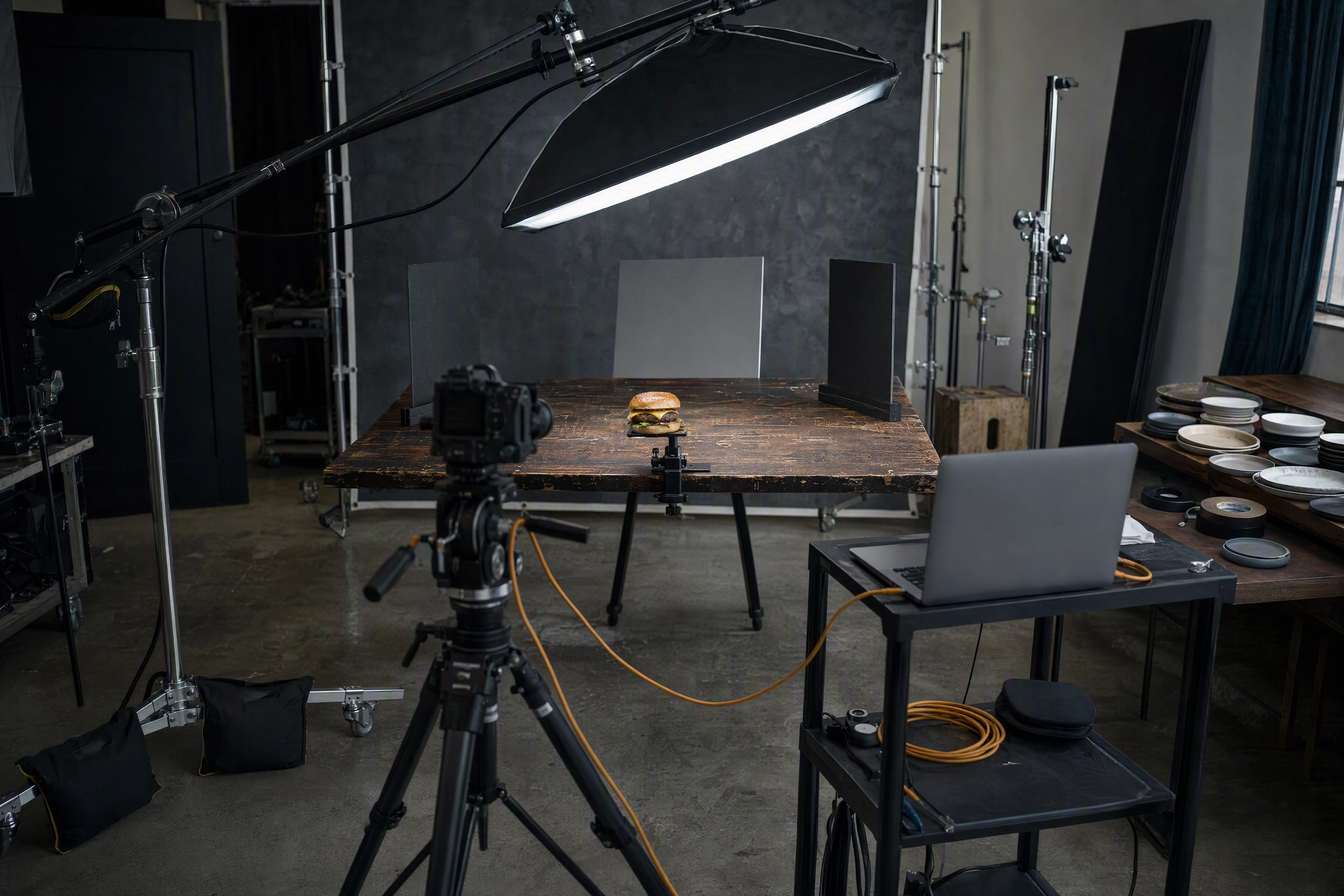 Rented studio set with softbox, tripod and one burger, showing what a food photographer day rate buys
Nationally, experienced commercial shooters charge $150–$300 for the same time; high-end specialists $300–$500 and up. Detroit sits under that, and a Detroit restaurant photographer quoting inside those bands is quoting fairly. Nashville and Denver operators pay roughly $400–$800 per session, Los Angeles and New York about 45% above the national average, and New Orleans lands close to Detroit.
The trap is the add-ons. Styling, props, studio rental, retouching and a usage licence routinely inflate a quote by 40–60%. Ask three things before signing: how many finished images the fee includes, who owns the licence and for how long, and whether styling is billed separately. Our national cost breakdown and restaurant photography pricing guides go deeper; Chicago shows the identical brief in the nearest big market.
The Number That Matters Is Annual, Not Per-Shoot
One session is not the real cost. Four seasonal refreshes plus specials is: $3,200 to $7,200 a year here before anyone touches social content.
Set it against the margin. Independent restaurants run 3–9% net, most at the bottom of that band. A Michigan independent turning over $900,000 at 5% nets about $45,000. A $1,500 session is 3.3% of the entire year's profit, spent on one afternoon of images that go stale the moment the specials board changes.
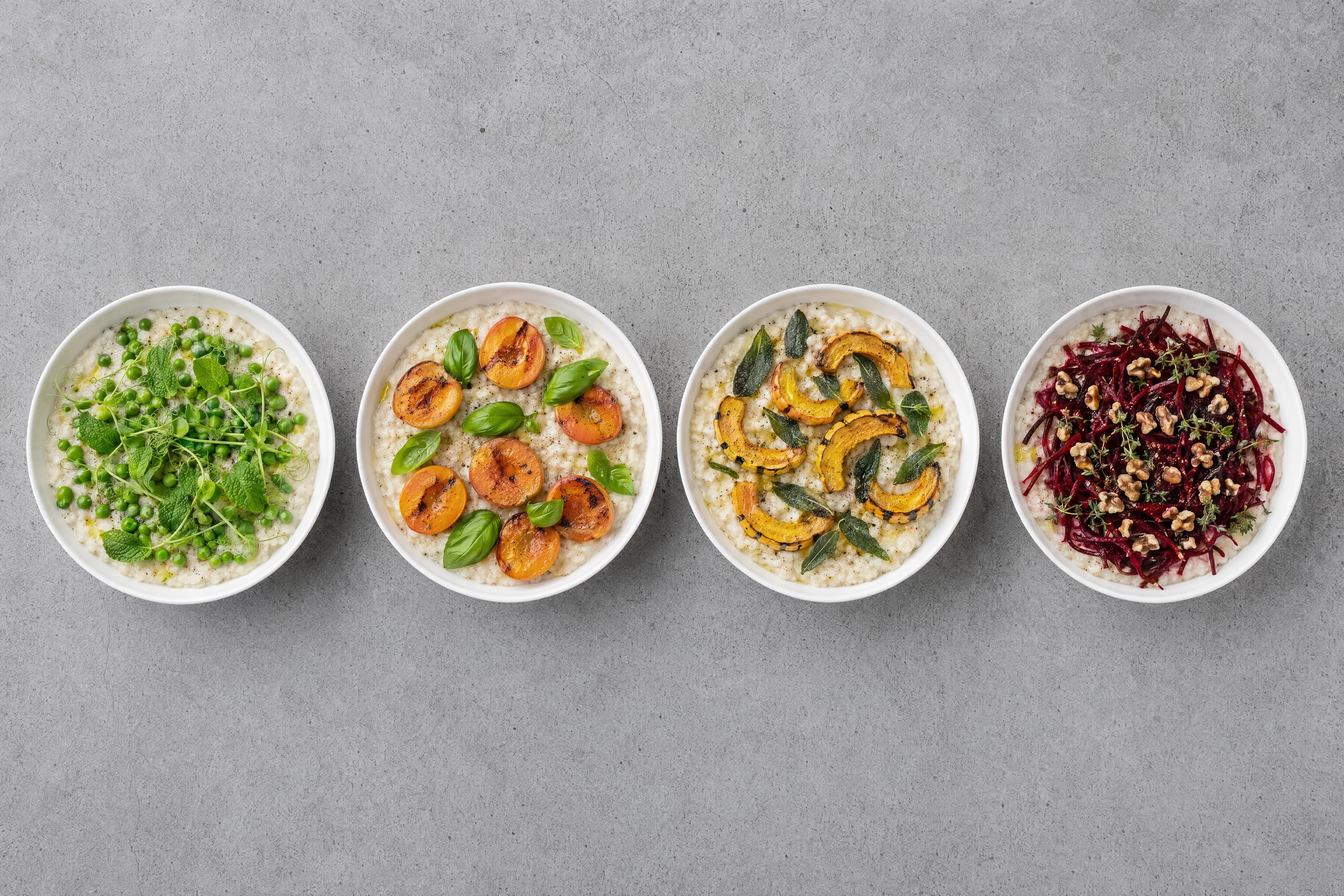 Four seasonal versions of one dish in a row, the four annual menu refreshes a restaurant pays to reshoot
Demand for images has gone up, not down. In the James Beard Foundation's independent restaurant industry report, 49% of chefs ranked social media among the trends most likely to affect operations this year. Established independents budget 1.5–3% of gross sales for paid marketing, and photography competes inside that marketing budget, not outside it.
Quarterly shoots against a weekly content cadence is the mismatch, and it reads the same in Nashville and New Orleans.
Coneys, Squares and Brick Cheese: Shooting What Detroit Serves
Detroit's signature plates are genuinely awkward to photograph.
The square pizza. Rectangular, baked in a blue-steel automotive pan, brick cheese pushed to the edge so it caramelises into a frico wall, sauce ladled on top. It now sits inside the top five American pizza styles and went national on a major chain's lineup back in 2021. Shot flat from overhead it reads as a beige rectangle; it needs raking side light. Every pizzeria with a square pan has the same problem, and our pizza photography guide covers the angle.
The Coney. Natural-casing dog, beanless chili, mustard, diced onion. Brown on brown, assembled in seconds, served under diner fluorescents mid-rush. No stylist is coming to rebuild it.
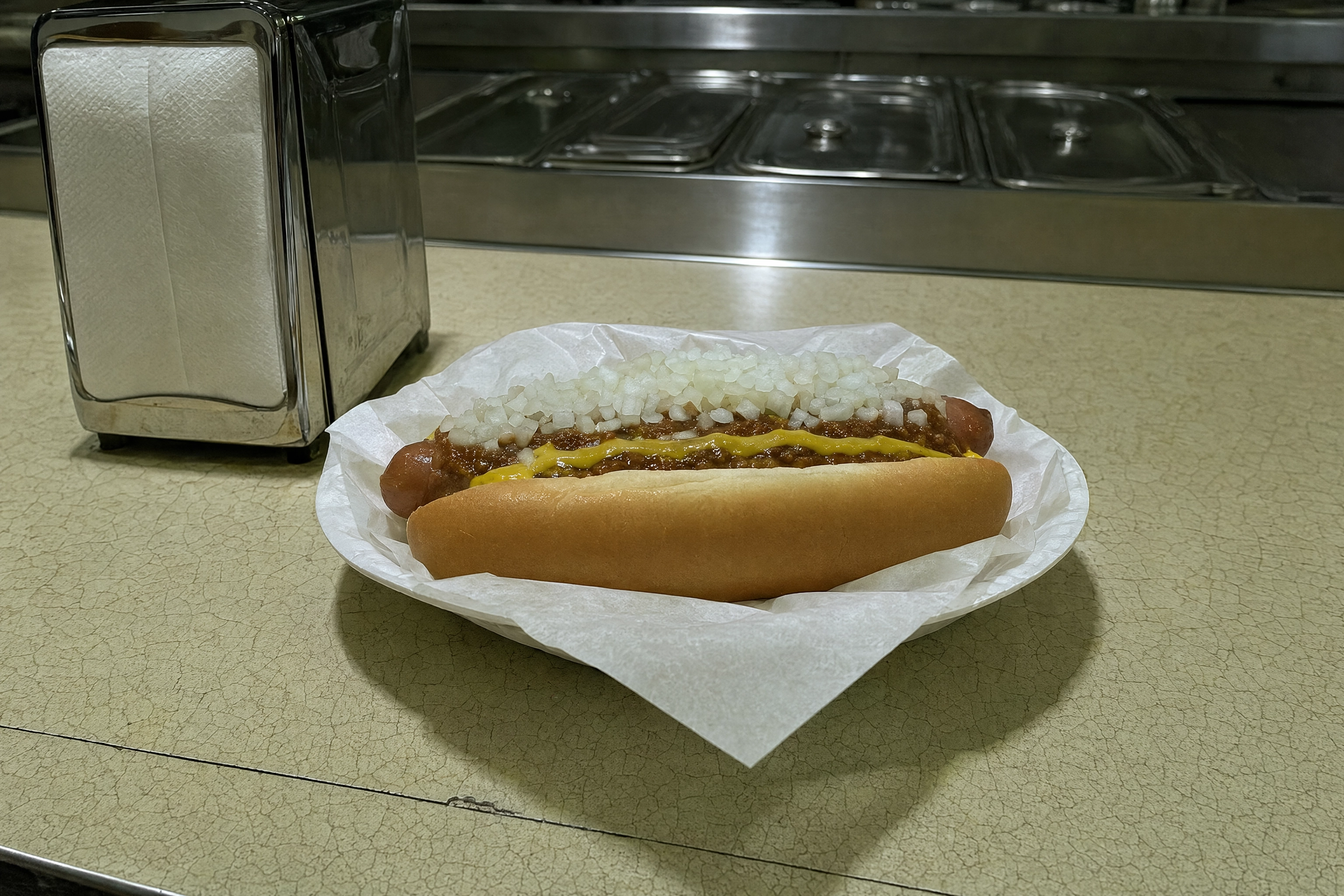 Coney-style chili dog under harsh diner fluorescent light, the brown-on-brown Detroit food photography problem
Everything else. Pączki in Hamtramck on Fat Tuesday, cider and doughnuts from September, deli corned beef, Eastern Market produce, the Lebanese grills of Dearborn, Mexicantown, West African kitchens near New Center, and cafes with north-facing light in Corktown, Midtown and the University District.
Generic presets fail across all of it. A square pan is not a round pizza, and a Coney is not a hot dog with props. A brief ignoring that produces menu design nobody here believes.
Where Hiring a Human Still Wins
AI cannot make a real person who exists. That one line settles most of the argument.
Book a professional for:
- People. Chef portraits at the pass, owner portraits, front-of-house staff. Portrait photography of a real human is the thing no generator can honestly supply.
- The room. Wide interiors, service in motion, the bar at 8pm.
- Launches and campaigns. A rebrand, a press kit, awards submissions, event photography and opening coverage — anything where art direction matters more than the plate.
- Physical product. Packaging, retail lines, a bottle somebody can hold. Packaged brands need product photography of a real object.
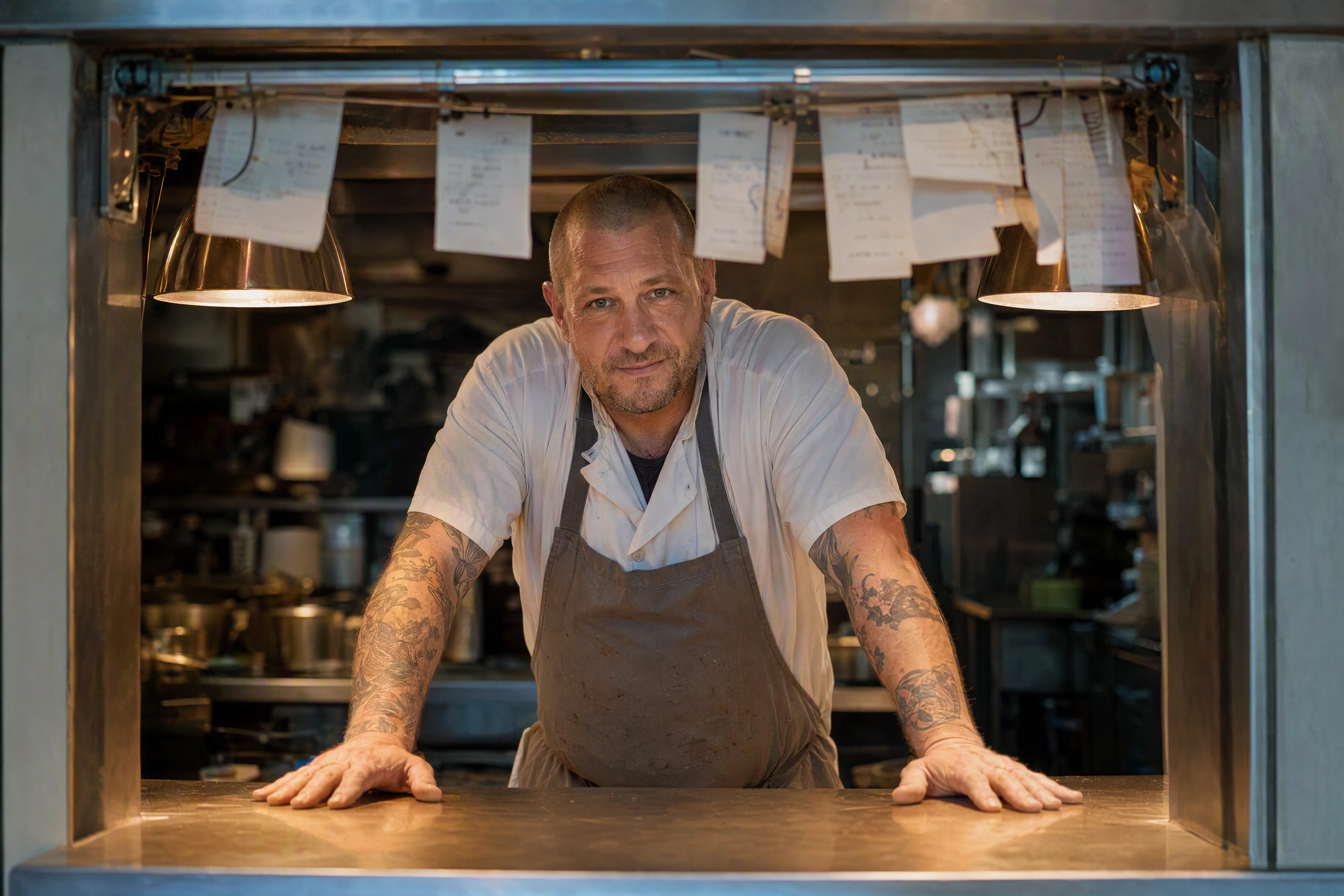 Environmental portrait of a line cook framed in the service window, the human work AI photography cannot do
One Detroit studio is refreshingly honest about the split: it says outright that it would hand a plated-food brief to a dedicated stylist and keep the portrait and brand work. That division of labour is correct, and it holds for a creative director planning a campaign as much as for an owner running consulting projects. Deciding what a dish should look like before the shutter opens is a judgement no preset can create.
Shooting in-house between hires? Our photography lighting guide and phone technique guide are honest places to begin.
Where AI Covers the Weekly Work
The recurring images are the part no booking reaches: Thursday's special, an October swap, a tired delivery tile, the Friday post that starts the weekend.
FoodShot AI takes a phone snap of the real dish and returns a 2K, menu-ready image in about 2 minutes. It ships 200+ styles across delivery, menu and fine dining, Builder Mode for pairing a surface with a plate style, My Styles for matching your own brand imagery, Poster Mode for campaign layouts, and bulk processing on the top plan. Paid plans start at $15/mo with a commercial licence — see pricing.
| Annual spend | Quarterly shoots | Hybrid |
|---|---|---|
| Photography | $3,200–$7,200 | $800–$1,200 |
| Software | $0 | $180–$540 |
| Total | $3,200–$7,200 | $980–$1,740 |
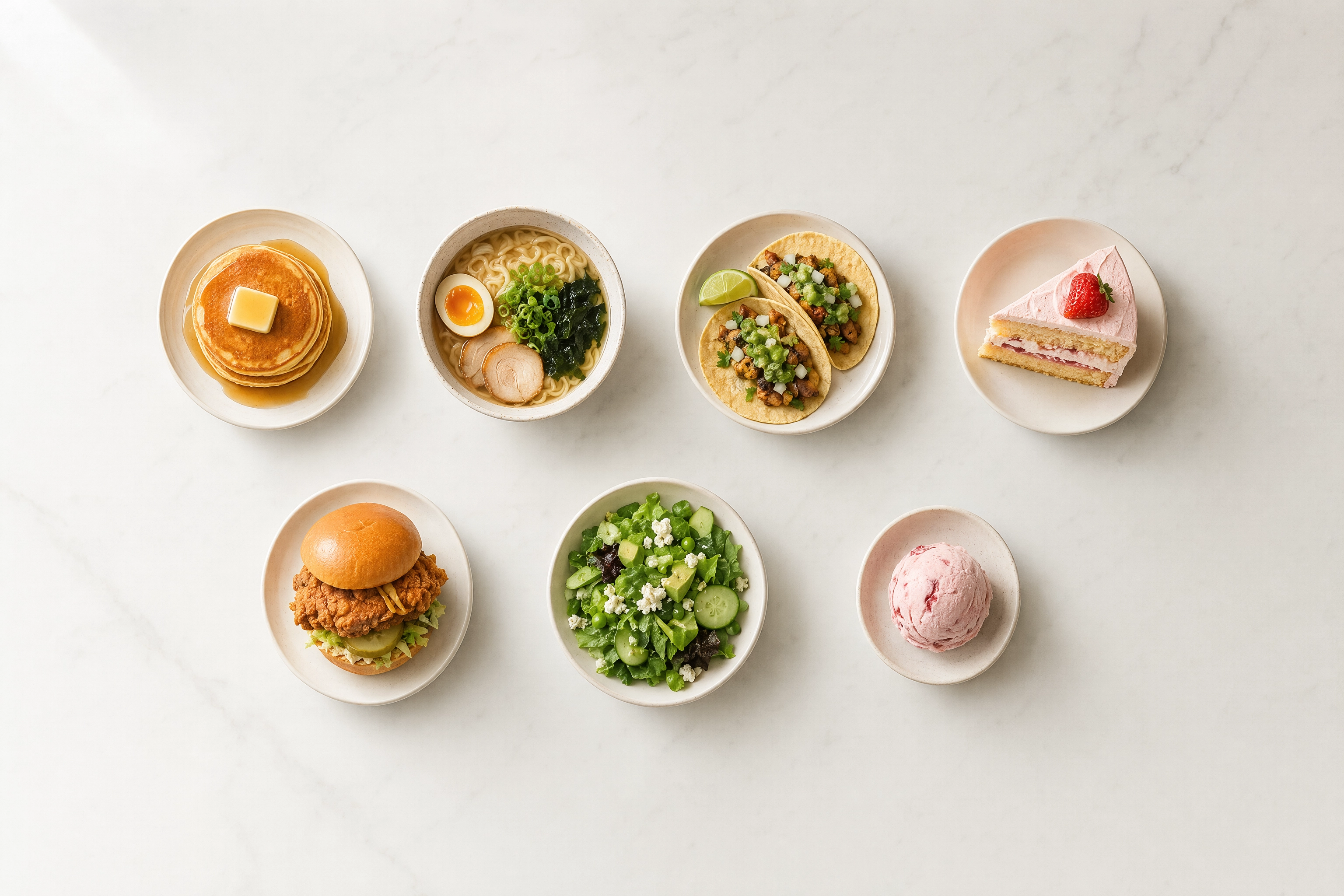 Seven different dishes laid out in a weekly grid, the recurring images a single food photography shoot cannot cover
It covers the weekly marketing images for restaurants, cafes, bakeries, bars and lounges, food trucks, ghost kitchens, catering and fine dining, plus delivery app listings, where platform rules require an image to accurately represent the dish served. Our platform photo rules explainer covers the detail.
The honest limits: still images only, food and beverage only, and no substitute for a professional whenever a real person belongs in the frame.
The Hybrid Plan a Detroit Independent Should Run
Book one paid half day a year, in daylight season, for people, the room and eight signature hero plates. License it for two years and treat it as your brand photography foundation.
Handle everything else with AI food photography on a weekly rhythm. Photograph your own reference frames properly: one surface, one angle, window side light. Our shoot brief and restaurant marketing ideas cover the rest.
The arithmetic: roughly $500 for that half day plus $180–$540 of software, against $3,200–$7,200 of quarterly shoots. The photos also land the day a dish is designed, not three weeks later. Nashville and New Orleans operators run identical maths. Our side-by-side comparison and AI alternative to hiring a photographer work through it line by line.
Frequently Asked Questions
How much does a Detroit food photographer cost in 2026?
Budget $300–$600 for a half day, $800–$1,800 for a full day, or $75–$200 per finished image. A 20–30 dish shoot with styling runs $1,200–$2,500. The one published local rate card quotes $299 for on-location coverage.
Is Detroit cheaper than Nashville or New Orleans?
Marginally. All three are mid-market metros where restaurants pay $400–$800 a session for the shooter alone. The gap that matters is Los Angeles and New York, roughly 45% above the national average.
Can AI replace a Detroit food photographer completely?
No, and anyone claiming otherwise is selling something. Portraits, interiors, live service and physical products still need a camera and a human. What AI replaces is the second, third and fourth session of the year — the repeat plate and social images.
Will AI-generated images pass delivery platform rules?
Yes, provided the image accurately represents the dish you serve. Major platforms reject stock library pictures but accept enhanced and edited images of your own food. Shoot the real plate, then style it.
Can it handle square pizza and Coney dogs?
Both are hard local tests that need side light, not a flat overhead preset. Upload a clean reference frame and pick a style built for the category; a generic template flattens the crust wall.
Do I own the rights to AI-generated menu images?
On any paid plan, yes — a commercial licence is included, so the images can go on menus, delivery listings, printed collateral and paid social.