
12 AI Tools for Restaurants: Real Prices, 2026 Verdicts
 Ali Tanis12 min read
Every buyer's guide to AI tools for restaurants has the same flaw: it never prints a price, and it never says when to walk away. This one does both, for all twelve picks.
Adoption is thinner than the noise suggests. The National Restaurant Association's State of the Restaurant Industry 2026 report found 26% of operators using AI-related technology, with marketing the leading job at 19% of full-service operators and only 6% letting AI take a customer order. The quiet back-office jobs are where the money is.
Every figure below is a published or reported list price as of August 2026, and every entry names who should skip it. Our roundup of restaurant marketing tools covers the non-AI half of the stack.
Quick Summary: Back-office picks pay back fastest — invoice automation from $350 a site, AI scheduling from $29.99, forecasting from $79. Guest-facing voice AI starts near $399 and only earns out above roughly 40 calls a day, while visual content starts at $15.
The 12 AI tools for restaurants at a glance
| Tool | Category | Starting price | Best for |
|---|---|---|---|
| Toast IQ | POS intelligence | $0–$69/mo | Operators who never open reports |
| Slang.ai | Voice answering | $399/mo | Busy phones, 40+ calls a day |
| Popmenu | Site + answering | ~$179/mo | Independents wanting one vendor |
| OpenTable | Reservations | $149/mo + covers | Destination dining needing discovery |
| MarginEdge | Invoice management | $350/mo per location | Anyone blind on plate costs |
| 7shifts | Scheduling | Free, then $29.99 | Rota chaos and overtime creep |
| Lineup.ai | Forecasting | $79/mo per location | Groups staffing against real demand |
| Winnow | Waste tracking | Quote only | High-volume kitchens and buffets |
| FoodShot AI | Food photography | From $15/mo | Dishes with no photo yet |
| ChatGPT | Writing + admin | Free, then $20/mo | Dish copy, job ads, review replies |
| Canva | Design | Free, then ~$15/mo | One design, every format |
| Marqii | Listings sync | $90/mo per site | Multi-site hours and prices |
Front of house: phones, tables and guests
This is the loudest category and the riskiest one. The most-upvoted discussion on r/restaurantowners about an AI phone vendor lands on a blunt objection: most orders arrive online now, so an answering bot solves a shrinking problem. A builder in r/SaaS adds the failure nobody demos — the ticket never physically prints in the kitchen.
Buy here only if your phone genuinely rings, and insist on a clean handoff to a human. Restaurants running destination rooms have the opposite problem to quick-service — too many calls, not too few. Our restaurant photography customers see both.
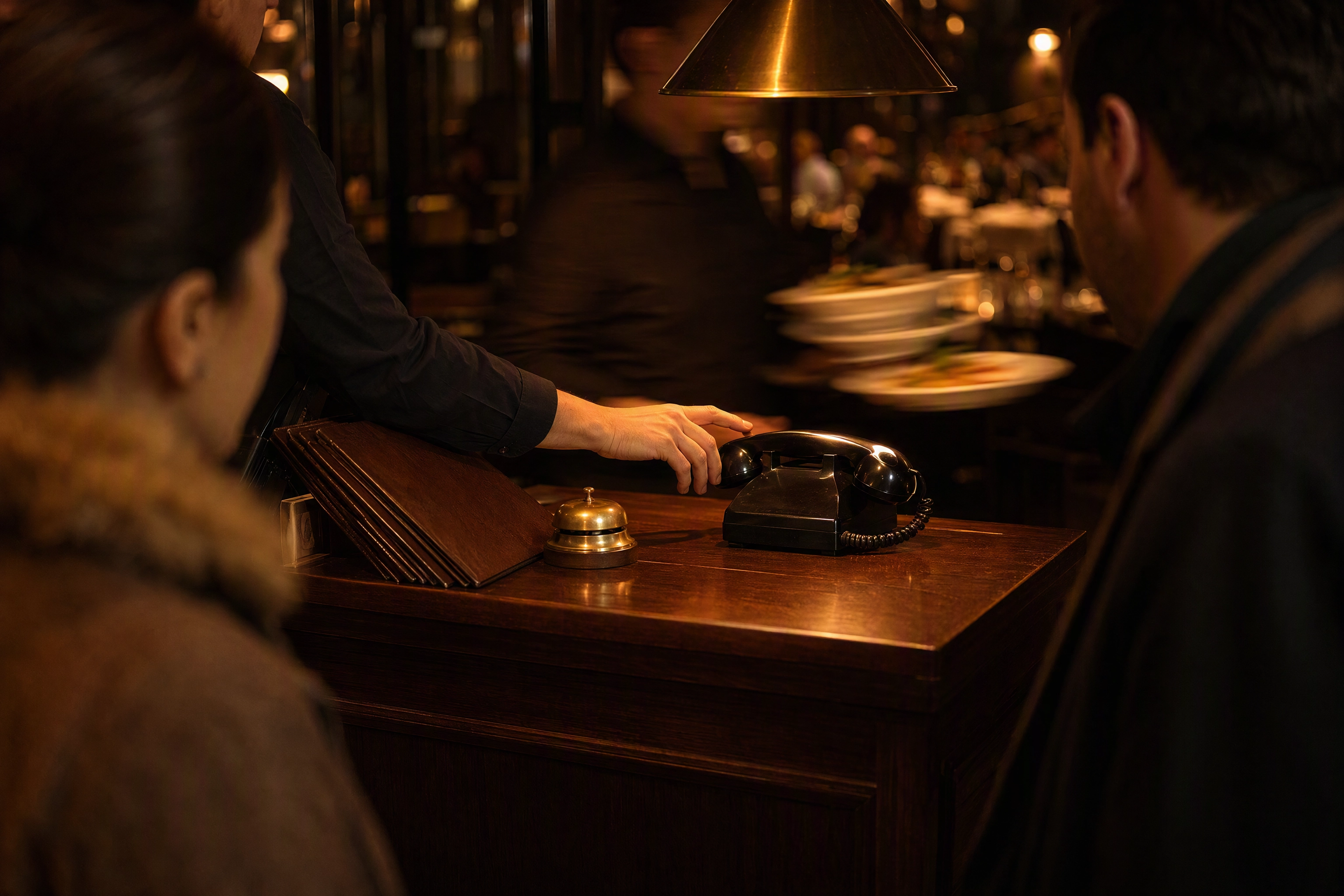 Host reaching for a ringing phone at a busy restaurant host stand, the front-of-house job AI voice answering tools replace
1. Toast IQ — the AI inside your POS
Replaces: the nightly ritual of digging through sales reports nobody opens.
Toast IQ (early users knew it as Sous Chef) layers item performance, sales and labor forecasting, inventory visibility and upsell prompts across daily operations. Software runs $0–$69 a month on standard tiers, but an independent using online ordering, loyalty and a kitchen display lands at $200–$400 plus processing of 2.49%–3.69% and $0.15 per transaction.
Skip it if you would have to switch POS to get it. Contracts commonly run one to three years with real early-termination fees, and API access is a paid, read-only add-on.
2. Slang.ai — the phone that answers itself
Replaces: a host pinned to the handset through the 7pm rush.
This AI-powered receptionist handles hours, parking, allergen questions and booking changes around the clock, then forwards anything ambiguous to staff. Full-service pricing starts at $399 a month, with reviewers reporting $450–$600 in practice.
Skip it below roughly 40 calls a day. At $450 a month that is about $11 per call, which only works if the calls are bookings, not "what time do you close?".
3. Popmenu — answering plus marketing on one bill
Replaces: a website vendor, a campaign tool and a phone service billed separately.
Base tiers start around $179 a month; AI phone answering is a separately quoted add-on reported near $150 for 500 calls, and online ordering adds roughly $50 plus a $1 per-order diner fee. Fully loaded builds land close to $699.
Skip it if you only want the answering piece: the sticker price describes a website, not the stack. If your site works, spend the budget on marketing ideas instead.
4. OpenTable — table optimisation with a per-cover tax
Replaces: floor-plan Tetris and the paper waitlist.
Plans are $149, $299 and $499 a month, plus $1–$1.50 per network cover and, since January 2026, a 2% fee on deposits and prepaid experiences. The guest management data is genuinely good, especially for fine dining rooms where discovery fills tables.
Skip it if most bookings come from your own site or Google. You would pay a network fee on guests you had won anyway.
Back of house: inventory, labor and daily operations
Here the inputs are numbers rather than judgement, which is what machine learning is good at. Food and labor swallow roughly 60%–65% of a typical restaurant P&L, so a one-point move on food or labor beats anything a guest-facing bot can do.
These four are the restaurant management software solutions operators renew across their operations, from cafes to multi-site ghost kitchens.
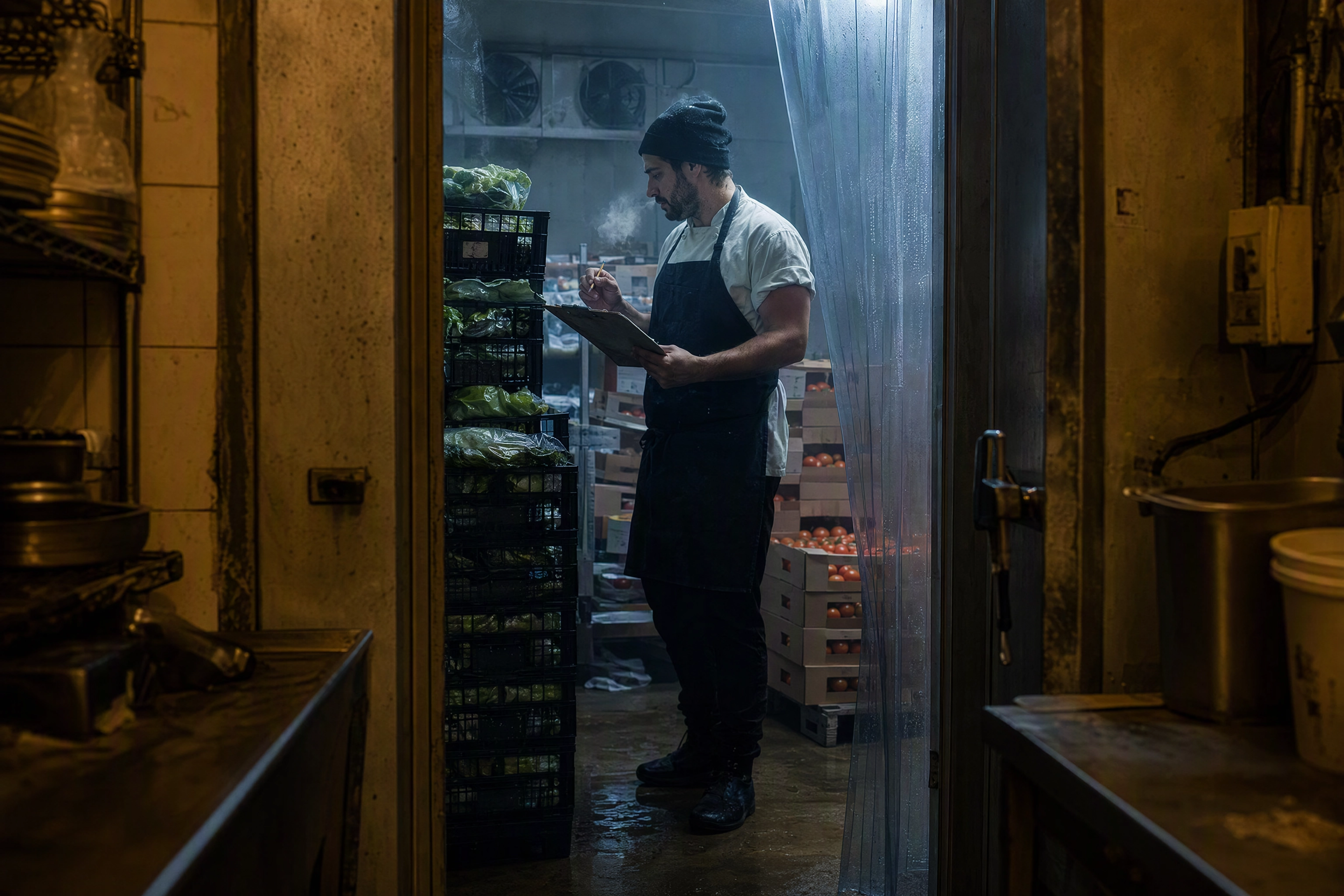 Line cook counting produce crates in a walk-in cooler at dawn, the inventory work back-of-house AI tools automate
5. MarginEdge — invoices to plate-level costs
Replaces: a bookkeeper typing supplier invoices by hand.
Photograph an invoice and it returns line-itemed, priced and mapped to recipes, so plate costs move the day a supplier raises a price and inventory counts stop being a monthly guess. Pricing is a flat $350 per location per month, plus $150 for the bar bundle; Toast users also pay $50 a site for the Restaurant Management Suite.
Skip it under roughly 15 invoices a week. Small operations with three suppliers can run the same back-office discipline in a sheet for nothing.
6. 7shifts — scheduling that reads the forecast
Replaces: the printed rota and the overtime surprise.
It builds schedules against forecast sales, flags extra hours before they happen and handles shift management without a group chat. The free tier covers very small teams; Entrée is $29.99 and The Works $49.99 per location per month, billed annually.
Skip the top tier until you have real compliance pain. Most single-site operators never touch the labor management features they upgraded for.
7. Lineup.ai — forecasting for people who hate guessing
Replaces: staffing against last year's same-day number.
It builds a prediction model per site from POS history plus the weather, holidays and events that actually move demand, then hands the sales and labor forecast to your scheduling system. Pricing starts at $79 per location per month, with the standard plan at $149.
Skip it without at least a year of clean POS data. A new site, or one that changed concept mid-year, gives management teams a confident demand forecast built on noise.
8. Winnow — a camera that watches the bin
Replaces: guessing which prep decisions throw money away.
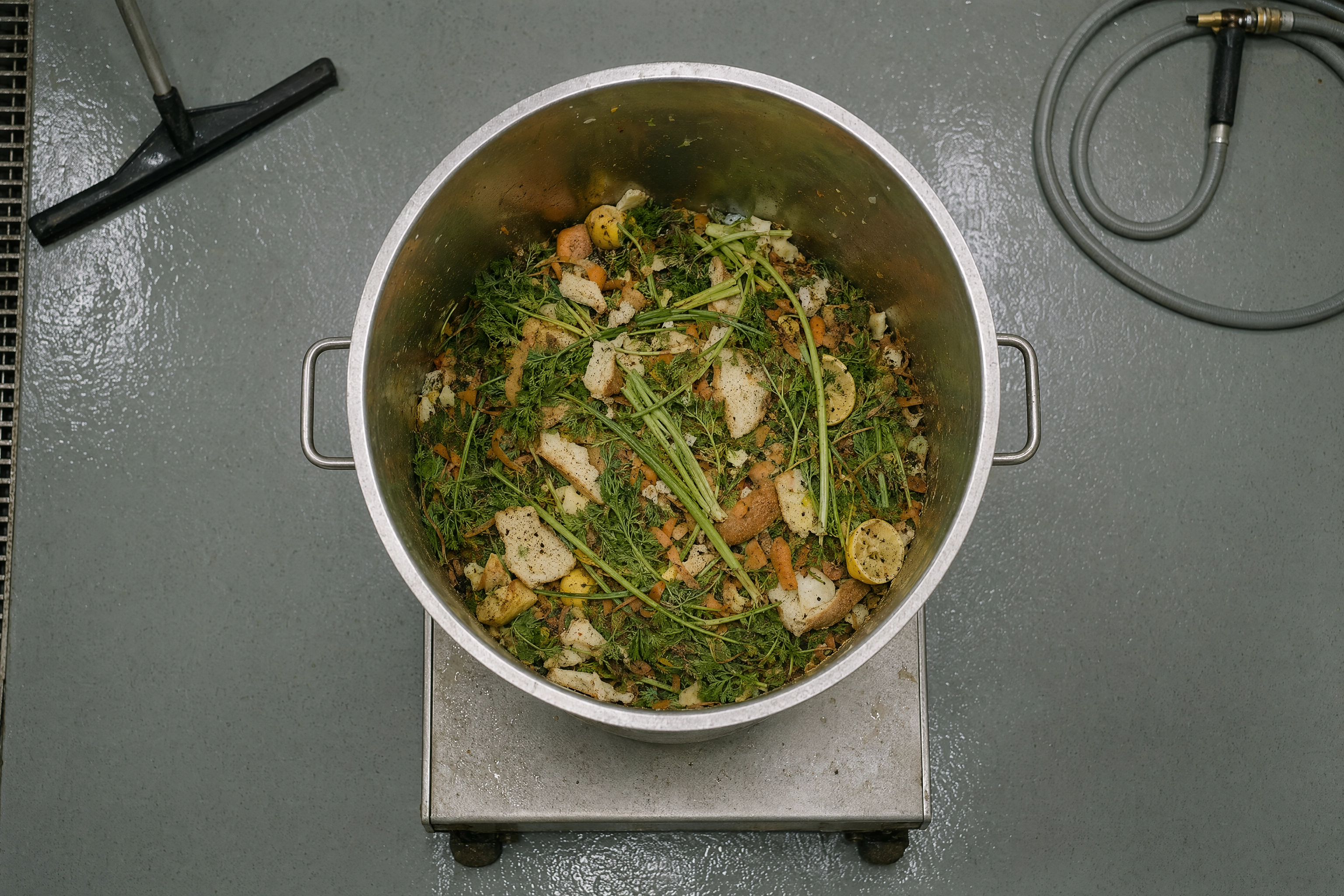 Overhead view of a stainless kitchen bin of food waste on a platform scale, what AI waste-tracking cameras measure
An AI-powered camera and scale above the bin identify what was discarded, its weight and its value, turning waste management into a number. The vendor reports 2%–8% savings on food spend and up to a 50% cut in repeat food waste, and the EPA treats food waste prevention as the highest-value action available.
Skip it as a 60-seat independent. The technology is hardware-based and quote-only, so the economics assume hotel buffets, contract catering operations and high-volume hotels and resorts.
Marketing and visual content
Marketing is the number-one AI use case in the National Restaurant Association data, and the only category here where a single-site business can start for less than a bag of onions. Our photography solutions breakdown maps these jobs by segment, from pizzerias to bars and lounges.
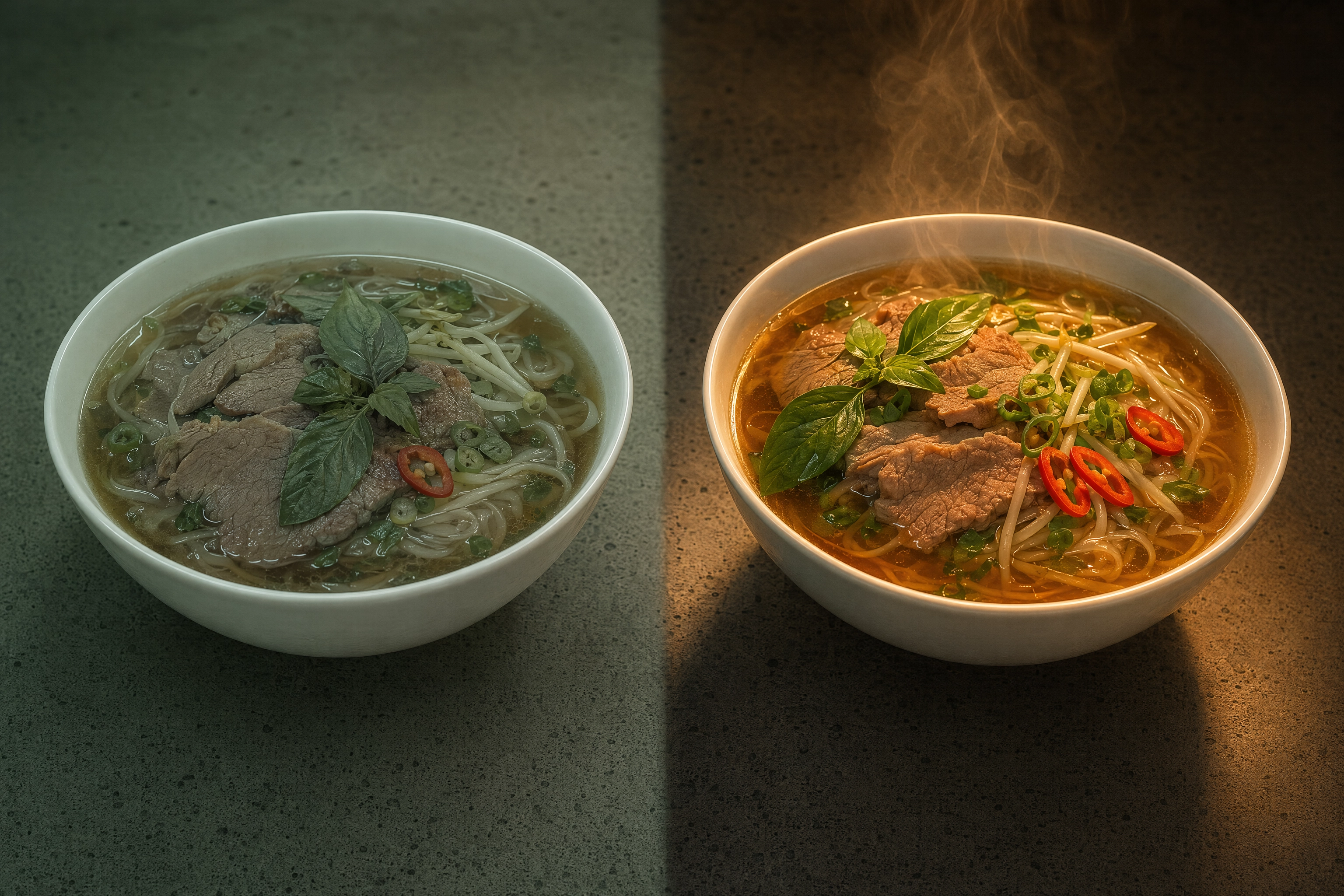 Identical bowls of pho side by side under flat fluorescent light and a warm key light, the gap AI food photography closes
9. FoodShot AI — photography for menus and delivery apps
Replaces: the $700–$1,400 half-day shoot you cannot justify for the other 30 dishes.
Upload a phone snap and it returns a styled 2K image in about 2 minutes, which is how the long tail of a menu finally gets covered. There is no free tier on the web; Starter is $15 a month, Business $45, Scale $99 with bulk runs — see FoodShot plans, the AI food photography overview and delivery-app listings.
Skip it if you shoot five hero images a year and have them. We compare the category honestly in our AI food photo editors roundup.
10. ChatGPT — the cheapest hire on this list
Replaces: the blank page for dish copy, job ads and review replies.
Paste an allergen list and it drafts twelve dish descriptions in your voice; paste a one-star review and it drafts three replies you can edit. Free tier, $20 a month for Plus, roughly $25–$30 per seat for business plans.
Skip the assumption that it knows your numbers. It has no line into your POS, so it helps you write, not analyse. Pair it with a deliberate design process, not instead of one.
11. Canva — one design, every format
Replaces: paying a designer to resize the same promotion nine times.
Background removal, magic resize and brand kits turn one artwork into a story, a poster and a digital board without opening design software. Free tier, roughly $15 a month for one person, teams from $14.99 for five seats.
Skip it if a designer is on retainer. Two people editing the same brand kit is how logos drift. For print, our board design guide covers what survives at three metres.
12. Marqii — one change, seventy sites updated
Replaces: hand-editing hours and prices across Google Business Profile, Yelp, Apple Maps and every delivery platform.
It pushes one update across 70–80 publishers and drafts AI review responses — reputation management most operators never get to. Reported July 2026 pricing was $90 a site for Base, $145 Pro and $180 for the full suite, on annual terms, and it earns out if wrong hours lose you orders on Uber Eats.
Skip it for one site with a menu that never changes. Twenty minutes a quarter on Uber Eats and Google beats $1,080 a year.
How to choose AI tools for restaurants without wasting money
Buy against a line on your P&L, not a category. If food costs are drifting, MarginEdge is the answer and voice AI is not, whatever the demo showed. If you cannot name the line a tool is supposed to move, you are not ready to buy it.
Ship one change per quarter and measure it. Operators who bolt four systems onto their operations at once cannot tell which one worked, and staff learn none of them properly. The National Restaurant Association's guidance on choosing AI makes the same point: integration and buy-in decide the outcome, not features. Technology only pays back when it is used daily.
Confirm the integration before the call ends. Ask which POS fields sync, in which direction and how often. Read-only API access breaks half the automations vendors imply, and point solutions that cannot talk to each other recreate the admin they promised to remove.
Give every guest-facing system a human escape hatch. One operator's summary is worth repeating: automation aimed at customers has burned more money than it saved. Test the handoff yourself, ideally from a noisy car park.
Frequently Asked Questions
What are the best AI tools for restaurants in 2026?
For most independents: MarginEdge for food costs, 7shifts for scheduling and FoodShot AI for photography. Those three cover the biggest expense lines and the biggest revenue lever for under $400 a month combined — less than one professional shoot.
How much do AI tools for restaurants cost per month?
Realistically $15 to $500 per site per month per tool. Visual content and writing sit at $15–$20, AI-powered scheduling and labor forecasting at $30–$149, listings at $90–$180, invoice and inventory management at $350, and voice answering at $399 and up. Hardware-based waste tracking is quote-only.
Are AI tools for restaurants worth it for a single location?
Some are. Software priced per site punishes small restaurants, so the honest test is whether the tool moves a number worth more than its annual bill. A $360-a-year scheduling tool that saves four overtime hours a week clears that bar; a $5,400-a-year answering system usually does not.
Will AI replace restaurant staff?
Not on current evidence. Only 6% of restaurants use AI for customer orders, and the systems that work take administrative load off people rather than removing them. Forecasting helps managers plan operations on a Tuesday morning; it does not change how many cooks you need on a Saturday.
Which AI tool should a restaurant buy first?
Whichever one attacks your worst number, and pick one your team can learn in a shift. If you cannot price a plate, start with invoice automation. If half your dishes have no photograph, start at $15 — our menu photography guide shows what "good enough for a delivery app" means, with examples.