Digital Menu Board Software: 8 Compared, $5-$299/Screen
 Ali Tanis12 min read
Search digital menu board software and you get ten results. Seven are a vendor's own sales page. One is a Reddit thread where owners tell each other to export a PowerPoint to MP4 and loop it off a Raspberry Pi.
Here's the comparison nobody selling this will write. Eight platforms, every price taken from the vendor's own pricing page on 26 August 2026, judged on what decides whether your counter runs clean or quietly bills five figures a year.
Quick Summary: Digital menu board software costs $5 to $299 per screen a month in 2026; credible options cluster at $7–$14. For a three-screen quick-service site, year one lands between $288 and $11,064. All eight render the same file types — what separates menu boards that look like a national chain from ones that look like a gas station is the dish photography, not the CMS.
The 8 platforms at a glance
| Platform | Entry price | Player needed? | POS sync |
|---|---|---|---|
| Juuno | $5 | Yes | API pending |
| Kitcast | $7 / $9 | Optional | API on Pro |
| Yodeck | $8 ($0 for one) | Included | API on Premium |
| OptiSigns | $9 / $10 | Optional | Pro Plus, $13.50 |
| NoviSign | $14 | Optional | Toast, via Sheets |
| ScreenCloud | $24 | Included | None native |
| SmarterSign (Square) | $30 | Optional | Square, Clover |
| Menuboard Manager | $89 / $199 / $299 | Optional | Top tier only |
Prices are per screen per month in USD, annual billing first where two rates are shown. All eight digital menu boards cache content locally, so offline playback isn't a differentiator. Samsung VXT ranks on page one but publishes no price — quote-only, so it's out of the costing below.
How to judge digital menu board software
Digital signage vendors lead with template counts. Operators decide on duller things. If you want the hardware and layout groundwork first, start with our digital menu boards guide.
Per-screen price is not the whole price
The subscription recurs monthly; the media player is a one-off. Yodeck and ScreenCloud blur that line, bundling a player on annual plans — which flips the ranking in year one and back in year two.
That subsidy got more valuable in June. Apple TV 4K now lists at $199 for 64GB and $249 with Ethernet, up from $129 and $149 on 25 June 2026. Any digital signage vendor still quoting $129 is $70 a unit out of date.
Media player or smart TV
Three routes. Samsung Tizen and LG webOS commercial displays run the CMS inside the panel, so there's no box to unplug. A dedicated player is the middle road: the Amazon Signage Stick is $99.99, purpose-built for digital signage, with 2GB RAM and a remote management API. Consumer sticks cost $35 and were never built for a 16-hour duty cycle above a fryer.
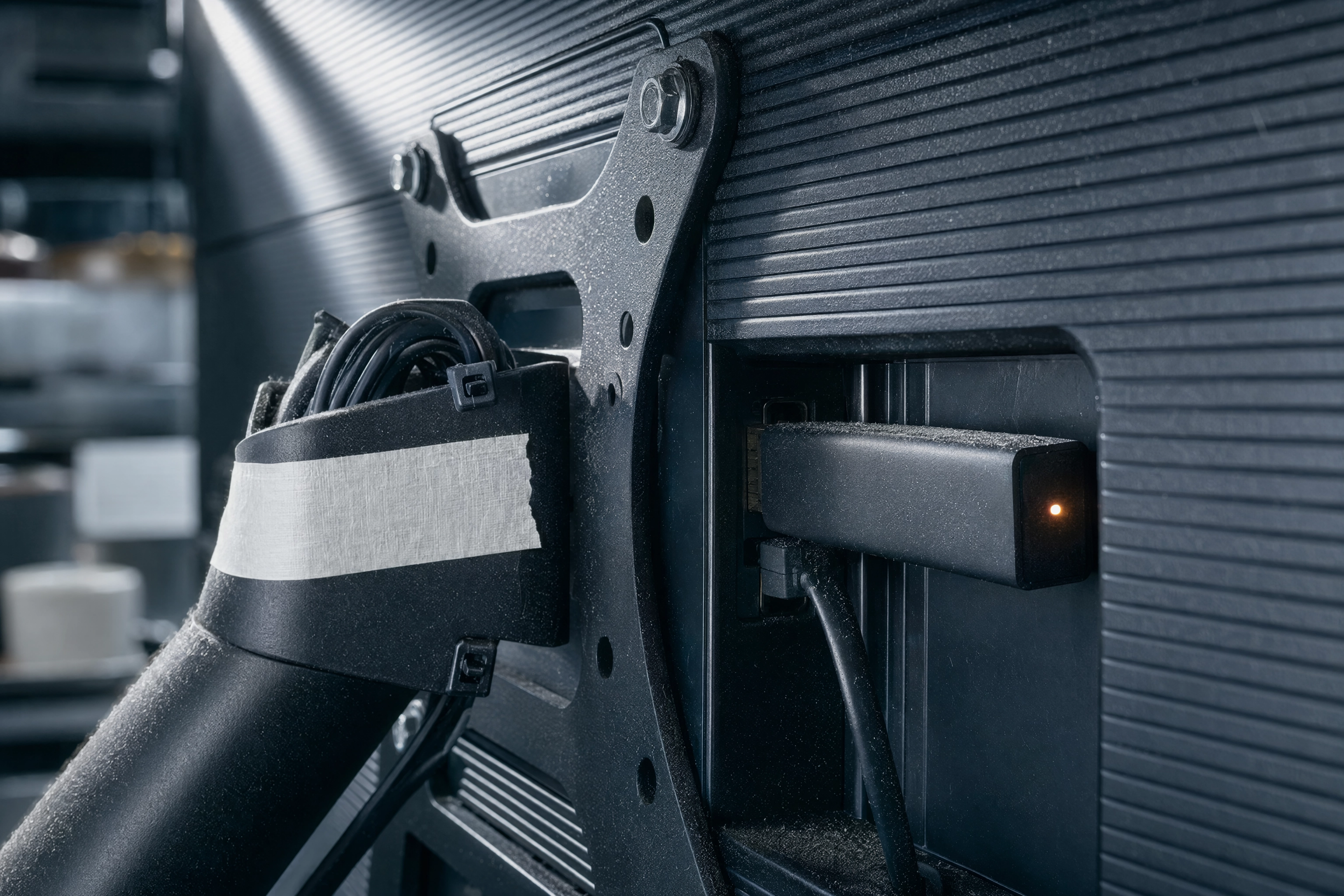 Media player stick plugged into the HDMI port on the back of a wall-mounted digital menu board display
Kitcast, OptiSigns, NoviSign and Menuboard Manager run natively on Tizen and webOS. Juuno needs a device.
POS and menu sync
The most oversold feature in digital menu board software. "Syncs with your POS" can mean a live feed of price changes and 86'd items, or a nightly CSV.
Menuboard Manager reserves genuine integration — Toast, Olo, Qu, NCR Aloha, Micros — for its $299 tier. NoviSign routes Toast menus through a Google Sheet: it works, but not in real time. SmarterSign reads the Square catalog directly, the cleanest sync here.
For most independents this is a want, not a need. Editing four items by hand takes ninety seconds. Paying $290 a month for dynamic pricing you use twelve times a year is bad arithmetic.
Dayparting, specials and offline behaviour
Every platform swaps breakfast, lunch and dinner menus on a clock, and lets you create recurring specials without touching a screen. The real differences are granularity and priority overrides for a sell-out.
Offline behaviour matters more than the tick box suggests. Some players loop the last playlist forever; others fall back to a default asset. Test it by pulling the ethernet before you go live.
One compliance note. The FDA menu labeling rule requires calorie declarations on menus and menu boards for chains of 20+ locations trading under one name. If that's you, the deciding feature is lockable templates and multi-location permissions, so a franchisee can't quietly delete a calorie line.
The 8 options compared
 Rainy night drive-thru lane with an illuminated menu board canopy glowing over wet tarmac
1. Yodeck — cheapest honest year one
Free forever for one unit, full Basic features, unlimited storage. Paid Basic is $8, Premium $12, Enterprise $16. Annual plans include a player, or knock $20–$70 off your own device. 800+ templates to create from, plus a Canva app. The catch: the API and webhooks, your route to automated menu updates, sit on Premium.
Buy it if you want the lowest real first-year cost.
2. Kitcast — best if you already live on Apple TV
$7 billed annually ($84 up front), $9 monthly. Pro at $10 adds SSO, SCIM, MDM, REST API and audit logs. The 14-day trial hands you Pro features without a card. Kitcast grew up on Apple TV — but at $199 a box, Fire TV or Tizen is the sensible way in now.
Buy it if you're standardising on Apple hardware.
3. OptiSigns — the free tier with a logo on your menu
Free for up to three units, but it stamps the OptiSigns logo on your content, caps storage at 1GB and limits devices. Standard is $9 annually, Pro Plus $13.50 — and Pro Plus is the tier restaurants want: OptiSync data mapping, POS integration, auto power on/off.
Buy it if you want the most integrations per dollar.
4. Juuno — $5, with a caveat
The lowest verified price here. Business at $5 includes all apps, unlimited users and playlists, scheduling and zones. Growth at $9 adds sequences and proof-of-play. Advanced roles and API access are marked "Soon," so no live sync today.
Buy it if you're a single site running simple menus and price decides it.
5. NoviSign — Toast sync without enterprise pricing
$14 Business, $17 Business Plus, $25 Premium, billed annually. Business Plus holds the useful stuff: Toast sync, Canva, Zapier, an AI image tool, device management. 500+ templates and SOC 2 Type II, with restaurant references including Billy Sims BBQ and Quiznos.
Buy it if you run Toast and can't justify $299 for the sync.
6. ScreenCloud — great product, aimed elsewhere
Core is $24 and Pro $36 annually, with a player included or 17% off year one if you skip it. A genuinely good digital signage platform: 80+ apps, lockable templates, custom fonts, proof-of-play. But the plan table is built for factory floors and office lobbies — no menu or POS feature appears in it.
Buy it if the same screens also serve staff comms.
7. Square — no first-party CMS, and that matters
The marketplace listing confuses people: Square doesn't make digital menu board software. That "Digital Menu Boards" entry is SmarterSign's integration, which reads your Square catalog so price updates at the till reach the counter. SmarterSign starts at $30. Square's own drive-thru product is a hardware and installation partnership, not a self-serve CMS.
Buy it if Square is your POS and you'd rather keep one catalog.
8. Menuboard Manager — priced for the drive-thru
$89 Starter, $199 Professional, $299 Business, monthly, 8% off annually. Starter is single-user with 1GB storage but includes dayparting and Canva import. The top tier is why the platform exists: POS integration, order confirmation and order ready boards, unlimited users, role hierarchies.
Buy it if those boards are part of your order pipeline, not decoration.
What 3 screens really cost over 12 months
A quick-service site with three indoor screens, entry tier, using Amazon Signage Sticks at $99.99 unless the vendor includes a player. Displays are excluded — a capital item, covered in our menu board design breakdown. This is the number digital menu board software vendors never publish.
| Platform | Software, 12 mo | Players | Year one |
|---|---|---|---|
| Yodeck Basic | $288 | Included | $288 |
| Juuno Business | $180 | $300 | $480 |
| Kitcast Starter | $252 | $300 | $552 |
| OptiSigns Standard | $324 | $300 | $624 |
| NoviSign Business | $504 | $300 | $804 |
| ScreenCloud Core | $864 | Included | $864 |
| SmarterSign | $1,080 | $300 | $1,380 |
| Menuboard Manager Starter | $3,204 | $300 | $3,504 |
| Menuboard Manager Business | $10,764 | $300 | $11,064 |
 Long curl of till roll and a loaded receipt spike on a cafe counter, the recurring cost of menu board software
The spread between the cheapest and dearest digital menu board software is roughly 38x for the same core job. And the included players are a one-time subsidy: in year two Yodeck is $288, ScreenCloud $864.
Running one kiosk? Yodeck's free tier is genuinely $0. Our food truck menu board notes cover small-panel layout, and how to design a restaurant menu covers pricing psychology.
The part no digital menu board software can fix
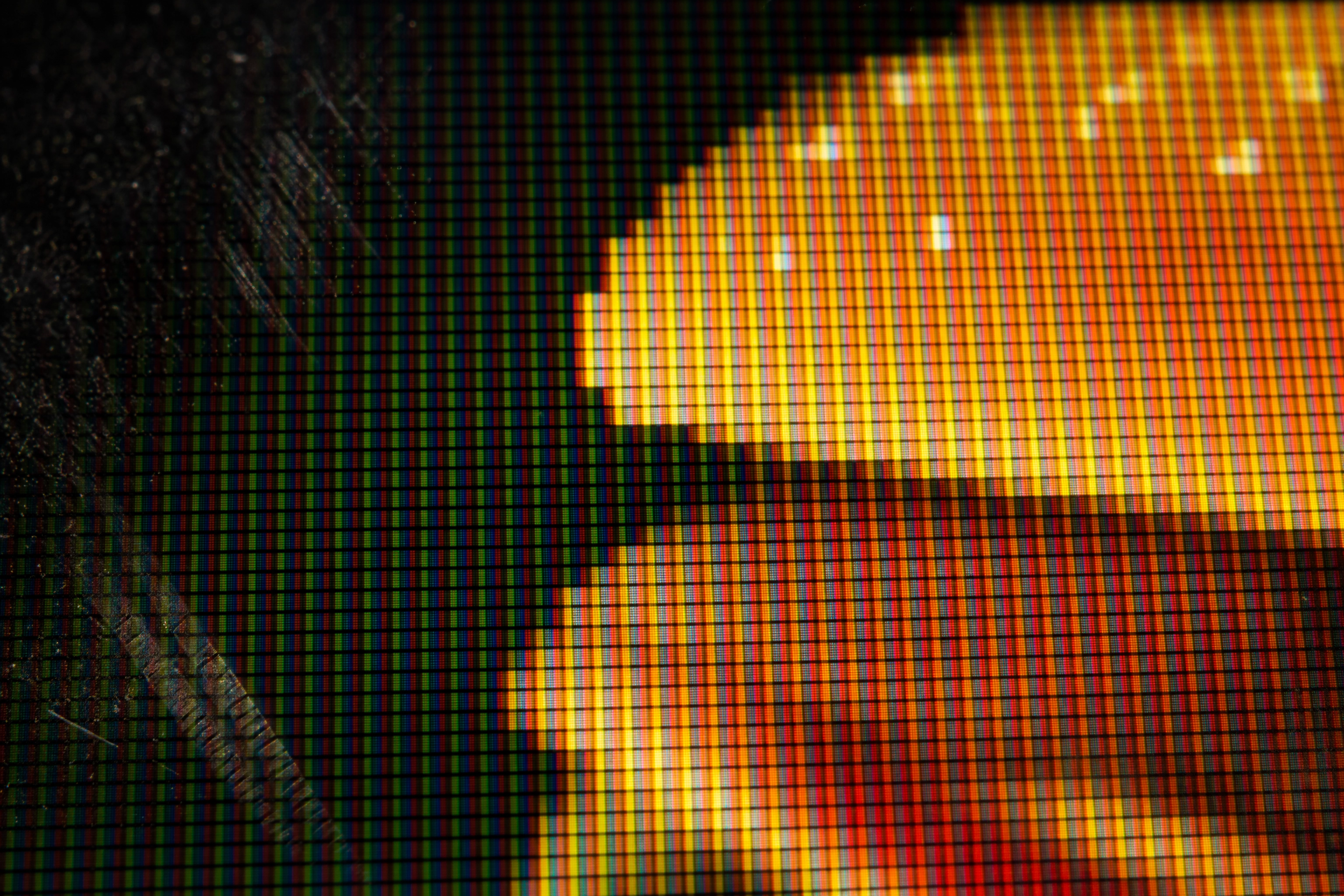 Macro of a menu board screen surface showing subpixels and compression artefacts across a burger photo
Pricing all eight, one thing struck me: they're renderers. Each takes a JPEG you upload and paints it on a panel, on schedule. None of them shoot food. Templates look near-identical across a 38x price range because they borrow the same design conventions.
So the visible gap between menu boards that look like a chain and ones that look like a gas station isn't the CMS. It's the photo of the burger.
That's not a soft claim. Menu-engineering research summarised by the hospitality educators at AHLEI puts the strategic use of high-quality photos at up to a 30% lift in sales of the pictured item, diluting as you crowd a panel. Our photo menu roundup puts the range at 25–35%, and menu engineering shows which items earn the space.
Resolution is the practical trap. A 55-inch panel is unforgiving: a phone snap that passes on Instagram shows compression when it's scaled up.
That's where FoodShot AI fits. Photograph the dish using a phone, pick a style, and create a 4K, print-ready image in about 90 seconds — consistent across every item, with a commercial licence on paid plans from $15 a month. It doesn't design your layout or talk to your POS. It creates the pictures your customers look at, and easy re-shoots mean menu changes never wait on a photographer. Browse the style library, weigh FoodShot pricing against a photographer day rate, or follow our menu photography guide and photo editing walkthrough to shoot it yourself.
So which one should you buy?
One site, tight budget: Yodeck. Free for a single unit, $288 a year for three with players included. Nothing else is close on year one.
Small group, no sync needed: Kitcast at $7 or Juuno at $5 — both easy to run, neither surprising on the invoice.
You run Toast: NoviSign Business Plus at $17. On Square: SmarterSign at $30. Both cost more and both remove a daily data-entry job.
Drive-thru or 20+ locations: Menuboard Manager's top tier, or a Samsung VXT quote. At that scale, order confirmation screens and lockable compliance templates matter more than the monthly line.
Whichever digital menu board software you pick, budget the photography first: food photography for restaurants, the menu photoshoot checklist, the AI tools for restaurants landscape, a marketing stack roundup, a phone shooting walkthrough, and menus that convert. Operators can jump to restaurants, cafes, trucks, ghost kitchens or pizzerias.
Frequently Asked Questions
What does digital menu board software cost per screen?
Between $5 and $299 a month in 2026, with most credible options at $7 to $14. The $89–$299 tiers are a different product class, built for drive-thru operations. Yodeck and OptiSigns offer free plans, though OptiSigns adds its logo to your content.
Do I need a media player, or can I run digital menus on a smart TV?
Depends on the TV. Samsung Tizen and LG webOS commercial displays run the CMS inside the panel — Kitcast, OptiSigns and NoviSign all support that. A consumer smart TV usually can't install digital signage apps, so you'll add a player. The Amazon Signage Stick at $99.99 is purpose-built; Yodeck and ScreenCloud include one free on annual plans.
Can digital menu board software sync with my POS?
Some can, and it's oversold across the category. SmarterSign reads the Square catalog directly. Menuboard Manager connects Toast, Olo, Qu, NCR Aloha and Micros on its $299 tier. NoviSign syncs Toast through a Google Sheet. Yodeck, Kitcast and OptiSigns expose APIs on upper tiers — sync is buildable, not built.
What happens to my digital menus when the internet drops?
All eight cache content locally and keep your menu boards playing, so a brief outage won't leave customers staring at black glass. What differs is the fallback: some loop the last playlist, others switch to a default asset. Queued updates apply once the connection returns.