9 Uber Eats Alternatives for Restaurants, by Commission
 Ali Tanis20 min read
The best Uber Eats alternative for restaurants depends on which part of Uber Eats you want to replace. If you need strangers to find you, another marketplace costs less per order: DoorDash Basic takes 15%. If your regulars already know your name, a commission-free ordering page costs about 4% of a $30 ticket in card fees. And if you only need drivers, Uber Direct or DoorDash Drive deliver your own orders for a flat fee from $6.99.
We don't sell delivery or online ordering, so nothing below ranks itself first. Every fee was read on the companies' own pages on November 16, 2026, and every option was priced on the same month: 400 delivered orders at $30. Whichever channel you add, it sells with item photos in its own crop, so plan your delivery app menu photos once for all of them.
Quick Summary: On 400 delivered orders at $30, Uber Eats Plus takes $3,000 a month. DoorDash Basic takes $1,800, Grubhub Basic with its drivers $2,286, and a direct ordering page $516 to $2,315 depending on who pays the courier. The realistic move isn't leaving Uber Eats but shifting regulars to your own channel: moving 40% of orders saves about $484 a month in our example.
The 9 Uber Eats Alternatives at a Glance (Fees Checked November 16, 2026)
Uber Eats alternatives come in three models. Marketplaces (DoorDash, Grubhub) still charge a percentage but bring new customers. Direct ordering platforms (DoorDash Online Ordering, Square Online, Toast, ChowNow, Owner.com) charge card fees or a subscription on orders from your own channels. Delivery-as-a-service (Uber Direct, DoorDash Drive) charges a flat fee per delivery.
| # | Option | Model | What the restaurant pays | Who supplies drivers | Setup time | Best fit |
|---|---|---|---|---|---|---|
| 1 | DoorDash Marketplace | Marketplace | 15% Basic, 25% Plus, 30% Premier; 6% pickup | Dashers | 1–5 days on average | New customers at a lower entry rate |
| 2 | Grubhub Marketplace | Marketplace | 5%, 15% or 20% marketing + 10% delivery fee + order processing | Grubhub drivers or yours | Menu built in up to 2–3 days | Self-delivery, New York, catering |
| 3 | DoorDash Online Ordering (ex-Storefront) | Direct ordering | 0% commission; 3.3% + $0.30 per order (2.9% with a $99 package) | Dashers; guest pays delivery | Within 24 hours | Restaurants already on DoorDash |
| 4 | Square Online | Direct ordering | $0 or $49 a month; 3.3% or 2.9% + 30¢ | Your drivers or DoorDash couriers from $6.99 | Self-serve | Square POS counters |
| 5 | Toast Online Ordering | Direct ordering | Quoted plan and card rate | Uber Direct $6.99 or DoorDash Drive $7.49 | Through Toast onboarding | Toast POS counters |
| 6 | ChowNow | Branded ordering + diner app | $249 a month + $119–$499 setup + 2.95% + $0.29 | Flex Delivery, $7.98 a delivery | Guided by a success manager | Independents leaving the apps |
| 7 | Owner.com | Done-for-you website and ordering | $249 + 5% per order, or $499 flat | Courier partners, priced per trip | Done for you by a specialist | Owners with no time for marketing |
| 8 | Uber Direct | Delivery-as-a-service | From $7.99 per delivery | Uber couriers | Self-serve dashboard or API | Drivers for orders you already take |
| 9 | DoorDash Drive On-Demand | Delivery-as-a-service | $6.99 to $10.99 per delivery | Dashers | Self-serve for restaurants | Drivers for orders you already take |
For reference, Uber Eats charges 20% (Lite), 25% (Plus) or 30% (Premium) per delivered order and 7% on pickup since its March 11, 2026 increase, per its merchant pricing page. Our breakdown of Uber Eats fees for restaurants runs one $30 order through each plan.
How Each Uber Eats Alternative Charges, Ranked by Commission
Marketplaces still take 15% to 30% of each order, direct ordering platforms take card fees of about 4% plus any monthly plan, and courier services swap the percentage for a flat fee per delivery.
1. DoorDash Marketplace: 15%, 25% or 30%
DoorDash is the biggest marketplace and the cheapest at entry: 15% per delivered order on Basic, 25% on Plus and 30% on Premier, with pickup at 6% on every plan when app prices match in-store prices, per its pricing page. The commission covers delivery, marketing, support and card processing, and a rented tablet costs $6 a week once the 0% trial ends.
Reach is the case for it. Earnest Analytics put DoorDash at 60.7% of US food delivery sales at the end of 2024, against 26.1% for Uber Eats. The catch: Basic gets the smallest delivery area and no DashPass members. DoorDash's help center puts setup at 1–5 days; our guide to getting your restaurant on DoorDash has the steps, and DoorDash fees for restaurants covers promos and ads.
2. Grubhub Marketplace: 5% Plus a 10% Delivery Fee
Grubhub splits its charge into pieces: a marketing commission of 5% (Basic), 15% (Plus) or 20% (All-access), a delivery fee starting at 10% when its drivers deliver, and an order processing fee that Grubhub's own guides have put at 3.05% + $0.30, per its pricing and fees page. On a $30 delivered Basic order that's $5.72, about 19% all-in.
It's cheapest when you deliver yourself, because self-delivered orders skip the 10% delivery fee. It's also strongest in New York, where Earnest measured a 17.6% share at the end of 2024 against 6.3% nationally. Its menu team builds your menu, which the help center says takes up to 2–3 days, and Wonder, the food-hall company, has owned the platform since January 2025. See how to get more orders on Grubhub once you're live.
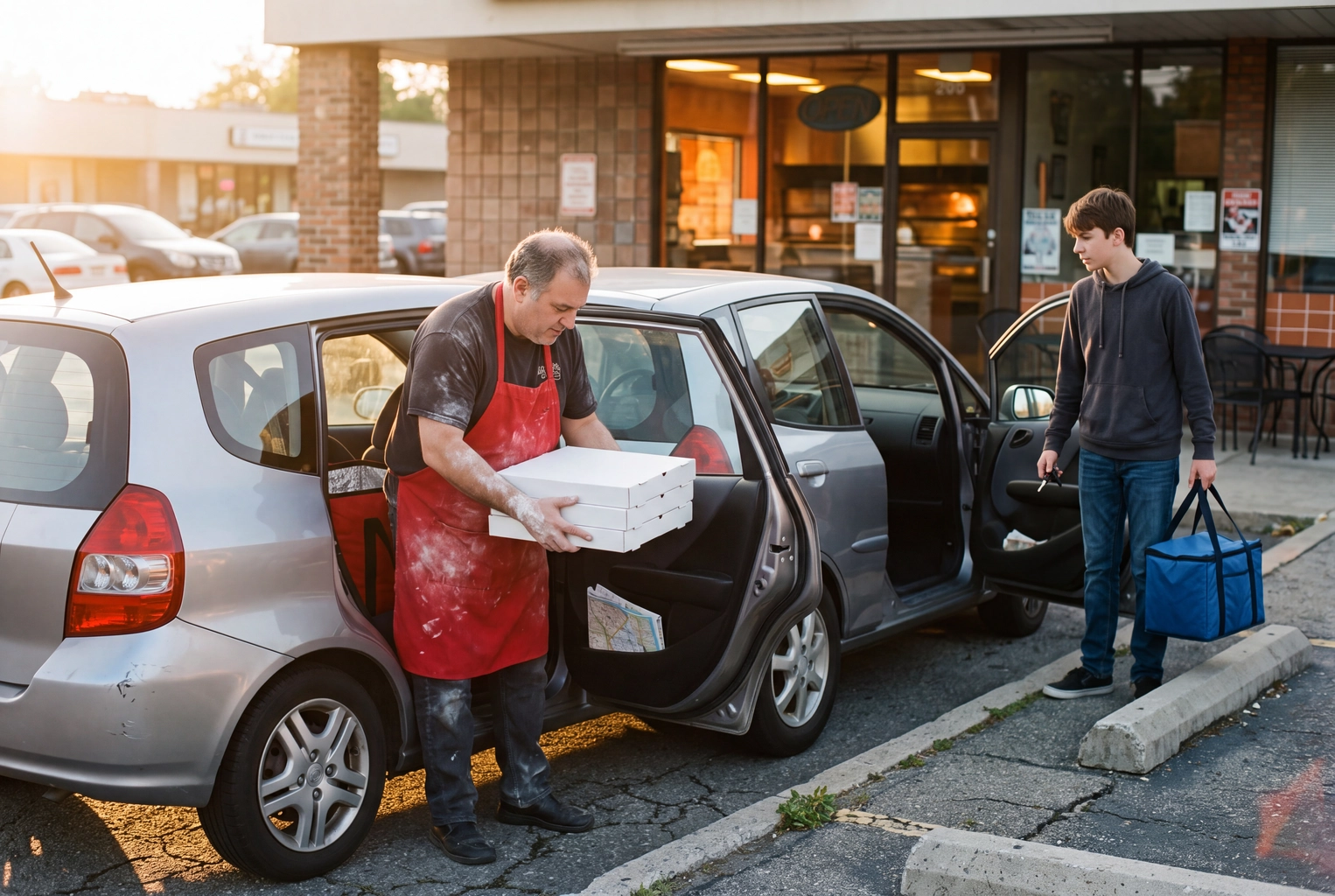 Pizzeria owner loading pizza boxes into his own delivery car at the curb, the self-delivery setup that cuts Grubhub fees
3. DoorDash Online Ordering (Formerly Storefront): 0% Commission
DoorDash's ordering page, sold first as Storefront and now within DoorDash Direct, takes 0% commission on orders from your website, Google profile and Instagram. You pay card processing of 3.3% + $0.30 per order on Starter, or 2.9% + $0.30 with the $99 Boost or $249 Pro packages, according to DoorDash's fee explainer. Dashers deliver, and the guest pays the delivery fee.
DoorDash says most merchants take orders through it within 24 hours. The trade-off: it runs on your Marketplace store, so it shares that menu, those prices and those photos. Our DoorDash Storefront review covers setup and the markup trap.
4. Square Online: $0 or $49 a Month
Square Online comes with every Square plan. On Square Free, online card payments cost 3.3% + 30¢; Square Plus, at $49 a month per location, drops that to 2.9% + 30¢, which pays for itself above about $12,250 a month in online sales. Delivery runs through your own drivers or on-demand couriers: Square's delivery pricing policy lists DoorDash at $6.99 per delivery up to 5 miles, plus $1 per extra mile up to 10, charged to you or the guest. It's the obvious pick when Square already runs your counter.
5. Toast Online Ordering: Built Into Your Toast POS
Toast's online ordering carries no commission and lives inside the Toast POS platform, but its price is quoted rather than published. The delivery side is published: Toast Delivery Services charges $6.99 per delivery under 6 miles through Uber Direct, or $7.49 within 5 miles through DoorDash Drive, and adds a $3.99 delivery charge to the guest's order unless you've set your own. In our view it only makes sense if Toast already runs your counter.
6. ChowNow: $249 a Month, No Commission
ChowNow is the independent specialist: a branded ordering site and app, marketing tools, and its own commission-free diner app. Its pricing page lists Launch at $249 a month ($229 billed annually) plus a $119–$499 setup fee, with card processing at 2.95% + $0.29 per transaction. Flex Delivery, its courier option, costs $7.98 a delivery, which you can split with the guest. At 400 orders a month the subscription works out to about 62¢ an order; at 100 orders it's $2.49.
7. Owner.com: $249 Plus 5%, or $499 Flat
Owner.com is a done-for-you platform: it builds and runs your website, online ordering, branded app, loyalty program and email and text marketing, with 24/7 support. Its pricing page, read November 16, 2026, lists Flexible at $249 a month plus a 5% restaurant fee per order, and Flat Rate at $499 with no restaurant fee. The two plans cross at $5,000 a month in online sales, which matches Owner's own advice that Flat suits restaurants above that level. Card fees aren't listed, so ask. If you'd rather build the site yourself, see our restaurant website cost tiers.
8. Uber Direct: From $7.99 per Delivery
Uber Direct sends Uber's couriers to orders placed on your website, app or phone line, without listing you on the Uber Eats app. Uber's pricing page says it starts at $7.99 per delivery, with distance moving the price, and you decide what the customer pays for delivery. It's a courier, not a sales channel, so you still need an ordering page in front of it.
9. DoorDash Drive On-Demand: $6.99 to $10.99 per Delivery
DoorDash Drive On-Demand is the same idea with Dashers: a flat fee of $6.99 to $10.99 per delivery on DoorDash's merchant pricing page, no commission or subscription, and 100% of customer tips go to the Dasher. Self-serve sign-up is open to restaurants, and Toast and Square both plug it in for you.
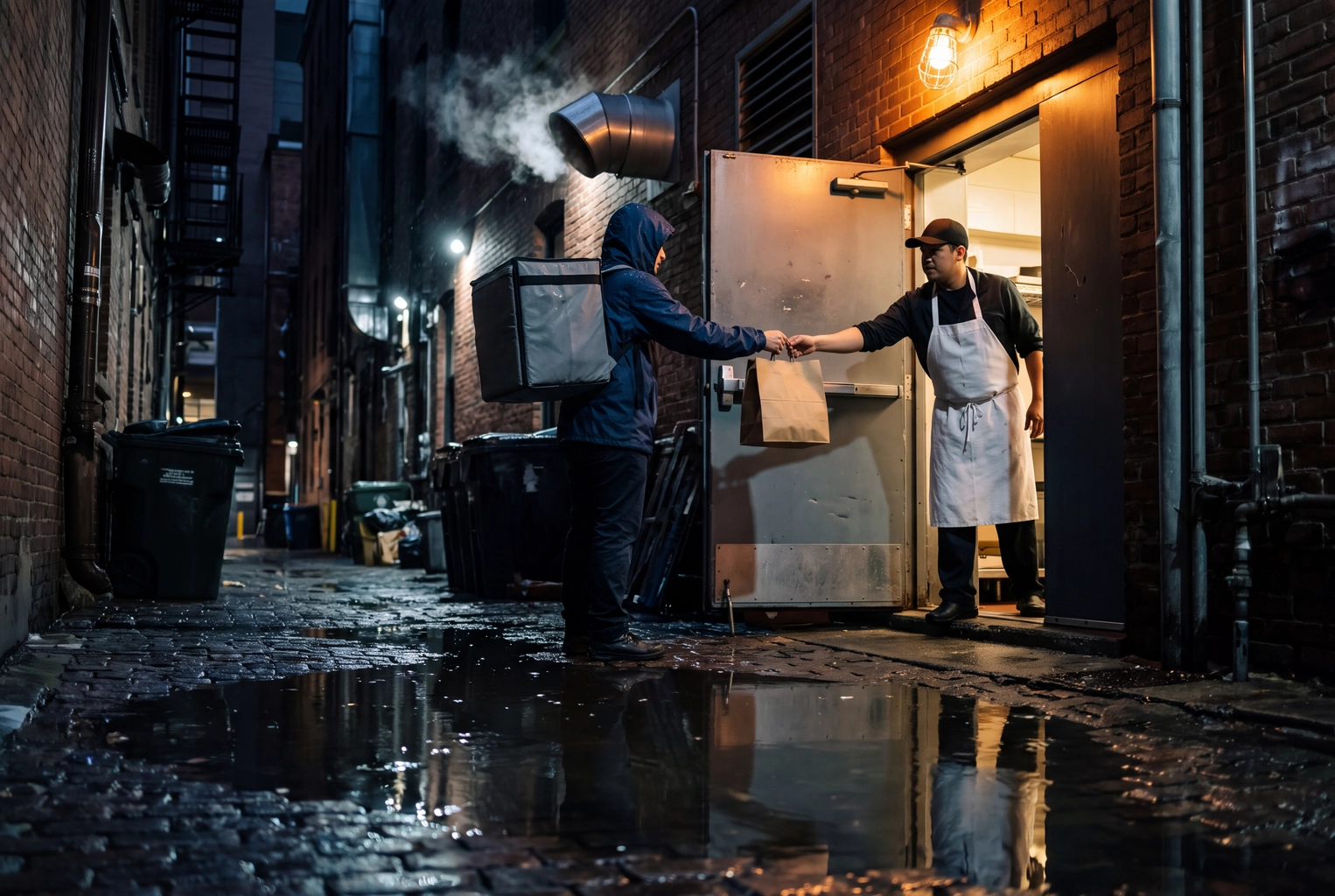 Cook handing a sealed paper bag to a courier at a restaurant back door, a direct order sent via Uber Direct or DoorDash Drive
What Do 400 Delivery Orders a Month Cost on Each Option?
At 400 delivered orders and a $30 average ticket, Uber Eats Plus costs $3,000 a month. DoorDash Basic costs $1,800, Grubhub Basic with its drivers $2,286, and a direct ordering page with a flat-fee courier $1,668 to $2,315 at entry courier rates. DoorDash's own ordering page drops to $516 because the guest pays the whole delivery fee.
The assumptions, so you can swap in your own:
- 400 delivered orders a month at a $30 food subtotal: $12,000 in sales.
- Rates as published on November 16, 2026. Card fees are worked on the $30 subtotal; real statements include tax and tip, so they run slightly higher.
- On your own channels, the guest pays a $3.99 delivery charge and you cover the rest of the courier fee. $3.99 is Toast's default delivery charge and half of ChowNow's $7.98 Flex fee.
- The ordering page in front of Uber Direct or DoorDash Drive is priced at 2.9% + $0.30 an order, or $468 a month.
- Ads, promos, tablets and food cost are left out because they apply to every option.
| Option | How the month adds up | Monthly cost | Saved vs Uber Eats Plus |
|---|---|---|---|
| Uber Eats Lite / Plus / Premium (baseline) | 20% / 25% / 30% of $12,000 | $2,400 / $3,000 / $3,600 | Baseline |
| DoorDash Basic | 15% of $12,000 | $1,800 | $1,200 |
| DoorDash Plus | 25% of $12,000 | $3,000 | $0 |
| Grubhub Basic, Grubhub drivers | 15% ($1,800) + 3.05% ($366) + $0.30 × 400 ($120) | $2,286 | $714 |
| DoorDash Online Ordering, Starter | 3.3% ($396) + $0.30 × 400 ($120); guest pays delivery | $516 | $2,484 |
| Square Online Plus + DoorDash courier | $49 + cards $468 + $3.00 courier share × 400 ($1,200) | $1,717 | $1,283 |
| Toast + Toast Delivery Services | Quoted plan and card rate + $3.00 courier share × 400 ($1,200) | $1,200 + quote | Depends on quote |
| ChowNow Launch + Flex Delivery split | $249 + cards $470 + $3.99 × 400 ($1,596) | $2,315 | $685 |
| Owner.com Flexible / Flat | $249 + 5% ($600), or $499; plus cards and courier | $849 / $499 + cards + courier | Depends on courier |
| Uber Direct + ordering page | $4.00 courier share × 400 ($1,600) + cards $468 | $2,068 | $932 |
| DoorDash Drive + ordering page | $3.00 to $7.00 courier share × 400 + cards $468 | $1,668 to $3,268 | $1,332 to −$268 |
Three things the table shows that a fee list doesn't:
- The cheapest row moves the cost rather than removing it. DoorDash's ordering page lands at $516 because the guest pays the delivery fee, and your regulars will see that fee at checkout.
- A flat courier fee beats a commission only on bigger tickets. If you absorb the whole fee, Uber Direct at $7.99 plus 2.9% + $0.30 in card fees beats Uber Eats Plus only on orders above about $37.50, and Lite only above about $48.50. DoorDash Drive at its $6.99 floor beats DoorDash Basic only above about $60.
- Subscriptions reward volume. ChowNow's $249 is 62¢ an order at 400 orders and $2.49 at 100. Owner.com's Flat plan beats Flexible above $5,000 a month in online sales.
The Realistic Version: Move Regulars, Stay on the Marketplace
A direct ordering page converts people who already know you; it doesn't find new ones. So model a split, not a switch. Say 40% of the 400 orders (160) come from regulars you can move to Square Online Plus with DoorDash couriers, and 240 stay on Uber Eats Plus:
- Uber Eats Plus on 240 orders: $1,800.
- Your own channel on 160 orders: $49 + 160 × ($0.87 card fee + $0.30 + $3.00 courier share) = $716.
- Total: $2,516 a month, against $3,000 today.
That's about $484 a month, or $5,806 a year. The 40% is an assumption, so swap in your own share of repeat customers. For scale, $484 is 4% of $12,000 in delivery sales, more than the whole pre-tax margin of the median full-service restaurant: the National Restaurant Association's 2025 Restaurant Operations Data Abstract put that at 2.8% of sales for 2024, and 4.0% for limited-service.
 Hundreds of handmade dumplings in rows on a steel table, the volume behind a 400-order month on each Uber Eats alternative
Which Uber Eats Alternative for Restaurants Fits Your Situation?
Match the alternative to the job you're hiring it for: a marketplace for new customers, an ordering page for regulars, and a courier service only once you have an ordering page. Most restaurants end up running two alternatives side by side, one marketplace for discovery plus one direct channel, rather than making a full switch.
| Your situation | Best fit | Why |
|---|---|---|
| You need new customers more than lower fees | DoorDash Basic or Plus | Largest US reach; Basic is 5 points under Uber Eats Lite |
| You already pay your own drivers | Grubhub Basic, or Uber Eats self-delivery | Grubhub skips its 10% delivery fee on your deliveries; Uber's self-delivery fee is 15% |
| Square or Toast runs your counter | Square Online or Toast Online Ordering | Menu, card data and tickets stay in one system |
| You're on DoorDash and want a cheap direct link | DoorDash Online Ordering | Live within a day; card fees only |
| You want a branded app and marketing | ChowNow, or Owner.com done for you | A subscription replaces the percentage |
| You take orders but have no drivers | Uber Direct or DoorDash Drive | Flat fee per delivery; you set the customer's fee |
| You're in New York City | Any of the above | City law caps app fees at 15% delivery, 5% basic service and 3% transaction, with limited exceptions |
Not sure which marketplace to keep? DoorDash vs Uber Eats vs Grubhub compares reach, payouts and photo rules side by side.
4 Names to Check Before You Switch
Several alternatives on consumer "apps like Uber Eats" lists won't take a restaurant off Uber Eats' fees, because they belong to the same three delivery platforms or are closing down.
- Postmates has been owned by Uber since 2020.
- Caviar belongs to DoorDash, and Seamless is part of Grubhub.
- GloriaFood, long a popular commission-free ordering widget, is being retired by Oracle on April 30, 2027, and new sign-ups are already closed. Don't migrate onto it.
- Uber Eats Webshop is the counter-take: Uber's own commission-free ordering page charges 2.5% + $0.29 per order, the lowest card rate in this comparison. It doesn't leave Uber, but it does leave the Marketplace Fee, so it's worth a look if Uber Eats is already your main app.
Migration Checklist: Moving Orders Off Uber Eats
A clean switch takes about four weeks: rebuild the menu, prices and photos for the new channel in week one, launch it beside Uber Eats, then spend weeks two to four moving regulars with links, loyalty and a reason to order direct. Keep Uber Eats live until the direct ordering channel carries your regulars.
Week 1: Menu, Prices and Connections
- Put the full menu in one sheet: items, descriptions, modifiers, prices, and which dishes travel badly. Items that arrive soggy shouldn't follow you to a new channel.
- Price the direct menu at in-store prices. DoorDash's 2023 study of 4,500+ restaurants found marked-up menus got up to 37% fewer sales and 78% lower reorder rates. On your own page, the lower price is the pitch. Our menu pricing formulas set both numbers.
- Keep pickup prices matched on the apps. DoorDash's 6% pickup rate and Uber's 7% both depend on in-store price parity; Uber charges 10% without it.
- Connect the new channel to your POS so direct orders print where app orders do. A third tablet on the counter is how tickets get missed.
Week 1: Photos in Every Channel's Size
Every channel crops the same dish differently, so a photo set built for Uber Eats can fail on the next app. DoorDash says menus with item photos earn up to 44% more monthly sales, so a blank tile on a brand-new channel costs you from day one.
| Channel | Photo shape | Size |
|---|---|---|
| Uber Eats | 5:4 to 6:4 landscape | 1200 × 800 px minimum, up to 10 MB |
| DoorDash and its ordering page | 16:9 landscape | 1400 × 800 px minimum, under 2 MB |
| Grubhub | 1:1 square | 1400 × 1400 px recommended |
Check rights before you copy photos over. Uber's photo guidelines allow your own marketing but say nothing about other delivery apps, and DoorDash's photoshoot bans reuse on rival apps, as our Uber Eats photoshoot comparison explains. Photos you own avoid the question.
FoodShot is built for this step. Upload a phone photo of the real dish and you get a studio-quality menu photo in about a minute, at 4K, so one master file crops cleanly to 16:9, 5:4 and square without losing detail. Plans start at $15 a month for 25 photos with a commercial license (pricing); see how it works for food delivery app menus. The specs in full: Uber Eats, DoorDash and Grubhub photo requirements.
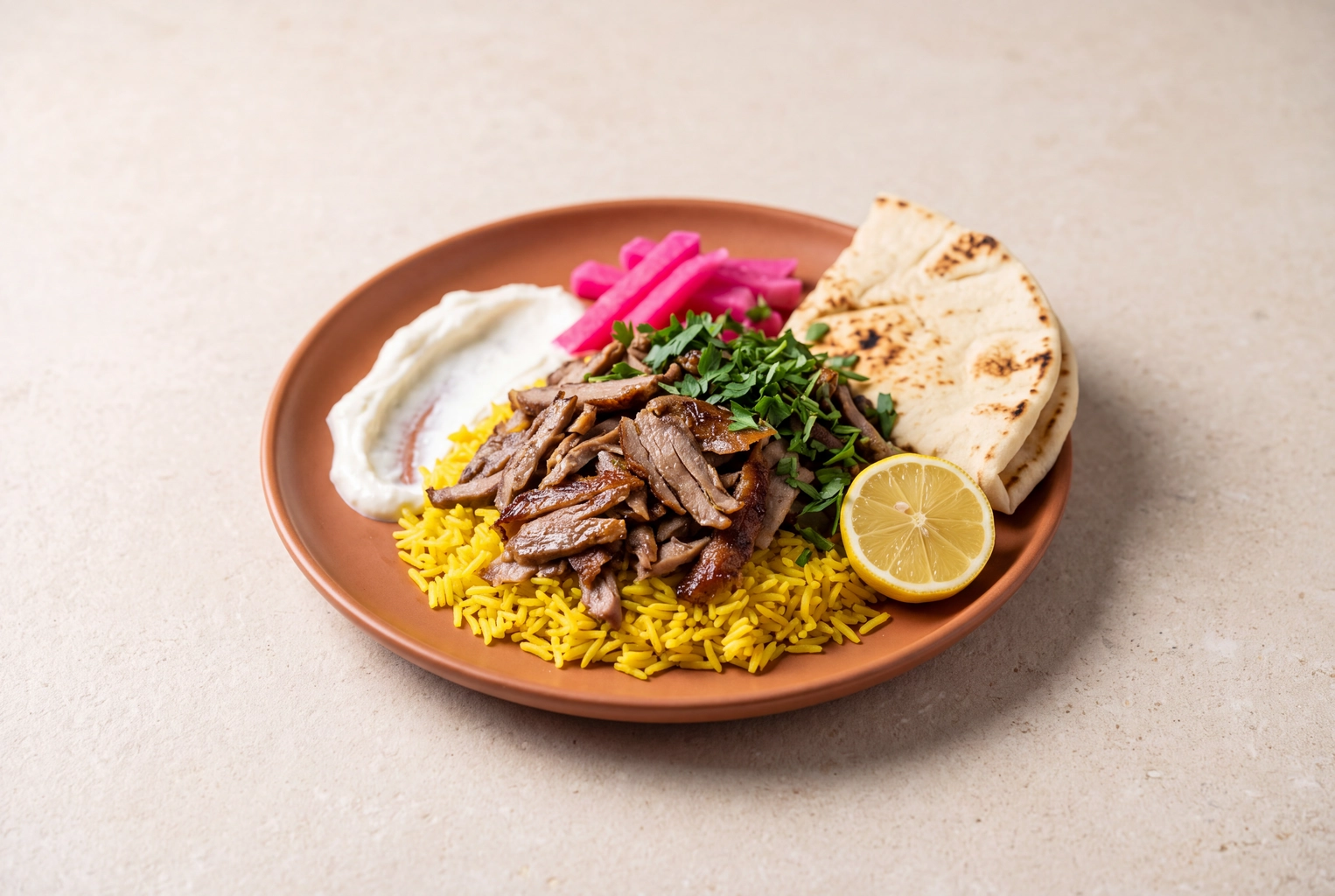 Lamb shawarma plate framed with wide margins, a menu photo that crops cleanly for Uber Eats, DoorDash and Grubhub
Weeks 2 to 4: Moving Regulars to the New Channel
- Make the direct link the default everywhere you control: the order button on your website, the order link on your Google Business Profile, your Instagram bio and a QR code at the counter.
- Give regulars a reason, priced against the app's cut. On a $30 Plus order Uber takes $7.50. A free side that costs you $1.50 in food still leaves you $6 ahead on every order that moves.
- Collect contact details on your own channel. Marketplaces hold most customer data; direct ordering gives it to you. Our email templates and SMS marketing guides cover what to send.
- Run loyalty on direct orders only, so points are a reason to come back to you rather than the app. See restaurant loyalty programs for what each type costs.
- Use inserts where you're allowed. Pickup, dine-in and catering bags are yours to fill. Read your marketplace agreement before putting cards in app delivery bags.
- Track the channel mix weekly: order counts on each channel and the cost of an order on each.
 Banh mi shop worker handing a regular his usual order, the customers restaurants move from Uber Eats to direct ordering
Day 30: Decide What Happens to Uber Eats
Don't drop to Lite just to save 5 points. Uber's pricing page limits Lite's visibility to customers who search for your store, so Lite suits a restaurant whose Uber Eats orders come from people who already know it, and those are exactly the customers you've been moving. If Uber Eats is now your discovery channel, Plus is doing its job. If you pay your own drivers, Uber's 15% self-delivery plan is the cheaper way to stay.
Should You Leave Uber Eats Completely?
Usually not. Uber Eats is a discovery channel, and leaving it trades a fee for reach: Earnest put Uber Eats at 26.1% of US delivery sales at the end of 2024, and at 38.2% in the New York area and 41.9% in Los Angeles, level with DoorDash. Quit only if your Uber Eats orders come almost entirely from people who'd follow you to a direct link.
 New neighbor eating a first delivery order of noodles among moving boxes, the new customers Uber Eats still brings
One owner in an r/restaurants thread asked for a way out because the big three "take almost 30%". For most, the answer is the split above: a marketplace for strangers, your own channel for regulars. Commission is only half of it, too. Our hub on how to get more orders on Uber Eats covers the conversion side, and how to increase restaurant delivery sales works across every app.
Frequently Asked Questions
What is the cheapest Uber Eats alternative for restaurants?
For new customers, DoorDash Basic at 15% per delivered order is the cheapest marketplace. For regulars, a direct ordering page costs only card fees: about $1.17 to $1.29 on a $30 order on Square Online or DoorDash's ordering page, with the customer usually paying for delivery.
Is there a commission-free delivery app for restaurants?
Not one that brings new customers: every marketplace charges a commission. Commission-free options are ordering pages on your own channels (DoorDash Online Ordering, Square Online, Toast, ChowNow, Grubhub Direct) plus flat-fee couriers such as Uber Direct ($7.99 and up) and DoorDash Drive ($6.99 to $10.99).
Is Grubhub cheaper than Uber Eats for restaurants?
Only at the entry tier. Grubhub Basic with its drivers costs about $5.72 on a $30 order, against $6 on Uber Eats Lite. On the higher plans Grubhub costs more: $8.72 on Plus and $10.22 on All-access, against $7.50 and $9 on Uber Eats.
How long does it take to switch?
DoorDash says restaurants go live on its marketplace in 1–5 days on average, and its ordering page can take orders within a day. The slow part is moving regulars, which takes weeks of links, loyalty and reminders, so give it a month before you change your Uber Eats plan.