
How to Grow Catering Sales: 8 Levers That Move Revenue
 Ali Tanis20 min read
Most advice on how to grow catering sales is really advice on catering marketing: post more, run ads, get on the marketplaces. That work matters, and we have already covered it in depth in our catering marketing guide, our 20 catering marketing ideas, the piece on how to market a catering business and the guide to catering food photography. This article is deliberately about the other half of the job: the sales machine that turns an inquiry into a signed proposal, a deposit, a bigger ticket and a repeat contract.
That distinction is not academic. US caterers will bill about $15.7 billion in 2026 according to IBISWorld, spread across roughly 13,600 businesses, and demand is holding: 91% of workplaces plan to spend the same or more on food this year, per ezCater's 2026 workplace catering research. The inquiries exist. What separates a $300,000 catering operation from a $1,000,000 one is what happens after the phone rings.
Quick Summary: How to grow catering sales comes down to eight mechanical levers, not more marketing: corporate accounts on standing orders, sub-24-hour proposals, three-tier per-head packages, deposit and cancellation terms that hold, a priced add-on menu, partner referral fees, off-season contracts booked 90 days ahead, and a 30/60/90-day win-back cadence. Realistic proposal-to-booking close rates run 40-60% for inbound corporate work and 20-35% for social events. Because catering is sold from a PDF before anyone tastes anything, the photos in that PDF are part of the sales system.
How to grow catering sales: why it is a different job from marketing
Marketing gets you seen. Sales gets you paid. A restaurant owner who adds catering usually treats both as one blurry activity called "getting more catering business", and that blur is where revenue leaks.
The catering buyer almost never tastes your food before they commit. An office manager choosing lunch for 40 people, or a couple choosing a wedding caterer, decides from a proposal deck, a catering menu PDF and a handful of photos. So the eight levers below all sit between "inquiry received" and "invoice paid":
-
Corporate account acquisition and repeat contracts
-
Proposal and quote turnaround time
-
Tiered package design and per-head pricing
-
Deposit and cancellation terms
-
Upsell architecture (add-on trays, staffing, rentals)
-
Referral and venue partnerships
-
Off-season demand smoothing
-
Win-back on lapsed accounts
One measurement makes all eight work: track your inquiry-to-booking close rate by event type. Corporate drop-off, full-service corporate events, weddings and private parties convert at very different rates, and a blended average hides whichever one is quietly failing. If you are using catering management software, this is a saved report; if not, it is a spreadsheet with four columns, and it is free.
Lever 1: Corporate accounts and repeat contracts
Corporate catering is the closest thing this industry has to recurring revenue, and the most reliable growth lever of the eight. Event catering is a series of one-off sales; a corporate account is a subscription with a person attached to it.
The numbers favour it. Catering tickets typically run 5-10x a regular restaurant order ($200-$2,000 against $20-$40), demand peaks Monday to Wednesday when dining rooms are quietest, and corporate buyers spend company money against a per-head budget rather than haggling like a private customer. Only 26% of work locations with remote-capable jobs were fully remote in early 2026, the lowest share since 2020 according to Gallup data reported by Food On Demand, which is why workplace food budgets are rebuilding.
Workplace orders also compound. ezCater's 2026 survey of 2,300 workplace food stakeholders found that 96% of workplaces tried a new restaurant in 2025, and 62% of employees who first tried a restaurant at work later ordered from it personally, as reported by QSR Magazine. A single office lunch is a sampling event for 40 potential private customers.
How to acquire corporate clients without a sales team
-
Target the person, not the company. Office managers, executive assistants and HR coordinators place the orders. Build a list of 100 of them within your delivery radius; nobody sells you that list, you build it one call at a time.
-
Lead with a house account. Invoicing on net-15 or net-30 terms is a real advantage: clients who can order without chasing a company card will choose you over an equal competitor every time. Cap total receivables at what you can afford to carry.
-
Sell the standing order, not the lunch. Propose a structure: weekly team lunch (Tuesday, 25-40 people, rotating catering menu), monthly all-hands (80-150 people, buffet), quarterly offsite (staffed). A standing order removes the re-decision every week.
-
Run a quarterly account review. Ten minutes, on the phone: what worked, what dietary needs changed, what is coming up. Every review surfaces one new event.
Larger marketplace orders on DoorDash, Toast or ezCater can seed these accounts; our guide to getting large orders on DoorDash covers the tray-level economics. But the account itself belongs off-platform, on your own online ordering page, where you own the customer's email and the margin.
Lever 2: Proposal and quote turnaround time
Speed is the cheapest sales advantage you will ever buy. The landmark MIT and InsideSales.com lead response study analysed more than 15,000 leads and found the odds of contacting a lead drop 100x, and the odds of qualifying it drop 21x, when the response moves from 5 minutes to 30 minutes. Catering clients request quotes from three or four caterers at once. The first polished proposal sets the price anchor everyone else is compared to.
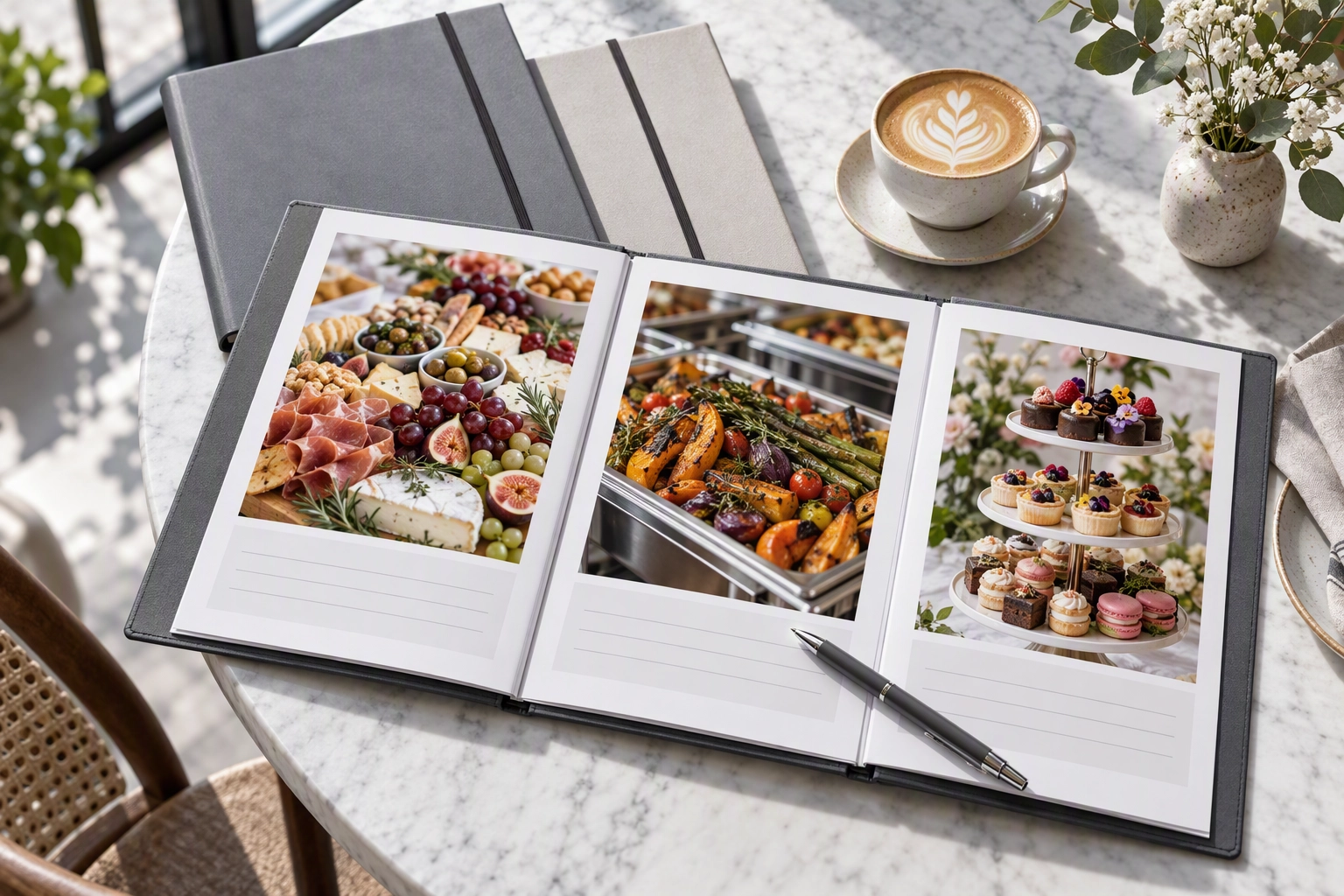 Open catering proposal with photographed menu trays beside two unopened rival proposals, the first polished quote wins
Build a two-speed system:
-
Under one hour: a personal acknowledgement with your per-head price ranges and a link to your menu photos. This is where the buyer decides whether you are a real option.
-
Under 24 hours: the full proposal. If your team needs three days to produce a quote, the fix is templating, not effort. Catering software with a proposal builder helps here (most vendors will give you a demo), but a well-built document template with three tier tables does the same job for free.
-
A validity window. Proposals that expire in 7-14 days convert faster than open-ended quotes because they force a decision date.
The catering proposal template that closes
Proposify's 2026 analysis of 742,137 proposals worth $3.06 billion found that winning proposals average about seven sections and eleven pages, and that proposals pre-signed by the seller close 65% more often and 25% faster, per its State of Proposals report. Use that shape:
-
Cover and event snapshot. Client name, date, headcount, venue, service style, one hero photo of the kind of food they asked about.
-
What we heard. Three sentences restating their brief: the occasion, the constraints, the dietary needs. This section wins more deals than the menu does, because it proves you listened.
-
The menu, with photos. Every dish pictured. A proposal is a tasting the client cannot attend, so the images have to do the tasting for them; see our catering food photography guide for how to shoot buffets and trays so they read as generous rather than industrial.
-
Per-head pricing table. Three tiers side by side (more on that in Lever 3), each with a per-person price and a line total for their headcount.
-
Add-ons. Priced as separate lines the client can tick: dessert tray, beverage station, servers, rentals, late-night snack.
-
Terms. Deposit, cancellation scale, final headcount deadline, payment schedule.
-
Next step and signature. One sentence telling them what happens when they sign, an e-signature field, and your signature already on it.
Keep the entire document under 12 pages. Testimonials and your story belong in an appendix, not between the client and the price.
Realistic close-rate benchmarks
Benchmarks only help when the denominator is defined. "Close rate" here means signed bookings divided by proposals sent, not inquiries received.
-
Cross-industry baseline: 34% of proposals close on average in Proposify's 2026 data; hotel and venue proposals close at just 14%, and event-management proposals take about 12 days to close. A RAIN Group survey of 472 sellers put the average proposal-stage win rate at 47%, with a 35-point gap between elite and average performers.
-
Catering working ranges (operator experience, not a formal study): inbound corporate drop-off 40-60%; full-service corporate events 30-45%; weddings and social events 20-35%, because the buyer is comparing three to five caterers and often waiting on a venue decision; cold outbound corporate outreach 5-15% inquiry-to-booking over a year.
If your inbound corporate rate is under 30%, the problem is usually turnaround or pricing presentation. If weddings are under 15%, it is usually the proposal itself: too long, no photos, no tiers.
Lever 3: Tiered packages and per-head pricing
Buyers think in per-head numbers, so price that way and show the maths. The single most effective change most caterers can make is replacing an itemised menu with three named tiers where the middle one is the intended purchase.
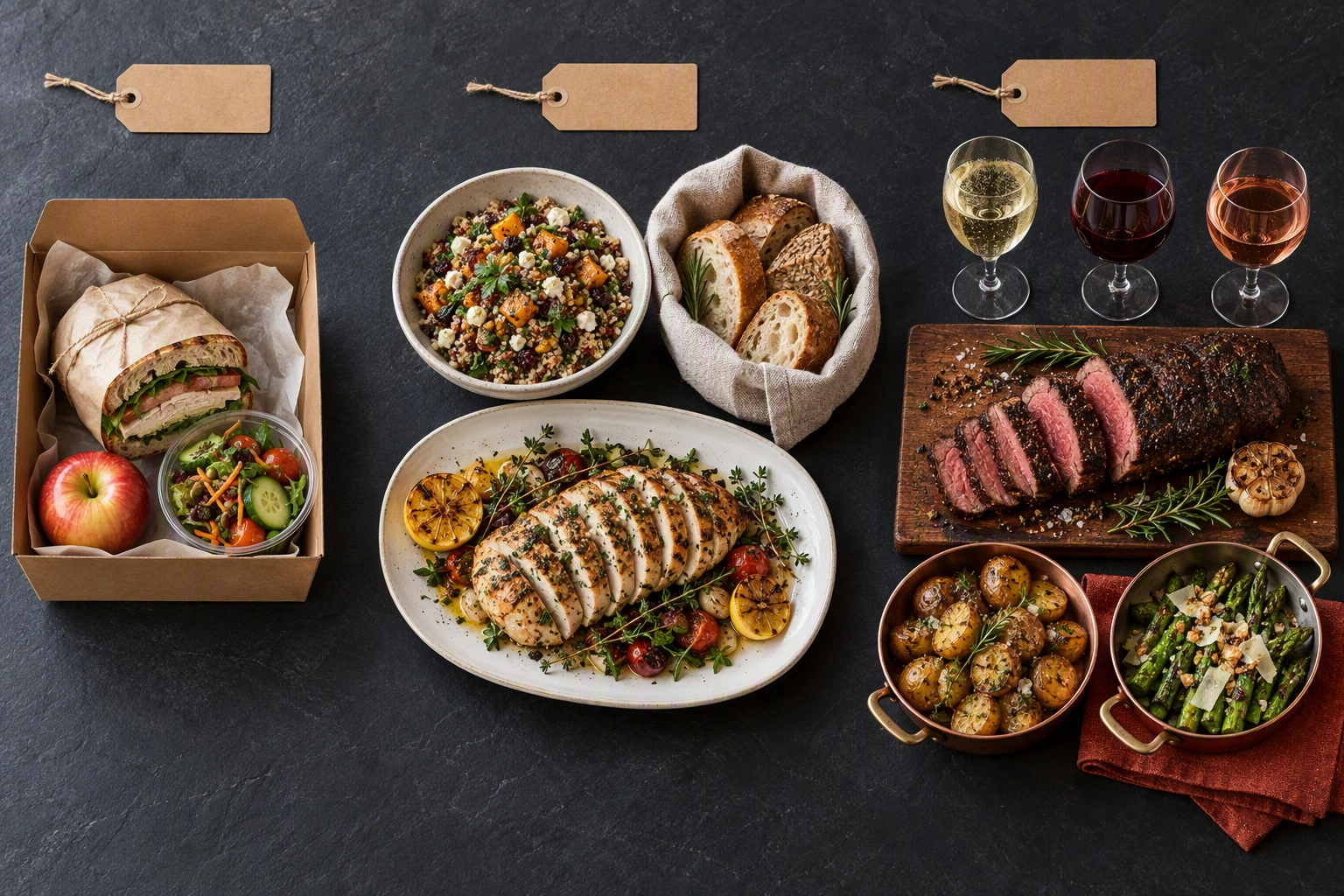 Overhead of three catering package tiers laid out as real food, from box lunch to carved tenderloin, per-head pricing made visible
The three-tier table
A 2026 corporate structure that reflects current US market ranges:
| Tier | Per head | What is included | Who buys it |
|---|---|---|---|
| Working lunch | $20-$30 | Sandwich or bowl, one side, disposables, drop-off | Weekly team lunches |
| Client meeting | $35-$50 | Hot entree, two sides, dessert, real platters, set-up | Monthly meetings, client visits |
| Corporate event | $50-$75+ | Two entrees, stations, beverage service, staff on site | Quarterly events, launches |
For social and full-service work the ranges shift up: buffet dinners commonly run $45-$65 per head and plated meals $50-$120. Weddings justify premium pricing because of the coordination involved, and a paid tasting at $250-$500 per session is a normal line item, not a giveaway.
Three rules keep tiers profitable:
-
Ask for the per-person budget, never the total. "$30 a head for 60 people" is a conversation; "$1,800" invites a discount request.
-
Set minimums. 25 guests for corporate, 50 for weddings, or a minimum spend that covers your delivery and set-up cost. Below the minimum the per-head price rises, and you should say so on the proposal.
-
Watch food cost as a band, not a number. Most sustainable operations land between 28% and 35% food cost. Use the same discipline you would apply in menu engineering for a restaurant: the profitable tier is the one that sells well and runs low variance.
Publish the tiers on your website and in every proposal, keep the tier names identical on the online ordering form so clients never re-learn your options, and keep custom quoting for weddings and unusual venues where the scope genuinely differs.
Lever 4: Deposit and cancellation terms that protect margin
Terms are a sales lever because they change which clients you keep. A buyer who refuses a deposit is the buyer most likely to cancel, and a cancellation the week of the event can cost you the entire food purchase plus the staff you turned other work away to book.
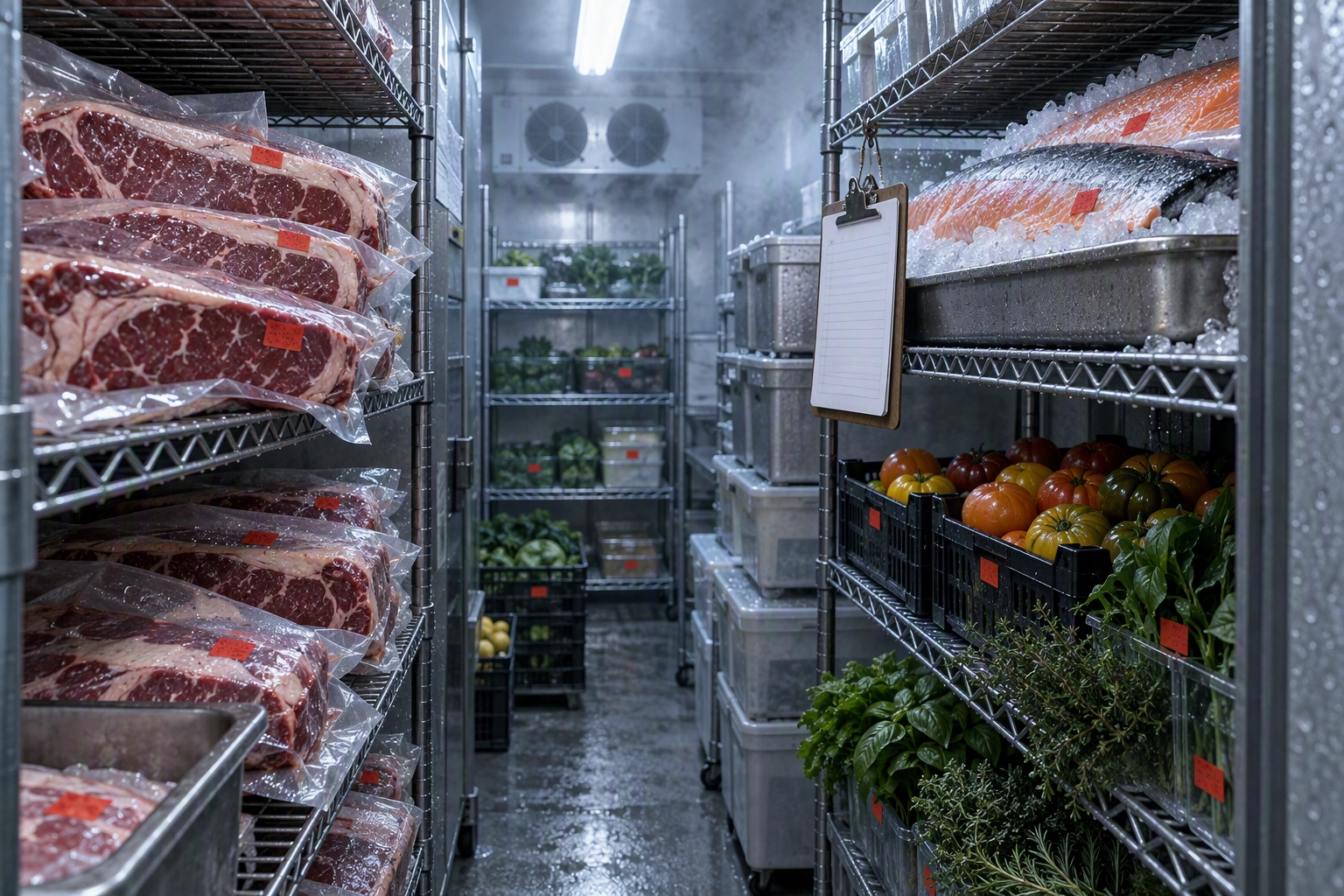 Walk-in cooler shelves stocked with date-stickered proteins and produce bought ahead of an event, the cost a catering deposit protects
Common structures in 2026:
-
50% non-refundable deposit at booking, balance due 7-14 days before. Most common for custom orders and private parties.
-
Three payments: 25% to hold the date, 50% at 30 days out, balance 7 days before. Kinder on wedding budgets, and it keeps the client invested at every stage.
-
Final headcount 7-14 days before, with the invoice locked at that number; increases accepted, decreases not.
A cancellation scale you can defend
The International Caterers Association's sample corporate contract forfeits the entire required deposit for cancellations inside two weeks. Many full-service caterers publish a sliding scale that reads roughly: more than 30 days out, retain the deposit; 14-30 days, retain 50% of the contracted total; under 14 days, retain 80-100% plus any special orders and rentals already committed. Write yours around your own purchasing calendar. If you buy proteins ten days out, your no-refund line sits at ten days.
Corporate net terms are the deliberate exception. A house account on net-30 is a concession you make to win recurring clients, so make it consciously, put it in writing, and review receivables monthly. Small-business owners compare notes on exactly these policies in this r/smallbusiness thread on non-refundable catering deposits; the consistent lesson is that the policy only works when it is signed before any food is ordered.
Lever 5: Upsell architecture: add-on trays, staffing, rentals
Operators who systematise upselling routinely report a 10-20% increase in average order value, and the mechanism is not charm. It is a form that will not let the order close until every add-on has been offered.
Price the add-ons as lines
Every add-on gets its own price, its own photo and its own tick-box on the proposal and the online ordering form:
-
Dessert tray (cookies, brownies, mini pastries): high margin, easiest yes. Shoot it well; our dessert photography guide covers the angles that make a tray look abundant.
-
Beverage station: coffee urns, iced tea, a signature mocktail for parties. See cocktail photography for how to picture a drinks table.
-
Staffing: priced per server per hour, with a minimum of four hours, plus a lead server on events over 60 guests.
-
Rentals: chafers, linens, china and glassware as a pass-through plus 15-25% for handling.
-
Delivery and set-up: $50-$200 by distance and volume, billed separately so the food price stays clean.
-
Late-night snack for weddings and parties, and a paid tasting for any event over 100 guests.
Train the team on using a forced-choice prompt: "Dessert tray for the group?" with an explicit "no thank you" option the order-taker has to select. And photograph every single add-on. An unpictured tray sells at a fraction of a pictured one; the same logic that makes photo menus outperform text menus applies to a proposal add-on list.
Lever 6: Referral and venue partnerships
A referral partner is a salesperson you pay only on success. Wedding venues, event planners, coworking spaces, florists, AV companies, photographers and office-park property managers all get asked "who should we use for food?" every week.
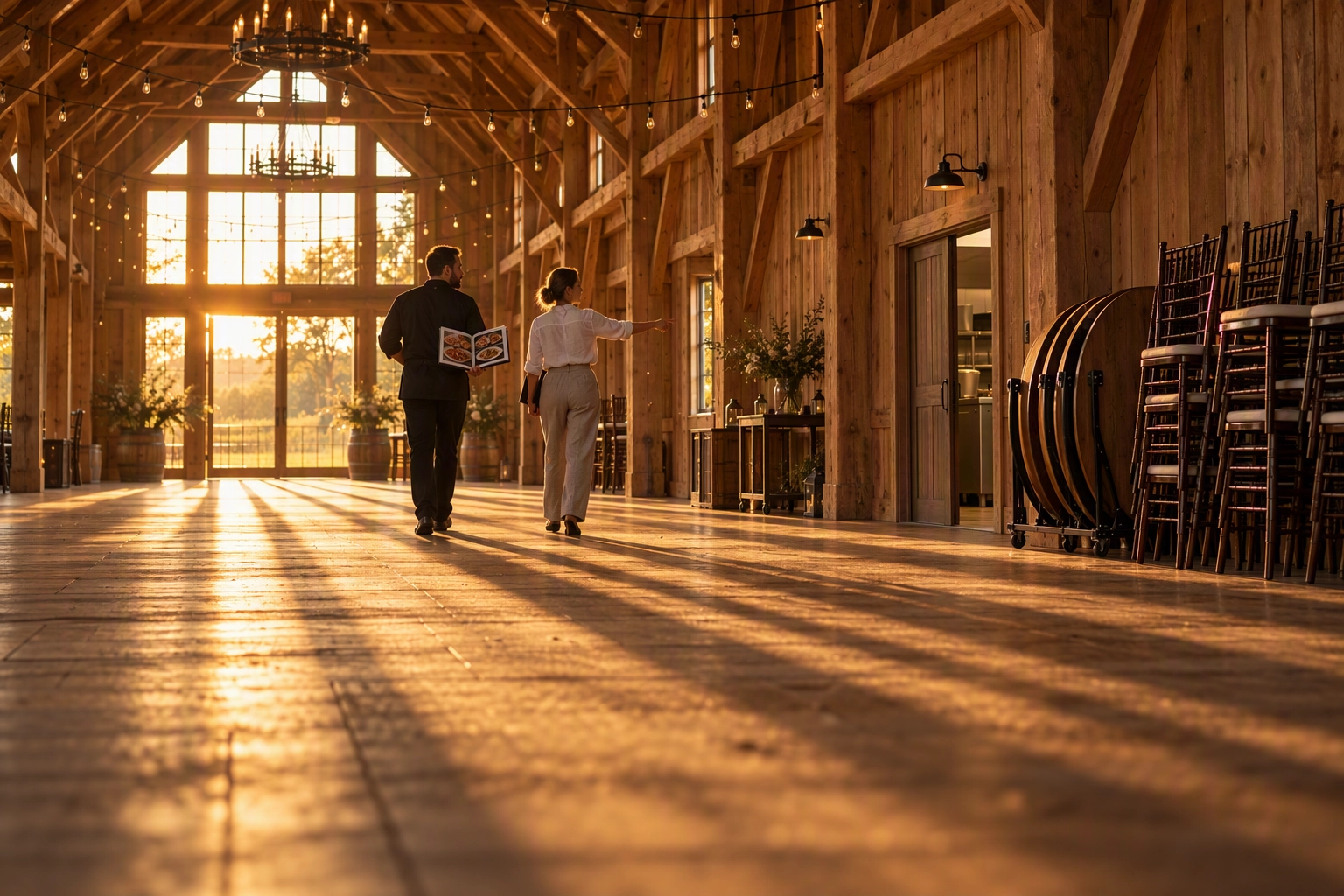 Venue coordinator walking a caterer through an empty barn wedding hall at golden hour, building a referral partnership
Make it a programme, not a favour:
-
Pay a referral fee of 5-10% of net catering sales on the first booking (aggressive operators pay it on every booking for a year). Put it in a one-page agreement.
-
Give partners a selling kit: a one-page catering menu with per-head tiers, six to eight photos they can drop into their own proposals, and a direct line to whoever answers your catering phone. A partner cannot sell what they cannot show; a simple food flyer with your best trays does most of the work.
-
Get on preferred-vendor lists. Venues keep them, and one flawless event on site plus a follow-up the next morning is usually all it takes to become one of the three names on the list.
-
Ask at the post-event check-in. The day after a successful event, the client is at peak goodwill. That is when you ask for the introduction to their sister department, their venue or their planner.
The top-ranked community answer for this query, an r/smallbusiness thread on finding catering customers, says the same thing in plainer words: get into your local business organisations and build the relationships before you need them.
Lever 7: Off-season demand smoothing
Most food businesses slump in January and February, and office-dependent operators also lose August. Corporate catering is the natural counterweight because it peaks Monday to Wednesday and runs year-round, but reactive catering in a slow month does not work: the relationships have to be booked in advance.
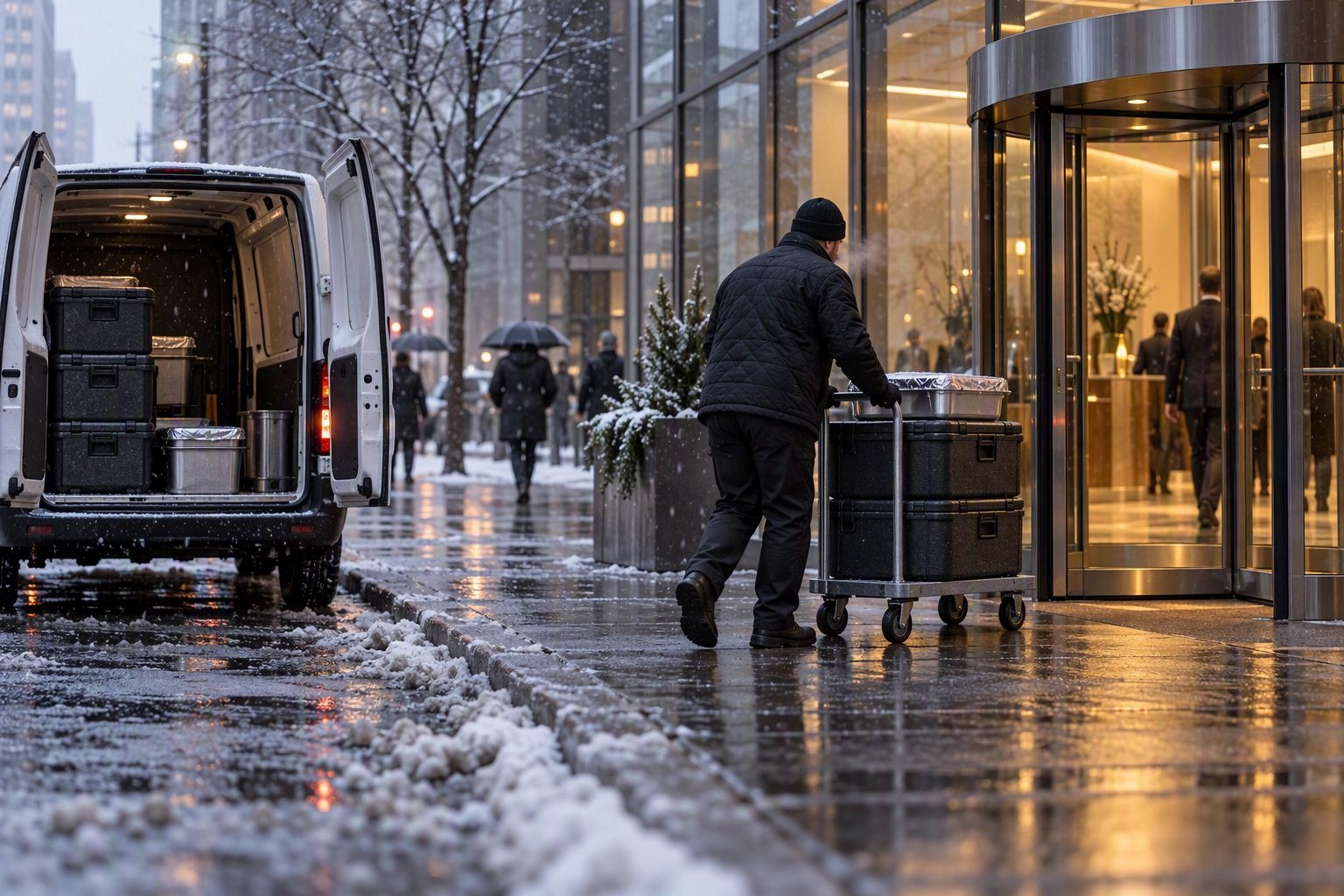 Catering driver wheeling insulated food carriers into a warm office lobby on a snowy January morning, off-season corporate demand
Smoothing tactics that hold up:
-
Book the calendar 90 days ahead. In October, sell January: new-year wellness lunches for HR, planning-offsite packages, "first all-hands of the year" menus. In May, sell August: summer intern programmes and client appreciation lunches.
-
Price the quiet days. Weekday and off-season rates 10-15% below Saturday and December pricing are standard practice and cost you nothing on days you would otherwise be idle.
-
Convert events into programmes. A company that booked a December party is a candidate for a monthly lunch programme starting in January; offer it in the thank-you email. A loyalty rate for standing orders (5% off the third month onward, for example) is cheaper than the marketing spend it replaces.
-
Use slow weeks for tastings and shoots. Host partner tastings for venues and planners, and photograph next season's menu while the kitchen has capacity; our guide to planning a menu photoshoot shows how to shoot a full menu in one session.
Hotels, resorts and private chefs run the same seasonal maths with different peaks; see our pages for hotels and resorts and private chefs for how those operations present seasonal menus.
Lever 8: Win-back on lapsed accounts
Winning back a lapsed account costs a fraction of acquiring a new one, and a lapsed corporate client is a habit you lost, not a single order. The first job is defining "lapsed": for corporate accounts, 60 days without an order; for social clients, 13 months without a rebooking (their anniversary has passed).
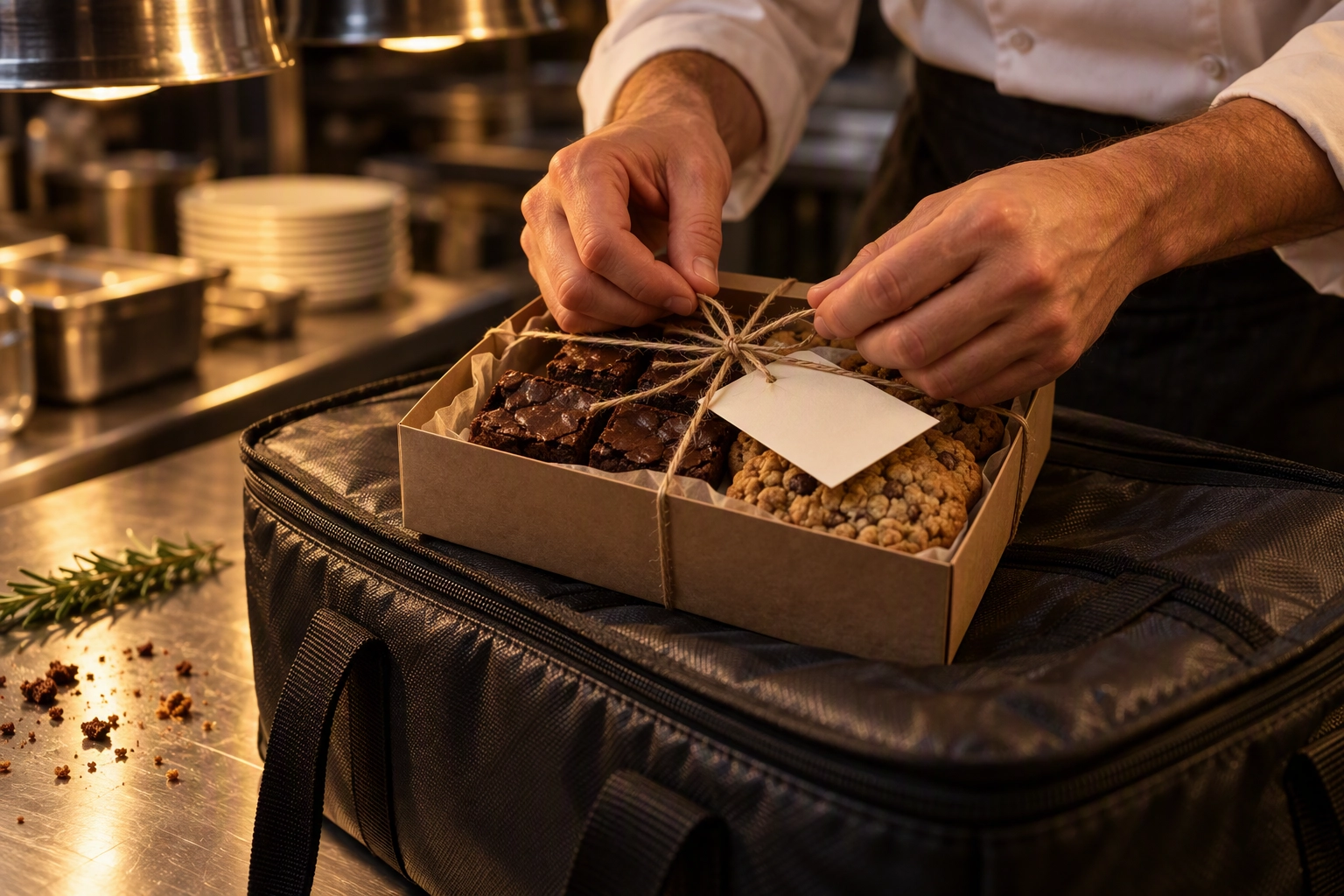 Hands tying a small complimentary dessert box onto a catering delivery bag, a food-value win-back offer for a lapsed account
Run a 30/60/90-day cadence:
-
Day 30 (corporate) / month 11 (social): a personal note with something new, ideally new menu photos. "We just shot the autumn menu, thought of your team" is a reason to write that does not sound like a discount.
-
Day 60: a specific offer with food value rather than money off. A free dessert tray costs $20-$40 in food but carries several times that in perceived value, and it does not reset the client's price expectation the way 15% off does.
-
Day 90: a direct question: "Did we do something wrong, or did the need change?" Most lapses are a personnel change, a budget freeze or a single bad delivery, and each one has a different fix.
Generic email benchmarks suggest 5-15% of win-back recipients re-engage and 2-8% buy again within 30-60 days, with cause-specific messaging pushing reactivation toward 8-15%. For a caterer with 40 lapsed accounts at $1,500 a year each, recovering four of them is $6,000 of revenue from an afternoon of phone calls. Customers' loyalty in catering is mostly memory: the account that hears from you first stays yours.
Keep a rebooking file as well: every large event goes into a January-to-December folder, and you call about next year's event a month before the client would start thinking about it. Most customer management software can automate the reminder; an index-card box does the job for free.
The photography lever: why your portfolio is the pitch
Every lever above is delivered through a document. The proposal, the tier table, the add-on list, the partner kit and the win-back email all live or die on photographs, because catering is the one food business where customers commit without tasting.
That makes photography a sales cost, not a marketing cost. You need a picture of every tier, every add-on tray and every service style, shot consistently enough that a partner can drop them into their own deck. Commercial studio shoots run into four figures per session, which is why most caterers show three photos of one event from 2023. The FoodShot AI catering page shows the alternative: a phone photo of a tray on the prep bench becomes a menu-ready image in about 90 seconds, and the My Styles feature keeps every proposal image in one consistent look. For weddings and social events, the wedding and event caterers page covers proposal-ready imagery specifically, and our guide to real versus AI-generated food images explains the honesty line: enhance your own dish, never invent one.
If you would rather shoot manually, how to stage food for photography and how to take good food photos cover the basics, and food photography services compared prices the freelancer and studio routes. Restaurants that already have a menu photography library can reuse it: the same hero shots that sell a dish on a delivery app sell it on a catering proposal.
A 30-day catering sales plan
-
Week 1: measure and template. Pull the last 12 months of inquiries, mark each one booked or lost, split by event type. Create the seven-section proposal template and the three-tier table.
-
Week 2: terms and add-ons. Write the deposit schedule and cancellation scale. Price every add-on as a line item. Photograph the tiers and the trays.
-
Week 3: partners and win-back. Sign three referral partners with a selling kit. Start the 30/60/90 cadence on every account lapsed more than 60 days.
-
Week 4: standing orders. Call your ten best corporate contacts and propose a weekly or monthly programme. Book Q1 before December.
Do those four weeks properly and you have built a sales system; the catering marketing work then has somewhere to send the demand, and the growth compounds because every lever feeds the next.
Frequently Asked Questions
What is a good close rate for catering proposals?
Measure it as signed bookings divided by proposals sent. Cross-industry data puts the average around 34-47%; for catering, 40-60% on inbound corporate drop-off, 30-45% on full-service corporate work and 20-35% on weddings are healthy working ranges. Under 30% on inbound corporate usually means slow turnaround or an itemised, tier-less quote.
How fast should a caterer send a quote?
Acknowledge within an hour with per-head ranges and menu photos, and send the full proposal within 24 hours. Lead-response research shows contact odds fall 100x between a 5-minute and a 30-minute reply, and catering buyers typically quote three or four caterers at once.
How much deposit should a caterer ask for?
A 50% non-refundable deposit at booking is the most common structure for social events and custom orders, with the balance due 7-14 days before. A 25% / 50% / balance schedule works for weddings. Corporate house accounts on net-15 or net-30 are a deliberate exception used to win recurring business.
How do you get corporate catering accounts?
Build a list of office managers, executive assistants and HR coordinators inside your delivery radius, offer a house account with invoicing, and propose a standing order (weekly lunch, monthly all-hands, quarterly event) rather than a one-off. Marketplace orders through ezCater or DoorDash can surface the contact; the account itself belongs off-platform on your own online ordering page.
What is the fastest way to grow catering sales?
Fix turnaround first: a templated proposal sent within 24 hours with three per-head tiers and photographed add-ons lifts close rate and ticket size at the same time, with no new marketing spend. Then work the lapsed-account list, because win-back is the cheapest revenue you have. Software can help with reminders and templates, but every lever in this guide works with a spreadsheet and a phone.