12 Food Photography Trends 2026 and Where They Fade
 Ali Tanis16 min read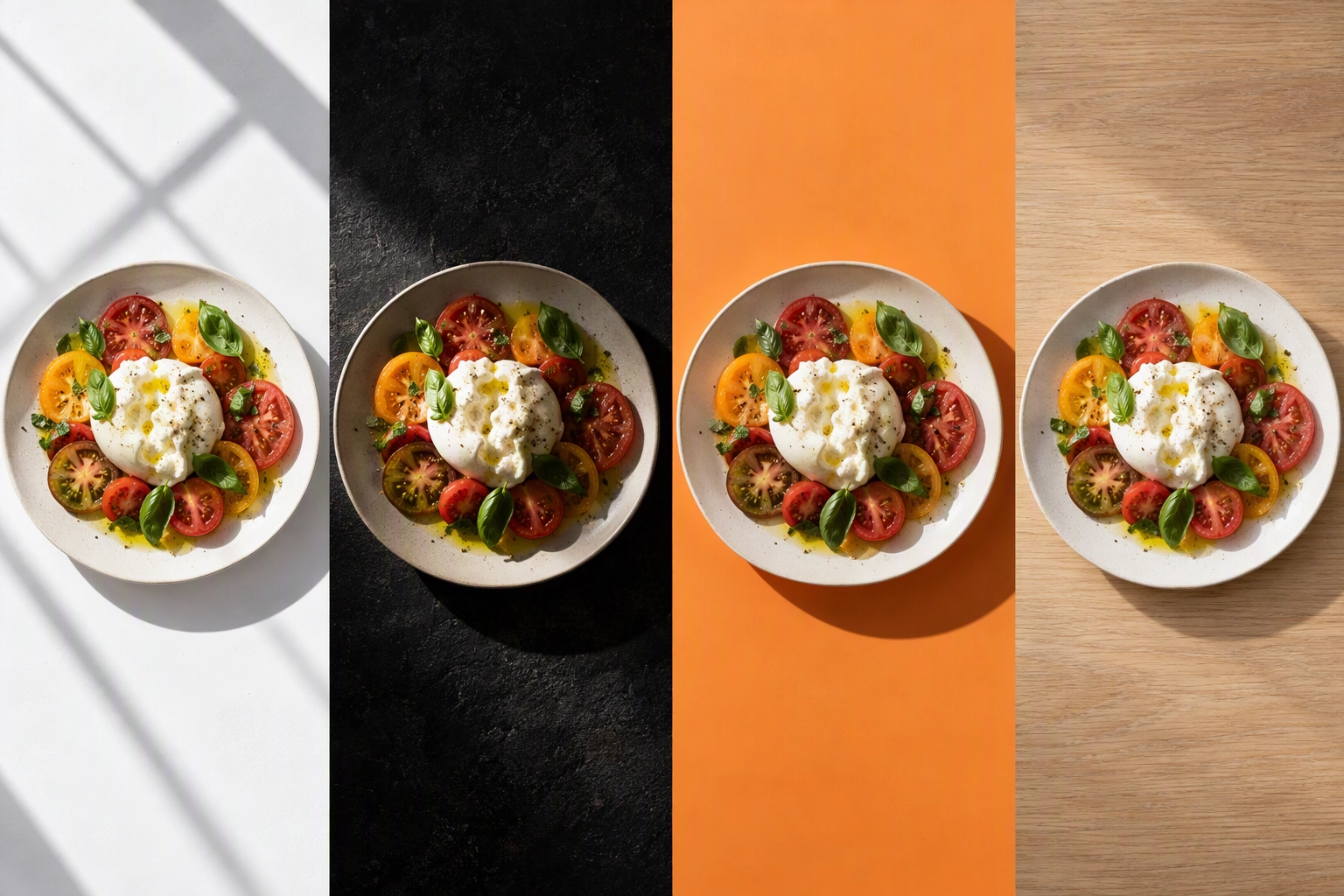
Food photography trends 2026, in one line: real light on real food in a real place. Restaurant feeds on social media, delivery-app photo rules and food brands' product pages all show the same shift. Hard sun, flash, crumbs, hands and cut-open sandwiches are in. Plastic perfection, neon edits and dark-and-moody as a default are on the way out.
Below are 12 looks: four lighting, two palette, three styling, two angle and one motion. Each comes with what it signals, the plates and channels it suits, a phone how-to and where it is already fading. Which foods are popular is a separate question, covered in our Pinterest food trends 2026 guide.
Quick Summary: The 2026 looks that win are specific and believable: hard sun, direct flash, perfectly imperfect styling, hands in frame, cross-sections and frozen pours. Over-saturated edits, moody-by-default menus and AI-invented dishes are fading. Only four of the 12 pass Uber Eats and DoorDash rules as shot, so plan a delivery version and a social version of every hero item.
What do food photography trends 2026 reward?
They reward specificity. Getty Images' VisualGPS team titled one of its three 2026 visual themes "Authenticity Is Now About Specificity," and its mid-year check-in found that flawlessness now reads as less credible. For food, that means the actual plate, room and light, not a generic professional studio set.
Our sources: the published Uber Eats merchant photo guidelines and DoorDash photo rules, Eater and Bon Appétit coverage of each look as it spread, and the 2026 Pinterest and Getty Images reports.
One rule first: pick two looks, not twelve. A set where every photo chases a different idea looks like twelve restaurants, and consistency beats any single frame. Our food photography techniques guide makes the same point about consistency in light and angle.
The 12 looks at a glance
| # | Look | What it signals | On a delivery listing? | 2026 status | Matching FoodShot styles |
|---|---|---|---|---|---|
| 1 | Hard sun, long shadows | Daytime, honest | Soften first | Peaking | Direct Sun Snap, Bright Shadow Flat-Lay |
| 2 | Direct flash | Late night, fun | No | Niche | None |
| 3 | Soft window daylight | Accurate, safe | Yes, the baseline | Evergreen | Window Light, Pure Shot |
| 4 | Low-key chiaroscuro | Premium, evening | No | Fading as a default | Dark Chiaroscuro, Dutch Still Life |
| 5 | Tonal color blocking | Designed, confident | No | Rising | Tonal Color Block, Monochrome Match |
| 6 | True-to-plate editing | Trustworthy | Yes | Rising | Any style |
| 7 | Perfectly imperfect | Generous, real | No | Peaking | Styling, not a preset |
| 8 | Hands in frame | Hospitality, scale | Hands only | Rising | Held Elegance |
| 9 | Your own room as the set | This place, not any place | No | Rising | Leather Booth, Noir Banquette |
| 10 | Cross-section | Nothing hidden | Yes | Rising | Side View Hero |
| 11 | Macro texture | Craft | Not as the main photo | Steady | Warm Macro Intimate |
| 12 | Frozen motion | Energy | No | Rising as stills | Blue Levitation, Splash Studio |
Preview every named style on the FoodShot explore page.
Lighting: 4 looks that set the mood
Light decides how a plate reads before anyone notices the food; our food photography lighting guide covers the physics.
1. Hard sun and long shadows
Warm direct sun with crisp shadows and a glint off every glaze. Eater named it the "sun-and-shadows" look in October 2023, reporting that it had replaced the gauzy diffused light of a few years earlier and that restaurants, Molly Baz and the New York Times had adopted it. It still runs through café and snack-brand feeds.
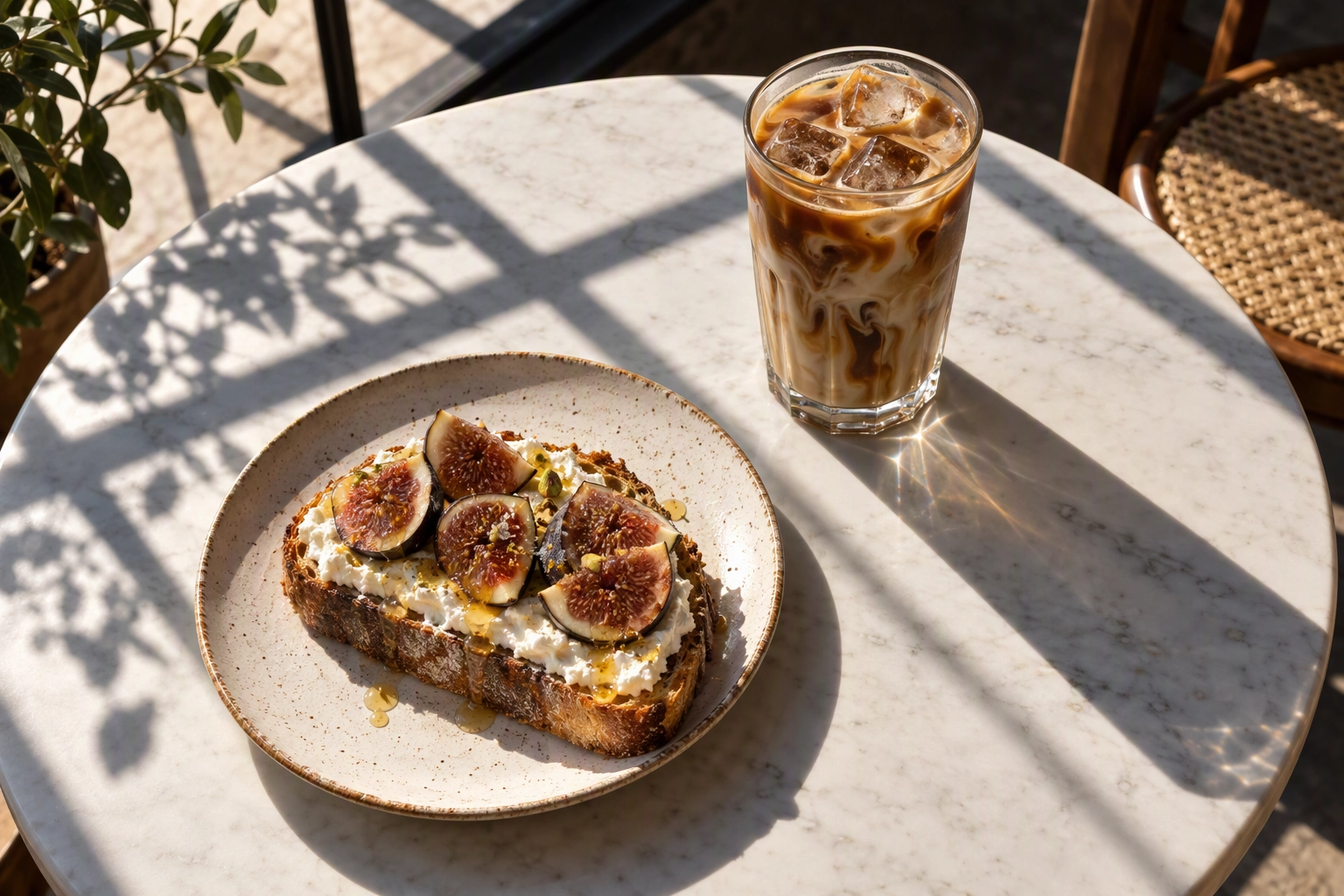 Ricotta fig toast and iced coffee on a white cafe table in hard morning sun with long window shadows, a 2026 food photo look
- Signals and suits: daytime, home, someone actually ate this. Brunch, salads, pastries, iced coffee; feeds, Pinterest, website headers.
- Phone how-to: Eater's creators shoot between 10 a.m. and noon or around 4 p.m. Put the plate in the beam, tap the brightest part of the food and drag exposure down until highlights hold. Let shadows fall beside the plate, not across it.
- Fading where: app listings. Uber Eats rejects "strong shadows" in item photos and "harsh shadows or glaring sunlight" in cover photos.
- FoodShot styles: Direct Sun Snap (a white tabletop in full sun, shot from above), Hard Light Pedestal, Bright Shadow Flat-Lay.
2. Direct flash
On-camera flash fired straight at the plate: a bright foreground, wet highlights, a background dropping toward black. Bon Appétit's Elazar Sontag made the case in March 2022, calling flash photos "documentary." Bar and late-night accounts have run with it since.
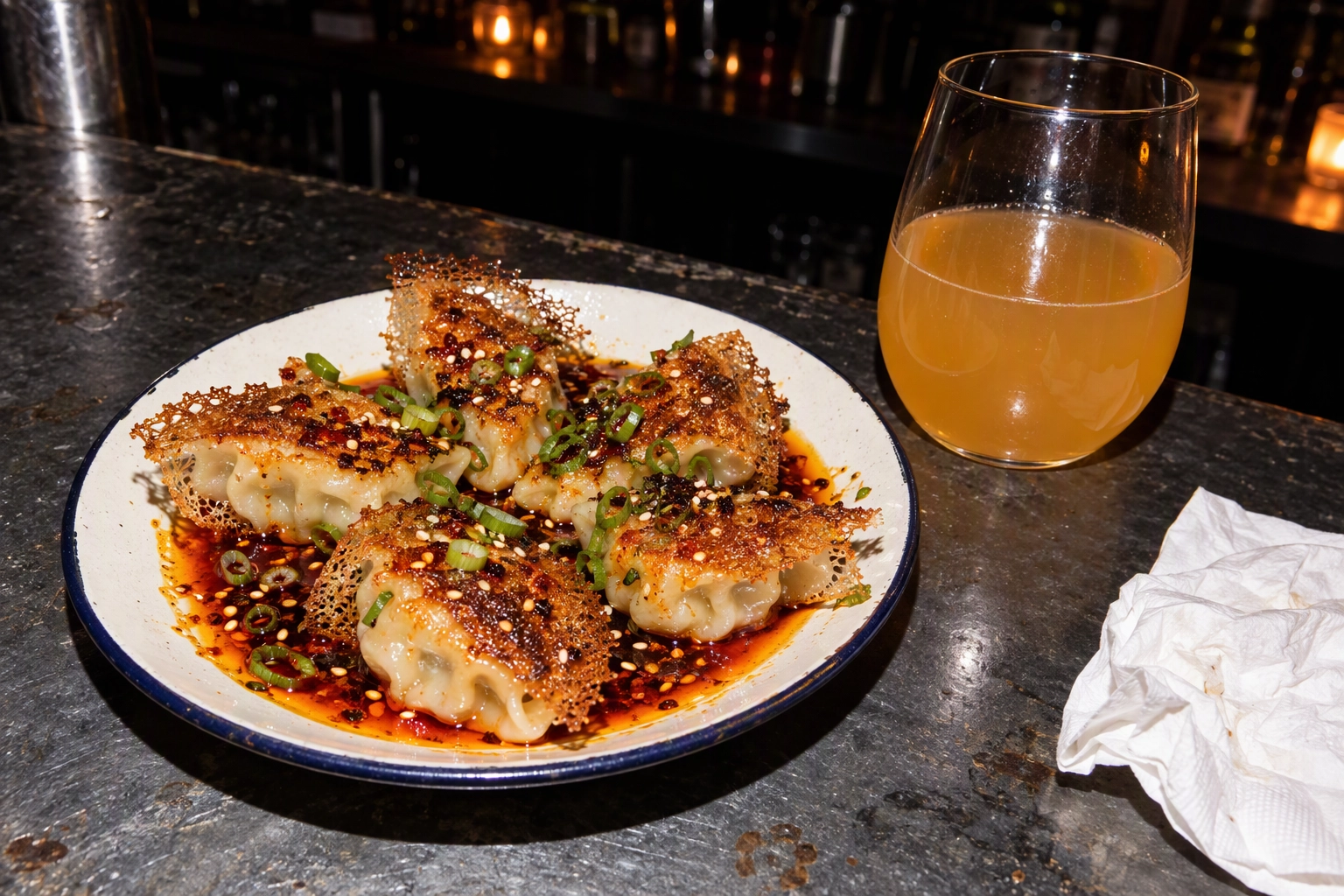 Pan-fried dumplings with chili oil and a glass of orange wine shot with direct on-camera flash at a late-night bar counter
- Signals and suits: a night out, unfussy, fun. Fried chicken, dumplings, fries, bar snacks; carousels, Stories, event recaps.
- Phone how-to: Turn the flash on in a dim room, step back about a meter and zoom to 2x so the burst falls evenly. Tilt the phone 30 to 45 degrees so glare doesn't bounce into the lens.
- Fading where: anything people order from. It fails Uber Eats' shadow rule, and a whole grid of flash looks like a party you missed.
- FoodShot styles: none. We don't have a flash style and won't pretend otherwise.
3. Soft window daylight
Diffused natural light from one side window, with soft, short shadows. It's the least fashionable look here and the most important, because the apps are built around it: Uber Eats rejects item photos with "strong shadows or insufficient lighting," and DoorDash asks for proper lighting without text or overlays.
- Signals and suits: accurate, fresh, safe to order. Every item on Uber Eats, DoorDash, Grubhub and Google Business Profile.
- Phone how-to: Use a side window, switch overhead lamps off (mixed sources turn whites yellow), tape baking paper over the glass if the sun is direct, and stand a white card opposite. Shoot at 45 degrees. Our natural light food photography guide walks through it.
- Fading where: on feeds, when it turns sterile. Perfectly even light on a spotless set now reads as a professional ad, not a meal.
- FoodShot styles: Window Light, Daylight Casual, Pure Shot, White Hero.
4. Low-key chiaroscuro
One light, deep shadows, dark plates on dark stone: the Dutch still-life look that defined professional food photography for a decade. Fine dining, steakhouses and spirits brands still own it, because darkness reads as slow and expensive.
- Signals and suits: premium, intimate, evening. Steak, tasting courses, cocktails, whisky; website heroes. Our cocktail photography guide covers glass reflections.
- Phone how-to: Use one window and cover the others, put a black card on the shadow side, then tap the highlight and pull exposure down about one stop.
- Fading where: as the default for casual food and on the apps, where a dark photo shrinks to a muddy square.
- FoodShot styles: Dark Chiaroscuro, Dutch Still Life, Noir Banquette.
Palette: 2 looks that change the frame
5. Tonal color blocking
Backdrop and surface in one flat hue pulled from the product, so pack and set read as one designed visual system. It's the look we see most on challenger snack and drink websites and paid social this year, part of the turn away from what Pinterest's 2026 report calls years of heavy minimalism.
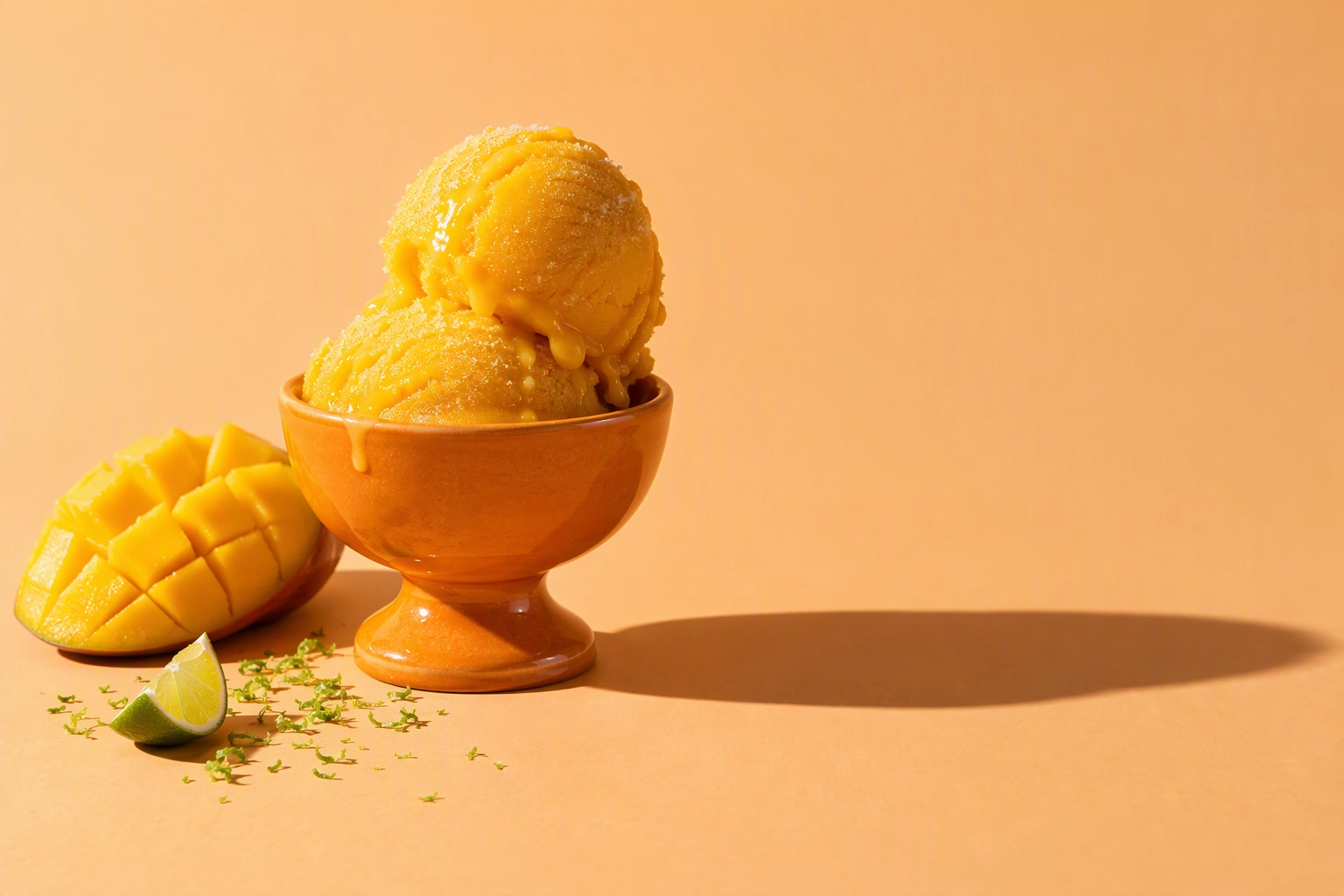 Mango sorbet in a matching orange ceramic cup on a seamless apricot backdrop, a tonal color blocking food photography trend
- Signals and suits: designed, confident, creative. Packaged snacks, cans, bottled drinks, single desserts; brand sites and ads. Amazon's main product photo must still sit on pure white, so keep this for gallery slots. See our food product photography guide.
- Phone how-to: Curve a sheet of mount board from the wall onto the table as a seamless sweep. Pick a tone two or three steps lighter than the pack, then add one hard side light for a graphic shadow.
- Fading where: when the hue fights the food. Blue and purple next to food read as spoilage, which is why the Cool Blue palette in our Pinterest breakdown keeps blue in the glass. DoorDash also asks for a neutral background.
- FoodShot styles: Tonal Color Block samples the set's hue from your own packaging; Monochrome Match is the bolder sibling.
6. True-to-plate editing
Whites white, greens green, no glow. Over-saturated, HDR-heavy editing is the clearest casualty of 2026. Getty Images' 2024 "Building Trust in the Age of AI" survey found 98% of consumers say authentic photos are pivotal to trust, and a photo promising a redder tomato than the one that arrives breaks that trust on the first order.
- Signals and suits: trust. Everything, delivery listings most of all, where a mismatch becomes a "photo didn't match" review.
- Phone how-to: Set white balance off a white plate, fix exposure and contrast first, keep saturation under +10, and compare the screen with the real plate. Our food color grading guide and editing steps cover the rest.
- Fading where: nowhere; this only grows. What fades is the filter era of teal shadows and orange highlights.
- FoodShot styles: any. FoodShot styles change the scene around your food rather than repainting it, so start from a well-exposed phone photo.
Props and styling: 3 looks that feel lived-in
Styling costs a decision, not a budget. Our food styling guide and props guide cover the toolkit.
7. Perfectly imperfect
Crumbs, a drip, one bite taken. Eater documented the shift in September 2022 as "laissez-faire" Instagram food, noting that New York's La Mercerie had moved from predictable perfect photos to a looser style. By 2026 it is the default feel for burger joints, pizzerias and bakeries online.
- Signals and suits: generosity, appetite. Burgers, pizza, cookies, croissants; carousels and your About page.
- Phone how-to: Plate it properly, then break it: one bite, crumbs from the food itself. Wipe the rim and table of everything else. Our burger photography guide shows how far to push it.
- Fading where: when messy becomes dirty. Uber Eats rejects unsanitary surfaces and used cutlery. Staged chaos, like artfully spilled flour, is the version audiences spot.
- FoodShot styles: a styling decision made at the table, not a preset.
8. Hands in frame
A hand holding the plate, tearing a slice, pouring the sauce. It gives scale and says somebody serves this, and it's one of the few human elements the apps allow: Uber Eats bans people in item photos "except for hands."
- Signals and suits: hospitality, craft. Drinks, street food, sandwiches, pastry; feeds, website, Uber Eats.
- Phone how-to: Use a second person with clean, plain hands. Hold the plate at chest height and shoot slightly from below on 2x, so it looks presented rather than snapped.
- Fading where: the faceless hand holding a drink against a pastel wall is a cliché. Keep hands doing something.
- FoodShot styles: Held Elegance presents your plate in a server's hand from a low hero angle.
9. Your own room as the set
Your leather banquette, zinc bar or tiled counter, soft behind the plate. It's Getty's specificity theme applied to hospitality, and Pinterest points the same way: its Neo Deco forecast lists searches for leather banquettes up 35%, brass aesthetic up 35% and antique bar carts up 100%.
- Signals and suits: this place, not any place; it drives visits, not only orders. Bars, bistros, hotels; Google Business Profile and your website. Our restaurant branding guide covers matching the room and the plate.
- Phone how-to: Shoot in quiet hours on the real table. Step back so one recognizable detail, a tile or a brass rail, sits in the soft background.
- Fading where: delivery item photos, where the room distracts; Uber Eats' cover rules reject interior shots outright.
- FoodShot styles: Leather Booth sets your plate on a worn leather banquette; Noir Banquette is darker. More honest still: upload a photo of your own room as a custom background.
Angles: 2 looks that show what's inside
The right angle answers the customer's real question: what am I getting?
10. The cross-section
Cut it open and stack the halves: burger, sandwich, wrap, layer cake. Uber Eats gives customers who upload order photos this exact advice: "cut burgers, sandwiches, or wraps in half to highlight the inside layers," shot top-down or at 45 degrees.
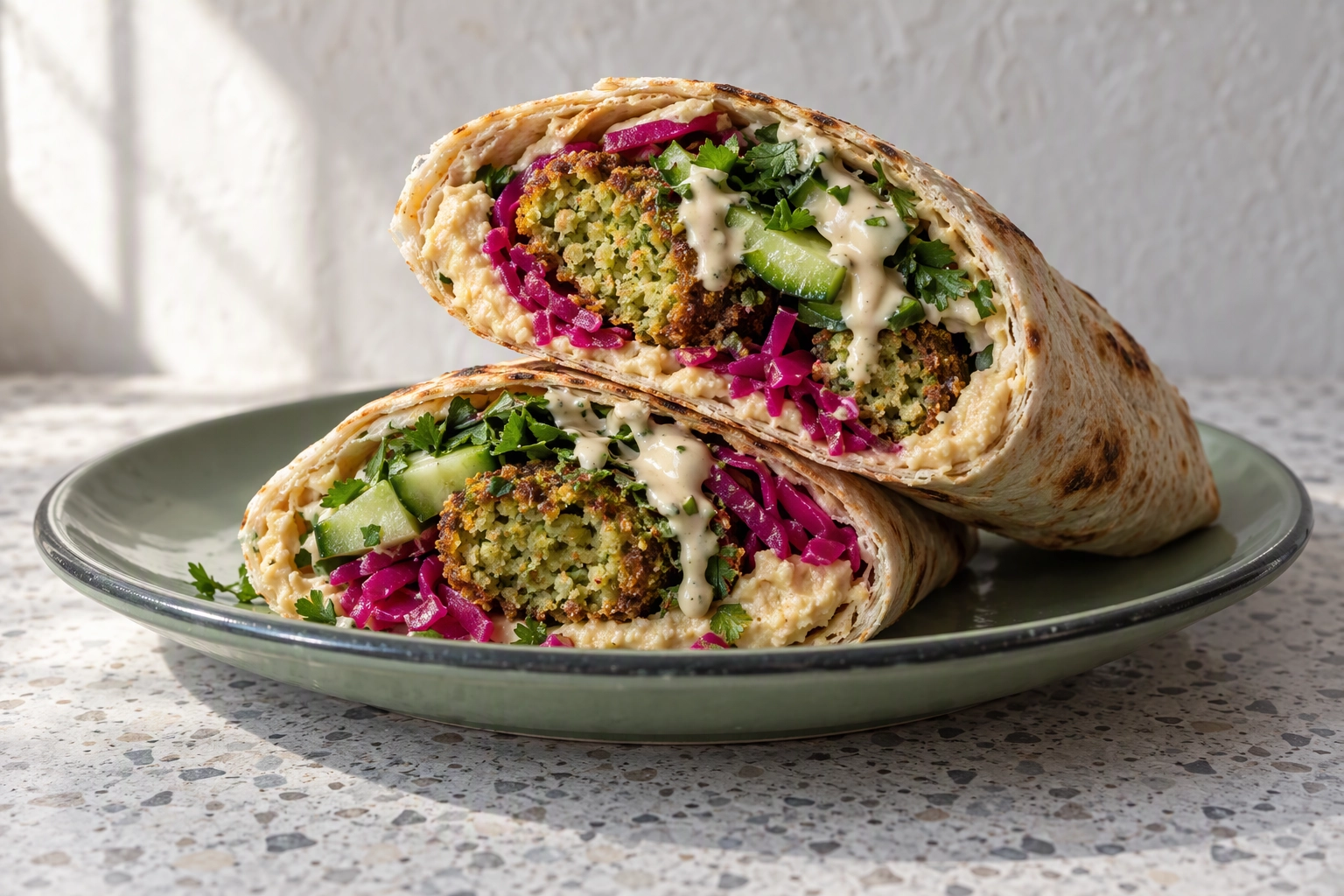 Falafel wrap cut in half with both cross-sections facing the camera, showing hummus, pickled cabbage and falafel layers
- Signals and suits: generous fillings, nothing hidden. Handhelds, layered desserts, lasagna; listings and feeds. See our sandwich photography guide.
- Phone how-to: Use a sharp serrated knife and wipe it between cuts. Cut right before shooting so fillings stay glossy, offset the halves so both faces show, and shoot at eye level or 45 degrees.
- Fading where: the full-stretch cheese pull now reads staged. The clean cut ages better.
- FoodShot styles: Side View Hero, a low side angle on pale wood, suits a stacked handheld.
11. Macro texture
Frame-filling close-ups of crumb, crust, char and gloss. Texture now does the work polish used to do, and Getty's mid-year check-in names craftsmanship among the new markers of trust.
- Signals and suits: craft, freshness. Bread, pastry, grilled meat, crema; carousel slide two, website detail shots, packaging.
- Phone how-to: Don't push the lens into the food. Use 2x or 3x from further back, light from the side so texture throws tiny shadows, and focus on one detail. Our macro food photography guide covers depth of field.
- Fading where: as the only photo of an item. Uber Eats wants the item centered and fully in frame.
- FoodShot styles: Warm Macro Intimate, Dark Macro Drama.
Motion: 1 look that stops the scroll
12. Frozen motion
A pour, splash or floating ingredient, caught in a still. The video version is tiring: a Dubai-based professional food photographer's March 2026 analysis of Instagram engagement listed the slow-motion pour among Reel formats that have lost their novelty. The still keeps working on a website hero, a can or a creative campaign for drink brands.
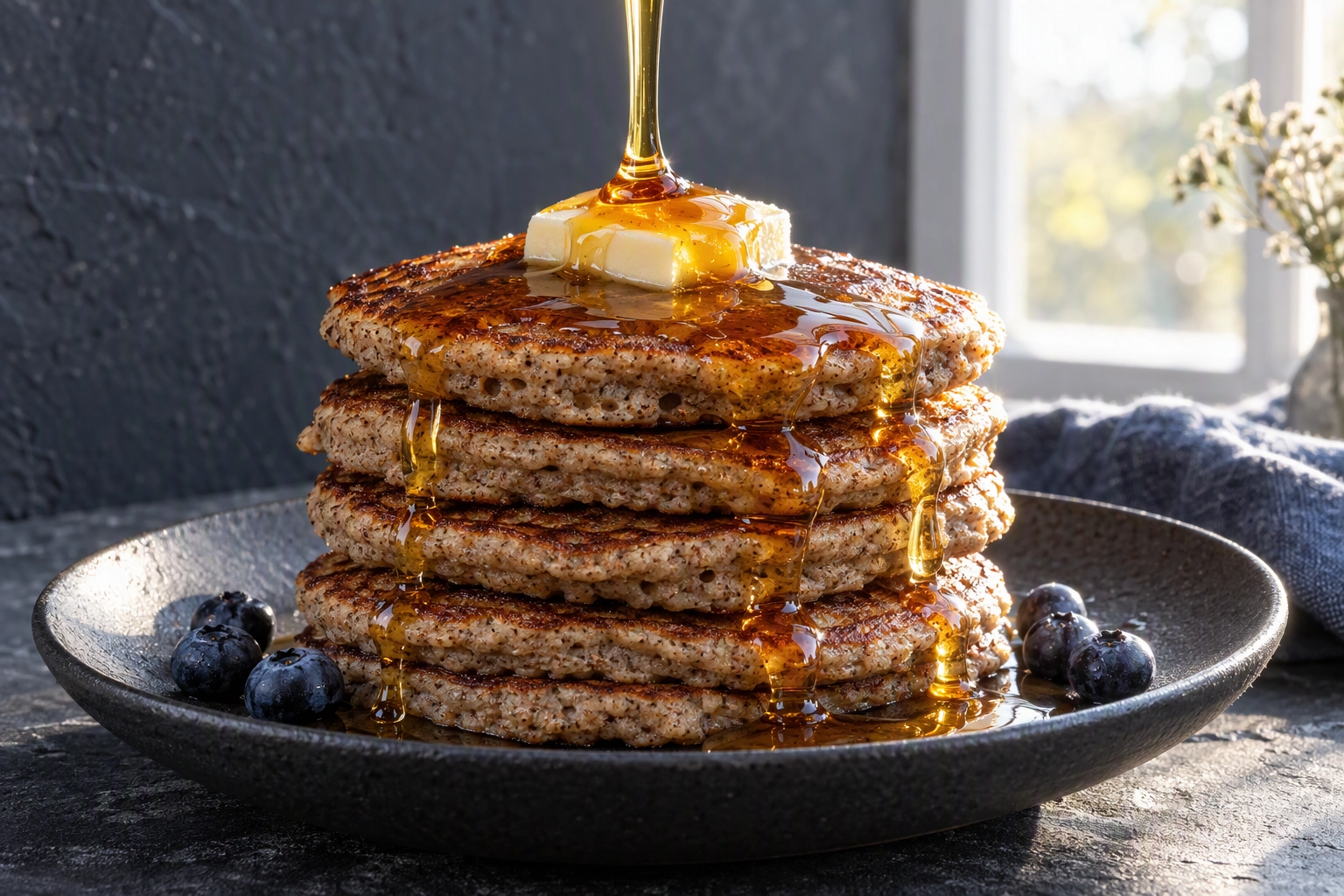 Maple syrup frozen mid-pour onto a stack of buckwheat pancakes, backlit amber against dark slate, a frozen motion food photo
- Signals and suits: freshness, energy, cold or heat. Drinks, sauces, syrup, ready-to-drink cans. Our drink photography guide covers ice and condensation.
- Phone how-to: You need bright light for a fast shutter, so shoot by a sunny window. Hold the shutter for burst mode, pour from 20 to 30 cm, and keep the cleanest frame.
- Fading where: as a video template, and on listings, where a splash hides the item.
- FoodShot styles: Blue Levitation and Peach Levitation for floating plates, Splash Studio and Flavor Burst for drinks. FoodShot makes stills, without video.
Which looks pass Uber Eats and DoorDash?
Four of the 12 work on a listing as shot: soft window daylight, true-to-plate editing, the cross-section and hands (Uber Eats allows hands, never faces). Hard sun works once softened. The rest belong on social media, your website or packaging, and each channel crops differently:
| Channel | Shape to export | Rules that block a look |
|---|---|---|
| Uber Eats item photo | 5:4 to 6:4 landscape, centered | One item; no strong shadows or poor light; no people except hands; no text or logos; no dirty surfaces |
| Uber Eats cover photo | 2880 x 2304 px JPEG, 5:4 | No harsh shadows or glaring sunlight; no black and white; no interior shots |
| DoorDash item | Horizontal, even for drinks; thumbnail crops to a centered square | Proper lighting; no text or overlays; no stock photos; no multi-item "hero shots" |
| Instagram feed | 3:4 portrait, 1080 x 1440 px | None of these; flash, sun and mess live here |
Instagram switched its profile grid from squares to tall rectangles in January 2025. Shoot each hero item centered with slack around it, so one frame crops to 5:4 for the apps and 3:4 for the feed. Full specs: our Uber Eats photo requirements and DoorDash photo requirements guides.
4 food photography trends fading in 2026
- Over-saturated, glowing edits. Boosted hues read as a broken promise, and on an app a broken promise becomes a refund.
- Dark-and-moody as the house style for casual food. Keep it for steak and cocktails.
- The slow-motion pour Reel. Frozen pours still work as stills; the video formula is worn out.
- Fully AI-invented dishes. Getty's 2024 survey found almost 90% of consumers want to know whether a photo was made with AI, and Meta has labeled AI content "AI info" since July 2024. DoorDash requires original photos you own. The replacement is AI applied to a real photo of the real food; our AI-generated food images guide draws that line.
How to put a 2026 look on your own dish
You can adopt two of these looks without a professional food photographer; you need a decision and a phone:
- Pick two looks, one lighting and one styling. Write a one-line creative brief such as "hard sun, hands in frame." It keeps a 30-item menu consistent.
- Shoot the real plate in soft window light. That neutral master is your delivery photo. Our phone food photography guide covers it without professional gear.
- Restyle the master. Pick the matching style on the FoodShot explore page, use My Styles so new items inherit your best photo's look, or use Pinterest Style Transfer to borrow a saved pin's light and surface. Each FoodShot photo takes about 2 minutes and exports at 2K (2048 px), with a 2x upscale in the studio.
- Export two versions: a soft 5:4 crop for the apps and the on-trend 3:4 one for the feed.
FoodShot plans start at $15 a month for 25 photos (100 for $45, 250 for $99), with a commercial license on paid plans. Two limits: stills only, and no flash style. Our menu photography guide shows how to roll one look across a whole menu.
Frequently Asked Questions
What is the biggest food photography trend in 2026?
Specific, believable photos. Getty's 2026 VisualGPS research frames authenticity as specificity, and the fastest-spreading looks all show a real moment: hard sun, imperfect plates, hands serving, cut-open sandwiches. Polished, professional perfection now reads as an ad.
Is dark and moody food photography still in style in 2026?
For fine dining, steakhouses, cocktail bars and spirits brands, yes. As a default for casual food and delivery listings, no: Uber Eats rejects insufficient lighting, and dark photos turn muddy at thumbnail size.
Which food photography style works best on delivery apps?
Soft daylight on a single item, centered, true to the plate, from 45 degrees or overhead. Cross-sections suit handhelds, and hands are allowed on Uber Eats. Export 5:4 to 6:4 for Uber Eats and a horizontal frame for DoorDash.
Can I shoot these food photography looks with a phone?
Yes, all 12. Use the 2x lens from further back, then tap the brightest part of the food and drag exposure down. Flash, hard sun and frozen pours need more light than you expect.
Should restaurants use AI-generated food photos in 2026?
Use AI to improve a real photo of your real food, not to invent a dish. Almost 90% of consumers in Getty's research want to know when a photo is AI-made, and DoorDash requires photos that show what the customer receives.