9 Best Restaurant Marketing Campaigns to Steal for $500
 Ali Tanis20 min read
Page one for best restaurant marketing campaigns reads like a museum tour. Famous work, admired from a distance, impossible to copy on a Tuesday with $500 and a walk-in full of prep. What almost nobody publishes is the mechanic underneath: what the promotion actually asked a guest to do, what it cost to run, and what a single location could do instead.
So that is what this is. Nine campaigns, each broken into five parts — the objective, the mechanic, the creative, the measured result, and a stripped-down version an independent operator can run for under $500. Most of them come from national chains, because chains are the only restaurants that publish marketing results, and the last two sections translate everything back to one local room. Every number here came from an earnings call, an awards jury, or a platform's own published data.
Quick Summary: The best restaurant marketing campaigns share three traits — a trigger that makes today different, a mechanic you can count in orders rather than impressions, and enough imagery to cover every surface the promotion touches. Domino's added 2 million loyalty members in a single quarter, Taco Bell sold 53 million orders of a $1 side in five weeks, and Burger King bought 1.5 million app downloads with a one-cent burger. Each section below ends with the under-$500 version.
What the best restaurant marketing campaigns have in common
Three traits, and budget is not one of them.
A trigger. Every marketing play below gives guests a reason today is different from yesterday: a birthday, a stolen base, a two-week window, a free pizza banked for a bad night. A post that says "we're open, come in" is a reminder, not a campaign.
A mechanic you can count. The strongest restaurant marketing pays per confirmed order, per redemption, or per enrollment — never per impression. That is why loyalty relaunches and delivery promotions keep outperforming awareness pushes for independent restaurants: you can trace the revenue back to the customers who spent it, by name.
Enough imagery to cover every surface. This is the part operators underestimate, and we come back to it with a real count at the end.
A fourth trait shows up in the failures. Marketing plans that die in week two almost always died because the kitchen ran out of usable content, not because the idea was wrong. Strategies are cheap and plentiful; the images that carry them across a menu board, a delivery tile and an email are not.
One scope note. This piece is deliberately broader than social. If you want the social subset — the voice-driven brands, the TikTok challenges, the user-generated content engines — we broke those down separately in our roundup of the best restaurant social media campaigns. Here, social media is one lane among six: loyalty, limited-time offers, local collabs, out-of-home, email, and delivery-app promotions. Social media still shows up in most of these plays — it is just rarely the mechanic that moves the money. For the wider list of tactics that sit underneath these, see our restaurant marketing ideas guide.
1. Domino's Emergency Pizza: a loyalty relaunch worth 2 million members
Objective: pull infrequent and carryout guests back into the rewards file.
The mechanic: In September 2023 Domino's rebuilt its rewards program — a lower redemption threshold, points on carryout, more ways in — then bolted on Emergency Pizza. Place a qualifying order online and a free pizza sits in your account for 30 days, waiting for the night that falls apart.
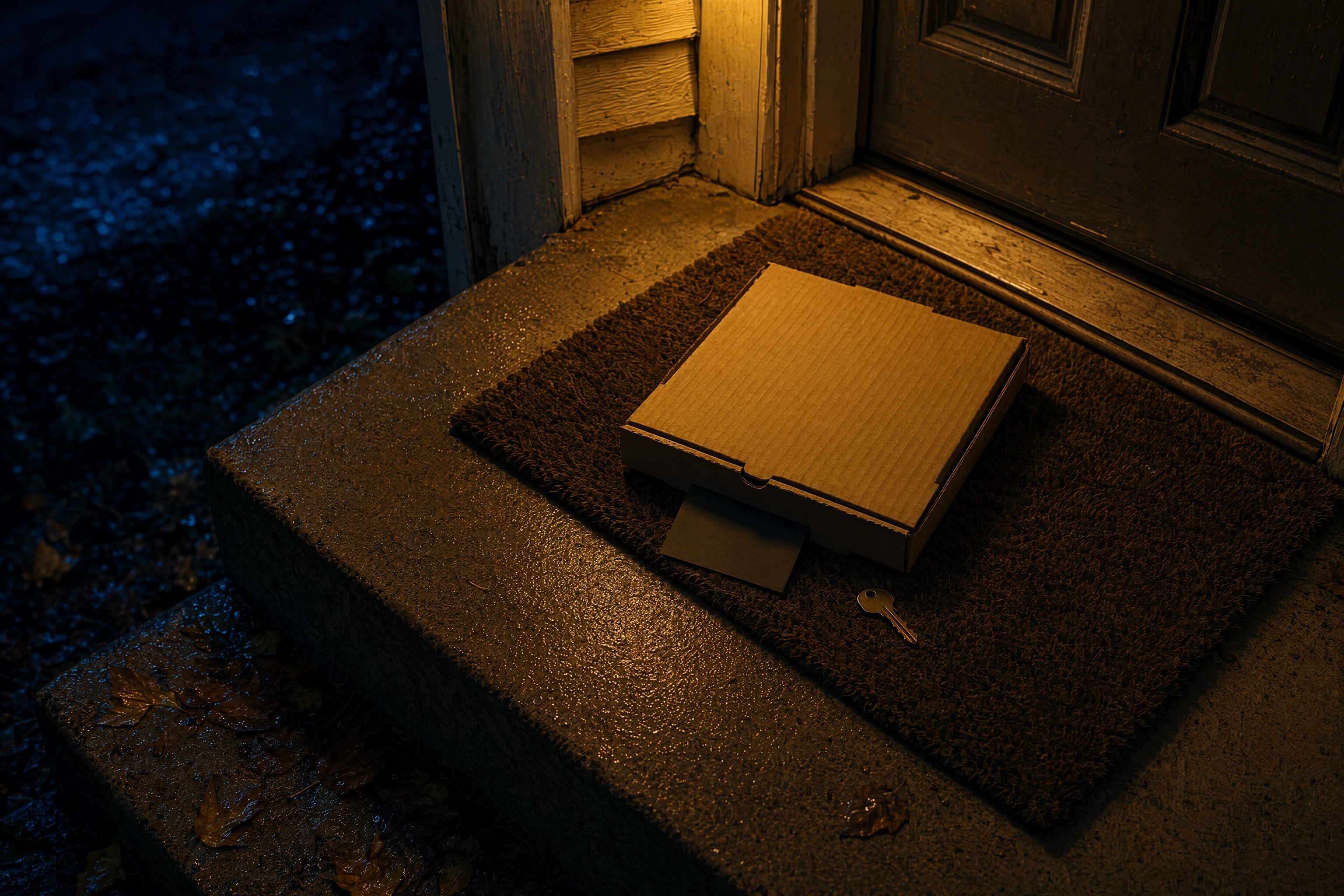 Pizza box and blank reward card on a rainy doorstep at night, the banked free item behind a restaurant loyalty relaunch
The creative: Deadpan disaster scenarios. Burnt dinner, power cut, babysitter cancels. The product shot never changed; only the excuse did.
The result: The program added 3 million members across 2023, 2 million of them after the September relaunch, and leadership credited it on the Q4 earnings call with strengthening US same-store sales. Domestic comparable sales finished 2023 up 1.6% after a 0.8% decline the year before.
The under-$500 version: Skip the app. Print 500 cards that bank one free side with any order over $25, redeemable for 30 days, and hand them out at the table rather than at the door — a banked reward beats a discount because it forces a second visit. Budget: about $120 printing, $380 in food cost on redemptions. You will need one clean shot of the banked item for the card, the counter sign, and the follow-up email. Loyalty is slow, but it is the only lane on this list where the customers you win keep paying you back after the spend stops. It is also the least glamorous content you will ever create, and the most durable.
2. Panera's Unlimited Sip Club: buying frequency instead of margin
Objective: convert an occasional coffee run into a daily habit.
The mechanic: A flat monthly fee for unlimited drip coffee, iced coffee and hot tea. Panera piloted it in roughly 150 cafes for three months before rolling it out nationally; today it sells for $14.99 a month or $119 a year.
The creative: Almost none, which is the lesson. The offer was the creative — a price, a cup, and a subscription button.
The result: In the pilot, visit frequency among subscribers was reported to have risen by more than 200%. Coffee margin got worse and total revenue got better, because a guest who walks in five times a week eventually buys a sandwich.
The under-$500 version: Sell a 30-day coffee pass at the counter, priced at what twelve visits would cost. If your latte is $5, the pass is $60. You keep the cash up front, and the pass holder walks past two competitors to use it. Cost is a stack of printed cards and a line in your POS. Track redemptions weekly. This is the easiest local frequency play on the list, and it suits any business with a morning rush — cafes, bakeries, breakfast counters.
3. Taco Bell's Nacho Fries: the limited-time drop calendar
Objective: manufacture urgency around a $1 side dish.
The mechanic: Launch, sell hard, retire, bring it back. Nacho Fries were never a permanent menu addition; they were a recurring drop, and the disappearance is what made the return newsworthy.
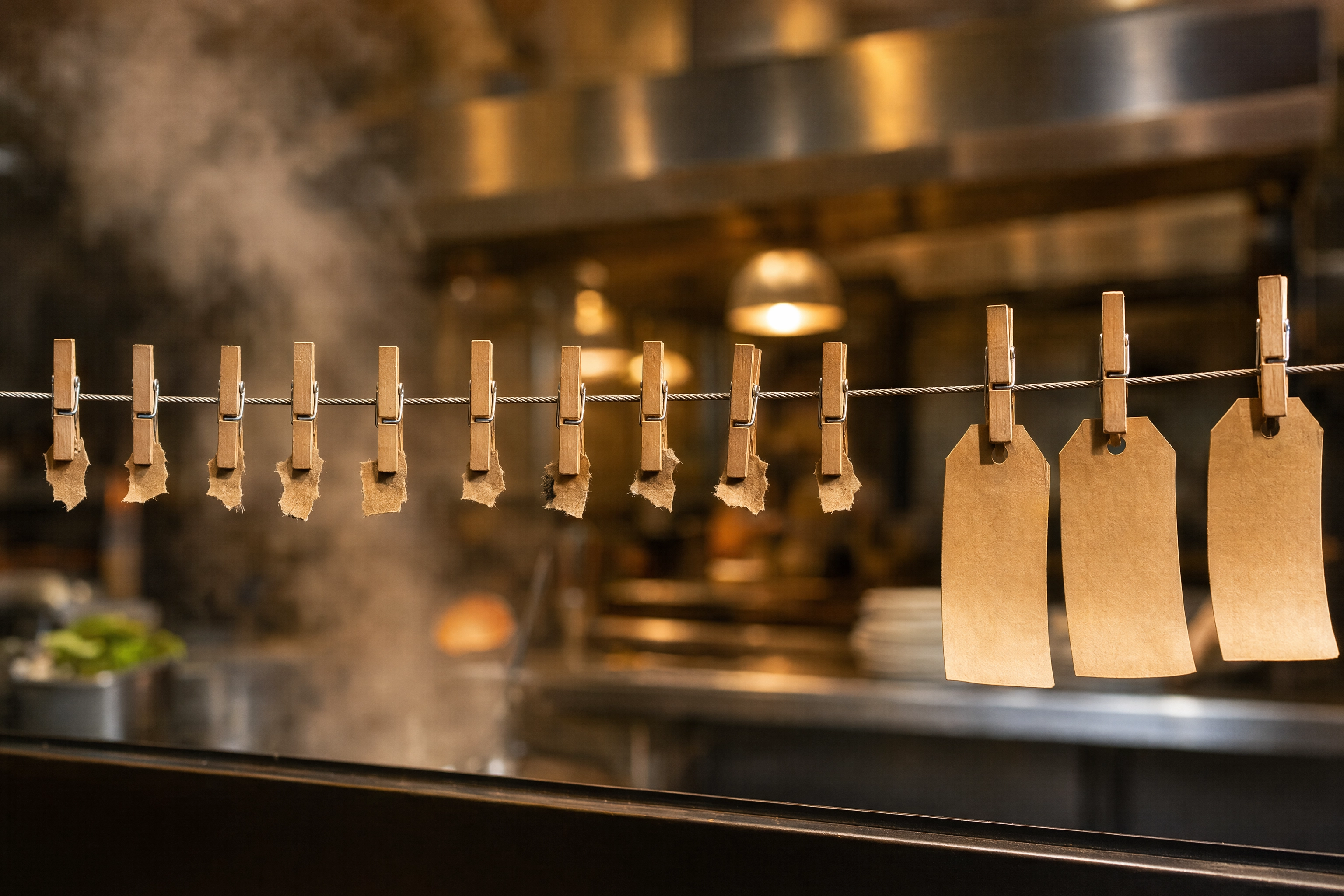 Wire of kraft tags with most torn away above a kitchen pass, the countdown mechanic behind a limited-time menu drop
The creative: Movie-trailer parodies, complete with cast and a release date. The item was treated as a film, not a food special.
The result: After launching on 25 January 2018 at $1, roughly 7,000 US restaurants sold more than 53 million orders in the first five weeks — the most successful product launch in the chain's history at that point, confirmed across trade and consumer press.
The under-$500 version: Pick one dish you already prep well. Run it for exactly fourteen days, announce the end date at the start, then actually pull it. Put a countdown on the counter, a second one online, and a third on the board. Bring it back in ninety days and the second run will outsell the first, because the people who missed it the first time now have a deadline. Your only real cost is imagery: a hero shot, three cropped variants for stories, and one for the digital menu boards. If the item is new, price it using menu engineering rather than instinct.
4. McDonald's Grimace Birthday Meal: an offer guests turned into the ad
Objective: own a cultural moment rather than push a product.
The mechanic: A nostalgia character, a purple shake, and a hard window — 12 June to 9 July 2023. Buy the meal, get the shake. That was the whole structure.
The creative: Deliberately unfinished. The brand shipped a strange purple drink and let people build the content. The horror-parody trend that followed was not planned, not paid for, and not shut down.
The result: The push generated more than 3 billion TikTok views and management named it on the earnings call as a driver of the quarter. Global comparable sales rose 11.7% in Q2 2023, with 10.3% growth in the US.
The under-$500 version: Tie an odd-looking special to a date that already belongs to you — your opening anniversary, a founder's birthday, the day the neighbourhood block party runs. Make it visually strange enough to photograph and cheap enough to try. Then leave it alone. If you script the reaction, guests will not share it. Post the shot online, tag the date, and let the room do the rest. The creative you do not control is usually the social media content that travels furthest.
5. Chipotle's National Burrito Day drop: the win-back play
Objective: reactivate lapsed guests, not reward loyal ones.
The mechanic: A gamified reward drop pushed to the entire rewards file by email and app notification on a day the whole category was already talking about. Everyone got a shot at something free; nobody had to spend first.
The creative: A game screen and a countdown, wrapped around a single item everybody already recognised.
The result: Leadership described it on the Q2 2024 call as the brand's best sales day and best digital sales day ever, driving an influx of new and lapsed guests and the best rewards enrollment day of the year.
Why email still earns its slot: restaurants and cafes post one of the weakest click rates of any industry — roughly 1.06% against a 2.09% cross-industry average in 2025 email benchmarks. That gap is a creative problem, not a channel problem. Win-back segments behave differently because intent is already proven.
The under-$500 version: Export everyone who has not ordered in 60 days. Send three emails over ten days: one that asks what went wrong with no offer attached, one with a named item and a photo, one with a 48-hour expiry. Cost is your email tool and the food you comp. Most operators find the second email carries the whole sequence — lapsed customers respond to a specific dish they remember, not to a generic percentage off. Keep the list clean and send it from a real person's address, not a no-reply.
6. Taco Bell x MLB, and the local collab version of the same idea
Objective: borrow an audience that is already watching something else.
The mechanic: "Steal a Base, Steal a Taco" — when a player steals a base in the World Series, the country gets a free taco. Later versions routed redemption through the loyalty app across a ten-day window, which spread demand and captured the guest data instead of just giving away food.
The creative: Live sport did the work. The brand only had to be ready with the trigger.
The result: CNBC's Darren Rovell estimated the brand collected roughly $8 million of free advertising from the first two games of the 2007 World Series alone, and the mechanic has been revived repeatedly since.
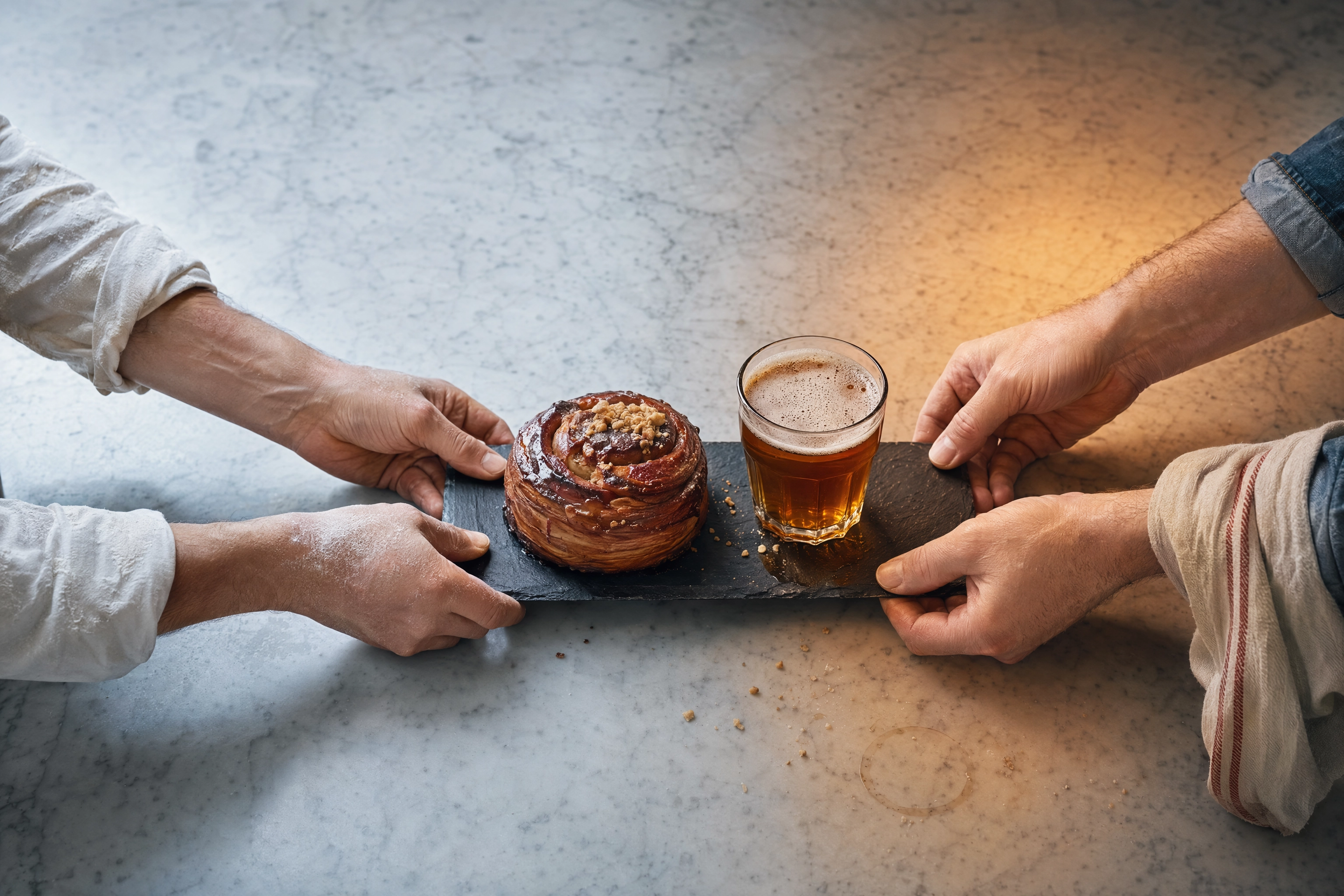 Baker and brewer hands meeting over one slate board holding a pastry and a beer, a local restaurant collaboration campaign
The independent proof: you do not need a national sponsor. Easy Tiger, an Austin beer garden and bakery, picked up an extra 25 guests in the week it announced collaboration beers were on draft. Twenty-five covers is a real week for one location, and it came from a local partnership rather than a media budget.
The under-$500 version: Find one neighbouring business with a different rush hour — a brewery, a roaster, a bakery, a gym. Build one item together, sell it in both rooms, and split the imagery cost. Each side promotes to its own list, so both businesses reach an audience of local people who already spend money within a few streets of your door. This is also the cheapest way to earn genuine local reviews, because collab guests almost always mention both names in the same review.
7. The delivery-app promo sprint: mechanics that bill per order
Objective: buy first orders where the intent already exists.
The mechanic: Percentage-off, dollar-off or buy-one-get-one promotions inside the delivery marketplace, billed on confirmed orders rather than clicks, usually paired with a sponsored listing. You choose the audience: new, existing, or lapsed.
The creative: The offer tile and the menu photography. There is no headline to write.
 Overhead night view of a delivery scooter leaving a restaurant service door with a red light trail, delivery app promo orders
The result: DoorDash reports that stores running promotions see a 20% increase in sales on average, and its own April–June 2022 study found menus with header images earn up to 50% more monthly sales, with logos worth up to 23%. The platform is telling you plainly that imagery is a revenue lever, not decoration.
The under-$500 version: Run a $3-off-first-order promotion for fourteen days with a spend cap, on one platform only, and photograph every item you promote. Do not discount your best seller — discount the item with the strongest margin and the weakest online order share. Watch cost per new customer daily and kill the promotion the moment it stops importing people you did not already have. Our guides to more orders on DoorDash and more orders on Uber Eats go deeper, and both platforms publish strict specs worth reading first: DoorDash photo requirements and Uber Eats photo requirements.
8. McDonald's Follow the Arches: the cheapest out-of-home idea ever awarded
Objective: convert drivers who are already within a mile.
The mechanic: Crop the logo until it becomes a directional arrow. "On your left." "Just missed us." No product, no price, no offer — pure wayfinding.
The creative: A brand asset used as a road sign. Agency Cossette cut the arches into fragments that pointed.
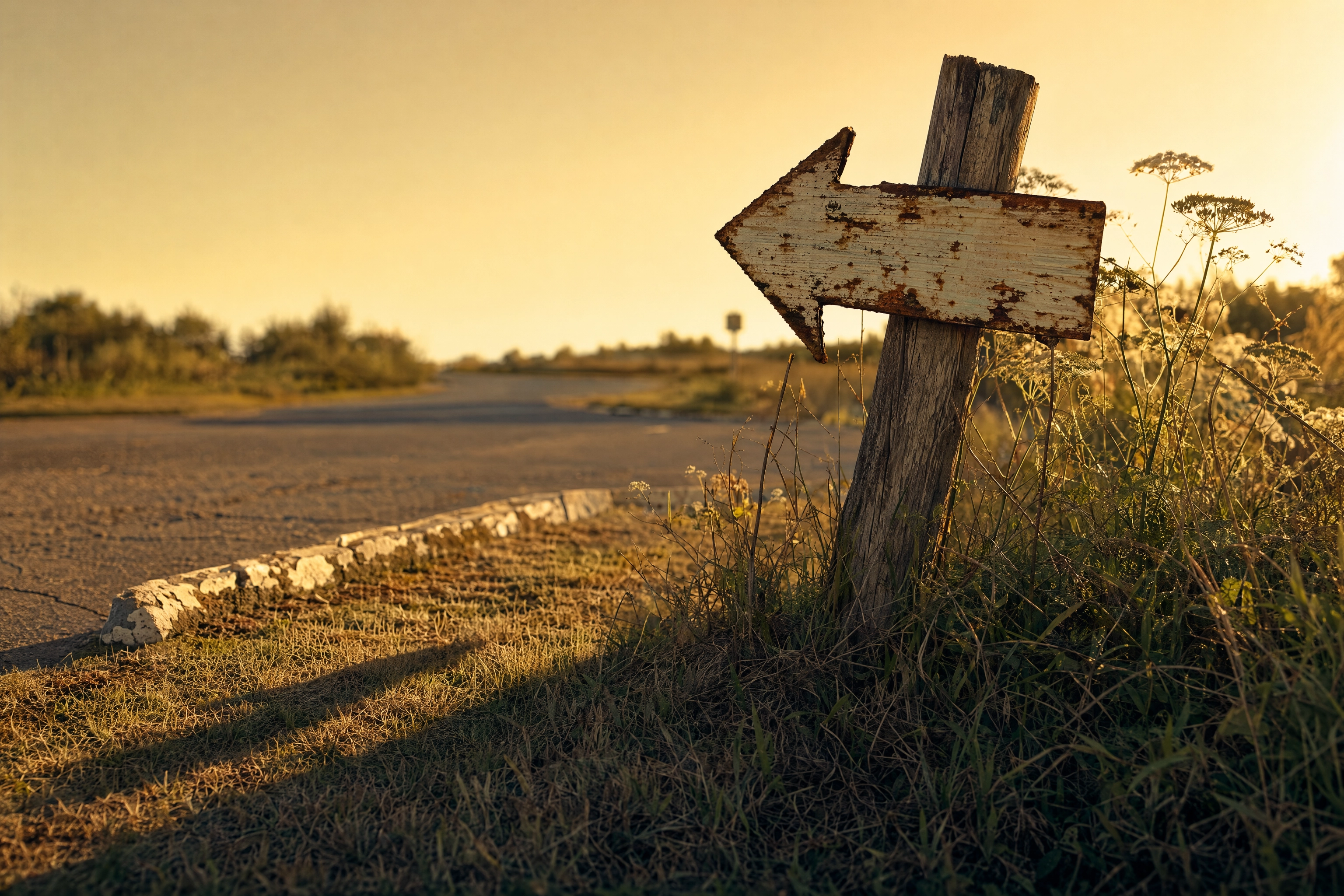 Hand-painted metal arrow sign on a fence post at a crossroads in golden light, low-cost out-of-home restaurant advertising
The result: The work took the Outdoor Grand Prix at Cannes Lions in 2018 plus a Design Grand Prix — and it is one of the few award winners on this list a small operator can genuinely imitate, because the media cost was billboards the brand was already buying.
The under-$500 version: Two A-frames and one corrugated sign at the nearest turn, all carrying a cropped piece of your own logo and three words of direction. If you are hard to find, this outperforms every online channel you can buy for the same money, because it converts local drivers who had already decided to eat somewhere. Pair it with a consistent look across your window, your board and your packaging — our restaurant branding guide covers how to keep those assets aligned, and food flyer ideas covers the print side.
9. Burger King's Whopper Detour: a geofence as the creative
Objective: force app downloads, not burger sales.
The mechanic: A one-cent Whopper, unlockable only when the guest stood within 600 feet of a McDonald's. The app then navigated them away to the nearest Burger King.
The creative: The rival's own car park. No studio, no set, no talent.
The result: Over nine days the app was downloaded 1.5 million times, app sales tripled, and the stunt generated 3.5 billion earned impressions and a 37-to-1 return on investment, worth roughly $40 million in earned media. It took the Direct and Mobile Grand Prix at Cannes in 2019.
The under-$500 version: Most social and search platforms will let you target a radius of a few hundred metres. Set one around a stadium, a conference centre, a rival's block or a festival, and run a single offer that only makes sense to someone standing there. Fifty dollars a day for ten days is a real test. Measure redemptions, not reach — a geofence that shows to ten thousand people and feeds nine is a failure, however good the impression count looks.
Three restaurant marketing strategies we left off the list
Not everything that gets called a campaign belongs in a plan.
Deep-discount coupon platforms. These strategies import price-driven customers who rarely come back at full price, and the arithmetic usually leaves the kitchen paying for the privilege. If you want new guests cheaply, a capped delivery promotion buys the same trial with better data attached.
Unbriefed influencer meals. Comping a plate for someone with a following, with no deliverable agreed, is a donation. The influencer partnerships that work read like a contract: a named dish, a shoot window, usage rights on the images, and a tracked link.
Buying followers or reviews. Beyond the obvious platform risk, fake reviews poison the one signal that actually predicts repeat business — and guests notice the gap between a five-star page and a real experience within one visit. Earn reviews by asking at the right moment: on the receipt, in the win-back email, and on the collab item nobody expected.
The bill nobody budgets for: every campaign is an image problem first
Count what the nine plays above actually consumed. A loyalty relaunch needs a card, a counter sign, an app tile and a newsletter hero. A limited-time drop needs a hero, a vertical crop, a board asset and a delivery tile — per drop. A collab needs two versions, one for each partner's channels. A delivery promotion needs a header image plus a photograph on every promoted item. A win-back email needs a picture the lapsed guest actually recognises.
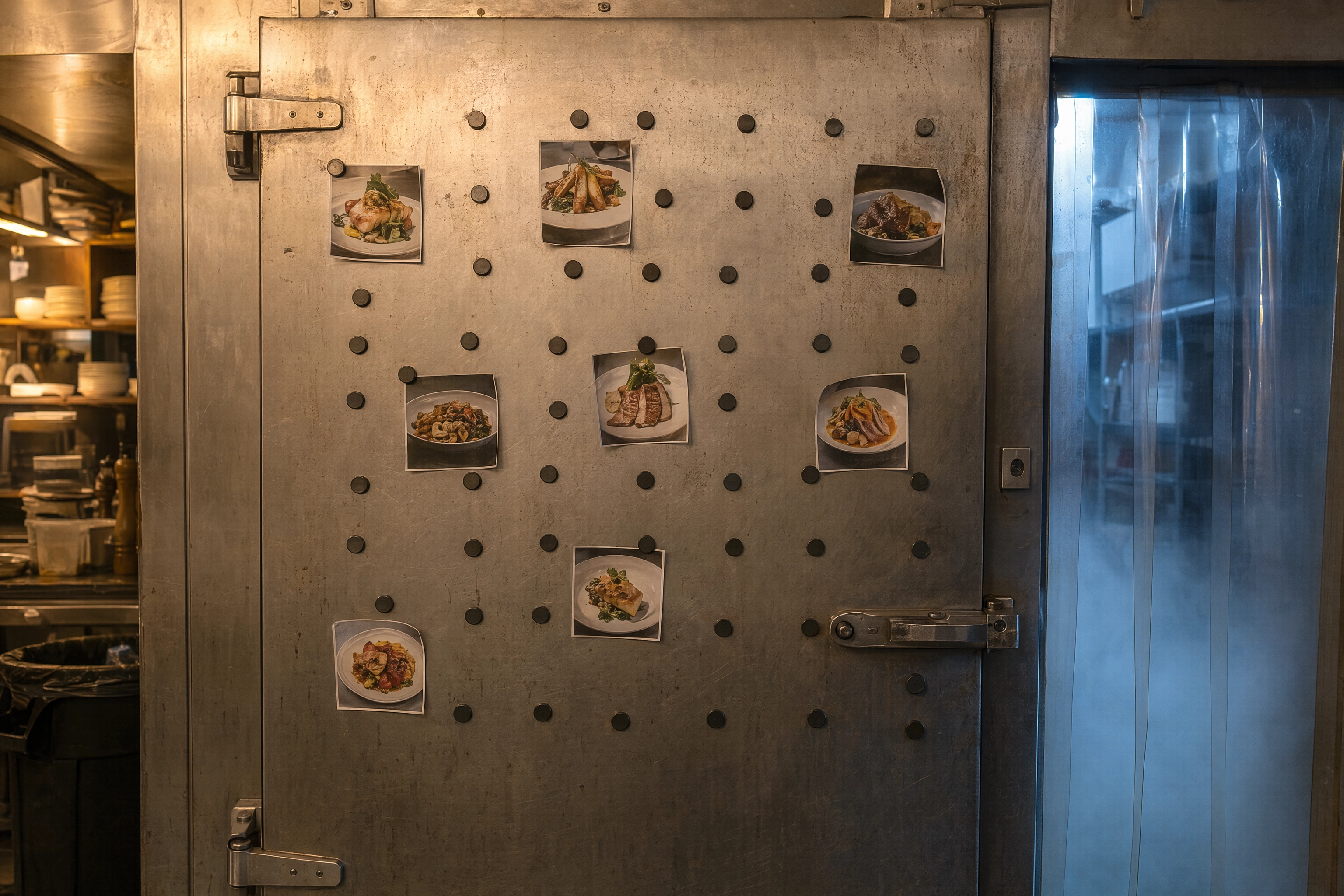 Walk-in cooler door with a grid of magnets holding only eight dish photos and many empty, a restaurant running out of imagery
That is somewhere between 25 and 40 usable images for one month of activity. This is where independent restaurants stall — not on the idea, on the asset. Most kitchens can create a good dish faster than they can create a good picture of it. A traditional shoot solves it beautifully and slowly: our breakdown of food photography cost and restaurant photography pricing shows why a single session rarely covers a whole quarter of promotions.
The honest bridge: FoodShot AI restyles the photographs you have already taken of your own dishes, on your own phone, into menu-ready shots — 200+ styles, 2K output, commercial license on paid plans. It does not send a photographer, stage a shoot, or invent a dish you do not serve. If your phone camera roll already holds the plates, that is the raw material. Start with AI food photography, see how it applies to restaurants specifically, and compare the two routes honestly in traditional vs AI food photography. If you would rather improve the source shots first, our guide to taking food photos on a phone is the place to start, and the restaurant food photography guide covers the studio-free basics. Either way, build the image library before you build the calendar. A month that launches with a full folder finishes; one that shoots as it goes stops in week two.
A 30-day, $500 campaign calendar
| Week | Play | Spend | What to measure |
|---|---|---|---|
| 1 | Shoot and restyle 30 dish images; rewrite your six weakest menu descriptions | $50 | Assets banked, not sales |
| 2 | Fourteen-day limited-time drop with a countdown | $120 food cost | Units sold per day |
| 3 | Delivery promo sprint, one platform, capped | $200 | Cost per new customer |
| 4 | Three-email win-back to 60-day lapsed guests | $30 tool + comps | Re-order rate and new reviews |
The spare $100 goes to the two A-frames. Run it once, keep the assets, and month two costs a third as much because the imagery already exists. If you want to automate the sequencing, compare restaurant marketing software options and our shortlist of restaurant marketing tools before you buy anything; AI for restaurant marketing covers which jobs are worth paying a machine to do. Operators in narrower formats should also read food truck marketing, catering marketing ideas and ghost kitchen marketing, because the mechanics change when there is no dining room.
Frequently Asked Questions
How much should a single-location restaurant spend on a marketing campaign?
Industry guidance usually lands between 3% and 6% of revenue, rising for a first-year opening. But the percentage matters less than the split: put most of it behind mechanics that bill per confirmed order, and cap anything that bills per impression. A $500 month spent on one drop, one delivery promotion and one win-back sequence will beat $500 spread across five channels every time.
Which restaurant marketing campaign gives the fastest payback?
Delivery-app promotions, because the guest is already in a buying session and the platform bills you on completed orders. Expect a result inside two weeks. Loyalty and email plays are slower but compound, and out-of-home is the slowest of all — worthwhile only if your location is genuinely hard to find.
Do these campaigns work without a big social media following?
Yes, and that is the point of picking six lanes instead of one. Five of the nine plays above — loyalty, subscription, limited-time drops, delivery promotions and out-of-home — reach guests without a single follower. Social media amplifies them; it does not power them. If you do want to build that channel deliberately, our restaurant Instagram marketing guide is the practical version.
How many photos does one restaurant marketing campaign actually need?
More than operators expect. A single limited-time drop typically needs five to eight usable images once you count the square crop, the vertical story frame, the delivery tile, the board asset and the newsletter header. A month of activity across three channels lands between 25 and 40. That is why campaigns stall at week two: the ideas survive, the imagery runs out.
Which strategies should a brand-new restaurant run first?
Loyalty and out-of-home, in that order. A new room needs repeat visits more than it needs reach, and a banked reward creates a second visit from the first one. Out-of-home comes next because a new brand is invisible from the road and local drivers cannot choose what they cannot see. Delivery promotions can wait until the kitchen is consistent — importing a hundred new customers into a shaky service produces a hundred bad reviews.
How do I know whether a restaurant marketing campaign worked?
Pick one number before you start and ignore the rest. For a drop it is units per day. For a delivery promotion it is cost per new customer, not total orders. For a win-back it is the share of the lapsed list that ordered inside fourteen days — 12% to 18% is a common first-run result. Watch new reviews as a secondary signal. Promotions that genuinely change the guest experience produce reviews that name the item, and those reviews keep working long after the spend stops. If your revenue moved but nobody wrote about the experience, you bought transactions rather than customers.